YSlow 2.0 Stoyan Stefanov, Yahoo! Inc. Beijing, Dec 6 th  2008
About the presenter Yahoo! Performance YSlow dev/architect smush.it  tool phpied.com  blog
The importance of performance Task completion Slow site = lost business
The importance of performance 500 ms slower = 20% drop in traffic (Google) 400 ms slower = 5-9% drop in full-page traffic* (Yahoo!) 100 ms slower = 1% drop in sales (Amazon) * Users leaving before the page finishes loading
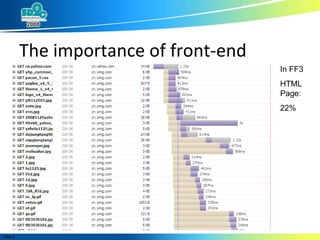
The importance of front-end In FF3 HTML Page: 22%
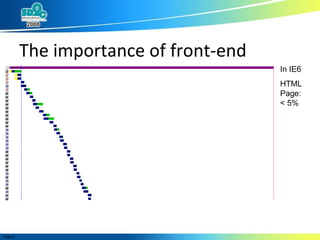
The importance of front-end In IE6 HTML Page:  < 5%
Front-end performance Focus on the front-end Greater potential Easier
Exceptional Performance at Yahoo! “ Quantify and improve the performance of all Yahoo! products worldwide” Center of expertise Build tools, analyze data Gather, research, and evangelize best practices - internally and externally YSlow
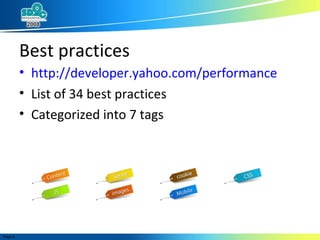
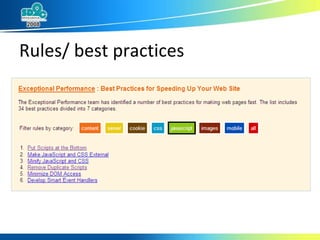
Best practices http://developer.yahoo.com/performance   List of 34 best practices Categorized into 7 tags
 
Lossless image optimization http://smush.it
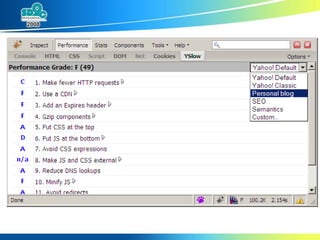
YSlow 1.0 Pre-set rules, grades and scores Hard to customize Firebug dependent “ Yahoo’s problems are not your problems”
YSlow 2.0 extensible  customizable open to community contributions multi-browser support
Rules and grading
Rules/ best practices
Rules Current list of rules in YSlow – 13 Current list of rules on YDN – 34 Add new rules 10 rules were identified as testable Categorize the rules
Rules Allow developers to create their own rules e.g. No images Use YUI …  who knows
A new rule An object with properties: ID  Name Category URL Configuration options Lint method
YSlow.registerRule ( { id: 'no_images', name: 'No images', categories: ['images', 'content'], url: 'http://blog.ws/myrule.html', config: { allowed: 0 }, lint: function(doc, cset, config){…} } );
lint: function(doc, cset, config) { var grade = 100; var num = cset.getComponentsByType(['image']); if (num.length > config.allowed) { grade = 0; } return { grade: grade, message: 'Please do not use images' }; }
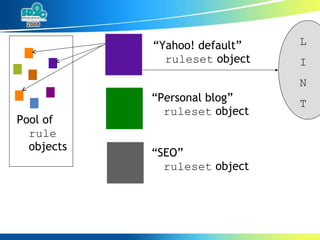
The pool We end up with a  pool of rules out-of-the-box rules created by the YSlow team contributed by the community
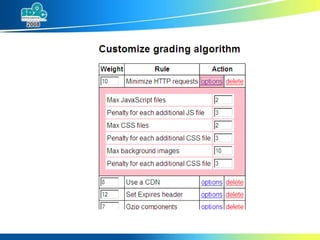
Grading algorithm 1.0 Currently hardcoded 13 “lint” functions are called by name, e.g.  lintCSSAtTop() ,  lintExpires() , etc. Some customizable options, but not many
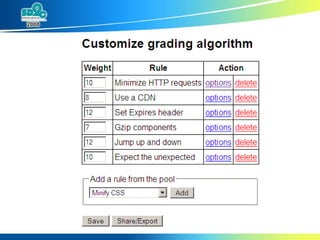
Grading 2.0 Make it algorithm s Customizable Allow users to create their own grading algos
Warning! The screenshots in this presentation are purely fictional Any resemblance with the real YSlow 2.0 is actually highly undesirable
Algos
 
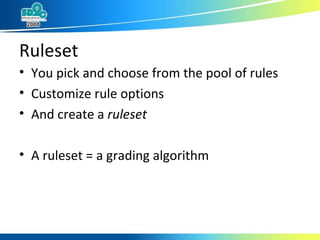
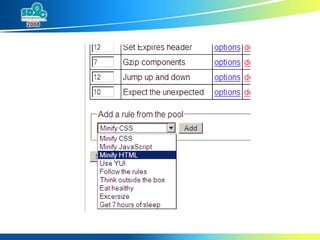
Ruleset You pick and choose from the pool of rules Customize rule options And create a  ruleset A ruleset = a grading algorithm
 
 
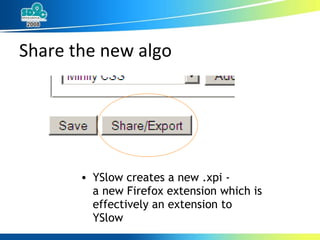
Share the new algo YSlow creates a new .xpi -  a new Firefox extension which is effectively an extension to YSlow
Sharing the .xpi Within the team, so that everyone is on the same page With the world (publish on addons.mozilla.com)
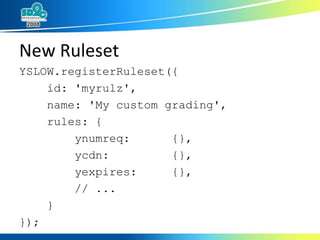
New Ruleset YSLOW.registerRuleset({  id: 'myrulz', name: 'My custom grading', rules: { ynumreq:  {},  ycdn:  {}, yexpires:  {}, // ... } });
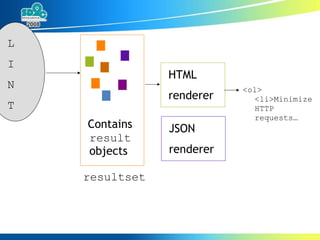
Logic YSlow 1.0: Go through a list of preset rules and preset options YSlow 2.0:  What’s the current ruleset? Loop through the rules in the set and call their lint() Gather an array of results
Tools and import/export
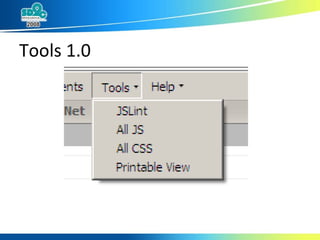
Tools 1.0
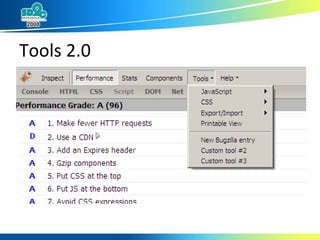
Tools 2.0
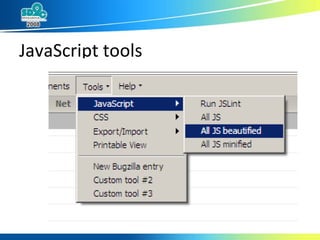
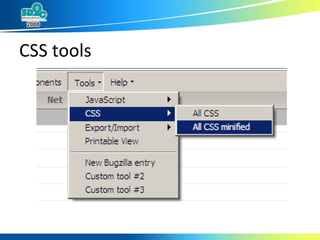
Tools 2.0 More tools Custom user tools Import/Export
JavaScript tools
CSS tools
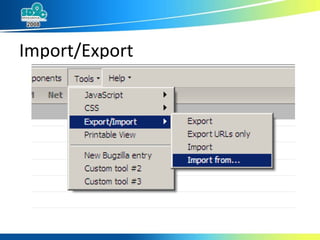
Import/Export
Import/export Ability to save YSlow runs, aka “sessions” Ability to open saved sessions Import from other tools – Fiddler, HttpWatch Standard format?
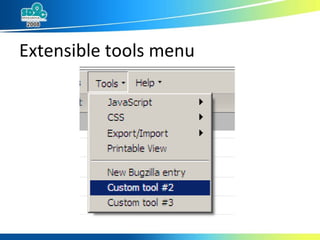
Extensible tools menu
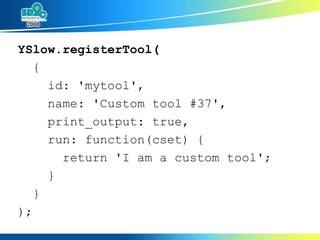
Extensible tools User creates a function that takes the list of components and does something The function is published in an extension to YSlow  User-created tools have access to the YSlow APIs Most likely the tool produces a result (HTML), so let’s make this easy
YSlow.registerTool( { id: 'mytool', name: 'Custom tool #37', print_output: true, run: function(cset) { return 'I am a custom tool'; } } );
Development support
APIs Since users will be using them, the APIs need to be: Stable Documented
Code organization Separate UI from logic, use renderers Separate from Firebug and Firefox Split and group code to defined libraries
Code quality Follow better practices / run JSLint Unit tests
Flow diagram
Pool of  rule  objects “ Yahoo! default” ruleset  object “ Personal blog” ruleset  object “ SEO” ruleset  object L I N T
Contains result  objects L I N T resultset HTML renderer <ol> <li>Minimize HTTP requests… JSON renderer
Types of extensions to YSlow 2.0. (summary)
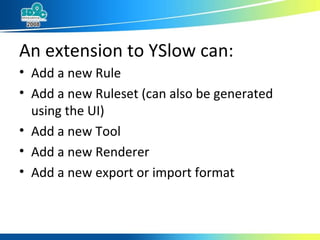
An extension to YSlow can: Add a new Rule Add a new Ruleset (can also be generated using the UI) Add a new Tool Add a new Renderer Add a new export or import format
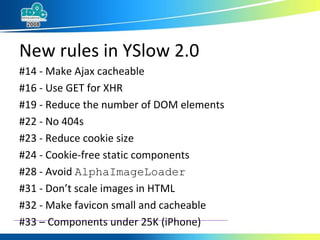
New rules in YSlow 2.0 #14 - Make Ajax cacheable #16 - Use GET for XHR #19 - Reduce the number of DOM elements #22 - No 404s #23 - Reduce cookie size #24 - Cookie-free static components #28 - Avoid  AlphaImageLoader #31 - Don’t scale images in HTML #32 - Make favicon small and cacheable #33 – Components under 25K (iPhone)
Stoyan Stefanov  [email_address]

YSlow 2.0

  • 1.
    YSlow 2.0 StoyanStefanov, Yahoo! Inc. Beijing, Dec 6 th 2008
  • 2.
    About the presenterYahoo! Performance YSlow dev/architect smush.it tool phpied.com blog
  • 3.
    The importance ofperformance Task completion Slow site = lost business
  • 4.
    The importance ofperformance 500 ms slower = 20% drop in traffic (Google) 400 ms slower = 5-9% drop in full-page traffic* (Yahoo!) 100 ms slower = 1% drop in sales (Amazon) * Users leaving before the page finishes loading
  • 5.
    The importance offront-end In FF3 HTML Page: 22%
  • 6.
    The importance offront-end In IE6 HTML Page: < 5%
  • 7.
    Front-end performance Focuson the front-end Greater potential Easier
  • 8.
    Exceptional Performance atYahoo! “ Quantify and improve the performance of all Yahoo! products worldwide” Center of expertise Build tools, analyze data Gather, research, and evangelize best practices - internally and externally YSlow
  • 9.
    Best practices http://developer.yahoo.com/performance List of 34 best practices Categorized into 7 tags
  • 10.
  • 11.
  • 12.
    YSlow 1.0 Pre-setrules, grades and scores Hard to customize Firebug dependent “ Yahoo’s problems are not your problems”
  • 13.
    YSlow 2.0 extensible customizable open to community contributions multi-browser support
  • 14.
  • 15.
  • 16.
    Rules Current listof rules in YSlow – 13 Current list of rules on YDN – 34 Add new rules 10 rules were identified as testable Categorize the rules
  • 17.
    Rules Allow developersto create their own rules e.g. No images Use YUI … who knows
  • 18.
    A new ruleAn object with properties: ID Name Category URL Configuration options Lint method
  • 19.
    YSlow.registerRule ( {id: 'no_images', name: 'No images', categories: ['images', 'content'], url: 'http://blog.ws/myrule.html', config: { allowed: 0 }, lint: function(doc, cset, config){…} } );
  • 20.
    lint: function(doc, cset,config) { var grade = 100; var num = cset.getComponentsByType(['image']); if (num.length > config.allowed) { grade = 0; } return { grade: grade, message: 'Please do not use images' }; }
  • 21.
    The pool Weend up with a pool of rules out-of-the-box rules created by the YSlow team contributed by the community
  • 22.
    Grading algorithm 1.0Currently hardcoded 13 “lint” functions are called by name, e.g. lintCSSAtTop() , lintExpires() , etc. Some customizable options, but not many
  • 23.
    Grading 2.0 Makeit algorithm s Customizable Allow users to create their own grading algos
  • 24.
    Warning! The screenshotsin this presentation are purely fictional Any resemblance with the real YSlow 2.0 is actually highly undesirable
  • 25.
  • 26.
  • 27.
    Ruleset You pickand choose from the pool of rules Customize rule options And create a ruleset A ruleset = a grading algorithm
  • 28.
  • 29.
  • 30.
    Share the newalgo YSlow creates a new .xpi - a new Firefox extension which is effectively an extension to YSlow
  • 31.
    Sharing the .xpiWithin the team, so that everyone is on the same page With the world (publish on addons.mozilla.com)
  • 32.
    New Ruleset YSLOW.registerRuleset({ id: 'myrulz', name: 'My custom grading', rules: { ynumreq: {}, ycdn: {}, yexpires: {}, // ... } });
  • 33.
    Logic YSlow 1.0:Go through a list of preset rules and preset options YSlow 2.0: What’s the current ruleset? Loop through the rules in the set and call their lint() Gather an array of results
  • 34.
  • 35.
  • 36.
  • 37.
    Tools 2.0 Moretools Custom user tools Import/Export
  • 38.
  • 39.
  • 40.
  • 41.
    Import/export Ability tosave YSlow runs, aka “sessions” Ability to open saved sessions Import from other tools – Fiddler, HttpWatch Standard format?
  • 42.
  • 43.
    Extensible tools Usercreates a function that takes the list of components and does something The function is published in an extension to YSlow User-created tools have access to the YSlow APIs Most likely the tool produces a result (HTML), so let’s make this easy
  • 44.
    YSlow.registerTool( { id:'mytool', name: 'Custom tool #37', print_output: true, run: function(cset) { return 'I am a custom tool'; } } );
  • 45.
  • 46.
    APIs Since userswill be using them, the APIs need to be: Stable Documented
  • 47.
    Code organization SeparateUI from logic, use renderers Separate from Firebug and Firefox Split and group code to defined libraries
  • 48.
    Code quality Followbetter practices / run JSLint Unit tests
  • 49.
  • 50.
    Pool of rule objects “ Yahoo! default” ruleset object “ Personal blog” ruleset object “ SEO” ruleset object L I N T
  • 51.
    Contains result objects L I N T resultset HTML renderer <ol> <li>Minimize HTTP requests… JSON renderer
  • 52.
    Types of extensionsto YSlow 2.0. (summary)
  • 53.
    An extension toYSlow can: Add a new Rule Add a new Ruleset (can also be generated using the UI) Add a new Tool Add a new Renderer Add a new export or import format
  • 54.
    New rules inYSlow 2.0 #14 - Make Ajax cacheable #16 - Use GET for XHR #19 - Reduce the number of DOM elements #22 - No 404s #23 - Reduce cookie size #24 - Cookie-free static components #28 - Avoid AlphaImageLoader #31 - Don’t scale images in HTML #32 - Make favicon small and cacheable #33 – Components under 25K (iPhone)
  • 55.
    Stoyan Stefanov [email_address]