WORLD
ECONOMIC
OUTLOOK
2022
APR
INTERNATIONAL MONETARY FUND
War Sets Back
the Global Recovery
WORLD
ECONOMIC
OUTLOOK
2022
APR
INTERNATIONAL MONETARY FUND
War Sets Back
the Global Recovery
©2022 International Monetary Fund
Cover and Design: IMF CSF Creative Solutions Division
Composition: AGS, An RR Donnelley Company
Cataloging-in-Publication Data
Joint Bank-Fund Library
Names: International Monetary Fund.
Title: World economic outlook (International Monetary Fund)
Other titles: WEO | Occasional paper (International Monetary Fund) | World economic and
financial surveys.
Description: Washington, DC : International Monetary Fund, 1980- | Semiannual | Some
issues also have thematic titles. | Began with issue for May 1980. | 1981-1984: Occasional
paper / International Monetary Fund, 0251-6365 | 1986-: World economic and financial
surveys, 0256-6877.
Identifiers: ISSN 0256-6877 (print) | ISSN 1564-5215 (online)
Subjects: LCSH: Economic development—Periodicals. | International economic relations—
Periodicals. | Debts, External—Periodicals. | Balance of payments—Periodicals. |
International finance—Periodicals. | Economic forecasting—Periodicals.
Classification: LCC HC10.W79
HC10.80	
ISBN 978-1-61635-942-3 (English Paper)
	 979-8-40020-525-5 (English ePub)
	 979-8-40020-530-9 (English Web PDF)
The World Economic Outlook (WEO) is a survey by the IMF staff published twice a
year, in the spring and fall. The WEO is prepared by the IMF staff and has benefited
from comments and suggestions by Executive Directors following their discussion of
the report on April 11, 2022. The views expressed in this publication are those of the
IMF staff and do not necessarily represent the views of the IMF’s Executive Directors
or their national authorities.
Recommended citation: International Monetary Fund. 2022. World Economic Outlook:
War Sets Back the Global Recovery. Washington, DC, April.
Publication orders may be placed online, by fax, or through the mail:
International Monetary Fund, Publication Services
P.O. Box 92780, Washington, DC 20090, USA
Tel.: (202) 623-7430 Fax: (202) 623-7201
E-mail: publications@imf.org
www.imfbookstore.org
www.elibrary.imf.org
International Monetary Fund|April 2022	iii
CONTENTS
Assumptions and Conventions	viii
Further Information	 x
Data	xi
Preface	xii
Foreword	xiii
Executive Summary	 xvi
Chapter 1. Global Prospects and Policies	 1
War Slows the Recovery	 1
Fragmentation and Fragility Set to Slow Growth during 2022–23	 1
Forecast Revisions	 4
International Implications of the War in Ukraine	 8
Elevated Inflation Expected to Persist for Longer	 11
Rising Interest Rates: Implications for Emerging Market and Developing Economies	 13
Economic Slack to Narrow in the Medium Term; Significant Scarring Expected	 15
Risks Are Large and to the Downside	 17
Policies to Sustain the Recovery and Improve Medium-Term Prospects	 20
Scenario Box	 25
Box 1.1. The Puzzle of Tight Labor Markets: US and UK Examples	 27
Box 1.2. Determinants of Neutral Interest Rates and Uncertain Prospects	 29
Special Feature: Market Developments and the Pace of Fossil Fuel Divestment	 31
References	43
Chapter 2. Private Sector Debt and the Global Recovery	 45
Introduction	45
Private Sector Leverage during the Pandemic	 47
Private Debt and the Business Cycle	 51
Countercyclical Policy Effects amid High Private Debt	 56
Conclusions and Policy Implications	 58
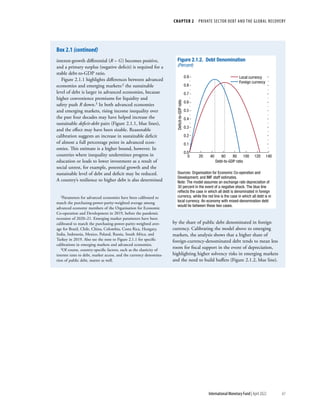
Box 2.1. Inequality and Public Debt Sustainability	 60
Box 2.2. Rising Household Indebtedness, the Global Saving Glut of the Rich,
and the Natural Interest Rate	 62
References	64
Chapter 3. A Greener Labor Market: Employment, Policies, and Economic Transformation	 67
Introduction	67
Environmental Properties of Jobs: Definitions and Stylized Facts	 71
Environmental Properties of Job Transitions	 73
Labor Markets and Environmental Policies: Empirical and Model-Based Analyses	 75
Conclusions	80
Box 3.1. The Geography of Green- and Pollution-Intensive Jobs: Evidence from the United States	 83
WORLD ECONOMIC OUTLOOK: WAR SETS BACK THE GLOBAL RECOVERY
iv	 International Monetary Fund|April 2022
Box 3.2. A Greener Post-COVID Job Market?	 84
References	85
Chapter 4. Global Trade and Value Chains during the Pandemic	 87
Introduction	87
Drivers of Trade during the Pandemic	 90
International Spillovers from Pandemic Containment Policies	 91
Resilience in GVCs	 93
Policy Implications	 99
Box 4.1. Effects of Global Supply Disruptions during the Pandemic	 101
Box 4.2. The Impact of Lockdowns on Trade: Evidence from Shipping Data	 103
Box 4.3. Firm-Level Trade Adjustment to the COVID-19 Pandemic in France	 104
References	105
Statistical Appendix	 109
Assumptions	109
What’s New	 109
Data and Conventions	 110
Country Notes	 111
Classification of Countries	 113
General Features and Composition of Groups in the World Economic Outlook
Classification	113
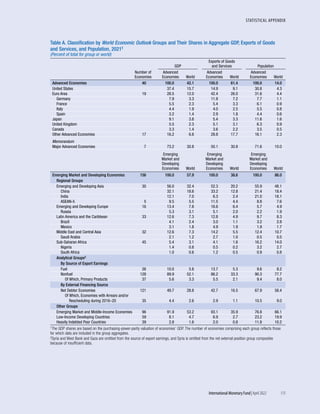
Table A. Classification by World Economic Outlook Groups and Their Shares in
Aggregate GDP, Exports of Goods and Services, and Population, 2021	 115
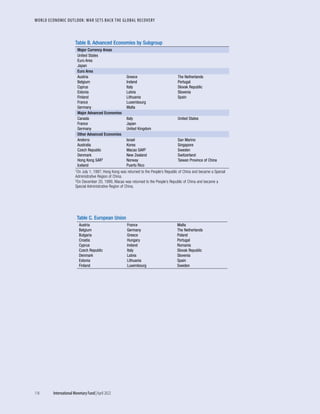
Table B. Advanced Economies by Subgroup	 116
Table C. European Union	 116
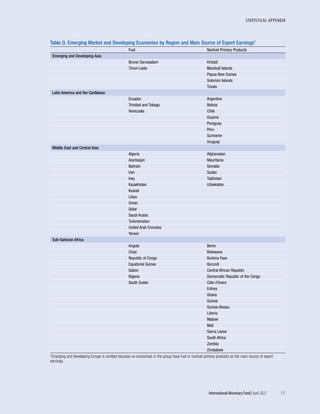
Table D. Emerging Market and Developing Economies by Region and Main Source
of Export Earnings	 117
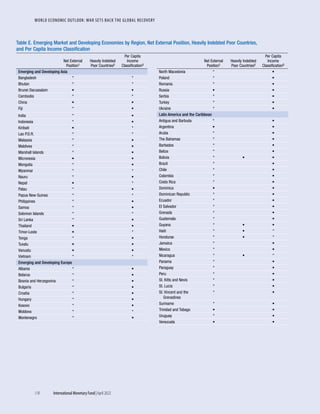
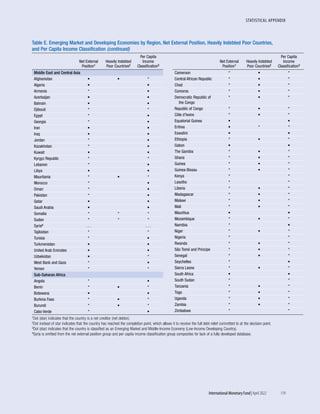
Table E. Emerging Market and Developing Economies by Region, Net External Position,
Heavily Indebted Poor Countries, and Per Capita Income Classification 	 118
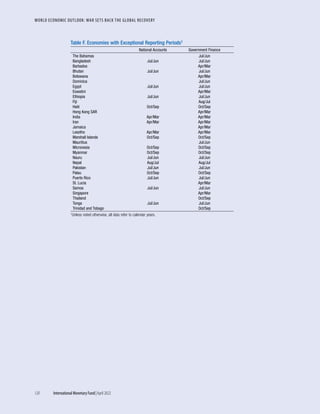
Table F. Economies with Exceptional Reporting Periods	 120
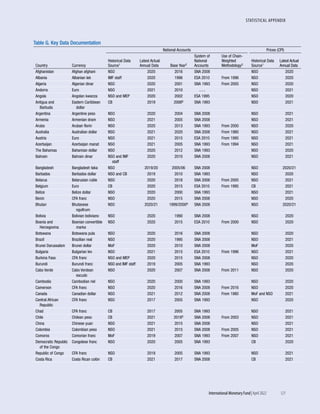
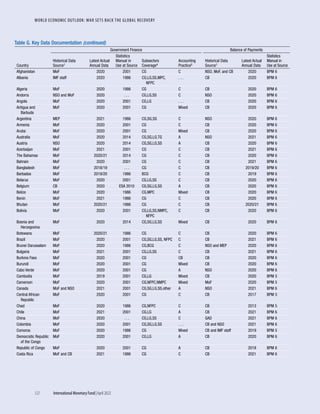
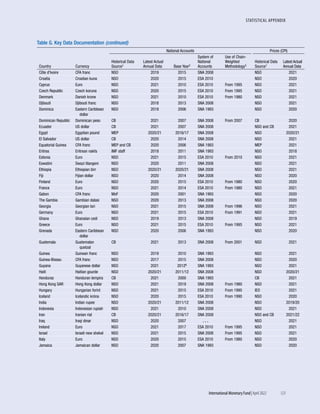
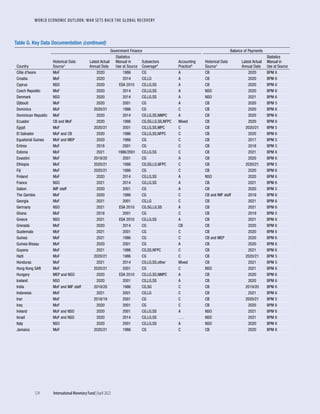
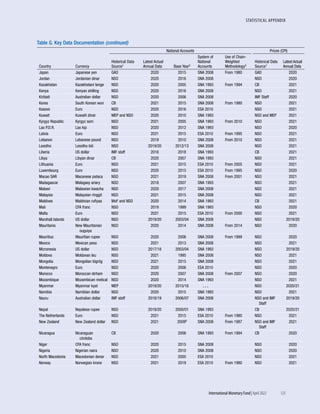
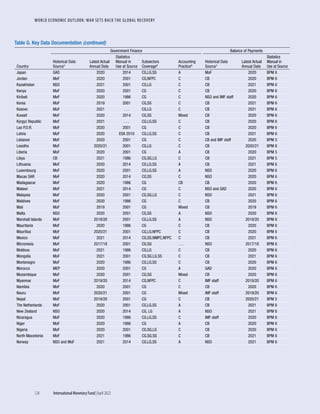
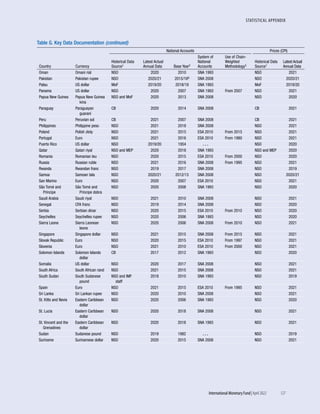
Table G. Key Data Documentation	 121
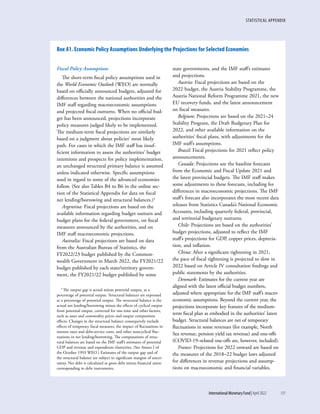
Box A1. Economic Policy Assumptions Underlying the Projections for Selected Economies	 131
List of Tables	 136
Output (Tables A1–A4)	 137
Inflation (Tables A5–A7)	 144
Financial Policies (Table A8)	 149
Foreign Trade (Table A9)	 150
Current Account Transactions (Tables A10–A12)	 152
Balance of Payments and External Financing (Table A13)	 159
Flow of Funds (Table A14)	 163
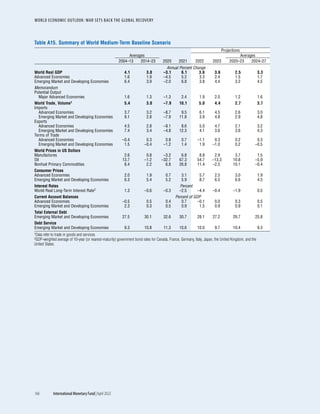
Medium-Term Baseline Scenario (Table A15)	 166
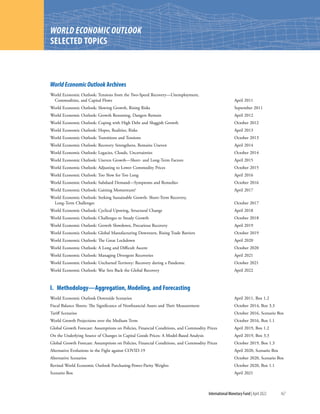
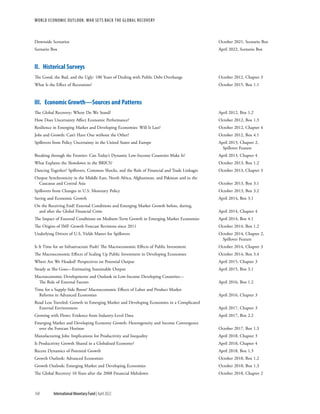
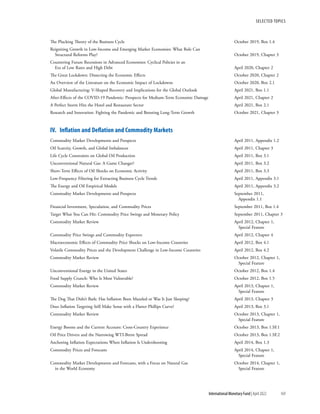
World Economic Outlook, Selected Topics	 167
IMF Executive Board Discussion of the Outlook, April 2022	 177
Tables
Table 1.1. Overview of the World Economic Outlook Projections	 6
Table 1.2. Overview of the World Economic Outlook Projections at
Market Exchange Rate Weights	 8
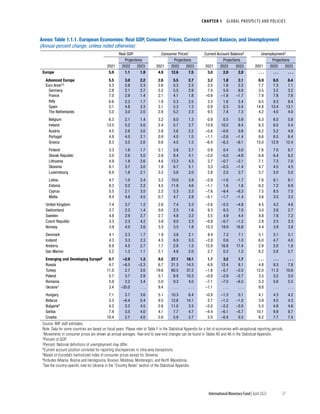
Annex Table 1.1.1. European Economies: Real GDP, Consumer Prices,
Current Account Balance, and Unemployment	 37
contents
	 International Monetary Fund|April 2022	v
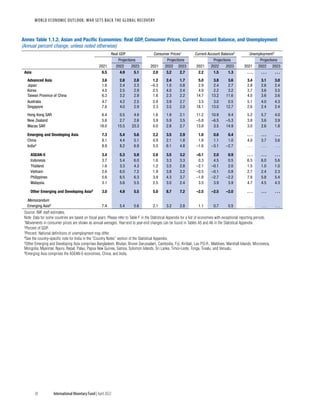
Annex Table 1.1.2. Asian and Pacific Economies: Real GDP, Consumer Prices,
Current Account Balance, and Unemployment	 38
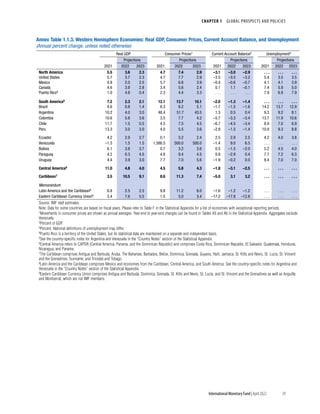
Annex Table 1.1.3. Western Hemisphere Economies: Real GDP, Consumer Prices,
Current Account Balance, and Unemployment	 39
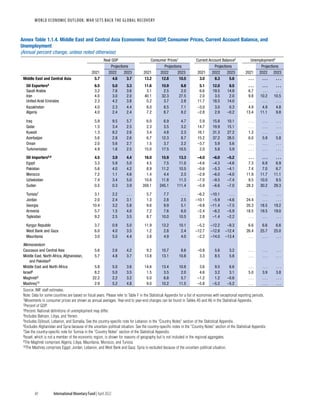
Annex Table 1.1.4. Middle East and Central Asia Economies: Real GDP,
Consumer Prices, Current Account Balance, and Unemployment	 40
Annex Table 1.1.5. Sub-Saharan African Economies: Real GDP, Consumer Prices,
Current Account Balance, and Unemployment	 41
Annex Table 1.1.6. Summary of World Real per Capita Output 	 42
Online Tables—Statistical Appendix
Table B1. Advanced Economies: Unemployment, Employment, and Real GDP per Capita
Table B2. Emerging Market and Developing Economies: Real GDP
Table B3. Advanced Economies: Hourly Earnings, Productivity, and Unit Labor
Costs in Manufacturing
Table B4. Emerging Market and Developing Economies: Consumer Prices
Table B5. Summary of Fiscal and Financial Indicators
Table B6. Advanced Economies: General and Central Government
Net Lending/Borrowing and General Government Net Lending/Borrowing
Excluding Social Security Schemes
Table B7. Advanced Economies: General Government Structural Balances
Table B8. Emerging Market and Developing Economies: General Government
Net Lending/Borrowing and Overall Fiscal Balance
Table B9. Emerging Market and Developing Economies: General Government
Net Lending/Borrowing
Table B10. Selected Advanced Economies: Exchange Rates
Table B11. Emerging Market and Developing Economies: Broad Money Aggregates
Table B12. Advanced Economies: Export Volumes, Import Volumes, and Terms of
Trade in Goods and Services
Table B13. Emerging Market and Developing Economies by Region: Total Trade in Goods
Table B14. Emerging Market and Developing Economies by Source of
Export Earnings: Total Trade in Goods
Table B15. Summary of Current Account Transactions
Table B16. Emerging Market and Developing Economies: Summary of
External Debt and Debt Service
Table B17. Emerging Market and Developing Economies by Region:
External Debt by Maturity
Table B18. Emerging Market and Developing Economies by
Analytical Criteria: External Debt by Maturity
Table B19. Emerging Market and Developing Economies: Ratio of External Debt to GDP
Table B20. Emerging Market and Developing Economies: Debt-Service Ratios
Table B21. Emerging Market and Developing Economies, Medium-Term
Baseline Scenario: Selected Economic Indicators
Figures
Figure 1.1. Global Activity Indicators	2
Figure 1.2. Inflation Trends	2
Figure 1.3. Monetary and Financial Conditions	3
Figure 1.4. Fiscal Stance, 2020–23	3
Figure 1.5. New Confirmed COVID-19 Deaths	4
Figure 1.6. International Cereal Prices	 8
WORLD ECONOMIC OUTLOOK: WAR SETS BACK THE GLOBAL RECOVERY
vi	 International Monetary Fund|April 2022
Figure 1.7. Global Oil Intensity and Oil Revenue Share	9
Figure 1.8. Trade Exposures to Russia and Ukraine, 2020	9
Figure 1.9. Global Value Chain Participation, 2018	10
Figure 1.10. Ratio of Banks’ Exposure to Russia to Total Assets, end-September 2021	10
Figure 1.11. Changes in Inflation Drivers	11
Figure 1.12. Core Inflation versus Private Domestic Demand	12
Figure 1.13. Goods and Services Inflation	13
Figure 1.14. Changes in Inflation Expectations: January 21–January 22	13
Figure 1.15. Sovereign Spreads at Tipping Points	 14
Figure 1.16. Emerging Market and Developing Economy Vulnerabilities	14
Figure 1.17. Medium-Term Prospects: Output and Employment	 16
Figure 1.18. Potential GDP	 16
Figure 1.19. Correlates of Projected Output Revisions to Vaccination	 17
Figure 1.20. Current Account and International Investment Positions	 17
Figure 1.21. Fraction of Countries with a Major Unrest Event	 18
Figure 1.22. Real Policy Rates	 21
Figure 1.23. Public External Debt	 23
Figure 1.24. Changes in Emissions in 2030 versus 2021 under NDCs and
Warming Scenarios	24
Scenario Figure 1.1. Downside Scenario	26
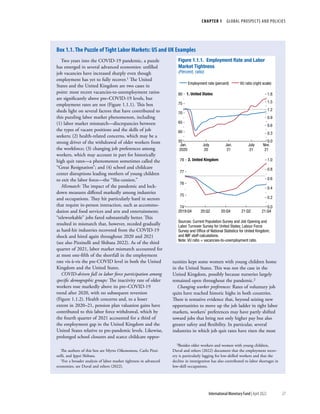
Figure 1.1.1. Employment Rate and Labor Market Tightness	27
Figure 1.1.2. Inactivity Rates	28
Figure 1.1.3. United States Wage Growth and Tightness across Sectors	28
Figure 1.2.1. Estimated Neutral Rates Since 1980	29
Figure 1.2.2. Neutral Rate Factors	30
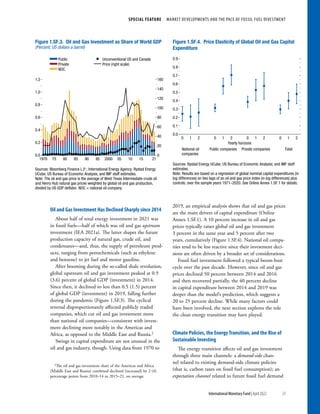
Figure 1.SF.1. Commodity Market Developments	31
Figure 1.SF.2. European Gas Inventory and Gas Price	 32
Figure 1.SF.3. Oil and Gas Investment as Share of World GDP	 33
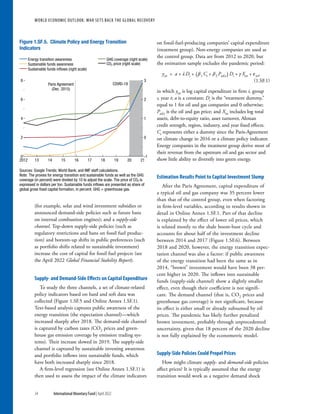
Figure 1.SF.4. Price Elasticity of Global Oil and Gas Capital Expenditure	 33
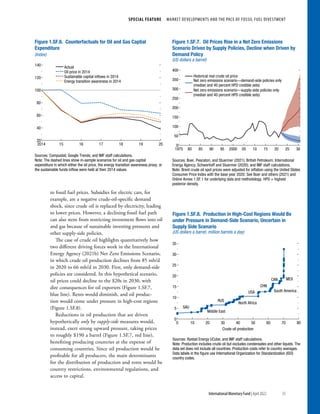
Figure 1.SF.5. Climate Policy and Energy Transition Indicators	 34
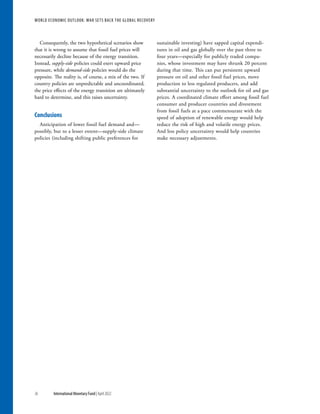
Figure 1.SF.6. Counterfactuals for Oil and Gas Capital Expenditure	 35
Figure 1.SF.7. Oil Prices Rise in a Net Zero Emissions Scenario Driven by Supply
Policies, Decline when Driven by Demand Policy	 35
Figure 1.SF.8. Production in High-Cost Regions Would Be under Pressure in
Demand-Side Scenario, Uncertain in Supply-Side Scenario	 35
Figure 2.1. Rapidly Mounting Private Debt	46
Figure 2.2. Advanced Economies: Aggregate Household Balance Sheets	48
Figure 2.3. Correlation between Wealth and Income Inequality	48
Figure 2.4. Change in Debt-to-Income Ratio by Income Decile in 2020	49
Figure 2.5. Uneven COVID-19 Impact on Nonfinancial Corporations’ Revenue Growth	50
Figure 2.6. Exposure to Contingent Liabilities Associated with Credit Guarantees
(50 Percent Scenario)	50
Figure 2.7. Heterogeneous Effect on Nonfinancial Corporation Balance Sheets	51
Figure 2.8. Concentration of Nonfinancial Corporation Vulnerabilities	52
Figure 2.9. Consumption and Investment Responses to Household and Nonfinancial
Corporate Excess Credit	53
Figure 2.10. Fiscal Position and Deleveraging	54
Figure 2.11. Advanced Economies: Wealth Inequality and Deleveraging	54
Figure 2.12. The Role of Vulnerable Firms	55
Figure 2.13. The Role of Effective Insolvency Frameworks	56
contents
	 International Monetary Fund|April 2022	vii
Figure 2.14. Output Sensitivity to Fiscal Consolidation as Function of Private Debt	57
Figure 2.15. Effects of Macro Policy Tightening on Heterogeneous Households and Firms	58
Figure 2.1.1. Effect of Income Inequality on the Sustainable Level of Debt	60
Figure 2.1.2. Debt Denomination	61
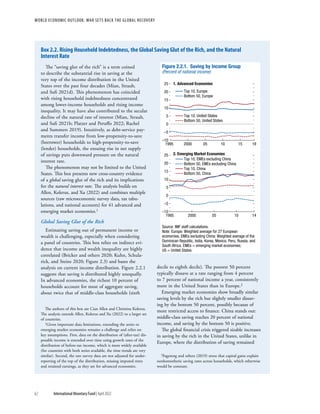
Figure 2.2.1. Saving by Income Group	62
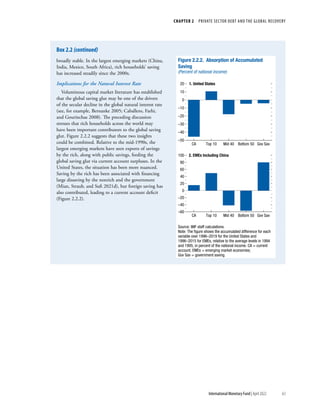
Figure 2.2.2. Absorption of Accumulated Saving	63
Figure 3.1. Evolution of Average Carbon Emissions Intensity	68
Figure 3.2. Cross-Country Distribution and Evolution of Green- and
Pollution-Intensive Occupations and Carbon Emissions per Worker	72
Figure 3.3. Sectoral Differences in the Distribution of Green, Pollution, and
Emissions Intensities in Employment	73
Figure 3.4. Environmental Properties of Jobs by Worker Characteristics	73
Figure 3.5. Earnings and the Environmental Properties of Jobs	74
Figure 3.6. Job Transition Rates and the Environmental Properties of Past Jobs	74
Figure 3.7. Annual Probability among Job Switchers of Transitioning into a
Green-Intensive or Neutral Job	75
Figure 3.8. Estimated Effects of Environmental Policy Stringency	76
Figure 3.9. Estimated Effects of Environmental Policy Stringency Conditional on
Labor Market Features	77
Figure 3.10. Model Simulations of the Green Economic Transformation with a
Comprehensive Policy Package in an Advanced Economy	79
Figure 3.11. Model Simulations of the Green Economic Transformation with a
Comprehensive Policy Package in an Emerging Market Economy	80
Figure 3.1.1. Geographic Distribution of Green and Pollution Intensities across US Counties	83
Figure 3.2.1. Cross-Country Evolution of Green Hiring Rates and Job Postings	84
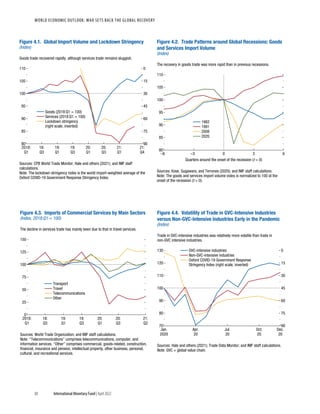
Figure 4.1. Global Import Volume and Lockdown Stringency	88
Figure 4.2. Trade Patterns around Global Recessions: Goods and Services Import Volume	88
Figure 4.3. Imports of Commercial Services by Main Sectors	88
Figure 4.4. Volatility of Trade in GVC-Intensive Industries versus Non-GVC-Intensive
Industries Early in the Pandemic	88
Figure 4.5. Average Forecast Errors of the Growth in Imports from the Import
Demand Model	90
Figure 4.6. Factors Associated with the Demand Model’s Forecast Errors for 2020	91
Figure 4.7. Change in Imports and Partner Countries’ Lockdown Stringency	92
Figure 4.8. Semielasticity of the Oxford COVID-19 Government Response
Stringency Index	93
Figure 4.9. Changes in Regions’ Market Shares of GVC-Related Products	94
Figure 4.10. Room to Diversify the Sourcing of Intermediates	96
Figure 4.11. Gains from Diversification Following a Supply Disruption in a Large
Supplier Country	97
Figure 4.12. Gains from Diversification under Shocks to Total Factor Productivity	97
Figure 4.13. Gains from Substitutability Following a Supply Disruption in a
Large Supplier Country	98
Figure 4.14. Nontariff Barriers Index	98
Figure 4.1.1. Global Goods Trade and Supply Chain Pressures	101
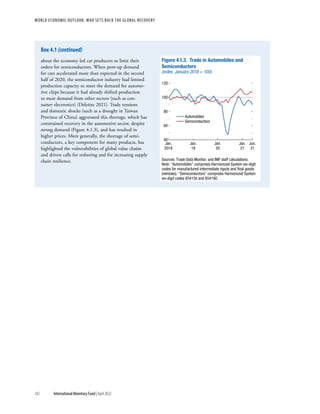
Figure 4.1.2. Foreign Suppliers, Production, and Delivery Delays in the United States	101
Figure 4.1.3. Trade in Automobiles and Semiconductors	102
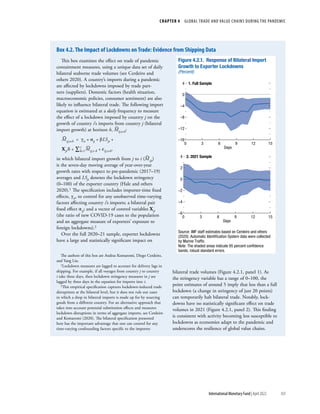
Figure 4.2.1. Response of Bilateral Import Growth to Exporter Lockdowns	103
Figure 4.3.1. Impact of Supply Chain Upstreamness, Automation, and Inventories on
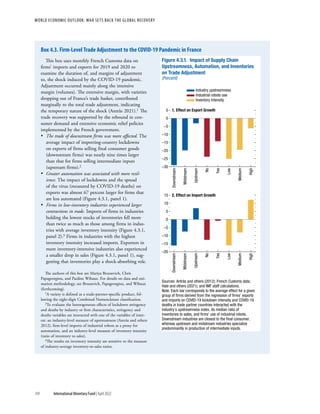
Trade Adjustment	104
WORLD ECONOMIC OUTLOOK: WAR SETS BACK THE GLOBAL RECOVERY
viii	 International Monetary Fund|April 2022
WORLD ECONOMIC OUTLOOK: TENSIONS FROM THE TWO-SPEED RECOVERY
ASSUMPTIONS AND CONVENTIONS
A number of assumptions have been adopted for the projections presented in the World Economic Outlook
(WEO). It has been assumed that real effective exchange rates remained constant at their average levels during
February 22, 2022 to March 22, 2022, except for those for the currencies participating in the European exchange
rate mechanism II, which are assumed to have remained constant in nominal terms relative to the euro; that
established policies of national authorities will be maintained (for specific assumptions about fiscal and monetary
policies for selected economies, see Box A1 in the Statistical Appendix); that the average price of oil will be
$106.83 a barrel in 2022 and $92.63 a barrel in 2023; that the three-month government bond yield for the United
States will average 0.9 percent in 2022 and 2.4 percent in 2023, for the euro area will average –0.7 percent in
2022 and 0.0 percent in 2023, and for Japan will average 0.0 percent in 2022 and 0.1 percent in 2023; and
that the 10-year government bond yield for the United States will average 2.6 percent in 2022 and 3.4 percent
in 2023, for the euro area will average 0.4 percent in 2022 and 0.6 percent in 2023, and for Japan will average
0.3 percent in 2022 and 0.4 percent in 2023. These are, of course, working hypotheses rather than forecasts,
and the uncertainties surrounding them add to the margin of error that would, in any event, be involved in the
projections. The estimates and projections are based on statistical information available through April 8, 2022.
The following conventions are used throughout the WEO:
•	 . . .  to indicate that data are not available or not applicable;
•	 –  between years or months (for example, 2021–22 or January–June) to indicate the years or months covered,
including the beginning and ending years or months; and
•	 /  between years or months (for example, 2021/22) to indicate a fiscal or financial year.
•	 “Billion” means a thousand million; “trillion” means a thousand billion.
•	 “Basis points” refers to hundredths of 1 percentage point (for example, 25 basis points are equivalent to ¼ of 1
percentage point).
•	 Data refer to calendar years, except in the case of a few countries that use fiscal years. Please refer to Table F in
the Statistical Appendix, which lists the economies with exceptional reporting periods for national accounts and
government finance data for each country.
•	 For some countries, the figures for 2021 and earlier are based on estimates rather than actual outturns. Please
refer to Table G in the Statistical Appendix, which lists the latest actual outturns for the indicators in the
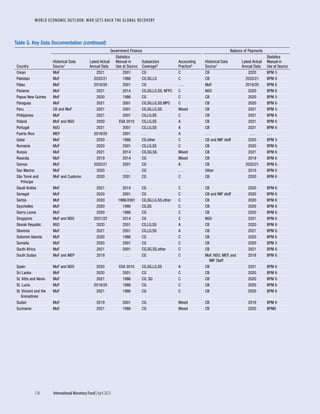
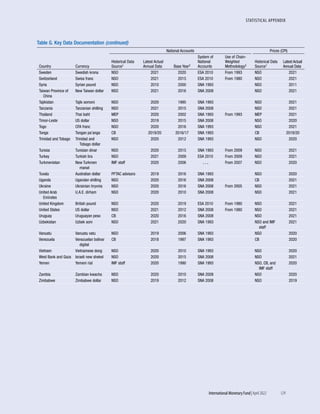
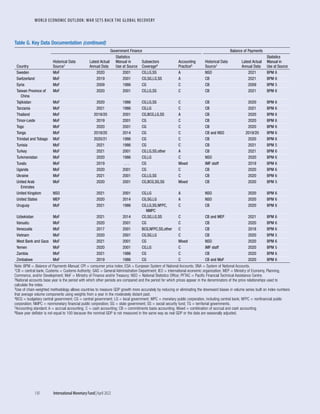
national accounts, prices, government finance, and balance of payments indicators for each country.
What is new in this publication:
•	 For Ecuador, fiscal sector projections are excluded from publication for 2022–27 because of ongoing program
review discussions.
•	 Ethiopia’s forecast data, which were previously omitted due to an unusually high degree of uncertainty, are now
included.
•	 Fiji’s fiscal data and forecasts are now presented on a fiscal year basis.
•	 For Tunisia, projections are excluded from publication for 2023–27 because of ongoing technical discussions
pending potential program negotiations.
•	 For Ukraine, all projections for 2022–27 except Real GDP are omitted due to an unusually high degree of
uncertainty. Real GDP is projected through 2022.
Assumptions and Conventions
	 International Monetary Fund|April 2022	ix
•	 Venezuela redenominated its currency on October 1, 2021, by replacing 1,000,000 bolívares soberano (VES)
with 1 bolívar digital (VED).
•	 Beginning with the April 2022 WEO, the interest rate assumptions are based on the three-month and 10-year
government bond yields, which replace the London interbank offered rates. See the above for more details.
In the tables and figures, the following conventions apply:
•	 If no source is listed in tables and figures, data are drawn from the WEO database.
•	 When countries are not listed alphabetically, they are ordered on the basis of economic size.
•	 Minor discrepancies between sums of constituent figures and totals shown reflect rounding.
•	 Composite data are provided for various groups of countries organized according to economic characteristics or
region. Unless noted otherwise, country group composites represent calculations based on 90 percent or more of
the weighted group data.
•	 The boundaries, colors, denominations, and any other information shown on maps do not imply, on the part of
the IMF, any judgment on the legal status of any territory or any endorsement or acceptance of such boundaries.
As used in this report, the terms “country” and “economy” do not in all cases refer to a territorial entity that is
a state as understood by international law and practice. As used here, the term also covers some territorial entities
that are not states but for which statistical data are maintained on a separate and independent basis.
WORLD ECONOMIC OUTLOOK: WAR SETS BACK THE GLOBAL RECOVERY
x	 International Monetary Fund|April 2022
WORLD ECONOMIC OUTLOOK: TENSIONS FROM THE TWO-SPEED RECOVERY
FURTHER INFORMATION
Corrections and Revisions
The data and analysis appearing in the World Economic Outlook (WEO) are compiled by the IMF staff at the
time of publication. Every effort is made to ensure their timeliness, accuracy, and completeness. When errors are
discovered, corrections and revisions are incorporated into the digital editions available from the IMF website and
on the IMF eLibrary (see below). All substantive changes are listed in the online table of contents.
Print and Digital Editions
Print
Print copies of this WEO can be ordered from the IMF bookstore at imfbk.st/512000.
Digital
Multiple digital editions of the WEO, including ePub, enhanced PDF, and HTML, are available on the
IMF eLibrary at http://www.elibrary.imf.org/APR22WEO.
Download a free PDF of the report and data sets for each of the charts therein from the IMF website at
www.imf.org/publications/weo or scan the QR code below to access the WEO web page directly:
Copyright and Reuse
Information on the terms and conditions for reusing the contents of this publication are at www.imf.org/external/
terms.htm.
International Monetary Fund|April 2022	xi
This version of the World Economic Outlook (WEO) is available in full through the IMF eLibrary (www.elibrary.
imf.org) and the IMF website (www.imf.org). Accompanying the publication on the IMF website is a larger compi-
lation of data from the WEO database than is included in the report itself, including files containing the series most
frequently requested by readers. These files may be downloaded for use in a variety of software packages.
The data appearing in the WEO are compiled by the IMF staff at the time of the WEO exercises. The histori-
cal data and projections are based on the information gathered by the IMF country desk officers in the context
of their missions to IMF member countries and through their ongoing analysis of the evolving situation in each
country. Historical data are updated on a continual basis as more information becomes available, and structural
breaks in data are often adjusted to produce smooth series with the use of splicing and other techniques. IMF
staff estimates continue to serve as proxies for historical series when complete information is unavailable. As a
result, WEO data can differ from those in other sources with official data, including the IMF’s International
Financial Statistics.
The WEO data and metadata provided are “as is” and “as available,” and every effort is made to ensure their
timeliness, accuracy, and completeness, but these cannot be guaranteed. When errors are discovered, there is a
concerted effort to correct them as appropriate and feasible. Corrections and revisions made after publication are
incorporated into the electronic editions available from the IMF eLibrary (www.elibrary.imf.org) and on the IMF
website (www.imf.org). All substantive changes are listed in detail in the online tables of contents.
For details on the terms and conditions for usage of the WEO database, please refer to the IMF Copyright and
Usage website (www.imf.org/external/terms.htm).
Inquiries about the content of the WEO and the WEO database should be sent by mail, fax, or online forum
(telephone inquiries cannot be accepted):
World Economic Studies Division
Research Department
International Monetary Fund
700 19th Street, NW
Washington, DC 20431, USA
Fax: (202) 623-6343
Online Forum: www.imf.org/weoforum
DATA
WORLD ECONOMIC OUTLOOK: WAR SETS BACK THE GLOBAL RECOVERY
xii	 International Monetary Fund|April 2022
WORLD ECONOMIC OUTLOOK: TENSIONS FROM THE TWO-SPEED RECOVERY
PREFACE
The analysis and projections contained in the World Economic Outlook are integral elements of the IMF’s
surveillance of economic developments and policies in its member countries, of developments in international
financial markets, and of the global economic system. The survey of prospects and policies is the product of a
comprehensive interdepartmental review of world economic developments, which draws primarily on information
the IMF staff gathers through its consultations with member countries. These consultations are carried out
in particular by the IMF’s area departments—namely, the African Department; Asia and Pacific Department;
European Department; Middle East and Central Asia Department; and Western Hemisphere Department—
together with the Strategy, Policy, and Review Department; the Monetary and Capital Markets Department; and
the Fiscal Affairs Department.
The analysis in this report was coordinated in the Research Department under the general direction of
Pierre-Olivier Gourinchas, Economic Counsellor and Director of Research. The project was directed by Petya
Koeva Brooks, Deputy Director, Research Department, and Malhar Nabar, Division Chief, Research Department.
Shekhar Aiyar, Division Chief, Research Department and Head of the Spillovers Task Force, supervised Chapter 4.
The primary contributors to this report are Silvia Albrizio, Jorge Alvarez, Philip Barrett, John Bluedorn,
Christian Bogmans, Sonali Das, Niels-Jakob Hansen, Christoffer Koch, Toh Kuan, Ting Lan, Davide Malacrino,
Adil Mohommad, Jean-Marc Natal, Diaa Noureldin, Andrea Pescatori, Andrea Presbitero, Ervin Prifti, Galen Sher,
Ippei Shibata, Martin Stuermer, Marina Mendes Tavares, Nico Valckx, and Philippe Wingender.
Other contributors include Itai Agur, Cian Allen, Gavin Asdorian, Srijoni Banerjee, Eric Bang, Katharina
Bergant, Rachel Brasier, Mariya Brussevich, Diego Cerdeiro, Shan Chen, Yaniv Cohen, Pablo Gonzalez
Dominguez, Wenchuan Dong, Angela Espiritu, Rebecca Eyassu, Julia Estefania Flores, Francesco Grigoli,
Jinjin He, Youyou Huang, Benjamin Hunt, Piyusha Khot, Christina Kolerus, Andras Komaromi, Siddharth
Kothari, Eduard Laurito, Jungjin Lee, Daniel Leigh, Andrei Levchenko, Yang Liu, Rui Mano, Susanna Mursula,
Yousef F. Nazer, Savannah Newman, Anh Dinh Minh Nguyen, Cynthia Nyanchama Nyakeri, Emory Oakes,
Myrto Oikonomou, Chris Papageorgiou, Ilse Peirtsegaele, Clarita Phillips, Carlo Pizzinelli, Josef Platzer,
Rafael Portillo, Evgenia Pugacheva, Yiyuan Qi, Max Rozycki, Marika Santoro, Alexandre Sollaci, Philip Stokoe,
Nour Tawk, Robin Tietz, Nicholas Tong, Pauline Wibaux, Yarou Xu, Hannah Leheng Yang, Jiaqi Zhao,
Canran Zheng, and Bryan Zou.
Joseph Procopio from the Communications Department led the editorial team for the report, with assistance
from Lucy Scott Morales, James Unwin, Michael Harrup, Nancy Morrison, Harold Medina, and TalentMEDIA
Services.
The analysis has benefited from comments and suggestions by staff members from other IMF departments,
as well as by Executive Directors following their discussion of the report on April 11, 2022. However, estimates,
projections, and policy considerations are those of the IMF staff and should not be attributed to Executive
Directors or to their national authorities.
International Monetary Fund|April 2022	xiii
G
lobal economic prospects have worsened
significantly since our last World Economic
Outlook forecast in January. At the time,
we had projected the global recovery to
strengthen from the second quarter of this year after
a short-lived impact of the Omicron variant. Since
then, the outlook has deteriorated, largely because
of Russia’s invasion of Ukraine—causing a tragic
humanitarian crisis in Eastern Europe—and the sanc-
tions aimed at pressuring Russia to end hostilities.
This crisis unfolds while the global economy was on
a mending path but had not yet fully recovered from
the COVID-19 pandemic, with a significant diver-
gence between the economic recoveries of advanced
economies and emerging market and developing ones.
In addition to the war, frequent and wider-ranging
lockdowns in China—including in key manufactur-
ing hubs—have also slowed activity there and could
cause new bottlenecks in global supply chains. Higher,
broader, and more persistent price pressures also led
to a tightening of monetary policy in many coun-
tries. Overall risks to economic prospects have risen
sharply and policy trade-offs have become ever more
challenging.
Beyond the immediate humanitarian impacts, the
war will severely set back the global recovery, slow-
ing growth and increasing inflation even further. This
report projects global growth at 3.6 percent in 2022
and 2023—0.8 and 0.2 percentage points lower than
in the January forecast, respectively. The downgrade
largely reflects the war’s direct impacts on Russia and
Ukraine and global spillovers.
Both Russia and Ukraine are projected to experi-
ence large GDP contractions in 2022. The severe
collapse in Ukraine is a direct result of the invasion,
destruction of infrastructure, and exodus of its people.
In Russia, the sharp decline reflects the impact of
the sanctions with a severing of trade ties, greatly
impaired domestic financial intermediation, and loss
of confidence.
The economic effects of the war are spreading far
and wide—like seismic waves that emanate from the
epicenter of an earthquake—mainly through com-
modity markets, trade, and financial linkages. Because
Russia is a major supplier of oil, gas, and metals, and,
together with Ukraine, of wheat and corn, the current
and anticipated decline in the supply of these com-
modities has already driven their prices up sharply.
Europe, Caucasus and Central Asia, Middle East
and North Africa, and sub-Saharan Africa are most
affected. The food and fuel price increases will hurt
lower-income households globally—including in the
Americas and Asia.
As Chapter 1 details, the war adds to the series of
supply shocks that have struck the global economy
over the course of the pandemic, contributing to more
shortages beyond the energy and agricultural sectors.
Through closely integrated global supply chains, pro-
duction disruptions in one country can very quickly
cascade globally. Firms in Russia and Ukraine supply
specialized inputs, and shortfalls in some of those
inputs are already having impacts on European car
manufacturers. Some countries in eastern Europe and
central Asia have large direct trade and remittance links
with Russia. Activity in those economies is expected
to suffer. The displacement of more than 4 million
Ukrainian people to neighboring countries, especially
Poland but also Romania, Moldova, and Hungary, will
also add to economic pressures in the region.
Even prior to the war, inflation had surged in many
economies because of soaring commodity prices and
pandemic-induced supply-demand imbalances. Some
emerging markets and developed economies’ central
banks, such as the US Federal Reserve and those in
Latin America, had already come under pressure before
the war, bringing forward the timing of their mon-
etary policy tightening. War-related supply shortages
will greatly amplify those pressures, notably through
increases in the price of energy, metals, and food.
Although bottlenecks are expected to eventually ease
as production elsewhere responds to higher prices and
new capacity becomes operational, supply shortages in
some sectors are expected to last into 2023. As a result,
inflation is now projected to remain elevated for much
longer than in our previous forecast, in both advanced
and emerging market and developing economies.
FOREWORD
In many countries, inflation has become a central
concern. In some advanced economies, including the
United States and some European countries, it has
reached its highest level in more than 40 years, in
the context of tight labor markets. There is a rising
risk that inflation expectations become de-anchored,
prompting a more aggressive tightening response from
central banks. In emerging market and developing
economies, increases in food and fuel prices could
significantly increase the risk of social unrest.
Immediately after the invasion, capital outflows
increased markedly from emerging market and
developing economies, tightening financial condi-
tions for vulnerable borrowers and net importers of
commodities, and putting downward pressure on the
currencies of the most exposed countries. So far, this
repricing has been mostly orderly. Yet the April 2022
Global Financial Stability Report highlights several
financial fragility risks. A wider range of emerging
market economies could come under pressure if the
pace of global monetary tightening accelerates further,
especially in the United States, or if financial markets
start to reprice more aggressively, which would further
weigh on the global outlook.
On the fiscal side, policy space was already eroded
in many countries by necessary COVID-related
spending. Debt levels have risen significantly, and
extraordinary fiscal support was expected to be
removed in 2022–23. The war and the impending
increase in global interest rates will further reduce
fiscal space in many countries, especially oil- and
food-importing emerging market and developing
economies. The analysis in Chapter 2 shows that
non-financial corporate and household leverage
increased in many countries during the pandemic, as
many governments helped maintain access to credit.
Looking ahead, this may create some credit market
vulnerabilities as interest rates and risk premia rise,
with implications for financial stability.
The war has also increased the risk of a more
permanent fragmentation of the world economy into
geopolitical blocks with distinct technology standards,
cross-border payment systems, and reserve currencies.
Such a tectonic shift would entail high adjustment
costs and long-run efficiency losses as supply chains
and production networks are reconfigured. It also
represents a major challenge to the rules-based frame-
work that has governed international and economic
relations for the last 70 years.
Because of the unprecedented nature of the shock,
we highlight that the uncertainty around these projec-
tions is considerable, well-beyond the usual range.
Growth could slow significantly more while inflation
could turn out higher than expected if, for instance,
sanctions aimed at ending the war extend to an even
broader volume of Russian energy and other exports.
These possibilities are explored in more detail in a
Scenario Box in Chapter 1. Moreover, the pandemic is
still with us. The continued spread of the virus could
give rise to more lethal variants that escape vaccines
or immunity from past infections, prompting new
lockdowns and production disruptions.
In this difficult and uncertain environment, effec-
tive national-level policies and multilateral efforts
have an ever more important role in shaping eco-
nomic outcomes. Central banks will need to adjust
their monetary stances even more aggressively should
medium- or long-term inflation expectations start
drifting from central bank targets or core inflation
remains persistently elevated. As advanced economy
central banks tighten policy and interest rates rise
in those countries, emerging market and developing
economies could face a further withdrawal of capital
and currency depreciations that increase inflation
pressures. Clear central bank communications on
the drivers of inflation and forward guidance on the
outlook for monetary policy, supplemented—when
appropriate—with capital flow management measures
in line with the IMF’s revised Institutional View on
capital flows, will be essential to minimize the risk of
disruptive adjustments.
Although several economies will need to consoli-
date their fiscal balances, this should not impede
governments from providing well-targeted support for
refugees displaced by conflict, households squeezed by
higher food and fuel prices, and those affected by the
pandemic, as argued in the April 2022 Fiscal Monitor.
Social and health spending more broadly should
continue to be prioritized. Embedding these fiscal
initiatives in a medium-term framework with a clear,
credible path for stabilizing public debt can also help
create room to deliver the needed support.
Even as policymakers focus on cushioning the impact
of the war and the pandemic, attention will need to be
maintained on longer-term goals. This includes reskill-
ing workers for the ongoing digital transformation while
facilitating the labor market transformation necessary to
achieve net zero emissions, as discussed in Chapter 3 of
WORLD ECONOMIC OUTLOOK: WAR SETS BACK THE GLOBAL RECOVERY
xiv	 International Monetary Fund|April 2022
this report. A comprehensive approach that combines
carbon pricing, investment in renewables, and com-
pensation for those adversely affected by the transition
can help hasten the needed green transition. Another
long-term goal will be to improve the resilience of global
supply chains, as discussed in Chapter 4. The analysis
in that chapter highlights how reshoring policies could
leave economies more exposed to supply disruptions,
not less.
Multilateral cooperation remains essential to
advance these goals. An immediate priority is to
find a peaceful resolution to the war. On the climate
front, it is imperative to close the gap between stated
ambitions and policy actions. An international carbon
price floor differentiated by country income levels and
multilateral finance initiatives will be required to coor-
dinate national efforts aimed at reducing the risks of
catastrophic climate events. Equally important is the
need to secure equitable worldwide access to the full
complement of COVID-19 tools—tests, therapies,
and vaccines—to contain the virus, and to address
other global health priorities.
Policymakers should also ensure that the global
financial safety net operates effectively to help vulner-
able economies adjust as interest rates rise in the fight
against inflation. For some economies, this will mean
securing adequate liquidity support to tide over short-
term refinancing difficulties. But for other economies,
comprehensive sovereign debt restructuring will be
required to free up resources for vital health, social,
and development spending. The G20’s Common
Framework for Debt Treatments offers guidance for
such restructuring but has yet to deliver. The absence
of an effective and expeditious framework is a fault
line in the global financial system. Particular atten-
tion should also be paid to the overall stability of the
global economic order to make sure that the rules-
based framework that has lifted hundreds of millions
out of poverty is not dismantled.
Importantly, these risks and policies interact in
complex ways, at short, medium, and longer horizons.
Rising interest rates, the need to protect vulnerable
populations against high food and energy prices, or
increased defense spending, make it more difficult to
maintain fiscal sustainability. In turn, the erosion of
fiscal space makes it harder to invest in the climate
transition, while delays in dealing with the climate
crisis make economies more vulnerable to commodity
price shocks, which feeds into inflation and economic
instability. Geopolitical fragmentation worsens all
these trade-offs by increasing the risk of conflict and
economic volatility and decreasing overall efficiency.
In the matter of a few weeks, the world has yet again
experienced a major, transformative shock. Just as a
durable recovery from the pandemic-induced global
economic collapse appeared in sight, the war has cre-
ated the very real prospect that a large part of the recent
gains will be erased. The long list of challenges calls
for commensurate and concerted policy actions at the
national and multilateral levels to prevent even worse
outcomes and improve economic prospects for all.
Pierre-Olivier Gourinchas
Economic Counsellor and Director of Research
FOREWORD
	 International Monetary Fund|April 2022	xv
WORLD ECONOMIC OUTLOOK: WAR SETS BACK THE GLOBAL RECOVERY
xvi	 International Monetary Fund|April 2022
WORLD ECONOMIC OUTLOOK: TENSIONS FROM THE TWO-SPEED RECOVERY
The war in Ukraine has triggered a costly humani-
tarian crisis that demands a peaceful resolution.
Economic damage from the conflict will contribute
to a significant slowdown in global growth in 2022.
A severe double-digit drop in GDP for Ukraine and
a large contraction in Russia are more than likely,
along with worldwide spillovers through commodity
markets, trade, and financial channels. Even as the
war reduces growth, it will add to inflation. Fuel and
food prices have increased rapidly, with vulnerable
populations—particularly in low-income countries—
most affected. Elevated inflation will complicate the
trade-offs central banks face between containing price
pressures and safeguarding growth. Interest rates
are expected to rise as central banks tighten policy,
exerting pressure on emerging market and developing
economies. Moreover, many countries have limited
fiscal policy space to cushion the impact of the war
on their economies. The invasion has contributed to
economic fragmentation as a significant number of
countries sever commercial ties with Russia and risks
derailing the post-pandemic recovery. It also threat-
ens the rules-based frameworks that have facilitated
greater global economic integration and helped lift
millions out of poverty. In addition, the conflict adds
to the economic strains wrought by the pandemic.
Although many parts of the world appear to be mov-
ing past the acute phase of the COVID-19 crisis,
deaths remain high, especially among the unvacci-
nated. Moreover, recent lockdowns in key manufac-
turing and trade hubs in China will likely compound
supply disruptions elsewhere.
Global growth is projected to slow from an esti-
mated 6.1 percent in 2021 to 3.6 percent in 2022 and
2023. This is 0.8 and 0.2 percentage points lower for
2022 and 2023 than in the January World Economic
Outlook Update. Beyond 2023, global growth is fore-
cast to decline to about 3.3 percent over the medium
term. Crucially, this forecast assumes that the conflict
remains confined to Ukraine, further sanctions on
Russia exempt the energy sector (although the impact
of European countries’ decisions to wean themselves
off Russian energy and embargoes announced through
March 31, 2022, are factored into the baseline),
and the pandemic’s health and economic impacts
abate over the course of 2022. With a few excep-
tions, employment and output will typically remain
below pre-pandemic trends through 2026. Scarring
effects are expected to be much larger in emerging
market and developing economies than in advanced
economies—reflecting more limited policy sup-
port and generally slower vaccination—with output
expected to remain below the pre-pandemic trend
throughout the forecast horizon. Unusually high
uncertainty surrounds this forecast, and downside
risks to the global outlook dominate—including from
a possible worsening of the war, escalation of sanc-
tions on Russia, a sharper-than-anticipated decelera-
tion in China as a strict zero-COVID strategy is
tested by Omicron, and a renewed flare-up of the
pandemic should a new, more virulent virus strain
emerge. Moreover, the war in Ukraine has increased
the probability of wider social tensions because of
higher food and energy prices, which would further
weigh on the outlook.
Inflation is expected to remain elevated for longer
than in the previous forecast, driven by war-induced
commodity price increases and broadening price pres-
sures. For 2022, inflation is projected at 5.7 percent in
advanced economies and 8.7 percent in emerging mar-
ket and developing economies—1.8 and 2.8 percentage
points higher than projected in January. Although a
gradual resolution of supply-demand imbalances and a
modest pickup in labor supply are expected in the base-
line, easing price inflation eventually, uncertainty again
surrounds the forecast. Conditions could significantly
deteriorate. Worsening supply-demand imbalances—
including those stemming from the war—and further
increases in commodity prices could lead to persistently
high inflation, rising inflation expectations, and stron-
EXECUTIVE SUMMARY
ger wage growth. If signs emerge that inflation will be
high over the medium term, central banks will be forced
to react faster than currently anticipated—raising inter-
est rates and exposing debt vulnerabilities, particularly in
emerging markets.
The war in Ukraine has exacerbated two difficult
policy trade-offs: between tackling inflation and safeguard-
ing the recovery; and between supporting the vulnerable
and rebuilding fiscal buffers.
•	 Tackling inflation: Although the drivers of inflation
are in many cases beyond the control of central
banks (the war, sanctions, the pandemic, supply
chain disruptions), price pressures are increasingly
broad-based. The transmission of the war shock will
vary across countries, depending on trade and finan-
cial linkages, exposure to commodity price increases,
and the strength of the preexisting inflation surge.
The appropriate monetary policy response will
therefore differ across economies. In some places,
including the United States, inflationary pressure
had strengthened considerably and become more
broad-based even before the Russian invasion of
Ukraine—buoyed by strong policy support. In other
countries, the prominence of fuel- and war-affected
commodities in local consumption baskets could
lead to broader and more persistent price pressures.
In both cases, tighter monetary policy will be appro-
priate to check the cycle of higher prices driving
up wages and inflation expectations, and wages and
inflation expectations driving up prices. In countries
where the harmful effects from the war are larger,
the trade-off between safeguarding growth and con-
taining inflation will be more challenging. Central
banks should remain vigilant to the impact of price
pressures on inflation expectations and continue to
communicate clearly on the outlook for inflation
and monetary policy. A well-telegraphed, data-
dependent approach to adjusting forward guidance
on the monetary stance—including the unwinding
of record-high central bank balance sheets and the
path for policy rates—is the key to maintaining the
credibility of policy frameworks.
•	 Fiscal policy amid rising interest rates and a cost-of-
living squeeze: Fiscal policies should depend on
exposure to the war, the state of the pandemic, and
the strength of the recovery. Following a huge and
necessary fiscal expansion in many countries during
the pandemic, debt levels are at all-time highs and
governments are more exposed than ever to higher
interest rates. The need for consolidation should not
prevent governments from prioritizing spending with
well-targeted support for the vulnerable—including
refugees, those struggling because of commodity price
spikes, and those affected by the pandemic. Where
fiscal space permits and when monetary policy
is constrained at the national level—for instance
by the Effective Lower Bound or in a monetary
union—broader fiscal support may be warranted,
depending on the severity of the decline in aggregate
demand. But this support should be deployed in
ways that avoid exacerbating ongoing supply-demand
­
imbalances and price pressures. Where fiscal space is
more limited, governments will need to tread a diffi-
cult path between fiscal consolidation and prioritizing
essential expenditures. Moreover, authorities should
be vigilant regarding private sector vulnerabilities to
rising interest rates, a topic explored in Chapter 2.
•	 Preparing for tomorrow’s economy: Beyond the
immediate challenges of the war and the pandemic,
policymakers should not lose sight of longer-term
goals. Pandemic disruptions have highlighted the
productivity of novel ways of working. Govern-
ments should look to harness positive structural
change wherever possible, embracing the digital
transformation and retooling and reskilling workers
to meet its challenges. Carbon pricing and fossil fuel
subsidy reform can also help with the transition to
a cleaner mode of production, less exposed to fossil
fuel prices—more important than ever in light of
the fallout of the war on the global energy market.
The green energy transition will also entail labor
market reallocation across occupations and sectors.
Chapter 3 examines policies that can facilitate this
labor market transformation.
Multilateral efforts to respond to the humanitarian
crisis, prevent further economic fragmentation, maintain
global liquidity, manage debt distress, tackle climate
change, and end the pandemic remain essential. The
adverse consequences from the current geopolitical
conflict are a reminder of the importance of global
cooperation. This extends from addressing the immedi-
ate needs of war refugees to the eventual great effort to
rebuild Ukraine. As countries contend with higher vol-
atility, spending pressures from humanitarian response
needs, and tighter financial market ­
conditions, the
Executive Summary
	 International Monetary Fund|April 2022	xvii
likelihood that some countries will become financially
constrained increases. Multilateral institutions offer a
critical safety net, providing emergency liquidity and
preventing crises from spreading. Where liquidity
support alone is insufficient, progress toward orderly
debt restructuring is essential. On climate, advanced
economies must make real progress toward their
COP26 climate summit pledges. Emerging market
and developing economies must extend their ambition
to reduce emissions. And as the pandemic is not yet
over, governments must use all tools at their disposal
to combat the virus, both by meeting vaccination
targets and by ensuring equitable access to tests and
treatment.
WORLD ECONOMIC OUTLOOK: WAR SETS BACK THE GLOBAL RECOVERY
xviii	 International Monetary Fund|April 2022
International Monetary Fund | April 2022 1
War Slows the Recovery
The war in Ukraine has triggered a costly humani-
tarian crisis that, without a swift and peaceful reso-
lution, could become overwhelming. Global growth
is expected to slow significantly in 2022, largely as a
consequence of the war. A severe double-digit drop in
GDP is expected in Ukraine due to fighting. A deep
contraction is projected for Russia due to sanctions
and European countries’ decisions to scale back energy
imports. The economic costs of war are expected to
spread farther afield through commodity markets,
trade, and—to a lesser extent—financial interlinkages.
Fuel and food price rises are already having a global
impact, with vulnerable populations—particularly in
low-income countries—most affected.
The war in Ukraine will amplify economic forces
already shaping the global recovery from the pandemic.
The war has further increased commodity prices and
intensified supply disruptions, adding to inflation. Even
before Russia invaded Ukraine, broad price pressures had
led central banks to tighten monetary policy and indicate
increasingly hawkish future stances. As a result, inter-
est rates had risen sharply and asset price volatility had
increased since the start of 2022—hitting household and
corporate balance sheets, consumption, and investment.
The prospect of higher borrowing costs has also increased
the cost of extended fiscal support. These changes are
occurring faster than previously expected even as many
parts of the global economy—particularly countries with
low vaccination rates—must contend with continued
strain on health care systems because of the pandemic.
The war has also added to already high uncertainty
about the global outlook. Although many countries
appear to be moving past the acute phase of the
pandemic, new variants could again lead to waves of
infection and further disruption. Inflation pressure
could strengthen more than anticipated and demand
more aggressive policy responses. Tighter financial
conditions will shine a harsh spotlight on debt vul-
nerabilities among sovereign and corporate borrow-
ers, risking widespread debt distress. Moreover, with
continued tight policies toward the real estate sector
and the possibility of more widespread lockdowns as
part of the strict zero-COVID strategy, China’s econ-
omy could slow more than currently projected—with
consequences for Asia and beyond. This could further
set back the recovery, particularly in emerging mar-
ket and developing economies. More limited policy
space could compound scarring effects, particularly in
emerging market and developing economies, where
medium-term baseline output is expected to be close
to 6 percent below pre-pandemic projections.
More fundamentally, geopolitical tensions threaten
the rules-based frameworks that have governed interna-
tional economic relations since World War II. Current
sanctions imposed with the aim of pressing Russia to
end the war are already cutting financial and trade
linkages between Russia and other countries, with
far-reaching repercussions. Increased global polarization
also impedes the cooperation essential for long-term
prosperity. This could include derailing the urgent
climate change agenda and undermining multilateral
efforts to improve debt resolution frameworks, trade
integration, and initiatives to avoid future pandemics.
This chapter first discusses the global growth
outlook before outlining spillover channels from the
war in Ukraine, inflation prospects, and the implica-
tions of rising interest rates for emerging market and
developing economies. The discussion then turns to
the risks to the outlook and policies for improving
global prospects.
Fragmentation and Fragility Set to Slow
Growth during 2022–23
The war in Ukraine has led to extensive loss of
life, triggered the biggest refugee crisis in Europe
since World War II, and severely set back the global
recovery. After a strong recovery in 2021, short-term
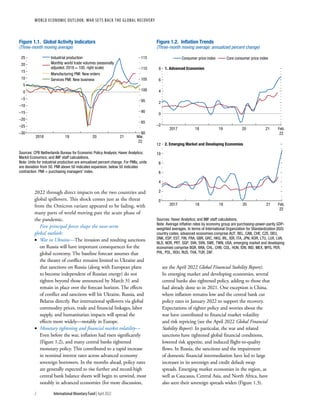
indicators suggest that global activity has slowed (see
Figure 1.1). Global growth is projected to decline
from an estimated 6.1 percent in 2021 to 3.6 percent
in 2022–23—0.8 and 0.2 percentage points lower for
2022 and 2023 than in the January 2022 World Eco-
nomic Outlook. The ongoing war in Ukraine and sanc-
tions on Russia are expected to reduce global growth in
GLOBAL PROSPECTS AND POLICIES
1
CHAPTER
WORLD ECONOMIC OUTLOOK: War Sets Back the Global Recovery
2 International Monetary Fund | April 2022
2022 through direct impacts on the two countries and
global spillovers. This shock comes just as the threat
from the Omicron variant appeared to be fading, with
many parts of world moving past the acute phase of
the pandemic.
Five principal forces shape the near-term
global outlook:
•
• War in Ukraine—The invasion and resulting sanctions
on Russia will have important consequences for the
global economy. The baseline forecast assumes that
the theater of conflict remains limited to Ukraine and
that sanctions on Russia (along with European plans
to become independent of Russian energy) do not
tighten beyond those announced by March 31 and
remain in place over the forecast horizon. The effects
of conflict and sanctions will hit Ukraine, Russia, and
Belarus directly. But international spillovers via global
commodity prices, trade and financial linkages, labor
supply, and humanitarian impacts will spread the
effects more widely—notably in Europe.
•
• Monetary tightening and financial market volatility—
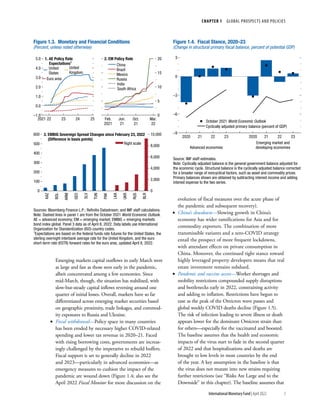
Even before the war, inflation had risen significantly
(Figure 1.2), and many central banks tightened
monetary policy. This contributed to a rapid increase
in nominal interest rates across advanced economy
sovereign borrowers. In the months ahead, policy rates
are generally expected to rise further and record-high
central bank balance sheets will begin to unwind, most
notably in advanced economies (for more discussion,
see the April 2022 Global Financial Stability Report).
In emerging market and developing economies, several
central banks also tightened policy, adding to those that
had already done so in 2021. One exception is China,
where inflation remains low and the central bank cut
policy rates in January 2022 to support the recovery.
Expectations of tighter policy and worries about the
war have contributed to financial market volatility
and risk repricing (see the April 2022 Global Financial
Stability Report). In particular, the war and related
sanctions have tightened global financial conditions,
lowered risk appetite, and induced flight-to-quality
flows. In Russia, the sanctions and the impairment
of domestic financial intermediation have led to large
increases in its sovereign and credit default swap
spreads. Emerging market economies in the region, as
well as Caucasus, Central Asia, and North Africa, have
also seen their sovereign spreads widen (Figure 1.3).
Industrial production
Monthly world trade volumes (seasonally
adjusted, 2018 = 100, right scale)
Manufacturing PMI: New orders
Services PMI: New business
Sources: CPB Netherlands Bureau for Economic Policy Analysis; Haver Analytics;
Markit Economics; and IMF staff calculations.
Note: Units for industrial production are annualized percent change. For PMIs, units
are deviation from 50. PMI above 50 indicates expansion, below 50 indicates
contraction. PMI = purchasing managers’ index.
–30
–25
–20
–15
–10
–5
0
5
10
15
20
25
80
85
90
95
100
105
110
115
2018 19 20 21 Mar.
22
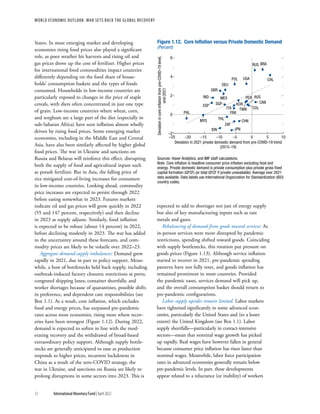
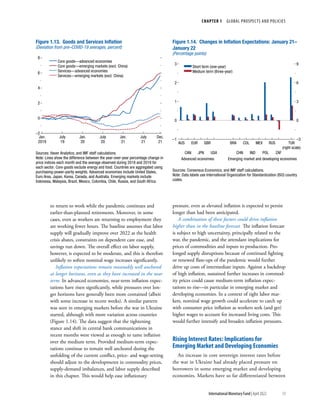
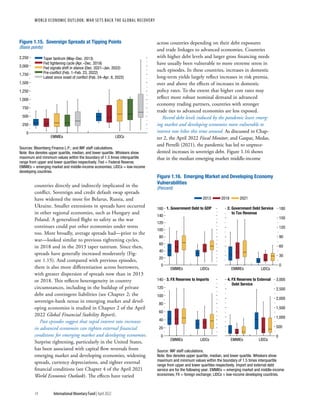
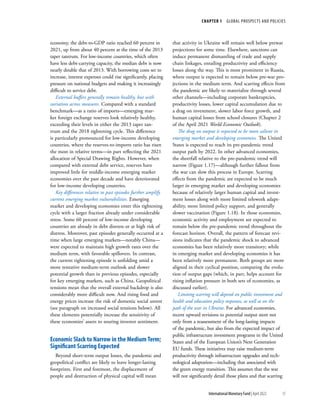
Figure 1.1. Global Activity Indicators
(Three-month moving average)
Consumer price index Core consumer price index
Sources: Haver Analytics; and IMF staff calculations.
Note: Average inflation rates by economy group are purchasing-power-parity GDP-
weighted averages. In terms of International Organization for Standardization (ISO)
country codes, advanced economies comprise AUT, BEL, CAN, CHE, CZE, DEU,
DNK, ESP, EST, FIN, FRA, GBR, GRC, HKG, IRL, ISR, ITA, JPN, KOR, LTU, LUX, LVA,
NLD, NOR, PRT, SGP, SVK, SVN, SWE, TWN, USA; emerging market and developing
economies comprise BGR, BRA, CHL, CHN, COL, HUN, IDN, IND, MEX, MYS, PER,
PHL, POL, ROU, RUS, THA, TUR, ZAF.
–2
0
2
4
6
8
0
2
4
6
8
10
12
2017 18 19 20 21 Feb.
22
2017 18 19 20 21 Feb.
22
1. Advanced Economies
2. Emerging Market and Developing Economies
Figure 1.2. Inflation Trends
(Three-month moving average; annualized percent change)
CHAPTER 1  GLOBAL PROSPECTS AND POLICIES
3
International Monetary Fund | April 2022
Emerging markets capital outflows in early March were
as large and fast as those seen early in the pandemic,
albeit concentrated among a few economies. Since
mid-March, though, the situation has stabilized, with
slow-but-steady capital inflows reversing around one
quarter of initial losses. Overall, markets have so far
differentiated across emerging market securities based
on geographic proximity, trade linkages, and commod-
ity exposures to Russia and Ukraine.
•
• Fiscal withdrawal—Policy space in many countries
has been eroded by necessary higher COVID-related
spending and lower tax revenue in 2020–21. Faced
with rising borrowing costs, governments are increas-
ingly challenged by the imperative to rebuild buffers.
Fiscal support is set to generally decline in 2022
and 2023—particularly in advanced economies—as
emergency measures to cushion the impact of the
pandemic are wound down (­
Figure 1.4; also see the
April 2022 Fiscal Monitor for more discussion on the
evolution of fiscal measures over the acute phase of
the pandemic and subsequent recovery).
•
• China’s slowdown—Slowing growth in China’s
economy has wider ramifications for Asia and for
commodity exporters. The combination of more
transmissible variants and a zero-COVID strategy
entail the prospect of more frequent lockdowns,
with attendant effects on private consumption in
China. Moreover, the continued tight stance toward
highly leveraged property developers means that real
estate investment remains subdued.
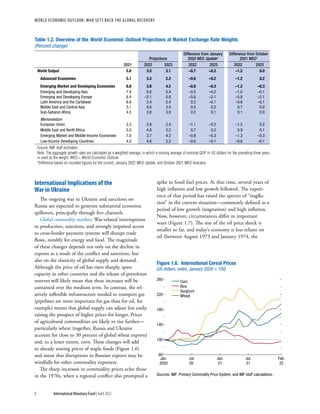
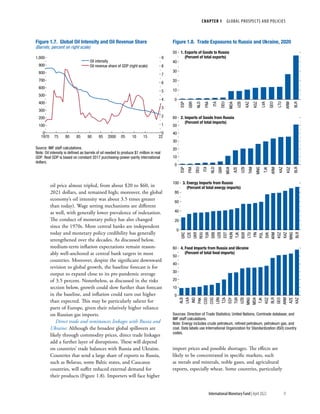
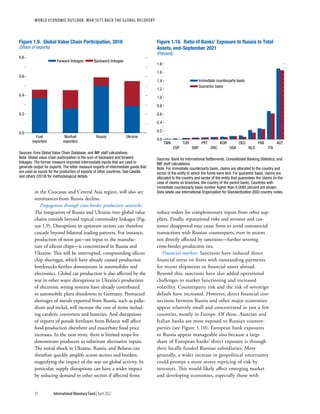
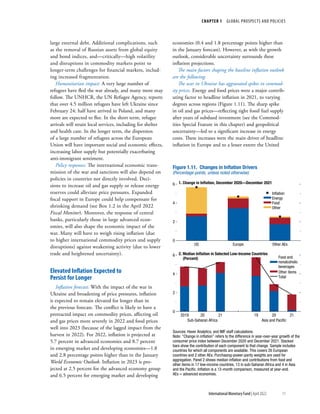
•
• Pandemic and vaccine access—Worker shortages and
mobility restrictions compounded supply disruptions
and bottlenecks early in 2022, constraining activity
and adding to inflation. Restrictions have begun to
ease as the peak of the Omicron wave passes and
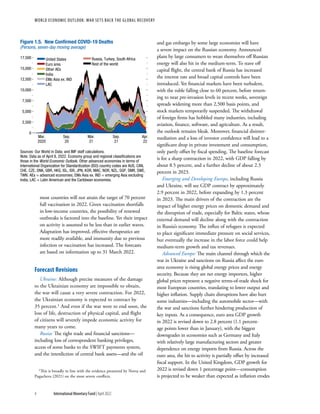
global weekly COVID deaths decline (Figure 1.5).
The risk of infection leading to severe illness or death
appears lower for the dominant Omicron strain than
for others—especially for the vaccinated and boosted.
The baseline assumes that the health and economic
impacts of the virus start to fade in the second quarter
of 2022 and that hospitalizations and deaths are
brought to low levels in most countries by the end
of the year. A key assumption in the baseline is that
the virus does not mutate into new strains requiring
further restrictions (see “Risks Are Large and to the
Downside” in this chapter). The baseline assumes that
United
States
United
Kingdom
Euro area
China
Brazil
Mexico
Russia
India
South Africa
Right scale
Sources: Bloomberg Finance L.P.; Refinitiv Datastream; and IMF staff calculations.
Note: Dashed lines in panel 1 are from the October 2021 World Economic Outlook.
AE = advanced economy; EM = emerging market; EMBIG = emerging markets
bond index global. Panel 3 data as of April 8, 2022. Data labels use International
Organization for Standardization (ISO) country codes.
1
Expectations are based on the federal funds rate futures for the United States, the
sterling overnight interbank average rate for the United Kingdom, and the euro
short-term rate (€STR) forward rates for the euro area, updated April 8, 2022.
–1.0
0.0
1.0
2.0
3.0
4.0
5.0
2021 23
22 24 25
0
5
10
15
20
Feb.
2021
Oct.
21
Jun.
21
Mar.
22
0
100
200
300
400
500
600
0
2,000
4,000
6,000
8,000
10,000
1. AE Policy Rate
Expectations1
2. EM Policy Rate
3. EMBIG Sovereign Spread Changes since February 23, 2022
(Difference in basis points)
Figure 1.3. Monetary and Financial Conditions
(Percent, unless noted otherwise)
KAZ
BOL
ARM
GEO
SLV
TUN
PAK
LKA
UKR
RUS
BLR
October 2021 World Economic Outlook
Cyclically adjusted primary balance (percent of GDP)
Source: IMF staff estimates.
Note: Cyclically adjusted balance is the general government balance adjusted for
the economic cycle. Structural balance is the cyclically adjusted balance corrected
for a broader range of noncyclical factors, such as asset and commodity prices.
Primary balances shown are obtained by subtracting interest income and adding
interest expense to the two series.
–9
–6
–3
0
3
2020 21 22 23 2020 21 22 23
Emerging market and
developing economies
Advanced economies
Figure 1.4. Fiscal Stance, 2020–23
(Change in structural primary fiscal balance, percent of potential GDP)
WORLD ECONOMIC OUTLOOK: War Sets Back the Global Recovery
4 International Monetary Fund | April 2022
most countries will not attain the target of 70 percent
full vaccination in 2022. Given vaccination shortfalls
in low-income countries, the possibility of renewed
outbreaks is factored into the baseline. Yet their impact
on activity is assumed to be less than in earlier waves.
Adaptation has improved, effective therapeutics are
more readily available, and immunity due to previous
infection or vaccination has increased. The forecasts
are based on information up to 31 March 2022.
Forecast Revisions
Ukraine: Although precise measures of the damage
to the Ukrainian economy are impossible to obtain,
the war will cause a very severe contraction. For 2022,
the Ukrainian economy is expected to contract by
35 percent.1 And even if the war were to end soon, the
loss of life, destruction of physical capital, and flight
of citizens will severely impede economic activity for
many years to come.
Russia: The tight trade and financial sanctions—
including loss of correspondent banking privileges,
access of some banks to the SWIFT payments system,
and the interdiction of central bank assets—and the oil
1This is broadly in line with the evidence presented by Novta and
Pugacheva (2021) on the most severe conflicts.
and gas embargo by some large economies will have
a severe impact on the Russian economy. Announced
plans by large consumers to wean themselves off Russian
energy will also hit in the medium-term. To stave off
capital flight, the central bank of Russia has increased
the interest rate and broad capital controls have been
introduced. Yet financial markets have been turbulent,
with the ruble falling close to 60 percent, before return-
ing to near pre-invasion levels in recent weeks, sovereign
spreads widening more than 2,500 basis points, and
stock markets temporarily suspended. The withdrawal
of foreign firms has hobbled many industries, including
aviation, finance, software, and agriculture. As a result,
the outlook remains bleak. Moreover, financial disinter-
mediation and a loss of investor confidence will lead to a
significant drop in private investment and consumption,
only partly offset by fiscal spending. The baseline forecast
is for a sharp contraction in 2022, with GDP falling by
about 8.5 percent, and a further decline of about 2.3
percent in 2023.
Emerging and Developing Europe, including Russia
and Ukraine, will see GDP contract by approximately
2.9 percent in 2022, before expanding by 1.3 percent
in 2023. The main drivers of the contraction are the
impact of higher energy prices on domestic demand and
the disruption of trade, especially for Baltic states, whose
external demand will decline along with the contraction
in Russia’s economy. The influx of refugees is expected
to place significant immediate pressure on social services,
but eventually the increase in the labor force could help
medium-term growth and tax revenues.
Advanced Europe: The main channel through which the
war in Ukraine and sanctions on Russia affect the euro
area economy is rising global energy prices and energy
security. Because they are net energy importers, higher
global prices represent a negative terms-of-trade shock for
most European countries, translating to lower output and
higher inflation. Supply chain disruptions have also hurt
some industries—including the automobile sector—with
the war and sanctions further hindering production of
key inputs. As a consequence, euro area GDP growth
in 2022 is revised down to 2.8 percent (1.1 percent-
age points lower than in January), with the biggest
downgrades in economies such as Germany and Italy
with relatively large manufacturing sectors and greater
dependence on energy imports from Russia. Across the
euro area, the hit to activity is partially offset by increased
fiscal support. In the United Kingdom, GDP growth for
2022 is revised down 1 percentage point—consumption
is projected to be weaker than expected as inflation erodes
Russia, Turkey, South Africa
Rest of the world
United States
Euro area
Other AEs
India
EMs Asia ex. IND
LAC
Sources: Our World in Data; and IMF staff calculations.
Note: Data as of April 8, 2022. Economy group and regional classifications are
those in the World Economic Outlook. Other advanced economies in terms of
International Organization for Standardization (ISO) country codes are AUS, CAN,
CHE, CZE, DNK, GBR, HKG, ISL, ISR, JPN, KOR, MAC, NOR, NZL, SGP, SMR, SWE,
TWN. AEs = advanced economies; EMs Asia ex. IND = emerging Asia excluding
India; LAC = Latin American and the Caribbean economies.
0
2,500
5,000
7,500
10,000
12,500
15,000
17,500
Mar.
2020
Sep.
20
Mar.
21
Sep.
21
Apr.
22
Figure 1.5. New Confirmed COVID-19 Deaths
(Persons, seven-day moving average)
CHAPTER 1  GLOBAL PROSPECTS AND POLICIES
5
International Monetary Fund | April 2022
real disposable income, while tighter financial conditions
are expected to cool investment.
Middle East and North Africa, Caucasus and Central
Asia: Countries in the Middle East, North Africa, Cau-
casus, and Central Asia regions are highly exposed to
global food prices, particularly the price of wheat, which
is expected to remain high throughout the year and into
2023. In the Middle East and North Africa, spill-
overs from tighter global financial conditions, reduced
tourism, and secondary demand spillovers (for example,
from Europe) will also hold back growth, especially for
oil importers. For oil exporters, higher fossil fuel prices
may provide some offsetting gains. For example, the
2022 forecast for Saudi Arabia is revised up 2.8 percent-
age points, reflecting higher oil production in line with
the OPEC+ (Organization of the Petroleum Exporting
Countries, plus Russia and other non-OPEC oil export-
ers) agreement, reinforced by stronger-than-anticipated
growth in the non-oil sector. Countries in the Cauca-
sus and Central Asia (CCA) region have close trade,
remittance, and financial linkages to Russia and high
exposure to commodity prices, so they will see GDP
growth significantly downgraded, with CCA oil import-
ers facing a disproportionate impact. Unresolved social
tensions (for example, in Kazakhstan and Sudan) could
also act as a drag on investment and growth. Overall,
GDP in the Middle East and Central Asia is expected
to grow by 4.6 percent in 2022.
Sub-Saharan Africa: In sub-Saharan Africa, food
prices are also the most important channel of trans-
mission, although in slightly different ways. Wheat is
a less important part of the diet, but food in general
is a larger share of consumption. Higher food prices
will hurt consumers’ purchasing power—particularly
among low-income households—and weigh on domes-
tic demand. Social and political turmoil, most notably
in West Africa, also weigh on the outlook. The increase
in oil prices has however lifted growth prospects for the
region’s oil exporters, such as Nigeria. Overall, growth in
sub-Saharan Africa is projected at 3.8 percent in 2022.
Asia: Developments in China continue to dominate the
outlook for Asia, especially for emerging Asia. As noted,
the combination of more transmissible variants and the
strict zero-COVID strategy in China has led to repeated
mobility restrictions and localized ­
lockdowns that,
together with an anemic recovery in urban employment,
have weighed on private consumption. Recent lockdowns
in key manufacturing and trading hubs such as Shenzhen
and Shanghai will likely compound supply disruptions
elsewhere in the region and beyond. Moreover, real estate
investment growth has slowed significantly. External
demand is also expected to be weaker in light of the war
in Ukraine. While partially offset by more supportive
macroeconomic policy, these factors contribute to a
0.4 percentage point forecast downgrade for 2022. For the
region more broadly, limited direct trade links to Russia
and Ukraine mean that spillover effects will be limited
to the commodity price channel and to indirect impacts
via weaker demand from key trading partners, such as
the euro area. As such, external positions are generally
expected to deteriorate—particularly for net oil importers.
Notable downgrades to the 2022 forecast include Japan
(0.9 percentage point) and India (0.8 percentage point),
reflecting in part weaker domestic demand—as higher oil
prices are expected to weigh on private consumption and
investment—and a drag from lower net exports.
United States and Canada: Economic links between
Russia and the United States and Canada are limited.
Other factors also have a significant impact on the
outlook for the two economies. The forecast for the
United States was already downgraded in January,
largely reflecting non-passage of the Build Back Better
fiscal policy package and continued supply chain dis-
ruptions. The additional 0.3 percentage point forecast
markdown for 2022 in the current round reflects faster
withdrawal of monetary support than in the previous
projection—as policy tightens to rein in inflation—and
the impact of lower growth in trading partners because
of disruptions resulting from the war. The forecast for
Canada is marked down 0.2 percentage point, reflect-
ing the withdrawal of policy support and weaker exter-
nal demand from the United States, which outweigh
the lift from favorable terms of trade effects.
Latin America and the Caribbean: With fewer direct
connections to Europe, the region is also expected to
be more affected by inflation and policy tightening.
Brazil has responded to higher inflation by increasing
interest rates 975 basis points over the past year, which
will weigh on domestic demand. To a lesser extent,
this is also the case in Mexico. The downgrades to the
forecasts for the United States and China also weigh
on the outlook for trading partners in the region.
Overall growth for the region is expected to moderate
to 2.5 percent during 2022–23.
The fluid international situation means that quanti-
tative forecasts are even more uncertain than usual. Yet
some channels through which the war and associated
sanctions will affect the global economy seem relatively
clear, even if their magnitudes are difficult to assess. The
following sections explore these channels in some detail.
WORLD ECONOMIC OUTLOOK: War Sets Back the Global Recovery
6 International Monetary Fund | April 2022
Table 1.1. Overview of the World Economic Outlook Projections
(Percent change, unless noted otherwise)
Projections
Difference from January
2022 WEO Update1
Difference from October
2021 WEO1
2021 2022 2023 2022 2023 2022 2023
World Output 6.1 3.6 3.6 –0.8 –0.2 –1.3 0.0
Advanced Economies 5.2 3.3 2.4 –0.6 –0.2 –1.2 0.2
United States 5.7 3.7 2.3 –0.3 –0.3 –1.5 0.1
Euro Area 5.3 2.8 2.3 –1.1 –0.2 –1.5 0.3
Germany 2.8 2.1 2.7 –1.7 0.2 –2.5 1.1
France 7.0 2.9 1.4 –0.6 –0.4 –1.0 –0.4
Italy 6.6 2.3 1.7 –1.5 –0.5 –1.9 0.1
Spain 5.1 4.8 3.3 –1.0 –0.5 –1.6 0.7
Japan 1.6 2.4 2.3 –0.9 0.5 –0.8 0.9
United Kingdom 7.4 3.7 1.2 –1.0 –1.1 –1.3 –0.7
Canada 4.6 3.9 2.8 –0.2 0.0 –1.0 0.2
Other Advanced Economies2 5.0 3.1 3.0 –0.5 0.1 –0.6 0.1
Emerging Market and Developing Economies 6.8 3.8 4.4 –1.0 –0.3 –1.3 –0.2
Emerging and Developing Asia 7.3 5.4 5.6 –0.5 –0.2 –0.9 –0.1
China 8.1 4.4 5.1 –0.4 –0.1 –1.2 –0.2
India3 8.9 8.2 6.9 –0.8 –0.2 –0.3 0.3
ASEAN-54 3.4 5.3 5.9 –0.3 –0.1 –0.5 –0.1
Emerging and Developing Europe 6.7 –2.9 1.3 –6.4 –1.6 –6.5 –1.6
Russia 4.7 –8.5 –2.3 –11.3 –4.4 –11.4 –4.3
Latin America and the Caribbean 6.8 2.5 2.5 0.1 –0.1 –0.5 0.0
Brazil 4.6 0.8 1.4 0.5 –0.2 –0.7 –0.6
Mexico 4.8 2.0 2.5 –0.8 –0.2 –2.0 0.3
Middle East and Central Asia 5.7 4.6 3.7 0.3 0.1 0.5 –0.1
Saudi Arabia 3.2 7.6 3.6 2.8 0.8 2.8 0.8
Sub-Saharan Africa 4.5 3.8 4.0 0.1 0.0 0.0 –0.1
Nigeria 3.6 3.4 3.1 0.7 0.4 0.7 0.5
South Africa 4.9 1.9 1.4 0.0 0.0 –0.3 0.0
Memorandum
World Growth Based on Market Exchange Rates 5.8 3.5 3.1 –0.7 –0.3 –1.2 0.0
European Union 5.4 2.9 2.5 –1.1 –0.3 –1.5 0.2
Middle East and North Africa 5.8 5.0 3.6 0.6 0.2 0.9 0.1
Emerging Market and Middle-Income Economies 7.0 3.8 4.3 –1.0 –0.3 –1.3 –0.3
Low-Income Developing Countries 4.0 4.6 5.4 –0.7 –0.1 –0.7 –0.1
World Trade Volume (goods and services) 10.1 5.0 4.4 –1.0 –0.5 –1.7 –0.1
Imports
Advanced Economies 9.5 6.1 4.5 –0.2 0.0 –1.2 0.4
Emerging Market and Developing Economies 11.8 3.9 4.8 –1.7 –0.9 –3.2 –0.9
Exports
Advanced Economies 8.6 5.0 4.7 –1.1 0.0 –1.6 0.7
Emerging Market and Developing Economies 12.3 4.1 3.6 –1.7 –1.5 –1.7 –1.4
Commodity Prices (US dollars)
Oil5 67.3 54.7 –13.3 42.8 –5.5 56.5 –8.3
Nonfuel (average based on world commodity import
weights) 26.8 11.4 –2.5 8.3 –0.6 12.3 –1.0
Consumer Prices
Advanced Economies 3.1 5.7 2.5 1.8 0.4 3.4 0.6
Emerging Market and Developing Economies6 5.9 8.7 6.5 2.8 1.8 3.8 2.2
Source: IMF staff estimates.
Note: Real effective exchange rates are assumed to remain constant at the levels prevailing during February 7, 2022–March 7, 2022. Economies are listed on
the basis of economic size. The aggregated quarterly data are seasonally adjusted. WEO = World Economic Outlook.
1Difference based on rounded figures for the current, January 2022 WEO Update, and October 2021 WEO forecasts.
2Excludes the Group of Seven (Canada, France, Germany, Italy, Japan, United Kingdom, United States) and euro area countries.
3For India, data and forecasts are presented on a fiscal year basis, and GDP from 2011 onward is based on GDP at market prices with fiscal year 2011/12 as
a base year.
CHAPTER 1  GLOBAL PROSPECTS AND POLICIES
7
International Monetary Fund | April 2022
Table 1.1. Overview of the World Economic Outlook Projections (continued)
(Percent change, unless noted otherwise)
Year over Year Q4 over Q48
Projections Projections
2020 2021 2022 2023 2020 2021 2022 2023
World Output –3.1 6.1 3.6 3.6 –0.3 4.6 2.5 3.5
Advanced Economies –4.5 5.2 3.3 2.4 –2.7 4.7 2.5 2.0
United States –3.4 5.7 3.7 2.3 –2.3 5.6 2.8 1.7
Euro Area –6.4 5.3 2.8 2.3 –4.3 4.6 1.8 2.3
Germany –4.6 2.8 2.1 2.7 –2.9 1.8 2.4 2.5
France –8.0 7.0 2.9 1.4 –4.3 5.4 0.9 1.5
Italy –9.0 6.6 2.3 1.7 –6.1 6.2 0.5 2.2
Spain –10.8 5.1 4.8 3.3 –8.8 5.5 2.3 4.0
Japan –4.5 1.6 2.4 2.3 –0.8 0.4 3.5 0.8
United Kingdom –9.3 7.4 3.7 1.2 –6.3 6.6 1.1 1.5
Canada –5.2 4.6 3.9 2.8 –3.1 3.3 3.5 2.2
Other Advanced Economies2 –1.8 5.0 3.1 3.0 –0.4 4.5 2.5 2.8
Emerging Market and Developing Economies –2.0 6.8 3.8 4.4 1.7 4.4 2.5 4.9
Emerging and Developing Asia –0.8 7.3 5.4 5.6 3.7 4.2 4.4 5.8
China 2.2 8.1 4.4 5.1 6.4 3.5 4.8 4.7
India3 –6.6 8.9 8.2 6.9 1.5 5.6 2.7 9.0
ASEAN-54 –3.4 3.4 5.3 5.9 –2.5 4.5 5.1 5.3
Emerging and Developing Europe –1.8 6.7 –2.9 1.3 0.0 6.3 –6.0 3.3
Russia –2.7 4.7 –8.5 –2.3 –1.7 5.0 –14.1 3.3
Latin America and the Caribbean –7.0 6.8 2.5 2.5 –3.2 3.8 1.6 2.5
Brazil –3.9 4.6 0.8 1.4 –1.0 1.6 0.8 1.9
Mexico –8.2 4.8 2.0 2.5 –4.4 1.1 3.3 1.9
Middle East and Central Asia –2.9 5.7 4.6 3.7 . . . . . . . . . . . .
Saudi Arabia –4.1 3.2 7.6 3.6 –3.8 6.7 6.9 3.6
Sub-Saharan Africa –1.7 4.5 3.8 4.0 . . . . . . . . . . . .
Nigeria –1.8 3.6 3.4 3.1 –0.2 2.4 2.1 2.3
South Africa –6.4 4.9 1.9 1.4 –3.4 1.8 2.3 1.1
Memorandum
World Growth Based on Market Exchange Rates –3.5 5.8 3.5 3.1 –0.9 4.5 2.6 2.9
European Union –5.9 5.4 2.9 2.5 –4.1 5.0 1.8 2.7
Middle East and North Africa –3.3 5.8 5.0 3.6 . . . . . . . . . . . .
Emerging Market and Middle-Income Economies –2.2 7.0 3.8 4.3 1.8 4.5 2.4 4.9
Low-Income Developing Countries 0.2 4.0 4.6 5.4 . . . . . . . . . . . .
World Trade Volume (goods and services) –7.9 10.1 5.0 4.4 . . . . . . . . . . . .
Imports
Advanced Economies –8.7 9.5 6.1 4.5 . . . . . . . . . . . .
Emerging Market and Developing Economies –7.9 11.8 3.9 4.8 . . . . . . . . . . . .
Exports
Advanced Economies –9.1 8.6 5.0 4.7 . . . . . . . . . . . .
Emerging Market and Developing Economies –4.8 12.3 4.1 3.6 . . . . . . . . . . . .
Commodity Prices (US dollars)
Oil5 –32.7 67.3 54.7 –13.3 –27.6 79.2 28.6 –11.6
Nonfuel (average based on world commodity import weights) 6.8 26.8 11.4 –2.5 15.4 17.3 9.4 –2.5
Consumer Prices
Advanced Economies6 0.7 3.1 5.7 2.5 0.4 4.9 4.8 2.2
Emerging Market and Developing Economies7 5.2 5.9 8.7 6.5 3.3 6.0 8.8 5.3
4Indonesia, Malaysia, Philippines, Thailand, Vietnam.
5Simple average of prices of UK Brent, Dubai Fateh, and West Texas Intermediate crude oil. The average price of oil in US dollars a barrel was $69.07 in
2021; the assumed price, based on futures markets, is $106.83 in 2022 and $92.63 in 2023.
6The inflation rates for 2022 and 2023, respectively, are as follows: 5.3 percent and 2.3 percent for the euro area, 1.0 percent and 0.8 percent for Japan, and
7.7 percent and 2.9 percent for the United States.
7Excludes Venezuela. See the country-specific note for Venezuela in the “Country Notes” section of the Statistical Appendix.
8For world output, the quarterly estimates and projections account for approximately 90 percent of annual world output at purchasing-power-parity weights.
For Emerging Market and Developing Economies, the quarterly estimates and projections account for approximately 80 percent of annual emerging market
and developing economies’ output at purchasing-power-parity weights.
WORLD ECONOMIC OUTLOOK: War Sets Back the Global Recovery
8 International Monetary Fund | April 2022
International Implications of the
War in Ukraine
The ongoing war in Ukraine and sanctions on
Russia are expected to generate substantial economic
spillovers, principally through five channels.
Global commodity markets: War-related interruptions
to production, sanctions, and strongly impaired access
to cross-border payment systems will disrupt trade
flows, notably for energy and food. The magnitude
of these changes depends not only on the decline in
exports as a result of the conflict and sanctions, but
also on the elasticity of global supply and demand.
Although the price of oil has risen sharply, spare
capacity in other countries and the release of petroleum
reserves will likely mean that these increases will be
contained over the medium term. In contrast, the rel-
atively inflexible infrastructure needed to transport gas
(pipelines are more important for gas than for oil, for
example) means that global supply can adjust less easily,
raising the prospect of higher prices for longer. Prices
of agricultural commodities are likely to rise further—
particularly wheat (together, Russia and Ukraine
account for close to 30 percent of global wheat exports)
and, to a lesser extent, corn. These changes will add
to already soaring prices of staple foods (­
Figure 1.6)
and mean that disruptions to Russian exports may be
windfalls for other commodity exporters.
The sharp increases in commodity prices echo those
in the 1970s, when a regional conflict also prompted a
spike in fossil fuel prices. At that time, several years of
high inflation and low growth followed. The experi-
ence of that period has raised the specter of “stagfla-
tion” in the current situation—commonly defined as a
period of low growth (stagnation) and high inflation.
Now, however, circumstances differ in important
ways (Figure 1.7). The size of the oil price shock is
smaller so far, and today’s economy is less reliant on
oil (between August 1973 and January 1974, the
Corn
Rice
Sorghum
Wheat
60
100
140
180
220
260
Jan.
2020
Jul.
20
Jan.
21
Jul.
21
Feb.
22
Figure 1.6. International Cereal Prices
(US dollars, index, January 2020 = 100)
Sources: IMF, Primary Commodity Price System; and IMF staff calculations.
Table 1.2. Overview of the World Economic Outlook Projections at Market Exchange Rate Weights
(Percent change)
Projections
Difference from January
2022 WEO Update1
Difference from October
2021 WEO1
2021 2022 2023 2022 2023 2022 2023
World Output 5.8 3.5 3.1 –0.7 –0.3 –1.2 0.0
Advanced Economies 5.1 3.3 2.3 –0.6 –0.2 –1.2 0.2
Emerging Market and Developing Economies 6.8 3.8 4.2 –0.8 –0.3 –1.2 –0.3
Emerging and Developing Asia 7.4 5.0 5.4 –0.5 –0.2 –1.0 –0.1
Emerging and Developing Europe 6.4 –2.1 0.8 –5.6 –2.1 –5.8 –2.1
Latin America and the Caribbean 6.6 2.4 2.4 0.2 –0.1 –0.6 –0.1
Middle East and Central Asia 5.1 4.6 3.4 0.5 0.2 0.7 0.0
Sub-Saharan Africa 4.5 3.8 3.9 0.2 0.1 0.1 0.0
Memorandum
European Union 5.3 2.8 2.4 –1.1 –0.2 –1.5 0.2
Middle East and North Africa 5.0 4.8 3.2 0.7 0.2 0.9 0.1
Emerging Market and Middle-Income Economies 7.0 3.7 4.2 –0.8 –0.3 –1.3 –0.3
Low-Income Developing Countries 4.0 4.6 5.3 –0.6 –0.1 –0.6 –0.1
Source: IMF staff estimates.
Note: The aggregate growth rates are calculated as a weighted average, in which a moving average of nominal GDP in US dollars for the preceding three years
is used as the weight. WEO = World Economic Outlook.
1Difference based on rounded figures for the current, January 2022 WEO Update, and October 2021 WEO forecasts.
CHAPTER 1  GLOBAL PROSPECTS AND POLICIES
9
International Monetary Fund | April 2022
oil price almost tripled, from about $20 to $60, in
2021 dollars, and remained high; moreover, the global
economy’s oil intensity was about 3.5 times greater
than today). Wage setting mechanisms are different
as well, with generally lower prevalence of indexation.
The conduct of monetary policy has also changed
since the 1970s. More central banks are independent
today and monetary policy credibility has generally
strengthened over the decades. As discussed below,
medium-term inflation expectations remain reason-
ably well-anchored at central bank targets in most
countries. Moreover, despite the significant downward
revision to global growth, the baseline forecast is for
output to expand close to its pre-pandemic average
of 3.5 percent. Nonetheless, as discussed in the risks
section below, growth could slow further than forecast
in the baseline, and inflation could turn out higher
than expected. This may be particularly salient for
parts of Europe, given their relatively higher reliance
on Russian gas imports.
Direct trade and remittances linkages with Russia and
Ukraine: Although the broadest global spillovers are
likely through commodity prices, direct trade linkages
add a further layer of disruptions. These will depend
on countries’ trade balances with Russia and Ukraine.
Countries that send a large share of exports to Russia,
such as Belarus, some Baltic states, and Caucasus
countries, will suffer reduced external demand for
their products (Figure 1.8). Importers will face higher
import prices and possible shortages. The effects are
likely to be concentrated in specific markets, such
as metals and minerals, noble gases, and agricultural
exports, especially wheat. Some countries, particularly
Oil intensity
Oil revenue share of GDP (right scale)
Source: IMF staff calculations.
Note: Oil intensity is defined as barrels of oil needed to produce $1 million in real
GDP. Real GDP is based on constant 2017 purchasing-power-parity international
dollars.
0
100
200
300
400
500
600
700
800
900
1,000
0
1
2
3
4
5
6
7
8
9
1970 75 80 85 90 95 2000 05 10 15 22
Figure 1.7. Global Oil Intensity and Oil Revenue Share
(Barrels, percent on right scale)
0
10
20
30
40
50
Figure 1.8. Trade Exposures to Russia and Ukraine, 2020
1. Exports of Goods to Russia
(Percent of total exports)
2. Imports of Goods from Russia
(Percent of total imports)
0
10
20
30
40
50
60
0
20
40
60
80
100 3. Energy Imports from Russia
(Percent of total energy imports)
4. Food Imports from Russia and Ukraine
(Percent of total food imports)
0
10
20
30
40
50
60
Sources: Direction of Trade Statistics; United Nations, Comtrade database; and
IMF staff calculations.
Note: Energy includes crude petroleum, refined petroleum, petroleum gas, and
coal. Data labels use International Organization for Standardization (ISO) country
codes.
ESP
GBR
NLD
FRA
ITA
DEU
MDA
UZB
KAZ
KGZ
LVA
GEO
LTU
ARM
BLR
ESP
FRA
DEU
ITA
NLD
GBR
MDA
AZE
UZB
TKM
MNG
TJK
ARM
KAZ
KGZ
BLR
GRC
CZE
UKR
ROU
TUR
SRB
UZB
EST
HUN
TJK
BGR
LTU
FIN
POL
SVK
ARM
KGZ
KAZ
MNG
BLR
ALB
LKA
IND
PAK
COD
COG
LBN
TZA
EGY
TUR
UZB
MNG
MDA
TJK
KGZ
BLR
GEO
ARM
AZE
KAZ
WORLD ECONOMIC OUTLOOK: War Sets Back the Global Recovery
10 International Monetary Fund | April 2022
in the Caucasus and Central Asia region, will also see
remittances from Russia decline.
Propagation through cross-border production networks:
The integration of Russia and Ukraine into global value
chains extends beyond typical commodity linkages (Fig-
ure 1.9). Disruptions in upstream sectors can therefore
cascade beyond bilateral trading partners. For instance,
production of neon gas—an input in the manufac-
ture of silicon chips—is concentrated in Russia and
Ukraine. This will be interrupted, compounding silicon
chip shortages, which have already caused production
bottlenecks further downstream in automobiles and
electronics. Global car production is also affected by the
war in other ways: disruptions to Ukraine’s production
of electronic wiring systems have already contributed
to automobile plant shutdowns in Germany. Protracted
shortages of metals exported from Russia, such as palla-
dium and nickel, will increase the cost of items includ-
ing catalytic converters and batteries. And disruptions
of exports of potash fertilizers from Belarus will affect
food production elsewhere and exacerbate food price
increases. In the near term, there is limited scope for
downstream producers to substitute alternative inputs.
The initial shock in Ukraine, Russia, and Belarus can
therefore quickly amplify across sectors and borders,
magnifying the impact of the war on global activity. In
particular, supply disruptions can have a wider impact
by reducing demand in other sectors if affected firms
reduce orders for complementary inputs from other sup-
pliers. Finally, reputational risks and investor and cus-
tomer disapproval may cause firms to avoid commercial
transactions with Russian counterparts, even in sectors
not directly affected by sanctions—further severing
cross-border production ties.
Financial markets: Sanctions have induced direct
financial stress on firms with outstanding payments
for recent shipments or financial assets abroad.
Beyond this, sanctions have also added operational
challenges to market functioning and increased
volatility. Counterparty risk and the risk of sovereign
default have increased. However, direct financial con-
nections between Russia and other major economies
appear relatively small and concentrated in just a few
countries, mostly in Europe. Of these, Austrian and
Italian banks are most exposed to Russian counter-
parties (see Figure 1.10). European bank exposures
to Russia appear manageable also because a large
share of European banks’ direct exposure is through
their locally funded Russian subsidiaries. More
generally, a wider increase in geopolitical uncertainty
could prompt a more severe repricing of risk by
investors. This would likely affect emerging market
and developing economies, especially those with
Forward linkages Backward linkages
Figure 1.9. Global Value Chain Participation, 2018
(Share of exports)
0.0
0.2
0.4
0.6
0.8
Sources: Eora Global Value Chain Database; and IMF staff calculations.
Note: Global value chain participation is the sum of backward and forward
linkages. The former measure imported intermediate inputs that are used to
generate output for exports. The latter measure exports of intermediate goods that
are used as inputs for the production of exports of other countries. See Casella
and others (2019) for methodological details.
Fuel
exporters
Nonfuel
exporters
Russia Ukraine
Immediate counterparty basis
Guarantor basis
Figure 1.10. Ratio of Banks’ Exposure to Russia to Total
Assets, end-September 2021
(Percent)
Sources: Bank for International Settlements, Consolidated Banking Statistics; and
IMF staff calculations.
Note: For immediate counterparty basis, claims are allocated to the country and
sector of the entity to which the funds were lent. For guarantor basis, claims are
allocated to the country and sector of the entity that guarantees the claims (in the
case of claims on branches, the country of the parent bank). Countries with
immediate counterparty basis number higher than 0.0085 percent are shown.
Data labels use International Organization for Standardization (ISO) country codes.
0.0
0.2
0.4
0.6
0.8
1.0
1.2
1.4
1.6
1.8
ESP GBR GRC USA NLD ITA
TWN TUR PRT KOR DEU FRA AUT
CHAPTER 1  GLOBAL PROSPECTS AND POLICIES
11
International Monetary Fund | April 2022
large external debt. Additional complications, such
as the removal of Russian assets from global equity
and bond indices, and—critically—high volatility
and disruptions in commodity markets point to
longer-term challenges for financial markets, includ-
ing increased fragmentation.
Humanitarian impact: A very large number of
refugees have fled the war already, and many more may
follow. The UNHCR, the UN Refugee Agency, reports
that over 4.5 million refugees have left Ukraine since
February 24: half have arrived in Poland, and many
more are expected to flee. In the short term, refugee
arrivals will strain local services, including for shelter
and health care. In the longer term, the dispersion
of a large number of refugees across the European
Union will have important social and economic effects,
increasing labor supply but potentially exacerbating
anti-immigrant sentiment.
Policy responses: The international economic trans-
mission of the war and sanctions will also depend on
policies in countries not directly involved. Deci-
sions to increase oil and gas supply or release energy
reserves could alleviate price pressures. Expanded
fiscal support in Europe could help compensate for
shrinking demand (see Box 1.2 in the April 2022
Fiscal Monitor). Moreover, the response of central
banks, particularly those in large advanced econ-
omies, will also shape the economic impact of the
war. Many will have to weigh rising inflation (due
to higher international commodity prices and supply
disruptions) against weakening activity (due to lower
trade and heightened uncertainty).
Elevated Inflation Expected to
Persist for Longer
Inflation forecast: With the impact of the war in
Ukraine and broadening of price pressures, inflation
is expected to remain elevated for longer than in
the previous forecast. The conflict is likely to have a
protracted impact on commodity prices, affecting oil
and gas prices more severely in 2022 and food prices
well into 2023 (because of the lagged impact from the
harvest in 2022). For 2022, inflation is projected at
5.7 percent in advanced economies and 8.7 percent
in emerging market and developing economies—1.8
and 2.8 percentage points higher than in the January
World Economic Outlook. Inflation in 2023 is pro-
jected at 2.5 percent for the advanced economy group
and 6.5 percent for emerging market and developing
economies (0.4 and 1.8 percentage points higher than
in the January forecast). However, as with the growth
outlook, considerable uncertainty surrounds these
inflation projections.
The main factors shaping the baseline inflation outlook
are the following.
The war in Ukraine has aggravated spikes in commod-
ity prices. Energy and food prices were a major contrib-
uting factor to headline inflation in 2021, to varying
degrees across regions (Figure 1.11). The sharp spike
in oil and gas prices—reflecting tight fossil fuel supply
after years of subdued investment (see the Commod-
ities Special Feature in this chapter) and geopolitical
uncertainty—led to a significant increase in energy
costs. These increases were the main driver of headline
inflation in Europe and to a lesser extent the United
Inflation
Energy
Food
Other
Food and
nonalcoholic
beverages
Other items
Total
Figure 1.11. Changes in Inflation Drivers
(Percentage points, unless noted otherwise)
Sources: Haver Analytics; and IMF staff calculations.
Note: “Change in inflation” refers to the difference in year-over-year growth of the
consumer price index between December 2020 and December 2021. Stacked
bars show the contribution of each component to that change. Sample includes
countries for which all components are available. This covers 26 European
countries and 2 other AEs. Purchasing-power-parity weights are used for
aggregation. Panel 2 shows median inflation and contributions from food and
other items in 17 low-income countries, 13 in sub-Saharan Africa and 4 in Asia
and the Pacific. Inflation is a 12-month comparison, measured at year-end.
AEs = advanced economies.
0
2
4
6
US Europe Other AEs
0
2
4
6
1. Change in Inflation, December 2020—December 2021
2. Median Inflation in Selected Low-Income Countries
(Percent)
2019 20 21 19 20 21
Sub-Saharan Africa Asia and Pacific
WORLD ECONOMIC OUTLOOK: War Sets Back the Global Recovery
12 International Monetary Fund | April 2022
States. In most emerging market and developing
economies rising food prices also played a significant
role, as poor weather hit harvests and rising oil and
gas prices drove up the cost of fertilizer. Higher prices
for international food commodities impact countries
differently depending on the food share of house-
holds’ consumption baskets and the types of foods
consumed. Households in low-income countries are
particularly exposed to changes in the price of staple
cereals, with diets often concentrated in just one type
of grain. Low-income countries where wheat, corn,
and sorghum are a large part of the diet (especially in
sub-Saharan Africa) have seen inflation almost wholly
driven by rising food prices. Some emerging market
economies, including in the Middle East and Central
Asia, have also been similarly affected by higher global
food prices. The war in Ukraine and sanctions on
Russia and Belarus will reinforce this effect, disrupting
both the supply of food and agricultural inputs such
as potash fertilizer. But in Asia, the falling price of
rice mitigated cost-of-living increases for consumers
in low-income countries. Looking ahead, commodity
price increases are expected to persist through 2022
before easing somewhat in 2023. Futures markets
indicate oil and gas prices will grow quickly in 2022
(55 and 147 percent, respectively) and then decline
in 2023 as supply adjusts. Similarly, food inflation
is expected to be robust (about 14 percent) in 2022,
before declining modestly in 2023. The war has added
to the uncertainty around these forecasts, and com-
modity prices are likely to be volatile over 2022–23.
Aggregate demand-supply imbalances: Demand grew
rapidly in 2021, due in part to policy support. Mean-
while, a host of bottlenecks held back supply, including
outbreak-induced factory closures; restrictions at ports;
congested shipping lanes; container shortfalls; and
worker shortages because of quarantines, possible shifts
in preference, and dependent care responsibilities (see
Box 1.1). As a result, core inflation, which excludes
food and energy prices, has surpassed pre-pandemic
rates across most economies, rising most where recov-
eries have been strongest (Figure 1.12). During 2022,
demand is expected to soften in line with the mod-
erating recovery and the withdrawal of broad-based
extraordinary policy support. Although supply bottle-
necks are generally anticipated to ease as production
responds to higher prices, recurrent lockdowns in
China as a result of the zero-COVID strategy, the
war in Ukraine, and sanctions on Russia are likely to
prolong disruptions in some sectors into 2023. This is
expected to add to shortages not just of energy supply
but also of key manufacturing inputs such as rare
metals and gases.
Rebalancing of demand from goods toward services: As
in-person services were more disrupted by pandemic
restrictions, spending shifted toward goods. Coinciding
with supply bottlenecks, this rotation put pressure on
goods prices (Figure 1.13). Although service inflation
started to recover in 2021, pre-pandemic spending
patterns have not fully reset, and goods inflation has
remained prominent in most countries. Provided
the pandemic eases, services demand will pick up,
and the overall consumption basket should return to
pre-pandemic configurations.
Labor supply upsides remain limited. Labor markets
have tightened significantly in some advanced econ-
omies, particularly the United States and (to a lesser
extent) the United Kingdom (see Box 1.1). Labor
supply shortfalls—particularly in contact-intensive
sectors—mean that nominal wage growth has picked
up rapidly. Real wages have however fallen in general
because consumer price inflation has risen faster than
nominal wages. Meanwhile, labor force participation
rates in advanced economies generally remain below
pre-pandemic levels. In part, these developments
appear related to a reluctance (or inability) of workers
Figure 1.12. Core Inflation versus Private Domestic Demand
(Percent)
–2
0
2
4
6
Deviation
in
core
inflation
from
pre-COVID-19
level,
end-2021
Deviation in 2021 private domestic demand from pre-COVID-19 trend
(2015–19)
–25 –20 –15 –10 –5 0 5 10
Sources: Haver Analytics; and IMF staff calculations.
Note: Core inflation is headline consumer price inflation excluding food and
energy. Private domestic demand is private consumption plus private gross fixed
capital formation (GFCF) (or total GFCF if private unavailable). Average over 2021
data available. Data labels use International Organization for Standardization (ISO)
country codes.
PHL
MYS
IDN
POL
RUS BRA
IND
USA
GBR
ESP
DEU
ZAF
PER
MEX
COL
CHL
THL
TWN
SGP
JPN
FRA
AUS
CHN
KOR
ITA
CAN
CHAPTER 1  GLOBAL PROSPECTS AND POLICIES
13
International Monetary Fund | April 2022
to return to work while the pandemic continues and
earlier-than-planned retirements. Moreover, in some
cases, even as workers are returning to employment they
are working fewer hours. The baseline assumes that labor
supply will gradually improve over 2022 as the health
crisis abates, constraints on dependent care ease, and
savings run down. The overall effect on labor supply,
however, is expected to be moderate, and this is therefore
unlikely to soften nominal wage increases significantly.
Inflation expectations remain reasonably well anchored
at longer horizons, even as they have increased in the near
term. In advanced economies, near-term inflation expec-
tations have risen significantly, while pressures over lon-
ger horizons have generally been more contained (albeit
with some increase in recent weeks). A similar pattern
was seen in emerging markets before the war in Ukraine
started, although with more variation across countries
(Figure 1.14). The data suggest that the tightening
stance and shift in central bank communications in
recent months were viewed as enough to tame inflation
over the medium term. Provided medium-term expec-
tations continue to remain well anchored during the
unfolding of the current conflict, price- and wage-setting
should adjust to the developments in commodity prices,
supply-demand imbalances, and labor supply described
in this chapter. This would help ease inflationary
pressure, even as elevated inflation is expected to persist
longer than had been anticipated.
A combination of these factors could drive inflation
higher than in the baseline forecast. The inflation forecast
is subject to high uncertainty, principally related to the
war, the pandemic, and the attendant implications for
prices of commodities and inputs to production. Pro-
longed supply disruptions because of continued fighting
or renewed flare-ups of the pandemic would further
drive up costs of intermediate inputs. Against a backdrop
of high inflation, sustained further increases in commod-
ity prices could cause medium-term inflation expec-
tations to rise—in particular in emerging market and
developing economies. In a context of tight labor mar-
kets, nominal wage growth could accelerate to catch up
with consumer price inflation as workers seek (and get)
higher wages to account for increased living costs. This
would further intensify and broaden inflation pressures.
Rising Interest Rates: Implications for
Emerging Market and Developing Economies
An increase in core sovereign interest rates before
the war in Ukraine had already placed pressure on
borrowers in some emerging market and developing
economies. Markets have so far differentiated between
Core goods—advanced economies
Core goods—emerging markets (excl. China)
Services—advanced economies
Services—emerging markets (excl. China)
Figure 1.13. Goods and Services Inflation
(Deviation from pre–COVID-19 averages, percent)
–2
0
2
4
6
8
Sources: Haver Analytics; and IMF staff calculations.
Note: Lines show the difference between the year-over-year percentage change in
price indices each month and the average observed during 2018 and 2019 for
each sector. Core goods exclude energy and food. Countries are aggregated using
purchasing-power-parity weights. Advanced economies include United States,
Euro Area, Japan, Korea, Canada, and Australia. Emerging markets include
Indonesia, Malaysia, Brazil, Mexico, Colombia, Chile, Russia, and South Africa.
Jan.
2019
July
19
Jan.
20
July
20
Jan.
21
July
21
Dec.
21
Short term (one-year)
Medium term (three-year)
Figure 1.14. Changes in Inflation Expectations: January 21–
January 22
(Percentage points)
Sources: Consensus Economics; and IMF staff calculations.
Note: Data labels use International Organization for Standardization (ISO) country
codes.
–1
0
1
2
3
–3
0
3
6
9
AUS EUR GBR
CAN JPN USA CHN IND POL ZAF
BRA COL MEX RUS TUR
(right scale)
Advanced economies Emerging market and developing economies
WORLD ECONOMIC OUTLOOK: War Sets Back the Global Recovery
14 International Monetary Fund | April 2022
countries directly and indirectly implicated in the
conflict. Sovereign and credit default swap spreads
have widened the most for Belarus, Russia, and
Ukraine. Smaller extensions in spreads have occurred
in other regional economies, such as Hungary and
Poland. A generalized flight to safety as the war
continues could put other economies under stress
too. More broadly, average spreads had—prior to the
war—looked similar to previous tightening cycles,
in 2018 and in the 2013 taper tantrum. Since then,
spreads have generally increased moderately (Fig-
ure 1.15). And compared with previous episodes,
there is also more differentiation across borrowers,
with greater dispersion of spreads now than in 2013
or 2018. This reflects heterogeneity in country
circumstances, including in the buildup of private
debt and contingent liabilities (see Chapter 2; the
sovereign-bank nexus in emerging market and devel-
oping economies is studied in Chapter 2 of the April
2022 Global Financial Stability Report).
Past episodes suggest that rapid interest rate increases
in advanced economies can tighten external financial
conditions for emerging market and developing economies.
Surprise tightening, particularly in the United States,
has been associated with capital flow reversals from
emerging market and developing economies, widening
spreads, currency depreciations, and tighter external
financial conditions (see Chapter 4 of the April 2021
World Economic Outlook). The effects have varied
across countries depending on their debt exposures
and trade linkages to advanced economies. Countries
with higher debt levels and larger gross financing needs
have usually been vulnerable to more extreme stress in
such episodes. In these countries, increases in domestic
long-term yields largely reflect increases in risk premia,
over and above the effects of increases in domestic
policy rates. To the extent that higher core rates may
reflect more robust nominal demand in advanced
economy trading partners, countries with stronger
trade ties to advanced economies are less exposed.
Record debt levels induced by the pandemic leave emerg-
ing market and developing economies more vulnerable to
interest rate hikes this time around. As discussed in Chap-
ter 2, the April 2022 Fiscal Monitor, and Gaspar, Medas,
and Perrelli (2021), the pandemic has led to unprece-
dented increases in sovereign debt. Figure 1.16 shows
that in the median emerging market middle-income
Taper tantrum (May–Dec. 2013)
Fed tightening cycle (Apr.–Dec. 2018)
Fed signals shift in stance (Dec. 2021–Jan. 2022)
Pre-conflict (Feb. 1–Feb. 23, 2022)
Latest since onset of conflict (Feb. 24–Apr. 8, 2022)
Sources: Bloomberg Finance L.P.; and IMF staff calculations.
Note: Box denotes upper quartile, median, and lower quartile. Whiskers show
maximum and minimum values within the boundary of 1.5 times interquartile
range from upper and lower quartiles respectively. Fed = Federal Reserve;
EMMIEs = emerging market and middle-income economies; LIDCs = low-income
developing countries.
0
250
500
750
1,000
1,250
1,500
1,750
2,000
2,250
EMMIEs LIDCs
Figure 1.15. Sovereign Spreads at Tipping Points
(Basis points)
2013 2018 2021
Source: IMF staff calculations.
Note: Box denotes upper quartile, median, and lower quartile. Whiskers show
maximum and minimum values within the boundary of 1.5 times interquartile
range from upper and lower quartiles respectively. Import and external debt
service are for the following year. EMMIEs = emerging market and middle-income
economies; FX = foreign exchange; LIDCs = low-income developing countries.
0
20
40
60
80
100
120
140
160
EMMIEs LIDCs
0
30
60
90
120
150
180
EMMIEs LIDCs
0
20
40
60
80
100
120
140
EMMIEs LIDCs
0
500
1,000
1,500
2,000
2,500
3,000
EMMIEs LIDCs
1. Government Debt to GDP 2. Government Debt Service
to Tax Revenue
3. FX Reserves to Imports 4. FX Reserves to External
Debt Service
Figure 1.16. Emerging Market and Developing Economy
Vulnerabilities
(Percent)
CHAPTER 1  GLOBAL PROSPECTS AND POLICIES
15
International Monetary Fund | April 2022
economy, the debt-to-GDP ratio reached 60 percent in
2021, up from about 40 percent at the time of the 2013
taper tantrum. For low-income countries, which often
have less debt-carrying capacity, the median debt is now
nearly double that of 2013. With borrowing costs set to
increase, interest expenses could rise significantly, placing
pressure on national budgets and making it increasingly
difficult to service debt.
External buffers generally remain healthy, but with
variation across measures. Compared with a standard
benchmark—as a ratio of imports—emerging mar-
ket foreign exchange reserves look relatively healthy,
exceeding their levels in either the 2013 taper tan-
trum and the 2018 tightening cycle. This difference
is particularly pronounced for low-income developing
countries, where the reserves-to-imports ratio has risen
the most in relative terms—in part reflecting the 2021
allocation of Special Drawing Rights. However, when
compared with external debt service, reserves have
improved little for middle-income emerging market
economies over the past decade and have deteriorated
for low-income developing countries.
Key differences relative to past episodes further amplify
current emerging market vulnerabilities. Emerging
market and developing economies enter this tightening
cycle with a larger fraction already under considerable
stress. Some 60 percent of low-income developing
countries are already in debt distress or at high risk of
distress. Moreover, past episodes generally occurred at a
time when large emerging markets—notably China—
were expected to maintain high growth rates over the
medium term, with favorable spillovers. In contrast,
the current tightening episode is unfolding amid a
more tentative medium-term outlook and slower
potential growth than in previous episodes, especially
for key emerging markets, such as China. Geopolitical
tensions mean that the overall external backdrop is also
considerably more difficult now. And rising food and
energy prices increase the risk of domestic social unrest
(see paragraph on increased social tensions below). All
these elements potentially increase the sensitivity of
these economies’ assets to souring investor sentiment.
Economic Slack to Narrow in the Medium Term;
Significant Scarring Expected
Beyond short-term output losses, the pandemic and
geopolitical conflict are likely to leave longer-lasting
footprints. First and foremost, the displacement of
people and destruction of physical capital will mean
that activity in Ukraine will remain well below prewar
projections for some time. Elsewhere, sanctions can
induce permanent dismantling of trade and supply
chain linkages, entailing productivity and efficiency
losses along the way. This is most prominent in Russia,
where output is expected to remain below pre-war pro-
jections in the medium term. And scarring effects from
the pandemic are likely to materialize through several
other channels—including corporate bankruptcies,
productivity losses, lower capital accumulation due to
a drag on investment, slower labor force growth, and
human capital losses from school closures (Chapter 2
of the April 2021 World Economic Outlook).
The drag on output is expected to be more salient in
emerging market and developing economies. The United
States is expected to reach its pre-pandemic trend
output path by 2022. In other advanced economies,
the shortfall relative to the pre-pandemic trend will
narrow (Figure 1.17)—although further fallout from
the war can slow this process in Europe. Scarring
effects from the pandemic are expected to be much
larger in emerging market and developing economies
because of relatively larger human capital and invest-
ment losses along with more limited telework adapt-
ability, more limited policy support, and generally
slower vaccination (Figure 1.18). In those economies,
economic activity and employment are expected to
remain below the pre-pandemic trend throughout the
forecast horizon. Overall, the pattern of forecast revi-
sions indicates that the pandemic shock to advanced
economies has been relatively more transitory; while
in emerging market and developing economies it has
been relatively more permanent. Both groups are more
aligned in their cyclical position, comparing the evolu-
tion of output gaps (which, in part, helps account for
rising inflation pressure in both sets of economies, as
discussed earlier).
Limiting scarring will depend on public investment and
health and education policy responses, as well as on the
path of the war in Ukraine. For advanced economies,
recent upward revisions to potential output stem not
only from a reassessment of the long-lasting impacts
of the pandemic, but also from the expected impact of
public infrastructure investment programs in the United
States and of the European Union’s Next Generation
EU funds. These initiatives may raise medium-term
productivity through infrastructure upgrades and tech-
nological adaptation—including that associated with
the green energy transition. This assumes that the war
will not significantly derail those plans and that scarring
WORLD ECONOMIC OUTLOOK: War Sets Back the Global Recovery
16 International Monetary Fund | April 2022
effects from the conflict remain largely contained to
the countries directly involved. More limited public
investment responses and relatively bigger challenges
to remedy learning losses mean that upward potential
output revisions are not as large in emerging market and
developing economies. Importantly, improvements in
vaccination rates have also been associated with upward
revisions to output projections across the forecast horizon
(Figure 1.19). This pattern reinforces the importance of
continuing pandemic mitigation policies.
Trade Growth to Moderate, External Imbalances to
Narrow over Medium Term
Global trade: Reflecting the significant slowdown
in overall activity, global trade growth is expected to
decline notably in 2022. Global goods demand is
expected to moderate because of the war as extraor-
dinary policy support is withdrawn and as demand
rebalances back toward services. Cross-border services
trade—especially tourism—is however expected to
remain subdued because of the war and lingering
effects of the pandemic. Overall, global trade growth
is projected to slow from an estimated 10.1 percent in
2021 to 5 percent in 2022 and further to 4.4 percent
in 2023 (1 and 0.5 percentage points lower than in the
January forecast). Over the medium term, trade growth
is expected to decline to about 3.5 percent.
Average, 2020–21
Average, 2022–23
October 2021 World Economic Outlook
October 2020 World Economic Outlook
October 2021 World Economic Outlook
October 2020 World Economic Outlook
Figure 1.17. Medium-Term Prospects: Output and
Employment
(Percent, unless noted otherwise)
1. Average Output Gap Projections
2. Output Losses Relative to Pre-Pandemic Trend, 2024
–10
–8
–6
–4
–2
0
2
4
6
–10
–8
–6
–4
–2
0
2
4
6
3. Employment Losses Relative to Pre-Pandemic Trend, 2024
–5
–4
–3
–2
–1
0
1
2
Source: IMF staff calculations.
Note: Output gap in panel 1 is the difference between real and potential GDP as a
percent of potential GDP. Output in panel 2 is real GDP. Medium-term losses in
panels 2 and 3 are the difference between forecasts of the indicated variable (for
2024) relative to the January 2020 WEO Update vintage. The sample of countries
in panel 3 comprises those that have comparable employment projections in both
vintages. The EMDE employment aggregate excludes China and India due to
changes in employment definitions across vintages. Data labels use International
Organization for Standardization (ISO) country codes. AEs (ex. USA) = advanced
economies (excluding the United States); EMs = emerging market economies;
EMs (Asia ex. CHN/EUR) = emerging market economies (in Asia excluding China,
in Europe); EMDEs = emerging market and developing economies; LAC = Latin
American and Caribbean economies; LICs = low-income countries;
ME&CA = Middle Eastern and Central Asian economies; SSA = sub-Saharan
African economies. WEO = World Economic Outlook.
World EMDEs AEs ex. USA USA
ESP
ITA
FRA
AUS
GBR
JPN
DEU
CAN
USA
ZAF
IND
IDN
MEX
CHN
BRA
POL
RUS
TUR
Advanced economies
Emerging market and
developing economies
EMs Asia
ex. CHN
LAC SSA EMDEs ME&
CA
World CHN AEs
ex. USA
EMs
EUR
USA
AEs:
EMDEs:
Oct. 2019 WEO Oct. 2020 WEO Apr. 2022 WEO
Source: IMF staff calculations.
Note: Potential real GDP projections indexed to 2019 values. Each line reflects a
different vintage of World Economic Outlook (WEO) projections. AEs = advanced
economies; EMDEs = emerging market and developing economies.
95
100
105
110
115
120
2018 19 20 21 22
Figure 1.18. Potential GDP
(Index, 2019 = 100)
CHAPTER 1  GLOBAL PROSPECTS AND POLICIES
17
International Monetary Fund | April 2022
Global current account balances—the sum of coun-
try surpluses and absolute levels of deficits—widened
for a second successive year in 2021 largely because
of pandemic-related factors. These include a contin-
ued high export volume of medical equipment and
work-from-home electronics as the pandemic main-
tained its grip and remote work prevailed for the most
part. Across regions, the widening reflected a bigger
deficit in the United States—in part related to contin-
ued large fiscal support—and higher surpluses among
its main trading partners, notably China and the euro
area. The strong oil price rebound in 2021 also contrib-
uted to a widening of external surpluses for exporters
and deficits for importers. Current account balances are
expected to remain elevated in the near term. Although
projected to narrow subsequently (Figure 1.20, panel 1),
the future path is uncertain because of the effects of the
war, the path of the pandemic, and the related effects on
commodity prices and trade patterns.
Global creditor and debtor positions: External
assets and liabilities narrowed slightly in 2021 as a
share of global GDP, returning close to 2019 levels
(Figure 1.20, panel 2). This reflects the recovery in
global activity—which strengthened the denominator
of the ratio—and valuation changes. External assets
and liabilities are however projected to remain close to
all-time highs, posing risks to both debtor and creditor
economies (see the 2021 External Sector Report).
Risks Are Large and to the Downside
The risks to the outlook are to the downside.
Although a fast resolution of the war in Ukraine would
lift confidence, ease pressure on commodity markets,
Sources: IMF, Database of Country Fiscal Measures in Response to the COVID-19
Pandemic; Our World In Data; and IMF staff calculations.
Note: Figure shows point estimates and 90 percent confidence intervals (with
heteroscedasticity-consistent standard errors) for coefficients of a cross-sectional,
cross-country regression (unweighted) of forecast revisions at different horizons
since the October 2021 World Economic Outlook on the set of explanatory variables
(fiscal support, vaccinations, and cases) and region fixed effects. Fiscal support
refers to additional above-the-line spending and forgone revenues and liquidity
support in response to COVID-19 between June 5, 2021, and September 27, 2021,
as a share of GDP. Vaccinations and cases are the difference in the cumulative
share of population either fully vaccinated or diagnosed with COVID-19 between
Septempber 30, 2021, and April 8, 2022. Explanatory variables are standardized
to have zero mean and unit standard deviation.
–0.6
–0.3
0.0
0.3
0.6
0.9
1.2
1.5
2022 23 24 25 26
Figure 1.19. Correlates of Projected Output Revisions to
Vaccinations
(Percentage points)
United States Em. Asia Oil exporters
Afr. and ME CEE Adv. Asia
Other adv. China Euro debtors
Japan Eur. creditors Lat. Am.
Discrepancy
–30
–20
–10
0
10
20
30
2005 07 09 11 13 15 17 19 21 23 25 27
–3
–2
–1
0
1
2
3
2005 07 09 11 13 15 17 19 21 23 25 27
Figure 1.20. Current Account and International Investment
Positions
(Percent of global GDP)
1. Global Current Account Balance
2. Global International Investment Position
Source: IMF staff estimates.
Note: Adv. Asia = advanced Asia (Hong Kong SAR, Korea, Singapore, Taiwan
Province of China); Afr. and ME = Africa and the Middle East (Democratic Republic
of the Congo, Egypt, Ethiopia, Ghana, Jordan, Kenya, Lebanon, Morocco, South
Africa, Sudan, Tanzania, Tunisia); CEE = central and eastern Europe (Belarus,
Bulgaria, Croatia, Czech Republic, Hungary, Poland, Romania, Slovak Republic,
Turkey, Ukraine); Em. Asia = emerging Asia (India, Indonesia, Pakistan,
Philippines, Thailand, Vietnam); Eur. creditors = European creditors (Austria,
Belgium, Denmark, Finland, Germany, Luxembourg, The Netherlands, Norway,
Sweden, Switzerland); Euro debtors = euro area debtors (Cyprus, Greece, Ireland,
Italy, Portugal, Spain, Slovenia); Lat. Am. = Latin America (Argentina, Brazil, Chile,
Colombia, Mexico, Peru, Uruguay); Oil exporters = Algeria, Azerbaijan, Iran,
Kazakhstan, Kuwait, Nigeria, Oman, Qatar, Russia, Saudi Arabia, United Arab
Emirates, Venezuela; Other adv. = other advanced economies (Australia, Canada,
France, Iceland, New Zealand, United Kingdom).
WORLD ECONOMIC OUTLOOK: War Sets Back the Global Recovery
18 International Monetary Fund | April 2022
and reduce supply bottlenecks, it is more likely that
growth could slow further and inflation turn out
higher than expected. Overall, risks are elevated and
broadly comparable to the situation at the start of the
pandemic—an unprecedented combination of factors
shapes the outlook, with individual elements interacting
in ways that are inherently difficult to predict. Many
of the risks described below are essentially an intensifi-
cation of forces already present in the baseline. More-
over, the realization of near-term risks can precipitate
medium-term risks and make it harder to address
longer-term challenges. The most prominent negative
risks include the following.
•
• A worsening of the war would exacerbate the direct
and indirect effects factored in the baseline forecast.
Principally, these include further amplifications of
the humanitarian crisis in Ukraine and the influx
of refugees into neighboring countries. In addition,
tighter sanctions could lead to additional ruptures
of trade connections—including crucial energy
links between Russia and Europe—with detrimen-
tal effects on cross-border investment. This would
lead to more supply disruptions, global price rises,
and volatility in commodity markets, with further
declines in regional and global output (see Scenario
Box). Although direct foreign claims on Russian
institutions appear limited, a default on obligations
would impact balance sheets abroad and possibly
reveal indirect exposures elsewhere in the financial
system, with adverse effects beyond immediate
partners. This includes a potential further sharp
repricing of emerging market risk (see below). The
risk of cybersecurity breaches has also increased,
with the potential to cripple critical infrastructure
and financial intermediation.
•
• Increased social tensions: Following a dramatic
decline during the pandemic, unrest has reemerged
in recent years, although it has not yet reached
its pre-pandemic peak (Figure 1.21). The war in
Ukraine has increased the probability of wider social
tensions in the near term through two main chan-
nels. The first is a further sharp rise in global fuel
and food prices—a particular concern in emerging
market and developing economies with limited fiscal
space that are highly dependent on energy and food
imports for basic consumption. This could intensify
commodity hoarding, export controls, and domes-
tic restrictions—with further knock-on effects on
supply disruptions, prices, and social unrest. The
second is the longer-term impact of the humani-
tarian crisis. Although host nations have responded
with immense generosity, the sheer volume of
refugees could overwhelm local support. And such
pressures will be amplified should the conflict spread
or persist. In the longer term, large refugee inflows
may exacerbate preexisting social tensions and
fuel unrest.
•
• A resurgence of the pandemic: Although conditions
are improving, the pandemic may yet take another
turn for the worse—as seen, for example, with
recent rising caseloads in China and elsewhere in the
Asia-Pacific region. Although the original Omicron
strain ended up being relatively mild in terms of
severe illness for the vaccinated, it is too soon to
assess the threat its subvariants pose. A more dan-
gerous mutation, perhaps one that retains Omicron’s
ability to dodge immunity but with enhanced lethal-
ity, would be a significant blow.
•
• A worsening slowdown in China: A prolonged
downturn in China is another immediate risk that
could expose structural weaknesses such as high local
government liabilities, property developer leverage,
household debt, and a fragile banking system. Such
a scenario would also result in reduced demand
for exports from many middle- and low-income
countries in the region and—in the case of more
prolonged lockdowns—could disrupt goods supply
for the rest of the world. In addition, the combi-
nation of more transmissible variants and the strict
zero-COVID policy could continue to hamper
Three-month rolling average
Twelve-month rolling average
Figure 1.21. Fraction of Countries with a Major Unrest Event
(Percent)
0
1
2
3
4
5
6
2016 17 18 19 20 21
Source: Barrett and others (2020).
Note: Social unrest events are inferred from exceptionally large increases in
country media coverage of key terms related to protests, riots, and other forms of
civil disorder. The figure shows the one-sided 3- and 12-month rolling averages of
the fraction of countries with unrest events.
Feb.
22
CHAPTER 1  GLOBAL PROSPECTS AND POLICIES
19
International Monetary Fund | April 2022
economic activity and increase uncertainty. Larger
disruptions could impact key commercial activities,
including through port lockdowns.
•
• Rising medium-term inflation expectations: Infla-
tion expectations remained reasonably well
anchored in most economies during the pandemic.
Despite recent rises, markets expect inflation to
moderate over the medium term as central banks
around the world respond. Inflation expecta-
tions have so far risen substantially in only a few
emerging market and developing economies. Yet
with already high inflation and rising energy and
food prices, higher inflation expectations could
become more widespread and, in turn, lead to
further increases in prices. Moreover, with nominal
wage growth still running behind price inflation in
most countries, there is a risk that pent-up wage
increases will materialize and add to overall price
pressures. In such a scenario, monetary policy
would need to respond more aggressively than cur-
rently expected, further weighing on the outlook.
•
• Higher interest rates leading to widespread debt distress:
The pandemic led to record levels of public debt
around the world. As interest rates rise, this will
strain public budgets with tough choices around fiscal
consolidation over the medium term, as pressures
for social and, in some cases, defense spending may
remain high. A successful transition will require
credible fiscal frameworks. Should adjustment fail and
the credibility of these frameworks be undermined,
a confidence crisis might emerge leading to cor-
related capital outflows—particularly from emerging
markets—and could create simultaneous debt crises.
The probability of this outcome would increase sig-
nificantly if monetary policy in advanced economies
has to react even more strongly to inflation pressures
than anticipated. More generally, higher interest rates
could lead to a disorderly correction of currently
stretched asset prices, including housing.
•
• A wider deterioration of the geopolitical environment: In
the longer term, the war in Ukraine risks destabilizing
the rules-based frameworks that have governed inter-
national relations in the post–World War II period.
Increased international polarization, or a more wide-
spread conflict, would worsen the humanitarian crisis
and impede the global economic integration essential
for long-term prosperity. Technological exchange may
be limited, production networks and technology stan-
dards could coalesce into distinct blocks, and welfare
gains from globalization could be reversed if countries
adopt more protectionist policies. Reorganization is
also possible in the international monetary system: a
segmentation of global reserve assets and emergence
of alternative cross-border payment systems could
arise as a result of fragmented production blocks.
Moreover, fracturing international relationships could
also undermine the trust and cooperation vital to
addressing long-term structural challenges, including
climate change, debt resolution, and trade barriers. If
this risk materializes, the global economy will likely
suffer through an unpredictable transition to a new
political reality, with financial volatility, commodity
price fluctuations, and dislocation of production and
trade along the way.
•
• The ongoing climate emergency: Despite some steps
on the path toward a green transition, global
emissions are—on current trends—very likely to
overshoot the Paris Agreement temperature goals
by the end of the century and lead to catastrophic
climate change (with low-likelihood outcomes such
as the ice sheet collapse, abrupt ocean circulation
changes, and some extreme events and warming that
cannot be ruled out). Indeed, the effects of warm-
ing are already starting to show: droughts, forest
fires, floods, and major hurricanes have become
more frequent and more severe. And it is often
those least able to cushion the blows of such events
who are also most exposed to them. Depending on
their implementation, policies to speed the green
transition could have near-term inflationary effects
(see the Commodities Special Feature)—which
could weaken support for the vital climate policy
agenda. The overall effect on inflation will also
depend on whether carbon pricing is accompa-
nied by lower labor taxation (for example, as part
of a budget-neutral shift to fossil fuel taxation).
Meanwhile, the war in Ukraine will likely have an
important bearing on the energy transition. In the
short term, war-induced energy supply shortfalls and
higher prices could mean an increased reliance on
dirtier fossil fuels, such as coal, as a stopgap. But in
the longer term, the fallout from the conflict and
strategic motives for energy independence could also
speed investment in renewables. Current geopolitical
tensions, however, risk derailing the global coopera-
tion necessary for an orderly energy transition.
Interconnectedness of the risks to the outlook: Risks
that most directly affect the short-term outlook (for
example, inflation and interest rates) can still have
cascading effects in the longer term (for example,
undermining the climate agenda and harming fiscal
WORLD ECONOMIC OUTLOOK: War Sets Back the Global Recovery
20 International Monetary Fund | April 2022
solvency, respectively). Moreover, efforts to support
vulnerable groups and mitigate the fallout from the
war can limit the space available to insure against
more medium-term risks, such as catastrophic
climate change.
Policies to Sustain the Recovery and Improve
Medium-Term Prospects
The war in Ukraine has exacerbated difficult policy
trade-offs: between fighting inflation and safeguarding
the pandemic recovery; and between supporting those
impacted by rising living costs and rebuilding fiscal
buffers. Meanwhile, the pandemic remains stubbornly
persistent, and structural issues, such as inequality and
climate change, remain unresolved. And with high
public debt, space to respond is severely constrained.
The war in Ukraine also poses new multilateral policy
challenges—most pressing is the growing human-
itarian crisis in the region. How should policy-
makers respond?
Fighting inflation: As noted, global inflation to
an extent reflects supply-demand imbalances, which
intensified during the recovery last year, partly as a
result of policy support. However, some of the factors
contributing to high inflation have been largely beyond
the control of central banks, with prices of energy and
food driven by global supply shocks—including the
war in Ukraine. Monetary authorities should carefully
monitor the pass-through of rising international prices
to domestic inflation expectations in order to calibrate
their responses. In some places, including the United
States, inflationary pressure had strengthened con-
siderably and become more broad-based even before
the Russian invasion of Ukraine—buoyed by strong
policy support. In other countries, the prominence of
fuel- and war-affected commodities in local consump-
tion baskets could lead to broader and more persistent
price pressures. In both cases, tighter monetary policy
will be appropriate to check the cycle of higher prices
driving up wages and inflation expectations, and wages
and inflation expectations driving up prices.
Central banks should continue to clearly articulate
the policy outlook and adjust the monetary stance in
a data-dependent manner. The transmission of the
shock of the war in Ukraine will vary across countries,
depending on trade and financial linkages, exposure
to commodity price increases, and the strength of the
preexisting inflation surge. The appropriate monetary
policy response will therefore differ across economies.
In the United States—where moderate direct war
effects are expected, inflationary pressure has been
broadening, labor markets continue to tighten, and
nominal wage growth has been robust—the rate-hiking
cycle should continue. The decision to tighten will
be tougher in countries where adverse growth effects
from the war are more prominent and yet inflation is
rising—particularly in Europe. In those cases, the pace
of policy tightening should be calibrated to the severity
of the war’s adverse impact on activity, and forward
guidance should signal readiness to shift the monetary
stance in a data-dependent way to maintain the credi-
bility of inflation-targeting frameworks.
Inflation expectations will be an important signal
of this credibility. As such, the recent upward drift in
inflation expectations is of concern, even though they
have generally been concentrated at relatively short
horizons (Figure 1.14). Expectations must remain well
anchored over longer horizons to ensure the credibility
of policy frameworks. In countries where expectations
have risen more sharply, central banks should clearly
communicate the importance of inflation stabilization
in their objectives, backing this with policy action
where necessary. Some emerging market central banks
have already taken aggressive action to get ahead of
price pressures, while others are only just getting
started. Nonetheless, as advanced economy central
banks tighten policy, any resulting currency deprecia-
tions in emerging markets could cause higher infla-
tion expectations and necessitate further increases in
policy rates.
A key issue for the medium term is where interest rates
will settle after the pandemic. Even with the antici-
pated increases in policy rates, given the outlook for
inflation, short-term real interest rates at the end of
2022 are likely to be negative (Figure 1.22). With
inflation at multidecade highs in the United States,
the United Kingdom, and the euro area, a crucial
question is how high policy rates will have to rise in
order to stabilize inflation. In past episodes, lengthy
periods of tighter policy were needed to bring infla-
tion under control. For example, during the 1980–82
disinflation in the United States, the federal funds rate
exceeded headline consumer price inflation long after
price pressures started to ease.2 Currently it is not yet
2Annual US headline consumer price inflation peaked at 14 per-
cent in the first half of 1980, but the federal funds rate reached its
peak of 19 percent only in the first half of 1981. US inflation had
declined to 3 percent by 1983, but the effective real federal funds
rate remained positive long into the second half of the 1980s.
CHAPTER 1  GLOBAL PROSPECTS AND POLICIES
21
International Monetary Fund | April 2022
clear whether and for how long the real rate will need
to be positive (that is, when the policy rate exceeds
the rate of expected inflation). How far interest rates
will ultimately rise depends to an important extent
on the post-pandemic neutral rate. Since the global
financial crisis of 2008, neutral interest rates have been
thought to be very near zero, cramping (conventional)
monetary policy space. Their future level depends on
structural developments that influence saving and
investment, which are currently in flux (Box 1.2).
Given high uncertainty around the policy path beyond
2022–23, central banks should communicate clearly
their perspective on the post-pandemic neutral rate
and, if needed, their readiness to maintain policy rates
above that benchmark for as long as needed to bring
inflation down to target—giving markets some clarity
on the likely endpoint for rate hikes.
Preparing for tighter financial conditions and spillovers
from geopolitical volatility: Regulators should take early
action and tighten selected macroprudential tools to
target pockets of elevated vulnerabilities (see the April
2022 Global Financial Stability Report). This is partic-
ularly important with monetary policy on a tightening
path and elevated geopolitical uncertainty, which raise
the potential for sudden risk repricing that would
bring those vulnerabilities to the fore. Insolvency
frameworks may also need to be strengthened in some
cases, including with more reliance on out-of-court
mechanisms to expedite processes. Emerging market
borrowers should reduce near-term rollover risks by
extending debt maturities where possible and contain
the buildup of currency mismatches. Exchange rate
flexibility can in general help absorb shocks. But in
economies with shallow foreign exchange markets,
sudden capital flow reversals can jeopardize finan-
cial stability. In those economies, foreign exchange
intervention may be needed to address disorderly
conditions; in imminent crisis circumstances, tem-
porary capital flow management measures may be
warranted—but should not substitute for needed
macroeconomic policy adjustment.
Supporting the vulnerable while maintaining fiscal
soundness: Fiscal policies should depend on exposure
to the war, the state of the pandemic, and the strength
of the recovery. Following a huge and necessary fiscal
expansion in many countries during the pandemic,
debt levels are at all-time highs. The need for con-
solidation should not prevent governments from
prioritizing spending to protect and help vulnera-
ble populations affected by the war in Ukraine and
the pandemic.
In countries facing large price increases, targeted
income support can be used to alleviate stress on
household budgets. But as with pandemic-induced
transfers, this support should be designed to deliver
maximum relief to the most vulnerable at lower cost
(for example, through means testing and gradual
phaseout above certain income thresholds). In coun-
tries facing refugee inflows, integration support should
be adequately funded with strong multilateral support
(see paragraph on providing a coordinated response
to the humanitarian crisis, below). On the health
side, funding for vaccine production and distribution,
campaigns to encourage take-up, testing, and therapies
should all remain protected. Pandemic-era transfers
will need to be better targeted.
Where the pandemic is subsiding, previous support
measures can be phased out to recover fiscal space.
Firms affected by war-related disruptions (including
shortages of inputs or diminished access to trade
finance) may however require temporary, targeted
support through credit guarantees or transfers. But it
is essential that these measures be directed to affected
firms with operations that are viable over the medium
term; otherwise, such initiatives would hinder the
reallocation of resources needed for the recovery.
Indeed, the post-pandemic future will likely require
cross-sectoral labor reallocation (see Chapter 3 for
one aspect, the energy transition). Labor market and
income support policies should be designed to provide
United States
Euro area
Japan
Other AEs
Other EMs excluding China, Russia, Turkey
–8
–6
–4
–2
0
2
4
2019:Q1 20:Q1 21:Q1 22:Q1 22:Q4
Figure 1.22. Real Policy Rates
(Percent)
Source: IMF staff calculations.
Note: Euro area’s projection part is estimated by using 16 individual euro area
countries’ projections. Other AEs and other EMs comprise 12 and 10 economies,
respectively. AEs = advanced economies; EMs = emerging markets.
WORLD ECONOMIC OUTLOOK: War Sets Back the Global Recovery
22 International Monetary Fund | April 2022
a safety net for workers in transition without hindering
future employment growth. Training programs, hiring
subsidies, and programs that match workers and firms
should remain a priority, along with limited and tem-
porary public support for displaced workers.
The ability to fund these initiatives will be limited by
available fiscal space. Revenue mobilization and expen-
diture measures can help alleviate these constraints—
broadening the tax base and enhancing compliance,
scaling back broad subsidies and recurrent expendi-
tures, and strengthening public financial management.
Many countries will thus need to develop credible
plans to stabilize their finances over the medium term
(see Chapter 2 of the October 2021 Fiscal Monitor).
This would also create space for near-term priority
spending—particularly in the case of emerging mar-
ket and developing economies facing the prospect of
higher borrowing costs as monetary policy tightens in
advanced economies. Fiscal frameworks with simple
rules that promote debt sustainability but are still flexi-
ble enough to manage shocks (including well-designed
escape clauses) can help achieve such consolidations.
Where fiscal space permits and when monetary pol-
icy is constrained at the national level—for instance by
the Effective Lower Bound or in a monetary union—
broader fiscal support may be warranted, depending
on the severity of the decline in aggregate demand. But
this support should be deployed in ways that avoid
exacerbating ongoing demand-supply imbalances and
price pressures.
Health policies and preparedness: The virus continues
to evolve, and COVID-19 could be around for the long
term. The best defense is to ensure that each country
has equitable access to a comprehensive COVID-19
toolkit with vaccines, tests, and treatment. Yet the roll-
out of many COVID-19 tools continues to proceed at
unequal speeds. Over 100 countries are not on track to
reach the IMF pandemic proposal’s mid-2022 vaccina-
tion target of 70 percent, and similar inequality persists
in access to tests and treatments. Regarding vaccines,
substantial supply increases in recent months mean
that in-country absorptive capacity is emerging as the
key barrier. Keeping a broad set of tools updated as the
virus evolves will require ongoing investments in med-
ical research, disease surveillance, and health systems
that reach the last mile in every community.
Embracing positive structural changes: Structural
change is essential for countries looking to grow after
the pandemic. Improvements in digital communica-
tions will allow businesses to reap the benefits of new
technologies, particularly in emerging market and
developing economies. Likewise, retooling and reskill-
ing workers are crucial to allow them to participate in
the digital economy. The pandemic has interrupted
schooling for many children across the world, but most
critically in low-income countries, where online alterna-
tives are less readily available. Without action to offset
these learning losses, this setback to global education
will affect productivity, earnings, and growth for many
years. In the short term, lower tariffs and fewer bar-
riers to trade would not only allow for more efficient
allocation of productive resources but may also help
ease supply bottlenecks and inflation pressure. With
possible long-lasting disruptions to trade and reconfig-
urations of supply chains in the aftermath of the war in
Ukraine, such measures are even more essential.
Tackling the climate emergency: Recent geopolitical
events have brought into sharp relief the need for
a coordinated approach to bring about the steady
replacement of fossil fuels with renewables and other
low-carbon energy sources. According to the Inter-
national Energy Agency a threefold increase in clean
energy investment is needed by 2030 to accelerate
decarbonization of the power sector and electrify end
uses of energy. In the medium term a step change is
needed in fiscal policy—notably involving carbon pric-
ing (or equivalent mechanisms) and fossil fuel subsidy
reform to shift private investment. Pricing should be
supplemented with supportive policies; for example,
subsidies for renewables, public investment in enabling
infrastructure such as smart grids, and feebates to
reinforce incentives without further raising energy costs
and bosting inflation. Some revenue could fund transi-
tion measures (for example, targeted compensation to
those who are harmed) and to ensure buy-in. Reforms
when energy prices are high may be less popular, but
the surge in global fossil fuel prices underscores the
need to shift economies toward cleaner energy that
depends less on fluctuations in international prices.
Permanent carbon and fuel subsidies (or tax relief)
motivated by short-term price spikes must be avoided.
Multilateral cooperation: Given the international
and mutual nature of many of the policy challenges,
international cooperation and multilateral agencies will
be essential. Main tasks include:
•
• Providing a coordinated response to the humanitarian
crisis: The magnitude of refugee flows from Ukraine
calls for a coordinated response. Given the greater
burden on neighboring countries—particularly in
the short-term—assistance must come from both
CHAPTER 1  GLOBAL PROSPECTS AND POLICIES
23
International Monetary Fund | April 2022
European and multilateral institutions. This includes
emergency assistance as well as access to budget
support financing to facilitate the integration of
migrants if they are not able to return home. Once
the war ends, concerted international efforts will be
needed to support reconstruction in Ukraine.
•
• Maintaining liquidity in the global financial sys-
tem: International cooperation will be essential to
manage the coming monetary tightening cycle.
Access to emergency liquidity is a crucial backstop
against international financial spillovers. During the
pandemic, rapid financing instruments and credit
facilities extended a lifeline to many economies, and
a new Special Drawing Rights allocation boosted
reserves. As the pandemic subsides, IMF facilities
will continue to address imbalances, help devise
credible adjustment paths to macroeconomic sta-
bility, and create conditions for sustained, inclusive
medium-term growth. Central banks should be
prepared to activate emergency swap lines as needed
to reduce the risk of foreign currency liquidity
hoarding and deposit withdrawals in overseas
jurisdictions.
•
• Guaranteeing an orderly system for resolving debt:
Some cases call for more than liquidity support
alone to avoid debt distress. For these, a timely and
orderly resolution of debt is the best way to miti-
gate the economic consequences. Yet complicated
claims with many lenders can hinder this process
(Figure 1.23). To address this problem, the Group of
Twenty (G20) has endorsed the Common Frame-
work for Debt Treatments, setting out a consis-
tent approach to international debt resolution. Its
application must be stepped up; the three countries
that have requested relief under the terms of this
agreement have experienced significant delays. And
the expiration in 2021 of the G20’s Debt Service
Suspension Initiative program—which allowed
low-income countries to suspend debt service pay-
ments temporarily without penalty—makes orderly
debt resolution even more pressing.
•
• Climate policies: Despite almost 140 countries set-
ting long-term net zero emissions targets, there is
still a large gap between global mitigation ambi-
tion and policy action on climate change. Green-
house gas emissions need to be cut by one-quarter
to one-half by 2030 to be consistent with lim-
iting warming to 1.5 to 2 degrees Celsius. At
COP26, almost 140 countries committed to net
zero emissions sometime around midcentury.
However, only a third of countries increased their
near-term targets substantively, mostly advanced
economies (­
Figure 1.24). And there is an even
larger gap in policy action. Policies equivalent to
a global carbon price of at least $75 are required
by 2030 to limit warming to 2C—and even more
for 1.5C. Scaling up ambition and action to nar-
row these gaps could be done in an equitable way,
with advanced economies delivering the deepest
cuts and emerging market and developing econo-
mies increasing their commitments. International
coordination regimes, such as price floors among
large emitters, and multilateral climate finance
initiatives will likely be needed to address com-
petitiveness and policy uncertainties that hinder
unilateral action.3
•
• Providing global public health goods: As the world
winds down from an emergency response to the
pandemic, the focus should return to other global
health priorities that have received less attention
over the past two years. The world should not
face a painful trade-off between saving lives from
3On the proposal for an international carbon price floor, see Parry,
Black, and Roaf (2021). Also see Chateau, Jaumotte, and Schwerhoff
(forthcoming), who show that the proposal helps scale up reduc-
tions in global emissions and improves international burden sharing
(relative to a uniform carbon price) while addressing competitive-
ness effects.
Paris Club
China
India
Saudi Arabia
United Arab Emirates
Kuwait
Other
Figure 1.23. Public External Debt, by Creditor
(Billions US dollars)
0
50
100
150
200
250
2006 08 10 12 14 16 18 20
Source: World Bank, International Debt Statistics.
Note: The figure shows public and privately guaranteed debt of countries eligible
for the Debt Service Suspension Initiative. In terms of International Organization for
Standardization (ISO) country codes, the Paris Club is composed of AUS, AUT, BEL,
BRA, CAN, CHE, DEU, DNK, ESP, FIN, FRA, GBR, IRL, ISR, ITA, JPN, KOR, NLD, NOR,
RUS, SWE, USA.
WORLD ECONOMIC OUTLOOK: War Sets Back the Global Recovery
24 International Monetary Fund | April 2022
COVID-19 and from other diseases, such as malaria
and tuberculosis. In this context, up-front financing
from international donors is still an urgent priority.
And closing the $23.4 billion funding gap for the
Access to COVID-19 Tools (ACT) Accelerator is an
important first step. In addition, enhanced coor-
dination between finance and health ministries is
essential to increasing resilience—in the face both of
potential new SARS-CoV-2 variants and of future
pandemics that could pose systemic risk.
•
• Cooperation on taxation and cross-border trade:
Policymakers should continue to cooperate on
cross-border tax matters to support revenue
and equity (Chapter 2 of the April 2022 Fiscal
Monitor) and avoid export controls and barriers to
cross-border trade that will exacerbate supply disrup-
tions. In a more difficult multilateral environment,
countries should also avoid adding to the long list
of existing trade disputes that further imperil global
economic prospects.
Business as usual
Country pledges after COP21
Country pledges after COP26
Illustrative scenarios with 1.5 and 2
degrees Celsius warming
Figure 1.24. Changes in Emissions in 2030 versus 2021 under
NDCs and Warming Scenarios
(Percent change a year)
–80
–70
–60
–50
–40
–30
–20
–10
10
20
30
0
Ambition
gap
Stated
ambition
World
LIDCs EMMIEs
AEs
Source: Black and others (2021).
Note: AEs = advanced economies; COP26 = United Nations Climate Change
Conference 2021; COP21 = United Nations Climate Change Conference 2015;
EMMIEs = emerging market and middle-income economies; LIDCs = low-income
developing countries; NDCs = nationally determined contributions.
CHAPTER 1  GLOBAL PROSPECTS AND POLICIES
25
International Monetary Fund | April 2022
The IMF’s G20 model is used to explore the
global macroeconomic implications of a scenario in
which the sanctions on Russia arising from the war
in Ukraine escalate further. In the scenario sanc-
tions are broadened mid-2022 to include additional
embargoes on oil and gas and the disconnection
of Russia from much of the global financial and
trade system.
In such a scenario the impact would propagate
to the rest of the world through higher commod-
ity prices, disruptions to supply chains, and tighter
financial conditions. The resulting supply shock,
at a time when commodity prices and inflationary
pressures are already high, would lead to an upward
shift in inflation expectations and require a greater
tightening in monetary policy, further amplifying the
negative impact on global activity. Except for oil and
some commodity exporters, most countries would
be negatively impacted by the economic fallout, with
countries in the European Union more affected than
other advanced and emerging market economies given
their larger exposure.
The scenario assumptions are presented in three
separate layers for ease of exposition.
Commodities, Supply Chain, and Inflation
Russian trade and productivity. Russia’s current
baseline forecast is for existing sanctions to produce
a large contraction in non-energy exports, while
energy exports decrease moderately. Under the adverse
scenario the decline in energy exports is instead
larger, with oil and gas export volumes decreasing by
10 percent in 2022 and 20 percent in 2023 relative to
the current baseline, and with volumes remaining at
their lower 2023 levels through the rest of the forecast
horizon. The additional sanctions also affect Russia’s
non-oil exports, which decline by 7 percent in 2022
and 15 percent in 2023, again relative to the current
baseline, and remaining at their 2023 level through
2027. Russia’s loss of access to foreign technology and
investment is amplified, triggering a persistent decline
in total factor productivity growth.
Commodity prices. The global supply of several
commodities decreases in this scenario. As a result, oil
prices increase by 10 percent in 2022 and 15 percent
in 2023, while metal prices increase by 5 percent in
2022 and 7.5 percent in 2023 (all relative to base-
line). Food commodity prices also increase, including
because of the impact of higher energy prices on
fertilizer costs, with a broad food index increasing by
4 percent in 2022 and 6 percent in 2023. Natural
gas prices in Europe are assumed to rise by roughly
20 percent above baseline in 2022; Asian countries
experience a similar increase due to the integration
between the two markets. The increase in commodity
prices is assumed to fade gradually beyond 2023 as
supply responds and demand decreases.
Supply disruptions and confidence. Shortages of
several commodities lead to additional disruption of
supply chains, most notably in Europe, and add to the
impact on inflation and activity. The combination of
supply disruptions and higher energy prices in Europe,
and Asia to a lesser extent, leads to weakened confi-
dence, further dampening activity in those regions.
Inflation Expectations
The supply shock in the scenario triggers an increase
in short-run inflation expectations over 2022–23.
The increase is more pronounced in countries where
inflation is initially higher, such as the US and some
EMs, or where the supply shock is expected to be
larger, such as in Europe and developing countries.
For reference, the increase in one-year ahead inflation
expectations in the US is around 70 bp in 2023.
The fading of the commodity shock, the endogenous
monetary policy response, and the impact from lower
demand bring short-term expectations back to target
after 2023. An increase in longer-term inflation expec-
tations would amplify the negative macro impact but
is not considered here.
Financial Conditions
A broadening of sanctions will tighten domestic
financial conditions in Russia further than has been
the case so far. It is also assumed that sanctions halve
the value of Russia’s positive net foreign asset position,
further dampening domestic demand. In the rest of
the world, a risk-off episode also generates further
tightening in financial conditions. Emerging markets
experience an increase in both corporate and sovereign
spreads; advanced economies face higher corporate
spreads. The magnitude of the tightening is assumed
larger in European countries.
Finally, regarding the fiscal policy response, auto-
matic stabilizers are assumed to operate in the scenario
but no additional discretionary response is included.
The economic impact from the adverse scenario would
be lower should such a response take place.
Scenario Box
WORLD ECONOMIC OUTLOOK: War Sets Back the Global Recovery
26 International Monetary Fund | April 2022
Global Macro Impact
Scenario Figure 1 presents the effect from each
layer cumulatively and as deviation from baseline. For
Russia, broader sanctions lead to a large, continued
contraction in activity, reflecting the hit to exports,
lower productivity, and tighter financial conditions.
The cumulative impact implies that GDP is about
15 percent lower than baseline by 2027, coming on
top of the large decrease in GDP already in the base-
line relative to pre-conflict projections.
The impact on the European Union is sizable, with
the level of GDP close to 3 percent below baseline by
2023, reflecting the impact from higher commodity
prices but also from higher inflation expectations.
Advanced economies excluding the EU and emerging
economies excluding Russia see an impact on the level
of activity of around –1.5 percent, by 2023, with
greater variation among emerging market economies as
those that are net oil exporters (not shown separately)
benefit. Global GDP decreases by about 2 percent by
2023; the decrease is somewhat persistent, and global
activity remains about 1 percent lower than in the
baseline by 2027, with more than half of that decline
coming from the hit to activity in Russia.
The scenario also results in higher inflation in both
2022 and 2023. Global headline inflation increases by
more than 1 percentage point in both 2022 and 2023.
Core inflation increases by half a percentage point in
2023, again on top of high inflation in the baseline.
The disinflationary effect of the underlying decrease
in global activity starts to dominate after that, and
inflation eventually falls below baseline by 2024.
Effects of commodity prices and supply chain
disruptions
Plus inflation expectations
Plus tightening of global financial conditions
Oil
Metals
Food
Scenario Figure 1. Downside Scenario
(Percent deviation from baseline, unless noted
otherwise)
–2.5
–2.0
–1.5
–1.0
–0.5
0.0
0.5 1. Global
Real GDP
2. Commodity
Prices
0
5
10
15
20
2021 23 25 27
2021 23 25 27
3. Russia Real
GDP
4. EU Real GDP
–20
–15
–10
–5
0
5
–4
–3
–2
–1
0
1
2021 23 25 27 2021 23 25 27
5. AEs excl. EU
Real GDP
6. EMDEs excl.
Russia
Real GDP
–2.0
–1.5
–1.0
–0.5
0.0
0.5
1.0
–2.0
–1.5
–1.0
–0.5
0.0
0.5
1.0
2021 23 25 27 2021 23 25 27
7. Global Core
CPI Inflation1
8. Global
Headline
CPI Inflation1
–1.0
–0.5
0.0
0.5
1.0
1.5
–1.5
–1.0
–0.5
0.0
0.5
1.0
1.5
2.0
2.5
2021 23 25 27 2021 23 25 27
Sources: IMF, Group of 20 model simulation; and IMF staff
estimates.
Note: AEs = advanced economies; CPI = consumer price
index; EMDEs = emerging market and developing
economies; EU = european union.
1
Percentage point deviation from baseline.
Scenario Box (continued)
CHAPTER 1  GLOBAL PROSPECTS AND POLICIES
27
International Monetary Fund | April 2022
Two years into the COVID-19 pandemic, a puzzle
has emerged in several advanced economies: unfilled
job vacancies have increased sharply even though
employment has yet to fully recover.1 The United
States and the United Kingdom are two cases in
point: most recent vacancies-to-unemployment ratios
are significantly above pre–COVID-19 levels, but
employment rates are not (Figure 1.1.1). This box
sheds light on several factors that have contributed to
this puzzling labor market phenomenon, including
(1) labor market mismatch—discrepancies between
the types of vacant positions and the skills of job
seekers; (2) health-related concerns, which may be a
strong driver of the withdrawal of older workers from
the workforce; (3) changing job preferences among
workers, which may account in part for historically
high quit rates—a phenomenon sometimes called the
“Great Resignation”; and (4) school and childcare
center disruptions leading mothers of young children
to exit the labor force—the “She-cession.”
Mismatch: The impact of the pandemic and lock-
down measures differed markedly among industries
and occupations. They hit particularly hard in sectors
that require in-person interaction, such as accommo-
dation and food services and arts and entertainment;
“teleworkable” jobs fared substantially better. This
resulted in mismatch that, however, receded gradually
as hard-hit industries recovered from the COVID-19
shock and hired again throughout 2020 and 2021
(see also Pizzinelli and Shibata 2022). As of the third
quarter of 2021, labor market mismatch accounted for
at most one-fifth of the shortfall in the employment
rate vis-à-vis the pre-COVID level in both the United
Kingdom and the United States.
COVID-driven fall in labor force participation among
specific demographic groups: The inactivity rate of older
workers rose markedly above its pre–COVID-19
trend after 2020, with no subsequent reversion
(Figure 1.1.2). Health concerns and, to a lesser
extent in 2020–21, pension plan valuation gains have
contributed to this labor force withdrawal, which by
the fourth quarter of 2021 accounted for a third of
the employment gap in the United Kingdom and the
United States relative to pre-pandemic levels. Likewise,
prolonged school closures and scarce childcare oppor-
The authors of this box are Myrto Oikonomou, Carlo Pizzi-
nelli, and Ippei Shibata.
1For a broader analysis of labor market tightness in advanced
economies, see Duval and others (2022).
tunities kept some women with young children home
in the United States. This was not the case in the
United Kingdom, possibly because nurseries largely
remained open throughout the pandemic.2
Changing worker preferences: Rates of voluntary job
quits have reached historic highs in both countries.
There is tentative evidence that, beyond seizing new
opportunities to move up the job ladder in tight labor
markets, workers’ preferences may have partly shifted
toward jobs that bring not only higher pay but also
greater safety and flexibility. In particular, several
industries in which job quit rates have risen the most
2Besides older workers and women with young children,
Duval and others (2022) document that the employment recov-
ery is particularly lagging for low-skilled workers and that the
decline in immigration has also contributed to labor shortages in
low-skill occupations.
Employment rate (percent) VU ratio (right scale)
Figure 1.1.1. Employment Rate and Labor
Market Tightness
(Percent, ratio)
55
60
65
70
75
80
0.0
0.3
0.6
0.9
1.2
1.5
1.8
Jan.
2020
July
20
Jan.
21
July
21
Nov.
21
1. United States
74
75
76
77
78
0.0
0.2
0.4
0.6
0.8
1.0
2019:Q4 20:Q2 20:Q4 21:Q2 21:Q4
2. United Kingdom
Sources: Current Population Survey and Job Opening and
Labor Turnover Survey for United States; Labour Force
Survey and Office of National Statistics for United Kingdom;
and IMF staff calculations.
Note: VU ratio = vacancies-to-unemployment ratio.
Box 1.1. The Puzzle of Tight Labor Markets: US and UK Examples
WORLD ECONOMIC OUTLOOK: War Sets Back the Global Recovery
28 International Monetary Fund | April 2022
involve a disproportionate share of contact-intensive,
physically strenuous, less flexible, and low-paying
jobs, such as in accommodation and food services and
retail trade.
Rising labor market tightness has spurred faster
nominal wage growth, particularly for low-paying
jobs.3 Since the start of the pandemic, the increase
in tightness alone is estimated to have directly
increased overall nominal UK and US wage inflation
3In the United Kingdom and the United States, nominal
wages are already growing faster than before the pandemic,
although these gains have been largely or more than fully eroded
by price inflation. (See Duval and others [2022] for more
discussion.)
by ­
approximately 1.5 percentage points. In low-pay
industries, this impact has been much greater, reflect-
ing both above-average increases in labor market tight-
ness and a stronger historical link between tightness
and wage growth in these industries (Figure 1.1.3). So
far, overall implications of increased tightness for wage
inflation have been muted, partly because low-wage
workers account for a relatively small share of firms’
total labor costs. To the extent that tightness remains
concentrated primarily in these jobs, the pass-through
from wage growth in low-pay occupations to
economy-wide price inflation is likely to remain
limited. However, with price inflation largely or (more
than) fully outpacing wage increases so far, and given
persistent labor markets, overall nominal wage growth
is likely to remain solid. Workers’ demands for a pay
raise to compensate for fast-rising prices, along with an
increase in their inflation expectations, could intensify
inflation pressure, more so than tight labor markets.
United States United Kingdom
United States trend United Kingdom trend
Figure 1.1.2. Inactivity Rates
(Percent)
48
50
52
54
56
58
2019:Q1 20:Q1 21:Q1 21:Q4
1. Older Workers
15
20
25
30
35
2019:Q1 20:Q1 21:Q1 21:Q4
2. Mothers with Young Children
Sources: Current Population Survey and Job Opening and
Labor Turnover Survey for United States; Labour Force
Survey and Office of National Statistics for United Kingdom;
and IMF staff calculations.
Note: Older workers are aged 55–74; young children are
aged 5 or younger. Linear trends are estimated over
2015–19.
Sources: Current Population Survey; Job Opening and Labor
Turnover Survey; and IMF staff calculations.
Note: Wage growth is year-over-year quarterly nominal
hourly wage inflation. Tightness (measured as the
vacancy-to-unemployment ratio) is lagged one quarter
between 2003:Q1 and 2020:Q1. Each dot represents the
mean of the x-axis and y-axis variables for each of the 40
equal-sized bins of the x-axis variable. Low-pay industries
are accommodation and food services, retail trade, and arts
and entertainment.
Wage
growth
(percent)
Low-pay industries
Other industries
Figure 1.1.3. United States Wage Growth and
Tightness across Sectors
(Percent, ratio)
–3
–2
–1
0
1
2
3
4
5
6
0.0 0.5 1.0 1.5 2.0 2.5 3.0
Labor market tightness (ratio)
Box 1.1 (continued)
CHAPTER 1  GLOBAL PROSPECTS AND POLICIES
29
International Monetary Fund | April 2022
The endpoint of the monetary tightening cycle that
started in many economies over the first months of
2022 is heavily contingent on the evolution of the
neutral rate of interest—the real interest rate consistent
with a closed output gap and stable inflation. If neutral
rates continue to decline as they have over the past four
decades, inflation stabilization can be achieved with
relatively less tightening. Given such policy relevance, it
is crucial to revisit the long-term dynamics and determi-
nants of neutral rates to project their future path.
The fall in neutral interest rates has been a common
phenomenon in many advanced economies since the
1980s. Despite some cross-country differences, the
decline became more homogenous over the years,
converging to very low values (Figure 1.2.1). The
literature identifies some factors that can explain such
decline. Lower fertility rates and longer life expec-
tancy led to an increase in the share of older people
in the population, boosting the supply of savings and
depressing interest rates (Platzer and Peruffo 2022). At
the same time, slower productivity growth (Eggerts-
son, Mehrotra, and Robbins 2019) and the decline in
the price of capital goods (Sajedi and Thwaites 2016;
Chapter 3 of the April 2019 World Economic Outlook)
slowed investment spending and, consequently, led to
a reduction in savings demand. High income inequal-
ity in many advanced economies has also contributed
to lower interest rates, due to higher saving rates at the
top of the income distribution (Straub 2019; Mian,
Straub, and Sufi 2021a). Last, capital flows have upset
the savings-investment balance in individual countries.
Increased demand for safe assets, notably in emerging
market economies (Bernanke 2005; Caballero and
Farhi 2014), and higher risk premiums (Kopecky and
Taylor 2020) are argued to put downward pressure on
interest rates. Descriptive evidence generally supports
these explanations (Figure 1.2.2).
Predicting neutral rates is a challenging task, in
part because neutral rates are unobservable, and
there is estimation uncertainty even about the past.
In addition, the role of each determinant is hard to
disentangle, and their future development is under
debate.1 Some argue that continued improvements
The authors of the box are Francesco Grigoli, Josef Platzer,
and Robin Tietz.
1The determinants of neutral rates often exhibit similar time
trends, making it difficult to quantify the contribution of each
one of them.
in life expectancy (Blanchard 2022) and the ongoing
global demographic transition (Auclert and others
2021) will maintain downward pressure on interest
rates. Goodhart and Pradhan (2020), however, argue
for a demographic reversal, which will raise neutral
rates. Unless inequality increases revert, downward
pressure on neutral rates is bound to continue (Mian,
Straub, and Sufi 2021b). If China were to resume
consumption-led growth, this may reduce the so-called
savings glut and could have global effects. Slower
reserve accumulation by emerging and developing
market economies may have a similar impact. In addi-
tion, to the extent that pandemic-related uncertainty is
resolved, liquidity preferences could shift and precau-
tionary saving may decline as a result, leading to an
increase in neutral rates. Rachel and Summers (2019)
note that more generous social insurance and higher
debt across Organisation for Economic Co-operation
and Development countries were a major counter-
acting force in the past and prevented neutral rates
from falling even further. In this regard, Blanchard
(2022) points out that increases in demand that are
only temporary—such as the stimulus package in the
United States—are unlikely to lead to long-lasting
increases in neutral rates.
Median
Interquartile range
Interdecile range
Figure 1.2.1. Estimated Neutral Rates Since
1980
(Percent)
1980 85 90 95 2000 05 10 15 20
0
1
2
3
4
5
6
7
–1
Source: IMF staff estimates.
Note: In terms of International Organization for
Standardization (ISO) country codes, the sample comprises:
AUS, BEL, CAN, CHE, DNK, ESP, FIN, FRA, GBR, ITA, JPN,
NLD, NOR, SWE, USA.
Box 1.2. Determinants of Neutral Interest Rates and Uncertain Prospects
WORLD ECONOMIC OUTLOOK: War Sets Back the Global Recovery
30 International Monetary Fund | April 2022
Taking a more long-term view holds additional
lessons. Borio and others (2017), using data ranging
as far back as 1870, argue that changes in monetary
regimes have an impact on neutral rates. Grigoli,
Platzer, and Tietz (forthcoming) find evidence that
structural shifts in policy frameworks, as well as finan-
cial intermediation, can be relevant for neutral rates
of interest. Recent strategy reviews by the European
Central Bank and the Federal Reserve highlight the
relevance of these conclusions by showing how policy
frameworks continue to evolve. Relatedly, the terminal
size of central bank balance sheets could also affect
prospects for the neutral interest rate. To conclude,
forecasting neutral rates calls for extra caution given
ongoing structural transformation involving the rise of
shadow banking, fintech, and the climate transition.
Average 1980–84 Average 2014–19
Figure 1.2.2. Neutral Rate Factors
(Percent)
1. Old-Age Dependency Ratio
–1
0
1
2
3
4
5
10 20 30 40 50
2. Share of Income Held by Top 1 Percent
–1
0
1
2
3
4
5
6
7
0 5 10 15 20
3. Total Factor Productivity Growth
–1.0 –0.5 0.0 0.5 1.0 1.5 2.0
–1
0
1
2
3
4
5
Source: IMF staff calculations.
Note: The title of each panel represents the units on the
x-axis, in percent. For example, panel 1 shows the old-age
dependency ratio on the x-axis in the range of 10–50
percent. The y-axis for each panel is the neutral interest rate.
In terms of International Organization for Standardization
(ISO) country codes, the sample comprises AUS, BEL, CAN,
CHE, DEU, DNK, ESP, FIN, FRA, GBR, IRL, ITA, JPN, NLD,
NOR, USA.
Box 1.2 (continued)
31
International Monetary Fund | April 2022
Special Feature  Market Developments and the Pace of Fossil Fuel Divestment
Primary commodity prices rose 24 percent between
August 2021 and February 2022. Energy commod-
ities, especially natural gas, drove the increase, due
first to rising geopolitical tensions and later to Russia’s
invasion of Ukraine, while the Omicron COVID-19
variant created short-term volatility in late 2021. Base
metal prices increased by 2 percent and precious metal
prices rose by 3 percent, while agricultural commodi-
ties increased by 11 percent. This special feature also
analyzes the pace of fossil fuel divestment. Anticipation
of lower fossil fuel demand has likely reduced capital
expenditures in oil and gas globally over the past three to
four years—especially for publicly traded companies—
reducing their investment by about 20 percent.
Oil and Gas Prices Up amid Ukraine War
Crude oil prices increased by 36 percent between
August 2021 and February 2022, driven by a strong
recovery in oil demand, with short-lived effects of the
Omicron variant in late 2021, followed by geopolitical
tensions and Russia’s invasion of Ukraine in February
2022. Brent crude oil temporarily reached $140 in early
March as markets started to shun Russia’s Urals oil and
several countries banned imports of Russian oil.
Supply was already tight before the war, as
OPEC+ (Organization of the Petroleum Exporting
Countries, plus Russia and other non-OPEC oil
exporters) members continued to ease supply curbs at
a measured pace and production in major non-OPEC+
countries increased slowly. Non-OPEC+ producers had
been focused on cash generation rather than investment,
partly because of the energy transition. More countries
are now seeking to reduce dependence on Russian
energy, so supply disruptions have so far been buffered
by globally coordinated releases of strategic petroleum
reserves, while spare capacity has not been tapped.
Global demand for oil in 2022 is projected to
increase to 99.7 million barrels a day (mb/d) in 2022
(up 2.1 mb/d from 2021), according to the Inter-
national Energy Agency—a downward revision of
1.1 mb/d compared with demand before the war in
Ukraine. The risk of a major decline in Russian oil
exports has caused a significant upward shift of the
futures curve, with a spike in front-month futures
prices (Figure 1.SF.1, panel 2). Futures markets suggest
All commodities
Food
Energy
Base metals
October 2020 WEO
October 2021 WEO
April 2021 WEO
April 2022 WEO
Futures
68 percent confidence interval
86 percent confidence interval
95 percent confidence interval
Aluminum Copper
Iron ore Nickel
Cobalt Lithium
Figure 1.SF.1. Commodity Market Developments
1. Commodity Price Indices With Forecast
(Index; 2016 = 100)
50
100
150
200
250
300
350
400
Forecast
16
2014 15 17 18 19 20 21 Q1
22
Q4
23
2. Brent Futures Curves1
(US dollars a barrel; expiration dates on x-axis)
40
60
80
100
120
140
160
2020 21 22 23 24 25
3. Brent Price Medium-Term Prospects2
(US dollars a barrel, four-year futures)
0
37
73
110
147
183
220
2015 16 17 18 19 20 21 22 23 24 25
4. Base Metal Price Indices
(Jan. 1, 2016 = 100)
50
100
150
200
250
300
350
400
Forecast
Jan.
2019
July
19
Jan.
20
July
20
Jan.
21
July
21
Q1
22
Q4
23
Sources: Bloomberg Finance L.P.; IMF, Primary Commodity Price System; Refinitiv
Datastream; and IMF staff calculations.
Note: WEO = World Economic Outlook.
1
WEO futures prices are baseline assumptions for each WEO and are derived from
futures prices. April 2022 WEO prices are based on March 3, 2022 closing.
2
Derived from prices of futures options on March 3, 2022.
Special Feature: Market Developments and the Pace of Fossil Fuel Divestment
WORLD ECONOMIC OUTLOOK: War Sets Back the Global Recovery
32 International Monetary Fund | April 2022
crude oil prices will increase 55 percent in 2022 and
fall slightly thereafter, while short- and medium-term
upside risks to oil prices remain elevated and include
long-term downside risks from the energy transition
(Figure 1.SF.1, panel 3).
Natural gas markets were driven by energy security
concerns in Europe and low average storage levels going
into last winter (Figure 1.SF.2). This led to greater com-
petition with northeast Asia for spot cargoes of liquid
natural gas, resulting in a global increase in natural gas
prices, except in North America. Natural gas prices are
expected to remain high until mid-2023 amid supply
and energy security concerns, while Europe plans to
reduce dependence on Russian natural gas. Coal prices
rose 55 percent and reached historic highs in early
March, reflecting tight supply-demand balances, pro-
duction disruptions, and the shunning of Russian coal.
Metal Prices Rise to 10-Year Highs
The base metal index initially retreated from a 10-year
high in July 2021, mainly owing to iron ore prices
falling 13.8 percent amid temporary restrictions on steel
production and slowing construction activity in China
(Figure 1.SF.1, panel 4). The index began to recover in
December as steel production curbs were lifted. Increased
demand for electric vehicle batteries sent prices higher
for cobalt, nickel, and lithium. The war in Ukraine and
sanctions partially disrupted metal and mineral exports
from Russia and Belarus. Precious metal prices increased
thanks to an upward shift in inflation expectations.
Base metal prices are expected to rise by 9.9 percent
in 2022, compared with a decline of 6.5 percent in the
October 2021 World Economic Outlook, and to remain
unchanged in 2023. Risks to the outlook are to the
upside due to continued disruptions of trade in metals
with Russia and higher energy costs. Precious metal
prices are expected to rise 5.8 percent in 2022 and
2.1 percent in 2023.
Agricultural Prices Rise on War, Weather, and
Higher Fertilizer Costs
An increase of 17.2 percent in beverage prices and a
21.8 percent rise in cereal prices drove up the cost of
food but was partially offset by a 5.3 percent decline in
sugar prices and a 4.8 percent fall in vegetable prices.
Wheat prices rose by 26.4 percent, as a severe drought
in Canada and across the northern plains of the United
States reduced spring wheat supplies. Looking ahead,
a continuation of war in Ukraine—a major producer
of wheat and corn—and falling Russian exports could
fuel an additional surge in world cereal prices; adverse
weather and fertilizer prices remain sources of upside
risk for all food prices.
Pace of Fossil Fuel Divestment and
Effect on Prices
The clean energy transition requires a substantial
reduction in fossil fuel investment. The recent energy
crisis, however, has raised concerns that, relative to the
speed of adoption of renewable energy, the pace of
divestment from fossil fuels is too fast, especially for oil
and gas.1 The next sections present recent trends in oil
and gas investment and study their main drivers, exam-
ining the role of the shale boom, climate policies, and,
more generally, the energy transition. They illustrate the
starkly different effects that supply- and demand-side
climate policies may have on prices of fossil fuels.
1Fossil fuels still account for more than 80 percent of primary
energy consumption, globally (IEA 2021a). Three-quarters of
the CO2 reductions from a globally efficient mitigation in the
next decade would come from reduced use of coal rather than of
oil and gas.
2021–22 inventory Dutch TTF gas price (right scale)
Past decade average Past decade range
Figure 1.SF.2. European Gas Inventory and Gas Price
(Percent; US dollars per million British thermal units)
10
20
30
40
50
60
70
80
90
100
0
10
20
30
40
50
60
70
Jan.
2021
Mar.
21
May
21
July
21
Sep.
21
Nov.
21
Jan.
22
Mar.
22
Sources: Argus Media; Gas Infrastructure Europe; and IMF staff calculations.
Note: Last observation is Mar. 29, 2022. Past decade refers to 2011–20.
TTF = Title Transfer Facility.
33
International Monetary Fund | April 2022
Special Feature  Market Developments and the Pace of Fossil Fuel Divestment
Oil and Gas Investment Has Declined Sharply since 2014
About half of total energy investment in 2021 was
in fossil fuels—half of which was oil and gas upstream
investment (IEA 2021a). The latter shapes the future
production capacity of natural gas, crude oil, and
condensates—and, thus, the supply of petroleum prod-
ucts, ranging from petrochemicals (such as ethylene
and benzene) to jet fuel and motor gasoline.
After booming during the so-called shale revolution,
global upstream oil and gas investment peaked at 0.9
(3.6) percent of global GDP (investment) in 2014.
Since then, it declined to less than 0.5 (1.5) percent
of global GDP (investment) in 2019, falling further
during the pandemic (Figure 1.SF.3). The cyclical
reversal disproportionately affected publicly traded
companies, which cut oil and gas investment more
than national oil companies—consistent with invest-
ment declining more notably in the Americas and
Africa, as opposed to the Middle East and Russia.2
Swings in capital expenditure are not unusual in the
oil and gas industry, though. Using data from 1970 to
2The oil and gas investment share of the Americas and Africa
(Middle East and Russia) combined declined (increased) by 2 (4)
percentage points from 2010–14 to 2015–21, on average.
2019, an empirical analysis shows that oil and gas prices
are the main drivers of capital expenditure (Online
Annex 1.SF.1). A 10 percent increase in oil and gas
prices typically raises global oil and gas investment
3 percent in the same year and 5 percent after two
years, cumulatively (Figure 1.SF.4). National oil compa-
nies tend to be less reactive since their investment deci-
sions are often driven by a broader set of considerations.
Fossil fuel investment followed a typical boom-bust
cycle over the past decade. However, since oil and gas
prices declined 50 percent between 2014 and 2016
and then recovered partially, the 40 percent decline
in capital expenditure between 2014 and 2019 was
deeper than the model’s prediction, which suggests a
20 to 25 percent decline. While many factors could
have been involved, the next section explores the role
the clean energy transition may have played.
Climate Policies, the Energy Transition, and the Rise of
Sustainable Investing
The energy transition affects oil and gas investment
through three main channels: a demand-side chan-
nel related to existing demand-side climate policies
(that is, carbon taxes on fossil fuel consumption); an
expectation channel related to future fossil fuel demand
Unconventional US and Canada
Price (right scale)
Public
Private
NOC
Figure 1.SF.3. Oil and Gas Investment as Share of World GDP
(Percent; US dollars a barrel)
0.0
0.2
0.4
0.6
0.8
1.0
1.2
0
20
40
60
80
100
120
140
160
1970 75 80 85 90 95 2000 05 10 15 21
Sources: Bloomberg Finance L.P.; International Energy Agency; Rystad Energy
UCube; US Bureau of Economic Analysis; and IMF staff estimates.
Note: The oil and gas price is the average of West Texas Intermediate crude oil
and Henry Hub natural gas prices weighted by global oil and gas production,
divided by US GDP deflator. NOC = national oil company.
Figure 1.SF.4. Price Elasticity of Global Oil and Gas Capital
Expenditure
0.0
0.1
0.2
0.3
0.4
0.5
0.6
0.7
0.8
0.9
0 1 2
0 1 2
0 1 2
0 1 2
National oil
companies
Public companies Private companies
Yearly horizons
Total
Sources: Rystad Energy UCube; US Bureau of Economic Analysis; and IMF staff
estimates.
Note: Results are based on a regression of global nominal capital expenditures (in
log differences) on two lags of an oil and gas price index (in log differences) plus
controls, over the sample years 1971–2020. See Online Annex 1.SF.1 for details.
WORLD ECONOMIC OUTLOOK: War Sets Back the Global Recovery
34 International Monetary Fund | April 2022
(for example, solar and wind investment subsidies or
announced demand-side policies such as future bans
on internal combustion engines); and a supply-side
channel. Top-down supply-side policies (such as
regulatory restrictions and bans on fossil fuel produc-
tion) and bottom-up shifts in public preferences (such
as portfolio shifts related to sustainable investment)
increase the cost of capital for fossil fuel projects (see
the April 2022 Global Financial Stability Report).
Supply- and Demand-Side Effects on Capital Expenditure
To study the three channels, a set of climate-related
policy indicators based on hard and soft data was
collected (Figure 1.SF.5 and Online Annex 1.SF.1).
Text-based analysis captures public awareness of the
energy transition (the expectation channel)—which
increased sharply after 2018. The demand-side channel
is captured by carbon taxes (CO2 prices and green-
house gas emission coverage by emission trading sys-
tems). Their increase slowed in 2019. The supply-side
channel is captured by sustainable investing awareness
and portfolio inflows into sustainable funds, which
have both increased sharply since 2018.
A firm-level regression (see Online Annex 1.SF.1) is
then used to assess the impact of the climate indicators
on fossil-fuel-producing companies’ capital expenditure
(treatment group). Non-energy companies are used as
the control group. Data are from 2012 to 2020, but
the estimation sample excludes the pandemic period:
​​​
y​ ist​​  =  a + λ ​D​ s​​  + ​(​
β​ 1​​ ​C​ t​​  + ​β​ 2​​ ​P​ oil,t​​)​ ​D​ s​​  +  γ ​X​ ist​​  + ​ε​ ist​​, 
	​
(1.SF.1)​
​​
in which yist is log capital expenditure in firm i, group
s, year t; ​
a​is a constant; Ds is the “treatment dummy,”
equal to 1 for oil and gas companies and 0 otherwise;
Poil,t is the oil and gas price; and Xist includes log total
assets, debt-to-equity ratio, asset turnover, Altman
credit strength, region, industry, and year fixed effects.
Ct represents either a dummy since the Paris-Agreement
on climate change in 2016 or a climate policy indicator.
Energy companies in the treatment group derive most of
their revenue from the upstream oil and gas sector and
show little ability to diversify into green energy.
Estimation Results Point to Capital Investment Slump
After the Paris Agreement, capital expenditure of
a typical oil and gas company was 35 percent lower
than that of the control group, even when factoring
in firm-level variables, according to results shown in
detail in Online Annex 1.SF.1. Part of that decline
is explained by the effect of lower oil prices, which
is related mostly to the shale boom-bust cycle and
accounts for about half of the investment decline
between 2014 and 2017 (Figure 1.SF.6). Between
2018 and 2020, however, the energy transition expec-
tation channel was also a factor: if public awareness
of the energy transition had been the same as in
2014, “brown” investment would have been 38 per-
cent higher in 2020. The inflows into sustainable
funds (supply-side channel) show a slightly smaller
effect, even though their coefficient is not signifi-
cant. The demand channel (that is, CO2 prices and
greenhouse gas coverage) is not significant, because
its effect is either small or already subsumed by oil
prices. The pandemic has likely further penalized
brown investment, probably through unprecedented
uncertainty, given that 18 percent of the 2020 decline
is not fully explained by the econometric model.
Supply-Side Policies Could Propel Prices
How might climate supply- and demand-side policies
affect prices? It is typically assumed that the energy
transition would work as a negative demand shock
GHG coverage (right scale)
CO2 price (right scale)
Energy transition awareness
Sustainable funds awareness
Sustainable funds inflows (right scale)
Figure 1.SF.5. Climate Policy and Energy Transition
Indicators
Paris Agreement
(Dec. 2015)
COVID-19
0
2
4
6
8
–1
0
1
2
3
2012 13 14 15 16 17 18 19 20 21
Sources: Google Trends; World Bank; and IMF staff calculations.
Note: The proxies for energy transition and sustainable funds as well as the GHG
coverage (in percent) were divided by 10 to adjust the scale. The price of CO2 is
expressed in dollars per ton. Sustainable funds inflows are presented as share of
global gross fixed capital formation, in percent. GHG = greenhouse gas.
35
International Monetary Fund | April 2022
Special Feature  Market Developments and the Pace of Fossil Fuel Divestment
to fossil fuel prices. Subsidies for electric cars, for
­
example, are a negative crude-oil-specific demand
shock, since crude oil is replaced by electricity, leading
to lower prices. However, a declining fossil fuel path
can also stem from restricting investment flows into oil
and gas because of sustainable investing pressures and
other supply-side policies.
The case of crude oil highlights quantitatively how
two different driving forces work in the International
Energy Agency (2021b) Net Zero Emissions Scenario,
in which crude oil production declines from 85 mb/d
in 2020 to 66 mb/d in 2030. First, only demand-side
policies are considered. In this hypothetical scenario,
oil prices could decline to the $20s in 2030, with
dire consequences for oil exporters (Figure 1.SF.7,
blue line). Rents would diminish, and oil produc-
tion would come under pressure in high-cost regions
(Figure 1.SF.8).
Reductions in oil production that are driven
hypothetically only by supply-side measures would,
instead, exert strong upward pressure, taking prices
to roughly $190 a barrel (Figure 1.SF.7, red line),
benefiting producing countries at the expense of
consuming countries. Since oil production would be
profitable for all producers, the main determinants
for the distribution of production and rents would be
country restrictions, environmental regulations, and
access to capital.
Actual
Oil price in 2014
Sustainable capital inflows in 2014
Energy transition awareness in 2014
Figure 1.SF.6. Counterfactuals for Oil and Gas Captial
Expenditure
(Index)
20
40
60
80
100
120
140
2014 15 16 17 18 19 20
Sources: Compustat; Google Trends; and IMF staff calculations.
Note: The dashed lines show in-sample scenarios for oil and gas captial
expenditure in which either the oil price, the energy transition awareness proxy, or
the sustainable funds inflow were held at their 2014 values.
1975 80 85 90 95 2000 05 10 15 20 25 30
Historical real crude oil price
Net zero emissions scenario—demand-side policies only
(median and 40 percent HPD credible sets)
Net zero emissions scenario—supply-side policies only
(median and 40 percent HPD credible sets)
50
100
150
200
250
300
350
400
0
Sources: Boer, Pescatori, and Stuermer (2021); British Petroleum; International
Energy Agency; Schwerhoff and Stuermer (2020); and IMF staff calculations.
Note: Brent crude oil spot prices were adjusted for inflation using the United States
Consumer Price Index with the base year 2020. See Boer and others (2021) and
Online Annex 1.SF.1 for underlying data and methodology. HPD = highest
posterior density.
Figure 1.SF.7. Oil Prices Rise in a Net Zero Emissions
Scenario Driven by Supply Policies, Decline when Driven by
Demand Policy
(US dollars a barrel)
Figure 1.SF.8. Production in High-Cost Regions Would Be
under Pressure in Demand-Side Scenario, Uncertain in
Supply Side Scenario
(US dollars a barrel; million barrels a day)
0
5
10
15
20
25
30
35
SAU
RUS
USA
CHN
CAN MEX
Middle East
South America
North Africa
Crude oil production
0 10 20 30 40 50 60 70 80
Sources: Rystad Energy UCube; and IMF staff calculations.
Note: Production includes crude oil but excludes condensates and other liquids. The
data set does not include all countries. Production costs refer to country averages.
Data labels in the figure use International Organization for Standardization (ISO)
country codes.
WORLD ECONOMIC OUTLOOK: War Sets Back the Global Recovery
36 International Monetary Fund | April 2022
Consequently, the two hypothetical scenarios show
that it is wrong to assume that fossil fuel prices will
necessarily decline because of the energy transition.
Instead, supply-side policies could exert upward price
pressure, while demand-side policies would do the
opposite. The reality is, of course, a mix of the two. If
country policies are unpredictable and uncoordinated,
the price effects of the energy transition are ultimately
hard to determine, and this raises uncertainty.
Conclusions
Anticipation of lower fossil fuel demand and—
possibly, but to a lesser extent—supply-side climate
policies (including shifting public preferences for
sustainable investing) have sapped capital expendi-
tures in oil and gas globally over the past three to
four years—especially for publicly traded compa-
nies, whose investment may have shrunk 20 percent
during that time. This can put persistent upward
pressure on oil and other fossil fuel prices, move
production to less regulated producers, and add
substantial uncertainty to the outlook for oil and gas
prices. A coordinated climate effort among fossil fuel
consumer and producer countries and divestment
from fossil fuels at a pace commensurate with the
speed of adoption of renewable energy would help
reduce the risk of high and volatile energy prices.
And less policy uncertainty would help countries
make necessary adjustments.
CHAPTER 1  GLOBAL PROSPECTS AND POLICIES
37
International Monetary Fund | April 2022
Annex Table 1.1.1. European Economies: Real GDP, Consumer Prices, Current Account Balance, and Unemployment
(Annual percent change, unless noted otherwise)
Real GDP Consumer Prices1 Current Account Balance2 Unemployment3
2021
Projections
2021
Projections Projections Projections
2022 2023 2022 2023 2021 2022 2023 2021 2022 2023
Europe 5.9 1.1 1.9 4.9 12.6 7.5 3.0 2.0 2.0 . . . . . . . . .
Advanced Europe 5.5 3.0 2.2 2.6 5.5 2.7 3.2 1.8 2.1 6.9 6.5 6.4
Euro Area4,5 5.3 2.8 2.3 2.6 5.3 2.3 2.4 1.8 2.2 7.7 7.3 7.1
Germany 2.8 2.1 2.7 3.2 5.5 2.9 7.4 5.9 6.9 3.5 3.2 3.2
France 7.0 2.9 1.4 2.1 4.1 1.8 –0.9 –1.8 –1.7 7.9 7.8 7.6
Italy 6.6 2.3 1.7 1.9 5.3 2.5 3.3 1.8 2.4 9.5 9.3 9.4
Spain 5.1 4.8 3.3 3.1 5.3 1.3 0.9 0.3 0.4 14.8 13.4 13.1
The Netherlands 5.0 3.0 2.0 2.8 5.2 2.3 9.5 7.4 7.3 4.2 4.0 4.0
Belgium 6.3 2.1 1.4 3.2 8.0 1.3 0.9 0.5 0.9 6.3 6.0 5.8
Ireland 13.5 5.2 5.0 2.4 5.7 2.7 13.9 10.2 8.4 6.3 6.0 5.4
Austria 4.5 2.6 3.0 2.8 5.6 2.2 –0.6 –0.6 0.8 6.2 5.2 4.9
Portugal 4.9 4.0 2.1 0.9 4.0 1.5 –1.1 –2.6 –1.4 6.6 6.5 6.4
Greece 8.3 3.5 2.6 0.6 4.5 1.3 –6.4 –6.3 –6.1 15.0 12.9 12.4
Finland 3.3 1.6 1.7 2.1 3.8 2.7 0.9 0.4 0.0 7.6 7.0 6.7
Slovak Republic 3.0 2.6 5.0 2.8 8.4 4.1 –2.0 –5.0 –4.8 6.8 6.4 6.2
Lithuania 4.9 1.8 2.6 4.6 13.3 4.3 2.7 –0.7 –2.1 7.1 7.3 7.0
Slovenia 8.1 3.7 3.0 1.9 6.7 5.1 3.3 –0.5 –1.4 4.7 4.5 4.5
Luxembourg 6.9 1.8 2.1 3.5 5.6 2.0 2.8 2.0 2.7 5.7 5.0 5.0
Latvia 4.7 1.0 2.4 3.2 10.0 3.9 –2.9 –1.6 –1.7 7.6 8.1 8.1
Estonia 8.3 0.2 2.2 4.5 11.9 4.6 –1.1 1.6 1.8 6.2 7.2 6.9
Cyprus 5.5 2.1 3.5 2.2 5.3 2.3 –7.6 –9.4 –8.3 7.5 8.5 7.5
Malta 9.4 4.8 4.5 0.7 4.7 2.8 –5.1 –1.7 –1.4 3.6 3.5 3.5
United Kingdom 7.4 3.7 1.2 2.6 7.4 5.3 –2.6 –5.5 –4.8 4.5 4.2 4.6
Switzerland 3.7 2.2 1.4 0.6 2.5 1.6 9.3 6.3 7.0 3.0 2.6 2.7
Sweden 4.8 2.9 2.7 2.7 4.8 2.2 5.5 4.9 4.4 8.8 7.8 7.2
Czech Republic 3.3 2.3 4.2 3.8 9.0 2.3 –0.8 –0.7 –1.2 2.8 2.5 2.3
Norway 3.9 4.0 2.6 3.5 3.5 1.8 15.3 19.9 16.8 4.4 3.9 3.8
Denmark 4.1 2.3 1.7 1.9 3.8 2.1 8.4 7.3 7.1 5.1 5.1 5.1
Iceland 4.3 3.3 2.3 4.5 6.9 5.5 –2.8 0.6 1.0 6.0 4.7 4.0
Andorra 8.9 4.5 2.7 1.7 2.9 1.3 15.9 16.9 17.4 2.9 2.0 1.8
San Marino 5.2 1.3 1.1 2.1 4.9 2.0 2.7 0.3 1.2 6.2 5.8 5.7
Emerging and Developing Europe6 6.7 –2.9 1.3 9.5 27.1 18.1 1.7 3.2 1.7 . . . . . . . . .
Russia 4.7 –8.5 –2.3 6.7 21.3 14.3 6.9 12.4 8.1 4.8 9.3 7.8
Turkey 11.0 2.7 3.0 19.6 60.5 37.2 –1.8 –5.7 –2.0 12.0 11.3 10.6
Poland 5.7 3.7 2.9 5.1 8.9 10.3 –0.9 –2.9 –2.7 3.5 3.2 3.0
Romania 5.9 2.2 3.4 5.0 9.3 4.0 –7.1 –7.0 –6.5 5.3 5.6 5.5
Ukraine7 3.4 –35.0 . . . 9.4 . . . . . . –1.1 . . . . . . 9.8 . . . . . .
Hungary 7.1 3.7 3.6 5.1 10.3 6.4 –0.9 –1.3 0.1 4.1 4.3 4.2
Belarus 2.3 –6.4 0.4 9.5 12.6 14.1 2.7 –1.2 –1.0 3.9 4.5 4.3
Bulgaria5 4.2 3.2 4.5 2.8 11.0 3.3 –2.0 –2.2 –2.0 5.3 4.9 4.6
Serbia 7.4 3.5 4.0 4.1 7.7 4.7 –4.4 –6.1 –5.7 10.1 9.9 9.7
Croatia 10.4 2.7 4.0 2.6 5.9 2.7 2.0 –0.4 0.3 8.2 7.7 7.4
Source: IMF staff estimates.
Note: Data for some countries are based on fiscal years. Please refer to Table F in the Statistical Appendix for a list of economies with exceptional reporting periods.
1Movements in consumer prices are shown as annual averages. Year-end to year-end changes can be found in Tables A5 and A6 in the Statistical Appendix.
2Percent of GDP.
3Percent. National definitions of unemployment may differ.
4Current account position corrected for reporting discrepancies in intra-area transactions.
5Based on Eurostat’s harmonized index of consumer prices except for Slovenia.
6Includes Albania, Bosnia and Herzegovina, Kosovo, Moldova, Montenegro, and North Macedonia.
7See the country-specific note for Ukraine in the "Country Notes" section of the Statistical Appendix.
WORLD ECONOMIC OUTLOOK: War Sets Back the Global Recovery
38 International Monetary Fund | April 2022
Annex Table 1.1.2. Asian and Pacific Economies: Real GDP, Consumer Prices, Current Account Balance, and Unemployment
(Annual percent change, unless noted otherwise)
Real GDP Consumer Prices1 Current Account Balance2 Unemployment3
Projections Projections Projections Projections
2021 2022 2023 2021 2022 2023 2021 2022 2023 2021 2022 2023
Asia 6.5 4.9 5.1 2.0 3.2 2.7 2.2 1.5 1.3 . . . . . . . . .
Advanced Asia 3.6 2.8 2.8 1.2 2.4 1.7 5.0 3.8 3.6 3.4 3.1 3.0
Japan 1.6 2.4 2.3 –0.3 1.0 0.8 2.9 2.4 2.7 2.8 2.6 2.4
Korea 4.0 2.5 2.9 2.5 4.0 2.4 4.9 2.2 3.2 3.7 3.6 3.5
Taiwan Province of China 6.3 3.2 2.9 1.8 2.3 2.2 14.7 13.2 11.6 4.0 3.6 3.6
Australia 4.7 4.2 2.5 2.8 3.9 2.7 3.5 3.0 0.5 5.1 4.0 4.3
Singapore 7.6 4.0 2.9 2.3 3.5 2.0 18.1 13.0 12.7 2.6 2.4 2.4
Hong Kong SAR 6.4 0.5 4.9 1.6 1.9 2.1 11.2 10.9 9.4 5.2 5.7 4.0
New Zealand 5.6 2.7 2.6 3.9 5.9 3.5 –5.8 –6.5 –5.3 3.8 3.6 3.9
Macao SAR 18.0 15.5 23.3 0.0 2.8 2.7 13.8 3.5 14.9 3.0 2.6 1.8
Emerging and Developing Asia 7.3 5.4 5.6 2.2 3.5 2.9 1.0 0.6 0.4 . . . . . . . . .
China 8.1 4.4 5.1 0.9 2.1 1.8 1.8 1.1 1.0 4.0 3.7 3.6
India4 8.9 8.2 6.9 5.5 6.1 4.8 –1.6 –3.1 –2.7 . . . . . . . . .
ASEAN-5 3.4 5.3 5.9 2.0 3.5 3.2 –0.1 2.0 0.9 . . . . . . . . .
Indonesia 3.7 5.4 6.0 1.6 3.3 3.3 0.3 4.5 0.5 6.5 6.0 5.6
Thailand 1.6 3.3 4.3 1.2 3.5 2.8 –2.1 –0.1 2.0 1.5 1.0 1.0
Vietnam 2.6 6.0 7.2 1.9 3.8 3.2 –0.5 –0.1 0.8 2.7 2.4 2.3
Philippines 5.6 6.5 6.3 3.9 4.3 3.7 –1.8 –2.7 –2.2 7.8 5.8 5.4
Malaysia 3.1 5.6 5.5 2.5 3.0 2.4 3.5 3.9 3.9 4.7 4.5 4.3
Other Emerging and Developing Asia5 3.0 4.9 5.5 5.0 8.7 7.2 –2.5 –2.5 –2.0 . . . . . . . . .
Memorandum
Emerging Asia6 7.4 5.4 5.6 2.1 3.2 2.8 1.1 0.7 0.5 . . . . . . . . .
Source: IMF staff estimates.
Note: Data for some countries are based on fiscal years. Please refer to Table F in the Statistical Appendix for a list of economies with exceptional reporting periods.
1Movements in consumer prices are shown as annual averages. Year-end to year-end changes can be found in Tables A5 and A6 in the Statistical Appendix.
2Percent of GDP.
3Percent. National definitions of unemployment may differ.
4See the country-specific note for India in the “Country Notes” section of the Statistical Appendix.
5Other Emerging and Developing Asia comprises Bangladesh, Bhutan, Brunei Darussalam, Cambodia, Fiji, Kiribati, Lao P.D.R., Maldives, Marshall Islands, Micronesia,
Mongolia, Myanmar, Nauru, Nepal, Palau, Papua New Guinea, Samoa, Solomon Islands, Sri Lanka, Timor-Leste, Tonga, Tuvalu, and Vanuatu.
6Emerging Asia comprises the ASEAN-5 economies, China, and India.
CHAPTER 1  GLOBAL PROSPECTS AND POLICIES
39
International Monetary Fund | April 2022
Annex Table 1.1.3. Western Hemisphere Economies: Real GDP, Consumer Prices, Current Account Balance, and Unemployment
(Annual percent change, unless noted otherwise)
Real GDP Consumer Prices1 Current Account Balance2 Unemployment3
Projections Projections Projections Projections
2021 2022 2023 2021 2022 2023 2021 2022 2023 2021 2022 2023
North America 5.5 3.6 2.3 4.7 7.4 2.9 –3.1 –3.0 –2.9 . . . . . . . . .
United States 5.7 3.7 2.3 4.7 7.7 2.9 –3.5 –3.5 –3.2 5.4 3.5 3.5
Mexico 4.8 2.0 2.5 5.7 6.8 3.9 –0.4 –0.6 –0.7 4.1 4.1 3.9
Canada 4.6 3.9 2.8 3.4 5.6 2.4 0.1 1.1 –0.1 7.4 5.9 5.0
Puerto Rico4 1.0 4.8 0.4 2.3 4.4 3.3 . . . . . . . . . 7.9 6.9 7.9
South America5 7.2 2.3 2.1 12.1 13.7 10.1 –2.0 –1.3 –1.4 . . . . . . . . .
Brazil 4.6 0.8 1.4 8.3 8.2 5.1 –1.7 –1.5 –1.6 14.2 13.7 12.9
Argentina 10.2 4.0 3.0 48.4 51.7 43.5 1.3 0.5 0.4 9.3 9.2 8.1
Colombia 10.6 5.8 3.6 3.5 7.7 4.2 –5.7 –3.3 –3.4 13.7 11.9 10.6
Chile 11.7 1.5 0.5 4.5 7.5 4.5 –6.7 –4.5 –3.4 8.9 7.0 6.9
Peru 13.3 3.0 3.0 4.0 5.5 3.6 –2.8 –1.5 –1.4 10.9 9.3 8.8
Ecuador 4.2 2.9 2.7 0.1 3.2 2.4 2.5 2.9 2.5 4.2 4.0 3.8
Venezuela –1.5 1.5 1.5 1,588.5 500.0 500.0 –1.4 9.0 6.5 . . . . . . . . .
Bolivia 6.1 3.8 3.7 0.7 3.2 3.6 0.5 –1.5 –2.0 5.2 4.5 4.0
Paraguay 4.2 0.3 4.5 4.8 9.4 4.5 0.8 –2.9 0.4 7.7 7.2 6.3
Uruguay 4.4 3.9 3.0 7.7 7.0 5.6 –1.9 –0.2 0.0 9.4 7.0 7.0
Central America6 11.0 4.8 4.0 4.5 5.8 4.3 –1.8 –3.1 –2.5 . . . . . . . . .
Caribbean7 3.5 10.5 9.1 8.6 11.3 7.4 –5.0 3.1 3.2 . . . . . . . . .
Memorandum
Latin America and the Caribbean8 6.8 2.5 2.5 9.8 11.2 8.0 –1.6 –1.2 –1.2 . . . . . . . . .
Eastern Caribbean Currency Union9 3.4 7.6 5.5 1.5 5.0 3.4 –17.2 –17.8 –12.8 . . . . . . . . .
Source: IMF staff estimates.
Note: Data for some countries are based on fiscal years. Please refer to Table F in the Statistical Appendix for a list of economies with exceptional reporting periods.
1Movements in consumer prices are shown as annual averages. Year-end to year-end changes can be found in Tables A5 and A6 in the Statistical Appendix. Aggregates exclude
Venezuela.
2Percent of GDP.
3Percent. National definitions of unemployment may differ.
4Puerto Rico is a territory of the United States, but its statistical data are maintained on a separate and independent basis.
5See the country-specific notes for Argentina and Venezuela in the “Country Notes” section of the Statistical Appendix.
6Central America refers to CAPDR (Central America, Panama, and the Dominican Republic) and comprises Costa Rica, Dominican Republic, El Salvador, Guatemala, Honduras,
Nicaragua, and Panama.
7The Caribbean comprises Antigua and Barbuda, Aruba, The Bahamas, Barbados, Belize, Dominica, Grenada, Guyana, Haiti, Jamaica, St. Kitts and Nevis, St. Lucia, St. Vincent
and the Grenadines, Suriname, and Trinidad and Tobago.
8Latin America and the Caribbean comprises Mexico and economies from the Caribbean, Central America, and South America. See the country-specific notes for Argentina and
Venezuela in the “Country Notes” section of the Statistical Appendix.
9Eastern Caribbean Currency Union comprises Antigua and Barbuda, Dominica, Grenada, St. Kitts and Nevis, St. Lucia, and St. Vincent and the Grenadines as well as Anguilla
and Montserrat, which are not IMF members.
WORLD ECONOMIC OUTLOOK: War Sets Back the Global Recovery
40 International Monetary Fund | April 2022
Annex Table 1.1.4. Middle East and Central Asia Economies: Real GDP, Consumer Prices, Current Account Balance, and
Unemployment
(Annual percent change, unless noted otherwise)
Real GDP Consumer Prices1 Current Account Balance2 Unemployment3
Projections Projections Projections Projections
2021 2022 2023 2021 2022 2023 2021 2022 2023 2021 2022 2023
Middle East and Central Asia 5.7 4.6 3.7 13.2 12.8 10.5 3.0 8.3 5.6 . . . . . . . . .
Oil Exporters4 6.5 5.0 3.3 11.6 10.9 8.8 5.1 12.0 8.5 . . . . . . . . .
Saudi Arabia 3.2 7.6 3.6 3.1 2.5 2.0 6.6 19.5 14.8 6.7 . . . . . .
Iran 4.0 3.0 2.0 40.1 32.3 27.5 2.0 3.5 2.0 9.8 10.2 10.5
United Arab Emirates 2.3 4.2 3.8 0.2 3.7 2.8 11.7 18.5 14.0 . . . . . . . . .
Kazakhstan 4.0 2.3 4.4 8.0 8.5 7.1 –3.0 3.0 0.3 4.9 4.9 4.8
Algeria 4.0 2.4 2.4 7.2 8.7 8.2 –2.8 2.9 –0.2 13.4 11.1 9.8
Iraq 5.9 9.5 5.7 6.0 6.9 4.7 5.9 15.8 10.1 . . . . . . . . .
Qatar 1.5 3.4 2.5 2.3 3.5 3.2 14.7 19.9 15.1 . . . . . . . . .
Kuwait 1.3 8.2 2.6 3.4 4.8 2.3 16.1 31.3 27.2 1.3 . . . . . .
Azerbaijan 5.6 2.8 2.6 6.7 12.3 8.7 15.2 37.2 28.5 6.0 5.9 5.8
Oman 2.0 5.6 2.7 1.5 3.7 2.2 –3.7 5.9 5.6 . . . . . . . . .
Turkmenistan 4.9 1.6 2.5 15.0 17.5 10.5 2.0 5.8 5.9 . . . . . . . . .
Oil Importers5,6 4.5 3.9 4.4 16.0 15.9 13.3 –4.0 –6.0 –5.2 . . . . . . . . .
Egypt 3.3 5.9 5.0 4.5 7.5 11.0 –4.6 –4.3 –4.6 7.3 6.9 6.9
Pakistan 5.6 4.0 4.2 8.9 11.2 10.5 –0.6 –5.3 –4.1 7.4 7.0 6.7
Morocco 7.2 1.1 4.6 1.4 4.4 2.3 –2.9 –6.0 –4.0 11.9 11.7 11.1
Uzbekistan 7.4 3.4 5.0 10.8 11.8 11.3 –7.0 –9.5 –7.4 9.5 10.0 9.5
Sudan 0.5 0.3 3.9 359.1 245.1 111.4 –5.9 –6.6 –7.0 28.3 30.2 29.3
Tunisia7 3.1 2.2 . . . 5.7 7.7 . . . –6.2 –10.1 . . . . . . . . . . . .
Jordan 2.0 2.4 3.1 1.3 2.8 2.5 –10.1 –5.9 –4.6 24.4 . . . . . .
Georgia 10.4 3.2 5.8 9.6 9.9 5.1 –9.8 –11.4 –7.5 20.3 18.5 19.2
Armenia 5.7 1.5 4.0 7.2 7.6 6.0 –2.4 –6.2 –5.9 18.5 19.5 19.0
Tajikistan 9.2 2.5 3.5 8.7 10.0 10.5 2.8 –1.4 –2.2 . . . . . . . . .
Kyrgyz Republic 3.7 0.9 5.0 11.9 13.2 10.1 –5.2 –12.2 –9.3 6.6 6.6 6.6
West Bank and Gaza 6.0 4.0 3.5 1.2 2.8 2.4 –12.7 –12.8 –12.4 26.4 25.7 25.0
Mauritania 3.0 5.0 4.4 3.8 4.9 4.0 –2.2 –14.0 –13.4 . . . . . . . . .
Memorandum
Caucasus and Central Asia 5.6 2.6 4.2 9.2 10.7 8.6 –0.8 5.6 3.2 . . . . . . . . .
Middle East, North Africa, Afghanistan,
and Pakistan6
5.7 4.8 3.7 13.8 13.1 10.8 3.3 8.5 5.8 . . . . . . . . .
Middle East and North Africa 5.8 5.0 3.6 14.6 13.4 10.8 3.6 9.5 6.6 . . . . . . . . .
Israel8 8.2 5.0 3.5 1.5 3.5 2.0 4.6 3.2 3.1 5.0 3.9 3.8
Maghreb9 22.2 2.2 3.2 5.0 6.8 5.7 –1.2 1.2 –0.6 . . . . . . . . .
Mashreq10 2.9 5.2 4.8 9.0 10.2 11.5 –5.8 –5.2 –5.2 . . . . . . . . .
Source: IMF staff estimates.
Note: Data for some countries are based on fiscal years. Please refer to Table F in the Statistical Appendix for a list of economies with exceptional reporting periods.
1Movements in consumer prices are shown as annual averages. Year-end to year-end changes can be found in Tables A5 and A6 in the Statistical Appendix.
2Percent of GDP.
3Percent. National definitions of unemployment may differ.
4Includes Bahrain, Libya, and Yemen.
5Includes Djibouti, Lebanon, and Somalia. See the country-specific note for Lebanon in the “Country Notes” section of the Statistical Appendix.
6Excludes Afghanistan and Syria because of the uncertain political situation. See the country-specific notes in the “Country Notes” section of the Statistical Appendix.
7See the country-specific note for Tunisia in the “Country Notes” section of the Statistical Appendix.
8Israel, which is not a member of the economic region, is shown for reasons of geography but is not included in the regional aggregates.
9The Maghreb comprises Algeria, Libya, Mauritania, Morocco, and Tunisia.
10The Mashreq comprises Egypt, Jordan, Lebanon, and West Bank and Gaza. Syria is excluded because of the uncertain political situation.
CHAPTER 1  GLOBAL PROSPECTS AND POLICIES
41
International Monetary Fund | April 2022
Annex Table 1.1.5. Sub-Saharan African Economies: Real GDP, Consumer Prices, Current Account Balance, and Unemployment
(Annual percent change, unless noted otherwise)
Real GDP Consumer Prices1 Current Account Balance2 Unemployment3
Projections Projections Projections Projections
2021 2022 2023 2021 2022 2023 2021 2022 2023 2021 2022 2023
Sub-Saharan Africa 4.5 3.8 4.0 11.0 12.2 9.6 –1.1 –1.7 –2.5 . . . . . . . . .
Oil Exporters4 2.9 3.4 3.1 16.8 16.3 12.4 0.7 1.9 0.2 . . . . . . . . .
Nigeria 3.6 3.4 3.1 17.0 16.1 13.1 –0.8 –1.1 –1.1 . . . . . . . . .
Angola 0.7 3.0 3.3 25.8 23.9 13.2 11.3 11.0 4.9 . . . . . . . . .
Gabon 0.9 2.7 3.4 1.1 2.9 2.6 –6.9 1.7 –0.1 . . . . . . . . .
Chad –1.1 3.3 3.5 –0.8 4.1 3.1 –4.5 1.3 –2.3 . . . . . . . . .
Equatorial Guinea –3.5 6.1 –2.9 –0.1 4.0 3.9 –3.4 –1.6 –2.0 . . . . . . . . .
Middle-Income Countries5 5.0 3.3 3.3 5.6 7.2 5.3 0.6 –1.1 –2.0 . . . . . . . . .
South Africa 4.9 1.9 1.4 4.5 5.7 4.6 3.7 1.3 –1.0 34.2 35.2 37.0
Ghana 4.2 5.2 5.1 10.0 16.3 13.0 –3.0 –3.6 –3.5 . . . . . . . . .
Côte d’Ivoire 6.5 6.0 6.7 4.2 5.5 2.3 –3.7 –4.8 –4.4 . . . . . . . . .
Cameroon 3.5 4.3 4.9 2.3 2.9 2.3 –3.3 –1.6 –2.9 . . . . . . . . .
Zambia 4.3 3.1 3.6 20.5 15.7 9.2 6.7 4.4 4.3 . . . . . . . . .
Senegal 6.1 5.0 9.2 2.2 3.0 2.2 –11.8 –13.0 –8.4 . . . . . . . . .
Low-Income Countries6 5.6 4.8 5.6 11.2 13.6 11.3 –5.0 –6.5 –6.1 . . . . . . . . .
Ethiopia 6.3 3.8 5.7 26.8 34.5 30.5 –3.2 –4.5 –4.4 . . . . . . . . .
Kenya 7.2 5.7 5.3 6.1 7.2 7.1 –5.4 –5.8 –5.3 . . . . . . . . .
Tanzania 4.9 4.8 5.2 3.7 4.4 5.4 –3.3 –4.3 –3.6 . . . . . . . . .
Uganda 5.1 4.9 6.5 2.2 6.1 4.1 –7.9 –7.0 –9.8 . . . . . . . . .
Democratic Republic of the Congo 5.7 6.4 6.9 9.0 6.4 6.1 –1.0 –0.3 –0.3 . . . . . . . . .
Burkina Faso 6.9 4.7 5.0 3.9 6.0 2.0 –3.1 –5.7 –5.3 . . . . . . . . .
Mali 3.1 2.0 5.3 4.0 8.0 3.0 –4.5 –5.3 –4.9 . . . . . . . . .
Source: IMF staff estimates.
Note: Data for some countries are based on fiscal years. Please refer to Table F in the Statistical Appendix for a list of economies with exceptional reporting periods.
1Movements in consumer prices are shown as annual averages. Year-end to year-end changes can be found in Table A6 in the Statistical Appendix.
2Percent of GDP.
3Percent. National definitions of unemployment may differ.
4Includes Republic of Congo and South Sudan.
5Includes Botswana, Cabo Verde, Eswatini, Lesotho, Mauritius, Namibia, and Seychelles.
6Includes Benin, Burundi, Central African Republic, Comoros, Eritrea, The Gambia, Guinea, Guinea-Bissau, Liberia, Madagascar, Malawi, Mozambique, Niger, Rwanda, São Tomé
and Príncipe, Sierra Leone, Togo, and Zimbabwe.
WORLD ECONOMIC OUTLOOK: War Sets Back the Global Recovery
42 International Monetary Fund | April 2022
Annex Table 1.1.6. Summary of World Real per Capita Output
(Annual percent change; in constant 2017 international dollars at purchasing power parity)
Average Projections
2004–13 2014 2015 2016 2017 2018 2019 2020 2021 2022 2023
World 2.5 2.1 2.1 1.8 2.5 2.4 1.7 –4.2 5.4 2.8 2.5
Advanced Economies 1.0 1.5 1.7 1.3 2.0 1.9 1.3 –5.0 5.0 3.0 2.1
United States 0.9 1.6 2.0 0.9 1.6 2.4 1.8 –4.2 5.4 3.3 1.8
Euro Area1 0.5 1.2 1.7 1.6 2.4 1.6 1.3 –6.7 5.3 2.7 2.2
Germany 1.4 1.8 0.6 1.4 2.3 0.8 0.8 –4.6 2.7 2.0 2.6
France 0.6 0.5 0.6 0.8 2.2 1.5 1.4 –8.3 6.7 2.7 1.1
Italy –0.9 –0.1 0.9 1.5 1.8 1.1 0.7 –8.8 7.4 2.4 1.7
Spain –0.4 1.7 3.9 2.9 2.8 1.9 1.3 –11.3 5.0 4.4 2.9
Japan 0.7 0.5 1.7 0.8 1.8 0.8 0.0 –4.2 1.9 2.7 2.8
United Kingdom 0.5 2.2 1.8 1.4 1.5 1.0 1.1 –9.7 6.7 3.3 0.8
Canada 0.9 1.8 –0.1 0.0 1.8 1.4 0.4 –6.4 3.9 2.7 1.7
Other Advanced Economies2 2.6 2.2 1.5 1.8 2.5 2.0 1.3 –2.4 5.1 2.8 2.5
Emerging Market and Developing Economies 4.7 3.1 2.8 2.8 3.3 3.3 2.4 –3.3 5.9 2.7 3.3
Emerging and Developing Asia 7.3 5.8 5.9 5.8 5.7 5.6 4.4 –1.5 6.5 4.7 5.0
China 9.7 6.7 6.5 6.2 6.4 6.3 5.6 2.1 8.0 4.4 5.1
India3 6.2 6.2 6.8 7.1 5.7 5.4 2.6 –7.3 7.9 7.1 5.9
ASEAN-54 4.0 3.4 3.7 3.9 4.3 4.3 3.7 –4.5 2.5 4.3 4.9
Emerging and Developing Europe 4.1 1.5 0.5 1.6 3.9 3.3 2.4 –1.7 6.7 4.0 0.8
Russia 4.2 –1.1 –2.2 0.0 1.8 2.9 2.2 –2.3 5.1 –8.5 –2.2
Latin America and the Caribbean 2.7 0.1 –0.8 –1.9 0.3 0.2 –1.3 –8.1 5.9 1.7 1.6
Brazil 3.0 –0.4 –4.4 –4.1 0.5 1.0 0.4 –4.6 4.2 0.2 0.8
Mexico 0.8 1.6 2.1 1.5 1.0 1.1 –1.2 –9.0 3.8 1.1 1.6
Middle East and Central Asia 2.2 0.6 0.5 1.0 –0.3 0.5 0.2 –5.0 6.1 2.7 1.9
Saudi Arabia 1.3 2.5 1.7 –0.6 –3.3 0.1 –2.0 –6.3 1.9 5.5 1.6
Sub-Saharan Africa 2.7 2.3 0.5 –1.2 0.3 0.6 0.4 –4.3 1.9 1.2 1.4
Nigeria 4.5 3.5 0.0 –4.2 –1.8 –0.7 –0.4 –4.3 1.1 0.9 0.6
South Africa 1.9 –0.1 –0.2 –0.8 –0.3 0.0 –1.3 –7.8 4.0 0.4 –0.1
Memorandum
European Union 0.9 1.5 2.1 1.9 2.8 2.1 1.8 –6.1 5.4 2.7 2.4
Middle East and North Africa 1.6 0.0 0.2 2.1 –1.0 0.0 –0.2 –5.5 2.5 3.1 1.8
Emerging Market and Middle-Income Economies 4.9 3.2 3.0 3.1 3.5 3.6 2.5 –3.2 6.1 3.1 3.5
Low-Income Developing Countries 3.6 3.8 2.2 1.5 2.6 2.7 2.9 –2.1 2.5 2.4 3.1
Source: IMF staff estimates.
Note: Data for some countries are based on fiscal years. Please refer to Table F in the Statistical Appendix for a list of economies with exceptional reporting periods.
1Data calculated as the sum of individual euro area countries.
2Excludes the Group of Seven (Canada, France, Germany, Italy, Japan, United Kingdom, United States) and euro area countries.
3See the country-specific note for India in the “Country Notes” section of the Statistical Appendix.
4ASEAN-5 comprises Indonesia, Malaysia, Philippines, Thailand, Vietnam.
CHAPTER 1  GLOBAL PROSPECTS AND POLICIES
43
International Monetary Fund | April 2022
References
Atif Mian, Ludwig Straub and Amir Sufi .2021 “The Saving
Glut of the Rich”.
Atif Mian and Ludwig Straub and Amir Sufi 2021b: What
explains the decline in r*? Rising income inequality versus
demographic shifts. Proceedings of the 2021 Jackson
Hole Symposium
Auclert, Adrien, Hannes Malmberg, Frédéric Martenet, and
Matthew Rognlie. 2021. “Demographics, Wealth, and Global
Imbalances in the Twenty-First Century.” NBER Work-
ing Paper 29161, National Bureau of Economic Research,
Cambridge, MA.
Barrett, Philip, Maximiliano Appendino, Kate Nguyen, and
Jorge de Leon Miranda, 2020, “Measuring Social Unrest
Using Media Reports,” IMF Working Paper 20/129.
Bernanke, Ben S. 2005. “The Global Saving Glut and the US
Current Account Deficit.” Remarks at the Homer Jones
Lecture, St. Louis, MO, April 14.
Black, Simon, Ian Parry, James Roaf, and Karlygash Zhunussova.
2021. “Not Yet on Track to Net Zero: The Urgent Need for
Greater Ambition and Policy Action to Achieve Paris Tem-
perature Goals.” IMF Staff Climate Note 2021/005, Interna-
tional Monetary Fund, Washington, DC.
Blanchard, Olivier. 2022. Fiscal Policy under Low Interest Rates.
Cambridge, MA: MIT Press.
Boer, Lukas, Andrea Pescatori, and Martin Stuermer. 2021.
“Energy Transition Metals.” IMF Working Paper 21/243,
International Monetary Fund, Washington, DC.
Borio, Claudio, Piti Disyatat, Mikael Juselius, and Phurichai
Rungcharoenkitkul. 2017. “Why So Low for So Long? A
Long-Term View of Real Interest Rates.” BIS Working Papers,
Bank for International Settlements, Basel.
British Petroleum. 2021. Statistical Review of World Energy
2021. London.
Caballero, Ricardo J., and Emmanuel Farhi. 2014. “The Safety
Trap.” NBER Working Paper 19927 National Bureau of
Economic Research, Cambridge, MA.
Casella, Bruno, Richard Bolwijn, Daniel Moran, and
Keiichiro Kanemoto. 2019. “Improving the Analysis of
Global Value Chains: The UNCTAD-Eora Database.”
Transnational Corporations 26(3). United Nations,
New York and Geneva.
Celasun, Oya, Niels-Jakob H. Hansen, Aiko Mineshima,
Mariano Spector, and Jing Zhou. 2022. “Supply Bottle-
necks: Where, Why, How Much, and What Next?” IMF
Working Paper 22/31, International Monetary Fund,
Washington, DC.
Chateau, J., F. Jaumotte, and G. Schwerhoff. Forthcom-
ing. “Economic and Environmental Benefits of Interna-
tional Cooperation on Climate Policies.” IMF Research
Department Paper, International Monetary Fund,
Washington, DC.
Duval, Roman, Yi Ji, Longji Li, Myrto Oikonomou, Carlo Pizzi-
nelli, Ippei Shibata, Alessandra Sozzi, and Marina M. Tavares.
2022. “Labor Market Tightness in Advanced Economies.”
IMF Staff Discussion Note SDN/2022/001)
Eggertsson, Gauti B., Neil R. Mehrotra, and Jacob A. Robbins.
2019. “A Model of Secular Stagnation: Theory and Quantita-
tive Evaluation.” American Economic Journal: Macroeconomics
11 (1): 1–48.
Gaspar, Medas, and Perrelli, 2021, Global Debt Reaches a
Record $226 Trillion, IMF blog, https://​
blogs​
.imf​
.org/​
2021/​
12/​
15/​
global​
-debt​
-reaches​
-a​
-record​
-226​-trillion/​.
Goldman Sachs. 2021. “Supply Chains, Global Growth, and
Inflation.” Global Economics Analyst (September).
Goodhart, Charles, and Manoj Pradhan. 2020. The Great Demo-
graphic Reversal: Ageing Societies, Waning Inequality, and an
Inflation Revival. Cham, Switzerland: Palgrave Macmillan.
Grigoli, Francesco, Josef Platzer, and Robin Tietz. Forthcom-
ing. “A Long-Run View on the Determinants of Neutral
Interest Rates.”
Harstad, Bard. 2012. “A Case for Supply-Side Environmental
Policy.” Journal of Political Economy 120 (1): 77–115.
Hoel, Michael. 1994. “Efficient Climate Policy in the Presence
of Free Riders.” Journal of Environmental Economics and Man-
agement 27 (3): 259–74.
International Energy Agency (IEA). 2021a. World Energy
­Outlook 2021. Paris.
International Energy Agency (IEA). 2021b. “Net Zero by 2050:
A Roadmap for the Global Energy Sector.” Paris.
IEA (2021c). World Energy Outlook 2021. International Energy
Agency. Paris, France.
International Energy Agency (2021). World Energy Outlook
2021. Paris.
Kemp, Harri, Rafael Portillo, and Marika Santoro. Forthcoming.
“Quantifying the Macro Effects of Global Supply Disrup-
tions.” IMF Working Paper, International Monetary Fund,
Washington, DC.
Kopecky, Joseph, and Alan M. Taylor. 2020. “The
Murder-Suicide of the Rentier: Population Aging and the
Risk Premium.” Trinity College Dublin, Department of
Economics Trinity Economics Papers tep1220.
Maddison, A. 2010. “Historical Statistics of the World
Economy:​1​-2008 AD.” http://​
www​
.ggdc​
.net/​maddison/​.
Mian, Atif, Ludwig Straub, and Amir Sufi. 2021a. “The Saving
Glut of the Rich.” Unpublished.
Mian, Atif, Ludwig Straub, and Amir Sufi. 2021b. “What
Explains the Decline in r*? Rising Income Inequality versus
Demographic Shifts.” Proceedings of the Kansas City Federal
Reserve Jackson Hole Symposium, August 26–28.
Novta, Natalija and Evgenia Pugacheva, “The Macroeconomic
Costs of Conflict,” Journal of Macroeconomics 68, 2021.
Parry, Ian, Simon Black, and James Roaf. 2021. “Proposal for
an International Carbon Price Floor among Large Emitters.”
IMF Staff Climate Notes 2021/001, International Monetary
Fund, Washington, DC.
Pizzinelli, C., and I. Shibata. 2022. “Has COVID-19 Induced
Labor Market Mismatch? Evidence from the US and the
WORLD ECONOMIC OUTLOOK: War Sets Back the Global Recovery
44 International Monetary Fund | April 2022
UK.” IMF Working Paper 22/5, International Monetary
Fund, Washington, DC.
Platzer, Josef, and Marcel Peruffo. 2022. “Secular Drivers of the
Natural Rate of Interest in the United States: A Quantitative
Evaluation.” IMF Working Paper 22/030, International Mon-
etary Fund, Washington, DC.
Rachel, Lukasz, and Lawrence H. Summers. 2019. “On Secular
Stagnation in the Industrialized World,” Brookings Papers on
Economic Activity, 1–54, Washington, DC.
Rystad Energy, UCube Database, January 2022.
Sajedi, Rana, and Gregory Thwaites. 2016. “Why Are Real Inter-
est Rates So Low? The Role of the Relative Price of Invest-
ment Goods.” IMF Economic Review 64 (4): 635–59.
Straub, Ludwig. 2019. “Consumption, Savings, and the
Distribution of Permanent Income.” Unpublished. Harvard
University, Cambridge, MA.
Schwerhoff, Gregor, and Martin Stuermer. 2015. “Non-Renewable
Resources, Extraction Technology, and Endogenous Growth.”
Dallas Federal Reserve Working Paper 1506, updated version,
August 2020. Federal Reserve Bank of Dallas.
International Monetary Fund | April 2022 45
During the pandemic, and in particular its most acute
phase, government policies helped maintain private
access to credit, staving off a deeper recession in 2020.
This chapter examines whether the resulting increase
in leverage may affect the pace of the recovery. On
average, the drag on future GDP growth is estimated
at 0.9 percent over three years for advanced econo-
mies and at 1.3 percent for emerging markets. How-
ever, analyses based on micro-level data show that the
recovery is likely to be slower in countries where (1)
leverage is concentrated among vulnerable firms and
low-income households, (2) insolvency procedures are
inefficient, (3) public and private deleveraging coincide,
and (4) monetary policy must be tightened rapidly. As
countries prepare to normalize monetary policy, assess-
ing how leverage is distributed is key to forecasting the
pace of the recovery and calibrating the unwinding of
pandemic-time support. In some advanced economies
where the recovery is well underway and private balance
sheets are in good shape, fiscal support can be reduced
faster, facilitating the work of central banks. Elsewhere,
targeted fiscal support—within the limit of a credi-
ble medium-term fiscal framework—could be relied
on to minimize the risk of disruptions and scarring.
Introduction
Accommodative policies during the acute phase of
the COVID-19 crisis mitigated its overall economic
cost by providing ample and cheap liquidity to affected
households and firms. But these policies also led to
rapid debt buildup, extending a steady rise in overall
leverage encouraged by supportive financial condi-
tions since the global financial crisis of 2008. The
surge in global private debt in 2020—13 percent of
GDP—was widespread, faster than during the global
financial crisis and almost as large as the rise in public
debt (Figure 2.1, panel 1). Nonfinancial corporations,
which entered the pandemic with already-elevated debt
The authors of this chapter are Silvia Albrizio, Sonali Das,
Christoffer Koch, Jean-Marc Natal (lead), and Philippe Wingender,
with support from Evgenia Pugacheva and Yarou Xu. They thank
Ludwig Straub for very helpful comments on an earlier draft.
(Global Financial Stability Report [GFSR], April and
October 2021), saw larger increase in debt ratios than
households. This was especially the case in advanced
economies thanks to extensive credit guarantees, con-
cessional lending programs, and moratoriums (Fig-
ure 2.1, panel 2).
Will these developments have a bearing on the
nature of the recovery that lies ahead? After all,
one person’s debt is another person’s asset, so why
should it matter?
Answers to these questions require delving deep
into why private debt matters. First, it matters
because debtors and creditors are not alike.1 Bor-
rowers are typically constrained financially, with the
severity of the constraint depending on the financial
resources at their command. High-net-worth, liquid
households and firms can sustain large variations in
indebtedness with minor consequences for spending;
higher debt often finances the accumulation of assets
that can later be drawn down to finance consumption
or investment. Low-net-worth, illiquid households
and firms, on the other hand, are more constrained.
They are also more sensitive to leverage cycles and
more reactive to changes in fiscal and monetary poli-
cies. Such distinction is particularly relevant if rising
interest rates lead to conditions and financial instabil-
ity (April 2022 GFSR and Chapter 1).
Second, periods of rapidly increasing debt may
become unsustainable and lead to periods of deleverag-
ing accompanied by subpar growth. In a nutshell, loose
financial conditions encourage debt buildup, which
boosts spending, growth, and asset prices and further
incentivizes credit as collateral values increase. This
eventually unwinds when returns disappoint or are too
poor to justify further debt-financed investment, lend-
ers become wary of rolling over credit and extending
new loans, or financial conditions tighten and rising
debt-service costs crowd out other spending.
1Tobin (1980) argues that “the population is not distributed
between debtors and creditors randomly. Debtors have borrowed for
good reasons, most of which indicate a high marginal propensity to
spend from wealth or from current income or from any other liquid
resources they can command.”
PRIVATE SECTOR DEBT AND THE GLOBAL RECOVERY
2
CHAPTER
WORLD ECONOMIC OUTLOOK: War Sets Back the Global Recovery
46 International Monetary Fund | April 2022
Third, national circumstances are also import-
ant. Countries with limited fiscal space may find it
difficult to support domestic demand; public and
private sector deleveraging may occur simultaneously,
compounding the drag on growth. In countries
where debt restructuring or business liquidation is
required, the efficiency of the insolvency framework
may play an important role in reallocating capital
to productive uses. The strength of the recovery
will also critically hinge on the strength of finan-
cial intermediaries. Following monetary tightening,
deleveraging pressures may be stronger where macro-
prudential instruments are ineffective2 and especially
in countries where the health of the sovereign and
banking sectors is closely intertwined (April 2022
GFSR, Chapter 2).
As governments are exiting pandemic-time emer-
gency policies, the burden of debt is among the key
challenges on the horizon. This chapter aims to answer
two sets of questions:
•
• Will the pandemic’s private debt legacy affect the pace
of the recovery? How large a drag could there be on
future private consumption and investment? Does
it depend on the distribution of debt across house-
holds and firms? On available fiscal space? On the
solvency framework?
•
• What are the main implications for economic policy?
Does a high level of private debt, or its distribution
across households and firms, affect the transmission
and effectiveness of countercyclical policies? What
does this imply for the pace of normalization and
consolidation during the recovery, and what should
the policy mix look like?
The main findings are summarized as follows:
Pandemic debt buildup: Nonfinancial corporate debt
surged among vulnerable firms (high leverage, low
liquidity, low profitability) in the worst-hit sectors (for
example, those that are contact intensive). Household
debt accumulation, although more modest than that
of nonfinancial corporations overall, was in some cases
heavily concentrated among low-income households.
Differences across countries are large, with important
implications for future growth.
2For an analysis of the implications of private sector leverage
buildup for macro-financial stability risks and the role of macropru-
dential policy, see Barajas and others (2021).
Household debt Public debt
Nonfinancial corporation debt Total debt
Contribution of debt
Contribution of GDP
Leverage increase
Nonfinancial corporations
Households
Private debt increased as much as public debt in 2020. The largest increases took
place in advanced economies, with large variations across countries.
0
5
10
15
20
25
AEs EMDEs excluding China China
2. Change in Debt-to-GDP Ratio between 2019 and 2020
(Percentage points)
0
50
100
150
200
250
300 1. Global Debt Stock: Total Public and Private Debt, 1970–2020
(Percent of GDP)
0
4
8
12
16
Households Nonfinancial corporations
3. Advanced Economy Decomposition of the Debt-to-GDP Ratio
Increase, 2019:Q4–2020:Q3
(Percentage points)
Sources: Gaspar, Medas, and Perrelli (2021); IMF, Global Debt Database; and IMF
staff calculations.
Note: In panel 1, public debt refers to the largest category of debt available
(nonfinancial public sector, general government, and central government, in
decreasing order). Private debt (households and nonfinancial corporations)
includes only loans and securities. Total debt (as a percent of GDP) is close but not
exactly equal to the sum of the components of public and private debt. This is
because of the difference in country coverage for the corresponding variables,
which causes the corresponding country weights to differ. In panel 2, whiskers
show one standard deviation for private debt. AEs = advanced economies;
EMDEs = emerging market and developing economies.
Figure 2.1. Rapidly Mounting Private Debt
1970 75 80 85 90 95 2000 05 10 15 20
CHAPTER 2  PRIVATE SECTOR DEBT AND THE GLOBAL RECOVERY
47
International Monetary Fund | April 2022
Leverage cycles, heterogeneity, and future growth:
Current levels of private leverage are expected to
exert some drag on future GDP growth. Estimates
based on cross-country aggregate data point to a
cumulative 0.9 percent slowdown over three years
for advanced economies and a cumulative 1.3 per-
cent slowdown for emerging markets. However, the
post-pandemic drag on growth could be much larger
in countries where (1) indebtedness is more concen-
trated among financially constrained households and
vulnerable firms, (2) the insolvency regime is inef-
ficient, (3) fiscal space is limited, and (4) monetary
policy needs to be tightened rapidly. For example,
a surprise tightening of 100 basis points is esti-
mated to slow investment among highly leveraged
firms by a cumulative 6½ percentage points over
two years, 4 percentage points more than among
those with little leverage. The effect could be larger
if higher interest rates lead to financial instability
(April 2021 GFSR).
Implications for policy: Stronger emphasis on distri-
butional considerations for macroeconomic forecasting
and policymaking is needed. For example, where the
recovery is well underway and private balance sheets
are in good shape—mainly in advanced economies that
benefited from generous government support during
the pandemic—fiscal support can be reduced faster,
facilitating the work of central banks. Elsewhere, the
recovery may be weaker, and targeted fiscal support
could help lessen the risks of disruptions and scarring
within credible medium-term fiscal frameworks (April
2022 Fiscal Monitor). Where targeting is difficult and
fiscal space limited, countries may need to consider
revenue-enhancing measures to fund various priorities.
Increasing tax compliance and other reforms to mod-
ernize business taxation are possible avenues; the latter
could include temporary increases in corporate income
tax designed to capture pandemic-related excess profits
(IMF 2021a).
This chapter builds on earlier IMF work (April
2021 GFSR; April 2012 and April 2020 World
Economic Outlook [WEO]; October 2020 Regional
Economic Outlook: Europe; October 2020 Regional Eco-
nomic Outlook: Western Hemisphere) and draws on two
strands of literature that emphasize the importance
of heterogeneity (Jappelli and Pistaferri 2014; Cloyne
and others 2018; Kaplan, Moll, and Violante 2018;
Ottonello and Winberry 2020) and leverage (Bernanke,
Gertler, and Gilchrist 1999; Iacoviello 2005;
Eggertsson and Krugman 2012; Jordà, Schularick, and
Taylor 2011; Dell’Ariccia and others 2016; Mian, Sufi,
and Verner 2017; Drehman, Juselius, and Korinek
2017) in the transmission and amplification of eco-
nomic shocks and policy.
The chapter starts by highlighting recent develop-
ments in households’ and nonfinancial corporations’
balance sheets, focusing on the distribution of debt.
Cross-country panel regressions estimate the macroeco-
nomic impact of leverage buildup on future growth.
Micro-level data on households and firms then help
unpack the role of heterogeneity and the importance
of countercyclical and structural policy.
Private Sector Leverage during the Pandemic
This section sheds light on the historical devel-
opment of household and corporate balance sheets,
focusing on the COVID-19 recession and buildup of
leverage among heterogeneous households and firms.
Household Balance Sheets
A Global Cycle in Assets and Liabilities
Household balance sheets have expanded almost
continuously in recent decades, with net wealth
increasing globally from an average 225 percent of
GDP in 1995 to more than 360 percent of GDP in
2020, in purchasing-power-parity-weighted terms.
Nevertheless, household debt has passed through two
distinct phases over the past two decades. Among
advanced economies, household leverage increased
steadily in the years before the global financial crisis.
Since debt was used primarily to finance housing
investment, this resulted in assets growing in tandem
with liabilities (Figure 2.2). In the decade after the
global financial crisis, households gradually reduced
debt relative to income, and housing assets also fell
relative to income, with the reductions driven by
lower valuations and slower investment. House-
hold debt jumped in 2020 because of increased
borrowing and lower income as a result of the
pandemic-induced recession. This rise in debt was
accompanied by a large increase in financial assets.
Looking ahead, net wealth could contract again as
governments’ cash transfers to households stop, and
tighter financial conditions may increase debt-service
costs and lead to declines in asset prices (see the April
2022 GFSR).
WORLD ECONOMIC OUTLOOK: War Sets Back the Global Recovery
48 International Monetary Fund | April 2022
Household Debt across the Income Distribution
It is important to look beyond aggregate figures,
as these can mask important heterogeneity, especially
given the high degree of inequality in household
income and wealth. How debt is distributed and
changes over time has implications for liquidity con-
straints as well as for future saving rates. For instance, a
debt buildup at the lower end of the income distribu-
tion, where net wealth is typically lower, is more likely
to slow future consumption when financial conditions
are tightened, borrowing costs increase, and asset prices
decline (Figure 2.3).
Measuring how debt varies across income groups is
challenging, as it requires household wealth surveys,
which are available only for a handful of countries
and are conducted relatively infrequently. To esti-
mate the impact of the COVID-19 recession on
household indebtedness, a “nowcasting” approach
is used that relies on macroeconomic and financial
variables to extrapolate microdata on income and
debt. Regional and sectoral data for value added,
wages, employment, unemployment, house prices and
sales, and bank lending are used to estimate changes
in income and debt for households. The algorithm
employed also constrains the nowcast distributions
to match published aggregate household income and
debt for 2020.3
Changes in household indebtedness varied across
countries and income levels during the first year of
the pandemic. The bar charts in Figure 2.4 show that
aggregate statistics conceal important dimensions of
debt accumulation. Among selected countries, the
nowcasting estimates show that China and South
Africa had the largest and broadest increases in debt
ratios. The increases amounted to 5.7 percent of
annual income on average across income deciles for
China and 4.5 percent for South Africa. Lower-income
households saw larger increases in China (except those
in the bottom decile). In South Africa, the richest
households saw the largest relative surge in debt,
amounting to 15 percent of their annual incomes.
3The approach by DiNardo, Fortin, and Lemieux (1996) is used
to nowcast joint distributions. This involves reweighting kernel
densities and using regression adjustment to match changes in
distributions over time. Income and debt distributions are nowcast
for China, France, Germany, Hungary, Italy, South Africa, and
the United Kingdom. For the United States, income and debt
distributions are estimated using microdata from the 2019 and
2020 waves of the Consumer Expenditure Survey. See Online
Annexes 2.1 and 2.2.
Debt
Financial assets (right scale)
Housing assets (right scale)
Figure 2.2. Advanced Economies: Aggregate Household
Balance Sheets
(Percent of GDP)
Household indebtedness jumped in 2020, after a decade of consolidation following
the global financial crisis.
50
55
60
65
70
75
80
85
90
140
180
220
260
300
340
380
1995 97 99 2001 03 05 07 09 11 13 15 17 20
Sources: IMF, Global Debt Database; World Inequality Database; and IMF staff
calculations.
Note: See Online Annex 2.1 for the list of countries included.
ZAF
YEM
USA
SVK
STP
POL
NOR
MLT
ITA
IRL
HUN
GBR
FRA
EST
DEU
CHN
Sources: World Inequality Database; and IMF staff calculations.
Note: See Online Annex 2.1 for the list of countries included. Shares by country
represent averages over the period from 2010 to 2020. Data labels in the figure
use International Organization for Standardization (ISO) country codes.
Countries where household incomes are more unequal also tend to have more
wealth inequality.
Figure 2.3. Correlation between Wealth and Income Inequality
(Percent)
Bottom
50
percent
wealth
share Bottom 50 percent income share
–5
0
5
10
15
0 5 10 15 20 25 30
CHAPTER 2  PRIVATE SECTOR DEBT AND THE GLOBAL RECOVERY
49
International Monetary Fund | April 2022
Despite smaller aggregate increases in debt ratios
in Germany, the United Kingdom, and Hungary and
even outright decline in the United States, low-income
households saw comparatively larger increases in debt.
The buildup exceeded 10 percent of income in the
United States for households with incomes below
$15,000. In the United Kingdom, debt increased by
about 7.5 percent of income for households in the
lowest tercile. In contrast, France and Italy were able to
support low- and middle-income households’ balance
sheets, as seen from the decline in debt ratios in both
countries for the bottom 50 percent of incomes.
This exercise is possible only for the small number
of countries that conducted household wealth surveys
in the past. As attention to inequality and distribu-
tional issues increases, the expansion of data collection
on household balance sheets will allow a better under-
standing of the impact of shocks and policies.
Firms’Balance Sheets
Concentrated Vulnerabilities in the Nonfinancial
Corporate Sector
Abundant liquidity support through loans, credit
guarantees, and moratoriums on debt repayment con-
tributed to debt buildup and was pivotal in preventing
widespread corporate failures and related employment
and output losses, especially among small and medium
enterprises. The analysis here takes stock of balance
sheet developments since the pandemic began, with a
focus on the distribution of leverage and vulnerabilities
across firms, sectors, and countries.
Figure 2.5 uses publicly listed firms’ quarterly balance
sheets4 to present revenue growth by sector across 71
advanced and emerging market economies in 2020 and
compares this with 2009, at the height of the global
financial crisis. A clear sectoral contrast emerges. Because
of lockdowns or materials shortages, the largest losses
are concentrated in a few sectors, such as consumer
services, transportation, automobiles, and components.
In contrast, at the other end of the distribution, some
sectors gained from the structural pivot imposed by the
pandemic (semiconductors, software and information
technology [IT] services, pharmaceuticals and biotech-
nology, and health care equipment and services). This
is different from what took place during the global
financial crisis, when the shock hit almost all the sectors
considered. Moreover, a substantial part of the increase
in leverage during the pandemic was covered by gov-
ernment guarantees.5 Therefore, the risk of an adverse
feedback loop in which corporate distress puts stress on
the financial system—and eventually the public purse—
appears smaller, at least in countries where the govern-
ment can absorb the shock (Chapter 2 in the April 2022
GFSR analyzes risks associated with the sovereign-bank
nexus in emerging markets). Figure 2.6 suggests that the
biggest commitments were made in advanced econ-
omies, where fiscal space is the largest (see Box 2.1).
However, it is worth noting that regulatory forbearance
may have masked the real extent of losses.
4Standard & Poor’s Capital IQ data are used in the whole subsection
for their timeliness. But since they only comprise firms listed on stock
exchanges, they cover only 7 percent of total employment. This suggests
the reported share of firms in the worst-hit sectors should be considered
a lower bound given that small and medium enterprises, which account
for large labor and value-added shares in some of the economies, are
not included in the sample. See Online Annex 2.1 for details.
5The share of those guarantees in total credit is highly variable,
ranging from about 20 percent of all new credit in Germany to
100 percent (up to a certain limit) in Japan.
USA FRA ITA GBR DEU
CHN HUN ZAF
Figure 2.4. Change in Debt-to-Income Ratio by Income Decile
in 2020
(Percent of income)
Household indebtedness varied across countries and household income groups.
1. Advanced Economies
–20
–10
0
10
20
1 3 5 7 9
2 4 6 8 10
2. Emerging Market Economies
–20
–10
0
10
20
1 3 5 7 9
2 4 6 8 10
Source: IMF staff calculations.
Note: Income deciles on x-axes, except for the United States where households
are grouped by fixed income bands. See Online Annex 2.1. CHN = China;
DEU = Germany; FRA = France; GBR = United Kingdom; HUN = Hungary;
ITA = Italy; USA = United States; ZAF = South Africa.
WORLD ECONOMIC OUTLOOK: War Sets Back the Global Recovery
50 International Monetary Fund | April 2022
Higher Leverage for Vulnerable Firms, Especially in
Worst-Hit Sectors
Leverage by sector group: Based on Figure 2.5, sectors
can be grouped into three clusters: the worst-hit indus-
tries (the five sectors experiencing the strongest drop in
revenue growth in 2020), the least-hit industries (the
five sectors experiencing the highest revenue growth),
and the middle ones as a residual category. Leverage,
defined as firms’ debt-to-asset ratio, increased during
the pandemic in the worst-hit industries. As of the
second quarter of 2021 (the latest data point available),
it remained well above precrisis levels (Figure 2.7,
panel 1). Net debt (gross debt net of cash holdings)
also increased substantially in vulnerable firms in
the worst-hit sectors, especially in emerging markets
(Figure 2.7, panel 2). This is in stark contrast to what
took place in other sectors that deleveraged during
the pandemic, reflecting both higher assets and lower
liabilities.
Assessing the debt burden: Debt accumulation may not
be detrimental in itself: a highly indebted firm might
still have a healthy balance sheet—as reflected in ample
liquid asset holdings and high profits. In contrast, a firm’s
capacity to invest, innovate, and grow may be compro-
mised if high leverage is coupled with profitability so
low that the firm cannot make interest payments; in
that case, the interest coverage ratio is less than 1. In the
worst-hit industries, profitability dropped to levels com-
parable to those during the global financial crisis and has
not yet recovered completely. This reflects both earning
losses (before interest and taxes) and higher interest rate
payments. The share of firms in worst-hit sectors with an
interest coverage ratio of less than 1 has yet to revert to
its pre-pandemic level (Figure 2.7, panel 3).
Vulnerable firms are defined as nonfinancial cor-
porations with high leverage, low profitability, and
an interest coverage ratio less than 1.6 Not only are
6Since this analysis considers the distribution of leverage and
return on assets by sector, high leverage is defined as that above the
average threshold of the top tercile across industries (35 percent) and
low profitability as that below the average of the bottom tercile of
return on assets (0.2 percent).
Advanced economies
Emerging market and developing economies
Figure 2.6. Exposure to Contingent Liabilities Associated
with Credit Guarantees (50 Percent Scenario)
A combination of high vulnerabilities and generous guarantees is concentrated in
advanced economies.
0
20
40
60
10
30
50
70
80
Percent
of
vulnerable
firms
(worst-hit
industries)
0 5 10 15 20
Guarantees (percent of GDP)
Sources: IMF, COVID-19 Policy Tracker; Standard & Poor’s Capital IQ; and IMF
staff calculations.
Note: Actual data on take-up rates of government guarantees are not available for
most countries. The figure displays governments’ exposures in a scenario in which
it is assumed that 50 percent of the announced guarantees are contracted. The
share of vulnerable firms refers to the mean share of firms in the worst-hit
industries in 2021 that were in the top tercile of the debt-to-asset ratio and the
bottom tercile of the returns on assets distribution and had an interest coverage
ratio of less than 1.
2009
2020
Figure 2.5. Uneven COVID-19 Impact on Nonfinancial
Corporations’ Revenue Growth
(Percent)
For nonfinancial corporations, a clear sectoral divergence between winners and
losers emerged, which was not so pronounced in the global financial crisis.
–50
–40
–30
–20
–10
0
10
20
Health
care
equipment
and
services
Pharmaceuticals
and
biotechnology
Software
and
IT
services
Semiconductors
Retailing
Food,
beverages,
and
tobacco
Telecommunication
services
Utilities
Materials
Consumer
durables
and
apparel
Transportation
Consumer
services
Household
and
personal
products
Technology
hardware
and
equipment
Food
and
staples
retailing
Media
and
entertainment
Professional
services
Capital
goods
Automobiles
and
components
Energy
Sources: Standard & Poor’s Capital IQ; and IMF staff calculations.
Note: The sample consists of 71 countries; see Online Annex 2.1. The figure
shows asset-weighted medians for annual revenue growth in 2009 (blue bars) and
2020 (red bars). IT = information technology.
CHAPTER 2  PRIVATE SECTOR DEBT AND THE GLOBAL RECOVERY
51
International Monetary Fund | April 2022
unprofitable indebted firms with low liquidity more
exposed to potential asset repricing (Ding and others
2021) and the withdrawal of policy support, but they
are also more likely to underinvest (Albuquerque
2021). Eighteen months into the pandemic, the
share of vulnerable firms remained higher than
in the global financial crisis and concentrated in
the worst-hit sectors, where indebtedness was also
relatively higher (Figure 2.8, panels 1 and 2). This
share has declined since its peak at the end of 2020,
however, reflecting higher returns, better cash flows,
and lower debt.
How macroeconomically relevant is all this?
Figure 2.8, panel 3, shows the 2020 share of vulner-
able firms by sector with regard to their contribu-
tion to countries’ value added. One of the worst-hit
sectors, consumer services (including tourism,
recreation, entertainment, and education), accounted
for almost 10 percent of value added and comprised
about 30 percent of vulnerable firms. Both are sizable
shares.7 Overall, worst-hit industries represented
18 percent of value added and a quarter of the
labor force.8
Extraordinary measures to cushion the impact of
the pandemic on firms’ cash flow have helped prevent
corporate failures. Government credit guarantees have
helped ensure broad access to credit and have pro-
tected bank balance sheets. Whether this extra leverage
will affect investment remains uncertain. It will
depend on (1) the strength of the recovery, especially
in worst-hit sectors, and (2) the tightness of future
financial conditions as monetary policy is normalized
(Gourinchas and others 2020, 2021; Cros, Epaulard,
and Martin 2021).
Private Debt and the Business Cycle
The leverage buildup during the 2020 recession
can be seen as an efficient reaction to the pandemic,
perceived as a temporary shock. However, it led to
large increases in the private-debt-to GDP ratio that
are liable to affect future consumption and investment.
This section quantifies the implications of leverage
buildup for growth. In line with recent literature, it
shows the quantitative importance of leverage cycles
7Note that these vulnerabilities may be underestimated, since
the stylized facts presented are based on data for listed firms,
which are on average larger and less represented in worst-hit
sectors than small and medium enterprises, as well as less likely
to experience distress (Carletti and others 2020; Díez and
others 2021).
8Value-added and employment figures are based on the Organ-
isation for Economic Co-operation and Development (OECD)
STAN STatistical ANalysis Database and are available with a detailed
sector breakdown only for Austria, Colombia, the Czech Republic,
Finland, Greece, Iceland, Mexico, the Netherlands, New Zealand,
the Republic of Korea, the Slovak Republic, Sweden, Turkey, and the
United States.
AE least-hit industries
AE worst-hit industries
EME least-hit industries
EME worst-hit industries
Advanced economies
Emerging market economies
Worst-hit industries
Middle
Least-hit industries
Figure 2.7. Heterogeneous Effect on Nonfinancial
Corporation Balance Sheets
The pandemic exacerbated weak balance sheet positions only in the worst-hit
industries.
1. Debt-to-Asset Ratio, Weighted Median
(Percent)
20
25
30
35
40
45
2006:
Q3
08:Q1 12:Q1 16:Q1
10:Q1 14:Q1 18:Q1 20:Q1 21:
Q2
–6
–4
–2
0
4
8
12
2
6
10
14
16 2. Change in Net Debt between 2019:Q4 and 2021:Q2,
Vulnerable Firms, Weighted Median
(Billions of US dollars)
Worst-hit industries Least-hit industries
20
30
40
50
60
2006:
Q3
08:Q1 12:Q1 16:Q1
10:Q1 14:Q1 18:Q1 20:Q1 21:
Q2
3. Share of Firms with Interest Coverage Ratio Less than 1
(Percent)
Sources: Standard & Poor’s Capital IQ; and IMF staff calculations.
Note: Sample consists of 71 economies; see Online Annex 2.1. Panels 1 and 3
show a three-quarter moving average; shaded areas indicate the global financial
crisis and COVID-19. Vulnerable firms have an interest coverage ratio of less than
1 and are in the top tercile of the debt-to-asset ratio distribution and the bottom
tercile of the return on assets distribution. Net debt = total liabilities net of cash
and equivalents. AE = advanced economy; EME = emerging market economy.
WORLD ECONOMIC OUTLOOK: War Sets Back the Global Recovery
52 International Monetary Fund | April 2022
for growth forecasting.9 It first documents empirical
regularities based on cross-country aggregate data and
then digs deeper into the mechanism, highlighting the
importance of heterogeneity in the financial situations
of households and firms.
Output Responses to Deleveraging Pressures
Cross-Country Evidence
Following a buildup of private-debt-to-GDP ratios
over and beyond what a smooth trend would predict—
defined as excess credit—output growth typically slows as
firms and households reduce debt. Local projections, as
in Jordà (2005), depict the dynamic responses of output,
with all else kept constant.10 The empirical approach
relies on a panel of macroeconomic data for 43 coun-
tries (27 advanced economies and 16 emerging market
and developing economies) over 52 years from 1969
to 2020 (see Online Annex 2.4).11 For households, a
1 percentage point change in the excess-credit-to-GDP
ratio results in a persistent decline in private consump-
tion of 0.5 percent in advanced economies and 2 per-
cent in emerging market and developing economies five
years later. Nonfinancial corporate credit swings induce
a similar investment response.12 Both consumption
(following excess household credit) and investment
(following excess nonfinancial corporate credit) decline
substantially more in emerging market and developing
economies (Figure 2.9).
9Mian, Sufi, and Verner (2017) show that professional economic
forecasters systematically overpredict GDP growth at the end of house-
hold debt buildup cycles. A rise in household debt over the three years
preceding a forecast helps predict growth-forecasting errors.
10To focus on large and persistent credit cycles, excess credit is
defined as the three-year trailing average of the cyclical component
of the Hamilton (2018) filter of private-debt-to-GDP ratios.
11Because the impact of leverage buildup on future growth might
be different in different parts of the cycle, the local projection intro-
duces time fixed effects. These make it possible to control for busi-
ness cycle and other time-varying influences common to all countries
in the sample. Country fixed effects control for country-specific fac-
tors. Potential idiosyncratic effects specifically related to the presence
of public guarantees are not taken into account. The implications
for future growth are uncertain and depend in part on governments’
propensity and capacity to forgive or restructure those debts before
the guarantees need to be activated. In the worst-case scenario
of limited fiscal and monetary space and a large bank-sovereign
nexus, activating public guarantees could even lead to doom loops
(April 2022 GFSR).
12The total effect on output will be smaller, because the share
of investment is smaller than the share of consumption in output
and because of the generally larger share of imported input
in investment.
Worst-hit industries
Middle
Least-hit industries
Worst-hit industries
Middle
Least-hit industries
Worst-hit industries
Middle
Least-hit industries
Pharmaceuticals and biotechnology
Semiconductors
Household and personal products
Software and IT services
Health care equipment and services
Capital goods
Retailing
Telecommunication services
Technology hardware and equipment
Media and entertainment
Professional services
Materials
Food, beverages, and tobacco
Utilities
Energy Transportation
Consumer durables and apparel
Consumer services
Automobiles and components
Figure 2.8. Concentration of Nonfinancial Corporation
Vulnerabilities
(Percent)
Vulnerable firms hold a higher share of debt, are concentrated in the hard-hit
industries, and are macroeconomically relevant.
1. Total Debt Share in Vulnerable Firms
0
5
10
15
20
25
30
2. Share of Vulnerable Firms by Industry
GFC (2008–09) 2010–19 COVID-19 (2020:Q1–21:Q2)
5
10
15
20
25
0
10
20
30
5
15
25
35
40
2006:
Q3
08:Q1 12:Q1 16:Q1
10:Q1 14:Q1 18:Q1 20:Q1 21:
Q2
3. Share of Vulnerable Firms and Value Added by Industry
Sources: Organisation for Economic Co-operation and Development; STructural
ANalysis database; Standard & Poor’s Capital IQ; and IMF staff calculations.
Note: Sample consists of 71 economies in panels 1 and 2 and 14 economies for
which an adequate sectoral breakdown of the value-added data is available in
panel 3; see Online Annex 2.1. Vulnerable firms have an interest coverage ratio of
less than 1 and are in the top tercile of the debt-to-asset ratio distribution and the
bottom tercile of the return on assets distribution. Panel 2 shows a three-quarter
moving average; shaded areas indicate the global financial crisis and COVID-19.
Panel 3 shows the share of vulnerable firms in each sector in 2020 and value
added corresponding to these sectors as a percent of total value added in these
economies in 2019. GFC = global financial crisis.
Share of value added
0 5 10 15 20
Share
of
vulnerable
firms
CHAPTER 2  PRIVATE SECTOR DEBT AND THE GLOBAL RECOVERY
53
International Monetary Fund | April 2022
Wide heterogeneity is seen across different econo-
mies, but at face value these estimates would imply
a slower recovery by a cumulative 0.9 percent of
GDP over the next three years for advanced econo-
mies and 1.3 percent for emerging market economies
(excluding China) as households and nonfinancial
corporations reduce debt following the recent surge.13
These are estimates of averages based on cross-country
13China is excluded from this estimate because it is not in the
same cyclical position. Deleveraging of nonfinancial corporations
started a few years ago, likely already dampening growth.
aggregate data.14 The forces of deleveraging and the
impact on growth could be stronger for countries with
debt more concentrated among financially constrained
households and vulnerable firms, where fiscal space is
limited, the insolvency regime is inefficient, and infla-
tion is high (requiring tighter financial conditions).
The mechanisms in play are unpacked in the following
subsections; they may explain some of the differences
between emerging markets and advanced economies.15
Private and Public Debt Interactions
The rise in private debt during the COVID-19
pandemic was accompanied by a substantial increase
in public debt. The latter rose by almost 15 percent of
GDP in 2020, and uncertainties remain about contin-
gent claims and the ultimate guarantor of much of the
private debt buildup (see the April 2022 Fiscal Monitor
for more details).
Excess credit and subsequent deleveraging are
expected to have a larger negative effect on output where
governments struggle to mitigate the drag through pub-
lic spending—that is, those with limited fiscal space.16
Using the same framework as in the previous sub-
section, this subsection explores the question within
advanced economies and emerging market and devel-
oping economies by using quartiles of a fiscal position
indicator by year to compare the dynamic responses
of GDP following excess household credit (see Online
Annex 2.4). Figure 2.10 contrasts countries in the two
groups with fiscal positions that are relatively strong
versus those that are fairly weak. It shows that dynamic
responses of future aggregate output to private debt
buildup are substantially more negative in countries
with weak fiscal positions; they are larger by orders
14Note that these estimates are not driven by boom-bust
episodes. The dynamic responses are unaltered by the exclusion
from the sample of the global financial crisis and its aftermath.
The sample covers 43 countries over 51 years, and only a minority
of excess credit episodes led to a recession. For the United States,
for example, where recessions declared by the National Bureau of
Economic Research are clearly classified, only about 15 percent of
excess credit episodes were followed by a recession. Dell’Ariccia
and others (2016) conduct similar analysis and find that about
two-thirds of credit booms do not end up as busts but lead to
subpar growth.
15Dissecting the role of debt maturity and currency denomination
in emerging markets opens up avenues for future research, but data
constraints are a limiting factor.
16A mere measure of the public-debt-to-GDP ratio is unlikely to
be a sufficient statistic for fiscal space, a multidimensional assessment
(IMF 2018). Different countries can support very different levels of
public debt and fiscal deficits. See Box 2.1 and Ghosh and others
(2013) for further discussion.
Advanced economies Emerging market and developing economies
Figure 2.9. Consumption and Investment Responses to
Household and Nonfinancial Corporate Excess Credit
(Cumulative percentage points)
Excess private credit buildup affects consumption and investment more strongly in
emerging market and developing economies.
1. Excess Household Credit to Consumption
–4
–3
–2
–1
0
1
3 4
0 1 2 5
Years
2. Excess Nonfinancial Corporate Credit to Investment
–4
–3
–2
–1
0
1
3 4
0 1 2 5
Years
Sources: Bank for International Settlements; and IMF staff calculations.
Note: Panel 1 shows the impact of a 1 percentage point increase in the three-year
trailing average excess-household-credit-to-GDP ratio on cumulative consumption
growth. Panel 2 shows the impact of a 1 percentage point increase in the
three-year trailing average excess-nonfinancial-corporate-credit-to-GDP ratio on
cumulative investment. Jordà (2005) impulse response functions. Shaded areas
represent 90 percent confidence intervals.
WORLD ECONOMIC OUTLOOK: War Sets Back the Global Recovery
54 International Monetary Fund | April 2022
of magnitude in emerging market and developing
economies.17 For emerging market economies with the
weakest fiscal positions, these numbers imply a drag on
growth of up to 9 percent cumulative over three years.
Borrower Heterogeneity and Debt-Output Dynamics
This section analyzes the implications of increasing
leverage among financially constrained households and
vulnerable firms. It unpacks the mechanism described
in the introduction by exploiting micro-level data on
firms and households.
Households: Inequality and the Impact of Private
Debt on Output
Here the focus is on the cyclical implications of
debt buildup in countries differentiated according to
wealth inequality. The analysis is based on the same
17This analysis should be interpreted as suggestive, since only four
emerging market economies are included.
empirical framework as in the first section but relies
on micro-level data on household saving and income
distribution to sort countries: dissaving among
low-income households is used as a proxy for (bot-
tom) wealth inequality.18 Figure 2.11 contrasts the
cumulative future output responses to the buildup
of excess leverage in countries where households are
thought to be financially constrained (more wealth
inequality) and others (with less wealth inequality).
Countries where households are relatively more
financially constrained (more wealth inequality) tend
to see a larger drag on future output following excess
credit buildup (see Online Annex 2.4).
18To proxy for bottom wealth inequality across countries, a
three-year trailing average of dissaving of households in the bot-
tom 50 percent of income is computed using data for advanced
economies from Allen, Kolerus, and Xu (forthcoming). The results
are then sorted into four quartiles per year. Figure 2.11 compares
the debt-output dynamics for high- (most dissaving by bottom
50 percent) and low-inequality groups.
Point estimate, AEs
Point estimate, EMDEs (right scale)
A strong fiscal position can mitigate the negative output response following excess
credit buildup, especially in emerging market and developing economies.
Figure 2.10. Fiscal Position and Deleveraging
(Cumulative output growth over three years; percentage points)
–2.5
–1.5
–2.0
–1.0
–0.5
0.0
0.5
–15
–9
–12
–6
–3
0
3
Strong Weak Strong Weak
Fiscal position
Sources: Bank for International Settlements; Kose and others (2017); World Bank;
and IMF staff calculations.
Note: The figure shows the impact of a 1 percentage point increase in the
three-year trailing average excess-household-credit-to-GDP ratio on cumulative
output growth over three years. Countries’ fiscal position is proxied by within-year
quartiles of the principal component of six fiscal indicators: (1) general
government gross debt, (2) primary balance, and (3) fiscal balance—all three as a
percent of GDP; (4) cyclically adjusted balance as a percent of potential GDP; and
(5) general government gross debt and (6) fiscal balance—both as a percent of
average tax revenues. The figure contrasts the response between the top (strong)
and bottom (weak) quartiles of the fiscal position. AEs = advanced economies;
EMDEs = emerging market and developing economies.
Figure 2.11. Advanced Economies: Wealth Inequality and
Deleveraging
(Cumulative output growth over three years; percentage points)
Greater wealth inequality amplifies the output response following excess credit
buildup.
–2.0
–1.0
–1.5
–0.5
0.0
0.5
1.0
Less wealth inequality More wealth inequality
Extent of wealth inequality
Sources: Allen, Kolerus, and Xu (2022); Bank for International Settlements; World
Inequality Database; and IMF staff calculations.
Note: The figure displays the impact of a 1 percentage point increase in the
excess-household-credit-to-GDP ratio on cumulative output growth over
three years. Countries are ranked by the extent of dissaving among the bottom
50 percent, where more dissaving proxies for greater wealth inequality. High
wealth inequality denotes countries in the top quartile of dissaving among the
bottom 50 percent over the preceding three years. Low wealth inequality denotes
countries in the bottom quartile of dissaving among the bottom 50 percent over
the preceding three years. Error bars represent 90 percent confidence intervals.
CHAPTER 2  PRIVATE SECTOR DEBT AND THE GLOBAL RECOVERY
55
International Monetary Fund | April 2022
Rising inequality (Chancel and others 2022) may
also have stark implications for countercyclical policy
(Mian, Straub, and Sufi 2021a, 2021b, 2021c, 2021d),
an important consideration for governments as they
contemplate unwinding exceptional support. Higher
inequality tends to push down the equilibrium (nat-
ural) interest rate, a key concept for calibrating the
pace of policy normalization as it affects both fiscal
(Box 2.1) and monetary (Box 2.2) space.
Corporate Leverage and Investment: The Importance
of Vulnerable Firms
Drilling down one level deeper than the macroeco-
nomic analysis reported in Figure 2.9, panel 2, this
subsection turns to the microeconomic drivers linking
corporate leverage to investment. In so doing, it inves-
tigates the particular role played by vulnerable firms.
Firms’ leverage buildup may hold back investment
under three circumstances. First, high outstanding debt
may increase the service cost of future debt, prevent-
ing further borrowing to finance new investment
(Krugman 1988; Drehman, Juselius, and Korinek
2017). Second, credit booms lead to more-leveraged
balance sheets and tighter borrowing constraints when
firms’ net worth declines (Bernanke and Gertler 1989;
Bernanke, Gertler, and Gilchrist 1999). Finally, for
firms with excess leverage, the return on future invest-
ment is likely to go toward repaying existing debt,
decreasing equity holders’ incentive to finance new
investment projects (Myers 1977). Vulnerable firms—
defined as highly leveraged firms with low profitability
and low liquidity (interest coverage ratio less than 1)—
are particularly exposed to all these channels.
To quantify the role of vulnerable firms in driving
investment dynamics following leverage buildup, the
analysis relies on a local projection estimation based on
a comprehensive firm-level panel data set (see Online
Annex 2.3).19 Following Albuquerque (2021), leverage
buildup is defined as the lagged three-year cumulative
change in the debt-to-asset ratio. By including firms
fixed effects, our estimates capture how firms’ invest-
ment responds when the firm has higher (or lower)
leverage increase than usual; sector-country-year fixed
effects help pin down the partial equilibrium effect of
leverage buildup by controlling for other time-varying
confounding factors, such as the macroeconomic cycle
and general equilibrium forces at play.
19The analysis is based on Bureau van Dijk Orbis and comprises
2.5 million listed and unlisted firms from 1998 to 2018.
As reported in Figure 2.12, following leverage buildup,
vulnerable firms reduce investments the most, generating
permanent losses to the stock of tangible assets. This is
true in advanced economies and emerging markets alike.
The maximum effect is reached after four years.
The Role of Effective Insolvency Frameworks
To mitigate these negative effects and support recov-
ery, vulnerable nonviable firms need to be restructured
or liquidated to free up resources that can be directed
to new growth areas. However, coordination frictions
among creditors, weak contract enforcement, costly
liquidation procedures, and asymmetric information
may delay the restructuring process.
Nonvulnerable firms Vulnerable firms
Figure 2.12. The Role of Vulnerable Firms
(Cumulative investment loss; percentage points)
Cumulative investment losses associated with leverage buildup are larger for
vulnerable firms.
1. Advanced Economies
–3.0
–2.5
–2.0
–1.5
–1.0
–0.5
0.0
0.5
3 4
0 1 2 5
Years
–5
–4
–3
–2
–1
0
1 2. Emerging Market and Developing Economies
3 4
0 1 2 5
Years
Sources: Bureau van Dijk Orbis; and IMF staff calculations.
Note: The figure illustrates the responses of firms’ investment ratio following a
one-standard-deviation increase in the debt-to-asset-accumulation ratio,
conditional on firms’ being vulnerable. Vulnerable firms have an interest coverage
ratio of less than 1 and are in the top tercile of the debt-to-asset ratio distribution
and the bottom tercile of the return on assets distribution. Shaded areas represent
90 percent confidence intervals.
WORLD ECONOMIC OUTLOOK: War Sets Back the Global Recovery
56 International Monetary Fund | April 2022
The effectiveness of insolvency frameworks plays
a key role that can be analyzed using a novel IMF
indicator that sorts countries according to the pre-
paredness of their insolvency frameworks to face
systemic crises.20 Figure 2.13 compares the cumulated
response of investment ratios to firms’ leverage buildup
in countries with well-prepared insolvency systems in
place versus others. The findings suggest that inade-
quate insolvency proceedings account for most of the
long-term decline in the stock of tangible capital.
Countercyclical Policy Effects amid High
Private Debt
Understanding how private debt and its distribution
affect the transmission of countercyclical macroeco-
nomic policy is important to help countries calibrate
20An effective and well-prepared insolvency regime is character-
ized by a comprehensive set of legal tools and institutions relevant
for widespread restructuring and insolvency proceedings, such as
out-of-court and hybrid restructuring, rapid reorganization and
liquidation processes, and a proper institutional framework. For
a detailed discussion on the construction of the indicator and its
values, refer to Araujo and others (2022) and Online Annex 2.3.
the exit from the expansionary fiscal and monetary
policy responses to the COVID-19 recession. This
section analyzes (1) the importance of countries’ aggre-
gate debt levels for the impact of fiscal consolidation
and monetary tightening and (2) how policy affects
different groups of households and firms. In partic-
ular, it investigates whether tightening policies has a
larger impact on more financially constrained house-
holds and firms.
The analysis uses local projections to estimate the
effects of policies on real output, household consump-
tion, and corporate investment over time for a sample
of advanced economies and emerging markets (see
Online Annex 2.5). Fiscal and monetary policy shocks
(changes in policy that are exogeneous to the near-term
economic outlook) are borrowed from previous
cross-country studies (IMF 2021b, Chapter 2, for fiscal
consolidations; Furceri, Loungani, and Zdzienicka
2016 for monetary tightening). The aggregate response
of output to these fiscal and monetary policy shocks is
in line with the previous literature (Ramey 2016).21
Private Debt and the Transmission of
Countercyclical Policy
The increase in private debt before and through the
COVID-19 recession may have changed how econo-
mies respond to policy tightening, with more-leveraged
households and firms having greater sensitivity. This is
first investigated at the country level by interacting the
policy shock with an indicator variable equal to 1 for
each country in periods when the ratio of private debt
to GDP is in the top quartile for each country (Ramey
and Zubairy 2018 and April 2020 WEO for fiscal pol-
icy; Tenreyro and Thwaites 2016 for monetary policy).
Figure 2.14 shows that fiscal consolidation is more con-
tractionary when the private-debt-to-GDP ratio is high.
Heterogeneous Transmission of Monetary and
Fiscal Policies
Recent studies recognize that the effects of mac-
roeconomic policy depend on the characteristics of
households and firms. For households, policy transmis-
sion is affected by their income, their debt, and the
21A fiscal consolidation of 1 percent of GDP leads to a ¾ percent
decline in output, and a monetary policy tightening of 100 basis
points leads to a ½ percent decline in output after two years. See
Online Annex 2.5 for details.
Well-prepared insolvency regimes Others
Figure 2.13. The Role of Effective Insolvency Frameworks
(Cumulative percentage points)
Effective insolvency and restructuring proceedings prevent a long-term decline in
the future stock of tangible capital following firms’ leverage buildup.
–6
–5
–4
–3
–2
–1
0
1
3 4
0 1 2 5
Years
Sources: Bureau van Dijk Orbis; IMF, Crisis Preparedness Index; and IMF staff
calculations.
Note: The figure illustrates the cumulated response of firms’ investment ratio
following a one-standard-deviation increase in leverage buildup, conditional on a
country’s insolvency regime. Well-prepared insolvency regimes are defined as
those of countries in the top quartile of the IMF Strategy, Policy, and Review and
Legal Departments’ indicator of crisis preparedness in 2020. Shaded areas
represent 90 percent confidence intervals.
CHAPTER 2  PRIVATE SECTOR DEBT AND THE GLOBAL RECOVERY
57
International Monetary Fund | April 2022
types of assets they hold (particularly whether illiquid
or liquid). The intuition is straightforward: house-
holds without liquid assets, and in particular indebted
households, have a higher propensity to consume out
of disposable income than savers, who can maintain
consumption by drawing down savings following neg-
ative shocks to income (Jappelli and Pistaferri 2010,
2014; Crawley and Kuchler 2018; Kaplan, Moll, and
Violante 2018). Studies focused on the effects of mon-
etary policy on consumption for the United Kingdom
and the United States have found that the indirect
effects of an unexpected change in interest rates, which
operate through general equilibrium changes in labor
demand and housing wealth, far outweigh the standard
direct intertemporal substitution effect (Kaplan, Moll,
and Violante 2018; Slacalek, Tristani, and Violante
2020). These indirect effects are particularly large for
the lowest-income households, with the largest changes
in income after a monetary policy shock (Lenza and
Slacalek 2018). With lower-income households having
the lowest net worth (see Kumhof, Rancière, and
Winant 2015 for evidence for the United States), one
would also expect these to be most affected by the
direct effect of monetary policy tightening on dispos-
able income, through higher debt-service costs.
For firms, the channels are similar, with the literature
focusing on how firms’ balance sheets affect their access
to external financing. The financial accelerator model
(Bernanke, Gertler, and Gilchrist 1999) shows how
changes to the net worth of firms over the business
cycle amplify the effects of monetary policy and other
changes to credit conditions. In the United States,
the leverage and liquidity of firms have been found
to affect how responsive they are to monetary policy
(Ottonello and Winberry 2020; Jeenas 2019).
Figure 2.15, panel 1, reports the results for the effect
of fiscal consolidation on consumption by income
quintiles.22 The figure shows the effects on each
income quintile two years after the shock. It highlights
that (1) the impact of consolidation is negative for all
income groups and (2) the largest impact is on the
consumption of the lowest-income-quintile house-
holds. After two years, the consumption drop among
the lowest-income quintile is twice as large as the con-
sumption decline among the highest-income quintile.23
The results are similar for all horizons, and the effect of
the fiscal consolidation persists in each case.
Figure 2.15, panel 2, reports the results for the
effect of monetary tightening on corporate invest-
ment by leverage quintiles.24 The figure shows that
the impact of tightening is again largest for the most
leveraged quintile of firms. After two years, invest-
ment by the most leveraged quintile is a cumulative
6½ percent lower in response to a surprise 100 basis
point rise in the policy rate. This is 4 percentage
points lower than the decline in investment by the
least leveraged quintile. As with fiscal consolidation,
the effects of monetary tightening on investment
are persistent.
Overall, these results point to potential amplifi-
cation of output costs in countries with private debt
concentrated in vulnerable households and firms. This
concern may be lessened in countries where strin-
gent macroprudential measures were in place before
the COVID-19 recession. Intuitively, measures that
“lean against the wind,” such as loan-to-value restric-
tions and debt-to-income caps, may have limited the
22The analysis is based on a sample of 13 European coun-
tries from 1990.
23Income and wealth inequality show close correspondence (see
Figure 2.3). Low-income households will also have the lowest net
assets as a share of income and therefore will be the most financially
constrained. However, a lack of distributional balance sheet data for
most countries limits the empirical exercise to income distribution.
24This analysis is based on a reduced sample of 25 economies from
1998 to allow sufficient time coverage.
Bottom three quartiles, debt-to-GDP ratio
Top quartile, debt-to-GDP ratio
Figure 2.14. Output Sensitivity to Fiscal Consolidation as
Function of Private Debt
(Percentage points)
Fiscal consolidation leads to a larger contraction in real output when private sector
debt is high.
–2.0
–1.5
–1.0
–0.5
0.0
0.5
1.0
3
0 1 2 4
Years
Sources: IMF, Global Debt Database; and IMF staff calculations.
Note: The solid lines represent the estimated response of real GDP to a fiscal
consolidation shock. Shaded areas represent 90 percent confidence intervals. The
x-axis indicates the number of years after the shock.
WORLD ECONOMIC OUTLOOK: War Sets Back the Global Recovery
58 International Monetary Fund | April 2022
buildup of debt among vulnerable households and
helped create buffers for banks, limiting the output
cost of tightening monetary and financial conditions
(see the discussion in the April 2021 GFSR and
Online Annex 2.5).25
25Online Annex 2.5, Figure 2.5.4, estimates the marginal effect
of macroprudential regime stringency (based on iMaPP, the IMF’s
integrated macroprudential policy database) in mitigating the output
decline from monetary tightening. The medium-term (two years)
effect of tightening is reduced by half in countries where the macro-
prudential regime is the most stringent.
Conclusions and Policy Implications
Soon after the pandemic began in early 2020,
exceptional measures to save lives and livelihoods were
deployed. On top of direct fiscal support to households
and firms, governments helped sustain the flow of
credit: central banks’ accommodation and temporary
financial regulatory changes, including repayment
moratoriums and debt guarantees, offered a lifeline to
many businesses and households.
Still, the impact of the pandemic on households’
and firms’ balance sheets has been unequal across and
within countries, in large part reflecting differences
in sectoral composition. Contact-intensive services
have contracted during the pandemic, while produc-
tion and exports of goods and services substitutes (for
example, appliances, computer chips, software) have
thrived. Relatedly, the situation of workers in tourism
services, restaurants, hospitality, and entertainment
has in many cases remained precarious two years
after the start of the pandemic, while labor shortages
and rapid wage increases have become the norm in
construction and logistics, for example (IMF 2021c).
The war in Ukraine has further disrupted global supply
chains. Large increases in the prices of energy and food
products are likely to affect low-income households—
especially in emerging markets and developing
economies—and could spill over to many industries
via higher input prices if the conflict is prolonged
(see Chapter 1).
This chapter estimates that recent leverage buildup
could slow the recovery by a cumulative 0.9 percent
of GDP in advanced economies and 1.3 percent in
emerging markets over the next three years. But these
are average effects based on cross-country aggregate
data.26 Financially constrained households and vulnera-
ble firms, which have grown in number and propor-
tion during the COVID-19 pandemic, are expected
to cut spending by more, especially in countries where
the insolvency framework is inefficient and fiscal
space limited.
As monetary policies are being normalized amid
rising inflationary pressures, governments should
calibrate the pace of fiscal consolidation to country
circumstances to avoid large disruptions and potential
scarring. Where the recovery is well underway and
balance sheets are in good shape, fiscal support can be
reduced faster, facilitating the work of central banks.
26The estimates also predate the war in Ukraine and its possible
consequences for balance sheets.
Figure 2.15. Effects of Macro Policy Tightening on
Heterogeneous Households and Firms
(Percent change)
The effect of fiscal consolidation on consumption is largest in lower-income
households. Monetary policy tightening negatively affects corporate investment for
the most leveraged firms.
1. Response of Household Consumption by Income Quintile to Fiscal
Shock, Effect Two Years after the Shock
–6
–5
–4
–3
–2
–1
0
1
3 4
1 2 5
Income quintiles
–15
–10
–5
0
5 2. Response of Corporate Investment by Leverage Quintile to
Monetary Shock, Effect Two Years after the Shock
3 4
1 2 5
Debt quintiles
Sources: Allen, Kolerus, and Xu (2022); Bureau van Dijk Orbis; and IMF staff
calculations.
Note: The bars in panel 1 represent the estimated effect of a fiscal consolidation
shock of 1 percent of GDP on the consumption of five groups of households,
according to their income levels, two years after the shock. In panel 2, the bars
represent the estimated effect of a monetary policy tightening shock of 100 basis
points on the real investment of five groups of firms, according to their leverage
ratios, two years after the shock. The x-axis indicates the quintile of corporate
leverage. Error bars denote 90 percent confidence intervals. Statistically significant
differences between the lowest income quintile in panel 1 (and highest leverage
quintile in panel 2) and other quintiles at the 1, 5, and 10 percent confidence levels
are denoted, respectively, by ***, **, and *.
*
***
*
*
*
* *
CHAPTER 2  PRIVATE SECTOR DEBT AND THE GLOBAL RECOVERY
59
International Monetary Fund | April 2022
Elsewhere, targeted support can be considered within
credible medium-term fiscal frameworks (see Box 2.1).
In particular, government support to firms could
be limited to circumstances in which there is clear
market failure (April 2022 Fiscal Monitor). Where
a wave of bankruptcies in sectors heavily hit by the
pandemic could spill over to the rest of the economy,
for example, governments could provide incentives for
restructuring over liquidation, and where necessary,
solvency support could be considered. Among possible
frameworks for such support, debt relief in the form
of quasi-equity injections into small and medium
enterprises (for example, through profit participation
loans) could be considered in countries with adequate
fiscal space, transparency, and accountability (see Díez
and others 2021). Of course, targeting the right viable
businesses—those that are insolvent as a result of the
pandemic but that have viable business models—is
hard (see the April 2021 GFSR). To lessen the burden
on public finances, temporary higher taxes on excess
profits could be envisaged. This would help claw back
some of the transfers to firms that did not need them
(Gourinchas and others 2021).
The analysis presented in this chapter also points
to the need to enhance restructuring and insolvency
mechanisms (through, for example, dedicated
out-of-court restructuring) to promote a rapid
reallocation of capital and labor toward the most
productive firms (Araujo and others 2022; Díez and
others 2021). To address the short-term impact of
pandemic-related insolvency, countries could prioritize
the weakest aspects of their regimes while working on
more long-term comprehensive reforms. Similarly, if
large household debt threatens the recovery, govern-
ments should consider cost-effective debt-restructuring
programs aimed at transferring resources to relatively
vulnerable individuals with a high propensity to
consume. By design, these programs should seek to
minimize moral hazard (April 2012 WEO). The debt
bias in corporate and personal taxation should also be
eliminated to avoid providing incentivizes for excessive
debt buildup, resource misallocation, and recurrent
boom-bust cycles.
Finally, the chapter stresses the importance of dis-
tributional considerations to improve macroeconomic
forecasting and policymaking. While further research
is needed to enrich the tools and models available to
policymakers, the priority is the collection of more
detailed and real-time data on firms’ and household
balance sheets.
WORLD ECONOMIC OUTLOOK: War Sets Back the Global Recovery
60 International Monetary Fund | April 2022
The pandemic has exacerbated income inequality,
extending a secular trend started in the 1980s (April
2021 Fiscal Monitor; Azzimonti, de Francisco, and
Quadrini 2014; Chancel and Piketty 2021; Chancel
and others 2022). At the same time, interest rates
have remained low despite steady increases in public
debt. This apparent contradiction can be rationalized:
higher-income households tend to save a larger share of
their revenues. As their proportion to national income
increases, so do savings and the associated demand for
both private and public debt securities. This increase in
savings lowers equilibrium interest rates and eventually
the cost of borrowing (Mian, Straub, and Sufi 2021a,
2021b, 2021d; Del Negro and others 2017; Box 2.2).
Therefore, all else equal, higher top income inequality
raises the sustainable levels of public debt and primary
deficit (Mian, Straub, and Sufi 2021c; Reis 2021).
Rising inequality may require larger social transfers
(and public debt) after the pandemic, but at the same
time enhances governments’ ability to finance them. Of
course, all else is not always equal. Higher inequality
could lead to lower potential growth, and increases
in government debt are eventually met with higher
interest rates as liquidity, regulatory, and safety premi-
ums on government debt erode (Krishnamurthy and
Vissing-Jorgensen 2012; Lian, Presbitero, and Wiriadi-
nata 2020). Sustainable public debt has its limits.1
This box analyzes the implications of inequality for
debt sustainability in a framework that allows those
counteracting forces to play out. As governments
contemplate exiting pandemic-related support policies,
assessing the stringency of fiscal budget constraints is
key to calibrating the pace of consolidation.
A simple calibrated model (based on Mian, Straub,
and Sufi 2021c) can be used to draw a deficit-debt-phase
diagram that depicts the set of sustainable combinations
of primary deficit and debt (as a percent of GDP);
meaning the combination of primary deficit and debt
that can be maintained permanently given long-term
growth and interest rates. The peak of the diagram
shows the maximum sustainable debt-deficit level, tak-
ing into account economies’ nominal potential growth
(G) and forces driving the interest rate (R). The region
to the left of the maximum represents a free-lunch
The author of this box is Anh Dinh Minh Nguyen.
1Other institutional factors matter, including the effective-
ness and credibility of policy, the interaction with monetary
policy, and the quality of institutions (October 2021 Fiscal
Monitor; IMF 2018).
zone: primary deficits—either through lower taxes
or higher expenditures—can be increased to support
the economy without going down an unsustainable
debt path. Because increasing debt eventually raises
interest rates, the sustainable deficit starts shrinking to
the right of the peak as debt increases. Eventually, the
Baseline Higher inequality Lower inequality
Figure 2.1.1. Effect of Income Inequality on
the Sustainable Level of Debt
(Percent)
1. Advanced Economies
Deficit-to-GDP
ratio
0.0
0.5
1.0
1.5
2.0
2.5
3.0
3.5
0 50 100 150 200 250 300
Debt-to-GDP ratio
2. Emerging Markets
Deficit-to-GDP
ratio
0.0
0.5
1.0
1.5
2.0
0 25 50 75 100 125 150
Debt-to-GDP ratio
Sources: Organisation for Economic Co-operation and
Development; and IMF staff estimates.
Note: The vertical line relates to the maximum sustainable
primary deficit and its corresponding debt-to-GDP ratio. The
shaded area indicates the free-lunch zone. The baseline
calibration identifies savers, with the top 10 percent earning
a 40 percent share of income in advanced economies and a
48 percent share of income in emerging markets. The
advanced economies’ (respectively, emerging markets’)
model is calibrated with an initial level of debt of 105 percent
(55 percent) of GDP, an initial nominal interest rate of
1 percent (4.7 percent), and a nominal long-term trend
growth of 3.2 percent (6.2 percent). The higher-/lower-
inequality scenario adds/subtracts a 5 percentage point
share of income to/from the baseline. In both cases, the
debt-to-GDP ratio elasticity of interest rates is 0.017,
implying that a 10 percent increase in the debt-to-GDP ratio
leads the interest rate to increase by 17 basis points (Mian,
Straub, and Sufi 2021c). A higher (lower) elasticity would
decrease (increase) debt thresholds.
Box 2.1. Inequality and Public Debt Sustainability
CHAPTER 2  PRIVATE SECTOR DEBT AND THE GLOBAL RECOVERY
61
International Monetary Fund | April 2022
interest-growth differential (R – G) becomes positive,
and a primary surplus (negative deficit) is required for a
stable debt-to-GDP ratio.
Figure 2.1.1 highlights differences between advanced
economies and emerging markets:2 the sustainable
level of debt is larger in advanced economies, because
higher convenience premiums for liquidity and
safety push R down.3 In both advanced economies
and emerging markets, rising income inequality over
the past four decades may have helped increase the
sustainable deficit-debt pairs (Figure 2.1.1, blue lines),
and the effect may have been sizable. Reasonable
calibration suggests an increase in sustainable deficit
of almost a full percentage point in advanced econ-
omies. This estimate is a higher bound, however. In
countries where inequality undermines progress in
education or leads to lower investment as a result of
social unrest, for example, potential growth and the
sustainable level of debt and deficit may be reduced.
A country’s resilience to higher debt is also determined
2Parameters for advanced economies have been calibrated to
match the purchasing-power-parity-weighted average among
advanced economy members of the Organisation for Economic
Co-operation and Development in 2019, before the pandemic
recession of 2020–21. Emerging market parameters have been
calibrated to match the purchasing-power-parity-weighted aver-
age for Brazil, Chile, China, Colombia, Costa Rica, Hungary,
India, Indonesia, Mexico, Poland, Russia, South Africa, and
Turkey in 2019. Also see the note to Figure 2.1.1 for specific
calibrations in emerging markets and advanced economies.
3Of course, country-specific factors, such as the elasticity of
interest rates to debt, market access, and the currency denomina-
tion of public debt, matter as well.
by the share of public debt denominated in foreign
currency. Calibrating the model above to emerging
markets, the analysis shows that a higher share of
foreign-currency-denominated debt tends to mean less
room for fiscal support in the event of depreciation,
highlighting higher solvency risks in emerging markets
and the need to build buffers (Figure 2.1.2, blue line).
Local currency
Foreign currency
Figure 2.1.2. Debt Denomination
(Percent)
Deficit-to-GDP
ratio
Debt-to-GDP ratio
0.0
0.1
0.2
0.3
0.4
0.5
0.6
0.7
0.8
0.9
0 20 40 60 80 100 120 140
Sources: Organisation for Economic Co-operation and
Development; and IMF staff estimates.
Note: The model assumes an exchange rate depreciation of
30 percent in the event of a negative shock. The blue line
reflects the case in which all debt is denominated in foreign
currency, while the red line is the case in which all debt is in
local currency. An economy with mixed-denomination debt
would lie between these two cases.
Box 2.1 (continued)
WORLD ECONOMIC OUTLOOK: War Sets Back the Global Recovery
62 International Monetary Fund | April 2022
The “saving glut of the rich” is a term coined
to describe the substantial rise in saving at the
very top of the income distribution in the United
States over the past four decades (Mian, Straub,
and Sufi 2021d). This phenomenon has coincided
with rising household indebtedness concentrated
among lower-income households and rising income
inequality. It may have also contributed to the secular
decline of the natural rate of interest (Mian, Straub,
and Sufi 2021b; Platzer and Peruffo 2022; Rachel
and Summers 2019). Intuitively, as debt-service pay-
ments transfer income from low-propensity-to-save
(borrower) households to high-propensity-to-save
(lender) households, the ensuing rise in net supply
of savings puts downward pressure on the natural
interest rate.
The phenomenon may not be limited to the United
States. This box presents new cross-country evidence
of a global saving glut of the rich and its implications
for the natural interest rate. The analysis builds on
Allen, Kolerus, and Xu (2022) and combines multiple
sources (raw microeconomic survey data, tax tabu-
lations, and national accounts) for 41 advanced and
emerging market economies.1
Global Saving Glut of the Rich
Estimating saving out of permanent income or
wealth is challenging, especially when considering
a panel of countries. This box relies on indirect evi-
dence that income and wealth inequality are highly
correlated (Bricker and others 2020; Kuhn, Schula-
rick, and Steins 2020; Figure 2.3) and bases the
analysis on current income distribution. Figure 2.2.1
suggests that saving is distributed highly unequally.
In advanced economies, the richest 10 percent of
households account for most of aggregate saving,
about twice that of middle-class households (sixth
The authors of this box are Cian Allen and Christina Kolerus.
The analysis extends Allen, Kolerus and Xu (2022) to a larger set
of countries.
1Given important data limitations, extending the series to
emerging market economies remains a challenge and relies on
key assumptions. First, data on the distribution of (after-tax) dis-
posable income is extended over time using growth rates of the
distribution of before-tax income, which is more widely available
(for countries with both series available, the time trends are very
similar). Second, the raw survey data are not adjusted for under-
reporting of the top of the distribution, missing imputed rents
and retained earnings, as they are for advanced economies.
decile to eighth decile). The poorest 50 percent
typically dissave at a rate ranging from 4 percent
to 7 percent of national income a year, consistently
more in the United States than in Europe.2
Emerging market economies show broadly similar
saving levels by the rich but slightly smaller dissav-
ing by the bottom 50 percent, possibly because of
more restricted access to finance. China stands out:
middle-class saving reaches 20 percent of national
income, and saving by the bottom 50 is positive.
The global financial crisis triggered sizable increases
in saving by the rich in the United States, unlike in
Europe, where the distribution of saving remained
2Fagereng and others (2019) stress that capital gains explain
nonhomothetic saving rates across households, which otherwise
would be constant.
Top 10, Europe
Top 10, United States
Bottom 50, Europe
Bottom 50, United States
Top 10, EMEs excluding China
Bottom 50, EMEs excluding China
Top 10, China
Bottom 50, China
Figure 2.2.1. Saving by Income Group
(Percent of national income)
Source: IMF staff calculations.
Note: Europe: Weighted average for 27 European
economies; EMEs excluding China: Weighted average of the
Dominican Republic, India, Korea, Mexico, Peru, Russia, and
South Africa. EMEs = emerging market economies;
US = United States.
1. Advanced Economies
–10
–5
0
5
10
15
20
25
–10
–5
0
5
10
15
20
25
1995 2000 05 10 15 19
2. Emerging Market Economies
1995 2000 05 10 14
Box 2.2. Rising Household Indebtedness, the Global Saving Glut of the Rich, and the Natural
Interest Rate
CHAPTER 2  PRIVATE SECTOR DEBT AND THE GLOBAL RECOVERY
63
International Monetary Fund | April 2022
broadly stable. In the largest emerging markets (China,
India, Mexico, South Africa), rich households’ saving
has increased steadily since the 2000s.
Implications for the Natural Interest Rate
Voluminous capital market literature has established
that the global saving glut may be one of the drivers
of the secular decline in the global natural interest rate
(see, for example, Bernanke 2005; Caballero, Farhi,
and Gourinchas 2008). The preceding discussion
stresses that rich households across the world may
have been important contributors to the global saving
glut. Figure 2.2.2 suggests that these two insights
could be combined. Relative to the mid-1990s, the
largest emerging markets have seen exports of savings
by the rich, along with public savings, feeding the
global saving glut via current account surpluses. In the
United States, the situation has been more nuanced.
Saving by the rich has been associated with financing
large dissaving by the nonrich and the government
(Mian, Straub, and Sufi 2021d), but foreign saving has
also contributed, leading to a current account deficit
(Figure 2.2.2).
Figure 2.2.2. Absorption of Accumulated
Saving
(Percent of national income)
1. United States
0
–50
–40
–30
–20
–10
10
20
CA Top 10 Mid 40 Bottom 50 Gov Sav
2. EMEs Including China
0
–60
–40
–20
20
40
60
80
100
CA Top 10 Mid 40 Bottom 50 Gov Sav
Source: IMF staff calculations.
Note: The figure shows the accumulated difference for each
variable over 1996–2019 for the United States and
1996–2015 for EMEs, relative to the average levels in 1994
and 1995, in percent of the national income. CA = current
account; EMEs = emerging market economies;
Gov Sav = government saving.
Box 2.2 (continued)
Box 2.2 (continued)
WORLD ECONOMIC OUTLOOK: War Sets Back the Global Recovery
64 International Monetary Fund | April 2022
References
Albuquerque, Bruno. 2021. “Corporate Debt Booms, Financial
Constraints and the Investment Nexus.” Bank of England
Working Paper 935, Bank of England, London.
Allen, Cian, Christina Kolerus, and Ying Xu. Forthcoming.
“Saving across the Income Distribution: An International
Perspective.” IMF Working Paper, International Monetary
Fund, Washington, DC.
Almgren, Mattias, José Elías Gallegos Dago, John Kramer,
and Ricardo Lima. 2019. “Monetary Policy and Liquidity
Constraints: Evidence from the Euro Area.” https://​
ssrn​
.com​
/abstract​=​3422687 or http://​
dx​
.doi​
.org/​
10​
.2139/​
ssrn​.3422687
Araujo, Juliana, José Garrido, Emanuel Kopp, Richard Varghese,
and Weijia Yao. 2022. “Policy Options for Supporting and
Restructuring Firms Hit by the COVID-19 Crisis.” IMF
Departmental Paper 2022/002, International Monetary Fund,
Washington, DC.
Azzimonti, Marina, Eva de Francisco, and Vincenzo Quadrini.
2014. “Financial Globalization, Inequality, and the Rising
Public Debt.” American Economic Review 104 (8): 2267–302.
Barajas, Adolfo, Woon Gyu Choi, Ken Zhi Gan, Pierre Guérin,
Samuel Mann, Manchun Wang, and Yizhi Xu. 2021.
“Loose Financial Conditions, Rising Leverage, and Risks to
Macro-financial Stability.” IMF Working Paper 2021/222,
International Monetary Fund, Washington, DC.
Bernanke, Ben S. 2005. “The Global Saving Glut and the U.S.
Current Account Deficit.” Remarks at the Sandridge Lecture,
Virginia Association of Economics, Richmond, March 10.
Speech 77, Board of Governors of the Federal Reserve
System, Washington, DC.
Bernanke, Ben S., and Mark Gertler. 1989. “Agency Costs,
Net Worth, and Business Fluctuations.” American Economic
Review 79 (1): 14–31.
Bernanke, Ben. S., Mark Gertler, and Simon Gilchrist. 1999.
“The Financial Accelerator in a Quantitative Business Cycle
Framework.” Handbook of Macroeconomics 1 (C): 1341–93.
Bricker, Jesse, Sarena Goodman, Kevin B. Moore, Alice
Henriques Volz, and Dalton Ruh. 2020. “Wealth and Income
Concentration in the SCF: 1989–2019.” FEDS Notes
2020–09–28–1, Board of Governors of the Federal Reserve
System, Washington, DC.
Caballero, Ricardo J., Emmanuel Farhi, and Pierre-Olivier
Gourinchas. 2008. “An Equilibrium Model of Global Imbal-
ances and Low Interest Rates.” American Economic Review 98
(1): 358–93.
Carletti, Elena, Tommaso Oliviero, Marco Pagano, Loriana
Pelizzon, and Marti G. Subrahmanyam. 2020. “The
COVID-19 Shock and Equity Shortfall: Firm-Level Evidence
from Italy.” Review of Corporate Finance Studies 9 (3): 534–68.
Chancel, Lucas, and Thomas Piketty. 2021. “Schumpeter
Lecture 2021: Global Income Inequality, 1820–2020: The
Persistence and Mutation of Extreme Inequality.” Journal of
the European Economic Association 19 (6): 3025–62.
Chancel, Lucas, Thomas Piketty, Emmanuel Saez, and Gabriel
Zucman. 2022. World Inequality Report 2022. Paris: World
Inequality Lab.
Cloyne, James, Clodomiro Ferreira, Maren Froemel, and Paolo
Surico. 2018. “Monetary Policy, Corporate Finance and
Investment.” NBER Working Paper 25366, National Bureau
of Economic Research, Cambridge, MA.
Crawley, Edmund S., and Andreas Kuchler. 2018. “Consump-
tion Heterogeneity: Micro Drivers and Macro Implications.”
Working Paper 129, Danmarks Nationalbank, Copenhagen.
Cros, Mathieu, Anne Epaulard, and Philippe Martin. 2021.
“Will Schumpeter Catch Covid-19? Evidence from France.”
VoxEU, March 4.
Del Negro, Marco, Domenico Giannone, Marc P. Giannoni, and
Andrea Tambalotti. 2017. “Safety, Liquidity, and the Natural
Rate of Interest.” Brookings Papers on Economic Activity
(Spring): 235­–316.
Dell’Ariccia, Giovanni, Deniz Igan, Luc Laeven, and Hui Tong.
2016. “Credit Booms and Macrofinancial Stability.” Economic
Policy 31 (86): 299–355.
Díez, Federico J., Romain Duval, Jiayue Fan, José Garrido, Sebnem
Kalemli-Özcan, Chiara Maggi, Soledad Martinez-Peria, and
Nicola Pierri. 2021. “Insolvency Prospects among Small and
Medium Enterprises in Advanced Economies: Assessment
and Policy Options.” IMF Staff Discussion Note 2021/002,
International Monetary Fund, Washington, DC.
DiNardo, John, Nicole M. Fortin, and Thomas Lemieux. 1996.
“Labor Market Institutions and the Distribution of Wages,
1973–1992: A Semiparametric Approach.” Econometrica
64 (5): 1001–44.
Ding, Wenzhi, Ross Levine, Chen Lin, and Wensi Xie. 2021.
“Corporate Immunity to the COVID-19 Pandemic.” Journal
of Financial Economics 141 (2): 802–30.
Drehman, Mathias, Mikael Juselius, and Anton Korinek.
2017. “Accounting for Debt Service: The Painful Legacy of
Credit Booms.” Bank of Finland Research Discussion Paper
12/2017, Helsinki.
Eggertsson, Gauti B., and Paul Krugman. 2012. “Debt,
Deleveraging, and the Liquidity Trap: A Fisher-Minsky-Koo
Approach.” Quarterly Journal of Economics 127
(3): 1469–513.
Fagereng, Andreas, Martin Blomhoff Holm, Benjamin Moll, and
Gisle Natvik. 2019. “Saving Behavior across the Wealth Dis-
tribution: The Importance of Capital Gains.” NBER Working
Paper 26588, National Bureau of Economic Research,
Cambridge, MA.
Furceri, Davide, Prakash Loungani, and Aleksandra Zdzienicka.
2016. “The Effects of Monetary Policy Shocks on Inequality.”
IMF Working Paper 16/245, International Monetary Fund,
Washington, DC.
Gaspar, Vitor, Paulo Medas, and Roberto Perrelli. 2021. “Global
Debt Reaches a Record $226 Trillion.” IMFBlog, Interna-
tional Monetary Fund, December 15.
CHAPTER 2  PRIVATE SECTOR DEBT AND THE GLOBAL RECOVERY
65
International Monetary Fund | April 2022
Ghosh, Atish R., Jun I. Kim, Enrique G. Mendoza, Jonathan D.
Ostry, and Mahvash S. Qureshi. 2013. “Fiscal Fatigue, Fiscal
Space and Debt Sustainability in Advanced Economies.”
Economic Journal 123 (566): F4–F30.
Gourinchas, Pierre-Olivier, S
·ebnem Kalemli-Özcan, Veronika
Penciakova, and Nick Sander. 2020. “Covid-19 and SME
Failures 2020.” NBER Working Paper 27877, National
Bureau of Economic Research, Cambridge, MA.
Gourinchas, Pierre-Olivier, S
·ebnem Kalemli-Özcan, Veronika
Penciakova, and Nick Sander. 2021. “COVID-19 and SMEs:
A 2021 Time Bomb?” NBER Working Paper 28418, National
Bureau of Economic Research, Cambridge, MA.
Hamilton, James D. 2018. “Why You Should Never Use the
Hodrick-Prescott Filter.” Review of Economics and Statistics
100 (5): 831–43.
Iacoviello, Matteo. 2005. “House Prices, Borrowing Constraints,
and Monetary Policy in the Business Cycle.” American Eco-
nomic Review 95 (3): 739–64.
International Monetary Fund (IMF). 2018. “Assessing Fiscal
Space: An Update and Stocktaking.” IMF Policy Paper, Inter-
national Monetary Fund, Washington, DC.
International Monetary Fund (IMF). 2021a. “COVID-19
Recovery Contributions.” Special Series on COVID-19, Fiscal
Affairs Department, Washington, DC, April.
_______. 2021b. External Sector Report: Fiscal Policy and Exter-
nal Adjustment: What’s Coming? Washington, DC.
_______. 2021c. World Economic Outlook, April 2021:
After-Effects of the COVID-19 Pandemic: Prospects for
Medium-Term Economic Damage.
_______. 2020a. Regional Economic Outlook: Europe. Washington,
DC, October.
_______. 2020b. Regional Economic Outlook: Western Hemisphere.
Washington, DC, October.
Jappelli, Tullio, and Luigi Pistaferri. 2010. “The Consumption
Response to Income Changes.” Annual Review of Economics
2 (1): 479–506.
Jappelli, Tullio, and Luigi Pistaferri. 2014. “Fiscal Policy and
MPC Heterogeneity.” American Economic Journal: Macroeco-
nomics 6 (4): 107–36.
Jeenas, Priit. 2019. “Firm Balance Sheet Liquidity, Monetary
Policy Shocks, and Investment Dynamics.” Unpublished.
Jordà, Òscar. 2005. “Estimation and Inference of Impulse
Responses by Local Projections.” American Economic Review
95 (1): 161–82.
Jordà, Òscar, Moritz Schularick, and Alan M. Taylor. 2011.
“When Credit Bites Back: Leverage, Business Cycles, and
Crises.” NBER Working Paper 17621, National Bureau of
Economic Research, Cambridge, MA.
Kaplan, Greg, Benjamin Moll, and Giovanni L. Violante.
2018. “Monetary Policy According to HANK.” American
Economic Review 108 (3): 697–743.
Kose, M. Ayhan, Sergio Kurlat, Franziska Ohnsorge, and
Naotaka Sugawara. 2017. “A Cross-Country Database of
Fiscal Space.” Policy Research Working Paper 8157, World
Bank, Washington, DC.
Krishnamurthy, Arvind, and Annette Vissing-Jorgensen. 2012.
“The Aggregate Demand for Treasury Debt.” Journal of Politi-
cal Economy 120 (2): 233–67.
Krugman, Paul. 1988. “Financing vs. Forgiving a Debt Overhang.”
Journal of Development Economics 29 (3): 253–68.
Kuhn, Moritz, Moritz Schularick, and Ulrike I. Steins. 2020.
“Income and Wealth Inequality in America, 1949–2016.”
Journal of Political Economy 128 (9): 3469–519.
Kumhof, Michael, Romain Rancière, and Pablo Winant. 2015.
“Inequality, Leverage, and Crises.” American Economic Review
105 (3): 1217–45.
Leduc, Sylvain, and Jean-Marc Natal. 2018. “Monetary and
Macroprudential Policies in a Leveraged Economy.” Economic
Journal 128(609): 797–826.
Lenza, Michele, and Jiri Slacalek. 2018. “How Does
Monetary Policy Affect Income and Wealth Inequality?
Evidence from Quantitative Easing in the Euro
Area.” Working Paper Series 2190, European Central
Bank, Frankfurt.
Lian, Weicheng, Andrea F. Presbitero, and Ursula Wiriadinata.
2020. “Public Debt and r − g at Risk.” IMF Working Paper
20/13, International Monetary Fund, Washington, DC.
Mian, Atif, Ludwig Straub, and Amir Sufi. 2021a.
“Indebted Demand.” Quarterly Journal of Economics
136 (4): 2243–307.
Mian, Atif, Ludwig Straub, and Amir Sufi. 2021b. “What
Explains the Decline in r*? Rising Income Inequality versus
Demographic Shifts.” BFI Working Paper, Becker Friedman
Institute, University of Chicago.
Mian, Atif, Ludwig Straub, and Amir Sufi. 2021c. “A Goldilocks
Theory of Fiscal Policy.” Unpublished, Harvard University,
Cambridge, MA.
Mian, Atif, Ludwig Straub, and Amir Sufi. 2021d. “The
Saving Glut of the Rich.” Unpublished, Harvard University,
Cambridge, MA.
Mian, Atif, Amir Sufi, and Emil Verner. 2017. “Household
Debt and Business Cycles Worldwide.” Quarterly Journal of
Economics 132 (4): 1755–817.
Myers, Stewart C. 1977. “Determinants of Corporate Borrowing.”
Journal of Financial Economics 5 (2): 147–75.
Ottonello, Pablo, and Thomas Winberry. 2020. “Financial Het-
erogeneity and the Investment Channel of Monetary Policy.”
Econometrica 88 (6): 2473–502.
Platzer, Josef, and Marcel Peruffo. 2022. “Secular Drivers of the
Natural Rate of Interest in the United States: A Quantitative
Evaluation.” IMF Working Paper 2022/030, International
Monetary Fund, Washington, DC.
Rachel, Lukasz, and Lawrence H. Summers. 2019. “On Secular
Stagnation in the Industrialized World.” NBER Working
Paper 26198, National Bureau of Economic Research,
Cambridge, MA.
WORLD ECONOMIC OUTLOOK: War Sets Back the Global Recovery
66 International Monetary Fund | April 2022
Ramey, Valerie A. 2016. “Macroeconomic Shocks and Their
Propagation.” Chapter 2 in Handbook of Macroeconomics,
vol. 2, edited by John B. Taylor and Harald Uhlig, 71–162.
New York: Elsevier.
Ramey, Valerie A., and Sarah Zubairy. 2018. “Government Spend-
ing Multipliers in Good Times and in Bad: Evidence from US
Historical Data.” Journal of Political Economy 126 (2): 850–901.
Reis, Ricardo. 2021. “The Constraint on Public Debt When
r < g but g < m.” BIS Working Paper Series 939, Bank for
International Settlements, Basel.
Slacalek, J., Oreste Tristani, and Giovanni L. Violante. 2020.
“Household Balance Sheet Channels of Monetary Policy: A
Back of the Envelope Calculation for the Euro Area.” Journal
of Economic Dynamics and Control 115: 103879.
Tenreyro, Silvana, and Gregory Thwaites. 2016. “Pushing on a
String: US Monetary Policy Is Less Powerful in Recessions.”
American Economic Journal: Macroeconomics 8 (4): 43–74.
Tobin, James. 1980. Asset Accumulation and Economic Activity:
Reflections on Contemporary Macroeconomic Theory. Oxford,
UK: Basil Blackwell.
International Monetary Fund | April 2022 67
The green economic transformation needed to achieve
net zero emissions will also require changes in employ-
ment. This chapter examines the labor market impli-
cations of this transition, using a mix of empirical and
model-based analyses. Looking at a sample of largely
advanced economies, the empirical analysis indicates that
both greener and more polluting jobs are concentrated
among small subsets of workers. Individual workers face
tough challenges in moving to greener jobs from more
pollution-intensive jobs, complicating labor reallocation.
Higher skills make job transitions easier, highlighting the
potential importance of training. Stronger environmental
policies help green the labor market and appear more
effective when reallocation incentives are not blunted.
Finally, a policy package incorporating a green infra-
structure push, phased-in carbon prices, and targeted
training and an earned income tax credit to provide
income support and incentivize labor supply could put an
economy on a path to net zero emissions by 2050, with
an inclusive transition. Model simulations for a repre-
sentative advanced economy suggest that about 1 percent
of employment would shift toward greener activities
over a 10-year period. By contrast, for a representative
emerging market economy, about 2.5 percent of employ-
ment would shift, reflecting differences in workforce
skills and greater reliance on higher-emissions-intensive
production. Delays in policy actions will require sharper
labor market adjustments to achieve net zero emissions.
Introduction
The COVID-19 pandemic has generated enormous
disruptions and dislocations in economies and labor
markets.1 In shaping the recovery from the pandemic,
The authors of this chapter are John Bluedorn (co-lead),
Niels-Jakob Hansen (co-lead), Diaa Noureldin, Ippei Shibata, and
Marina M. Tavares, with support from Savannah Newman and
Cynthia Nyakeri. The chapter benefited from comments by M. Scott
Taylor and internal seminar participants and reviewers.
1See Chapters 1 and 3 of the April 2021 World Economic Outlook
for evidence and discussion of the impacts of the COVID-19
pandemic and associated recession on economic activity and
labor markets.
policies can be primed to address key challenges and
create more productive, resilient, and sustainable econ-
omies (see Georgieva and Shah 2020 for a discussion).
Of all the urgent issues, tackling human-induced
climate change is among the most pressing.
Mitigating global warming will require substantial
reductions in greenhouse gas (GHG) emissions. The
objective of limiting the average global temperature
increase to well below 2°C and preferably no more
than 1.5°C above preindustrial levels was endorsed
by policymakers around the world in the 2015 Paris
Agreement (see IPCC 2015, 2018; COP 2015). For
this goal to be met, net emissions (the difference
between GHG emissions produced and GHG removed
from the atmosphere) must decline to zero by 2050.
The green transformation of production structures
needed to achieve net zero emissions—with large
changes expected in capital infrastructure for greener
energy and products—will also entail a transforma-
tion of the labor market, changing the allocation of
workers across occupations and sectors. Previous World
Economic Outlook (WEO) analysis has found the policy
package required to achieve net zero emissions by 2050
would lead to about 2 percent of the global work-
force changing the sector in which they work over the
next 30 years, with workers moving from polluting,
higher-emissions sectors to those that are cleaner and
generate lower emissions.2
Aiming to better understand the employment
changes required for the green transformation and
possible obstacles, this chapter investigates the envi-
ronmental properties of jobs, how easily workers are
able to move into greener—that is, more sustainable,
less polluting, and emissions-lowering—employment,
and how policies may affect the greening of the labor
market. It makes two key contributions: (1) a new
cross-country, harmonized set of indicators of the
environmental properties of jobs, built in part on ear-
lier single-country studies; and (2) a new model-based
2See Chapter 3 of the October 2020 WEO. The package involved
a combination of international carbon pricing, a green investment
push, and targeted cash transfers to groups at higher risk of being
adversely affected by mitigation measures.
A GREENER LABOR MARKET: EMPLOYMENT, POLICIES, AND
ECONOMIC TRANSFORMATION
3
CHAPTER
WORLD ECONOMIC OUTLOOK: War Sets Back the Global Recovery
68 International Monetary Fund | April 2022
analysis of labor reallocation in the green transition
with an expanded set of policy instruments. The
chapter examines the environmental properties of jobs
through two lenses: what workers do (their occupa-
tions) and where they work (the sectors in which they
are employed). It takes the perspective that the envi-
ronmental properties of jobs are multidimensional,
involving the extent to which workers undertake
tasks that improve environmental sustainability (green
intensity) and the degree to which their work involves
activities exacerbating pollution (pollution intensity),
as well as the level of emissions generated per worker
(emissions intensity). Among the many occupations
classified, an example of a more green-intensive
occupation is an electrotechnology engineer, while a
more pollution-intensive occupation is a paper mill
machine operator. An example of a typically more
emissions-intensive sector is utilities, including elec-
tricity and gas.3
Employment changes have already played an
important role in improving sustainability, based
on the recent experience in a sample of advanced
economies. Between 2005 and 2015, average total
carbon emissions per worker (the measure of emis-
sions intensity) in the sample declined by 27 percent
(Figure 3.1).4 The bulk of that decrease was attribut-
able to improved sectoral efficiency, including a mix of
emission-lowering, within-sector labor reallocation and
changes in capital and technology. However, almost a
quarter of the decline was related to workers’ moving
from higher- to lower-emissions-intensive sectors.
Therefore, although sectoral labor reallocation has not
been the primary contributor to emissions reductions,
it has played a role, alongside within-sector labor
reallocation.
Drawing both on empirical and model-based analyses,
the chapter asks:
•
• How green is the labor market? What are the
environmental properties of jobs, and how do those
3The specific measurement of these three intensity indicators is
described in the next section.
4Carbon (carbon dioxide or CO2) emissions are more readily
available and comparable across sectors and economies over a
longer period of time than the broader category of GHG emissions.
Moreover, carbon emissions account for the largest share of global
GHG emissions, at three-fourths of the total (US EPA 2022).
Carbon emissions are the emission measure used in this chapter.
Total carbon emissions incorporate both direct and indirect carbon
emissions. Indirect emissions are counted as the carbon emissions
embodied in intermediate inputs used in production (see the IMF
Climate Change Indicators Dashboard and Online Annex 3.1 for
further details).
properties vary across economies and sectors? How
are they associated with demographic characteristics
(such as educational attainment and urbanicity)
and earnings?
•
• How easily do workers transition into greener
jobs? What are the characteristics of workers
(including their employment history and edu-
cation or skills) who more readily move into
these jobs? Do workers have the skills needed for
greener employment?
•
• How do environmental policies affect the reallo-
cation of workers into greener jobs? Can policies
help make the labor market greener? Is the effective-
ness of such policies affected by an economy’s labor
market policies and structural features? What are the
consequences for overall employment and income
distribution?
Importantly, the empirical analysis in this chap-
ter takes the prevailing state of technology as given,
investigating how labor allocation may respond to
policy changes. As suggested by Figure 3.1, technology
adoption and innovation—a focus of Chapter 3 of the
October 2020 WEO—also has a critical role to play in
the green economic transformation. The model-based
analysis incorporates technological change (potentially
Average total change
Sectoral efficiency
Sectoral labor reallocation
Average emissions per worker decreased between 2005 and 2015 for the
countries in the sample, with labor reallocation playing a role.
Sources: IMF, Climate Change Indicators Dashboard; International Labour
Organization; Organisation for Economic Co-operation and Development; and IMF
staff calculations.
Note: The figure shows the percentage point change in the cross-country average
carbon emissions intensity relative to 2005. See Online Annex 3.1 for details on
the underlying country sample and data sources.
2005 06 07 08 09 10 11 12 13 14 15
–30
–25
–20
–15
–10
–5
0
5
Figure 3.1. Evolution of Average Carbon Emissions Intensity
(Percentage point change in CO2 emissions per worker relative to 2005)
CHAPTER 3  A GREENER LABOR MARKET: EMPLOYMENT, POLICIES, AND ECONOMIC TRANSFORMATION
69
International Monetary Fund | April 2022
spurred by policy), allowing its contribution to the
green transition in the labor market to be gauged.
Data constraints mean that the empirical analysis uses
a limited sample of 34 countries (mainly the United
States and advanced economies in Europe) covering
2005–19. To assess how an economy’s development
level may affect employment in the green transition,
illustrative scenarios in the model-based analysis are
calibrated to reflect initial conditions for representative
advanced and emerging market economies. These are
the chapter’s main findings:
•
• More green- and pollution-intensive jobs appear
concentrated among a subset of the workforce, leading
to low average green and pollution intensities of jobs.
Green and pollution intensities quantify the share
of activities in a given occupation that improve or
degrade environmental sustainability, respectively.
The lion’s share of jobs is neutral in respect to
these two properties, with zero green and pollu-
tion intensity scores. There is a wide dispersion of
environmental properties of jobs across and within
sectors, suggesting that scope exists for reallocation
both across and within sectors to help green the
labor market. Higher-skilled and urban workers
tend to have more green-intensive occupations than
lower-skilled and rural workers. Moreover, even
with skills and other individual-level characteristics
controlled for, green-intensive occupations exhibit
an average earnings premium of almost 7 percent
compared with pollution-intensive occupations.
•
• Environmental properties of jobs tend to be sticky in
transitions, pointing to difficulties for workers in more
pollution-intensive or neutral jobs in moving up the
green ladder. The probability that a worker will tran-
sition into greener work from pollution-intensive
work when changing jobs is comparatively low,
though not statistically significantly different than
the probability of making that transition from a
neutral job, which reflects how tough it is to change
occupations. Higher skills make it easier to tran-
sition into more green-intensive work, suggesting
that further human capital accumulation could help
boost workers’ prospects for greener employment.
•
• Environmental policies tend to be more effective
when labor market policies and structural features
do not inhibit incentives for reallocation. More
stringent environmental policies are associated
with employment that is more green- and less
pollution-intensive, making for a greener labor
market. Labor market policies and structural features
may need realignment to avoid diminishing the
impetus for labor reallocation from greener poli-
cies. In particular, with a strong recovery from the
COVID-19 pandemic recession underway, it will be
important to reduce job retention support measures
to help provide incentives for reallocation (in line
with country-specific circumstances).
•
• With the appropriate policy package, an economy
can get on the path to net zero emissions by 2050,
while improving the average economic conditions of
lower-skilled workers. Similar to earlier IMF advice,
the package should include a green infrastructure
push and a gradual phase-in of carbon taxes. It
should also include a training program—targeted
toward lower-skilled workers to boost their pro-
ductivity in lower-emissions-intensive work—and
an earned income tax credit, providing income
support and incentivizing labor supply. Both would
help encourage labor reallocation while ameliorat-
ing inequality.
•
• In an illustration with a representative advanced
(emerging market) economy, about 1 (2.5) per-
cent of employment will shift from higher- to
lower-emissions-intensive work over the next 10 years to
get on the net zero emissions path. The shift is larger
for emerging markets, reflecting their larger initial
employment shares in higher-emissions-intensive
sectors. For the group of advanced economies,
the size of these labor shifts is smaller than the
almost 4 percent of employment per decade shift
from industry to services sector work since the
mid-1980s. Finally, while the overall long-term
employment effects are small, they can be slightly
positive or negative depending on the magnitude of
adjustment needed and the policy package used.
Taken together, the results indicate that the employ-
ment changes required by the green transformation
are moderate in a historical, macroeconomic con-
text. This reflects in part the small initial shares of
employment that are more pollution-intensive and in
higher-emissions-intensive sectors.5 Modest techno-
logical and productivity improvements—spurred by
policies in the model scenarios—are essential to main-
tain or grow employment while lowering emissions.
5For example, only about 1 percent of employment is in the
utilities sector (energy and water/sewage; the sector with the highest
average emission intensity) on average for a sample of advanced
economies (Online Annex Figure 3.2.1 sample). See the next section
for further discussion.
WORLD ECONOMIC OUTLOOK: War Sets Back the Global Recovery
70 International Monetary Fund | April 2022
However, the transition may entail considerable
challenges for individuals. Although more green- and
pollution-intensive jobs are on average concentrated
among a smaller subset of workers, the extent of labor
reallocation required will vary according to country and
within-country regional characteristics (see Box 3.1 for
evidence on the geographic distribution of the environ-
mental properties of jobs in the United States). Areas
that rely more heavily on higher-emissions-intensive
production will have a larger reallocation need and a
potentially tougher transition.6
The analysis demonstrates that it is difficult for any
given individual to switch to a greener occupation,
which should temper any inference that the transition
will be easy. This is especially the case for lower-skilled
workers, which highlights the importance of including
well-designed training programs in the policy package.7
More broadly, occupational switches are not easy.
Some important caveats to these analyses need
stating. First, because of data limitations, the green
and pollution intensities assigned to occupations in the
empirical analysis are invariant over time. However,
employment could become greener without reallo-
cation across occupations if technological changes
increased green intensities and decreased pollution
intensities by occupation. Second, the empirical
results are derived using a sample composed largely
of advanced economies, which makes the results less
applicable to the typical emerging market or develop-
ing economy, in particular, one with a large share of
informal employment. Third, even when the analysis
of the empirical effects of policies takes place at the
individual level, omitted variables may still be a con-
cern, which suggests that the empirical policy-related
results should be interpreted as associational rather
than causal. More generally, the empirical analysis
relies upon historical patterns in the data to assess
policy effects, which may not be representative of the
size and mix of policy changes needed to achieve net
zero emissions.
6For example, see Online Annex 1.6 to the October 2019 Fiscal
Monitor for a study of regions that are heavily dependent on coal.
7In a meta-analysis, Card, Kluve, and Weber (2018) find that
training programs have typically positive medium-term impacts on
participants’ prospects. Specific program design elements, which
must be calibrated to the country and regional context, also affect
cost and success. See Levy Yeyati, Montané, and Sartorio (2019)
for recent findings. Although there has been particular interest in
developing skills for a greener economy (OECD and Cedefop 2014),
there are no comprehensive evaluation studies on such specific
training aspects.
With the flexibility of its calibration and incorpora-
tion of technological change, the model-based analysis
attempts to address these shortcomings of the empiri-
cal analysis. However, it too comes with limitations. If
there were a mismatch in the timing of the destruction
of more pollution- and emissions-intensive jobs and
the creation of greener jobs, then there could be a
rise in unemployment over the near term. The model
used here is one of structural transition with a labor
supply decision and does not incorporate involuntary
unemployment. That said, the model does account
for structural changes in the skills of the workforce
(improved by training), which may well help ease the
adjustment over a longer period. Finally, the analysis
uses a closed economy framework for simplicity and
does not consider possible international spillovers from
policy changes.8
Important factors outside the chapter’s scope
could complicate the transition to a greener econ-
omy. The scenario-based analysis assumes that
policies are fully credible, transparently announced,
and implemented in a timely manner. However,
the risk is large that policy uncertainties and delays
will continue—for example, as a result of political
economy constraints.9 With these uncertainties and
delays, the transition will be more challenging and
potentially require even sharper adjustment. More-
over, if the policy package is only partly imple-
mented or its implementation is poorly sequenced,
the transition could exacerbate income inequality
and net employment losses.
The chapter begins by defining the environmental
properties of jobs and documenting their incidence
and distribution. It also explores how these properties
vary with worker characteristics. The chapter then
turns to individual-level job transitions and how they
change with the environmental properties of jobs
(source or destination). In the penultimate section, the
chapter analyzes how environmental policies can help
green the employment landscape, how policy effective-
ness may vary with labor market policies and structural
features, and the content and shape of a policy package
to make the green transition.
8See Chapter 3 of the October 2020 WEO, which takes
a global perspective in its examination of activity and does
incorporate the possible international spillovers from climate
mitigation policies.
9See the October 2019 Fiscal Monitor for a discussion about polit-
ical economy concerns related to the green economic transformation.
CHAPTER 3  A GREENER LABOR MARKET: EMPLOYMENT, POLICIES, AND ECONOMIC TRANSFORMATION
71
International Monetary Fund | April 2022
Environmental Properties of Jobs:
Definitions and Stylized Facts
This chapter takes the perspective that the envi-
ronmental properties of jobs are multidimensional,
examining them through two lenses: what workers
do (their occupations) and where they work (their
sectors). For the first lens, the chapter constructs an
occupation-level measure of the green intensity of a
job, based on the taxonomy of tasks and occupa-
tions from Dierdorff and others (2009) and O*NET
Center (2021) and similar to that in Vona and others
(2018). This measure is computed by occupation as
the share of green tasks in total tasks in the work.
The chapter also constructs an occupation-level
measure of the pollution intensity of a job, building
on the classification of Vona and others (2018),
who identify polluting occupations as those par-
ticularly predominant in high-GHG-emitting and
high-polluting sectors.10
As defined, the measures of green and pollution
intensity each range continuously from 0 to 100
(expressed as a percent), with higher values indicating
greener or more polluting occupations, respectively.
It is possible for an occupation to be neither green-
nor pollution-intensive (both measures are zero). The
chapter refers to these as neutral occupations, and they
account for the bulk of jobs.
For the second lens, the chapter matches infor-
mation on the sectors in which people are employed
with the emissions intensity (in total tons of carbon
dioxide emitted per worker) by sector and country.
Higher-emissions-intensive sectors include utilities,
mining, and manufacturing.11
A natural question is how these environmental
properties of jobs relate to each other, as they each
capture a different environmental dimension of a given
job. The green and pollution intensities of employ-
ment show a negative relationship to each other within
the sample of employed workers, reflecting a general
10See Online Annex 3.1 for details on the construction of these
indices and examples of selected occupations and their associ-
ated scores. Both green and pollution intensities take underlying
inputs from the US occupational classification system, which are
cross-walked to the international standard occupational classification
system with employment weights. Green intensity is the average
employment-weighted share of green tasks in total tasks in an inter-
national standard occupation. Pollution intensity is interpreted as
the average employment-weighted share of polluting activities in an
international standard occupation.
11See Online Annex 3.1 for a description of the calculation of
sectoral emissions intensity and the underlying emissions data.
property that more green-intensive occupations tend
to be less polluting. More pollution-intensive jobs are
positively related to jobs in more emissions-intensive
sectors.12 Taken together, these findings provide reas-
surance that the three environmental properties of jobs
are sensibly associated with each other.
Higher Green, Pollution, and Emission Intensities Are
Concentrated among a Small Subset of Workers
For the sample of economies analyzed, the average
employment-weighted green intensity of occupations
ranges from about 2 to 3 percent for most economies
in the sample, while the average employment-weighted
pollution intensity is between about 2 and 6 percent
(Figure 3.2, panels 1 and 3). Many jobs have very
low green and pollution intensities: most are neutral
(Figure 3.2, panels 2 and 4). Despite the urgency of
the climate change threat, the rise in average green
intensity and fall in average pollution intensity over the
past decade have been incremental.
On the other hand, the emissions intensity of
employment has fallen noticeably over the same period
for the economies in the sample (Figure 3.2, panel
5). As noted, this partly reflects labor reallocation
from higher- to lower-emissions-intensive sectors.
In fact, the average share of employment in the
higher-emissions-intensive sectors of mining, man-
ufacturing, and utilities fell from about 18 percent
in 2005 to 15 percent in 2015. While the median
individual-level emissions intensity for the average
country within the sample stood at about eight tons of
carbon dioxide per worker in 2015, there is a substan-
tial right skew in the average employment distribution,
indicating that there is only a small share of workers
involved in activities generating high carbon emissions
(Figure 3.2, panel 6).13
12See Online Annex 3.1 for the underlying analysis of these rela-
tionships across measures.
13Other measures or definitions could generate different conclu-
sions. For example, a broader definition that includes jobs that could
see increased demand during a green transition while not actually
involving green tasks themselves and that does not distinguish
between jobs that are more versus less heavily affected (a simple
binary classification) could generate a larger share of employment.
For example, Bowen, Kuralbayeva, and Tipoe (2018) apply such a
broader definition and calculate that almost 20 percent of employ-
ment in the United States is green. See also ONEMEV (2021) for
its classification of the green economy in France. It finds that about
0.5 percent of employment is green, while another 14 percent is
“greening” in some way. See also IMF (2022).
WORLD ECONOMIC OUTLOOK: War Sets Back the Global Recovery
72 International Monetary Fund | April 2022
Labor Reallocation Can Strengthen the Green Transition
The green intensity of occupations varies across sec-
tors, with that in industrial sectors higher on average,
but sectoral averages are generally low (Figure 3.3,
panel 1). Industrial sectors are also typically more
pollution-intensive, but with averages notably higher
in a few sectors, such as mining, manufacturing, and
energy production (Figure 3.3, panel 2).
There is also wide dispersion in green and pollution
intensities within sectors, as shown by the whiskers
in the panel. This illustrates that there can be sub-
stantial within-sector differences in how green- or
pollution-intensive workers’ jobs are.
For a given sector, large differences in emissions
intensity can be seen across countries, reflecting wide
variation in technology and efficiency across countries
(Figure 3.3, panel 3). Overall, these results high-
light the substantial potential to “move up the green
ladder” or “down the pollution ladder” within and
across sectors.
Higher-Skilled and Urban Workers Tend
to Have More Green-Intensive and Less
Pollution-Intensive Occupations
Further greening of the labor market is easier
if workers already have the skills needed in more
green-intensive jobs. Higher-skilled workers tend to be
in occupations with higher green and lower pollution
intensities than lower-skilled workers (Figure 3.4).14
Among other demographic characteristics, urbanicity
stands out: urban workers tend to have occupations
with higher green and lower pollution intensities than
rural workers. At the same time, there is no statistically
significant difference between the average emissions
intensities of urban and rural workers.
Average Green-Intensive Job Earns More Than the
Average Pollution-Intensive Job
Even after an individual’s skill level and other
demographic characteristics are controlled for,
the average green-intensive job commands earn-
ings almost 7 percent higher than the average
14Online Annex 3.2 presents evidence that general green skills
(skill categories most highly associated with green-intensive employ-
ment) are relatively evenly distributed across sectors. The wide
dispersion within sectors and the similar levels across sectors suggest
that further greening of the economy without massive skill changes
at the macroeconomic level may be possible.
Median
10th–90th percentile
25th–75th percentile
90th percentile
Median
10th–90th percentile
25th–75th percentile
90th percentile
Median
10th–90th percentile
25th–75th percentile
90th percentile
Median
Figure 3.2. Cross-Country Distribution and Evolution of
Green- and Pollution-Intensive Occupations and Carbon
Emissions per Worker
Although it has risen slowly over recent years, green intensity remains low on
average, indicating further scope for greening. Pollution intensity has declined
marginally, while emissions intensity has fallen about one-third, on average.
Environmental Properties of
Jobs
Average Employment Distribution
by Environmental Property
(Density)
1. Green Intensity
(Average employment-
weighted index, percent)
2011 13 15 17 19
0
1
2
3
4
0 10 20 30 40
0
50
100
150
2. Green Intensity, 2019
Green intensity
3. Pollution Intensity
(Average employment-
weighted index, percent)
2011 13 15 17 19
0
2
4
6
8
10
12
14
16
0 20 40 60 80 100
Pollution intensity
0
5
10
15
20
25
4. Pollution Intensity, 2019
5. Emissions Intensity
(Annual tons of CO2 per
worker)
2005 07 09 11 13 15
0
20
40
60
80
100 6. Emissions Intensity, 2015
0.0
0.2
0.4
0.6
0.8
0 1 2 3 4 5 6 7 8
Total carbon emissions
(tons of CO2) per worker (log)
Sources: EU Labour Force Survey; IMF, Climate Change Indicators Dashboard;
International Labour Organization; National Institute of Statistics and Geography
(INEGI) (Mexico), National Survey of Occupation and Employment; Occupational
Information Network; Organisation for Economic Co-operation and Development;
Statistics South Africa, Quarterly Labour Force Survey; US Census, Current
Population Survey; Vona and others (2018); and IMF staff calculations.
Note: Panels 1 and 3 are computed as the share (percent) of occupational tasks in
the total economy that are green-intensive and the share (percent) of occupations
that are pollution-intensive, respectively, weighted by employment for each
country. Panel 5 exhibits carbon emissions intensity for the average worker by
country. Data are shown over the time periods for which they are available.
Panels 2, 4, and 6 show the average kernel density for employment (see Silverman
1986). See Online Annex 3.1 for details on country samples.
CHAPTER 3  A GREENER LABOR MARKET: EMPLOYMENT, POLICIES, AND ECONOMIC TRANSFORMATION
73
International Monetary Fund | April 2022
pollution-intensive job (Figure 3.5).15 This premium
has trended slightly upward in recent years, poten-
tially helping to provide incentives for the transition
toward a greener economy.
Environmental Properties of Job Transitions
This section investigates how easily workers move
into greener jobs, examining individual-level job transi-
tions. These transitions include such changes as an
unemployed person’s finding a job, an employed per-
son’s separating from a job, and changes in occupation
or the sector in which a person works. As benchmarks,
an average of about 8 percent of workers a year switch
to a new job while employed or “on-the-job” for the
countries in the sample used in this chapter, while
about 52 percent of those who were out of work the
previous year (either unemployed or not participating)
15See Online Annex 3.3 for details on the earnings premium. The
findings are similar to those of Vona, Marin, and Consoli (2019) for
the United States.
1. Green Intensity, 2019
(Individual index scores)
0
20
40
60
80
100
Agri.
Mining
Manuf.
Elec./Gas
Water
Constr.
Trade
Transport
Acc./Food
Info./Com.
Fin./Ins.
Real
Est.
Prof.
Adm./Serv.
Public
Adm.
Educ.
Health
Arts
Oth.
Serv.
2. Pollution Intensity, 2019
(Individual index scores)
0
20
40
60
80
100
3. Emissions Intensity, 2015
(Average tons of CO2 per worker, log)
Elec./Gas
Water
Constr.
Trade
Transport
Acc./Food
Info./Com.
Fin./Ins.
Real
Est.
Prof.
Adm./Serv.
Public
Adm.
Educ.
Health
Arts
Oth.
Serv.
Agri.
Mining
Manuf.
Educ.
Health
Agri.
Mining
Manuf.
Utilities
Constr.
Trade
Transport
Acc./Food
Info./Com.
Fin./Ins.
Real
Est.
Prof.
Serv
Public
Adm.
Arts/Oth.
Serv.
0
2
4
6
8
Sources: EU Labour Force Survey; International Labour Organization, ILOSTAT
database; IMF, Climate Change Indicators Dashboard; National Institute of
Statistics and Geography (INEGI) (Mexico), National Survey of Occupation and
Employment; Occupational Information Network; Organisation for Economic
Co-operation and Development; Statistics South Africa, Quarterly Labour Force
Survey; US Census, Current Population Survey; Vona and others (2018); and IMF
staff calculations.
Note: Squares represent the mean for the sector across individuals in the sample,
while whiskers represent the 10th–90th percentile range. Sectors are classified
according to International Standard Industrial Classification Revision 4. See Online
Annex 3.1 for details on the country sample for the charts and definitions of the
abbreviations used.
Figure 3.3. Sectoral Differences in the Distribution of Green,
Pollution, and Emissions Intensities in Employment
There is substantial room to boost green intensity in economies by reallocating
workers away from highly polluting occupations both within and across sectors.
Higher-skilled Lower-skilled Rural Urban
Skills Geography
Figure 3.4. Environmental Properties of Jobs by Worker
Characteristics
Higher-skilled workers’ jobs are more green- and less pollution-intensive;
pollution-intensive jobs are more concentrated in rural areas.
0
2
4
6
8
0
5
10
15
20
25
30
Green
intensity
Pollution
intensity
Emissions
intensity
(right scale)
Green
intensity
Pollution
intensity
Emissions
intensity
(right scale)
Sources: EU Labour Force Survey; IMF, Climate Change Indicators Dashboard;
National Institute of Statistics and Geography (INEGI) (Mexico), National Survey of
Occupation and Employment; Occupational Information Network; Organisation for
Economic Co-operation and Development; Statistics South Africa, Quarterly Labour
Force Survey; US Census, Current Population Survey; Vona and others (2018); and
IMF staff calculations.
Note: The bars show the averages for the property over the employment-weighted
sample of individuals with the characteristic indicated. Lower-skilled workers have
at most secondary and nontertiary education or below, while higher-skilled
workers have postsecondary or tertiary education. Whiskers depict the 90 percent
confidence band around the estimates.
Average
individual
index,
percent
Average
tons
of
CO
2
per
worker
WORLD ECONOMIC OUTLOOK: War Sets Back the Global Recovery
74 International Monetary Fund | April 2022
find new jobs in the current year (Figure 3.6, panel 1).
About 6 percent of workers separate from (leave) their
job each year.16
Green-Intensive Jobs Exhibit Less Churn Than
Pollution-Intensive Jobs
Both green- and pollution-intensive jobs see less
churning—fewer transitions—than neutral jobs. Work-
ers with either more green- or more pollution-intensive
jobs have lower on-the-job transition rates than
those with neutral jobs (Figure 3.6, panels 2 and 3).
Out-of-work individuals with a history of more green-
or pollution-intensive employment also appear to find
jobs more easily than those previously employed in
neutral jobs, although this difference is not statistically
significant. Finally, workers who previously held more
green-intensive or more pollution-intensive jobs are
also less likely to separate from their jobs than those
who previously held neutral jobs. Taken together, these
results suggest that workers in nonneutral jobs have
greater job stability on average, with those with more
green-intensive jobs the most stable.
16These rates are similar to those found in the literature. See
Elsby, Hobijn, and Şahin (2013) and Hobijn and Şahin (2009),
among others.
Environmental Properties of Jobs Are Sticky, and
Transitions Can Be Tough
Zooming in on transitions into more green-intensive
jobs, workers already employed in such jobs are highly
likely to find work of a similar nature in a transition,
with finding rates from unemployment or on-the-job of
41 and 54 percent, respectively (Figure 3.7). By contrast,
Earnings premium 90 percent confidence interval
The average green-intensive job commands a small earnings premium relative to
the average pollution-intensive job, even when skill levels are controlled for.
0
5
10
15
2005 07 09 11 13 15 17 18
Sources: EU Labour Force Survey; Occupational Information Network; Organisation
for Economic Co-operation and Development; US Census, Current Population
Survey; Vona and others (2018); and IMF staff calculations.
Note: See Online Annexes 3.1 and 3.3 for details on the country sample and the
estimation of the earnings premium.
Figure 3.5. Earnings and the Environmental Properties of Jobs
(Percent)
Figure 3.6. Job Transition Rates and the Environmental
Properties of Past Jobs
Workers in more green- and pollution-intensive jobs enjoy greater job security on
average, with more green-intensive jobs having the greatest stability.
1. Benchmark Transition Rates
(Annual probability, percent)
0
10
20
30
40
50
60
70
On-the-job job
finding rate
Out-of-work job
finding rate
Job separation
rate
2. Impact of Past Green Intensity
(Percent change)
–6
–4
–2
0
2
4
6
On-the-job job
finding rate
Out-of-work job
finding rate
Job separation
rate
3. Impact of Past Pollution Intensity
(Percent change)
–6
–4
–2
0
2
4
6
On-the-job job
finding rate
Out-of-work job
finding rate
Job separation
rate
Sources: EU Statistics on Income and Living Conditions; US Census, Current
Population Survey; and IMF staff calculations.
Note: In panel 1, each bar shows the estimated average transition rates in our
sample. In panels 2 and 3, each bar shows the indicated average transition rate
in the sample. The whiskers depict the 90 percent confidence intervals around
the estimated coefficients. The differences between more green- and pollution-
intensive jobs are statistically significant for job-to-job finding and job separation
rates. See Online Annexes 3.1 and 3.4 for details on the country sample and
estimation.
CHAPTER 3  A GREENER LABOR MARKET: EMPLOYMENT, POLICIES, AND ECONOMIC TRANSFORMATION
75
International Monetary Fund | April 2022
it is not as easy for workers in pollution-intensive
and neutral jobs to move to more green-intensive
jobs. The probability of moving from a pollution- to
a green-intensive job when transitioning is between
4 and 7 percent. For workers coming from neutral
jobs, the rates are slightly higher, ranging from 9
to 11 percent. Although it is somewhat easier than
moving into green-intensive jobs, workers with more
pollution-intensive job histories also find it difficult to
move into neutral jobs, with rates around 11 percent.
These results in part reflect how tough it is in general to
change occupations.17
17The simple probabilities calculated here do not control for other
worker characteristics. See Online Annex 3.2 for further analysis
comparing job transitions across workers with differing employment
histories after accounting for worker demographic characteristics,
including skills. These findings show that the stickiness of the
environmental properties of jobs and difficulties with job transi-
tions are robust.
Labor Markets and Environmental Policies:
Empirical and Model-Based Analyses
As discussed, the green economic transformation
necessary to respond to climate change will likely mean
that employment must become more green-intensive
and decrease its pollution and emissions intensities.
However, and as just demonstrated, the environmen-
tal properties of jobs tend to be sticky, with workers
finding it easier to move into occupations with prop-
erties similar to their previous occupations.18 As it is
tougher for workers with pollution-intensive or neutral
job histories to move into more green-intensive work,
an important question is whether policies can help
increase (reduce) the share of green-(pollution-)inten-
sive jobs in the economy and make worker reallocation
easier to facilitate the green economic transformation.
To make progress in answering this question, this
section first provides an empirical assessment of the
relationships between a country’s environmental
policy stringency and the environmental properties of
workers’ employment. It then examines how a coun-
try’s labor market policies and structural features may
affect these relationships. However, recognizing that
these empirical estimates rely on a composite index of
the environmental policy stance and are associational
rather than causal, this section then uses a newly devel-
oped task-based model of the labor market to study
the content and shape of a policy package that can
guide the economy through the green transition. By
varying the calibration, the model allows the influence
of country characteristics on policy effectiveness and
the transition path to be evaluated.
Empirical Estimates of the Labor Market Effects of
Environmental Policies
Expanding on the linear regression models of the
environmental properties of jobs and job transitions,
a variable capturing the stringency of environmental
policies at the country level is introduced.19 Although
the estimation of the effects with individual-level
18This is consistent with more general findings regarding job tran-
sitions. Switching occupations is typically less likely than staying in
the same occupational category when changing jobs (see Chapter 3
of the April 2021 WEO for further details and selected references).
19The policy variable of interest is the Organisation for Economic
Co-operation and Development’s composite index of the stringency
of environmental policies, which combines a country’s measures of
carbon pricing and taxation, the extent of research and development
spending on green technologies, and the stringency of environmental
regulation, among other environmental policy instruments.
On-the-job From unemployment
Moving from a more pollution-intensive or a neutral job to a more green-intensive
job is more difficult than moving from one green-intensive job to another.
Sources: EU Statistics on Income and Living Conditions; National Institute of
Statistics and Geography (INEGI) (Mexico), National Survey of Occupation and
Employment; Occupational Information Network; US Census, Current Population
Survey; Vona and others (2018); and IMF staff calculations.
Note: Probabilities are calculated based on transitions across three job types
among individuals switching jobs. For the discrete state transition probabilities
exhibited in this figure, a job is defined to be green-intensive if its green intensity
is positive and its pollution intensity is zero; likewise, a job is defined to be
pollution-intensive if its pollution intensity is positive and its green intensity is zero.
A job is defined to be neutral if its green and pollution intensities are both zero.
Whiskers depict the 90 percent confidence band around the estimates. See Online
Annexes 3.1 and 3.4 for details on the sample and estimation.
0
10
20
30
40
50
60
From pollution-
intensive
From green-
intensive
From neutral From pollution-
intensive
To green-intensive job To neutral job
Figure 3.7. Annual Probability among Job Switchers of
Transitioning into a Green-Intensive or Neutral Job
(Percent)
WORLD ECONOMIC OUTLOOK: War Sets Back the Global Recovery
76 International Monetary Fund | April 2022
observations—which likely do not affect country-level
policy settings—and the inclusion of various fixed
effects provide some robustness, the findings should
be interpreted as associational rather than causal.
Moreover, only the statistically significant results are
shown here.20
Policies Encouraging Greater Environmental
Sustainability Help Green the Labor Market
The analysis suggests that more stringent envi-
ronmental policies are associated with employment
with higher green intensity and lower pollution and
emissions intensities. Specifically, the findings suggest
that a country that moves from the 25th to the 75th
percentile in environmental policy stringency would
see a 2 percent increase in its average green intensity of
employment; its average pollution and emissions inten-
sities would decline by about 4 and 6 percent, respec-
tively (Figure 3.8, panel 1). In other words, policies
that encourage greater environmental sustainability are
statistically significantly related to greener employment.
This is in part a reflection of the impact of policies
on job transitions. When environmental policies are
more stringent, the average green intensity of new-
found jobs among workers who switch while employed
tends to be higher, and the average emissions intensity
of these jobs tends to be lower. For a country shifting
from the 25th to the 75th percentile in environmental
policy stringency, among those who switch jobs while
on the job, their destination jobs have about 4 per-
cent higher average green intensity, while those jobs’
average emissions intensity is about 2 percent lower
(Figure 3.8, panel 2).
Economy-Specific Labor Market Policies and
Structural Features Can Have an Impact on the
Effects of Environmental Policies on Employment
These findings on the labor market greening effects
of environmental policies point to their role in helping
further the green transition. However, these average
effects may mask the impacts of differences in coun-
tries’ labor market policies and structural features on
the effectiveness of environmental policies. This sub-
section attempts to unpack these effects by considering
how they may be mediated by such country-specific
characteristics. This is accomplished by adding interac-
tions of environmental policy stringency with selected
20See Online Annex 3.5 for further details on the regression speci-
fications and set of outcome variables considered.
labor market policy and structural feature indicators to
the linear regression analysis.21
The results suggest that labor market policies and
features associated with reduced incentives for worker
reallocation tend to dampen the effectiveness of
environmental policies in greening the labor market
(Figure 3.9).22 In particular, higher spending on job
21As mentioned earlier, only statistically significant results are shown
here. Other country-specific labor market policies and structural
features were investigated but were not found to have statistically
significant impacts on the effects of environmental policy stringency
on the environmental properties of jobs or related job transitions.
These included worker reallocation support measures, the stringency
of employment protection regulation, and the stringency of product
market regulation. See Online Annex 3.5 for further details.
22Other structural policies may also influence labor market
greening through their effects on geographic allocation within
countries. For example, eliminating nontariff internal trade barriers
(through activities such as harmonizing occupational licensing within
a country) could improve labor reallocation by easing regional labor
movements (Alvarez, Krznar, and Tombe 2019; Hermansen 2020).
Figure 3.8. Estimated Effects of Environmental Policy
Stringency
(Percent change)
More stringent environmental policies help green the labor market.
1. On Environmental Properties of Jobs
Green intensity Pollution intensity Emissions intensity
–10
–8
–6
–4
–2
0
2
4
6
2. On Environmental Properties of Destination Jobs after On-the-Job
Job Switches
–6
–4
–2
0
2
4
6
8
Green intensity Emissions intensity
Sources: EU Labour Force Survey; EU Statistics on Income and Living Conditions;
US Census, Current Population Survey; and IMF staff calculations.
Note: The panels show the average marginal effects of a country’s moving from
the 25th to the 75th percentile in environmental policy stringency on the indicated
environmental properties, either among all employed workers (panel 1) or among
destination jobs after on-the-job job switches (panel 2). The whiskers depict the
90 percent confidence intervals around the estimated effects. See Online Annexes
3.1 and 3.5 for details on the country sample and underlying regression
specifications, respectively.
CHAPTER 3  A GREENER LABOR MARKET: EMPLOYMENT, POLICIES, AND ECONOMIC TRANSFORMATION
77
International Monetary Fund | April 2022
retention support and more generous unemployment
insurance are associated with declining effectiveness
of environmental policies in spurring, respectively,
greater green intensity and lower pollution intensity of
jobs. Worker reallocation support (including spend-
ing on training programs) is not found to statistically
significantly alter the effectiveness of environmental
policies, which suggests that it has historically not been
designed to support labor market greening. By con-
trast, the evidence suggests that environmental policies
are more effective in reducing the pollution intensity
of employment in countries with more coordinated
labor market and collective bargaining arrangements.
Why might this be the case? Such arrangements could
help social partners—businesses, workers, and the
government—coordinate on shared actions to support
a green transformation as a common objective and ease
any associated labor market adjustment.23
In summary, the empirical analysis suggests that
more stringent environmental policies help promote a
greener labor market. Moreover, they tend to be more
effective when other labor market policies and features
do not inhibit incentives for workers to reallocate
and match to new jobs. However, endogeneity, the
lack of granularity on alternative policy instruments,
and the unprecedented nature of the climate change
mitigation challenge argue for caution in extrapolating
these empirical findings too broadly. The next sub-
section attempts to address such concerns through a
model-based analysis of policies and their impacts on
employment and worker welfare in the green economic
transformation.
A Package of Policies for a Greener Labor Market:
A Model-Based Analysis
This chapter uses a newly developed task-based,
closed economy model to analyze the impact of
granular policies on the green economic transforma-
tion. As in Acemoglu and Restrepo (2018) and Drozd,
Taschereau-Dumouchel, and Tavares (forthcoming),
production of goods takes place through the execution
of fixed sets of tasks, which vary according to what is
produced. Tasks are completed by labor (lower-skilled
or higher-skilled) or capital, with varying degrees of
cost and productivity. A producing sector’s greenness
depends on the kind and intensity of inputs used in
production, with inputs and tasks varying in their
green and pollution intensities (for example, a greener
sector produces output with less polluting tasks). For
simplicity, the model considers the production of two
goods in two sectors that differ in their ultimate emis-
sions intensity (higher/lower), as a function of their
production technology and inputs employed.
Capital is used in the production of final goods by
both sectors and can substitute for lower-skilled or
higher-skilled labor in the execution of tasks, depend-
ing on how the relative productivity of capital evolves.
However, capital investment requires output from the
higher-emissions-intensive sector, similarly to what
23See Addison (2016) and Blanchard, Jaumotte, and Loungani
(2014), among others, which describe how more coordinated and
collective labor market arrangements may enhance an economy’s
ability to adjust to common shocks, particularly when there is trust
among social partners.
Figure 3.9. Estimated Effects of Environmental Policy
Stringency Conditional on Labor Market Features
(Percent change)
The labor market effects of environmental policy stringency depend on labor
market policies and features, particularly those that can inhibit or facilitate worker
reallocation.
1. On Green Intensity of Employment
–6
–4
–2
0
2
4
6
8
Zero retention
support
Mean retention
support
2. On Pollution Intensity of Employment
–40
–30
–20
–10
0
10
20
No labor market
arrangements
Mean coverage of
coordinated labor market
arrangements
Mean generosity
of unemployment
insurance
Sources: EU Statistics on Income and Living Conditions; US Census, Current
Population Survey; and IMF staff calculations.
Note: The marginal effect of environmental policy stringency (EPS index) on the
environmental properties of jobs is expressed as a percentage of the mean
intensity for changes in the EPS index from the 25th to 75th percentiles of the
cross-country distribution. The whiskers depict the 90 percent confidence interval
around the estimated effects. See Online Annexes 3.1 and 3.4 for details on the
country sample and the estimation.
WORLD ECONOMIC OUTLOOK: War Sets Back the Global Recovery
78 International Monetary Fund | April 2022
might be expected for machinery and equipment invest-
ment. Hence, to grow the lower-emissions-intensive sec-
tor or support greater automation through investment,
production in the higher-emissions-intensive sector may
rise, at least temporarily.24
Importantly, the model allows for the effects of
country-specific characteristics—such as a country’s
development level—to be assessed through scenar-
ios. The model is calibrated first to a representative
advanced economy and then to a representative
emerging market economy, drawing on the literature
and the empirical findings shown earlier for parameter
values.25 There are two main differences between these
two economies: (1) the share of overall output coming
from the higher-emissions-intensive sector is larger in
the emerging market economy, and (2) the difference
in the use of labor across the two sectors is larger in
the emerging market economy, where production in
the higher-emissions-intensive sector is even more
reliant on labor. Across both economies, the share of
lower-skilled workers in sectoral employment is greater
in the higher-emissions-intensive sector.
Rises in the relative price of the higher-emissions-­
intensive good can shift demand and supply toward
the lower-emissions-intensive good, leading to realloca-
tion. This section considers a policy package designed
to enable an economy to achieve net zero emissions
by 2050 through a mix of productivity improvements
and reallocation while smoothing the employment
adjustment. Policymakers are able to credibly commit
to the policy, enabling investors and workers to plan
accordingly. Two elements of the package share simi-
larities with the policies examined in Chapter 3 of the
October 2020 WEO:
•
• An initial green infrastructure and research and
development investment push is deployed in
2023 to support a modest productivity increase in
the lower-emissions-intensive sector, reducing its
production costs per unit of output.26 Spending is
slowly reduced after 2028.
•
• An ad valorem tax on carbon emissions is gradually
phased in, starting at about 0.1 percentage point
24Online Annex 3.2 shows that the gap in pollution intensity
between routinizable and nonroutinizable jobs is about six times
larger than that in green intensity, suggesting that greater automation
could be associated with a greener labor market.
25See Online Annex 3.6 for further details, including selected
structural and policy parameter calibrations.
26See the Online Annex 3.5 of the October 2020 WEO for dis-
cussion and more in-depth analysis of how research and development
subsidies targeted to green innovation can facilitate the transition.
per year in 2023 and then rising by 1 percentage
point per year from 2029 onward. This raises the
relative price of the higher-emissions-intensive
good, spurring reallocation and growth in the
lower-emissions-intensive sector.
Compared with the earlier study, two new policy
instruments are added to the package:
•
• A training program to facilitate the transition of
lower-skilled workers to the lower-emissions-intensive
sector is implemented from 2023. This raises
the productivity of lower-skilled workers in
lower-emissions-intensive work.27
•
• An earned income tax credit (EITC) program is set up
to boost lower-skilled workers’ incomes and stimulate
their labor supply at the same time. This program
starts in 2029, coincident with the carbon tax phase-in.
With this package of policies appropriately timed
and tuned, the economy can be put on a green transi-
tion path and labor shifts smoothed out.
Advanced Economy Case
In the case of a representative advanced economy, the
policy package generates a labor reallocation of about
1 percent of employment over the next 10 years, shrink-
ing the higher-emissions-intensive sector and growing
the lower-emissions-intensive sector (Figure 3.10,
panel 1). For the group of advanced economies, the
pace of the labor shift is smaller than the average shift
of almost 4 percent per decade from industry to services
sector employment since the mid-1980s. The package
also promotes an increase in capital investment in the
lower-emissions-intensive sector, while leading to a sharp
fall in investment in the higher-emissions-intensive
sector (Figure 3.10, panel 2).
When employment in each sector compared with
its baseline is examined, the relative importance of
the various policies becomes clear. The green invest-
ment push postpones the reallocation of workers
initially (Figure 3.10, panels 3 and 4, blue bars),
because the push requires capital goods produced by
the higher-emissions-intensive sector. By contrast, the
carbon tax acts as a price signal, promoting labor reallo-
cation from the higher- to the lower-emissions-intensive
27See Online Annex 3.6 for details on the magnitude of the
productivity boost from training. Empirical evidence on the positive
effects of training programs supports the argument that training can
improve employment prospects for (and reallocation of) targeted
worker groups (Card, Kluve, and Weber 2018).
CHAPTER 3  A GREENER LABOR MARKET: EMPLOYMENT, POLICIES, AND ECONOMIC TRANSFORMATION
79
International Monetary Fund | April 2022
sector (Figure 3.10, panels 3 and 4, yellow bars).
Moreover, despite the clearly communicated very
gradual step-up of the carbon tax over time, businesses
and workers anticipate its ultimate impact, starting
some reallocation immediately. The training program
also helps to promote labor reallocation but does so
by making lower-skilled workers more productive in
lower-emissions-intensive work (Figure 3.10, panels 3
and 4, red bars). This encourages their hiring by busi-
nesses in the lower-emissions-intensive sector and boosts
the earnings of those who switch. Finally, the earned
income tax credit expansion is not targeted to sectors
but instead provides greater incentives for lower-skilled
workers to boost their labor supply economy-wide
(Figure 3.10, panels 3 and 4, green bars).
Overall, the package generates an increase in total
employment of about 0.5 percent.28 Both lower- and
higher-skilled workers see higher employment in the
lower-emissions-intensive sector, but lower-skilled
workers see the largest boost (Figure 3.10, panel 5).29
Moreover, the training and earned income tax credit
programs result in an increase in after-tax income for
lower-skilled workers, reducing inequality (Figure 3.10,
panel 6, red and green bars).
Emerging Market Economy Case
As already mentioned, the emerging market
economy case differs from the advanced economy
case, given emerging market economies’ typically
larger shares of output and employment in
higher-emissions-intensive production. An emerging
market economy is also more likely to have a large
share of its labor force in informal employment, which
would not benefit from an earned income tax credit.
The policy package is thus modified to include a cash
transfer to lower-skilled workers. The cash transfer
program is not targeted to workers in any specific
sector but is available to all low-income (on average,
lower-skilled) workers. It is implemented from 2029,
alongside the carbon tax and earned income tax credit.
Although the cash transfer program could lower
income inequality, it could also reduce the incentive to
28This magnitude of the net employment change is closely related
to the labor supply elasticity assumed (see Online Annex 3.6).
29The model findings imply that labor reallocation contributes
about one-seventh of the emissions decline in the policy scenario,
with the rest related to efficiency gains. This is a similar order of
magnitude to the one-fourth share related to sectoral labor reallo-
cation observed historically in Figure 3.1 for the average sample
country over the 2005–15 period.
2027
2032
Package
Infrastructure
Training
Carbon taxes
EITC
Package Infrastructure
Training Carbon taxes
EITC
Package Infrastructure
Training Carbon taxes
EITC
Total
Lower-emissions
Higher-emissions
Total
Lower-emissions
Higher-emissions
Figure 3.10. Model Simulations of the Green Economic
Transformation with a Comprehensive Policy Package in an
Advanced Economy
(Percent deviation from baseline, unless noted otherwise)
A comprehensive package with appropriate policy sequencing can bolster the
economic and labor market transformations of the economy and labor market
needed to achieve net zero emissions by 2050. Training programs and support for
low-income workers are key elements for ensuring an inclusive green transition.
1. Employment 2. Investment
–4
–2
0
2
4
–12
–4
0
4
8
–8
–12
–8
–4
0
4
8
12
–6
–4
–2
0
2
4
6
8
2022 24 26 28 30 32 2022 24 26 28 30 32
3. Employment Change
Composition: Higher-
Emissions-Intensive
Sector
4. Employment Change
Composition: Lower-
Emissions-Intensive
Sector
2023 25 27 29 32 2023 25 27 29 32
–4
0
4
8
12
16
Lower-skilled Higher-skilled 2027 2032
0
1
2
3 5. Employment in Lower-
Emissions-Intensive Sector
(Percentage point
difference)
6. After-Tax Income of
Lower-Skilled Workers
Source: IMF staff estimates.
Note: Results shown here are from a model calibrated to a representative
advanced economy. The panels show the behavior of the indicated variable in
response to a comprehensive policy package, relative to a baseline in which the
package is absent. For panels 3 and 4, the effects of the package elements taken
individually do not sum to the overall package effect because of interactions in
general equilibrium. See Online Annex 3.6 for further details on the model,
calibration, and simulations. EITC = earned income tax credit.
WORLD ECONOMIC OUTLOOK: War Sets Back the Global Recovery
80 International Monetary Fund | April 2022
work, lowering the labor supply. This is an important
difference compared with the earned income tax credit.
The policy package in the emerging market econ-
omy case generates a larger reallocation from higher-
to lower-emissions-intensive sectors compared with
the advanced economy case, with about 2.5 percent
of employment shifting over 10 years (Figure 3.11,
panel 1). The package affects employment through the
same channels as earlier, but the initially larger share of
employment in the higher-emissions-intensive sector
means that a larger part of the economy is affected.
There is an overall positive net employment effect in the
near term from the investment push, but this changes to
a 0.5 percent decline in employment by 2032. Similar
to the effect in the advanced economy, the package
boosts the income of lower-skilled workers. This comes
from the package’s mix of earned income tax credit,
training, and cash transfers (Figure 3.11, panel 2).
Conclusions
Reducing the profound downside risks from climate
change calls for a green transformation of the econ-
omy: production structures must change to lower
global GHG emissions. The externalities inherent in
the production of emissions mean that policy actions
are essential to provide incentives for the needed
changes. This chapter investigated the labor market
implications of such a green economic transformation,
using a mix of empirical and model-based analyses.
The chapter began by quantifying the environmental
properties of individual workers’ jobs through three
different metrics, reflecting how green, polluting,
and carbon-emitting each job is. More green- and
pollution-intensive jobs both appear to be concentrated
among subsets of workers: economy-wide average
green and pollution intensities are relatively low. Still,
there is a wide dispersion of these environmental prop-
erties across and within sectors, suggesting the capacity
exists for labor reallocation along both dimensions. Of
particular note, industrial sectors tend to be simultane-
ously more green-, pollution-, and emissions-intensive
than services.
Second, the chapter looked at the relationship
between workers’ demographic characteristics and
the environmental properties of their jobs. It found
that more green-intensive occupations tend to have
higher-skilled and more urban workers, while the
opposite is true for more pollution-intensive jobs.
Importantly, even after skills are controlled for,
green-intensive jobs exhibit an earnings premium—
almost 7 percent—compared with pollution-intensive
jobs on average.
Third, reallocation could be challenging for indi-
vidual workers. The chapter found that a worker with
a history of more pollution-intensive or neutral jobs
is less likely to move into a more green-intensive job
than to stay in pollution-intensive or neutral work.
Higher skills do make for an easier match to a more
green-intensive job, pointing to the importance of a
worker’s human capital in easing transitions.30 Targeted
and effective training programs to boost the human
capital of lower-skilled workers in pollution-intensive
or neutral occupations could help, by improving these
workers’ ability to move into more green-intensive
occupations.
30See Online Annex 3.4 for discussion of how a worker’s demo-
graphic characteristics are related to the environmental properties of
jobs after transitions.
Total Lower-emissions Higher-emissions
Infrastructure EITC
Training Transfers
Carbon taxes Package
Figure 3.11. Model Simulations of the Green Economic
Transformation with a Comprehensive Policy Package in an
Emerging Market Economy
(Percent deviation from baseline)
A similar package in an emerging market economy produces a larger labor
reallocation. Lower-skilled workers in the emerging market economy benefit from
the greener transition with the policy package.
1. Employment
–6
–4
–2
0
2
4
6
2022 24 26 28 30 32
2. After-Tax Income of Lower-Skilled Workers
–5
0
5
10
15
20
2027 2032
Source: IMF staff estimates.
Note: Results shown here are from a model calibrated to a representative
emerging market economy. The panels show the behavior of the indicated variable
in response to a comprehensive policy package, relative to a baseline in which the
package is absent. See Online Annex 3.6 for further details on the model,
calibration, and simulations. EITC = earned income tax credit.
CHAPTER 3  A GREENER LABOR MARKET: EMPLOYMENT, POLICIES, AND ECONOMIC TRANSFORMATION
81
International Monetary Fund | April 2022
Fourth, environmental policies are effective in shift-
ing employment toward greener jobs, but such policies
work best in economies in which incentives for real-
location are not inhibited. This points to the impor-
tance of moving from job retention to measures that
support worker reallocation as COVID-19 shifts from
pandemic to endemic. Recent labor market dynamics
indicate that greener employment was relatively more
resilient during the COVID-19 recession (Box 3.2).
Critically, the model-based analysis suggests that the
right policy package can put an economy on the path
to net zero emissions by 2050 with moderate shifts
in employment. Similar to that presented in earlier
work, the package involves a green infrastructure push
and carbon tax, but paired with two new elements
to improve labor market functioning and address
distributional concerns: a targeted training program
to boost the productivity of lower-skilled workers in
lower-emissions-intensive work and an earned income
tax credit—which helps offset any consumption
shock from carbon taxes for lower-income workers
and incentivizes labor supply. Where informality in
employment is high, the earned income tax credit
should be supplemented with cash transfers for income
support, targeted toward those most likely to be work-
ing informally.
For a representative advanced economy, the package
entails technological and productivity improvements
and a shift of about 1 percent of employment into the
lower-emissions-intensive sector over 10 years. This
package also buffers the unequal impacts of the carbon
tax on low-skilled workers, reducing income inequal-
ity. To provide some sense of the magnitude of this
shift, it involves a smaller labor reallocation than the
average shift of almost 4 percent of employment per
decade from work in industrial to services sectors that
has been observed in advanced economies since the
mid-1980s.31 With the earned income tax credit, the
package actually helps boost total employment over the
long term by about 0.5 percent.
For a representative emerging market economy,
the employment shifts from the policy package are
larger—about 2.5 percent—reflecting emerging
market economies’ initially greater shares of more
emissions-intensive production and higher shares of
lower-skilled workers. Employment increases over the
31This employment shift may in part reflect reallocation as a result
of automation, although measuring its exact contribution is difficult,
and it likely varies by country (Acemoglu and Restrepo 2020; Dauth
and others 2021).
near term, as the infrastructure boost draws workers
in, but then declines, ending up about 0.5 percent
lower after 10 years. This reflects the need to rely more
on cash transfers than the earned income tax credit to
provide income support to the informally employed,
translating into a smaller boost to labor supply. How-
ever, the package still improves income inequality.
Climate change mitigation actions will touch all
aspects of the economy, many of which lie outside
this chapter’s focus on the labor market. Mod-
est policy-induced technological and productivity
improvements are critical for achieving net zero
emissions without large output drops and large-scale
labor shifts.32 The green energy transition will also
likely require extensive new capital investments, which
could prove costly in the near term.33 Within-country
regional concentrations of more pollution-intensive
occupations and higher-emissions-intensive produc-
tion could mean that the burden of adjustment is
shared unevenly geographically, particularly if policy
measures to ease the transition (such as training pro-
grams and other reallocation support) are ineffectively
implemented. Because of lack of data, the chapter
was unable to delve into issues facing the agricultural
sector, which are particularly important for many
low-income developing countries. Finally, the chapter
abstracted away from the international dimensions of
climate change policies, in which potential leakages
and cross-country spillovers argue for a global, coordi-
nated approach.34
An overall picture emerges that the size of labor
shifts required for the green transition is not unprec-
edented. That said, the exact size and speed of the
needed reallocation will vary by country (and within
country, by region), depending on the importance
of higher-emissions-intensive production in the
32See Online Annex 3.6 for further discussion of the model’s
incorporation of technology and productivity improvements and
their relative importance.
33Among others, see IEA (2021) for a recent discussion of the
energy transition and capital costs. Capital investment increases
are also needed to address climate change adaptation (Chapter 2 of
the October 2020 Fiscal Monitor). For discussion of the magnitude
of financing shifts required and how financial market regulation
(including climate-related data standards and disclosures) can sup-
port the green transition and adaptation, see Chapter 5 of the April
and October 2020 Global Financial Stability Report (GFSR) and
Chapter 3 of the October 2021 GFSR.
34See Chapter 3 of the October 2020 WEO for an example of
such a globally coordinated policy package and Chateau, Jaumotte,
and Schwerhoff (2022) for mechanisms to facilitate international
coordination.
WORLD ECONOMIC OUTLOOK: War Sets Back the Global Recovery
82 International Monetary Fund | April 2022
local economy and whether policy actions to get
on the net zero emissions path are delayed. From
an individual-level perspective, the road appears
rougher, as workers with pollution-intensive or neutral
job backgrounds find it harder to move into more
green-intensive jobs. Any policy package should thus
include elements that aim to ease the transition for
these workers—policies that enhance their employabil-
ity, like well-designed training programs, and boost
their ability to find new job matches—and ensure that
the path to a greener labor market is a smooth and
inclusive one.
CHAPTER 3  A GREENER LABOR MARKET: EMPLOYMENT, POLICIES, AND ECONOMIC TRANSFORMATION
83
International Monetary Fund | April 2022
The within-country distribution of green- and
pollution-intensive jobs offers insights into the chal-
lenges of transitioning to a greener economy by region.
If green-intensive jobs are also present in regions
currently more reliant on more pollution-intensive
employment, the green transition may require less
geographic reallocation of workers. Depending on the
country, the geographical distribution could also have
political economy implications.
There are signs of geographic concentration of higher
green and pollution intensities.1 On average, jobs are
more green-intensive in the US West and South-
west, with pockets of intensity in the Midwest
(Figure 3.1.1, panel 1). Notable subsectors in regions
with green-intensive jobs include research and devel-
opment, engineering services, and aerospace manu-
facturing. Jobs have higher pollution-intensity in the
Southeast and Southwest and are found especially
in extractive industries, electric power (generation,
transmission, and distribution), and wood and textile
industries (Figure 3.1.1, panel 2).
Areas with more green- and pollution-intensive jobs
tend to overlap. Geographic frictions can impede the
green transition, especially if labor mobility is declin-
ing (Chapter 2 of the October 2019 World Economic
Outlook; Dao, Furceri, and Loungani 2017). However,
areas rich in green-intensive jobs tend to border on or
overlap with pollution-intensive-job-rich areas. Of 173
US commuting zones rich in pollution-intensive jobs
(above the 75th percentile), 125 either are also rich
in green-intensive jobs (above the 75th percentile) or
border a commuting zone rich in such jobs. This prox-
imity does not guarantee the transition will be easy:
policy measures such as effective training programs
remain important. There are differences between areas
with either more green- or more pollution-intensive
jobs. More green-intensive jobs tend to be more urban,
while more pollution-intensive jobs tend to be rural.
Counties with a higher share of more green-intensive
jobs also tend to have higher incomes, younger
The authors of this box are Katharina Bergant and Rui Mano.
1Online Annex 3.7 provides further details on the data and
analysis exhibited.
populations, a greater proportion of people with a
college degree or more education, and lower unemploy-
ment. Unionization is negatively related to the share of
pollution-intensive jobs but shows no relationship to
green intensity.
Figure 3.1.1. Geographic Distribution of
Green and Pollution Intensities across US
Counties
Sources: US Bureau of Labor Statistics, Occupational
Employment and Wage Statistics; US Census, County
Business Patterns; and IMF staff calculations.
Note: These maps use a relative coloring scheme, such that
greener (grayer) coloring means that employment is more
green-(pollution)-intensive in a relative rather than an
absolute sense. Estimates of green-(pollution)-intensive jobs
combine three data sets: (1) definitions of green/polluting
occupations (see Vona and others 2018), (2) industry-state
occupational breakdowns from the Occupational
Employment and Wage Statistics data set, and (3) county-
industry employment (from County Business Patterns, as
harmonized by Eckert and others 2021).
1. Green-Intensive Jobs
2. Pollution-Intensive Jobs
Maximum
Maximum
Minimum
Minimum
Box 3.1. The Geography of Green- and Pollution-Intensive Jobs: Evidence from the United States
WORLD ECONOMIC OUTLOOK: War Sets Back the Global Recovery
84 International Monetary Fund | April 2022
Official labor force surveys can provide an in-depth
picture of the evolution of greener employment.
However, these surveys are usually published with lags,
making it challenging to track whether the ongoing
COVID-19 recovery has accelerated or decelerated
labor market greening. High-frequency data from
online job networking and search platforms can help
provide timelier insights.
Recent patterns in hiring rates suggest greener jobs
were relatively more resilient throughout 2020. Using
self-reported worker profiles and expert judgments,
LinkedIn identified green skills and categorized workers
according to their “green talents.”1 Similarly to the
motivation for the green intensity definition with
respect to tasks used in this chapter, the classification
reflects whether workers report skills that improve the
environmental sustainability of economic activities
(for example, pollution mitigation, waste prevention,
and green energy generation and management). By
using information on workers’ employment changes,
gross hiring rate indices can be computed to follow
short-term hiring fluctuations. Hiring rates for green
talent workers were better than that for all jobs in the
early months of the pandemic and ticked up over 2021
as the recovery strengthened (Figure 3.2.1, panel 1).
Developments in job postings also suggest more resilient
demand for greener workers. Although not linked to
the green skills classification presented in the previous
paragraph, job postings data from the online platform
Indeed can be matched to sectors, which can in turn
be categorized as having above- or below-average green
intensities. Based on this split, world average green job
postings declined less than nongreen postings during
the pandemic (Figure 3.2.1, panel 2). This resilience
was broad-based, as green sector postings experienced
smaller declines in 28 of the 34 countries in the sample.
Moreover, paralleling the pattern seen in hiring rates,
bounce-backs in job postings have been similar in both
green and nongreen sectors during the recovery. Overall,
a picture emerges of some labor market greening early
in the post-COVID recovery, which has now stalled.
The author of this box is Jorge A. Alvarez.
1See Online Annex 3.7 for further details on the LinkedIn and
Indeed data sets.
Nongreen postings
Green postings
Median, green to overall (right scale)
Median
10th–90th percentile range
25th–75th percentile range
1. LinkedIn Green Hiring Rates
(Index)
2. Indeed Job Postings
(Index, world average)
0.0
0.5
1.0
1.5
2.0
2.5
3.0
3.5
4.0
0.9
1.0
1.1
1.2
1.3
Jan.
2019
Jan.
20
Jan.
21
Oct.
21
Figure 3.2.1. Cross-Country Evolution of
Green Hiring Rates and Job Postings
0.8
0.9
1.0
1.1
1.2
1.3
Jan.
2019
Jan.
20
Jan.
21
Nov.
21
Sources: Indeed; LinkedIn; and IMF staff calculations.
Note: Panel 1 shows cross-country percentiles standardized
to the median observed in January 2019. The hiring rate is a
measure of hires normalized by LinkedIn membership. It is
computed as the percentage of LinkedIn members who
added a new employer in the same period the job began,
divided by the total number of LinkedIn members in the
corresponding location. The green hiring rate is computed
considering only members classified as green talent. Workers
are considered green talent if they have explicitly added at
least one green skill to their profile, are occupied in a green
occupation, or both. Panel 2 shows a cross-country
12-month average job postings index, standardized to
January 2019. Green postings refer to postings on the
Indeed platform associated with sectors that have
above-average green skill intensity. See Online Annex 3.7
for further details.
Box 3.2. A Greener Post-COVID Job Market?
CHAPTER 3  A GREENER LABOR MARKET: EMPLOYMENT, POLICIES, AND ECONOMIC TRANSFORMATION
85
International Monetary Fund | April 2022
References
Acemoglu, Daron, and David Autor. 2011. “Skills, Tasks and
Technologies: Implications for Employment and Earnings.” In
Handbook of Labor Economics vol. 4, edited by O. Ashenfelter,
R. Layard, and D. Card, 1043–171.
Acemoglu, Daron, and Pascual Restrepo. 2018. “The Race
between Man and Machine: Implications of Technology for
Growth, Factor Shares, and Employment.” American Eco-
nomic Review 108 (6): 1488–542.
Acemoglu, Daron, and Pascual Restrepo. 2020. “Robots and
Jobs: Evidence from US Labor Markets.” Journal of Political
Economy 128 (6): 2188–244.
Addison, John T. 2016. “Collective Bargaining Systems and
Macroeconomic and Microeconomic Flexibility: The Quest
for Appropriate Institutional Forms in Advanced Economies.”
IZA Journal of Labor Policy 5 (19): 1–53.
Ahn, JaeBin, Zidong An, John Bluedorn, Gabriele Ciminelli,
Zsoka Koczan, Davide Malacrino, Daniela Muhaj, and
Patricia Neidlinger. 2019. “Work in Progress: Improving
Youth Labor Market Outcomes in Emerging Market and
Developing Economies.” IMF Staff Discussion Note 19/02,
International Monetary Fund, Washington, DC.
Aldieri, Luigi, Cristian Barra, Nazzareno Ruggiero, and Con-
cetto Paolo Vinci. 2021. “Green Energies, Employment,
and Institutional Quality: Some Evidence for the OECD.”
Sustainability 13 (3252).
Allard, Gayle. 2005. “Measuring Job Security over Time: In
Search of a Historical Indicator for EPL (Employment Pro-
tection Legislation).” Instituto de Empressa Working Paper
WP05–17, Madrid.
Alvarez, Jorge, Ivo Krznar, and Trevor Tombe. 2019. “Internal
Trade in Canada: Case for Liberalization.” IMF Working Paper
19/158, International Monetary Fund, Washington, DC.
Autor, David H., and David Dorn. 2013. “The Growth of
Low-Skill Service Jobs and the Polarization of the US Labor
Market.” American Economic Review 103 (5): 1553–597.
Blanchard, Olivier J., Florence Jaumotte, and Prakash Loungani.
2014. “Labor Market Policies and IMF Advice in Advanced
Economies during the Great Recession.” IZA Journal of Labor
Policy 3 (2): 1–23.
Botta, Enrico, and Tomasz Kozluk. 2014. “Measuring Environ-
mental Policy Stringency in OECD Countries: A Composite
Index Approach.” OECD Economics Department Working
Papers 1177, Organisation for Economic Co-operation and
Development, Paris.
Bowen, Alex, Karlygash Kuralbayeva, and Eileen L. Tipoe.
2018. “Characterising Green Employment: The Impacts of
‘Greening’ on Workforce Composition.” Energy Economics
72 (2018): 263–75.
Card, David, Jochen Kluve, and Andrea Weber. 2018. “What
Works? A Meta Analysis of Recent Active Labor Market
Program Evaluations.” Journal of the European Economic Asso-
ciation 16 (3): 894–931.
Chateau, Jean, Florence Jaumotte, and Gregor Schwerhoff. 2022.
“Economic and Environmental Benefits from International
Cooperation on Climate Policies.” IMF Departmental Paper
2022/007, International Monetary Fund, Washington, DC.
Chetty, Raj, John N. Friedman, and Jonah E. Rockoff. 2014.
“Measuring the Impacts of Teachers II: Teacher Value-Added
and Student Outcomes in Adulthood.” American Economic
Review 104 (9): 2633–79.
Conference of the Parties (COP). 2015. “Adoption of the Paris
Agreement.” United Nations Framework Convention on Cli-
mate Change. https://​
unfccc​
.int/​
resource/​
docs/​
2015/​
cop21/​
eng/​l09r01​.pdf.
Dao, Mai, Davide Furceri, and Prakash Loungani. 2017. “Regional
Labor Market Adjustment in the United States: Trend and
Cycle.” Review of Economics and Statistics 99 (2): 243–57.
Dauth, Wolfgang, Sebastian Findeisen, Jens Suedekum, and
Nicole Woessner. 2021. “The Adjustment of Labor Markets
to Robots.” Journal of the European Economic Association
19 (6): 3104–53.
Dierdorff, Erich C., Jennifer J. Norton, Donald W. Drewes,
Christina M. Kroustalis, David Rivkin, and Phil Lewis.
2009. “Greening of the World of Work: Implications for
O*NET-SOC and New and Emerging Occupations.” National
Center for O*NET Development, Raleigh, North Carolina.
Drozd, Lukasz, Mathieu Taschereau-Dumouchel, and Marina
M. Tavares. Forthcoming. “Understanding Growth through
Automation: The Neoclassical Perspective.” Philadelphia
Federal Reserve Research Department Working Paper.
Eckert, Fabian, Teresa C. Fort, Peter K. Schott, and Natalie J.
Yang. 2021. “Imputing Missing Values in the US Cen-
sus Bureau’s County Business Patterns.” NBER Working
Paper 26632, National Bureau of Economic Research,
Cambridge, MA.
Elsby, Michael W. L., Bart Hobijn, and Ayşegül Şahin. 2013.
“Unemployment Dynamics in the OECD.” Review of Eco-
nomics and Statistics 95 (2): 530–48.
Flood, Sarah, Miriam King, Renae Rodgers, Steven Ruggles,
J. Robert Warren, and Michael Westberry. 2021. Integrated
Public Use Microdata Series, Current Population Survey:
Version 9.0. https://​
doi​
.org/​
10​
.18128/​D030​.V9​.0.
Georgieva, Kristalina, and Rajiv J. Shah. 2020. “How Govern-
ments Can Create a Green, Job-Rich Global Recovery.” IMF
Blog, International Monetary Fund, December 4. https://​
blogs​
.imf​
.org/​
2020/​
12/​
04/​
how​
-governments​
-can​
-create​
-a​
-green​
-job​
-rich​
-global​-recovery/​.
Hermansen, Mikkel. 2020. “Occupational Licensing and Job
Mobility in the United States.” OECD Economics Depart-
ment Working Paper 1585, Organisation for Economic
Co-operation and Development, Paris.
Hirsch, Barry T., and David A. Macpherson. 2003. “Union
Membership and Coverage Database from the Current Pop-
ulation Survey: Note.” Industrial and Labor Relations Review
56(2): 349–54.
WORLD ECONOMIC OUTLOOK: War Sets Back the Global Recovery
86 International Monetary Fund | April 2022
Hobijn, Bart, and Ayşegül Şahin. 2009. “Job-Finding and
Separation Rates in the OECD.” Economics Letters 104
(2009): 107–11.
Intergovernmental Panel on Climate Change (IPCC). 2015.
Climate Change 2014: Mitigation of Climate Change; Working
Group III Contribution to the IPCC Fifth Assessment Report.
New York: Cambridge University Press.
Intergovernmental Panel on Climate Change (IPCC). 2018.
Global Warming of 1.5°C: An IPCC Special Report on the
Impacts of Global Warming of 1.5°C above Pre-industrial Levels
and Related Global Greenhouse Gas Emission Pathways, in
the Context of Strengthening the Global Response to the Threat
of Climate Change, Sustainable Development, and Efforts to
Eradicate Poverty, edited by V. Masson-Delmotte, P. Zhai,
H.-O. Pörtner, D. Roberts, J. Skea, P. R. Shukla, A. Pirani,
and others. Geneva.
International Energy Agency (IEA). 2021. “The Cost of Capital
in Clean Energy Transitions.” https://​
www​
.iea​
.org/​
articles/​
the​
-cost​
-of​
-capital​
-in​
-clean​
-energy​
-transitions. Paris.
International Monetary Fund (IMF). 2022. France: Selected
Issues. IMF Staff Country Report 22/19. Washington, DC.
Karabarbounis, Loukas, and Brent Neiman. 2014. “The Global
Decline of the Labor Share.” Quarterly Journal of Economics
129 (1): 61–103.
Levy Yeyati, Eduardo, Martín Montané, and Luca Sartorio.
2019. “What Works for Active Labor Market Policies?”
Center for International Development at Harvard Faculty
Working Paper 358, Harvard University, Cambridge, MA.
Martin, John P. 1996. “Measures of Replacement Rates for the
Purpose of International Comparisons: A Note.” OECD
Economic Studies 26: 99–115.
Observatoire National des Emplois et Métiers de l’Economie
Verte (ONEMEV). 2021. “Métiers Verts et Verdissants: Près
de 4 Millions de Professionnels en 2018” [Green and Greening
Professions: Nearly 4 Million Professionals in 2018]. https://​
www​
.statistiques​
.developpement​
-durable​
.gouv​
.fr/​
metiers​
-verts​
-et​
-verdissants​
-pres​
-de​
-4​
-millions​
-de​
-professionnels​-en​-2018.
Organisation for Economic Co-operation and Development
(OECD). 1994. The OECD Jobs Study: Facts, Analysis,
Strategy. Paris.
Organisation for Economic Co-operation and Development
(OECD) and European Centre for the Development of Voca-
tional Training (Cedefop). 2014. Greener Skills and Jobs. Paris.
O*NET Center. 2010. “Green Task Development Project.”
https://​
www​
.onetcenter​
.org/​
reports/​
GreenTask​
.html. Accessed
May 17, 2021.
O*NET Center. 2021. “Green Occupations.” Version 22.0.
https://​
www​
.onetcenter​
.org/​
dictionary/​
22​
.0/​
excel/​
green​
_occupations​.html.
Silverman, Bernard W. 1986. Density Estimation for Statistics and
Data Analysis. London: Chapman and Hall.
United States Environmental Protection Agency (US EPA).
2022. “Global Greenhouse Gas Emissions Data.” https://​
www​
.epa​
.gov/​
ghgemissions/​
global​
-greenhouse​
-gas​
-emissions​
-data.
Washington, DC.
van der Velden, Rolf, and Ineke Bijlsma. 2016. “College Wage
Premiums and Skills: A Cross-Country Analysis.” Oxford
Review of Economic Policy 32 (4): 497–513.
Vona, Francesco, Giovanni Marin, and Davide Consoli. 2019.
“Measures, Drivers, and Effects of Green Employment: Evi-
dence from US Local Labor Markets, 2006–2014.” Journal of
Economic Geography 19 (5): 1021–48.
Vona, Francesco, Giovanni Marin, Davide Consoli, and David
Popp. 2018. “Environmental Regulation and Green Skills: An
Empirical Exploration.” Journal of the Association of Environ-
mental and Resource Economists 5 (4): 713–53.
International Monetary Fund | April 2022 87
When COVID-19 hit, the combined supply and demand
shock was expected to lead to a dramatic collapse in
trade. However, although trade in services remains slug-
gish, trade in goods bounced back surprisingly quickly.
This chapter finds that factors specific to the pandemic
played a key role in the rotation of trade from services to
goods, above and beyond the impact on demand. Imports
of goods fell by less and imports of services by more
than can be explained by demand and relative prices.
The pattern was more pronounced in countries where
the pandemic—and associated containment policies—
were more severe. Further, an examination of granular
bilateral trade data reveals that international spillovers
from lockdown-induced supply disruptions were a key
driver of the decline in trade early in the pandemic.
These negative spillover effects tended to be short-lived
and were mitigated to the extent that telework was
possible. Moreover, the spillover effects diminished over
subsequent waves of the pandemic, suggesting adapt-
ability and resilience in global value chains (GVCs).
Indeed, with differences in the timing of pandemic
outbreaks and containment policies across different
regions, some regions with significant participation in
GVCs were able to increase their share in the imports
of other regions, but these changes also appear to be
unwinding over time. In view of the overall resilience of
global trade and value chains during the pandemic, this
chapter argues that policies such as reshoring are likely
misguided. Instead, supply chain resilience to shocks
is better built by increasing diversification away from
domestic sourcing of inputs and greater substitutability
in input sourcing (easier switching of input supplies
between countries). Increasing supply chain resilience is
important for dealing with not only health emergencies
like the pandemic, but also other types of shocks such as
the war in Ukraine, cyberattacks, and extreme weather
This chapter was prepared by Ting Lan, Davide Malacrino, Adil
Mohommad (lead), Andrea Presbitero, and Galen Sher, under the
guidance of Shekhar Aiyar, and with support from Shan Chen,
Bryan Zou, Youyou Huang, and Ilse Peirtsegaele. It includes
contributions from Mariya Brussevich, Diego Cerdeiro, Andras
Komaromi, Yang Liu, Chris Papageorgiou, and Pauline Wibaux.
Andrei Levchenko was a consultant for the project.
events related to climate change. While much of the
work of building resilience must be undertaken by firms
(as private sector actors), governments can still play a
useful role by filling information gaps in supply chains,
investing in trade and digital infrastructure, reducing
trade costs, and minimizing policy uncertainty. Wide-
spread vaccination will be crucial to mitigating spillovers
from future shocks related to the spread of COVID-19.
Introduction
With the onset of the COVID-19 pandemic, trade
collapsed in a dramatic fashion. At its trough in the
second quarter of 2020, the volume of global trade in
goods fell 12.2 percent, and trade in services fell even
more sharply, by 21.4 percent, compared with the last
quarter of 2019 (Figure 4.1). However, the recovery
in trade was also surprisingly quick, compared with
the much more protracted recoveries after other global
recessions (Figure 4.2) (Baldwin 2020). Trade in goods
had recovered to pre-pandemic levels by October
2021—a very rapid rebound compared, for example,
with that from the global financial crisis. However,
the aggregate trends mask considerable heterogeneity,
and further disruptions are likely, owing to the war in
Ukraine.1
•
• Trade in services remains sluggish, driven mainly by
the collapse of travel. Transport services appear to be
recovering, although disruptions in seaborne trade
remain elevated (see Komaromi, Cerdeiro, and Liu,
2022, on the evolution of delays in shipping). Trade
in other services has been more robust (Figure 4.3),
notably telecommunication services.
•
• Trade in goods that rely heavily on global value
chains (GVC-intensive goods) was more volatile than
that in other goods (Figure 4.4). Between January
and April 2020, exports of GVC-intensive goods
fell 30 percent, while exports of other goods fell by
1The analysis presented in this chapter was concluded in early
2022, prior to the outbreak of the war in Ukraine, and does not
focus on it’s implications for global trade and value chains.
GLOBAL TRADE AND VALUE CHAINS DURING THE PANDEMIC
4
CHAPTER
WORLD ECONOMIC OUTLOOK: War Sets Back the Global Recovery
88 International Monetary Fund | April 2022
Goods (2018:Q1 = 100)
Services (2018:Q1 = 100)
Lockdown stringency
(right scale, inverted)
Figure 4.1. Global Import Volume and Lockdown Stringency
(Index)
Goods trade recovered rapidly, although services trade remains sluggish.
80
85
90
95
100
105
110
90
75
60
45
30
15
0
2018:
Q1
18:
Q3
19:
Q1
19:
Q3
20:
Q1
20:
Q3
21:
Q1
21:
Q4
Sources: CPB World Trade Monitor; Hale and others (2021); and IMF staff
calculations.
Note: The lockdown stringency index is the world import-weighted average of the
Oxford COVID-19 Government Response Stringency Index.
1982
1991
2008
2020
Figure 4.2. Trade Patterns around Global Recessions: Goods
and Services Import Volume
(Index)
The recovery in goods trade was more rapid than in previous recessions.
80
90
100
85
95
105
110
–6 –3 0 3 6
Quarters around the onset of the recession (t = 0)
Sources: Kose, Sugawara, and Terrones (2020); and IMF staff calculations.
Note: The goods and services import volume index is normalized to 100 at the
onset of the recession (t = 0).
Transport
Travel
Telecommunications
Other
Figure 4.3. Imports of Commercial Services by Main Sectors
(Index, 2018:Q1 = 100)
The decline in services trade has mainly been due to that in travel services.
0
25
50
75
100
125
150
2018:
Q1
18:
Q3
19:
Q1
19:
Q3
20:
Q1
20:
Q3
21:
Q2
Sources: World Trade Organization; and IMF staff calculations.
Note: “Telecommunications” comprises telecommunications, computer, and
information services. “Other” comprises commercial, goods-related, construction,
financial, insurance and pension, intellectual property, other business, personal,
cultural, and recreational services.
GVC-intensive industries
Non-GVC-intensive industries
Oxford COVID-19 Government Response
Stringency Index (right scale, inverted)
Figure 4.4. Volatility of Trade in GVC-Intensive Industries
versus Non-GVC-Intensive Industries Early in the Pandemic
(Index)
Trade in GVC-intensive industries was relatively more volatile than trade in
non-GVC intensive industries.
70
80
90
100
110
120
130
90
75
60
45
30
15
0
Jan.
2020
Apr.
20
Jul.
20
Oct.
20
Dec.
20
Sources: Hale and others (2021); Trade Data Monitor; and IMF staff calculations.
Note: GVC = global value chain.
CHAPTER 4  GLOBAL TRADE AND VALUE CHAINS DURING THE PANDEMIC
89
International Monetary Fund | April 2022
about 18 percent.2 The recovery in GVC-intensive
goods was also more rapid. The initial drop, how-
ever, was relatively more severe in some industries
like automobiles, amid disruptions to key inputs
such as semiconductors (see Box 4.1 for further
details on the evolution of supply disruptions,
including in automobile and semiconductor trade).
Amid the volatility in trade among GVC-intensive
goods, calls to explore policy options to increase
GVC resilience to shocks have gained prominence.
Against this backdrop, this chapter first formally
examines potential explanations for observed patterns
in trade during the pandemic. In particular it asks
three questions: (1) How well can trade patterns be
accounted for by a standard model of demand and
prices, compared with previous large recessions?;
(2) What factors specific to the pandemic were
important in determining the trade patterns?; and
(3) What international spillover effects were gener-
ated by the mobility restrictions in response to the
pandemic? These questions are investigated using an
empirical framework based on standard models from
the trade literature and relying on granular bilateral
trade data at monthly frequency to examine spillovers.
The second set of questions in this chapter probes
developments in GVCs and examines how to build up
GVCs’ resilience. It is difficult to paint a precise pic-
ture of changes in the structure of GVCs through the
pandemic, given lags in high-frequency input–output
data. Hence, the chapter tracks GVC developments as
inferred from trade data. And in response to concerns
about how well GVCs can weather global shocks, it
examines options for increasing the resilience of the
world economy in a modeling framework. Using a
model that spans multiple sectors and countries, it
examines the gains in resilience from (1) increasing
the geographic diversification of input sourcing across
countries and (2) increasing the substitutability of
inputs across sources in different countries.
2GVCs are internationally distributed activities, such as design,
production, and distribution, involved in bringing a product or
service from conception to end use (Ponte, Gereffi, and Raj-Reichert
2019). Operationally, GVC trade has been defined to include trade
in goods that cross at least two international borders (Hummels,
Ishii, and Yi 2001). In this chapter, GVC-intensive goods are defined
to include inputs and finished goods in the following industries:
automobiles, electronics, textiles and garments, and medical goods.
Together these goods account for about a quarter of global goods
trade (in 2019), and are typically considered to be at the forefront of
GVCs (Sturgeon and Memedovic 2010).
The main conclusions of the chapter are as follows:
•
• Factors specific to the pandemic had an important
role in determining trade patterns. Goods imports
were larger, and services imports were smaller, in
2020 than would be predicted by a model of import
demand. Moreover, the deviations in actual trade from
model predictions were much larger than in previous
recessions. The “excess” goods imports were larger in
countries with more severe pandemic outbreaks, more
stringent containment policies, and larger declines in
mobility. On the other hand, “deficit” services imports
were larger where the pandemic was more severe.
•
• Lockdown policies to contain the pandemic had
substantial—if unintended—international spillovers.
Lockdowns in a country’s trade partners on average
accounted for up to 60 percent of the observed decline
in imports in the first half of 2020. International
spillovers were larger in GVC-intensive industries than
in non-GVC-intensive industries, and they were larger
in downstream (close to final user) industries than in
upstream (input) industries. However, the ability to
work from home (teleworkability) in partner coun-
tries mitigated the spillovers from lockdowns, and the
effects also diminished over time. These findings on
spillovers suggest two things. First, containing the pan-
demic domestically is important not just for domestic
activity, but also because future outbreaks leading to
lockdowns could have negative spillovers onto trade
partners. Second, the reduction of spillovers over time,
including for GVC-intensive goods, suggests that
global supply chains were able to adjust. This should
sound a cautionary note regarding policies seeking to
effect permanent changes in the structure of global
production and trade.
•
• GVCs were able to adjust to the asynchronous
development of the pandemic, as reflected in changes
in market shares among GVC regions during the
pandemic. To further build resilience in GVCs, there
is potentially substantial room to diversify away from
domestic inputs. The chapter shows that resilience
to shocks may be gained by further diversification of
inputs across countries and by making inputs from
different countries more substitutable. Diversification
substantially reduces global GDP losses in response to
shocks in key upstream suppliers. It also reduces GDP
volatility following productivity shocks to multiple
countries that are correlated, in line with what is
observed in historical productivity data over the past
25 years. Reducing diversification, on the other hand,
increases volatility. Greater input substitutability across
WORLD ECONOMIC OUTLOOK: War Sets Back the Global Recovery
90 International Monetary Fund | April 2022
source countries reduces GDP losses from shocks in
individual countries. Thus, it is important to find
avenues to expand trade opportunities, which can
boost resilience in the world economy in the face of a
variety of shocks.
Drivers of Trade during the Pandemic
Demand and Relative Prices Alone Do Not Explain
Pandemic Trade Patterns
Unlike previous global recessions such as that during
the global financial crisis, changes in services and
goods trade growth early in the pandemic are poorly
explained by a model including conventional factors
(domestic demand and relative prices) alone. Such
a model performs well in explaining total trade but
produces large forecast errors for goods and services
import growth in 2020 when goods and services are
considered separately. Moreover, these forecast errors
are significantly correlated with pandemic-specific fac-
tors, pointing to the unique nature of this trade shock.
Here, a standard import demand model is used to
estimate the historical relationship between demand
and import growth. The model links real import
growth of goods and services to growth in demand
and the relative price of imports for a sample of
127 countries over 1985–2019.3 Consistent with eco-
nomic intuition and previous studies (see, for exam-
ple, Chapter 2 of the October 2016 World Economic
Outlook), the estimated coefficients on the measure of
import-adjusted demand (a combination of demand
components weighted by their import content, as in
Bussière and others 2013) are positive for most coun-
tries and greater than 1. The coefficients on relative
price are mostly negative and average between –0.2
and –0.3 (Online Annex 4.1).
Combining the estimates from the regressions—
using world import shares as weights—yields good
predictions of import growth up to 2019. Yet for
2020, the model underpredicts the large observed
decline in services trade (the model predicts a
3As explained in Bussière and others (2013), an import demand
equation, which relates growth in real imports to changes in absorption
and relative price levels, can be derived from virtually any international
real business cycle model. In this chapter, the following empirical spec-
ification, ​
Δ​ln Mi,t = ​
π​
i + ​
β​
D,i ​
Δ​ln Di,t + ​
β​
P,i ​
Δ​ln Pi,t + ​
ε​
i,t, in which Mi,t,
Di,t, and Pi,t refer to imports, demand, and relative prices, respectively,
in country ​
i​and time ​
t​
, is estimated, together with other more parsi-
monious versions, as described in Online Annex 4.1.
growth rate of about –8 percent, while trade in
2020 actually fell by 25 percent). It overpredicts the
fall in goods trade (predicting a 10 percent decline,
against the 6 percent observed fall) (Figure 4.5).4
The forecast errors are unprecedented in size; by
contrast, the global financial crisis and the global
recession of the early 1990s are much better
explained by standard factors.
Pandemic Intensity and Containment Policies Were Key
Drivers of Trade Patterns in This Crisis
Several features of—and policy responses to—the
pandemic are key to explaining the discrepancies
between predicted and actual import growth. Relating
the forecast errors to country-specific factors suggests
that countries whose experience of the pandemic was
more severe (more COVID-19 cases, more stringent
containment measures, or less mobility) showed
“excess import demand” for goods—that is, the fall
in goods imports was smaller than predicted by the
model (Figure 4.6). The forecast error for goods
4The performance of the model in 2020 is the worst since the
beginning of the sample (1985) when metrics other than the average
forecast error, such as the mean squared forecast error, are examined.
Online Annex 4.1 discusses the distribution of errors in 2020, com-
paring it with that of previous years.
Goods Services Total
Figure 4.5. Average Forecast Errors of the Growth in Imports
from the Import Demand Model
(Log points)
The large errors for 2020 show that conventional factors alone cannot explain the
changes in goods and services imports.
–0.20
–0.15
–0.10
–0.05
0.00
0.05
0.10
1985 90 95 2000 05 10 15 20
Sources: Eora Global Supply Chain Database; IMF, Balance of Payments Statistics;
and IMF staff estimates.
CHAPTER 4  GLOBAL TRADE AND VALUE CHAINS DURING THE PANDEMIC
91
International Monetary Fund | April 2022
imports was 3 percentage points more positive for
countries in the third quartile of the distribution of
the number of COVID-19 cases than for those in the
first quartile.5
For imports of services, the most important factor
accounting for the model’s overprediction is the
extent to which a country imported travel services.
That is, the unexplained portion of the fall in service
imports was most pronounced in countries where
travel services accounted for a large share of total
service imports.
These findings are consistent with various conjec-
tures regarding the impact of pandemic-specific factors
on trade. First, the rapid recovery in goods trade may
reflect a general switching in consumer spending
away from services to goods—such as remote-working
5If such disruptions are not fully incorporated by changes in the
relative prices, in countries hit hardest by the pandemic, the model
will predict a larger decline in the imports of goods than actu-
ally occurred.
equipment and medical goods—created by
pandemic-specific conditions.6 Second, part of the shift
could be driven by a simple reallocation of income
toward goods because some services were unavailable.
Third, it is possible that as countries with more severe
lockdowns experienced a sharp contraction in the pro-
duction of some goods domestically, they were pushed
to import them instead (for the impact of lockdowns
on domestic production, see Chapter 1 of the October
2020 World Economic Outlook).
Interestingly, the better the health-preparedness
of an importing country’s trade partners, the less its
imports of goods fell relative to predictions. Trade part-
ners’ preparedness for the pandemic is measured here
by the Global Health Security Index and is associated
with more positive forecast errors for goods imports.7
This suggests some degree of international spillovers;
specifically, countries whose trade partners experienced
smaller disruptions in domestic supply were less nega-
tively affected by shock transmission in trade networks.
Accordingly, the next section focuses on spillovers from
lockdown policies in trade partners, which constitute
supply shocks from a domestic perspective.
International Spillovers from Pandemic
Containment Policies
Supply Shock Spillovers from Lockdowns Accounted for a
Large Part of the Decline in Trade
The decline in imports at its trough in mid-2020
appears to be correlated with the stringency of
lockdowns in exporting trade partners (Figure 4.7).
Intuitively, tighter lockdowns in exporters would
constitute a supply shock from the point of view of
the importing country. Indeed, with demand factors
controlled for, more stringent lockdowns in trade
partners had a large and statistically significant neg-
ative impact on goods imports. A comparison of the
actual evolution of imports between January and May
2020 against a counterfactual without any contain-
ment policies in place in trade partners indicates that
containment policies accounted for up to 60 percent
6Among many studies confirming this trend, see Bounie and
others (2020) for France; Andersen and others (2020) for Denmark;
Baker and others (2020) for the United States; and Chronopoulos,
Lukas, and Wilson (2020) for the United Kingdom.
7For details on the index, see Cameron, Nuzzo, and Bell (2019),
as well as other material that can be found on the Global Health and
Security Index website at https://​www​.ghsindex​.org/​about/​.
Goods Services
Figure 4.6. Factors Associated with the Demand Model’s
Forecast Errors for 2020
(Standard deviation, unless noted otherwise)
Domestic factors specific to the pandemic played an important role in determining
trade patterns in 2020.
–0.4 –0.2 0.0 0.2 0.4
Share of travel service imports
Partners’ health preparedness
Less mobility
Oxford COVID-19 Government
Response Stringency Index
COVID-19 cases (log)
Sources: Global Health Security Index; Google, Community Mobility Reports; Hale
and others (2021); Our World in Data; World Trade Organization; and IMF staff
calculations.
Note: The figure reports standardized coefficients for a regression of residuals
from the demand model on the listed variables. Solid bars show coefficients that
are statistically significant at the 5 percent level; hollow bars show those that are
not. Trade partners’ health preparedness for the pandemic is measured by the
Global Health Security Index. “Share of travel service imports” captures the share
of travel services in a country’s total service imports.
WORLD ECONOMIC OUTLOOK: War Sets Back the Global Recovery
92 International Monetary Fund | April 2022
of the observed decline in imports. That said, the
spillover effect from lockdown stringency appears to
have been short-lived. The impact first materialized
in February 2020, with the first round of restrictions
in Asia; grew in strength in March and April, when
lockdowns became more geographically widespread,
including in Europe; and started declining in May. In
June, when goods imports rebounded strongly, even
as the stringency of lockdowns eased only moderately,
the spillover effects became indistinguishable from
zero (see Box 4.2 for further evidence on the declin-
ing rate of spillovers, using data at daily frequency for
seaborne trade).8
8Similar results are obtained by Berthou and Stumpner (2022).
Heise (2020) also documents the close to 50 percent decline in US
imports from China in March 2020 relative to January 2020, when
factories were temporarily closed, before those imports bounced
back in April 2020. Lafrogne-Joussier, Martin, and Mejean (2021)
show that French firms sourcing inputs from China just before the
lockdown experienced a drop in imports between February and
April 2020 that was 7 percent larger than that of firms sourcing their
inputs from elsewhere.
These findings are based on estimates of a gravity
model employed widely in the trade literature (San-
tos Silva and Tenreyro 2006), using bilateral data on
monthly imports at the six-digit product level from
Trade Data Monitor.9 The model includes a set of
time-varying fixed effects that absorb the effects of all
observed and unobserved factors specific to import-
ing countries and industries, including demand shifts,
and of factors such as trade agreements that could
affect (product-specific) trade flows across each pair of
importer and exporter countries. The methodology and
results are described in more detail in Online Annex 4.2.
The spillover effect of lockdown stringency is also
robust to controlling for the extent of the health crisis
in the exporter country, measured by the number of
new COVID-19 cases and deaths per capita (both
contemporaneous and lagged), changes in export
restrictions put in place by trade partners, and the
fiscal policy response in trade partners.
Spillovers Were More Pronounced within GVCs and Were
Mitigated by the Extent of Teleworking
The average spillover effects mask several sources of
heterogeneity.
•
• First, the spillover effect of lockdowns is more than
twice as strong for countries whose exporting partners
are less able to rely on remote working (Figure 4.8,
panel 1). The finding is consistent with existing
9The chapter estimates the following specification:
Mm,e,i,t = g(βStringency Indexe,t + δ Controlsm,e,t + αm,e,i + γm,i,t + εm,e,s,t).
Bilateral imports of products in industry i (​
​
M​
 
m,e,i,t​
​
​
) by importer
country m from exporter country e in month t are regressed on
(1) the time-varying index of lockdown intensity in the exporter
country e (​
​
Stringency Index​
 e,t​
​
​
), measured using the monthly average
values of the Oxford COVID-19 Government Response Stringency
Index; (2) a set of variables that vary across country pairs and time
(​
Controls​
); and (3) a set of fixed effects (​
​
α​
 
m,e,i​
​
, ​
γ​
 m,i,t​
​
​
). The Oxford
Stringency Index records the strictness of “lockdown style” policies
that restrict people’s behavior. It ranges from 0 to 100 and is calcu-
lated using eight ordinal containment and closure policy indicators
(such as school and workplace closures) and restrictions on move-
ment, plus an indicator recording public information campaigns.
The stringency index used in this chapter is highly correlated with
the component related to workplace closings, which has less variabil-
ity, being a categorical variable (assuming four values). The model
employed in the chapter considers an importing country (such as
the United States) and compares its imports of a product (such as
vehicles) in each month from trade partners with different contain-
ment policies. Under the plausible assumption that US demand for
vehicles is the same across partner countries, the analysis controls for
demand factors, including the role of domestic containment policies,
and exploits only the variation in the intensity of lockdowns across
trade partners.
Linear fit
Figure 4.7. Change in Imports and Partner Countries’
Lockdown Stringency
Spillovers from the lockdown policies of trade partners are associated with lower
imports.
–1.0
–0.6
–0.2
0.2
–0.8
–0.4
0.0
0.4
0.6
Percent
change
in
imports,
2020:Q2
versus
2019:Q4
60 65 70 75 80 85 90
Oxford COVID-19 Government Response Stringency Index in
partner countries, 2020:Q2
Sources: Hale and others (2021); IMF, Direction of Trade Statistics; and IMF staff
calculations.
Note: The Oxford Stringency Index in partner countries is constructed taking
2018:Q3–2019:Q4 import flows as weights. The size of each country’s bubble is
proportional to the value of its imports (in US dollars) in 2019:Q4. The solid line is
a linear fit of a weighted regression of the change in imports between 2020:Q2
and 2019:Q4 against the Oxford Stringency Index in partner countries, in which
the weights are the values of imports (in US dollars) in 2019:Q4. The estimated
coefficient is equal to –0.015 (t-stat = –2.44).
CHAPTER 4  GLOBAL TRADE AND VALUE CHAINS DURING THE PANDEMIC
93
International Monetary Fund | April 2022
evidence showing that the feasibility of remote work
mitigated the negative effects of reduced worker
mobility (Pei, de Vries, and Zhang 2021).10
•
• Second, spillover effects are stronger in
GVC-intensive industries (yellow bars, Figure 4.8,
panel 2), and especially in electronics, than in
non-GVC-intensive ones (red bar). Intuitively,
imports in GVC-intensive industries would be
relatively more exposed to disruptions in the supply
chain (in this case resulting from lockdowns).11
•
• Third, the negative effect of stringency measures is
dampened in industries that are more upstream in
10Teleworkability is measured using the cross-country data com-
puted by Dingel and Neiman (2020). The sample of trade partners
is split between those with a low share of jobs that can be performed
remotely (the bottom quartile of the distribution) and those with a
high share of teleworking.
11The six-digit product codes for goods in GVC-intensive
industries are compiled from Frederick and Lee (2017) (electronics),
Sturgeon and others (2016) (automobiles), and Frederick (2019)
(textiles, medical devices).
the production process (such as metals and miner-
als products), while it is stronger for those down-
stream (such as transportation and textiles).12 A
one-standard-deviation increase in the upstreamness
index reduces the spillover supply effect of the lock-
down by almost one-third. This is consistent with
the intuition that downstream industries are more
likely to be affected by disruptions to the supply
chain, such as lockdowns in countries supplying
intermediate goods used as inputs (see Box 4.3 for a
detailed analysis using customs data from France).
To summarize, evidence from granular bilateral trade
data shows that after demand in importing countries
is controlled for, there were statistically significant
negative spillovers from lockdowns in partner coun-
tries, consistent with findings in the literature (Espitia
and others 2021; Berthou and Stumpner 2022). These
spillovers were larger in GVC-intensive industries and
in downstream industries. However, the spillovers
tended to be short-lived and were mitigated to the
extent that partner countries were able to use telework.
Moreover, the spillover effects waned in magnitude
over time, as countries gained experience with func-
tioning under mobility restrictions; thus imports fell
by much less in response to lockdowns in partner
countries in 2021 than in 2020 (Box 4.2).
Resilience in GVCs
Trade Data Suggest That GVCs Adapted to Pandemic
Conditions during the Crisis
The preceding analysis suggests that with the
rotation in demand toward goods and the short-lived
negative impact of spillovers from lockdowns, goods
trade was resilient overall, including in GVC-intensive
goods. The resilience of trade in goods can also be
traced to the adaptability of GVC networks. Trade data
show that there were sizable changes in trade market
shares between regions with significant participation
12To test the upstreamness hypothesis, the model includes the
interaction between the lockdown stringency index and a measure
of industry “upstreamness” (the average distance from final use)
computed by Antràs and others (2012) from a US input–output
table. The (time-invariant) upstreamness of the industry is a measure
of its exposure to the (time-varying) lockdown supply shock. This
specification makes it possible to control for exporter-time effects,
making the model fully consistent with gravity models that control
for time-varying “multilateral resistance” factors.
Figure 4.8. Semielasticity of the Oxford COVID-19
Government Response Stringency Index
Spillovers were larger in GVC-intensive industries and among partner countries
less able to rely on teleworking.
1. Teleworkability
Low teleworkability
High teleworkability
Average, all countries
–0.15 –0.05
–0.10 0.00
2. Type of Industry
Automotive
Electronics
Medical
Textiles
Non-GVC-intensive industries
Average, all industries
–0.30 –0.10
–0.40 –0.20 0.00
Sources: Dingel and Neiman (2020); Hale and others (2021); Trade Data Monitor;
and IMF staff calculations.
Note: GVC = global value chain.
WORLD ECONOMIC OUTLOOK: War Sets Back the Global Recovery
94 International Monetary Fund | April 2022
in GVCs early in the pandemic.13 With the asyn-
chronous development of the pandemic, regions that
exited lockdowns earlier experienced sizable increases
in market share vis-à-vis other regions, especially in
GVC-intensive industries. However, these changes in
market shares appear to be reversing course over time,
suggesting that they are unlikely to persist as countries
learn to adjust to pandemic-related restrictions.
Asian countries, which were hit early by the
COVID-19 shock but then managed to contain the
virus—while other regions were experiencing surges in
COVID-19 infections and lockdowns—gained market
share compared with 2019; European and North
American countries lost market share. By June 2020,
“Factory Asia” countries increased their market share
in GVC-intensive industries by 4.6 percentage points
in “Factory Europe” and by 2.3 percentage points in
“Factory North America.”14 Factory Europe is the
regional bloc that lost the most during the first phase
of the crisis (Figure 4.9, panel 1).
However, the most recent data, up to June 2021,
show that the initial gains in market share for Factory
Asia and the initial losses in market share for Factory
Europe were both pared back during the recovery
phase, suggesting that the change in market shares
may be temporary. Factory North America continued
to lose market share, predominantly within its own
domestic markets (Figure 4.9, panel 2). To put these
changes in a longer historical context, panel 3 of
Figure 4.9 shows the evolution of Asia’s market share
in Europe since 2000, before China’s accession to the
World Trade Organization.15 The gains in Asia’s market
by mid-2020 were large and quick relative to historical
changes but also appear to be reversing rapidly.
13Because of lags in input–output data availability, granular
analysis of changes in GVC participation is difficult. Bilateral trade
data can thus shed some light on recent trends. For 2020, GVC
participation metrics show that at the macroeconomic level, disrup-
tions in supply chains led to a sharp reduction in GVC participation
compared with 2019 (WTO 2021), especially in some sectors (such
as transportation and electrical equipment).
14The classification of countries included in each of the three
regional blocs follows Baldwin and Freeman (2020). Factory Asia
comprises Australia, China, India, Indonesia, Japan, the Republic
of Korea, and Taiwan Province of China. Factory Europe com-
prises France, Germany, Italy, the Netherlands, Spain, Switzerland,
Turkey, and the United Kingdom. Factory North America comprises
Canada, Mexico, and the United States.
15While China predominated in the increase in Asia’s market share
in Europe, changes in global market shares have seen winners and
losers. Online Annex 4.3 shows that across countries, the increase in
market share was positively correlated with an increase in mobility
during the pandemic period.
Factory Asia
Of which: China
Figure 4.9. Changes in Regions’ Market Shares of
GVC-Intensive Products
(Percentage points, unless noted otherwise)
Changes in trade market shares during the pandemic indicate that GVCs adjusted
to asynchronous lockdowns in different countries and regions.
1. 2020:H2 versus 2019
–1.0 –0.8 1.8 0.0
–0.8 –0.8 1.3 0.3
–0.9 –1.9 4.6 –1.9
Rest of
the world
Asia
Europe
North
America
–2.4 –1.4 2.3 1.5
Importer
regions
North America Europe Asia Rest of
the world
Exporter regions
2. 2021:H1 versus 2019
Rest of
the world
Asia
Europe
North
America
Importer
regions
–0.6 –1.7 2.1 0.2
–0.6 –0.6 1.1 0.1
–0.5 –2.3 3.1 –0.4
–3.2 –0.8 0.6 3.4
North America Europe Asia Rest of
the world
Exporter regions
3. Market Share with Respect to Europe
(Percent)
0
5
10
15
20
25
30
2000 05 10 15 20:
H1
20:
H2
21:
H1
Sources: Trade Data Monitor; and IMF staff calculations.
Note: Market shares are computed using only GVC-intensive products, as defined
in the chapter. Panel 3 plots only the market shares of Factory Asia and China in
GVC-intensive products with respect to Factory Europe, as defined in the chapter.
GVC = global value chain.
CHAPTER 4  GLOBAL TRADE AND VALUE CHAINS DURING THE PANDEMIC
95
International Monetary Fund | April 2022
Notwithstanding the overall resilience of GVCs,
some industries such as automobiles have faced large
supply disruptions. Moreover, shipping costs remain
elevated along some routes despite having come down
from their peaks, and some ports remain congested,
contributing to continuing supply chain disruptions
(Box 4.1; Komaromi, Cerdeiro, and Liu 2022).
Other types of shocks—not just health emergencies,
but also international or civil conflicts, cyberattacks,
or extreme weather events associated with climate
change—could also pose challenges (Baumgartner,
Malik, and Padhi 2020; McKinsey Global Institute
2020). In this light, assessing options to strengthen
resilience in GVCs is important, especially in view of
growing calls to reshore production. The next section
uses a model-based framework to analyze two options
for building supply chain resilience that have been
proposed in the literature: greater geographical diver-
sification of input sources and greater substitutability
of inputs from one source with inputs from another
source (OECD 2021).
Policies to Boost Resilience: Insights from a
Model-Based Approach
To analyze these options, this chapter extends
the general equilibrium model of global production
networks and trade proposed by Bonadio and others
(2021). The model includes trade in intermediate
goods (such as raw materials, parts, and energy that
are produced by one firm and used in production by
another firm) and services and thus captures global
value chains.16 Each sector in each country has a
representative firm that produces using a technology
characterized by constant return to scale. The model is
calibrated to 64 countries and 33 sectors, as described
in Online Annex 4.4. Note that the model does not
feature endogenous input–output linkages and cannot
speak to possible trade-offs between diversification
and efficiency.
In the model, supply disruptions in source countries
spill over to other countries through trade in inter-
mediates. The analysis considers two scenarios: supply
16In the model intermediate goods and services from one country
are used as inputs into production in a second country, and then the
resulting intermediate or final goods are exported to a third country.
The model does not include inventory management and therefore
cannot address risk mitigation options such as inventory manage-
ment practices and their impact on trade (Alessandria, Kaboski, and
Midrigian 2011).
disruption in a single large input supplier country
and supply shocks to multiple countries. It compares
outcomes under high levels of diversification or substi-
tutability with those under the levels actually observed.
The precise sense in which these options are considered
is as follows:
•
• Diversification: Countries could diversify their sup-
pliers of intermediate inputs internationally, sourc-
ing them in more equal amounts across countries.
Diversification is a widely used term in economics
(see, for example, Cadot, Carrère, and Strauss-Kahn
2013), but the meaning here is very specific. This
chapter refers to diversification (1) across countries,
not across products; (2) of intermediate goods and
services, not final goods and services; and (3) of the
use of intermediate inputs, not the production or
export thereof. Diversification might enhance resil-
ience by reducing reliance on a single country or by
establishing relationships in good times that can be
tapped during a crisis. In principle there could also
be downsides to diversification. For example, diver-
sification could expose a country to more volatile
supplier countries. Empirical evidence to date on the
benefits of diversification is mixed.17
•
• Substitutability: This refers to how easy it is in the
production process for a producer to switch inputs
from a supplier in one country with those from
another country. While geographic diversification is
about establishing relationships with suppliers in dif-
ferent countries, substitutability can be interpreted
either as making firms’ production technologies
more flexible, in the sense that they can accommo-
date slightly different inputs of the same type from
different suppliers, or as standardizing intermediate
inputs internationally. An example of greater flexibil-
ity in production is Tesla’s response to the semi-
conductor shortage. The company rewrote software
to enable it to use alternative semiconductors that
were more available at the time. As an example of
standardization, General Motors recently announced
that it is working with chipmakers to reduce the
number of unique semiconductor chips that it uses
17An emerging body of literature shows mixed benefits of diversi-
fication. Caselli and others (2020) find benefits at the national level
of greater openness to overall trade (that is, exports and imports) and
to trade in intermediate and final goods and services. At the firm
level, Jain, Girotra, and Netessine (2015) find that diversification
exposes firms to smaller suppliers that take longer to recover from a
disruption, and Lafrogne-Joussier, Martin, and Mejean (2021) find
negligible gains from diversification.
WORLD ECONOMIC OUTLOOK: War Sets Back the Global Recovery
96 International Monetary Fund | April 2022
by 95 percent, down to just three families of micro-
controllers. In principle, each family of microcon-
trollers would replace a host of chips, eliminating
any costs of substituting among them.18
The evidence suggests that countries and sectors
have substantial room to diversify away from domes-
tic sourcing of intermediate inputs internationally.
For example, the blue bars in Figure 4.10 show
that on average, firms in the Western Hemisphere
source 82 percent of their intermediates domesti-
cally, which is far above a benchmark of 31 percent
that reflects the concentration of world production
18See, for example, “Ford Moves to Ensure Supply of Chips and
Guide Their Design,” New York Times, November 18, 2021
(https://​
www​
.nytimes​
.com/​
2021/​
11/​
18/​
business/​
ford​
-global
foundries​
-chip​
-shortage​
.html). Note that if substitutability is
achieved by standardization, then it might also carry the cost to
producers that suppliers are less “locked in” and could more easily
switch between producers.
of these intermediates.19 This points to a sizeable
“home bias” in the sourcing of intermediates.20 One
important implication of this home bias is that any
reshoring of production would lower diversifica-
tion even further, thereby increasing concentration
risk. This is a simple argument against reshoring.
Fuller analyses of reshoring find that this increased
concentration would indeed result in more volatile
economic activity, even after the economy adjusts
structurally by expanding some sectors and shrink-
ing others (OECD 2021; Bonadio and others 2021).
In contrast, there is not much room to diversify
further among inputs sourced from abroad, except
in the Western Hemisphere (Figure 4.10). Therefore,
the main scope for diversification is in diversify-
ing away from domestic sources, by sourcing more
intermediates from abroad. Online Annex 4.4 shows
that the sectors with the greatest room to diversify
are services industries such as hospitality, finance,
and health care.
Greater diversification is modeled by constructing a
simple average of (1) a distribution that sources from
each country with equal weight and (2) the actual
data. Effectively, the domestically sourced share is set
to roughly half of what it is in the observed data.
To increase substitutability across suppliers in
different countries, an increase in the elasticity of
substitution between intermediate inputs from
different countries from 0.5 to 2.0 is modeled,
similar to the range found in Feenstra and oth-
ers (2018).21 The increase is equivalent to going
from the short-term elasticity used by Bonadio and
19This benchmark illustrates the limits on how much a firm can
diversify its sourcing of intermediates in the short term. For each
country-sector pair, the share of domestically sourced intermediates
is compared with a benchmark for the concentration of world
production of those intermediates. The concentration of imported
intermediates is compared with a benchmark for the concentration
of exports of those intermediates. For example, suppose the US
motor vehicles industry uses two inputs, A and B, in equal parts.
Suppose that the country producing the largest share of input
A has a 20 percent share in world production and the country
producing the largest share of input B has a 40 percent share.
Then the benchmark concentration for domestic sourcing of these
inputs, A and B, for the US motor vehicles industry is 30 percent ​​​​
​
​
(​
​
=  ​
(​
​
20 + 40​
)​
​
 / 2​
)​
​
​
​
. The benchmark of 31 percent in the text then
averages across all country-sector pairs in the Western Hemisphere.
The room for diversification shown here may look different within
more narrowly defined product categories.
20This is similar to the home bias identified in overall trade by
McCallum (1995).
21This is an extension of the baseline model of Bonadio and others
(2021), as explained in Online Annex 4.4.
Domestic share Import concentration (right scale)
Benchmark for the domestic share Benchmark for import concentration
(right scale)
Figure 4.10. Room to Diversify the Sourcing of Intermediates
(Percent)
Substantial home bias in sourcing inputs suggests room for international
diversification.
0
25
50
75
100
0
5
10
15
20
Western
Hemisphere
Europe Asia Rest of
the world
Western
Hemisphere
Europe Asia Rest of
the world
Sources: Organisation for Economic Co-operation and Development, Inter-country
Input-Output Tables; and IMF staff calculations.
Note: Blue bars show the share of intermediates sourced domestically. Yellow
squares show the benchmark concentration in world production. Red bars show
the extent of import concentration (Herfindahl concentration index) across foreign
countries within the share of intermediates that is imported. Green squares show
the world exports concentration benchmark. See Online Annex 4.2 for details.
CHAPTER 4  GLOBAL TRADE AND VALUE CHAINS DURING THE PANDEMIC
97
International Monetary Fund | April 2022
others (2021) to an estimate closer to the long-term
substitutability implied by Boehm, Levchenko, and
Pandalai-Nayar (2020).22
Diversification and Substitutability Can Boost Resilience
to Cross-Border Supply Shocks
Diversification substantially reduces the GDP losses
in all regions of the world following a sizable (25 per-
cent) labor supply contraction in a single large global
supplier of intermediate inputs.23 In this scenario, the
average economy’s GDP falls by 0.8 percent under the
22The elasticity of tariff-exclusive trade flows to tariff changes
estimated by Boehm, Levchenko, and Pandalai-Nayar (2020) equals
the elasticity of substitution in the Armington (1969)/Krugman
(1980) setting. Boehm, Levchenko, and Pandalai-Nayar (2020)
estimate that the long-term elasticity ranges from 1.75 to 2.25. The
counterfactual analysis chooses a parameter value of 2.0 to discipline
the upper bound of short-term elasticity. Online Annex 4.4 discusses
the selection of the parameter value in detail.
23The global supplier is calibrated to closely match China. The
scenario assumes a drop of two standard deviations in China’s total
factor productivity, using Penn World Table data, which is equivalent
to a labor supply contraction of about 22 percent (rounded up to
25 percent in the scenario), assuming Cobb-Douglas production
with Organisation for Economic Co-operation and Development
averages of labor supply elasticity and labor share of income (as
explained in Online Annex 4.4).
baseline level of diversification. In the high-diversification
scenario, Figure 4.11 shows that the decline in GDP is
reduced by almost half.24 Most of this benefit accrues
to countries other than the source country, as higher
diversification makes them less dependent on intermedi-
ates produced by the source country. The source country
also benefits, as diversification makes it less dependent on
domestic sources.
Higher diversification also reduces the volatility of
GDP growth when a series of shocks affect more than
one country, with some correlation across countries.
Figure 4.12 shows the results from simulations that draw
multicountry shock scenarios from historical productiv-
ity data.25 Diversification offers some protection against
24These are simple averages across countries. The GDP-weighted
average across countries is a loss of 3.2 percent under baseline levels
of diversification (with China contributing 2.7 percentage points
of that loss) and 2.6 percent in the high-diversification world (with
China contributing 2.4 percentage points).
25Specifically, 100 years of multicountry total factor productivity
changes are sampled with replacement (bootstrapped) from yearly Penn
World Table data between 1995 and 2019. These shocks should be
seen as having a medium to high correlation with one another, because
member countries of the Organisation for Economic Co-operation
and Development make up a large portion of the sample. The average
pairwise correlation between the shocks is 25 percent.
Current world
More diversified world
Figure 4.11. Gains from Diversification Following a Supply
Disruption in a Large Supplier Country
(Percent)
Greater diversification reduces GDP losses by almost half, on average, following a
shock to a large input supplier.
–20
–15
–10
–5
0
–0.8
–0.6
–0.4
–0.2
0.0
Western
Hemisphere
Europe
Asia excluding
China
Rest of
the world
Source country
(right scale)
Source: IMF staff calculations.
Note: The figure shows GDP declines in response to a 25 percent labor supply
contraction in a country that is a large global supplier of intermediates. The bars
and squares show simple averages of GDP declines across countries within each
region. Elasticity of substitution = 0.5.
–8
–6
–4
–2
0
Western
Hemisphere
Asia Europe World
Rest of
the world
Source: IMF staff calculations.
Note: The bars show simple averages within each region of the percentage
reduction in volatility. The shock is calibrated by drawing 100 years of changes in
total factor productivity across multiple countries with replacement from yearly
Penn World Table data between 1995 and 2019. The average pairwise correlation
between the shocks is 25 percent.
Figure 4.12. Gains from Diversification under Shocks to Total
Factor Productivity
(Percent)
Greater diversification reduces the volatility of GDP by 5 percent under correlated
total factor productivity shocks.
WORLD ECONOMIC OUTLOOK: War Sets Back the Global Recovery
98 International Monetary Fund | April 2022
shocks with this level of correlation, reducing the volatility
of GDP growth in the average country by 5 percent.26
By contrast, diversification offers little protection
against exceptionally highly correlated shocks. For
example, under the scenario calibrated to the first four
months of the COVID-19 pandemic that Bonadio and
others (2021) analyze, world GDP falls by the same
amount under high diversification as it does under
levels of diversification observed in the data.
Turning to substitutability, countries benefit from
being able to more easily substitute away from one
country’s inputs to those produced in another coun-
try. Considering again the scenario of the 25 percent
labor supply contraction in a large global supplier of
intermediate inputs, the results show that with greater
substitutability—even though it amplifies the shock in
the source country—all countries other than the source
country benefit, as their GDP losses are reduced by
about four-fifths (Figure 4.13).27
26Online Annex 4.4 shows that the results on diversification
and volatility are symmetric, in that lower diversification would
increase volatility.
27For modeling purposes, the characteristics of the large global
supplier are calibrated to those of China. However, the conclusions
are robust to using other countries for calibration.
In terms of achieving greater diversification, the
model also shows that reducing trade costs can help.
A one-quarter reduction in the costs of trading in
intermediates lowers the Herfindahl index of geo-
graphic concentration in the sourcing of intermediates
by 4 percentage points from 60 percent as observed in
actual data.28
Conventional policy tools for reducing trade costs
include tariff and nontariff barriers. With tariff barriers
having declined globally to low levels, there is still
ample scope to reduce nontariff barriers, particularly
in emerging markets and low-income developing
countries (Figure 4.14). Consistent with the model,
other evidence from the literature suggests that such
trade cost reductions could lead to sizable GDP gains
(October 2021 Regional Economic Outlook: Asia and
Pacific; Estefania-Flores and others 2022).
The model’s results on the benefits of diversification
and substitutability naturally raise the question of why
profit-maximizing firms do not already take advan-
tage of these opportunities. To some extent this could
reflect government policies that favor domestic sourc-
ing and thus tilt the scales against greater diversifica-
tion (for example, Made in China 2025, the Make in
India initiative, and the United States Innovation and
Competition Act of 2021).29 But it is also important
28The increase in diversification is similar across regions.
29See McBride and Chatzky (2019) for China, Press Information
Bureau (2017) for India, and Hufbauer and Jung (2021) for the
United States.
Baseline substitutability
Higher substitutability
Figure 4.13. Gains from Substitutability Following a Supply
Disruption in a Large Supplier Country
(Percent)
Greater substitutability reduces GDP losses by about four-fifths relative to the
baseline in non–source countries.
–0.8
–0.6
–0.4
–0.2
0.0
–20
–15
–10
–5
0
Western
Hemisphere
Europe
Asia excluding
China
Rest of
the world
Source country
(right scale)
Source: IMF staff calculations.
Note: The figure shows GDP declines in response to a 25 percent labor supply
contraction in a country that is a large global supplier of intermediates. The bars
and squares show simple averages of GDP declines across countries within each
region. Baseline elasticity of substitution = 0.5. Higher elasticity of
substitution = 2.0.
Advanced economies
Emerging markets
Low-income developing countries
Figure 4.14. Nontariff Barriers Index
(Simple average)
There is room to lower nontariff barriers among emerging markets and
low-income developing countries.
0
4
8
12
16
1960 70 80 90 2000 10 19
Source: Estefania-Flores and others (2022).
CHAPTER 4  GLOBAL TRADE AND VALUE CHAINS DURING THE PANDEMIC
99
International Monetary Fund | April 2022
to emphasize that the model does not capture all the
factors feeding into firm-level decisions. There are
likely to be costly trade-offs for firms in building resil-
ience, including the costs of holding larger inventories,
fixed costs of establishing new supply relationships,
and efficiency gains from dealing with a smaller num-
ber of suppliers—which, if large, could reduce gains
from diversification. That said, the trade-off between
efficiency and lower risk may not be acute, given that
firms that are best at mitigating risks also tend to be
the most efficient.30
To summarize, the evidence from a modeling
approach suggests that resilience to cross-border supply
shocks can be increased with greater input source
diversification (using more foreign inputs) and greater
input substitutability (across suppliers), although the
benefits are smaller if shocks are more widespread and
correlated across countries. From a policy perspec-
tive, these findings on gains from diversification and
substitutability suggest the need to provide a support-
ive environment for firm-level measures to enhance
GVC resilience.
Policy Implications
The role of factors specific to the pandemic in shap-
ing trade patterns suggests that the pandemic-induced
rotation in demand from services to goods may
not be lasting. In particular, services trade should
recover as travel restrictions are lifted. The pace of
the recovery is therefore likely to be closely related
to the success of global public health efforts, and a
quicker-than-expected easing of mobility restrictions
could pose an upside risk to global trade projections.31
Facilitating the full return of mobility should therefore
be an important element in boosting services demand
back to pre-pandemic trends. That said, it is possible
that some changes in services trade may be more per-
sistent. For instance, increasing familiarity with virtual
interactions may reduce certain kinds of travel more
permanently (Antràs 2021).
The evidence on international spillovers presented
in this chapter further underscores the urgency of
30For example, firms with just-in-time inventory management also
enjoy lower inventory costs and would be best placed to increase
inventories if needed, while remaining competitive (Miroudot 2020;
van Stekelenborg 2020).
31Separately, advances in digital technology could provide a
further boost to trade in services, for example, in areas such as health
and education (Baldwin and Freeman 2021).
dealing with the pandemic everywhere. Vaccinating
widely across countries is important not just from the
perspective of domestic economic activity, but also to
minimize supply disruption spillovers onto partner
countries. Moreover, strengthening health systems and
investing in digital infrastructure would help mitigate
the transmission of shocks in future shock scenarios,
including further COVID-19 variants or other possi-
ble pandemics.
The chapter emphasizes that overall, trade was fairly
resilient in the pandemic—falling sharply initially, but
then recovering rapidly in line with economic activity
and demand, despite significant bottlenecks in trade
logistics. Trade was also resilient in key GVC-intensive
industries—with the notable exception of the auto-
motive sector. Policy proposals to reduce dependence
on foreign suppliers, especially in strategic sectors,
have gained prominence (Javorcik 2020), including in
major markets such as Europe and the United States
(Le Maire 2020; White House 2021). The resilience of
trade through the pandemic suggests that such propos-
als may be premature, if not misguided (Baldwin and
Freeman 2021; Antràs 2021; OECD 2021; Miroudot
2020; Eppinger and others 2021).
This chapter argues instead that greater diversifica-
tion in international sourcing of inputs and greater
substitutability in input sourcing could enhance
GVC resilience. The lessons from Toyota’s adapta-
tions following the Tohoku earthquake are instruc-
tive (APEC 2021). Toyota took measures to increase
diversification and substitutability, much in line with
the model-based evidence presented by this chapter. In
particular the company (1) standardized some compo-
nents across vehicle models to enable global sharing of
inventory and flexibility in production across various
sites, (2) built a comprehensive database of its sup-
pliers and parts held in inventory, (3) regionalized its
supply chains to avoid depending on a single location,
and (4) asked its single-source suppliers to disperse
production of parts to multiple locations or hold extra
inventory. Firms may also choose to adopt greater
mechanization as a way to gain resilience against
shocks to labor supply (Box 4.3).
The lessons from this chapter suggest the following
policy recommendations.
•
• Enhancing Infrastructure. While firm-level deci-
sions will predominantly shape the future resilience
of GVCs, government policies can help by pro-
viding a supportive environment and lowering the
costs of greater diversification and substitutability.
WORLD ECONOMIC OUTLOOK: War Sets Back the Global Recovery
100 International Monetary Fund | April 2022
One obvious area is infrastructure. The pan-
demic has shown that infrastructure investments
in certain areas are critical for mitigating supply
disruptions related to trade logistics. For example,
upgrading and modernizing port infrastructure
on key global shipping routes would help reduce
global choke points.
•
• Closing Information Gaps. Governments could
also step in to resolve informational externalities,
which could help firms to make more strategic deci-
sions. For example, evidence suggests that automo-
bile manufacturers on average have about 250 Tier
1 suppliers (with which the manufacturers conduct
business directly), but this number rises to 18,000
suppliers in the full value chain (Baumgartner,
Malik, and Padhi 2020).32 It is easy to see how visi-
bility over the supply chain would be challenging for
firms that lack the resources of large corporate enti-
ties. Filling informational gaps could thus be a key
role that governments can play. Advancing digitaliza-
32Tier 1 suppliers provide parts or systems directly to an “original
equipment manufacturer” or enterprise (such as Chevrolet). Tier 2
suppliers in turn supply inputs to Tier 1 suppliers.
tion of firms’ document filings, such as tax returns,
can help generate more information on interfirm
transactions and supply chain networks.33 This
information could be useful in stress-testing exercises
to identify supply chain weaknesses and risks.
•
• Reducing Trade Costs. Finally, reducing trade costs
can help boost diversification in inputs. Consider-
able scope exists to reduce nontariff barriers in par-
ticular, which would carry substantial medium-term
growth benefits, especially in emerging markets
and low-income developing countries (October
2021 Regional Economic Outlook: Asia and Pacific).
In addition, reducing trade policy uncertainty and
providing an open and stable, rules-based trade
policy regime can also support greater diversification
(Handley and others 2020; OECD 2021).
33For example, Gadenne, Nandi, and Rathelot (2019) use
value-added tax (VAT) data from the state of West Bengal (India) to
map supply chains. VAT-paying firms are required to report trans-
actions with other tax-registered firms, providing matches between
client and supplier tax identifiers. Similarly, Alfaro-Ureña, Manelici,
and Vasquez (2020) use tax identification data in firms’ tax declara-
tions in Costa Rica to match buyer firms with supplier firms.
CHAPTER 4  GLOBAL TRADE AND VALUE CHAINS DURING THE PANDEMIC
101
International Monetary Fund | April 2022
Supply chain pressures increased to unprecedented
levels at the onset of the COVID-19 pandemic,
and after a significant easing in the second half of
2020, accelerated again to reach a new peak by the
end of 2021. Shipping costs steadily increased until
September 2021, when they started a moderate
decline. Delivery times lengthened in 2021, and indi-
ces of future delivery times indicate that supply chain
disruptions persist. Trade flows closely mimicked the
evolution of supply chain disruptions in the first phase
of the crisis. Although the recovery in trade continued
even when supply chain pressures resumed in late
2020 (Figure 4.1.1), flat import volumes and rising
unit values in 2021 suggest that supply disruptions
have contributed to inflationary pressures (Helper and
Soltas 2021; Leibovici and Dunn 2021).
Supply chain disruptions have large real effects
on firm inventories, production, and sales (Bonadio
and others 2021; Carvalho and others 2021). These
effects were still in evidence in the first weeks of 2022.
High-frequency data from the United States show that
the share of firms that reported foreign supplier delays
increased from 9 percent in October 2020 to 20 per-
cent in December 2021. A growing share of small
businesses have also reported difficulties in locating
alternative foreign suppliers. These developments are
particularly severe in the manufacturing, construction,
and trade sectors and have translated into an increase
in the share of firms reporting delays in produc-
tion and delivery to their customers, which reached
14 percent and 26 percent, respectively, in December
2021 (Figure 4.1.2). These persistent pressures, which
increased in January 2022 as the Omicron wave spread
in the United States, indicate a need to discuss policy
options to improve global value chains’ risk manage-
ment through more flexibility, better knowledge and
information, and better adaptability to shocks.
Disruptions in some industries have been particu-
larly conspicuous. The automotive industry is a case
in point. Trade in (and sales of) automobiles collapsed
during spring 2020 and then started rebounding in
the second half of the year, although without reaching
pre-pandemic levels. The shortage of automotive chips
was a key factor behind this drop. At the beginning
of the pandemic, the shift to remote working led to
a sharp increase in demand for semiconductors. By
contrast, the demand for cars fell, and pessimism
This box was prepared by the Chapter 4 authoring team.
Import unit values (Jan. 2018 = 100)
Import volumes (Jan. 2018 = 100)
Global supply chain pressures
(right scale, inverted)
Figure 4.1.1. Global Goods Trade and Supply
Chain Pressures
(Index)
80
90
100
110
120 –6
–3
0
3
6
Jan.
2018
Jan.
19
Jan.
20
Jan.
21
Jan.
22
Sources: Benigno and others (2022); CPB World Trade
Monitor; and IMF staff calculations.
Note: The index of global supply chain pressures is a
composite measure of several variables combining
cross-border transportation costs with country-level supply
chain measures of delays, backlogs, and inventories from
manufacturing surveys.
Production delays at this business
Delays in delivery/shipping to customers
Difficulty locating alternate foreign suppliers
Foreign supplier delays
Figure 4.1.2. Foreign Suppliers, Production,
and Delivery Delays in the United States
(Percent)
0
10
20
30
40
Aug.
2020
Nov.
20
Feb.
21
May
21
Aug.
21
Nov.
21
Jan.
22
Sources: US Census Bureau, Small Business Pulse Survey;
and IMF staff calculations.
Note: Data are as of January 20, 2022.
Box 4.1. Effects of Global Supply Disruptions during the Pandemic
WORLD ECONOMIC OUTLOOK: War Sets Back the Global Recovery
102 International Monetary Fund | April 2022
about the economy led car producers to limit their
orders for semiconductors. When pent-up demand
for cars accelerated more than expected in the second
half of 2020, the semiconductor industry had limited
production capacity to meet the demand for automo-
tive chips because it had already shifted production
to meet demand from other sectors (such as con-
sumer electronics) (Deloitte 2021). Trade tensions
and domestic shocks (such as a drought in Taiwan
Province of China) aggravated this shortage, which has
constrained recovery in the automotive sector, despite
strong demand (Figure 4.1.3), and has resulted in
higher prices. More generally, the shortage of semi-
conductors, a key component for many products, has
highlighted the vulnerabilities of global value chains
and driven calls for reshoring and for increasing supply
chain resilience.
Automobiles
Semiconductors
Jan.
2018
Jan.
19
Jan.
20
Jan.
21
Jun.
21
40
60
80
100
120
Figure 4.1.3. Trade in Automobiles and
Semiconductors
(Index, January 2018 = 100)
Sources: Trade Data Monitor; and IMF staff calculations.
Note: “Automobiles” comprises Harmonized System six-digit
codes for manufactured intermediate inputs and final goods
(vehicles). “Semiconductors” comprises Harmonized System
six-digit codes 854150 and 854190.
Box 4.1 (continued)
CHAPTER 4  GLOBAL TRADE AND VALUE CHAINS DURING THE PANDEMIC
103
International Monetary Fund | April 2022
This box examines the effect on trade of pandemic
containment measures, using a unique data set of daily
bilateral seaborne trade volumes (see Cerdeiro and
others 2020). A country’s imports during a pandemic
are affected by lockdowns imposed by trade part-
ners (suppliers). Domestic factors (health situation,
macroeconomic policies, consumer sentiment) are also
likely to influence bilateral trade. The following import
equation is estimated at a daily frequency to measure
the effect of a lockdown imposed by country ​
j​on the
growth of country i’s imports from country j (bilateral
import growth) at horizon ​
h​, ​​​ ˆ 
M 
​​ ij,t+h​​​:
​​​ ˆ 
M ​​ ij,t+h​​  = ​γ​ it​​  + ​α​ ij​​  +  β ​LS​ jt​​  + ​
X​ jt​ 
´ ​ δ + ​​
∑ k=1​
 
7 ​​ ​​ˆ 
M​​ ij,t−k​​  +  ε​ ij,t+h​​​,
in which bilateral import growth from ​
j​to ​
i​ (​​​ ˆ 
M ​​ ijt​​​)
is the seven-day moving average of year-over-year
growth rates with respect to pre-pandemic (2017–19)
averages and ​​
LS​ jt​​​denotes the lockdown stringency
(0–100) of the exporter country (Hale and others
2020).1 The specification includes importer-time fixed
effects,​ ​γ​ it​​​
, to control for any unobserved time-varying
factors affecting country ​
i​
’s imports; a bilateral pair
fixed effect ​​
α​ ij​​​
; and a vector of control variables ​​
X​ jt​ 
´ ​​
(the ratio of new COVID-19 cases to the population
and an aggregate measure of exporters’ exposure to
foreign lockdowns).2
Over the full 2020–21 sample, exporter lockdowns
have a large and statistically significant impact on
The authors of this box are Andras Komaromi, Diego Cerdeiro,
and Yang Liu.
1Lockdown measures are lagged to account for delivery lags in
shipping. For example, if all voyages from country ​
j​to country ​
i​take three days, then lockdown stringency measures in ​
j​ are
lagged by three days in the equation for imports into ​
i​.
2This empirical specification captures lockdown-induced trade
disruptions at the bilateral level, but it does not rule out cases
in which a drop in bilateral imports is made up for by sourcing
goods from a different country. For an alternative approach that
takes into account potential substitution effects and measures
lockdown disruptions in terms of aggregate imports, see Cerdeiro
and Komaromi (2020). The bilateral specification presented
here has the important advantage that one can control for any
time-varying confounding factors specific to the importer.
bilateral trade volumes (Figure 4.2.1, panel 1). As
the stringency variable has a range of 0–100, the
point estimates of around 5 imply that less than a full
lockdown (a change in stringency of just 20 points)
can temporarily halt bilateral trade. Notably, lock-
downs have no statistically significant effect on trade
volumes in 2021 (Figure 4.2.1, panel 2). This finding
is consistent with activity becoming less susceptible to
lockdowns as economies adapt to the pandemic and
underscores the resilience of global value chains.
Figure 4.2.1. Response of Bilateral Import
Growth to Exporter Lockdowns
(Percent)
1. Full Sample
–16
–12
–8
–4
0
4
0 3 6 9 12 15
Days
2. 2021 Sample
–6
–4
–2
0
2
4
0 3 6 9 12 15
Days
Source: IMF staff estimates based on Cerdeiro and others
(2020). Automatic Identification System data were collected
by Marine Traffic.
Note: The shaded areas indicate 95 percent confidence
bands; robust standard errors.
Box 4.2. The Impact of Lockdowns on Trade: Evidence from Shipping Data
WORLD ECONOMIC OUTLOOK: War Sets Back the Global Recovery
104 International Monetary Fund | April 2022
This box uses monthly French Customs data on
firms’ imports and exports for 2019 and 2020 to
examine the duration of, and margins of adjustment
to, the shock induced by the COVID-19 pandemic.
Adjustment occurred mainly along the intensive
margin (volumes). The extensive margin, with varieties
dropping out of France’s trade basket, contributed
marginally to the total trade adjustment, indicating
the temporary nature of the shock (Antràs 2021).1 The
trade recovery was supported by the rebound in con-
sumer demand and extensive economic relief policies
implemented by the French government.
•
• The trade of downstream firms was more affected. The
average impact of importing-country lockdowns
on exports of firms selling final consumer goods
(downstream firms) was nearly nine times larger
than that for firms selling intermediate inputs
(upstream firms).2
•
• Greater automation was associated with more resil-
ience. The impact of lockdowns and the spread
of the virus (measured by COVID-19 deaths) on
exports was almost 67 percent larger for firms that
are less automated (Figure 4.3.1, panel 1).
•
• Firms in low-inventory industries experienced larger
contractions in trade. Imports of firms in industries
holding the lowest stocks of inventories fell more
than twice as much as those among firms in indus-
tries with average inventory intensity (Figure 4.3.1,
panel 2).3 Firms in industries with the highest
inventory intensity increased imports. Exporters in
more inventory-intensive industries also experienced
a smaller drop in sales (Figure 4.3.1, panel 1), sug-
gesting that inventories play a shock-absorbing role.
The authors of this box are Mariya Brussevich, Chris
Papageorgiou, and Pauline Wibaux. For details on data and esti-
mation methodology, see Brussevich, Papageorgiou, and Wibaux
(forthcoming).
1A variety is defined as a trade-partner-specific product, fol-
lowing the eight-digit Combined Nomenclature classification.
2To evaluate the heterogeneous effects of lockdown stringency
and deaths by industry or firm characteristics, stringency and
deaths variables are interacted with one of the variables of inter-
est: an industry-level measure of upstreamness (Antràs and others
2012), firm-level imports of industrial robots as a proxy for
automation, and an industry-level measure of inventory intensity
(ratio of inventory to sales).
3The results on inventory intensity are sensitive to the measure
of industry-average inventory-to-sales ratios.
Industry upstreamness
Industrial robots use
Inventory intensity
Figure 4.3.1. Impact of Supply Chain
Upstreamness, Automation, and Inventories
on Trade Adjustment
(Percent)
1. Effect on Export Growth
–30
–25
–20
–15
–10
–5
0
5
Downstream
Midstream
Upstream
No
Yes
Low
Medium
High
2. Effect on Import Growth
–20
–15
–10
–5
0
5
10
15
Downstream
Midstream
Upstream
Yes
Low
Medium
High
No
Sources: Antràs and others (2012); French Customs data;
Hale and others (2021); and IMF staff calculations.
Note: Each bar corresponds to the average effect for a given
group of firms derived from the regression of firms’ exports
and imports on COVID-19 lockdown intensity and COVID-19
deaths in trade partner countries interacted with the
industry’s upstreamness index, its median ratio of
inventories to sales, and firms’ use of industrial robots.
Downstream industries are closest to the final consumer,
whereas upstream and midstream industries specialize
predominantly in production of intermediate inputs.
Box 4.3. Firm-Level Trade Adjustment to the COVID-19 Pandemic in France
CHAPTER 4  GLOBAL TRADE AND VALUE CHAINS DURING THE PANDEMIC
105
International Monetary Fund | April 2022
References
Alessandria, George, Joseph P. Kaboski, and Virgiliu Midrigian.
2011. “US Trade and Inventory Dynamics.” American
Economic Review 101 (3): 303–7.
Alfaro-Ureña, Alonso, Isabela Manelici, and Jose P. Vasquez.
2020. “The Effects of Joining Multinational Supply
Chains: New Evidence from Firm-to-Firm Linkages.”
PEDL Research Papers, Centre for Economic Policy
Research, London. https://​pedl​.cepr​.org/​sites/​default/​
files/​WP​%204744​%20Alfaro​-UrenaManeliciVasquez​
%20TheEffectsOfJoiningMultinationalSupply​.pdf.
Andersen, Asger L., Emil T. Hansen, Niels Johannesen,
and Adam Sheridan. 2020. “Consumer Responses to the
COVID-19 Crisis: Evidence from Bank Account Transaction
Data.” CEBI Working Paper 18/20, Center for Economic
Behavior & Inequality, Department of Economics, Univer-
sity of Copenhagen, Denmark. https://​ssrn​.com/​abstract​=​
3609814 or http://​dx​.doi​.org/​10​.2139/​ssrn​.3609814.
Antràs, Pol. 2021. “De-globalisation? Global Value Chains in
the Post-COVID-19 Age.” Conference Proceedings, 2021
ECB Forum: “Central Banks in a Shifting World.” European
Central Bank, Frankfurt.
Antràs, Pol, Davin Chor, Thibault Fally, and Russell Hillberry.
2012. “A Measure of Upstreamness of Production and Trade
Flows.” American Economic Review: Papers & Proceedings
102 (3): 412–16.
Armington, Paul. 1969. “A Theory of Demand for Products
Distinguished by Place of Production.” IMF Staff Papers
16 (1): 159–78.
Asia-Pacific Economic Cooperation (APEC). 2021. “APEC
Regional Trends Analysis.” APEC Policy Support Unit, APEC
Secretariat, Singapore.
Baker, Scott R., Robert A. Farrokhnia, Steffen Meyer, Michaela
Pagel, and Constantine Yannelis. 2020. “How Does House-
hold Spending Respond to an Epidemic? Consumption
during the 2020 COVID-19 Pandemic.” Review of Asset
Pricing Studies 10 (July): 834–62.
Baldwin, Richard. 2020. “The Greater Trade Collapse of 2020:
Learnings from the 2008–09 Great Trade Collapse.” VoxEU,
April 7. https://​
voxeu​
.org/​
article/​
greater​
-trade​
-collapse​-2020.
Baldwin, Richard, and Rebecca Freeman. 2020. “Supply Chain
Contagion Waves: Thinking Ahead on Manufacturing
‘Contagion and Reinfection’ from the COVID Concussion.”
VoxEU, April 1. https://​
voxeu​
.org/​
article/​
covid​
-concussion​
-and​
-supply​
-chain​
-contagion​-waves.
Baldwin, Richard, and Rebecca Freeman. 2021. “Risks and
Global Supply Chains: What We Know and What We Need
to Know.” NBER Working Paper 29444, National Bureau of
Economic Research, Cambridge, MA.
Baumgartner, Thomas, Yogesh Malik, and Asutosh Padhi.
2020. “Reimagining Industrial Supply Chains.” McKinsey &
Company. https://​
www​
.mckinsey​
.com/​
industries/​
advanced​
-electronics/​
our​
-insights/​
reimagining​
-industrial​
-supply​-chains.
Benigno, Gianluca, Julian di Giovanni, Jan J. J. Groen, and
Adam I. Noble. 2022. “A New Barometer of Global Supply
Chain Pressures.” Liberty Street Economics, Federal Reserve
Bank of New York, January 4. https://​
libertystreeteconomics​
.newyorkfed​
.org/​
2022/​
01/​
a​
-new​
-barometer​
-of​
-global​
-supply​
-chain​
-pressures/​
.
Berthou, Antoine, and Sebastian Stumpner. 2022. “Trade under
Lockdown.” Banque de France Working Paper 867, Banque
de France, Paris. https://​www​.banque​-france​.fr/​sites/​default/​
files/​medias/​documents/​wp867​.pdf.
Boehm, Christoph E., Andrei A. Levchenko, and Nitya
Pandalai-Nayar. 2020. “The Long and Short (Run) of Trade
Elasticities.” NBER Working Paper 27064, National Bureau
of Economic Research, Cambridge, MA.
Bonadio, Barthélémy, Zhen Huo, Andrei A. Levchenko, and
Nitya Pandalai-Nayar. 2021. “Global Supply Chains in the
Pandemic.” Journal of International Economics 133: 103534.
Bounie, David, Youssouf Camara, Etienne Fize, John Galbraith,
Camille Landais, Chloe Lavest, Tatiana Pazem, and Baptiste
Savatier. 2020. “Consumption Dynamics in the COVID
Crisis: Real-Time Insights from French Transaction and
Bank Data.” CEPR Discussion Paper DP15474, Centre for
Economic Policy Research, London. https://​
cepr​
.org/​
active/​
publications/​
discussion​
_papers/​
dp​
.php​
?dpno​=​15474.
Brussevich, Mariya, Chris Papageorgiou, and Pauline Wibaux.
Forthcoming. “Trade and the COVID-19 Pandemic:
Lessons from French Firms.” International Monetary Fund,
Washington, DC.
Bussière, Matthieu, Giovanni Callegari, Fabio Ghironi, Giulia
Sestieri, and Norihiko Yamano. 2013. “Estimating Trade
Elasticities: Demand Composition and the Trade Collapse
of 2008–2009.” American Economic Journal: Macroeconomics
5 (3): 118–51.
Cadot, Olivier, Céline Carrère, and Vanessa Strauss-Kahn. 2013.
“Trade Diversification, Income, and Growth: What Do We
Know?” Journal of Economic Surveys 27 (4): 790–812.
Cameron, Elizabeth, Jennifer B. Nuzzo, and Jessica A. Bell.
2019. Global Health Security Index: Building Collective Action
and Accountability. Baltimore, MD: Center for Health
Security, Johns Hopkins Bloomberg School of Public Health.
https://​
www​
.ghsindex​
.org/​
wp​
-content/​
uploads/​
2020/​
04/​
2019​
-Global​
-Health​
-Security​-Index​.pdf.
Carvalho, Vasco M., Makoto Nirei, Yukiko Saito, and Alireza
Tahbaz-Salehi. 2021. “Supply Chain Disruptions: Evidence
from the Great East Japan Earthquake.” Quarterly Journal of
Economics 136 (2): 1255–1321.
Caselli, Francesco, Miklós Koren, Milan Lisicky, and Silvana
Tenreyro. 2020. “Diversification through Trade.” Quarterly
Journal of Economics 135 (1): 449–502.
Cerdeiro, Diego A., and Andras Komaromi. 2020. “Supply Spill-
overs during the Pandemic: Evidence from High-Frequency
Shipping Data.” IMF Working Paper 20/284, International
Monetary Fund, Washington DC.
WORLD ECONOMIC OUTLOOK: War Sets Back the Global Recovery
106 International Monetary Fund | April 2022
Cerdeiro, Diego A., Andras Komaromi, Yang Liu, and Mamoon
Saeed. 2020. “World Seaborne Trade in Real Time: A Proof
of Concept for Building AIS-Based Nowcasts from Scratch.”
IMF Working Paper 20/57, International Monetary Fund,
Washington, DC.
Chronopoulos, Dimitri K., Marcel Lukas, and John O. S.
Wilson. 2020. “Consumer Spending Responses to the
COVID-19 Pandemic: An Assessment of Great Britain.”
Unpublished. https://​
ssrn​
.com/​
abstract​=​3586723.
Deloitte. 2021. “Reimagining the Auto Manufacturing
Supply Network.” New York. https://​
www2​
.deloitte​
.com/​
content/​
dam/​
Deloitte/​
us/​
Documents/​
manufacturing/​
us​
-semiconductor​
-updated​-final​.pdf.
Dingel, Jonathan L., and Brent Neiman. 2020. “How Many
Jobs Can Be Done at Home?” Journal of Public Economics
189: 104235.
Eppinger, Peter, Gabriel J. Falbermayr, Oliver Krebs, and Bohdan
Kukharskyy. 2021. “Decoupling Global Value Chains.” CESifo
Working Paper 9079, CESifo Network, Munich.
Espitia, Alvaro, Aaditya Mattoo, Nadia Rocha, Michele Ruta,
and Deborah Winkler. 2021. “Pandemic Trade: COVID-19,
Remote Work, and Global Value Chains.” Policy Research
Working Paper WPS 9508, World Bank, Washington, DC.
Estefania-Flores, Julia, Davide Furceri, Swarnali A. Hannan,
Jonathan D. Ostry, and Andrew K. Rose. 2022. “A Measure-
ment of Aggregate Trade Restrictions and Their Economic
Effects.” IMF Working Paper 22/1, International Monetary
Fund, Washington DC.
Feenstra, Robert C., Philip Luck, Maurice Obstfeld, and
Katheryn N. Russ. 2018. “In Search of the Armington Elas-
ticity.” Review of Economics and Statistics 100 (1): 135–50.
Frederick, Stacey. 2019. “Global Value Chain Mapping.” Chapter 1
in Handbook of Global Value Chains, edited by Stefano Ponte,
Gary Gereffi, and Gale Raj-Reichert. Northampton, MA: Elgar.
Frederick, Stacey, and Jonkoo Lee. 2017. “Korea and the
Electronics Global Value Chain.” Global Value Chains
Center, Duke University, Durham, NC. https://​
gvcc​
.duke​
.edu/​
cggclisting/​
chapter​
-3​
-korea​
-and​
-the​
-electronics​
-global​
-value​-chain/​.
Gadenne, Lucie, Tushar Nandi, and Roland Rathelot. 2019.
“Taxation and Supplier Networks: Evidence from India.”
Institute for Fiscal Studies Working Paper 19/21, Institute for
Fiscal Studies, London. https://​
ifs​
.org​
.uk/​
publications/​14324.
Hale, Thomas, Noam Angrist, Rafael Goldszmidt, Beatriz
Kira, Anna Petherick, Toby Phillips, Samuel Webster, Emily
Cameron-Blake, Laura Hallas, Saptarshi Majumdar, and
Helen Tatlow. 2021. “A Global Panel Database of Pan-
demic Policies (Oxford COVID-19 Government Response
Tracker).” Nature Human Behaviour 5: 529–38. https://​
doi​
.org/​10​.1038/​s41562​-021​-01079​-8.
Hale, Thomas, Noam Angrist, Beatriz Kira, Anna Petherik,
Toby Phillips, and Samuel Webster. 2020. “Variation in
Government Responses to COVID-19.” Blavatnik School
of Government Working Paper 2020/032, University of
Oxford, Oxford, UK.
Handley, Kyle, Nuno Limao, Rodney D. Ludema, and Zhi Yu.
2020. “Firm Input Choice under Trade Policy Uncertainty.”
NBER Working Paper 27910, National Bureau of Economic
Research, Cambridge, MA.
Heise, Sebastian. 2020. “How Did China’s COVID-19 Shut-
down Affect U.S. Supply Chains?” Liberty Street Economics,
Federal Reserve Bank of New York, May 12. https://​
libertystreeteconomics​
.newyorkfed​
.org/​
2020/​
05/​
how​
-did​
-chinas​
-covid​
-19​
-shutdown​
-affect​
-us​
-supply​-chains/​.
Helper, Susana, and Evan Soltas. 2021. “Why the Pandemic Has
Disrupted Supply Chains.” Council of Economic Advisors,
June 17. https://​
www​
.whitehouse​
.gov/​
cea/​
written​
-materials/​
2021/​
06/​
17/​
why​
-the​
-pandemic​
-has​
-disrupted​
-supply​-chains/​.
Hufbauer, Gary Clyde, and Euijin Jung. 2021. “Lessons Learnt
from Half a Century of US Industrial Policy.” Realtime
Economics Issues Watch, Peterson Institute of International
Economics, November 29. https://​www​.piie​.com/​blogs/​
realtime​-economic​-issues​-watch/​lessons​-learned​-half​-century​
-us​-industrial​-policy​#_ftn1.
Hummels, David L., Jun Ishii, and Kei-Mu Yi. 2001. “The
Nature and Growth of Vertical Specialization in World
Trade.” Journal of International Economics 54: 75–96.
Jain, Nitish, Karan Girotra, and Serguei Netessine. 2015.
“Recovering from Disruptions: The Role of Sourcing Strat-
egy.” INSEAD Working Paper 2015/85, Institut Européen
d’Administration des Affaires, Paris.
Javorcik, Beata. 2020. “Reshaping of Global Supply Chains Will
Take Place, but It Will Not Happen Fast.” Journal of Chinese
Economic and Business Studies 18(4): 321–25.
Komaromi, Andras, Diego A. Cerdeiro, and Yang Liu. 2022.
“Supply Chains and Port Congestion around the World.”
Unpublished, International Monetary Fund, Washington, DC.
Kose, Ayhan M., Naotaka Sugawara, and Marco E. Terrones.
2020. “Global Recessions.” World Bank Policy Research
Working Paper 9172, World Bank, Washington, DC.
Krugman, Paul. 1980. “Scale Economies, Product Differentia-
tion, and the Pattern of Trade.” American Economic Review
70(5): 950–59.
Lafrogne-Joussier, Raphael, Julien Martin, and Isabelle Mejean.
2021. “Supply Shocks in Supply Chains: Evidence from the
Early Lockdown in China.” CEPR Discussion Paper 16813,
Center for Economic and Policy Research, Washington, DC.
Le Maire, Bruno. 2020. “Strengthening the EU’s Resilience and
Strategic Autonomy.” European Files, October. https://​
www​
.europeanfiles​
.eu/​
industry/​
strengthening​
-the​
-eus​
-resilience​
-and​
-strategic​
-autonomy.
Leibovici, Fernando, and Jason Dunn. 2021. “Supply Chain
Bottlenecks and Inflation: The Role of Semiconductors.” Eco-
nomic Synopses 28, Federal Reserve Bank of Saint Louis.
McBride, James, and Andrew Chatzky. 2019. “Is Made in China
2025 a Threat to Global Trade?” Backgrounder, Council on
Foreign Relations, New York.
McCallum, John. 1995. “National Borders Matter: Canada-US
Regional Trade Patterns.” American Economic Review
85 (3): 615–23.
CHAPTER 4  GLOBAL TRADE AND VALUE CHAINS DURING THE PANDEMIC
107
International Monetary Fund | April 2022
McKinsey Global Institute. 2020. “Could Climate Become the
Weak Link in Your Supply Chain?” https://​
www​
.mckinsey​
.com/​
business​
-functions/​
sustainability/​
our​
-insights/​
could​
-climate​
-become​
-the​
-weak​
-link​
-in​
-your​
-supply​
-chain​
#:​
~:​
text​
=​
As​
%20climate​
%20change​
%20makes​
%20extreme​
,likelihood​
%20of​
%20supply​
-chain​
%20disruptions.
Miroudot, Sebastien. 2020. “Reshaping the Policy Debate on
the Implications of COVID-19 for Global Supply Chains.”
Journal of International Business Policy 3: 430–42.
Organisation for Economic Co-operation and Development
(OECD). 2021. “Global Value Chains: Efficiency and Risks in
the Context of COVID-19.” Tackling Coronavirus (COVID-19):
Contributing to a Global Effort, Paris, February 11.
Pei, Jiansuo, Gaaitzen de Vries, and Meng Zhang, 2021. “Inter-
national Trade and Covid-19: City-Level Evidence from Chi-
na’s Lockdown Policy.” Journal of Regional Science. Published
ahead of print, August 22, 2021. doi:​
10​
.1111/​
jors​
.12559.
Ponte, Stefano, Gary Gereffi, and Gale Raj-Reichert. 2019.
“Introduction to the Handbook on Global Value Chains.” In
Handbook on Global Value Chains, edited by Stefano Ponte,
Gary Gereffi, and Gale Raj-Reichert. Northampton, MA: Elgar.
Press Information Bureau. 2017. Government of India Public
Procurement (Preference to Make in India), Order 2017,
Ministry of Commerce and Industry. https://​
pib​
.gov​
.in/​
newsite/​
PrintRelease​
.aspx​
?relid​=​165658.
Santos Silva, J. M. C., and Silvana Tenreyro. 2006. “The Log of
Gravity.” Review of Economics and Statistics 88 (4): 641–58.
Sturgeon, Timothy, Jack Daly, Stacey Frederick, Penny Bamber,
and Gary Gereffi. 2016. The Philippines in the Automotive
Global Value Chain. Durham, NC: Center on Globalization,
Governance and Competitiveness, Duke University. https://​
hdl​
.handle​
.net/​
10161/​12484.
Sturgeon, Timothy, and Olga Memedovic. 2010. “Mapping
Global Value Chains: Intermediate Goods Trade and
Structural Change in the World Economy.” Working Paper
05/2010, United Nations Industrial Development Organiza-
tion, Vienna.
van Stekelenborg, Rob. 2020. “Resilient Just-in-Time: An Oxy-
moron?” Just-in-Time News, February 10. https://​
dumontis​
.com/​
2020/​
02/​
resilient​
-just​-in​-time/​.
White House. 2021. “Building Resilient Supply Chains, Revi-
talizing American Manufacturing, and Fostering Broad-Based
Growth.” 100-Day Review under Executive Order 14017,
Washington, DC.
World Trade Organization (WTO). 2021. World Trade Report
2021: Economic Resilience and Trade. Geneva.
International Monetary Fund|April 2022	109
T
he Statistical Appendix presents historical
data as well as projections. It comprises
seven sections: Assumptions, What’s
New, Data and Conventions, Country
Notes, General Features and Composition of Groups
in the World Economic Outlook (WEO), Key Data
Documentation, and Statistical Tables.
The first section summarizes the assumptions
underlying the estimates and projections for
2022–23. The second section briefly describes the
changes to the database and statistical tables since
the October 2021 World Economic Outlook. The
third section offers a general description of the data
and the conventions used for calculating coun-
try group composites. The fourth section presents
selected key information for each country. The fifth
section summarizes the classification of countries
in the various groups presented in the WEO. The
sixth section provides information on methods
and reporting standards for the member countries’
national account and government finance indicators
included in the report.
The last, and main, section comprises the statisti-
cal tables. (Statistical Appendix A is included with the
main WEO report; Statistical Appendix B is available
in a separate online document at www.imf.org/en/
Publications/WEO.)
Data in these tables have been compiled on the basis
of information available through April 8, 2022. The
figures for 2022–23 are shown with the same degree
of precision as the historical figures solely for conve-
nience; because they are projections, the same degree
of accuracy is not to be inferred.
Assumptions
Real effective exchange rates for the advanced econo-
mies are assumed to remain constant at their average
levels measured during February 22, 2022–March
22, 2022. For 2022 and 2023 these assumptions
imply average US dollar–special drawing right (SDR)
conversion rates of 1.394 and 1.409, US dollar–euro
conversion rates1 of 1.114 and 1.130, and yen–US dol-
lar conversion rates of 114.7 and 109.5, respectively.
It is assumed that the price of oil will average
$106.83 a barrel in 2022 and $92.63 a barrel in 2023.
National authorities’ established policies are assumed
to be maintained. Box A1 describes the more specific
policy assumptions underlying the projections for
selected economies.
With regard to interest rates, it is assumed that the
three-month government bond yield for the United States
will average 0.9 percent in 2022 and 2.4 percent in
2023, for the euro area will average –0.7 percent in
2022 and 0.0 percent in 2023, and for Japan will
average 0.0 percent in 2022 and 0.1 percent in 2023.
Further, it is assumed that the 10-year government bond
yield for the United States will average 2.6 percent in
2022 and 3.4 percent in 2023, for the euro area will
average 0.4 percent in 2022 and 0.6 percent in 2023,
and for Japan will average 0.3 percent in 2022 and
0.4 percent in 2023.
What’s New
•	 For Ecuador, fiscal sector projections are excluded
from publication for 2022–27 because of ongoing
program review discussions.
•	 Ethiopia’s forecast data, which were previously omit-
ted due to an unusually high degree of uncertainty,
are now included.
•	 Fiji’s fiscal data and forecasts are now presented on a
fiscal year basis.
•	 For Tunisia, projections are excluded from publi-
cation for 2023–27 because of ongoing technical
discussions pending potential program negotiations.
1 In regard to the introduction of the euro, on December 31,
1998, the Council of the European Union decided that, effective
January 1, 1999, the irrevocably fixed conversion rates between the
euro and currencies of the member countries adopting the euro are
as described in Box 5.4 of the October 1998 WEO. See Box 5.4 of
the October 1998 WEO as well for details on how the conversion
rates were established. For the most recent table of fixed conversion
rates, see the Statistical Appendix of the October 2020 WEO.
STATISTICAL APPENDIX
WORLD ECONOMIC OUTLOOK: WAR SETS BACK THE GLOBAL RECOVERY
110	 International Monetary Fund|April 2022
•	 For Ukraine, all projections for 2022–27 except
Real GDP are omitted due to an unusually high
degree of uncertainty. Real GDP is projected
through 2022.
•	 Venezuela redenominated its currency on October 1,
2021, by replacing 1,000,000 bolívares soberanos
(VES) with 1 bolívar digital (VED).
•	 Beginning with the April 2022 WEO, the interest
rate assumptions are based on the three-month and
10-year government bond yields, which replace the
London interbank offered rates. See the Assump-
tions section for more details.
Data and Conventions
Data and projections for 196 economies form the
statistical basis of the WEO database. The data are
maintained jointly by the IMF’s Research Department
and regional departments, with the latter regularly
updating country projections based on consistent
global assumptions.
Although national statistical agencies are the
ultimate providers of historical data and definitions,
international organizations are also involved in statisti-
cal issues, with the objective of harmonizing meth-
odologies for the compilation of national statistics,
including analytical frameworks, concepts, definitions,
classifications, and valuation procedures used in the
production of economic statistics. The WEO database
reflects information from both national source agencies
and international organizations.
Most countries’ macroeconomic data as presented
in the WEO conform broadly to the 2008 version
of the System of National Accounts (2008 SNA). The
IMF’s sector statistical standards—the sixth edition of
the Balance of Payments and International Investment
Position Manual (BPM6), the Monetary and Financial
Statistics Manual and Compilation Guide (MFSMCG),
and the Government Finance Statistics Manual 2014
(GFSM 2014)—have been aligned with the SNA
2008. These standards reflect the IMF’s special interest
in countries’ external positions, financial sector stabil-
ity, and public sector fiscal positions. The process of
adapting country data to the new standards begins in
earnest when the manuals are released. However, full
concordance with the manuals is ultimately dependent
on the provision by national statistical compilers of
revised country data; hence, the WEO estimates are
only partly adapted to these manuals. Nonetheless, for
many countries, conversion to the updated standards
will have only a small impact on major balances and
aggregates. Many other countries have partly adopted
the latest standards and will continue implementation
over a number of years.2
The fiscal gross and net debt data reported in the
WEO are drawn from official data sources and IMF
staff estimates. While attempts are made to align
gross and net debt data with the definitions in the
GFSM, as a result of data limitations or specific
country circumstances, these data can sometimes
deviate from the formal definitions. Although every
effort is made to ensure the WEO data are relevant
and internationally comparable, differences in both
sectoral and instrument coverage mean that the data
are not universally comparable. As more information
becomes available, changes in either data sources or
instrument coverage can give rise to data revisions
that can sometimes be substantial. For clarification
on the deviations in sectoral or instrument cover-
age, please refer to the metadata for the online WEO
database.
Composite data for country groups in the WEO are
either sums or weighted averages of data for individual
countries. Unless noted otherwise, multiyear averages
of growth rates are expressed as compound annual rates
of change.3 Arithmetically weighted averages are used
for all data for the emerging market and developing
economies group—except data on inflation and money
growth, for which geometric averages are used. The
following conventions apply:
Country group composites for exchange rates, inter-
est rates, and growth rates of monetary aggregates are
weighted by GDP converted to US dollars at market
exchange rates (averaged over the preceding three
years) as a share of group GDP.
Composites for other data relating to the domestic
economy, whether growth rates or ratios, are weighted
by GDP valued at purchasing power parity as a share
2 Many countries are implementing the SNA 2008 or European
System of National and Regional Accounts (ESA) 2010, and a few
countries use versions of the SNA older than that from 1993. A
similar adoption pattern is expected for the BPM6 and GFSM 2014.
Please refer to Table G, which lists the statistical standards each
country adheres to.
3 Averages for real GDP, inflation, GDP per capita, and com-
modity prices are calculated based on the compound annual rate of
change, except in the case of the unemployment rate, which is based
on the simple arithmetic average.
STATISTICAL APPENDIX
	 International Monetary Fund|April 2022	111
of total world or group GDP.4 For the aggregation of
world and advanced economies (and subgroups) infla-
tion, annual rates are simple percentage changes from
the previous years; for the aggregation of emerging
market and developing economies (and subgroups)
inflation, annual rates are based on logarithmic
differences.
Composites for real GDP per capita in purchasing-
power-parity terms are sums of individual country data
after conversion to the international dollar in the years
indicated.
Unless noted otherwise, composites for all sectors
for the euro area are corrected for reporting discrepan-
cies in intra-area transactions. Unadjusted annual GDP
data are used for the euro area and for the majority
of individual countries, except for Cyprus, Ireland,
Portugal, and Spain, which report calendar-adjusted
data. For data prior to 1999, data aggregations apply
1995 European currency unit exchange rates.
Composites for fiscal data are sums of individual
country data after conversion to US dollars at the aver-
age market exchange rates in the years indicated.
Composite unemployment rates and employment
growth are weighted by labor force as a share of group
labor force.
Composites relating to external sector statistics are
sums of individual country data after conversion to
US dollars at the average market exchange rates in the
years indicated for balance of payments data and at
end-of-year market exchange rates for debt denomi-
nated in currencies other than US dollars.
Composites of changes in foreign trade volumes
and prices, however, are arithmetic averages of percent
changes for individual countries weighted by the US
dollar value of exports or imports as a share of total
world or group exports or imports (in the preceding
year).
Unless noted otherwise, group composites are
computed if 90 percent or more of the share of group
weights is represented.
4 See Box 1.1 of the October 2020 WEO for a summary of the
revised purchasing-power-parity-based weights as well as “Revised
Purchasing Power Parity Weights” in the July 2014 WEO Update,
Appendix 1.1 of the April 2008 WEO, Box A2 of the April 2004
WEO, Box A1 of the May 2000 WEO, and Annex IV of the
May 1993 WEO. See also Anne-Marie Gulde and Marianne
Schulze-Ghattas, “Purchasing Power Parity Based Weights for the
World Economic Outlook,” in Staff Studies for the World Eco-
nomic Outlook (Washington, DC: International Monetary Fund,
December 1993), 106–23.
Data refer to calendar years, except in the case of
a few countries that use fiscal years; Table F lists the
economies with exceptional reporting periods for
national accounts and government finance data for
each country.
For some countries, the figures for 2021 and earlier
are based on estimates rather than actual outturns; Table
G lists the latest actual outturns for the indicators in the
national accounts, prices, government finance, and bal-
ance of payments indicators for each country.
Country Notes
For Afghanistan, data and projections for 2021–27
are omitted because of an unusually high degree of
uncertainty given that the IMF has paused its engage-
ment with the country due to a lack of clarity within
the international community regarding the recognition
of a government in Afghanistan.
For Argentina, the official national consumer
price index (CPI) for Argentina starts in December
2016. For earlier periods, CPI data for Argentina
reflect the Greater Buenos Aires Area CPI (prior
to December 2013), the national CPI (IPCNu,
December 2013 to October 2015), the City of
Buenos Aires CPI (November 2015 to April 2016),
and the Greater Buenos Aires Area CPI (May 2016
to December 2016). Given limited comparability of
these series on account of differences in geographi-
cal coverage, weights, sampling, and methodology,
the average CPI inflation for 2014–16 and end-of-
period inflation for 2015–16 are not reported in the
WEO. Inflation projections reflect the upper bound
of the program range given recent world commodity
price developments. Also, Argentina discontinued
the publication of labor market data starting in the
fourth quarter of 2015, and new series became avail-
able starting in the second quarter of 2016.
Data and forecasts for Bangladesh are presented on
a fiscal year basis. However, country group aggregates
that include Bangladesh use calendar year estimates of
real GDP and purchasing-power-parity GDP.
For Costa Rica, the central government definition
has been expanded as of January 1, 2021, to include
51 public entities as per Law 9524. Data are adjusted
back to 2019 for comparability.
The fiscal series for the Dominican Republic have
the following coverage: public debt, debt service, and
the cyclically adjusted/structural balances are for the
WORLD ECONOMIC OUTLOOK: WAR SETS BACK THE GLOBAL RECOVERY
112	 International Monetary Fund|April 2022
consolidated public sector (which includes central gov-
ernment, the rest of the nonfinancial public sector, and
the central bank); the remaining fiscal series are for the
central government.
For Ecuador, fiscal sector projections are excluded
from publication for 2022–27 because of ongoing pro-
gram review discussions. The authorities are undertak-
ing revisions of the historical fiscal data with technical
support from the IMF.
India’s real GDP growth rates are calculated as per
national accounts: for 1998 to 2011 with base year
2004/05 and, thereafter, with base year 2011/12.
For Lebanon, data and projections for 2021–27 are
omitted due to an unusually high degree of uncertainty.
At the time of preparation of the WEO database, official
GDP numbers were available only through 2019.
Against the backdrop of a civil war and weak capac-
ity, the reliability of Libya’s data, especially regarding
national accounts and medium-term projections, is low.
Data for Syria are excluded from 2011 onward
because of the uncertain political situation.
For Tunisia, projections are excluded from publica-
tion for 2023–27 because of ongoing technical discus-
sions pending potential program negotiations.
For Turkmenistan, real GDP data are IMF staff
estimates compiled in line with international meth-
odologies (SNA), using official estimates and sources
as well as United Nations and World Bank databases.
Estimates and projections of the fiscal balance exclude
receipts from domestic bond issuances as well as
privatization operations, in line with GFSM 2014. The
authorities’ official estimates on fiscal accounts, which
are compiled using domestic statistical methodologies,
include bond issuance and privatization proceeds as
part of government revenues.
For Ukraine, all projections for 2022–27 except real
GDP are omitted due to an unusually high degree
of uncertainty. Real GDP is projected through 2022.
Revised national accounts data are available beginning
in 2000 and exclude Crimea and Sevastopol from
2010 onward.
In December 2020 the Uruguay authorities began
reporting the national accounts data according to SNA
2008, with the base year 2016. The new series begin
in 2016. Data prior to 2016 reflect the IMF staff’s best
effort to preserve previously reported data and avoid
structural breaks.
Starting in October 2018 Uruguay’s public pen-
sion system has been receiving transfers in the con-
text of a new law that compensates persons affected
by the creation of the mixed pension system. These
funds are recorded as revenues, consistent with the
IMF’s ­
methodology. Therefore, data and projections
for 2018–21 are affected by these transfers, which
amounted to 1.2 percent of GDP in 2018, 1.1 percent
of GDP in 2019, and 0.6 percent of GDP in 2020,
and are projected to be 0.3 percent of GDP in 2021,
and zero percent thereafter. See IMF Country Report
19/64 for further details.5 The disclaimer about the
public pension system applies only to the revenues and
net lending/borrowing series.
The coverage of the fiscal data for Uruguay was
changed from consolidated public sector to nonfinan-
cial public sector with the October 2019 WEO. In
Uruguay, nonfinancial public sector coverage includes
central government, local government, social security
funds, nonfinancial public corporations, and Banco de
Seguros del Estado. Historical data were also revised
accordingly. Under this narrower fiscal perimeter—
which excludes the central bank—assets and liabilities
held by the nonfinancial public sector where the coun-
terpart is the central bank are not netted out in debt
figures. In this context, capitalization bonds issued in
the past by the government to the central bank are
now part of the nonfinancial public sector debt. Gross
and net debt estimates for 2008–11 are preliminary.
Projecting the economic outlook in Venezuela,
including assessing past and current economic devel-
opments as the basis for the projections, is compli-
cated by the lack of discussions with the authorities
(the last Article IV consultation took place in 2004),
incomplete understanding of the reported data, and
difficulties in interpreting certain reported economic
indicators given economic developments. The fiscal
accounts include the budgetary central government;
social security; FOGADE (insurance deposit institu-
tion); and a sample of public enterprises, including
Petróleos de Venezuela, S.A. (PDVSA); and data
for 2018–21 are IMF staff estimates. The effects of
hyperinflation and the paucity of reported data mean
that the IMF staff’s projected macroeconomic indi-
cators need to be interpreted with caution. Public
external debt in relation to GDP is projected using the
IMF staff’s estimate of the average exchange rate for
the year. Wide uncertainty surrounds these projections.
Venezuela’s consumer prices are excluded from all
WEO group composites.
5 Uruguay: Staff Report for the 2018 Article IV Consultation, Country
Report 19/64 (Washington, DC: International Monetary Fund,
February 2019).
STATISTICAL APPENDIX
	 International Monetary Fund|April 2022	113
In 2019 Zimbabwe authorities introduced the Real
Time Gross Settlement dollar, later renamed the Zim-
babwe dollar, and are in the process of redenominating
their national accounts statistics. Current data are sub-
ject to revision. The Zimbabwe dollar previously ceased
circulating in 2009, and during 2009–19, Zimbabwe
operated under a multicurrency regime with the US
dollar as the unit of account.
Classification of Countries
Summary of the Country Classification
The country classification in the WEO divides the
world into two major groups: advanced economies
and emerging market and developing economies.6 This
classification is not based on strict criteria, economic
or otherwise, and it has evolved over time. The objec-
tive is to facilitate analysis by providing a reasonably
meaningful method of organizing data. Table A pro-
vides an overview of the country classification, showing
the number of countries in each group by region and
summarizing some key indicators of their relative size
(GDP valued at purchasing power parity, total exports
of goods and services, and population).
Some countries remain outside the country classifica-
tion and therefore are not included in the analysis. Cuba
and the Democratic People’s Republic of Korea are
examples of countries that are not IMF members, and
the IMF therefore does not monitor their economies.
General Features and Composition of Groups in
the World Economic Outlook Classification
Advanced Economies
Table B lists the 40 advanced economies. The seven
largest in terms of GDP based on market exchange
rates—the United States, Japan, Germany, France,
Italy, the United Kingdom, and Canada—constitute
the subgroup of major advanced economies, often
referred to as the Group of Seven. The members of
the euro area are also distinguished as a subgroup.
Composite data shown in the tables for the euro area
cover the current members for all years, even though
the membership has increased over time.
6 As used here, the terms “country” and “economy” do not always
refer to a territorial entity that is a state as understood by interna-
tional law and practice. Some territorial entities included here are
not states, although their statistical data are maintained on a separate
and independent basis.
Table C lists the member countries of the European
Union, not all of which are classified as advanced
economies in the WEO.
Emerging Market and Developing Economies
The group of emerging market and developing
economies (156) includes all those that are not classi-
fied as advanced economies.
The regional breakdowns of emerging market and
developing economies are emerging and developing
Asia; emerging and developing Europe (sometimes
also referred to as “central and eastern Europe”); Latin
America and the Caribbean; Middle East and Central
Asia (which comprises the regional subgroups Caucasus
and Central Asia; and Middle East, North Africa,
Afghanistan, and Pakistan); and sub-Saharan Africa.
Emerging market and developing economies are also
classified according to analytical criteria that reflect
the composition of export earnings and a distinc-
tion between net creditor and net debtor economies.
Tables D and E show the detailed composition of
emerging market and developing economies in the
regional and analytical groups.
The analytical criterion source of export earnings
distinguishes between the categories fuel (Standard
International Trade Classification [SITC] 3) and
nonfuel and then focuses on nonfuel primary products
(SITCs 0, 1, 2, 4, and 68). Economies are categorized
into one of these groups if their main source of export
earnings exceeded 50 percent of total exports on aver-
age between 2016 and 2020.
The financial and income criteria focus on net credi-
tor economies, net debtor economies, heavily indebted
poor countries (HIPCs), low-income developing countries
(LIDCs), and emerging market and middle-income
economies (EMMIEs). Economies are categorized as net
debtors when their latest net international investment
position, where available, was less than zero or their
current account balance accumulations from 1972
(or earliest available data) to 2020 were negative. Net
debtor economies are further differentiated on the basis
of experience with debt servicing.7
The HIPC group comprises the countries that
are or have been considered by the IMF and the
7 During 2016–20, 35 economies incurred external payments
arrears or entered into official or commercial bank debt-rescheduling
agreements. This group is referred to as economies with arrears and/or
rescheduling during 2016–20.
WORLD ECONOMIC OUTLOOK: WAR SETS BACK THE GLOBAL RECOVERY
114	 International Monetary Fund|April 2022
World Bank for participation in their debt initia-
tive known as the HIPC Initiative, which aims to
reduce the external debt burdens of all the eligible
HIPCs to a “sustainable” level in a reasonably short
period of time.8 Many of these countries have already
benefited from debt relief and have graduated from
the initiative.
8 See David Andrews, Anthony R. Boote, Syed S. Rizavi, and
Sukwinder Singh, “Debt Relief for Low-Income Countries: The
Enhanced HIPC Initiative,” IMF Pamphlet Series 51 (Washington,
DC: International Monetary Fund, November 1999).
The LIDCs are countries that have per capita
income levels below a certain threshold (set at
$2,700 in 2016 as measured by the World Bank’s
Atlas method), structural features consistent with
limited development and structural transforma-
tion, and external financial linkages insufficiently
close for them to be widely seen as emerging market
economies.
The EMMIEs group comprises emerging market
and developing economies that are not classified as
LIDCs.
STATISTICAL APPENDIX
	 International Monetary Fund|April 2022	115
Table A. Classification by World Economic Outlook Groups and Their Shares in Aggregate GDP, Exports of Goods
and Services, and Population, 20211
(Percent of total for group or world)
GDP
Exports of Goods
and Services Population
Number of
Economies
Advanced
Economies World
Advanced
Economies World
Advanced
Economies World
Advanced Economies  40 100.0 42.1 100.0 61.4 100.0 14.0
United States 37.4 15.7 14.9 9.1 30.8 4.3
Euro Area  19 28.5 12.0 42.4 26.0 31.6 4.4
Germany 7.9 3.3 11.8 7.2 7.7 1.1
France 5.5 2.3 5.4 3.3 6.1 0.9
Italy 4.4 1.9 4.0 2.5 5.5 0.8
Spain 3.2 1.4 2.9 1.8 4.4 0.6
Japan 9.1 3.8 5.4 3.3 11.6 1.6
United Kingdom 5.5 2.3 5.1 3.1 6.3 0.9
Canada 3.3 1.4 3.6 2.2 3.5 0.5
Other Advanced Economies  17 16.2 6.8 28.8 17.7 16.1 2.3
Memorandum
Major Advanced Economies   7 73.2 30.8 50.1 30.8 71.6 10.0
Emerging
Market and
Developing
Economies World
Emerging
Market and
Developing
Economies World
Emerging
Market and
Developing
Economies World
Emerging Market and Developing Economies 156 100.0 57.9 100.0 38.6 100.0 86.0
Regional Groups
Emerging and Developing Asia  30 56.0 32.4 52.3 20.2 55.9 48.1
China 32.1 18.6 33.2 12.8 21.4 18.4
India 12.1 7.0 6.3 2.4 21.0 18.1
ASEAN-5   5 9.5 5.5 11.5 4.4 8.8 7.6
Emerging and Developing Europe  16 13.4 7.8 16.6 6.4 5.7 4.9
Russia 5.3 3.1 5.1 2.0 2.2 1.9
Latin America and the Caribbean  33 12.6 7.3 12.8 4.9 9.7 8.3
Brazil 4.1 2.4 3.0 1.1 3.2 2.8
Mexico 3.1 1.8 4.9 1.9 1.9 1.7
Middle East and Central Asia  32 12.6 7.3 14.2 5.5 12.4 10.7
Saudi Arabia 2.1 1.2 2.7 1.0 0.5 0.5
Sub-Saharan Africa  45 5.4 3.1 4.1 1.6 16.2 14.0
Nigeria 1.4 0.8 0.5 0.2 3.2 2.7
South Africa 1.0 0.6 1.2 0.5 0.9 0.8
Analytical Groups2
By Source of Export Earnings
Fuel  26 10.0 5.8 13.7 5.3 9.6 8.2
Nonfuel 128 89.9 52.1 86.2 33.3 90.3 77.7
Of Which, Primary Products  37 5.6 3.3 5.5 2.1 9.4 8.0
By External Financing Source
Net Debtor Economies 121 49.7 28.8 42.7 16.5 67.9 58.4
Of Which, Economies with Arrears and/or
Rescheduling during 2016–20  35 4.4 2.6 2.9 1.1 10.5 9.0
Other Groups
Emerging Market and Middle-Income Economies  96 91.9 53.2 93.1 35.9 76.8 66.1
Low-Income Developing Countries  59 8.1 4.7 6.9 2.7 23.2 19.9
Heavily Indebted Poor Countries  39 2.8 1.6 2.0 0.8 11.8 10.2
1The GDP shares are based on the purchasing-power-parity valuation of economies’ GDP. The number of economies comprising each group reflects those
for which data are included in the group aggregates.
2Syria and West Bank and Gaza are omitted from the source of export earnings, and Syria is omitted from the net external position group composites
because of insufficient data.
WORLD ECONOMIC OUTLOOK: WAR SETS BACK THE GLOBAL RECOVERY
116	 International Monetary Fund|April 2022
Table B. Advanced Economies by Subgroup
Major Currency Areas
United States
Euro Area
Japan
Euro Area
Austria Greece The Netherlands
Belgium Ireland Portugal
Cyprus Italy Slovak Republic
Estonia Latvia Slovenia
Finland Lithuania Spain
France Luxembourg
Germany Malta
Major Advanced Economies
Canada Italy United States
France Japan
Germany United Kingdom
Other Advanced Economies
Andorra Israel San Marino
Australia Korea Singapore
Czech Republic Macao SAR2 Sweden
Denmark New Zealand Switzerland
Hong Kong SAR1 Norway Taiwan Province of China
Iceland Puerto Rico
1On July 1, 1997, Hong Kong was returned to the People’s Republic of China and became a Special
Administrative Region of China.
2On December 20, 1999, Macao was returned to the People’s Republic of China and became a
Special Administrative Region of China.
Table C. European Union
Austria France Malta
Belgium Germany The Netherlands
Bulgaria Greece Poland
Croatia Hungary Portugal
Cyprus Ireland Romania
Czech Republic Italy Slovak Republic
Denmark Latvia Slovenia
Estonia Lithuania Spain
Finland Luxembourg Sweden
STATISTICAL APPENDIX
	 International Monetary Fund|April 2022	117
Table D. Emerging Market and Developing Economies by Region and Main Source of Export Earnings1
Fuel Nonfuel Primary Products
Emerging and Developing Asia
Brunei Darussalam Kiribati
Timor-Leste Marshall Islands
Papua New Guinea
Solomon Islands
Tuvalu
Latin America and the Caribbean
Ecuador Argentina
Trinidad and Tobago Bolivia
Venezuela Chile
Guyana
Paraguay
Peru
Suriname
Uruguay
Middle East and Central Asia
Algeria Afghanistan
Azerbaijan Mauritania
Bahrain Somalia
Iran Sudan
Iraq Tajikistan
Kazakhstan Uzbekistan
Kuwait
Libya
Oman
Qatar
Saudi Arabia
Turkmenistan
United Arab Emirates
Yemen
Sub-Saharan Africa
Angola Benin
Chad Botswana
Republic of Congo Burkina Faso
Equatorial Guinea Burundi
Gabon Central African Republic
Nigeria Democratic Republic of the Congo
South Sudan Côte d’Ivoire
Eritrea
Ghana
Guinea
Guinea-Bissau
Liberia
Malawi
Mali
Sierra Leone
South Africa
Zambia
Zimbabwe
1Emerging and Developing Europe is omitted because no economies in the group have fuel or nonfuel primary products as the main source of export
earnings.
WORLD ECONOMIC OUTLOOK: WAR SETS BACK THE GLOBAL RECOVERY
118	 International Monetary Fund|April 2022
Net External
Position1
Heavily Indebted
Poor Countries2
Per Capita
Income
Classification3
Emerging and Developing Asia
Bangladesh * *
Bhutan * *
Brunei Darussalam • •
Cambodia * *
China • •
Fiji * •
India * •
Indonesia * •
Kiribati • *
Lao P.D.R. * *
Malaysia * •
Maldives * •
Marshall Islands * •
Micronesia • •
Mongolia * •
Myanmar * *
Nauru * •
Nepal • *
Palau * •
Papua New Guinea * *
Philippines * •
Samoa * •
Solomon Islands * *
Sri Lanka * •
Thailand • •
Timor-Leste • *
Tonga * •
Tuvalu • •
Vanuatu • •
Vietnam * *
Emerging and Developing Europe
Albania * •
Belarus * •
Bosnia and Herzegovina * •
Bulgaria * •
Croatia * •
Hungary * •
Kosovo * •
Moldova * *
Montenegro * •
Net External
Position1
Heavily Indebted
Poor Countries2
Per Capita
Income
Classification3
North Macedonia * •
Poland * •
Romania * •
Russia • •
Serbia * •
Turkey * •
Ukraine * •
Latin America and the Caribbean
Antigua and Barbuda * •
Argentina • •
Aruba * •
The Bahamas * •
Barbados * •
Belize * •
Bolivia * • •
Brazil * •
Chile * •
Colombia * •
Costa Rica * •
Dominica • •
Dominican Republic * •
Ecuador * •
El Salvador * •
Grenada * •
Guatemala * •
Guyana * • •
Haiti * • *
Honduras * • *
Jamaica * •
Mexico * •
Nicaragua * • *
Panama * •
Paraguay * •
Peru * •
St. Kitts and Nevis * •
St. Lucia * •
St. Vincent and the
Grenadines
* •
Suriname * •
Trinidad and Tobago • •
Uruguay * •
Venezuela • •
Table E. Emerging Market and Developing Economies by Region, Net External Position, Heavily Indebted Poor Countries,
and Per Capita Income Classification
STATISTICAL APPENDIX
	 International Monetary Fund|April 2022	119
Net External
Position1
Heavily Indebted
Poor Countries2
Per Capita
Income
Classification3
Middle East and Central Asia
Afghanistan • • *
Algeria • •
Armenia * •
Azerbaijan • •
Bahrain • •
Djibouti * *
Egypt * •
Georgia * •
Iran • •
Iraq • •
Jordan * •
Kazakhstan * •
Kuwait • •
Kyrgyz Republic * *
Lebanon * •
Libya • •
Mauritania * • *
Morocco * •
Oman * •
Pakistan * •
Qatar • •
Saudi Arabia • •
Somalia * * *
Sudan * * *
Syria4 . . . . . .
Tajikistan * *
Tunisia * •
Turkmenistan • •
United Arab Emirates • •
Uzbekistan • *
West Bank and Gaza * •
Yemen * *
Sub-Saharan Africa
Angola * •
Benin * • *
Botswana • •
Burkina Faso * • *
Burundi * • *
Cabo Verde * •
Net External
Position1
Heavily Indebted
Poor Countries2
Per Capita
Income
Classification3
Cameroon * • *
Central African Republic * • *
Chad * • *
Comoros * • *
Democratic Republic of
the Congo
* • *
Republic of Congo * • *
Côte d’Ivoire * • *
Equatorial Guinea • •
Eritrea • * *
Eswatini • •
Ethiopia * • *
Gabon • •
The Gambia * • *
Ghana * • *
Guinea * • *
Guinea-Bissau * • *
Kenya * *
Lesotho * *
Liberia * • *
Madagascar * • *
Malawi * • *
Mali * • *
Mauritius • •
Mozambique * • *
Namibia * •
Niger * • *
Nigeria * *
Rwanda * • *
São Tomé and Príncipe * • *
Senegal * • *
Seychelles * •
Sierra Leone * • *
South Africa • •
South Sudan * *
Tanzania * • *
Togo * • *
Uganda * • *
Zambia * • *
Zimbabwe * *
Table E. Emerging Market and Developing Economies by Region, Net External Position, Heavily Indebted Poor Countries,
and Per Capita Income Classification (continued)
1Dot (star) indicates that the country is a net creditor (net debtor).
2Dot instead of star indicates that the country has reached the completion point, which allows it to receive the full debt relief committed to at the decision point.
3Dot (star) indicates that the country is classified as an Emerging Market and Middle-Income Economy (Low-Income Developing Country).
4Syria is omitted from the net external position group and per capita income classification group composites for lack of a fully developed database.
WORLD ECONOMIC OUTLOOK: WAR SETS BACK THE GLOBAL RECOVERY
120	 International Monetary Fund|April 2022
Table F. Economies with Exceptional Reporting Periods1
National Accounts Government Finance
The Bahamas Jul/Jun
Bangladesh Jul/Jun Jul/Jun
Barbados Apr/Mar
Bhutan Jul/Jun Jul/Jun
Botswana Apr/Mar
Dominica Jul/Jun
Egypt Jul/Jun Jul/Jun
Eswatini Apr/Mar
Ethiopia Jul/Jun Jul/Jun
Fiji Aug/Jul
Haiti Oct/Sep Oct/Sep
Hong Kong SAR Apr/Mar
India Apr/Mar Apr/Mar
Iran Apr/Mar Apr/Mar
Jamaica Apr/Mar
Lesotho Apr/Mar Apr/Mar
Marshall Islands Oct/Sep Oct/Sep
Mauritius Jul/Jun
Micronesia Oct/Sep Oct/Sep
Myanmar Oct/Sep Oct/Sep
Nauru Jul/Jun Jul/Jun
Nepal Aug/Jul Aug/Jul
Pakistan Jul/Jun Jul/Jun
Palau Oct/Sep Oct/Sep
Puerto Rico Jul/Jun Jul/Jun
St. Lucia Apr/Mar
Samoa Jul/Jun Jul/Jun
Singapore Apr/Mar
Thailand Oct/Sep
Tonga Jul/Jun Jul/Jun
Trinidad and Tobago Oct/Sep
1Unless noted otherwise, all data refer to calendar years.
STATISTICAL APPENDIX
	 International Monetary Fund|April 2022	121
Table G. Key Data Documentation
Country Currency
National Accounts Prices (CPI)
Historical Data
Source1
Latest Actual
Annual Data Base Year2
System of
National
Accounts
Use of Chain-
Weighted
Methodology3
Historical Data
Source1
Latest Actual
Annual Data
Afghanistan Afghan afghani NSO 2020 2016 SNA 2008 NSO 2020
Albania Albanian lek IMF staff 2020 1996 ESA 2010 From 1996 NSO 2020
Algeria Algerian dinar NSO 2020 2001 SNA 1993 From 2005 NSO 2020
Andorra Euro NSO 2021 2010 . . . NSO 2021
Angola Angolan kwanza NSO and MEP 2020 2002 ESA 1995 NSO 2020
Antigua and
Barbuda
Eastern Caribbean
dollar
CB 2019 20066 SNA 1993 NSO 2021
Argentina Argentine peso NSO 2020 2004 SNA 2008 NSO 2021
Armenia Armenian dram NSO 2021 2005 SNA 2008 NSO 2021
Aruba Aruban florin NSO 2020 2013 SNA 1993 From 2000 NSO 2020
Australia Australian dollar NSO 2021 2020 SNA 2008 From 1980 NSO 2021
Austria Euro NSO 2021 2015 ESA 2010 From 1995 NSO 2021
Azerbaijan Azerbaijan manat NSO 2021 2005 SNA 1993 From 1994 NSO 2021
The Bahamas Bahamian dollar NSO 2020 2012 SNA 1993 NSO 2020
Bahrain Bahrain dinar NSO and IMF
staff
2020 2010 SNA 2008 NSO 2021
Bangladesh Bangladesh taka NSO 2019/20 2005/06 SNA 2008 NSO 2020/21
Barbados Barbados dollar NSO and CB 2019 2010 SNA 1993 NSO 2020
Belarus Belarusian ruble NSO 2020 2018 SNA 2008 From 2005 NSO 2021
Belgium Euro CB 2020 2015 ESA 2010 From 1995 CB 2021
Belize Belize dollar NSO 2020 2000 SNA 1993 NSO 2021
Benin CFA franc NSO 2020 2015 SNA 2008 NSO 2020
Bhutan Bhutanese
ngultrum
NSO 2020/21 1999/20006 SNA 2008 NSO 2020/21
Bolivia Bolivian boliviano NSO 2020 1990 SNA 2008 NSO 2020
Bosnia and
Herzegovina
Bosnian convertible
marka
NSO 2020 2015 ESA 2010 From 2000 NSO 2020
Botswana Botswana pula NSO 2020 2016 SNA 2008 NSO 2020
Brazil Brazilian real NSO 2020 1995 SNA 2008 NSO 2021
Brunei Darussalam Brunei dollar MoF 2020 2010 SNA 2008 MoF 2020
Bulgaria Bulgarian lev NSO 2021 2015 ESA 2010 From 1996 NSO 2021
Burkina Faso CFA franc NSO and MEP 2020 2015 SNA 2008 NSO 2020
Burundi Burundi franc NSO and IMF staff 2019 2005 SNA 1993 NSO 2020
Cabo Verde Cabo Verdean
escudo
NSO 2020 2007 SNA 2008 From 2011 NSO 2020
Cambodia Cambodian riel NSO 2020 2000 SNA 1993 NSO 2020
Cameroon CFA franc NSO 2020 2016 SNA 2008 From 2016 NSO 2020
Canada Canadian dollar NSO 2021 2012 SNA 2008 From 1980 MoF and NSO 2021
Central African
Republic
CFA franc NSO 2017 2005 SNA 1993 NSO 2020
Chad CFA franc CB 2017 2005 SNA 1993 NSO 2021
Chile Chilean peso CB 2021 20186 SNA 2008 From 2003 NSO 2021
China Chinese yuan NSO 2021 2015 SNA 2008 NSO 2021
Colombia Colombian peso NSO 2021 2015 SNA 2008 From 2005 NSO 2021
Comoros Comorian franc MoF 2019 2007 SNA 1993 From 2007 NSO 2021
Democratic Republic
of the Congo
Congolese franc NSO 2020 2005 SNA 1993 CB 2020
Republic of Congo CFA franc NSO 2019 2005 SNA 1993 NSO 2021
Costa Rica Costa Rican colón CB 2021 2017 SNA 2008 CB 2021
WORLD ECONOMIC OUTLOOK: WAR SETS BACK THE GLOBAL RECOVERY
122	 International Monetary Fund|April 2022
Table G. Key Data Documentation (continued)
Country
Government Finance Balance of Payments
Historical Data
Source1
Latest Actual
Annual Data
Statistics
Manual in
Use at Source
Subsectors
Coverage4
Accounting
Practice5
Historical Data
Source1
Latest Actual
Annual Data
Statistics
Manual in
Use at Source
Afghanistan MoF 2020 2001 CG C NSO, MoF, and CB 2020 BPM 6
Albania IMF staff 2020 1986 CG,LG,SS,MPC,
NFPC
. . . CB 2020 BPM 6
Algeria MoF 2020 1986 CG C CB 2020 BPM 6
Andorra NSO and MoF 2020 . . . CG,LG,SS C NSO 2020 BPM 6
Angola MoF 2020 2001 CG,LG . . . CB 2020 BPM 6
Antigua and
Barbuda
MoF 2020 2001 CG Mixed CB 2020 BPM 6
Argentina MEP 2021 1986 CG,SG,SS C NSO 2020 BPM 6
Armenia MoF 2020 2001 CG C CB 2020 BPM 6
Aruba MoF 2020 2001 CG Mixed CB 2020 BPM 6
Australia MoF 2020 2014 CG,SG,LG,TG A NSO 2021 BPM 6
Austria NSO 2020 2014 CG,SG,LG,SS A CB 2020 BPM 6
Azerbaijan MoF 2021 2001 CG C CB 2021 BPM 6
The Bahamas MoF 2020/21 2014 CG C CB 2020 BPM 6
Bahrain MoF 2020 2001 CG C CB 2021 BPM 6
Bangladesh MoF 2018/19 . . . CG C CB 2019/20 BPM 6
Barbados MoF 2019/20 1986 BCG C CB 2019 BPM 6
Belarus MoF 2020 2001 CG,LG,SS C CB 2020 BPM 6
Belgium CB 2020 ESA 2010 CG,SG,LG,SS A CB 2020 BPM 6
Belize MoF 2020 1986 CG,MPC Mixed CB 2020 BPM 6
Benin MoF 2021 1986 CG C CB 2020 BPM 6
Bhutan MoF 2020/21 1986 CG C CB 2020/21 BPM 6
Bolivia MoF 2020 2001 CG,LG,SS,NMPC,
NFPC
C CB 2020 BPM 6
Bosnia and
Herzegovina
MoF 2020 2014 CG,SG,LG,SS Mixed CB 2020 BPM 6
Botswana MoF 2020/21 1986 CG C CB 2020 BPM 6
Brazil MoF 2020 2001 CG,SG,LG,SS, NFPC C CB 2021 BPM 6
Brunei Darussalam MoF 2020 1986 CG,BCG C NSO and MEP 2020 BPM 6
Bulgaria MoF 2021 2001 CG,LG,SS C CB 2021 BPM 6
Burkina Faso MoF 2020 2001 CG CB CB 2020 BPM 6
Burundi MoF 2020 2001 CG Mixed CB 2020 BPM 6
Cabo Verde MoF 2020 2001 CG A NSO 2020 BPM 6
Cambodia MoF 2019 2001 CG,LG Mixed CB 2020 BPM 5
Cameroon MoF 2020 2001 CG,NFPC,NMPC Mixed MoF 2020 BPM 5
Canada MoF and NSO 2021 2001 CG,SG,LG,SS,other A NSO 2021 BPM 6
Central African
Republic
MoF 2020 2001 CG C CB 2017 BPM 5
Chad MoF 2020 1986 CG,NFPC C CB 2013 BPM 5
Chile MoF 2021 2001 CG,LG A CB 2021 BPM 6
China MoF 2020 . . . CG,LG,SS C GAD 2021 BPM 6
Colombia MoF 2020 2001 CG,SG,LG,SS . . . CB and NSO 2021 BPM 6
Comoros MoF 2020 1986 CG Mixed CB and IMF staff 2019 BPM 5
Democratic Republic
of the Congo
MoF 2020 2001 CG,LG A CB 2020 BPM 6
Republic of Congo MoF 2020 2001 CG A CB 2018 BPM 6
Costa Rica MoF and CB 2021 1986 CG C CB 2021 BPM 6
STATISTICAL APPENDIX
	 International Monetary Fund|April 2022	123
Table G. Key Data Documentation (continued)
Country Currency
National Accounts Prices (CPI)
Historical Data
Source1
Latest Actual
Annual Data Base Year2
System of
National
Accounts
Use of Chain-
Weighted
Methodology3
Historical Data
Source1
Latest Actual
Annual Data
Côte d'Ivoire CFA franc NSO 2019 2015 SNA 2008 NSO 2021
Croatia Croatian kuna NSO 2020 2015 ESA 2010 NSO 2020
Cyprus Euro NSO 2021 2010 ESA 2010 From 1995 NSO 2021
Czech Republic Czech koruna NSO 2020 2015 ESA 2010 From 1995 NSO 2021
Denmark Danish krone NSO 2021 2010 ESA 2010 From 1980 NSO 2021
Djibouti Djibouti franc NSO 2018 2013 SNA 2008 NSO 2021
Dominica Eastern Caribbean
dollar
NSO 2018 2006 SNA 1993 NSO 2020
Dominican Republic Dominican peso CB 2021 2007 SNA 2008 From 2007 CB 2020
Ecuador US dollar CB 2021 2007 SNA 2008 NSO and CB 2021
Egypt Egyptian pound MEP 2020/21 2016/17 SNA 2008 NSO 2020/21
El Salvador US dollar CB 2020 2014 SNA 2008 NSO 2021
Equatorial Guinea CFA franc MEP and CB 2020 2006 SNA 1993 MEP 2021
Eritrea Eritrean nakfa IMF staff 2018 2011 SNA 1993 NSO 2018
Estonia Euro NSO 2021 2015 ESA 2010 From 2010 NSO 2021
Eswatini Swazi lilangeni NSO 2020 2011 SNA 2008 NSO 2021
Ethiopia Ethiopian birr NSO 2020/21 2020/21 SNA 2008 NSO 2021
Fiji Fijian dollar NSO 2020 2014 SNA 2008 NSO 2020
Finland Euro NSO 2020 2015 ESA 2010 From 1980 NSO 2020
France Euro NSO 2021 2014 ESA 2010 From 1980 NSO 2021
Gabon CFA franc MoF 2020 2001 SNA 1993 NSO 2020
The Gambia Gambian dalasi NSO 2020 2013 SNA 2008 NSO 2020
Georgia Georgian lari NSO 2021 2015 SNA 2008 From 1996 NSO 2021
Germany Euro NSO 2021 2015 ESA 2010 From 1991 NSO 2021
Ghana Ghanaian cedi NSO 2019 2013 SNA 2008 NSO 2019
Greece Euro NSO 2021 2015 ESA 2010 From 1995 NSO 2021
Grenada Eastern Caribbean
dollar
NSO 2020 2006 SNA 1993 NSO 2020
Guatemala Guatemalan
quetzal
CB 2021 2013 SNA 2008 From 2001 NSO 2021
Guinea Guinean franc NSO 2019 2010 SNA 1993 NSO 2021
Guinea-Bissau CFA franc NSO 2017 2015 SNA 2008 NSO 2020
Guyana Guyanese dollar NSO 2021 20126 SNA 1993 NSO 2021
Haiti Haitian gourde NSO 2020/21 2011/12 SNA 2008 NSO 2020/21
Honduras Honduran lempira CB 2021 2000 SNA 1993 CB 2021
Hong Kong SAR Hong Kong dollar NSO 2021 2019 SNA 2008 From 1980 NSO 2021
Hungary Hungarian forint NSO 2021 2015 ESA 2010 From 1995 IEO 2021
Iceland Icelandic króna NSO 2020 2015 ESA 2010 From 1990 NSO 2020
India Indian rupee NSO 2020/21 2011/12 SNA 2008 NSO 2019/20
Indonesia Indonesian rupiah NSO 2021 2010 SNA 2008 NSO 2021
Iran Iranian rial CB 2020/21 2016/17 SNA 2008 NSO and CB 2021/22
Iraq Iraqi dinar NSO 2020 2007 . . . NSO 2021
Ireland Euro NSO 2021 2017 ESA 2010 From 1995 NSO 2021
Israel Israeli new shekel NSO 2021 2015 SNA 2008 From 1995 NSO 2021
Italy Euro NSO 2020 2015 ESA 2010 From 1980 NSO 2020
Jamaica Jamaican dollar NSO 2020 2007 SNA 1993 NSO 2020
WORLD ECONOMIC OUTLOOK: WAR SETS BACK THE GLOBAL RECOVERY
124	 International Monetary Fund|April 2022
Table G. Key Data Documentation (continued)
Country
Government Finance Balance of Payments
Historical Data
Source1
Latest Actual
Annual Data
Statistics
Manual in
Use at Source
Subsectors
Coverage4
Accounting
Practice5
Historical Data
Source1
Latest Actual
Annual Data
Statistics
Manual in
Use at Source
Côte d'Ivoire MoF 2020 1986 CG A CB 2020 BPM 6
Croatia MoF 2020 2014 CG,LG A CB 2020 BPM 6
Cyprus NSO 2020 ESA 2010 CG,LG,SS A CB 2020 BPM 6
Czech Republic MoF 2020 2014 CG,LG,SS A NSO 2020 BPM 6
Denmark NSO 2020 2014 CG,LG,SS A NSO 2021 BPM 6
Djibouti MoF 2020 2001 CG A CB 2020 BPM 5
Dominica MoF 2020/21 1986 CG C CB 2020 BPM 6
Dominican Republic MoF 2020 2014 CG,LG,SS,NMPC A CB 2020 BPM 6
Ecuador CB and MoF 2020 1986 CG,SG,LG,SS,NFPC Mixed CB 2020 BPM 6
Egypt MoF 2020/21 2001 CG,LG,SS,MPC C CB 2020/21 BPM 5
El Salvador MoF and CB 2020 1986 CG,LG,SS,NFPC C CB 2020 BPM 6
Equatorial Guinea MoF and MEP 2020 1986 CG C CB 2017 BPM 5
Eritrea MoF 2018 2001 CG C CB 2018 BPM 5
Estonia MoF 2021 1986/2001 CG,LG,SS C CB 2021 BPM 6
Eswatini MoF 2019/20 2001 CG A CB 2020 BPM 6
Ethiopia MoF 2020/21 1986 CG,SG,LG,NFPC C CB 2020/21 BPM 5
Fiji MoF 2020/21 1986 CG C CB 2020 BPM 6
Finland MoF 2020 2014 CG,LG,SS A NSO 2020 BPM 6
France NSO 2021 2014 CG,LG,SS A CB 2021 BPM 6
Gabon IMF staff 2020 2001 CG A CB 2020 BPM 5
The Gambia MoF 2020 1986 CG C CB and IMF staff 2019 BPM 6
Georgia MoF 2021 2001 CG,LG C CB 2021 BPM 6
Germany NSO 2021 ESA 2010 CG,SG,LG,SS A CB 2021 BPM 6
Ghana MoF 2018 2001 CG C CB 2019 BPM 5
Greece NSO 2021 ESA 2010 CG,LG,SS A CB 2021 BPM 6
Grenada MoF 2020 2014 CG CB CB 2020 BPM 6
Guatemala MoF 2021 2001 CG C CB 2020 BPM 6
Guinea MoF 2021 1986 CG C CB and MEP 2020 BPM 6
Guinea-Bissau MoF 2020 2001 CG A CB 2020 BPM 6
Guyana MoF 2021 1986 CG,SS,NFPC C CB 2021 BPM 6
Haiti MoF 2020/21 1986 CG C CB 2020/21 BPM 5
Honduras MoF 2021 2014 CG,LG,SS,other Mixed CB 2021 BPM 5
Hong Kong SAR MoF 2020/21 2001 CG C NSO 2021 BPM 6
Hungary MEP and NSO 2020 ESA 2010 CG,LG,SS,NMPC A CB 2020 BPM 6
Iceland NSO 2020 2001 CG,LG,SS A CB 2020 BPM 6
India MoF and IMF staff 2019/20 1986 CG,SG C CB 2019/20 BPM 6
Indonesia MoF 2021 2001 CG,LG C CB 2021 BPM 6
Iran MoF 2018/19 2001 CG C CB 2020/21 BPM 5
Iraq MoF 2020 2001 CG C CB 2020 BPM 6
Ireland MoF and NSO 2020 2001 CG,LG,SS A NSO 2021 BPM 6
Israel MoF and NSO 2020 2014 CG,LG,SS . . . NSO 2021 BPM 6
Italy NSO 2020 2001 CG,LG,SS A NSO 2020 BPM 6
Jamaica MoF 2020/21 1986 CG C CB 2020 BPM 6
STATISTICAL APPENDIX
	 International Monetary Fund|April 2022	125
Table G. Key Data Documentation (continued)
Country Currency
National Accounts Prices (CPI)
Historical Data
Source1
Latest Actual
Annual Data Base Year2
System of
National
Accounts
Use of Chain-
Weighted
Methodology3
Historical Data
Source1
Latest Actual
Annual Data
Japan Japanese yen GAD 2020 2015 SNA 2008 From 1980 GAD 2020
Jordan Jordanian dinar NSO 2020 2016 SNA 2008 NSO 2020
Kazakhstan Kazakhstani tenge NSO 2020 2005 SNA 1993 From 1994 CB 2021
Kenya Kenyan shilling NSO 2020 2016 SNA 2008 NSO 2021
Kiribati Australian dollar NSO 2020 2006 SNA 2008 IMF Staff 2020
Korea South Korean won CB 2021 2015 SNA 2008 From 1980 NSO 2021
Kosovo Euro NSO 2020 2016 ESA 2010 NSO 2021
Kuwait Kuwaiti dinar MEP and NSO 2020 2010 SNA 1993 NSO and MEP 2021
Kyrgyz Republic Kyrgyz som NSO 2021 2005 SNA 1993 From 2010 NSO 2021
Lao P.D.R. Lao kip NSO 2020 2012 SNA 1993 NSO 2020
Latvia Euro NSO 2021 2015 ESA 2010 From 1995 NSO 2021
Lebanon Lebanese pound NSO 2019 2010 SNA 2008 From 2010 NSO 2021
Lesotho Lesotho loti NSO 2019/20 2012/13 SNA 2008 NSO 2021
Liberia US dollar IMF staff 2016 2018 SNA 1993 CB 2021
Libya Libyan dinar CB 2020 2007 SNA 1993 NSO 2021
Lithuania Euro NSO 2021 2015 ESA 2010 From 2005 NSO 2021
Luxembourg Euro NSO 2020 2015 ESA 2010 From 1995 NSO 2020
Macao SAR Macanese pataca NSO 2021 2019 SNA 2008 From 2001 NSO 2021
Madagascar Malagasy ariary NSO 2018 2007 SNA 1993 NSO 2021
Malawi Malawian kwacha NSO 2020 2017 SNA 2008 NSO 2021
Malaysia Malaysian ringgit NSO 2021 2015 SNA 2008 NSO 2021
Maldives Maldivian rufiyaa MoF and NSO 2020 2014 SNA 1993 CB 2021
Mali CFA franc NSO 2019 1999 SNA 1993 NSO 2020
Malta Euro NSO 2021 2015 ESA 2010 From 2000 NSO 2021
Marshall Islands US dollar NSO 2019/20 2003/04 SNA 2008 NSO 2019/20
Mauritania New Mauritanian
ouguiya
NSO 2020 2014 SNA 2008 From 2014 NSO 2020
Mauritius Mauritian rupee NSO 2020 2006 SNA 2008 From 1999 NSO 2020
Mexico Mexican peso NSO 2021 2013 SNA 2008 NSO 2021
Micronesia US dollar NSO 2017/18 2003/04 SNA 1993 NSO 2019/20
Moldova Moldovan leu NSO 2021 1995 SNA 2008 NSO 2021
Mongolia Mongolian tögrög NSO 2021 2015 SNA 2008 NSO 2021
Montenegro Euro NSO 2020 2006 ESA 2010 NSO 2020
Morocco Moroccan dirham NSO 2020 2007 SNA 2008 From 2007 NSO 2020
Mozambique Mozambican metical NSO 2020 2014 SNA 1993 NSO 2021
Myanmar Myanmar kyat MEP 2019/20 2015/16 . . . NSO 2020/21
Namibia Namibian dollar NSO 2020 2015 SNA 1993 NSO 2021
Nauru Australian dollar IMF staff 2018/19 2006/07 SNA 2008 NSO and IMF
Staff
2019/20
Nepal Nepalese rupee NSO 2019/20 2000/01 SNA 1993 CB 2020/21
The Netherlands Euro NSO 2021 2015 ESA 2010 From 1980 NSO 2021
New Zealand New Zealand dollar NSO 2021 20096 SNA 2008 From 1987 NSO and IMF
Staff
2021
Nicaragua Nicaraguan
córdoba
CB 2020 2006 SNA 1993 From 1994 CB 2020
Niger CFA franc NSO 2020 2015 SNA 2008 NSO 2020
Nigeria Nigerian naira NSO 2020 2010 SNA 2008 NSO 2020
North Macedonia Macedonian denar NSO 2021 2005 ESA 2010 NSO 2021
Norway Norwegian krone NSO 2021 2019 ESA 2010 From 1980 NSO 2021
WORLD ECONOMIC OUTLOOK: WAR SETS BACK THE GLOBAL RECOVERY
126	 International Monetary Fund|April 2022
Table G. Key Data Documentation (continued)
Country
Government Finance Balance of Payments
Historical Data
Source1
Latest Actual
Annual Data
Statistics
Manual in
Use at Source
Subsectors
Coverage4
Accounting
Practice5
Historical Data
Source1
Latest Actual
Annual Data
Statistics
Manual in
Use at Source
Japan GAD 2020 2014 CG,LG,SS A MoF 2020 BPM 6
Jordan MoF 2020 2001 CG,NFPC C CB 2020 BPM 6
Kazakhstan NSO 2021 2001 CG,LG C CB 2021 BPM 6
Kenya MoF 2020 2001 CG C CB 2020 BPM 6
Kiribati MoF 2020 1986 CG C NSO and IMF staff 2020 BPM 6
Korea MoF 2019 2001 CG,SS C CB 2021 BPM 6
Kosovo MoF 2021 . . . CG,LG C CB 2021 BPM 6
Kuwait MoF 2020 2014 CG,SS Mixed CB 2020 BPM 6
Kyrgyz Republic MoF 2021 . . . CG,LG,SS C CB 2020 BPM 6
Lao P.D.R. MoF 2020 2001 CG C CB 2020 BPM 6
Latvia MoF 2020 ESA 2010 CG,LG,SS C CB 2021 BPM 6
Lebanon MoF 2020 2001 CG C CB and IMF staff 2020 BPM 5
Lesotho MoF 2020/21 2001 CG,LG C CB 2020/21 BPM 6
Liberia MoF 2020 2001 CG A CB 2020 BPM 5
Libya CB 2021 1986 CG,SG,LG C CB 2021 BPM 5
Lithuania MoF 2020 2014 CG,LG,SS A CB 2021 BPM 6
Luxembourg MoF 2020 2001 CG,LG,SS A NSO 2020 BPM 6
Macao SAR MoF 2020 2014 CG,SS C NSO 2020 BPM 6
Madagascar MoF 2020 1986 CG CB CB 2020 BPM 6
Malawi MoF 2021 2014 CG C NSO and GAD 2020 BPM 6
Malaysia MoF 2020 2001 CG,SG,LG C NSO 2021 BPM 6
Maldives MoF 2020 1986 CG C CB 2020 BPM 6
Mali MoF 2019 2001 CG Mixed CB 2019 BPM 6
Malta NSO 2020 2001 CG,SS A NSO 2020 BPM 6
Marshall Islands MoF 2019/20 2001 CG,LG,SS A NSO 2019/20 BPM 6
Mauritania MoF 2020 1986 CG C CB 2020 BPM 6
Mauritius MoF 2020/21 2001 CG,LG,NFPC C CB 2020 BPM 6
Mexico MoF 2021 2014 CG,SS,NMPC,NFPC C CB 2021 BPM 6
Micronesia MoF 2017/18 2001 CG,SG . . . NSO 2017/18 BPM 6
Moldova MoF 2021 1986 CG,LG C CB 2020 BPM 6
Mongolia MoF 2021 2001 CG,SG,LG,SS C CB 2021 BPM 6
Montenegro MoF 2020 1986 CG,LG,SS C CB 2020 BPM 6
Morocco MEP 2020 2001 CG A GAD 2020 BPM 6
Mozambique MoF 2020 2001 CG,SG Mixed CB 2020 BPM 6
Myanmar MoF 2019/20 2014 CG,NFPC C IMF staff 2019/20 BPM 6
Namibia MoF 2020 2001 CG C CB 2020 BPM 6
Nauru MoF 2020/21 2001 CG Mixed IMF staff 2019/20 BPM 6
Nepal MoF 2019/20 2001 CG C CB 2020/21 BPM 5
The Netherlands MoF 2020 2001 CG,LG,SS A CB 2021 BPM 6
New Zealand NSO 2020 2014 CG, LG A NSO 2021 BPM 6
Nicaragua MoF 2020 1986 CG,LG,SS C IMF staff 2020 BPM 6
Niger MoF 2020 1986 CG A CB 2020 BPM 6
Nigeria MoF 2020 2001 CG,SG,LG C CB 2020 BPM 6
North Macedonia MoF 2021 1986 CG,SG,SS C CB 2021 BPM 6
Norway NSO and MoF 2021 2014 CG,LG,SS A NSO 2021 BPM 6
STATISTICAL APPENDIX
	 International Monetary Fund|April 2022	127
Table G. Key Data Documentation (continued)
Country Currency
National Accounts Prices (CPI)
Historical Data
Source1
Latest Actual
Annual Data Base Year2
System of
National
Accounts
Use of Chain-
Weighted
Methodology3
Historical Data
Source1
Latest Actual
Annual Data
Oman Omani rial NSO 2020 2010 SNA 1993 NSO 2021
Pakistan Pakistan rupee NSO 2020/21 2015/166 SNA 2008 NSO 2020/21
Palau US dollar MoF 2019/20 2018/19 SNA 1993 MoF 2019/20
Panama US dollar NSO 2020 2007 SNA 1993 From 2007 NSO 2021
Papua New Guinea Papua New Guinea
kina
NSO and MoF 2020 2013 SNA 2008 NSO 2020
Paraguay Paraguayan
guaraní
CB 2020 2014 SNA 2008 CB 2021
Peru Peruvian sol CB 2021 2007 SNA 2008 CB 2021
Philippines Philippine peso NSO 2021 2018 SNA 2008 NSO 2021
Poland Polish zloty NSO 2021 2015 ESA 2010 From 2015 NSO 2021
Portugal Euro NSO 2021 2016 ESA 2010 From 1980 NSO 2021
Puerto Rico US dollar NSO 2019/20 1954 . . . NSO 2020
Qatar Qatari riyal NSO and MEP 2020 2018 SNA 1993 NSO and MEP 2020
Romania Romanian leu NSO 2020 2015 ESA 2010 From 2000 NSO 2020
Russia Russian ruble NSO 2021 2016 SNA 2008 From 1995 NSO 2021
Rwanda Rwandan franc NSO 2019 2017 SNA 2008 NSO 2019
Samoa Samoan tala NSO 2020/21 2012/13 SNA 2008 NSO 2020/21
San Marino Euro NSO 2020 2007 ESA 2010 NSO 2021
São Tomé and
Príncipe
São Tomé and
Príncipe dobra
NSO 2020 2008 SNA 1993 NSO 2020
Saudi Arabia Saudi riyal NSO 2021 2010 SNA 2008 NSO 2021
Senegal CFA franc NSO 2019 2014 SNA 2008 NSO 2020
Serbia Serbian dinar NSO 2020 2015 ESA 2010 From 2010 NSO 2020
Seychelles Seychelles rupee NSO 2020 2006 SNA 1993 NSO 2020
Sierra Leone Sierra Leonean
leone
NSO 2020 2006 SNA 2008 From 2010 NSO 2021
Singapore Singapore dollar NSO 2021 2015 SNA 2008 From 2015 NSO 2021
Slovak Republic Euro NSO 2020 2015 ESA 2010 From 1997 NSO 2021
Slovenia Euro NSO 2021 2010 ESA 2010 From 2000 NSO 2021
Solomon Islands Solomon Islands
dollar
CB 2017 2012 SNA 1993 NSO 2020
Somalia US dollar NSO 2020 2017 SNA 2008 NSO 2021
South Africa South African rand NSO 2021 2015 SNA 2008 NSO 2021
South Sudan South Sudanese
pound
NSO and IMF
staff
2018 2010 SNA 1993 NSO 2019
Spain Euro NSO 2021 2015 ESA 2010 From 1995 NSO 2021
Sri Lanka Sri Lankan rupee NSO 2020 2010 SNA 2008 NSO 2021
St. Kitts and Nevis Eastern Caribbean
dollar
NSO 2020 2006 SNA 1993 NSO 2020
St. Lucia Eastern Caribbean
dollar
NSO 2020 2018 SNA 2008 NSO 2021
St. Vincent and the
Grenadines
Eastern Caribbean
dollar
NSO 2020 2018 SNA 1993 NSO 2021
Sudan Sudanese pound NSO 2019 1982 . . . NSO 2019
Suriname Surinamese dollar NSO 2020 2015 SNA 2008 NSO 2021
WORLD ECONOMIC OUTLOOK: WAR SETS BACK THE GLOBAL RECOVERY
128	 International Monetary Fund|April 2022
Table G. Key Data Documentation (continued)
Country
Government Finance Balance of Payments
Historical Data
Source1
Latest Actual
Annual Data
Statistics
Manual in
Use at Source
Subsectors
Coverage4
Accounting
Practice5
Historical Data
Source1
Latest Actual
Annual Data
Statistics
Manual in
Use at Source
Oman MoF 2021 2001 CG C CB 2020 BPM 5
Pakistan MoF 2020/21 1986 CG,SG,LG C CB 2020/21 BPM 6
Palau MoF 2019/20 2001 CG . . . MoF 2019/20 BPM 6
Panama MoF 2021 2014 CG,SG,LG,SS, NFPC C NSO 2020 BPM 6
Papua New Guinea MoF 2020 1986 CG C CB 2020 BPM 5
Paraguay MoF 2021 2001 CG,SG,LG,SS,MPC C CB 2020 BPM 6
Peru CB and MoF 2021 2001 CG,SG,LG,SS Mixed CB 2021 BPM 5
Philippines MoF 2021 2001 CG,LG,SS C CB 2021 BPM 6
Poland MoF and NSO 2020 ESA 2010 CG,LG,SS A CB 2021 BPM 6
Portugal NSO 2021 2001 CG,LG,SS A CB 2021 BPM 6
Puerto Rico MEP 2019/20 2001 . . . A . . . . . . . . .
Qatar MoF 2020 1986 CG,other C CB and IMF staff 2020 BPM 5
Romania MoF 2020 2001 CG,LG,SS C CB 2020 BPM 6
Russia MoF 2021 2014 CG,SG,SS Mixed CB 2021 BPM 6
Rwanda MoF 2019 2014 CG Mixed CB 2019 BPM 6
Samoa MoF 2020/21 2001 CG A CB 2020/21 BPM 6
San Marino MoF 2020 . . . CG . . . Other 2019 BPM 6
São Tomé and
Príncipe
MoF and Customs 2020 2001 CG C CB 2020 BPM 6
Saudi Arabia MoF 2021 2014 CG C CB 2020 BPM 6
Senegal MoF 2020 2001 CG C CB and IMF staff 2020 BPM 6
Serbia MoF 2020 1986/2001 CG,SG,LG,SS,other C CB 2020 BPM 6
Seychelles MoF 2020 1986 CG,SS C CB 2020 BPM 6
Sierra Leone MoF 2020 1986 CG C CB 2020 BPM 6
Singapore MoF and NSO 2021/22 2014 CG C NSO 2021 BPM 6
Slovak Republic NSO 2020 2001 CG,LG,SS A CB 2020 BPM 6
Slovenia MoF 2021 2001 CG,LG,SS A CB 2021 BPM 6
Solomon Islands MoF 2020 1986 CG C CB 2020 BPM 6
Somalia MoF 2020 2001 CG C CB 2020 BPM 5
South Africa MoF 2021 2001 CG,SG,SS,other C CB 2021 BPM 6
South Sudan MoF and MEP 2019 . . . CG C MoF, NSO, MEP, and
IMF Staff
2018 BPM 6
Spain MoF and NSO 2020 ESA 2010 CG,SG,LG,SS A CB 2021 BPM 6
Sri Lanka MoF 2020 2001 CG C CB 2020 BPM 6
St. Kitts and Nevis MoF 2021 1986 CG, SG C CB 2020 BPM 6
St. Lucia MoF 2019/20 1986 CG C CB 2020 BPM 6
St. Vincent and the
Grenadines
MoF 2021 1986 CG C CB 2020 BPM 6
Sudan MoF 2019 2001 CG Mixed CB 2019 BPM 6
Suriname MoF 2021 1986 CG Mixed CB 2020 BPM6
STATISTICAL APPENDIX
	 International Monetary Fund|April 2022	129
Table G. Key Data Documentation (continued)
Country Currency
National Accounts Prices (CPI)
Historical Data
Source1
Latest Actual
Annual Data Base Year2
System of
National
Accounts
Use of Chain-
Weighted
Methodology3
Historical Data
Source1
Latest Actual
Annual Data
Sweden Swedish krona NSO 2021 2020 ESA 2010 From 1993 NSO 2021
Switzerland Swiss franc NSO 2021 2015 ESA 2010 From 1980 NSO 2021
Syria Syrian pound NSO 2010 2000 SNA 1993 NSO 2011
Taiwan Province of
China
New Taiwan dollar NSO 2021 2016 SNA 2008 NSO 2021
Tajikistan Tajik somoni NSO 2020 1995 SNA 1993 NSO 2021
Tanzania Tanzanian shilling NSO 2021 2015 SNA 2008 NSO 2021
Thailand Thai baht MEP 2020 2002 SNA 1993 From 1993 MEP 2021
Timor-Leste US dollar NSO 2019 2015 SNA 2008 NSO 2020
Togo CFA franc NSO 2020 2016 SNA 1993 NSO 2021
Tonga Tongan pa’anga CB 2019/20 2016/17 SNA 1993 CB 2019/20
Trinidad and Tobago Trinidad and
Tobago dollar
NSO 2020 2012 SNA 1993 NSO 2020
Tunisia Tunisian dinar NSO 2020 2015 SNA 1993 From 2009 NSO 2021
Turkey Turkish lira NSO 2021 2009 ESA 2010 From 2009 NSO 2021
Turkmenistan New Turkmen
manat
IMF staff 2020 2006 . . . From 2007 NSO 2020
Tuvalu Australian dollar PFTAC advisors 2019 2016 SNA 1993 NSO 2020
Uganda Ugandan shilling NSO 2020 2016 SNA 2008 CB 2021
Ukraine Ukrainian hryvnia NSO 2020 2016 SNA 2008 From 2005 NSO 2021
United Arab
Emirates
U.A.E. dirham NSO 2020 2010 SNA 2008 NSO 2021
United Kingdom British pound NSO 2020 2019 ESA 2010 From 1980 NSO 2021
United States US dollar NSO 2021 2012 SNA 2008 From 1980 NSO 2021
Uruguay Uruguayan peso CB 2020 2016 SNA 2008 NSO 2021
Uzbekistan Uzbek som NSO 2021 2020 SNA 1993 NSO and IMF
staff
2021
Vanuatu Vanuatu vatu NSO 2019 2006 SNA 1993 NSO 2020
Venezuela Venezuelan bolívar
digital
CB 2018 1997 SNA 1993 CB 2020
Vietnam Vietnamese dong NSO 2020 2010 SNA 1993 NSO 2020
West Bank and Gaza Israeli new shekel NSO 2020 2015 SNA 2008 NSO 2021
Yemen Yemeni rial IMF staff 2020 1990 SNA 1993 NSO, CB, and
IMF staff
2020
Zambia Zambian kwacha NSO 2020 2010 SNA 2008 NSO 2020
Zimbabwe Zimbabwe dollar NSO 2019 2012 SNA 2008 NSO 2019
WORLD ECONOMIC OUTLOOK: WAR SETS BACK THE GLOBAL RECOVERY
130	 International Monetary Fund|April 2022
Table G. Key Data Documentation (continued)
Country
Government Finance Balance of Payments
Historical Data
Source1
Latest Actual
Annual Data
Statistics
Manual in
Use at Source
Subsectors
Coverage4
Accounting
Practice5
Historical Data
Source1
Latest Actual
Annual Data
Statistics
Manual in
Use at Source
Sweden MoF 2020 2001 CG,LG,SS A NSO 2021 BPM 6
Switzerland MoF 2019 2001 CG,SG,LG,SS A CB 2021 BPM 6
Syria MoF 2009 1986 CG C CB 2009 BPM 5
Taiwan Province of
China
MoF 2020 2001 CG,LG,SS C CB 2021 BPM 6
Tajikistan MoF 2020 1986 CG,LG,SS C CB 2020 BPM 6
Tanzania MoF 2021 1986 CG,LG C CB 2021 BPM 6
Thailand MoF 2019/20 2001 CG,BCG,LG,SS A CB 2020 BPM 6
Timor-Leste MoF 2019 2001 CG C CB 2020 BPM 6
Togo MoF 2020 2001 CG C CB 2020 BPM 6
Tonga MoF 2019/20 2014 CG C CB and NSO 2019/20 BPM 6
Trinidad and Tobago MoF 2020/21 1986 CG C CB 2020 BPM 6
Tunisia MoF 2021 1986 CG C CB 2021 BPM 5
Turkey MoF 2021 2001 CG,LG,SS,other A CB 2021 BPM 6
Turkmenistan MoF 2020 1986 CG,LG C NSO 2020 BPM 6
Tuvalu MoF 2019 . . . CG Mixed IMF staff 2019 BPM 6
Uganda MoF 2020 2001 CG C CB 2020 BPM 6
Ukraine MoF 2021 2001 CG,LG,SS C CB 2020 BPM 6
United Arab
Emirates
MoF 2020 2001 CG,BCG,SG,SS Mixed CB 2020 BPM 5
United Kingdom NSO 2021 2001 CG,LG A NSO 2020 BPM 6
United States MEP 2020 2014 CG,SG,LG A NSO 2020 BPM 6
Uruguay MoF 2021 1986 CG,LG,SS,NFPC,
NMPC
C CB 2020 BPM 6
Uzbekistan MoF 2021 2014 CG,SG,LG,SS C CB and MEP 2021 BPM 6
Vanuatu MoF 2020 2001 CG C CB 2020 BPM 6
Venezuela MoF 2017 2001 BCG,NFPC,SS,other C CB 2018 BPM 6
Vietnam MoF 2020 2001 CG,SG,LG C CB 2020 BPM 5
West Bank and Gaza MoF 2021 2001 CG Mixed NSO 2020 BPM 6
Yemen MoF 2020 2001 CG,LG C IMF staff 2020 BPM 5
Zambia MoF 2021 1986 CG C CB 2020 BPM 6
Zimbabwe MoF 2019 1986 CG C CB and MoF 2020 BPM 6
Note: BPM = Balance of Payments Manual; CPI = consumer price index; ESA = European System of National Accounts; SNA = System of National Accounts.
1CB = central bank; Customs = Customs Authority; GAD = General Administration Department; IEO = international economic organization; MEP = Ministry of Economy, Planning,
Commerce, and/or Development; MoF = Ministry of Finance and/or Treasury; NSO = National Statistics Office; PFTAC = Pacific Financial Technical Assistance Centre.
2National accounts base year is the period with which other periods are compared and the period for which prices appear in the denominators of the price relationships used to
calculate the index.
3Use of chain-weighted methodology allows countries to measure GDP growth more accurately by reducing or eliminating the downward biases in volume series built on index numbers
that average volume components using weights from a year in the moderately distant past.
4BCG = budgetary central government; CG = central government; LG = local government; MPC = monetary public corporation, including central bank; NFPC = nonfinancial public
corporation; NMPC = nonmonetary financial public corporation; SG = state government; SS = social security fund; TG = territorial governments.
5Accounting standard: A = accrual accounting; C = cash accounting; CB = commitments basis accounting; Mixed = combination of accrual and cash accounting.
6Base year deflator is not equal to 100 because the nominal GDP is not measured in the same way as real GDP or the data are seasonally adjusted.
STATISTICAL APPENDIX
	 International Monetary Fund|April 2022	131
Fiscal Policy Assumptions
The short-term fiscal policy assumptions used in
the World Economic Outlook (WEO) are normally
based on officially announced budgets, adjusted for
differences between the national authorities and the
IMF staff regarding macroeconomic assumptions
and projected fiscal outturns. When no official bud-
get has been announced, projections incorporate
policy measures judged likely to be implemented.
The medium-term fiscal projections are similarly
based on a judgment about policies’ most likely
path. For cases in which the IMF staff has insuf-
ficient information to assess the authorities’ budget
intentions and prospects for policy implementation,
an unchanged structural primary balance is assumed
unless indicated otherwise. Specific assumptions
used in regard to some of the advanced economies
follow. (See also Tables B4 to B6 in the online sec-
tion of the Statistical Appendix for data on fiscal
net lending/borrowing and structural balances.)1
Argentina: Fiscal projections are based on the
available information regarding budget outturn and
budget plans for the federal government, on fiscal
measures announced by the authorities, and on
IMF staff macroeconomic projections.
Australia: Fiscal projections are based on data
from the Australian Bureau of Statistics, the
FY2022/23 budget published by the Common-
wealth Government in March 2022, the FY2021/22
budget published by each state/territory govern-
ment, the FY2021/22 budget published by some
1 The output gap is actual minus potential output, as a
percentage of potential output. Structural balances are expressed
as a percentage of potential output. The structural balance is the
actual net lending/borrowing minus the effects of cyclical output
from potential output, corrected for one-time and other factors,
such as asset and commodity prices and output composition
effects. Changes in the structural balance consequently include
effects of temporary fiscal measures, the impact of fluctuations in
interest rates and debt-service costs, and other noncyclical fluc-
tuations in net lending/borrowing. The computations of struc-
tural balances are based on the IMF staff’s estimates of potential
GDP and revenue and expenditure elasticities. (See Annex I of
the October 1993 WEO.) Estimates of the output gap and of
the structural balance are subject to significant margins of uncer-
tainty. Net debt is calculated as gross debt minus financial assets
corresponding to debt instruments.
state governments, and the IMF staff’s estimates
and projections.
Austria: Fiscal projections are based on the
2022 budget, the Austria Stability Programme, the
Austria National Reform Programme 2021, the new
EU recovery funds, and the latest announcement
on fiscal measures.
Belgium: Projections are based on the 2021–24
Stability Program, the Draft Budgetary Plan for
2022, and other available information on the
authorities’ fiscal plans, with adjustments for the
IMF staff’s assumptions.
Brazil: Fiscal projections for 2021 reflect policy
announcements.
Canada: Projections use the baseline forecasts
from the Economic and Fiscal Update 2021 and
the latest provincial budgets. The IMF staff makes
some adjustments to these forecasts, including for
differences in macroeconomic projections. The IMF
staff’s forecast also incorporates the most recent data
releases from Statistics Canada’s National Economic
Accounts, including quarterly federal, provincial,
and territorial budgetary outturns.
Chile: Projections are based on the authorities’
budget projections, adjusted to reflect the IMF
staff’s projections for GDP, copper prices, deprecia-
tion, and inflation.
China: After a significant tightening in 2021,
the pace of fiscal tightening is projected to slow in
2022 based on Article IV consultation findings and
public statements by the authorities.
Denmark: Estimates for the current year are
aligned with the latest official budget numbers,
adjusted where appropriate for the IMF staff’s macro-
economic assumptions. Beyond the current year, the
projections incorporate key features of the medium-
term fiscal plan as embodied in the authorities’ latest
budget. Structural balances are net of temporary
fluctuations in some revenues (for example, North
Sea revenue, pension yield tax revenue) and one-offs
(COVID-19–related one-offs are, however, included).
France: Projections for 2022 onward are based on
the measures of the 2018–22 budget laws adjusted
for differences in revenue projections and assump-
tions on macroeconomic and financial variables.
Box A1. Economic Policy Assumptions Underlying the Projections for Selected Economies
WORLD ECONOMIC OUTLOOK: WAR SETS BACK THE GLOBAL RECOVERY
132	 International Monetary Fund|April 2022
Germany: The IMF staff’s projections for 2022
and beyond are based on the provisional 2022 bud-
get, the federal government’s medium-term budget
plan, and data updates from the national statisti-
cal agency (Destatis) and the ministry of finance,
adjusted for differences in the IMF staff’s macro-
economic framework and assumptions concern-
ing revenue elasticities. The estimate of gross debt
includes portfolios of impaired assets and noncore
business transferred to institutions that are winding
up as well as other financial sector and EU support
operations.
Greece: Data since 2010 reflect adjustments in
line with the primary balance definition under the
enhanced surveillance framework for Greece.
Hong Kong Special Administrative Region: Projec-
tions are based on the authorities’ medium-term
fiscal projections of expenditures.
Hungary: Fiscal projections include the IMF
staff’s projections of the macroeconomic framework
and fiscal policy plans announced in the 2020
budget.
India: Projections are based on available informa-
tion on the authorities’ fiscal plans, with adjust-
ments for the IMF staff’s assumptions. Subnational
data are incorporated with a lag of up to one year;
general government data are thus finalized well after
central government data. IMF and Indian presenta-
tions differ, particularly regarding disinvestment and
license-auction proceeds, net versus gross record-
ing of revenues in certain minor categories, and
some public sector lending. Starting in FY2020/21
expenditure also includes the off-budget compo-
nent of food subsidies consistent with the revised
treatment of food subsidies in the budget. The IMF
staff adjusts expenditure to take out payments for
previous years’ food subsidies, which are included as
expenditure in budget estimates for FY2020/21.
Indonesia: The IMF staff’s projections are based
on moderate tax policy and administration reforms,
some expenditure realization, and a gradual increase
in capital spending over the medium term in line
with fiscal space.
Ireland: Fiscal projections are based on the coun-
try’s Budget 2022.
Israel: Projections differ from the authorities’
medium-term budget targets, assuming more mod-
est spending cuts.
Italy: The IMF staff’s estimates and projections
are informed by the fiscal plans included in the
government’s 2021 budget and amendments. The
stock of maturing postal bonds is included in the
debt projections.
Japan: The projections reflect fiscal measures
already announced by the government, with adjust-
ments for the IMF staff’s assumptions.
Korea: The forecast incorporates the overall fiscal
balance in the 2022 annual budget and supple-
mentary budget, the medium-term fiscal plan
announced with the 2022 budget, and the IMF
staff’s adjustments.
Mexico: The 2020 public sector borrowing
requirements estimated by the IMF staff adjust for
some statistical discrepancies between above-the-line
and below-the-line numbers. Fiscal projections for
2022 are informed by the estimates in the 2022
budget proposal; projections for 2023 onward
assume continued compliance with rules established
in the Fiscal Responsibility Law.
The Netherlands: Fiscal projections for 2021–27
are based on the IMF staff’s forecast framework and
are also informed by the authorities’ draft budget
plan and Bureau for Economic Policy Analysis
projections.
New Zealand: Fiscal projections are based on the
Half Year Economic and Fiscal Update 2021 and
the IMF staff’s estimates.
Portugal: The projections for the current year are
based on the authorities’ approved budget, adjusted
to reflect the IMF staff’s macroeconomic forecast.
Projections thereafter are based on the assumption
of unchanged policies.
Puerto Rico: Fiscal projections are based on the
Puerto Rico Fiscal and Economic Growth Plans
(FEGPs), which were prepared in January 2022
and are certified by the Financial Oversight and
Management Board. The 2022 Fiscal Plan calls for
a series of structural reforms, such as earned income
tax credit benefits; the Natural Assistance Program;
a lowering of barriers to entry for foreign firms;
Box A1 (continued)
STATISTICAL APPENDIX
	 International Monetary Fund|April 2022	133
and investment in education, the power sector,
and infrastructure. The new fiscal plan also pays
particular attention to allocating strategic invest-
ment to emergency response and frontline service
delivery, as the island is highly vulnerable to natural
disasters and battling an ongoing pandemic. This
plan represents an unprecedented level of fiscal
support—over 100 percent of Puerto Rico’s gross
national product. The Fiscal Plan also focuses on
the implementation of fiscal measures (centraliza-
tion of fiscal authority, improvement of agencies’
efficiency, Medicaid reform, pension reform, reduc-
tion of appropriations, enhanced tax compliance,
and optimized taxes and fees) that will result in a
smaller government deficit in the long term. The
IMF staff’s fiscal projections rely on the information
presented above as well as on the assumption that
the fiscal position will deteriorate over time. Previ-
ous WEO submissions (prior to fall 2021) relied
on the assumption of fiscal consolidation. Although
IMF policy assumptions are similar to those in the
FEGP scenario with full measures, the IMF staff’s
projections of fiscal revenues, expenditures, and bal-
ance are different from the FEGPs’. This stems from
two main differences in methodologies: first, while
the IMF staff’s projections are on an accrual basis,
the FEGPs’ are on a cash basis. Second, the IMF
staff and the FEGP make very different macroeco-
nomic assumptions.
Russia: The fiscal rule has been suspended by the
government in response to the sanctions imposed
after the invasion of Ukraine. The projection
assumes an increase in discretionary spending equal
to the amount that would otherwise have been
saved according to the fiscal rule and a decline in
revenues due to the projected deep recession.
Saudi Arabia: The IMF staff’s baseline fiscal
projections are primarily based on its understand-
ing of government policies as outlined in the 2022
budget. Export oil revenues are based on WEO
baseline oil price assumptions and the IMF staff’s
understanding of current oil policy under the
OPEC+ (Organization of the Petroleum Exporting
Countries, including Russia and other non-OPEC
oil exporters) agreement.
Singapore: FY2020 figures are based on budget
execution. FY2021 projections are based on revised
figures based on budget execution through end-
2021. FY2022 projections are based on the initial
FY2022 budget of February 18, 2022. The IMF
staff assumes gradual withdrawal of remaining
pandemic-related measures and the implementa-
tion of various revenue measures announced in the
FY2022 budget for the remainder of the projec-
tion period. These include (1) the increase of the
Good and Services Tax (GST) from 7 percent to
8 percent on 1 January 2023, and to 9 percent on
1 January 2024; (2) the increase of the property tax
in 2023 for non-owner-occupied properties (from
10–20 percent to 12–36 percent) and owner-
occupied properties with an annual value in excess
of $30,000 (from 4–16 percent to 6–32 percent);
and (3) the increase of the carbon tax from S$5 per
tonne of CO2 emissions to S$25 per tonne in 2024
and 2025 and $45 per tonne in 2026 and 2027.
South Africa: Fiscal assumptions draw on the
2022 Budget Review. Nontax revenue excludes
transactions in financial assets and liabilities, as they
involve primarily revenues associated with realized
exchange rate valuation gains from the holding of
foreign currency deposits, sale of assets, and concep-
tually similar items.
Spain: Fiscal projections for 2021 include
COVID-19–related support measures, the legislated
increase in pensions, and the legislated revenue
measures. Fiscal projections from 2022 onward
assume no policy changes. Disbursements under the
EU Recovery and Resilience Facility are reflected in
the projections for 2021–24.
Sweden: Fiscal estimates for 2021 are based on
preliminary information on the fall 2020 budget
bill. The impact of cyclical developments on the fis-
cal accounts is calculated using the 2014 Organisa-
tion for Economic Co-operation and Development
elasticity2 to take into account output and employ-
ment gaps.
2 Robert Price, Thai-Thanh Dang, and Yvan Guillemette,
“New Tax and Expenditure Elasticity Estimates for EU Budget
Surveillance,” OECD Economics Department Working Paper
1174 (Paris: OECD Publishing, 2014).
Box A1 (continued)
WORLD ECONOMIC OUTLOOK: WAR SETS BACK THE GLOBAL RECOVERY
134	 International Monetary Fund|April 2022
Switzerland: The authorities’ announced discre-
tionary stimulus—as reflected in the fiscal projec-
tions for 2021 and 2022—is permitted within
the context of the debt brake rule in the event of
“exceptional circumstances.”
Turkey: The basis for the projections in the WEO
and Fiscal Monitor is the IMF-defined fiscal bal-
ance, which excludes some revenue and expenditure
items that are included in the authorities’ headline
balance.
United Kingdom: Fiscal projections are based
on the latest GDP data published by the Office of
National Statistics on February 11, 2022, and fore-
casts by the Office for Budget Responsibility from
October 27, 2021. Revenue projections are adjusted
for differences between the IMF staff’s forecasts of
macroeconomic variables (such as GDP growth
and inflation) and the forecasts of these variables
assumed in the authorities’ fiscal projections. Pro-
jections assume that there is some additional fiscal
consolidation relative to the policies announced to
date starting in FY2023/24 with the goal of com-
plying with the new fiscal rules announced at the
time of the Spending Review on October 27, 2021,
and to secure public debt sustainability. The IMF
staff’s data exclude public sector banks and the
effect of transferring assets from the Royal Mail
Pension Plan to the public sector in April 2012.
Real government consumption and investment are
part of the real GDP path, which, according to the
IMF staff, may or may not be the same as projected
by the UK Office for Budget Responsibility. Data
are presented on a calendar year basis.
United States: Fiscal projections are based on the
July 2021 Congressional Budget Office baseline,
adjusted for the IMF staff’s policy and macroeco-
nomic assumptions. Projections incorporate the
effects of the proposed American Jobs Plan; the
American Families Plan; the Bipartisan Infrastruc-
ture Plan; the legislated American Rescue Plan; the
Coronavirus Preparedness and Response Supple-
mental Appropriations Act; the Families First Coro-
navirus Response Act; the Coronavirus Aid, Relief,
and Economic Security Act; and the Paycheck
Protection Program and Health Care Enhancement
Act. Finally, fiscal projections are adjusted to reflect
the IMF staff’s forecasts for key macroeconomic
and financial variables and different account-
ing treatment of financial sector support and of
defined-benefit pension plans, and are converted to
a general government basis.
Monetary Policy Assumptions
Monetary policy assumptions are based on the
established policy framework in each country.
In most cases, this implies a nonaccommodative
stance over the business cycle: official interest rates
will increase when economic indicators suggest
that inflation will rise above its acceptable rate or
range; they will decrease when indicators suggest
inflation will not exceed the acceptable rate or
range, that output growth is below its potential
rate, and that the margin of slack in the economy
is significant. With regard to interest rates, it is
assumed that the three-month government bond
yield for the United States will average 0.9 percent
in 2022 and 2.4 percent in 2023, for the euro
area will average –0.7 percent in 2022 and 0.0
in 2023, and for Japan will average 0.0 percent
in 2022 and 0.1 percent in 2023. Further, it is
assumed that the 10-year government bond yield
for the United States will average 2.6 percent in
2022 and 3.4 percent in 2023, for the euro area
will average 0.4 percent in 2022 and 0.6 percent
in 2023, and for Japan will average 0.3 percent in
2022 and 0.4 percent in 2023.
Argentina: Monetary projections are consistent
with the overall macroeconomic framework, the
fiscal and financing plans, and the monetary and
foreign exchange policies under the crawling peg
regime.
Australia: Monetary policy assumptions are based
on the IMF staff’s analysis and the expected infla-
tion path.
Austria: Monetary growth projections are in
proportion to nominal GDP growth.
Brazil: Monetary policy assumptions are consis-
tent with the convergence of inflation toward the
middle of the target range by the end of 2023.
Box A1 (continued)
STATISTICAL APPENDIX
	 International Monetary Fund|April 2022	135
Canada: Monetary policy assumptions reflect
the latest decision by the Bank of Canada and
its updated forecast. In particular, the Bank of
Canada has started raising interest rates and
confirmed the increasing rate path into the
future. The monetary policy response in the
current forecast reflects the new data and the
war in Ukraine. While the headline inflation
is assumed to increase significantly, the policy
response is muted due to the forward-looking
nature of the monetary policy, reacting mostly
to the core inflation at the monetary policy
horizon.
Chile: Monetary policy assumptions are consis-
tent with attaining the inflation target.
China: The overall monetary policy stance was
moderately tight in 2021, but it is expected to be
moderately accommodative in 2022.
Denmark: Monetary policy is to maintain the peg
to the euro.
Euro area: Monetary policy assumptions for euro
area member countries are in line with market
expectations.
Greece: Broad money projections are based on
monetary financial institution balance sheets and
deposit flow assumptions.
Hong Kong Special Administrative Region: The
IMF staff assumes that the currency board system
will remain intact.
India: Monetary policy projections are consistent
with achieving the Reserve Bank of India’s inflation
target over the medium term.
Indonesia: Monetary policy assumptions are in
line with inflation within the central bank’s target
band over the medium term.
Israel: Monetary policy assumptions are based on
gradual normalization of monetary policy.
Italy: The IMF staff’s estimates and projections
are informed by the actual outturn and policy plans
by the Bank of Italy and the European Central
Bank’s monetary policy stance forecast from the
IMF’s euro area team.
Japan: Monetary policy assumptions are in line
with market expectations.
Korea: The projections assume that the policy
rate evolves in line with market expectations.
Mexico: Monetary policy assumptions are consis-
tent with attaining the inflation target.
The Netherlands: Monetary projections are based
on the IMF staff’s estimated six-month euro Lon-
don interbank offered rate projections.
New Zealand: Monetary projections are based on
the IMF staff’s analysis and expected inflation path.
Portugal: Monetary policy assumptions are based
on the country desk officers’ spreadsheets, given
input projections for the real and fiscal sectors.
Russia: Monetary projections assume that the
Central Bank of the Russian Federation is adopting
a tight monetary policy stance. The IMF staff team
regards this as the right policy stance given the hike
in inflation.
Saudi Arabia: Monetary policy projections are
based on the continuation of the exchange rate peg
to the US dollar.
Singapore: Broad money is projected to grow in
line with the projected growth in nominal GDP.
South Africa: Monetary policy assumptions are
consistent with maintaining inflation within the
3–6 percent target band.
Spain: Monetary growth projections are propor-
tionate to nominal GDP growth.
Sweden: Monetary projections are in line with
Riksbank projections.
Switzerland: The projections assume no change in
the policy rate in 2022–23.
Turkey: The baseline assumes that the mon-
etary policy stance remains in line with market
expectations.
United Kingdom: The short-term interest rate
path is based on market interest rate expectations.
United States: The IMF staff expects the Federal
Open Market Committee to continue to adjust the
federal funds target rate in line with the broader
macroeconomic outlook.
Box A1 (continued)
WORLD ECONOMIC OUTLOOK: WAR SETS BACK THE GLOBAL RECOVERY
136	 International Monetary Fund|April 2022
List of Tables1
Output
A1.	 Summary of World Output
A2.	 Advanced Economies: Real GDP and Total Domestic Demand
A3.	 Advanced Economies: Components of Real GDP
A4.	 Emerging Market and Developing Economies: Real GDP
Inflation
A5. Summary of Inflation
A6. Advanced Economies: Consumer Prices
A7. Emerging Market and Developing Economies: Consumer Prices
Financial Policies
A8. Major Advanced Economies: General Government Fiscal Balances and Debt
Foreign Trade
A9. Summary of World Trade Volumes and Prices
Current Account Transactions
A10. Summary of Current Account Balances
A11. Advanced Economies: Current Account Balance
A12. Emerging Market and Developing Economies: Current Account Balance
Balance of Payments and External Financing
A13. Summary of Financial Account Balances
Flow of Funds
A14. Summary of Net Lending and Borrowing
Medium-Term Baseline Scenario
A15. Summary of World Medium-Term Baseline Scenario
1 When countries are not listed alphabetically, they are ordered on the basis of economic size.
STATISTICAL APPENDIX
	 International Monetary Fund|April 2022	 137
Table A1. Summary of World Output1
(Annual percent change)
Average Projections
2004–13 2014 2015 2016 2017 2018 2019 2020 2021 2022 2023 2027
World 4.1 3.5 3.4 3.3 3.7 3.6 2.9 –3.1 6.1 3.6 3.6 3.3
Advanced Economies 1.6 2.0 2.3 1.8 2.5 2.3 1.7 –4.5 5.2 3.3 2.4 1.6
United States 1.8 2.3 2.7 1.7 2.3 2.9 2.3 –3.4 5.7 3.7 2.3 1.7
Euro Area 0.9 1.4 2.0 1.9 2.6 1.8 1.6 –6.4 5.3 2.8 2.3 1.3
Japan 0.7 0.3 1.6 0.8 1.7 0.6 –0.2 –4.5 1.6 2.4 2.3 0.4
Other Advanced Economies2 2.7 3.0 2.2 2.3 2.9 2.5 1.9 –3.9 5.5 3.4 2.5 2.0
Emerging Market and Developing Economies 6.4 4.7 4.3 4.4 4.7 4.6 3.7 –2.0 6.8 3.8 4.4 4.3
Regional Groups
Emerging and Developing Asia 8.5 6.9 6.8 6.8 6.6 6.4 5.3 –0.8 7.3 5.4 5.6 5.2
Emerging and Developing Europe 4.3 1.8 1.0 1.9 4.1 3.4 2.5 –1.8 6.7 –2.9 1.3 2.4
Latin America and the Caribbean 4.0 1.3 0.4 –0.6 1.4 1.2 0.1 –7.0 6.8 2.5 2.5 2.4
Middle East and Central Asia 5.0 3.3 2.8 4.1 2.4 2.7 2.2 –2.9 5.7 4.6 3.7 3.7
Sub-Saharan Africa 5.6 5.0 3.2 1.5 3.0 3.3 3.1 –1.7 4.5 3.8 4.0 4.4
Analytical Groups
By Source of Export Earnings
Fuel 5.4 3.1 1.4 1.6 0.4 0.6 0.4 –4.5 5.6 4.6 3.2 2.8
Nonfuel 6.6 5.0 4.7 4.8 5.3 5.1 4.1 –1.7 6.9 3.7 4.5 4.5
Of Which, Primary Products 4.8 2.2 2.9 1.9 2.9 1.9 1.2 –5.2 7.8 3.4 3.4 3.4
By External Financing Source
Net Debtor Economies 5.4 4.5 4.1 4.1 4.7 4.6 3.4 –3.7 6.4 4.4 4.8 4.7
Net Debtor Economies by
Debt-Servicing Experience
Economies with Arrears and/or
Rescheduling during 2016–20 4.7 2.4 1.2 2.6 3.3 3.5 3.4 –0.9 3.2 0.2 5.0 5.5
Other Groups
European Union 1.2 1.7 2.5 2.1 3.0 2.2 2.0 –5.9 5.4 2.9 2.5 1.7
Middle East and North Africa 4.7 3.1 2.6 4.4 1.8 2.0 1.7 –3.3 5.8 5.0 3.6 3.5
Emerging Market and Middle-Income
Economies 6.4 4.6 4.3 4.5 4.7 4.6 3.6 –2.2 7.0 3.8 4.3 4.2
Low-Income Developing Countries 6.1 6.1 4.8 3.9 4.9 5.1 5.3 0.2 4.0 4.6 5.4 5.6
Memorandum
Median Growth Rate
Advanced Economies 1.9 2.3 2.2 2.2 3.0 2.8 2.1 –4.3 5.2 2.9 2.6 2.0
Emerging Market and Developing Economies 4.7 3.8 3.3 3.4 3.7 3.5 3.2 –3.6 4.0 3.5 3.8 3.5
Emerging Market and Middle-Income Economies 4.1 3.3 3.0 3.0 2.8 3.0 2.4 –6.1 4.4 3.3 3.6 3.0
Low-Income Developing Countries 5.3 5.0 4.3 4.4 4.5 4.4 4.5 –0.6 3.5 3.8 4.5 5.0
Output per Capita3
Advanced Economies 1.0 1.5 1.7 1.3 2.0 1.9 1.3 –5.0 5.0 3.0 2.1 1.3
Emerging Market and Developing Economies 4.7 3.1 2.8 2.8 3.3 3.3 2.4 –3.3 5.9 2.7 3.3 3.2
Emerging Market and Middle-Income Economies 4.9 3.2 3.0 3.1 3.5 3.6 2.5 –3.2 6.1 3.1 3.5 3.5
Low-Income Developing Countries 3.6 3.8 2.2 1.5 2.6 2.7 2.9 –2.1 2.5 2.4 3.1 3.4
World Growth Rate Based on Market
Exchange Rates 2.7 2.8 2.8 2.6 3.2 3.2 2.5 –3.5 5.8 3.5 3.1 2.7
Value of World Output (billions of US dollars)
At Market Exchange Rates 61,955 79,322 75,043 76,267 80,945 86,085 87,536 85,239 96,293 103,867 110,751 136,384
At Purchasing Power Parities 84,652 109,350 111,568 115,863 122,024 129,366 135,346 132,487 146,124 160,244 170,830 211,530
1Real GDP.
2Excludes euro area countries, Japan, and the United States.
3Output per capita is in international dollars at purchasing power parity.
WORLD ECONOMIC OUTLOOK: WAR SETS BACK THE GLOBAL RECOVERY
138	 International Monetary Fund|April 2022
Table A2. Advanced Economies: Real GDP and Total Domestic Demand1
(Annual percent change)
Q4 over Q42
Average Projections Projections
2004–13 2014 2015 2016 2017 2018 2019 2020 2021 2022 2023 2027 2021:Q4 2022:Q4 2023:Q4
Real GDP
Advanced Economies 1.6 2.0 2.3 1.8 2.5 2.3 1.7 –4.5 5.2 3.3 2.4 1.6 4.7 2.5 2.0
United States 1.8 2.3 2.7 1.7 2.3 2.9 2.3 –3.4 5.7 3.7 2.3 1.7 5.6 2.8 1.7
Euro Area 0.9 1.4 2.0 1.9 2.6 1.8 1.6 –6.4 5.3 2.8 2.3 1.3 4.6 1.8 2.3
Germany 1.3 2.2 1.5 2.2 2.7 1.1 1.1 –4.6 2.8 2.1 2.7 1.1 1.8 2.4 2.5
France 1.2 1.0 1.0 1.0 2.4 1.8 1.8 –8.0 7.0 2.9 1.4 1.4 5.4 0.9 1.5
Italy –0.3 0.0 0.8 1.3 1.7 0.9 0.5 –9.0 6.6 2.3 1.7 0.5 6.2 0.5 2.2
Spain 0.6 1.4 3.8 3.0 3.0 2.3 2.1 –10.8 5.1 4.8 3.3 1.6 5.5 2.3 4.0
The Netherlands 1.1 1.4 2.0 2.2 2.9 2.4 2.0 –3.8 5.0 3.0 2.0 1.5 6.4 0.4 2.9
Belgium 1.6 1.6 2.0 1.3 1.6 1.8 2.1 –5.7 6.3 2.1 1.4 1.2 5.6 0.6 1.6
Ireland 1.6 8.7 25.2 2.0 8.9 9.0 4.9 5.9 13.5 5.2 5.0 3.0 10.0 13.3 0.0
Austria 1.5 0.7 1.0 2.0 2.3 2.5 1.5 –6.7 4.5 2.6 3.0 1.8 5.6 1.2 4.9
Portugal –0.1 0.8 1.8 2.0 3.5 2.8 2.7 –8.4 4.9 4.0 2.1 1.9 5.9 0.3 3.8
Greece –1.7 0.5 –0.2 –0.5 1.1 1.7 1.8 –9.0 8.3 3.5 2.6 1.2 7.7 3.5 1.8
Finland 1.2 –0.4 0.5 2.8 3.2 1.1 1.2 –2.3 3.3 1.6 1.7 1.3 3.0 0.9 1.7
Slovak Republic 4.2 2.6 4.8 2.1 3.0 3.8 2.6 –4.4 3.0 2.6 5.0 2.8 1.2 4.0 3.9
Lithuania 3.3 3.5 2.0 2.5 4.3 4.0 4.6 –0.1 4.9 1.8 2.6 2.5 5.2 0.8 3.6
Slovenia 1.5 2.8 2.2 3.2 4.8 4.4 3.3 –4.2 8.1 3.7 3.0 2.7 10.8 –0.3 3.5
Luxembourg 2.6 2.6 2.3 5.0 1.3 2.0 3.3 –1.8 6.9 1.8 2.1 2.5 4.8 1.8 2.3
Latvia 2.7 1.9 3.9 2.4 3.3 4.0 2.5 –3.8 4.7 1.0 2.4 3.3 2.7 3.0 0.5
Estonia 2.6 3.0 1.9 3.2 5.8 4.1 4.1 –3.0 8.3 0.2 2.2 3.3 8.8 –0.8 2.2
Cyprus 1.3 –1.8 3.4 6.5 5.9 5.7 5.3 –5.0 5.5 2.1 3.5 2.9 5.9 0.9 5.1
Malta 2.9 7.6 9.6 3.4 11.1 6.0 5.9 –8.3 9.4 4.8 4.5 3.3 10.0 1.9 6.1
Japan 0.7 0.3 1.6 0.8 1.7 0.6 –0.2 –4.5 1.6 2.4 2.3 0.4 0.4 3.5 0.8
United Kingdom 1.2 3.0 2.6 2.3 2.1 1.7 1.7 –9.3 7.4 3.7 1.2 1.5 6.6 1.1 1.5
Korea 4.0 3.2 2.8 2.9 3.2 2.9 2.2 –0.9 4.0 2.5 2.9 2.3 4.1 2.0 3.4
Canada 1.9 2.9 0.7 1.0 3.0 2.8 1.9 –5.2 4.6 3.9 2.8 1.6 3.3 3.5 2.2
Taiwan Province of China 4.2 4.7 1.5 2.2 3.3 2.8 3.1 3.4 6.3 3.2 2.9 2.1 3.9 3.5 2.3
Australia 3.0 2.6 2.3 2.7 2.4 2.8 2.0 –2.2 4.7 4.2 2.5 2.6 4.2 3.5 2.1
Switzerland 2.2 2.4 1.6 2.0 1.7 2.9 1.2 –2.5 3.7 2.2 1.4 1.2 3.9 1.6 0.7
Sweden 2.0 2.7 4.5 2.1 2.6 2.0 2.0 –2.9 4.8 2.9 2.7 2.0 5.2 1.7 3.2
Singapore 6.7 3.9 3.0 3.6 4.7 3.7 1.1 –4.1 7.6 4.0 2.9 2.5 6.1 2.3 3.6
Hong Kong SAR 4.5 2.8 2.4 2.2 3.8 2.8 –1.7 –6.5 6.4 0.5 4.9 2.8 4.8 5.1 0.4
Czech Republic 2.5 2.3 5.4 2.5 5.2 3.2 3.0 –5.8 3.3 2.3 4.2 2.5 3.6 0.4 6.9
Israel 4.4 4.1 2.3 4.5 4.4 4.0 3.8 –2.2 8.2 5.0 3.5 3.5 9.6 1.2 4.1
Norway 1.6 2.0 2.0 1.1 2.3 1.1 0.7 –0.7 3.9 4.0 2.6 1.3 4.8 2.7 2.4
Denmark 0.9 1.6 2.3 3.2 2.8 2.0 2.1 –2.1 4.1 2.3 1.7 1.8 4.4 0.7 2.1
New Zealand 2.1 3.8 3.7 4.0 3.5 3.4 2.9 –2.1 5.6 2.7 2.6 2.3 3.1 3.3 1.9
Puerto Rico –0.7 –1.2 –1.0 –1.3 –2.9 –4.2 1.5 –3.9 1.0 4.8 0.4 0.0 . . . . . . . . .
Macao SAR 13.1 –2.0 –21.5 –0.7 10.0 6.5 –2.5 –54.0 18.0 15.5 23.3 3.5 . . . . . . . . .
Iceland 2.7 1.7 4.4 6.3 4.2 4.9 2.4 –7.1 4.3 3.3 2.3 2.3 3.9 2.6 2.5
Andorra –0.3 2.5 1.4 3.7 0.3 1.6 2.0 –11.2 8.9 4.5 2.7 1.5 . . . . . . . . .
San Marino –1.7 –0.6 2.7 2.3 0.3 1.5 2.1 –6.6 5.2 1.3 1.1 1.3 . . . . . . . . .
Memorandum
Major Advanced Economies 1.3 1.8 2.1 1.5 2.2 2.1 1.6 –4.9 5.1 3.2 2.2 1.4 4.5 2.5 1.7
Real Total Domestic Demand
Advanced Economies 1.4 2.1 2.6 2.0 2.5 2.3 2.1 –4.4 5.2 3.5 2.3 1.6 5.1 2.5 2.1
United States 1.5 2.5 3.4 1.8 2.4 3.1 2.4 –3.0 6.9 4.0 2.1 1.6 6.1 3.0 1.5
Euro Area 0.5 1.3 2.3 2.4 2.3 1.8 2.5 –6.2 4.2 2.9 2.5 1.4 5.2 1.3 3.0
Germany 0.9 1.7 1.4 3.1 2.6 1.7 1.8 –4.0 2.2 2.7 3.6 1.3 3.0 4.0 2.7
France 1.3 1.5 1.5 1.4 2.5 1.4 2.1 –6.8 6.6 3.0 1.2 1.4 5.7 0.8 1.4
Italy –0.7 0.1 1.2 1.8 1.8 1.3 –0.2 –8.5 6.8 2.8 2.1 0.6 7.8 0.2 3.2
Spain 0.1 1.9 4.1 2.1 3.3 3.0 1.6 –8.9 4.7 4.1 3.0 1.6 3.8 3.2 3.0
Japan 0.6 0.3 1.1 0.3 1.1 0.6 0.2 –3.7 0.6 2.0 2.1 0.4 0.4 3.0 0.8
United Kingdom 1.2 3.5 3.2 3.1 1.9 1.2 1.6 –10.1 8.5 5.4 0.8 1.5 4.8 2.9 1.4
Canada 2.9 1.7 –0.2 0.4 4.1 2.5 1.2 –6.4 6.0 5.9 2.3 1.7 4.5 6.0 0.3
Other Advanced Economies3 3.0 2.9 2.6 2.9 3.6 2.7 1.5 –2.7 4.8 3.2 3.0 2.5 5.1 2.1 2.9
Memorandum
Major Advanced Economies 1.2 1.9 2.4 1.7 2.2 2.2 1.8 –4.5 5.6 3.6 2.1 1.3 5.0 2.9 1.6
1In this and other tables, when countries are not listed alphabetically, they are ordered on the basis of economic size.
2From the fourth quarter of the preceding year.
3Excludes the Group of Seven (Canada, France, Germany, Italy, Japan, United Kingdom, United States) and euro area countries.
STATISTICAL APPENDIX
	 International Monetary Fund|April 2022	 139
Table A3. Advanced Economies: Components of Real GDP
(Annual percent change)
Averages Projections
2004–13 2014–23 2014 2015 2016 2017 2018 2019 2020 2021 2022 2023
Private Consumer Expenditure
Advanced Economies 1.5 1.8 1.8 2.5 2.1 2.2 2.2 1.6 –5.8 5.3 3.8 2.4
United States 1.8 2.4 2.7 3.3 2.5 2.4 2.9 2.2 –3.8 7.9 3.2 1.4
Euro Area 0.6 1.2 0.9 1.9 2.0 1.8 1.5 1.3 –7.9 3.5 4.0 3.3
Germany 0.7 1.4 1.1 1.9 2.4 1.4 1.4 1.6 –5.9 0.1 4.7 5.6
France 1.3 1.2 0.9 1.4 1.6 1.7 0.8 1.9 –7.2 4.8 4.5 1.7
Italy –0.3 0.4 0.1 1.9 1.2 1.5 1.0 0.2 –10.6 5.2 2.3 2.1
Spain 0.2 1.3 1.7 2.9 2.7 3.0 1.7 1.0 –12.0 4.6 5.2 3.4
Japan 0.9 0.0 –0.9 –0.2 –0.4 1.1 0.2 –0.5 –5.2 1.3 2.2 2.7
United Kingdom 1.2 1.6 2.6 3.6 3.7 1.6 2.4 1.3 –10.6 6.2 5.6 1.1
Canada 2.9 2.4 2.6 2.3 2.1 3.7 2.6 1.4 –6.1 5.1 9.6 1.2
Other Advanced Economies1 2.9 2.1 2.5 2.9 2.6 2.8 2.8 1.8 –5.6 4.3 3.7 3.6
Memorandum
Major Advanced Economies 1.4 1.7 1.7 2.4 2.0 2.0 2.1 1.5 –5.5 5.6 3.8 2.0
Public Consumption
Advanced Economies 1.3 1.7 0.6 1.7 2.0 0.8 1.5 2.4 1.8 3.3 1.3 1.2
United States 0.5 1.1 –0.8 1.6 1.9 0.0 1.2 2.0 2.0 1.1 0.4 1.4
Euro Area 1.3 1.4 0.8 1.4 1.9 1.1 1.1 1.8 1.1 3.8 0.7 0.8
Germany 1.5 2.1 1.7 2.9 4.0 1.7 1.0 3.0 3.5 3.1 –0.5 0.4
France 1.6 1.2 1.3 1.0 1.4 1.4 0.8 1.0 –3.2 6.3 1.0 0.9
Italy –0.2 0.1 –0.6 –0.6 0.7 –0.1 0.1 –0.5 0.5 1.0 1.0 –0.2
Spain 2.8 1.5 –0.7 2.0 1.0 1.0 2.3 2.0 3.3 3.1 0.6 0.4
Japan 1.3 1.5 1.0 1.9 1.6 0.1 1.0 1.9 2.3 2.1 3.0 0.4
United Kingdom 1.6 2.1 2.0 1.3 0.5 0.6 0.4 4.2 –5.9 14.3 3.4 1.2
Canada 1.8 2.1 0.6 1.4 1.8 2.1 3.2 1.7 0.0 4.9 2.4 3.4
Other Advanced Economies1 2.8 3.2 2.7 2.8 3.5 2.4 3.5 3.8 4.6 4.2 3.0 1.5
Memorandum
Major Advanced Economies 0.9 1.3 0.2 1.6 1.8 0.4 1.1 2.0 1.1 3.0 1.0 1.1
Gross Fixed Capital Formation
Advanced Economies 1.0 2.8 3.4 3.6 2.6 3.8 3.0 3.0 –3.7 5.4 3.6 3.8
United States 1.3 3.6 5.1 3.7 2.1 3.8 4.4 3.1 –1.5 6.1 4.2 5.7
Euro Area –0.2 2.6 1.4 4.7 4.0 3.9 3.1 6.8 –7.0 4.3 2.8 2.7
Germany 1.4 2.0 3.2 1.7 3.8 2.6 3.4 1.8 –2.2 1.5 1.7 2.4
France 1.0 1.9 0.0 0.9 2.5 5.0 3.3 4.1 –8.9 11.5 1.9 0.3
Italy –2.5 2.6 –2.2 1.8 4.0 3.2 3.1 1.2 –9.1 17.0 5.5 3.7
Spain –2.6 3.2 4.1 4.9 2.4 6.8 6.3 4.5 –9.5 4.3 4.5 5.2
Japan –0.5 0.5 2.2 2.3 1.2 1.6 0.4 1.0 –4.6 –1.5 0.5 2.3
United Kingdom 0.5 2.3 6.8 6.3 4.7 3.3 –0.1 0.5 –9.5 5.9 6.3 –0.3
Canada 3.8 1.1 2.3 –5.2 –4.7 3.3 2.5 0.0 –2.8 7.2 5.2 3.9
Other Advanced Economies1 3.4 2.7 2.6 2.2 3.0 4.9 2.0 0.7 –1.6 6.2 3.6 3.0
Memorandum
Major Advanced Economies 0.8 2.7 3.7 2.8 2.2 3.4 3.1 2.3 –3.7 5.7 3.6 3.9
WORLD ECONOMIC OUTLOOK: WAR SETS BACK THE GLOBAL RECOVERY
140	 International Monetary Fund|April 2022
Averages Projections
2004–13 2014–23 2014 2015 2016 2017 2018 2019 2020 2021 2022 2023
Final Domestic Demand
Advanced Economies 1.4 2.0 1.9 2.6 2.2 2.3 2.2 2.2 –4.0 5.0 3.2 2.4
United States 1.5 2.5 2.7 3.1 2.3 2.4 3.0 2.4 –2.5 6.6 3.0 2.3
Euro Area 0.6 1.5 1.0 2.3 2.4 2.1 1.7 2.6 –5.8 3.7 3.0 2.6
Germany 1.0 1.7 1.7 2.1 3.1 1.7 1.8 1.9 –3.0 1.1 2.7 3.7
France 1.3 1.3 0.8 1.2 1.8 2.3 1.4 2.2 –6.7 6.7 3.0 1.2
Italy –0.7 0.8 –0.4 1.4 1.6 1.5 1.2 0.3 –8.2 6.5 2.7 2.0
Spain 0.1 1.7 1.6 3.1 2.3 3.3 2.7 1.9 –8.5 4.2 4.1 3.1
Japan 0.6 0.5 0.1 0.8 0.3 1.0 0.4 0.3 –3.6 0.8 2.4 2.1
United Kingdom 1.1 1.8 3.2 3.6 3.3 1.7 1.6 1.7 –9.5 7.7 5.3 0.9
Canada 2.9 1.9 2.1 0.3 0.5 3.3 2.7 1.2 –4.1 5.5 5.7 2.3
Other Advanced Economies1 2.9 2.4 2.6 2.7 2.9 3.4 2.4 1.8 –2.7 4.7 3.4 3.0
Memorandum
Major Advanced Economies 1.2 1.9 1.9 2.4 2.0 2.1 2.1 1.8 –4.0 5.3 3.2 2.2
Stock Building2
Advanced Economies 0.0 0.0 0.1 0.0 –0.2 0.2 0.1 –0.1 –0.4 0.3 0.3 –0.1
United States 0.1 0.0 –0.1 0.3 –0.5 0.0 0.2 0.1 –0.5 0.3 0.9 –0.2
Euro Area –0.1 0.0 0.4 0.0 0.0 0.2 0.1 –0.1 –0.5 0.4 0.0 0.0
Germany –0.1 0.0 0.0 –0.7 0.0 0.9 –0.1 –0.1 –0.9 1.0 0.0 –0.1
France 0.0 0.1 0.7 0.3 –0.4 0.2 0.0 0.0 –0.2 0.0 0.0 0.0
Italy 0.0 0.1 0.5 –0.1 0.2 0.2 0.1 –0.5 –0.3 0.3 0.1 0.2
Spain –0.1 –0.1 0.2 –1.5 –0.1 0.0 0.3 –0.2 –0.5 0.6 –0.1 –0.1
Japan 0.0 0.0 0.1 0.3 –0.1 0.1 0.2 –0.1 –0.1 –0.2 0.0 0.0
United Kingdom 0.1 0.0 0.4 –0.1 –0.2 0.2 –0.5 0.2 –0.7 0.4 –0.1 0.0
Canada 0.1 0.0 –0.4 –0.5 0.0 0.9 –0.1 0.1 –1.3 1.0 0.3 0.0
Other Advanced Economies1 0.0 0.0 0.3 –0.1 0.0 0.2 0.3 –0.2 0.0 0.2 –0.3 0.0
Memorandum
Major Advanced Economies 0.0 0.0 0.1 0.1 –0.3 0.2 0.1 0.0 –0.5 0.3 0.5 –0.1
Foreign Balance2
Advanced Economies 0.2 –0.1 0.0 –0.3 –0.1 0.1 0.0 –0.2 –0.1 –0.1 –0.3 0.1
United States 0.2 –0.4 –0.3 –0.8 –0.2 –0.2 –0.3 –0.2 –0.3 –1.4 –0.4 0.1
Euro Area 0.4 0.0 0.1 –0.2 –0.4 0.4 0.1 –0.8 –0.3 1.3 0.0 –0.2
Germany 0.4 –0.2 0.7 0.3 –0.6 0.2 –0.5 –0.7 –0.8 0.8 –0.5 –0.7
France –0.1 –0.2 –0.5 –0.4 –0.4 –0.1 0.4 –0.3 –1.1 0.2 –0.2 0.1
Italy 0.4 –0.2 –0.1 –0.4 –0.5 0.0 –0.3 0.7 –0.7 –0.1 –0.5 –0.4
Spain 0.6 0.0 –0.5 –0.1 1.0 –0.2 –0.6 0.5 –2.2 0.5 0.8 0.3
Japan 0.1 0.2 0.1 0.5 0.5 0.6 0.0 –0.5 –0.9 1.1 0.5 0.2
United Kingdom 0.0 –0.3 –1.1 –0.4 –0.1 0.7 –0.1 0.1 1.0 –1.5 –1.7 0.4
Canada –1.0 –0.1 1.2 0.8 0.4 –1.1 0.2 0.6 0.5 –1.9 –1.9 0.5
Other Advanced Economies1 0.6 0.3 0.5 0.0 0.0 –0.2 0.2 0.6 0.8 0.8 0.0 0.3
Memorandum
Major Advanced Economies 0.1 –0.2 –0.1 –0.3 –0.1 0.0 –0.2 –0.2 –0.4 –0.7 –0.4 0.1
1Excludes the Group of Seven (Canada, France, Germany, Italy, Japan, United Kingdom, United States) and euro area countries.
2Changes expressed as percent of GDP in the preceding period.
Table A3. Advanced Economies: Components of Real GDP (continued)
(Annual percent change)
STATISTICAL APPENDIX
	 International Monetary Fund|April 2022	 141
Table A4. Emerging Market and Developing Economies: Real GDP
(Annual percent change)
Average Projections
2004–13 2014 2015 2016 2017 2018 2019 2020 2021 2022 2023 2027
Emerging and Developing Asia 8.5 6.9 6.8 6.8 6.6 6.4 5.3 –0.8 7.3 5.4 5.6 5.2
Bangladesh 6.2 6.1 6.6 7.1 7.3 7.9 8.2 3.5 5.0 6.4 6.7 6.9
Bhutan 7.9 4.0 6.2 7.4 6.3 3.8 4.4 –2.4 –3.7 4.4 4.5 5.8
Brunei Darussalam 0.0 –2.5 –0.4 –2.5 1.3 0.1 3.9 1.1 –0.7 5.8 2.6 2.1
Cambodia 7.9 7.1 7.0 6.9 7.0 7.5 7.1 –3.1 2.2 5.1 5.9 6.5
China 10.3 7.4 7.0 6.9 6.9 6.8 6.0 2.2 8.1 4.4 5.1 4.8
Fiji 1.6 5.6 4.5 2.4 5.4 3.8 –0.4 –15.2 –4.0 6.8 7.7 3.4
India1 7.7 7.4 8.0 8.3 6.8 6.5 3.7 –6.6 8.9 8.2 6.9 6.2
Indonesia 5.9 5.0 4.9 5.0 5.1 5.2 5.0 –2.1 3.7 5.4 6.0 5.2
Kiribati 1.4 –1.1 9.9 –0.5 –0.2 5.3 –0.5 –0.5 1.5 1.1 2.8 2.0
Lao P.D.R. 7.8 7.6 7.3 7.0 6.9 6.3 4.7 –0.4 2.1 3.2 3.5 4.3
Malaysia 5.0 6.0 5.0 4.4 5.8 4.8 4.4 –5.6 3.1 5.6 5.5 3.9
Maldives 5.0 7.3 2.9 6.3 7.2 8.1 6.9 –33.5 33.4 6.1 8.9 5.6
Marshall Islands 0.9 –1.0 1.6 1.4 3.3 3.1 6.8 –2.4 –1.5 2.0 3.2 1.6
Micronesia –0.5 –2.3 4.6 0.9 2.7 0.2 1.2 –1.8 –3.2 –0.5 2.8 0.6
Mongolia 8.6 7.9 2.4 1.5 5.6 7.7 5.6 –4.6 1.4 2.0 7.0 5.0
Myanmar 9.1 8.2 7.5 6.4 5.8 6.4 6.8 3.2 –17.9 1.6 3.0 3.3
Nauru . . . 27.2 3.4 3.0 –5.5 5.7 1.0 0.7 1.6 0.9 2.0 1.8
Nepal 4.2 6.0 4.0 0.4 9.0 7.6 6.7 –2.1 2.7 4.1 6.1 5.2
Palau 0.0 4.7 8.4 1.1 –3.3 –0.1 –1.9 –9.7 –17.1 8.1 18.8 2.5
Papua New Guinea 4.1 13.5 6.6 5.5 3.5 –0.3 4.5 –3.5 1.7 4.8 4.3 3.0
Philippines 5.4 6.3 6.3 7.1 6.9 6.3 6.1 –9.6 5.6 6.5 6.3 6.5
Samoa 1.7 0.1 4.3 8.1 1.1 –1.2 4.4 –2.6 –8.1 0.0 4.0 2.5
Solomon Islands 5.3 1.0 1.4 5.9 5.3 3.9 1.2 –4.3 –0.2 –4.0 3.2 3.0
Sri Lanka 6.4 5.0 5.0 4.5 3.6 3.3 2.3 –3.6 3.6 2.6 2.7 2.9
Thailand 4.0 1.0 3.1 3.4 4.2 4.2 2.2 –6.2 1.6 3.3 4.3 3.1
Timor-Leste2 5.3 4.5 2.8 3.4 –3.1 –0.7 2.1 –8.6 1.8 2.0 3.6 3.0
Tonga 0.1 2.0 1.2 6.6 3.3 0.3 0.7 0.7 –0.7 –1.6 3.0 1.8
Tuvalu 0.8 1.7 9.4 4.7 3.4 1.6 13.9 1.0 2.5 3.0 3.5 3.5
Vanuatu 3.5 3.1 0.4 4.7 6.3 2.9 3.2 –5.4 0.5 2.2 3.4 2.9
Vietnam 6.4 6.4 7.0 6.7 6.9 7.2 7.2 2.9 2.6 6.0 7.2 6.7
Emerging and Developing Europe 4.3 1.8 1.0 1.9 4.1 3.4 2.5 –1.8 6.7 –2.9 1.3 2.4
Albania 4.2 1.8 2.2 3.3 3.8 4.0 2.1 –3.5 8.5 2.0 2.8 3.4
Belarus 6.5 1.7 –3.8 –2.5 2.5 3.1 1.4 –0.7 2.3 –6.4 0.4 0.6
Bosnia and Herzegovina 3.0 1.1 3.1 3.1 3.2 3.7 2.8 –3.1 5.8 2.4 2.3 3.0
Bulgaria 3.3 1.0 3.4 3.0 2.8 2.7 4.0 –4.4 4.2 3.2 4.5 2.8
Croatia 0.8 –0.3 2.5 3.5 3.4 2.9 3.5 –8.1 10.4 2.7 4.0 3.0
Hungary 1.1 4.2 3.8 2.3 4.3 5.4 4.6 –4.7 7.1 3.7 3.6 2.7
Kosovo 4.2 3.3 5.9 5.6 4.8 3.4 4.8 –5.3 9.5 2.8 3.9 3.5
Moldova 4.5 5.0 –0.3 4.4 4.7 4.3 3.7 –8.3 13.9 0.3 2.0 5.0
Montenegro 3.1 1.8 3.4 2.9 4.7 5.1 4.1 –15.3 12.4 3.8 4.2 3.0
North Macedonia 3.4 3.6 3.9 2.8 1.1 2.9 3.9 –6.1 4.0 3.2 2.7 3.5
Poland 4.0 3.4 4.2 3.1 4.8 5.4 4.7 –2.5 5.7 3.7 2.9 3.3
Romania 3.7 3.6 3.0 4.7 7.3 4.5 4.2 –3.7 5.9 2.2 3.4 3.5
Russia 4.2 0.7 –2.0 0.2 1.8 2.8 2.2 –2.7 4.7 –8.5 –2.3 0.7
Serbia 3.8 –1.6 1.8 3.3 2.1 4.5 4.3 –0.9 7.4 3.5 4.0 4.0
Turkey 5.9 4.9 6.1 3.3 7.5 3.0 0.9 1.8 11.0 2.7 3.0 3.3
Ukraine1 2.5 –6.6 –9.8 2.4 2.4 3.5 3.2 –3.8 3.4 –35.0 . . . . . .
Latin America and the Caribbean 4.0 1.3 0.4 –0.6 1.4 1.2 0.1 –7.0 6.8 2.5 2.5 2.4
Antigua and Barbuda 1.3 3.8 3.8 5.5 3.1 6.9 4.9 –20.2 4.8 6.5 5.4 2.7
Argentina 4.9 –2.5 2.7 –2.1 2.8 –2.6 –2.0 –9.9 10.2 4.0 3.0 2.0
Aruba 0.6 0.0 3.6 2.1 5.5 1.3 –2.1 –22.3 16.8 2.7 3.7 1.4
The Bahamas 0.3 2.3 1.6 0.1 1.6 2.8 0.7 –14.5 5.6 6.0 4.1 1.5
Barbados 0.4 –0.1 2.4 2.5 0.5 –0.6 –1.3 –13.7 1.4 11.2 4.9 1.8
Belize 2.4 4.5 2.9 –0.2 2.1 2.0 2.0 –16.7 9.8 5.7 3.4 2.0
Bolivia 4.9 5.5 4.9 4.3 4.2 4.2 2.2 –8.7 6.1 3.8 3.7 3.4
Brazil 4.0 0.5 –3.5 –3.3 1.3 1.8 1.2 –3.9 4.6 0.8 1.4 2.0
Chile 4.6 1.8 2.1 1.8 1.3 4.0 0.8 –6.1 11.7 1.5 0.5 2.5
Colombia 4.8 4.5 3.0 2.1 1.4 2.6 3.2 –7.0 10.6 5.8 3.6 3.4
WORLD ECONOMIC OUTLOOK: WAR SETS BACK THE GLOBAL RECOVERY
142	 International Monetary Fund|April 2022
Average Projections
2004–13 2014 2015 2016 2017 2018 2019 2020 2021 2022 2023 2027
Latin America and the
Caribbean (continued) 4.0 1.3 0.4 –0.6 1.4 1.2 0.1 –7.0 6.8 2.5 2.5 2.4
Costa Rica 4.5 3.5 3.7 4.2 4.2 2.6 2.4 –4.1 7.6 3.3 3.1 3.2
Dominica 1.9 4.8 –2.7 2.8 –6.6 3.5 7.5 –11.0 3.7 6.8 5.0 2.5
Dominican Republic 5.1 7.1 6.9 6.7 4.7 7.0 5.1 –6.7 12.3 5.5 5.0 5.0
Ecuador 4.9 3.8 0.1 –1.2 2.4 1.3 0.0 –7.8 4.2 2.9 2.7 2.8
El Salvador 2.1 1.7 2.4 2.5 2.3 2.4 2.6 –7.9 10.3 3.0 2.3 2.0
Grenada 0.9 7.3 6.4 3.7 4.4 4.4 0.7 –13.8 5.6 3.6 3.6 2.8
Guatemala 3.6 4.4 4.1 2.7 3.1 3.3 3.9 –1.5 8.0 4.0 3.6 3.5
Guyana 3.5 1.7 0.7 3.8 3.7 4.4 5.4 43.5 19.9 47.2 34.5 3.7
Haiti 2.0 1.7 2.6 1.8 2.5 1.7 –1.7 –3.3 –1.8 0.3 1.4 1.7
Honduras 4.1 3.1 3.8 3.9 4.8 3.8 2.7 –9.0 12.5 3.8 3.5 3.9
Jamaica 0.2 0.6 0.9 1.5 0.7 1.8 1.0 –10.0 4.4 2.5 3.3 1.6
Mexico 2.2 2.8 3.3 2.6 2.1 2.2 –0.2 –8.2 4.8 2.0 2.5 2.0
Nicaragua 4.0 4.8 4.8 4.6 4.6 –3.4 –3.7 –2.0 10.3 3.8 2.2 3.0
Panama 8.0 5.1 5.7 5.0 5.6 3.7 3.0 –17.9 15.3 7.5 5.0 5.0
Paraguay 4.5 5.3 3.0 4.3 4.8 3.2 –0.4 –0.8 4.2 0.3 4.5 3.5
Peru 6.4 2.4 3.3 4.0 2.5 4.0 2.2 –11.0 13.3 3.0 3.0 3.0
St. Kitts and Nevis 3.1 7.6 0.7 3.9 0.9 2.7 4.8 –14.0 –3.6 10.0 4.7 2.7
St. Lucia 2.0 1.3 –0.2 3.8 3.5 2.9 –0.1 –20.4 6.8 9.7 6.0 1.5
St. Vincent and the Grenadines 1.3 1.1 2.8 4.1 1.7 3.1 0.4 –5.3 –0.5 5.0 6.4 2.7
Suriname 4.7 0.3 –3.4 –4.9 1.6 4.9 1.1 –15.9 –3.5 1.8 2.1 3.0
Trinidad and Tobago 3.4 –0.9 1.8 –6.3 –2.7 –0.7 –0.2 –7.4 –1.0 5.5 3.0 1.0
Uruguay1 5.6 3.2 0.4 1.7 1.6 0.5 0.4 –6.1 4.4 3.9 3.0 2.2
Venezuela . . . –3.9 –6.2 –17.0 –15.7 –19.6 –35.0 –30.0 –1.5 1.5 1.5 . . .
Middle East and Central Asia 5.0 3.3 2.8 4.1 2.4 2.7 2.2 –2.9 5.7 4.6 3.7 3.7
Afghanistan1 8.9 2.7 1.0 2.2 2.6 1.2 3.9 –2.4 . . . . . . . . . . . .
Algeria 3.2 3.8 3.7 3.2 1.4 1.2 0.8 –4.9 4.0 2.4 2.4 1.8
Armenia 5.9 3.6 3.3 0.2 7.5 5.2 7.6 –7.4 5.7 1.5 4.0 4.5
Azerbaijan 12.3 2.8 1.0 –3.1 0.2 1.5 2.5 –4.3 5.6 2.8 2.6 2.5
Bahrain 5.3 4.4 2.5 3.6 4.3 2.1 2.2 –4.9 2.2 3.3 3.0 3.1
Djibouti 4.4 7.1 7.7 6.9 5.1 8.5 6.6 1.0 4.0 3.0 5.0 6.0
Egypt 4.7 2.9 4.4 4.3 4.1 5.3 5.6 3.6 3.3 5.9 5.0 5.9
Georgia 5.9 4.4 3.0 2.9 4.8 4.8 5.0 –6.8 10.4 3.2 5.8 5.2
Iran 2.5 5.0 –1.4 8.8 2.8 –2.3 –1.3 1.8 4.0 3.0 2.0 2.0
Iraq 10.2 0.7 2.5 15.2 –3.4 4.7 5.8 –15.7 5.9 9.5 5.7 2.6
Jordan 5.5 3.4 2.5 2.0 2.1 1.9 2.0 –1.6 2.0 2.4 3.1 3.3
Kazakhstan 6.9 4.3 1.0 0.9 3.9 4.1 4.5 –2.6 4.0 2.3 4.4 3.1
Kuwait 4.3 0.5 0.6 2.9 –4.7 2.4 –0.6 –8.9 1.3 8.2 2.6 2.7
Kyrgyz Republic 4.5 4.0 3.9 4.3 4.7 3.5 4.6 –8.6 3.7 0.9 5.0 4.0
Lebanon1 5.3 2.5 0.6 1.6 0.8 –1.7 –7.2 –22.0 . . . . . . . . . . . .
Libya1 –6.4 –53.0 –13.0 –7.4 64.0 17.9 13.2 –59.7 177.3 3.5 4.4 3.6
Mauritania 4.3 4.3 5.4 1.3 6.3 4.5 5.8 –1.8 3.0 5.0 4.4 4.6
Morocco 4.6 2.7 4.5 1.1 4.2 3.1 2.6 –6.3 7.2 1.1 4.6 3.4
Oman 4.6 1.4 4.7 4.9 0.3 0.9 –0.8 –2.8 2.0 5.6 2.7 2.5
Pakistan 4.7 4.1 4.1 4.6 4.6 6.1 3.1 –1.0 5.6 4.0 4.2 5.0
Qatar 14.1 5.3 4.8 3.1 –1.5 1.2 0.7 –3.6 1.5 3.4 2.5 3.8
Saudi Arabia 4.5 3.7 4.1 1.7 –0.7 2.5 0.3 –4.1 3.2 7.6 3.6 2.8
Somalia . . . 2.5 4.4 4.6 2.4 3.8 3.3 –0.3 2.0 3.0 3.6 4.1
Sudan3 0.7 4.7 4.9 4.7 0.8 –2.3 –2.5 –3.6 0.5 0.3 3.9 6.0
Syria4 . . . . . . . . . . . . . . . . . . . . . . . . . . . . . . . . . . . .
Tajikistan 7.3 6.7 6.0 6.9 7.1 7.6 7.4 4.4 9.2 2.5 3.5 4.0
Tunisia1 3.7 3.1 1.0 1.1 2.2 2.5 1.5 –9.3 3.1 2.2 . . . . . .
Turkmenistan 10.4 3.8 3.0 –1.0 4.7 0.9 –3.4 –3.0 4.9 1.6 2.5 1.8
United Arab Emirates 4.3 4.3 5.1 3.1 2.4 1.2 3.4 –6.1 2.3 4.2 3.8 4.2
Uzbekistan 7.7 6.9 7.2 5.9 4.4 5.4 5.7 1.9 7.4 3.4 5.0 5.5
West Bank and Gaza 7.7 –0.2 3.7 8.9 1.4 1.2 1.4 –11.3 6.0 4.0 3.5 2.0
Yemen 2.4 –0.2 –28.0 –9.4 –5.1 0.8 1.4 –8.5 –2.0 1.0 2.5 5.5
Table A4. Emerging Market and Developing Economies: Real GDP (continued)
(Annual percent change)
STATISTICAL APPENDIX
	 International Monetary Fund|April 2022	 143
Average Projections
2004–13 2014 2015 2016 2017 2018 2019 2020 2021 2022 2023 2027
Sub-Saharan Africa 5.6 5.0 3.2 1.5 3.0 3.3 3.1 –1.7 4.5 3.8 4.0 4.4
Angola 8.4 4.8 0.9 –2.6 –0.2 –2.0 –0.7 –5.6 0.7 3.0 3.3 3.9
Benin 4.0 6.4 1.8 3.3 5.7 6.7 6.9 3.8 6.6 5.9 6.1 6.0
Botswana 3.3 5.7 –4.9 7.2 4.1 4.2 3.0 –8.7 12.5 4.3 4.2 4.0
Burkina Faso 5.9 4.3 3.9 6.0 6.2 6.7 5.7 1.9 6.9 4.7 5.0 5.3
Burundi 4.4 4.2 –3.9 –0.6 0.5 1.6 1.8 0.3 2.4 3.6 4.6 4.5
Cabo Verde 4.1 0.6 1.0 4.7 3.7 4.5 5.7 –14.8 6.9 5.2 5.8 4.5
Cameroon 3.7 5.8 5.6 4.5 3.5 4.0 3.5 0.5 3.5 4.3 4.9 5.2
Central African Republic –1.5 0.1 4.3 4.7 4.5 3.8 3.0 1.0 1.0 3.5 3.7 4.7
Chad 7.8 6.9 1.8 –5.6 –2.4 2.4 3.4 –2.2 –1.1 3.3 3.5 3.5
Comoros 3.0 2.1 1.3 3.5 4.2 3.6 1.8 –0.3 2.2 3.5 3.7 4.3
Democratic Republic of the Congo 6.3 9.5 6.9 2.4 3.7 5.8 4.4 1.7 5.7 6.4 6.9 6.6
Republic of Congo 4.8 6.7 –3.6 –10.7 –4.4 –4.8 –0.4 –8.1 –0.2 2.4 2.7 3.4
Côte d’Ivoire 2.8 8.8 8.8 7.2 7.4 6.9 6.2 2.0 6.5 6.0 6.7 6.0
Equatorial Guinea 7.6 0.4 –9.1 –8.8 –5.7 –6.2 –6.0 –4.9 –3.5 6.1 –2.9 –1.0
Eritrea 1.8 30.9 –20.6 7.4 –10.0 13.0 3.8 –0.6 2.9 4.7 3.6 3.8
Eswatini 3.8 0.9 2.2 1.1 2.0 2.4 2.6 –1.9 3.1 2.1 1.8 2.3
Ethiopia 10.9 10.3 10.4 8.0 10.2 7.7 9.0 6.1 6.3 3.8 5.7 7.0
Gabon 2.8 4.4 3.9 2.1 0.5 0.8 3.9 –1.9 0.9 2.7 3.4 3.8
The Gambia 2.5 –1.4 4.1 1.9 4.8 7.2 6.2 –0.2 5.6 5.6 6.2 5.0
Ghana 7.3 2.9 2.1 3.4 8.1 6.2 6.5 0.4 4.2 5.2 5.1 7.5
Guinea 3.6 3.7 3.8 10.8 10.3 6.4 5.6 6.4 4.2 4.8 5.8 5.1
Guinea-Bissau 3.5 1.0 6.1 5.3 4.8 3.4 4.5 1.5 3.8 3.8 4.5 5.0
Kenya 4.8 5.0 5.0 4.2 3.8 5.6 5.0 –0.3 7.2 5.7 5.3 5.4
Lesotho 3.6 2.1 3.3 1.9 –2.7 –0.3 0.0 –6.0 2.1 3.1 1.6 0.1
Liberia 7.4 0.7 0.0 –1.6 2.5 1.2 –2.5 –3.0 4.2 4.5 5.5 5.7
Madagascar 3.1 3.3 3.1 4.0 3.9 3.2 4.4 –7.1 3.5 5.1 5.2 5.0
Malawi 5.8 5.7 3.0 2.3 4.0 4.4 5.4 0.9 2.2 2.7 4.3 5.8
Mali 3.6 7.1 6.2 5.9 5.3 4.7 4.8 –1.2 3.1 2.0 5.3 5.0
Mauritius 4.0 3.7 3.6 3.8 3.8 3.8 3.0 –14.9 3.9 6.1 5.6 3.3
Mozambique 7.4 7.4 6.7 3.8 3.7 3.4 2.3 –1.2 2.2 3.8 5.0 13.1
Namibia 4.3 6.1 4.3 0.0 –1.0 1.1 –0.9 –8.5 0.9 2.8 3.7 2.5
Niger 5.3 6.6 4.4 5.7 5.0 7.2 5.9 3.6 1.3 6.9 7.2 6.3
Nigeria 7.3 6.3 2.7 –1.6 0.8 1.9 2.2 –1.8 3.6 3.4 3.1 2.9
Rwanda 8.0 6.2 8.9 6.0 4.0 8.6 9.5 –3.4 10.2 6.4 7.4 6.1
São Tomé and Príncipe 5.3 6.5 3.8 4.2 3.9 3.0 2.2 3.0 1.8 1.6 2.8 4.0
Senegal 3.2 6.2 6.4 6.4 7.4 6.2 4.6 1.3 6.1 5.0 9.2 4.0
Seychelles 4.4 4.7 5.6 5.4 4.5 3.2 3.1 –7.7 8.0 4.6 5.6 4.5
Sierra Leone 7.8 4.6 –20.5 6.4 3.8 3.5 5.3 –2.0 3.2 3.4 4.3 4.3
South Africa 3.3 1.4 1.3 0.7 1.2 1.5 0.1 –6.4 4.9 1.9 1.4 1.4
South Sudan . . . 2.9 –0.2 –13.5 –5.8 –1.9 0.9 –6.6 5.3 6.5 5.6 4.4
Tanzania 6.5 6.7 6.2 6.9 6.8 7.0 7.0 4.8 4.9 4.8 5.2 6.0
Togo 3.0 5.9 5.7 5.6 4.3 5.0 5.5 1.8 5.1 5.6 6.2 6.5
Uganda 7.1 5.7 8.0 0.2 6.8 5.6 7.7 –1.4 5.1 4.9 6.5 6.8
Zambia 7.6 4.7 2.9 3.8 3.5 4.0 1.4 –2.8 4.3 3.1 3.6 4.8
Zimbabwe1 1.7 2.4 1.8 0.5 5.0 4.7 –6.1 –5.3 6.3 3.5 3.0 3.0
1See the country-specific notes for Afghanistan, India, Lebanon, Libya, Tunisia, Ukraine, Uruguay, and Zimbabwe in the “Country Notes” section of the Statistical Appendix.
2Data for Timor-Leste excludes projections for oil exports from the Joint Petroleum Development Area.
3Data for 2011 exclude South Sudan after July 9. Data for 2012 and onward pertain to the current Sudan.
4Data for Syria are excluded for 2011 onward owing to the uncertain political situation.
Table A4. Emerging Market and Developing Economies: Real GDP (continued)
(Annual percent change)
WORLD ECONOMIC OUTLOOK: WAR SETS BACK THE GLOBAL RECOVERY
144	 International Monetary Fund|April 2022
Table A5. Summary of Inflation
(Percent)
Average Projections
2004–13 2014 2015 2016 2017 2018 2019 2020 2021 2022 2023 2027
GDP Deflators
Advanced Economies 1.6 1.4 1.3 1.0 1.5 1.7 1.5 1.4 2.9 4.4 2.4 1.8
United States 2.1 1.9 1.0 1.0 1.9 2.4 1.8 1.2 4.2 6.3 3.0 2.0
Euro Area 1.6 0.9 1.4 0.9 1.1 1.5 1.7 1.6 2.0 3.2 2.4 1.9
Japan –1.0 1.7 2.1 0.4 –0.1 0.0 0.6 0.9 –0.9 0.4 0.4 0.5
Other Advanced Economies1 2.0 1.3 1.1 1.2 1.9 1.7 1.2 1.8 3.6 4.4 2.3 2.0
Consumer Prices
Advanced Economies 2.0 1.4 0.3 0.7 1.7 2.0 1.4 0.7 3.1 5.7 2.5 1.9
United States 2.4 1.6 0.1 1.3 2.1 2.4 1.8 1.2 4.7 7.7 2.9 2.0
Euro Area2 2.0 0.4 0.2 0.2 1.5 1.8 1.2 0.3 2.6 5.3 2.3 1.9
Japan –0.1 2.8 0.8 –0.1 0.5 1.0 0.5 0.0 –0.3 1.0 0.8 1.0
Other Advanced Economies1 2.3 1.5 0.5 0.9 1.8 1.9 1.4 0.6 2.5 4.8 3.0 1.9
Emerging Market and Developing Economies3 6.3 4.7 4.7 4.3 4.4 4.9 5.1 5.2 5.9 8.7 6.5 4.1
Regional Groups
Emerging and Developing Asia 5.0 3.4 2.7 2.8 2.4 2.7 3.3 3.1 2.2 3.5 2.9 2.7
Emerging and Developing Europe 8.1 6.5 10.6 5.5 5.6 6.4 6.6 5.3 9.5 27.1 18.1 6.8
Latin America and the Caribbean 4.9 4.9 5.4 5.5 6.3 6.6 7.7 6.4 9.8 11.2 8.0 5.0
Middle East and Central Asia 8.4 6.5 5.6 5.7 6.9 9.8 7.8 10.6 13.2 12.8 10.5 6.9
Sub-Saharan Africa 8.6 6.4 6.7 10.3 10.6 8.3 8.1 10.2 11.0 12.2 9.6 6.7
Analytical Groups
By Source of Export Earnings
Fuel 8.4 5.6 5.6 7.6 6.4 8.8 7.1 9.5 12.1 11.5 9.2 7.6
Nonfuel 5.9 4.6 4.6 3.9 4.2 4.5 4.9 4.7 5.2 8.4 6.2 3.8
Of Which, Primary Products4 6.6 7.4 5.7 6.6 11.5 13.7 16.8 18.3 22.0 22.5 16.8 8.3
By External Financing Source
Net Debtor Economies 7.2 5.8 5.7 5.5 5.8 5.8 5.6 6.1 7.7 11.2 8.1 4.8
Net Debtor Economies by
Debt-Servicing Experience
Economies with Arrears and/or
Rescheduling during 2016–20 10.1 9.3 14.0 11.5 17.6 16.6 13.4 16.4 21.1 22.4 17.1 7.0
Other Groups
European Union 2.3 0.4 0.1 0.2 1.6 1.8 1.4 0.7 2.9 5.8 2.9 2.0
Middle East and North Africa 8.2 6.4 5.7 5.5 7.0 11.1 8.2 11.2 14.6 13.4 10.8 7.3
Emerging Market and Middle-Income
Economies 6.0 4.5 4.6 4.0 4.0 4.6 4.9 4.6 5.3 8.2 6.2 4.0
Low-Income Developing Countries 9.8 7.2 6.5 8.4 9.2 8.8 8.3 11.4 13.3 13.9 10.4 6.1
Memorandum
Median Inflation Rate
Advanced Economies 2.3 0.7 0.1 0.5 1.6 1.8 1.4 0.4 2.5 5.0 2.3 2.0
Emerging Market and Developing Economies3 5.2 3.1 2.5 2.7 3.3 3.1 2.7 2.8 3.9 6.1 4.3 3.0
1Excludes the United States, euro area countries, and Japan.
2Based on Eurostat’s harmonized index of consumer prices.
3Excludes Venezuela but includes Argentina from 2017 onward. See the country-specific notes for Argentina and Venezuela in the “Country Notes” section of the Statistical Appendix.
4Includes Argentina from 2017 onward. See the country-specific note for Argentina in the “Country Notes” section of the Statistical Appendix.
STATISTICAL APPENDIX
	 International Monetary Fund|April 2022	 145
Table A6. Advanced Economies: Consumer Prices1
(Annual percent change)
End of Period2
Average Projections Projections
2004–13 2014 2015 2016 2017 2018 2019 2020 2021 2022 2023 2027 2021 2022 2023
Advanced Economies 2.0 1.4 0.3 0.7 1.7 2.0 1.4 0.7 3.1 5.7 2.5 1.9 5.3 4.4 2.2
United States 2.4 1.6 0.1 1.3 2.1 2.4 1.8 1.2 4.7 7.7 2.9 2.0 7.4 5.3 2.3
Euro Area3 2.0 0.4 0.2 0.2 1.5 1.8 1.2 0.3 2.6 5.3 2.3 1.9 5.0 4.2 2.1
Germany 1.8 0.8 0.7 0.4 1.7 1.9 1.4 0.4 3.2 5.5 2.9 2.0 5.7 4.7 2.5
France 1.8 0.6 0.1 0.3 1.2 2.1 1.3 0.5 2.1 4.1 1.8 1.6 3.3 3.4 1.8
Italy 2.2 0.2 0.1 –0.1 1.3 1.2 0.6 –0.1 1.9 5.3 2.5 2.0 4.2 5.3 2.5
Spain 2.5 –0.2 –0.5 –0.2 2.0 1.7 0.7 –0.3 3.1 5.3 1.3 1.7 6.5 2.7 0.8
The Netherlands 1.8 0.3 0.2 0.1 1.3 1.6 2.7 1.1 2.8 5.2 2.3 2.0 6.3 3.0 2.4
Belgium 2.3 0.5 0.6 1.8 2.2 2.3 1.2 0.4 3.2 8.0 1.3 1.7 6.6 4.4 1.6
Ireland 1.3 0.3 –0.1 –0.2 0.3 0.7 0.9 –0.5 2.4 5.7 2.7 2.0 5.6 5.7 2.7
Austria 2.1 1.5 0.8 1.0 2.2 2.1 1.5 1.4 2.8 5.6 2.2 2.0 3.8 4.3 2.0
Portugal 2.0 –0.2 0.5 0.6 1.6 1.2 0.3 –0.1 0.9 4.0 1.5 1.3 0.0 6.1 1.2
Greece 2.6 –1.4 –1.1 0.0 1.1 0.8 0.5 –1.3 0.6 4.5 1.3 1.9 4.4 2.4 1.5
Finland 2.0 1.2 –0.2 0.4 0.8 1.2 1.1 0.4 2.1 3.8 2.7 1.8 3.2 3.3 2.7
Slovak Republic 3.1 –0.1 –0.3 –0.5 1.4 2.5 2.8 2.0 2.8 8.4 4.1 2.0 5.0 8.1 2.8
Lithuania 3.8 0.2 –0.7 0.7 3.7 2.5 2.2 1.1 4.6 13.3 4.3 2.3 10.7 9.3 3.6
Slovenia 2.7 0.2 –0.5 –0.1 1.4 1.7 1.6 –0.1 1.9 6.7 5.1 2.4 4.9 5.8 4.2
Luxembourg 2.8 0.7 0.1 0.0 2.1 2.0 1.7 0.0 3.5 5.6 2.0 2.0 5.4 3.5 2.0
Latvia 5.3 0.7 0.2 0.1 2.9 2.6 2.7 0.1 3.2 10.0 3.9 2.5 7.9 8.1 3.2
Estonia 4.4 0.5 0.1 0.8 3.7 3.4 2.3 –0.6 4.5 11.9 4.6 2.3 12.0 7.8 2.6
Cyprus 2.2 –0.3 –1.5 –1.2 0.7 0.8 0.5 –1.1 2.2 5.3 2.3 1.9 4.7 3.0 2.5
Malta 2.4 0.8 1.2 0.9 1.3 1.7 1.5 0.8 0.7 4.7 2.8 2.0 2.6 4.6 2.1
Japan –0.1 2.8 0.8 –0.1 0.5 1.0 0.5 0.0 –0.3 1.0 0.8 1.0 0.4 1.1 0.9
United Kingdom 2.7 1.5 0.0 0.7 2.7 2.5 1.8 0.9 2.6 7.4 5.3 2.0 5.4 7.6 3.5
Korea 2.9 1.3 0.7 1.0 1.9 1.5 0.4 0.5 2.5 4.0 2.4 2.0 3.7 3.6 2.0
Canada 1.8 1.9 1.1 1.4 1.6 2.3 1.9 0.7 3.4 5.6 2.4 2.0 4.7 4.6 2.2
Taiwan Province of China 1.4 1.3 –0.6 1.0 1.1 1.5 0.5 –0.2 1.8 2.3 2.2 1.4 2.6 2.3 2.2
Australia 2.7 2.5 1.5 1.3 2.0 1.9 1.6 0.9 2.8 3.9 2.7 2.5 3.7 3.3 2.5
Switzerland 0.6 0.0 –1.1 –0.4 0.5 0.9 0.4 –0.7 0.6 2.5 1.6 1.0 1.5 2.4 1.7
Sweden 1.5 0.2 0.7 1.1 1.9 2.0 1.7 0.7 2.7 4.8 2.2 2.0 3.9 4.3 2.2
Singapore 2.7 1.0 –0.5 –0.5 0.6 0.4 0.6 –0.2 2.3 3.5 2.0 1.5 4.0 2.3 2.0
Hong Kong SAR 2.5 4.4 3.0 2.4 1.5 2.4 2.9 0.3 1.6 1.9 2.1 2.5 2.4 1.9 2.2
Czech Republic 2.5 0.3 0.3 0.7 2.5 2.1 2.8 3.2 3.8 9.0 2.3 2.0 6.6 6.0 2.0
Israel 2.1 0.5 –0.6 –0.5 0.2 0.8 0.8 –0.6 1.5 3.5 2.0 1.8 2.8 3.1 2.1
Norway 1.7 2.0 2.2 3.6 1.9 2.8 2.2 1.3 3.5 3.5 1.8 2.0 5.3 2.3 2.0
Denmark 1.9 0.4 0.2 0.0 1.1 0.7 0.7 0.3 1.9 3.8 2.1 2.0 3.4 3.8 2.1
New Zealand 2.6 1.2 0.3 0.6 1.9 1.6 1.6 1.7 3.9 5.9 3.5 2.0 5.9 4.2 3.1
Puerto Rico 3.1 0.6 –0.8 –0.3 1.8 1.3 0.1 –0.5 2.3 4.4 3.3 1.8 4.1 4.7 1.9
Macao SAR 4.6 6.0 4.6 2.4 1.2 3.0 2.8 0.8 0.0 2.8 2.7 2.5 1.0 2.8 2.7
Iceland 6.2 2.0 1.6 1.7 1.8 2.7 3.0 2.9 4.5 6.9 5.5 2.5 5.1 7.4 4.7
Andorra 2.2 –0.1 –1.1 –0.4 2.6 1.3 0.7 0.3 1.7 2.9 1.3 1.7 3.3 1.8 0.9
San Marino 2.3 1.1 0.1 0.6 1.0 1.8 1.0 0.2 2.1 4.9 2.0 1.7 2.1 4.9 2.0
Memorandum
Major Advanced Economies 1.9 1.5 0.3 0.8 1.8 2.1 1.5 0.8 3.3 6.1 2.7 1.8 5.6 4.7 2.2
1Movements in consumer prices are shown as annual averages.
2Monthly year-over-year changes and, for several countries, on a quarterly basis.
3Based on Eurostat’s harmonized index of consumer prices.
WORLD ECONOMIC OUTLOOK: WAR SETS BACK THE GLOBAL RECOVERY
146	 International Monetary Fund|April 2022
Table A7. Emerging Market and Developing Economies: Consumer Prices1
(Annual percent change)
End of Period2
Average Projections Projections
2004–13 2014 2015 2016 2017 2018 2019 2020 2021 2022 2023 2027 2021 2022 2023
Emerging and Developing Asia 5.0 3.4 2.7 2.8 2.4 2.7 3.3 3.1 2.2 3.5 2.9 2.7 3.0 3.7 2.5
Bangladesh 8.2 7.3 6.4 5.9 5.4 5.8 5.5 5.6 5.6 6.0 6.2 5.5 5.6 6.4 5.9
Bhutan 6.3 9.6 6.7 3.3 4.3 3.7 2.8 4.2 8.1 7.9 5.4 4.0 9.0 6.5 5.1
Brunei Darussalam 0.7 –0.2 –0.3 –0.4 –1.3 1.1 –0.4 1.9 1.5 2.0 1.5 1.0 0.7 0.7 0.5
Cambodia 6.2 3.9 1.2 3.0 2.9 2.4 2.0 2.9 3.0 3.0 3.0 3.0 4.1 3.0 3.0
China 3.1 2.0 1.4 2.0 1.6 2.1 2.9 2.4 0.9 2.1 1.8 2.0 1.8 2.5 1.4
Fiji 4.1 0.5 1.4 3.9 3.3 4.1 1.8 –2.6 0.2 4.0 3.0 2.5 3.0 4.5 3.2
India 8.2 5.8 4.9 4.5 3.6 3.4 4.8 6.2 5.5 6.1 4.8 4.0 6.1 5.7 4.5
Indonesia 7.1 6.4 6.4 3.5 3.8 3.3 2.8 2.0 1.6 3.3 3.3 2.9 1.9 4.0 3.1
Kiribati 1.7 2.1 0.6 1.9 0.4 0.6 –1.8 2.5 3.0 5.0 3.3 1.6 3.2 4.8 3.1
Lao P.D.R. 6.0 4.1 1.3 1.6 0.8 2.0 3.3 5.1 3.8 6.2 5.0 3.0 5.3 6.2 5.0
Malaysia 2.5 3.1 2.1 2.1 3.8 1.0 0.7 –1.1 2.5 3.0 2.4 2.5 3.2 3.0 2.4
Maldives 6.7 2.4 1.4 0.8 2.3 1.4 1.3 –1.6 0.2 2.3 2.0 2.0 0.2 2.3 2.0
Marshall Islands 4.1 1.1 –2.2 –1.5 0.1 0.8 –0.5 –0.2 3.5 5.3 3.0 2.0 3.5 5.3 3.0
Micronesia 4.4 0.7 0.0 –0.9 0.1 1.1 2.2 0.9 2.1 5.6 3.0 2.1 2.1 5.6 3.0
Mongolia 11.2 12.3 5.7 0.7 4.3 6.8 7.3 3.7 7.1 15.5 14.5 6.5 13.5 17.5 11.5
Myanmar 10.6 5.7 7.3 9.1 4.6 5.9 8.6 5.7 3.6 14.1 8.2 7.8 7.3 14.7 8.3
Nauru . . . 0.3 9.8 8.2 5.1 0.5 4.3 –6.6 1.2 2.0 2.0 2.0 1.2 2.6 1.7
Nepal 7.9 9.0 7.2 9.9 4.5 4.1 4.6 6.1 3.6 5.8 5.8 5.4 4.2 6.9 5.7
Palau 3.8 4.0 2.2 –1.3 1.1 2.0 0.6 0.7 0.4 5.0 2.3 1.0 0.4 5.0 2.3
Papua New Guinea 4.4 5.2 6.0 6.7 5.4 4.7 3.7 4.9 4.5 6.4 5.4 4.5 5.7 6.0 5.2
Philippines 4.6 3.6 0.7 1.2 2.9 5.3 2.4 2.4 3.9 4.3 3.7 3.0 3.1 4.0 3.4
Samoa 5.2 –1.2 1.9 0.1 1.3 3.7 2.2 1.5 –3.0 8.3 4.8 3.0 4.1 6.6 3.0
Solomon Islands 7.7 5.3 –0.6 0.5 0.5 3.5 1.6 3.0 –0.1 5.4 3.2 3.6 3.5 4.5 3.0
Sri Lanka 8.6 2.8 2.2 4.0 6.6 4.3 4.3 4.6 6.0 17.6 12.9 5.0 12.1 17.2 9.5
Thailand 3.1 1.9 –0.9 0.2 0.7 1.1 0.7 –0.8 1.2 3.5 2.8 2.0 2.2 4.0 0.8
Timor-Leste 6.3 0.8 0.6 –1.5 0.5 2.3 0.9 0.5 3.8 6.0 4.0 2.0 5.3 6.0 4.0
Tonga 6.0 2.3 0.1 –0.6 7.2 6.8 3.3 0.4 1.4 6.1 4.3 2.7 6.9 5.1 3.5
Tuvalu 2.4 1.1 3.1 3.5 4.1 2.2 3.5 1.6 3.0 4.4 3.1 2.9 3.0 4.4 3.1
Vanuatu 2.4 0.8 2.5 0.8 3.1 2.4 2.7 5.3 3.0 4.8 3.9 2.9 3.2 5.0 3.1
Vietnam 10.4 4.1 0.6 2.7 3.5 3.5 2.8 3.2 1.9 3.8 3.2 3.5 1.9 3.8 3.2
Emerging and Developing Europe 8.1 6.5 10.6 5.5 5.6 6.4 6.6 5.3 9.5 27.1 18.1 6.8 15.0 26.0 14.7
Albania 2.7 1.6 1.9 1.3 2.0 2.0 1.4 1.6 2.0 5.5 3.7 3.0 3.7 4.8 3.0
Belarus 19.8 18.1 13.5 11.8 6.0 4.9 5.6 5.5 9.5 12.6 14.1 5.0 10.0 15.9 12.4
Bosnia and Herzegovina 2.6 –0.9 –1.0 –1.6 0.8 1.4 0.6 –1.1 2.0 6.5 3.0 2.0 1.8 5.9 2.7
Bulgaria3 5.0 –1.6 –1.1 –1.3 1.2 2.6 2.5 1.2 2.8 11.0 3.3 2.0 6.6 11.0 0.4
Croatia 2.9 –0.2 –0.5 –1.1 1.1 1.5 0.8 0.1 2.6 5.9 2.7 1.9 5.5 5.8 2.1
Hungary 4.8 –0.2 –0.1 0.4 2.4 2.8 3.4 3.3 5.1 10.3 6.4 3.0 7.4 10.7 4.5
Kosovo 2.4 0.4 –0.5 0.2 1.5 1.1 2.7 0.2 3.3 9.5 3.3 2.0 6.7 8.4 2.1
Moldova 8.5 5.1 9.6 6.4 6.5 3.6 4.8 3.8 5.1 21.9 6.5 5.0 13.9 15.7 5.0
Montenegro 3.5 –0.7 1.5 –0.3 2.4 2.6 0.4 –0.2 2.4 6.8 3.8 1.8 4.7 7.0 2.8
North Macedonia 2.4 –0.3 –0.3 –0.2 1.4 1.5 0.8 1.2 3.2 6.9 3.6 2.0 4.9 5.2 3.3
Poland 2.8 0.0 –0.9 –0.6 2.0 1.6 2.3 3.4 5.1 8.9 10.3 2.5 8.6 8.1 7.9
Romania 6.5 1.1 –0.6 –1.6 1.3 4.6 3.8 2.6 5.0 9.3 4.0 2.5 8.2 7.6 3.4
Russia 9.5 7.8 15.5 7.0 3.7 2.9 4.5 3.4 6.7 21.3 14.3 4.0 8.4 24.0 12.0
Serbia 9.6 2.1 1.4 1.1 3.1 2.0 1.9 1.6 4.1 7.7 4.7 3.0 7.9 6.0 4.0
Turkey 8.3 8.9 7.7 7.8 11.1 16.3 15.2 12.3 19.6 60.5 37.2 15.0 36.1 52.4 29.7
Ukraine4 10.1 12.1 48.7 13.9 14.4 10.9 7.9 2.7 9.4 . . . . . . . . . 10.0 . . . . . .
Latin America and the Caribbean5 4.9 4.9 5.4 5.5 6.3 6.6 7.7 6.4 9.8 11.2 8.0 5.0 11.6 10.0 7.1
Antigua and Barbuda 2.3 1.1 1.0 –0.5 2.4 1.2 1.4 1.1 1.6 4.4 3.5 2.0 1.2 5.4 2.4
Argentina4 8.9 . . . . . . . . . 25.7 34.3 53.5 42.0 48.4 51.7 43.5 24.2 50.9 48.0 42.0
Aruba 2.6 0.4 0.5 –0.9 –1.0 3.6 3.9 –1.3 0.7 4.6 2.4 1.3 3.6 4.0 1.4
The Bahamas 2.0 1.2 1.9 –0.3 1.5 2.3 2.5 0.0 3.2 7.3 4.5 2.4 5.5 6.7 3.5
Barbados 5.2 1.8 –1.1 1.5 4.4 3.7 4.1 2.9 3.0 6.0 4.5 2.3 5.0 4.3 3.5
Belize 2.3 1.2 –0.9 0.7 1.1 0.3 0.2 0.1 3.2 4.8 3.7 2.0 4.9 5.2 2.5
Bolivia 6.0 5.8 4.1 3.6 2.8 2.3 1.8 0.9 0.7 3.2 3.6 3.5 0.9 4.2 3.6
Brazil 5.5 6.3 9.0 8.7 3.4 3.7 3.7 3.2 8.3 8.2 5.1 3.0 10.1 6.7 3.5
Chile 3.1 4.7 4.3 3.8 2.2 2.3 2.3 3.0 4.5 7.5 4.5 3.0 7.1 6.0 3.9
Colombia 4.3 2.9 5.0 7.5 4.3 3.2 3.5 2.5 3.5 7.7 4.2 3.0 5.6 6.9 3.8
STATISTICAL APPENDIX
	 International Monetary Fund|April 2022	 147
Table A7. Emerging Market and Developing Economies: Consumer Prices1 (continued)
(Annual percent change)
End of Period2
Average Projections Projections
2004–13 2014 2015 2016 2017 2018 2019 2020 2021 2022 2023 2027 2021 2022 2023
Latin America and
the Caribbean
(continued)5 4.9 4.9 5.4 5.5 6.3 6.6 7.7 6.4 9.8 11.2 8.0 5.0 11.6 10.0 7.1
Costa Rica 8.8 4.5 0.8 0.0 1.6 2.2 2.1 0.7 1.7 5.4 3.7 3.0 3.3 5.2 3.4
Dominica 2.1 0.8 –0.9 0.1 0.3 1.0 1.5 –0.7 0.5 5.0 4.2 2.0 0.5 5.0 4.2
Dominican Republic 9.7 3.0 0.8 1.6 3.3 3.6 1.8 3.8 8.2 8.4 5.0 4.0 8.5 6.9 4.5
Ecuador 4.0 3.6 4.0 1.7 0.4 –0.2 0.3 –0.3 0.1 3.2 2.4 1.0 1.9 3.8 1.4
El Salvador 3.4 1.1 –0.7 0.6 1.0 1.1 0.1 –0.4 3.5 5.2 2.2 1.3 6.1 5.0 2.0
Grenada 3.0 –1.0 –0.6 1.7 0.9 0.8 0.6 –0.7 1.2 4.4 3.5 2.0 1.9 5.4 2.3
Guatemala 6.1 3.4 2.4 4.4 4.4 3.8 3.7 3.2 4.3 4.4 4.3 4.0 3.1 4.8 4.5
Guyana 5.4 0.7 –0.9 0.8 1.9 1.3 2.1 0.7 5.1 5.4 6.2 3.1 5.7 7.4 5.0
Haiti 9.5 3.2 5.3 11.4 10.6 11.4 17.3 22.9 15.9 25.5 14.3 9.4 13.1 24.9 12.0
Honduras 6.8 6.1 3.2 2.7 3.9 4.3 4.4 3.5 4.5 6.0 5.0 4.0 5.3 6.0 4.0
Jamaica 11.4 8.3 3.7 2.3 4.4 3.7 3.9 5.2 5.9 8.5 5.9 5.0 7.3 8.0 4.0
Mexico 4.2 4.0 2.7 2.8 6.0 4.9 3.6 3.4 5.7 6.8 3.9 3.0 7.4 5.9 3.4
Nicaragua 8.9 6.0 4.0 3.5 3.9 4.9 5.4 3.7 4.9 8.7 6.2 3.5 7.2 8.5 4.5
Panama 4.0 2.6 0.1 0.7 0.9 0.8 –0.4 –1.6 1.6 3.1 3.4 2.0 2.6 4.0 3.0
Paraguay 6.1 5.0 3.1 4.1 3.6 4.0 2.8 1.8 4.8 9.4 4.5 4.0 6.8 7.0 4.2
Peru 2.9 3.2 3.5 3.6 2.8 1.3 2.1 1.8 4.0 5.5 3.6 2.0 6.4 4.0 3.0
St. Kitts and Nevis 3.4 0.2 –2.3 –0.7 0.7 –1.0 –0.3 –0.6 0.2 4.2 3.9 2.0 1.9 6.6 1.3
St. Lucia 2.9 3.5 –1.0 –3.1 0.1 2.6 0.5 –1.8 2.4 6.4 2.7 2.0 4.1 5.4 2.3
St. Vincent and the
Grenadines 3.4 0.2 –1.7 –0.2 2.2 2.3 0.9 –0.6 1.6 6.0 4.4 2.0 3.4 8.0 2.1
Suriname 8.5 3.4 6.9 55.5 22.0 6.9 4.4 34.9 59.1 38.9 22.6 4.9 60.6 25.8 17.6
Trinidad and Tobago 7.6 5.7 4.7 3.1 1.9 1.0 1.0 0.6 1.1 4.6 3.8 1.9 3.5 5.5 3.1
Uruguay 7.5 8.9 8.7 9.6 6.2 7.6 7.9 9.8 7.7 7.0 5.6 4.5 8.0 6.0 5.0
Venezuela4 24.1 62.2 121.7 254.9 438.1 65,374.1 19,906.0 2,355.1 1,588.5 500.0 500.0 . . . 686.4 500.0 500.0
Middle East and
Central Asia 8.4 6.5 5.6 5.7 6.9 9.8 7.8 10.6 13.2 12.8 10.5 6.9 13.0 12.5 9.0
Afghanistan4 8.7 4.7 –0.7 4.4 5.0 0.6 2.3 5.6 . . . . . . . . . . . . . . . . . . . . .
Algeria 4.2 2.9 4.8 6.4 5.6 4.3 2.0 2.4 7.2 8.7 8.2 9.3 8.5 9.5 7.7
Armenia 5.1 3.0 3.7 –1.4 1.2 2.5 1.4 1.2 7.2 7.6 6.0 4.0 7.7 7.5 5.0
Azerbaijan 7.8 1.4 4.0 12.4 12.8 2.3 2.7 2.8 6.7 12.3 8.7 4.0 12.0 11.0 6.0
Bahrain 2.4 2.6 1.8 2.8 1.4 2.1 1.0 –2.3 –0.6 3.5 2.8 2.0 –0.4 3.0 2.3
Djibouti 4.2 1.3 –0.8 2.7 0.6 0.1 3.3 1.8 1.2 3.8 4.2 2.5 2.5 5.0 3.5
Egypt 9.8 10.1 11.0 10.2 23.5 20.9 13.9 5.7 4.5 7.5 11.0 7.4 4.9 10.7 8.6
Georgia 5.7 3.1 4.0 2.1 6.0 2.6 4.9 5.2 9.6 9.9 5.1 3.0 13.9 7.6 3.4
Iran 18.8 15.6 11.9 9.1 9.6 30.2 34.6 36.4 40.1 32.3 27.5 25.0 34.7 30.0 25.0
Iraq . . . 2.2 1.4 0.5 0.2 0.4 –0.2 0.6 6.0 6.9 4.7 2.0 5.3 5.9 3.9
Jordan 4.7 3.0 –1.1 –0.6 3.6 4.5 0.7 0.4 1.3 2.8 2.5 2.5 2.3 2.8 2.5
Kazakhstan 8.4 6.7 6.7 14.6 7.4 6.0 5.2 6.8 8.0 8.5 7.1 4.0 8.4 8.5 6.0
Kuwait 4.0 3.1 3.7 3.5 1.5 0.6 1.1 2.1 3.4 4.8 2.3 2.5 4.1 3.4 2.8
Kyrgyz Republic 8.8 7.5 6.5 0.4 3.2 1.5 1.1 6.3 11.9 13.2 10.1 4.8 11.2 14.7 6.4
Lebanon4 4.1 1.1 –3.8 –0.8 4.5 6.1 2.9 84.9 . . . . . . . . . . . . . . . . . . . . .
Libya4 5.1 2.4 14.8 24.0 28.0 –1.2 0.2 2.8 3.7 3.7 2.4 2.7 3.7 3.7 2.4
Mauritania 6.6 3.8 0.5 1.5 2.3 3.1 2.3 2.3 3.8 4.9 4.0 4.0 5.7 4.0 4.0
Morocco 1.8 0.4 1.4 1.5 0.7 1.6 0.2 0.6 1.4 4.4 2.3 2.0 3.2 4.0 2.2
Oman 3.9 1.0 0.1 1.1 1.6 0.9 0.1 –0.9 1.5 3.7 2.2 1.9 1.5 3.7 2.2
Pakistan 10.3 8.6 4.5 2.9 4.1 3.9 6.7 10.7 8.9 11.2 10.5 6.5 9.7 12.7 8.2
Qatar 5.4 4.2 0.9 2.7 0.4 0.3 –0.7 –2.7 2.3 3.5 3.2 1.5 5.9 1.2 5.2
Saudi Arabia 3.2 2.2 1.2 2.1 –0.8 2.5 –2.1 3.4 3.1 2.5 2.0 2.0 1.2 2.5 2.0
Somalia . . . 1.3 0.9 0.0 4.0 4.3 4.5 4.3 4.6 9.4 3.6 3.3 5.7 8.7 3.5
Sudan6 16.5 36.9 16.9 17.8 32.4 63.3 51.0 163.3 359.1 245.1 111.4 8.1 318.2 244.4 69.2
Syria7 . . . . . . . . . . . . . . . . . . . . . . . . . . . . . . . . . . . . . . . . . . . . .
Tajikistan 9.3 6.1 5.8 5.9 7.3 3.8 7.8 8.6 8.7 10.0 10.5 6.5 8.0 12.0 9.0
Tunisia4 3.9 4.6 4.4 3.6 5.3 7.3 6.7 5.6 5.7 7.7 . . . . . . 6.6 8.4 . . .
Turkmenistan 6.4 6.0 7.4 3.6 8.0 13.3 5.1 7.6 15.0 17.5 10.5 8.0 21.0 14.0 7.0
United Arab Emirates 4.8 2.3 4.1 1.6 2.0 3.1 –1.9 –2.1 0.2 3.7 2.8 2.0 0.2 3.7 2.8
Uzbekistan 11.6 9.1 8.5 8.8 13.9 17.5 14.5 12.9 10.8 11.8 11.3 5.1 10.0 12.1 11.3
West Bank and Gaza 3.8 1.7 1.4 –0.2 0.2 –0.2 1.6 –0.7 1.2 2.8 2.4 2.0 1.3 2.6 2.3
Yemen 11.4 8.2 22.0 21.3 30.4 27.6 12.0 23.1 63.8 59.7 34.0 10.8 85.1 46.0 25.8
WORLD ECONOMIC OUTLOOK: WAR SETS BACK THE GLOBAL RECOVERY
148	 International Monetary Fund|April 2022
Table A7. Emerging Market and Developing Economies: Consumer Prices1 (continued)
(Annual percent change)
End of Period2
Average Projections Projections
2004–13 2014 2015 2016 2017 2018 2019 2020 2021 2022 2023 2027 2021 2022 2023
Sub-Saharan Africa 8.6 6.4 6.7 10.3 10.6 8.3 8.1 10.2 11.0 12.2 9.6 6.7 11.5 11.6 8.9
Angola 16.2 7.3 9.2 30.7 29.8 19.6 17.1 22.3 25.8 23.9 13.2 6.4 27.0 18.0 12.0
Benin 3.3 –1.1 0.2 –0.8 1.8 0.8 –0.9 3.0 1.7 4.6 1.8 2.0 1.7 4.6 1.8
Botswana 8.4 4.4 3.1 2.8 3.3 3.2 2.7 1.9 6.7 8.9 4.5 4.5 8.7 8.9 4.5
Burkina Faso 2.6 –0.3 1.7 0.4 1.5 2.0 –3.2 1.9 3.9 6.0 2.0 2.0 8.0 4.0 2.0
Burundi 10.8 4.4 5.6 5.5 1.6 –4.0 –0.7 7.3 8.3 9.2 6.5 6.0 10.1 7.1 6.0
Cabo Verde 2.6 –0.2 0.1 –1.4 0.8 1.3 1.1 0.6 1.9 2.3 2.0 2.0 5.4 2.5 2.0
Cameroon 2.5 1.9 2.7 0.9 0.6 1.1 2.5 2.5 2.3 2.9 2.3 2.0 2.1 2.7 2.0
Central African Republic 3.3 17.8 1.4 4.9 4.2 1.6 2.8 0.9 4.3 4.0 3.6 2.5 2.7 5.4 2.4
Chad 2.6 1.7 4.8 –1.6 –0.9 4.0 –1.0 4.5 –0.8 4.1 3.1 3.0 1.0 3.8 3.1
Comoros 3.7 0.0 0.9 0.8 0.1 1.7 3.7 0.8 1.5 5.0 1.5 1.9 11.3 0.2 1.1
Democratic Republic of the Congo 15.3 1.2 0.7 3.2 35.7 29.3 4.7 11.4 9.0 6.4 6.1 6.3 5.3 6.4 5.8
Republic of Congo 3.5 0.9 3.2 3.2 0.4 1.2 0.4 1.4 2.0 2.7 3.0 3.0 1.5 3.0 3.0
Côte d’Ivoire 2.2 0.5 1.2 0.6 0.6 0.6 0.8 2.4 4.2 5.5 2.3 2.0 5.6 4.2 1.7
Equatorial Guinea 4.4 4.3 1.7 1.4 0.7 1.3 1.2 4.8 –0.1 4.0 3.9 3.0 2.9 4.9 3.0
Eritrea 14.1 10.0 28.5 –5.6 –13.3 –14.4 –16.4 4.8 4.5 6.2 3.5 2.0 4.0 4.0 2.0
Eswatini 6.7 5.7 5.0 7.8 6.2 4.8 2.6 3.9 3.7 4.8 4.2 4.4 3.5 4.8 4.2
Ethiopia 16.6 7.4 9.6 6.6 10.7 13.8 15.8 20.4 26.8 34.5 30.5 12.4 35.1 33.4 28.1
Gabon 1.2 4.5 –0.1 2.1 2.7 4.8 2.0 1.3 1.1 2.9 2.6 2.0 1.7 3.6 1.7
The Gambia 5.5 6.3 6.8 7.2 8.0 6.5 7.1 5.9 7.4 8.0 8.0 5.0 7.6 8.5 7.5
Ghana 11.2 15.5 17.2 17.5 12.4 9.8 7.1 9.9 10.0 16.3 13.0 6.0 12.6 15.8 10.3
Guinea 19.0 9.7 8.2 8.2 8.9 9.8 9.5 10.6 12.6 12.7 12.3 7.8 12.5 12.8 11.8
Guinea-Bissau 2.8 –1.0 1.5 2.7 –0.2 0.4 0.3 1.5 3.3 4.0 3.0 2.0 5.8 0.7 3.0
Kenya 8.5 6.9 6.6 6.3 8.0 4.7 5.2 5.3 6.1 7.2 7.1 5.0 5.7 8.7 5.5
Lesotho 6.0 5.4 3.2 6.6 4.4 4.8 5.2 5.0 6.0 6.1 5.6 5.5 5.9 6.0 4.9
Liberia 8.6 9.9 7.7 8.8 12.4 23.5 27.0 17.0 7.8 8.2 6.9 5.0 5.5 10.7 8.2
Madagascar 10.1 6.1 7.4 6.1 8.6 8.6 5.6 4.2 5.8 8.8 6.8 5.8 6.2 8.3 6.6
Malawi 11.3 23.8 21.9 21.7 11.5 9.2 9.4 8.6 9.3 10.7 7.1 5.0 11.5 10.7 6.6
Mali 2.4 2.7 1.4 –1.8 1.8 1.7 –2.9 0.5 4.0 8.0 3.0 2.0 8.9 4.0 3.0
Mauritius 5.6 3.2 1.3 1.0 3.7 3.2 0.5 2.5 4.0 8.4 5.7 3.5 6.8 8.0 5.6
Mozambique 9.1 2.6 3.6 17.4 15.1 3.9 2.8 3.1 5.7 8.5 7.7 5.5 6.7 9.0 7.0
Namibia 5.8 5.3 3.4 6.7 6.1 4.3 3.7 2.2 3.6 5.5 4.6 4.5 4.5 6.0 4.5
Niger 2.6 –0.9 1.0 0.2 0.2 2.8 –2.5 2.9 3.8 5.0 3.0 2.0 4.9 5.0 3.0
Nigeria 11.5 8.0 9.0 15.7 16.5 12.1 11.4 13.2 17.0 16.1 13.1 11.5 15.6 15.6 12.4
Rwanda 8.3 1.8 2.5 5.7 4.8 1.4 2.4 7.7 0.8 8.0 7.0 5.0 1.9 7.5 6.8
São Tomé and Príncipe 16.6 7.0 6.1 5.4 5.7 7.9 7.7 9.8 8.1 14.5 9.2 5.0 9.5 15.0 5.0
Senegal 2.1 –1.1 0.9 1.2 1.1 0.5 1.0 2.5 2.2 3.0 2.2 2.0 3.8 0.8 3.4
Seychelles 8.1 1.4 4.0 –1.0 2.9 3.7 1.8 1.2 9.8 5.6 1.6 2.5 7.9 7.4 –4.2
Sierra Leone 9.5 4.6 6.7 10.9 18.2 16.0 14.8 13.4 11.9 17.3 14.5 7.8 17.9 16.7 12.3
South Africa 5.5 6.1 4.6 6.3 5.3 4.6 4.1 3.3 4.5 5.7 4.6 4.5 5.4 5.5 4.5
South Sudan . . . 1.7 52.8 379.8 187.9 83.5 51.2 24.0 5.3 16.0 15.0 10.5 0.9 10.0 15.0
Tanzania 8.8 6.1 5.6 5.2 5.3 3.5 3.4 3.3 3.7 4.4 5.4 4.3 4.2 6.3 5.0
Togo 2.7 0.2 1.8 0.9 –0.2 0.9 0.7 1.8 4.3 4.6 2.0 1.7 6.2 0.2 3.9
Uganda 9.2 4.3 3.7 5.2 5.6 2.6 2.3 2.8 2.2 6.1 4.1 5.0 2.9 6.4 4.9
Zambia 11.2 7.8 10.1 17.9 6.6 7.0 9.2 15.7 20.5 15.7 9.2 7.0 16.6 10.8 8.8
Zimbabwe4 5.0 –0.2 –2.4 –1.6 0.9 10.6 255.3 557.2 98.5 86.7 46.5 7.0 60.7 85.8 42.0
1Movements in consumer prices are shown as annual averages.
2Monthly year-over-year changes and, for several countries, on a quarterly basis.
3Based on Eurostat’s harmonized index of consumer prices.
4See the country-specific notes for Afghanistan, Argentina, Lebanon, Libya, Tunisia, Ukraine, Venezuela, and Zimbabwe in the “Country Notes” section of the Statistical Appendix.
5Excludes Venezuela but includes Argentina from 2017 onward. See the country-specific notes for Argentina and Venezuela in the “Country Notes” section of the Statistical Appendix.
6Data for 2011 exclude South Sudan after July 9. Data for 2012 and onward pertain to the current Sudan.
7Data for Syria are excluded for 2011 onward owing to the uncertain political situation.
STATISTICAL APPENDIX
	 International Monetary Fund|April 2022	 149
Table A8. Major Advanced Economies: General Government Fiscal Balances and Debt1
(Percent of GDP, unless noted otherwise)
Average Projections
2004–13 2014 2015 2016 2017 2018 2019 2020 2021 2022 2023 2027
Major Advanced Economies
Net Lending/Borrowing –5.3 –3.6 –3.0 –3.3 –3.2 –3.4 –3.8 –11.9 –8.4 –4.9 –3.3 –3.6
Output Gap2 –2.2 –2.8 –2.0 –1.7 –0.8 –0.1 0.2 –3.4 –0.9 0.4 0.6 0.0
Structural Balance2 –4.2 –2.5 –2.2 –2.7 –2.9 –3.3 –3.9 –8.0 –6.5 –5.0 –3.6 –3.5
United States
Net Lending/Borrowing3 –6.5 –4.0 –3.5 –4.3 –4.6 –5.4 –5.7 –14.5 –10.2 –4.8 –4.0 –5.2
Output Gap2 –3.7 –4.0 –2.5 –2.1 –1.3 0.0 0.7 –3.3 0.3 1.6 1.5 0.0
Structural Balance2 –4.5 –2.7 –2.5 –3.5 –4.2 –5.2 –6.1 –10.4 –8.0 –5.3 –4.6 –5.1
Net Debt 60.6 81.1 80.9 81.9 80.3 81.2 83.0 98.7 101.3 95.8 94.9 105.6
Gross Debt 82.3 104.6 105.1 107.2 106.2 107.5 108.8 134.2 132.6 125.6 123.7 127.4
Euro Area
Net Lending/Borrowing –3.3 –2.5 –2.0 –1.5 –0.9 –0.4 –0.6 –7.2 –5.5 –4.3 –2.5 –1.7
Output Gap2 –0.4 –2.9 –2.3 –1.6 –0.6 –0.1 0.1 –4.3 –2.4 –1.0 –0.4 0.1
Structural Balance2 –3.0 –0.7 –0.6 –0.5 –0.5 –0.3 –0.5 –4.5 –4.0 –3.5 –2.3 –1.7
Net Debt 62.8 76.1 75.0 74.5 72.4 70.6 69.1 79.6 79.2 79.2 78.1 75.1
Gross Debt 78.1 92.7 90.8 90.0 87.5 85.5 83.5 97.3 96.0 95.2 93.4 88.9
Germany
Net Lending/Borrowing –1.7 0.6 1.0 1.2 1.3 1.9 1.5 –4.3 –3.7 –3.3 –0.7 0.4
Output Gap2 –0.2 –0.3 –0.3 0.1 1.0 0.8 0.4 –2.6 –2.1 –1.1 –0.3 0.0
Structural Balance2 –1.4 1.2 1.2 1.2 1.1 1.6 1.3 –3.1 –2.6 –2.0 –0.5 0.4
Net Debt 57.5 54.9 52.2 49.3 45.4 42.6 40.5 46.3 49.0 51.1 49.0 42.2
Gross Debt 72.3 75.3 72.0 69.0 64.7 61.3 58.9 68.7 70.2 70.9 67.7 58.7
France
Net Lending/Borrowing –4.4 –3.9 –3.6 –3.6 –3.0 –2.3 –3.1 –9.1 –7.0 –5.6 –3.8 –3.3
Output Gap2 –0.4 –2.2 –2.4 –2.5 –1.6 –0.8 0.0 –4.8 –1.8 –0.5 –0.6 0.0
Structural Balance2 –4.1 –2.5 –2.1 –2.0 –1.9 –1.5 –2.1 –5.9 –5.9 –5.3 –3.4 –3.3
Net Debt 67.4 85.5 86.3 89.2 89.4 89.2 88.8 102.6 99.8 100.1 100.4 101.4
Gross Debt 77.1 94.9 95.6 98.0 98.1 97.8 97.4 115.2 112.3 112.6 112.9 114.0
Italy
Net Lending/Borrowing –3.4 –3.0 –2.6 –2.4 –2.4 –2.2 –1.5 –9.6 –7.2 –6.0 –3.9 –2.5
Output Gap2 –0.6 –4.1 –3.4 –2.6 –1.6 –1.1 –1.1 –6.1 –4.1 –1.2 –0.3 0.5
Structural Balance2 –3.4 –1.0 –0.6 –1.3 –1.6 –1.7 –1.0 –6.0 –4.6 –5.2 –3.7 –2.7
Net Debt 104.3 121.4 122.2 121.6 121.3 121.8 121.7 141.8 138.3 138.5 137.1 132.6
Gross Debt 114.3 135.4 135.3 134.8 134.2 134.4 134.1 155.3 150.9 150.6 148.7 142.9
Japan
Net Lending/Borrowing –6.3 –5.6 –3.7 –3.6 –3.1 –2.5 –3.0 –9.0 –7.6 –7.8 –3.5 –2.8
Output Gap2 –1.6 –2.3 –1.5 –1.5 –0.5 –0.7 –1.4 –2.7 –2.6 –1.7 –0.4 0.0
Structural Balance2 –5.8 –5.4 –4.2 –4.1 –3.3 –2.5 –2.5 –8.1 –6.9 –7.3 –3.3 –2.8
Net Debt 115.7 145.1 144.6 149.6 148.1 151.1 151.4 162.4 168.9 172.1 171.0 174.5
Gross Debt4 195.1 233.5 228.4 232.5 231.4 232.5 236.1 259.0 263.1 262.5 258.3 261.8
United Kingdom
Net Lending/Borrowing –5.6 –5.5 –4.5 –3.3 –2.4 –2.2 –2.2 –12.8 –8.0 –4.3 –2.3 –1.0
Output Gap2 –1.1 –1.8 –1.0 –0.5 0.1 0.3 0.6 –3.5 –0.1 0.4 –0.7 0.0
Structural Balance2 –4.8 –3.9 –3.6 –2.8 –2.3 –2.4 –2.7 0.5 –3.2 –4.4 –2.0 –1.1
Net Debt 52.9 77.3 77.6 76.9 75.7 74.8 74.1 90.2 84.3 76.1 71.3 59.2
Gross Debt 59.1 85.5 86.0 85.8 85.1 84.5 83.9 102.6 95.3 87.8 82.7 70.7
Canada
Net Lending/Borrowing –1.0 0.2 –0.1 –0.5 –0.1 0.4 0.0 –11.4 –4.7 –2.2 –0.8 –0.3
Output Gap2 0.0 1.0 –0.1 –0.9 0.4 0.6 0.4 –3.4 –1.5 0.3 0.8 0.0
Structural Balance2 –0.9 –0.6 0.0 0.1 –0.3 0.0 –0.2 –8.6 –3.6 –2.3 –1.3 –0.3
Net Debt5 26.5 28.5 28.6 28.5 25.8 25.7 23.1 33.6 33.2 32.1 31.6 27.6
Gross Debt 76.1 85.6 91.2 91.8 88.9 88.9 87.2 117.8 112.1 101.8 98.5 87.7
Note: The methodology and specific assumptions for each country are discussed in Box A1. The country group composites for fiscal data are calculated as the sum of the US dollar values for the
relevant individual countries.
1Debt data refer to the end of the year and are not always comparable across countries. Gross and net debt levels reported by national statistical agencies for countries that have adopted the System
of National Accounts 2008 (Australia, Canada, Hong Kong SAR, United States) are adjusted to exclude unfunded pension liabilities of government employees’ defined-benefit pension plans.
2Percent of potential GDP.
3Figures reported by the national statistical agency are adjusted to exclude items related to the accrual-basis accounting of government employees’ defined-benefit pension plans.
4Nonconsolidated basis.
5Includes equity shares.
WORLD ECONOMIC OUTLOOK: WAR SETS BACK THE GLOBAL RECOVERY
150	 International Monetary Fund|April 2022
Table A9. Summary of World Trade Volumes and Prices
(Annual percent change, unless noted otherwise)
Averages Projections
2004–13 2014–23 2014 2015 2016 2017 2018 2019 2020 2021 2022 2023
Trade in Goods and Services
World Trade1
Volume 5.4 3.0 3.8 3.0 2.3 5.6 4.0 0.9 –7.9 10.1 5.0 4.4
Price Deflator
In US Dollars 4.1 0.5 –1.8 –13.3 –4.0 4.3 5.5 –2.4 –2.2 12.6 7.8 0.6
In SDRs 3.2 1.2 –1.7 –5.9 –3.4 4.6 3.3 0.0 –3.0 10.1 10.2 –0.5
Volume of Trade
Exports
Advanced Economies 4.5 2.8 3.8 3.8 2.1 4.9 3.6 1.3 –9.1 8.6 5.0 4.7
Emerging Market and Developing Economies 7.4 3.4 3.4 2.0 2.8 6.5 4.1 0.4 –4.8 12.3 4.1 3.6
Imports
Advanced Economies 3.7 3.2 3.9 4.8 2.5 4.8 3.8 2.1 –8.7 9.5 6.1 4.5
Emerging Market and Developing Economies 9.1 2.8 4.3 –0.6 1.7 7.5 5.1 –1.1 –7.9 11.8 3.9 4.8
Terms of Trade
Advanced Economies –0.4 0.3 0.3 1.8 1.1 –0.2 –0.4 0.2 0.8 0.7 –1.1 0.3
Emerging Market and Developing Economies 1.5 –0.4 –0.7 –4.4 –1.5 1.5 1.1 –1.3 –1.2 1.4 1.9 –1.0
Trade in Goods
World Trade1
Volume 5.3 3.1 3.0 2.3 2.1 5.6 3.8 0.2 –4.9 10.9 4.4 3.8
Price Deflator
In US Dollars 4.2 0.3 –2.4 –14.5 –4.8 4.9 5.8 –3.1 –2.6 14.0 9.0 0.2
In SDRs 3.4 1.1 –2.3 –7.2 –4.2 5.1 3.6 –0.7 –3.4 11.5 11.5 –0.9
World Trade Prices in US Dollars2
Manufactures 2.6 0.8 –0.5 –3.0 –5.2 0.1 2.0 0.5 –3.2 6.8 8.8 2.9
Oil 13.7 –1.2 –7.5 –47.2 –15.7 23.3 29.4 –10.2 –32.7 67.3 54.7 –13.3
Nonfuel Primary Commodities 8.4 2.2 –5.5 –17.1 –0.4 6.4 1.3 0.7 6.8 26.8 11.4 –2.5
Food 5.8 1.4 –1.6 –16.9 1.5 3.8 –1.2 –3.1 1.7 27.8 13.9 –5.7
Beverages 6.8 2.6 20.1 –7.2 –3.1 –4.7 –8.2 –3.8 3.5 22.7 15.7 –2.9
Agricultural Raw Materials 4.6 –1.0 –7.5 –11.5 0.0 5.2 2.0 –5.4 –3.3 15.8 4.3 –6.6
Metal 13.1 3.1 –12.2 –27.3 –5.3 22.2 6.6 3.7 3.5 46.8 9.9 –0.1
World Trade Prices in SDRs2
Manufactures 1.8 1.6 –0.4 5.3 –4.6 0.4 –0.1 3.0 –4.0 4.4 11.2 1.7
Oil 12.7 –0.4 –7.5 –42.7 –15.1 23.6 26.7 –8.0 –33.3 63.5 58.1 –14.3
Nonfuel Primary Commodities 7.5 3.0 –5.5 –10.0 0.3 6.6 –0.8 3.2 5.9 23.9 13.9 –3.5
Food 4.9 2.2 –1.5 –9.8 2.2 4.1 –3.3 –0.7 0.9 24.9 16.4 –6.7
Beverages 5.9 3.4 20.1 0.7 –2.5 –4.5 –10.1 –1.4 2.7 20.0 18.3 –4.0
Agricultural Raw Materials 3.7 –0.2 –7.5 –4.0 0.6 5.5 –0.1 –3.1 –4.1 13.2 6.6 –7.6
Metal 12.2 3.9 –12.1 –21.1 –4.7 22.5 4.4 6.2 2.7 43.6 12.3 –1.2
World Trade Prices in Euros2
Manufactures 1.0 2.5 –0.5 16.2 –5.0 –1.9 –2.5 6.1 –5.1 2.9 15.5 1.4
Oil 11.9 0.4 –7.6 –36.8 –15.4 20.8 23.7 –5.2 –34.0 61.3 64.3 –14.5
Nonfuel Primary Commodities 6.7 3.9 –5.6 –0.7 –0.1 4.2 –3.1 6.3 4.7 22.2 18.3 –3.8
Food 4.1 3.1 –1.6 –0.5 1.8 1.7 –5.6 2.3 –0.3 23.2 20.9 –7.0
Beverages 5.1 4.3 20.0 11.1 –2.8 –6.6 –12.2 1.5 1.5 18.3 22.9 –4.2
Agricultural Raw Materials 2.9 0.6 –7.6 5.9 0.3 3.1 –2.5 –0.2 –5.2 11.7 10.7 –7.9
Metal 11.3 4.8 –12.2 –12.9 –5.0 19.7 1.9 9.4 1.5 41.6 16.7 –1.5
STATISTICAL APPENDIX
	 International Monetary Fund|April 2022	 151
Table A9. Summary of World Trade Volumes and Prices (continued)
(Annual percent change, unless noted otherwise)
Averages Projections
2004–13 2014–23 2014 2015 2016 2017 2018 2019 2020 2021 2022 2023
Trade in Goods
Volume of Trade
Exports
Advanced Economies 4.4 2.7 3.1 3.1 1.7 4.9 3.1 0.5 –6.3 9.4 4.0 4.3
Emerging Market and Developing Economies 7.2 3.3 2.7 1.5 2.7 6.6 3.8 –0.6 –1.1 11.6 3.6 3.1
Fuel Exporters 4.8 0.1 –0.5 2.4 0.8 0.9 –0.8 –4.5 –6.2 1.0 8.8 –0.3
Nonfuel Exporters 7.9 3.9 3.7 1.3 3.0 7.6 4.7 0.2 –0.2 13.0 2.9 3.8
Imports
Advanced Economies 3.8 3.2 3.4 3.7 2.2 4.8 3.7 0.6 –5.7 10.9 5.6 3.8
Emerging Market and Developing Economies 9.1 3.1 2.7 –0.4 2.1 7.4 5.2 –0.1 –5.5 12.5 3.8 3.9
Fuel Exporters 9.9 –0.7 4.3 0.1 –6.8 –0.9 –3.3 1.5 –11.7 1.2 10.0 0.3
Nonfuel Exporters 9.0 3.6 2.4 –0.4 3.5 8.6 6.4 –0.2 –4.7 13.8 3.1 4.3
Price Deflators in SDRs
Exports
Advanced Economies 2.2 1.0 –1.9 –6.4 –2.2 4.3 2.8 –1.4 –2.2 10.4 8.6 –0.4
Emerging Market and Developing Economies 6.2 1.2 –3.2 –9.2 –7.0 7.0 5.1 0.3 –5.7 14.8 15.6 –2.2
Fuel Exporters 10.3 0.1 –7.6 –30.1 –10.8 15.7 15.2 –3.3 –22.2 38.8 39.1 –9.1
Nonfuel Exporters 5.0 1.6 –1.9 –3.6 –6.3 5.4 3.2 1.1 –2.7 11.6 12.1 –0.8
Imports
Advanced Economies 2.7 0.7 –2.0 –8.1 –3.5 4.5 3.4 –1.5 –3.3 9.1 10.0 –0.3
Emerging Market and Developing Economies 4.3 1.7 –2.7 –5.0 –5.5 5.8 3.7 0.5 –3.1 13.2 13.4 –1.2
Fuel Exporters 4.2 2.0 –2.8 –2.5 –3.7 3.5 1.5 3.0 –1.3 10.9 13.2 –0.1
Nonfuel Exporters 4.3 1.6 –2.7 –5.4 –5.8 6.2 4.0 0.2 –3.3 13.5 13.4 –1.4
Terms of Trade
Advanced Economies –0.4 0.3 0.2 1.8 1.3 –0.2 –0.7 0.1 1.2 1.2 –1.3 –0.1
Emerging Market and Developing Economies 1.7 –0.5 –0.5 –4.4 –1.6 1.1 1.3 –0.2 –2.7 1.4 2.0 –1.0
Regional Groups
Emerging and Developing Asia –0.9 –0.1 2.4 8.4 0.2 –3.5 –2.3 1.2 0.7 –6.2 –3.1 2.2
Emerging and Developing Europe 3.0 –0.2 –0.7 –10.6 –6.2 2.9 4.4 0.6 –3.5 8.7 7.2 –2.9
Latin America and the Caribbean 2.5 –0.4 –2.5 –8.8 0.9 4.2 0.2 –0.2 0.8 4.1 –0.3 –1.5
Middle East and Central Asia 4.3 –1.5 –3.9 –24.3 –5.5 9.8 10.8 –5.0 –17.8 21.0 18.5 –8.6
Sub-Saharan Africa 4.5 0.0 –3.8 –15.0 –1.4 9.3 4.8 –2.3 –0.1 10.5 5.0 –4.6
Analytical Groups
By Source of Export Earnings
Fuel 5.8 –1.9 –5.0 –28.3 –7.4 11.8 13.5 –6.1 –21.2 25.2 22.9 –9.0
Nonfuel 0.7 0.0 0.9 1.9 –0.5 –0.7 –0.8 0.8 0.6 –1.7 –1.1 0.5
Memorandum
World Exports in Billions of US Dollars
Goods and Services 17,868 25,194 23,795 21,127 20,752 22,882 25,073 24,652 22,253 27,635 31,144 32,625
Goods 14,187 19,483 18,639 16,201 15,745 17,457 19,109 18,540 17,222 21,752 24,631 25,532
Average Oil Price3 13.7 –1.2 –7.5 –47.2 –15.7 23.3 29.4 –10.2 –32.7 67.3 54.7 –13.3
In US Dollars a Barrel 77.74 68.22 96.25 50.79 42.84 52.81 68.33 61.39 41.29 69.07 106.83 92.63
Export Unit Value of Manufactures4 2.6 0.8 –0.5 –3.0 –5.2 0.1 2.0 0.5 –3.2 6.8 8.8 2.9
1Average of annual percent change for world exports and imports.
2As represented, respectively, by the export unit value index for manufactures of the advanced economies and accounting for 82 percent of the advanced economies’ trade (export of goods)
weights; the average of UK Brent, Dubai Fateh, and West Texas Intermediate crude oil prices; and the average of world market prices for nonfuel primary commodities weighted by their 2014–16
shares in world commodity imports.
3Percent change of average of UK Brent, Dubai Fateh, and West Texas Intermediate crude oil prices.
4Percent change for manufactures exported by the advanced economies.
WORLD ECONOMIC OUTLOOK: WAR SETS BACK THE GLOBAL RECOVERY
152	 International Monetary Fund|April 2022
Table A10. Summary of Current Account Balances
(Billions of US dollars)
Projections
2014 2015 2016 2017 2018 2019 2020 2021 2022 2023 2027
Advanced Economies 225.4 272.6 367.7 488.9 401.2 337.9 207.8 379.3 –65.0 23.4 435.8
United States –370.0 –408.9 –397.6 –361.7 –438.2 –472.1 –616.1 –806.6 –877.8 –855.4 –636.7
Euro Area 316.9 313.5 364.0 402.1 392.4 306.7 250.0 345.2 257.1 344.1 479.3
Germany 280.3 288.8 295.1 288.9 316.3 294.3 272.5 314.0 249.8 313.4 369.3
France –27.3 –9.0 –12.0 –19.8 –23.2 –7.9 –49.8 –27.4 –54.0 –51.3 –30.3
Italy 41.0 26.4 48.9 50.7 52.9 64.8 70.9 69.1 36.6 52.5 75.7
Spain 23.3 24.2 39.1 36.4 26.7 29.3 10.6 13.4 4.3 6.6 27.3
Japan 36.8 136.4 197.8 203.5 177.8 176.0 148.8 141.7 117.2 142.2 202.0
United Kingdom –157.9 –152.7 –145.6 –98.1 –112.6 –76.8 –69.0 –82.5 –184.4 –178.1 –161.2
Canada –41.9 –54.4 –47.2 –46.2 –41.0 –35.5 –29.4 1.2 24.6 –2.1 –51.0
Other Advanced Economies1 350.8 350.4 330.0 333.2 331.6 349.2 409.1 602.3 518.4 487.7 502.7
Emerging Market and Developing Economies 160.0 –75.5 –99.2 –22.5 –52.2 0.7 160.1 365.3 682.3 420.7 –112.3
Regional Groups
Emerging and Developing Asia 227.6 296.7 212.2 166.4 –51.3 92.9 319.5 247.9 156.0 132.7 –21.9
Emerging and Developing Europe –10.9 34.2 –8.4 –20.0 66.1 50.0 0.3 71.1 130.9 70.3 –13.5
Latin America and the Caribbean –190.2 –172.8 –102.5 –94.9 –142.1 –107.7 –8.9 –82.0 –65.9 –70.6 –107.3
Middle East and Central Asia 198.4 –140.6 –146.0 –39.1 114.8 22.5 –101.7 149.1 496.4 343.4 102.0
Sub-Saharan Africa –64.8 –92.9 –54.5 –34.8 –39.7 –57.0 –49.1 –20.8 –35.1 –55.1 –71.6
Analytical Groups
By Source of Export Earnings
Fuel 250.9 –144.6 –99.0 40.8 204.7 78.4 –84.2 204.7 601.0 426.5 160.4
Nonfuel –88.9 71.0 1.9 –61.2 –254.8 –75.9 246.2 162.9 83.7 –3.2 –270.3
Of Which, Primary Products –57.9 –65.2 –45.4 –57.9 –76.5 –49.3 –5.0 –19.8 –23.2 –29.7 –39.2
By External Financing Source
Net Debtor Economies –384.5 –352.7 –271.3 –306.6 –382.4 –300.5 –114.2 –295.0 –346.9 –367.9 –491.8
Net Debtor Economies by
Debt-Servicing Experience
Economies with Arrears and/or
Rescheduling during 2016–20 –56.0 –72.7 –67.3 –55.9 –46.1 –47.6 –30.5 –30.3 . . . . . . . . .
Memorandum
World 385.4 197.1 268.5 466.4 349.0 338.6 367.9 744.6 617.2 444.1 323.5
European Union 451.9 443.2 472.3 502.2 509.1 450.6 437.2 560.8 348.5 441.5 602.6
Middle East and North Africa 190.1 –122.0 –120.7 –19.4 130.5 41.8 –86.3 154.4 489.9 343.7 116.3
Emerging Market and Middle-Income Economies 202.9 –1.0 –59.2 11.0 2.3 58.8 212.7 430.3 769.7 504.3 –19.0
Low-Income Developing Countries –42.9 –74.5 –40.1 –33.5 –54.5 –58.1 –52.6 –65.0 –87.4 –83.6 –93.3
STATISTICAL APPENDIX
	 International Monetary Fund|April 2022	 153
Projections
2014 2015 2016 2017 2018 2019 2020 2021 2022 2023 2027
Advanced Economies 0.5 0.6 0.8 1.0 0.8 0.7 0.4 0.7 –0.1 0.0 0.6
United States –2.1 –2.2 –2.1 –1.9 –2.1 –2.2 –2.9 –3.5 –3.5 –3.2 –2.1
Euro Area 2.3 2.7 3.0 3.2 2.9 2.3 1.9 2.4 1.8 2.2 2.6
Germany 7.2 8.6 8.5 7.8 7.9 7.6 7.1 7.4 5.9 6.9 6.9
France –1.0 –0.4 –0.5 –0.8 –0.8 –0.3 –1.9 –0.9 –1.8 –1.7 –0.8
Italy 1.9 1.4 2.6 2.6 2.5 3.2 3.7 3.3 1.8 2.4 3.0
Spain 1.7 2.0 3.2 2.8 1.9 2.1 0.8 0.9 0.3 0.4 1.5
Japan 0.8 3.1 4.0 4.1 3.5 3.4 3.0 2.9 2.4 2.7 3.2
United Kingdom –5.1 –5.2 –5.3 –3.6 –3.9 –2.7 –2.5 –2.6 –5.5 –4.8 –3.5
Canada –2.3 –3.5 –3.1 –2.8 –2.4 –2.0 –1.8 0.1 1.1 –0.1 –1.8
Other Advanced Economies1 5.0 5.4 5.0 4.7 4.4 4.7 5.6 7.2 5.9 5.3 4.5
Emerging Market and Developing Economies 0.5 –0.3 –0.3 –0.1 –0.2 0.0 0.5 0.9 1.5 0.9 –0.2
Regional Groups
Emerging and Developing Asia 1.5 1.9 1.3 0.9 –0.3 0.5 1.5 1.0 0.6 0.4 –0.1
Emerging and Developing Europe –0.3 1.0 –0.3 –0.5 1.7 1.3 0.0 1.7 3.2 1.7 –0.3
Latin America and the Caribbean –3.2 –3.3 –2.0 –1.7 –2.7 –2.1 –0.2 –1.6 –1.2 –1.2 –1.5
Middle East and Central Asia 4.9 –3.9 –4.1 –1.1 2.9 0.5 –2.5 3.0 8.3 5.6 1.4
Sub-Saharan Africa –3.6 –5.7 –3.6 –2.2 –2.3 –3.2 –3.0 –1.1 –1.7 –2.5 –2.3
Analytical Groups
By Source of Export Earnings
Fuel 6.1 –4.0 –2.9 1.2 5.4 2.0 –2.3 4.4 10.6 7.3 2.3
Nonfuel –0.3 0.3 0.0 –0.2 –0.8 –0.2 0.8 0.5 0.2 0.0 –0.5
Of Which, Primary Products –2.8 –3.2 –2.3 –2.7 –3.7 –2.5 –0.3 –0.9 –1.0 –1.2 –1.3
By External Financing Source
Net Debtor Economies –2.8 –2.8 –2.1 –2.2 –2.7 –2.0 –0.8 –1.9 –2.1 –2.1 –2.1
Net Debtor Economies by
Debt-Servicing Experience
Economies with Arrears and/or
Rescheduling during 2016–20 –4.8 –6.6 –6.3 –5.5 –4.3 –4.2 –2.7 –2.4 . . . . . . . . .
Memorandum
World 0.5 0.3 0.4 0.6 0.4 0.4 0.4 0.8 0.6 0.4 0.2
European Union 2.9 3.3 3.4 3.4 3.2 2.9 2.9 3.3 2.0 2.4 2.7
Middle East and North Africa 5.8 –4.3 –4.2 –0.7 4.0 1.2 –2.6 3.6 9.5 6.6 1.9
Emerging Market and Middle-Income Economies 0.7 0.0 –0.2 0.0 0.0 0.2 0.7 1.1 1.8 1.1 0.0
Low-Income Developing Countries –2.1 –3.8 –2.1 –1.7 –2.6 –2.6 –2.3 –2.7 –3.3 –2.9 –2.2
Table A10. Summary of Current Account Balances (continued)
(Percent of GDP)
WORLD ECONOMIC OUTLOOK: WAR SETS BACK THE GLOBAL RECOVERY
154	 International Monetary Fund|April 2022
Projections
2014 2015 2016 2017 2018 2019 2020 2021 2022 2023 2027
Advanced Economies 1.5 2.0 2.7 3.3 2.5 2.2 1.5 2.2 –0.3 0.1 1.8
United States –15.5 –17.9 –17.8 –15.1 –17.3 –18.7 –28.9 –31.9 –30.0 –27.0 –16.4
Euro Area 8.9 9.7 11.2 11.3 10.1 8.0 7.2 8.3 . . . . . . . . .
Germany 15.8 18.3 18.5 16.6 16.8 16.2 16.3 15.6 12.3 14.7 14.6
France –3.1 –1.2 –1.5 –2.4 –2.5 –0.9 –6.6 –3.0 –5.2 –4.7 –2.3
Italy 6.5 4.8 8.9 8.4 8.1 10.2 12.8 10.1 5.0 6.6 7.7
Spain 5.1 6.0 9.4 7.9 5.3 6.0 2.7 2.7 0.8 1.1 3.6
Japan 4.3 17.4 24.4 23.2 19.1 19.5 18.8 15.5 11.8 13.4 16.6
United Kingdom –18.2 –19.0 –18.9 –12.1 –12.7 –8.6 –8.8 –9.6 –20.0 –17.4 –12.5
Canada –7.3 –11.0 –9.8 –8.9 –7.4 –6.3 –6.1 0.2 3.3 –0.3 –6.2
Other Advanced Economies1 8.4 9.4 9.0 8.3 7.7 8.3 10.5 12.3 9.3 8.4 7.3
Emerging Market and Developing Economies 2.0 –0.9 –1.3 –0.3 –0.7 0.0 2.0 3.4 5.4 3.2 –0.8
Regional Groups
Emerging and Developing Asia 5.7 7.8 5.8 4.1 –1.1 2.1 7.3 4.4 2.5 2.0 –0.3
Emerging and Developing Europe –0.7 2.9 –0.7 –1.5 4.3 3.3 0.0 4.0 7.0 3.7 –0.6
Latin America and the Caribbean –15.3 –16.0 –9.7 –8.1 –11.2 –8.6 –0.8 –6.0 –4.3 –4.4 –5.7
Middle East and Central Asia 12.7 –10.5 –12.0 –3.3 6.7 1.2 –8.8 9.4 22.5 16.4 4.8
Sub-Saharan Africa –14.2 –27.0 –17.1 –9.4 –9.4 –13.8 –14.6 –4.7 –6.3 –9.8 –10.9
Analytical Groups
By Source of Export Earnings
Fuel 14.8 –10.9 –8.3 2.8 12.5 5.1 –7.7 13.4 27.4 21.1 8.4
Nonfuel –1.3 1.1 0.0 –0.9 –3.3 –1.0 3.4 1.8 0.8 0.0 –2.0
Of Which, Primary Products –11.8 –15.4 –10.8 –12.3 –15.1 –9.9 –1.1 –3.3 –3.4 –4.1 –4.5
By External Financing Source
Net Debtor Economies –10.6 –11.0 –8.5 –8.4 –9.5 –7.4 –3.2 –6.5 –6.7 –6.7 –7.2
Net Debtor Economies by
Debt-Servicing Experience
Economies with Arrears and/or
Rescheduling during 2016–20 –17.3 –29.1 –29.9 –21.7 –15.5 –16.0 –12.2 –9.7 –10.2 –14.0 –11.6
Memorandum
World 1.7 1.0 1.3 2.0 1.3 1.4 1.7 2.7 1.9 1.3 0.8
European Union 6.3 6.9 7.2 7.0 6.4 5.8 6.1 6.5 3.8 4.5 5.0
Middle East and North Africa 13.8 –10.1 –11.0 –2.0 8.6 2.8 –8.4 10.9 24.9 18.5 6.2
Emerging Market and Middle-Income Economies 2.7 0.1 –0.8 0.1 –0.1 0.6 2.8 4.3 6.6 4.2 –0.2
Low-Income Developing Countries –8.1 –15.5 –8.3 –6.0 –8.5 –8.5 –8.3 –8.8 –10.0 –9.0 –7.4
1Excludes the Group of Seven (Canada, France, Germany, Italy, Japan, United Kingdom, United States) and euro area countries.
Table A10. Summary of Current Account Balances (continued)
(Percent of exports of goods and services)
STATISTICAL APPENDIX
	 International Monetary Fund|April 2022	 155
Table A11. Advanced Economies: Current Account Balance
(Percent of GDP)
Projections
2014 2015 2016 2017 2018 2019 2020 2021 2022 2023 2027
Advanced Economies 0.5 0.6 0.8 1.0 0.8 0.7 0.4 0.7 –0.1 0.0 0.6
United States –2.1 –2.2 –2.1 –1.9 –2.1 –2.2 –2.9 –3.5 –3.5 –3.2 –2.1
Euro Area1 2.3 2.7 3.0 3.2 2.9 2.3 1.9 2.4 1.8 2.2 2.6
Germany 7.2 8.6 8.5 7.8 7.9 7.6 7.1 7.4 5.9 6.9 6.9
France –1.0 –0.4 –0.5 –0.8 –0.8 –0.3 –1.9 –0.9 –1.8 –1.7 –0.8
Italy 1.9 1.4 2.6 2.6 2.5 3.2 3.7 3.3 1.8 2.4 3.0
Spain 1.7 2.0 3.2 2.8 1.9 2.1 0.8 0.9 0.3 0.4 1.5
The Netherlands 8.2 6.3 8.1 10.8 10.8 9.4 7.0 9.5 7.4 7.3 6.1
Belgium 0.8 1.4 0.6 0.7 –0.8 0.2 0.8 0.9 0.5 0.9 1.7
Ireland 1.1 4.4 –4.2 0.5 4.9 –19.9 –2.7 13.9 10.2 8.4 7.0
Austria 2.5 1.7 2.7 1.4 0.9 2.1 1.9 –0.6 –0.6 0.8 2.1
Portugal 0.2 0.2 1.2 1.3 0.6 0.4 –1.1 –1.1 –2.6 –1.4 –0.4
Greece –2.4 –1.5 –2.4 –2.6 –3.6 –2.2 –7.3 –6.4 –6.3 –6.1 –2.7
Finland –1.3 –0.9 –2.0 –0.8 –1.8 –0.3 0.8 0.9 0.4 0.0 –0.4
Slovak Republic 1.1 –2.1 –2.7 –1.9 –2.2 –3.4 0.1 –2.0 –5.0 –4.8 –2.3
Lithuania 3.2 –2.8 –0.8 0.6 0.3 3.5 7.3 2.7 –0.7 –2.1 –0.9
Slovenia 5.1 3.8 4.8 6.2 6.0 6.0 7.4 3.3 –0.5 –1.4 –2.7
Luxembourg 4.9 4.8 4.8 4.7 4.7 4.6 4.3 2.8 2.0 2.7 3.9
Latvia –1.6 –0.6 1.6 1.3 –0.2 –0.7 2.9 –2.9 –1.6 –1.7 –0.2
Estonia 0.7 1.8 1.2 2.3 0.8 2.5 –0.3 –1.1 1.6 1.8 –0.4
Cyprus –4.1 –0.4 –4.2 –5.1 –4.0 –5.7 –10.1 –7.6 –9.4 –8.3 –5.6
Malta 8.5 2.7 –0.6 5.9 6.4 5.4 –3.1 –5.1 –1.7 –1.4 1.8
Japan 0.8 3.1 4.0 4.1 3.5 3.4 3.0 2.9 2.4 2.7 3.2
United Kingdom –5.1 –5.2 –5.3 –3.6 –3.9 –2.7 –2.5 –2.6 –5.5 –4.8 –3.5
Korea 5.6 7.2 6.5 4.6 4.5 3.6 4.6 4.9 2.2 3.2 4.1
Canada –2.3 –3.5 –3.1 –2.8 –2.4 –2.0 –1.8 0.1 1.1 –0.1 –1.8
Taiwan Province of China 11.3 13.6 13.1 14.1 11.6 10.7 14.2 14.7 13.2 11.6 8.5
Australia –3.0 –4.6 –3.3 –2.6 –2.1 0.6 2.6 3.5 3.0 0.5 –0.1
Switzerland 7.5 9.4 8.0 6.3 6.1 5.4 2.8 9.3 6.3 7.0 7.0
Sweden 4.2 3.3 2.4 3.0 2.7 5.5 6.1 5.5 4.9 4.4 3.6
Singapore 18.0 18.7 17.6 17.3 15.2 14.5 16.8 18.1 13.0 12.7 12.0
Hong Kong SAR 1.4 3.3 4.0 4.6 3.7 5.9 7.0 11.2 10.9 9.4 7.4
Czech Republic 0.2 0.4 1.8 1.5 0.4 0.3 3.6 –0.8 –0.7 –1.2 –0.5
Israel 4.1 5.2 3.6 3.6 2.8 3.4 5.4 4.6 3.2 3.1 2.2
Norway 10.8 8.0 4.5 5.5 8.0 2.9 1.1 15.3 19.9 16.8 10.4
Denmark 8.9 8.2 7.8 8.0 7.3 8.8 8.1 8.4 7.3 7.1 6.6
New Zealand –3.1 –2.8 –2.1 –2.8 –4.0 –2.9 –0.8 –5.8 –6.5 –5.3 –4.3
Puerto Rico . . . . . . . . . . . . . . . . . . . . . . . . . . . . . . . . .
Macao SAR 32.7 23.3 26.5 30.8 33.0 33.8 15.2 13.8 3.5 14.9 26.2
Iceland 4.4 5.6 8.1 4.2 3.5 5.8 0.8 –2.8 0.6 1.0 0.9
Andorra . . . . . . . . . . . . . . . 18.0 14.6 15.9 16.9 17.4 19.2
San Marino . . . . . . . . . –0.1 –1.9 6.2 3.7 2.7 0.3 1.2 0.2
Memorandum
Major Advanced Economies –0.7 –0.5 –0.2 0.0 –0.2 –0.1 –0.7 –0.9 –1.5 –1.2 –0.4
Euro Area2 3.0 3.4 3.6 3.6 3.5 3.0 2.8 3.6 2.3 2.8 3.2
1Data corrected for reporting discrepancies in intra-area transactions.
2Data calculated as the sum of the balances of individual euro area countries.
WORLD ECONOMIC OUTLOOK: WAR SETS BACK THE GLOBAL RECOVERY
156	 International Monetary Fund|April 2022
Table A12. Emerging Market and Developing Economies: Current Account Balance
(Percent of GDP)
Projections
2014 2015 2016 2017 2018 2019 2020 2021 2022 2023 2027
Emerging and Developing Asia 1.5 1.9 1.3 0.9 –0.3 0.5 1.5 1.0 0.6 0.4 –0.1
Bangladesh 0.8 1.8 1.9 –0.5 –3.5 –1.5 –1.7 –1.3 –3.2 –2.9 –2.4
Bhutan –27.1 –27.9 –30.2 –23.6 –18.4 –20.5 –12.4 –11.8 –10.6 –9.7 0.2
Brunei Darussalam 31.9 16.7 12.9 16.4 6.9 6.6 4.5 5.6 18.2 15.0 13.0
Cambodia –8.6 –8.7 –8.5 –7.9 –11.8 –15.0 –12.1 –26.7 –17.4 –9.5 –9.2
China 2.2 2.6 1.7 1.5 0.2 0.7 1.7 1.8 1.1 1.0 0.4
Fiji –5.8 –4.5 –3.6 –6.7 –8.3 –12.5 –12.6 –16.9 –13.0 –10.6 –8.2
India –1.3 –1.0 –0.6 –1.8 –2.1 –0.9 0.9 –1.6 –3.1 –2.7 –2.6
Indonesia –3.1 –2.0 –1.8 –1.6 –2.9 –2.7 –0.4 0.3 4.5 0.5 –1.5
Kiribati 31.5 33.0 10.8 37.4 38.8 48.8 39.1 16.9 7.1 9.9 10.0
Lao P.D.R. –23.3 –22.3 –11.0 –11.1 –13.0 –9.1 –4.5 –5.0 –6.0 –6.9 –7.1
Malaysia 4.3 3.0 2.4 2.8 2.2 3.5 4.2 3.5 3.9 3.9 3.6
Maldives –3.7 –7.5 –23.6 –21.6 –28.4 –26.6 –35.5 –15.6 –24.2 –17.7 –8.3
Marshall Islands 2.0 15.6 13.5 5.0 4.0 –25.9 16.2 3.4 –4.1 –2.7 –3.9
Micronesia 6.1 4.5 7.2 10.3 21.0 16.6 2.5 0.7 –0.7 –2.5 –5.5
Mongolia –15.8 –8.2 –6.3 –10.1 –16.7 –15.2 –5.1 –13.0 0.2 –1.5 –5.0
Myanmar –4.5 –3.5 –4.2 –6.8 –4.7 –2.8 –3.4 –1.3 –0.1 –0.5 –1.0
Nauru 27.3 –19.1 4.1 12.3 8.0 4.9 2.8 4.1 –2.2 0.1 –0.1
Nepal 4.0 4.4 5.5 –0.3 –7.1 –6.9 –1.0 –8.2 –11.4 –7.4 –2.7
Palau –19.4 –8.9 –13.4 –19.4 –15.6 –31.1 –48.3 –56.9 –51.5 –27.0 –20.4
Papua New Guinea 14.1 24.5 28.4 28.4 24.5 20.6 20.9 22.0 25.1 22.3 18.6
Philippines 3.6 2.4 –0.4 –0.7 –2.6 –0.8 3.2 –1.8 –2.7 –2.2 –1.8
Samoa –9.1 –2.8 –4.5 –1.9 0.9 3.0 0.2 –15.3 –12.5 –7.2 –2.4
Solomon Islands –3.8 –2.7 –3.5 –4.2 –3.0 –9.8 –1.6 –5.8 –11.9 –11.9 –9.5
Sri Lanka –2.5 –2.3 –2.1 –2.6 –3.2 –2.2 –1.3 –4.3 –7.1 –4.6 –3.1
Thailand 2.9 6.9 10.5 9.6 5.6 7.0 4.2 –2.1 –0.1 2.0 3.3
Timor-Leste 75.6 12.8 –33.0 –17.5 –12.1 6.5 –16.2 1.8 –28.0 –35.3 –38.9
Tonga –6.3 –10.1 –6.5 –6.4 –6.3 –0.9 –3.9 4.9 –3.1 –18.3 –15.3
Tuvalu –3.7 –70.6 13.9 11.5 53.9 –16.9 –7.9 2.1 –8.6 0.3 –9.7
Vanuatu 7.8 0.3 3.4 –4.4 12.2 13.6 2.5 –1.9 –7.8 –6.0 –4.3
Vietnam 3.7 –0.9 0.2 –0.6 1.9 3.7 4.4 –0.5 –0.1 0.8 0.0
Emerging and Developing Europe –0.3 1.0 –0.3 –0.5 1.7 1.3 0.0 1.7 3.2 1.7 –0.3
Albania –10.8 –8.6 –7.6 –7.5 –6.8 –7.6 –8.7 –7.7 –8.8 –8.0 –7.5
Belarus –6.6 –3.3 –3.4 –1.7 0.0 –1.9 –0.4 2.7 –1.2 –1.0 –0.9
Bosnia and Herzegovina –7.4 –5.1 –4.8 –4.8 –3.3 –2.8 –3.8 –2.4 –5.0 –3.9 –3.5
Bulgaria 1.2 0.0 3.1 3.3 0.9 1.9 –0.3 –2.0 –2.2 –2.0 –0.1
Croatia 0.3 3.4 2.3 3.5 1.9 3.0 –0.1 2.0 –0.4 0.3 2.0
Hungary 1.2 2.3 4.5 2.0 0.2 –0.7 –1.6 –0.9 –1.3 0.1 0.5
Kosovo –7.2 –8.8 –8.0 –5.5 –7.6 –5.7 –7.0 –9.1 –8.9 –7.0 –5.7
Moldova –6.0 –6.0 –3.6 –5.7 –10.6 –9.3 –7.7 –10.5 –13.0 –12.0 –8.5
Montenegro –12.4 –11.0 –16.2 –16.1 –17.0 –14.3 –26.0 –9.2 –13.8 –13.0 –12.5
North Macedonia –0.5 –2.0 –2.9 –1.0 –0.1 –3.3 –3.4 –3.5 –5.8 –3.6 –2.5
Poland –2.6 –0.9 –0.8 –0.4 –1.3 0.5 2.9 –0.9 –2.9 –2.7 –2.0
Romania –0.3 –0.8 –1.6 –3.1 –4.6 –4.9 –5.0 –7.1 –7.0 –6.5 –5.6
Russia 2.8 5.0 1.9 2.0 7.0 3.9 2.4 6.9 12.4 8.1 3.1
Serbia –5.6 –3.5 –2.9 –5.2 –4.8 –6.9 –4.1 –4.4 –6.1 –5.7 –5.0
Turkey –4.1 –3.2 –3.1 –4.8 –2.8 0.7 –4.9 –1.8 –5.7 –2.0 –1.6
Ukraine1 –3.9 1.7 –1.5 –2.2 –3.3 –2.7 3.3 –1.1 . . . . . . . . .
Latin America and the Caribbean –3.2 –3.3 –2.0 –1.7 –2.7 –2.1 –0.2 –1.6 –1.2 –1.2 –1.5
Antigua and Barbuda 0.3 2.2 –2.4 –8.0 –14.5 –7.5 –18.4 –19.7 –23.6 –16.8 –10.2
Argentina –1.6 –2.7 –2.7 –4.8 –5.2 –0.8 0.9 1.3 0.5 0.4 0.7
Aruba –4.8 3.9 4.6 1.0 –0.5 2.5 –13.1 9.0 –2.7 –4.1 1.3
The Bahamas –19.7 –12.4 –12.3 –13.7 –9.3 –2.7 –23.5 –19.3 –18.1 –12.6 –5.2
Barbados –9.2 –6.1 –4.3 –3.8 –4.0 –3.1 –6.9 –11.4 –12.3 –9.0 –3.8
Belize –8.1 –10.1 –9.1 –8.6 –8.0 –9.5 –8.1 –8.9 –9.3 –8.9 –7.7
Bolivia 1.7 –5.8 –5.6 –5.0 –4.3 –3.3 –0.4 0.5 –1.5 –2.0 –4.0
Brazil –4.1 –3.0 –1.4 –1.1 –2.7 –3.5 –1.7 –1.7 –1.5 –1.6 –2.1
Chile –3.6 –2.8 –2.6 –2.8 –4.6 –5.2 –1.9 –6.7 –4.5 –3.4 –2.5
Colombia –5.2 –6.4 –4.5 –3.2 –4.2 –4.6 –3.4 –5.7 –3.3 –3.4 –3.9
STATISTICAL APPENDIX
	 International Monetary Fund|April 2022	 157
Projections
2014 2015 2016 2017 2018 2019 2020 2021 2022 2023 2027
Latin America and the
Caribbean (continued) –3.2 –3.3 –2.0 –1.7 –2.7 –2.1 –0.2 –1.6 –1.2 –1.2 –1.5
Costa Rica –4.7 –3.4 –2.1 –3.6 –3.0 –1.3 –1.1 –3.3 –3.5 –3.2 –2.7
Dominica –5.4 –4.7 –7.7 –8.6 –42.4 –37.9 –30.0 –31.4 –32.1 –26.0 –13.0
Dominican Republic –3.2 –1.8 –1.1 –0.2 –1.5 –1.3 –2.0 –2.5 –3.5 –2.5 –2.2
Ecuador –0.7 –2.2 1.1 –0.2 –1.2 –0.1 2.6 2.5 2.9 2.5 2.1
El Salvador –5.4 –3.2 –2.3 –1.9 –3.3 –0.6 0.5 –4.3 –6.7 –5.5 –5.1
Grenada –11.6 –12.5 –11.0 –14.4 –16.1 –14.6 –21.0 –24.5 –27.9 –20.6 –12.4
Guatemala –3.3 –1.2 1.0 1.1 0.9 2.3 5.5 2.7 0.0 0.3 0.5
Guyana –6.7 –3.4 1.5 –4.9 –29.0 –54.1 –14.5 –30.0 45.4 36.3 24.5
Haiti –7.3 –5.1 –1.8 –2.2 –2.9 –1.1 1.1 0.5 0.8 –0.6 –0.8
Honduras –6.9 –4.7 –3.1 –1.2 –6.6 –2.7 2.8 –4.9 –4.4 –4.8 –4.2
Jamaica –8.0 –3.0 –0.3 –2.7 –1.6 –2.3 –0.3 0.7 –5.2 –2.1 –4.3
Mexico –1.9 –2.6 –2.2 –1.7 –2.0 –0.3 2.4 –0.4 –0.6 –0.7 –1.1
Nicaragua –8.0 –9.9 –8.5 –7.2 –1.8 6.0 5.9 –2.6 –3.0 –1.4 –2.1
Panama –13.4 –9.0 –7.8 –6.0 –7.6 –5.0 2.2 –2.9 –4.1 –3.3 –2.7
Paraguay –0.1 –0.4 3.6 3.0 0.1 –0.5 2.7 0.8 –2.9 0.4 0.7
Peru –4.5 –5.0 –2.6 –1.3 –1.7 –1.0 0.8 –2.8 –1.5 –1.4 –1.4
St. Kitts and Nevis 0.3 –8.3 –12.3 –10.5 –5.5 –2.1 –8.0 –4.8 –5.0 –3.3 –1.0
St. Lucia –2.5 0.0 –6.5 –2.0 1.5 5.7 –14.7 –10.9 –5.3 –1.0 0.1
St. Vincent and the Grenadines –24.7 –14.7 –12.7 –11.7 –10.2 –3.1 –15.6 –24.5 –27.7 –26.4 –8.9
Suriname –7.4 –15.3 –4.8 1.9 –3.0 –11.3 9.1 5.2 –1.0 0.2 –1.1
Trinidad and Tobago 15.0 8.2 –3.5 6.1 6.8 4.3 –0.6 4.5 9.9 7.3 4.7
Uruguay –3.0 –0.3 0.8 0.0 –0.4 1.6 –0.8 –1.9 –0.2 0.0 –1.3
Venezuela 2.4 –5.0 –1.4 6.1 8.8 6.8 –9.3 –1.4 9.0 6.5 . . .
Middle East and Central Asia 4.9 –3.9 –4.1 –1.1 2.9 0.5 –2.5 3.0 8.3 5.6 1.4
Afghanistan1 6.5 3.7 9.0 7.6 12.2 11.7 11.2 . . . . . . . . . . . .
Algeria –4.4 –16.4 –16.5 –13.1 –9.6 –9.9 –12.7 –2.8 2.9 –0.2 –5.0
Armenia –7.8 –2.7 –1.0 –1.5 –7.0 –7.4 –3.8 –2.4 –6.2 –5.9 –5.7
Azerbaijan 13.9 –0.4 –3.6 4.1 12.8 9.1 –0.5 15.2 37.2 28.5 17.1
Bahrain 4.6 –2.4 –4.6 –4.1 –6.4 –2.1 –9.3 6.7 10.8 7.7 1.7
Djibouti 23.9 29.2 –1.0 –4.8 14.2 17.0 10.7 –1.0 –4.7 –3.2 1.5
Egypt –0.9 –3.7 –6.0 –6.1 –2.4 –3.6 –3.1 –4.6 –4.3 –4.6 –2.6
Georgia –10.1 –11.8 –12.5 –8.0 –6.8 –5.5 –12.4 –9.8 –11.4 –7.5 –5.6
Iran 2.6 0.3 2.9 3.1 5.2 0.6 –0.1 2.0 3.5 2.0 0.5
Iraq 2.6 –6.4 –7.5 –4.7 4.3 0.5 –10.8 5.9 15.8 10.1 1.7
Jordan –7.1 –9.0 –9.7 –10.6 –6.9 –2.1 –8.1 –10.1 –5.9 –4.6 –3.1
Kazakhstan 2.8 –3.3 –5.9 –3.1 –0.1 –4.0 –3.8 –3.0 3.0 0.3 –2.1
Kuwait 33.4 3.5 –4.6 8.0 14.4 12.5 3.2 16.1 31.3 27.2 19.0
Kyrgyz Republic –17.0 –15.9 –11.6 –6.2 –12.1 –12.1 4.5 –5.2 –12.2 –9.3 –6.0
Lebanon1 –28.8 –19.8 –23.4 –26.2 –28.4 –28.0 –14.2 . . . . . . . . . . . .
Libya1 –78.3 –53.5 –25.4 14.7 26.8 11.9 –20.7 21.6 27.9 19.1 5.4
Mauritania –22.2 –15.5 –11.0 –10.0 –13.3 –10.5 –7.1 –2.2 –14.0 –13.4 –0.6
Morocco –6.0 –2.1 –4.1 –3.4 –5.3 –3.7 –1.5 –2.9 –6.0 –4.0 –3.1
Oman 5.2 –15.9 –19.1 –15.6 –5.4 –5.5 –12.0 –3.7 5.9 5.6 1.5
Pakistan –1.1 –0.9 –1.6 –3.6 –5.4 –4.2 –1.5 –0.6 –5.3 –4.1 –2.5
Qatar 24.0 8.5 –5.5 4.0 9.1 2.4 –2.0 14.7 19.9 15.1 4.8
Saudi Arabia 9.8 –8.7 –3.7 1.5 8.8 4.8 –3.1 6.6 19.5 14.8 4.6
Somalia –6.5 –6.3 –7.1 –7.7 –6.2 –10.4 –10.8 –14.9 –12.8 –12.4 –13.2
Sudan –5.8 –8.5 –6.5 –9.4 –14.0 –15.6 –17.5 –5.9 –6.6 –7.0 –6.1
Syria2 . . . . . . . . . . . . . . . . . . . . . . . . . . . . . . . . .
Tajikistan –3.4 –6.1 –4.2 2.1 –4.9 –2.2 4.1 2.8 –1.4 –2.2 –1.9
Tunisia1 –9.3 –9.1 –8.8 –9.7 –10.4 –7.8 –5.9 –6.2 –10.1 . . . . . .
Turkmenistan –7.8 –17.3 –23.1 –11.1 4.9 2.8 –3.3 2.0 5.8 5.9 1.4
United Arab Emirates 13.5 4.9 3.7 7.1 9.8 8.9 5.9 11.7 18.5 14.0 8.2
Uzbekistan 2.6 1.0 0.2 2.4 –6.8 –5.6 –5.0 –7.0 –9.5 –7.4 –5.0
West Bank and Gaza –13.6 –13.9 –13.9 –13.2 –13.2 –10.4 –12.3 –12.7 –12.8 –12.4 –9.6
Yemen –0.7 –6.2 –2.8 –1.4 –0.8 –3.8 –6.0 –4.7 –12.3 –9.9 –6.3
Table A12. Emerging Market and Developing Economies: Current Account Balance (continued)
(Percent of GDP)
WORLD ECONOMIC OUTLOOK: WAR SETS BACK THE GLOBAL RECOVERY
158	 International Monetary Fund|April 2022
Projections
2014 2015 2016 2017 2018 2019 2020 2021 2022 2023 2027
Sub-Saharan Africa –3.6 –5.7 –3.6 –2.2 –2.3 –3.2 –3.0 –1.1 –1.7 –2.5 –2.3
Angola –2.6 –8.8 –3.1 –0.5 7.3 6.1 1.5 11.3 11.0 4.9 –0.3
Benin –6.7 –6.0 –3.0 –4.2 –4.6 –4.0 –1.7 –4.5 –5.8 –5.5 –4.0
Botswana 11.1 2.2 8.0 5.6 0.4 –7.0 –10.8 –0.5 0.5 2.8 3.3
Burkina Faso –7.2 –7.6 –6.1 –5.0 –4.1 –3.3 –0.1 –3.1 –5.7 –5.3 –4.9
Burundi –15.6 –11.5 –11.1 –11.7 –11.4 –11.6 –10.2 –13.5 –18.6 –15.7 –11.8
Cabo Verde –9.1 –3.2 –3.8 –7.8 –5.2 –0.4 –15.9 –12.5 –11.5 –8.6 –5.6
Cameroon –3.9 –3.6 –3.1 –2.6 –3.5 –4.3 –3.7 –3.3 –1.6 –2.9 –3.5
Central African Republic –13.3 –9.1 –5.3 –7.8 –8.0 –4.9 –8.5 –10.6 –11.0 –8.4 –5.4
Chad –8.9 –13.8 –10.4 –7.1 –1.4 –4.4 –7.6 –4.5 1.3 –2.3 –6.6
Comoros –3.8 –0.3 –4.4 –2.1 –2.9 –3.3 –1.6 –3.4 –8.3 –8.2 –7.4
Democratic Republic of the Congo –4.8 –3.9 –4.1 –3.3 –3.5 –3.2 –2.2 –1.0 –0.3 –0.3 –0.1
Republic of Congo 1.0 –39.0 –48.7 –6.0 –0.1 0.4 –0.1 15.4 26.0 14.7 2.3
Côte d’Ivoire 1.0 –0.4 –0.9 –2.0 –3.9 –2.3 –3.2 –3.7 –4.8 –4.4 –3.6
Equatorial Guinea –4.3 –17.7 –26.0 –7.8 –2.1 –0.9 –4.2 –3.4 –1.6 –2.0 –5.2
Eritrea 17.3 20.8 15.3 24.0 15.4 13.0 11.4 13.5 13.5 13.3 11.4
Eswatini 11.6 13.0 7.9 6.2 1.3 4.3 6.7 0.5 –2.1 –0.2 0.3
Ethiopia –7.9 –11.5 –10.9 –8.5 –6.5 –5.3 –4.6 –3.2 –4.5 –4.4 –3.7
Gabon 7.6 –5.6 –11.1 –8.7 –2.1 –0.9 –6.0 –6.9 1.7 –0.1 –1.8
The Gambia –7.3 –9.9 –9.2 –7.4 –9.5 –6.1 –3.2 –9.5 –14.9 –11.8 –9.4
Ghana –6.8 –5.7 –5.1 –3.3 –3.0 –2.7 –3.1 –3.0 –3.6 –3.5 –3.4
Guinea –14.4 –12.5 –30.7 –6.7 –19.2 –11.5 –13.7 –4.0 –9.6 –8.5 –6.8
Guinea-Bissau 0.5 1.8 1.4 0.3 –3.6 –8.8 –2.6 –3.1 –5.6 –4.8 –3.6
Kenya –9.3 –6.3 –5.4 –7.0 –5.5 –5.3 –4.7 –5.4 –5.8 –5.3 –5.0
Lesotho –5.2 –4.0 –6.7 –2.6 –1.4 –2.1 –2.0 –9.3 –15.6 –8.9 –4.4
Liberia –34.7 –28.1 –22.9 –22.3 –21.3 –19.6 –16.3 –17.8 –16.1 –15.9 –14.0
Madagascar –0.3 –1.6 0.5 –0.4 0.7 –2.3 –5.4 –5.5 –6.5 –6.2 –3.6
Malawi –5.8 –12.2 –13.1 –17.8 –12.0 –12.6 –13.8 –14.5 –17.3 –15.4 –8.3
Mali –4.7 –5.3 –7.2 –7.3 –4.9 –7.5 –2.3 –4.5 –5.3 –4.9 –4.8
Mauritius –5.4 –3.6 –4.0 –4.6 –3.9 –5.4 –12.5 –11.1 –14.0 –8.0 –4.8
Mozambique –36.3 –37.4 –32.2 –19.6 –30.3 –19.1 –27.6 –22.4 –44.9 –39.0 –9.0
Namibia –9.4 –13.6 –16.5 –4.4 –3.4 –1.8 3.0 –7.3 –6.9 –4.4 –2.3
Niger –12.1 –15.3 –11.4 –11.4 –12.6 –12.2 –13.4 –15.8 –15.8 –13.8 –7.8
Nigeria 0.2 –3.1 1.3 3.4 1.5 –3.3 –4.0 –0.8 –1.1 –1.1 –0.7
Rwanda –11.4 –12.7 –15.3 –9.5 –10.1 –11.9 –11.9 –10.5 –11.4 –10.3 –6.2
São Tomé and Príncipe –20.7 –12.0 –6.1 –13.2 –12.3 –12.1 –10.3 –9.7 –12.1 –8.7 –4.6
Senegal –7.0 –5.7 –4.2 –7.3 –8.8 –7.9 –10.9 –11.8 –13.0 –8.4 –4.2
Seychelles –22.4 –18.1 –19.7 –19.1 –17.4 –16.2 –23.0 –20.3 –30.0 –23.6 –16.1
Sierra Leone –9.4 –23.6 –7.6 –18.3 –12.4 –14.3 –6.8 –13.0 –17.2 –13.7 –7.8
South Africa –4.8 –4.3 –2.7 –2.4 –3.0 –2.6 2.0 3.7 1.3 –1.0 –2.0
South Sudan –1.2 1.7 16.8 4.8 7.3 1.5 –15.6 –7.6 9.5 1.1 1.3
Tanzania –9.8 –7.7 –4.2 –2.6 –3.1 –2.6 –1.8 –3.3 –4.3 –3.6 –2.5
Togo –6.8 –7.6 –7.2 –1.5 –2.6 –0.8 –1.5 –3.3 –5.9 –6.4 –2.6
Uganda –6.5 –6.0 –2.8 –4.8 –5.7 –6.2 –9.3 –7.9 –7.0 –9.8 –9.0
Zambia 2.1 –2.7 –3.3 –1.7 –1.3 0.6 12.0 6.7 4.4 4.3 3.6
Zimbabwe1 –12.0 –8.0 –3.4 –1.3 –3.7 4.0 4.7 3.6 2.5 1.5 –2.5
1See the country-specific notes for Afghanistan, Lebanon, Libya, Tunisia, Ukraine, and Zimbabwe in the “Country Notes” section of the Statistical Appendix.
2Data for Syria are excluded for 2011 onward owing to the uncertain political situation.
Table A12. Emerging Market and Developing Economies: Current Account Balance (continued)
(Percent of GDP)
STATISTICAL APPENDIX
	 International Monetary Fund|April 2022	 159
Table A13. Summary of Financial Account Balances
(Billions of US dollars)
Projections
2014 2015 2016 2017 2018 2019 2020 2021 2022 2023
Advanced Economies
Financial Account Balance 305.5 335.6 432.1 462.0 435.2 225.8 108.9 374.7 –24.2 81.9
Direct Investment, Net 244.0 2.7 –246.7 355.4 –53.3 37.5 113.4 412.5 39.8 2.8
Portfolio Investment, Net 58.8 216.7 484.6 17.5 461.1 126.0 257.4 404.0 95.6 108.2
Financial Derivatives, Net 1.8 –85.6 32.4 21.8 51.9 27.1 85.7 59.2 35.6 56.2
Other Investment, Net –139.1 –24.5 –16.9 –177.9 –152.4 –32.5 –706.4 –1,104.4 –331.3 –216.1
Change in Reserves 140.0 226.6 178.5 244.8 127.9 67.6 358.9 602.8 135.7 130.2
United States
Financial Account Balance –297.1 –333.1 –363.6 –344.6 –348.4 –480.4 –653.0 –729.3 –879.5 –857.1
Direct Investment, Net 135.7 –209.4 –174.6 28.6 –344.3 –180.0 100.4 12.3 –92.3 –99.2
Portfolio Investment, Net –114.9 –53.5 –195.0 –221.4 32.2 –190.6 –490.1 8.6 –265.6 –296.9
Financial Derivatives, Net –54.3 –27.0 7.8 24.0 –20.4 –41.7 –5.8 –22.2 –14.5 –15.3
Other Investment, Net –259.9 –37.0 –4.0 –174.1 –20.8 –72.7 –266.4 –838.9 –507.2 –445.8
Change in Reserves –3.6 –6.3 2.1 –1.7 5.0 4.7 9.0 111.0 0.0 0.0
Euro Area
Financial Account Balance 372.6 338.5 313.2 392.8 344.9 233.1 225.4 374.9 . . . . . .
Direct Investment, Net 89.3 244.3 150.8 74.1 127.9 80.0 –172.1 344.0 . . . . . .
Portfolio Investment, Net 87.0 133.5 529.8 402.6 272.6 –105.0 612.9 498.7 . . . . . .
Financial Derivatives, Net 49.7 126.5 11.2 12.9 46.9 7.8 10.5 82.2 . . . . . .
Other Investment, Net 142.2 –177.4 –395.7 –95.5 –132.4 243.3 –240.8 –704.1 . . . . . .
Change in Reserves 4.4 11.6 17.1 –1.2 29.8 7.1 15.0 154.1 . . . . . .
Germany
Financial Account Balance 319.3 260.1 289.0 312.5 291.7 208.6 247.1 372.5 249.8 313.4
Direct Investment, Net 87.3 68.5 48.0 37.9 25.1 84.6 –4.0 120.5 69.9 66.8
Portfolio Investment, Net 179.9 210.5 220.0 229.6 181.2 78.0 48.9 301.9 127.9 171.3
Financial Derivatives, Net 51.2 33.7 31.7 12.6 26.8 27.5 109.9 72.2 4.3 37.7
Other Investment, Net 4.3 –50.2 –12.5 33.9 58.2 19.1 92.3 –159.8 47.6 37.6
Change in Reserves –3.4 –2.5 1.9 –1.4 0.5 –0.6 –0.1 37.7 0.0 0.0
France
Financial Account Balance –10.3 –0.8 –18.6 –36.1 –28.4 –21.9 –59.9 –57.6 –51.7 –48.9
Direct Investment, Net 47.1 7.8 41.7 11.1 60.2 5.4 41.0 26.4 27.3 29.1
Portfolio Investment, Net –23.8 43.2 0.2 30.2 19.3 –76.9 –41.5 –18.9 –18.2 –16.5
Financial Derivatives, Net –31.7 14.5 –17.6 –1.4 –30.5 4.1 –27.2 20.6 7.0 0.3
Other Investment, Net –2.9 –74.2 –45.4 –72.6 –89.7 42.3 –36.8 –112.7 –70.1 –65.7
Change in Reserves 1.0 8.0 2.5 –3.4 12.3 3.2 4.6 27.0 2.2 3.8
Italy
Financial Account Balance 78.4 42.9 37.4 61.2 38.8 60.8 71.5 43.2 49.7 71.5
Direct Investment, Net 3.1 2.0 –12.3 0.5 –6.1 1.6 21.7 9.6 9.7 10.5
Portfolio Investment, Net 3.2 111.7 157.1 102.0 156.5 –58.0 123.8 151.2 –39.7 –15.1
Financial Derivatives, Net –1.9 1.3 –3.6 –8.4 –3.3 2.9 –3.3 0.9 0.6 0.6
Other Investment, Net 75.2 –72.7 –102.5 –35.9 –111.5 110.6 –75.2 –143.1 79.0 75.6
Change in Reserves –1.3 0.6 –1.3 3.0 3.1 3.6 4.6 24.5 0.0 0.0
Spain
Financial Account Balance 22.8 31.8 39.2 40.0 38.3 28.3 20.2 38.2 28.6 29.2
Direct Investment, Net 14.2 33.4 12.4 14.1 –19.9 7.4 22.4 –11.4 6.5 7.1
Portfolio Investment, Net –8.8 12.0 64.9 37.1 28.1 –53.5 90.9 35.5 14.4 14.2
Financial Derivatives, Net 1.3 4.2 2.8 8.7 –1.2 –8.5 –8.1 5.0 0.0 0.0
Other Investment, Net 10.9 –23.3 –50.1 –24.0 28.7 82.1 –84.6 –3.1 7.7 7.9
Change in Reserves 5.2 5.5 9.1 4.1 2.6 0.8 –0.4 12.2 0.0 0.0
WORLD ECONOMIC OUTLOOK: WAR SETS BACK THE GLOBAL RECOVERY
160	 International Monetary Fund|April 2022
Projections
2014 2015 2016 2017 2018 2019 2020 2021 2022 2023
Japan
Financial Account Balance 58.9 180.9 266.5 168.3 183.9 227.9 128.6 98.4 114.2 138.8
Direct Investment, Net 118.7 133.3 137.5 155.0 134.6 218.5 89.5 120.1 140.6 148.6
Portfolio Investment, Net –42.3 131.5 276.3 –50.6 92.2 87.4 37.0 –198.6 27.0 49.1
Financial Derivatives, Net 34.0 17.7 –16.1 30.4 0.9 3.2 8.4 22.3 22.3 22.3
Other Investment, Net –60.0 –106.7 –125.6 10.0 –67.9 –106.7 –17.2 91.7 –87.3 –92.7
Change in Reserves 8.5 5.1 –5.7 23.6 24.0 25.5 10.9 62.8 11.5 11.5
United Kingdom
Financial Account Balance –141.6 –165.9 –159.9 –84.4 –102.9 –89.7 –56.1 –60.9 –187.4 –181.5
Direct Investment, Net –176.1 –106.0 –297.4 46.1 –4.9 –51.6 –83.6 80.2 27.0 7.4
Portfolio Investment, Net 16.3 –231.7 –200.1 –120.1 –361.1 38.2 –17.3 –349.4 –183.1 –200.0
Financial Derivatives, Net 31.2 –128.6 29.3 13.3 11.2 11.3 39.0 –39.4 5.9 6.4
Other Investment, Net –24.7 268.2 299.5 –32.4 227.2 –86.6 9.2 223.4 –37.1 4.7
Change in Reserves 11.7 32.2 8.8 8.8 24.8 –1.1 –3.3 24.4 0.0 0.0
Canada
Financial Account Balance –43.1 –51.8 –45.4 –44.2 –35.8 –38.3 –29.3 2.7 24.5 –2.2
Direct Investment, Net 1.3 23.6 33.5 53.4 20.4 29.2 23.4 30.2 34.3 33.7
Portfolio Investment, Net –32.8 –36.2 –103.6 –74.9 3.4 –1.6 –67.8 –41.4 15.5 –17.5
Financial Derivatives, Net . . . . . . . . . . . . . . . . . . . . . . . . . . . . . .
Other Investment, Net –16.9 –47.8 19.1 –23.5 –58.2 –66.0 13.8 –6.3 –25.2 –18.4
Change in Reserves 5.3 8.6 5.6 0.8 –1.5 0.1 1.3 20.2 0.0 0.0
Other Advanced Economies1
Financial Account Balance 297.2 295.2 325.3 309.4 355.5 339.8 410.4 528.0 517.1 500.9
Direct Investment, Net –6.1 –102.5 –79.7 –158.3 32.6 –43.3 64.7 –109.6 –164.2 –190.0
Portfolio Investment, Net 174.0 324.7 247.6 151.4 372.6 309.0 300.2 464.6 354.0 347.1
Financial Derivatives, Net –22.4 –12.0 3.2 –5.6 31.9 20.0 –9.0 –18.2 –4.6 –11.4
Other Investment, Net 40.3 –90.9 3.9 108.4 –131.1 23.2 –269.2 –51.1 216.0 244.6
Change in Reserves 111.5 176.0 150.2 213.1 49.5 30.8 323.8 241.8 115.3 110.0
Emerging Market and Developing
Economies
Financial Account Balance 15.0 –300.4 –409.7 –267.4 –242.4 –131.5 63.8 233.3 734.7 474.8
Direct Investment, Net –434.2 –344.1 –260.6 –313.0 –373.4 –363.5 –343.9 –510.6 –303.4 –370.2
Portfolio Investment, Net –88.4 124.6 –58.3 –209.0 –101.9 –54.0 13.7 80.8 76.4 –13.7
Financial Derivatives, Net . . . . . . . . . . . . . . . . . . . . . . . . . . . . . .
Other Investment, Net 412.5 480.0 389.0 66.9 106.4 112.2 279.3 153.8 394.4 354.0
Change in Reserves 95.3 –584.9 –483.2 187.2 127.8 171.2 80.9 511.4 564.6 498.8
Table A13. Summary of Financial Account Balances (continued)
(Billions of US dollars)
STATISTICAL APPENDIX
	 International Monetary Fund|April 2022	 161
Projections
2014 2015 2016 2017 2018 2019 2020 2021 2022 2023
Regional Groups
Emerging and Developing Asia
Financial Account Balance 153.6 72.1 –27.5 –57.8 –259.9 –54.2 152.1 70.5 176.5 152.8
Direct Investment, Net –201.6 –139.0 –26.2 –108.5 –169.6 –144.6 –164.6 –295.9 –151.7 –158.3
Portfolio Investment, Net –125.2 81.7 31.1 –70.1 –99.5 –72.9 –107.4 –31.2 –64.8 –106.7
Financial Derivatives, Net 0.7 0.8 –4.6 2.2 4.7 –2.6 15.8 10.4 10.8 10.9
Other Investment, Net 281.6 460.5 357.0 –80.0 –17.3 70.0 240.9 136.7 229.4 186.8
Change in Reserves 196.4 –332.7 –384.8 199.2 22.8 97.0 167.7 252.7 153.6 220.9
Emerging and Developing Europe
Financial Account Balance –26.2 68.6 10.3 –23.0 110.0 63.5 12.5 112.1 159.0 97.7
Direct Investment, Net 0.3 –22.1 –45.7 –28.8 –25.4 –53.3 –36.7 –28.6 11.6 –15.7
Portfolio Investment, Net 23.9 53.4 –9.4 –34.5 11.0 –1.6 20.5 36.4 60.7 47.2
Financial Derivatives, Net 5.8 5.0 0.4 –2.5 –2.8 1.4 0.0 –2.3 4.1 2.6
Other Investment, Net 66.5 40.2 29.6 26.6 79.8 23.8 32.1 –27.5 57.4 27.5
Change in Reserves –122.7 –7.9 35.4 16.4 47.4 93.2 –3.4 134.3 25.5 36.4
Latin America and the Caribbean
Financial Account Balance –196.3 –187.9 –106.4 –108.9 –160.7 –120.5 2.8 –88.2 –67.2 –70.8
Direct Investment, Net –141.1 –132.8 –124.7 –121.4 –149.0 –114.9 –89.2 –98.6 –109.2 –124.3
Portfolio Investment, Net –108.2 –50.8 –50.5 –39.3 –14.2 1.7 1.6 –4.6 –4.7 –17.5
Financial Derivatives, Net 6.8 1.4 –2.9 3.9 4.1 4.9 5.7 0.9 3.1 3.3
Other Investment, Net 6.5 22.8 50.6 30.7 –15.4 20.7 68.3 –36.2 15.3 46.0
Change in Reserves 39.8 –31.6 18.7 13.2 11.5 –32.3 12.2 50.3 28.2 21.6
Middle East and Central Asia
Financial Account Balance 161.8 –185.3 –220.5 –33.0 109.0 34.7 –74.8 138.6 487.7 338.9
Direct Investment, Net –43.7 –12.4 –29.7 –16.8 –8.9 –22.1 –25.4 –20.0 –21.0 –29.1
Portfolio Investment, Net 129.7 61.8 –12.2 –41.1 5.2 28.0 85.9 35.7 76.6 60.7
Financial Derivatives, Net . . . . . . . . . . . . . . . . . . . . . . . . . . . . . .
Other Investment, Net 68.1 –52.1 –38.9 88.9 79.3 21.0 –58.6 83.6 89.1 102.6
Change in Reserves –9.2 –196.3 –148.0 –57.3 41.2 7.1 –85.6 46.8 355.9 213.2
Sub-Saharan Africa
Financial Account Balance –78.0 –67.7 –65.5 –44.7 –40.8 –55.0 –28.8 0.3 –21.3 –43.7
Direct Investment, Net –48.2 –37.7 –34.3 –37.4 –20.6 –28.7 –27.9 –67.4 –33.2 –42.8
Portfolio Investment, Net –8.6 –21.5 –17.4 –24.0 –4.5 –9.2 13.1 44.4 8.6 2.6
Financial Derivatives, Net –1.5 –0.3 0.9 0.3 –0.6 0.3 0.7 0.0 –0.1 –0.1
Other Investment, Net –10.2 8.6 –9.2 0.7 –19.9 –23.2 –3.4 –2.8 3.2 –8.9
Change in Reserves –9.0 –16.5 –4.6 15.7 4.8 6.2 –10.0 27.2 1.4 6.7
Table A13. Summary of Financial Account Balances (continued)
(Billions of US dollars)
WORLD ECONOMIC OUTLOOK: WAR SETS BACK THE GLOBAL RECOVERY
162	 International Monetary Fund|April 2022
Projections
2014 2015 2016 2017 2018 2019 2020 2021 2022 2023
Analytical Groups
By Source of Export Earnings
Fuel
Financial Account Balance 185.4 –181.6 –184.5 18.3 179.6 76.3 –48.3 204.2 583.8 414.2
Direct Investment, Net –29.5 –11.5 –19.4 10.1 15.0 –6.8 –11.0 –5.4 –5.9 –10.3
Portfolio Investment, Net 137.7 67.7 –9.9 –35.5 6.5 26.6 85.6 57.4 85.2 71.7
Financial Derivatives, Net . . . . . . . . . . . . . . . . . . . . . . . . . . . . . .
Other Investment, Net 94.7 –18.0 0.4 115.9 113.1 45.0 –44.7 107.0 140.1 137.1
Change in Reserves –34.6 –233.8 –164.2 –65.8 52.5 10.2 –87.7 51.6 376.7 223.2
Nonfuel
Financial Account Balance –170.4 –118.8 –225.2 –285.6 –422.0 –207.8 112.1 29.1 150.9 60.6
Direct Investment, Net –404.7 –332.6 –241.2 –323.0 –388.4 –356.7 –332.9 –505.1 –297.5 –359.9
Portfolio Investment, Net –226.1 56.9 –48.4 –173.5 –108.4 –80.6 –71.9 23.4 –8.7 –85.4
Financial Derivatives, Net 11.8 6.8 –6.2 3.9 6.6 8.3 28.6 21.9 18.1 16.9
Other Investment, Net 317.8 498.0 388.7 –48.9 –6.7 67.2 324.0 46.9 254.3 217.0
Change in Reserves 129.9 –351.1 –319.0 253.0 75.3 160.9 168.7 459.8 188.0 275.6
By External Financing Source
Net Debtor Economies
Financial Account Balance –377.7 –304.2 –268.1 –328.8 –358.0 –295.0 –94.0 –265.7 –301.6 –324.0
Direct Investment, Net –285.2 –280.1 –292.3 –272.3 –312.0 –300.3 –251.7 –271.4 –290.9 –331.1
Portfolio Investment, Net –211.8 –52.6 –64.4 –123.6 –35.3 –34.2 –46.7 –44.0 –9.8 –55.0
Financial Derivatives, Net . . . . . . . . . . . . . . . . . . . . . . . . . . . . . .
Other Investment, Net –11.0 38.4 25.7 –32.1 –16.2 –62.2 45.0 –154.7 6.3 –21.4
Change in Reserves 120.6 –11.8 74.6 92.4 3.6 104.8 149.1 209.8 –10.3 81.7
Net Debtor Economies by
Debt-Servicing Experience
Economies with Arrears
and/or Rescheduling
during 2016–20
Financial Account Balance –46.9 –66.8 –72.2 –50.3 –40.1 –40.6 –19.4 –21.3 . . . . . .
Direct Investment, Net –22.9 –37.3 –28.5 –19.6 –23.7 –28.6 –21.1 –25.6 . . . . . .
Portfolio Investment, Net –4.5 1.0 –9.1 –28.9 –16.5 –12.8 7.5 –21.5 . . . . . .
Financial Derivatives, Net . . . . . . . . . . . . . . . . . . . . . . . . . . . . . .
Other Investment, Net –6.0 –23.4 –37.0 –10.4 –4.3 5.2 8.9 19.7 . . . . . .
Change in Reserves –13.2 –6.8 2.8 8.9 4.9 –3.9 –14.2 7.4 . . . . . .
Memorandum
World
Financial Account Balance 320.5 35.2 22.4 194.6 192.8 94.3 172.7 608.0 710.5 556.7
Note: The estimates in this table are based on individual countries’ national accounts and balance of payments statistics. Country group composites are calculated as the sum of the US dollar
values for the relevant individual countries. Some group aggregates for the financial derivatives are not shown because of incomplete data. Projections for the euro area are not available
because of data constraints.
1Excludes the Group of Seven (Canada, France, Germany, Italy, Japan, United Kingdom, United States) and euro area countries.
Table A13. Summary of Financial Account Balances (continued)
(Billions of US dollars)
STATISTICAL APPENDIX
	 International Monetary Fund|April 2022	 163
Table A14. Summary of Net Lending and Borrowing
(Percent of GDP)
Projections
Averages Average
2004–13 2008–15 2016 2017 2018 2019 2020 2021 2022 2023 2024–27
Advanced Economies
Net Lending and Borrowing –0.5 0.0 0.8 1.0 0.7 0.6 0.4 0.7 0.0 0.1 0.5
Current Account Balance –0.5 0.0 0.8 1.0 0.8 0.7 0.4 0.7 –0.1 0.0 0.5
Savings 21.7 21.5 22.6 23.3 23.4 23.4 23.1 24.1 23.7 23.8 24.2
Investment 22.2 21.4 21.6 22.1 22.3 22.6 22.2 22.5 22.9 22.9 22.9
Capital Account Balance 0.0 0.0 0.0 0.0 –0.1 –0.1 0.0 0.1 0.1 0.1 0.0
United States
Net Lending and Borrowing –4.0 –2.8 –2.2 –1.8 –2.2 –2.2 –3.0 –3.5 –3.5 –3.2 –2.4
Current Account Balance –4.0 –2.8 –2.1 –1.9 –2.1 –2.2 –2.9 –3.5 –3.5 –3.2 –2.4
Savings 16.9 17.2 18.9 19.5 19.6 19.4 19.2 20.0 20.6 21.2 21.8
Investment 20.9 19.8 20.6 20.8 21.1 21.4 21.2 21.4 22.1 22.5 22.4
Capital Account Balance 0.0 0.0 0.0 0.1 0.0 0.0 0.0 0.0 0.0 0.0 0.0
Euro Area
Net Lending and Borrowing 0.2 0.8 3.1 3.0 2.6 2.1 1.9 2.7 . . . . . . . . .
Current Account Balance 0.1 0.7 3.0 3.2 2.9 2.3 1.9 2.4 1.8 2.2 2.6
Savings 22.7 22.5 24.3 24.9 25.4 25.8 24.8 26.4 25.0 25.1 25.5
Investment 21.8 20.8 20.7 21.3 21.9 22.9 22.0 22.8 22.8 22.4 22.4
Capital Account Balance 0.1 0.1 0.0 –0.2 –0.3 –0.2 0.0 0.3 . . . . . . . . .
Germany
Net Lending and Borrowing 5.9 6.6 8.6 7.7 8.0 7.5 6.9 7.4 5.9 6.9 7.0
Current Account Balance 5.9 6.6 8.5 7.8 7.9 7.6 7.1 7.4 5.9 6.9 7.0
Savings 26.2 26.8 28.5 28.8 29.9 29.7 28.2 30.1 28.6 28.6 28.9
Investment 20.3 20.2 20.0 21.0 21.9 22.1 21.1 22.7 22.7 21.8 21.9
Capital Account Balance 0.0 0.0 0.1 –0.1 0.0 0.0 –0.2 0.0 0.0 0.0 0.0
France
Net Lending and Borrowing –0.3 –0.7 –0.4 –0.8 –0.7 –0.2 –1.8 –0.5 –1.8 –1.6 –1.0
Current Account Balance –0.3 –0.7 –0.5 –0.8 –0.8 –0.3 –1.9 –0.9 –1.8 –1.7 –1.1
Savings 22.4 21.9 22.1 22.7 23.0 24.1 21.8 24.1 23.2 23.1 23.3
Investment 22.7 22.6 22.6 23.4 23.9 24.4 23.7 25.0 25.0 24.8 24.3
Capital Account Balance 0.0 0.0 0.1 0.0 0.1 0.1 0.1 0.5 0.1 0.1 0.1
Italy
Net Lending and Borrowing –1.4 –0.7 2.4 2.7 2.5 3.1 3.7 3.3 2.4 3.3 3.4
Current Account Balance –1.4 –0.8 2.6 2.6 2.5 3.2 3.7 3.3 1.8 2.4 2.8
Savings 19.0 18.1 20.2 20.6 21.1 21.5 21.5 23.3 21.8 21.8 22.1
Investment 20.4 18.9 17.6 18.1 18.5 18.2 17.7 20.0 20.0 19.4 19.2
Capital Account Balance 0.1 0.1 –0.2 0.1 0.0 –0.1 0.0 0.0 0.6 0.9 0.5
Spain
Net Lending and Borrowing –4.3 –1.2 3.4 3.0 2.4 2.4 1.2 1.9 2.0 1.9 1.9
Current Account Balance –4.8 –1.7 3.2 2.8 1.9 2.1 0.8 0.9 0.3 0.4 1.3
Savings 20.1 19.2 21.9 22.2 22.4 23.0 21.5 22.4 21.5 21.8 22.3
Investment 24.9 20.9 18.8 19.4 20.5 20.9 20.7 21.5 21.2 21.4 21.0
Capital Account Balance 0.5 0.5 0.2 0.2 0.5 0.3 0.4 0.9 1.7 1.5 0.5
Japan
Net Lending and Borrowing 2.8 2.1 3.8 4.1 3.5 3.4 2.9 2.8 2.3 2.6 3.1
Current Account Balance 2.9 2.1 4.0 4.1 3.5 3.4 3.0 2.9 2.4 2.7 3.1
Savings 27.6 26.3 28.8 29.3 29.1 29.3 28.4 28.1 27.7 27.9 28.2
Investment 24.7 24.2 24.8 25.2 25.6 25.8 25.4 25.2 25.4 25.2 25.0
Capital Account Balance –0.1 –0.1 –0.1 –0.1 0.0 –0.1 0.0 –0.1 –0.1 –0.1 –0.1
United Kingdom
Net Lending and Borrowing –3.1 –3.9 –5.4 –3.7 –4.0 –2.7 –2.6 –2.7 –5.5 –4.9 –3.8
Current Account Balance –3.1 –3.8 –5.3 –3.6 –3.9 –2.7 –2.5 –2.6 –5.5 –4.8 –3.7
Savings 13.6 12.5 12.4 14.6 14.0 15.3 14.2 14.5 12.1 12.4 13.8
Investment 16.7 16.4 17.7 18.2 17.9 18.0 16.7 17.1 17.6 17.2 17.4
Capital Account Balance 0.0 –0.1 –0.1 –0.1 –0.1 –0.1 –0.1 –0.1 –0.1 –0.1 –0.1
WORLD ECONOMIC OUTLOOK: WAR SETS BACK THE GLOBAL RECOVERY
164	 International Monetary Fund|April 2022
Projections
Averages Average
2004–13 2008–15 2016 2017 2018 2019 2020 2021 2022 2023 2024–27
Canada
Net Lending and Borrowing –0.9 –2.7 –3.1 –2.8 –2.4 –2.0 –1.8 0.1 1.1 –0.1 –1.3
Current Account Balance –0.9 –2.7 –3.1 –2.8 –2.4 –2.0 –1.8 0.1 1.1 –0.1 –1.3
Savings 22.6 21.3 19.7 20.7 21.0 21.0 20.5 23.8 24.5 23.8 23.1
Investment 23.5 24.0 22.8 23.6 23.4 23.1 22.3 23.7 23.4 23.9 24.4
Capital Account Balance 0.0 0.0 0.0 0.0 0.0 0.0 0.0 0.0 0.0 0.0 0.0
Other Advanced Economies1
Net Lending and Borrowing 4.0 4.2 5.0 4.7 4.6 4.7 5.7 7.1 6.0 5.3 4.8
Current Account Balance 4.0 4.3 5.0 4.7 4.4 4.7 5.6 7.2 5.9 5.3 4.8
Savings 30.4 30.4 30.4 30.7 30.3 30.1 31.5 33.1 32.5 31.8 31.1
Investment 26.2 25.8 25.2 25.7 25.7 25.3 25.6 25.4 25.9 26.0 25.9
Capital Account Balance 0.0 –0.1 0.0 0.1 0.2 0.0 0.1 –0.1 0.0 0.0 0.0
Emerging Market and Developing
Economies
Net Lending and Borrowing 2.4 1.2 –0.2 0.0 –0.1 0.1 0.6 1.0 1.6 1.0 0.2
Current Account Balance 2.3 1.1 –0.3 –0.1 –0.2 0.0 0.5 0.9 1.5 0.9 0.1
Savings 32.0 32.5 31.0 31.5 32.4 32.2 32.8 33.4 34.6 34.5 34.1
Investment 30.0 31.7 31.5 31.9 32.9 32.5 32.8 32.7 33.2 33.7 34.1
Capital Account Balance 0.2 0.1 0.1 0.1 0.1 0.1 0.1 0.1 0.1 0.1 0.1
Regional Groups
Emerging and Developing Asia
Net Lending and Borrowing 3.3 2.2 1.3 0.9 –0.3 0.5 1.5 1.0 0.6 0.4 0.1
Current Account Balance 3.2 2.2 1.3 0.9 –0.3 0.5 1.5 1.0 0.6 0.4 0.1
Savings 42.0 42.9 39.9 40.1 39.9 39.5 40.1 39.5 39.9 40.3 40.1
Investment 39.0 40.7 38.6 39.2 40.2 39.0 38.6 38.5 39.3 39.8 40.0
Capital Account Balance 0.1 0.1 0.0 0.0 0.0 0.0 0.0 0.0 0.0 0.0 0.0
Emerging and Developing Europe
Net Lending and Borrowing –0.4 –0.4 0.1 –0.2 2.2 1.8 0.7 2.2 3.9 2.4 0.7
Current Account Balance –0.6 –0.7 –0.3 –0.5 1.7 1.3 0.0 1.7 3.2 1.7 0.2
Savings 23.2 23.3 23.5 24.1 25.5 24.2 23.7 25.9 25.5 23.8 22.9
Investment 23.6 23.8 23.7 24.6 23.6 22.8 23.7 24.2 22.2 22.0 22.7
Capital Account Balance 0.1 0.3 0.3 0.3 0.5 0.5 0.6 0.6 0.7 0.6 0.6
Latin America and the Caribbean
Net Lending and Borrowing –0.6 –2.1 –2.0 –1.7 –2.6 –2.0 0.0 –1.6 –1.2 –1.2 –1.4
Current Account Balance –0.7 –2.2 –2.0 –1.7 –2.7 –2.1 –0.2 –1.6 –1.2 –1.2 –1.4
Savings 21.0 19.6 16.6 16.3 16.5 16.8 17.1 17.9 19.7 19.7 19.8
Investment 21.7 22.0 18.3 18.3 19.2 18.9 18.0 19.7 20.5 20.7 21.1
Capital Account Balance 0.1 0.1 0.0 0.0 0.0 0.1 0.2 0.0 0.0 0.0 0.0
Middle East and Central Asia
Net Lending and Borrowing 9.0 6.4 –3.9 –1.1 2.7 0.5 –2.3 3.0 8.2 5.6 2.4
Current Account Balance 9.2 6.3 –4.1 –1.1 2.9 0.5 –2.5 3.0 8.3 5.6 2.4
Savings 35.9 33.8 23.5 26.1 28.9 28.1 25.9 30.6 35.6 33.1 30.3
Investment 28.2 29.1 28.9 29.3 28.4 30.2 30.6 28.7 28.1 28.3 28.5
Capital Account Balance 0.2 0.1 0.1 0.0 0.0 0.1 0.1 0.1 0.1 0.1 0.0
Sub-Saharan Africa
Net Lending and Borrowing 1.4 –1.4 –3.2 –1.8 –1.9 –2.8 –2.5 –0.7 –1.3 –2.1 –2.2
Current Account Balance 0.2 –2.1 –3.6 –2.2 –2.3 –3.2 –3.0 –1.1 –1.7 –2.5 –2.5
Savings 20.6 19.5 17.7 18.4 19.3 19.6 20.3 20.3 19.4 18.9 18.8
Investment 20.5 21.5 21.0 20.5 21.3 22.9 23.2 21.4 21.1 21.4 21.3
Capital Account Balance 1.2 0.7 0.4 0.4 0.4 0.4 0.4 0.4 0.4 0.4 0.3
Table A14. Summary of Net Lending and Borrowing (continued)
(Percent of GDP)
STATISTICAL APPENDIX
	 International Monetary Fund|April 2022	 165
Projections
Averages Average
2004–13 2008–15 2016 2017 2018 2019 2020 2021 2022 2023 2024–27
Analytical Groups
By Source of Export Earnings
Fuel
Net Lending and Borrowing 12.0 8.0 –2.8 1.0 5.2 1.9 –2.1 4.3 10.4 7.2 3.5
Current Account Balance 12.2 8.1 –2.9 1.2 5.4 2.0 –2.3 4.4 10.6 7.3 3.5
Savings 38.6 35.1 24.2 27.1 31.6 30.8 27.8 33.8 39.4 36.3 32.2
Investment 27.9 29.0 27.6 28.4 28.6 31.5 33.5 30.6 29.1 29.4 29.2
Capital Account Balance 0.2 0.1 0.0 0.0 0.0 0.0 0.1 0.0 0.0 0.0 0.0
Nonfuel
Net Lending and Borrowing 0.9 0.1 0.1 –0.1 –0.7 –0.1 0.9 0.6 0.3 0.1 –0.3
Current Account Balance 0.7 0.0 0.0 –0.2 –0.8 –0.2 0.8 0.5 0.2 0.0 –0.3
Savings 30.9 32.0 31.9 32.0 32.5 32.3 33.4 33.3 33.9 34.2 34.3
Investment 30.3 32.1 32.0 32.3 33.4 32.6 32.7 32.9 33.7 34.3 34.7
Capital Account Balance 0.2 0.1 0.1 0.1 0.1 0.1 0.1 0.1 0.1 0.1 0.1
By External Financing Source
Net Debtor Economies
Net Lending and Borrowing –1.7 –2.5 –1.9 –2.0 –2.4 –1.8 –0.5 –1.7 –1.9 –1.9 –1.9
Current Account Balance –2.0 –2.8 –2.1 –2.2 –2.7 –2.0 –0.8 –1.9 –2.1 –2.1 –2.1
Savings 23.3 23.0 22.1 22.2 22.5 22.4 22.7 22.8 23.0 23.2 23.6
Investment 25.4 25.7 24.2 24.5 25.2 24.6 23.7 24.8 25.3 25.4 25.8
Capital Account Balance 0.3 0.3 0.2 0.2 0.2 0.2 0.3 0.2 0.3 0.2 0.2
Net Debtor Economies by
Debt-Servicing Experience
Economies with Arrears and/or
Rescheduling during 2016–20
Net Lending and Borrowing –1.3 –3.6 –6.0 –5.0 –3.9 –3.9 –2.1 –2.1 . . . . . . . . .
Current Account Balance –2.2 –4.3 –6.3 –5.5 –4.3 –4.2 –2.7 –2.4 . . . . . . . . .
Savings 21.0 19.0 15.2 16.3 17.7 16.8 14.7 15.2 . . . . . . . . .
Investment 23.3 23.1 21.9 22.5 22.0 21.9 18.1 17.9 . . . . . . . . .
Capital Account Balance 0.9 0.7 0.3 0.5 0.4 0.4 0.6 0.3 . . . . . . . . .
Memorandum
World
Net Lending and Borrowing 0.3 0.4 0.4 0.6 0.4 0.4 0.5 0.8 0.7 0.5 0.3
Current Account Balance 0.3 0.4 0.4 0.6 0.4 0.4 0.4 0.8 0.6 0.4 0.3
Savings 25.0 25.5 25.9 26.6 27.0 27.0 27.0 28.0 28.4 28.4 28.6
Investment 24.7 25.1 25.4 26.0 26.5 26.6 26.4 26.7 27.3 27.6 27.9
Capital Account Balance 0.1 0.0 0.0 0.0 0.0 0.0 0.0 0.1 0.1 0.1 0.0
Note: The estimates in this table are based on individual countries’ national accounts and balance of payments statistics. Country group composites are calculated as the sum of the US dollar
values for the relevant individual countries. This differs from the calculations in the April 2005 and earlier issues of the World Economic Outlook, in which the composites were weighted by
GDP valued at purchasing power parities as a share of total world GDP. The estimates of gross national savings and investment (or gross capital formation) are from individual countries’
national accounts statistics. The estimates of the current account balance, the capital account balance, and the financial account balance (or net lending/net borrowing) are from the balance of
payments statistics. The link between domestic transactions and transactions with the rest of the world can be expressed as accounting identities. Savings (S) minus investment (I) is equal to
the current account balance (CAB) (S − I = CAB). Also, net lending/net borrowing (NLB) is the sum of the current account balance and the capital account balance (KAB) (NLB = CAB + KAB). In
practice, these identities do not hold exactly; imbalances result from imperfections in source data and compilation as well as from asymmetries in group composition due to data availability.
1Excludes the Group of Seven (Canada, France, Germany, Italy, Japan, United Kingdom, United States) and euro area countries.
Table A14. Summary of Net Lending and Borrowing (continued)
(Percent of GDP)
WORLD ECONOMIC OUTLOOK: WAR SETS BACK THE GLOBAL RECOVERY
166	 International Monetary Fund|April 2022
Table A15. Summary of World Medium-Term Baseline Scenario
Projections
Averages Averages
2004–13 2014–23 2020 2021 2022 2023 2020–23 2024–27
World Real GDP 4.1 3.0 –3.1 6.1 3.6 3.6 2.5 3.3
Advanced Economies 1.6 1.9 –4.5 5.2 3.3 2.4 1.5 1.7
Emerging Market and Developing Economies 6.4 3.9 –2.0 6.8 3.8 4.4 3.2 4.5
Memorandum
Potential Output
Major Advanced Economies 1.6 1.3 –1.3 2.4 1.9 2.0 1.2 1.6
World Trade, Volume1 5.4 3.0 –7.9 10.1 5.0 4.4 2.7 3.7
Imports
Advanced Economies 3.7 3.2 –8.7 9.5 6.1 4.5 2.6 3.0
Emerging Market and Developing Economies 9.1 2.8 –7.9 11.8 3.9 4.8 2.9 4.8
Exports
Advanced Economies 4.5 2.8 –9.1 8.6 5.0 4.7 2.1 3.2
Emerging Market and Developing Economies 7.4 3.4 –4.8 12.3 4.1 3.6 3.6 4.3
Terms of Trade
Advanced Economies –0.4 0.3 0.8 0.7 –1.1 0.3 0.2 0.3
Emerging Market and Developing Economies 1.5 –0.4 –1.2 1.4 1.9 –1.0 0.2 –0.5
World Prices in US Dollars
Manufactures 2.6 0.8 –3.2 6.8 8.8 2.9 3.7 1.5
Oil 13.7 –1.2 –32.7 67.3 54.7 –13.3 10.8 –5.9
Nonfuel Primary Commodities 8.4 2.2 6.8 26.8 11.4 –2.5 10.1 –0.4
Consumer Prices
Advanced Economies 2.0 1.9 0.7 3.1 5.7 2.5 3.0 1.9
Emerging Market and Developing Economies 6.3 5.4 5.2 5.9 8.7 6.5 6.6 4.5
Interest Rates
World Real Long-Term Interest Rate2 1.3 –0.6 –0.3 –2.5 –4.4 –0.4 –1.9 0.5
Current Account Balances
Advanced Economies –0.5 0.5 0.4 0.7 –0.1 0.0 0.3 0.5
Emerging Market and Developing Economies 2.3 0.3 0.5 0.9 1.5 0.9 0.9 0.1
Total External Debt
Emerging Market and Developing Economies 27.5 30.1 32.6 30.7 28.1 27.2 29.7 25.8
Debt Service
Emerging Market and Developing Economies 9.3 10.8 11.3 10.6 10.0 9.7 10.4 9.3
1Data refer to trade in goods and services.
2GDP-weighted average of 10-year (or nearest-maturity) government bond rates for Canada, France, Germany, Italy, Japan, the United Kingdom, and the
United States.
Annual Percent Change
Percent
Percent of GDP
International Monetary Fund | April 2022 167
World Economic Outlook Archives
World Economic Outlook: Tensions from the Two-Speed Recovery—Unemployment,
Commodities, and Capital Flows	 April 2011
World Economic Outlook: Slowing Growth, Rising Risks	 September 2011
World Economic Outlook: Growth Resuming, Dangers Remain	 April 2012
World Economic Outlook: Coping with High Debt and Sluggish Growth	 October 2012
World Economic Outlook: Hopes, Realities, Risks	 April 2013
World Economic Outlook: Transitions and Tensions	 October 2013
World Economic Outlook: Recovery Strengthens, Remains Uneven	 April 2014
World Economic Outlook: Legacies, Clouds, Uncertainties	 October 2014
World Economic Outlook: Uneven Growth—Short- and Long-Term Factors	 April 2015
World Economic Outlook: Adjusting to Lower Commodity Prices	 October 2015
World Economic Outlook: Too Slow for Too Long	 April 2016
World Economic Outlook: Subdued Demand—Symptoms and Remedies	 October 2016
World Economic Outlook: Gaining Momentum?	 April 2017
World Economic Outlook: Seeking Sustainable Growth: Short-Term Recovery,
Long-Term Challenges	 October 2017
World Economic Outlook: Cyclical Upswing, Structural Change	 April 2018
World Economic Outlook: Challenges to Steady Growth	 October 2018	
World Economic Outlook: Growth Slowdown, Precarious Recovery	 April 2019
World Economic Outlook: Global Manufacturing Downturn, Rising Trade Barriers	 October 2019
World Economic Outlook: The Great Lockdown	 April 2020
World Economic Outlook: A Long and Difficult Ascent	 October 2020
World Economic Outlook: Managing Divergent Recoveries	 April 2021
World Economic Outlook: Uncharted Territory: Recovery during a Pandemic	 October 2021
World Economic Outlook: War Sets Back the Global Recovery	 April 2022
I.  Methodology—Aggregation, Modeling, and Forecasting
World Economic Outlook Downside Scenarios	 April 2011, Box 1.2
Fiscal Balance Sheets: The Significance of Nonfinancial Assets and Their Measurement	 October 2014, Box 3.3
Tariff Scenarios	 October 2016, Scenario Box
World Growth Projections over the Medium Term	 October 2016, Box 1.1
Global Growth Forecast: Assumptions on Policies, Financial Conditions, and Commodity Prices	 April 2019, Box 1.2
On the Underlying Source of Changes in Capital Goods Prices: A Model-Based Analysis	 April 2019, Box 3.3
Global Growth Forecast: Assumptions on Policies, Financial Conditions, and Commodity Prices	 October 2019, Box 1.3
Alternative Evolutions in the Fight against COVID-19	 April 2020, Scenario Box
Alternative Scenarios	 October 2020, Scenario Box
Revised World Economic Outlook Purchasing-Power-Parity Weights	 October 2020, Box 1.1
Scenario Box	 April 2021
WORLD ECONOMIC OUTLOOK
SELECTED TOPICS
168 International Monetary Fund | April 2022
WORLD ECONOMIC OUTLOOK: War Sets Back the Global Recovery
Downside Scenarios	 October 2021, Scenario Box
Scenario Box	 April 2022, Scenario Box
II.  Historical Surveys
The Good, the Bad, and the Ugly: 100 Years of Dealing with Public Debt Overhangs	 October 2012, Chapter 3
What Is the Effect of Recessions?	 October 2015, Box 1.1
III.  Economic Growth—Sources and Patterns
The Global Recovery: Where Do We Stand?	 April 2012, Box 1.2
How Does Uncertainty Affect Economic Performance?	 October 2012, Box 1.3
Resilience in Emerging Market and Developing Economies: Will It Last?	 October 2012, Chapter 4
Jobs and Growth: Can’t Have One without the Other?	 October 2012, Box 4.1
Spillovers from Policy Uncertainty in the United States and Europe	 April 2013, Chapter 2,
		 Spillover Feature
Breaking through the Frontier: Can Today’s Dynamic Low-Income Countries Make It?	 April 2013, Chapter 4
What Explains the Slowdown in the BRICS?	 October 2013, Box 1.2
Dancing Together? Spillovers, Common Shocks, and the Role of Financial and Trade Linkages	 October 2013, Chapter 3
Output Synchronicity in the Middle East, North Africa, Afghanistan, and Pakistan and in the
Caucasus and Central Asia	 October 2013, Box 3.1
Spillovers from Changes in U.S. Monetary Policy	 October 2013, Box 3.2
Saving and Economic Growth	 April 2014, Box 3.1
On the Receiving End? External Conditions and Emerging Market Growth before, during,
and after the Global Financial Crisis	 April 2014, Chapter 4
The Impact of External Conditions on Medium-Term Growth in Emerging Market Economies	 April 2014, Box 4.1
The Origins of IMF Growth Forecast Revisions since 2011	 October 2014, Box 1.2
Underlying Drivers of U.S. Yields Matter for Spillovers	 October 2014, Chapter 2,
		 Spillover Feature
Is It Time for an Infrastructure Push? The Macroeconomic Effects of Public Investment	 October 2014, Chapter 3
The Macroeconomic Effects of Scaling Up Public Investment in Developing Economies	 October 2014, Box 3.4
Where Are We Headed? Perspectives on Potential Output	 April 2015, Chapter 3
Steady as She Goes—Estimating Sustainable Output	 April 2015, Box 3.1
Macroeconomic Developments and Outlook in Low-Income Developing Countries—
The Role of External Factors	 April 2016, Box 1.2
Time for a Supply-Side Boost? Macroeconomic Effects of Labor and Product Market
Reforms in Advanced Economies	 April 2016, Chapter 3
Road Less Traveled: Growth in Emerging Market and Developing Economies in a Complicated
External Environment	 April 2017, Chapter 3
Growing with Flows: Evidence from Industry-Level Data	 April 2017, Box 2.2
Emerging Market and Developing Economy Growth: Heterogeneity and Income Convergence
over the Forecast Horizon	 October 2017, Box 1.3
Manufacturing Jobs: Implications for Productivity and Inequality	 April 2018, Chapter 3
Is Productivity Growth Shared in a Globalized Economy?	 April 2018, Chapter 4
Recent Dynamics of Potential Growth	 April 2018, Box 1.3
Growth Outlook: Advanced Economies	 October 2018, Box 1.2
Growth Outlook: Emerging Market and Developing Economies	 October 2018, Box 1.3
The Global Recovery 10 Years after the 2008 Financial Meltdown	 October 2018, Chapter 2
SELECTED TOPICS
169
International Monetary Fund | April 2022
The Plucking Theory of the Business Cycle	 October 2019, Box 1.4
Reigniting Growth in Low-Income and Emerging Market Economies: What Role Can
Structural Reforms Play?	 October 2019, Chapter 3
Countering Future Recessions in Advanced Economies: Cyclical Policies in an
Era of Low Rates and High Debt	 April 2020, Chapter 2
The Great Lockdown: Dissecting the Economic Effects	 October 2020, Chapter 2
An Overview of the Literature on the Economic Impact of Lockdowns	 October 2020, Box 2.1
Global Manufacturing: V-Shaped Recovery and Implications for the Global Outlook	 April 2021, Box 1.1
After-Effects of the COVID-19 Pandemic: Prospects for Medium-Term Economic Damage	 April 2021, Chapter 2
A Perfect Storm Hits the Hotel and Restaurant Sector	 April 2021, Box 2.1
Research and Innovation: Fighting the Pandemic and Boosting Long-Term Growth	 October 2021, Chapter 3
IV.  Inflation and Deflation and Commodity Markets
Commodity Market Developments and Prospects	 April 2011, Appendix 1.2
Oil Scarcity, Growth, and Global Imbalances	 April 2011, Chapter 3
Life Cycle Constraints on Global Oil Production	 April 2011, Box 3.1
Unconventional Natural Gas: A Game Changer?	 April 2011, Box 3.2
Short-Term Effects of Oil Shocks on Economic Activity	 April 2011, Box 3.3
Low-Frequency Filtering for Extracting Business Cycle Trends	 April 2011, Appendix 3.1
The Energy and Oil Empirical Models	 April 2011, Appendix 3.2
Commodity Market Developments and Prospects	 September 2011,
		 Appendix 1.1
Financial Investment, Speculation, and Commodity Prices	 September 2011, Box 1.4
Target What You Can Hit: Commodity Price Swings and Monetary Policy	 September 2011, Chapter 3
Commodity Market Review	 April 2012, Chapter 1,
		 Special Feature
Commodity Price Swings and Commodity Exporters	 April 2012, Chapter 4
Macroeconomic Effects of Commodity Price Shocks on Low-Income Countries	 April 2012, Box 4.1
Volatile Commodity Prices and the Development Challenge in Low-Income Countries	 April 2012, Box 4.2
Commodity Market Review	 October 2012, Chapter 1,
		 Special Feature
Unconventional Energy in the United States	 October 2012, Box 1.4
Food Supply Crunch: Who Is Most Vulnerable?	 October 2012, Box 1.5
Commodity Market Review	 April 2013, Chapter 1,
		 Special Feature
The Dog That Didn’t Bark: Has Inflation Been Muzzled or Was It Just Sleeping?	 April 2013, Chapter 3
Does Inflation Targeting Still Make Sense with a Flatter Phillips Curve?	 April 2013, Box 3.1
Commodity Market Review	 October 2013, Chapter 1,
		 Special Feature
Energy Booms and the Current Account: Cross-Country Experience	 October 2013, Box 1.SF.1
Oil Price Drivers and the Narrowing WTI-Brent Spread	 October 2013, Box 1.SF.2
Anchoring Inflation Expectations When Inflation Is Undershooting	 April 2014, Box 1.3
Commodity Prices and Forecasts	 April 2014, Chapter 1,
		 Special Feature
Commodity Market Developments and Forecasts, with a Focus on Natural Gas	 October 2014, Chapter 1,
in the World Economy		 Special Feature
170 International Monetary Fund | April 2022
WORLD ECONOMIC OUTLOOK: War Sets Back the Global Recovery
Commodity Market Developments and Forecasts, with a Focus on Investment	 April 2015, Chapter 1,
in an Era of Low Oil Prices		 Special Feature
The Oil Price Collapse: Demand or Supply?	 April 2015, Box 1.1
Commodity Market Developments and Forecasts, with a Focus on Metals in the World Economy	 October 2015, Chapter 1,
		 Special Feature
The New Frontiers of Metal Extraction: The North-to-South Shift	 October 2015, Chapter 1,
		 Special Feature Box 1.SF.1
Where Are Commodity Exporters Headed? Output Growth in the Aftermath
of the Commodity Boom	 October 2015, Chapter 2
The Not-So-Sick Patient: Commodity Booms and the Dutch Disease Phenomenon	 October 2015, Box 2.1
Do Commodity Exporters’ Economies Overheat during Commodity Booms?	 October 2015, Box 2.4
Commodity Market Developments and Forecasts, with a Focus on the	 April 2016, Chapter 1,
Energy Transition in an Era of Low Fossil Fuel Prices		 Special Feature
Global Disinflation in an Era of Constrained Monetary Policy	 October 2016, Chapter 3
Commodity Market Developments and Forecasts, with a Focus on Food Security and	 October 2016, Chapter 1,
Markets in the World Economy		 Special Feature
How Much Do Global Prices Matter for Food Inflation?	 October 2016, Box 3.3
Commodity Market Developments and Forecasts, with a Focus on the Role of Technology and	 April 2017, Chapter 1,
Unconventional Sources in the Global Oil Market 		 Special Feature
Commodity Market Developments and Forecasts	 October 2017, Chapter 1,
		 Special Feature
Commodity Market Developments and Forecasts	 April 2018, Chapter 1,
		 Special Feature
What Has Held Core Inflation Back in Advanced Economies?	 April 2018, Box 1.2
The Role of Metals in the Economics of Electric Vehicles	 April 2018, Box 1.SF.1
Inflation Outlook: Regions and Countries	 October 2018, Box 1.4
Commodity Market Developments and Forecasts, with a Focus on Recent Trends in Energy Demand	 October 2018, Chapter 1,
		 Special Feature
The Demand and Supply of Renewable Energy	 October 2018, Box 1.SF.1
Challenges for Monetary Policy in Emerging Markets as Global Financial Conditions Normalize	 October 2018, Chapter 3
Inflation Dynamics in a Wider Group of Emerging Market and Developing Economies	 October 2018, Box 3.1
Commodity Special Feature	 April 2019, Chapter 1,
		 Special Feature
Commodity Market Developments and Forecasts	 October 2019, Chapter 1,
		 Special Feature
Commodity Market Developments and Forecasts	 April 2020, Chapter 1,
		 Special Feature
Commodity Market Developments and Forecasts	 October 2020, Chapter 1,
		 Special Feature
What Is Happening with Global Carbon Emissions in 2019?	 October 2020, Chapter 1,
		 Special Feature Box 1.SF.1
Commodity Market Developments and Forecasts	 April 2021, Chapter 1,
		 Special Feature
House Prices and Consumer Price Inflation	 October 2021, Box 1.1
Commodity Market Developments and Forecasts	 October 2021, Chapter 1,
		 Special Feature
Inflation Scares	 October 2021, Chapter 2
Core Inflation in the COVID-19 Crisis 	 October 2021, Box 2.2
Market Developments and the Pace of Fossil Fuel Divestment	 April 2022, Special Feature
SELECTED TOPICS
171
International Monetary Fund | April 2022
V.  Fiscal Policy
Separated at Birth? The Twin Budget and Trade Balances	 September 2011, Chapter 4
Are We Underestimating Short-Term Fiscal Multipliers?	 October 2012, Box 1.1
The Implications of High Public Debt in Advanced Economies	 October 2012, Box 1.2
The Good, the Bad, and the Ugly: 100 Years of Dealing with Public Debt Overhangs	 October 2012, Chapter 3
The Great Divergence of Policies	 April 2013, Box 1.1
Public Debt Overhang and Private Sector Performance	 April 2013, Box 1.2
Is It Time for an Infrastructure Push? The Macroeconomic Effects of Public Investment	 October 2014, Chapter 3
Improving the Efficiency of Public Investment	 October 2014, Box 3.2
The Macroeconomic Effects of Scaling Up Public Investment in Developing Economies	 October 2014, Box 3.4
Fiscal Institutions, Rules, and Public Investment	 October 2014, Box 3.5
Commodity Booms and Public Investment	 October 2015, Box 2.2
Cross-Border Impacts of Fiscal Policy: Still Relevant	 October 2017, Chapter 4
The Spillover Impact of U.S. Government Spending Shocks on External Positions	 October 2017, Box 4.1
Macroeconomic Impact of Corporate Tax Policy Changes	 April 2018, Box 1.5
Place-Based Policies: Rethinking Fiscal Policies to Tackle Inequalities within Countries	 October 2019, Box 2.4
VI.  Monetary Policy, Financial Markets, and Flow of Funds
Financial Conditions Indices	 April 2011, Appendix 1.1
House Price Busts in Advanced Economies: Repercussions for Global Financial Markets	 April 2011, Box 1.1
International Spillovers and Macroeconomic Policymaking	 April 2011, Box 1.3
Credit Boom-Bust Cycles: Their Triggers and Policy Implications	 September 2011, Box 1.2
Are Equity Price Drops Harbingers of Recession?	 September 2011, Box 1.3
Cross-Border Spillovers from Euro Area Bank Deleveraging	 April 2012, Chapter 2,
		 Spillover Feature
The Financial Transmission of Stress in the Global Economy	 October 2012, Chapter 2,
		 Spillover Feature
The Great Divergence of Policies	 April 2013, Box 1.1
Taper Talks: What to Expect When the United States Is Tightening	 October 2013, Box 1.1
Credit Supply and Economic Growth	 April 2014, Box 1.1
Should Advanced Economies Worry about Growth Shocks in Emerging Market Economies?	 April 2014, Chapter 2,
		 Spillover Feature
Perspectives on Global Real Interest Rates	 April 2014, Chapter 3
Housing Markets across the Globe: An Update	 October 2014, Box 1.1
U.S. Monetary Policy and Capital Flows to Emerging Markets	 April 2016, Box 2.2
A Transparent Risk-Management Approach to Monetary Policy	 October 2016, Box 3.5
Will the Revival in Capital Flows to Emerging Markets Be Sustained?	 October 2017, Box 1.2
The Role of Financial Sector Repair in the Speed of the Recovery	 October 2018, Box 2.3
Clarity of Central Bank Communications and the Extent of Anchoring of Inflation Expectations	 October 2018, Box 3.2
Can Negative Policy Rates Stimulate the Economy?	 April 2020, Box 2.1
Dampening Global Financial Shocks in Emerging Markets: Can Macroprudential Regulation Help?	 April 2020, Chapter 3
Macroprudential Policies and Credit: A Meta-Analysis of the Empirical Findings	 April 2020, Box 3.1
Do Emerging Markets Adjust Macroprudential Regulation in Response to Global Financial Shocks?	 April 2020, Box 3.2
Rising Small and Medium-Sized Enterprise Bankruptcy and Insolvency Risks:
Assessment and Policy Options	 April 2020, Box 1.3
172 International Monetary Fund | April 2022
WORLD ECONOMIC OUTLOOK: War Sets Back the Global Recovery
Shifting Gears: Monetary Policy Spillovers during the Recovery from COVID-19	 April 2021, Chapter 4
Emerging Market Asset Purchase Programs: Rationale and Effectiveness	 April 2021, Box 4.1
Monetary Expansions and Inflationary Risks	 October 2021, Box 1.3
Policy Responses and Expectations in Inflation Acceleration Episodes	 October 2021, Box 2.3
Determinants of Neutral Interest Rates and Uncertain Prospects	 April 2022, Box 1.2
Private Sector Debt and the Global Recovery	 April 2022, Chapter 2
Rising Household Indebtedness, the Global Saving Glut of the Rich, and the Natural Interest Rate	 April 2022, Box 2.2
VII.  Labor Markets, Poverty, and Inequality
Slow Recovery to Nowhere? A Sectoral View of Labor Markets in Advanced Economies	 September 2011, Box 1.1
The Labor Share in Europe and the United States during and after the Great Recession	 April 2012, Box 1.1
Jobs and Growth: Can’t Have One without the Other?	 October 2012, Box 4.1
Reforming Collective-Bargaining Systems to Achieve High and Stable Employment	 April 2016, Box 3.2
Understanding the Downward Trend in Labor Shares	 April 2017, Chapter 3
Labor Force Participation Rates in Advanced Economies	 October 2017, Box 1.1
Recent Wage Dynamics in Advanced Economies: Drivers and Implications	 October 2017, Chapter 2
Labor Market Dynamics by Skill Level	 October 2017, Box 2.1
Worker Contracts and Nominal Wage Rigidities in Europe: Firm-Level Evidence	 October 2017, Box 2.2
Wage and Employment Adjustment after the Global Financial Crisis: Firm-Level Evidence	 October 2017, Box 2.3
Labor Force Participation in Advanced Economies: Drivers and Prospects	 April 2018, Chapter 2
Youth Labor Force Participation in Emerging Market and Developing Economies versus
Advanced Economies	 April 2018, Box 2.1
Storm Clouds Ahead? Migration and Labor Force Participation Rates	 April 2018, Box 2.4
Are Manufacturing Jobs Better Paid? Worker-Level Evidence from Brazil	 April 2018, Box 3.3
The Global Financial Crisis, Migration, and Fertility	 October 2018, Box 2.1
The Employment Impact of Automation Following the Global Financial Crisis:
The Case of Industrial Robots	 October 2018, Box 2.2
Labor Market Dynamics in Select Advanced Economies	 April 2019, Box 1.1
Worlds Apart? Within-Country Regional Disparities	 April 2019, Box 1.3
Closer Together or Further Apart? Within-Country Regional Disparities and Adjustment in
Advanced Economies	 October 2019, Chapter 2
Climate Change and Subnational Regional Disparities	 October 2019, Box 2.2
The Macroeconomic Effects of Global Migration	 April 2020, Chapter 4
Immigration: Labor Market Effects and the Role of Automation	 April 2020, Box 4.1
Inclusiveness in Emerging Market and Developing Economies and the Impact of COVID-19	 October 2020, Box 1.2
Recessions and Recoveries in Labor Markets: Patterns, Policies, and Responses to the
COVID-19 Shock 	 April 2021, Chapter 3
Jobs and the Green Economy	 October 2021, Box 1.2
The Puzzle of Tight Labor Markets: US and UK Examples	 April 2022, Box 1.1
Inequality and Public Debt Sustainability	 April 2022, Box 2.1
A Greener Labor Market: Employment, Policies, and Economic Transformation	 April 2022, Chapter 3
The Geography of Green- and Pollution-Intensive Jobs: Evidence from the United States	 April 2022, Box 3.1
A Greener Post-COVID Job Market?	 April 2022, Box 3.2
SELECTED TOPICS
173
International Monetary Fund | April 2022
VIII.  Exchange Rate Issues
Exchange Rate Regimes and Crisis Susceptibility in Emerging Markets	 April 2014, Box 1.4
Exchange Rates and Trade Flows: Disconnected?	 October 2015, Chapter 3
The Relationship between Exchange Rates and Global-Value-Chain-Related Trade	 October 2015, Box 3.1
Measuring Real Effective Exchange Rates and Competitiveness: The Role of Global Value Chains	 October 2015, Box 3.2
Labor Force Participation Rates in Advanced Economies	 October 2017, Box 1.1
Recent Wage Dynamics in Advanced Economies: Drivers and Implications	 October 2017, Chapter 2
Labor Market Dynamics by Skill Level	 October 2017, Box 2.1
Worker Contracts and Nominal Wage Rigidities in Europe: Firm-Level Evidence	 October 2017, Box 2.2
Wage and Employment Adjustment after the Global Financial Crisis: Firm-Level Evidence	 October 2017, Box 2.3
IX.  External Payments, Trade, Capital Movements, and Foreign Debt
Unwinding External Imbalances in the European Union Periphery	 April 2011, Box 2.1
International Capital Flows: Reliable or Fickle?	 April 2011, Chapter 4
External Liabilities and Crisis Tipping Points	 September 2011, Box 1.5
The Evolution of Current Account Deficits in the Euro Area	 April 2013, Box 1.3
External Rebalancing in the Euro Area	 October 2013, Box 1.3
The Yin and Yang of Capital Flow Management: Balancing Capital Inflows with Capital Outflows	 October 2013, Chapter 4
Simulating Vulnerability to International Capital Market Conditions	 October 2013, Box 4.1
The Trade Implications of the U.S. Shale Gas Boom	 October 2014, Box 1.SF.1
Are Global Imbalances at a Turning Point?	 October 2014, Chapter 4
Switching Gears: The 1986 External Adjustment	 October 2014, Box 4.1
A Tale of Two Adjustments: East Asia and the Euro Area	 October 2014, Box 4.2
Understanding the Role of Cyclical and Structural Factors in the Global Trade Slowdown	 April 2015, Box 1.2
Small Economies, Large Current Account Deficits	 October 2015, Box 1.2
Capital Flows and Financial Deepening in Developing Economies	 October 2015, Box 1.3
Dissecting the Global Trade Slowdown	 April 2016, Box 1.1
Understanding the Slowdown in Capital Flows to Emerging Markets	 April 2016, Chapter 2
Capital Flows to Low-Income Developing Countries	 April 2016, Box 2.1
The Potential Productivity Gains from Further Trade and Foreign Direct Investment Liberalization	 April 2016, Box 3.3
Global Trade: What’s behind the Slowdown?	 October 2016, Chapter 2
The Evolution of Emerging Market and Developing Economies’ Trade Integration with
China’s Final Demand	 April 2017, Box 2.3
Shifts in the Global Allocation of Capital: Implications for Emerging Market and
Developing Economies	 April 2017, Box 2.4
Macroeconomic Adjustment in Emerging Market Commodity Exporters	 October 2017, Box 1.4
Remittances and Consumption Smoothing	 October 2017, Box 1.5
A Multidimensional Approach to Trade Policy Indicators	 April 2018, Box 1.6
The Rise of Services Trade	 April 2018, Box 3.2
Role of Foreign Aid in Improving Productivity in Low-Income Developing Countries	 April 2018, Box 4.3
Global Trade Tensions	 October 2018, Scenario Box
The Price of Capital Goods: A Driver of Investment under Threat?	 April 2019, Chapter 3
Evidence from Big Data: Capital Goods Prices across Countries	 April 2019, Box 3.2
Capital Goods Tariffs and Investment: Firm-Level Evidence from Colombia	 April 2019, Box 3.4
The Drivers of Bilateral Trade and the Spillovers from Tariffs	 April 2019, Chapter 4
174 International Monetary Fund | April 2022
WORLD ECONOMIC OUTLOOK: War Sets Back the Global Recovery
Gross versus Value-Added Trade	 April 2019, Box 4.1
Bilateral and Aggregate Trade Balances	 April 2019, Box 4.2
Understanding Trade Deficit Adjustments: Does Bilateral Trade Play a Special Role?	 April 2019, Box 4.3
The Global Macro and Micro Effects of a U.S.–China Trade Dispute: Insights from Three Models	 April 2019, Box 4.4
A No-Deal Brexit	 April 2019, Scenario Box
Implications of Advanced Economies Reshoring Some Production	 October 2019,
		 Scenario Box 1.1
Trade Tensions: Updated Scenario	 October 2019,
		 Scenario Box 1.2
The Decline in World Foreign Direct Investment in 2018	 October 2019, Box 1.2
Global Trade and Value Chains in the Pandemic	 April 2022, Chapter 4
Effects of Global Supply Disruptions during the Pandemic	 April 2022, Box 4.1
The Impact of Lockdowns on Trade: Evidence from Shipping Data	 April 2022, Box 4.2
Firm-Level Trade Adjustment to the COVID-19 Pandemic in France	 April 2022, Box 4.3
X.  Regional Issues
East-West Linkages and Spillovers in Europe	 April 2012, Box 2.1
The Evolution of Current Account Deficits in the Euro Area	 April 2013, Box 1.3
Still Attached? Labor Force Participation Trends in European Regions	 April 2018, Box 2.3
XI.  Country-Specific Analyses
Did the Plaza Accord Cause Japan’s Lost Decades?	 April 2011, Box 1.4
Where Is China’s External Surplus Headed?	 April 2012, Box 1.3
The U.S. Home Owners’ Loan Corporation	 April 2012, Box 3.1
Household Debt Restructuring in Iceland	 April 2012, Box 3.2
Abenomics: Risks after Early Success?	 October 2013, Box 1.4
Is China’s Spending Pattern Shifting (away from Commodities)?	 April 2014, Box 1.2
Public Investment in Japan during the Lost Decade	 October 2014, Box 3.1
Japanese Exports: What’s the Holdup?	 October 2015, Box 3.3
The Japanese Experience with Deflation	 October 2016, Box 3.2
Permanently Displaced? Labor Force Participation in U.S. States and Metropolitan Areas	 April 2018, Box 2.2
Immigration and Wages in Germany	 April 2020, Box 4.2
The Impact of Migration from Venezuela on Latin America and the Caribbean	 April 2020, Box 4.3
XII.  Climate Change Issues
The Effects of Weather Shocks on Economic Activity: How Can Low-Income Countries Cope?	 October 2017, Chapter 3
The Growth Impact of Tropical Cyclones	 October 2017, Box 3.1
The Role of Policies in Coping with Weather Shocks: A Model-Based Analysis	 October 2017, Box 3.2
Strategies for Coping with Weather Shocks and Climate Change: Selected Case Studies	 October 2017, Box 3.3
Coping with Weather Shocks: The Role of Financial Markets	 October 2017, Box 3.4
Historical Climate, Economic Development, and the World Income Distribution	 October 2017, Box 3.5
Mitigating Climate Change	 October 2017, Box 3.6
The Price of Manufactured Low-Carbon Energy Technologies	 April 2019, Box 3.1
SELECTED TOPICS
175
International Monetary Fund | April 2022
What’s Happening with Global Carbon Emissions?	 October 2019, Box 1.SF.1
Mitigating Climate Change—Growth and Distribution-Friendly Strategies	 October 2020, Chapter 3
Glossary	 October 2020, Box 3.1
Zooming in on the Electricity Sector: The First Step toward Decarbonization	 October 2020, Box 3.2
Who Suffers Most from Climate Change? The Case of Natural Disasters	 April 2021, Box 1.2
Jobs and the Green Economy	 October 2021, Box 1.2
Clean Tech and the Role of Basic Scientific Research	 October 2021, Box 3.2
Commodity Market Developments and Forecasts	 October 2021, Chapter 1
		 Special Feature
A Greener Labor Market: Employment, Policies, and Economic Transformation	 April 2022, Chapter 3
The Geography of Green- and Pollution-Intensive Jobs: Evidence from the United States	 April 2022, Box 3.1
A Greener Post-COVID Job Market?	 April 2022, Box 3.2
XIII.  Special Topics
Getting By with a Little Help from a Boom: Do Commodity Windfalls Speed Up
Human Development?	 October 2015, Box 2.3
Breaking the Deadlock: Identifying the Political Economy Drivers of Structural Reforms	 April 2016, Box 3.1
Can Reform Waves Turn the Tide? Some Case Studies Using the Synthetic Control Method	 April 2016, Box 3.4
A Global Rush for Land	 October 2016, Box 1.SF.1
Conflict, Growth, and Migration	 April 2017, Box 1.1
Tackling Measurement Challenges of Irish Economic Activity	 April 2017, Box 1.2
Within-Country Trends in Income per Capita: The Cases of Brazil, Russia, India,
China, and South Africa	 April 2017, Box 2.1
Technological Progress and Labor Shares: A Historical Overview	 April 2017, Box 3.1
The Elasticity of Substitution between Capital and Labor: Concept and Estimation	 April 2017, Box 3.2
Routine Tasks, Automation, and Economic Dislocation around the World	 April 2017, Box 3.3
Adjustments to the Labor Share of Income	 April 2017, Box 3.4
Smartphones and Global Trade	 April 2018, Box 1.1
Has Mismeasurement of the Digital Economy Affected Productivity Statistics?	 April 2018, Box 1.4
The Changing Service Content of Manufactures	 April 2018, Box 3.1
Patent Data and Concepts	 April 2018, Box 4.1
International Technology Sourcing and Knowledge Spillovers	 April 2018, Box 4.2
Relationship between Competition, Concentration, and Innovation	 April 2018, Box 4.4
Increasing Market Power	 October 2018, Box 1.1
Sharp GDP Declines: Some Stylized Facts	 October 2018, Box 1.5
Predicting Recessions and Slowdowns: A Daunting Task	 October 2018, Box 1.6
The Rise of Corporate Market Power and Its Macroeconomic Effects	 April 2019, Chapter 2
The Comovement between Industry Concentration and Corporate Saving	 April 2019, Box 2.1
Effects of Mergers and Acquisitions on Market Power	 April 2019, Box 2.2
The Global Automobile Industry: Recent Developments, and Implications for the Global Outlook	 October 2019, Box 1.1
Measuring Subnational Regional Economic Activity and Welfare	 October 2019, Box 2.1
The Persistent Effects of Local Shocks: The Case of Automotive Manufacturing Plant Closures	 October 2019, Box 2.3
The Political Effects of Structural Reforms	 October 2019, Box 3.1
The Impact of Crises on Structural Reforms	 October 2019, Box 3.2
The Persistence and Drivers of the Common Component of Interest Rate–Growth Differentials in
Advanced Economies	 April 2020, Box 2.2
176 International Monetary Fund | April 2022
WORLD ECONOMIC OUTLOOK: War Sets Back the Global Recovery
Social Unrest during COVID-19	 October 2020, Box 1.4
The Role of Information Technology Adoption during the Pandemic: Evidence from the
United States	 October 2020, Box 2.2
Education Losses during the Pandemic and the Role of Infrastructure	 April 2021, Box 2.2
Food Insecurity and the Business Cycle	 April 2021, Chapter 1,
		 Annex 1.SF.1
Food Insecurity and Prices during COVID-19	 October 2021, Box 2.1
mRNA Vaccines and the Role of Basic Scientific Research	 October 2021, Box 3.1
Intellectual Property, Competition, and Innovation	 October 2021, Box 3.3
International Monetary Fund | April 2022 177
IMF EXECUTIVE BOARD DISCUSSION OF THE OUTLOOK,
APRIL 2022
E
xecutive Directors broadly agreed with staff’s
assessment of the global economic outlook,
risks, and policy priorities. They noted
that the war in Ukraine has led to a costly
­
humanitarian crisis, with economic and financial
repercussions and spillovers—through commodity mar-
kets, confidence, trade, and financial channels—that
have prompted a downgrade to the global economic
outlook and increased inflationary pressures at a time
when the global economy has not yet recovered from
the COVID-19 crisis. Directors concurred that the
sharp increase in uncertainty could make economic
projections especially volatile. They agreed that emerg-
ing risks—from an intensification of the war, further
sanctions on Russia, fragmentation in financial and
trade markets, and a sharper-than-expected slowdown
in China due to COVID-19 outbreaks—on top of
the continued risk of new, more virulent COVID-19
strains have further tilted the balance of risks to the
downside. Moreover, Directors noted that the war in
Ukraine has increased the likelihood of food short-
ages and wider social tensions given higher food and
energy prices, which would further adversely impact
the outlook.
Against this backdrop, Directors agreed that policy
priorities differ across countries, reflecting local
circumstances and differences in trade and financial
exposures. Directors emphasized that the layering of
strains—slowing economic growth, persistent and
rising inflation pressures, increased food and energy
insecurity, continued supply chain disruptions, and
COVID-19 flare-ups—further complicates national
policy choices, particularly for countries where policy
space shrank after the necessary response to the
COVID-19 pandemic. At the global level, Directors
stressed that multilateral cooperation and dialogue
remain essential to defuse geopolitical tensions and
avoid fragmentation, end the pandemic, and respond
to the myriad challenges facing our interconnected
world, particularly climate change.
Directors concurred that, in many countries, fiscal
policy is operating in a highly uncertain environ-
ment of elevated inflation, slowdown in growth, high
debt, and tightening borrowing conditions. While
­
acknowledging that fiscal policy has a role to play in
moments of large adverse shocks, Directors considered
that, particularly for countries with tighter budget
constraints, fiscal support should focus on priority
areas and target the most vulnerable. They emphasized
that, in countries where economic growth is strong and
where inflation is elevated, fiscal policy should phase
out pandemic-related exceptional support, moving
toward normalization. Directors acknowledged that
many emerging markets and low-income countries face
difficult choices given limited fiscal space and higher
demands on governments due to energy disruptions
and the pressing need to ensure food security. In this
context, they underscored that a sound and credible
medium-term fiscal framework, including spending
prioritization and measures to raise revenues, can help
manage urgent needs while ensuring debt sustain-
ability. Directors stressed that short-term measures
to mitigate high food and energy prices should not
undermine actions to ensure greater resilience through
investment in health, food, and cleaner energy sources.
Directors concurred that monetary authorities
should act decisively to prevent inflationary pressures
from becoming entrenched and avoid a de-anchoring
of inflation expectations. They noted that central banks
in many advanced and emerging market economies
need to continue tightening the monetary policy stance
to bring inflation credibly back to target and preserve
hard-built policy credibility. Directors stressed that
transparent, data-driven, and clearly communicated
monetary policy is critical to avoid financial insta-
bility. They considered that, should global financial
The following remarks were made by the Chair at the conclusion of the Executive Board’s discussion of the
Fiscal Monitor, Global Financial Stability Report, and World Economic Outlook on April 11, 2022.
178 International Monetary Fund | April 2022
WORLD ECONOMIC OUTLOOK: War Sets Back the Global Recovery
­
conditions tighten suddenly, emerging and developing
economies could face capital outflows and should
be ready to use all available tools, including foreign
exchange interventions and capital flow management
measures, when needed and in line with the Fund’s
Institutional View on the Liberalization and Manage-
ment of Capital Flows and without substituting for
exchange rate flexibility and warranted macroeconomic
adjustments.
Directors agreed that the war in Ukraine will test
the resiliency of the financial system. They noted that,
although no systemic event has materialized so far,
financial stability risks have risen along many dimen-
sions while global financial conditions have tightened
significantly. Directors concurred that, in those emerg-
ing markets where the sovereign-bank nexus could pose
vulnerabilities, it should be closely monitored. They
also noted risks of fragmentation of capital markets
and payment systems, the creation of blocks of central
bank digital currencies, a more widespread use of
crypto assets, and more frequent cyberattacks. Direc-
tors recommended tightening selected macroprudential
tools to tackle pockets of elevated vulnerabilities while
avoiding procyclicality and a disorderly tightening of
financial conditions. They also called for comprehen-
sive global standards and a multifaceted strategy for
crypto assets and for a more robust oversight of fintech
firms and decentralized finance platforms.
Directors agreed that strong multilateral coopera­
tion is essential to respond to existing and unfold-
ing humanitarian crises, safeguard global liquidity,
manage debt distress, ensure food security, mitigate
and adapt to climate change, and end the pandemic.
Noting that many countries are coping with higher
volatility, increased spending from the pandemic and
­
humanitarian crises, and tightening financial condi-
tions, Directors called on the Fund and other multi-
lateral institutions to stand ready to provide financial
support. At the same time, they noted that prompt
and orderly debt restructuring, particularly by improv-
ing the G20 Common Framework, will be necessary in
cases where liquidity support is insufficient. Directors
noted that increasingly dire climate change develop-
ments heighten the urgency for tangibly advancing
the green economic transformation. They stressed the
importance of intensifying efforts to implement the
COP26 roadmap together with appropriate measures
to address energy security concerns. Directors con-
sidered that international cooperation in corporate
taxation and carbon pricing could also help mobilize
resources to promote the necessary investments and
reduce inequality. As the pandemic persists, Directors
underscored that prompt, equitable, and wider access
to vaccinations, testing, and treatments remains a key
priority. They also reiterated that measures to address
the scars from the pandemic remain crucial to boost
long-term prospects and create a more resilient and
inclusive global economy. Above all, Directors called
for a peaceful resolution of the war in Ukraine, an end
to the resulting humanitarian crisis, and a return to the
rules-based international order that helped lift millions
out of poverty over the past decades.
Viewthelatest
IMFPublications
Catalogtolearn
moreaboutnew
titlescoveringthe
globaleconomy.
Mention code Spring 22
to receive a 25% discount
for orders placed online at
bookstore.IMF.org.
IMF.org/pubs
INTERNATIONAL
MONETARY FUND
IMF.org/pubs
IMF.org/pubs
IMF PUBLICATIONS
Spring 2022
IMF PUBLICATIONS
Spring – Summer 2022
WORLD ECONOMIC OUTLOOK	 APRIL 2022
IN THIS ISSUE:
CHAPTER 1
Global Prospects and Policies
CHAPTER 2
Private Sector Debt and
the Global Recovery
CHAPTER 3
A Greener Labor Market:
Employment, Policies, and
Economic Transformation­
CHAPTER 4
Global Trade and Value Chains
during the Pandemic

WORLD ECONOMIC OUTLOOK 2022

  • 1.
  • 2.
  • 3.
    ©2022 International MonetaryFund Cover and Design: IMF CSF Creative Solutions Division Composition: AGS, An RR Donnelley Company Cataloging-in-Publication Data Joint Bank-Fund Library Names: International Monetary Fund. Title: World economic outlook (International Monetary Fund) Other titles: WEO | Occasional paper (International Monetary Fund) | World economic and financial surveys. Description: Washington, DC : International Monetary Fund, 1980- | Semiannual | Some issues also have thematic titles. | Began with issue for May 1980. | 1981-1984: Occasional paper / International Monetary Fund, 0251-6365 | 1986-: World economic and financial surveys, 0256-6877. Identifiers: ISSN 0256-6877 (print) | ISSN 1564-5215 (online) Subjects: LCSH: Economic development—Periodicals. | International economic relations— Periodicals. | Debts, External—Periodicals. | Balance of payments—Periodicals. | International finance—Periodicals. | Economic forecasting—Periodicals. Classification: LCC HC10.W79 HC10.80 ISBN 978-1-61635-942-3 (English Paper) 979-8-40020-525-5 (English ePub) 979-8-40020-530-9 (English Web PDF) The World Economic Outlook (WEO) is a survey by the IMF staff published twice a year, in the spring and fall. The WEO is prepared by the IMF staff and has benefited from comments and suggestions by Executive Directors following their discussion of the report on April 11, 2022. The views expressed in this publication are those of the IMF staff and do not necessarily represent the views of the IMF’s Executive Directors or their national authorities. Recommended citation: International Monetary Fund. 2022. World Economic Outlook: War Sets Back the Global Recovery. Washington, DC, April. Publication orders may be placed online, by fax, or through the mail: International Monetary Fund, Publication Services P.O. Box 92780, Washington, DC 20090, USA Tel.: (202) 623-7430 Fax: (202) 623-7201 E-mail: publications@imf.org www.imfbookstore.org www.elibrary.imf.org
  • 4.
    International Monetary Fund|April2022 iii CONTENTS Assumptions and Conventions viii Further Information x Data xi Preface xii Foreword xiii Executive Summary xvi Chapter 1. Global Prospects and Policies 1 War Slows the Recovery 1 Fragmentation and Fragility Set to Slow Growth during 2022–23 1 Forecast Revisions 4 International Implications of the War in Ukraine 8 Elevated Inflation Expected to Persist for Longer 11 Rising Interest Rates: Implications for Emerging Market and Developing Economies 13 Economic Slack to Narrow in the Medium Term; Significant Scarring Expected 15 Risks Are Large and to the Downside 17 Policies to Sustain the Recovery and Improve Medium-Term Prospects 20 Scenario Box 25 Box 1.1. The Puzzle of Tight Labor Markets: US and UK Examples 27 Box 1.2. Determinants of Neutral Interest Rates and Uncertain Prospects 29 Special Feature: Market Developments and the Pace of Fossil Fuel Divestment 31 References 43 Chapter 2. Private Sector Debt and the Global Recovery 45 Introduction 45 Private Sector Leverage during the Pandemic 47 Private Debt and the Business Cycle 51 Countercyclical Policy Effects amid High Private Debt 56 Conclusions and Policy Implications 58 Box 2.1. Inequality and Public Debt Sustainability 60 Box 2.2. Rising Household Indebtedness, the Global Saving Glut of the Rich, and the Natural Interest Rate 62 References 64 Chapter 3. A Greener Labor Market: Employment, Policies, and Economic Transformation 67 Introduction 67 Environmental Properties of Jobs: Definitions and Stylized Facts 71 Environmental Properties of Job Transitions 73 Labor Markets and Environmental Policies: Empirical and Model-Based Analyses 75 Conclusions 80 Box 3.1. The Geography of Green- and Pollution-Intensive Jobs: Evidence from the United States 83
  • 5.
    WORLD ECONOMIC OUTLOOK:WAR SETS BACK THE GLOBAL RECOVERY iv International Monetary Fund|April 2022 Box 3.2. A Greener Post-COVID Job Market? 84 References 85 Chapter 4. Global Trade and Value Chains during the Pandemic 87 Introduction 87 Drivers of Trade during the Pandemic 90 International Spillovers from Pandemic Containment Policies 91 Resilience in GVCs 93 Policy Implications 99 Box 4.1. Effects of Global Supply Disruptions during the Pandemic 101 Box 4.2. The Impact of Lockdowns on Trade: Evidence from Shipping Data 103 Box 4.3. Firm-Level Trade Adjustment to the COVID-19 Pandemic in France 104 References 105 Statistical Appendix 109 Assumptions 109 What’s New 109 Data and Conventions 110 Country Notes 111 Classification of Countries 113 General Features and Composition of Groups in the World Economic Outlook Classification 113 Table A. Classification by World Economic Outlook Groups and Their Shares in Aggregate GDP, Exports of Goods and Services, and Population, 2021 115 Table B. Advanced Economies by Subgroup 116 Table C. European Union 116 Table D. Emerging Market and Developing Economies by Region and Main Source of Export Earnings 117 Table E. Emerging Market and Developing Economies by Region, Net External Position, Heavily Indebted Poor Countries, and Per Capita Income Classification 118 Table F. Economies with Exceptional Reporting Periods 120 Table G. Key Data Documentation 121 Box A1. Economic Policy Assumptions Underlying the Projections for Selected Economies 131 List of Tables 136 Output (Tables A1–A4) 137 Inflation (Tables A5–A7) 144 Financial Policies (Table A8) 149 Foreign Trade (Table A9) 150 Current Account Transactions (Tables A10–A12) 152 Balance of Payments and External Financing (Table A13) 159 Flow of Funds (Table A14) 163 Medium-Term Baseline Scenario (Table A15) 166 World Economic Outlook, Selected Topics 167 IMF Executive Board Discussion of the Outlook, April 2022 177 Tables Table 1.1. Overview of the World Economic Outlook Projections 6 Table 1.2. Overview of the World Economic Outlook Projections at Market Exchange Rate Weights 8 Annex Table 1.1.1. European Economies: Real GDP, Consumer Prices, Current Account Balance, and Unemployment 37
  • 6.
    contents International MonetaryFund|April 2022 v Annex Table 1.1.2. Asian and Pacific Economies: Real GDP, Consumer Prices, Current Account Balance, and Unemployment 38 Annex Table 1.1.3. Western Hemisphere Economies: Real GDP, Consumer Prices, Current Account Balance, and Unemployment 39 Annex Table 1.1.4. Middle East and Central Asia Economies: Real GDP, Consumer Prices, Current Account Balance, and Unemployment 40 Annex Table 1.1.5. Sub-Saharan African Economies: Real GDP, Consumer Prices, Current Account Balance, and Unemployment 41 Annex Table 1.1.6. Summary of World Real per Capita Output 42 Online Tables—Statistical Appendix Table B1. Advanced Economies: Unemployment, Employment, and Real GDP per Capita Table B2. Emerging Market and Developing Economies: Real GDP Table B3. Advanced Economies: Hourly Earnings, Productivity, and Unit Labor Costs in Manufacturing Table B4. Emerging Market and Developing Economies: Consumer Prices Table B5. Summary of Fiscal and Financial Indicators Table B6. Advanced Economies: General and Central Government Net Lending/Borrowing and General Government Net Lending/Borrowing Excluding Social Security Schemes Table B7. Advanced Economies: General Government Structural Balances Table B8. Emerging Market and Developing Economies: General Government Net Lending/Borrowing and Overall Fiscal Balance Table B9. Emerging Market and Developing Economies: General Government Net Lending/Borrowing Table B10. Selected Advanced Economies: Exchange Rates Table B11. Emerging Market and Developing Economies: Broad Money Aggregates Table B12. Advanced Economies: Export Volumes, Import Volumes, and Terms of Trade in Goods and Services Table B13. Emerging Market and Developing Economies by Region: Total Trade in Goods Table B14. Emerging Market and Developing Economies by Source of Export Earnings: Total Trade in Goods Table B15. Summary of Current Account Transactions Table B16. Emerging Market and Developing Economies: Summary of External Debt and Debt Service Table B17. Emerging Market and Developing Economies by Region: External Debt by Maturity Table B18. Emerging Market and Developing Economies by Analytical Criteria: External Debt by Maturity Table B19. Emerging Market and Developing Economies: Ratio of External Debt to GDP Table B20. Emerging Market and Developing Economies: Debt-Service Ratios Table B21. Emerging Market and Developing Economies, Medium-Term Baseline Scenario: Selected Economic Indicators Figures Figure 1.1. Global Activity Indicators 2 Figure 1.2. Inflation Trends 2 Figure 1.3. Monetary and Financial Conditions 3 Figure 1.4. Fiscal Stance, 2020–23 3 Figure 1.5. New Confirmed COVID-19 Deaths 4 Figure 1.6. International Cereal Prices 8
  • 7.
    WORLD ECONOMIC OUTLOOK:WAR SETS BACK THE GLOBAL RECOVERY vi International Monetary Fund|April 2022 Figure 1.7. Global Oil Intensity and Oil Revenue Share 9 Figure 1.8. Trade Exposures to Russia and Ukraine, 2020 9 Figure 1.9. Global Value Chain Participation, 2018 10 Figure 1.10. Ratio of Banks’ Exposure to Russia to Total Assets, end-September 2021 10 Figure 1.11. Changes in Inflation Drivers 11 Figure 1.12. Core Inflation versus Private Domestic Demand 12 Figure 1.13. Goods and Services Inflation 13 Figure 1.14. Changes in Inflation Expectations: January 21–January 22 13 Figure 1.15. Sovereign Spreads at Tipping Points 14 Figure 1.16. Emerging Market and Developing Economy Vulnerabilities 14 Figure 1.17. Medium-Term Prospects: Output and Employment 16 Figure 1.18. Potential GDP 16 Figure 1.19. Correlates of Projected Output Revisions to Vaccination 17 Figure 1.20. Current Account and International Investment Positions 17 Figure 1.21. Fraction of Countries with a Major Unrest Event 18 Figure 1.22. Real Policy Rates 21 Figure 1.23. Public External Debt 23 Figure 1.24. Changes in Emissions in 2030 versus 2021 under NDCs and Warming Scenarios 24 Scenario Figure 1.1. Downside Scenario 26 Figure 1.1.1. Employment Rate and Labor Market Tightness 27 Figure 1.1.2. Inactivity Rates 28 Figure 1.1.3. United States Wage Growth and Tightness across Sectors 28 Figure 1.2.1. Estimated Neutral Rates Since 1980 29 Figure 1.2.2. Neutral Rate Factors 30 Figure 1.SF.1. Commodity Market Developments 31 Figure 1.SF.2. European Gas Inventory and Gas Price 32 Figure 1.SF.3. Oil and Gas Investment as Share of World GDP 33 Figure 1.SF.4. Price Elasticity of Global Oil and Gas Capital Expenditure 33 Figure 1.SF.5. Climate Policy and Energy Transition Indicators 34 Figure 1.SF.6. Counterfactuals for Oil and Gas Capital Expenditure 35 Figure 1.SF.7. Oil Prices Rise in a Net Zero Emissions Scenario Driven by Supply Policies, Decline when Driven by Demand Policy 35 Figure 1.SF.8. Production in High-Cost Regions Would Be under Pressure in Demand-Side Scenario, Uncertain in Supply-Side Scenario 35 Figure 2.1. Rapidly Mounting Private Debt 46 Figure 2.2. Advanced Economies: Aggregate Household Balance Sheets 48 Figure 2.3. Correlation between Wealth and Income Inequality 48 Figure 2.4. Change in Debt-to-Income Ratio by Income Decile in 2020 49 Figure 2.5. Uneven COVID-19 Impact on Nonfinancial Corporations’ Revenue Growth 50 Figure 2.6. Exposure to Contingent Liabilities Associated with Credit Guarantees (50 Percent Scenario) 50 Figure 2.7. Heterogeneous Effect on Nonfinancial Corporation Balance Sheets 51 Figure 2.8. Concentration of Nonfinancial Corporation Vulnerabilities 52 Figure 2.9. Consumption and Investment Responses to Household and Nonfinancial Corporate Excess Credit 53 Figure 2.10. Fiscal Position and Deleveraging 54 Figure 2.11. Advanced Economies: Wealth Inequality and Deleveraging 54 Figure 2.12. The Role of Vulnerable Firms 55 Figure 2.13. The Role of Effective Insolvency Frameworks 56
  • 8.
    contents International MonetaryFund|April 2022 vii Figure 2.14. Output Sensitivity to Fiscal Consolidation as Function of Private Debt 57 Figure 2.15. Effects of Macro Policy Tightening on Heterogeneous Households and Firms 58 Figure 2.1.1. Effect of Income Inequality on the Sustainable Level of Debt 60 Figure 2.1.2. Debt Denomination 61 Figure 2.2.1. Saving by Income Group 62 Figure 2.2.2. Absorption of Accumulated Saving 63 Figure 3.1. Evolution of Average Carbon Emissions Intensity 68 Figure 3.2. Cross-Country Distribution and Evolution of Green- and Pollution-Intensive Occupations and Carbon Emissions per Worker 72 Figure 3.3. Sectoral Differences in the Distribution of Green, Pollution, and Emissions Intensities in Employment 73 Figure 3.4. Environmental Properties of Jobs by Worker Characteristics 73 Figure 3.5. Earnings and the Environmental Properties of Jobs 74 Figure 3.6. Job Transition Rates and the Environmental Properties of Past Jobs 74 Figure 3.7. Annual Probability among Job Switchers of Transitioning into a Green-Intensive or Neutral Job 75 Figure 3.8. Estimated Effects of Environmental Policy Stringency 76 Figure 3.9. Estimated Effects of Environmental Policy Stringency Conditional on Labor Market Features 77 Figure 3.10. Model Simulations of the Green Economic Transformation with a Comprehensive Policy Package in an Advanced Economy 79 Figure 3.11. Model Simulations of the Green Economic Transformation with a Comprehensive Policy Package in an Emerging Market Economy 80 Figure 3.1.1. Geographic Distribution of Green and Pollution Intensities across US Counties 83 Figure 3.2.1. Cross-Country Evolution of Green Hiring Rates and Job Postings 84 Figure 4.1. Global Import Volume and Lockdown Stringency 88 Figure 4.2. Trade Patterns around Global Recessions: Goods and Services Import Volume 88 Figure 4.3. Imports of Commercial Services by Main Sectors 88 Figure 4.4. Volatility of Trade in GVC-Intensive Industries versus Non-GVC-Intensive Industries Early in the Pandemic 88 Figure 4.5. Average Forecast Errors of the Growth in Imports from the Import Demand Model 90 Figure 4.6. Factors Associated with the Demand Model’s Forecast Errors for 2020 91 Figure 4.7. Change in Imports and Partner Countries’ Lockdown Stringency 92 Figure 4.8. Semielasticity of the Oxford COVID-19 Government Response Stringency Index 93 Figure 4.9. Changes in Regions’ Market Shares of GVC-Related Products 94 Figure 4.10. Room to Diversify the Sourcing of Intermediates 96 Figure 4.11. Gains from Diversification Following a Supply Disruption in a Large Supplier Country 97 Figure 4.12. Gains from Diversification under Shocks to Total Factor Productivity 97 Figure 4.13. Gains from Substitutability Following a Supply Disruption in a Large Supplier Country 98 Figure 4.14. Nontariff Barriers Index 98 Figure 4.1.1. Global Goods Trade and Supply Chain Pressures 101 Figure 4.1.2. Foreign Suppliers, Production, and Delivery Delays in the United States 101 Figure 4.1.3. Trade in Automobiles and Semiconductors 102 Figure 4.2.1. Response of Bilateral Import Growth to Exporter Lockdowns 103 Figure 4.3.1. Impact of Supply Chain Upstreamness, Automation, and Inventories on Trade Adjustment 104
  • 9.
    WORLD ECONOMIC OUTLOOK:WAR SETS BACK THE GLOBAL RECOVERY viii International Monetary Fund|April 2022 WORLD ECONOMIC OUTLOOK: TENSIONS FROM THE TWO-SPEED RECOVERY ASSUMPTIONS AND CONVENTIONS A number of assumptions have been adopted for the projections presented in the World Economic Outlook (WEO). It has been assumed that real effective exchange rates remained constant at their average levels during February 22, 2022 to March 22, 2022, except for those for the currencies participating in the European exchange rate mechanism II, which are assumed to have remained constant in nominal terms relative to the euro; that established policies of national authorities will be maintained (for specific assumptions about fiscal and monetary policies for selected economies, see Box A1 in the Statistical Appendix); that the average price of oil will be $106.83 a barrel in 2022 and $92.63 a barrel in 2023; that the three-month government bond yield for the United States will average 0.9 percent in 2022 and 2.4 percent in 2023, for the euro area will average –0.7 percent in 2022 and 0.0 percent in 2023, and for Japan will average 0.0 percent in 2022 and 0.1 percent in 2023; and that the 10-year government bond yield for the United States will average 2.6 percent in 2022 and 3.4 percent in 2023, for the euro area will average 0.4 percent in 2022 and 0.6 percent in 2023, and for Japan will average 0.3 percent in 2022 and 0.4 percent in 2023. These are, of course, working hypotheses rather than forecasts, and the uncertainties surrounding them add to the margin of error that would, in any event, be involved in the projections. The estimates and projections are based on statistical information available through April 8, 2022. The following conventions are used throughout the WEO: • . . .  to indicate that data are not available or not applicable; • –  between years or months (for example, 2021–22 or January–June) to indicate the years or months covered, including the beginning and ending years or months; and • /  between years or months (for example, 2021/22) to indicate a fiscal or financial year. • “Billion” means a thousand million; “trillion” means a thousand billion. • “Basis points” refers to hundredths of 1 percentage point (for example, 25 basis points are equivalent to ¼ of 1 percentage point). • Data refer to calendar years, except in the case of a few countries that use fiscal years. Please refer to Table F in the Statistical Appendix, which lists the economies with exceptional reporting periods for national accounts and government finance data for each country. • For some countries, the figures for 2021 and earlier are based on estimates rather than actual outturns. Please refer to Table G in the Statistical Appendix, which lists the latest actual outturns for the indicators in the national accounts, prices, government finance, and balance of payments indicators for each country. What is new in this publication: • For Ecuador, fiscal sector projections are excluded from publication for 2022–27 because of ongoing program review discussions. • Ethiopia’s forecast data, which were previously omitted due to an unusually high degree of uncertainty, are now included. • Fiji’s fiscal data and forecasts are now presented on a fiscal year basis. • For Tunisia, projections are excluded from publication for 2023–27 because of ongoing technical discussions pending potential program negotiations. • For Ukraine, all projections for 2022–27 except Real GDP are omitted due to an unusually high degree of uncertainty. Real GDP is projected through 2022.
  • 10.
    Assumptions and Conventions International Monetary Fund|April 2022 ix • Venezuela redenominated its currency on October 1, 2021, by replacing 1,000,000 bolívares soberano (VES) with 1 bolívar digital (VED). • Beginning with the April 2022 WEO, the interest rate assumptions are based on the three-month and 10-year government bond yields, which replace the London interbank offered rates. See the above for more details. In the tables and figures, the following conventions apply: • If no source is listed in tables and figures, data are drawn from the WEO database. • When countries are not listed alphabetically, they are ordered on the basis of economic size. • Minor discrepancies between sums of constituent figures and totals shown reflect rounding. • Composite data are provided for various groups of countries organized according to economic characteristics or region. Unless noted otherwise, country group composites represent calculations based on 90 percent or more of the weighted group data. • The boundaries, colors, denominations, and any other information shown on maps do not imply, on the part of the IMF, any judgment on the legal status of any territory or any endorsement or acceptance of such boundaries. As used in this report, the terms “country” and “economy” do not in all cases refer to a territorial entity that is a state as understood by international law and practice. As used here, the term also covers some territorial entities that are not states but for which statistical data are maintained on a separate and independent basis.
  • 11.
    WORLD ECONOMIC OUTLOOK:WAR SETS BACK THE GLOBAL RECOVERY x International Monetary Fund|April 2022 WORLD ECONOMIC OUTLOOK: TENSIONS FROM THE TWO-SPEED RECOVERY FURTHER INFORMATION Corrections and Revisions The data and analysis appearing in the World Economic Outlook (WEO) are compiled by the IMF staff at the time of publication. Every effort is made to ensure their timeliness, accuracy, and completeness. When errors are discovered, corrections and revisions are incorporated into the digital editions available from the IMF website and on the IMF eLibrary (see below). All substantive changes are listed in the online table of contents. Print and Digital Editions Print Print copies of this WEO can be ordered from the IMF bookstore at imfbk.st/512000. Digital Multiple digital editions of the WEO, including ePub, enhanced PDF, and HTML, are available on the IMF eLibrary at http://www.elibrary.imf.org/APR22WEO. Download a free PDF of the report and data sets for each of the charts therein from the IMF website at www.imf.org/publications/weo or scan the QR code below to access the WEO web page directly: Copyright and Reuse Information on the terms and conditions for reusing the contents of this publication are at www.imf.org/external/ terms.htm.
  • 12.
    International Monetary Fund|April2022 xi This version of the World Economic Outlook (WEO) is available in full through the IMF eLibrary (www.elibrary. imf.org) and the IMF website (www.imf.org). Accompanying the publication on the IMF website is a larger compi- lation of data from the WEO database than is included in the report itself, including files containing the series most frequently requested by readers. These files may be downloaded for use in a variety of software packages. The data appearing in the WEO are compiled by the IMF staff at the time of the WEO exercises. The histori- cal data and projections are based on the information gathered by the IMF country desk officers in the context of their missions to IMF member countries and through their ongoing analysis of the evolving situation in each country. Historical data are updated on a continual basis as more information becomes available, and structural breaks in data are often adjusted to produce smooth series with the use of splicing and other techniques. IMF staff estimates continue to serve as proxies for historical series when complete information is unavailable. As a result, WEO data can differ from those in other sources with official data, including the IMF’s International Financial Statistics. The WEO data and metadata provided are “as is” and “as available,” and every effort is made to ensure their timeliness, accuracy, and completeness, but these cannot be guaranteed. When errors are discovered, there is a concerted effort to correct them as appropriate and feasible. Corrections and revisions made after publication are incorporated into the electronic editions available from the IMF eLibrary (www.elibrary.imf.org) and on the IMF website (www.imf.org). All substantive changes are listed in detail in the online tables of contents. For details on the terms and conditions for usage of the WEO database, please refer to the IMF Copyright and Usage website (www.imf.org/external/terms.htm). Inquiries about the content of the WEO and the WEO database should be sent by mail, fax, or online forum (telephone inquiries cannot be accepted): World Economic Studies Division Research Department International Monetary Fund 700 19th Street, NW Washington, DC 20431, USA Fax: (202) 623-6343 Online Forum: www.imf.org/weoforum DATA
  • 13.
    WORLD ECONOMIC OUTLOOK:WAR SETS BACK THE GLOBAL RECOVERY xii International Monetary Fund|April 2022 WORLD ECONOMIC OUTLOOK: TENSIONS FROM THE TWO-SPEED RECOVERY PREFACE The analysis and projections contained in the World Economic Outlook are integral elements of the IMF’s surveillance of economic developments and policies in its member countries, of developments in international financial markets, and of the global economic system. The survey of prospects and policies is the product of a comprehensive interdepartmental review of world economic developments, which draws primarily on information the IMF staff gathers through its consultations with member countries. These consultations are carried out in particular by the IMF’s area departments—namely, the African Department; Asia and Pacific Department; European Department; Middle East and Central Asia Department; and Western Hemisphere Department— together with the Strategy, Policy, and Review Department; the Monetary and Capital Markets Department; and the Fiscal Affairs Department. The analysis in this report was coordinated in the Research Department under the general direction of Pierre-Olivier Gourinchas, Economic Counsellor and Director of Research. The project was directed by Petya Koeva Brooks, Deputy Director, Research Department, and Malhar Nabar, Division Chief, Research Department. Shekhar Aiyar, Division Chief, Research Department and Head of the Spillovers Task Force, supervised Chapter 4. The primary contributors to this report are Silvia Albrizio, Jorge Alvarez, Philip Barrett, John Bluedorn, Christian Bogmans, Sonali Das, Niels-Jakob Hansen, Christoffer Koch, Toh Kuan, Ting Lan, Davide Malacrino, Adil Mohommad, Jean-Marc Natal, Diaa Noureldin, Andrea Pescatori, Andrea Presbitero, Ervin Prifti, Galen Sher, Ippei Shibata, Martin Stuermer, Marina Mendes Tavares, Nico Valckx, and Philippe Wingender. Other contributors include Itai Agur, Cian Allen, Gavin Asdorian, Srijoni Banerjee, Eric Bang, Katharina Bergant, Rachel Brasier, Mariya Brussevich, Diego Cerdeiro, Shan Chen, Yaniv Cohen, Pablo Gonzalez Dominguez, Wenchuan Dong, Angela Espiritu, Rebecca Eyassu, Julia Estefania Flores, Francesco Grigoli, Jinjin He, Youyou Huang, Benjamin Hunt, Piyusha Khot, Christina Kolerus, Andras Komaromi, Siddharth Kothari, Eduard Laurito, Jungjin Lee, Daniel Leigh, Andrei Levchenko, Yang Liu, Rui Mano, Susanna Mursula, Yousef F. Nazer, Savannah Newman, Anh Dinh Minh Nguyen, Cynthia Nyanchama Nyakeri, Emory Oakes, Myrto Oikonomou, Chris Papageorgiou, Ilse Peirtsegaele, Clarita Phillips, Carlo Pizzinelli, Josef Platzer, Rafael Portillo, Evgenia Pugacheva, Yiyuan Qi, Max Rozycki, Marika Santoro, Alexandre Sollaci, Philip Stokoe, Nour Tawk, Robin Tietz, Nicholas Tong, Pauline Wibaux, Yarou Xu, Hannah Leheng Yang, Jiaqi Zhao, Canran Zheng, and Bryan Zou. Joseph Procopio from the Communications Department led the editorial team for the report, with assistance from Lucy Scott Morales, James Unwin, Michael Harrup, Nancy Morrison, Harold Medina, and TalentMEDIA Services. The analysis has benefited from comments and suggestions by staff members from other IMF departments, as well as by Executive Directors following their discussion of the report on April 11, 2022. However, estimates, projections, and policy considerations are those of the IMF staff and should not be attributed to Executive Directors or to their national authorities.
  • 14.
    International Monetary Fund|April2022 xiii G lobal economic prospects have worsened significantly since our last World Economic Outlook forecast in January. At the time, we had projected the global recovery to strengthen from the second quarter of this year after a short-lived impact of the Omicron variant. Since then, the outlook has deteriorated, largely because of Russia’s invasion of Ukraine—causing a tragic humanitarian crisis in Eastern Europe—and the sanc- tions aimed at pressuring Russia to end hostilities. This crisis unfolds while the global economy was on a mending path but had not yet fully recovered from the COVID-19 pandemic, with a significant diver- gence between the economic recoveries of advanced economies and emerging market and developing ones. In addition to the war, frequent and wider-ranging lockdowns in China—including in key manufactur- ing hubs—have also slowed activity there and could cause new bottlenecks in global supply chains. Higher, broader, and more persistent price pressures also led to a tightening of monetary policy in many coun- tries. Overall risks to economic prospects have risen sharply and policy trade-offs have become ever more challenging. Beyond the immediate humanitarian impacts, the war will severely set back the global recovery, slow- ing growth and increasing inflation even further. This report projects global growth at 3.6 percent in 2022 and 2023—0.8 and 0.2 percentage points lower than in the January forecast, respectively. The downgrade largely reflects the war’s direct impacts on Russia and Ukraine and global spillovers. Both Russia and Ukraine are projected to experi- ence large GDP contractions in 2022. The severe collapse in Ukraine is a direct result of the invasion, destruction of infrastructure, and exodus of its people. In Russia, the sharp decline reflects the impact of the sanctions with a severing of trade ties, greatly impaired domestic financial intermediation, and loss of confidence. The economic effects of the war are spreading far and wide—like seismic waves that emanate from the epicenter of an earthquake—mainly through com- modity markets, trade, and financial linkages. Because Russia is a major supplier of oil, gas, and metals, and, together with Ukraine, of wheat and corn, the current and anticipated decline in the supply of these com- modities has already driven their prices up sharply. Europe, Caucasus and Central Asia, Middle East and North Africa, and sub-Saharan Africa are most affected. The food and fuel price increases will hurt lower-income households globally—including in the Americas and Asia. As Chapter 1 details, the war adds to the series of supply shocks that have struck the global economy over the course of the pandemic, contributing to more shortages beyond the energy and agricultural sectors. Through closely integrated global supply chains, pro- duction disruptions in one country can very quickly cascade globally. Firms in Russia and Ukraine supply specialized inputs, and shortfalls in some of those inputs are already having impacts on European car manufacturers. Some countries in eastern Europe and central Asia have large direct trade and remittance links with Russia. Activity in those economies is expected to suffer. The displacement of more than 4 million Ukrainian people to neighboring countries, especially Poland but also Romania, Moldova, and Hungary, will also add to economic pressures in the region. Even prior to the war, inflation had surged in many economies because of soaring commodity prices and pandemic-induced supply-demand imbalances. Some emerging markets and developed economies’ central banks, such as the US Federal Reserve and those in Latin America, had already come under pressure before the war, bringing forward the timing of their mon- etary policy tightening. War-related supply shortages will greatly amplify those pressures, notably through increases in the price of energy, metals, and food. Although bottlenecks are expected to eventually ease as production elsewhere responds to higher prices and new capacity becomes operational, supply shortages in some sectors are expected to last into 2023. As a result, inflation is now projected to remain elevated for much longer than in our previous forecast, in both advanced and emerging market and developing economies. FOREWORD
  • 15.
    In many countries,inflation has become a central concern. In some advanced economies, including the United States and some European countries, it has reached its highest level in more than 40 years, in the context of tight labor markets. There is a rising risk that inflation expectations become de-anchored, prompting a more aggressive tightening response from central banks. In emerging market and developing economies, increases in food and fuel prices could significantly increase the risk of social unrest. Immediately after the invasion, capital outflows increased markedly from emerging market and developing economies, tightening financial condi- tions for vulnerable borrowers and net importers of commodities, and putting downward pressure on the currencies of the most exposed countries. So far, this repricing has been mostly orderly. Yet the April 2022 Global Financial Stability Report highlights several financial fragility risks. A wider range of emerging market economies could come under pressure if the pace of global monetary tightening accelerates further, especially in the United States, or if financial markets start to reprice more aggressively, which would further weigh on the global outlook. On the fiscal side, policy space was already eroded in many countries by necessary COVID-related spending. Debt levels have risen significantly, and extraordinary fiscal support was expected to be removed in 2022–23. The war and the impending increase in global interest rates will further reduce fiscal space in many countries, especially oil- and food-importing emerging market and developing economies. The analysis in Chapter 2 shows that non-financial corporate and household leverage increased in many countries during the pandemic, as many governments helped maintain access to credit. Looking ahead, this may create some credit market vulnerabilities as interest rates and risk premia rise, with implications for financial stability. The war has also increased the risk of a more permanent fragmentation of the world economy into geopolitical blocks with distinct technology standards, cross-border payment systems, and reserve currencies. Such a tectonic shift would entail high adjustment costs and long-run efficiency losses as supply chains and production networks are reconfigured. It also represents a major challenge to the rules-based frame- work that has governed international and economic relations for the last 70 years. Because of the unprecedented nature of the shock, we highlight that the uncertainty around these projec- tions is considerable, well-beyond the usual range. Growth could slow significantly more while inflation could turn out higher than expected if, for instance, sanctions aimed at ending the war extend to an even broader volume of Russian energy and other exports. These possibilities are explored in more detail in a Scenario Box in Chapter 1. Moreover, the pandemic is still with us. The continued spread of the virus could give rise to more lethal variants that escape vaccines or immunity from past infections, prompting new lockdowns and production disruptions. In this difficult and uncertain environment, effec- tive national-level policies and multilateral efforts have an ever more important role in shaping eco- nomic outcomes. Central banks will need to adjust their monetary stances even more aggressively should medium- or long-term inflation expectations start drifting from central bank targets or core inflation remains persistently elevated. As advanced economy central banks tighten policy and interest rates rise in those countries, emerging market and developing economies could face a further withdrawal of capital and currency depreciations that increase inflation pressures. Clear central bank communications on the drivers of inflation and forward guidance on the outlook for monetary policy, supplemented—when appropriate—with capital flow management measures in line with the IMF’s revised Institutional View on capital flows, will be essential to minimize the risk of disruptive adjustments. Although several economies will need to consoli- date their fiscal balances, this should not impede governments from providing well-targeted support for refugees displaced by conflict, households squeezed by higher food and fuel prices, and those affected by the pandemic, as argued in the April 2022 Fiscal Monitor. Social and health spending more broadly should continue to be prioritized. Embedding these fiscal initiatives in a medium-term framework with a clear, credible path for stabilizing public debt can also help create room to deliver the needed support. Even as policymakers focus on cushioning the impact of the war and the pandemic, attention will need to be maintained on longer-term goals. This includes reskill- ing workers for the ongoing digital transformation while facilitating the labor market transformation necessary to achieve net zero emissions, as discussed in Chapter 3 of WORLD ECONOMIC OUTLOOK: WAR SETS BACK THE GLOBAL RECOVERY xiv International Monetary Fund|April 2022
  • 16.
    this report. Acomprehensive approach that combines carbon pricing, investment in renewables, and com- pensation for those adversely affected by the transition can help hasten the needed green transition. Another long-term goal will be to improve the resilience of global supply chains, as discussed in Chapter 4. The analysis in that chapter highlights how reshoring policies could leave economies more exposed to supply disruptions, not less. Multilateral cooperation remains essential to advance these goals. An immediate priority is to find a peaceful resolution to the war. On the climate front, it is imperative to close the gap between stated ambitions and policy actions. An international carbon price floor differentiated by country income levels and multilateral finance initiatives will be required to coor- dinate national efforts aimed at reducing the risks of catastrophic climate events. Equally important is the need to secure equitable worldwide access to the full complement of COVID-19 tools—tests, therapies, and vaccines—to contain the virus, and to address other global health priorities. Policymakers should also ensure that the global financial safety net operates effectively to help vulner- able economies adjust as interest rates rise in the fight against inflation. For some economies, this will mean securing adequate liquidity support to tide over short- term refinancing difficulties. But for other economies, comprehensive sovereign debt restructuring will be required to free up resources for vital health, social, and development spending. The G20’s Common Framework for Debt Treatments offers guidance for such restructuring but has yet to deliver. The absence of an effective and expeditious framework is a fault line in the global financial system. Particular atten- tion should also be paid to the overall stability of the global economic order to make sure that the rules- based framework that has lifted hundreds of millions out of poverty is not dismantled. Importantly, these risks and policies interact in complex ways, at short, medium, and longer horizons. Rising interest rates, the need to protect vulnerable populations against high food and energy prices, or increased defense spending, make it more difficult to maintain fiscal sustainability. In turn, the erosion of fiscal space makes it harder to invest in the climate transition, while delays in dealing with the climate crisis make economies more vulnerable to commodity price shocks, which feeds into inflation and economic instability. Geopolitical fragmentation worsens all these trade-offs by increasing the risk of conflict and economic volatility and decreasing overall efficiency. In the matter of a few weeks, the world has yet again experienced a major, transformative shock. Just as a durable recovery from the pandemic-induced global economic collapse appeared in sight, the war has cre- ated the very real prospect that a large part of the recent gains will be erased. The long list of challenges calls for commensurate and concerted policy actions at the national and multilateral levels to prevent even worse outcomes and improve economic prospects for all. Pierre-Olivier Gourinchas Economic Counsellor and Director of Research FOREWORD International Monetary Fund|April 2022 xv
  • 17.
    WORLD ECONOMIC OUTLOOK:WAR SETS BACK THE GLOBAL RECOVERY xvi International Monetary Fund|April 2022 WORLD ECONOMIC OUTLOOK: TENSIONS FROM THE TWO-SPEED RECOVERY The war in Ukraine has triggered a costly humani- tarian crisis that demands a peaceful resolution. Economic damage from the conflict will contribute to a significant slowdown in global growth in 2022. A severe double-digit drop in GDP for Ukraine and a large contraction in Russia are more than likely, along with worldwide spillovers through commodity markets, trade, and financial channels. Even as the war reduces growth, it will add to inflation. Fuel and food prices have increased rapidly, with vulnerable populations—particularly in low-income countries— most affected. Elevated inflation will complicate the trade-offs central banks face between containing price pressures and safeguarding growth. Interest rates are expected to rise as central banks tighten policy, exerting pressure on emerging market and developing economies. Moreover, many countries have limited fiscal policy space to cushion the impact of the war on their economies. The invasion has contributed to economic fragmentation as a significant number of countries sever commercial ties with Russia and risks derailing the post-pandemic recovery. It also threat- ens the rules-based frameworks that have facilitated greater global economic integration and helped lift millions out of poverty. In addition, the conflict adds to the economic strains wrought by the pandemic. Although many parts of the world appear to be mov- ing past the acute phase of the COVID-19 crisis, deaths remain high, especially among the unvacci- nated. Moreover, recent lockdowns in key manufac- turing and trade hubs in China will likely compound supply disruptions elsewhere. Global growth is projected to slow from an esti- mated 6.1 percent in 2021 to 3.6 percent in 2022 and 2023. This is 0.8 and 0.2 percentage points lower for 2022 and 2023 than in the January World Economic Outlook Update. Beyond 2023, global growth is fore- cast to decline to about 3.3 percent over the medium term. Crucially, this forecast assumes that the conflict remains confined to Ukraine, further sanctions on Russia exempt the energy sector (although the impact of European countries’ decisions to wean themselves off Russian energy and embargoes announced through March 31, 2022, are factored into the baseline), and the pandemic’s health and economic impacts abate over the course of 2022. With a few excep- tions, employment and output will typically remain below pre-pandemic trends through 2026. Scarring effects are expected to be much larger in emerging market and developing economies than in advanced economies—reflecting more limited policy sup- port and generally slower vaccination—with output expected to remain below the pre-pandemic trend throughout the forecast horizon. Unusually high uncertainty surrounds this forecast, and downside risks to the global outlook dominate—including from a possible worsening of the war, escalation of sanc- tions on Russia, a sharper-than-anticipated decelera- tion in China as a strict zero-COVID strategy is tested by Omicron, and a renewed flare-up of the pandemic should a new, more virulent virus strain emerge. Moreover, the war in Ukraine has increased the probability of wider social tensions because of higher food and energy prices, which would further weigh on the outlook. Inflation is expected to remain elevated for longer than in the previous forecast, driven by war-induced commodity price increases and broadening price pres- sures. For 2022, inflation is projected at 5.7 percent in advanced economies and 8.7 percent in emerging mar- ket and developing economies—1.8 and 2.8 percentage points higher than projected in January. Although a gradual resolution of supply-demand imbalances and a modest pickup in labor supply are expected in the base- line, easing price inflation eventually, uncertainty again surrounds the forecast. Conditions could significantly deteriorate. Worsening supply-demand imbalances— including those stemming from the war—and further increases in commodity prices could lead to persistently high inflation, rising inflation expectations, and stron- EXECUTIVE SUMMARY
  • 18.
    ger wage growth.If signs emerge that inflation will be high over the medium term, central banks will be forced to react faster than currently anticipated—raising inter- est rates and exposing debt vulnerabilities, particularly in emerging markets. The war in Ukraine has exacerbated two difficult policy trade-offs: between tackling inflation and safeguard- ing the recovery; and between supporting the vulnerable and rebuilding fiscal buffers. • Tackling inflation: Although the drivers of inflation are in many cases beyond the control of central banks (the war, sanctions, the pandemic, supply chain disruptions), price pressures are increasingly broad-based. The transmission of the war shock will vary across countries, depending on trade and finan- cial linkages, exposure to commodity price increases, and the strength of the preexisting inflation surge. The appropriate monetary policy response will therefore differ across economies. In some places, including the United States, inflationary pressure had strengthened considerably and become more broad-based even before the Russian invasion of Ukraine—buoyed by strong policy support. In other countries, the prominence of fuel- and war-affected commodities in local consumption baskets could lead to broader and more persistent price pressures. In both cases, tighter monetary policy will be appro- priate to check the cycle of higher prices driving up wages and inflation expectations, and wages and inflation expectations driving up prices. In countries where the harmful effects from the war are larger, the trade-off between safeguarding growth and con- taining inflation will be more challenging. Central banks should remain vigilant to the impact of price pressures on inflation expectations and continue to communicate clearly on the outlook for inflation and monetary policy. A well-telegraphed, data- dependent approach to adjusting forward guidance on the monetary stance—including the unwinding of record-high central bank balance sheets and the path for policy rates—is the key to maintaining the credibility of policy frameworks. • Fiscal policy amid rising interest rates and a cost-of- living squeeze: Fiscal policies should depend on exposure to the war, the state of the pandemic, and the strength of the recovery. Following a huge and necessary fiscal expansion in many countries during the pandemic, debt levels are at all-time highs and governments are more exposed than ever to higher interest rates. The need for consolidation should not prevent governments from prioritizing spending with well-targeted support for the vulnerable—including refugees, those struggling because of commodity price spikes, and those affected by the pandemic. Where fiscal space permits and when monetary policy is constrained at the national level—for instance by the Effective Lower Bound or in a monetary union—broader fiscal support may be warranted, depending on the severity of the decline in aggregate demand. But this support should be deployed in ways that avoid exacerbating ongoing supply-demand ­ imbalances and price pressures. Where fiscal space is more limited, governments will need to tread a diffi- cult path between fiscal consolidation and prioritizing essential expenditures. Moreover, authorities should be vigilant regarding private sector vulnerabilities to rising interest rates, a topic explored in Chapter 2. • Preparing for tomorrow’s economy: Beyond the immediate challenges of the war and the pandemic, policymakers should not lose sight of longer-term goals. Pandemic disruptions have highlighted the productivity of novel ways of working. Govern- ments should look to harness positive structural change wherever possible, embracing the digital transformation and retooling and reskilling workers to meet its challenges. Carbon pricing and fossil fuel subsidy reform can also help with the transition to a cleaner mode of production, less exposed to fossil fuel prices—more important than ever in light of the fallout of the war on the global energy market. The green energy transition will also entail labor market reallocation across occupations and sectors. Chapter 3 examines policies that can facilitate this labor market transformation. Multilateral efforts to respond to the humanitarian crisis, prevent further economic fragmentation, maintain global liquidity, manage debt distress, tackle climate change, and end the pandemic remain essential. The adverse consequences from the current geopolitical conflict are a reminder of the importance of global cooperation. This extends from addressing the immedi- ate needs of war refugees to the eventual great effort to rebuild Ukraine. As countries contend with higher vol- atility, spending pressures from humanitarian response needs, and tighter financial market ­ conditions, the Executive Summary International Monetary Fund|April 2022 xvii
  • 19.
    likelihood that somecountries will become financially constrained increases. Multilateral institutions offer a critical safety net, providing emergency liquidity and preventing crises from spreading. Where liquidity support alone is insufficient, progress toward orderly debt restructuring is essential. On climate, advanced economies must make real progress toward their COP26 climate summit pledges. Emerging market and developing economies must extend their ambition to reduce emissions. And as the pandemic is not yet over, governments must use all tools at their disposal to combat the virus, both by meeting vaccination targets and by ensuring equitable access to tests and treatment. WORLD ECONOMIC OUTLOOK: WAR SETS BACK THE GLOBAL RECOVERY xviii International Monetary Fund|April 2022
  • 20.
    International Monetary Fund| April 2022 1 War Slows the Recovery The war in Ukraine has triggered a costly humani- tarian crisis that, without a swift and peaceful reso- lution, could become overwhelming. Global growth is expected to slow significantly in 2022, largely as a consequence of the war. A severe double-digit drop in GDP is expected in Ukraine due to fighting. A deep contraction is projected for Russia due to sanctions and European countries’ decisions to scale back energy imports. The economic costs of war are expected to spread farther afield through commodity markets, trade, and—to a lesser extent—financial interlinkages. Fuel and food price rises are already having a global impact, with vulnerable populations—particularly in low-income countries—most affected. The war in Ukraine will amplify economic forces already shaping the global recovery from the pandemic. The war has further increased commodity prices and intensified supply disruptions, adding to inflation. Even before Russia invaded Ukraine, broad price pressures had led central banks to tighten monetary policy and indicate increasingly hawkish future stances. As a result, inter- est rates had risen sharply and asset price volatility had increased since the start of 2022—hitting household and corporate balance sheets, consumption, and investment. The prospect of higher borrowing costs has also increased the cost of extended fiscal support. These changes are occurring faster than previously expected even as many parts of the global economy—particularly countries with low vaccination rates—must contend with continued strain on health care systems because of the pandemic. The war has also added to already high uncertainty about the global outlook. Although many countries appear to be moving past the acute phase of the pandemic, new variants could again lead to waves of infection and further disruption. Inflation pressure could strengthen more than anticipated and demand more aggressive policy responses. Tighter financial conditions will shine a harsh spotlight on debt vul- nerabilities among sovereign and corporate borrow- ers, risking widespread debt distress. Moreover, with continued tight policies toward the real estate sector and the possibility of more widespread lockdowns as part of the strict zero-COVID strategy, China’s econ- omy could slow more than currently projected—with consequences for Asia and beyond. This could further set back the recovery, particularly in emerging mar- ket and developing economies. More limited policy space could compound scarring effects, particularly in emerging market and developing economies, where medium-term baseline output is expected to be close to 6 percent below pre-pandemic projections. More fundamentally, geopolitical tensions threaten the rules-based frameworks that have governed interna- tional economic relations since World War II. Current sanctions imposed with the aim of pressing Russia to end the war are already cutting financial and trade linkages between Russia and other countries, with far-reaching repercussions. Increased global polarization also impedes the cooperation essential for long-term prosperity. This could include derailing the urgent climate change agenda and undermining multilateral efforts to improve debt resolution frameworks, trade integration, and initiatives to avoid future pandemics. This chapter first discusses the global growth outlook before outlining spillover channels from the war in Ukraine, inflation prospects, and the implica- tions of rising interest rates for emerging market and developing economies. The discussion then turns to the risks to the outlook and policies for improving global prospects. Fragmentation and Fragility Set to Slow Growth during 2022–23 The war in Ukraine has led to extensive loss of life, triggered the biggest refugee crisis in Europe since World War II, and severely set back the global recovery. After a strong recovery in 2021, short-term indicators suggest that global activity has slowed (see Figure 1.1). Global growth is projected to decline from an estimated 6.1 percent in 2021 to 3.6 percent in 2022–23—0.8 and 0.2 percentage points lower for 2022 and 2023 than in the January 2022 World Eco- nomic Outlook. The ongoing war in Ukraine and sanc- tions on Russia are expected to reduce global growth in GLOBAL PROSPECTS AND POLICIES 1 CHAPTER
  • 21.
    WORLD ECONOMIC OUTLOOK:War Sets Back the Global Recovery 2 International Monetary Fund | April 2022 2022 through direct impacts on the two countries and global spillovers. This shock comes just as the threat from the Omicron variant appeared to be fading, with many parts of world moving past the acute phase of the pandemic. Five principal forces shape the near-term global outlook: • • War in Ukraine—The invasion and resulting sanctions on Russia will have important consequences for the global economy. The baseline forecast assumes that the theater of conflict remains limited to Ukraine and that sanctions on Russia (along with European plans to become independent of Russian energy) do not tighten beyond those announced by March 31 and remain in place over the forecast horizon. The effects of conflict and sanctions will hit Ukraine, Russia, and Belarus directly. But international spillovers via global commodity prices, trade and financial linkages, labor supply, and humanitarian impacts will spread the effects more widely—notably in Europe. • • Monetary tightening and financial market volatility— Even before the war, inflation had risen significantly (Figure 1.2), and many central banks tightened monetary policy. This contributed to a rapid increase in nominal interest rates across advanced economy sovereign borrowers. In the months ahead, policy rates are generally expected to rise further and record-high central bank balance sheets will begin to unwind, most notably in advanced economies (for more discussion, see the April 2022 Global Financial Stability Report). In emerging market and developing economies, several central banks also tightened policy, adding to those that had already done so in 2021. One exception is China, where inflation remains low and the central bank cut policy rates in January 2022 to support the recovery. Expectations of tighter policy and worries about the war have contributed to financial market volatility and risk repricing (see the April 2022 Global Financial Stability Report). In particular, the war and related sanctions have tightened global financial conditions, lowered risk appetite, and induced flight-to-quality flows. In Russia, the sanctions and the impairment of domestic financial intermediation have led to large increases in its sovereign and credit default swap spreads. Emerging market economies in the region, as well as Caucasus, Central Asia, and North Africa, have also seen their sovereign spreads widen (Figure 1.3). Industrial production Monthly world trade volumes (seasonally adjusted, 2018 = 100, right scale) Manufacturing PMI: New orders Services PMI: New business Sources: CPB Netherlands Bureau for Economic Policy Analysis; Haver Analytics; Markit Economics; and IMF staff calculations. Note: Units for industrial production are annualized percent change. For PMIs, units are deviation from 50. PMI above 50 indicates expansion, below 50 indicates contraction. PMI = purchasing managers’ index. –30 –25 –20 –15 –10 –5 0 5 10 15 20 25 80 85 90 95 100 105 110 115 2018 19 20 21 Mar. 22 Figure 1.1. Global Activity Indicators (Three-month moving average) Consumer price index Core consumer price index Sources: Haver Analytics; and IMF staff calculations. Note: Average inflation rates by economy group are purchasing-power-parity GDP- weighted averages. In terms of International Organization for Standardization (ISO) country codes, advanced economies comprise AUT, BEL, CAN, CHE, CZE, DEU, DNK, ESP, EST, FIN, FRA, GBR, GRC, HKG, IRL, ISR, ITA, JPN, KOR, LTU, LUX, LVA, NLD, NOR, PRT, SGP, SVK, SVN, SWE, TWN, USA; emerging market and developing economies comprise BGR, BRA, CHL, CHN, COL, HUN, IDN, IND, MEX, MYS, PER, PHL, POL, ROU, RUS, THA, TUR, ZAF. –2 0 2 4 6 8 0 2 4 6 8 10 12 2017 18 19 20 21 Feb. 22 2017 18 19 20 21 Feb. 22 1. Advanced Economies 2. Emerging Market and Developing Economies Figure 1.2. Inflation Trends (Three-month moving average; annualized percent change)
  • 22.
    CHAPTER 1  GLOBALPROSPECTS AND POLICIES 3 International Monetary Fund | April 2022 Emerging markets capital outflows in early March were as large and fast as those seen early in the pandemic, albeit concentrated among a few economies. Since mid-March, though, the situation has stabilized, with slow-but-steady capital inflows reversing around one quarter of initial losses. Overall, markets have so far differentiated across emerging market securities based on geographic proximity, trade linkages, and commod- ity exposures to Russia and Ukraine. • • Fiscal withdrawal—Policy space in many countries has been eroded by necessary higher COVID-related spending and lower tax revenue in 2020–21. Faced with rising borrowing costs, governments are increas- ingly challenged by the imperative to rebuild buffers. Fiscal support is set to generally decline in 2022 and 2023—particularly in advanced economies—as emergency measures to cushion the impact of the pandemic are wound down (­ Figure 1.4; also see the April 2022 Fiscal Monitor for more discussion on the evolution of fiscal measures over the acute phase of the pandemic and subsequent recovery). • • China’s slowdown—Slowing growth in China’s economy has wider ramifications for Asia and for commodity exporters. The combination of more transmissible variants and a zero-COVID strategy entail the prospect of more frequent lockdowns, with attendant effects on private consumption in China. Moreover, the continued tight stance toward highly leveraged property developers means that real estate investment remains subdued. • • Pandemic and vaccine access—Worker shortages and mobility restrictions compounded supply disruptions and bottlenecks early in 2022, constraining activity and adding to inflation. Restrictions have begun to ease as the peak of the Omicron wave passes and global weekly COVID deaths decline (Figure 1.5). The risk of infection leading to severe illness or death appears lower for the dominant Omicron strain than for others—especially for the vaccinated and boosted. The baseline assumes that the health and economic impacts of the virus start to fade in the second quarter of 2022 and that hospitalizations and deaths are brought to low levels in most countries by the end of the year. A key assumption in the baseline is that the virus does not mutate into new strains requiring further restrictions (see “Risks Are Large and to the Downside” in this chapter). The baseline assumes that United States United Kingdom Euro area China Brazil Mexico Russia India South Africa Right scale Sources: Bloomberg Finance L.P.; Refinitiv Datastream; and IMF staff calculations. Note: Dashed lines in panel 1 are from the October 2021 World Economic Outlook. AE = advanced economy; EM = emerging market; EMBIG = emerging markets bond index global. Panel 3 data as of April 8, 2022. Data labels use International Organization for Standardization (ISO) country codes. 1 Expectations are based on the federal funds rate futures for the United States, the sterling overnight interbank average rate for the United Kingdom, and the euro short-term rate (€STR) forward rates for the euro area, updated April 8, 2022. –1.0 0.0 1.0 2.0 3.0 4.0 5.0 2021 23 22 24 25 0 5 10 15 20 Feb. 2021 Oct. 21 Jun. 21 Mar. 22 0 100 200 300 400 500 600 0 2,000 4,000 6,000 8,000 10,000 1. AE Policy Rate Expectations1 2. EM Policy Rate 3. EMBIG Sovereign Spread Changes since February 23, 2022 (Difference in basis points) Figure 1.3. Monetary and Financial Conditions (Percent, unless noted otherwise) KAZ BOL ARM GEO SLV TUN PAK LKA UKR RUS BLR October 2021 World Economic Outlook Cyclically adjusted primary balance (percent of GDP) Source: IMF staff estimates. Note: Cyclically adjusted balance is the general government balance adjusted for the economic cycle. Structural balance is the cyclically adjusted balance corrected for a broader range of noncyclical factors, such as asset and commodity prices. Primary balances shown are obtained by subtracting interest income and adding interest expense to the two series. –9 –6 –3 0 3 2020 21 22 23 2020 21 22 23 Emerging market and developing economies Advanced economies Figure 1.4. Fiscal Stance, 2020–23 (Change in structural primary fiscal balance, percent of potential GDP)
  • 23.
    WORLD ECONOMIC OUTLOOK:War Sets Back the Global Recovery 4 International Monetary Fund | April 2022 most countries will not attain the target of 70 percent full vaccination in 2022. Given vaccination shortfalls in low-income countries, the possibility of renewed outbreaks is factored into the baseline. Yet their impact on activity is assumed to be less than in earlier waves. Adaptation has improved, effective therapeutics are more readily available, and immunity due to previous infection or vaccination has increased. The forecasts are based on information up to 31 March 2022. Forecast Revisions Ukraine: Although precise measures of the damage to the Ukrainian economy are impossible to obtain, the war will cause a very severe contraction. For 2022, the Ukrainian economy is expected to contract by 35 percent.1 And even if the war were to end soon, the loss of life, destruction of physical capital, and flight of citizens will severely impede economic activity for many years to come. Russia: The tight trade and financial sanctions— including loss of correspondent banking privileges, access of some banks to the SWIFT payments system, and the interdiction of central bank assets—and the oil 1This is broadly in line with the evidence presented by Novta and Pugacheva (2021) on the most severe conflicts. and gas embargo by some large economies will have a severe impact on the Russian economy. Announced plans by large consumers to wean themselves off Russian energy will also hit in the medium-term. To stave off capital flight, the central bank of Russia has increased the interest rate and broad capital controls have been introduced. Yet financial markets have been turbulent, with the ruble falling close to 60 percent, before return- ing to near pre-invasion levels in recent weeks, sovereign spreads widening more than 2,500 basis points, and stock markets temporarily suspended. The withdrawal of foreign firms has hobbled many industries, including aviation, finance, software, and agriculture. As a result, the outlook remains bleak. Moreover, financial disinter- mediation and a loss of investor confidence will lead to a significant drop in private investment and consumption, only partly offset by fiscal spending. The baseline forecast is for a sharp contraction in 2022, with GDP falling by about 8.5 percent, and a further decline of about 2.3 percent in 2023. Emerging and Developing Europe, including Russia and Ukraine, will see GDP contract by approximately 2.9 percent in 2022, before expanding by 1.3 percent in 2023. The main drivers of the contraction are the impact of higher energy prices on domestic demand and the disruption of trade, especially for Baltic states, whose external demand will decline along with the contraction in Russia’s economy. The influx of refugees is expected to place significant immediate pressure on social services, but eventually the increase in the labor force could help medium-term growth and tax revenues. Advanced Europe: The main channel through which the war in Ukraine and sanctions on Russia affect the euro area economy is rising global energy prices and energy security. Because they are net energy importers, higher global prices represent a negative terms-of-trade shock for most European countries, translating to lower output and higher inflation. Supply chain disruptions have also hurt some industries—including the automobile sector—with the war and sanctions further hindering production of key inputs. As a consequence, euro area GDP growth in 2022 is revised down to 2.8 percent (1.1 percent- age points lower than in January), with the biggest downgrades in economies such as Germany and Italy with relatively large manufacturing sectors and greater dependence on energy imports from Russia. Across the euro area, the hit to activity is partially offset by increased fiscal support. In the United Kingdom, GDP growth for 2022 is revised down 1 percentage point—consumption is projected to be weaker than expected as inflation erodes Russia, Turkey, South Africa Rest of the world United States Euro area Other AEs India EMs Asia ex. IND LAC Sources: Our World in Data; and IMF staff calculations. Note: Data as of April 8, 2022. Economy group and regional classifications are those in the World Economic Outlook. Other advanced economies in terms of International Organization for Standardization (ISO) country codes are AUS, CAN, CHE, CZE, DNK, GBR, HKG, ISL, ISR, JPN, KOR, MAC, NOR, NZL, SGP, SMR, SWE, TWN. AEs = advanced economies; EMs Asia ex. IND = emerging Asia excluding India; LAC = Latin American and the Caribbean economies. 0 2,500 5,000 7,500 10,000 12,500 15,000 17,500 Mar. 2020 Sep. 20 Mar. 21 Sep. 21 Apr. 22 Figure 1.5. New Confirmed COVID-19 Deaths (Persons, seven-day moving average)
  • 24.
    CHAPTER 1  GLOBALPROSPECTS AND POLICIES 5 International Monetary Fund | April 2022 real disposable income, while tighter financial conditions are expected to cool investment. Middle East and North Africa, Caucasus and Central Asia: Countries in the Middle East, North Africa, Cau- casus, and Central Asia regions are highly exposed to global food prices, particularly the price of wheat, which is expected to remain high throughout the year and into 2023. In the Middle East and North Africa, spill- overs from tighter global financial conditions, reduced tourism, and secondary demand spillovers (for example, from Europe) will also hold back growth, especially for oil importers. For oil exporters, higher fossil fuel prices may provide some offsetting gains. For example, the 2022 forecast for Saudi Arabia is revised up 2.8 percent- age points, reflecting higher oil production in line with the OPEC+ (Organization of the Petroleum Exporting Countries, plus Russia and other non-OPEC oil export- ers) agreement, reinforced by stronger-than-anticipated growth in the non-oil sector. Countries in the Cauca- sus and Central Asia (CCA) region have close trade, remittance, and financial linkages to Russia and high exposure to commodity prices, so they will see GDP growth significantly downgraded, with CCA oil import- ers facing a disproportionate impact. Unresolved social tensions (for example, in Kazakhstan and Sudan) could also act as a drag on investment and growth. Overall, GDP in the Middle East and Central Asia is expected to grow by 4.6 percent in 2022. Sub-Saharan Africa: In sub-Saharan Africa, food prices are also the most important channel of trans- mission, although in slightly different ways. Wheat is a less important part of the diet, but food in general is a larger share of consumption. Higher food prices will hurt consumers’ purchasing power—particularly among low-income households—and weigh on domes- tic demand. Social and political turmoil, most notably in West Africa, also weigh on the outlook. The increase in oil prices has however lifted growth prospects for the region’s oil exporters, such as Nigeria. Overall, growth in sub-Saharan Africa is projected at 3.8 percent in 2022. Asia: Developments in China continue to dominate the outlook for Asia, especially for emerging Asia. As noted, the combination of more transmissible variants and the strict zero-COVID strategy in China has led to repeated mobility restrictions and localized ­ lockdowns that, together with an anemic recovery in urban employment, have weighed on private consumption. Recent lockdowns in key manufacturing and trading hubs such as Shenzhen and Shanghai will likely compound supply disruptions elsewhere in the region and beyond. Moreover, real estate investment growth has slowed significantly. External demand is also expected to be weaker in light of the war in Ukraine. While partially offset by more supportive macroeconomic policy, these factors contribute to a 0.4 percentage point forecast downgrade for 2022. For the region more broadly, limited direct trade links to Russia and Ukraine mean that spillover effects will be limited to the commodity price channel and to indirect impacts via weaker demand from key trading partners, such as the euro area. As such, external positions are generally expected to deteriorate—particularly for net oil importers. Notable downgrades to the 2022 forecast include Japan (0.9 percentage point) and India (0.8 percentage point), reflecting in part weaker domestic demand—as higher oil prices are expected to weigh on private consumption and investment—and a drag from lower net exports. United States and Canada: Economic links between Russia and the United States and Canada are limited. Other factors also have a significant impact on the outlook for the two economies. The forecast for the United States was already downgraded in January, largely reflecting non-passage of the Build Back Better fiscal policy package and continued supply chain dis- ruptions. The additional 0.3 percentage point forecast markdown for 2022 in the current round reflects faster withdrawal of monetary support than in the previous projection—as policy tightens to rein in inflation—and the impact of lower growth in trading partners because of disruptions resulting from the war. The forecast for Canada is marked down 0.2 percentage point, reflect- ing the withdrawal of policy support and weaker exter- nal demand from the United States, which outweigh the lift from favorable terms of trade effects. Latin America and the Caribbean: With fewer direct connections to Europe, the region is also expected to be more affected by inflation and policy tightening. Brazil has responded to higher inflation by increasing interest rates 975 basis points over the past year, which will weigh on domestic demand. To a lesser extent, this is also the case in Mexico. The downgrades to the forecasts for the United States and China also weigh on the outlook for trading partners in the region. Overall growth for the region is expected to moderate to 2.5 percent during 2022–23. The fluid international situation means that quanti- tative forecasts are even more uncertain than usual. Yet some channels through which the war and associated sanctions will affect the global economy seem relatively clear, even if their magnitudes are difficult to assess. The following sections explore these channels in some detail.
  • 25.
    WORLD ECONOMIC OUTLOOK:War Sets Back the Global Recovery 6 International Monetary Fund | April 2022 Table 1.1. Overview of the World Economic Outlook Projections (Percent change, unless noted otherwise) Projections Difference from January 2022 WEO Update1 Difference from October 2021 WEO1 2021 2022 2023 2022 2023 2022 2023 World Output 6.1 3.6 3.6 –0.8 –0.2 –1.3 0.0 Advanced Economies 5.2 3.3 2.4 –0.6 –0.2 –1.2 0.2 United States 5.7 3.7 2.3 –0.3 –0.3 –1.5 0.1 Euro Area 5.3 2.8 2.3 –1.1 –0.2 –1.5 0.3 Germany 2.8 2.1 2.7 –1.7 0.2 –2.5 1.1 France 7.0 2.9 1.4 –0.6 –0.4 –1.0 –0.4 Italy 6.6 2.3 1.7 –1.5 –0.5 –1.9 0.1 Spain 5.1 4.8 3.3 –1.0 –0.5 –1.6 0.7 Japan 1.6 2.4 2.3 –0.9 0.5 –0.8 0.9 United Kingdom 7.4 3.7 1.2 –1.0 –1.1 –1.3 –0.7 Canada 4.6 3.9 2.8 –0.2 0.0 –1.0 0.2 Other Advanced Economies2 5.0 3.1 3.0 –0.5 0.1 –0.6 0.1 Emerging Market and Developing Economies 6.8 3.8 4.4 –1.0 –0.3 –1.3 –0.2 Emerging and Developing Asia 7.3 5.4 5.6 –0.5 –0.2 –0.9 –0.1 China 8.1 4.4 5.1 –0.4 –0.1 –1.2 –0.2 India3 8.9 8.2 6.9 –0.8 –0.2 –0.3 0.3 ASEAN-54 3.4 5.3 5.9 –0.3 –0.1 –0.5 –0.1 Emerging and Developing Europe 6.7 –2.9 1.3 –6.4 –1.6 –6.5 –1.6 Russia 4.7 –8.5 –2.3 –11.3 –4.4 –11.4 –4.3 Latin America and the Caribbean 6.8 2.5 2.5 0.1 –0.1 –0.5 0.0 Brazil 4.6 0.8 1.4 0.5 –0.2 –0.7 –0.6 Mexico 4.8 2.0 2.5 –0.8 –0.2 –2.0 0.3 Middle East and Central Asia 5.7 4.6 3.7 0.3 0.1 0.5 –0.1 Saudi Arabia 3.2 7.6 3.6 2.8 0.8 2.8 0.8 Sub-Saharan Africa 4.5 3.8 4.0 0.1 0.0 0.0 –0.1 Nigeria 3.6 3.4 3.1 0.7 0.4 0.7 0.5 South Africa 4.9 1.9 1.4 0.0 0.0 –0.3 0.0 Memorandum World Growth Based on Market Exchange Rates 5.8 3.5 3.1 –0.7 –0.3 –1.2 0.0 European Union 5.4 2.9 2.5 –1.1 –0.3 –1.5 0.2 Middle East and North Africa 5.8 5.0 3.6 0.6 0.2 0.9 0.1 Emerging Market and Middle-Income Economies 7.0 3.8 4.3 –1.0 –0.3 –1.3 –0.3 Low-Income Developing Countries 4.0 4.6 5.4 –0.7 –0.1 –0.7 –0.1 World Trade Volume (goods and services) 10.1 5.0 4.4 –1.0 –0.5 –1.7 –0.1 Imports Advanced Economies 9.5 6.1 4.5 –0.2 0.0 –1.2 0.4 Emerging Market and Developing Economies 11.8 3.9 4.8 –1.7 –0.9 –3.2 –0.9 Exports Advanced Economies 8.6 5.0 4.7 –1.1 0.0 –1.6 0.7 Emerging Market and Developing Economies 12.3 4.1 3.6 –1.7 –1.5 –1.7 –1.4 Commodity Prices (US dollars) Oil5 67.3 54.7 –13.3 42.8 –5.5 56.5 –8.3 Nonfuel (average based on world commodity import weights) 26.8 11.4 –2.5 8.3 –0.6 12.3 –1.0 Consumer Prices Advanced Economies 3.1 5.7 2.5 1.8 0.4 3.4 0.6 Emerging Market and Developing Economies6 5.9 8.7 6.5 2.8 1.8 3.8 2.2 Source: IMF staff estimates. Note: Real effective exchange rates are assumed to remain constant at the levels prevailing during February 7, 2022–March 7, 2022. Economies are listed on the basis of economic size. The aggregated quarterly data are seasonally adjusted. WEO = World Economic Outlook. 1Difference based on rounded figures for the current, January 2022 WEO Update, and October 2021 WEO forecasts. 2Excludes the Group of Seven (Canada, France, Germany, Italy, Japan, United Kingdom, United States) and euro area countries. 3For India, data and forecasts are presented on a fiscal year basis, and GDP from 2011 onward is based on GDP at market prices with fiscal year 2011/12 as a base year.
  • 26.
    CHAPTER 1  GLOBALPROSPECTS AND POLICIES 7 International Monetary Fund | April 2022 Table 1.1. Overview of the World Economic Outlook Projections (continued) (Percent change, unless noted otherwise) Year over Year Q4 over Q48 Projections Projections 2020 2021 2022 2023 2020 2021 2022 2023 World Output –3.1 6.1 3.6 3.6 –0.3 4.6 2.5 3.5 Advanced Economies –4.5 5.2 3.3 2.4 –2.7 4.7 2.5 2.0 United States –3.4 5.7 3.7 2.3 –2.3 5.6 2.8 1.7 Euro Area –6.4 5.3 2.8 2.3 –4.3 4.6 1.8 2.3 Germany –4.6 2.8 2.1 2.7 –2.9 1.8 2.4 2.5 France –8.0 7.0 2.9 1.4 –4.3 5.4 0.9 1.5 Italy –9.0 6.6 2.3 1.7 –6.1 6.2 0.5 2.2 Spain –10.8 5.1 4.8 3.3 –8.8 5.5 2.3 4.0 Japan –4.5 1.6 2.4 2.3 –0.8 0.4 3.5 0.8 United Kingdom –9.3 7.4 3.7 1.2 –6.3 6.6 1.1 1.5 Canada –5.2 4.6 3.9 2.8 –3.1 3.3 3.5 2.2 Other Advanced Economies2 –1.8 5.0 3.1 3.0 –0.4 4.5 2.5 2.8 Emerging Market and Developing Economies –2.0 6.8 3.8 4.4 1.7 4.4 2.5 4.9 Emerging and Developing Asia –0.8 7.3 5.4 5.6 3.7 4.2 4.4 5.8 China 2.2 8.1 4.4 5.1 6.4 3.5 4.8 4.7 India3 –6.6 8.9 8.2 6.9 1.5 5.6 2.7 9.0 ASEAN-54 –3.4 3.4 5.3 5.9 –2.5 4.5 5.1 5.3 Emerging and Developing Europe –1.8 6.7 –2.9 1.3 0.0 6.3 –6.0 3.3 Russia –2.7 4.7 –8.5 –2.3 –1.7 5.0 –14.1 3.3 Latin America and the Caribbean –7.0 6.8 2.5 2.5 –3.2 3.8 1.6 2.5 Brazil –3.9 4.6 0.8 1.4 –1.0 1.6 0.8 1.9 Mexico –8.2 4.8 2.0 2.5 –4.4 1.1 3.3 1.9 Middle East and Central Asia –2.9 5.7 4.6 3.7 . . . . . . . . . . . . Saudi Arabia –4.1 3.2 7.6 3.6 –3.8 6.7 6.9 3.6 Sub-Saharan Africa –1.7 4.5 3.8 4.0 . . . . . . . . . . . . Nigeria –1.8 3.6 3.4 3.1 –0.2 2.4 2.1 2.3 South Africa –6.4 4.9 1.9 1.4 –3.4 1.8 2.3 1.1 Memorandum World Growth Based on Market Exchange Rates –3.5 5.8 3.5 3.1 –0.9 4.5 2.6 2.9 European Union –5.9 5.4 2.9 2.5 –4.1 5.0 1.8 2.7 Middle East and North Africa –3.3 5.8 5.0 3.6 . . . . . . . . . . . . Emerging Market and Middle-Income Economies –2.2 7.0 3.8 4.3 1.8 4.5 2.4 4.9 Low-Income Developing Countries 0.2 4.0 4.6 5.4 . . . . . . . . . . . . World Trade Volume (goods and services) –7.9 10.1 5.0 4.4 . . . . . . . . . . . . Imports Advanced Economies –8.7 9.5 6.1 4.5 . . . . . . . . . . . . Emerging Market and Developing Economies –7.9 11.8 3.9 4.8 . . . . . . . . . . . . Exports Advanced Economies –9.1 8.6 5.0 4.7 . . . . . . . . . . . . Emerging Market and Developing Economies –4.8 12.3 4.1 3.6 . . . . . . . . . . . . Commodity Prices (US dollars) Oil5 –32.7 67.3 54.7 –13.3 –27.6 79.2 28.6 –11.6 Nonfuel (average based on world commodity import weights) 6.8 26.8 11.4 –2.5 15.4 17.3 9.4 –2.5 Consumer Prices Advanced Economies6 0.7 3.1 5.7 2.5 0.4 4.9 4.8 2.2 Emerging Market and Developing Economies7 5.2 5.9 8.7 6.5 3.3 6.0 8.8 5.3 4Indonesia, Malaysia, Philippines, Thailand, Vietnam. 5Simple average of prices of UK Brent, Dubai Fateh, and West Texas Intermediate crude oil. The average price of oil in US dollars a barrel was $69.07 in 2021; the assumed price, based on futures markets, is $106.83 in 2022 and $92.63 in 2023. 6The inflation rates for 2022 and 2023, respectively, are as follows: 5.3 percent and 2.3 percent for the euro area, 1.0 percent and 0.8 percent for Japan, and 7.7 percent and 2.9 percent for the United States. 7Excludes Venezuela. See the country-specific note for Venezuela in the “Country Notes” section of the Statistical Appendix. 8For world output, the quarterly estimates and projections account for approximately 90 percent of annual world output at purchasing-power-parity weights. For Emerging Market and Developing Economies, the quarterly estimates and projections account for approximately 80 percent of annual emerging market and developing economies’ output at purchasing-power-parity weights.
  • 27.
    WORLD ECONOMIC OUTLOOK:War Sets Back the Global Recovery 8 International Monetary Fund | April 2022 International Implications of the War in Ukraine The ongoing war in Ukraine and sanctions on Russia are expected to generate substantial economic spillovers, principally through five channels. Global commodity markets: War-related interruptions to production, sanctions, and strongly impaired access to cross-border payment systems will disrupt trade flows, notably for energy and food. The magnitude of these changes depends not only on the decline in exports as a result of the conflict and sanctions, but also on the elasticity of global supply and demand. Although the price of oil has risen sharply, spare capacity in other countries and the release of petroleum reserves will likely mean that these increases will be contained over the medium term. In contrast, the rel- atively inflexible infrastructure needed to transport gas (pipelines are more important for gas than for oil, for example) means that global supply can adjust less easily, raising the prospect of higher prices for longer. Prices of agricultural commodities are likely to rise further— particularly wheat (together, Russia and Ukraine account for close to 30 percent of global wheat exports) and, to a lesser extent, corn. These changes will add to already soaring prices of staple foods (­ Figure 1.6) and mean that disruptions to Russian exports may be windfalls for other commodity exporters. The sharp increases in commodity prices echo those in the 1970s, when a regional conflict also prompted a spike in fossil fuel prices. At that time, several years of high inflation and low growth followed. The experi- ence of that period has raised the specter of “stagfla- tion” in the current situation—commonly defined as a period of low growth (stagnation) and high inflation. Now, however, circumstances differ in important ways (Figure 1.7). The size of the oil price shock is smaller so far, and today’s economy is less reliant on oil (between August 1973 and January 1974, the Corn Rice Sorghum Wheat 60 100 140 180 220 260 Jan. 2020 Jul. 20 Jan. 21 Jul. 21 Feb. 22 Figure 1.6. International Cereal Prices (US dollars, index, January 2020 = 100) Sources: IMF, Primary Commodity Price System; and IMF staff calculations. Table 1.2. Overview of the World Economic Outlook Projections at Market Exchange Rate Weights (Percent change) Projections Difference from January 2022 WEO Update1 Difference from October 2021 WEO1 2021 2022 2023 2022 2023 2022 2023 World Output 5.8 3.5 3.1 –0.7 –0.3 –1.2 0.0 Advanced Economies 5.1 3.3 2.3 –0.6 –0.2 –1.2 0.2 Emerging Market and Developing Economies 6.8 3.8 4.2 –0.8 –0.3 –1.2 –0.3 Emerging and Developing Asia 7.4 5.0 5.4 –0.5 –0.2 –1.0 –0.1 Emerging and Developing Europe 6.4 –2.1 0.8 –5.6 –2.1 –5.8 –2.1 Latin America and the Caribbean 6.6 2.4 2.4 0.2 –0.1 –0.6 –0.1 Middle East and Central Asia 5.1 4.6 3.4 0.5 0.2 0.7 0.0 Sub-Saharan Africa 4.5 3.8 3.9 0.2 0.1 0.1 0.0 Memorandum European Union 5.3 2.8 2.4 –1.1 –0.2 –1.5 0.2 Middle East and North Africa 5.0 4.8 3.2 0.7 0.2 0.9 0.1 Emerging Market and Middle-Income Economies 7.0 3.7 4.2 –0.8 –0.3 –1.3 –0.3 Low-Income Developing Countries 4.0 4.6 5.3 –0.6 –0.1 –0.6 –0.1 Source: IMF staff estimates. Note: The aggregate growth rates are calculated as a weighted average, in which a moving average of nominal GDP in US dollars for the preceding three years is used as the weight. WEO = World Economic Outlook. 1Difference based on rounded figures for the current, January 2022 WEO Update, and October 2021 WEO forecasts.
  • 28.
    CHAPTER 1  GLOBALPROSPECTS AND POLICIES 9 International Monetary Fund | April 2022 oil price almost tripled, from about $20 to $60, in 2021 dollars, and remained high; moreover, the global economy’s oil intensity was about 3.5 times greater than today). Wage setting mechanisms are different as well, with generally lower prevalence of indexation. The conduct of monetary policy has also changed since the 1970s. More central banks are independent today and monetary policy credibility has generally strengthened over the decades. As discussed below, medium-term inflation expectations remain reason- ably well-anchored at central bank targets in most countries. Moreover, despite the significant downward revision to global growth, the baseline forecast is for output to expand close to its pre-pandemic average of 3.5 percent. Nonetheless, as discussed in the risks section below, growth could slow further than forecast in the baseline, and inflation could turn out higher than expected. This may be particularly salient for parts of Europe, given their relatively higher reliance on Russian gas imports. Direct trade and remittances linkages with Russia and Ukraine: Although the broadest global spillovers are likely through commodity prices, direct trade linkages add a further layer of disruptions. These will depend on countries’ trade balances with Russia and Ukraine. Countries that send a large share of exports to Russia, such as Belarus, some Baltic states, and Caucasus countries, will suffer reduced external demand for their products (Figure 1.8). Importers will face higher import prices and possible shortages. The effects are likely to be concentrated in specific markets, such as metals and minerals, noble gases, and agricultural exports, especially wheat. Some countries, particularly Oil intensity Oil revenue share of GDP (right scale) Source: IMF staff calculations. Note: Oil intensity is defined as barrels of oil needed to produce $1 million in real GDP. Real GDP is based on constant 2017 purchasing-power-parity international dollars. 0 100 200 300 400 500 600 700 800 900 1,000 0 1 2 3 4 5 6 7 8 9 1970 75 80 85 90 95 2000 05 10 15 22 Figure 1.7. Global Oil Intensity and Oil Revenue Share (Barrels, percent on right scale) 0 10 20 30 40 50 Figure 1.8. Trade Exposures to Russia and Ukraine, 2020 1. Exports of Goods to Russia (Percent of total exports) 2. Imports of Goods from Russia (Percent of total imports) 0 10 20 30 40 50 60 0 20 40 60 80 100 3. Energy Imports from Russia (Percent of total energy imports) 4. Food Imports from Russia and Ukraine (Percent of total food imports) 0 10 20 30 40 50 60 Sources: Direction of Trade Statistics; United Nations, Comtrade database; and IMF staff calculations. Note: Energy includes crude petroleum, refined petroleum, petroleum gas, and coal. Data labels use International Organization for Standardization (ISO) country codes. ESP GBR NLD FRA ITA DEU MDA UZB KAZ KGZ LVA GEO LTU ARM BLR ESP FRA DEU ITA NLD GBR MDA AZE UZB TKM MNG TJK ARM KAZ KGZ BLR GRC CZE UKR ROU TUR SRB UZB EST HUN TJK BGR LTU FIN POL SVK ARM KGZ KAZ MNG BLR ALB LKA IND PAK COD COG LBN TZA EGY TUR UZB MNG MDA TJK KGZ BLR GEO ARM AZE KAZ
  • 29.
    WORLD ECONOMIC OUTLOOK:War Sets Back the Global Recovery 10 International Monetary Fund | April 2022 in the Caucasus and Central Asia region, will also see remittances from Russia decline. Propagation through cross-border production networks: The integration of Russia and Ukraine into global value chains extends beyond typical commodity linkages (Fig- ure 1.9). Disruptions in upstream sectors can therefore cascade beyond bilateral trading partners. For instance, production of neon gas—an input in the manufac- ture of silicon chips—is concentrated in Russia and Ukraine. This will be interrupted, compounding silicon chip shortages, which have already caused production bottlenecks further downstream in automobiles and electronics. Global car production is also affected by the war in other ways: disruptions to Ukraine’s production of electronic wiring systems have already contributed to automobile plant shutdowns in Germany. Protracted shortages of metals exported from Russia, such as palla- dium and nickel, will increase the cost of items includ- ing catalytic converters and batteries. And disruptions of exports of potash fertilizers from Belarus will affect food production elsewhere and exacerbate food price increases. In the near term, there is limited scope for downstream producers to substitute alternative inputs. The initial shock in Ukraine, Russia, and Belarus can therefore quickly amplify across sectors and borders, magnifying the impact of the war on global activity. In particular, supply disruptions can have a wider impact by reducing demand in other sectors if affected firms reduce orders for complementary inputs from other sup- pliers. Finally, reputational risks and investor and cus- tomer disapproval may cause firms to avoid commercial transactions with Russian counterparts, even in sectors not directly affected by sanctions—further severing cross-border production ties. Financial markets: Sanctions have induced direct financial stress on firms with outstanding payments for recent shipments or financial assets abroad. Beyond this, sanctions have also added operational challenges to market functioning and increased volatility. Counterparty risk and the risk of sovereign default have increased. However, direct financial con- nections between Russia and other major economies appear relatively small and concentrated in just a few countries, mostly in Europe. Of these, Austrian and Italian banks are most exposed to Russian counter- parties (see Figure 1.10). European bank exposures to Russia appear manageable also because a large share of European banks’ direct exposure is through their locally funded Russian subsidiaries. More generally, a wider increase in geopolitical uncertainty could prompt a more severe repricing of risk by investors. This would likely affect emerging market and developing economies, especially those with Forward linkages Backward linkages Figure 1.9. Global Value Chain Participation, 2018 (Share of exports) 0.0 0.2 0.4 0.6 0.8 Sources: Eora Global Value Chain Database; and IMF staff calculations. Note: Global value chain participation is the sum of backward and forward linkages. The former measure imported intermediate inputs that are used to generate output for exports. The latter measure exports of intermediate goods that are used as inputs for the production of exports of other countries. See Casella and others (2019) for methodological details. Fuel exporters Nonfuel exporters Russia Ukraine Immediate counterparty basis Guarantor basis Figure 1.10. Ratio of Banks’ Exposure to Russia to Total Assets, end-September 2021 (Percent) Sources: Bank for International Settlements, Consolidated Banking Statistics; and IMF staff calculations. Note: For immediate counterparty basis, claims are allocated to the country and sector of the entity to which the funds were lent. For guarantor basis, claims are allocated to the country and sector of the entity that guarantees the claims (in the case of claims on branches, the country of the parent bank). Countries with immediate counterparty basis number higher than 0.0085 percent are shown. Data labels use International Organization for Standardization (ISO) country codes. 0.0 0.2 0.4 0.6 0.8 1.0 1.2 1.4 1.6 1.8 ESP GBR GRC USA NLD ITA TWN TUR PRT KOR DEU FRA AUT
  • 30.
    CHAPTER 1  GLOBALPROSPECTS AND POLICIES 11 International Monetary Fund | April 2022 large external debt. Additional complications, such as the removal of Russian assets from global equity and bond indices, and—critically—high volatility and disruptions in commodity markets point to longer-term challenges for financial markets, includ- ing increased fragmentation. Humanitarian impact: A very large number of refugees have fled the war already, and many more may follow. The UNHCR, the UN Refugee Agency, reports that over 4.5 million refugees have left Ukraine since February 24: half have arrived in Poland, and many more are expected to flee. In the short term, refugee arrivals will strain local services, including for shelter and health care. In the longer term, the dispersion of a large number of refugees across the European Union will have important social and economic effects, increasing labor supply but potentially exacerbating anti-immigrant sentiment. Policy responses: The international economic trans- mission of the war and sanctions will also depend on policies in countries not directly involved. Deci- sions to increase oil and gas supply or release energy reserves could alleviate price pressures. Expanded fiscal support in Europe could help compensate for shrinking demand (see Box 1.2 in the April 2022 Fiscal Monitor). Moreover, the response of central banks, particularly those in large advanced econ- omies, will also shape the economic impact of the war. Many will have to weigh rising inflation (due to higher international commodity prices and supply disruptions) against weakening activity (due to lower trade and heightened uncertainty). Elevated Inflation Expected to Persist for Longer Inflation forecast: With the impact of the war in Ukraine and broadening of price pressures, inflation is expected to remain elevated for longer than in the previous forecast. The conflict is likely to have a protracted impact on commodity prices, affecting oil and gas prices more severely in 2022 and food prices well into 2023 (because of the lagged impact from the harvest in 2022). For 2022, inflation is projected at 5.7 percent in advanced economies and 8.7 percent in emerging market and developing economies—1.8 and 2.8 percentage points higher than in the January World Economic Outlook. Inflation in 2023 is pro- jected at 2.5 percent for the advanced economy group and 6.5 percent for emerging market and developing economies (0.4 and 1.8 percentage points higher than in the January forecast). However, as with the growth outlook, considerable uncertainty surrounds these inflation projections. The main factors shaping the baseline inflation outlook are the following. The war in Ukraine has aggravated spikes in commod- ity prices. Energy and food prices were a major contrib- uting factor to headline inflation in 2021, to varying degrees across regions (Figure 1.11). The sharp spike in oil and gas prices—reflecting tight fossil fuel supply after years of subdued investment (see the Commod- ities Special Feature in this chapter) and geopolitical uncertainty—led to a significant increase in energy costs. These increases were the main driver of headline inflation in Europe and to a lesser extent the United Inflation Energy Food Other Food and nonalcoholic beverages Other items Total Figure 1.11. Changes in Inflation Drivers (Percentage points, unless noted otherwise) Sources: Haver Analytics; and IMF staff calculations. Note: “Change in inflation” refers to the difference in year-over-year growth of the consumer price index between December 2020 and December 2021. Stacked bars show the contribution of each component to that change. Sample includes countries for which all components are available. This covers 26 European countries and 2 other AEs. Purchasing-power-parity weights are used for aggregation. Panel 2 shows median inflation and contributions from food and other items in 17 low-income countries, 13 in sub-Saharan Africa and 4 in Asia and the Pacific. Inflation is a 12-month comparison, measured at year-end. AEs = advanced economies. 0 2 4 6 US Europe Other AEs 0 2 4 6 1. Change in Inflation, December 2020—December 2021 2. Median Inflation in Selected Low-Income Countries (Percent) 2019 20 21 19 20 21 Sub-Saharan Africa Asia and Pacific
  • 31.
    WORLD ECONOMIC OUTLOOK:War Sets Back the Global Recovery 12 International Monetary Fund | April 2022 States. In most emerging market and developing economies rising food prices also played a significant role, as poor weather hit harvests and rising oil and gas prices drove up the cost of fertilizer. Higher prices for international food commodities impact countries differently depending on the food share of house- holds’ consumption baskets and the types of foods consumed. Households in low-income countries are particularly exposed to changes in the price of staple cereals, with diets often concentrated in just one type of grain. Low-income countries where wheat, corn, and sorghum are a large part of the diet (especially in sub-Saharan Africa) have seen inflation almost wholly driven by rising food prices. Some emerging market economies, including in the Middle East and Central Asia, have also been similarly affected by higher global food prices. The war in Ukraine and sanctions on Russia and Belarus will reinforce this effect, disrupting both the supply of food and agricultural inputs such as potash fertilizer. But in Asia, the falling price of rice mitigated cost-of-living increases for consumers in low-income countries. Looking ahead, commodity price increases are expected to persist through 2022 before easing somewhat in 2023. Futures markets indicate oil and gas prices will grow quickly in 2022 (55 and 147 percent, respectively) and then decline in 2023 as supply adjusts. Similarly, food inflation is expected to be robust (about 14 percent) in 2022, before declining modestly in 2023. The war has added to the uncertainty around these forecasts, and com- modity prices are likely to be volatile over 2022–23. Aggregate demand-supply imbalances: Demand grew rapidly in 2021, due in part to policy support. Mean- while, a host of bottlenecks held back supply, including outbreak-induced factory closures; restrictions at ports; congested shipping lanes; container shortfalls; and worker shortages because of quarantines, possible shifts in preference, and dependent care responsibilities (see Box 1.1). As a result, core inflation, which excludes food and energy prices, has surpassed pre-pandemic rates across most economies, rising most where recov- eries have been strongest (Figure 1.12). During 2022, demand is expected to soften in line with the mod- erating recovery and the withdrawal of broad-based extraordinary policy support. Although supply bottle- necks are generally anticipated to ease as production responds to higher prices, recurrent lockdowns in China as a result of the zero-COVID strategy, the war in Ukraine, and sanctions on Russia are likely to prolong disruptions in some sectors into 2023. This is expected to add to shortages not just of energy supply but also of key manufacturing inputs such as rare metals and gases. Rebalancing of demand from goods toward services: As in-person services were more disrupted by pandemic restrictions, spending shifted toward goods. Coinciding with supply bottlenecks, this rotation put pressure on goods prices (Figure 1.13). Although service inflation started to recover in 2021, pre-pandemic spending patterns have not fully reset, and goods inflation has remained prominent in most countries. Provided the pandemic eases, services demand will pick up, and the overall consumption basket should return to pre-pandemic configurations. Labor supply upsides remain limited. Labor markets have tightened significantly in some advanced econ- omies, particularly the United States and (to a lesser extent) the United Kingdom (see Box 1.1). Labor supply shortfalls—particularly in contact-intensive sectors—mean that nominal wage growth has picked up rapidly. Real wages have however fallen in general because consumer price inflation has risen faster than nominal wages. Meanwhile, labor force participation rates in advanced economies generally remain below pre-pandemic levels. In part, these developments appear related to a reluctance (or inability) of workers Figure 1.12. Core Inflation versus Private Domestic Demand (Percent) –2 0 2 4 6 Deviation in core inflation from pre-COVID-19 level, end-2021 Deviation in 2021 private domestic demand from pre-COVID-19 trend (2015–19) –25 –20 –15 –10 –5 0 5 10 Sources: Haver Analytics; and IMF staff calculations. Note: Core inflation is headline consumer price inflation excluding food and energy. Private domestic demand is private consumption plus private gross fixed capital formation (GFCF) (or total GFCF if private unavailable). Average over 2021 data available. Data labels use International Organization for Standardization (ISO) country codes. PHL MYS IDN POL RUS BRA IND USA GBR ESP DEU ZAF PER MEX COL CHL THL TWN SGP JPN FRA AUS CHN KOR ITA CAN
  • 32.
    CHAPTER 1  GLOBALPROSPECTS AND POLICIES 13 International Monetary Fund | April 2022 to return to work while the pandemic continues and earlier-than-planned retirements. Moreover, in some cases, even as workers are returning to employment they are working fewer hours. The baseline assumes that labor supply will gradually improve over 2022 as the health crisis abates, constraints on dependent care ease, and savings run down. The overall effect on labor supply, however, is expected to be moderate, and this is therefore unlikely to soften nominal wage increases significantly. Inflation expectations remain reasonably well anchored at longer horizons, even as they have increased in the near term. In advanced economies, near-term inflation expec- tations have risen significantly, while pressures over lon- ger horizons have generally been more contained (albeit with some increase in recent weeks). A similar pattern was seen in emerging markets before the war in Ukraine started, although with more variation across countries (Figure 1.14). The data suggest that the tightening stance and shift in central bank communications in recent months were viewed as enough to tame inflation over the medium term. Provided medium-term expec- tations continue to remain well anchored during the unfolding of the current conflict, price- and wage-setting should adjust to the developments in commodity prices, supply-demand imbalances, and labor supply described in this chapter. This would help ease inflationary pressure, even as elevated inflation is expected to persist longer than had been anticipated. A combination of these factors could drive inflation higher than in the baseline forecast. The inflation forecast is subject to high uncertainty, principally related to the war, the pandemic, and the attendant implications for prices of commodities and inputs to production. Pro- longed supply disruptions because of continued fighting or renewed flare-ups of the pandemic would further drive up costs of intermediate inputs. Against a backdrop of high inflation, sustained further increases in commod- ity prices could cause medium-term inflation expec- tations to rise—in particular in emerging market and developing economies. In a context of tight labor mar- kets, nominal wage growth could accelerate to catch up with consumer price inflation as workers seek (and get) higher wages to account for increased living costs. This would further intensify and broaden inflation pressures. Rising Interest Rates: Implications for Emerging Market and Developing Economies An increase in core sovereign interest rates before the war in Ukraine had already placed pressure on borrowers in some emerging market and developing economies. Markets have so far differentiated between Core goods—advanced economies Core goods—emerging markets (excl. China) Services—advanced economies Services—emerging markets (excl. China) Figure 1.13. Goods and Services Inflation (Deviation from pre–COVID-19 averages, percent) –2 0 2 4 6 8 Sources: Haver Analytics; and IMF staff calculations. Note: Lines show the difference between the year-over-year percentage change in price indices each month and the average observed during 2018 and 2019 for each sector. Core goods exclude energy and food. Countries are aggregated using purchasing-power-parity weights. Advanced economies include United States, Euro Area, Japan, Korea, Canada, and Australia. Emerging markets include Indonesia, Malaysia, Brazil, Mexico, Colombia, Chile, Russia, and South Africa. Jan. 2019 July 19 Jan. 20 July 20 Jan. 21 July 21 Dec. 21 Short term (one-year) Medium term (three-year) Figure 1.14. Changes in Inflation Expectations: January 21– January 22 (Percentage points) Sources: Consensus Economics; and IMF staff calculations. Note: Data labels use International Organization for Standardization (ISO) country codes. –1 0 1 2 3 –3 0 3 6 9 AUS EUR GBR CAN JPN USA CHN IND POL ZAF BRA COL MEX RUS TUR (right scale) Advanced economies Emerging market and developing economies
  • 33.
    WORLD ECONOMIC OUTLOOK:War Sets Back the Global Recovery 14 International Monetary Fund | April 2022 countries directly and indirectly implicated in the conflict. Sovereign and credit default swap spreads have widened the most for Belarus, Russia, and Ukraine. Smaller extensions in spreads have occurred in other regional economies, such as Hungary and Poland. A generalized flight to safety as the war continues could put other economies under stress too. More broadly, average spreads had—prior to the war—looked similar to previous tightening cycles, in 2018 and in the 2013 taper tantrum. Since then, spreads have generally increased moderately (Fig- ure 1.15). And compared with previous episodes, there is also more differentiation across borrowers, with greater dispersion of spreads now than in 2013 or 2018. This reflects heterogeneity in country circumstances, including in the buildup of private debt and contingent liabilities (see Chapter 2; the sovereign-bank nexus in emerging market and devel- oping economies is studied in Chapter 2 of the April 2022 Global Financial Stability Report). Past episodes suggest that rapid interest rate increases in advanced economies can tighten external financial conditions for emerging market and developing economies. Surprise tightening, particularly in the United States, has been associated with capital flow reversals from emerging market and developing economies, widening spreads, currency depreciations, and tighter external financial conditions (see Chapter 4 of the April 2021 World Economic Outlook). The effects have varied across countries depending on their debt exposures and trade linkages to advanced economies. Countries with higher debt levels and larger gross financing needs have usually been vulnerable to more extreme stress in such episodes. In these countries, increases in domestic long-term yields largely reflect increases in risk premia, over and above the effects of increases in domestic policy rates. To the extent that higher core rates may reflect more robust nominal demand in advanced economy trading partners, countries with stronger trade ties to advanced economies are less exposed. Record debt levels induced by the pandemic leave emerg- ing market and developing economies more vulnerable to interest rate hikes this time around. As discussed in Chap- ter 2, the April 2022 Fiscal Monitor, and Gaspar, Medas, and Perrelli (2021), the pandemic has led to unprece- dented increases in sovereign debt. Figure 1.16 shows that in the median emerging market middle-income Taper tantrum (May–Dec. 2013) Fed tightening cycle (Apr.–Dec. 2018) Fed signals shift in stance (Dec. 2021–Jan. 2022) Pre-conflict (Feb. 1–Feb. 23, 2022) Latest since onset of conflict (Feb. 24–Apr. 8, 2022) Sources: Bloomberg Finance L.P.; and IMF staff calculations. Note: Box denotes upper quartile, median, and lower quartile. Whiskers show maximum and minimum values within the boundary of 1.5 times interquartile range from upper and lower quartiles respectively. Fed = Federal Reserve; EMMIEs = emerging market and middle-income economies; LIDCs = low-income developing countries. 0 250 500 750 1,000 1,250 1,500 1,750 2,000 2,250 EMMIEs LIDCs Figure 1.15. Sovereign Spreads at Tipping Points (Basis points) 2013 2018 2021 Source: IMF staff calculations. Note: Box denotes upper quartile, median, and lower quartile. Whiskers show maximum and minimum values within the boundary of 1.5 times interquartile range from upper and lower quartiles respectively. Import and external debt service are for the following year. EMMIEs = emerging market and middle-income economies; FX = foreign exchange; LIDCs = low-income developing countries. 0 20 40 60 80 100 120 140 160 EMMIEs LIDCs 0 30 60 90 120 150 180 EMMIEs LIDCs 0 20 40 60 80 100 120 140 EMMIEs LIDCs 0 500 1,000 1,500 2,000 2,500 3,000 EMMIEs LIDCs 1. Government Debt to GDP 2. Government Debt Service to Tax Revenue 3. FX Reserves to Imports 4. FX Reserves to External Debt Service Figure 1.16. Emerging Market and Developing Economy Vulnerabilities (Percent)
  • 34.
    CHAPTER 1  GLOBALPROSPECTS AND POLICIES 15 International Monetary Fund | April 2022 economy, the debt-to-GDP ratio reached 60 percent in 2021, up from about 40 percent at the time of the 2013 taper tantrum. For low-income countries, which often have less debt-carrying capacity, the median debt is now nearly double that of 2013. With borrowing costs set to increase, interest expenses could rise significantly, placing pressure on national budgets and making it increasingly difficult to service debt. External buffers generally remain healthy, but with variation across measures. Compared with a standard benchmark—as a ratio of imports—emerging mar- ket foreign exchange reserves look relatively healthy, exceeding their levels in either the 2013 taper tan- trum and the 2018 tightening cycle. This difference is particularly pronounced for low-income developing countries, where the reserves-to-imports ratio has risen the most in relative terms—in part reflecting the 2021 allocation of Special Drawing Rights. However, when compared with external debt service, reserves have improved little for middle-income emerging market economies over the past decade and have deteriorated for low-income developing countries. Key differences relative to past episodes further amplify current emerging market vulnerabilities. Emerging market and developing economies enter this tightening cycle with a larger fraction already under considerable stress. Some 60 percent of low-income developing countries are already in debt distress or at high risk of distress. Moreover, past episodes generally occurred at a time when large emerging markets—notably China— were expected to maintain high growth rates over the medium term, with favorable spillovers. In contrast, the current tightening episode is unfolding amid a more tentative medium-term outlook and slower potential growth than in previous episodes, especially for key emerging markets, such as China. Geopolitical tensions mean that the overall external backdrop is also considerably more difficult now. And rising food and energy prices increase the risk of domestic social unrest (see paragraph on increased social tensions below). All these elements potentially increase the sensitivity of these economies’ assets to souring investor sentiment. Economic Slack to Narrow in the Medium Term; Significant Scarring Expected Beyond short-term output losses, the pandemic and geopolitical conflict are likely to leave longer-lasting footprints. First and foremost, the displacement of people and destruction of physical capital will mean that activity in Ukraine will remain well below prewar projections for some time. Elsewhere, sanctions can induce permanent dismantling of trade and supply chain linkages, entailing productivity and efficiency losses along the way. This is most prominent in Russia, where output is expected to remain below pre-war pro- jections in the medium term. And scarring effects from the pandemic are likely to materialize through several other channels—including corporate bankruptcies, productivity losses, lower capital accumulation due to a drag on investment, slower labor force growth, and human capital losses from school closures (Chapter 2 of the April 2021 World Economic Outlook). The drag on output is expected to be more salient in emerging market and developing economies. The United States is expected to reach its pre-pandemic trend output path by 2022. In other advanced economies, the shortfall relative to the pre-pandemic trend will narrow (Figure 1.17)—although further fallout from the war can slow this process in Europe. Scarring effects from the pandemic are expected to be much larger in emerging market and developing economies because of relatively larger human capital and invest- ment losses along with more limited telework adapt- ability, more limited policy support, and generally slower vaccination (Figure 1.18). In those economies, economic activity and employment are expected to remain below the pre-pandemic trend throughout the forecast horizon. Overall, the pattern of forecast revi- sions indicates that the pandemic shock to advanced economies has been relatively more transitory; while in emerging market and developing economies it has been relatively more permanent. Both groups are more aligned in their cyclical position, comparing the evolu- tion of output gaps (which, in part, helps account for rising inflation pressure in both sets of economies, as discussed earlier). Limiting scarring will depend on public investment and health and education policy responses, as well as on the path of the war in Ukraine. For advanced economies, recent upward revisions to potential output stem not only from a reassessment of the long-lasting impacts of the pandemic, but also from the expected impact of public infrastructure investment programs in the United States and of the European Union’s Next Generation EU funds. These initiatives may raise medium-term productivity through infrastructure upgrades and tech- nological adaptation—including that associated with the green energy transition. This assumes that the war will not significantly derail those plans and that scarring
  • 35.
    WORLD ECONOMIC OUTLOOK:War Sets Back the Global Recovery 16 International Monetary Fund | April 2022 effects from the conflict remain largely contained to the countries directly involved. More limited public investment responses and relatively bigger challenges to remedy learning losses mean that upward potential output revisions are not as large in emerging market and developing economies. Importantly, improvements in vaccination rates have also been associated with upward revisions to output projections across the forecast horizon (Figure 1.19). This pattern reinforces the importance of continuing pandemic mitigation policies. Trade Growth to Moderate, External Imbalances to Narrow over Medium Term Global trade: Reflecting the significant slowdown in overall activity, global trade growth is expected to decline notably in 2022. Global goods demand is expected to moderate because of the war as extraor- dinary policy support is withdrawn and as demand rebalances back toward services. Cross-border services trade—especially tourism—is however expected to remain subdued because of the war and lingering effects of the pandemic. Overall, global trade growth is projected to slow from an estimated 10.1 percent in 2021 to 5 percent in 2022 and further to 4.4 percent in 2023 (1 and 0.5 percentage points lower than in the January forecast). Over the medium term, trade growth is expected to decline to about 3.5 percent. Average, 2020–21 Average, 2022–23 October 2021 World Economic Outlook October 2020 World Economic Outlook October 2021 World Economic Outlook October 2020 World Economic Outlook Figure 1.17. Medium-Term Prospects: Output and Employment (Percent, unless noted otherwise) 1. Average Output Gap Projections 2. Output Losses Relative to Pre-Pandemic Trend, 2024 –10 –8 –6 –4 –2 0 2 4 6 –10 –8 –6 –4 –2 0 2 4 6 3. Employment Losses Relative to Pre-Pandemic Trend, 2024 –5 –4 –3 –2 –1 0 1 2 Source: IMF staff calculations. Note: Output gap in panel 1 is the difference between real and potential GDP as a percent of potential GDP. Output in panel 2 is real GDP. Medium-term losses in panels 2 and 3 are the difference between forecasts of the indicated variable (for 2024) relative to the January 2020 WEO Update vintage. The sample of countries in panel 3 comprises those that have comparable employment projections in both vintages. The EMDE employment aggregate excludes China and India due to changes in employment definitions across vintages. Data labels use International Organization for Standardization (ISO) country codes. AEs (ex. USA) = advanced economies (excluding the United States); EMs = emerging market economies; EMs (Asia ex. CHN/EUR) = emerging market economies (in Asia excluding China, in Europe); EMDEs = emerging market and developing economies; LAC = Latin American and Caribbean economies; LICs = low-income countries; ME&CA = Middle Eastern and Central Asian economies; SSA = sub-Saharan African economies. WEO = World Economic Outlook. World EMDEs AEs ex. USA USA ESP ITA FRA AUS GBR JPN DEU CAN USA ZAF IND IDN MEX CHN BRA POL RUS TUR Advanced economies Emerging market and developing economies EMs Asia ex. CHN LAC SSA EMDEs ME& CA World CHN AEs ex. USA EMs EUR USA AEs: EMDEs: Oct. 2019 WEO Oct. 2020 WEO Apr. 2022 WEO Oct. 2019 WEO Oct. 2020 WEO Apr. 2022 WEO Source: IMF staff calculations. Note: Potential real GDP projections indexed to 2019 values. Each line reflects a different vintage of World Economic Outlook (WEO) projections. AEs = advanced economies; EMDEs = emerging market and developing economies. 95 100 105 110 115 120 2018 19 20 21 22 Figure 1.18. Potential GDP (Index, 2019 = 100)
  • 36.
    CHAPTER 1  GLOBALPROSPECTS AND POLICIES 17 International Monetary Fund | April 2022 Global current account balances—the sum of coun- try surpluses and absolute levels of deficits—widened for a second successive year in 2021 largely because of pandemic-related factors. These include a contin- ued high export volume of medical equipment and work-from-home electronics as the pandemic main- tained its grip and remote work prevailed for the most part. Across regions, the widening reflected a bigger deficit in the United States—in part related to contin- ued large fiscal support—and higher surpluses among its main trading partners, notably China and the euro area. The strong oil price rebound in 2021 also contrib- uted to a widening of external surpluses for exporters and deficits for importers. Current account balances are expected to remain elevated in the near term. Although projected to narrow subsequently (Figure 1.20, panel 1), the future path is uncertain because of the effects of the war, the path of the pandemic, and the related effects on commodity prices and trade patterns. Global creditor and debtor positions: External assets and liabilities narrowed slightly in 2021 as a share of global GDP, returning close to 2019 levels (Figure 1.20, panel 2). This reflects the recovery in global activity—which strengthened the denominator of the ratio—and valuation changes. External assets and liabilities are however projected to remain close to all-time highs, posing risks to both debtor and creditor economies (see the 2021 External Sector Report). Risks Are Large and to the Downside The risks to the outlook are to the downside. Although a fast resolution of the war in Ukraine would lift confidence, ease pressure on commodity markets, Sources: IMF, Database of Country Fiscal Measures in Response to the COVID-19 Pandemic; Our World In Data; and IMF staff calculations. Note: Figure shows point estimates and 90 percent confidence intervals (with heteroscedasticity-consistent standard errors) for coefficients of a cross-sectional, cross-country regression (unweighted) of forecast revisions at different horizons since the October 2021 World Economic Outlook on the set of explanatory variables (fiscal support, vaccinations, and cases) and region fixed effects. Fiscal support refers to additional above-the-line spending and forgone revenues and liquidity support in response to COVID-19 between June 5, 2021, and September 27, 2021, as a share of GDP. Vaccinations and cases are the difference in the cumulative share of population either fully vaccinated or diagnosed with COVID-19 between Septempber 30, 2021, and April 8, 2022. Explanatory variables are standardized to have zero mean and unit standard deviation. –0.6 –0.3 0.0 0.3 0.6 0.9 1.2 1.5 2022 23 24 25 26 Figure 1.19. Correlates of Projected Output Revisions to Vaccinations (Percentage points) United States Em. Asia Oil exporters Afr. and ME CEE Adv. Asia Other adv. China Euro debtors Japan Eur. creditors Lat. Am. Discrepancy –30 –20 –10 0 10 20 30 2005 07 09 11 13 15 17 19 21 23 25 27 –3 –2 –1 0 1 2 3 2005 07 09 11 13 15 17 19 21 23 25 27 Figure 1.20. Current Account and International Investment Positions (Percent of global GDP) 1. Global Current Account Balance 2. Global International Investment Position Source: IMF staff estimates. Note: Adv. Asia = advanced Asia (Hong Kong SAR, Korea, Singapore, Taiwan Province of China); Afr. and ME = Africa and the Middle East (Democratic Republic of the Congo, Egypt, Ethiopia, Ghana, Jordan, Kenya, Lebanon, Morocco, South Africa, Sudan, Tanzania, Tunisia); CEE = central and eastern Europe (Belarus, Bulgaria, Croatia, Czech Republic, Hungary, Poland, Romania, Slovak Republic, Turkey, Ukraine); Em. Asia = emerging Asia (India, Indonesia, Pakistan, Philippines, Thailand, Vietnam); Eur. creditors = European creditors (Austria, Belgium, Denmark, Finland, Germany, Luxembourg, The Netherlands, Norway, Sweden, Switzerland); Euro debtors = euro area debtors (Cyprus, Greece, Ireland, Italy, Portugal, Spain, Slovenia); Lat. Am. = Latin America (Argentina, Brazil, Chile, Colombia, Mexico, Peru, Uruguay); Oil exporters = Algeria, Azerbaijan, Iran, Kazakhstan, Kuwait, Nigeria, Oman, Qatar, Russia, Saudi Arabia, United Arab Emirates, Venezuela; Other adv. = other advanced economies (Australia, Canada, France, Iceland, New Zealand, United Kingdom).
  • 37.
    WORLD ECONOMIC OUTLOOK:War Sets Back the Global Recovery 18 International Monetary Fund | April 2022 and reduce supply bottlenecks, it is more likely that growth could slow further and inflation turn out higher than expected. Overall, risks are elevated and broadly comparable to the situation at the start of the pandemic—an unprecedented combination of factors shapes the outlook, with individual elements interacting in ways that are inherently difficult to predict. Many of the risks described below are essentially an intensifi- cation of forces already present in the baseline. More- over, the realization of near-term risks can precipitate medium-term risks and make it harder to address longer-term challenges. The most prominent negative risks include the following. • • A worsening of the war would exacerbate the direct and indirect effects factored in the baseline forecast. Principally, these include further amplifications of the humanitarian crisis in Ukraine and the influx of refugees into neighboring countries. In addition, tighter sanctions could lead to additional ruptures of trade connections—including crucial energy links between Russia and Europe—with detrimen- tal effects on cross-border investment. This would lead to more supply disruptions, global price rises, and volatility in commodity markets, with further declines in regional and global output (see Scenario Box). Although direct foreign claims on Russian institutions appear limited, a default on obligations would impact balance sheets abroad and possibly reveal indirect exposures elsewhere in the financial system, with adverse effects beyond immediate partners. This includes a potential further sharp repricing of emerging market risk (see below). The risk of cybersecurity breaches has also increased, with the potential to cripple critical infrastructure and financial intermediation. • • Increased social tensions: Following a dramatic decline during the pandemic, unrest has reemerged in recent years, although it has not yet reached its pre-pandemic peak (Figure 1.21). The war in Ukraine has increased the probability of wider social tensions in the near term through two main chan- nels. The first is a further sharp rise in global fuel and food prices—a particular concern in emerging market and developing economies with limited fiscal space that are highly dependent on energy and food imports for basic consumption. This could intensify commodity hoarding, export controls, and domes- tic restrictions—with further knock-on effects on supply disruptions, prices, and social unrest. The second is the longer-term impact of the humani- tarian crisis. Although host nations have responded with immense generosity, the sheer volume of refugees could overwhelm local support. And such pressures will be amplified should the conflict spread or persist. In the longer term, large refugee inflows may exacerbate preexisting social tensions and fuel unrest. • • A resurgence of the pandemic: Although conditions are improving, the pandemic may yet take another turn for the worse—as seen, for example, with recent rising caseloads in China and elsewhere in the Asia-Pacific region. Although the original Omicron strain ended up being relatively mild in terms of severe illness for the vaccinated, it is too soon to assess the threat its subvariants pose. A more dan- gerous mutation, perhaps one that retains Omicron’s ability to dodge immunity but with enhanced lethal- ity, would be a significant blow. • • A worsening slowdown in China: A prolonged downturn in China is another immediate risk that could expose structural weaknesses such as high local government liabilities, property developer leverage, household debt, and a fragile banking system. Such a scenario would also result in reduced demand for exports from many middle- and low-income countries in the region and—in the case of more prolonged lockdowns—could disrupt goods supply for the rest of the world. In addition, the combi- nation of more transmissible variants and the strict zero-COVID policy could continue to hamper Three-month rolling average Twelve-month rolling average Figure 1.21. Fraction of Countries with a Major Unrest Event (Percent) 0 1 2 3 4 5 6 2016 17 18 19 20 21 Source: Barrett and others (2020). Note: Social unrest events are inferred from exceptionally large increases in country media coverage of key terms related to protests, riots, and other forms of civil disorder. The figure shows the one-sided 3- and 12-month rolling averages of the fraction of countries with unrest events. Feb. 22
  • 38.
    CHAPTER 1  GLOBALPROSPECTS AND POLICIES 19 International Monetary Fund | April 2022 economic activity and increase uncertainty. Larger disruptions could impact key commercial activities, including through port lockdowns. • • Rising medium-term inflation expectations: Infla- tion expectations remained reasonably well anchored in most economies during the pandemic. Despite recent rises, markets expect inflation to moderate over the medium term as central banks around the world respond. Inflation expecta- tions have so far risen substantially in only a few emerging market and developing economies. Yet with already high inflation and rising energy and food prices, higher inflation expectations could become more widespread and, in turn, lead to further increases in prices. Moreover, with nominal wage growth still running behind price inflation in most countries, there is a risk that pent-up wage increases will materialize and add to overall price pressures. In such a scenario, monetary policy would need to respond more aggressively than cur- rently expected, further weighing on the outlook. • • Higher interest rates leading to widespread debt distress: The pandemic led to record levels of public debt around the world. As interest rates rise, this will strain public budgets with tough choices around fiscal consolidation over the medium term, as pressures for social and, in some cases, defense spending may remain high. A successful transition will require credible fiscal frameworks. Should adjustment fail and the credibility of these frameworks be undermined, a confidence crisis might emerge leading to cor- related capital outflows—particularly from emerging markets—and could create simultaneous debt crises. The probability of this outcome would increase sig- nificantly if monetary policy in advanced economies has to react even more strongly to inflation pressures than anticipated. More generally, higher interest rates could lead to a disorderly correction of currently stretched asset prices, including housing. • • A wider deterioration of the geopolitical environment: In the longer term, the war in Ukraine risks destabilizing the rules-based frameworks that have governed inter- national relations in the post–World War II period. Increased international polarization, or a more wide- spread conflict, would worsen the humanitarian crisis and impede the global economic integration essential for long-term prosperity. Technological exchange may be limited, production networks and technology stan- dards could coalesce into distinct blocks, and welfare gains from globalization could be reversed if countries adopt more protectionist policies. Reorganization is also possible in the international monetary system: a segmentation of global reserve assets and emergence of alternative cross-border payment systems could arise as a result of fragmented production blocks. Moreover, fracturing international relationships could also undermine the trust and cooperation vital to addressing long-term structural challenges, including climate change, debt resolution, and trade barriers. If this risk materializes, the global economy will likely suffer through an unpredictable transition to a new political reality, with financial volatility, commodity price fluctuations, and dislocation of production and trade along the way. • • The ongoing climate emergency: Despite some steps on the path toward a green transition, global emissions are—on current trends—very likely to overshoot the Paris Agreement temperature goals by the end of the century and lead to catastrophic climate change (with low-likelihood outcomes such as the ice sheet collapse, abrupt ocean circulation changes, and some extreme events and warming that cannot be ruled out). Indeed, the effects of warm- ing are already starting to show: droughts, forest fires, floods, and major hurricanes have become more frequent and more severe. And it is often those least able to cushion the blows of such events who are also most exposed to them. Depending on their implementation, policies to speed the green transition could have near-term inflationary effects (see the Commodities Special Feature)—which could weaken support for the vital climate policy agenda. The overall effect on inflation will also depend on whether carbon pricing is accompa- nied by lower labor taxation (for example, as part of a budget-neutral shift to fossil fuel taxation). Meanwhile, the war in Ukraine will likely have an important bearing on the energy transition. In the short term, war-induced energy supply shortfalls and higher prices could mean an increased reliance on dirtier fossil fuels, such as coal, as a stopgap. But in the longer term, the fallout from the conflict and strategic motives for energy independence could also speed investment in renewables. Current geopolitical tensions, however, risk derailing the global coopera- tion necessary for an orderly energy transition. Interconnectedness of the risks to the outlook: Risks that most directly affect the short-term outlook (for example, inflation and interest rates) can still have cascading effects in the longer term (for example, undermining the climate agenda and harming fiscal
  • 39.
    WORLD ECONOMIC OUTLOOK:War Sets Back the Global Recovery 20 International Monetary Fund | April 2022 solvency, respectively). Moreover, efforts to support vulnerable groups and mitigate the fallout from the war can limit the space available to insure against more medium-term risks, such as catastrophic climate change. Policies to Sustain the Recovery and Improve Medium-Term Prospects The war in Ukraine has exacerbated difficult policy trade-offs: between fighting inflation and safeguarding the pandemic recovery; and between supporting those impacted by rising living costs and rebuilding fiscal buffers. Meanwhile, the pandemic remains stubbornly persistent, and structural issues, such as inequality and climate change, remain unresolved. And with high public debt, space to respond is severely constrained. The war in Ukraine also poses new multilateral policy challenges—most pressing is the growing human- itarian crisis in the region. How should policy- makers respond? Fighting inflation: As noted, global inflation to an extent reflects supply-demand imbalances, which intensified during the recovery last year, partly as a result of policy support. However, some of the factors contributing to high inflation have been largely beyond the control of central banks, with prices of energy and food driven by global supply shocks—including the war in Ukraine. Monetary authorities should carefully monitor the pass-through of rising international prices to domestic inflation expectations in order to calibrate their responses. In some places, including the United States, inflationary pressure had strengthened con- siderably and become more broad-based even before the Russian invasion of Ukraine—buoyed by strong policy support. In other countries, the prominence of fuel- and war-affected commodities in local consump- tion baskets could lead to broader and more persistent price pressures. In both cases, tighter monetary policy will be appropriate to check the cycle of higher prices driving up wages and inflation expectations, and wages and inflation expectations driving up prices. Central banks should continue to clearly articulate the policy outlook and adjust the monetary stance in a data-dependent manner. The transmission of the shock of the war in Ukraine will vary across countries, depending on trade and financial linkages, exposure to commodity price increases, and the strength of the preexisting inflation surge. The appropriate monetary policy response will therefore differ across economies. In the United States—where moderate direct war effects are expected, inflationary pressure has been broadening, labor markets continue to tighten, and nominal wage growth has been robust—the rate-hiking cycle should continue. The decision to tighten will be tougher in countries where adverse growth effects from the war are more prominent and yet inflation is rising—particularly in Europe. In those cases, the pace of policy tightening should be calibrated to the severity of the war’s adverse impact on activity, and forward guidance should signal readiness to shift the monetary stance in a data-dependent way to maintain the credi- bility of inflation-targeting frameworks. Inflation expectations will be an important signal of this credibility. As such, the recent upward drift in inflation expectations is of concern, even though they have generally been concentrated at relatively short horizons (Figure 1.14). Expectations must remain well anchored over longer horizons to ensure the credibility of policy frameworks. In countries where expectations have risen more sharply, central banks should clearly communicate the importance of inflation stabilization in their objectives, backing this with policy action where necessary. Some emerging market central banks have already taken aggressive action to get ahead of price pressures, while others are only just getting started. Nonetheless, as advanced economy central banks tighten policy, any resulting currency deprecia- tions in emerging markets could cause higher infla- tion expectations and necessitate further increases in policy rates. A key issue for the medium term is where interest rates will settle after the pandemic. Even with the antici- pated increases in policy rates, given the outlook for inflation, short-term real interest rates at the end of 2022 are likely to be negative (Figure 1.22). With inflation at multidecade highs in the United States, the United Kingdom, and the euro area, a crucial question is how high policy rates will have to rise in order to stabilize inflation. In past episodes, lengthy periods of tighter policy were needed to bring infla- tion under control. For example, during the 1980–82 disinflation in the United States, the federal funds rate exceeded headline consumer price inflation long after price pressures started to ease.2 Currently it is not yet 2Annual US headline consumer price inflation peaked at 14 per- cent in the first half of 1980, but the federal funds rate reached its peak of 19 percent only in the first half of 1981. US inflation had declined to 3 percent by 1983, but the effective real federal funds rate remained positive long into the second half of the 1980s.
  • 40.
    CHAPTER 1  GLOBALPROSPECTS AND POLICIES 21 International Monetary Fund | April 2022 clear whether and for how long the real rate will need to be positive (that is, when the policy rate exceeds the rate of expected inflation). How far interest rates will ultimately rise depends to an important extent on the post-pandemic neutral rate. Since the global financial crisis of 2008, neutral interest rates have been thought to be very near zero, cramping (conventional) monetary policy space. Their future level depends on structural developments that influence saving and investment, which are currently in flux (Box 1.2). Given high uncertainty around the policy path beyond 2022–23, central banks should communicate clearly their perspective on the post-pandemic neutral rate and, if needed, their readiness to maintain policy rates above that benchmark for as long as needed to bring inflation down to target—giving markets some clarity on the likely endpoint for rate hikes. Preparing for tighter financial conditions and spillovers from geopolitical volatility: Regulators should take early action and tighten selected macroprudential tools to target pockets of elevated vulnerabilities (see the April 2022 Global Financial Stability Report). This is partic- ularly important with monetary policy on a tightening path and elevated geopolitical uncertainty, which raise the potential for sudden risk repricing that would bring those vulnerabilities to the fore. Insolvency frameworks may also need to be strengthened in some cases, including with more reliance on out-of-court mechanisms to expedite processes. Emerging market borrowers should reduce near-term rollover risks by extending debt maturities where possible and contain the buildup of currency mismatches. Exchange rate flexibility can in general help absorb shocks. But in economies with shallow foreign exchange markets, sudden capital flow reversals can jeopardize finan- cial stability. In those economies, foreign exchange intervention may be needed to address disorderly conditions; in imminent crisis circumstances, tem- porary capital flow management measures may be warranted—but should not substitute for needed macroeconomic policy adjustment. Supporting the vulnerable while maintaining fiscal soundness: Fiscal policies should depend on exposure to the war, the state of the pandemic, and the strength of the recovery. Following a huge and necessary fiscal expansion in many countries during the pandemic, debt levels are at all-time highs. The need for con- solidation should not prevent governments from prioritizing spending to protect and help vulnera- ble populations affected by the war in Ukraine and the pandemic. In countries facing large price increases, targeted income support can be used to alleviate stress on household budgets. But as with pandemic-induced transfers, this support should be designed to deliver maximum relief to the most vulnerable at lower cost (for example, through means testing and gradual phaseout above certain income thresholds). In coun- tries facing refugee inflows, integration support should be adequately funded with strong multilateral support (see paragraph on providing a coordinated response to the humanitarian crisis, below). On the health side, funding for vaccine production and distribution, campaigns to encourage take-up, testing, and therapies should all remain protected. Pandemic-era transfers will need to be better targeted. Where the pandemic is subsiding, previous support measures can be phased out to recover fiscal space. Firms affected by war-related disruptions (including shortages of inputs or diminished access to trade finance) may however require temporary, targeted support through credit guarantees or transfers. But it is essential that these measures be directed to affected firms with operations that are viable over the medium term; otherwise, such initiatives would hinder the reallocation of resources needed for the recovery. Indeed, the post-pandemic future will likely require cross-sectoral labor reallocation (see Chapter 3 for one aspect, the energy transition). Labor market and income support policies should be designed to provide United States Euro area Japan Other AEs Other EMs excluding China, Russia, Turkey –8 –6 –4 –2 0 2 4 2019:Q1 20:Q1 21:Q1 22:Q1 22:Q4 Figure 1.22. Real Policy Rates (Percent) Source: IMF staff calculations. Note: Euro area’s projection part is estimated by using 16 individual euro area countries’ projections. Other AEs and other EMs comprise 12 and 10 economies, respectively. AEs = advanced economies; EMs = emerging markets.
  • 41.
    WORLD ECONOMIC OUTLOOK:War Sets Back the Global Recovery 22 International Monetary Fund | April 2022 a safety net for workers in transition without hindering future employment growth. Training programs, hiring subsidies, and programs that match workers and firms should remain a priority, along with limited and tem- porary public support for displaced workers. The ability to fund these initiatives will be limited by available fiscal space. Revenue mobilization and expen- diture measures can help alleviate these constraints— broadening the tax base and enhancing compliance, scaling back broad subsidies and recurrent expendi- tures, and strengthening public financial management. Many countries will thus need to develop credible plans to stabilize their finances over the medium term (see Chapter 2 of the October 2021 Fiscal Monitor). This would also create space for near-term priority spending—particularly in the case of emerging mar- ket and developing economies facing the prospect of higher borrowing costs as monetary policy tightens in advanced economies. Fiscal frameworks with simple rules that promote debt sustainability but are still flexi- ble enough to manage shocks (including well-designed escape clauses) can help achieve such consolidations. Where fiscal space permits and when monetary pol- icy is constrained at the national level—for instance by the Effective Lower Bound or in a monetary union— broader fiscal support may be warranted, depending on the severity of the decline in aggregate demand. But this support should be deployed in ways that avoid exacerbating ongoing demand-supply imbalances and price pressures. Health policies and preparedness: The virus continues to evolve, and COVID-19 could be around for the long term. The best defense is to ensure that each country has equitable access to a comprehensive COVID-19 toolkit with vaccines, tests, and treatment. Yet the roll- out of many COVID-19 tools continues to proceed at unequal speeds. Over 100 countries are not on track to reach the IMF pandemic proposal’s mid-2022 vaccina- tion target of 70 percent, and similar inequality persists in access to tests and treatments. Regarding vaccines, substantial supply increases in recent months mean that in-country absorptive capacity is emerging as the key barrier. Keeping a broad set of tools updated as the virus evolves will require ongoing investments in med- ical research, disease surveillance, and health systems that reach the last mile in every community. Embracing positive structural changes: Structural change is essential for countries looking to grow after the pandemic. Improvements in digital communica- tions will allow businesses to reap the benefits of new technologies, particularly in emerging market and developing economies. Likewise, retooling and reskill- ing workers are crucial to allow them to participate in the digital economy. The pandemic has interrupted schooling for many children across the world, but most critically in low-income countries, where online alterna- tives are less readily available. Without action to offset these learning losses, this setback to global education will affect productivity, earnings, and growth for many years. In the short term, lower tariffs and fewer bar- riers to trade would not only allow for more efficient allocation of productive resources but may also help ease supply bottlenecks and inflation pressure. With possible long-lasting disruptions to trade and reconfig- urations of supply chains in the aftermath of the war in Ukraine, such measures are even more essential. Tackling the climate emergency: Recent geopolitical events have brought into sharp relief the need for a coordinated approach to bring about the steady replacement of fossil fuels with renewables and other low-carbon energy sources. According to the Inter- national Energy Agency a threefold increase in clean energy investment is needed by 2030 to accelerate decarbonization of the power sector and electrify end uses of energy. In the medium term a step change is needed in fiscal policy—notably involving carbon pric- ing (or equivalent mechanisms) and fossil fuel subsidy reform to shift private investment. Pricing should be supplemented with supportive policies; for example, subsidies for renewables, public investment in enabling infrastructure such as smart grids, and feebates to reinforce incentives without further raising energy costs and bosting inflation. Some revenue could fund transi- tion measures (for example, targeted compensation to those who are harmed) and to ensure buy-in. Reforms when energy prices are high may be less popular, but the surge in global fossil fuel prices underscores the need to shift economies toward cleaner energy that depends less on fluctuations in international prices. Permanent carbon and fuel subsidies (or tax relief) motivated by short-term price spikes must be avoided. Multilateral cooperation: Given the international and mutual nature of many of the policy challenges, international cooperation and multilateral agencies will be essential. Main tasks include: • • Providing a coordinated response to the humanitarian crisis: The magnitude of refugee flows from Ukraine calls for a coordinated response. Given the greater burden on neighboring countries—particularly in the short-term—assistance must come from both
  • 42.
    CHAPTER 1  GLOBALPROSPECTS AND POLICIES 23 International Monetary Fund | April 2022 European and multilateral institutions. This includes emergency assistance as well as access to budget support financing to facilitate the integration of migrants if they are not able to return home. Once the war ends, concerted international efforts will be needed to support reconstruction in Ukraine. • • Maintaining liquidity in the global financial sys- tem: International cooperation will be essential to manage the coming monetary tightening cycle. Access to emergency liquidity is a crucial backstop against international financial spillovers. During the pandemic, rapid financing instruments and credit facilities extended a lifeline to many economies, and a new Special Drawing Rights allocation boosted reserves. As the pandemic subsides, IMF facilities will continue to address imbalances, help devise credible adjustment paths to macroeconomic sta- bility, and create conditions for sustained, inclusive medium-term growth. Central banks should be prepared to activate emergency swap lines as needed to reduce the risk of foreign currency liquidity hoarding and deposit withdrawals in overseas jurisdictions. • • Guaranteeing an orderly system for resolving debt: Some cases call for more than liquidity support alone to avoid debt distress. For these, a timely and orderly resolution of debt is the best way to miti- gate the economic consequences. Yet complicated claims with many lenders can hinder this process (Figure 1.23). To address this problem, the Group of Twenty (G20) has endorsed the Common Frame- work for Debt Treatments, setting out a consis- tent approach to international debt resolution. Its application must be stepped up; the three countries that have requested relief under the terms of this agreement have experienced significant delays. And the expiration in 2021 of the G20’s Debt Service Suspension Initiative program—which allowed low-income countries to suspend debt service pay- ments temporarily without penalty—makes orderly debt resolution even more pressing. • • Climate policies: Despite almost 140 countries set- ting long-term net zero emissions targets, there is still a large gap between global mitigation ambi- tion and policy action on climate change. Green- house gas emissions need to be cut by one-quarter to one-half by 2030 to be consistent with lim- iting warming to 1.5 to 2 degrees Celsius. At COP26, almost 140 countries committed to net zero emissions sometime around midcentury. However, only a third of countries increased their near-term targets substantively, mostly advanced economies (­ Figure 1.24). And there is an even larger gap in policy action. Policies equivalent to a global carbon price of at least $75 are required by 2030 to limit warming to 2C—and even more for 1.5C. Scaling up ambition and action to nar- row these gaps could be done in an equitable way, with advanced economies delivering the deepest cuts and emerging market and developing econo- mies increasing their commitments. International coordination regimes, such as price floors among large emitters, and multilateral climate finance initiatives will likely be needed to address com- petitiveness and policy uncertainties that hinder unilateral action.3 • • Providing global public health goods: As the world winds down from an emergency response to the pandemic, the focus should return to other global health priorities that have received less attention over the past two years. The world should not face a painful trade-off between saving lives from 3On the proposal for an international carbon price floor, see Parry, Black, and Roaf (2021). Also see Chateau, Jaumotte, and Schwerhoff (forthcoming), who show that the proposal helps scale up reduc- tions in global emissions and improves international burden sharing (relative to a uniform carbon price) while addressing competitive- ness effects. Paris Club China India Saudi Arabia United Arab Emirates Kuwait Other Figure 1.23. Public External Debt, by Creditor (Billions US dollars) 0 50 100 150 200 250 2006 08 10 12 14 16 18 20 Source: World Bank, International Debt Statistics. Note: The figure shows public and privately guaranteed debt of countries eligible for the Debt Service Suspension Initiative. In terms of International Organization for Standardization (ISO) country codes, the Paris Club is composed of AUS, AUT, BEL, BRA, CAN, CHE, DEU, DNK, ESP, FIN, FRA, GBR, IRL, ISR, ITA, JPN, KOR, NLD, NOR, RUS, SWE, USA.
  • 43.
    WORLD ECONOMIC OUTLOOK:War Sets Back the Global Recovery 24 International Monetary Fund | April 2022 COVID-19 and from other diseases, such as malaria and tuberculosis. In this context, up-front financing from international donors is still an urgent priority. And closing the $23.4 billion funding gap for the Access to COVID-19 Tools (ACT) Accelerator is an important first step. In addition, enhanced coor- dination between finance and health ministries is essential to increasing resilience—in the face both of potential new SARS-CoV-2 variants and of future pandemics that could pose systemic risk. • • Cooperation on taxation and cross-border trade: Policymakers should continue to cooperate on cross-border tax matters to support revenue and equity (Chapter 2 of the April 2022 Fiscal Monitor) and avoid export controls and barriers to cross-border trade that will exacerbate supply disrup- tions. In a more difficult multilateral environment, countries should also avoid adding to the long list of existing trade disputes that further imperil global economic prospects. Business as usual Country pledges after COP21 Country pledges after COP26 Illustrative scenarios with 1.5 and 2 degrees Celsius warming Figure 1.24. Changes in Emissions in 2030 versus 2021 under NDCs and Warming Scenarios (Percent change a year) –80 –70 –60 –50 –40 –30 –20 –10 10 20 30 0 Ambition gap Stated ambition World LIDCs EMMIEs AEs Source: Black and others (2021). Note: AEs = advanced economies; COP26 = United Nations Climate Change Conference 2021; COP21 = United Nations Climate Change Conference 2015; EMMIEs = emerging market and middle-income economies; LIDCs = low-income developing countries; NDCs = nationally determined contributions.
  • 44.
    CHAPTER 1  GLOBALPROSPECTS AND POLICIES 25 International Monetary Fund | April 2022 The IMF’s G20 model is used to explore the global macroeconomic implications of a scenario in which the sanctions on Russia arising from the war in Ukraine escalate further. In the scenario sanc- tions are broadened mid-2022 to include additional embargoes on oil and gas and the disconnection of Russia from much of the global financial and trade system. In such a scenario the impact would propagate to the rest of the world through higher commod- ity prices, disruptions to supply chains, and tighter financial conditions. The resulting supply shock, at a time when commodity prices and inflationary pressures are already high, would lead to an upward shift in inflation expectations and require a greater tightening in monetary policy, further amplifying the negative impact on global activity. Except for oil and some commodity exporters, most countries would be negatively impacted by the economic fallout, with countries in the European Union more affected than other advanced and emerging market economies given their larger exposure. The scenario assumptions are presented in three separate layers for ease of exposition. Commodities, Supply Chain, and Inflation Russian trade and productivity. Russia’s current baseline forecast is for existing sanctions to produce a large contraction in non-energy exports, while energy exports decrease moderately. Under the adverse scenario the decline in energy exports is instead larger, with oil and gas export volumes decreasing by 10 percent in 2022 and 20 percent in 2023 relative to the current baseline, and with volumes remaining at their lower 2023 levels through the rest of the forecast horizon. The additional sanctions also affect Russia’s non-oil exports, which decline by 7 percent in 2022 and 15 percent in 2023, again relative to the current baseline, and remaining at their 2023 level through 2027. Russia’s loss of access to foreign technology and investment is amplified, triggering a persistent decline in total factor productivity growth. Commodity prices. The global supply of several commodities decreases in this scenario. As a result, oil prices increase by 10 percent in 2022 and 15 percent in 2023, while metal prices increase by 5 percent in 2022 and 7.5 percent in 2023 (all relative to base- line). Food commodity prices also increase, including because of the impact of higher energy prices on fertilizer costs, with a broad food index increasing by 4 percent in 2022 and 6 percent in 2023. Natural gas prices in Europe are assumed to rise by roughly 20 percent above baseline in 2022; Asian countries experience a similar increase due to the integration between the two markets. The increase in commodity prices is assumed to fade gradually beyond 2023 as supply responds and demand decreases. Supply disruptions and confidence. Shortages of several commodities lead to additional disruption of supply chains, most notably in Europe, and add to the impact on inflation and activity. The combination of supply disruptions and higher energy prices in Europe, and Asia to a lesser extent, leads to weakened confi- dence, further dampening activity in those regions. Inflation Expectations The supply shock in the scenario triggers an increase in short-run inflation expectations over 2022–23. The increase is more pronounced in countries where inflation is initially higher, such as the US and some EMs, or where the supply shock is expected to be larger, such as in Europe and developing countries. For reference, the increase in one-year ahead inflation expectations in the US is around 70 bp in 2023. The fading of the commodity shock, the endogenous monetary policy response, and the impact from lower demand bring short-term expectations back to target after 2023. An increase in longer-term inflation expec- tations would amplify the negative macro impact but is not considered here. Financial Conditions A broadening of sanctions will tighten domestic financial conditions in Russia further than has been the case so far. It is also assumed that sanctions halve the value of Russia’s positive net foreign asset position, further dampening domestic demand. In the rest of the world, a risk-off episode also generates further tightening in financial conditions. Emerging markets experience an increase in both corporate and sovereign spreads; advanced economies face higher corporate spreads. The magnitude of the tightening is assumed larger in European countries. Finally, regarding the fiscal policy response, auto- matic stabilizers are assumed to operate in the scenario but no additional discretionary response is included. The economic impact from the adverse scenario would be lower should such a response take place. Scenario Box
  • 45.
    WORLD ECONOMIC OUTLOOK:War Sets Back the Global Recovery 26 International Monetary Fund | April 2022 Global Macro Impact Scenario Figure 1 presents the effect from each layer cumulatively and as deviation from baseline. For Russia, broader sanctions lead to a large, continued contraction in activity, reflecting the hit to exports, lower productivity, and tighter financial conditions. The cumulative impact implies that GDP is about 15 percent lower than baseline by 2027, coming on top of the large decrease in GDP already in the base- line relative to pre-conflict projections. The impact on the European Union is sizable, with the level of GDP close to 3 percent below baseline by 2023, reflecting the impact from higher commodity prices but also from higher inflation expectations. Advanced economies excluding the EU and emerging economies excluding Russia see an impact on the level of activity of around –1.5 percent, by 2023, with greater variation among emerging market economies as those that are net oil exporters (not shown separately) benefit. Global GDP decreases by about 2 percent by 2023; the decrease is somewhat persistent, and global activity remains about 1 percent lower than in the baseline by 2027, with more than half of that decline coming from the hit to activity in Russia. The scenario also results in higher inflation in both 2022 and 2023. Global headline inflation increases by more than 1 percentage point in both 2022 and 2023. Core inflation increases by half a percentage point in 2023, again on top of high inflation in the baseline. The disinflationary effect of the underlying decrease in global activity starts to dominate after that, and inflation eventually falls below baseline by 2024. Effects of commodity prices and supply chain disruptions Plus inflation expectations Plus tightening of global financial conditions Oil Metals Food Scenario Figure 1. Downside Scenario (Percent deviation from baseline, unless noted otherwise) –2.5 –2.0 –1.5 –1.0 –0.5 0.0 0.5 1. Global Real GDP 2. Commodity Prices 0 5 10 15 20 2021 23 25 27 2021 23 25 27 3. Russia Real GDP 4. EU Real GDP –20 –15 –10 –5 0 5 –4 –3 –2 –1 0 1 2021 23 25 27 2021 23 25 27 5. AEs excl. EU Real GDP 6. EMDEs excl. Russia Real GDP –2.0 –1.5 –1.0 –0.5 0.0 0.5 1.0 –2.0 –1.5 –1.0 –0.5 0.0 0.5 1.0 2021 23 25 27 2021 23 25 27 7. Global Core CPI Inflation1 8. Global Headline CPI Inflation1 –1.0 –0.5 0.0 0.5 1.0 1.5 –1.5 –1.0 –0.5 0.0 0.5 1.0 1.5 2.0 2.5 2021 23 25 27 2021 23 25 27 Sources: IMF, Group of 20 model simulation; and IMF staff estimates. Note: AEs = advanced economies; CPI = consumer price index; EMDEs = emerging market and developing economies; EU = european union. 1 Percentage point deviation from baseline. Scenario Box (continued)
  • 46.
    CHAPTER 1  GLOBALPROSPECTS AND POLICIES 27 International Monetary Fund | April 2022 Two years into the COVID-19 pandemic, a puzzle has emerged in several advanced economies: unfilled job vacancies have increased sharply even though employment has yet to fully recover.1 The United States and the United Kingdom are two cases in point: most recent vacancies-to-unemployment ratios are significantly above pre–COVID-19 levels, but employment rates are not (Figure 1.1.1). This box sheds light on several factors that have contributed to this puzzling labor market phenomenon, including (1) labor market mismatch—discrepancies between the types of vacant positions and the skills of job seekers; (2) health-related concerns, which may be a strong driver of the withdrawal of older workers from the workforce; (3) changing job preferences among workers, which may account in part for historically high quit rates—a phenomenon sometimes called the “Great Resignation”; and (4) school and childcare center disruptions leading mothers of young children to exit the labor force—the “She-cession.” Mismatch: The impact of the pandemic and lock- down measures differed markedly among industries and occupations. They hit particularly hard in sectors that require in-person interaction, such as accommo- dation and food services and arts and entertainment; “teleworkable” jobs fared substantially better. This resulted in mismatch that, however, receded gradually as hard-hit industries recovered from the COVID-19 shock and hired again throughout 2020 and 2021 (see also Pizzinelli and Shibata 2022). As of the third quarter of 2021, labor market mismatch accounted for at most one-fifth of the shortfall in the employment rate vis-à-vis the pre-COVID level in both the United Kingdom and the United States. COVID-driven fall in labor force participation among specific demographic groups: The inactivity rate of older workers rose markedly above its pre–COVID-19 trend after 2020, with no subsequent reversion (Figure 1.1.2). Health concerns and, to a lesser extent in 2020–21, pension plan valuation gains have contributed to this labor force withdrawal, which by the fourth quarter of 2021 accounted for a third of the employment gap in the United Kingdom and the United States relative to pre-pandemic levels. Likewise, prolonged school closures and scarce childcare oppor- The authors of this box are Myrto Oikonomou, Carlo Pizzi- nelli, and Ippei Shibata. 1For a broader analysis of labor market tightness in advanced economies, see Duval and others (2022). tunities kept some women with young children home in the United States. This was not the case in the United Kingdom, possibly because nurseries largely remained open throughout the pandemic.2 Changing worker preferences: Rates of voluntary job quits have reached historic highs in both countries. There is tentative evidence that, beyond seizing new opportunities to move up the job ladder in tight labor markets, workers’ preferences may have partly shifted toward jobs that bring not only higher pay but also greater safety and flexibility. In particular, several industries in which job quit rates have risen the most 2Besides older workers and women with young children, Duval and others (2022) document that the employment recov- ery is particularly lagging for low-skilled workers and that the decline in immigration has also contributed to labor shortages in low-skill occupations. Employment rate (percent) VU ratio (right scale) Figure 1.1.1. Employment Rate and Labor Market Tightness (Percent, ratio) 55 60 65 70 75 80 0.0 0.3 0.6 0.9 1.2 1.5 1.8 Jan. 2020 July 20 Jan. 21 July 21 Nov. 21 1. United States 74 75 76 77 78 0.0 0.2 0.4 0.6 0.8 1.0 2019:Q4 20:Q2 20:Q4 21:Q2 21:Q4 2. United Kingdom Sources: Current Population Survey and Job Opening and Labor Turnover Survey for United States; Labour Force Survey and Office of National Statistics for United Kingdom; and IMF staff calculations. Note: VU ratio = vacancies-to-unemployment ratio. Box 1.1. The Puzzle of Tight Labor Markets: US and UK Examples
  • 47.
    WORLD ECONOMIC OUTLOOK:War Sets Back the Global Recovery 28 International Monetary Fund | April 2022 involve a disproportionate share of contact-intensive, physically strenuous, less flexible, and low-paying jobs, such as in accommodation and food services and retail trade. Rising labor market tightness has spurred faster nominal wage growth, particularly for low-paying jobs.3 Since the start of the pandemic, the increase in tightness alone is estimated to have directly increased overall nominal UK and US wage inflation 3In the United Kingdom and the United States, nominal wages are already growing faster than before the pandemic, although these gains have been largely or more than fully eroded by price inflation. (See Duval and others [2022] for more discussion.) by ­ approximately 1.5 percentage points. In low-pay industries, this impact has been much greater, reflect- ing both above-average increases in labor market tight- ness and a stronger historical link between tightness and wage growth in these industries (Figure 1.1.3). So far, overall implications of increased tightness for wage inflation have been muted, partly because low-wage workers account for a relatively small share of firms’ total labor costs. To the extent that tightness remains concentrated primarily in these jobs, the pass-through from wage growth in low-pay occupations to economy-wide price inflation is likely to remain limited. However, with price inflation largely or (more than) fully outpacing wage increases so far, and given persistent labor markets, overall nominal wage growth is likely to remain solid. Workers’ demands for a pay raise to compensate for fast-rising prices, along with an increase in their inflation expectations, could intensify inflation pressure, more so than tight labor markets. United States United Kingdom United States trend United Kingdom trend Figure 1.1.2. Inactivity Rates (Percent) 48 50 52 54 56 58 2019:Q1 20:Q1 21:Q1 21:Q4 1. Older Workers 15 20 25 30 35 2019:Q1 20:Q1 21:Q1 21:Q4 2. Mothers with Young Children Sources: Current Population Survey and Job Opening and Labor Turnover Survey for United States; Labour Force Survey and Office of National Statistics for United Kingdom; and IMF staff calculations. Note: Older workers are aged 55–74; young children are aged 5 or younger. Linear trends are estimated over 2015–19. Sources: Current Population Survey; Job Opening and Labor Turnover Survey; and IMF staff calculations. Note: Wage growth is year-over-year quarterly nominal hourly wage inflation. Tightness (measured as the vacancy-to-unemployment ratio) is lagged one quarter between 2003:Q1 and 2020:Q1. Each dot represents the mean of the x-axis and y-axis variables for each of the 40 equal-sized bins of the x-axis variable. Low-pay industries are accommodation and food services, retail trade, and arts and entertainment. Wage growth (percent) Low-pay industries Other industries Figure 1.1.3. United States Wage Growth and Tightness across Sectors (Percent, ratio) –3 –2 –1 0 1 2 3 4 5 6 0.0 0.5 1.0 1.5 2.0 2.5 3.0 Labor market tightness (ratio) Box 1.1 (continued)
  • 48.
    CHAPTER 1  GLOBALPROSPECTS AND POLICIES 29 International Monetary Fund | April 2022 The endpoint of the monetary tightening cycle that started in many economies over the first months of 2022 is heavily contingent on the evolution of the neutral rate of interest—the real interest rate consistent with a closed output gap and stable inflation. If neutral rates continue to decline as they have over the past four decades, inflation stabilization can be achieved with relatively less tightening. Given such policy relevance, it is crucial to revisit the long-term dynamics and determi- nants of neutral rates to project their future path. The fall in neutral interest rates has been a common phenomenon in many advanced economies since the 1980s. Despite some cross-country differences, the decline became more homogenous over the years, converging to very low values (Figure 1.2.1). The literature identifies some factors that can explain such decline. Lower fertility rates and longer life expec- tancy led to an increase in the share of older people in the population, boosting the supply of savings and depressing interest rates (Platzer and Peruffo 2022). At the same time, slower productivity growth (Eggerts- son, Mehrotra, and Robbins 2019) and the decline in the price of capital goods (Sajedi and Thwaites 2016; Chapter 3 of the April 2019 World Economic Outlook) slowed investment spending and, consequently, led to a reduction in savings demand. High income inequal- ity in many advanced economies has also contributed to lower interest rates, due to higher saving rates at the top of the income distribution (Straub 2019; Mian, Straub, and Sufi 2021a). Last, capital flows have upset the savings-investment balance in individual countries. Increased demand for safe assets, notably in emerging market economies (Bernanke 2005; Caballero and Farhi 2014), and higher risk premiums (Kopecky and Taylor 2020) are argued to put downward pressure on interest rates. Descriptive evidence generally supports these explanations (Figure 1.2.2). Predicting neutral rates is a challenging task, in part because neutral rates are unobservable, and there is estimation uncertainty even about the past. In addition, the role of each determinant is hard to disentangle, and their future development is under debate.1 Some argue that continued improvements The authors of the box are Francesco Grigoli, Josef Platzer, and Robin Tietz. 1The determinants of neutral rates often exhibit similar time trends, making it difficult to quantify the contribution of each one of them. in life expectancy (Blanchard 2022) and the ongoing global demographic transition (Auclert and others 2021) will maintain downward pressure on interest rates. Goodhart and Pradhan (2020), however, argue for a demographic reversal, which will raise neutral rates. Unless inequality increases revert, downward pressure on neutral rates is bound to continue (Mian, Straub, and Sufi 2021b). If China were to resume consumption-led growth, this may reduce the so-called savings glut and could have global effects. Slower reserve accumulation by emerging and developing market economies may have a similar impact. In addi- tion, to the extent that pandemic-related uncertainty is resolved, liquidity preferences could shift and precau- tionary saving may decline as a result, leading to an increase in neutral rates. Rachel and Summers (2019) note that more generous social insurance and higher debt across Organisation for Economic Co-operation and Development countries were a major counter- acting force in the past and prevented neutral rates from falling even further. In this regard, Blanchard (2022) points out that increases in demand that are only temporary—such as the stimulus package in the United States—are unlikely to lead to long-lasting increases in neutral rates. Median Interquartile range Interdecile range Figure 1.2.1. Estimated Neutral Rates Since 1980 (Percent) 1980 85 90 95 2000 05 10 15 20 0 1 2 3 4 5 6 7 –1 Source: IMF staff estimates. Note: In terms of International Organization for Standardization (ISO) country codes, the sample comprises: AUS, BEL, CAN, CHE, DNK, ESP, FIN, FRA, GBR, ITA, JPN, NLD, NOR, SWE, USA. Box 1.2. Determinants of Neutral Interest Rates and Uncertain Prospects
  • 49.
    WORLD ECONOMIC OUTLOOK:War Sets Back the Global Recovery 30 International Monetary Fund | April 2022 Taking a more long-term view holds additional lessons. Borio and others (2017), using data ranging as far back as 1870, argue that changes in monetary regimes have an impact on neutral rates. Grigoli, Platzer, and Tietz (forthcoming) find evidence that structural shifts in policy frameworks, as well as finan- cial intermediation, can be relevant for neutral rates of interest. Recent strategy reviews by the European Central Bank and the Federal Reserve highlight the relevance of these conclusions by showing how policy frameworks continue to evolve. Relatedly, the terminal size of central bank balance sheets could also affect prospects for the neutral interest rate. To conclude, forecasting neutral rates calls for extra caution given ongoing structural transformation involving the rise of shadow banking, fintech, and the climate transition. Average 1980–84 Average 2014–19 Figure 1.2.2. Neutral Rate Factors (Percent) 1. Old-Age Dependency Ratio –1 0 1 2 3 4 5 10 20 30 40 50 2. Share of Income Held by Top 1 Percent –1 0 1 2 3 4 5 6 7 0 5 10 15 20 3. Total Factor Productivity Growth –1.0 –0.5 0.0 0.5 1.0 1.5 2.0 –1 0 1 2 3 4 5 Source: IMF staff calculations. Note: The title of each panel represents the units on the x-axis, in percent. For example, panel 1 shows the old-age dependency ratio on the x-axis in the range of 10–50 percent. The y-axis for each panel is the neutral interest rate. In terms of International Organization for Standardization (ISO) country codes, the sample comprises AUS, BEL, CAN, CHE, DEU, DNK, ESP, FIN, FRA, GBR, IRL, ITA, JPN, NLD, NOR, USA. Box 1.2 (continued)
  • 50.
    31 International Monetary Fund| April 2022 Special Feature  Market Developments and the Pace of Fossil Fuel Divestment Primary commodity prices rose 24 percent between August 2021 and February 2022. Energy commod- ities, especially natural gas, drove the increase, due first to rising geopolitical tensions and later to Russia’s invasion of Ukraine, while the Omicron COVID-19 variant created short-term volatility in late 2021. Base metal prices increased by 2 percent and precious metal prices rose by 3 percent, while agricultural commodi- ties increased by 11 percent. This special feature also analyzes the pace of fossil fuel divestment. Anticipation of lower fossil fuel demand has likely reduced capital expenditures in oil and gas globally over the past three to four years—especially for publicly traded companies— reducing their investment by about 20 percent. Oil and Gas Prices Up amid Ukraine War Crude oil prices increased by 36 percent between August 2021 and February 2022, driven by a strong recovery in oil demand, with short-lived effects of the Omicron variant in late 2021, followed by geopolitical tensions and Russia’s invasion of Ukraine in February 2022. Brent crude oil temporarily reached $140 in early March as markets started to shun Russia’s Urals oil and several countries banned imports of Russian oil. Supply was already tight before the war, as OPEC+ (Organization of the Petroleum Exporting Countries, plus Russia and other non-OPEC oil exporters) members continued to ease supply curbs at a measured pace and production in major non-OPEC+ countries increased slowly. Non-OPEC+ producers had been focused on cash generation rather than investment, partly because of the energy transition. More countries are now seeking to reduce dependence on Russian energy, so supply disruptions have so far been buffered by globally coordinated releases of strategic petroleum reserves, while spare capacity has not been tapped. Global demand for oil in 2022 is projected to increase to 99.7 million barrels a day (mb/d) in 2022 (up 2.1 mb/d from 2021), according to the Inter- national Energy Agency—a downward revision of 1.1 mb/d compared with demand before the war in Ukraine. The risk of a major decline in Russian oil exports has caused a significant upward shift of the futures curve, with a spike in front-month futures prices (Figure 1.SF.1, panel 2). Futures markets suggest All commodities Food Energy Base metals October 2020 WEO October 2021 WEO April 2021 WEO April 2022 WEO Futures 68 percent confidence interval 86 percent confidence interval 95 percent confidence interval Aluminum Copper Iron ore Nickel Cobalt Lithium Figure 1.SF.1. Commodity Market Developments 1. Commodity Price Indices With Forecast (Index; 2016 = 100) 50 100 150 200 250 300 350 400 Forecast 16 2014 15 17 18 19 20 21 Q1 22 Q4 23 2. Brent Futures Curves1 (US dollars a barrel; expiration dates on x-axis) 40 60 80 100 120 140 160 2020 21 22 23 24 25 3. Brent Price Medium-Term Prospects2 (US dollars a barrel, four-year futures) 0 37 73 110 147 183 220 2015 16 17 18 19 20 21 22 23 24 25 4. Base Metal Price Indices (Jan. 1, 2016 = 100) 50 100 150 200 250 300 350 400 Forecast Jan. 2019 July 19 Jan. 20 July 20 Jan. 21 July 21 Q1 22 Q4 23 Sources: Bloomberg Finance L.P.; IMF, Primary Commodity Price System; Refinitiv Datastream; and IMF staff calculations. Note: WEO = World Economic Outlook. 1 WEO futures prices are baseline assumptions for each WEO and are derived from futures prices. April 2022 WEO prices are based on March 3, 2022 closing. 2 Derived from prices of futures options on March 3, 2022. Special Feature: Market Developments and the Pace of Fossil Fuel Divestment
  • 51.
    WORLD ECONOMIC OUTLOOK:War Sets Back the Global Recovery 32 International Monetary Fund | April 2022 crude oil prices will increase 55 percent in 2022 and fall slightly thereafter, while short- and medium-term upside risks to oil prices remain elevated and include long-term downside risks from the energy transition (Figure 1.SF.1, panel 3). Natural gas markets were driven by energy security concerns in Europe and low average storage levels going into last winter (Figure 1.SF.2). This led to greater com- petition with northeast Asia for spot cargoes of liquid natural gas, resulting in a global increase in natural gas prices, except in North America. Natural gas prices are expected to remain high until mid-2023 amid supply and energy security concerns, while Europe plans to reduce dependence on Russian natural gas. Coal prices rose 55 percent and reached historic highs in early March, reflecting tight supply-demand balances, pro- duction disruptions, and the shunning of Russian coal. Metal Prices Rise to 10-Year Highs The base metal index initially retreated from a 10-year high in July 2021, mainly owing to iron ore prices falling 13.8 percent amid temporary restrictions on steel production and slowing construction activity in China (Figure 1.SF.1, panel 4). The index began to recover in December as steel production curbs were lifted. Increased demand for electric vehicle batteries sent prices higher for cobalt, nickel, and lithium. The war in Ukraine and sanctions partially disrupted metal and mineral exports from Russia and Belarus. Precious metal prices increased thanks to an upward shift in inflation expectations. Base metal prices are expected to rise by 9.9 percent in 2022, compared with a decline of 6.5 percent in the October 2021 World Economic Outlook, and to remain unchanged in 2023. Risks to the outlook are to the upside due to continued disruptions of trade in metals with Russia and higher energy costs. Precious metal prices are expected to rise 5.8 percent in 2022 and 2.1 percent in 2023. Agricultural Prices Rise on War, Weather, and Higher Fertilizer Costs An increase of 17.2 percent in beverage prices and a 21.8 percent rise in cereal prices drove up the cost of food but was partially offset by a 5.3 percent decline in sugar prices and a 4.8 percent fall in vegetable prices. Wheat prices rose by 26.4 percent, as a severe drought in Canada and across the northern plains of the United States reduced spring wheat supplies. Looking ahead, a continuation of war in Ukraine—a major producer of wheat and corn—and falling Russian exports could fuel an additional surge in world cereal prices; adverse weather and fertilizer prices remain sources of upside risk for all food prices. Pace of Fossil Fuel Divestment and Effect on Prices The clean energy transition requires a substantial reduction in fossil fuel investment. The recent energy crisis, however, has raised concerns that, relative to the speed of adoption of renewable energy, the pace of divestment from fossil fuels is too fast, especially for oil and gas.1 The next sections present recent trends in oil and gas investment and study their main drivers, exam- ining the role of the shale boom, climate policies, and, more generally, the energy transition. They illustrate the starkly different effects that supply- and demand-side climate policies may have on prices of fossil fuels. 1Fossil fuels still account for more than 80 percent of primary energy consumption, globally (IEA 2021a). Three-quarters of the CO2 reductions from a globally efficient mitigation in the next decade would come from reduced use of coal rather than of oil and gas. 2021–22 inventory Dutch TTF gas price (right scale) Past decade average Past decade range Figure 1.SF.2. European Gas Inventory and Gas Price (Percent; US dollars per million British thermal units) 10 20 30 40 50 60 70 80 90 100 0 10 20 30 40 50 60 70 Jan. 2021 Mar. 21 May 21 July 21 Sep. 21 Nov. 21 Jan. 22 Mar. 22 Sources: Argus Media; Gas Infrastructure Europe; and IMF staff calculations. Note: Last observation is Mar. 29, 2022. Past decade refers to 2011–20. TTF = Title Transfer Facility.
  • 52.
    33 International Monetary Fund| April 2022 Special Feature  Market Developments and the Pace of Fossil Fuel Divestment Oil and Gas Investment Has Declined Sharply since 2014 About half of total energy investment in 2021 was in fossil fuels—half of which was oil and gas upstream investment (IEA 2021a). The latter shapes the future production capacity of natural gas, crude oil, and condensates—and, thus, the supply of petroleum prod- ucts, ranging from petrochemicals (such as ethylene and benzene) to jet fuel and motor gasoline. After booming during the so-called shale revolution, global upstream oil and gas investment peaked at 0.9 (3.6) percent of global GDP (investment) in 2014. Since then, it declined to less than 0.5 (1.5) percent of global GDP (investment) in 2019, falling further during the pandemic (Figure 1.SF.3). The cyclical reversal disproportionately affected publicly traded companies, which cut oil and gas investment more than national oil companies—consistent with invest- ment declining more notably in the Americas and Africa, as opposed to the Middle East and Russia.2 Swings in capital expenditure are not unusual in the oil and gas industry, though. Using data from 1970 to 2The oil and gas investment share of the Americas and Africa (Middle East and Russia) combined declined (increased) by 2 (4) percentage points from 2010–14 to 2015–21, on average. 2019, an empirical analysis shows that oil and gas prices are the main drivers of capital expenditure (Online Annex 1.SF.1). A 10 percent increase in oil and gas prices typically raises global oil and gas investment 3 percent in the same year and 5 percent after two years, cumulatively (Figure 1.SF.4). National oil compa- nies tend to be less reactive since their investment deci- sions are often driven by a broader set of considerations. Fossil fuel investment followed a typical boom-bust cycle over the past decade. However, since oil and gas prices declined 50 percent between 2014 and 2016 and then recovered partially, the 40 percent decline in capital expenditure between 2014 and 2019 was deeper than the model’s prediction, which suggests a 20 to 25 percent decline. While many factors could have been involved, the next section explores the role the clean energy transition may have played. Climate Policies, the Energy Transition, and the Rise of Sustainable Investing The energy transition affects oil and gas investment through three main channels: a demand-side chan- nel related to existing demand-side climate policies (that is, carbon taxes on fossil fuel consumption); an expectation channel related to future fossil fuel demand Unconventional US and Canada Price (right scale) Public Private NOC Figure 1.SF.3. Oil and Gas Investment as Share of World GDP (Percent; US dollars a barrel) 0.0 0.2 0.4 0.6 0.8 1.0 1.2 0 20 40 60 80 100 120 140 160 1970 75 80 85 90 95 2000 05 10 15 21 Sources: Bloomberg Finance L.P.; International Energy Agency; Rystad Energy UCube; US Bureau of Economic Analysis; and IMF staff estimates. Note: The oil and gas price is the average of West Texas Intermediate crude oil and Henry Hub natural gas prices weighted by global oil and gas production, divided by US GDP deflator. NOC = national oil company. Figure 1.SF.4. Price Elasticity of Global Oil and Gas Capital Expenditure 0.0 0.1 0.2 0.3 0.4 0.5 0.6 0.7 0.8 0.9 0 1 2 0 1 2 0 1 2 0 1 2 National oil companies Public companies Private companies Yearly horizons Total Sources: Rystad Energy UCube; US Bureau of Economic Analysis; and IMF staff estimates. Note: Results are based on a regression of global nominal capital expenditures (in log differences) on two lags of an oil and gas price index (in log differences) plus controls, over the sample years 1971–2020. See Online Annex 1.SF.1 for details.
  • 53.
    WORLD ECONOMIC OUTLOOK:War Sets Back the Global Recovery 34 International Monetary Fund | April 2022 (for example, solar and wind investment subsidies or announced demand-side policies such as future bans on internal combustion engines); and a supply-side channel. Top-down supply-side policies (such as regulatory restrictions and bans on fossil fuel produc- tion) and bottom-up shifts in public preferences (such as portfolio shifts related to sustainable investment) increase the cost of capital for fossil fuel projects (see the April 2022 Global Financial Stability Report). Supply- and Demand-Side Effects on Capital Expenditure To study the three channels, a set of climate-related policy indicators based on hard and soft data was collected (Figure 1.SF.5 and Online Annex 1.SF.1). Text-based analysis captures public awareness of the energy transition (the expectation channel)—which increased sharply after 2018. The demand-side channel is captured by carbon taxes (CO2 prices and green- house gas emission coverage by emission trading sys- tems). Their increase slowed in 2019. The supply-side channel is captured by sustainable investing awareness and portfolio inflows into sustainable funds, which have both increased sharply since 2018. A firm-level regression (see Online Annex 1.SF.1) is then used to assess the impact of the climate indicators on fossil-fuel-producing companies’ capital expenditure (treatment group). Non-energy companies are used as the control group. Data are from 2012 to 2020, but the estimation sample excludes the pandemic period: ​​​ y​ ist​​  =  a + λ ​D​ s​​  + ​(​ β​ 1​​ ​C​ t​​  + ​β​ 2​​ ​P​ oil,t​​)​ ​D​ s​​  +  γ ​X​ ist​​  + ​ε​ ist​​,  ​ (1.SF.1)​ ​​ in which yist is log capital expenditure in firm i, group s, year t; ​ a​is a constant; Ds is the “treatment dummy,” equal to 1 for oil and gas companies and 0 otherwise; Poil,t is the oil and gas price; and Xist includes log total assets, debt-to-equity ratio, asset turnover, Altman credit strength, region, industry, and year fixed effects. Ct represents either a dummy since the Paris-Agreement on climate change in 2016 or a climate policy indicator. Energy companies in the treatment group derive most of their revenue from the upstream oil and gas sector and show little ability to diversify into green energy. Estimation Results Point to Capital Investment Slump After the Paris Agreement, capital expenditure of a typical oil and gas company was 35 percent lower than that of the control group, even when factoring in firm-level variables, according to results shown in detail in Online Annex 1.SF.1. Part of that decline is explained by the effect of lower oil prices, which is related mostly to the shale boom-bust cycle and accounts for about half of the investment decline between 2014 and 2017 (Figure 1.SF.6). Between 2018 and 2020, however, the energy transition expec- tation channel was also a factor: if public awareness of the energy transition had been the same as in 2014, “brown” investment would have been 38 per- cent higher in 2020. The inflows into sustainable funds (supply-side channel) show a slightly smaller effect, even though their coefficient is not signifi- cant. The demand channel (that is, CO2 prices and greenhouse gas coverage) is not significant, because its effect is either small or already subsumed by oil prices. The pandemic has likely further penalized brown investment, probably through unprecedented uncertainty, given that 18 percent of the 2020 decline is not fully explained by the econometric model. Supply-Side Policies Could Propel Prices How might climate supply- and demand-side policies affect prices? It is typically assumed that the energy transition would work as a negative demand shock GHG coverage (right scale) CO2 price (right scale) Energy transition awareness Sustainable funds awareness Sustainable funds inflows (right scale) Figure 1.SF.5. Climate Policy and Energy Transition Indicators Paris Agreement (Dec. 2015) COVID-19 0 2 4 6 8 –1 0 1 2 3 2012 13 14 15 16 17 18 19 20 21 Sources: Google Trends; World Bank; and IMF staff calculations. Note: The proxies for energy transition and sustainable funds as well as the GHG coverage (in percent) were divided by 10 to adjust the scale. The price of CO2 is expressed in dollars per ton. Sustainable funds inflows are presented as share of global gross fixed capital formation, in percent. GHG = greenhouse gas.
  • 54.
    35 International Monetary Fund| April 2022 Special Feature  Market Developments and the Pace of Fossil Fuel Divestment to fossil fuel prices. Subsidies for electric cars, for ­ example, are a negative crude-oil-specific demand shock, since crude oil is replaced by electricity, leading to lower prices. However, a declining fossil fuel path can also stem from restricting investment flows into oil and gas because of sustainable investing pressures and other supply-side policies. The case of crude oil highlights quantitatively how two different driving forces work in the International Energy Agency (2021b) Net Zero Emissions Scenario, in which crude oil production declines from 85 mb/d in 2020 to 66 mb/d in 2030. First, only demand-side policies are considered. In this hypothetical scenario, oil prices could decline to the $20s in 2030, with dire consequences for oil exporters (Figure 1.SF.7, blue line). Rents would diminish, and oil produc- tion would come under pressure in high-cost regions (Figure 1.SF.8). Reductions in oil production that are driven hypothetically only by supply-side measures would, instead, exert strong upward pressure, taking prices to roughly $190 a barrel (Figure 1.SF.7, red line), benefiting producing countries at the expense of consuming countries. Since oil production would be profitable for all producers, the main determinants for the distribution of production and rents would be country restrictions, environmental regulations, and access to capital. Actual Oil price in 2014 Sustainable capital inflows in 2014 Energy transition awareness in 2014 Figure 1.SF.6. Counterfactuals for Oil and Gas Captial Expenditure (Index) 20 40 60 80 100 120 140 2014 15 16 17 18 19 20 Sources: Compustat; Google Trends; and IMF staff calculations. Note: The dashed lines show in-sample scenarios for oil and gas captial expenditure in which either the oil price, the energy transition awareness proxy, or the sustainable funds inflow were held at their 2014 values. 1975 80 85 90 95 2000 05 10 15 20 25 30 Historical real crude oil price Net zero emissions scenario—demand-side policies only (median and 40 percent HPD credible sets) Net zero emissions scenario—supply-side policies only (median and 40 percent HPD credible sets) 50 100 150 200 250 300 350 400 0 Sources: Boer, Pescatori, and Stuermer (2021); British Petroleum; International Energy Agency; Schwerhoff and Stuermer (2020); and IMF staff calculations. Note: Brent crude oil spot prices were adjusted for inflation using the United States Consumer Price Index with the base year 2020. See Boer and others (2021) and Online Annex 1.SF.1 for underlying data and methodology. HPD = highest posterior density. Figure 1.SF.7. Oil Prices Rise in a Net Zero Emissions Scenario Driven by Supply Policies, Decline when Driven by Demand Policy (US dollars a barrel) Figure 1.SF.8. Production in High-Cost Regions Would Be under Pressure in Demand-Side Scenario, Uncertain in Supply Side Scenario (US dollars a barrel; million barrels a day) 0 5 10 15 20 25 30 35 SAU RUS USA CHN CAN MEX Middle East South America North Africa Crude oil production 0 10 20 30 40 50 60 70 80 Sources: Rystad Energy UCube; and IMF staff calculations. Note: Production includes crude oil but excludes condensates and other liquids. The data set does not include all countries. Production costs refer to country averages. Data labels in the figure use International Organization for Standardization (ISO) country codes.
  • 55.
    WORLD ECONOMIC OUTLOOK:War Sets Back the Global Recovery 36 International Monetary Fund | April 2022 Consequently, the two hypothetical scenarios show that it is wrong to assume that fossil fuel prices will necessarily decline because of the energy transition. Instead, supply-side policies could exert upward price pressure, while demand-side policies would do the opposite. The reality is, of course, a mix of the two. If country policies are unpredictable and uncoordinated, the price effects of the energy transition are ultimately hard to determine, and this raises uncertainty. Conclusions Anticipation of lower fossil fuel demand and— possibly, but to a lesser extent—supply-side climate policies (including shifting public preferences for sustainable investing) have sapped capital expendi- tures in oil and gas globally over the past three to four years—especially for publicly traded compa- nies, whose investment may have shrunk 20 percent during that time. This can put persistent upward pressure on oil and other fossil fuel prices, move production to less regulated producers, and add substantial uncertainty to the outlook for oil and gas prices. A coordinated climate effort among fossil fuel consumer and producer countries and divestment from fossil fuels at a pace commensurate with the speed of adoption of renewable energy would help reduce the risk of high and volatile energy prices. And less policy uncertainty would help countries make necessary adjustments.
  • 56.
    CHAPTER 1  GLOBALPROSPECTS AND POLICIES 37 International Monetary Fund | April 2022 Annex Table 1.1.1. European Economies: Real GDP, Consumer Prices, Current Account Balance, and Unemployment (Annual percent change, unless noted otherwise) Real GDP Consumer Prices1 Current Account Balance2 Unemployment3 2021 Projections 2021 Projections Projections Projections 2022 2023 2022 2023 2021 2022 2023 2021 2022 2023 Europe 5.9 1.1 1.9 4.9 12.6 7.5 3.0 2.0 2.0 . . . . . . . . . Advanced Europe 5.5 3.0 2.2 2.6 5.5 2.7 3.2 1.8 2.1 6.9 6.5 6.4 Euro Area4,5 5.3 2.8 2.3 2.6 5.3 2.3 2.4 1.8 2.2 7.7 7.3 7.1 Germany 2.8 2.1 2.7 3.2 5.5 2.9 7.4 5.9 6.9 3.5 3.2 3.2 France 7.0 2.9 1.4 2.1 4.1 1.8 –0.9 –1.8 –1.7 7.9 7.8 7.6 Italy 6.6 2.3 1.7 1.9 5.3 2.5 3.3 1.8 2.4 9.5 9.3 9.4 Spain 5.1 4.8 3.3 3.1 5.3 1.3 0.9 0.3 0.4 14.8 13.4 13.1 The Netherlands 5.0 3.0 2.0 2.8 5.2 2.3 9.5 7.4 7.3 4.2 4.0 4.0 Belgium 6.3 2.1 1.4 3.2 8.0 1.3 0.9 0.5 0.9 6.3 6.0 5.8 Ireland 13.5 5.2 5.0 2.4 5.7 2.7 13.9 10.2 8.4 6.3 6.0 5.4 Austria 4.5 2.6 3.0 2.8 5.6 2.2 –0.6 –0.6 0.8 6.2 5.2 4.9 Portugal 4.9 4.0 2.1 0.9 4.0 1.5 –1.1 –2.6 –1.4 6.6 6.5 6.4 Greece 8.3 3.5 2.6 0.6 4.5 1.3 –6.4 –6.3 –6.1 15.0 12.9 12.4 Finland 3.3 1.6 1.7 2.1 3.8 2.7 0.9 0.4 0.0 7.6 7.0 6.7 Slovak Republic 3.0 2.6 5.0 2.8 8.4 4.1 –2.0 –5.0 –4.8 6.8 6.4 6.2 Lithuania 4.9 1.8 2.6 4.6 13.3 4.3 2.7 –0.7 –2.1 7.1 7.3 7.0 Slovenia 8.1 3.7 3.0 1.9 6.7 5.1 3.3 –0.5 –1.4 4.7 4.5 4.5 Luxembourg 6.9 1.8 2.1 3.5 5.6 2.0 2.8 2.0 2.7 5.7 5.0 5.0 Latvia 4.7 1.0 2.4 3.2 10.0 3.9 –2.9 –1.6 –1.7 7.6 8.1 8.1 Estonia 8.3 0.2 2.2 4.5 11.9 4.6 –1.1 1.6 1.8 6.2 7.2 6.9 Cyprus 5.5 2.1 3.5 2.2 5.3 2.3 –7.6 –9.4 –8.3 7.5 8.5 7.5 Malta 9.4 4.8 4.5 0.7 4.7 2.8 –5.1 –1.7 –1.4 3.6 3.5 3.5 United Kingdom 7.4 3.7 1.2 2.6 7.4 5.3 –2.6 –5.5 –4.8 4.5 4.2 4.6 Switzerland 3.7 2.2 1.4 0.6 2.5 1.6 9.3 6.3 7.0 3.0 2.6 2.7 Sweden 4.8 2.9 2.7 2.7 4.8 2.2 5.5 4.9 4.4 8.8 7.8 7.2 Czech Republic 3.3 2.3 4.2 3.8 9.0 2.3 –0.8 –0.7 –1.2 2.8 2.5 2.3 Norway 3.9 4.0 2.6 3.5 3.5 1.8 15.3 19.9 16.8 4.4 3.9 3.8 Denmark 4.1 2.3 1.7 1.9 3.8 2.1 8.4 7.3 7.1 5.1 5.1 5.1 Iceland 4.3 3.3 2.3 4.5 6.9 5.5 –2.8 0.6 1.0 6.0 4.7 4.0 Andorra 8.9 4.5 2.7 1.7 2.9 1.3 15.9 16.9 17.4 2.9 2.0 1.8 San Marino 5.2 1.3 1.1 2.1 4.9 2.0 2.7 0.3 1.2 6.2 5.8 5.7 Emerging and Developing Europe6 6.7 –2.9 1.3 9.5 27.1 18.1 1.7 3.2 1.7 . . . . . . . . . Russia 4.7 –8.5 –2.3 6.7 21.3 14.3 6.9 12.4 8.1 4.8 9.3 7.8 Turkey 11.0 2.7 3.0 19.6 60.5 37.2 –1.8 –5.7 –2.0 12.0 11.3 10.6 Poland 5.7 3.7 2.9 5.1 8.9 10.3 –0.9 –2.9 –2.7 3.5 3.2 3.0 Romania 5.9 2.2 3.4 5.0 9.3 4.0 –7.1 –7.0 –6.5 5.3 5.6 5.5 Ukraine7 3.4 –35.0 . . . 9.4 . . . . . . –1.1 . . . . . . 9.8 . . . . . . Hungary 7.1 3.7 3.6 5.1 10.3 6.4 –0.9 –1.3 0.1 4.1 4.3 4.2 Belarus 2.3 –6.4 0.4 9.5 12.6 14.1 2.7 –1.2 –1.0 3.9 4.5 4.3 Bulgaria5 4.2 3.2 4.5 2.8 11.0 3.3 –2.0 –2.2 –2.0 5.3 4.9 4.6 Serbia 7.4 3.5 4.0 4.1 7.7 4.7 –4.4 –6.1 –5.7 10.1 9.9 9.7 Croatia 10.4 2.7 4.0 2.6 5.9 2.7 2.0 –0.4 0.3 8.2 7.7 7.4 Source: IMF staff estimates. Note: Data for some countries are based on fiscal years. Please refer to Table F in the Statistical Appendix for a list of economies with exceptional reporting periods. 1Movements in consumer prices are shown as annual averages. Year-end to year-end changes can be found in Tables A5 and A6 in the Statistical Appendix. 2Percent of GDP. 3Percent. National definitions of unemployment may differ. 4Current account position corrected for reporting discrepancies in intra-area transactions. 5Based on Eurostat’s harmonized index of consumer prices except for Slovenia. 6Includes Albania, Bosnia and Herzegovina, Kosovo, Moldova, Montenegro, and North Macedonia. 7See the country-specific note for Ukraine in the "Country Notes" section of the Statistical Appendix.
  • 57.
    WORLD ECONOMIC OUTLOOK:War Sets Back the Global Recovery 38 International Monetary Fund | April 2022 Annex Table 1.1.2. Asian and Pacific Economies: Real GDP, Consumer Prices, Current Account Balance, and Unemployment (Annual percent change, unless noted otherwise) Real GDP Consumer Prices1 Current Account Balance2 Unemployment3 Projections Projections Projections Projections 2021 2022 2023 2021 2022 2023 2021 2022 2023 2021 2022 2023 Asia 6.5 4.9 5.1 2.0 3.2 2.7 2.2 1.5 1.3 . . . . . . . . . Advanced Asia 3.6 2.8 2.8 1.2 2.4 1.7 5.0 3.8 3.6 3.4 3.1 3.0 Japan 1.6 2.4 2.3 –0.3 1.0 0.8 2.9 2.4 2.7 2.8 2.6 2.4 Korea 4.0 2.5 2.9 2.5 4.0 2.4 4.9 2.2 3.2 3.7 3.6 3.5 Taiwan Province of China 6.3 3.2 2.9 1.8 2.3 2.2 14.7 13.2 11.6 4.0 3.6 3.6 Australia 4.7 4.2 2.5 2.8 3.9 2.7 3.5 3.0 0.5 5.1 4.0 4.3 Singapore 7.6 4.0 2.9 2.3 3.5 2.0 18.1 13.0 12.7 2.6 2.4 2.4 Hong Kong SAR 6.4 0.5 4.9 1.6 1.9 2.1 11.2 10.9 9.4 5.2 5.7 4.0 New Zealand 5.6 2.7 2.6 3.9 5.9 3.5 –5.8 –6.5 –5.3 3.8 3.6 3.9 Macao SAR 18.0 15.5 23.3 0.0 2.8 2.7 13.8 3.5 14.9 3.0 2.6 1.8 Emerging and Developing Asia 7.3 5.4 5.6 2.2 3.5 2.9 1.0 0.6 0.4 . . . . . . . . . China 8.1 4.4 5.1 0.9 2.1 1.8 1.8 1.1 1.0 4.0 3.7 3.6 India4 8.9 8.2 6.9 5.5 6.1 4.8 –1.6 –3.1 –2.7 . . . . . . . . . ASEAN-5 3.4 5.3 5.9 2.0 3.5 3.2 –0.1 2.0 0.9 . . . . . . . . . Indonesia 3.7 5.4 6.0 1.6 3.3 3.3 0.3 4.5 0.5 6.5 6.0 5.6 Thailand 1.6 3.3 4.3 1.2 3.5 2.8 –2.1 –0.1 2.0 1.5 1.0 1.0 Vietnam 2.6 6.0 7.2 1.9 3.8 3.2 –0.5 –0.1 0.8 2.7 2.4 2.3 Philippines 5.6 6.5 6.3 3.9 4.3 3.7 –1.8 –2.7 –2.2 7.8 5.8 5.4 Malaysia 3.1 5.6 5.5 2.5 3.0 2.4 3.5 3.9 3.9 4.7 4.5 4.3 Other Emerging and Developing Asia5 3.0 4.9 5.5 5.0 8.7 7.2 –2.5 –2.5 –2.0 . . . . . . . . . Memorandum Emerging Asia6 7.4 5.4 5.6 2.1 3.2 2.8 1.1 0.7 0.5 . . . . . . . . . Source: IMF staff estimates. Note: Data for some countries are based on fiscal years. Please refer to Table F in the Statistical Appendix for a list of economies with exceptional reporting periods. 1Movements in consumer prices are shown as annual averages. Year-end to year-end changes can be found in Tables A5 and A6 in the Statistical Appendix. 2Percent of GDP. 3Percent. National definitions of unemployment may differ. 4See the country-specific note for India in the “Country Notes” section of the Statistical Appendix. 5Other Emerging and Developing Asia comprises Bangladesh, Bhutan, Brunei Darussalam, Cambodia, Fiji, Kiribati, Lao P.D.R., Maldives, Marshall Islands, Micronesia, Mongolia, Myanmar, Nauru, Nepal, Palau, Papua New Guinea, Samoa, Solomon Islands, Sri Lanka, Timor-Leste, Tonga, Tuvalu, and Vanuatu. 6Emerging Asia comprises the ASEAN-5 economies, China, and India.
  • 58.
    CHAPTER 1  GLOBALPROSPECTS AND POLICIES 39 International Monetary Fund | April 2022 Annex Table 1.1.3. Western Hemisphere Economies: Real GDP, Consumer Prices, Current Account Balance, and Unemployment (Annual percent change, unless noted otherwise) Real GDP Consumer Prices1 Current Account Balance2 Unemployment3 Projections Projections Projections Projections 2021 2022 2023 2021 2022 2023 2021 2022 2023 2021 2022 2023 North America 5.5 3.6 2.3 4.7 7.4 2.9 –3.1 –3.0 –2.9 . . . . . . . . . United States 5.7 3.7 2.3 4.7 7.7 2.9 –3.5 –3.5 –3.2 5.4 3.5 3.5 Mexico 4.8 2.0 2.5 5.7 6.8 3.9 –0.4 –0.6 –0.7 4.1 4.1 3.9 Canada 4.6 3.9 2.8 3.4 5.6 2.4 0.1 1.1 –0.1 7.4 5.9 5.0 Puerto Rico4 1.0 4.8 0.4 2.3 4.4 3.3 . . . . . . . . . 7.9 6.9 7.9 South America5 7.2 2.3 2.1 12.1 13.7 10.1 –2.0 –1.3 –1.4 . . . . . . . . . Brazil 4.6 0.8 1.4 8.3 8.2 5.1 –1.7 –1.5 –1.6 14.2 13.7 12.9 Argentina 10.2 4.0 3.0 48.4 51.7 43.5 1.3 0.5 0.4 9.3 9.2 8.1 Colombia 10.6 5.8 3.6 3.5 7.7 4.2 –5.7 –3.3 –3.4 13.7 11.9 10.6 Chile 11.7 1.5 0.5 4.5 7.5 4.5 –6.7 –4.5 –3.4 8.9 7.0 6.9 Peru 13.3 3.0 3.0 4.0 5.5 3.6 –2.8 –1.5 –1.4 10.9 9.3 8.8 Ecuador 4.2 2.9 2.7 0.1 3.2 2.4 2.5 2.9 2.5 4.2 4.0 3.8 Venezuela –1.5 1.5 1.5 1,588.5 500.0 500.0 –1.4 9.0 6.5 . . . . . . . . . Bolivia 6.1 3.8 3.7 0.7 3.2 3.6 0.5 –1.5 –2.0 5.2 4.5 4.0 Paraguay 4.2 0.3 4.5 4.8 9.4 4.5 0.8 –2.9 0.4 7.7 7.2 6.3 Uruguay 4.4 3.9 3.0 7.7 7.0 5.6 –1.9 –0.2 0.0 9.4 7.0 7.0 Central America6 11.0 4.8 4.0 4.5 5.8 4.3 –1.8 –3.1 –2.5 . . . . . . . . . Caribbean7 3.5 10.5 9.1 8.6 11.3 7.4 –5.0 3.1 3.2 . . . . . . . . . Memorandum Latin America and the Caribbean8 6.8 2.5 2.5 9.8 11.2 8.0 –1.6 –1.2 –1.2 . . . . . . . . . Eastern Caribbean Currency Union9 3.4 7.6 5.5 1.5 5.0 3.4 –17.2 –17.8 –12.8 . . . . . . . . . Source: IMF staff estimates. Note: Data for some countries are based on fiscal years. Please refer to Table F in the Statistical Appendix for a list of economies with exceptional reporting periods. 1Movements in consumer prices are shown as annual averages. Year-end to year-end changes can be found in Tables A5 and A6 in the Statistical Appendix. Aggregates exclude Venezuela. 2Percent of GDP. 3Percent. National definitions of unemployment may differ. 4Puerto Rico is a territory of the United States, but its statistical data are maintained on a separate and independent basis. 5See the country-specific notes for Argentina and Venezuela in the “Country Notes” section of the Statistical Appendix. 6Central America refers to CAPDR (Central America, Panama, and the Dominican Republic) and comprises Costa Rica, Dominican Republic, El Salvador, Guatemala, Honduras, Nicaragua, and Panama. 7The Caribbean comprises Antigua and Barbuda, Aruba, The Bahamas, Barbados, Belize, Dominica, Grenada, Guyana, Haiti, Jamaica, St. Kitts and Nevis, St. Lucia, St. Vincent and the Grenadines, Suriname, and Trinidad and Tobago. 8Latin America and the Caribbean comprises Mexico and economies from the Caribbean, Central America, and South America. See the country-specific notes for Argentina and Venezuela in the “Country Notes” section of the Statistical Appendix. 9Eastern Caribbean Currency Union comprises Antigua and Barbuda, Dominica, Grenada, St. Kitts and Nevis, St. Lucia, and St. Vincent and the Grenadines as well as Anguilla and Montserrat, which are not IMF members.
  • 59.
    WORLD ECONOMIC OUTLOOK:War Sets Back the Global Recovery 40 International Monetary Fund | April 2022 Annex Table 1.1.4. Middle East and Central Asia Economies: Real GDP, Consumer Prices, Current Account Balance, and Unemployment (Annual percent change, unless noted otherwise) Real GDP Consumer Prices1 Current Account Balance2 Unemployment3 Projections Projections Projections Projections 2021 2022 2023 2021 2022 2023 2021 2022 2023 2021 2022 2023 Middle East and Central Asia 5.7 4.6 3.7 13.2 12.8 10.5 3.0 8.3 5.6 . . . . . . . . . Oil Exporters4 6.5 5.0 3.3 11.6 10.9 8.8 5.1 12.0 8.5 . . . . . . . . . Saudi Arabia 3.2 7.6 3.6 3.1 2.5 2.0 6.6 19.5 14.8 6.7 . . . . . . Iran 4.0 3.0 2.0 40.1 32.3 27.5 2.0 3.5 2.0 9.8 10.2 10.5 United Arab Emirates 2.3 4.2 3.8 0.2 3.7 2.8 11.7 18.5 14.0 . . . . . . . . . Kazakhstan 4.0 2.3 4.4 8.0 8.5 7.1 –3.0 3.0 0.3 4.9 4.9 4.8 Algeria 4.0 2.4 2.4 7.2 8.7 8.2 –2.8 2.9 –0.2 13.4 11.1 9.8 Iraq 5.9 9.5 5.7 6.0 6.9 4.7 5.9 15.8 10.1 . . . . . . . . . Qatar 1.5 3.4 2.5 2.3 3.5 3.2 14.7 19.9 15.1 . . . . . . . . . Kuwait 1.3 8.2 2.6 3.4 4.8 2.3 16.1 31.3 27.2 1.3 . . . . . . Azerbaijan 5.6 2.8 2.6 6.7 12.3 8.7 15.2 37.2 28.5 6.0 5.9 5.8 Oman 2.0 5.6 2.7 1.5 3.7 2.2 –3.7 5.9 5.6 . . . . . . . . . Turkmenistan 4.9 1.6 2.5 15.0 17.5 10.5 2.0 5.8 5.9 . . . . . . . . . Oil Importers5,6 4.5 3.9 4.4 16.0 15.9 13.3 –4.0 –6.0 –5.2 . . . . . . . . . Egypt 3.3 5.9 5.0 4.5 7.5 11.0 –4.6 –4.3 –4.6 7.3 6.9 6.9 Pakistan 5.6 4.0 4.2 8.9 11.2 10.5 –0.6 –5.3 –4.1 7.4 7.0 6.7 Morocco 7.2 1.1 4.6 1.4 4.4 2.3 –2.9 –6.0 –4.0 11.9 11.7 11.1 Uzbekistan 7.4 3.4 5.0 10.8 11.8 11.3 –7.0 –9.5 –7.4 9.5 10.0 9.5 Sudan 0.5 0.3 3.9 359.1 245.1 111.4 –5.9 –6.6 –7.0 28.3 30.2 29.3 Tunisia7 3.1 2.2 . . . 5.7 7.7 . . . –6.2 –10.1 . . . . . . . . . . . . Jordan 2.0 2.4 3.1 1.3 2.8 2.5 –10.1 –5.9 –4.6 24.4 . . . . . . Georgia 10.4 3.2 5.8 9.6 9.9 5.1 –9.8 –11.4 –7.5 20.3 18.5 19.2 Armenia 5.7 1.5 4.0 7.2 7.6 6.0 –2.4 –6.2 –5.9 18.5 19.5 19.0 Tajikistan 9.2 2.5 3.5 8.7 10.0 10.5 2.8 –1.4 –2.2 . . . . . . . . . Kyrgyz Republic 3.7 0.9 5.0 11.9 13.2 10.1 –5.2 –12.2 –9.3 6.6 6.6 6.6 West Bank and Gaza 6.0 4.0 3.5 1.2 2.8 2.4 –12.7 –12.8 –12.4 26.4 25.7 25.0 Mauritania 3.0 5.0 4.4 3.8 4.9 4.0 –2.2 –14.0 –13.4 . . . . . . . . . Memorandum Caucasus and Central Asia 5.6 2.6 4.2 9.2 10.7 8.6 –0.8 5.6 3.2 . . . . . . . . . Middle East, North Africa, Afghanistan, and Pakistan6 5.7 4.8 3.7 13.8 13.1 10.8 3.3 8.5 5.8 . . . . . . . . . Middle East and North Africa 5.8 5.0 3.6 14.6 13.4 10.8 3.6 9.5 6.6 . . . . . . . . . Israel8 8.2 5.0 3.5 1.5 3.5 2.0 4.6 3.2 3.1 5.0 3.9 3.8 Maghreb9 22.2 2.2 3.2 5.0 6.8 5.7 –1.2 1.2 –0.6 . . . . . . . . . Mashreq10 2.9 5.2 4.8 9.0 10.2 11.5 –5.8 –5.2 –5.2 . . . . . . . . . Source: IMF staff estimates. Note: Data for some countries are based on fiscal years. Please refer to Table F in the Statistical Appendix for a list of economies with exceptional reporting periods. 1Movements in consumer prices are shown as annual averages. Year-end to year-end changes can be found in Tables A5 and A6 in the Statistical Appendix. 2Percent of GDP. 3Percent. National definitions of unemployment may differ. 4Includes Bahrain, Libya, and Yemen. 5Includes Djibouti, Lebanon, and Somalia. See the country-specific note for Lebanon in the “Country Notes” section of the Statistical Appendix. 6Excludes Afghanistan and Syria because of the uncertain political situation. See the country-specific notes in the “Country Notes” section of the Statistical Appendix. 7See the country-specific note for Tunisia in the “Country Notes” section of the Statistical Appendix. 8Israel, which is not a member of the economic region, is shown for reasons of geography but is not included in the regional aggregates. 9The Maghreb comprises Algeria, Libya, Mauritania, Morocco, and Tunisia. 10The Mashreq comprises Egypt, Jordan, Lebanon, and West Bank and Gaza. Syria is excluded because of the uncertain political situation.
  • 60.
    CHAPTER 1  GLOBALPROSPECTS AND POLICIES 41 International Monetary Fund | April 2022 Annex Table 1.1.5. Sub-Saharan African Economies: Real GDP, Consumer Prices, Current Account Balance, and Unemployment (Annual percent change, unless noted otherwise) Real GDP Consumer Prices1 Current Account Balance2 Unemployment3 Projections Projections Projections Projections 2021 2022 2023 2021 2022 2023 2021 2022 2023 2021 2022 2023 Sub-Saharan Africa 4.5 3.8 4.0 11.0 12.2 9.6 –1.1 –1.7 –2.5 . . . . . . . . . Oil Exporters4 2.9 3.4 3.1 16.8 16.3 12.4 0.7 1.9 0.2 . . . . . . . . . Nigeria 3.6 3.4 3.1 17.0 16.1 13.1 –0.8 –1.1 –1.1 . . . . . . . . . Angola 0.7 3.0 3.3 25.8 23.9 13.2 11.3 11.0 4.9 . . . . . . . . . Gabon 0.9 2.7 3.4 1.1 2.9 2.6 –6.9 1.7 –0.1 . . . . . . . . . Chad –1.1 3.3 3.5 –0.8 4.1 3.1 –4.5 1.3 –2.3 . . . . . . . . . Equatorial Guinea –3.5 6.1 –2.9 –0.1 4.0 3.9 –3.4 –1.6 –2.0 . . . . . . . . . Middle-Income Countries5 5.0 3.3 3.3 5.6 7.2 5.3 0.6 –1.1 –2.0 . . . . . . . . . South Africa 4.9 1.9 1.4 4.5 5.7 4.6 3.7 1.3 –1.0 34.2 35.2 37.0 Ghana 4.2 5.2 5.1 10.0 16.3 13.0 –3.0 –3.6 –3.5 . . . . . . . . . Côte d’Ivoire 6.5 6.0 6.7 4.2 5.5 2.3 –3.7 –4.8 –4.4 . . . . . . . . . Cameroon 3.5 4.3 4.9 2.3 2.9 2.3 –3.3 –1.6 –2.9 . . . . . . . . . Zambia 4.3 3.1 3.6 20.5 15.7 9.2 6.7 4.4 4.3 . . . . . . . . . Senegal 6.1 5.0 9.2 2.2 3.0 2.2 –11.8 –13.0 –8.4 . . . . . . . . . Low-Income Countries6 5.6 4.8 5.6 11.2 13.6 11.3 –5.0 –6.5 –6.1 . . . . . . . . . Ethiopia 6.3 3.8 5.7 26.8 34.5 30.5 –3.2 –4.5 –4.4 . . . . . . . . . Kenya 7.2 5.7 5.3 6.1 7.2 7.1 –5.4 –5.8 –5.3 . . . . . . . . . Tanzania 4.9 4.8 5.2 3.7 4.4 5.4 –3.3 –4.3 –3.6 . . . . . . . . . Uganda 5.1 4.9 6.5 2.2 6.1 4.1 –7.9 –7.0 –9.8 . . . . . . . . . Democratic Republic of the Congo 5.7 6.4 6.9 9.0 6.4 6.1 –1.0 –0.3 –0.3 . . . . . . . . . Burkina Faso 6.9 4.7 5.0 3.9 6.0 2.0 –3.1 –5.7 –5.3 . . . . . . . . . Mali 3.1 2.0 5.3 4.0 8.0 3.0 –4.5 –5.3 –4.9 . . . . . . . . . Source: IMF staff estimates. Note: Data for some countries are based on fiscal years. Please refer to Table F in the Statistical Appendix for a list of economies with exceptional reporting periods. 1Movements in consumer prices are shown as annual averages. Year-end to year-end changes can be found in Table A6 in the Statistical Appendix. 2Percent of GDP. 3Percent. National definitions of unemployment may differ. 4Includes Republic of Congo and South Sudan. 5Includes Botswana, Cabo Verde, Eswatini, Lesotho, Mauritius, Namibia, and Seychelles. 6Includes Benin, Burundi, Central African Republic, Comoros, Eritrea, The Gambia, Guinea, Guinea-Bissau, Liberia, Madagascar, Malawi, Mozambique, Niger, Rwanda, São Tomé and Príncipe, Sierra Leone, Togo, and Zimbabwe.
  • 61.
    WORLD ECONOMIC OUTLOOK:War Sets Back the Global Recovery 42 International Monetary Fund | April 2022 Annex Table 1.1.6. Summary of World Real per Capita Output (Annual percent change; in constant 2017 international dollars at purchasing power parity) Average Projections 2004–13 2014 2015 2016 2017 2018 2019 2020 2021 2022 2023 World 2.5 2.1 2.1 1.8 2.5 2.4 1.7 –4.2 5.4 2.8 2.5 Advanced Economies 1.0 1.5 1.7 1.3 2.0 1.9 1.3 –5.0 5.0 3.0 2.1 United States 0.9 1.6 2.0 0.9 1.6 2.4 1.8 –4.2 5.4 3.3 1.8 Euro Area1 0.5 1.2 1.7 1.6 2.4 1.6 1.3 –6.7 5.3 2.7 2.2 Germany 1.4 1.8 0.6 1.4 2.3 0.8 0.8 –4.6 2.7 2.0 2.6 France 0.6 0.5 0.6 0.8 2.2 1.5 1.4 –8.3 6.7 2.7 1.1 Italy –0.9 –0.1 0.9 1.5 1.8 1.1 0.7 –8.8 7.4 2.4 1.7 Spain –0.4 1.7 3.9 2.9 2.8 1.9 1.3 –11.3 5.0 4.4 2.9 Japan 0.7 0.5 1.7 0.8 1.8 0.8 0.0 –4.2 1.9 2.7 2.8 United Kingdom 0.5 2.2 1.8 1.4 1.5 1.0 1.1 –9.7 6.7 3.3 0.8 Canada 0.9 1.8 –0.1 0.0 1.8 1.4 0.4 –6.4 3.9 2.7 1.7 Other Advanced Economies2 2.6 2.2 1.5 1.8 2.5 2.0 1.3 –2.4 5.1 2.8 2.5 Emerging Market and Developing Economies 4.7 3.1 2.8 2.8 3.3 3.3 2.4 –3.3 5.9 2.7 3.3 Emerging and Developing Asia 7.3 5.8 5.9 5.8 5.7 5.6 4.4 –1.5 6.5 4.7 5.0 China 9.7 6.7 6.5 6.2 6.4 6.3 5.6 2.1 8.0 4.4 5.1 India3 6.2 6.2 6.8 7.1 5.7 5.4 2.6 –7.3 7.9 7.1 5.9 ASEAN-54 4.0 3.4 3.7 3.9 4.3 4.3 3.7 –4.5 2.5 4.3 4.9 Emerging and Developing Europe 4.1 1.5 0.5 1.6 3.9 3.3 2.4 –1.7 6.7 4.0 0.8 Russia 4.2 –1.1 –2.2 0.0 1.8 2.9 2.2 –2.3 5.1 –8.5 –2.2 Latin America and the Caribbean 2.7 0.1 –0.8 –1.9 0.3 0.2 –1.3 –8.1 5.9 1.7 1.6 Brazil 3.0 –0.4 –4.4 –4.1 0.5 1.0 0.4 –4.6 4.2 0.2 0.8 Mexico 0.8 1.6 2.1 1.5 1.0 1.1 –1.2 –9.0 3.8 1.1 1.6 Middle East and Central Asia 2.2 0.6 0.5 1.0 –0.3 0.5 0.2 –5.0 6.1 2.7 1.9 Saudi Arabia 1.3 2.5 1.7 –0.6 –3.3 0.1 –2.0 –6.3 1.9 5.5 1.6 Sub-Saharan Africa 2.7 2.3 0.5 –1.2 0.3 0.6 0.4 –4.3 1.9 1.2 1.4 Nigeria 4.5 3.5 0.0 –4.2 –1.8 –0.7 –0.4 –4.3 1.1 0.9 0.6 South Africa 1.9 –0.1 –0.2 –0.8 –0.3 0.0 –1.3 –7.8 4.0 0.4 –0.1 Memorandum European Union 0.9 1.5 2.1 1.9 2.8 2.1 1.8 –6.1 5.4 2.7 2.4 Middle East and North Africa 1.6 0.0 0.2 2.1 –1.0 0.0 –0.2 –5.5 2.5 3.1 1.8 Emerging Market and Middle-Income Economies 4.9 3.2 3.0 3.1 3.5 3.6 2.5 –3.2 6.1 3.1 3.5 Low-Income Developing Countries 3.6 3.8 2.2 1.5 2.6 2.7 2.9 –2.1 2.5 2.4 3.1 Source: IMF staff estimates. Note: Data for some countries are based on fiscal years. Please refer to Table F in the Statistical Appendix for a list of economies with exceptional reporting periods. 1Data calculated as the sum of individual euro area countries. 2Excludes the Group of Seven (Canada, France, Germany, Italy, Japan, United Kingdom, United States) and euro area countries. 3See the country-specific note for India in the “Country Notes” section of the Statistical Appendix. 4ASEAN-5 comprises Indonesia, Malaysia, Philippines, Thailand, Vietnam.
  • 62.
    CHAPTER 1  GLOBALPROSPECTS AND POLICIES 43 International Monetary Fund | April 2022 References Atif Mian, Ludwig Straub and Amir Sufi .2021 “The Saving Glut of the Rich”. Atif Mian and Ludwig Straub and Amir Sufi 2021b: What explains the decline in r*? Rising income inequality versus demographic shifts. Proceedings of the 2021 Jackson Hole Symposium Auclert, Adrien, Hannes Malmberg, Frédéric Martenet, and Matthew Rognlie. 2021. “Demographics, Wealth, and Global Imbalances in the Twenty-First Century.” NBER Work- ing Paper 29161, National Bureau of Economic Research, Cambridge, MA. Barrett, Philip, Maximiliano Appendino, Kate Nguyen, and Jorge de Leon Miranda, 2020, “Measuring Social Unrest Using Media Reports,” IMF Working Paper 20/129. Bernanke, Ben S. 2005. “The Global Saving Glut and the US Current Account Deficit.” Remarks at the Homer Jones Lecture, St. Louis, MO, April 14. Black, Simon, Ian Parry, James Roaf, and Karlygash Zhunussova. 2021. “Not Yet on Track to Net Zero: The Urgent Need for Greater Ambition and Policy Action to Achieve Paris Tem- perature Goals.” IMF Staff Climate Note 2021/005, Interna- tional Monetary Fund, Washington, DC. Blanchard, Olivier. 2022. Fiscal Policy under Low Interest Rates. Cambridge, MA: MIT Press. Boer, Lukas, Andrea Pescatori, and Martin Stuermer. 2021. “Energy Transition Metals.” IMF Working Paper 21/243, International Monetary Fund, Washington, DC. Borio, Claudio, Piti Disyatat, Mikael Juselius, and Phurichai Rungcharoenkitkul. 2017. “Why So Low for So Long? A Long-Term View of Real Interest Rates.” BIS Working Papers, Bank for International Settlements, Basel. British Petroleum. 2021. Statistical Review of World Energy 2021. London. Caballero, Ricardo J., and Emmanuel Farhi. 2014. “The Safety Trap.” NBER Working Paper 19927 National Bureau of Economic Research, Cambridge, MA. Casella, Bruno, Richard Bolwijn, Daniel Moran, and Keiichiro Kanemoto. 2019. “Improving the Analysis of Global Value Chains: The UNCTAD-Eora Database.” Transnational Corporations 26(3). United Nations, New York and Geneva. Celasun, Oya, Niels-Jakob H. Hansen, Aiko Mineshima, Mariano Spector, and Jing Zhou. 2022. “Supply Bottle- necks: Where, Why, How Much, and What Next?” IMF Working Paper 22/31, International Monetary Fund, Washington, DC. Chateau, J., F. Jaumotte, and G. Schwerhoff. Forthcom- ing. “Economic and Environmental Benefits of Interna- tional Cooperation on Climate Policies.” IMF Research Department Paper, International Monetary Fund, Washington, DC. Duval, Roman, Yi Ji, Longji Li, Myrto Oikonomou, Carlo Pizzi- nelli, Ippei Shibata, Alessandra Sozzi, and Marina M. Tavares. 2022. “Labor Market Tightness in Advanced Economies.” IMF Staff Discussion Note SDN/2022/001) Eggertsson, Gauti B., Neil R. Mehrotra, and Jacob A. Robbins. 2019. “A Model of Secular Stagnation: Theory and Quantita- tive Evaluation.” American Economic Journal: Macroeconomics 11 (1): 1–48. Gaspar, Medas, and Perrelli, 2021, Global Debt Reaches a Record $226 Trillion, IMF blog, https://​ blogs​ .imf​ .org/​ 2021/​ 12/​ 15/​ global​ -debt​ -reaches​ -a​ -record​ -226​-trillion/​. Goldman Sachs. 2021. “Supply Chains, Global Growth, and Inflation.” Global Economics Analyst (September). Goodhart, Charles, and Manoj Pradhan. 2020. The Great Demo- graphic Reversal: Ageing Societies, Waning Inequality, and an Inflation Revival. Cham, Switzerland: Palgrave Macmillan. Grigoli, Francesco, Josef Platzer, and Robin Tietz. Forthcom- ing. “A Long-Run View on the Determinants of Neutral Interest Rates.” Harstad, Bard. 2012. “A Case for Supply-Side Environmental Policy.” Journal of Political Economy 120 (1): 77–115. Hoel, Michael. 1994. “Efficient Climate Policy in the Presence of Free Riders.” Journal of Environmental Economics and Man- agement 27 (3): 259–74. International Energy Agency (IEA). 2021a. World Energy ­Outlook 2021. Paris. International Energy Agency (IEA). 2021b. “Net Zero by 2050: A Roadmap for the Global Energy Sector.” Paris. IEA (2021c). World Energy Outlook 2021. International Energy Agency. Paris, France. International Energy Agency (2021). World Energy Outlook 2021. Paris. Kemp, Harri, Rafael Portillo, and Marika Santoro. Forthcoming. “Quantifying the Macro Effects of Global Supply Disrup- tions.” IMF Working Paper, International Monetary Fund, Washington, DC. Kopecky, Joseph, and Alan M. Taylor. 2020. “The Murder-Suicide of the Rentier: Population Aging and the Risk Premium.” Trinity College Dublin, Department of Economics Trinity Economics Papers tep1220. Maddison, A. 2010. “Historical Statistics of the World Economy:​1​-2008 AD.” http://​ www​ .ggdc​ .net/​maddison/​. Mian, Atif, Ludwig Straub, and Amir Sufi. 2021a. “The Saving Glut of the Rich.” Unpublished. Mian, Atif, Ludwig Straub, and Amir Sufi. 2021b. “What Explains the Decline in r*? Rising Income Inequality versus Demographic Shifts.” Proceedings of the Kansas City Federal Reserve Jackson Hole Symposium, August 26–28. Novta, Natalija and Evgenia Pugacheva, “The Macroeconomic Costs of Conflict,” Journal of Macroeconomics 68, 2021. Parry, Ian, Simon Black, and James Roaf. 2021. “Proposal for an International Carbon Price Floor among Large Emitters.” IMF Staff Climate Notes 2021/001, International Monetary Fund, Washington, DC. Pizzinelli, C., and I. Shibata. 2022. “Has COVID-19 Induced Labor Market Mismatch? Evidence from the US and the
  • 63.
    WORLD ECONOMIC OUTLOOK:War Sets Back the Global Recovery 44 International Monetary Fund | April 2022 UK.” IMF Working Paper 22/5, International Monetary Fund, Washington, DC. Platzer, Josef, and Marcel Peruffo. 2022. “Secular Drivers of the Natural Rate of Interest in the United States: A Quantitative Evaluation.” IMF Working Paper 22/030, International Mon- etary Fund, Washington, DC. Rachel, Lukasz, and Lawrence H. Summers. 2019. “On Secular Stagnation in the Industrialized World,” Brookings Papers on Economic Activity, 1–54, Washington, DC. Rystad Energy, UCube Database, January 2022. Sajedi, Rana, and Gregory Thwaites. 2016. “Why Are Real Inter- est Rates So Low? The Role of the Relative Price of Invest- ment Goods.” IMF Economic Review 64 (4): 635–59. Straub, Ludwig. 2019. “Consumption, Savings, and the Distribution of Permanent Income.” Unpublished. Harvard University, Cambridge, MA. Schwerhoff, Gregor, and Martin Stuermer. 2015. “Non-Renewable Resources, Extraction Technology, and Endogenous Growth.” Dallas Federal Reserve Working Paper 1506, updated version, August 2020. Federal Reserve Bank of Dallas.
  • 64.
    International Monetary Fund| April 2022 45 During the pandemic, and in particular its most acute phase, government policies helped maintain private access to credit, staving off a deeper recession in 2020. This chapter examines whether the resulting increase in leverage may affect the pace of the recovery. On average, the drag on future GDP growth is estimated at 0.9 percent over three years for advanced econo- mies and at 1.3 percent for emerging markets. How- ever, analyses based on micro-level data show that the recovery is likely to be slower in countries where (1) leverage is concentrated among vulnerable firms and low-income households, (2) insolvency procedures are inefficient, (3) public and private deleveraging coincide, and (4) monetary policy must be tightened rapidly. As countries prepare to normalize monetary policy, assess- ing how leverage is distributed is key to forecasting the pace of the recovery and calibrating the unwinding of pandemic-time support. In some advanced economies where the recovery is well underway and private balance sheets are in good shape, fiscal support can be reduced faster, facilitating the work of central banks. Elsewhere, targeted fiscal support—within the limit of a credi- ble medium-term fiscal framework—could be relied on to minimize the risk of disruptions and scarring. Introduction Accommodative policies during the acute phase of the COVID-19 crisis mitigated its overall economic cost by providing ample and cheap liquidity to affected households and firms. But these policies also led to rapid debt buildup, extending a steady rise in overall leverage encouraged by supportive financial condi- tions since the global financial crisis of 2008. The surge in global private debt in 2020—13 percent of GDP—was widespread, faster than during the global financial crisis and almost as large as the rise in public debt (Figure 2.1, panel 1). Nonfinancial corporations, which entered the pandemic with already-elevated debt The authors of this chapter are Silvia Albrizio, Sonali Das, Christoffer Koch, Jean-Marc Natal (lead), and Philippe Wingender, with support from Evgenia Pugacheva and Yarou Xu. They thank Ludwig Straub for very helpful comments on an earlier draft. (Global Financial Stability Report [GFSR], April and October 2021), saw larger increase in debt ratios than households. This was especially the case in advanced economies thanks to extensive credit guarantees, con- cessional lending programs, and moratoriums (Fig- ure 2.1, panel 2). Will these developments have a bearing on the nature of the recovery that lies ahead? After all, one person’s debt is another person’s asset, so why should it matter? Answers to these questions require delving deep into why private debt matters. First, it matters because debtors and creditors are not alike.1 Bor- rowers are typically constrained financially, with the severity of the constraint depending on the financial resources at their command. High-net-worth, liquid households and firms can sustain large variations in indebtedness with minor consequences for spending; higher debt often finances the accumulation of assets that can later be drawn down to finance consumption or investment. Low-net-worth, illiquid households and firms, on the other hand, are more constrained. They are also more sensitive to leverage cycles and more reactive to changes in fiscal and monetary poli- cies. Such distinction is particularly relevant if rising interest rates lead to conditions and financial instabil- ity (April 2022 GFSR and Chapter 1). Second, periods of rapidly increasing debt may become unsustainable and lead to periods of deleverag- ing accompanied by subpar growth. In a nutshell, loose financial conditions encourage debt buildup, which boosts spending, growth, and asset prices and further incentivizes credit as collateral values increase. This eventually unwinds when returns disappoint or are too poor to justify further debt-financed investment, lend- ers become wary of rolling over credit and extending new loans, or financial conditions tighten and rising debt-service costs crowd out other spending. 1Tobin (1980) argues that “the population is not distributed between debtors and creditors randomly. Debtors have borrowed for good reasons, most of which indicate a high marginal propensity to spend from wealth or from current income or from any other liquid resources they can command.” PRIVATE SECTOR DEBT AND THE GLOBAL RECOVERY 2 CHAPTER
  • 65.
    WORLD ECONOMIC OUTLOOK:War Sets Back the Global Recovery 46 International Monetary Fund | April 2022 Third, national circumstances are also import- ant. Countries with limited fiscal space may find it difficult to support domestic demand; public and private sector deleveraging may occur simultaneously, compounding the drag on growth. In countries where debt restructuring or business liquidation is required, the efficiency of the insolvency framework may play an important role in reallocating capital to productive uses. The strength of the recovery will also critically hinge on the strength of finan- cial intermediaries. Following monetary tightening, deleveraging pressures may be stronger where macro- prudential instruments are ineffective2 and especially in countries where the health of the sovereign and banking sectors is closely intertwined (April 2022 GFSR, Chapter 2). As governments are exiting pandemic-time emer- gency policies, the burden of debt is among the key challenges on the horizon. This chapter aims to answer two sets of questions: • • Will the pandemic’s private debt legacy affect the pace of the recovery? How large a drag could there be on future private consumption and investment? Does it depend on the distribution of debt across house- holds and firms? On available fiscal space? On the solvency framework? • • What are the main implications for economic policy? Does a high level of private debt, or its distribution across households and firms, affect the transmission and effectiveness of countercyclical policies? What does this imply for the pace of normalization and consolidation during the recovery, and what should the policy mix look like? The main findings are summarized as follows: Pandemic debt buildup: Nonfinancial corporate debt surged among vulnerable firms (high leverage, low liquidity, low profitability) in the worst-hit sectors (for example, those that are contact intensive). Household debt accumulation, although more modest than that of nonfinancial corporations overall, was in some cases heavily concentrated among low-income households. Differences across countries are large, with important implications for future growth. 2For an analysis of the implications of private sector leverage buildup for macro-financial stability risks and the role of macropru- dential policy, see Barajas and others (2021). Household debt Public debt Nonfinancial corporation debt Total debt Contribution of debt Contribution of GDP Leverage increase Nonfinancial corporations Households Private debt increased as much as public debt in 2020. The largest increases took place in advanced economies, with large variations across countries. 0 5 10 15 20 25 AEs EMDEs excluding China China 2. Change in Debt-to-GDP Ratio between 2019 and 2020 (Percentage points) 0 50 100 150 200 250 300 1. Global Debt Stock: Total Public and Private Debt, 1970–2020 (Percent of GDP) 0 4 8 12 16 Households Nonfinancial corporations 3. Advanced Economy Decomposition of the Debt-to-GDP Ratio Increase, 2019:Q4–2020:Q3 (Percentage points) Sources: Gaspar, Medas, and Perrelli (2021); IMF, Global Debt Database; and IMF staff calculations. Note: In panel 1, public debt refers to the largest category of debt available (nonfinancial public sector, general government, and central government, in decreasing order). Private debt (households and nonfinancial corporations) includes only loans and securities. Total debt (as a percent of GDP) is close but not exactly equal to the sum of the components of public and private debt. This is because of the difference in country coverage for the corresponding variables, which causes the corresponding country weights to differ. In panel 2, whiskers show one standard deviation for private debt. AEs = advanced economies; EMDEs = emerging market and developing economies. Figure 2.1. Rapidly Mounting Private Debt 1970 75 80 85 90 95 2000 05 10 15 20
  • 66.
    CHAPTER 2  PRIVATESECTOR DEBT AND THE GLOBAL RECOVERY 47 International Monetary Fund | April 2022 Leverage cycles, heterogeneity, and future growth: Current levels of private leverage are expected to exert some drag on future GDP growth. Estimates based on cross-country aggregate data point to a cumulative 0.9 percent slowdown over three years for advanced economies and a cumulative 1.3 per- cent slowdown for emerging markets. However, the post-pandemic drag on growth could be much larger in countries where (1) indebtedness is more concen- trated among financially constrained households and vulnerable firms, (2) the insolvency regime is inef- ficient, (3) fiscal space is limited, and (4) monetary policy needs to be tightened rapidly. For example, a surprise tightening of 100 basis points is esti- mated to slow investment among highly leveraged firms by a cumulative 6½ percentage points over two years, 4 percentage points more than among those with little leverage. The effect could be larger if higher interest rates lead to financial instability (April 2021 GFSR). Implications for policy: Stronger emphasis on distri- butional considerations for macroeconomic forecasting and policymaking is needed. For example, where the recovery is well underway and private balance sheets are in good shape—mainly in advanced economies that benefited from generous government support during the pandemic—fiscal support can be reduced faster, facilitating the work of central banks. Elsewhere, the recovery may be weaker, and targeted fiscal support could help lessen the risks of disruptions and scarring within credible medium-term fiscal frameworks (April 2022 Fiscal Monitor). Where targeting is difficult and fiscal space limited, countries may need to consider revenue-enhancing measures to fund various priorities. Increasing tax compliance and other reforms to mod- ernize business taxation are possible avenues; the latter could include temporary increases in corporate income tax designed to capture pandemic-related excess profits (IMF 2021a). This chapter builds on earlier IMF work (April 2021 GFSR; April 2012 and April 2020 World Economic Outlook [WEO]; October 2020 Regional Economic Outlook: Europe; October 2020 Regional Eco- nomic Outlook: Western Hemisphere) and draws on two strands of literature that emphasize the importance of heterogeneity (Jappelli and Pistaferri 2014; Cloyne and others 2018; Kaplan, Moll, and Violante 2018; Ottonello and Winberry 2020) and leverage (Bernanke, Gertler, and Gilchrist 1999; Iacoviello 2005; Eggertsson and Krugman 2012; Jordà, Schularick, and Taylor 2011; Dell’Ariccia and others 2016; Mian, Sufi, and Verner 2017; Drehman, Juselius, and Korinek 2017) in the transmission and amplification of eco- nomic shocks and policy. The chapter starts by highlighting recent develop- ments in households’ and nonfinancial corporations’ balance sheets, focusing on the distribution of debt. Cross-country panel regressions estimate the macroeco- nomic impact of leverage buildup on future growth. Micro-level data on households and firms then help unpack the role of heterogeneity and the importance of countercyclical and structural policy. Private Sector Leverage during the Pandemic This section sheds light on the historical devel- opment of household and corporate balance sheets, focusing on the COVID-19 recession and buildup of leverage among heterogeneous households and firms. Household Balance Sheets A Global Cycle in Assets and Liabilities Household balance sheets have expanded almost continuously in recent decades, with net wealth increasing globally from an average 225 percent of GDP in 1995 to more than 360 percent of GDP in 2020, in purchasing-power-parity-weighted terms. Nevertheless, household debt has passed through two distinct phases over the past two decades. Among advanced economies, household leverage increased steadily in the years before the global financial crisis. Since debt was used primarily to finance housing investment, this resulted in assets growing in tandem with liabilities (Figure 2.2). In the decade after the global financial crisis, households gradually reduced debt relative to income, and housing assets also fell relative to income, with the reductions driven by lower valuations and slower investment. House- hold debt jumped in 2020 because of increased borrowing and lower income as a result of the pandemic-induced recession. This rise in debt was accompanied by a large increase in financial assets. Looking ahead, net wealth could contract again as governments’ cash transfers to households stop, and tighter financial conditions may increase debt-service costs and lead to declines in asset prices (see the April 2022 GFSR).
  • 67.
    WORLD ECONOMIC OUTLOOK:War Sets Back the Global Recovery 48 International Monetary Fund | April 2022 Household Debt across the Income Distribution It is important to look beyond aggregate figures, as these can mask important heterogeneity, especially given the high degree of inequality in household income and wealth. How debt is distributed and changes over time has implications for liquidity con- straints as well as for future saving rates. For instance, a debt buildup at the lower end of the income distribu- tion, where net wealth is typically lower, is more likely to slow future consumption when financial conditions are tightened, borrowing costs increase, and asset prices decline (Figure 2.3). Measuring how debt varies across income groups is challenging, as it requires household wealth surveys, which are available only for a handful of countries and are conducted relatively infrequently. To esti- mate the impact of the COVID-19 recession on household indebtedness, a “nowcasting” approach is used that relies on macroeconomic and financial variables to extrapolate microdata on income and debt. Regional and sectoral data for value added, wages, employment, unemployment, house prices and sales, and bank lending are used to estimate changes in income and debt for households. The algorithm employed also constrains the nowcast distributions to match published aggregate household income and debt for 2020.3 Changes in household indebtedness varied across countries and income levels during the first year of the pandemic. The bar charts in Figure 2.4 show that aggregate statistics conceal important dimensions of debt accumulation. Among selected countries, the nowcasting estimates show that China and South Africa had the largest and broadest increases in debt ratios. The increases amounted to 5.7 percent of annual income on average across income deciles for China and 4.5 percent for South Africa. Lower-income households saw larger increases in China (except those in the bottom decile). In South Africa, the richest households saw the largest relative surge in debt, amounting to 15 percent of their annual incomes. 3The approach by DiNardo, Fortin, and Lemieux (1996) is used to nowcast joint distributions. This involves reweighting kernel densities and using regression adjustment to match changes in distributions over time. Income and debt distributions are nowcast for China, France, Germany, Hungary, Italy, South Africa, and the United Kingdom. For the United States, income and debt distributions are estimated using microdata from the 2019 and 2020 waves of the Consumer Expenditure Survey. See Online Annexes 2.1 and 2.2. Debt Financial assets (right scale) Housing assets (right scale) Figure 2.2. Advanced Economies: Aggregate Household Balance Sheets (Percent of GDP) Household indebtedness jumped in 2020, after a decade of consolidation following the global financial crisis. 50 55 60 65 70 75 80 85 90 140 180 220 260 300 340 380 1995 97 99 2001 03 05 07 09 11 13 15 17 20 Sources: IMF, Global Debt Database; World Inequality Database; and IMF staff calculations. Note: See Online Annex 2.1 for the list of countries included. ZAF YEM USA SVK STP POL NOR MLT ITA IRL HUN GBR FRA EST DEU CHN Sources: World Inequality Database; and IMF staff calculations. Note: See Online Annex 2.1 for the list of countries included. Shares by country represent averages over the period from 2010 to 2020. Data labels in the figure use International Organization for Standardization (ISO) country codes. Countries where household incomes are more unequal also tend to have more wealth inequality. Figure 2.3. Correlation between Wealth and Income Inequality (Percent) Bottom 50 percent wealth share Bottom 50 percent income share –5 0 5 10 15 0 5 10 15 20 25 30
  • 68.
    CHAPTER 2  PRIVATESECTOR DEBT AND THE GLOBAL RECOVERY 49 International Monetary Fund | April 2022 Despite smaller aggregate increases in debt ratios in Germany, the United Kingdom, and Hungary and even outright decline in the United States, low-income households saw comparatively larger increases in debt. The buildup exceeded 10 percent of income in the United States for households with incomes below $15,000. In the United Kingdom, debt increased by about 7.5 percent of income for households in the lowest tercile. In contrast, France and Italy were able to support low- and middle-income households’ balance sheets, as seen from the decline in debt ratios in both countries for the bottom 50 percent of incomes. This exercise is possible only for the small number of countries that conducted household wealth surveys in the past. As attention to inequality and distribu- tional issues increases, the expansion of data collection on household balance sheets will allow a better under- standing of the impact of shocks and policies. Firms’Balance Sheets Concentrated Vulnerabilities in the Nonfinancial Corporate Sector Abundant liquidity support through loans, credit guarantees, and moratoriums on debt repayment con- tributed to debt buildup and was pivotal in preventing widespread corporate failures and related employment and output losses, especially among small and medium enterprises. The analysis here takes stock of balance sheet developments since the pandemic began, with a focus on the distribution of leverage and vulnerabilities across firms, sectors, and countries. Figure 2.5 uses publicly listed firms’ quarterly balance sheets4 to present revenue growth by sector across 71 advanced and emerging market economies in 2020 and compares this with 2009, at the height of the global financial crisis. A clear sectoral contrast emerges. Because of lockdowns or materials shortages, the largest losses are concentrated in a few sectors, such as consumer services, transportation, automobiles, and components. In contrast, at the other end of the distribution, some sectors gained from the structural pivot imposed by the pandemic (semiconductors, software and information technology [IT] services, pharmaceuticals and biotech- nology, and health care equipment and services). This is different from what took place during the global financial crisis, when the shock hit almost all the sectors considered. Moreover, a substantial part of the increase in leverage during the pandemic was covered by gov- ernment guarantees.5 Therefore, the risk of an adverse feedback loop in which corporate distress puts stress on the financial system—and eventually the public purse— appears smaller, at least in countries where the govern- ment can absorb the shock (Chapter 2 in the April 2022 GFSR analyzes risks associated with the sovereign-bank nexus in emerging markets). Figure 2.6 suggests that the biggest commitments were made in advanced econ- omies, where fiscal space is the largest (see Box 2.1). However, it is worth noting that regulatory forbearance may have masked the real extent of losses. 4Standard & Poor’s Capital IQ data are used in the whole subsection for their timeliness. But since they only comprise firms listed on stock exchanges, they cover only 7 percent of total employment. This suggests the reported share of firms in the worst-hit sectors should be considered a lower bound given that small and medium enterprises, which account for large labor and value-added shares in some of the economies, are not included in the sample. See Online Annex 2.1 for details. 5The share of those guarantees in total credit is highly variable, ranging from about 20 percent of all new credit in Germany to 100 percent (up to a certain limit) in Japan. USA FRA ITA GBR DEU CHN HUN ZAF Figure 2.4. Change in Debt-to-Income Ratio by Income Decile in 2020 (Percent of income) Household indebtedness varied across countries and household income groups. 1. Advanced Economies –20 –10 0 10 20 1 3 5 7 9 2 4 6 8 10 2. Emerging Market Economies –20 –10 0 10 20 1 3 5 7 9 2 4 6 8 10 Source: IMF staff calculations. Note: Income deciles on x-axes, except for the United States where households are grouped by fixed income bands. See Online Annex 2.1. CHN = China; DEU = Germany; FRA = France; GBR = United Kingdom; HUN = Hungary; ITA = Italy; USA = United States; ZAF = South Africa.
  • 69.
    WORLD ECONOMIC OUTLOOK:War Sets Back the Global Recovery 50 International Monetary Fund | April 2022 Higher Leverage for Vulnerable Firms, Especially in Worst-Hit Sectors Leverage by sector group: Based on Figure 2.5, sectors can be grouped into three clusters: the worst-hit indus- tries (the five sectors experiencing the strongest drop in revenue growth in 2020), the least-hit industries (the five sectors experiencing the highest revenue growth), and the middle ones as a residual category. Leverage, defined as firms’ debt-to-asset ratio, increased during the pandemic in the worst-hit industries. As of the second quarter of 2021 (the latest data point available), it remained well above precrisis levels (Figure 2.7, panel 1). Net debt (gross debt net of cash holdings) also increased substantially in vulnerable firms in the worst-hit sectors, especially in emerging markets (Figure 2.7, panel 2). This is in stark contrast to what took place in other sectors that deleveraged during the pandemic, reflecting both higher assets and lower liabilities. Assessing the debt burden: Debt accumulation may not be detrimental in itself: a highly indebted firm might still have a healthy balance sheet—as reflected in ample liquid asset holdings and high profits. In contrast, a firm’s capacity to invest, innovate, and grow may be compro- mised if high leverage is coupled with profitability so low that the firm cannot make interest payments; in that case, the interest coverage ratio is less than 1. In the worst-hit industries, profitability dropped to levels com- parable to those during the global financial crisis and has not yet recovered completely. This reflects both earning losses (before interest and taxes) and higher interest rate payments. The share of firms in worst-hit sectors with an interest coverage ratio of less than 1 has yet to revert to its pre-pandemic level (Figure 2.7, panel 3). Vulnerable firms are defined as nonfinancial cor- porations with high leverage, low profitability, and an interest coverage ratio less than 1.6 Not only are 6Since this analysis considers the distribution of leverage and return on assets by sector, high leverage is defined as that above the average threshold of the top tercile across industries (35 percent) and low profitability as that below the average of the bottom tercile of return on assets (0.2 percent). Advanced economies Emerging market and developing economies Figure 2.6. Exposure to Contingent Liabilities Associated with Credit Guarantees (50 Percent Scenario) A combination of high vulnerabilities and generous guarantees is concentrated in advanced economies. 0 20 40 60 10 30 50 70 80 Percent of vulnerable firms (worst-hit industries) 0 5 10 15 20 Guarantees (percent of GDP) Sources: IMF, COVID-19 Policy Tracker; Standard & Poor’s Capital IQ; and IMF staff calculations. Note: Actual data on take-up rates of government guarantees are not available for most countries. The figure displays governments’ exposures in a scenario in which it is assumed that 50 percent of the announced guarantees are contracted. The share of vulnerable firms refers to the mean share of firms in the worst-hit industries in 2021 that were in the top tercile of the debt-to-asset ratio and the bottom tercile of the returns on assets distribution and had an interest coverage ratio of less than 1. 2009 2020 Figure 2.5. Uneven COVID-19 Impact on Nonfinancial Corporations’ Revenue Growth (Percent) For nonfinancial corporations, a clear sectoral divergence between winners and losers emerged, which was not so pronounced in the global financial crisis. –50 –40 –30 –20 –10 0 10 20 Health care equipment and services Pharmaceuticals and biotechnology Software and IT services Semiconductors Retailing Food, beverages, and tobacco Telecommunication services Utilities Materials Consumer durables and apparel Transportation Consumer services Household and personal products Technology hardware and equipment Food and staples retailing Media and entertainment Professional services Capital goods Automobiles and components Energy Sources: Standard & Poor’s Capital IQ; and IMF staff calculations. Note: The sample consists of 71 countries; see Online Annex 2.1. The figure shows asset-weighted medians for annual revenue growth in 2009 (blue bars) and 2020 (red bars). IT = information technology.
  • 70.
    CHAPTER 2  PRIVATESECTOR DEBT AND THE GLOBAL RECOVERY 51 International Monetary Fund | April 2022 unprofitable indebted firms with low liquidity more exposed to potential asset repricing (Ding and others 2021) and the withdrawal of policy support, but they are also more likely to underinvest (Albuquerque 2021). Eighteen months into the pandemic, the share of vulnerable firms remained higher than in the global financial crisis and concentrated in the worst-hit sectors, where indebtedness was also relatively higher (Figure 2.8, panels 1 and 2). This share has declined since its peak at the end of 2020, however, reflecting higher returns, better cash flows, and lower debt. How macroeconomically relevant is all this? Figure 2.8, panel 3, shows the 2020 share of vulner- able firms by sector with regard to their contribu- tion to countries’ value added. One of the worst-hit sectors, consumer services (including tourism, recreation, entertainment, and education), accounted for almost 10 percent of value added and comprised about 30 percent of vulnerable firms. Both are sizable shares.7 Overall, worst-hit industries represented 18 percent of value added and a quarter of the labor force.8 Extraordinary measures to cushion the impact of the pandemic on firms’ cash flow have helped prevent corporate failures. Government credit guarantees have helped ensure broad access to credit and have pro- tected bank balance sheets. Whether this extra leverage will affect investment remains uncertain. It will depend on (1) the strength of the recovery, especially in worst-hit sectors, and (2) the tightness of future financial conditions as monetary policy is normalized (Gourinchas and others 2020, 2021; Cros, Epaulard, and Martin 2021). Private Debt and the Business Cycle The leverage buildup during the 2020 recession can be seen as an efficient reaction to the pandemic, perceived as a temporary shock. However, it led to large increases in the private-debt-to GDP ratio that are liable to affect future consumption and investment. This section quantifies the implications of leverage buildup for growth. In line with recent literature, it shows the quantitative importance of leverage cycles 7Note that these vulnerabilities may be underestimated, since the stylized facts presented are based on data for listed firms, which are on average larger and less represented in worst-hit sectors than small and medium enterprises, as well as less likely to experience distress (Carletti and others 2020; Díez and others 2021). 8Value-added and employment figures are based on the Organ- isation for Economic Co-operation and Development (OECD) STAN STatistical ANalysis Database and are available with a detailed sector breakdown only for Austria, Colombia, the Czech Republic, Finland, Greece, Iceland, Mexico, the Netherlands, New Zealand, the Republic of Korea, the Slovak Republic, Sweden, Turkey, and the United States. AE least-hit industries AE worst-hit industries EME least-hit industries EME worst-hit industries Advanced economies Emerging market economies Worst-hit industries Middle Least-hit industries Figure 2.7. Heterogeneous Effect on Nonfinancial Corporation Balance Sheets The pandemic exacerbated weak balance sheet positions only in the worst-hit industries. 1. Debt-to-Asset Ratio, Weighted Median (Percent) 20 25 30 35 40 45 2006: Q3 08:Q1 12:Q1 16:Q1 10:Q1 14:Q1 18:Q1 20:Q1 21: Q2 –6 –4 –2 0 4 8 12 2 6 10 14 16 2. Change in Net Debt between 2019:Q4 and 2021:Q2, Vulnerable Firms, Weighted Median (Billions of US dollars) Worst-hit industries Least-hit industries 20 30 40 50 60 2006: Q3 08:Q1 12:Q1 16:Q1 10:Q1 14:Q1 18:Q1 20:Q1 21: Q2 3. Share of Firms with Interest Coverage Ratio Less than 1 (Percent) Sources: Standard & Poor’s Capital IQ; and IMF staff calculations. Note: Sample consists of 71 economies; see Online Annex 2.1. Panels 1 and 3 show a three-quarter moving average; shaded areas indicate the global financial crisis and COVID-19. Vulnerable firms have an interest coverage ratio of less than 1 and are in the top tercile of the debt-to-asset ratio distribution and the bottom tercile of the return on assets distribution. Net debt = total liabilities net of cash and equivalents. AE = advanced economy; EME = emerging market economy.
  • 71.
    WORLD ECONOMIC OUTLOOK:War Sets Back the Global Recovery 52 International Monetary Fund | April 2022 for growth forecasting.9 It first documents empirical regularities based on cross-country aggregate data and then digs deeper into the mechanism, highlighting the importance of heterogeneity in the financial situations of households and firms. Output Responses to Deleveraging Pressures Cross-Country Evidence Following a buildup of private-debt-to-GDP ratios over and beyond what a smooth trend would predict— defined as excess credit—output growth typically slows as firms and households reduce debt. Local projections, as in Jordà (2005), depict the dynamic responses of output, with all else kept constant.10 The empirical approach relies on a panel of macroeconomic data for 43 coun- tries (27 advanced economies and 16 emerging market and developing economies) over 52 years from 1969 to 2020 (see Online Annex 2.4).11 For households, a 1 percentage point change in the excess-credit-to-GDP ratio results in a persistent decline in private consump- tion of 0.5 percent in advanced economies and 2 per- cent in emerging market and developing economies five years later. Nonfinancial corporate credit swings induce a similar investment response.12 Both consumption (following excess household credit) and investment (following excess nonfinancial corporate credit) decline substantially more in emerging market and developing economies (Figure 2.9). 9Mian, Sufi, and Verner (2017) show that professional economic forecasters systematically overpredict GDP growth at the end of house- hold debt buildup cycles. A rise in household debt over the three years preceding a forecast helps predict growth-forecasting errors. 10To focus on large and persistent credit cycles, excess credit is defined as the three-year trailing average of the cyclical component of the Hamilton (2018) filter of private-debt-to-GDP ratios. 11Because the impact of leverage buildup on future growth might be different in different parts of the cycle, the local projection intro- duces time fixed effects. These make it possible to control for busi- ness cycle and other time-varying influences common to all countries in the sample. Country fixed effects control for country-specific fac- tors. Potential idiosyncratic effects specifically related to the presence of public guarantees are not taken into account. The implications for future growth are uncertain and depend in part on governments’ propensity and capacity to forgive or restructure those debts before the guarantees need to be activated. In the worst-case scenario of limited fiscal and monetary space and a large bank-sovereign nexus, activating public guarantees could even lead to doom loops (April 2022 GFSR). 12The total effect on output will be smaller, because the share of investment is smaller than the share of consumption in output and because of the generally larger share of imported input in investment. Worst-hit industries Middle Least-hit industries Worst-hit industries Middle Least-hit industries Worst-hit industries Middle Least-hit industries Pharmaceuticals and biotechnology Semiconductors Household and personal products Software and IT services Health care equipment and services Capital goods Retailing Telecommunication services Technology hardware and equipment Media and entertainment Professional services Materials Food, beverages, and tobacco Utilities Energy Transportation Consumer durables and apparel Consumer services Automobiles and components Figure 2.8. Concentration of Nonfinancial Corporation Vulnerabilities (Percent) Vulnerable firms hold a higher share of debt, are concentrated in the hard-hit industries, and are macroeconomically relevant. 1. Total Debt Share in Vulnerable Firms 0 5 10 15 20 25 30 2. Share of Vulnerable Firms by Industry GFC (2008–09) 2010–19 COVID-19 (2020:Q1–21:Q2) 5 10 15 20 25 0 10 20 30 5 15 25 35 40 2006: Q3 08:Q1 12:Q1 16:Q1 10:Q1 14:Q1 18:Q1 20:Q1 21: Q2 3. Share of Vulnerable Firms and Value Added by Industry Sources: Organisation for Economic Co-operation and Development; STructural ANalysis database; Standard & Poor’s Capital IQ; and IMF staff calculations. Note: Sample consists of 71 economies in panels 1 and 2 and 14 economies for which an adequate sectoral breakdown of the value-added data is available in panel 3; see Online Annex 2.1. Vulnerable firms have an interest coverage ratio of less than 1 and are in the top tercile of the debt-to-asset ratio distribution and the bottom tercile of the return on assets distribution. Panel 2 shows a three-quarter moving average; shaded areas indicate the global financial crisis and COVID-19. Panel 3 shows the share of vulnerable firms in each sector in 2020 and value added corresponding to these sectors as a percent of total value added in these economies in 2019. GFC = global financial crisis. Share of value added 0 5 10 15 20 Share of vulnerable firms
  • 72.
    CHAPTER 2  PRIVATESECTOR DEBT AND THE GLOBAL RECOVERY 53 International Monetary Fund | April 2022 Wide heterogeneity is seen across different econo- mies, but at face value these estimates would imply a slower recovery by a cumulative 0.9 percent of GDP over the next three years for advanced econo- mies and 1.3 percent for emerging market economies (excluding China) as households and nonfinancial corporations reduce debt following the recent surge.13 These are estimates of averages based on cross-country 13China is excluded from this estimate because it is not in the same cyclical position. Deleveraging of nonfinancial corporations started a few years ago, likely already dampening growth. aggregate data.14 The forces of deleveraging and the impact on growth could be stronger for countries with debt more concentrated among financially constrained households and vulnerable firms, where fiscal space is limited, the insolvency regime is inefficient, and infla- tion is high (requiring tighter financial conditions). The mechanisms in play are unpacked in the following subsections; they may explain some of the differences between emerging markets and advanced economies.15 Private and Public Debt Interactions The rise in private debt during the COVID-19 pandemic was accompanied by a substantial increase in public debt. The latter rose by almost 15 percent of GDP in 2020, and uncertainties remain about contin- gent claims and the ultimate guarantor of much of the private debt buildup (see the April 2022 Fiscal Monitor for more details). Excess credit and subsequent deleveraging are expected to have a larger negative effect on output where governments struggle to mitigate the drag through pub- lic spending—that is, those with limited fiscal space.16 Using the same framework as in the previous sub- section, this subsection explores the question within advanced economies and emerging market and devel- oping economies by using quartiles of a fiscal position indicator by year to compare the dynamic responses of GDP following excess household credit (see Online Annex 2.4). Figure 2.10 contrasts countries in the two groups with fiscal positions that are relatively strong versus those that are fairly weak. It shows that dynamic responses of future aggregate output to private debt buildup are substantially more negative in countries with weak fiscal positions; they are larger by orders 14Note that these estimates are not driven by boom-bust episodes. The dynamic responses are unaltered by the exclusion from the sample of the global financial crisis and its aftermath. The sample covers 43 countries over 51 years, and only a minority of excess credit episodes led to a recession. For the United States, for example, where recessions declared by the National Bureau of Economic Research are clearly classified, only about 15 percent of excess credit episodes were followed by a recession. Dell’Ariccia and others (2016) conduct similar analysis and find that about two-thirds of credit booms do not end up as busts but lead to subpar growth. 15Dissecting the role of debt maturity and currency denomination in emerging markets opens up avenues for future research, but data constraints are a limiting factor. 16A mere measure of the public-debt-to-GDP ratio is unlikely to be a sufficient statistic for fiscal space, a multidimensional assessment (IMF 2018). Different countries can support very different levels of public debt and fiscal deficits. See Box 2.1 and Ghosh and others (2013) for further discussion. Advanced economies Emerging market and developing economies Figure 2.9. Consumption and Investment Responses to Household and Nonfinancial Corporate Excess Credit (Cumulative percentage points) Excess private credit buildup affects consumption and investment more strongly in emerging market and developing economies. 1. Excess Household Credit to Consumption –4 –3 –2 –1 0 1 3 4 0 1 2 5 Years 2. Excess Nonfinancial Corporate Credit to Investment –4 –3 –2 –1 0 1 3 4 0 1 2 5 Years Sources: Bank for International Settlements; and IMF staff calculations. Note: Panel 1 shows the impact of a 1 percentage point increase in the three-year trailing average excess-household-credit-to-GDP ratio on cumulative consumption growth. Panel 2 shows the impact of a 1 percentage point increase in the three-year trailing average excess-nonfinancial-corporate-credit-to-GDP ratio on cumulative investment. Jordà (2005) impulse response functions. Shaded areas represent 90 percent confidence intervals.
  • 73.
    WORLD ECONOMIC OUTLOOK:War Sets Back the Global Recovery 54 International Monetary Fund | April 2022 of magnitude in emerging market and developing economies.17 For emerging market economies with the weakest fiscal positions, these numbers imply a drag on growth of up to 9 percent cumulative over three years. Borrower Heterogeneity and Debt-Output Dynamics This section analyzes the implications of increasing leverage among financially constrained households and vulnerable firms. It unpacks the mechanism described in the introduction by exploiting micro-level data on firms and households. Households: Inequality and the Impact of Private Debt on Output Here the focus is on the cyclical implications of debt buildup in countries differentiated according to wealth inequality. The analysis is based on the same 17This analysis should be interpreted as suggestive, since only four emerging market economies are included. empirical framework as in the first section but relies on micro-level data on household saving and income distribution to sort countries: dissaving among low-income households is used as a proxy for (bot- tom) wealth inequality.18 Figure 2.11 contrasts the cumulative future output responses to the buildup of excess leverage in countries where households are thought to be financially constrained (more wealth inequality) and others (with less wealth inequality). Countries where households are relatively more financially constrained (more wealth inequality) tend to see a larger drag on future output following excess credit buildup (see Online Annex 2.4). 18To proxy for bottom wealth inequality across countries, a three-year trailing average of dissaving of households in the bot- tom 50 percent of income is computed using data for advanced economies from Allen, Kolerus, and Xu (forthcoming). The results are then sorted into four quartiles per year. Figure 2.11 compares the debt-output dynamics for high- (most dissaving by bottom 50 percent) and low-inequality groups. Point estimate, AEs Point estimate, EMDEs (right scale) A strong fiscal position can mitigate the negative output response following excess credit buildup, especially in emerging market and developing economies. Figure 2.10. Fiscal Position and Deleveraging (Cumulative output growth over three years; percentage points) –2.5 –1.5 –2.0 –1.0 –0.5 0.0 0.5 –15 –9 –12 –6 –3 0 3 Strong Weak Strong Weak Fiscal position Sources: Bank for International Settlements; Kose and others (2017); World Bank; and IMF staff calculations. Note: The figure shows the impact of a 1 percentage point increase in the three-year trailing average excess-household-credit-to-GDP ratio on cumulative output growth over three years. Countries’ fiscal position is proxied by within-year quartiles of the principal component of six fiscal indicators: (1) general government gross debt, (2) primary balance, and (3) fiscal balance—all three as a percent of GDP; (4) cyclically adjusted balance as a percent of potential GDP; and (5) general government gross debt and (6) fiscal balance—both as a percent of average tax revenues. The figure contrasts the response between the top (strong) and bottom (weak) quartiles of the fiscal position. AEs = advanced economies; EMDEs = emerging market and developing economies. Figure 2.11. Advanced Economies: Wealth Inequality and Deleveraging (Cumulative output growth over three years; percentage points) Greater wealth inequality amplifies the output response following excess credit buildup. –2.0 –1.0 –1.5 –0.5 0.0 0.5 1.0 Less wealth inequality More wealth inequality Extent of wealth inequality Sources: Allen, Kolerus, and Xu (2022); Bank for International Settlements; World Inequality Database; and IMF staff calculations. Note: The figure displays the impact of a 1 percentage point increase in the excess-household-credit-to-GDP ratio on cumulative output growth over three years. Countries are ranked by the extent of dissaving among the bottom 50 percent, where more dissaving proxies for greater wealth inequality. High wealth inequality denotes countries in the top quartile of dissaving among the bottom 50 percent over the preceding three years. Low wealth inequality denotes countries in the bottom quartile of dissaving among the bottom 50 percent over the preceding three years. Error bars represent 90 percent confidence intervals.
  • 74.
    CHAPTER 2  PRIVATESECTOR DEBT AND THE GLOBAL RECOVERY 55 International Monetary Fund | April 2022 Rising inequality (Chancel and others 2022) may also have stark implications for countercyclical policy (Mian, Straub, and Sufi 2021a, 2021b, 2021c, 2021d), an important consideration for governments as they contemplate unwinding exceptional support. Higher inequality tends to push down the equilibrium (nat- ural) interest rate, a key concept for calibrating the pace of policy normalization as it affects both fiscal (Box 2.1) and monetary (Box 2.2) space. Corporate Leverage and Investment: The Importance of Vulnerable Firms Drilling down one level deeper than the macroeco- nomic analysis reported in Figure 2.9, panel 2, this subsection turns to the microeconomic drivers linking corporate leverage to investment. In so doing, it inves- tigates the particular role played by vulnerable firms. Firms’ leverage buildup may hold back investment under three circumstances. First, high outstanding debt may increase the service cost of future debt, prevent- ing further borrowing to finance new investment (Krugman 1988; Drehman, Juselius, and Korinek 2017). Second, credit booms lead to more-leveraged balance sheets and tighter borrowing constraints when firms’ net worth declines (Bernanke and Gertler 1989; Bernanke, Gertler, and Gilchrist 1999). Finally, for firms with excess leverage, the return on future invest- ment is likely to go toward repaying existing debt, decreasing equity holders’ incentive to finance new investment projects (Myers 1977). Vulnerable firms— defined as highly leveraged firms with low profitability and low liquidity (interest coverage ratio less than 1)— are particularly exposed to all these channels. To quantify the role of vulnerable firms in driving investment dynamics following leverage buildup, the analysis relies on a local projection estimation based on a comprehensive firm-level panel data set (see Online Annex 2.3).19 Following Albuquerque (2021), leverage buildup is defined as the lagged three-year cumulative change in the debt-to-asset ratio. By including firms fixed effects, our estimates capture how firms’ invest- ment responds when the firm has higher (or lower) leverage increase than usual; sector-country-year fixed effects help pin down the partial equilibrium effect of leverage buildup by controlling for other time-varying confounding factors, such as the macroeconomic cycle and general equilibrium forces at play. 19The analysis is based on Bureau van Dijk Orbis and comprises 2.5 million listed and unlisted firms from 1998 to 2018. As reported in Figure 2.12, following leverage buildup, vulnerable firms reduce investments the most, generating permanent losses to the stock of tangible assets. This is true in advanced economies and emerging markets alike. The maximum effect is reached after four years. The Role of Effective Insolvency Frameworks To mitigate these negative effects and support recov- ery, vulnerable nonviable firms need to be restructured or liquidated to free up resources that can be directed to new growth areas. However, coordination frictions among creditors, weak contract enforcement, costly liquidation procedures, and asymmetric information may delay the restructuring process. Nonvulnerable firms Vulnerable firms Figure 2.12. The Role of Vulnerable Firms (Cumulative investment loss; percentage points) Cumulative investment losses associated with leverage buildup are larger for vulnerable firms. 1. Advanced Economies –3.0 –2.5 –2.0 –1.5 –1.0 –0.5 0.0 0.5 3 4 0 1 2 5 Years –5 –4 –3 –2 –1 0 1 2. Emerging Market and Developing Economies 3 4 0 1 2 5 Years Sources: Bureau van Dijk Orbis; and IMF staff calculations. Note: The figure illustrates the responses of firms’ investment ratio following a one-standard-deviation increase in the debt-to-asset-accumulation ratio, conditional on firms’ being vulnerable. Vulnerable firms have an interest coverage ratio of less than 1 and are in the top tercile of the debt-to-asset ratio distribution and the bottom tercile of the return on assets distribution. Shaded areas represent 90 percent confidence intervals.
  • 75.
    WORLD ECONOMIC OUTLOOK:War Sets Back the Global Recovery 56 International Monetary Fund | April 2022 The effectiveness of insolvency frameworks plays a key role that can be analyzed using a novel IMF indicator that sorts countries according to the pre- paredness of their insolvency frameworks to face systemic crises.20 Figure 2.13 compares the cumulated response of investment ratios to firms’ leverage buildup in countries with well-prepared insolvency systems in place versus others. The findings suggest that inade- quate insolvency proceedings account for most of the long-term decline in the stock of tangible capital. Countercyclical Policy Effects amid High Private Debt Understanding how private debt and its distribution affect the transmission of countercyclical macroeco- nomic policy is important to help countries calibrate 20An effective and well-prepared insolvency regime is character- ized by a comprehensive set of legal tools and institutions relevant for widespread restructuring and insolvency proceedings, such as out-of-court and hybrid restructuring, rapid reorganization and liquidation processes, and a proper institutional framework. For a detailed discussion on the construction of the indicator and its values, refer to Araujo and others (2022) and Online Annex 2.3. the exit from the expansionary fiscal and monetary policy responses to the COVID-19 recession. This section analyzes (1) the importance of countries’ aggre- gate debt levels for the impact of fiscal consolidation and monetary tightening and (2) how policy affects different groups of households and firms. In partic- ular, it investigates whether tightening policies has a larger impact on more financially constrained house- holds and firms. The analysis uses local projections to estimate the effects of policies on real output, household consump- tion, and corporate investment over time for a sample of advanced economies and emerging markets (see Online Annex 2.5). Fiscal and monetary policy shocks (changes in policy that are exogeneous to the near-term economic outlook) are borrowed from previous cross-country studies (IMF 2021b, Chapter 2, for fiscal consolidations; Furceri, Loungani, and Zdzienicka 2016 for monetary tightening). The aggregate response of output to these fiscal and monetary policy shocks is in line with the previous literature (Ramey 2016).21 Private Debt and the Transmission of Countercyclical Policy The increase in private debt before and through the COVID-19 recession may have changed how econo- mies respond to policy tightening, with more-leveraged households and firms having greater sensitivity. This is first investigated at the country level by interacting the policy shock with an indicator variable equal to 1 for each country in periods when the ratio of private debt to GDP is in the top quartile for each country (Ramey and Zubairy 2018 and April 2020 WEO for fiscal pol- icy; Tenreyro and Thwaites 2016 for monetary policy). Figure 2.14 shows that fiscal consolidation is more con- tractionary when the private-debt-to-GDP ratio is high. Heterogeneous Transmission of Monetary and Fiscal Policies Recent studies recognize that the effects of mac- roeconomic policy depend on the characteristics of households and firms. For households, policy transmis- sion is affected by their income, their debt, and the 21A fiscal consolidation of 1 percent of GDP leads to a ¾ percent decline in output, and a monetary policy tightening of 100 basis points leads to a ½ percent decline in output after two years. See Online Annex 2.5 for details. Well-prepared insolvency regimes Others Figure 2.13. The Role of Effective Insolvency Frameworks (Cumulative percentage points) Effective insolvency and restructuring proceedings prevent a long-term decline in the future stock of tangible capital following firms’ leverage buildup. –6 –5 –4 –3 –2 –1 0 1 3 4 0 1 2 5 Years Sources: Bureau van Dijk Orbis; IMF, Crisis Preparedness Index; and IMF staff calculations. Note: The figure illustrates the cumulated response of firms’ investment ratio following a one-standard-deviation increase in leverage buildup, conditional on a country’s insolvency regime. Well-prepared insolvency regimes are defined as those of countries in the top quartile of the IMF Strategy, Policy, and Review and Legal Departments’ indicator of crisis preparedness in 2020. Shaded areas represent 90 percent confidence intervals.
  • 76.
    CHAPTER 2  PRIVATESECTOR DEBT AND THE GLOBAL RECOVERY 57 International Monetary Fund | April 2022 types of assets they hold (particularly whether illiquid or liquid). The intuition is straightforward: house- holds without liquid assets, and in particular indebted households, have a higher propensity to consume out of disposable income than savers, who can maintain consumption by drawing down savings following neg- ative shocks to income (Jappelli and Pistaferri 2010, 2014; Crawley and Kuchler 2018; Kaplan, Moll, and Violante 2018). Studies focused on the effects of mon- etary policy on consumption for the United Kingdom and the United States have found that the indirect effects of an unexpected change in interest rates, which operate through general equilibrium changes in labor demand and housing wealth, far outweigh the standard direct intertemporal substitution effect (Kaplan, Moll, and Violante 2018; Slacalek, Tristani, and Violante 2020). These indirect effects are particularly large for the lowest-income households, with the largest changes in income after a monetary policy shock (Lenza and Slacalek 2018). With lower-income households having the lowest net worth (see Kumhof, Rancière, and Winant 2015 for evidence for the United States), one would also expect these to be most affected by the direct effect of monetary policy tightening on dispos- able income, through higher debt-service costs. For firms, the channels are similar, with the literature focusing on how firms’ balance sheets affect their access to external financing. The financial accelerator model (Bernanke, Gertler, and Gilchrist 1999) shows how changes to the net worth of firms over the business cycle amplify the effects of monetary policy and other changes to credit conditions. In the United States, the leverage and liquidity of firms have been found to affect how responsive they are to monetary policy (Ottonello and Winberry 2020; Jeenas 2019). Figure 2.15, panel 1, reports the results for the effect of fiscal consolidation on consumption by income quintiles.22 The figure shows the effects on each income quintile two years after the shock. It highlights that (1) the impact of consolidation is negative for all income groups and (2) the largest impact is on the consumption of the lowest-income-quintile house- holds. After two years, the consumption drop among the lowest-income quintile is twice as large as the con- sumption decline among the highest-income quintile.23 The results are similar for all horizons, and the effect of the fiscal consolidation persists in each case. Figure 2.15, panel 2, reports the results for the effect of monetary tightening on corporate invest- ment by leverage quintiles.24 The figure shows that the impact of tightening is again largest for the most leveraged quintile of firms. After two years, invest- ment by the most leveraged quintile is a cumulative 6½ percent lower in response to a surprise 100 basis point rise in the policy rate. This is 4 percentage points lower than the decline in investment by the least leveraged quintile. As with fiscal consolidation, the effects of monetary tightening on investment are persistent. Overall, these results point to potential amplifi- cation of output costs in countries with private debt concentrated in vulnerable households and firms. This concern may be lessened in countries where strin- gent macroprudential measures were in place before the COVID-19 recession. Intuitively, measures that “lean against the wind,” such as loan-to-value restric- tions and debt-to-income caps, may have limited the 22The analysis is based on a sample of 13 European coun- tries from 1990. 23Income and wealth inequality show close correspondence (see Figure 2.3). Low-income households will also have the lowest net assets as a share of income and therefore will be the most financially constrained. However, a lack of distributional balance sheet data for most countries limits the empirical exercise to income distribution. 24This analysis is based on a reduced sample of 25 economies from 1998 to allow sufficient time coverage. Bottom three quartiles, debt-to-GDP ratio Top quartile, debt-to-GDP ratio Figure 2.14. Output Sensitivity to Fiscal Consolidation as Function of Private Debt (Percentage points) Fiscal consolidation leads to a larger contraction in real output when private sector debt is high. –2.0 –1.5 –1.0 –0.5 0.0 0.5 1.0 3 0 1 2 4 Years Sources: IMF, Global Debt Database; and IMF staff calculations. Note: The solid lines represent the estimated response of real GDP to a fiscal consolidation shock. Shaded areas represent 90 percent confidence intervals. The x-axis indicates the number of years after the shock.
  • 77.
    WORLD ECONOMIC OUTLOOK:War Sets Back the Global Recovery 58 International Monetary Fund | April 2022 buildup of debt among vulnerable households and helped create buffers for banks, limiting the output cost of tightening monetary and financial conditions (see the discussion in the April 2021 GFSR and Online Annex 2.5).25 25Online Annex 2.5, Figure 2.5.4, estimates the marginal effect of macroprudential regime stringency (based on iMaPP, the IMF’s integrated macroprudential policy database) in mitigating the output decline from monetary tightening. The medium-term (two years) effect of tightening is reduced by half in countries where the macro- prudential regime is the most stringent. Conclusions and Policy Implications Soon after the pandemic began in early 2020, exceptional measures to save lives and livelihoods were deployed. On top of direct fiscal support to households and firms, governments helped sustain the flow of credit: central banks’ accommodation and temporary financial regulatory changes, including repayment moratoriums and debt guarantees, offered a lifeline to many businesses and households. Still, the impact of the pandemic on households’ and firms’ balance sheets has been unequal across and within countries, in large part reflecting differences in sectoral composition. Contact-intensive services have contracted during the pandemic, while produc- tion and exports of goods and services substitutes (for example, appliances, computer chips, software) have thrived. Relatedly, the situation of workers in tourism services, restaurants, hospitality, and entertainment has in many cases remained precarious two years after the start of the pandemic, while labor shortages and rapid wage increases have become the norm in construction and logistics, for example (IMF 2021c). The war in Ukraine has further disrupted global supply chains. Large increases in the prices of energy and food products are likely to affect low-income households— especially in emerging markets and developing economies—and could spill over to many industries via higher input prices if the conflict is prolonged (see Chapter 1). This chapter estimates that recent leverage buildup could slow the recovery by a cumulative 0.9 percent of GDP in advanced economies and 1.3 percent in emerging markets over the next three years. But these are average effects based on cross-country aggregate data.26 Financially constrained households and vulnera- ble firms, which have grown in number and propor- tion during the COVID-19 pandemic, are expected to cut spending by more, especially in countries where the insolvency framework is inefficient and fiscal space limited. As monetary policies are being normalized amid rising inflationary pressures, governments should calibrate the pace of fiscal consolidation to country circumstances to avoid large disruptions and potential scarring. Where the recovery is well underway and balance sheets are in good shape, fiscal support can be reduced faster, facilitating the work of central banks. 26The estimates also predate the war in Ukraine and its possible consequences for balance sheets. Figure 2.15. Effects of Macro Policy Tightening on Heterogeneous Households and Firms (Percent change) The effect of fiscal consolidation on consumption is largest in lower-income households. Monetary policy tightening negatively affects corporate investment for the most leveraged firms. 1. Response of Household Consumption by Income Quintile to Fiscal Shock, Effect Two Years after the Shock –6 –5 –4 –3 –2 –1 0 1 3 4 1 2 5 Income quintiles –15 –10 –5 0 5 2. Response of Corporate Investment by Leverage Quintile to Monetary Shock, Effect Two Years after the Shock 3 4 1 2 5 Debt quintiles Sources: Allen, Kolerus, and Xu (2022); Bureau van Dijk Orbis; and IMF staff calculations. Note: The bars in panel 1 represent the estimated effect of a fiscal consolidation shock of 1 percent of GDP on the consumption of five groups of households, according to their income levels, two years after the shock. In panel 2, the bars represent the estimated effect of a monetary policy tightening shock of 100 basis points on the real investment of five groups of firms, according to their leverage ratios, two years after the shock. The x-axis indicates the quintile of corporate leverage. Error bars denote 90 percent confidence intervals. Statistically significant differences between the lowest income quintile in panel 1 (and highest leverage quintile in panel 2) and other quintiles at the 1, 5, and 10 percent confidence levels are denoted, respectively, by ***, **, and *. * *** * * * * *
  • 78.
    CHAPTER 2  PRIVATESECTOR DEBT AND THE GLOBAL RECOVERY 59 International Monetary Fund | April 2022 Elsewhere, targeted support can be considered within credible medium-term fiscal frameworks (see Box 2.1). In particular, government support to firms could be limited to circumstances in which there is clear market failure (April 2022 Fiscal Monitor). Where a wave of bankruptcies in sectors heavily hit by the pandemic could spill over to the rest of the economy, for example, governments could provide incentives for restructuring over liquidation, and where necessary, solvency support could be considered. Among possible frameworks for such support, debt relief in the form of quasi-equity injections into small and medium enterprises (for example, through profit participation loans) could be considered in countries with adequate fiscal space, transparency, and accountability (see Díez and others 2021). Of course, targeting the right viable businesses—those that are insolvent as a result of the pandemic but that have viable business models—is hard (see the April 2021 GFSR). To lessen the burden on public finances, temporary higher taxes on excess profits could be envisaged. This would help claw back some of the transfers to firms that did not need them (Gourinchas and others 2021). The analysis presented in this chapter also points to the need to enhance restructuring and insolvency mechanisms (through, for example, dedicated out-of-court restructuring) to promote a rapid reallocation of capital and labor toward the most productive firms (Araujo and others 2022; Díez and others 2021). To address the short-term impact of pandemic-related insolvency, countries could prioritize the weakest aspects of their regimes while working on more long-term comprehensive reforms. Similarly, if large household debt threatens the recovery, govern- ments should consider cost-effective debt-restructuring programs aimed at transferring resources to relatively vulnerable individuals with a high propensity to consume. By design, these programs should seek to minimize moral hazard (April 2012 WEO). The debt bias in corporate and personal taxation should also be eliminated to avoid providing incentivizes for excessive debt buildup, resource misallocation, and recurrent boom-bust cycles. Finally, the chapter stresses the importance of dis- tributional considerations to improve macroeconomic forecasting and policymaking. While further research is needed to enrich the tools and models available to policymakers, the priority is the collection of more detailed and real-time data on firms’ and household balance sheets.
  • 79.
    WORLD ECONOMIC OUTLOOK:War Sets Back the Global Recovery 60 International Monetary Fund | April 2022 The pandemic has exacerbated income inequality, extending a secular trend started in the 1980s (April 2021 Fiscal Monitor; Azzimonti, de Francisco, and Quadrini 2014; Chancel and Piketty 2021; Chancel and others 2022). At the same time, interest rates have remained low despite steady increases in public debt. This apparent contradiction can be rationalized: higher-income households tend to save a larger share of their revenues. As their proportion to national income increases, so do savings and the associated demand for both private and public debt securities. This increase in savings lowers equilibrium interest rates and eventually the cost of borrowing (Mian, Straub, and Sufi 2021a, 2021b, 2021d; Del Negro and others 2017; Box 2.2). Therefore, all else equal, higher top income inequality raises the sustainable levels of public debt and primary deficit (Mian, Straub, and Sufi 2021c; Reis 2021). Rising inequality may require larger social transfers (and public debt) after the pandemic, but at the same time enhances governments’ ability to finance them. Of course, all else is not always equal. Higher inequality could lead to lower potential growth, and increases in government debt are eventually met with higher interest rates as liquidity, regulatory, and safety premi- ums on government debt erode (Krishnamurthy and Vissing-Jorgensen 2012; Lian, Presbitero, and Wiriadi- nata 2020). Sustainable public debt has its limits.1 This box analyzes the implications of inequality for debt sustainability in a framework that allows those counteracting forces to play out. As governments contemplate exiting pandemic-related support policies, assessing the stringency of fiscal budget constraints is key to calibrating the pace of consolidation. A simple calibrated model (based on Mian, Straub, and Sufi 2021c) can be used to draw a deficit-debt-phase diagram that depicts the set of sustainable combinations of primary deficit and debt (as a percent of GDP); meaning the combination of primary deficit and debt that can be maintained permanently given long-term growth and interest rates. The peak of the diagram shows the maximum sustainable debt-deficit level, tak- ing into account economies’ nominal potential growth (G) and forces driving the interest rate (R). The region to the left of the maximum represents a free-lunch The author of this box is Anh Dinh Minh Nguyen. 1Other institutional factors matter, including the effective- ness and credibility of policy, the interaction with monetary policy, and the quality of institutions (October 2021 Fiscal Monitor; IMF 2018). zone: primary deficits—either through lower taxes or higher expenditures—can be increased to support the economy without going down an unsustainable debt path. Because increasing debt eventually raises interest rates, the sustainable deficit starts shrinking to the right of the peak as debt increases. Eventually, the Baseline Higher inequality Lower inequality Figure 2.1.1. Effect of Income Inequality on the Sustainable Level of Debt (Percent) 1. Advanced Economies Deficit-to-GDP ratio 0.0 0.5 1.0 1.5 2.0 2.5 3.0 3.5 0 50 100 150 200 250 300 Debt-to-GDP ratio 2. Emerging Markets Deficit-to-GDP ratio 0.0 0.5 1.0 1.5 2.0 0 25 50 75 100 125 150 Debt-to-GDP ratio Sources: Organisation for Economic Co-operation and Development; and IMF staff estimates. Note: The vertical line relates to the maximum sustainable primary deficit and its corresponding debt-to-GDP ratio. The shaded area indicates the free-lunch zone. The baseline calibration identifies savers, with the top 10 percent earning a 40 percent share of income in advanced economies and a 48 percent share of income in emerging markets. The advanced economies’ (respectively, emerging markets’) model is calibrated with an initial level of debt of 105 percent (55 percent) of GDP, an initial nominal interest rate of 1 percent (4.7 percent), and a nominal long-term trend growth of 3.2 percent (6.2 percent). The higher-/lower- inequality scenario adds/subtracts a 5 percentage point share of income to/from the baseline. In both cases, the debt-to-GDP ratio elasticity of interest rates is 0.017, implying that a 10 percent increase in the debt-to-GDP ratio leads the interest rate to increase by 17 basis points (Mian, Straub, and Sufi 2021c). A higher (lower) elasticity would decrease (increase) debt thresholds. Box 2.1. Inequality and Public Debt Sustainability
  • 80.
    CHAPTER 2  PRIVATESECTOR DEBT AND THE GLOBAL RECOVERY 61 International Monetary Fund | April 2022 interest-growth differential (R – G) becomes positive, and a primary surplus (negative deficit) is required for a stable debt-to-GDP ratio. Figure 2.1.1 highlights differences between advanced economies and emerging markets:2 the sustainable level of debt is larger in advanced economies, because higher convenience premiums for liquidity and safety push R down.3 In both advanced economies and emerging markets, rising income inequality over the past four decades may have helped increase the sustainable deficit-debt pairs (Figure 2.1.1, blue lines), and the effect may have been sizable. Reasonable calibration suggests an increase in sustainable deficit of almost a full percentage point in advanced econ- omies. This estimate is a higher bound, however. In countries where inequality undermines progress in education or leads to lower investment as a result of social unrest, for example, potential growth and the sustainable level of debt and deficit may be reduced. A country’s resilience to higher debt is also determined 2Parameters for advanced economies have been calibrated to match the purchasing-power-parity-weighted average among advanced economy members of the Organisation for Economic Co-operation and Development in 2019, before the pandemic recession of 2020–21. Emerging market parameters have been calibrated to match the purchasing-power-parity-weighted aver- age for Brazil, Chile, China, Colombia, Costa Rica, Hungary, India, Indonesia, Mexico, Poland, Russia, South Africa, and Turkey in 2019. Also see the note to Figure 2.1.1 for specific calibrations in emerging markets and advanced economies. 3Of course, country-specific factors, such as the elasticity of interest rates to debt, market access, and the currency denomina- tion of public debt, matter as well. by the share of public debt denominated in foreign currency. Calibrating the model above to emerging markets, the analysis shows that a higher share of foreign-currency-denominated debt tends to mean less room for fiscal support in the event of depreciation, highlighting higher solvency risks in emerging markets and the need to build buffers (Figure 2.1.2, blue line). Local currency Foreign currency Figure 2.1.2. Debt Denomination (Percent) Deficit-to-GDP ratio Debt-to-GDP ratio 0.0 0.1 0.2 0.3 0.4 0.5 0.6 0.7 0.8 0.9 0 20 40 60 80 100 120 140 Sources: Organisation for Economic Co-operation and Development; and IMF staff estimates. Note: The model assumes an exchange rate depreciation of 30 percent in the event of a negative shock. The blue line reflects the case in which all debt is denominated in foreign currency, while the red line is the case in which all debt is in local currency. An economy with mixed-denomination debt would lie between these two cases. Box 2.1 (continued)
  • 81.
    WORLD ECONOMIC OUTLOOK:War Sets Back the Global Recovery 62 International Monetary Fund | April 2022 The “saving glut of the rich” is a term coined to describe the substantial rise in saving at the very top of the income distribution in the United States over the past four decades (Mian, Straub, and Sufi 2021d). This phenomenon has coincided with rising household indebtedness concentrated among lower-income households and rising income inequality. It may have also contributed to the secular decline of the natural rate of interest (Mian, Straub, and Sufi 2021b; Platzer and Peruffo 2022; Rachel and Summers 2019). Intuitively, as debt-service pay- ments transfer income from low-propensity-to-save (borrower) households to high-propensity-to-save (lender) households, the ensuing rise in net supply of savings puts downward pressure on the natural interest rate. The phenomenon may not be limited to the United States. This box presents new cross-country evidence of a global saving glut of the rich and its implications for the natural interest rate. The analysis builds on Allen, Kolerus, and Xu (2022) and combines multiple sources (raw microeconomic survey data, tax tabu- lations, and national accounts) for 41 advanced and emerging market economies.1 Global Saving Glut of the Rich Estimating saving out of permanent income or wealth is challenging, especially when considering a panel of countries. This box relies on indirect evi- dence that income and wealth inequality are highly correlated (Bricker and others 2020; Kuhn, Schula- rick, and Steins 2020; Figure 2.3) and bases the analysis on current income distribution. Figure 2.2.1 suggests that saving is distributed highly unequally. In advanced economies, the richest 10 percent of households account for most of aggregate saving, about twice that of middle-class households (sixth The authors of this box are Cian Allen and Christina Kolerus. The analysis extends Allen, Kolerus and Xu (2022) to a larger set of countries. 1Given important data limitations, extending the series to emerging market economies remains a challenge and relies on key assumptions. First, data on the distribution of (after-tax) dis- posable income is extended over time using growth rates of the distribution of before-tax income, which is more widely available (for countries with both series available, the time trends are very similar). Second, the raw survey data are not adjusted for under- reporting of the top of the distribution, missing imputed rents and retained earnings, as they are for advanced economies. decile to eighth decile). The poorest 50 percent typically dissave at a rate ranging from 4 percent to 7 percent of national income a year, consistently more in the United States than in Europe.2 Emerging market economies show broadly similar saving levels by the rich but slightly smaller dissav- ing by the bottom 50 percent, possibly because of more restricted access to finance. China stands out: middle-class saving reaches 20 percent of national income, and saving by the bottom 50 is positive. The global financial crisis triggered sizable increases in saving by the rich in the United States, unlike in Europe, where the distribution of saving remained 2Fagereng and others (2019) stress that capital gains explain nonhomothetic saving rates across households, which otherwise would be constant. Top 10, Europe Top 10, United States Bottom 50, Europe Bottom 50, United States Top 10, EMEs excluding China Bottom 50, EMEs excluding China Top 10, China Bottom 50, China Figure 2.2.1. Saving by Income Group (Percent of national income) Source: IMF staff calculations. Note: Europe: Weighted average for 27 European economies; EMEs excluding China: Weighted average of the Dominican Republic, India, Korea, Mexico, Peru, Russia, and South Africa. EMEs = emerging market economies; US = United States. 1. Advanced Economies –10 –5 0 5 10 15 20 25 –10 –5 0 5 10 15 20 25 1995 2000 05 10 15 19 2. Emerging Market Economies 1995 2000 05 10 14 Box 2.2. Rising Household Indebtedness, the Global Saving Glut of the Rich, and the Natural Interest Rate
  • 82.
    CHAPTER 2  PRIVATESECTOR DEBT AND THE GLOBAL RECOVERY 63 International Monetary Fund | April 2022 broadly stable. In the largest emerging markets (China, India, Mexico, South Africa), rich households’ saving has increased steadily since the 2000s. Implications for the Natural Interest Rate Voluminous capital market literature has established that the global saving glut may be one of the drivers of the secular decline in the global natural interest rate (see, for example, Bernanke 2005; Caballero, Farhi, and Gourinchas 2008). The preceding discussion stresses that rich households across the world may have been important contributors to the global saving glut. Figure 2.2.2 suggests that these two insights could be combined. Relative to the mid-1990s, the largest emerging markets have seen exports of savings by the rich, along with public savings, feeding the global saving glut via current account surpluses. In the United States, the situation has been more nuanced. Saving by the rich has been associated with financing large dissaving by the nonrich and the government (Mian, Straub, and Sufi 2021d), but foreign saving has also contributed, leading to a current account deficit (Figure 2.2.2). Figure 2.2.2. Absorption of Accumulated Saving (Percent of national income) 1. United States 0 –50 –40 –30 –20 –10 10 20 CA Top 10 Mid 40 Bottom 50 Gov Sav 2. EMEs Including China 0 –60 –40 –20 20 40 60 80 100 CA Top 10 Mid 40 Bottom 50 Gov Sav Source: IMF staff calculations. Note: The figure shows the accumulated difference for each variable over 1996–2019 for the United States and 1996–2015 for EMEs, relative to the average levels in 1994 and 1995, in percent of the national income. CA = current account; EMEs = emerging market economies; Gov Sav = government saving. Box 2.2 (continued) Box 2.2 (continued)
  • 83.
    WORLD ECONOMIC OUTLOOK:War Sets Back the Global Recovery 64 International Monetary Fund | April 2022 References Albuquerque, Bruno. 2021. “Corporate Debt Booms, Financial Constraints and the Investment Nexus.” Bank of England Working Paper 935, Bank of England, London. Allen, Cian, Christina Kolerus, and Ying Xu. Forthcoming. “Saving across the Income Distribution: An International Perspective.” IMF Working Paper, International Monetary Fund, Washington, DC. Almgren, Mattias, José Elías Gallegos Dago, John Kramer, and Ricardo Lima. 2019. “Monetary Policy and Liquidity Constraints: Evidence from the Euro Area.” https://​ ssrn​ .com​ /abstract​=​3422687 or http://​ dx​ .doi​ .org/​ 10​ .2139/​ ssrn​.3422687 Araujo, Juliana, José Garrido, Emanuel Kopp, Richard Varghese, and Weijia Yao. 2022. “Policy Options for Supporting and Restructuring Firms Hit by the COVID-19 Crisis.” IMF Departmental Paper 2022/002, International Monetary Fund, Washington, DC. Azzimonti, Marina, Eva de Francisco, and Vincenzo Quadrini. 2014. “Financial Globalization, Inequality, and the Rising Public Debt.” American Economic Review 104 (8): 2267–302. Barajas, Adolfo, Woon Gyu Choi, Ken Zhi Gan, Pierre Guérin, Samuel Mann, Manchun Wang, and Yizhi Xu. 2021. “Loose Financial Conditions, Rising Leverage, and Risks to Macro-financial Stability.” IMF Working Paper 2021/222, International Monetary Fund, Washington, DC. Bernanke, Ben S. 2005. “The Global Saving Glut and the U.S. Current Account Deficit.” Remarks at the Sandridge Lecture, Virginia Association of Economics, Richmond, March 10. Speech 77, Board of Governors of the Federal Reserve System, Washington, DC. Bernanke, Ben S., and Mark Gertler. 1989. “Agency Costs, Net Worth, and Business Fluctuations.” American Economic Review 79 (1): 14–31. Bernanke, Ben. S., Mark Gertler, and Simon Gilchrist. 1999. “The Financial Accelerator in a Quantitative Business Cycle Framework.” Handbook of Macroeconomics 1 (C): 1341–93. Bricker, Jesse, Sarena Goodman, Kevin B. Moore, Alice Henriques Volz, and Dalton Ruh. 2020. “Wealth and Income Concentration in the SCF: 1989–2019.” FEDS Notes 2020–09–28–1, Board of Governors of the Federal Reserve System, Washington, DC. Caballero, Ricardo J., Emmanuel Farhi, and Pierre-Olivier Gourinchas. 2008. “An Equilibrium Model of Global Imbal- ances and Low Interest Rates.” American Economic Review 98 (1): 358–93. Carletti, Elena, Tommaso Oliviero, Marco Pagano, Loriana Pelizzon, and Marti G. Subrahmanyam. 2020. “The COVID-19 Shock and Equity Shortfall: Firm-Level Evidence from Italy.” Review of Corporate Finance Studies 9 (3): 534–68. Chancel, Lucas, and Thomas Piketty. 2021. “Schumpeter Lecture 2021: Global Income Inequality, 1820–2020: The Persistence and Mutation of Extreme Inequality.” Journal of the European Economic Association 19 (6): 3025–62. Chancel, Lucas, Thomas Piketty, Emmanuel Saez, and Gabriel Zucman. 2022. World Inequality Report 2022. Paris: World Inequality Lab. Cloyne, James, Clodomiro Ferreira, Maren Froemel, and Paolo Surico. 2018. “Monetary Policy, Corporate Finance and Investment.” NBER Working Paper 25366, National Bureau of Economic Research, Cambridge, MA. Crawley, Edmund S., and Andreas Kuchler. 2018. “Consump- tion Heterogeneity: Micro Drivers and Macro Implications.” Working Paper 129, Danmarks Nationalbank, Copenhagen. Cros, Mathieu, Anne Epaulard, and Philippe Martin. 2021. “Will Schumpeter Catch Covid-19? Evidence from France.” VoxEU, March 4. Del Negro, Marco, Domenico Giannone, Marc P. Giannoni, and Andrea Tambalotti. 2017. “Safety, Liquidity, and the Natural Rate of Interest.” Brookings Papers on Economic Activity (Spring): 235­–316. Dell’Ariccia, Giovanni, Deniz Igan, Luc Laeven, and Hui Tong. 2016. “Credit Booms and Macrofinancial Stability.” Economic Policy 31 (86): 299–355. Díez, Federico J., Romain Duval, Jiayue Fan, José Garrido, Sebnem Kalemli-Özcan, Chiara Maggi, Soledad Martinez-Peria, and Nicola Pierri. 2021. “Insolvency Prospects among Small and Medium Enterprises in Advanced Economies: Assessment and Policy Options.” IMF Staff Discussion Note 2021/002, International Monetary Fund, Washington, DC. DiNardo, John, Nicole M. Fortin, and Thomas Lemieux. 1996. “Labor Market Institutions and the Distribution of Wages, 1973–1992: A Semiparametric Approach.” Econometrica 64 (5): 1001–44. Ding, Wenzhi, Ross Levine, Chen Lin, and Wensi Xie. 2021. “Corporate Immunity to the COVID-19 Pandemic.” Journal of Financial Economics 141 (2): 802–30. Drehman, Mathias, Mikael Juselius, and Anton Korinek. 2017. “Accounting for Debt Service: The Painful Legacy of Credit Booms.” Bank of Finland Research Discussion Paper 12/2017, Helsinki. Eggertsson, Gauti B., and Paul Krugman. 2012. “Debt, Deleveraging, and the Liquidity Trap: A Fisher-Minsky-Koo Approach.” Quarterly Journal of Economics 127 (3): 1469–513. Fagereng, Andreas, Martin Blomhoff Holm, Benjamin Moll, and Gisle Natvik. 2019. “Saving Behavior across the Wealth Dis- tribution: The Importance of Capital Gains.” NBER Working Paper 26588, National Bureau of Economic Research, Cambridge, MA. Furceri, Davide, Prakash Loungani, and Aleksandra Zdzienicka. 2016. “The Effects of Monetary Policy Shocks on Inequality.” IMF Working Paper 16/245, International Monetary Fund, Washington, DC. Gaspar, Vitor, Paulo Medas, and Roberto Perrelli. 2021. “Global Debt Reaches a Record $226 Trillion.” IMFBlog, Interna- tional Monetary Fund, December 15.
  • 84.
    CHAPTER 2  PRIVATESECTOR DEBT AND THE GLOBAL RECOVERY 65 International Monetary Fund | April 2022 Ghosh, Atish R., Jun I. Kim, Enrique G. Mendoza, Jonathan D. Ostry, and Mahvash S. Qureshi. 2013. “Fiscal Fatigue, Fiscal Space and Debt Sustainability in Advanced Economies.” Economic Journal 123 (566): F4–F30. Gourinchas, Pierre-Olivier, S ·ebnem Kalemli-Özcan, Veronika Penciakova, and Nick Sander. 2020. “Covid-19 and SME Failures 2020.” NBER Working Paper 27877, National Bureau of Economic Research, Cambridge, MA. Gourinchas, Pierre-Olivier, S ·ebnem Kalemli-Özcan, Veronika Penciakova, and Nick Sander. 2021. “COVID-19 and SMEs: A 2021 Time Bomb?” NBER Working Paper 28418, National Bureau of Economic Research, Cambridge, MA. Hamilton, James D. 2018. “Why You Should Never Use the Hodrick-Prescott Filter.” Review of Economics and Statistics 100 (5): 831–43. Iacoviello, Matteo. 2005. “House Prices, Borrowing Constraints, and Monetary Policy in the Business Cycle.” American Eco- nomic Review 95 (3): 739–64. International Monetary Fund (IMF). 2018. “Assessing Fiscal Space: An Update and Stocktaking.” IMF Policy Paper, Inter- national Monetary Fund, Washington, DC. International Monetary Fund (IMF). 2021a. “COVID-19 Recovery Contributions.” Special Series on COVID-19, Fiscal Affairs Department, Washington, DC, April. _______. 2021b. External Sector Report: Fiscal Policy and Exter- nal Adjustment: What’s Coming? Washington, DC. _______. 2021c. World Economic Outlook, April 2021: After-Effects of the COVID-19 Pandemic: Prospects for Medium-Term Economic Damage. _______. 2020a. Regional Economic Outlook: Europe. Washington, DC, October. _______. 2020b. Regional Economic Outlook: Western Hemisphere. Washington, DC, October. Jappelli, Tullio, and Luigi Pistaferri. 2010. “The Consumption Response to Income Changes.” Annual Review of Economics 2 (1): 479–506. Jappelli, Tullio, and Luigi Pistaferri. 2014. “Fiscal Policy and MPC Heterogeneity.” American Economic Journal: Macroeco- nomics 6 (4): 107–36. Jeenas, Priit. 2019. “Firm Balance Sheet Liquidity, Monetary Policy Shocks, and Investment Dynamics.” Unpublished. Jordà, Òscar. 2005. “Estimation and Inference of Impulse Responses by Local Projections.” American Economic Review 95 (1): 161–82. Jordà, Òscar, Moritz Schularick, and Alan M. Taylor. 2011. “When Credit Bites Back: Leverage, Business Cycles, and Crises.” NBER Working Paper 17621, National Bureau of Economic Research, Cambridge, MA. Kaplan, Greg, Benjamin Moll, and Giovanni L. Violante. 2018. “Monetary Policy According to HANK.” American Economic Review 108 (3): 697–743. Kose, M. Ayhan, Sergio Kurlat, Franziska Ohnsorge, and Naotaka Sugawara. 2017. “A Cross-Country Database of Fiscal Space.” Policy Research Working Paper 8157, World Bank, Washington, DC. Krishnamurthy, Arvind, and Annette Vissing-Jorgensen. 2012. “The Aggregate Demand for Treasury Debt.” Journal of Politi- cal Economy 120 (2): 233–67. Krugman, Paul. 1988. “Financing vs. Forgiving a Debt Overhang.” Journal of Development Economics 29 (3): 253–68. Kuhn, Moritz, Moritz Schularick, and Ulrike I. Steins. 2020. “Income and Wealth Inequality in America, 1949–2016.” Journal of Political Economy 128 (9): 3469–519. Kumhof, Michael, Romain Rancière, and Pablo Winant. 2015. “Inequality, Leverage, and Crises.” American Economic Review 105 (3): 1217–45. Leduc, Sylvain, and Jean-Marc Natal. 2018. “Monetary and Macroprudential Policies in a Leveraged Economy.” Economic Journal 128(609): 797–826. Lenza, Michele, and Jiri Slacalek. 2018. “How Does Monetary Policy Affect Income and Wealth Inequality? Evidence from Quantitative Easing in the Euro Area.” Working Paper Series 2190, European Central Bank, Frankfurt. Lian, Weicheng, Andrea F. Presbitero, and Ursula Wiriadinata. 2020. “Public Debt and r − g at Risk.” IMF Working Paper 20/13, International Monetary Fund, Washington, DC. Mian, Atif, Ludwig Straub, and Amir Sufi. 2021a. “Indebted Demand.” Quarterly Journal of Economics 136 (4): 2243–307. Mian, Atif, Ludwig Straub, and Amir Sufi. 2021b. “What Explains the Decline in r*? Rising Income Inequality versus Demographic Shifts.” BFI Working Paper, Becker Friedman Institute, University of Chicago. Mian, Atif, Ludwig Straub, and Amir Sufi. 2021c. “A Goldilocks Theory of Fiscal Policy.” Unpublished, Harvard University, Cambridge, MA. Mian, Atif, Ludwig Straub, and Amir Sufi. 2021d. “The Saving Glut of the Rich.” Unpublished, Harvard University, Cambridge, MA. Mian, Atif, Amir Sufi, and Emil Verner. 2017. “Household Debt and Business Cycles Worldwide.” Quarterly Journal of Economics 132 (4): 1755–817. Myers, Stewart C. 1977. “Determinants of Corporate Borrowing.” Journal of Financial Economics 5 (2): 147–75. Ottonello, Pablo, and Thomas Winberry. 2020. “Financial Het- erogeneity and the Investment Channel of Monetary Policy.” Econometrica 88 (6): 2473–502. Platzer, Josef, and Marcel Peruffo. 2022. “Secular Drivers of the Natural Rate of Interest in the United States: A Quantitative Evaluation.” IMF Working Paper 2022/030, International Monetary Fund, Washington, DC. Rachel, Lukasz, and Lawrence H. Summers. 2019. “On Secular Stagnation in the Industrialized World.” NBER Working Paper 26198, National Bureau of Economic Research, Cambridge, MA.
  • 85.
    WORLD ECONOMIC OUTLOOK:War Sets Back the Global Recovery 66 International Monetary Fund | April 2022 Ramey, Valerie A. 2016. “Macroeconomic Shocks and Their Propagation.” Chapter 2 in Handbook of Macroeconomics, vol. 2, edited by John B. Taylor and Harald Uhlig, 71–162. New York: Elsevier. Ramey, Valerie A., and Sarah Zubairy. 2018. “Government Spend- ing Multipliers in Good Times and in Bad: Evidence from US Historical Data.” Journal of Political Economy 126 (2): 850–901. Reis, Ricardo. 2021. “The Constraint on Public Debt When r < g but g < m.” BIS Working Paper Series 939, Bank for International Settlements, Basel. Slacalek, J., Oreste Tristani, and Giovanni L. Violante. 2020. “Household Balance Sheet Channels of Monetary Policy: A Back of the Envelope Calculation for the Euro Area.” Journal of Economic Dynamics and Control 115: 103879. Tenreyro, Silvana, and Gregory Thwaites. 2016. “Pushing on a String: US Monetary Policy Is Less Powerful in Recessions.” American Economic Journal: Macroeconomics 8 (4): 43–74. Tobin, James. 1980. Asset Accumulation and Economic Activity: Reflections on Contemporary Macroeconomic Theory. Oxford, UK: Basil Blackwell.
  • 86.
    International Monetary Fund| April 2022 67 The green economic transformation needed to achieve net zero emissions will also require changes in employ- ment. This chapter examines the labor market impli- cations of this transition, using a mix of empirical and model-based analyses. Looking at a sample of largely advanced economies, the empirical analysis indicates that both greener and more polluting jobs are concentrated among small subsets of workers. Individual workers face tough challenges in moving to greener jobs from more pollution-intensive jobs, complicating labor reallocation. Higher skills make job transitions easier, highlighting the potential importance of training. Stronger environmental policies help green the labor market and appear more effective when reallocation incentives are not blunted. Finally, a policy package incorporating a green infra- structure push, phased-in carbon prices, and targeted training and an earned income tax credit to provide income support and incentivize labor supply could put an economy on a path to net zero emissions by 2050, with an inclusive transition. Model simulations for a repre- sentative advanced economy suggest that about 1 percent of employment would shift toward greener activities over a 10-year period. By contrast, for a representative emerging market economy, about 2.5 percent of employ- ment would shift, reflecting differences in workforce skills and greater reliance on higher-emissions-intensive production. Delays in policy actions will require sharper labor market adjustments to achieve net zero emissions. Introduction The COVID-19 pandemic has generated enormous disruptions and dislocations in economies and labor markets.1 In shaping the recovery from the pandemic, The authors of this chapter are John Bluedorn (co-lead), Niels-Jakob Hansen (co-lead), Diaa Noureldin, Ippei Shibata, and Marina M. Tavares, with support from Savannah Newman and Cynthia Nyakeri. The chapter benefited from comments by M. Scott Taylor and internal seminar participants and reviewers. 1See Chapters 1 and 3 of the April 2021 World Economic Outlook for evidence and discussion of the impacts of the COVID-19 pandemic and associated recession on economic activity and labor markets. policies can be primed to address key challenges and create more productive, resilient, and sustainable econ- omies (see Georgieva and Shah 2020 for a discussion). Of all the urgent issues, tackling human-induced climate change is among the most pressing. Mitigating global warming will require substantial reductions in greenhouse gas (GHG) emissions. The objective of limiting the average global temperature increase to well below 2°C and preferably no more than 1.5°C above preindustrial levels was endorsed by policymakers around the world in the 2015 Paris Agreement (see IPCC 2015, 2018; COP 2015). For this goal to be met, net emissions (the difference between GHG emissions produced and GHG removed from the atmosphere) must decline to zero by 2050. The green transformation of production structures needed to achieve net zero emissions—with large changes expected in capital infrastructure for greener energy and products—will also entail a transforma- tion of the labor market, changing the allocation of workers across occupations and sectors. Previous World Economic Outlook (WEO) analysis has found the policy package required to achieve net zero emissions by 2050 would lead to about 2 percent of the global work- force changing the sector in which they work over the next 30 years, with workers moving from polluting, higher-emissions sectors to those that are cleaner and generate lower emissions.2 Aiming to better understand the employment changes required for the green transformation and possible obstacles, this chapter investigates the envi- ronmental properties of jobs, how easily workers are able to move into greener—that is, more sustainable, less polluting, and emissions-lowering—employment, and how policies may affect the greening of the labor market. It makes two key contributions: (1) a new cross-country, harmonized set of indicators of the environmental properties of jobs, built in part on ear- lier single-country studies; and (2) a new model-based 2See Chapter 3 of the October 2020 WEO. The package involved a combination of international carbon pricing, a green investment push, and targeted cash transfers to groups at higher risk of being adversely affected by mitigation measures. A GREENER LABOR MARKET: EMPLOYMENT, POLICIES, AND ECONOMIC TRANSFORMATION 3 CHAPTER
  • 87.
    WORLD ECONOMIC OUTLOOK:War Sets Back the Global Recovery 68 International Monetary Fund | April 2022 analysis of labor reallocation in the green transition with an expanded set of policy instruments. The chapter examines the environmental properties of jobs through two lenses: what workers do (their occupa- tions) and where they work (the sectors in which they are employed). It takes the perspective that the envi- ronmental properties of jobs are multidimensional, involving the extent to which workers undertake tasks that improve environmental sustainability (green intensity) and the degree to which their work involves activities exacerbating pollution (pollution intensity), as well as the level of emissions generated per worker (emissions intensity). Among the many occupations classified, an example of a more green-intensive occupation is an electrotechnology engineer, while a more pollution-intensive occupation is a paper mill machine operator. An example of a typically more emissions-intensive sector is utilities, including elec- tricity and gas.3 Employment changes have already played an important role in improving sustainability, based on the recent experience in a sample of advanced economies. Between 2005 and 2015, average total carbon emissions per worker (the measure of emis- sions intensity) in the sample declined by 27 percent (Figure 3.1).4 The bulk of that decrease was attribut- able to improved sectoral efficiency, including a mix of emission-lowering, within-sector labor reallocation and changes in capital and technology. However, almost a quarter of the decline was related to workers’ moving from higher- to lower-emissions-intensive sectors. Therefore, although sectoral labor reallocation has not been the primary contributor to emissions reductions, it has played a role, alongside within-sector labor reallocation. Drawing both on empirical and model-based analyses, the chapter asks: • • How green is the labor market? What are the environmental properties of jobs, and how do those 3The specific measurement of these three intensity indicators is described in the next section. 4Carbon (carbon dioxide or CO2) emissions are more readily available and comparable across sectors and economies over a longer period of time than the broader category of GHG emissions. Moreover, carbon emissions account for the largest share of global GHG emissions, at three-fourths of the total (US EPA 2022). Carbon emissions are the emission measure used in this chapter. Total carbon emissions incorporate both direct and indirect carbon emissions. Indirect emissions are counted as the carbon emissions embodied in intermediate inputs used in production (see the IMF Climate Change Indicators Dashboard and Online Annex 3.1 for further details). properties vary across economies and sectors? How are they associated with demographic characteristics (such as educational attainment and urbanicity) and earnings? • • How easily do workers transition into greener jobs? What are the characteristics of workers (including their employment history and edu- cation or skills) who more readily move into these jobs? Do workers have the skills needed for greener employment? • • How do environmental policies affect the reallo- cation of workers into greener jobs? Can policies help make the labor market greener? Is the effective- ness of such policies affected by an economy’s labor market policies and structural features? What are the consequences for overall employment and income distribution? Importantly, the empirical analysis in this chap- ter takes the prevailing state of technology as given, investigating how labor allocation may respond to policy changes. As suggested by Figure 3.1, technology adoption and innovation—a focus of Chapter 3 of the October 2020 WEO—also has a critical role to play in the green economic transformation. The model-based analysis incorporates technological change (potentially Average total change Sectoral efficiency Sectoral labor reallocation Average emissions per worker decreased between 2005 and 2015 for the countries in the sample, with labor reallocation playing a role. Sources: IMF, Climate Change Indicators Dashboard; International Labour Organization; Organisation for Economic Co-operation and Development; and IMF staff calculations. Note: The figure shows the percentage point change in the cross-country average carbon emissions intensity relative to 2005. See Online Annex 3.1 for details on the underlying country sample and data sources. 2005 06 07 08 09 10 11 12 13 14 15 –30 –25 –20 –15 –10 –5 0 5 Figure 3.1. Evolution of Average Carbon Emissions Intensity (Percentage point change in CO2 emissions per worker relative to 2005)
  • 88.
    CHAPTER 3  AGREENER LABOR MARKET: EMPLOYMENT, POLICIES, AND ECONOMIC TRANSFORMATION 69 International Monetary Fund | April 2022 spurred by policy), allowing its contribution to the green transition in the labor market to be gauged. Data constraints mean that the empirical analysis uses a limited sample of 34 countries (mainly the United States and advanced economies in Europe) covering 2005–19. To assess how an economy’s development level may affect employment in the green transition, illustrative scenarios in the model-based analysis are calibrated to reflect initial conditions for representative advanced and emerging market economies. These are the chapter’s main findings: • • More green- and pollution-intensive jobs appear concentrated among a subset of the workforce, leading to low average green and pollution intensities of jobs. Green and pollution intensities quantify the share of activities in a given occupation that improve or degrade environmental sustainability, respectively. The lion’s share of jobs is neutral in respect to these two properties, with zero green and pollu- tion intensity scores. There is a wide dispersion of environmental properties of jobs across and within sectors, suggesting that scope exists for reallocation both across and within sectors to help green the labor market. Higher-skilled and urban workers tend to have more green-intensive occupations than lower-skilled and rural workers. Moreover, even with skills and other individual-level characteristics controlled for, green-intensive occupations exhibit an average earnings premium of almost 7 percent compared with pollution-intensive occupations. • • Environmental properties of jobs tend to be sticky in transitions, pointing to difficulties for workers in more pollution-intensive or neutral jobs in moving up the green ladder. The probability that a worker will tran- sition into greener work from pollution-intensive work when changing jobs is comparatively low, though not statistically significantly different than the probability of making that transition from a neutral job, which reflects how tough it is to change occupations. Higher skills make it easier to tran- sition into more green-intensive work, suggesting that further human capital accumulation could help boost workers’ prospects for greener employment. • • Environmental policies tend to be more effective when labor market policies and structural features do not inhibit incentives for reallocation. More stringent environmental policies are associated with employment that is more green- and less pollution-intensive, making for a greener labor market. Labor market policies and structural features may need realignment to avoid diminishing the impetus for labor reallocation from greener poli- cies. In particular, with a strong recovery from the COVID-19 pandemic recession underway, it will be important to reduce job retention support measures to help provide incentives for reallocation (in line with country-specific circumstances). • • With the appropriate policy package, an economy can get on the path to net zero emissions by 2050, while improving the average economic conditions of lower-skilled workers. Similar to earlier IMF advice, the package should include a green infrastructure push and a gradual phase-in of carbon taxes. It should also include a training program—targeted toward lower-skilled workers to boost their pro- ductivity in lower-emissions-intensive work—and an earned income tax credit, providing income support and incentivizing labor supply. Both would help encourage labor reallocation while ameliorat- ing inequality. • • In an illustration with a representative advanced (emerging market) economy, about 1 (2.5) per- cent of employment will shift from higher- to lower-emissions-intensive work over the next 10 years to get on the net zero emissions path. The shift is larger for emerging markets, reflecting their larger initial employment shares in higher-emissions-intensive sectors. For the group of advanced economies, the size of these labor shifts is smaller than the almost 4 percent of employment per decade shift from industry to services sector work since the mid-1980s. Finally, while the overall long-term employment effects are small, they can be slightly positive or negative depending on the magnitude of adjustment needed and the policy package used. Taken together, the results indicate that the employ- ment changes required by the green transformation are moderate in a historical, macroeconomic con- text. This reflects in part the small initial shares of employment that are more pollution-intensive and in higher-emissions-intensive sectors.5 Modest techno- logical and productivity improvements—spurred by policies in the model scenarios—are essential to main- tain or grow employment while lowering emissions. 5For example, only about 1 percent of employment is in the utilities sector (energy and water/sewage; the sector with the highest average emission intensity) on average for a sample of advanced economies (Online Annex Figure 3.2.1 sample). See the next section for further discussion.
  • 89.
    WORLD ECONOMIC OUTLOOK:War Sets Back the Global Recovery 70 International Monetary Fund | April 2022 However, the transition may entail considerable challenges for individuals. Although more green- and pollution-intensive jobs are on average concentrated among a smaller subset of workers, the extent of labor reallocation required will vary according to country and within-country regional characteristics (see Box 3.1 for evidence on the geographic distribution of the environ- mental properties of jobs in the United States). Areas that rely more heavily on higher-emissions-intensive production will have a larger reallocation need and a potentially tougher transition.6 The analysis demonstrates that it is difficult for any given individual to switch to a greener occupation, which should temper any inference that the transition will be easy. This is especially the case for lower-skilled workers, which highlights the importance of including well-designed training programs in the policy package.7 More broadly, occupational switches are not easy. Some important caveats to these analyses need stating. First, because of data limitations, the green and pollution intensities assigned to occupations in the empirical analysis are invariant over time. However, employment could become greener without reallo- cation across occupations if technological changes increased green intensities and decreased pollution intensities by occupation. Second, the empirical results are derived using a sample composed largely of advanced economies, which makes the results less applicable to the typical emerging market or develop- ing economy, in particular, one with a large share of informal employment. Third, even when the analysis of the empirical effects of policies takes place at the individual level, omitted variables may still be a con- cern, which suggests that the empirical policy-related results should be interpreted as associational rather than causal. More generally, the empirical analysis relies upon historical patterns in the data to assess policy effects, which may not be representative of the size and mix of policy changes needed to achieve net zero emissions. 6For example, see Online Annex 1.6 to the October 2019 Fiscal Monitor for a study of regions that are heavily dependent on coal. 7In a meta-analysis, Card, Kluve, and Weber (2018) find that training programs have typically positive medium-term impacts on participants’ prospects. Specific program design elements, which must be calibrated to the country and regional context, also affect cost and success. See Levy Yeyati, Montané, and Sartorio (2019) for recent findings. Although there has been particular interest in developing skills for a greener economy (OECD and Cedefop 2014), there are no comprehensive evaluation studies on such specific training aspects. With the flexibility of its calibration and incorpora- tion of technological change, the model-based analysis attempts to address these shortcomings of the empiri- cal analysis. However, it too comes with limitations. If there were a mismatch in the timing of the destruction of more pollution- and emissions-intensive jobs and the creation of greener jobs, then there could be a rise in unemployment over the near term. The model used here is one of structural transition with a labor supply decision and does not incorporate involuntary unemployment. That said, the model does account for structural changes in the skills of the workforce (improved by training), which may well help ease the adjustment over a longer period. Finally, the analysis uses a closed economy framework for simplicity and does not consider possible international spillovers from policy changes.8 Important factors outside the chapter’s scope could complicate the transition to a greener econ- omy. The scenario-based analysis assumes that policies are fully credible, transparently announced, and implemented in a timely manner. However, the risk is large that policy uncertainties and delays will continue—for example, as a result of political economy constraints.9 With these uncertainties and delays, the transition will be more challenging and potentially require even sharper adjustment. More- over, if the policy package is only partly imple- mented or its implementation is poorly sequenced, the transition could exacerbate income inequality and net employment losses. The chapter begins by defining the environmental properties of jobs and documenting their incidence and distribution. It also explores how these properties vary with worker characteristics. The chapter then turns to individual-level job transitions and how they change with the environmental properties of jobs (source or destination). In the penultimate section, the chapter analyzes how environmental policies can help green the employment landscape, how policy effective- ness may vary with labor market policies and structural features, and the content and shape of a policy package to make the green transition. 8See Chapter 3 of the October 2020 WEO, which takes a global perspective in its examination of activity and does incorporate the possible international spillovers from climate mitigation policies. 9See the October 2019 Fiscal Monitor for a discussion about polit- ical economy concerns related to the green economic transformation.
  • 90.
    CHAPTER 3  AGREENER LABOR MARKET: EMPLOYMENT, POLICIES, AND ECONOMIC TRANSFORMATION 71 International Monetary Fund | April 2022 Environmental Properties of Jobs: Definitions and Stylized Facts This chapter takes the perspective that the envi- ronmental properties of jobs are multidimensional, examining them through two lenses: what workers do (their occupations) and where they work (their sectors). For the first lens, the chapter constructs an occupation-level measure of the green intensity of a job, based on the taxonomy of tasks and occupa- tions from Dierdorff and others (2009) and O*NET Center (2021) and similar to that in Vona and others (2018). This measure is computed by occupation as the share of green tasks in total tasks in the work. The chapter also constructs an occupation-level measure of the pollution intensity of a job, building on the classification of Vona and others (2018), who identify polluting occupations as those par- ticularly predominant in high-GHG-emitting and high-polluting sectors.10 As defined, the measures of green and pollution intensity each range continuously from 0 to 100 (expressed as a percent), with higher values indicating greener or more polluting occupations, respectively. It is possible for an occupation to be neither green- nor pollution-intensive (both measures are zero). The chapter refers to these as neutral occupations, and they account for the bulk of jobs. For the second lens, the chapter matches infor- mation on the sectors in which people are employed with the emissions intensity (in total tons of carbon dioxide emitted per worker) by sector and country. Higher-emissions-intensive sectors include utilities, mining, and manufacturing.11 A natural question is how these environmental properties of jobs relate to each other, as they each capture a different environmental dimension of a given job. The green and pollution intensities of employ- ment show a negative relationship to each other within the sample of employed workers, reflecting a general 10See Online Annex 3.1 for details on the construction of these indices and examples of selected occupations and their associ- ated scores. Both green and pollution intensities take underlying inputs from the US occupational classification system, which are cross-walked to the international standard occupational classification system with employment weights. Green intensity is the average employment-weighted share of green tasks in total tasks in an inter- national standard occupation. Pollution intensity is interpreted as the average employment-weighted share of polluting activities in an international standard occupation. 11See Online Annex 3.1 for a description of the calculation of sectoral emissions intensity and the underlying emissions data. property that more green-intensive occupations tend to be less polluting. More pollution-intensive jobs are positively related to jobs in more emissions-intensive sectors.12 Taken together, these findings provide reas- surance that the three environmental properties of jobs are sensibly associated with each other. Higher Green, Pollution, and Emission Intensities Are Concentrated among a Small Subset of Workers For the sample of economies analyzed, the average employment-weighted green intensity of occupations ranges from about 2 to 3 percent for most economies in the sample, while the average employment-weighted pollution intensity is between about 2 and 6 percent (Figure 3.2, panels 1 and 3). Many jobs have very low green and pollution intensities: most are neutral (Figure 3.2, panels 2 and 4). Despite the urgency of the climate change threat, the rise in average green intensity and fall in average pollution intensity over the past decade have been incremental. On the other hand, the emissions intensity of employment has fallen noticeably over the same period for the economies in the sample (Figure 3.2, panel 5). As noted, this partly reflects labor reallocation from higher- to lower-emissions-intensive sectors. In fact, the average share of employment in the higher-emissions-intensive sectors of mining, man- ufacturing, and utilities fell from about 18 percent in 2005 to 15 percent in 2015. While the median individual-level emissions intensity for the average country within the sample stood at about eight tons of carbon dioxide per worker in 2015, there is a substan- tial right skew in the average employment distribution, indicating that there is only a small share of workers involved in activities generating high carbon emissions (Figure 3.2, panel 6).13 12See Online Annex 3.1 for the underlying analysis of these rela- tionships across measures. 13Other measures or definitions could generate different conclu- sions. For example, a broader definition that includes jobs that could see increased demand during a green transition while not actually involving green tasks themselves and that does not distinguish between jobs that are more versus less heavily affected (a simple binary classification) could generate a larger share of employment. For example, Bowen, Kuralbayeva, and Tipoe (2018) apply such a broader definition and calculate that almost 20 percent of employ- ment in the United States is green. See also ONEMEV (2021) for its classification of the green economy in France. It finds that about 0.5 percent of employment is green, while another 14 percent is “greening” in some way. See also IMF (2022).
  • 91.
    WORLD ECONOMIC OUTLOOK:War Sets Back the Global Recovery 72 International Monetary Fund | April 2022 Labor Reallocation Can Strengthen the Green Transition The green intensity of occupations varies across sec- tors, with that in industrial sectors higher on average, but sectoral averages are generally low (Figure 3.3, panel 1). Industrial sectors are also typically more pollution-intensive, but with averages notably higher in a few sectors, such as mining, manufacturing, and energy production (Figure 3.3, panel 2). There is also wide dispersion in green and pollution intensities within sectors, as shown by the whiskers in the panel. This illustrates that there can be sub- stantial within-sector differences in how green- or pollution-intensive workers’ jobs are. For a given sector, large differences in emissions intensity can be seen across countries, reflecting wide variation in technology and efficiency across countries (Figure 3.3, panel 3). Overall, these results high- light the substantial potential to “move up the green ladder” or “down the pollution ladder” within and across sectors. Higher-Skilled and Urban Workers Tend to Have More Green-Intensive and Less Pollution-Intensive Occupations Further greening of the labor market is easier if workers already have the skills needed in more green-intensive jobs. Higher-skilled workers tend to be in occupations with higher green and lower pollution intensities than lower-skilled workers (Figure 3.4).14 Among other demographic characteristics, urbanicity stands out: urban workers tend to have occupations with higher green and lower pollution intensities than rural workers. At the same time, there is no statistically significant difference between the average emissions intensities of urban and rural workers. Average Green-Intensive Job Earns More Than the Average Pollution-Intensive Job Even after an individual’s skill level and other demographic characteristics are controlled for, the average green-intensive job commands earn- ings almost 7 percent higher than the average 14Online Annex 3.2 presents evidence that general green skills (skill categories most highly associated with green-intensive employ- ment) are relatively evenly distributed across sectors. The wide dispersion within sectors and the similar levels across sectors suggest that further greening of the economy without massive skill changes at the macroeconomic level may be possible. Median 10th–90th percentile 25th–75th percentile 90th percentile Median 10th–90th percentile 25th–75th percentile 90th percentile Median 10th–90th percentile 25th–75th percentile 90th percentile Median Figure 3.2. Cross-Country Distribution and Evolution of Green- and Pollution-Intensive Occupations and Carbon Emissions per Worker Although it has risen slowly over recent years, green intensity remains low on average, indicating further scope for greening. Pollution intensity has declined marginally, while emissions intensity has fallen about one-third, on average. Environmental Properties of Jobs Average Employment Distribution by Environmental Property (Density) 1. Green Intensity (Average employment- weighted index, percent) 2011 13 15 17 19 0 1 2 3 4 0 10 20 30 40 0 50 100 150 2. Green Intensity, 2019 Green intensity 3. Pollution Intensity (Average employment- weighted index, percent) 2011 13 15 17 19 0 2 4 6 8 10 12 14 16 0 20 40 60 80 100 Pollution intensity 0 5 10 15 20 25 4. Pollution Intensity, 2019 5. Emissions Intensity (Annual tons of CO2 per worker) 2005 07 09 11 13 15 0 20 40 60 80 100 6. Emissions Intensity, 2015 0.0 0.2 0.4 0.6 0.8 0 1 2 3 4 5 6 7 8 Total carbon emissions (tons of CO2) per worker (log) Sources: EU Labour Force Survey; IMF, Climate Change Indicators Dashboard; International Labour Organization; National Institute of Statistics and Geography (INEGI) (Mexico), National Survey of Occupation and Employment; Occupational Information Network; Organisation for Economic Co-operation and Development; Statistics South Africa, Quarterly Labour Force Survey; US Census, Current Population Survey; Vona and others (2018); and IMF staff calculations. Note: Panels 1 and 3 are computed as the share (percent) of occupational tasks in the total economy that are green-intensive and the share (percent) of occupations that are pollution-intensive, respectively, weighted by employment for each country. Panel 5 exhibits carbon emissions intensity for the average worker by country. Data are shown over the time periods for which they are available. Panels 2, 4, and 6 show the average kernel density for employment (see Silverman 1986). See Online Annex 3.1 for details on country samples.
  • 92.
    CHAPTER 3  AGREENER LABOR MARKET: EMPLOYMENT, POLICIES, AND ECONOMIC TRANSFORMATION 73 International Monetary Fund | April 2022 pollution-intensive job (Figure 3.5).15 This premium has trended slightly upward in recent years, poten- tially helping to provide incentives for the transition toward a greener economy. Environmental Properties of Job Transitions This section investigates how easily workers move into greener jobs, examining individual-level job transi- tions. These transitions include such changes as an unemployed person’s finding a job, an employed per- son’s separating from a job, and changes in occupation or the sector in which a person works. As benchmarks, an average of about 8 percent of workers a year switch to a new job while employed or “on-the-job” for the countries in the sample used in this chapter, while about 52 percent of those who were out of work the previous year (either unemployed or not participating) 15See Online Annex 3.3 for details on the earnings premium. The findings are similar to those of Vona, Marin, and Consoli (2019) for the United States. 1. Green Intensity, 2019 (Individual index scores) 0 20 40 60 80 100 Agri. Mining Manuf. Elec./Gas Water Constr. Trade Transport Acc./Food Info./Com. Fin./Ins. Real Est. Prof. Adm./Serv. Public Adm. Educ. Health Arts Oth. Serv. 2. Pollution Intensity, 2019 (Individual index scores) 0 20 40 60 80 100 3. Emissions Intensity, 2015 (Average tons of CO2 per worker, log) Elec./Gas Water Constr. Trade Transport Acc./Food Info./Com. Fin./Ins. Real Est. Prof. Adm./Serv. Public Adm. Educ. Health Arts Oth. Serv. Agri. Mining Manuf. Educ. Health Agri. Mining Manuf. Utilities Constr. Trade Transport Acc./Food Info./Com. Fin./Ins. Real Est. Prof. Serv Public Adm. Arts/Oth. Serv. 0 2 4 6 8 Sources: EU Labour Force Survey; International Labour Organization, ILOSTAT database; IMF, Climate Change Indicators Dashboard; National Institute of Statistics and Geography (INEGI) (Mexico), National Survey of Occupation and Employment; Occupational Information Network; Organisation for Economic Co-operation and Development; Statistics South Africa, Quarterly Labour Force Survey; US Census, Current Population Survey; Vona and others (2018); and IMF staff calculations. Note: Squares represent the mean for the sector across individuals in the sample, while whiskers represent the 10th–90th percentile range. Sectors are classified according to International Standard Industrial Classification Revision 4. See Online Annex 3.1 for details on the country sample for the charts and definitions of the abbreviations used. Figure 3.3. Sectoral Differences in the Distribution of Green, Pollution, and Emissions Intensities in Employment There is substantial room to boost green intensity in economies by reallocating workers away from highly polluting occupations both within and across sectors. Higher-skilled Lower-skilled Rural Urban Skills Geography Figure 3.4. Environmental Properties of Jobs by Worker Characteristics Higher-skilled workers’ jobs are more green- and less pollution-intensive; pollution-intensive jobs are more concentrated in rural areas. 0 2 4 6 8 0 5 10 15 20 25 30 Green intensity Pollution intensity Emissions intensity (right scale) Green intensity Pollution intensity Emissions intensity (right scale) Sources: EU Labour Force Survey; IMF, Climate Change Indicators Dashboard; National Institute of Statistics and Geography (INEGI) (Mexico), National Survey of Occupation and Employment; Occupational Information Network; Organisation for Economic Co-operation and Development; Statistics South Africa, Quarterly Labour Force Survey; US Census, Current Population Survey; Vona and others (2018); and IMF staff calculations. Note: The bars show the averages for the property over the employment-weighted sample of individuals with the characteristic indicated. Lower-skilled workers have at most secondary and nontertiary education or below, while higher-skilled workers have postsecondary or tertiary education. Whiskers depict the 90 percent confidence band around the estimates. Average individual index, percent Average tons of CO 2 per worker
  • 93.
    WORLD ECONOMIC OUTLOOK:War Sets Back the Global Recovery 74 International Monetary Fund | April 2022 find new jobs in the current year (Figure 3.6, panel 1). About 6 percent of workers separate from (leave) their job each year.16 Green-Intensive Jobs Exhibit Less Churn Than Pollution-Intensive Jobs Both green- and pollution-intensive jobs see less churning—fewer transitions—than neutral jobs. Work- ers with either more green- or more pollution-intensive jobs have lower on-the-job transition rates than those with neutral jobs (Figure 3.6, panels 2 and 3). Out-of-work individuals with a history of more green- or pollution-intensive employment also appear to find jobs more easily than those previously employed in neutral jobs, although this difference is not statistically significant. Finally, workers who previously held more green-intensive or more pollution-intensive jobs are also less likely to separate from their jobs than those who previously held neutral jobs. Taken together, these results suggest that workers in nonneutral jobs have greater job stability on average, with those with more green-intensive jobs the most stable. 16These rates are similar to those found in the literature. See Elsby, Hobijn, and Şahin (2013) and Hobijn and Şahin (2009), among others. Environmental Properties of Jobs Are Sticky, and Transitions Can Be Tough Zooming in on transitions into more green-intensive jobs, workers already employed in such jobs are highly likely to find work of a similar nature in a transition, with finding rates from unemployment or on-the-job of 41 and 54 percent, respectively (Figure 3.7). By contrast, Earnings premium 90 percent confidence interval The average green-intensive job commands a small earnings premium relative to the average pollution-intensive job, even when skill levels are controlled for. 0 5 10 15 2005 07 09 11 13 15 17 18 Sources: EU Labour Force Survey; Occupational Information Network; Organisation for Economic Co-operation and Development; US Census, Current Population Survey; Vona and others (2018); and IMF staff calculations. Note: See Online Annexes 3.1 and 3.3 for details on the country sample and the estimation of the earnings premium. Figure 3.5. Earnings and the Environmental Properties of Jobs (Percent) Figure 3.6. Job Transition Rates and the Environmental Properties of Past Jobs Workers in more green- and pollution-intensive jobs enjoy greater job security on average, with more green-intensive jobs having the greatest stability. 1. Benchmark Transition Rates (Annual probability, percent) 0 10 20 30 40 50 60 70 On-the-job job finding rate Out-of-work job finding rate Job separation rate 2. Impact of Past Green Intensity (Percent change) –6 –4 –2 0 2 4 6 On-the-job job finding rate Out-of-work job finding rate Job separation rate 3. Impact of Past Pollution Intensity (Percent change) –6 –4 –2 0 2 4 6 On-the-job job finding rate Out-of-work job finding rate Job separation rate Sources: EU Statistics on Income and Living Conditions; US Census, Current Population Survey; and IMF staff calculations. Note: In panel 1, each bar shows the estimated average transition rates in our sample. In panels 2 and 3, each bar shows the indicated average transition rate in the sample. The whiskers depict the 90 percent confidence intervals around the estimated coefficients. The differences between more green- and pollution- intensive jobs are statistically significant for job-to-job finding and job separation rates. See Online Annexes 3.1 and 3.4 for details on the country sample and estimation.
  • 94.
    CHAPTER 3  AGREENER LABOR MARKET: EMPLOYMENT, POLICIES, AND ECONOMIC TRANSFORMATION 75 International Monetary Fund | April 2022 it is not as easy for workers in pollution-intensive and neutral jobs to move to more green-intensive jobs. The probability of moving from a pollution- to a green-intensive job when transitioning is between 4 and 7 percent. For workers coming from neutral jobs, the rates are slightly higher, ranging from 9 to 11 percent. Although it is somewhat easier than moving into green-intensive jobs, workers with more pollution-intensive job histories also find it difficult to move into neutral jobs, with rates around 11 percent. These results in part reflect how tough it is in general to change occupations.17 17The simple probabilities calculated here do not control for other worker characteristics. See Online Annex 3.2 for further analysis comparing job transitions across workers with differing employment histories after accounting for worker demographic characteristics, including skills. These findings show that the stickiness of the environmental properties of jobs and difficulties with job transi- tions are robust. Labor Markets and Environmental Policies: Empirical and Model-Based Analyses As discussed, the green economic transformation necessary to respond to climate change will likely mean that employment must become more green-intensive and decrease its pollution and emissions intensities. However, and as just demonstrated, the environmen- tal properties of jobs tend to be sticky, with workers finding it easier to move into occupations with prop- erties similar to their previous occupations.18 As it is tougher for workers with pollution-intensive or neutral job histories to move into more green-intensive work, an important question is whether policies can help increase (reduce) the share of green-(pollution-)inten- sive jobs in the economy and make worker reallocation easier to facilitate the green economic transformation. To make progress in answering this question, this section first provides an empirical assessment of the relationships between a country’s environmental policy stringency and the environmental properties of workers’ employment. It then examines how a coun- try’s labor market policies and structural features may affect these relationships. However, recognizing that these empirical estimates rely on a composite index of the environmental policy stance and are associational rather than causal, this section then uses a newly devel- oped task-based model of the labor market to study the content and shape of a policy package that can guide the economy through the green transition. By varying the calibration, the model allows the influence of country characteristics on policy effectiveness and the transition path to be evaluated. Empirical Estimates of the Labor Market Effects of Environmental Policies Expanding on the linear regression models of the environmental properties of jobs and job transitions, a variable capturing the stringency of environmental policies at the country level is introduced.19 Although the estimation of the effects with individual-level 18This is consistent with more general findings regarding job tran- sitions. Switching occupations is typically less likely than staying in the same occupational category when changing jobs (see Chapter 3 of the April 2021 WEO for further details and selected references). 19The policy variable of interest is the Organisation for Economic Co-operation and Development’s composite index of the stringency of environmental policies, which combines a country’s measures of carbon pricing and taxation, the extent of research and development spending on green technologies, and the stringency of environmental regulation, among other environmental policy instruments. On-the-job From unemployment Moving from a more pollution-intensive or a neutral job to a more green-intensive job is more difficult than moving from one green-intensive job to another. Sources: EU Statistics on Income and Living Conditions; National Institute of Statistics and Geography (INEGI) (Mexico), National Survey of Occupation and Employment; Occupational Information Network; US Census, Current Population Survey; Vona and others (2018); and IMF staff calculations. Note: Probabilities are calculated based on transitions across three job types among individuals switching jobs. For the discrete state transition probabilities exhibited in this figure, a job is defined to be green-intensive if its green intensity is positive and its pollution intensity is zero; likewise, a job is defined to be pollution-intensive if its pollution intensity is positive and its green intensity is zero. A job is defined to be neutral if its green and pollution intensities are both zero. Whiskers depict the 90 percent confidence band around the estimates. See Online Annexes 3.1 and 3.4 for details on the sample and estimation. 0 10 20 30 40 50 60 From pollution- intensive From green- intensive From neutral From pollution- intensive To green-intensive job To neutral job Figure 3.7. Annual Probability among Job Switchers of Transitioning into a Green-Intensive or Neutral Job (Percent)
  • 95.
    WORLD ECONOMIC OUTLOOK:War Sets Back the Global Recovery 76 International Monetary Fund | April 2022 observations—which likely do not affect country-level policy settings—and the inclusion of various fixed effects provide some robustness, the findings should be interpreted as associational rather than causal. Moreover, only the statistically significant results are shown here.20 Policies Encouraging Greater Environmental Sustainability Help Green the Labor Market The analysis suggests that more stringent envi- ronmental policies are associated with employment with higher green intensity and lower pollution and emissions intensities. Specifically, the findings suggest that a country that moves from the 25th to the 75th percentile in environmental policy stringency would see a 2 percent increase in its average green intensity of employment; its average pollution and emissions inten- sities would decline by about 4 and 6 percent, respec- tively (Figure 3.8, panel 1). In other words, policies that encourage greater environmental sustainability are statistically significantly related to greener employment. This is in part a reflection of the impact of policies on job transitions. When environmental policies are more stringent, the average green intensity of new- found jobs among workers who switch while employed tends to be higher, and the average emissions intensity of these jobs tends to be lower. For a country shifting from the 25th to the 75th percentile in environmental policy stringency, among those who switch jobs while on the job, their destination jobs have about 4 per- cent higher average green intensity, while those jobs’ average emissions intensity is about 2 percent lower (Figure 3.8, panel 2). Economy-Specific Labor Market Policies and Structural Features Can Have an Impact on the Effects of Environmental Policies on Employment These findings on the labor market greening effects of environmental policies point to their role in helping further the green transition. However, these average effects may mask the impacts of differences in coun- tries’ labor market policies and structural features on the effectiveness of environmental policies. This sub- section attempts to unpack these effects by considering how they may be mediated by such country-specific characteristics. This is accomplished by adding interac- tions of environmental policy stringency with selected 20See Online Annex 3.5 for further details on the regression speci- fications and set of outcome variables considered. labor market policy and structural feature indicators to the linear regression analysis.21 The results suggest that labor market policies and features associated with reduced incentives for worker reallocation tend to dampen the effectiveness of environmental policies in greening the labor market (Figure 3.9).22 In particular, higher spending on job 21As mentioned earlier, only statistically significant results are shown here. Other country-specific labor market policies and structural features were investigated but were not found to have statistically significant impacts on the effects of environmental policy stringency on the environmental properties of jobs or related job transitions. These included worker reallocation support measures, the stringency of employment protection regulation, and the stringency of product market regulation. See Online Annex 3.5 for further details. 22Other structural policies may also influence labor market greening through their effects on geographic allocation within countries. For example, eliminating nontariff internal trade barriers (through activities such as harmonizing occupational licensing within a country) could improve labor reallocation by easing regional labor movements (Alvarez, Krznar, and Tombe 2019; Hermansen 2020). Figure 3.8. Estimated Effects of Environmental Policy Stringency (Percent change) More stringent environmental policies help green the labor market. 1. On Environmental Properties of Jobs Green intensity Pollution intensity Emissions intensity –10 –8 –6 –4 –2 0 2 4 6 2. On Environmental Properties of Destination Jobs after On-the-Job Job Switches –6 –4 –2 0 2 4 6 8 Green intensity Emissions intensity Sources: EU Labour Force Survey; EU Statistics on Income and Living Conditions; US Census, Current Population Survey; and IMF staff calculations. Note: The panels show the average marginal effects of a country’s moving from the 25th to the 75th percentile in environmental policy stringency on the indicated environmental properties, either among all employed workers (panel 1) or among destination jobs after on-the-job job switches (panel 2). The whiskers depict the 90 percent confidence intervals around the estimated effects. See Online Annexes 3.1 and 3.5 for details on the country sample and underlying regression specifications, respectively.
  • 96.
    CHAPTER 3  AGREENER LABOR MARKET: EMPLOYMENT, POLICIES, AND ECONOMIC TRANSFORMATION 77 International Monetary Fund | April 2022 retention support and more generous unemployment insurance are associated with declining effectiveness of environmental policies in spurring, respectively, greater green intensity and lower pollution intensity of jobs. Worker reallocation support (including spend- ing on training programs) is not found to statistically significantly alter the effectiveness of environmental policies, which suggests that it has historically not been designed to support labor market greening. By con- trast, the evidence suggests that environmental policies are more effective in reducing the pollution intensity of employment in countries with more coordinated labor market and collective bargaining arrangements. Why might this be the case? Such arrangements could help social partners—businesses, workers, and the government—coordinate on shared actions to support a green transformation as a common objective and ease any associated labor market adjustment.23 In summary, the empirical analysis suggests that more stringent environmental policies help promote a greener labor market. Moreover, they tend to be more effective when other labor market policies and features do not inhibit incentives for workers to reallocate and match to new jobs. However, endogeneity, the lack of granularity on alternative policy instruments, and the unprecedented nature of the climate change mitigation challenge argue for caution in extrapolating these empirical findings too broadly. The next sub- section attempts to address such concerns through a model-based analysis of policies and their impacts on employment and worker welfare in the green economic transformation. A Package of Policies for a Greener Labor Market: A Model-Based Analysis This chapter uses a newly developed task-based, closed economy model to analyze the impact of granular policies on the green economic transforma- tion. As in Acemoglu and Restrepo (2018) and Drozd, Taschereau-Dumouchel, and Tavares (forthcoming), production of goods takes place through the execution of fixed sets of tasks, which vary according to what is produced. Tasks are completed by labor (lower-skilled or higher-skilled) or capital, with varying degrees of cost and productivity. A producing sector’s greenness depends on the kind and intensity of inputs used in production, with inputs and tasks varying in their green and pollution intensities (for example, a greener sector produces output with less polluting tasks). For simplicity, the model considers the production of two goods in two sectors that differ in their ultimate emis- sions intensity (higher/lower), as a function of their production technology and inputs employed. Capital is used in the production of final goods by both sectors and can substitute for lower-skilled or higher-skilled labor in the execution of tasks, depend- ing on how the relative productivity of capital evolves. However, capital investment requires output from the higher-emissions-intensive sector, similarly to what 23See Addison (2016) and Blanchard, Jaumotte, and Loungani (2014), among others, which describe how more coordinated and collective labor market arrangements may enhance an economy’s ability to adjust to common shocks, particularly when there is trust among social partners. Figure 3.9. Estimated Effects of Environmental Policy Stringency Conditional on Labor Market Features (Percent change) The labor market effects of environmental policy stringency depend on labor market policies and features, particularly those that can inhibit or facilitate worker reallocation. 1. On Green Intensity of Employment –6 –4 –2 0 2 4 6 8 Zero retention support Mean retention support 2. On Pollution Intensity of Employment –40 –30 –20 –10 0 10 20 No labor market arrangements Mean coverage of coordinated labor market arrangements Mean generosity of unemployment insurance Sources: EU Statistics on Income and Living Conditions; US Census, Current Population Survey; and IMF staff calculations. Note: The marginal effect of environmental policy stringency (EPS index) on the environmental properties of jobs is expressed as a percentage of the mean intensity for changes in the EPS index from the 25th to 75th percentiles of the cross-country distribution. The whiskers depict the 90 percent confidence interval around the estimated effects. See Online Annexes 3.1 and 3.4 for details on the country sample and the estimation.
  • 97.
    WORLD ECONOMIC OUTLOOK:War Sets Back the Global Recovery 78 International Monetary Fund | April 2022 might be expected for machinery and equipment invest- ment. Hence, to grow the lower-emissions-intensive sec- tor or support greater automation through investment, production in the higher-emissions-intensive sector may rise, at least temporarily.24 Importantly, the model allows for the effects of country-specific characteristics—such as a country’s development level—to be assessed through scenar- ios. The model is calibrated first to a representative advanced economy and then to a representative emerging market economy, drawing on the literature and the empirical findings shown earlier for parameter values.25 There are two main differences between these two economies: (1) the share of overall output coming from the higher-emissions-intensive sector is larger in the emerging market economy, and (2) the difference in the use of labor across the two sectors is larger in the emerging market economy, where production in the higher-emissions-intensive sector is even more reliant on labor. Across both economies, the share of lower-skilled workers in sectoral employment is greater in the higher-emissions-intensive sector. Rises in the relative price of the higher-emissions-­ intensive good can shift demand and supply toward the lower-emissions-intensive good, leading to realloca- tion. This section considers a policy package designed to enable an economy to achieve net zero emissions by 2050 through a mix of productivity improvements and reallocation while smoothing the employment adjustment. Policymakers are able to credibly commit to the policy, enabling investors and workers to plan accordingly. Two elements of the package share simi- larities with the policies examined in Chapter 3 of the October 2020 WEO: • • An initial green infrastructure and research and development investment push is deployed in 2023 to support a modest productivity increase in the lower-emissions-intensive sector, reducing its production costs per unit of output.26 Spending is slowly reduced after 2028. • • An ad valorem tax on carbon emissions is gradually phased in, starting at about 0.1 percentage point 24Online Annex 3.2 shows that the gap in pollution intensity between routinizable and nonroutinizable jobs is about six times larger than that in green intensity, suggesting that greater automation could be associated with a greener labor market. 25See Online Annex 3.6 for further details, including selected structural and policy parameter calibrations. 26See the Online Annex 3.5 of the October 2020 WEO for dis- cussion and more in-depth analysis of how research and development subsidies targeted to green innovation can facilitate the transition. per year in 2023 and then rising by 1 percentage point per year from 2029 onward. This raises the relative price of the higher-emissions-intensive good, spurring reallocation and growth in the lower-emissions-intensive sector. Compared with the earlier study, two new policy instruments are added to the package: • • A training program to facilitate the transition of lower-skilled workers to the lower-emissions-intensive sector is implemented from 2023. This raises the productivity of lower-skilled workers in lower-emissions-intensive work.27 • • An earned income tax credit (EITC) program is set up to boost lower-skilled workers’ incomes and stimulate their labor supply at the same time. This program starts in 2029, coincident with the carbon tax phase-in. With this package of policies appropriately timed and tuned, the economy can be put on a green transi- tion path and labor shifts smoothed out. Advanced Economy Case In the case of a representative advanced economy, the policy package generates a labor reallocation of about 1 percent of employment over the next 10 years, shrink- ing the higher-emissions-intensive sector and growing the lower-emissions-intensive sector (Figure 3.10, panel 1). For the group of advanced economies, the pace of the labor shift is smaller than the average shift of almost 4 percent per decade from industry to services sector employment since the mid-1980s. The package also promotes an increase in capital investment in the lower-emissions-intensive sector, while leading to a sharp fall in investment in the higher-emissions-intensive sector (Figure 3.10, panel 2). When employment in each sector compared with its baseline is examined, the relative importance of the various policies becomes clear. The green invest- ment push postpones the reallocation of workers initially (Figure 3.10, panels 3 and 4, blue bars), because the push requires capital goods produced by the higher-emissions-intensive sector. By contrast, the carbon tax acts as a price signal, promoting labor reallo- cation from the higher- to the lower-emissions-intensive 27See Online Annex 3.6 for details on the magnitude of the productivity boost from training. Empirical evidence on the positive effects of training programs supports the argument that training can improve employment prospects for (and reallocation of) targeted worker groups (Card, Kluve, and Weber 2018).
  • 98.
    CHAPTER 3  AGREENER LABOR MARKET: EMPLOYMENT, POLICIES, AND ECONOMIC TRANSFORMATION 79 International Monetary Fund | April 2022 sector (Figure 3.10, panels 3 and 4, yellow bars). Moreover, despite the clearly communicated very gradual step-up of the carbon tax over time, businesses and workers anticipate its ultimate impact, starting some reallocation immediately. The training program also helps to promote labor reallocation but does so by making lower-skilled workers more productive in lower-emissions-intensive work (Figure 3.10, panels 3 and 4, red bars). This encourages their hiring by busi- nesses in the lower-emissions-intensive sector and boosts the earnings of those who switch. Finally, the earned income tax credit expansion is not targeted to sectors but instead provides greater incentives for lower-skilled workers to boost their labor supply economy-wide (Figure 3.10, panels 3 and 4, green bars). Overall, the package generates an increase in total employment of about 0.5 percent.28 Both lower- and higher-skilled workers see higher employment in the lower-emissions-intensive sector, but lower-skilled workers see the largest boost (Figure 3.10, panel 5).29 Moreover, the training and earned income tax credit programs result in an increase in after-tax income for lower-skilled workers, reducing inequality (Figure 3.10, panel 6, red and green bars). Emerging Market Economy Case As already mentioned, the emerging market economy case differs from the advanced economy case, given emerging market economies’ typically larger shares of output and employment in higher-emissions-intensive production. An emerging market economy is also more likely to have a large share of its labor force in informal employment, which would not benefit from an earned income tax credit. The policy package is thus modified to include a cash transfer to lower-skilled workers. The cash transfer program is not targeted to workers in any specific sector but is available to all low-income (on average, lower-skilled) workers. It is implemented from 2029, alongside the carbon tax and earned income tax credit. Although the cash transfer program could lower income inequality, it could also reduce the incentive to 28This magnitude of the net employment change is closely related to the labor supply elasticity assumed (see Online Annex 3.6). 29The model findings imply that labor reallocation contributes about one-seventh of the emissions decline in the policy scenario, with the rest related to efficiency gains. This is a similar order of magnitude to the one-fourth share related to sectoral labor reallo- cation observed historically in Figure 3.1 for the average sample country over the 2005–15 period. 2027 2032 Package Infrastructure Training Carbon taxes EITC Package Infrastructure Training Carbon taxes EITC Package Infrastructure Training Carbon taxes EITC Total Lower-emissions Higher-emissions Total Lower-emissions Higher-emissions Figure 3.10. Model Simulations of the Green Economic Transformation with a Comprehensive Policy Package in an Advanced Economy (Percent deviation from baseline, unless noted otherwise) A comprehensive package with appropriate policy sequencing can bolster the economic and labor market transformations of the economy and labor market needed to achieve net zero emissions by 2050. Training programs and support for low-income workers are key elements for ensuring an inclusive green transition. 1. Employment 2. Investment –4 –2 0 2 4 –12 –4 0 4 8 –8 –12 –8 –4 0 4 8 12 –6 –4 –2 0 2 4 6 8 2022 24 26 28 30 32 2022 24 26 28 30 32 3. Employment Change Composition: Higher- Emissions-Intensive Sector 4. Employment Change Composition: Lower- Emissions-Intensive Sector 2023 25 27 29 32 2023 25 27 29 32 –4 0 4 8 12 16 Lower-skilled Higher-skilled 2027 2032 0 1 2 3 5. Employment in Lower- Emissions-Intensive Sector (Percentage point difference) 6. After-Tax Income of Lower-Skilled Workers Source: IMF staff estimates. Note: Results shown here are from a model calibrated to a representative advanced economy. The panels show the behavior of the indicated variable in response to a comprehensive policy package, relative to a baseline in which the package is absent. For panels 3 and 4, the effects of the package elements taken individually do not sum to the overall package effect because of interactions in general equilibrium. See Online Annex 3.6 for further details on the model, calibration, and simulations. EITC = earned income tax credit.
  • 99.
    WORLD ECONOMIC OUTLOOK:War Sets Back the Global Recovery 80 International Monetary Fund | April 2022 work, lowering the labor supply. This is an important difference compared with the earned income tax credit. The policy package in the emerging market econ- omy case generates a larger reallocation from higher- to lower-emissions-intensive sectors compared with the advanced economy case, with about 2.5 percent of employment shifting over 10 years (Figure 3.11, panel 1). The package affects employment through the same channels as earlier, but the initially larger share of employment in the higher-emissions-intensive sector means that a larger part of the economy is affected. There is an overall positive net employment effect in the near term from the investment push, but this changes to a 0.5 percent decline in employment by 2032. Similar to the effect in the advanced economy, the package boosts the income of lower-skilled workers. This comes from the package’s mix of earned income tax credit, training, and cash transfers (Figure 3.11, panel 2). Conclusions Reducing the profound downside risks from climate change calls for a green transformation of the econ- omy: production structures must change to lower global GHG emissions. The externalities inherent in the production of emissions mean that policy actions are essential to provide incentives for the needed changes. This chapter investigated the labor market implications of such a green economic transformation, using a mix of empirical and model-based analyses. The chapter began by quantifying the environmental properties of individual workers’ jobs through three different metrics, reflecting how green, polluting, and carbon-emitting each job is. More green- and pollution-intensive jobs both appear to be concentrated among subsets of workers: economy-wide average green and pollution intensities are relatively low. Still, there is a wide dispersion of these environmental prop- erties across and within sectors, suggesting the capacity exists for labor reallocation along both dimensions. Of particular note, industrial sectors tend to be simultane- ously more green-, pollution-, and emissions-intensive than services. Second, the chapter looked at the relationship between workers’ demographic characteristics and the environmental properties of their jobs. It found that more green-intensive occupations tend to have higher-skilled and more urban workers, while the opposite is true for more pollution-intensive jobs. Importantly, even after skills are controlled for, green-intensive jobs exhibit an earnings premium— almost 7 percent—compared with pollution-intensive jobs on average. Third, reallocation could be challenging for indi- vidual workers. The chapter found that a worker with a history of more pollution-intensive or neutral jobs is less likely to move into a more green-intensive job than to stay in pollution-intensive or neutral work. Higher skills do make for an easier match to a more green-intensive job, pointing to the importance of a worker’s human capital in easing transitions.30 Targeted and effective training programs to boost the human capital of lower-skilled workers in pollution-intensive or neutral occupations could help, by improving these workers’ ability to move into more green-intensive occupations. 30See Online Annex 3.4 for discussion of how a worker’s demo- graphic characteristics are related to the environmental properties of jobs after transitions. Total Lower-emissions Higher-emissions Infrastructure EITC Training Transfers Carbon taxes Package Figure 3.11. Model Simulations of the Green Economic Transformation with a Comprehensive Policy Package in an Emerging Market Economy (Percent deviation from baseline) A similar package in an emerging market economy produces a larger labor reallocation. Lower-skilled workers in the emerging market economy benefit from the greener transition with the policy package. 1. Employment –6 –4 –2 0 2 4 6 2022 24 26 28 30 32 2. After-Tax Income of Lower-Skilled Workers –5 0 5 10 15 20 2027 2032 Source: IMF staff estimates. Note: Results shown here are from a model calibrated to a representative emerging market economy. The panels show the behavior of the indicated variable in response to a comprehensive policy package, relative to a baseline in which the package is absent. See Online Annex 3.6 for further details on the model, calibration, and simulations. EITC = earned income tax credit.
  • 100.
    CHAPTER 3  AGREENER LABOR MARKET: EMPLOYMENT, POLICIES, AND ECONOMIC TRANSFORMATION 81 International Monetary Fund | April 2022 Fourth, environmental policies are effective in shift- ing employment toward greener jobs, but such policies work best in economies in which incentives for real- location are not inhibited. This points to the impor- tance of moving from job retention to measures that support worker reallocation as COVID-19 shifts from pandemic to endemic. Recent labor market dynamics indicate that greener employment was relatively more resilient during the COVID-19 recession (Box 3.2). Critically, the model-based analysis suggests that the right policy package can put an economy on the path to net zero emissions by 2050 with moderate shifts in employment. Similar to that presented in earlier work, the package involves a green infrastructure push and carbon tax, but paired with two new elements to improve labor market functioning and address distributional concerns: a targeted training program to boost the productivity of lower-skilled workers in lower-emissions-intensive work and an earned income tax credit—which helps offset any consumption shock from carbon taxes for lower-income workers and incentivizes labor supply. Where informality in employment is high, the earned income tax credit should be supplemented with cash transfers for income support, targeted toward those most likely to be work- ing informally. For a representative advanced economy, the package entails technological and productivity improvements and a shift of about 1 percent of employment into the lower-emissions-intensive sector over 10 years. This package also buffers the unequal impacts of the carbon tax on low-skilled workers, reducing income inequal- ity. To provide some sense of the magnitude of this shift, it involves a smaller labor reallocation than the average shift of almost 4 percent of employment per decade from work in industrial to services sectors that has been observed in advanced economies since the mid-1980s.31 With the earned income tax credit, the package actually helps boost total employment over the long term by about 0.5 percent. For a representative emerging market economy, the employment shifts from the policy package are larger—about 2.5 percent—reflecting emerging market economies’ initially greater shares of more emissions-intensive production and higher shares of lower-skilled workers. Employment increases over the 31This employment shift may in part reflect reallocation as a result of automation, although measuring its exact contribution is difficult, and it likely varies by country (Acemoglu and Restrepo 2020; Dauth and others 2021). near term, as the infrastructure boost draws workers in, but then declines, ending up about 0.5 percent lower after 10 years. This reflects the need to rely more on cash transfers than the earned income tax credit to provide income support to the informally employed, translating into a smaller boost to labor supply. How- ever, the package still improves income inequality. Climate change mitigation actions will touch all aspects of the economy, many of which lie outside this chapter’s focus on the labor market. Mod- est policy-induced technological and productivity improvements are critical for achieving net zero emissions without large output drops and large-scale labor shifts.32 The green energy transition will also likely require extensive new capital investments, which could prove costly in the near term.33 Within-country regional concentrations of more pollution-intensive occupations and higher-emissions-intensive produc- tion could mean that the burden of adjustment is shared unevenly geographically, particularly if policy measures to ease the transition (such as training pro- grams and other reallocation support) are ineffectively implemented. Because of lack of data, the chapter was unable to delve into issues facing the agricultural sector, which are particularly important for many low-income developing countries. Finally, the chapter abstracted away from the international dimensions of climate change policies, in which potential leakages and cross-country spillovers argue for a global, coordi- nated approach.34 An overall picture emerges that the size of labor shifts required for the green transition is not unprec- edented. That said, the exact size and speed of the needed reallocation will vary by country (and within country, by region), depending on the importance of higher-emissions-intensive production in the 32See Online Annex 3.6 for further discussion of the model’s incorporation of technology and productivity improvements and their relative importance. 33Among others, see IEA (2021) for a recent discussion of the energy transition and capital costs. Capital investment increases are also needed to address climate change adaptation (Chapter 2 of the October 2020 Fiscal Monitor). For discussion of the magnitude of financing shifts required and how financial market regulation (including climate-related data standards and disclosures) can sup- port the green transition and adaptation, see Chapter 5 of the April and October 2020 Global Financial Stability Report (GFSR) and Chapter 3 of the October 2021 GFSR. 34See Chapter 3 of the October 2020 WEO for an example of such a globally coordinated policy package and Chateau, Jaumotte, and Schwerhoff (2022) for mechanisms to facilitate international coordination.
  • 101.
    WORLD ECONOMIC OUTLOOK:War Sets Back the Global Recovery 82 International Monetary Fund | April 2022 local economy and whether policy actions to get on the net zero emissions path are delayed. From an individual-level perspective, the road appears rougher, as workers with pollution-intensive or neutral job backgrounds find it harder to move into more green-intensive jobs. Any policy package should thus include elements that aim to ease the transition for these workers—policies that enhance their employabil- ity, like well-designed training programs, and boost their ability to find new job matches—and ensure that the path to a greener labor market is a smooth and inclusive one.
  • 102.
    CHAPTER 3  AGREENER LABOR MARKET: EMPLOYMENT, POLICIES, AND ECONOMIC TRANSFORMATION 83 International Monetary Fund | April 2022 The within-country distribution of green- and pollution-intensive jobs offers insights into the chal- lenges of transitioning to a greener economy by region. If green-intensive jobs are also present in regions currently more reliant on more pollution-intensive employment, the green transition may require less geographic reallocation of workers. Depending on the country, the geographical distribution could also have political economy implications. There are signs of geographic concentration of higher green and pollution intensities.1 On average, jobs are more green-intensive in the US West and South- west, with pockets of intensity in the Midwest (Figure 3.1.1, panel 1). Notable subsectors in regions with green-intensive jobs include research and devel- opment, engineering services, and aerospace manu- facturing. Jobs have higher pollution-intensity in the Southeast and Southwest and are found especially in extractive industries, electric power (generation, transmission, and distribution), and wood and textile industries (Figure 3.1.1, panel 2). Areas with more green- and pollution-intensive jobs tend to overlap. Geographic frictions can impede the green transition, especially if labor mobility is declin- ing (Chapter 2 of the October 2019 World Economic Outlook; Dao, Furceri, and Loungani 2017). However, areas rich in green-intensive jobs tend to border on or overlap with pollution-intensive-job-rich areas. Of 173 US commuting zones rich in pollution-intensive jobs (above the 75th percentile), 125 either are also rich in green-intensive jobs (above the 75th percentile) or border a commuting zone rich in such jobs. This prox- imity does not guarantee the transition will be easy: policy measures such as effective training programs remain important. There are differences between areas with either more green- or more pollution-intensive jobs. More green-intensive jobs tend to be more urban, while more pollution-intensive jobs tend to be rural. Counties with a higher share of more green-intensive jobs also tend to have higher incomes, younger The authors of this box are Katharina Bergant and Rui Mano. 1Online Annex 3.7 provides further details on the data and analysis exhibited. populations, a greater proportion of people with a college degree or more education, and lower unemploy- ment. Unionization is negatively related to the share of pollution-intensive jobs but shows no relationship to green intensity. Figure 3.1.1. Geographic Distribution of Green and Pollution Intensities across US Counties Sources: US Bureau of Labor Statistics, Occupational Employment and Wage Statistics; US Census, County Business Patterns; and IMF staff calculations. Note: These maps use a relative coloring scheme, such that greener (grayer) coloring means that employment is more green-(pollution)-intensive in a relative rather than an absolute sense. Estimates of green-(pollution)-intensive jobs combine three data sets: (1) definitions of green/polluting occupations (see Vona and others 2018), (2) industry-state occupational breakdowns from the Occupational Employment and Wage Statistics data set, and (3) county- industry employment (from County Business Patterns, as harmonized by Eckert and others 2021). 1. Green-Intensive Jobs 2. Pollution-Intensive Jobs Maximum Maximum Minimum Minimum Box 3.1. The Geography of Green- and Pollution-Intensive Jobs: Evidence from the United States
  • 103.
    WORLD ECONOMIC OUTLOOK:War Sets Back the Global Recovery 84 International Monetary Fund | April 2022 Official labor force surveys can provide an in-depth picture of the evolution of greener employment. However, these surveys are usually published with lags, making it challenging to track whether the ongoing COVID-19 recovery has accelerated or decelerated labor market greening. High-frequency data from online job networking and search platforms can help provide timelier insights. Recent patterns in hiring rates suggest greener jobs were relatively more resilient throughout 2020. Using self-reported worker profiles and expert judgments, LinkedIn identified green skills and categorized workers according to their “green talents.”1 Similarly to the motivation for the green intensity definition with respect to tasks used in this chapter, the classification reflects whether workers report skills that improve the environmental sustainability of economic activities (for example, pollution mitigation, waste prevention, and green energy generation and management). By using information on workers’ employment changes, gross hiring rate indices can be computed to follow short-term hiring fluctuations. Hiring rates for green talent workers were better than that for all jobs in the early months of the pandemic and ticked up over 2021 as the recovery strengthened (Figure 3.2.1, panel 1). Developments in job postings also suggest more resilient demand for greener workers. Although not linked to the green skills classification presented in the previous paragraph, job postings data from the online platform Indeed can be matched to sectors, which can in turn be categorized as having above- or below-average green intensities. Based on this split, world average green job postings declined less than nongreen postings during the pandemic (Figure 3.2.1, panel 2). This resilience was broad-based, as green sector postings experienced smaller declines in 28 of the 34 countries in the sample. Moreover, paralleling the pattern seen in hiring rates, bounce-backs in job postings have been similar in both green and nongreen sectors during the recovery. Overall, a picture emerges of some labor market greening early in the post-COVID recovery, which has now stalled. The author of this box is Jorge A. Alvarez. 1See Online Annex 3.7 for further details on the LinkedIn and Indeed data sets. Nongreen postings Green postings Median, green to overall (right scale) Median 10th–90th percentile range 25th–75th percentile range 1. LinkedIn Green Hiring Rates (Index) 2. Indeed Job Postings (Index, world average) 0.0 0.5 1.0 1.5 2.0 2.5 3.0 3.5 4.0 0.9 1.0 1.1 1.2 1.3 Jan. 2019 Jan. 20 Jan. 21 Oct. 21 Figure 3.2.1. Cross-Country Evolution of Green Hiring Rates and Job Postings 0.8 0.9 1.0 1.1 1.2 1.3 Jan. 2019 Jan. 20 Jan. 21 Nov. 21 Sources: Indeed; LinkedIn; and IMF staff calculations. Note: Panel 1 shows cross-country percentiles standardized to the median observed in January 2019. The hiring rate is a measure of hires normalized by LinkedIn membership. It is computed as the percentage of LinkedIn members who added a new employer in the same period the job began, divided by the total number of LinkedIn members in the corresponding location. The green hiring rate is computed considering only members classified as green talent. Workers are considered green talent if they have explicitly added at least one green skill to their profile, are occupied in a green occupation, or both. Panel 2 shows a cross-country 12-month average job postings index, standardized to January 2019. Green postings refer to postings on the Indeed platform associated with sectors that have above-average green skill intensity. See Online Annex 3.7 for further details. Box 3.2. A Greener Post-COVID Job Market?
  • 104.
    CHAPTER 3  AGREENER LABOR MARKET: EMPLOYMENT, POLICIES, AND ECONOMIC TRANSFORMATION 85 International Monetary Fund | April 2022 References Acemoglu, Daron, and David Autor. 2011. “Skills, Tasks and Technologies: Implications for Employment and Earnings.” In Handbook of Labor Economics vol. 4, edited by O. Ashenfelter, R. Layard, and D. Card, 1043–171. Acemoglu, Daron, and Pascual Restrepo. 2018. “The Race between Man and Machine: Implications of Technology for Growth, Factor Shares, and Employment.” American Eco- nomic Review 108 (6): 1488–542. Acemoglu, Daron, and Pascual Restrepo. 2020. “Robots and Jobs: Evidence from US Labor Markets.” Journal of Political Economy 128 (6): 2188–244. Addison, John T. 2016. “Collective Bargaining Systems and Macroeconomic and Microeconomic Flexibility: The Quest for Appropriate Institutional Forms in Advanced Economies.” IZA Journal of Labor Policy 5 (19): 1–53. Ahn, JaeBin, Zidong An, John Bluedorn, Gabriele Ciminelli, Zsoka Koczan, Davide Malacrino, Daniela Muhaj, and Patricia Neidlinger. 2019. “Work in Progress: Improving Youth Labor Market Outcomes in Emerging Market and Developing Economies.” IMF Staff Discussion Note 19/02, International Monetary Fund, Washington, DC. Aldieri, Luigi, Cristian Barra, Nazzareno Ruggiero, and Con- cetto Paolo Vinci. 2021. “Green Energies, Employment, and Institutional Quality: Some Evidence for the OECD.” Sustainability 13 (3252). Allard, Gayle. 2005. “Measuring Job Security over Time: In Search of a Historical Indicator for EPL (Employment Pro- tection Legislation).” Instituto de Empressa Working Paper WP05–17, Madrid. Alvarez, Jorge, Ivo Krznar, and Trevor Tombe. 2019. “Internal Trade in Canada: Case for Liberalization.” IMF Working Paper 19/158, International Monetary Fund, Washington, DC. Autor, David H., and David Dorn. 2013. “The Growth of Low-Skill Service Jobs and the Polarization of the US Labor Market.” American Economic Review 103 (5): 1553–597. Blanchard, Olivier J., Florence Jaumotte, and Prakash Loungani. 2014. “Labor Market Policies and IMF Advice in Advanced Economies during the Great Recession.” IZA Journal of Labor Policy 3 (2): 1–23. Botta, Enrico, and Tomasz Kozluk. 2014. “Measuring Environ- mental Policy Stringency in OECD Countries: A Composite Index Approach.” OECD Economics Department Working Papers 1177, Organisation for Economic Co-operation and Development, Paris. Bowen, Alex, Karlygash Kuralbayeva, and Eileen L. Tipoe. 2018. “Characterising Green Employment: The Impacts of ‘Greening’ on Workforce Composition.” Energy Economics 72 (2018): 263–75. Card, David, Jochen Kluve, and Andrea Weber. 2018. “What Works? A Meta Analysis of Recent Active Labor Market Program Evaluations.” Journal of the European Economic Asso- ciation 16 (3): 894–931. Chateau, Jean, Florence Jaumotte, and Gregor Schwerhoff. 2022. “Economic and Environmental Benefits from International Cooperation on Climate Policies.” IMF Departmental Paper 2022/007, International Monetary Fund, Washington, DC. Chetty, Raj, John N. Friedman, and Jonah E. Rockoff. 2014. “Measuring the Impacts of Teachers II: Teacher Value-Added and Student Outcomes in Adulthood.” American Economic Review 104 (9): 2633–79. Conference of the Parties (COP). 2015. “Adoption of the Paris Agreement.” United Nations Framework Convention on Cli- mate Change. https://​ unfccc​ .int/​ resource/​ docs/​ 2015/​ cop21/​ eng/​l09r01​.pdf. Dao, Mai, Davide Furceri, and Prakash Loungani. 2017. “Regional Labor Market Adjustment in the United States: Trend and Cycle.” Review of Economics and Statistics 99 (2): 243–57. Dauth, Wolfgang, Sebastian Findeisen, Jens Suedekum, and Nicole Woessner. 2021. “The Adjustment of Labor Markets to Robots.” Journal of the European Economic Association 19 (6): 3104–53. Dierdorff, Erich C., Jennifer J. Norton, Donald W. Drewes, Christina M. Kroustalis, David Rivkin, and Phil Lewis. 2009. “Greening of the World of Work: Implications for O*NET-SOC and New and Emerging Occupations.” National Center for O*NET Development, Raleigh, North Carolina. Drozd, Lukasz, Mathieu Taschereau-Dumouchel, and Marina M. Tavares. Forthcoming. “Understanding Growth through Automation: The Neoclassical Perspective.” Philadelphia Federal Reserve Research Department Working Paper. Eckert, Fabian, Teresa C. Fort, Peter K. Schott, and Natalie J. Yang. 2021. “Imputing Missing Values in the US Cen- sus Bureau’s County Business Patterns.” NBER Working Paper 26632, National Bureau of Economic Research, Cambridge, MA. Elsby, Michael W. L., Bart Hobijn, and Ayşegül Şahin. 2013. “Unemployment Dynamics in the OECD.” Review of Eco- nomics and Statistics 95 (2): 530–48. Flood, Sarah, Miriam King, Renae Rodgers, Steven Ruggles, J. Robert Warren, and Michael Westberry. 2021. Integrated Public Use Microdata Series, Current Population Survey: Version 9.0. https://​ doi​ .org/​ 10​ .18128/​D030​.V9​.0. Georgieva, Kristalina, and Rajiv J. Shah. 2020. “How Govern- ments Can Create a Green, Job-Rich Global Recovery.” IMF Blog, International Monetary Fund, December 4. https://​ blogs​ .imf​ .org/​ 2020/​ 12/​ 04/​ how​ -governments​ -can​ -create​ -a​ -green​ -job​ -rich​ -global​-recovery/​. Hermansen, Mikkel. 2020. “Occupational Licensing and Job Mobility in the United States.” OECD Economics Depart- ment Working Paper 1585, Organisation for Economic Co-operation and Development, Paris. Hirsch, Barry T., and David A. Macpherson. 2003. “Union Membership and Coverage Database from the Current Pop- ulation Survey: Note.” Industrial and Labor Relations Review 56(2): 349–54.
  • 105.
    WORLD ECONOMIC OUTLOOK:War Sets Back the Global Recovery 86 International Monetary Fund | April 2022 Hobijn, Bart, and Ayşegül Şahin. 2009. “Job-Finding and Separation Rates in the OECD.” Economics Letters 104 (2009): 107–11. Intergovernmental Panel on Climate Change (IPCC). 2015. Climate Change 2014: Mitigation of Climate Change; Working Group III Contribution to the IPCC Fifth Assessment Report. New York: Cambridge University Press. Intergovernmental Panel on Climate Change (IPCC). 2018. Global Warming of 1.5°C: An IPCC Special Report on the Impacts of Global Warming of 1.5°C above Pre-industrial Levels and Related Global Greenhouse Gas Emission Pathways, in the Context of Strengthening the Global Response to the Threat of Climate Change, Sustainable Development, and Efforts to Eradicate Poverty, edited by V. Masson-Delmotte, P. Zhai, H.-O. Pörtner, D. Roberts, J. Skea, P. R. Shukla, A. Pirani, and others. Geneva. International Energy Agency (IEA). 2021. “The Cost of Capital in Clean Energy Transitions.” https://​ www​ .iea​ .org/​ articles/​ the​ -cost​ -of​ -capital​ -in​ -clean​ -energy​ -transitions. Paris. International Monetary Fund (IMF). 2022. France: Selected Issues. IMF Staff Country Report 22/19. Washington, DC. Karabarbounis, Loukas, and Brent Neiman. 2014. “The Global Decline of the Labor Share.” Quarterly Journal of Economics 129 (1): 61–103. Levy Yeyati, Eduardo, Martín Montané, and Luca Sartorio. 2019. “What Works for Active Labor Market Policies?” Center for International Development at Harvard Faculty Working Paper 358, Harvard University, Cambridge, MA. Martin, John P. 1996. “Measures of Replacement Rates for the Purpose of International Comparisons: A Note.” OECD Economic Studies 26: 99–115. Observatoire National des Emplois et Métiers de l’Economie Verte (ONEMEV). 2021. “Métiers Verts et Verdissants: Près de 4 Millions de Professionnels en 2018” [Green and Greening Professions: Nearly 4 Million Professionals in 2018]. https://​ www​ .statistiques​ .developpement​ -durable​ .gouv​ .fr/​ metiers​ -verts​ -et​ -verdissants​ -pres​ -de​ -4​ -millions​ -de​ -professionnels​-en​-2018. Organisation for Economic Co-operation and Development (OECD). 1994. The OECD Jobs Study: Facts, Analysis, Strategy. Paris. Organisation for Economic Co-operation and Development (OECD) and European Centre for the Development of Voca- tional Training (Cedefop). 2014. Greener Skills and Jobs. Paris. O*NET Center. 2010. “Green Task Development Project.” https://​ www​ .onetcenter​ .org/​ reports/​ GreenTask​ .html. Accessed May 17, 2021. O*NET Center. 2021. “Green Occupations.” Version 22.0. https://​ www​ .onetcenter​ .org/​ dictionary/​ 22​ .0/​ excel/​ green​ _occupations​.html. Silverman, Bernard W. 1986. Density Estimation for Statistics and Data Analysis. London: Chapman and Hall. United States Environmental Protection Agency (US EPA). 2022. “Global Greenhouse Gas Emissions Data.” https://​ www​ .epa​ .gov/​ ghgemissions/​ global​ -greenhouse​ -gas​ -emissions​ -data. Washington, DC. van der Velden, Rolf, and Ineke Bijlsma. 2016. “College Wage Premiums and Skills: A Cross-Country Analysis.” Oxford Review of Economic Policy 32 (4): 497–513. Vona, Francesco, Giovanni Marin, and Davide Consoli. 2019. “Measures, Drivers, and Effects of Green Employment: Evi- dence from US Local Labor Markets, 2006–2014.” Journal of Economic Geography 19 (5): 1021–48. Vona, Francesco, Giovanni Marin, Davide Consoli, and David Popp. 2018. “Environmental Regulation and Green Skills: An Empirical Exploration.” Journal of the Association of Environ- mental and Resource Economists 5 (4): 713–53.
  • 106.
    International Monetary Fund| April 2022 87 When COVID-19 hit, the combined supply and demand shock was expected to lead to a dramatic collapse in trade. However, although trade in services remains slug- gish, trade in goods bounced back surprisingly quickly. This chapter finds that factors specific to the pandemic played a key role in the rotation of trade from services to goods, above and beyond the impact on demand. Imports of goods fell by less and imports of services by more than can be explained by demand and relative prices. The pattern was more pronounced in countries where the pandemic—and associated containment policies— were more severe. Further, an examination of granular bilateral trade data reveals that international spillovers from lockdown-induced supply disruptions were a key driver of the decline in trade early in the pandemic. These negative spillover effects tended to be short-lived and were mitigated to the extent that telework was possible. Moreover, the spillover effects diminished over subsequent waves of the pandemic, suggesting adapt- ability and resilience in global value chains (GVCs). Indeed, with differences in the timing of pandemic outbreaks and containment policies across different regions, some regions with significant participation in GVCs were able to increase their share in the imports of other regions, but these changes also appear to be unwinding over time. In view of the overall resilience of global trade and value chains during the pandemic, this chapter argues that policies such as reshoring are likely misguided. Instead, supply chain resilience to shocks is better built by increasing diversification away from domestic sourcing of inputs and greater substitutability in input sourcing (easier switching of input supplies between countries). Increasing supply chain resilience is important for dealing with not only health emergencies like the pandemic, but also other types of shocks such as the war in Ukraine, cyberattacks, and extreme weather This chapter was prepared by Ting Lan, Davide Malacrino, Adil Mohommad (lead), Andrea Presbitero, and Galen Sher, under the guidance of Shekhar Aiyar, and with support from Shan Chen, Bryan Zou, Youyou Huang, and Ilse Peirtsegaele. It includes contributions from Mariya Brussevich, Diego Cerdeiro, Andras Komaromi, Yang Liu, Chris Papageorgiou, and Pauline Wibaux. Andrei Levchenko was a consultant for the project. events related to climate change. While much of the work of building resilience must be undertaken by firms (as private sector actors), governments can still play a useful role by filling information gaps in supply chains, investing in trade and digital infrastructure, reducing trade costs, and minimizing policy uncertainty. Wide- spread vaccination will be crucial to mitigating spillovers from future shocks related to the spread of COVID-19. Introduction With the onset of the COVID-19 pandemic, trade collapsed in a dramatic fashion. At its trough in the second quarter of 2020, the volume of global trade in goods fell 12.2 percent, and trade in services fell even more sharply, by 21.4 percent, compared with the last quarter of 2019 (Figure 4.1). However, the recovery in trade was also surprisingly quick, compared with the much more protracted recoveries after other global recessions (Figure 4.2) (Baldwin 2020). Trade in goods had recovered to pre-pandemic levels by October 2021—a very rapid rebound compared, for example, with that from the global financial crisis. However, the aggregate trends mask considerable heterogeneity, and further disruptions are likely, owing to the war in Ukraine.1 • • Trade in services remains sluggish, driven mainly by the collapse of travel. Transport services appear to be recovering, although disruptions in seaborne trade remain elevated (see Komaromi, Cerdeiro, and Liu, 2022, on the evolution of delays in shipping). Trade in other services has been more robust (Figure 4.3), notably telecommunication services. • • Trade in goods that rely heavily on global value chains (GVC-intensive goods) was more volatile than that in other goods (Figure 4.4). Between January and April 2020, exports of GVC-intensive goods fell 30 percent, while exports of other goods fell by 1The analysis presented in this chapter was concluded in early 2022, prior to the outbreak of the war in Ukraine, and does not focus on it’s implications for global trade and value chains. GLOBAL TRADE AND VALUE CHAINS DURING THE PANDEMIC 4 CHAPTER
  • 107.
    WORLD ECONOMIC OUTLOOK:War Sets Back the Global Recovery 88 International Monetary Fund | April 2022 Goods (2018:Q1 = 100) Services (2018:Q1 = 100) Lockdown stringency (right scale, inverted) Figure 4.1. Global Import Volume and Lockdown Stringency (Index) Goods trade recovered rapidly, although services trade remains sluggish. 80 85 90 95 100 105 110 90 75 60 45 30 15 0 2018: Q1 18: Q3 19: Q1 19: Q3 20: Q1 20: Q3 21: Q1 21: Q4 Sources: CPB World Trade Monitor; Hale and others (2021); and IMF staff calculations. Note: The lockdown stringency index is the world import-weighted average of the Oxford COVID-19 Government Response Stringency Index. 1982 1991 2008 2020 Figure 4.2. Trade Patterns around Global Recessions: Goods and Services Import Volume (Index) The recovery in goods trade was more rapid than in previous recessions. 80 90 100 85 95 105 110 –6 –3 0 3 6 Quarters around the onset of the recession (t = 0) Sources: Kose, Sugawara, and Terrones (2020); and IMF staff calculations. Note: The goods and services import volume index is normalized to 100 at the onset of the recession (t = 0). Transport Travel Telecommunications Other Figure 4.3. Imports of Commercial Services by Main Sectors (Index, 2018:Q1 = 100) The decline in services trade has mainly been due to that in travel services. 0 25 50 75 100 125 150 2018: Q1 18: Q3 19: Q1 19: Q3 20: Q1 20: Q3 21: Q2 Sources: World Trade Organization; and IMF staff calculations. Note: “Telecommunications” comprises telecommunications, computer, and information services. “Other” comprises commercial, goods-related, construction, financial, insurance and pension, intellectual property, other business, personal, cultural, and recreational services. GVC-intensive industries Non-GVC-intensive industries Oxford COVID-19 Government Response Stringency Index (right scale, inverted) Figure 4.4. Volatility of Trade in GVC-Intensive Industries versus Non-GVC-Intensive Industries Early in the Pandemic (Index) Trade in GVC-intensive industries was relatively more volatile than trade in non-GVC intensive industries. 70 80 90 100 110 120 130 90 75 60 45 30 15 0 Jan. 2020 Apr. 20 Jul. 20 Oct. 20 Dec. 20 Sources: Hale and others (2021); Trade Data Monitor; and IMF staff calculations. Note: GVC = global value chain.
  • 108.
    CHAPTER 4  GLOBALTRADE AND VALUE CHAINS DURING THE PANDEMIC 89 International Monetary Fund | April 2022 about 18 percent.2 The recovery in GVC-intensive goods was also more rapid. The initial drop, how- ever, was relatively more severe in some industries like automobiles, amid disruptions to key inputs such as semiconductors (see Box 4.1 for further details on the evolution of supply disruptions, including in automobile and semiconductor trade). Amid the volatility in trade among GVC-intensive goods, calls to explore policy options to increase GVC resilience to shocks have gained prominence. Against this backdrop, this chapter first formally examines potential explanations for observed patterns in trade during the pandemic. In particular it asks three questions: (1) How well can trade patterns be accounted for by a standard model of demand and prices, compared with previous large recessions?; (2) What factors specific to the pandemic were important in determining the trade patterns?; and (3) What international spillover effects were gener- ated by the mobility restrictions in response to the pandemic? These questions are investigated using an empirical framework based on standard models from the trade literature and relying on granular bilateral trade data at monthly frequency to examine spillovers. The second set of questions in this chapter probes developments in GVCs and examines how to build up GVCs’ resilience. It is difficult to paint a precise pic- ture of changes in the structure of GVCs through the pandemic, given lags in high-frequency input–output data. Hence, the chapter tracks GVC developments as inferred from trade data. And in response to concerns about how well GVCs can weather global shocks, it examines options for increasing the resilience of the world economy in a modeling framework. Using a model that spans multiple sectors and countries, it examines the gains in resilience from (1) increasing the geographic diversification of input sourcing across countries and (2) increasing the substitutability of inputs across sources in different countries. 2GVCs are internationally distributed activities, such as design, production, and distribution, involved in bringing a product or service from conception to end use (Ponte, Gereffi, and Raj-Reichert 2019). Operationally, GVC trade has been defined to include trade in goods that cross at least two international borders (Hummels, Ishii, and Yi 2001). In this chapter, GVC-intensive goods are defined to include inputs and finished goods in the following industries: automobiles, electronics, textiles and garments, and medical goods. Together these goods account for about a quarter of global goods trade (in 2019), and are typically considered to be at the forefront of GVCs (Sturgeon and Memedovic 2010). The main conclusions of the chapter are as follows: • • Factors specific to the pandemic had an important role in determining trade patterns. Goods imports were larger, and services imports were smaller, in 2020 than would be predicted by a model of import demand. Moreover, the deviations in actual trade from model predictions were much larger than in previous recessions. The “excess” goods imports were larger in countries with more severe pandemic outbreaks, more stringent containment policies, and larger declines in mobility. On the other hand, “deficit” services imports were larger where the pandemic was more severe. • • Lockdown policies to contain the pandemic had substantial—if unintended—international spillovers. Lockdowns in a country’s trade partners on average accounted for up to 60 percent of the observed decline in imports in the first half of 2020. International spillovers were larger in GVC-intensive industries than in non-GVC-intensive industries, and they were larger in downstream (close to final user) industries than in upstream (input) industries. However, the ability to work from home (teleworkability) in partner coun- tries mitigated the spillovers from lockdowns, and the effects also diminished over time. These findings on spillovers suggest two things. First, containing the pan- demic domestically is important not just for domestic activity, but also because future outbreaks leading to lockdowns could have negative spillovers onto trade partners. Second, the reduction of spillovers over time, including for GVC-intensive goods, suggests that global supply chains were able to adjust. This should sound a cautionary note regarding policies seeking to effect permanent changes in the structure of global production and trade. • • GVCs were able to adjust to the asynchronous development of the pandemic, as reflected in changes in market shares among GVC regions during the pandemic. To further build resilience in GVCs, there is potentially substantial room to diversify away from domestic inputs. The chapter shows that resilience to shocks may be gained by further diversification of inputs across countries and by making inputs from different countries more substitutable. Diversification substantially reduces global GDP losses in response to shocks in key upstream suppliers. It also reduces GDP volatility following productivity shocks to multiple countries that are correlated, in line with what is observed in historical productivity data over the past 25 years. Reducing diversification, on the other hand, increases volatility. Greater input substitutability across
  • 109.
    WORLD ECONOMIC OUTLOOK:War Sets Back the Global Recovery 90 International Monetary Fund | April 2022 source countries reduces GDP losses from shocks in individual countries. Thus, it is important to find avenues to expand trade opportunities, which can boost resilience in the world economy in the face of a variety of shocks. Drivers of Trade during the Pandemic Demand and Relative Prices Alone Do Not Explain Pandemic Trade Patterns Unlike previous global recessions such as that during the global financial crisis, changes in services and goods trade growth early in the pandemic are poorly explained by a model including conventional factors (domestic demand and relative prices) alone. Such a model performs well in explaining total trade but produces large forecast errors for goods and services import growth in 2020 when goods and services are considered separately. Moreover, these forecast errors are significantly correlated with pandemic-specific fac- tors, pointing to the unique nature of this trade shock. Here, a standard import demand model is used to estimate the historical relationship between demand and import growth. The model links real import growth of goods and services to growth in demand and the relative price of imports for a sample of 127 countries over 1985–2019.3 Consistent with eco- nomic intuition and previous studies (see, for exam- ple, Chapter 2 of the October 2016 World Economic Outlook), the estimated coefficients on the measure of import-adjusted demand (a combination of demand components weighted by their import content, as in Bussière and others 2013) are positive for most coun- tries and greater than 1. The coefficients on relative price are mostly negative and average between –0.2 and –0.3 (Online Annex 4.1). Combining the estimates from the regressions— using world import shares as weights—yields good predictions of import growth up to 2019. Yet for 2020, the model underpredicts the large observed decline in services trade (the model predicts a 3As explained in Bussière and others (2013), an import demand equation, which relates growth in real imports to changes in absorption and relative price levels, can be derived from virtually any international real business cycle model. In this chapter, the following empirical spec- ification, ​ Δ​ln Mi,t = ​ π​ i + ​ β​ D,i ​ Δ​ln Di,t + ​ β​ P,i ​ Δ​ln Pi,t + ​ ε​ i,t, in which Mi,t, Di,t, and Pi,t refer to imports, demand, and relative prices, respectively, in country ​ i​and time ​ t​ , is estimated, together with other more parsi- monious versions, as described in Online Annex 4.1. growth rate of about –8 percent, while trade in 2020 actually fell by 25 percent). It overpredicts the fall in goods trade (predicting a 10 percent decline, against the 6 percent observed fall) (Figure 4.5).4 The forecast errors are unprecedented in size; by contrast, the global financial crisis and the global recession of the early 1990s are much better explained by standard factors. Pandemic Intensity and Containment Policies Were Key Drivers of Trade Patterns in This Crisis Several features of—and policy responses to—the pandemic are key to explaining the discrepancies between predicted and actual import growth. Relating the forecast errors to country-specific factors suggests that countries whose experience of the pandemic was more severe (more COVID-19 cases, more stringent containment measures, or less mobility) showed “excess import demand” for goods—that is, the fall in goods imports was smaller than predicted by the model (Figure 4.6). The forecast error for goods 4The performance of the model in 2020 is the worst since the beginning of the sample (1985) when metrics other than the average forecast error, such as the mean squared forecast error, are examined. Online Annex 4.1 discusses the distribution of errors in 2020, com- paring it with that of previous years. Goods Services Total Figure 4.5. Average Forecast Errors of the Growth in Imports from the Import Demand Model (Log points) The large errors for 2020 show that conventional factors alone cannot explain the changes in goods and services imports. –0.20 –0.15 –0.10 –0.05 0.00 0.05 0.10 1985 90 95 2000 05 10 15 20 Sources: Eora Global Supply Chain Database; IMF, Balance of Payments Statistics; and IMF staff estimates.
  • 110.
    CHAPTER 4  GLOBALTRADE AND VALUE CHAINS DURING THE PANDEMIC 91 International Monetary Fund | April 2022 imports was 3 percentage points more positive for countries in the third quartile of the distribution of the number of COVID-19 cases than for those in the first quartile.5 For imports of services, the most important factor accounting for the model’s overprediction is the extent to which a country imported travel services. That is, the unexplained portion of the fall in service imports was most pronounced in countries where travel services accounted for a large share of total service imports. These findings are consistent with various conjec- tures regarding the impact of pandemic-specific factors on trade. First, the rapid recovery in goods trade may reflect a general switching in consumer spending away from services to goods—such as remote-working 5If such disruptions are not fully incorporated by changes in the relative prices, in countries hit hardest by the pandemic, the model will predict a larger decline in the imports of goods than actu- ally occurred. equipment and medical goods—created by pandemic-specific conditions.6 Second, part of the shift could be driven by a simple reallocation of income toward goods because some services were unavailable. Third, it is possible that as countries with more severe lockdowns experienced a sharp contraction in the pro- duction of some goods domestically, they were pushed to import them instead (for the impact of lockdowns on domestic production, see Chapter 1 of the October 2020 World Economic Outlook). Interestingly, the better the health-preparedness of an importing country’s trade partners, the less its imports of goods fell relative to predictions. Trade part- ners’ preparedness for the pandemic is measured here by the Global Health Security Index and is associated with more positive forecast errors for goods imports.7 This suggests some degree of international spillovers; specifically, countries whose trade partners experienced smaller disruptions in domestic supply were less nega- tively affected by shock transmission in trade networks. Accordingly, the next section focuses on spillovers from lockdown policies in trade partners, which constitute supply shocks from a domestic perspective. International Spillovers from Pandemic Containment Policies Supply Shock Spillovers from Lockdowns Accounted for a Large Part of the Decline in Trade The decline in imports at its trough in mid-2020 appears to be correlated with the stringency of lockdowns in exporting trade partners (Figure 4.7). Intuitively, tighter lockdowns in exporters would constitute a supply shock from the point of view of the importing country. Indeed, with demand factors controlled for, more stringent lockdowns in trade partners had a large and statistically significant neg- ative impact on goods imports. A comparison of the actual evolution of imports between January and May 2020 against a counterfactual without any contain- ment policies in place in trade partners indicates that containment policies accounted for up to 60 percent 6Among many studies confirming this trend, see Bounie and others (2020) for France; Andersen and others (2020) for Denmark; Baker and others (2020) for the United States; and Chronopoulos, Lukas, and Wilson (2020) for the United Kingdom. 7For details on the index, see Cameron, Nuzzo, and Bell (2019), as well as other material that can be found on the Global Health and Security Index website at https://​www​.ghsindex​.org/​about/​. Goods Services Figure 4.6. Factors Associated with the Demand Model’s Forecast Errors for 2020 (Standard deviation, unless noted otherwise) Domestic factors specific to the pandemic played an important role in determining trade patterns in 2020. –0.4 –0.2 0.0 0.2 0.4 Share of travel service imports Partners’ health preparedness Less mobility Oxford COVID-19 Government Response Stringency Index COVID-19 cases (log) Sources: Global Health Security Index; Google, Community Mobility Reports; Hale and others (2021); Our World in Data; World Trade Organization; and IMF staff calculations. Note: The figure reports standardized coefficients for a regression of residuals from the demand model on the listed variables. Solid bars show coefficients that are statistically significant at the 5 percent level; hollow bars show those that are not. Trade partners’ health preparedness for the pandemic is measured by the Global Health Security Index. “Share of travel service imports” captures the share of travel services in a country’s total service imports.
  • 111.
    WORLD ECONOMIC OUTLOOK:War Sets Back the Global Recovery 92 International Monetary Fund | April 2022 of the observed decline in imports. That said, the spillover effect from lockdown stringency appears to have been short-lived. The impact first materialized in February 2020, with the first round of restrictions in Asia; grew in strength in March and April, when lockdowns became more geographically widespread, including in Europe; and started declining in May. In June, when goods imports rebounded strongly, even as the stringency of lockdowns eased only moderately, the spillover effects became indistinguishable from zero (see Box 4.2 for further evidence on the declin- ing rate of spillovers, using data at daily frequency for seaborne trade).8 8Similar results are obtained by Berthou and Stumpner (2022). Heise (2020) also documents the close to 50 percent decline in US imports from China in March 2020 relative to January 2020, when factories were temporarily closed, before those imports bounced back in April 2020. Lafrogne-Joussier, Martin, and Mejean (2021) show that French firms sourcing inputs from China just before the lockdown experienced a drop in imports between February and April 2020 that was 7 percent larger than that of firms sourcing their inputs from elsewhere. These findings are based on estimates of a gravity model employed widely in the trade literature (San- tos Silva and Tenreyro 2006), using bilateral data on monthly imports at the six-digit product level from Trade Data Monitor.9 The model includes a set of time-varying fixed effects that absorb the effects of all observed and unobserved factors specific to import- ing countries and industries, including demand shifts, and of factors such as trade agreements that could affect (product-specific) trade flows across each pair of importer and exporter countries. The methodology and results are described in more detail in Online Annex 4.2. The spillover effect of lockdown stringency is also robust to controlling for the extent of the health crisis in the exporter country, measured by the number of new COVID-19 cases and deaths per capita (both contemporaneous and lagged), changes in export restrictions put in place by trade partners, and the fiscal policy response in trade partners. Spillovers Were More Pronounced within GVCs and Were Mitigated by the Extent of Teleworking The average spillover effects mask several sources of heterogeneity. • • First, the spillover effect of lockdowns is more than twice as strong for countries whose exporting partners are less able to rely on remote working (Figure 4.8, panel 1). The finding is consistent with existing 9The chapter estimates the following specification: Mm,e,i,t = g(βStringency Indexe,t + δ Controlsm,e,t + αm,e,i + γm,i,t + εm,e,s,t). Bilateral imports of products in industry i (​ ​ M​   m,e,i,t​ ​ ​ ) by importer country m from exporter country e in month t are regressed on (1) the time-varying index of lockdown intensity in the exporter country e (​ ​ Stringency Index​  e,t​ ​ ​ ), measured using the monthly average values of the Oxford COVID-19 Government Response Stringency Index; (2) a set of variables that vary across country pairs and time (​ Controls​ ); and (3) a set of fixed effects (​ ​ α​   m,e,i​ ​ , ​ γ​  m,i,t​ ​ ​ ). The Oxford Stringency Index records the strictness of “lockdown style” policies that restrict people’s behavior. It ranges from 0 to 100 and is calcu- lated using eight ordinal containment and closure policy indicators (such as school and workplace closures) and restrictions on move- ment, plus an indicator recording public information campaigns. The stringency index used in this chapter is highly correlated with the component related to workplace closings, which has less variabil- ity, being a categorical variable (assuming four values). The model employed in the chapter considers an importing country (such as the United States) and compares its imports of a product (such as vehicles) in each month from trade partners with different contain- ment policies. Under the plausible assumption that US demand for vehicles is the same across partner countries, the analysis controls for demand factors, including the role of domestic containment policies, and exploits only the variation in the intensity of lockdowns across trade partners. Linear fit Figure 4.7. Change in Imports and Partner Countries’ Lockdown Stringency Spillovers from the lockdown policies of trade partners are associated with lower imports. –1.0 –0.6 –0.2 0.2 –0.8 –0.4 0.0 0.4 0.6 Percent change in imports, 2020:Q2 versus 2019:Q4 60 65 70 75 80 85 90 Oxford COVID-19 Government Response Stringency Index in partner countries, 2020:Q2 Sources: Hale and others (2021); IMF, Direction of Trade Statistics; and IMF staff calculations. Note: The Oxford Stringency Index in partner countries is constructed taking 2018:Q3–2019:Q4 import flows as weights. The size of each country’s bubble is proportional to the value of its imports (in US dollars) in 2019:Q4. The solid line is a linear fit of a weighted regression of the change in imports between 2020:Q2 and 2019:Q4 against the Oxford Stringency Index in partner countries, in which the weights are the values of imports (in US dollars) in 2019:Q4. The estimated coefficient is equal to –0.015 (t-stat = –2.44).
  • 112.
    CHAPTER 4  GLOBALTRADE AND VALUE CHAINS DURING THE PANDEMIC 93 International Monetary Fund | April 2022 evidence showing that the feasibility of remote work mitigated the negative effects of reduced worker mobility (Pei, de Vries, and Zhang 2021).10 • • Second, spillover effects are stronger in GVC-intensive industries (yellow bars, Figure 4.8, panel 2), and especially in electronics, than in non-GVC-intensive ones (red bar). Intuitively, imports in GVC-intensive industries would be relatively more exposed to disruptions in the supply chain (in this case resulting from lockdowns).11 • • Third, the negative effect of stringency measures is dampened in industries that are more upstream in 10Teleworkability is measured using the cross-country data com- puted by Dingel and Neiman (2020). The sample of trade partners is split between those with a low share of jobs that can be performed remotely (the bottom quartile of the distribution) and those with a high share of teleworking. 11The six-digit product codes for goods in GVC-intensive industries are compiled from Frederick and Lee (2017) (electronics), Sturgeon and others (2016) (automobiles), and Frederick (2019) (textiles, medical devices). the production process (such as metals and miner- als products), while it is stronger for those down- stream (such as transportation and textiles).12 A one-standard-deviation increase in the upstreamness index reduces the spillover supply effect of the lock- down by almost one-third. This is consistent with the intuition that downstream industries are more likely to be affected by disruptions to the supply chain, such as lockdowns in countries supplying intermediate goods used as inputs (see Box 4.3 for a detailed analysis using customs data from France). To summarize, evidence from granular bilateral trade data shows that after demand in importing countries is controlled for, there were statistically significant negative spillovers from lockdowns in partner coun- tries, consistent with findings in the literature (Espitia and others 2021; Berthou and Stumpner 2022). These spillovers were larger in GVC-intensive industries and in downstream industries. However, the spillovers tended to be short-lived and were mitigated to the extent that partner countries were able to use telework. Moreover, the spillover effects waned in magnitude over time, as countries gained experience with func- tioning under mobility restrictions; thus imports fell by much less in response to lockdowns in partner countries in 2021 than in 2020 (Box 4.2). Resilience in GVCs Trade Data Suggest That GVCs Adapted to Pandemic Conditions during the Crisis The preceding analysis suggests that with the rotation in demand toward goods and the short-lived negative impact of spillovers from lockdowns, goods trade was resilient overall, including in GVC-intensive goods. The resilience of trade in goods can also be traced to the adaptability of GVC networks. Trade data show that there were sizable changes in trade market shares between regions with significant participation 12To test the upstreamness hypothesis, the model includes the interaction between the lockdown stringency index and a measure of industry “upstreamness” (the average distance from final use) computed by Antràs and others (2012) from a US input–output table. The (time-invariant) upstreamness of the industry is a measure of its exposure to the (time-varying) lockdown supply shock. This specification makes it possible to control for exporter-time effects, making the model fully consistent with gravity models that control for time-varying “multilateral resistance” factors. Figure 4.8. Semielasticity of the Oxford COVID-19 Government Response Stringency Index Spillovers were larger in GVC-intensive industries and among partner countries less able to rely on teleworking. 1. Teleworkability Low teleworkability High teleworkability Average, all countries –0.15 –0.05 –0.10 0.00 2. Type of Industry Automotive Electronics Medical Textiles Non-GVC-intensive industries Average, all industries –0.30 –0.10 –0.40 –0.20 0.00 Sources: Dingel and Neiman (2020); Hale and others (2021); Trade Data Monitor; and IMF staff calculations. Note: GVC = global value chain.
  • 113.
    WORLD ECONOMIC OUTLOOK:War Sets Back the Global Recovery 94 International Monetary Fund | April 2022 in GVCs early in the pandemic.13 With the asyn- chronous development of the pandemic, regions that exited lockdowns earlier experienced sizable increases in market share vis-à-vis other regions, especially in GVC-intensive industries. However, these changes in market shares appear to be reversing course over time, suggesting that they are unlikely to persist as countries learn to adjust to pandemic-related restrictions. Asian countries, which were hit early by the COVID-19 shock but then managed to contain the virus—while other regions were experiencing surges in COVID-19 infections and lockdowns—gained market share compared with 2019; European and North American countries lost market share. By June 2020, “Factory Asia” countries increased their market share in GVC-intensive industries by 4.6 percentage points in “Factory Europe” and by 2.3 percentage points in “Factory North America.”14 Factory Europe is the regional bloc that lost the most during the first phase of the crisis (Figure 4.9, panel 1). However, the most recent data, up to June 2021, show that the initial gains in market share for Factory Asia and the initial losses in market share for Factory Europe were both pared back during the recovery phase, suggesting that the change in market shares may be temporary. Factory North America continued to lose market share, predominantly within its own domestic markets (Figure 4.9, panel 2). To put these changes in a longer historical context, panel 3 of Figure 4.9 shows the evolution of Asia’s market share in Europe since 2000, before China’s accession to the World Trade Organization.15 The gains in Asia’s market by mid-2020 were large and quick relative to historical changes but also appear to be reversing rapidly. 13Because of lags in input–output data availability, granular analysis of changes in GVC participation is difficult. Bilateral trade data can thus shed some light on recent trends. For 2020, GVC participation metrics show that at the macroeconomic level, disrup- tions in supply chains led to a sharp reduction in GVC participation compared with 2019 (WTO 2021), especially in some sectors (such as transportation and electrical equipment). 14The classification of countries included in each of the three regional blocs follows Baldwin and Freeman (2020). Factory Asia comprises Australia, China, India, Indonesia, Japan, the Republic of Korea, and Taiwan Province of China. Factory Europe com- prises France, Germany, Italy, the Netherlands, Spain, Switzerland, Turkey, and the United Kingdom. Factory North America comprises Canada, Mexico, and the United States. 15While China predominated in the increase in Asia’s market share in Europe, changes in global market shares have seen winners and losers. Online Annex 4.3 shows that across countries, the increase in market share was positively correlated with an increase in mobility during the pandemic period. Factory Asia Of which: China Figure 4.9. Changes in Regions’ Market Shares of GVC-Intensive Products (Percentage points, unless noted otherwise) Changes in trade market shares during the pandemic indicate that GVCs adjusted to asynchronous lockdowns in different countries and regions. 1. 2020:H2 versus 2019 –1.0 –0.8 1.8 0.0 –0.8 –0.8 1.3 0.3 –0.9 –1.9 4.6 –1.9 Rest of the world Asia Europe North America –2.4 –1.4 2.3 1.5 Importer regions North America Europe Asia Rest of the world Exporter regions 2. 2021:H1 versus 2019 Rest of the world Asia Europe North America Importer regions –0.6 –1.7 2.1 0.2 –0.6 –0.6 1.1 0.1 –0.5 –2.3 3.1 –0.4 –3.2 –0.8 0.6 3.4 North America Europe Asia Rest of the world Exporter regions 3. Market Share with Respect to Europe (Percent) 0 5 10 15 20 25 30 2000 05 10 15 20: H1 20: H2 21: H1 Sources: Trade Data Monitor; and IMF staff calculations. Note: Market shares are computed using only GVC-intensive products, as defined in the chapter. Panel 3 plots only the market shares of Factory Asia and China in GVC-intensive products with respect to Factory Europe, as defined in the chapter. GVC = global value chain.
  • 114.
    CHAPTER 4  GLOBALTRADE AND VALUE CHAINS DURING THE PANDEMIC 95 International Monetary Fund | April 2022 Notwithstanding the overall resilience of GVCs, some industries such as automobiles have faced large supply disruptions. Moreover, shipping costs remain elevated along some routes despite having come down from their peaks, and some ports remain congested, contributing to continuing supply chain disruptions (Box 4.1; Komaromi, Cerdeiro, and Liu 2022). Other types of shocks—not just health emergencies, but also international or civil conflicts, cyberattacks, or extreme weather events associated with climate change—could also pose challenges (Baumgartner, Malik, and Padhi 2020; McKinsey Global Institute 2020). In this light, assessing options to strengthen resilience in GVCs is important, especially in view of growing calls to reshore production. The next section uses a model-based framework to analyze two options for building supply chain resilience that have been proposed in the literature: greater geographical diver- sification of input sources and greater substitutability of inputs from one source with inputs from another source (OECD 2021). Policies to Boost Resilience: Insights from a Model-Based Approach To analyze these options, this chapter extends the general equilibrium model of global production networks and trade proposed by Bonadio and others (2021). The model includes trade in intermediate goods (such as raw materials, parts, and energy that are produced by one firm and used in production by another firm) and services and thus captures global value chains.16 Each sector in each country has a representative firm that produces using a technology characterized by constant return to scale. The model is calibrated to 64 countries and 33 sectors, as described in Online Annex 4.4. Note that the model does not feature endogenous input–output linkages and cannot speak to possible trade-offs between diversification and efficiency. In the model, supply disruptions in source countries spill over to other countries through trade in inter- mediates. The analysis considers two scenarios: supply 16In the model intermediate goods and services from one country are used as inputs into production in a second country, and then the resulting intermediate or final goods are exported to a third country. The model does not include inventory management and therefore cannot address risk mitigation options such as inventory manage- ment practices and their impact on trade (Alessandria, Kaboski, and Midrigian 2011). disruption in a single large input supplier country and supply shocks to multiple countries. It compares outcomes under high levels of diversification or substi- tutability with those under the levels actually observed. The precise sense in which these options are considered is as follows: • • Diversification: Countries could diversify their sup- pliers of intermediate inputs internationally, sourc- ing them in more equal amounts across countries. Diversification is a widely used term in economics (see, for example, Cadot, Carrère, and Strauss-Kahn 2013), but the meaning here is very specific. This chapter refers to diversification (1) across countries, not across products; (2) of intermediate goods and services, not final goods and services; and (3) of the use of intermediate inputs, not the production or export thereof. Diversification might enhance resil- ience by reducing reliance on a single country or by establishing relationships in good times that can be tapped during a crisis. In principle there could also be downsides to diversification. For example, diver- sification could expose a country to more volatile supplier countries. Empirical evidence to date on the benefits of diversification is mixed.17 • • Substitutability: This refers to how easy it is in the production process for a producer to switch inputs from a supplier in one country with those from another country. While geographic diversification is about establishing relationships with suppliers in dif- ferent countries, substitutability can be interpreted either as making firms’ production technologies more flexible, in the sense that they can accommo- date slightly different inputs of the same type from different suppliers, or as standardizing intermediate inputs internationally. An example of greater flexibil- ity in production is Tesla’s response to the semi- conductor shortage. The company rewrote software to enable it to use alternative semiconductors that were more available at the time. As an example of standardization, General Motors recently announced that it is working with chipmakers to reduce the number of unique semiconductor chips that it uses 17An emerging body of literature shows mixed benefits of diversi- fication. Caselli and others (2020) find benefits at the national level of greater openness to overall trade (that is, exports and imports) and to trade in intermediate and final goods and services. At the firm level, Jain, Girotra, and Netessine (2015) find that diversification exposes firms to smaller suppliers that take longer to recover from a disruption, and Lafrogne-Joussier, Martin, and Mejean (2021) find negligible gains from diversification.
  • 115.
    WORLD ECONOMIC OUTLOOK:War Sets Back the Global Recovery 96 International Monetary Fund | April 2022 by 95 percent, down to just three families of micro- controllers. In principle, each family of microcon- trollers would replace a host of chips, eliminating any costs of substituting among them.18 The evidence suggests that countries and sectors have substantial room to diversify away from domes- tic sourcing of intermediate inputs internationally. For example, the blue bars in Figure 4.10 show that on average, firms in the Western Hemisphere source 82 percent of their intermediates domesti- cally, which is far above a benchmark of 31 percent that reflects the concentration of world production 18See, for example, “Ford Moves to Ensure Supply of Chips and Guide Their Design,” New York Times, November 18, 2021 (https://​ www​ .nytimes​ .com/​ 2021/​ 11/​ 18/​ business/​ ford​ -global foundries​ -chip​ -shortage​ .html). Note that if substitutability is achieved by standardization, then it might also carry the cost to producers that suppliers are less “locked in” and could more easily switch between producers. of these intermediates.19 This points to a sizeable “home bias” in the sourcing of intermediates.20 One important implication of this home bias is that any reshoring of production would lower diversifica- tion even further, thereby increasing concentration risk. This is a simple argument against reshoring. Fuller analyses of reshoring find that this increased concentration would indeed result in more volatile economic activity, even after the economy adjusts structurally by expanding some sectors and shrink- ing others (OECD 2021; Bonadio and others 2021). In contrast, there is not much room to diversify further among inputs sourced from abroad, except in the Western Hemisphere (Figure 4.10). Therefore, the main scope for diversification is in diversify- ing away from domestic sources, by sourcing more intermediates from abroad. Online Annex 4.4 shows that the sectors with the greatest room to diversify are services industries such as hospitality, finance, and health care. Greater diversification is modeled by constructing a simple average of (1) a distribution that sources from each country with equal weight and (2) the actual data. Effectively, the domestically sourced share is set to roughly half of what it is in the observed data. To increase substitutability across suppliers in different countries, an increase in the elasticity of substitution between intermediate inputs from different countries from 0.5 to 2.0 is modeled, similar to the range found in Feenstra and oth- ers (2018).21 The increase is equivalent to going from the short-term elasticity used by Bonadio and 19This benchmark illustrates the limits on how much a firm can diversify its sourcing of intermediates in the short term. For each country-sector pair, the share of domestically sourced intermediates is compared with a benchmark for the concentration of world production of those intermediates. The concentration of imported intermediates is compared with a benchmark for the concentration of exports of those intermediates. For example, suppose the US motor vehicles industry uses two inputs, A and B, in equal parts. Suppose that the country producing the largest share of input A has a 20 percent share in world production and the country producing the largest share of input B has a 40 percent share. Then the benchmark concentration for domestic sourcing of these inputs, A and B, for the US motor vehicles industry is 30 percent ​​​​ ​ ​ (​ ​ =  ​ (​ ​ 20 + 40​ )​ ​  / 2​ )​ ​ ​ ​ . The benchmark of 31 percent in the text then averages across all country-sector pairs in the Western Hemisphere. The room for diversification shown here may look different within more narrowly defined product categories. 20This is similar to the home bias identified in overall trade by McCallum (1995). 21This is an extension of the baseline model of Bonadio and others (2021), as explained in Online Annex 4.4. Domestic share Import concentration (right scale) Benchmark for the domestic share Benchmark for import concentration (right scale) Figure 4.10. Room to Diversify the Sourcing of Intermediates (Percent) Substantial home bias in sourcing inputs suggests room for international diversification. 0 25 50 75 100 0 5 10 15 20 Western Hemisphere Europe Asia Rest of the world Western Hemisphere Europe Asia Rest of the world Sources: Organisation for Economic Co-operation and Development, Inter-country Input-Output Tables; and IMF staff calculations. Note: Blue bars show the share of intermediates sourced domestically. Yellow squares show the benchmark concentration in world production. Red bars show the extent of import concentration (Herfindahl concentration index) across foreign countries within the share of intermediates that is imported. Green squares show the world exports concentration benchmark. See Online Annex 4.2 for details.
  • 116.
    CHAPTER 4  GLOBALTRADE AND VALUE CHAINS DURING THE PANDEMIC 97 International Monetary Fund | April 2022 others (2021) to an estimate closer to the long-term substitutability implied by Boehm, Levchenko, and Pandalai-Nayar (2020).22 Diversification and Substitutability Can Boost Resilience to Cross-Border Supply Shocks Diversification substantially reduces the GDP losses in all regions of the world following a sizable (25 per- cent) labor supply contraction in a single large global supplier of intermediate inputs.23 In this scenario, the average economy’s GDP falls by 0.8 percent under the 22The elasticity of tariff-exclusive trade flows to tariff changes estimated by Boehm, Levchenko, and Pandalai-Nayar (2020) equals the elasticity of substitution in the Armington (1969)/Krugman (1980) setting. Boehm, Levchenko, and Pandalai-Nayar (2020) estimate that the long-term elasticity ranges from 1.75 to 2.25. The counterfactual analysis chooses a parameter value of 2.0 to discipline the upper bound of short-term elasticity. Online Annex 4.4 discusses the selection of the parameter value in detail. 23The global supplier is calibrated to closely match China. The scenario assumes a drop of two standard deviations in China’s total factor productivity, using Penn World Table data, which is equivalent to a labor supply contraction of about 22 percent (rounded up to 25 percent in the scenario), assuming Cobb-Douglas production with Organisation for Economic Co-operation and Development averages of labor supply elasticity and labor share of income (as explained in Online Annex 4.4). baseline level of diversification. In the high-diversification scenario, Figure 4.11 shows that the decline in GDP is reduced by almost half.24 Most of this benefit accrues to countries other than the source country, as higher diversification makes them less dependent on intermedi- ates produced by the source country. The source country also benefits, as diversification makes it less dependent on domestic sources. Higher diversification also reduces the volatility of GDP growth when a series of shocks affect more than one country, with some correlation across countries. Figure 4.12 shows the results from simulations that draw multicountry shock scenarios from historical productiv- ity data.25 Diversification offers some protection against 24These are simple averages across countries. The GDP-weighted average across countries is a loss of 3.2 percent under baseline levels of diversification (with China contributing 2.7 percentage points of that loss) and 2.6 percent in the high-diversification world (with China contributing 2.4 percentage points). 25Specifically, 100 years of multicountry total factor productivity changes are sampled with replacement (bootstrapped) from yearly Penn World Table data between 1995 and 2019. These shocks should be seen as having a medium to high correlation with one another, because member countries of the Organisation for Economic Co-operation and Development make up a large portion of the sample. The average pairwise correlation between the shocks is 25 percent. Current world More diversified world Figure 4.11. Gains from Diversification Following a Supply Disruption in a Large Supplier Country (Percent) Greater diversification reduces GDP losses by almost half, on average, following a shock to a large input supplier. –20 –15 –10 –5 0 –0.8 –0.6 –0.4 –0.2 0.0 Western Hemisphere Europe Asia excluding China Rest of the world Source country (right scale) Source: IMF staff calculations. Note: The figure shows GDP declines in response to a 25 percent labor supply contraction in a country that is a large global supplier of intermediates. The bars and squares show simple averages of GDP declines across countries within each region. Elasticity of substitution = 0.5. –8 –6 –4 –2 0 Western Hemisphere Asia Europe World Rest of the world Source: IMF staff calculations. Note: The bars show simple averages within each region of the percentage reduction in volatility. The shock is calibrated by drawing 100 years of changes in total factor productivity across multiple countries with replacement from yearly Penn World Table data between 1995 and 2019. The average pairwise correlation between the shocks is 25 percent. Figure 4.12. Gains from Diversification under Shocks to Total Factor Productivity (Percent) Greater diversification reduces the volatility of GDP by 5 percent under correlated total factor productivity shocks.
  • 117.
    WORLD ECONOMIC OUTLOOK:War Sets Back the Global Recovery 98 International Monetary Fund | April 2022 shocks with this level of correlation, reducing the volatility of GDP growth in the average country by 5 percent.26 By contrast, diversification offers little protection against exceptionally highly correlated shocks. For example, under the scenario calibrated to the first four months of the COVID-19 pandemic that Bonadio and others (2021) analyze, world GDP falls by the same amount under high diversification as it does under levels of diversification observed in the data. Turning to substitutability, countries benefit from being able to more easily substitute away from one country’s inputs to those produced in another coun- try. Considering again the scenario of the 25 percent labor supply contraction in a large global supplier of intermediate inputs, the results show that with greater substitutability—even though it amplifies the shock in the source country—all countries other than the source country benefit, as their GDP losses are reduced by about four-fifths (Figure 4.13).27 26Online Annex 4.4 shows that the results on diversification and volatility are symmetric, in that lower diversification would increase volatility. 27For modeling purposes, the characteristics of the large global supplier are calibrated to those of China. However, the conclusions are robust to using other countries for calibration. In terms of achieving greater diversification, the model also shows that reducing trade costs can help. A one-quarter reduction in the costs of trading in intermediates lowers the Herfindahl index of geo- graphic concentration in the sourcing of intermediates by 4 percentage points from 60 percent as observed in actual data.28 Conventional policy tools for reducing trade costs include tariff and nontariff barriers. With tariff barriers having declined globally to low levels, there is still ample scope to reduce nontariff barriers, particularly in emerging markets and low-income developing countries (Figure 4.14). Consistent with the model, other evidence from the literature suggests that such trade cost reductions could lead to sizable GDP gains (October 2021 Regional Economic Outlook: Asia and Pacific; Estefania-Flores and others 2022). The model’s results on the benefits of diversification and substitutability naturally raise the question of why profit-maximizing firms do not already take advan- tage of these opportunities. To some extent this could reflect government policies that favor domestic sourc- ing and thus tilt the scales against greater diversifica- tion (for example, Made in China 2025, the Make in India initiative, and the United States Innovation and Competition Act of 2021).29 But it is also important 28The increase in diversification is similar across regions. 29See McBride and Chatzky (2019) for China, Press Information Bureau (2017) for India, and Hufbauer and Jung (2021) for the United States. Baseline substitutability Higher substitutability Figure 4.13. Gains from Substitutability Following a Supply Disruption in a Large Supplier Country (Percent) Greater substitutability reduces GDP losses by about four-fifths relative to the baseline in non–source countries. –0.8 –0.6 –0.4 –0.2 0.0 –20 –15 –10 –5 0 Western Hemisphere Europe Asia excluding China Rest of the world Source country (right scale) Source: IMF staff calculations. Note: The figure shows GDP declines in response to a 25 percent labor supply contraction in a country that is a large global supplier of intermediates. The bars and squares show simple averages of GDP declines across countries within each region. Baseline elasticity of substitution = 0.5. Higher elasticity of substitution = 2.0. Advanced economies Emerging markets Low-income developing countries Figure 4.14. Nontariff Barriers Index (Simple average) There is room to lower nontariff barriers among emerging markets and low-income developing countries. 0 4 8 12 16 1960 70 80 90 2000 10 19 Source: Estefania-Flores and others (2022).
  • 118.
    CHAPTER 4  GLOBALTRADE AND VALUE CHAINS DURING THE PANDEMIC 99 International Monetary Fund | April 2022 to emphasize that the model does not capture all the factors feeding into firm-level decisions. There are likely to be costly trade-offs for firms in building resil- ience, including the costs of holding larger inventories, fixed costs of establishing new supply relationships, and efficiency gains from dealing with a smaller num- ber of suppliers—which, if large, could reduce gains from diversification. That said, the trade-off between efficiency and lower risk may not be acute, given that firms that are best at mitigating risks also tend to be the most efficient.30 To summarize, the evidence from a modeling approach suggests that resilience to cross-border supply shocks can be increased with greater input source diversification (using more foreign inputs) and greater input substitutability (across suppliers), although the benefits are smaller if shocks are more widespread and correlated across countries. From a policy perspec- tive, these findings on gains from diversification and substitutability suggest the need to provide a support- ive environment for firm-level measures to enhance GVC resilience. Policy Implications The role of factors specific to the pandemic in shap- ing trade patterns suggests that the pandemic-induced rotation in demand from services to goods may not be lasting. In particular, services trade should recover as travel restrictions are lifted. The pace of the recovery is therefore likely to be closely related to the success of global public health efforts, and a quicker-than-expected easing of mobility restrictions could pose an upside risk to global trade projections.31 Facilitating the full return of mobility should therefore be an important element in boosting services demand back to pre-pandemic trends. That said, it is possible that some changes in services trade may be more per- sistent. For instance, increasing familiarity with virtual interactions may reduce certain kinds of travel more permanently (Antràs 2021). The evidence on international spillovers presented in this chapter further underscores the urgency of 30For example, firms with just-in-time inventory management also enjoy lower inventory costs and would be best placed to increase inventories if needed, while remaining competitive (Miroudot 2020; van Stekelenborg 2020). 31Separately, advances in digital technology could provide a further boost to trade in services, for example, in areas such as health and education (Baldwin and Freeman 2021). dealing with the pandemic everywhere. Vaccinating widely across countries is important not just from the perspective of domestic economic activity, but also to minimize supply disruption spillovers onto partner countries. Moreover, strengthening health systems and investing in digital infrastructure would help mitigate the transmission of shocks in future shock scenarios, including further COVID-19 variants or other possi- ble pandemics. The chapter emphasizes that overall, trade was fairly resilient in the pandemic—falling sharply initially, but then recovering rapidly in line with economic activity and demand, despite significant bottlenecks in trade logistics. Trade was also resilient in key GVC-intensive industries—with the notable exception of the auto- motive sector. Policy proposals to reduce dependence on foreign suppliers, especially in strategic sectors, have gained prominence (Javorcik 2020), including in major markets such as Europe and the United States (Le Maire 2020; White House 2021). The resilience of trade through the pandemic suggests that such propos- als may be premature, if not misguided (Baldwin and Freeman 2021; Antràs 2021; OECD 2021; Miroudot 2020; Eppinger and others 2021). This chapter argues instead that greater diversifica- tion in international sourcing of inputs and greater substitutability in input sourcing could enhance GVC resilience. The lessons from Toyota’s adapta- tions following the Tohoku earthquake are instruc- tive (APEC 2021). Toyota took measures to increase diversification and substitutability, much in line with the model-based evidence presented by this chapter. In particular the company (1) standardized some compo- nents across vehicle models to enable global sharing of inventory and flexibility in production across various sites, (2) built a comprehensive database of its sup- pliers and parts held in inventory, (3) regionalized its supply chains to avoid depending on a single location, and (4) asked its single-source suppliers to disperse production of parts to multiple locations or hold extra inventory. Firms may also choose to adopt greater mechanization as a way to gain resilience against shocks to labor supply (Box 4.3). The lessons from this chapter suggest the following policy recommendations. • • Enhancing Infrastructure. While firm-level deci- sions will predominantly shape the future resilience of GVCs, government policies can help by pro- viding a supportive environment and lowering the costs of greater diversification and substitutability.
  • 119.
    WORLD ECONOMIC OUTLOOK:War Sets Back the Global Recovery 100 International Monetary Fund | April 2022 One obvious area is infrastructure. The pan- demic has shown that infrastructure investments in certain areas are critical for mitigating supply disruptions related to trade logistics. For example, upgrading and modernizing port infrastructure on key global shipping routes would help reduce global choke points. • • Closing Information Gaps. Governments could also step in to resolve informational externalities, which could help firms to make more strategic deci- sions. For example, evidence suggests that automo- bile manufacturers on average have about 250 Tier 1 suppliers (with which the manufacturers conduct business directly), but this number rises to 18,000 suppliers in the full value chain (Baumgartner, Malik, and Padhi 2020).32 It is easy to see how visi- bility over the supply chain would be challenging for firms that lack the resources of large corporate enti- ties. Filling informational gaps could thus be a key role that governments can play. Advancing digitaliza- 32Tier 1 suppliers provide parts or systems directly to an “original equipment manufacturer” or enterprise (such as Chevrolet). Tier 2 suppliers in turn supply inputs to Tier 1 suppliers. tion of firms’ document filings, such as tax returns, can help generate more information on interfirm transactions and supply chain networks.33 This information could be useful in stress-testing exercises to identify supply chain weaknesses and risks. • • Reducing Trade Costs. Finally, reducing trade costs can help boost diversification in inputs. Consider- able scope exists to reduce nontariff barriers in par- ticular, which would carry substantial medium-term growth benefits, especially in emerging markets and low-income developing countries (October 2021 Regional Economic Outlook: Asia and Pacific). In addition, reducing trade policy uncertainty and providing an open and stable, rules-based trade policy regime can also support greater diversification (Handley and others 2020; OECD 2021). 33For example, Gadenne, Nandi, and Rathelot (2019) use value-added tax (VAT) data from the state of West Bengal (India) to map supply chains. VAT-paying firms are required to report trans- actions with other tax-registered firms, providing matches between client and supplier tax identifiers. Similarly, Alfaro-Ureña, Manelici, and Vasquez (2020) use tax identification data in firms’ tax declara- tions in Costa Rica to match buyer firms with supplier firms.
  • 120.
    CHAPTER 4  GLOBALTRADE AND VALUE CHAINS DURING THE PANDEMIC 101 International Monetary Fund | April 2022 Supply chain pressures increased to unprecedented levels at the onset of the COVID-19 pandemic, and after a significant easing in the second half of 2020, accelerated again to reach a new peak by the end of 2021. Shipping costs steadily increased until September 2021, when they started a moderate decline. Delivery times lengthened in 2021, and indi- ces of future delivery times indicate that supply chain disruptions persist. Trade flows closely mimicked the evolution of supply chain disruptions in the first phase of the crisis. Although the recovery in trade continued even when supply chain pressures resumed in late 2020 (Figure 4.1.1), flat import volumes and rising unit values in 2021 suggest that supply disruptions have contributed to inflationary pressures (Helper and Soltas 2021; Leibovici and Dunn 2021). Supply chain disruptions have large real effects on firm inventories, production, and sales (Bonadio and others 2021; Carvalho and others 2021). These effects were still in evidence in the first weeks of 2022. High-frequency data from the United States show that the share of firms that reported foreign supplier delays increased from 9 percent in October 2020 to 20 per- cent in December 2021. A growing share of small businesses have also reported difficulties in locating alternative foreign suppliers. These developments are particularly severe in the manufacturing, construction, and trade sectors and have translated into an increase in the share of firms reporting delays in produc- tion and delivery to their customers, which reached 14 percent and 26 percent, respectively, in December 2021 (Figure 4.1.2). These persistent pressures, which increased in January 2022 as the Omicron wave spread in the United States, indicate a need to discuss policy options to improve global value chains’ risk manage- ment through more flexibility, better knowledge and information, and better adaptability to shocks. Disruptions in some industries have been particu- larly conspicuous. The automotive industry is a case in point. Trade in (and sales of) automobiles collapsed during spring 2020 and then started rebounding in the second half of the year, although without reaching pre-pandemic levels. The shortage of automotive chips was a key factor behind this drop. At the beginning of the pandemic, the shift to remote working led to a sharp increase in demand for semiconductors. By contrast, the demand for cars fell, and pessimism This box was prepared by the Chapter 4 authoring team. Import unit values (Jan. 2018 = 100) Import volumes (Jan. 2018 = 100) Global supply chain pressures (right scale, inverted) Figure 4.1.1. Global Goods Trade and Supply Chain Pressures (Index) 80 90 100 110 120 –6 –3 0 3 6 Jan. 2018 Jan. 19 Jan. 20 Jan. 21 Jan. 22 Sources: Benigno and others (2022); CPB World Trade Monitor; and IMF staff calculations. Note: The index of global supply chain pressures is a composite measure of several variables combining cross-border transportation costs with country-level supply chain measures of delays, backlogs, and inventories from manufacturing surveys. Production delays at this business Delays in delivery/shipping to customers Difficulty locating alternate foreign suppliers Foreign supplier delays Figure 4.1.2. Foreign Suppliers, Production, and Delivery Delays in the United States (Percent) 0 10 20 30 40 Aug. 2020 Nov. 20 Feb. 21 May 21 Aug. 21 Nov. 21 Jan. 22 Sources: US Census Bureau, Small Business Pulse Survey; and IMF staff calculations. Note: Data are as of January 20, 2022. Box 4.1. Effects of Global Supply Disruptions during the Pandemic
  • 121.
    WORLD ECONOMIC OUTLOOK:War Sets Back the Global Recovery 102 International Monetary Fund | April 2022 about the economy led car producers to limit their orders for semiconductors. When pent-up demand for cars accelerated more than expected in the second half of 2020, the semiconductor industry had limited production capacity to meet the demand for automo- tive chips because it had already shifted production to meet demand from other sectors (such as con- sumer electronics) (Deloitte 2021). Trade tensions and domestic shocks (such as a drought in Taiwan Province of China) aggravated this shortage, which has constrained recovery in the automotive sector, despite strong demand (Figure 4.1.3), and has resulted in higher prices. More generally, the shortage of semi- conductors, a key component for many products, has highlighted the vulnerabilities of global value chains and driven calls for reshoring and for increasing supply chain resilience. Automobiles Semiconductors Jan. 2018 Jan. 19 Jan. 20 Jan. 21 Jun. 21 40 60 80 100 120 Figure 4.1.3. Trade in Automobiles and Semiconductors (Index, January 2018 = 100) Sources: Trade Data Monitor; and IMF staff calculations. Note: “Automobiles” comprises Harmonized System six-digit codes for manufactured intermediate inputs and final goods (vehicles). “Semiconductors” comprises Harmonized System six-digit codes 854150 and 854190. Box 4.1 (continued)
  • 122.
    CHAPTER 4  GLOBALTRADE AND VALUE CHAINS DURING THE PANDEMIC 103 International Monetary Fund | April 2022 This box examines the effect on trade of pandemic containment measures, using a unique data set of daily bilateral seaborne trade volumes (see Cerdeiro and others 2020). A country’s imports during a pandemic are affected by lockdowns imposed by trade part- ners (suppliers). Domestic factors (health situation, macroeconomic policies, consumer sentiment) are also likely to influence bilateral trade. The following import equation is estimated at a daily frequency to measure the effect of a lockdown imposed by country ​ j​on the growth of country i’s imports from country j (bilateral import growth) at horizon ​ h​, ​​​ ˆ  M  ​​ ij,t+h​​​: ​​​ ˆ  M ​​ ij,t+h​​  = ​γ​ it​​  + ​α​ ij​​  +  β ​LS​ jt​​  + ​ X​ jt​  ´ ​ δ + ​​ ∑ k=1​   7 ​​ ​​ˆ  M​​ ij,t−k​​  +  ε​ ij,t+h​​​, in which bilateral import growth from ​ j​to ​ i​ (​​​ ˆ  M ​​ ijt​​​) is the seven-day moving average of year-over-year growth rates with respect to pre-pandemic (2017–19) averages and ​​ LS​ jt​​​denotes the lockdown stringency (0–100) of the exporter country (Hale and others 2020).1 The specification includes importer-time fixed effects,​ ​γ​ it​​​ , to control for any unobserved time-varying factors affecting country ​ i​ ’s imports; a bilateral pair fixed effect ​​ α​ ij​​​ ; and a vector of control variables ​​ X​ jt​  ´ ​​ (the ratio of new COVID-19 cases to the population and an aggregate measure of exporters’ exposure to foreign lockdowns).2 Over the full 2020–21 sample, exporter lockdowns have a large and statistically significant impact on The authors of this box are Andras Komaromi, Diego Cerdeiro, and Yang Liu. 1Lockdown measures are lagged to account for delivery lags in shipping. For example, if all voyages from country ​ j​to country ​ i​take three days, then lockdown stringency measures in ​ j​ are lagged by three days in the equation for imports into ​ i​. 2This empirical specification captures lockdown-induced trade disruptions at the bilateral level, but it does not rule out cases in which a drop in bilateral imports is made up for by sourcing goods from a different country. For an alternative approach that takes into account potential substitution effects and measures lockdown disruptions in terms of aggregate imports, see Cerdeiro and Komaromi (2020). The bilateral specification presented here has the important advantage that one can control for any time-varying confounding factors specific to the importer. bilateral trade volumes (Figure 4.2.1, panel 1). As the stringency variable has a range of 0–100, the point estimates of around 5 imply that less than a full lockdown (a change in stringency of just 20 points) can temporarily halt bilateral trade. Notably, lock- downs have no statistically significant effect on trade volumes in 2021 (Figure 4.2.1, panel 2). This finding is consistent with activity becoming less susceptible to lockdowns as economies adapt to the pandemic and underscores the resilience of global value chains. Figure 4.2.1. Response of Bilateral Import Growth to Exporter Lockdowns (Percent) 1. Full Sample –16 –12 –8 –4 0 4 0 3 6 9 12 15 Days 2. 2021 Sample –6 –4 –2 0 2 4 0 3 6 9 12 15 Days Source: IMF staff estimates based on Cerdeiro and others (2020). Automatic Identification System data were collected by Marine Traffic. Note: The shaded areas indicate 95 percent confidence bands; robust standard errors. Box 4.2. The Impact of Lockdowns on Trade: Evidence from Shipping Data
  • 123.
    WORLD ECONOMIC OUTLOOK:War Sets Back the Global Recovery 104 International Monetary Fund | April 2022 This box uses monthly French Customs data on firms’ imports and exports for 2019 and 2020 to examine the duration of, and margins of adjustment to, the shock induced by the COVID-19 pandemic. Adjustment occurred mainly along the intensive margin (volumes). The extensive margin, with varieties dropping out of France’s trade basket, contributed marginally to the total trade adjustment, indicating the temporary nature of the shock (Antràs 2021).1 The trade recovery was supported by the rebound in con- sumer demand and extensive economic relief policies implemented by the French government. • • The trade of downstream firms was more affected. The average impact of importing-country lockdowns on exports of firms selling final consumer goods (downstream firms) was nearly nine times larger than that for firms selling intermediate inputs (upstream firms).2 • • Greater automation was associated with more resil- ience. The impact of lockdowns and the spread of the virus (measured by COVID-19 deaths) on exports was almost 67 percent larger for firms that are less automated (Figure 4.3.1, panel 1). • • Firms in low-inventory industries experienced larger contractions in trade. Imports of firms in industries holding the lowest stocks of inventories fell more than twice as much as those among firms in indus- tries with average inventory intensity (Figure 4.3.1, panel 2).3 Firms in industries with the highest inventory intensity increased imports. Exporters in more inventory-intensive industries also experienced a smaller drop in sales (Figure 4.3.1, panel 1), sug- gesting that inventories play a shock-absorbing role. The authors of this box are Mariya Brussevich, Chris Papageorgiou, and Pauline Wibaux. For details on data and esti- mation methodology, see Brussevich, Papageorgiou, and Wibaux (forthcoming). 1A variety is defined as a trade-partner-specific product, fol- lowing the eight-digit Combined Nomenclature classification. 2To evaluate the heterogeneous effects of lockdown stringency and deaths by industry or firm characteristics, stringency and deaths variables are interacted with one of the variables of inter- est: an industry-level measure of upstreamness (Antràs and others 2012), firm-level imports of industrial robots as a proxy for automation, and an industry-level measure of inventory intensity (ratio of inventory to sales). 3The results on inventory intensity are sensitive to the measure of industry-average inventory-to-sales ratios. Industry upstreamness Industrial robots use Inventory intensity Figure 4.3.1. Impact of Supply Chain Upstreamness, Automation, and Inventories on Trade Adjustment (Percent) 1. Effect on Export Growth –30 –25 –20 –15 –10 –5 0 5 Downstream Midstream Upstream No Yes Low Medium High 2. Effect on Import Growth –20 –15 –10 –5 0 5 10 15 Downstream Midstream Upstream Yes Low Medium High No Sources: Antràs and others (2012); French Customs data; Hale and others (2021); and IMF staff calculations. Note: Each bar corresponds to the average effect for a given group of firms derived from the regression of firms’ exports and imports on COVID-19 lockdown intensity and COVID-19 deaths in trade partner countries interacted with the industry’s upstreamness index, its median ratio of inventories to sales, and firms’ use of industrial robots. Downstream industries are closest to the final consumer, whereas upstream and midstream industries specialize predominantly in production of intermediate inputs. Box 4.3. Firm-Level Trade Adjustment to the COVID-19 Pandemic in France
  • 124.
    CHAPTER 4  GLOBALTRADE AND VALUE CHAINS DURING THE PANDEMIC 105 International Monetary Fund | April 2022 References Alessandria, George, Joseph P. Kaboski, and Virgiliu Midrigian. 2011. “US Trade and Inventory Dynamics.” American Economic Review 101 (3): 303–7. Alfaro-Ureña, Alonso, Isabela Manelici, and Jose P. Vasquez. 2020. “The Effects of Joining Multinational Supply Chains: New Evidence from Firm-to-Firm Linkages.” PEDL Research Papers, Centre for Economic Policy Research, London. https://​pedl​.cepr​.org/​sites/​default/​ files/​WP​%204744​%20Alfaro​-UrenaManeliciVasquez​ %20TheEffectsOfJoiningMultinationalSupply​.pdf. Andersen, Asger L., Emil T. Hansen, Niels Johannesen, and Adam Sheridan. 2020. “Consumer Responses to the COVID-19 Crisis: Evidence from Bank Account Transaction Data.” CEBI Working Paper 18/20, Center for Economic Behavior & Inequality, Department of Economics, Univer- sity of Copenhagen, Denmark. https://​ssrn​.com/​abstract​=​ 3609814 or http://​dx​.doi​.org/​10​.2139/​ssrn​.3609814. Antràs, Pol. 2021. “De-globalisation? Global Value Chains in the Post-COVID-19 Age.” Conference Proceedings, 2021 ECB Forum: “Central Banks in a Shifting World.” European Central Bank, Frankfurt. Antràs, Pol, Davin Chor, Thibault Fally, and Russell Hillberry. 2012. “A Measure of Upstreamness of Production and Trade Flows.” American Economic Review: Papers & Proceedings 102 (3): 412–16. Armington, Paul. 1969. “A Theory of Demand for Products Distinguished by Place of Production.” IMF Staff Papers 16 (1): 159–78. Asia-Pacific Economic Cooperation (APEC). 2021. “APEC Regional Trends Analysis.” APEC Policy Support Unit, APEC Secretariat, Singapore. Baker, Scott R., Robert A. Farrokhnia, Steffen Meyer, Michaela Pagel, and Constantine Yannelis. 2020. “How Does House- hold Spending Respond to an Epidemic? Consumption during the 2020 COVID-19 Pandemic.” Review of Asset Pricing Studies 10 (July): 834–62. Baldwin, Richard. 2020. “The Greater Trade Collapse of 2020: Learnings from the 2008–09 Great Trade Collapse.” VoxEU, April 7. https://​ voxeu​ .org/​ article/​ greater​ -trade​ -collapse​-2020. Baldwin, Richard, and Rebecca Freeman. 2020. “Supply Chain Contagion Waves: Thinking Ahead on Manufacturing ‘Contagion and Reinfection’ from the COVID Concussion.” VoxEU, April 1. https://​ voxeu​ .org/​ article/​ covid​ -concussion​ -and​ -supply​ -chain​ -contagion​-waves. Baldwin, Richard, and Rebecca Freeman. 2021. “Risks and Global Supply Chains: What We Know and What We Need to Know.” NBER Working Paper 29444, National Bureau of Economic Research, Cambridge, MA. Baumgartner, Thomas, Yogesh Malik, and Asutosh Padhi. 2020. “Reimagining Industrial Supply Chains.” McKinsey & Company. https://​ www​ .mckinsey​ .com/​ industries/​ advanced​ -electronics/​ our​ -insights/​ reimagining​ -industrial​ -supply​-chains. Benigno, Gianluca, Julian di Giovanni, Jan J. J. Groen, and Adam I. Noble. 2022. “A New Barometer of Global Supply Chain Pressures.” Liberty Street Economics, Federal Reserve Bank of New York, January 4. https://​ libertystreeteconomics​ .newyorkfed​ .org/​ 2022/​ 01/​ a​ -new​ -barometer​ -of​ -global​ -supply​ -chain​ -pressures/​ . Berthou, Antoine, and Sebastian Stumpner. 2022. “Trade under Lockdown.” Banque de France Working Paper 867, Banque de France, Paris. https://​www​.banque​-france​.fr/​sites/​default/​ files/​medias/​documents/​wp867​.pdf. Boehm, Christoph E., Andrei A. Levchenko, and Nitya Pandalai-Nayar. 2020. “The Long and Short (Run) of Trade Elasticities.” NBER Working Paper 27064, National Bureau of Economic Research, Cambridge, MA. Bonadio, Barthélémy, Zhen Huo, Andrei A. Levchenko, and Nitya Pandalai-Nayar. 2021. “Global Supply Chains in the Pandemic.” Journal of International Economics 133: 103534. Bounie, David, Youssouf Camara, Etienne Fize, John Galbraith, Camille Landais, Chloe Lavest, Tatiana Pazem, and Baptiste Savatier. 2020. “Consumption Dynamics in the COVID Crisis: Real-Time Insights from French Transaction and Bank Data.” CEPR Discussion Paper DP15474, Centre for Economic Policy Research, London. https://​ cepr​ .org/​ active/​ publications/​ discussion​ _papers/​ dp​ .php​ ?dpno​=​15474. Brussevich, Mariya, Chris Papageorgiou, and Pauline Wibaux. Forthcoming. “Trade and the COVID-19 Pandemic: Lessons from French Firms.” International Monetary Fund, Washington, DC. Bussière, Matthieu, Giovanni Callegari, Fabio Ghironi, Giulia Sestieri, and Norihiko Yamano. 2013. “Estimating Trade Elasticities: Demand Composition and the Trade Collapse of 2008–2009.” American Economic Journal: Macroeconomics 5 (3): 118–51. Cadot, Olivier, Céline Carrère, and Vanessa Strauss-Kahn. 2013. “Trade Diversification, Income, and Growth: What Do We Know?” Journal of Economic Surveys 27 (4): 790–812. Cameron, Elizabeth, Jennifer B. Nuzzo, and Jessica A. Bell. 2019. Global Health Security Index: Building Collective Action and Accountability. Baltimore, MD: Center for Health Security, Johns Hopkins Bloomberg School of Public Health. https://​ www​ .ghsindex​ .org/​ wp​ -content/​ uploads/​ 2020/​ 04/​ 2019​ -Global​ -Health​ -Security​-Index​.pdf. Carvalho, Vasco M., Makoto Nirei, Yukiko Saito, and Alireza Tahbaz-Salehi. 2021. “Supply Chain Disruptions: Evidence from the Great East Japan Earthquake.” Quarterly Journal of Economics 136 (2): 1255–1321. Caselli, Francesco, Miklós Koren, Milan Lisicky, and Silvana Tenreyro. 2020. “Diversification through Trade.” Quarterly Journal of Economics 135 (1): 449–502. Cerdeiro, Diego A., and Andras Komaromi. 2020. “Supply Spill- overs during the Pandemic: Evidence from High-Frequency Shipping Data.” IMF Working Paper 20/284, International Monetary Fund, Washington DC.
  • 125.
    WORLD ECONOMIC OUTLOOK:War Sets Back the Global Recovery 106 International Monetary Fund | April 2022 Cerdeiro, Diego A., Andras Komaromi, Yang Liu, and Mamoon Saeed. 2020. “World Seaborne Trade in Real Time: A Proof of Concept for Building AIS-Based Nowcasts from Scratch.” IMF Working Paper 20/57, International Monetary Fund, Washington, DC. Chronopoulos, Dimitri K., Marcel Lukas, and John O. S. Wilson. 2020. “Consumer Spending Responses to the COVID-19 Pandemic: An Assessment of Great Britain.” Unpublished. https://​ ssrn​ .com/​ abstract​=​3586723. Deloitte. 2021. “Reimagining the Auto Manufacturing Supply Network.” New York. https://​ www2​ .deloitte​ .com/​ content/​ dam/​ Deloitte/​ us/​ Documents/​ manufacturing/​ us​ -semiconductor​ -updated​-final​.pdf. Dingel, Jonathan L., and Brent Neiman. 2020. “How Many Jobs Can Be Done at Home?” Journal of Public Economics 189: 104235. Eppinger, Peter, Gabriel J. Falbermayr, Oliver Krebs, and Bohdan Kukharskyy. 2021. “Decoupling Global Value Chains.” CESifo Working Paper 9079, CESifo Network, Munich. Espitia, Alvaro, Aaditya Mattoo, Nadia Rocha, Michele Ruta, and Deborah Winkler. 2021. “Pandemic Trade: COVID-19, Remote Work, and Global Value Chains.” Policy Research Working Paper WPS 9508, World Bank, Washington, DC. Estefania-Flores, Julia, Davide Furceri, Swarnali A. Hannan, Jonathan D. Ostry, and Andrew K. Rose. 2022. “A Measure- ment of Aggregate Trade Restrictions and Their Economic Effects.” IMF Working Paper 22/1, International Monetary Fund, Washington DC. Feenstra, Robert C., Philip Luck, Maurice Obstfeld, and Katheryn N. Russ. 2018. “In Search of the Armington Elas- ticity.” Review of Economics and Statistics 100 (1): 135–50. Frederick, Stacey. 2019. “Global Value Chain Mapping.” Chapter 1 in Handbook of Global Value Chains, edited by Stefano Ponte, Gary Gereffi, and Gale Raj-Reichert. Northampton, MA: Elgar. Frederick, Stacey, and Jonkoo Lee. 2017. “Korea and the Electronics Global Value Chain.” Global Value Chains Center, Duke University, Durham, NC. https://​ gvcc​ .duke​ .edu/​ cggclisting/​ chapter​ -3​ -korea​ -and​ -the​ -electronics​ -global​ -value​-chain/​. Gadenne, Lucie, Tushar Nandi, and Roland Rathelot. 2019. “Taxation and Supplier Networks: Evidence from India.” Institute for Fiscal Studies Working Paper 19/21, Institute for Fiscal Studies, London. https://​ ifs​ .org​ .uk/​ publications/​14324. Hale, Thomas, Noam Angrist, Rafael Goldszmidt, Beatriz Kira, Anna Petherick, Toby Phillips, Samuel Webster, Emily Cameron-Blake, Laura Hallas, Saptarshi Majumdar, and Helen Tatlow. 2021. “A Global Panel Database of Pan- demic Policies (Oxford COVID-19 Government Response Tracker).” Nature Human Behaviour 5: 529–38. https://​ doi​ .org/​10​.1038/​s41562​-021​-01079​-8. Hale, Thomas, Noam Angrist, Beatriz Kira, Anna Petherik, Toby Phillips, and Samuel Webster. 2020. “Variation in Government Responses to COVID-19.” Blavatnik School of Government Working Paper 2020/032, University of Oxford, Oxford, UK. Handley, Kyle, Nuno Limao, Rodney D. Ludema, and Zhi Yu. 2020. “Firm Input Choice under Trade Policy Uncertainty.” NBER Working Paper 27910, National Bureau of Economic Research, Cambridge, MA. Heise, Sebastian. 2020. “How Did China’s COVID-19 Shut- down Affect U.S. Supply Chains?” Liberty Street Economics, Federal Reserve Bank of New York, May 12. https://​ libertystreeteconomics​ .newyorkfed​ .org/​ 2020/​ 05/​ how​ -did​ -chinas​ -covid​ -19​ -shutdown​ -affect​ -us​ -supply​-chains/​. Helper, Susana, and Evan Soltas. 2021. “Why the Pandemic Has Disrupted Supply Chains.” Council of Economic Advisors, June 17. https://​ www​ .whitehouse​ .gov/​ cea/​ written​ -materials/​ 2021/​ 06/​ 17/​ why​ -the​ -pandemic​ -has​ -disrupted​ -supply​-chains/​. Hufbauer, Gary Clyde, and Euijin Jung. 2021. “Lessons Learnt from Half a Century of US Industrial Policy.” Realtime Economics Issues Watch, Peterson Institute of International Economics, November 29. https://​www​.piie​.com/​blogs/​ realtime​-economic​-issues​-watch/​lessons​-learned​-half​-century​ -us​-industrial​-policy​#_ftn1. Hummels, David L., Jun Ishii, and Kei-Mu Yi. 2001. “The Nature and Growth of Vertical Specialization in World Trade.” Journal of International Economics 54: 75–96. Jain, Nitish, Karan Girotra, and Serguei Netessine. 2015. “Recovering from Disruptions: The Role of Sourcing Strat- egy.” INSEAD Working Paper 2015/85, Institut Européen d’Administration des Affaires, Paris. Javorcik, Beata. 2020. “Reshaping of Global Supply Chains Will Take Place, but It Will Not Happen Fast.” Journal of Chinese Economic and Business Studies 18(4): 321–25. Komaromi, Andras, Diego A. Cerdeiro, and Yang Liu. 2022. “Supply Chains and Port Congestion around the World.” Unpublished, International Monetary Fund, Washington, DC. Kose, Ayhan M., Naotaka Sugawara, and Marco E. Terrones. 2020. “Global Recessions.” World Bank Policy Research Working Paper 9172, World Bank, Washington, DC. Krugman, Paul. 1980. “Scale Economies, Product Differentia- tion, and the Pattern of Trade.” American Economic Review 70(5): 950–59. Lafrogne-Joussier, Raphael, Julien Martin, and Isabelle Mejean. 2021. “Supply Shocks in Supply Chains: Evidence from the Early Lockdown in China.” CEPR Discussion Paper 16813, Center for Economic and Policy Research, Washington, DC. Le Maire, Bruno. 2020. “Strengthening the EU’s Resilience and Strategic Autonomy.” European Files, October. https://​ www​ .europeanfiles​ .eu/​ industry/​ strengthening​ -the​ -eus​ -resilience​ -and​ -strategic​ -autonomy. Leibovici, Fernando, and Jason Dunn. 2021. “Supply Chain Bottlenecks and Inflation: The Role of Semiconductors.” Eco- nomic Synopses 28, Federal Reserve Bank of Saint Louis. McBride, James, and Andrew Chatzky. 2019. “Is Made in China 2025 a Threat to Global Trade?” Backgrounder, Council on Foreign Relations, New York. McCallum, John. 1995. “National Borders Matter: Canada-US Regional Trade Patterns.” American Economic Review 85 (3): 615–23.
  • 126.
    CHAPTER 4  GLOBALTRADE AND VALUE CHAINS DURING THE PANDEMIC 107 International Monetary Fund | April 2022 McKinsey Global Institute. 2020. “Could Climate Become the Weak Link in Your Supply Chain?” https://​ www​ .mckinsey​ .com/​ business​ -functions/​ sustainability/​ our​ -insights/​ could​ -climate​ -become​ -the​ -weak​ -link​ -in​ -your​ -supply​ -chain​ #:​ ~:​ text​ =​ As​ %20climate​ %20change​ %20makes​ %20extreme​ ,likelihood​ %20of​ %20supply​ -chain​ %20disruptions. Miroudot, Sebastien. 2020. “Reshaping the Policy Debate on the Implications of COVID-19 for Global Supply Chains.” Journal of International Business Policy 3: 430–42. Organisation for Economic Co-operation and Development (OECD). 2021. “Global Value Chains: Efficiency and Risks in the Context of COVID-19.” Tackling Coronavirus (COVID-19): Contributing to a Global Effort, Paris, February 11. Pei, Jiansuo, Gaaitzen de Vries, and Meng Zhang, 2021. “Inter- national Trade and Covid-19: City-Level Evidence from Chi- na’s Lockdown Policy.” Journal of Regional Science. Published ahead of print, August 22, 2021. doi:​ 10​ .1111/​ jors​ .12559. Ponte, Stefano, Gary Gereffi, and Gale Raj-Reichert. 2019. “Introduction to the Handbook on Global Value Chains.” In Handbook on Global Value Chains, edited by Stefano Ponte, Gary Gereffi, and Gale Raj-Reichert. Northampton, MA: Elgar. Press Information Bureau. 2017. Government of India Public Procurement (Preference to Make in India), Order 2017, Ministry of Commerce and Industry. https://​ pib​ .gov​ .in/​ newsite/​ PrintRelease​ .aspx​ ?relid​=​165658. Santos Silva, J. M. C., and Silvana Tenreyro. 2006. “The Log of Gravity.” Review of Economics and Statistics 88 (4): 641–58. Sturgeon, Timothy, Jack Daly, Stacey Frederick, Penny Bamber, and Gary Gereffi. 2016. The Philippines in the Automotive Global Value Chain. Durham, NC: Center on Globalization, Governance and Competitiveness, Duke University. https://​ hdl​ .handle​ .net/​ 10161/​12484. Sturgeon, Timothy, and Olga Memedovic. 2010. “Mapping Global Value Chains: Intermediate Goods Trade and Structural Change in the World Economy.” Working Paper 05/2010, United Nations Industrial Development Organiza- tion, Vienna. van Stekelenborg, Rob. 2020. “Resilient Just-in-Time: An Oxy- moron?” Just-in-Time News, February 10. https://​ dumontis​ .com/​ 2020/​ 02/​ resilient​ -just​-in​-time/​. White House. 2021. “Building Resilient Supply Chains, Revi- talizing American Manufacturing, and Fostering Broad-Based Growth.” 100-Day Review under Executive Order 14017, Washington, DC. World Trade Organization (WTO). 2021. World Trade Report 2021: Economic Resilience and Trade. Geneva.
  • 128.
    International Monetary Fund|April2022 109 T he Statistical Appendix presents historical data as well as projections. It comprises seven sections: Assumptions, What’s New, Data and Conventions, Country Notes, General Features and Composition of Groups in the World Economic Outlook (WEO), Key Data Documentation, and Statistical Tables. The first section summarizes the assumptions underlying the estimates and projections for 2022–23. The second section briefly describes the changes to the database and statistical tables since the October 2021 World Economic Outlook. The third section offers a general description of the data and the conventions used for calculating coun- try group composites. The fourth section presents selected key information for each country. The fifth section summarizes the classification of countries in the various groups presented in the WEO. The sixth section provides information on methods and reporting standards for the member countries’ national account and government finance indicators included in the report. The last, and main, section comprises the statisti- cal tables. (Statistical Appendix A is included with the main WEO report; Statistical Appendix B is available in a separate online document at www.imf.org/en/ Publications/WEO.) Data in these tables have been compiled on the basis of information available through April 8, 2022. The figures for 2022–23 are shown with the same degree of precision as the historical figures solely for conve- nience; because they are projections, the same degree of accuracy is not to be inferred. Assumptions Real effective exchange rates for the advanced econo- mies are assumed to remain constant at their average levels measured during February 22, 2022–March 22, 2022. For 2022 and 2023 these assumptions imply average US dollar–special drawing right (SDR) conversion rates of 1.394 and 1.409, US dollar–euro conversion rates1 of 1.114 and 1.130, and yen–US dol- lar conversion rates of 114.7 and 109.5, respectively. It is assumed that the price of oil will average $106.83 a barrel in 2022 and $92.63 a barrel in 2023. National authorities’ established policies are assumed to be maintained. Box A1 describes the more specific policy assumptions underlying the projections for selected economies. With regard to interest rates, it is assumed that the three-month government bond yield for the United States will average 0.9 percent in 2022 and 2.4 percent in 2023, for the euro area will average –0.7 percent in 2022 and 0.0 percent in 2023, and for Japan will average 0.0 percent in 2022 and 0.1 percent in 2023. Further, it is assumed that the 10-year government bond yield for the United States will average 2.6 percent in 2022 and 3.4 percent in 2023, for the euro area will average 0.4 percent in 2022 and 0.6 percent in 2023, and for Japan will average 0.3 percent in 2022 and 0.4 percent in 2023. What’s New • For Ecuador, fiscal sector projections are excluded from publication for 2022–27 because of ongoing program review discussions. • Ethiopia’s forecast data, which were previously omit- ted due to an unusually high degree of uncertainty, are now included. • Fiji’s fiscal data and forecasts are now presented on a fiscal year basis. • For Tunisia, projections are excluded from publi- cation for 2023–27 because of ongoing technical discussions pending potential program negotiations. 1 In regard to the introduction of the euro, on December 31, 1998, the Council of the European Union decided that, effective January 1, 1999, the irrevocably fixed conversion rates between the euro and currencies of the member countries adopting the euro are as described in Box 5.4 of the October 1998 WEO. See Box 5.4 of the October 1998 WEO as well for details on how the conversion rates were established. For the most recent table of fixed conversion rates, see the Statistical Appendix of the October 2020 WEO. STATISTICAL APPENDIX
  • 129.
    WORLD ECONOMIC OUTLOOK:WAR SETS BACK THE GLOBAL RECOVERY 110 International Monetary Fund|April 2022 • For Ukraine, all projections for 2022–27 except Real GDP are omitted due to an unusually high degree of uncertainty. Real GDP is projected through 2022. • Venezuela redenominated its currency on October 1, 2021, by replacing 1,000,000 bolívares soberanos (VES) with 1 bolívar digital (VED). • Beginning with the April 2022 WEO, the interest rate assumptions are based on the three-month and 10-year government bond yields, which replace the London interbank offered rates. See the Assump- tions section for more details. Data and Conventions Data and projections for 196 economies form the statistical basis of the WEO database. The data are maintained jointly by the IMF’s Research Department and regional departments, with the latter regularly updating country projections based on consistent global assumptions. Although national statistical agencies are the ultimate providers of historical data and definitions, international organizations are also involved in statisti- cal issues, with the objective of harmonizing meth- odologies for the compilation of national statistics, including analytical frameworks, concepts, definitions, classifications, and valuation procedures used in the production of economic statistics. The WEO database reflects information from both national source agencies and international organizations. Most countries’ macroeconomic data as presented in the WEO conform broadly to the 2008 version of the System of National Accounts (2008 SNA). The IMF’s sector statistical standards—the sixth edition of the Balance of Payments and International Investment Position Manual (BPM6), the Monetary and Financial Statistics Manual and Compilation Guide (MFSMCG), and the Government Finance Statistics Manual 2014 (GFSM 2014)—have been aligned with the SNA 2008. These standards reflect the IMF’s special interest in countries’ external positions, financial sector stabil- ity, and public sector fiscal positions. The process of adapting country data to the new standards begins in earnest when the manuals are released. However, full concordance with the manuals is ultimately dependent on the provision by national statistical compilers of revised country data; hence, the WEO estimates are only partly adapted to these manuals. Nonetheless, for many countries, conversion to the updated standards will have only a small impact on major balances and aggregates. Many other countries have partly adopted the latest standards and will continue implementation over a number of years.2 The fiscal gross and net debt data reported in the WEO are drawn from official data sources and IMF staff estimates. While attempts are made to align gross and net debt data with the definitions in the GFSM, as a result of data limitations or specific country circumstances, these data can sometimes deviate from the formal definitions. Although every effort is made to ensure the WEO data are relevant and internationally comparable, differences in both sectoral and instrument coverage mean that the data are not universally comparable. As more information becomes available, changes in either data sources or instrument coverage can give rise to data revisions that can sometimes be substantial. For clarification on the deviations in sectoral or instrument cover- age, please refer to the metadata for the online WEO database. Composite data for country groups in the WEO are either sums or weighted averages of data for individual countries. Unless noted otherwise, multiyear averages of growth rates are expressed as compound annual rates of change.3 Arithmetically weighted averages are used for all data for the emerging market and developing economies group—except data on inflation and money growth, for which geometric averages are used. The following conventions apply: Country group composites for exchange rates, inter- est rates, and growth rates of monetary aggregates are weighted by GDP converted to US dollars at market exchange rates (averaged over the preceding three years) as a share of group GDP. Composites for other data relating to the domestic economy, whether growth rates or ratios, are weighted by GDP valued at purchasing power parity as a share 2 Many countries are implementing the SNA 2008 or European System of National and Regional Accounts (ESA) 2010, and a few countries use versions of the SNA older than that from 1993. A similar adoption pattern is expected for the BPM6 and GFSM 2014. Please refer to Table G, which lists the statistical standards each country adheres to. 3 Averages for real GDP, inflation, GDP per capita, and com- modity prices are calculated based on the compound annual rate of change, except in the case of the unemployment rate, which is based on the simple arithmetic average.
  • 130.
    STATISTICAL APPENDIX InternationalMonetary Fund|April 2022 111 of total world or group GDP.4 For the aggregation of world and advanced economies (and subgroups) infla- tion, annual rates are simple percentage changes from the previous years; for the aggregation of emerging market and developing economies (and subgroups) inflation, annual rates are based on logarithmic differences. Composites for real GDP per capita in purchasing- power-parity terms are sums of individual country data after conversion to the international dollar in the years indicated. Unless noted otherwise, composites for all sectors for the euro area are corrected for reporting discrepan- cies in intra-area transactions. Unadjusted annual GDP data are used for the euro area and for the majority of individual countries, except for Cyprus, Ireland, Portugal, and Spain, which report calendar-adjusted data. For data prior to 1999, data aggregations apply 1995 European currency unit exchange rates. Composites for fiscal data are sums of individual country data after conversion to US dollars at the aver- age market exchange rates in the years indicated. Composite unemployment rates and employment growth are weighted by labor force as a share of group labor force. Composites relating to external sector statistics are sums of individual country data after conversion to US dollars at the average market exchange rates in the years indicated for balance of payments data and at end-of-year market exchange rates for debt denomi- nated in currencies other than US dollars. Composites of changes in foreign trade volumes and prices, however, are arithmetic averages of percent changes for individual countries weighted by the US dollar value of exports or imports as a share of total world or group exports or imports (in the preceding year). Unless noted otherwise, group composites are computed if 90 percent or more of the share of group weights is represented. 4 See Box 1.1 of the October 2020 WEO for a summary of the revised purchasing-power-parity-based weights as well as “Revised Purchasing Power Parity Weights” in the July 2014 WEO Update, Appendix 1.1 of the April 2008 WEO, Box A2 of the April 2004 WEO, Box A1 of the May 2000 WEO, and Annex IV of the May 1993 WEO. See also Anne-Marie Gulde and Marianne Schulze-Ghattas, “Purchasing Power Parity Based Weights for the World Economic Outlook,” in Staff Studies for the World Eco- nomic Outlook (Washington, DC: International Monetary Fund, December 1993), 106–23. Data refer to calendar years, except in the case of a few countries that use fiscal years; Table F lists the economies with exceptional reporting periods for national accounts and government finance data for each country. For some countries, the figures for 2021 and earlier are based on estimates rather than actual outturns; Table G lists the latest actual outturns for the indicators in the national accounts, prices, government finance, and bal- ance of payments indicators for each country. Country Notes For Afghanistan, data and projections for 2021–27 are omitted because of an unusually high degree of uncertainty given that the IMF has paused its engage- ment with the country due to a lack of clarity within the international community regarding the recognition of a government in Afghanistan. For Argentina, the official national consumer price index (CPI) for Argentina starts in December 2016. For earlier periods, CPI data for Argentina reflect the Greater Buenos Aires Area CPI (prior to December 2013), the national CPI (IPCNu, December 2013 to October 2015), the City of Buenos Aires CPI (November 2015 to April 2016), and the Greater Buenos Aires Area CPI (May 2016 to December 2016). Given limited comparability of these series on account of differences in geographi- cal coverage, weights, sampling, and methodology, the average CPI inflation for 2014–16 and end-of- period inflation for 2015–16 are not reported in the WEO. Inflation projections reflect the upper bound of the program range given recent world commodity price developments. Also, Argentina discontinued the publication of labor market data starting in the fourth quarter of 2015, and new series became avail- able starting in the second quarter of 2016. Data and forecasts for Bangladesh are presented on a fiscal year basis. However, country group aggregates that include Bangladesh use calendar year estimates of real GDP and purchasing-power-parity GDP. For Costa Rica, the central government definition has been expanded as of January 1, 2021, to include 51 public entities as per Law 9524. Data are adjusted back to 2019 for comparability. The fiscal series for the Dominican Republic have the following coverage: public debt, debt service, and the cyclically adjusted/structural balances are for the
  • 131.
    WORLD ECONOMIC OUTLOOK:WAR SETS BACK THE GLOBAL RECOVERY 112 International Monetary Fund|April 2022 consolidated public sector (which includes central gov- ernment, the rest of the nonfinancial public sector, and the central bank); the remaining fiscal series are for the central government. For Ecuador, fiscal sector projections are excluded from publication for 2022–27 because of ongoing pro- gram review discussions. The authorities are undertak- ing revisions of the historical fiscal data with technical support from the IMF. India’s real GDP growth rates are calculated as per national accounts: for 1998 to 2011 with base year 2004/05 and, thereafter, with base year 2011/12. For Lebanon, data and projections for 2021–27 are omitted due to an unusually high degree of uncertainty. At the time of preparation of the WEO database, official GDP numbers were available only through 2019. Against the backdrop of a civil war and weak capac- ity, the reliability of Libya’s data, especially regarding national accounts and medium-term projections, is low. Data for Syria are excluded from 2011 onward because of the uncertain political situation. For Tunisia, projections are excluded from publica- tion for 2023–27 because of ongoing technical discus- sions pending potential program negotiations. For Turkmenistan, real GDP data are IMF staff estimates compiled in line with international meth- odologies (SNA), using official estimates and sources as well as United Nations and World Bank databases. Estimates and projections of the fiscal balance exclude receipts from domestic bond issuances as well as privatization operations, in line with GFSM 2014. The authorities’ official estimates on fiscal accounts, which are compiled using domestic statistical methodologies, include bond issuance and privatization proceeds as part of government revenues. For Ukraine, all projections for 2022–27 except real GDP are omitted due to an unusually high degree of uncertainty. Real GDP is projected through 2022. Revised national accounts data are available beginning in 2000 and exclude Crimea and Sevastopol from 2010 onward. In December 2020 the Uruguay authorities began reporting the national accounts data according to SNA 2008, with the base year 2016. The new series begin in 2016. Data prior to 2016 reflect the IMF staff’s best effort to preserve previously reported data and avoid structural breaks. Starting in October 2018 Uruguay’s public pen- sion system has been receiving transfers in the con- text of a new law that compensates persons affected by the creation of the mixed pension system. These funds are recorded as revenues, consistent with the IMF’s ­ methodology. Therefore, data and projections for 2018–21 are affected by these transfers, which amounted to 1.2 percent of GDP in 2018, 1.1 percent of GDP in 2019, and 0.6 percent of GDP in 2020, and are projected to be 0.3 percent of GDP in 2021, and zero percent thereafter. See IMF Country Report 19/64 for further details.5 The disclaimer about the public pension system applies only to the revenues and net lending/borrowing series. The coverage of the fiscal data for Uruguay was changed from consolidated public sector to nonfinan- cial public sector with the October 2019 WEO. In Uruguay, nonfinancial public sector coverage includes central government, local government, social security funds, nonfinancial public corporations, and Banco de Seguros del Estado. Historical data were also revised accordingly. Under this narrower fiscal perimeter— which excludes the central bank—assets and liabilities held by the nonfinancial public sector where the coun- terpart is the central bank are not netted out in debt figures. In this context, capitalization bonds issued in the past by the government to the central bank are now part of the nonfinancial public sector debt. Gross and net debt estimates for 2008–11 are preliminary. Projecting the economic outlook in Venezuela, including assessing past and current economic devel- opments as the basis for the projections, is compli- cated by the lack of discussions with the authorities (the last Article IV consultation took place in 2004), incomplete understanding of the reported data, and difficulties in interpreting certain reported economic indicators given economic developments. The fiscal accounts include the budgetary central government; social security; FOGADE (insurance deposit institu- tion); and a sample of public enterprises, including Petróleos de Venezuela, S.A. (PDVSA); and data for 2018–21 are IMF staff estimates. The effects of hyperinflation and the paucity of reported data mean that the IMF staff’s projected macroeconomic indi- cators need to be interpreted with caution. Public external debt in relation to GDP is projected using the IMF staff’s estimate of the average exchange rate for the year. Wide uncertainty surrounds these projections. Venezuela’s consumer prices are excluded from all WEO group composites. 5 Uruguay: Staff Report for the 2018 Article IV Consultation, Country Report 19/64 (Washington, DC: International Monetary Fund, February 2019).
  • 132.
    STATISTICAL APPENDIX InternationalMonetary Fund|April 2022 113 In 2019 Zimbabwe authorities introduced the Real Time Gross Settlement dollar, later renamed the Zim- babwe dollar, and are in the process of redenominating their national accounts statistics. Current data are sub- ject to revision. The Zimbabwe dollar previously ceased circulating in 2009, and during 2009–19, Zimbabwe operated under a multicurrency regime with the US dollar as the unit of account. Classification of Countries Summary of the Country Classification The country classification in the WEO divides the world into two major groups: advanced economies and emerging market and developing economies.6 This classification is not based on strict criteria, economic or otherwise, and it has evolved over time. The objec- tive is to facilitate analysis by providing a reasonably meaningful method of organizing data. Table A pro- vides an overview of the country classification, showing the number of countries in each group by region and summarizing some key indicators of their relative size (GDP valued at purchasing power parity, total exports of goods and services, and population). Some countries remain outside the country classifica- tion and therefore are not included in the analysis. Cuba and the Democratic People’s Republic of Korea are examples of countries that are not IMF members, and the IMF therefore does not monitor their economies. General Features and Composition of Groups in the World Economic Outlook Classification Advanced Economies Table B lists the 40 advanced economies. The seven largest in terms of GDP based on market exchange rates—the United States, Japan, Germany, France, Italy, the United Kingdom, and Canada—constitute the subgroup of major advanced economies, often referred to as the Group of Seven. The members of the euro area are also distinguished as a subgroup. Composite data shown in the tables for the euro area cover the current members for all years, even though the membership has increased over time. 6 As used here, the terms “country” and “economy” do not always refer to a territorial entity that is a state as understood by interna- tional law and practice. Some territorial entities included here are not states, although their statistical data are maintained on a separate and independent basis. Table C lists the member countries of the European Union, not all of which are classified as advanced economies in the WEO. Emerging Market and Developing Economies The group of emerging market and developing economies (156) includes all those that are not classi- fied as advanced economies. The regional breakdowns of emerging market and developing economies are emerging and developing Asia; emerging and developing Europe (sometimes also referred to as “central and eastern Europe”); Latin America and the Caribbean; Middle East and Central Asia (which comprises the regional subgroups Caucasus and Central Asia; and Middle East, North Africa, Afghanistan, and Pakistan); and sub-Saharan Africa. Emerging market and developing economies are also classified according to analytical criteria that reflect the composition of export earnings and a distinc- tion between net creditor and net debtor economies. Tables D and E show the detailed composition of emerging market and developing economies in the regional and analytical groups. The analytical criterion source of export earnings distinguishes between the categories fuel (Standard International Trade Classification [SITC] 3) and nonfuel and then focuses on nonfuel primary products (SITCs 0, 1, 2, 4, and 68). Economies are categorized into one of these groups if their main source of export earnings exceeded 50 percent of total exports on aver- age between 2016 and 2020. The financial and income criteria focus on net credi- tor economies, net debtor economies, heavily indebted poor countries (HIPCs), low-income developing countries (LIDCs), and emerging market and middle-income economies (EMMIEs). Economies are categorized as net debtors when their latest net international investment position, where available, was less than zero or their current account balance accumulations from 1972 (or earliest available data) to 2020 were negative. Net debtor economies are further differentiated on the basis of experience with debt servicing.7 The HIPC group comprises the countries that are or have been considered by the IMF and the 7 During 2016–20, 35 economies incurred external payments arrears or entered into official or commercial bank debt-rescheduling agreements. This group is referred to as economies with arrears and/or rescheduling during 2016–20.
  • 133.
    WORLD ECONOMIC OUTLOOK:WAR SETS BACK THE GLOBAL RECOVERY 114 International Monetary Fund|April 2022 World Bank for participation in their debt initia- tive known as the HIPC Initiative, which aims to reduce the external debt burdens of all the eligible HIPCs to a “sustainable” level in a reasonably short period of time.8 Many of these countries have already benefited from debt relief and have graduated from the initiative. 8 See David Andrews, Anthony R. Boote, Syed S. Rizavi, and Sukwinder Singh, “Debt Relief for Low-Income Countries: The Enhanced HIPC Initiative,” IMF Pamphlet Series 51 (Washington, DC: International Monetary Fund, November 1999). The LIDCs are countries that have per capita income levels below a certain threshold (set at $2,700 in 2016 as measured by the World Bank’s Atlas method), structural features consistent with limited development and structural transforma- tion, and external financial linkages insufficiently close for them to be widely seen as emerging market economies. The EMMIEs group comprises emerging market and developing economies that are not classified as LIDCs.
  • 134.
    STATISTICAL APPENDIX InternationalMonetary Fund|April 2022 115 Table A. Classification by World Economic Outlook Groups and Their Shares in Aggregate GDP, Exports of Goods and Services, and Population, 20211 (Percent of total for group or world) GDP Exports of Goods and Services Population Number of Economies Advanced Economies World Advanced Economies World Advanced Economies World Advanced Economies  40 100.0 42.1 100.0 61.4 100.0 14.0 United States 37.4 15.7 14.9 9.1 30.8 4.3 Euro Area  19 28.5 12.0 42.4 26.0 31.6 4.4 Germany 7.9 3.3 11.8 7.2 7.7 1.1 France 5.5 2.3 5.4 3.3 6.1 0.9 Italy 4.4 1.9 4.0 2.5 5.5 0.8 Spain 3.2 1.4 2.9 1.8 4.4 0.6 Japan 9.1 3.8 5.4 3.3 11.6 1.6 United Kingdom 5.5 2.3 5.1 3.1 6.3 0.9 Canada 3.3 1.4 3.6 2.2 3.5 0.5 Other Advanced Economies  17 16.2 6.8 28.8 17.7 16.1 2.3 Memorandum Major Advanced Economies   7 73.2 30.8 50.1 30.8 71.6 10.0 Emerging Market and Developing Economies World Emerging Market and Developing Economies World Emerging Market and Developing Economies World Emerging Market and Developing Economies 156 100.0 57.9 100.0 38.6 100.0 86.0 Regional Groups Emerging and Developing Asia  30 56.0 32.4 52.3 20.2 55.9 48.1 China 32.1 18.6 33.2 12.8 21.4 18.4 India 12.1 7.0 6.3 2.4 21.0 18.1 ASEAN-5   5 9.5 5.5 11.5 4.4 8.8 7.6 Emerging and Developing Europe  16 13.4 7.8 16.6 6.4 5.7 4.9 Russia 5.3 3.1 5.1 2.0 2.2 1.9 Latin America and the Caribbean  33 12.6 7.3 12.8 4.9 9.7 8.3 Brazil 4.1 2.4 3.0 1.1 3.2 2.8 Mexico 3.1 1.8 4.9 1.9 1.9 1.7 Middle East and Central Asia  32 12.6 7.3 14.2 5.5 12.4 10.7 Saudi Arabia 2.1 1.2 2.7 1.0 0.5 0.5 Sub-Saharan Africa  45 5.4 3.1 4.1 1.6 16.2 14.0 Nigeria 1.4 0.8 0.5 0.2 3.2 2.7 South Africa 1.0 0.6 1.2 0.5 0.9 0.8 Analytical Groups2 By Source of Export Earnings Fuel  26 10.0 5.8 13.7 5.3 9.6 8.2 Nonfuel 128 89.9 52.1 86.2 33.3 90.3 77.7 Of Which, Primary Products  37 5.6 3.3 5.5 2.1 9.4 8.0 By External Financing Source Net Debtor Economies 121 49.7 28.8 42.7 16.5 67.9 58.4 Of Which, Economies with Arrears and/or Rescheduling during 2016–20  35 4.4 2.6 2.9 1.1 10.5 9.0 Other Groups Emerging Market and Middle-Income Economies  96 91.9 53.2 93.1 35.9 76.8 66.1 Low-Income Developing Countries  59 8.1 4.7 6.9 2.7 23.2 19.9 Heavily Indebted Poor Countries  39 2.8 1.6 2.0 0.8 11.8 10.2 1The GDP shares are based on the purchasing-power-parity valuation of economies’ GDP. The number of economies comprising each group reflects those for which data are included in the group aggregates. 2Syria and West Bank and Gaza are omitted from the source of export earnings, and Syria is omitted from the net external position group composites because of insufficient data.
  • 135.
    WORLD ECONOMIC OUTLOOK:WAR SETS BACK THE GLOBAL RECOVERY 116 International Monetary Fund|April 2022 Table B. Advanced Economies by Subgroup Major Currency Areas United States Euro Area Japan Euro Area Austria Greece The Netherlands Belgium Ireland Portugal Cyprus Italy Slovak Republic Estonia Latvia Slovenia Finland Lithuania Spain France Luxembourg Germany Malta Major Advanced Economies Canada Italy United States France Japan Germany United Kingdom Other Advanced Economies Andorra Israel San Marino Australia Korea Singapore Czech Republic Macao SAR2 Sweden Denmark New Zealand Switzerland Hong Kong SAR1 Norway Taiwan Province of China Iceland Puerto Rico 1On July 1, 1997, Hong Kong was returned to the People’s Republic of China and became a Special Administrative Region of China. 2On December 20, 1999, Macao was returned to the People’s Republic of China and became a Special Administrative Region of China. Table C. European Union Austria France Malta Belgium Germany The Netherlands Bulgaria Greece Poland Croatia Hungary Portugal Cyprus Ireland Romania Czech Republic Italy Slovak Republic Denmark Latvia Slovenia Estonia Lithuania Spain Finland Luxembourg Sweden
  • 136.
    STATISTICAL APPENDIX InternationalMonetary Fund|April 2022 117 Table D. Emerging Market and Developing Economies by Region and Main Source of Export Earnings1 Fuel Nonfuel Primary Products Emerging and Developing Asia Brunei Darussalam Kiribati Timor-Leste Marshall Islands Papua New Guinea Solomon Islands Tuvalu Latin America and the Caribbean Ecuador Argentina Trinidad and Tobago Bolivia Venezuela Chile Guyana Paraguay Peru Suriname Uruguay Middle East and Central Asia Algeria Afghanistan Azerbaijan Mauritania Bahrain Somalia Iran Sudan Iraq Tajikistan Kazakhstan Uzbekistan Kuwait Libya Oman Qatar Saudi Arabia Turkmenistan United Arab Emirates Yemen Sub-Saharan Africa Angola Benin Chad Botswana Republic of Congo Burkina Faso Equatorial Guinea Burundi Gabon Central African Republic Nigeria Democratic Republic of the Congo South Sudan Côte d’Ivoire Eritrea Ghana Guinea Guinea-Bissau Liberia Malawi Mali Sierra Leone South Africa Zambia Zimbabwe 1Emerging and Developing Europe is omitted because no economies in the group have fuel or nonfuel primary products as the main source of export earnings.
  • 137.
    WORLD ECONOMIC OUTLOOK:WAR SETS BACK THE GLOBAL RECOVERY 118 International Monetary Fund|April 2022 Net External Position1 Heavily Indebted Poor Countries2 Per Capita Income Classification3 Emerging and Developing Asia Bangladesh * * Bhutan * * Brunei Darussalam • • Cambodia * * China • • Fiji * • India * • Indonesia * • Kiribati • * Lao P.D.R. * * Malaysia * • Maldives * • Marshall Islands * • Micronesia • • Mongolia * • Myanmar * * Nauru * • Nepal • * Palau * • Papua New Guinea * * Philippines * • Samoa * • Solomon Islands * * Sri Lanka * • Thailand • • Timor-Leste • * Tonga * • Tuvalu • • Vanuatu • • Vietnam * * Emerging and Developing Europe Albania * • Belarus * • Bosnia and Herzegovina * • Bulgaria * • Croatia * • Hungary * • Kosovo * • Moldova * * Montenegro * • Net External Position1 Heavily Indebted Poor Countries2 Per Capita Income Classification3 North Macedonia * • Poland * • Romania * • Russia • • Serbia * • Turkey * • Ukraine * • Latin America and the Caribbean Antigua and Barbuda * • Argentina • • Aruba * • The Bahamas * • Barbados * • Belize * • Bolivia * • • Brazil * • Chile * • Colombia * • Costa Rica * • Dominica • • Dominican Republic * • Ecuador * • El Salvador * • Grenada * • Guatemala * • Guyana * • • Haiti * • * Honduras * • * Jamaica * • Mexico * • Nicaragua * • * Panama * • Paraguay * • Peru * • St. Kitts and Nevis * • St. Lucia * • St. Vincent and the Grenadines * • Suriname * • Trinidad and Tobago • • Uruguay * • Venezuela • • Table E. Emerging Market and Developing Economies by Region, Net External Position, Heavily Indebted Poor Countries, and Per Capita Income Classification
  • 138.
    STATISTICAL APPENDIX InternationalMonetary Fund|April 2022 119 Net External Position1 Heavily Indebted Poor Countries2 Per Capita Income Classification3 Middle East and Central Asia Afghanistan • • * Algeria • • Armenia * • Azerbaijan • • Bahrain • • Djibouti * * Egypt * • Georgia * • Iran • • Iraq • • Jordan * • Kazakhstan * • Kuwait • • Kyrgyz Republic * * Lebanon * • Libya • • Mauritania * • * Morocco * • Oman * • Pakistan * • Qatar • • Saudi Arabia • • Somalia * * * Sudan * * * Syria4 . . . . . . Tajikistan * * Tunisia * • Turkmenistan • • United Arab Emirates • • Uzbekistan • * West Bank and Gaza * • Yemen * * Sub-Saharan Africa Angola * • Benin * • * Botswana • • Burkina Faso * • * Burundi * • * Cabo Verde * • Net External Position1 Heavily Indebted Poor Countries2 Per Capita Income Classification3 Cameroon * • * Central African Republic * • * Chad * • * Comoros * • * Democratic Republic of the Congo * • * Republic of Congo * • * Côte d’Ivoire * • * Equatorial Guinea • • Eritrea • * * Eswatini • • Ethiopia * • * Gabon • • The Gambia * • * Ghana * • * Guinea * • * Guinea-Bissau * • * Kenya * * Lesotho * * Liberia * • * Madagascar * • * Malawi * • * Mali * • * Mauritius • • Mozambique * • * Namibia * • Niger * • * Nigeria * * Rwanda * • * São Tomé and Príncipe * • * Senegal * • * Seychelles * • Sierra Leone * • * South Africa • • South Sudan * * Tanzania * • * Togo * • * Uganda * • * Zambia * • * Zimbabwe * * Table E. Emerging Market and Developing Economies by Region, Net External Position, Heavily Indebted Poor Countries, and Per Capita Income Classification (continued) 1Dot (star) indicates that the country is a net creditor (net debtor). 2Dot instead of star indicates that the country has reached the completion point, which allows it to receive the full debt relief committed to at the decision point. 3Dot (star) indicates that the country is classified as an Emerging Market and Middle-Income Economy (Low-Income Developing Country). 4Syria is omitted from the net external position group and per capita income classification group composites for lack of a fully developed database.
  • 139.
    WORLD ECONOMIC OUTLOOK:WAR SETS BACK THE GLOBAL RECOVERY 120 International Monetary Fund|April 2022 Table F. Economies with Exceptional Reporting Periods1 National Accounts Government Finance The Bahamas Jul/Jun Bangladesh Jul/Jun Jul/Jun Barbados Apr/Mar Bhutan Jul/Jun Jul/Jun Botswana Apr/Mar Dominica Jul/Jun Egypt Jul/Jun Jul/Jun Eswatini Apr/Mar Ethiopia Jul/Jun Jul/Jun Fiji Aug/Jul Haiti Oct/Sep Oct/Sep Hong Kong SAR Apr/Mar India Apr/Mar Apr/Mar Iran Apr/Mar Apr/Mar Jamaica Apr/Mar Lesotho Apr/Mar Apr/Mar Marshall Islands Oct/Sep Oct/Sep Mauritius Jul/Jun Micronesia Oct/Sep Oct/Sep Myanmar Oct/Sep Oct/Sep Nauru Jul/Jun Jul/Jun Nepal Aug/Jul Aug/Jul Pakistan Jul/Jun Jul/Jun Palau Oct/Sep Oct/Sep Puerto Rico Jul/Jun Jul/Jun St. Lucia Apr/Mar Samoa Jul/Jun Jul/Jun Singapore Apr/Mar Thailand Oct/Sep Tonga Jul/Jun Jul/Jun Trinidad and Tobago Oct/Sep 1Unless noted otherwise, all data refer to calendar years.
  • 140.
    STATISTICAL APPENDIX InternationalMonetary Fund|April 2022 121 Table G. Key Data Documentation Country Currency National Accounts Prices (CPI) Historical Data Source1 Latest Actual Annual Data Base Year2 System of National Accounts Use of Chain- Weighted Methodology3 Historical Data Source1 Latest Actual Annual Data Afghanistan Afghan afghani NSO 2020 2016 SNA 2008 NSO 2020 Albania Albanian lek IMF staff 2020 1996 ESA 2010 From 1996 NSO 2020 Algeria Algerian dinar NSO 2020 2001 SNA 1993 From 2005 NSO 2020 Andorra Euro NSO 2021 2010 . . . NSO 2021 Angola Angolan kwanza NSO and MEP 2020 2002 ESA 1995 NSO 2020 Antigua and Barbuda Eastern Caribbean dollar CB 2019 20066 SNA 1993 NSO 2021 Argentina Argentine peso NSO 2020 2004 SNA 2008 NSO 2021 Armenia Armenian dram NSO 2021 2005 SNA 2008 NSO 2021 Aruba Aruban florin NSO 2020 2013 SNA 1993 From 2000 NSO 2020 Australia Australian dollar NSO 2021 2020 SNA 2008 From 1980 NSO 2021 Austria Euro NSO 2021 2015 ESA 2010 From 1995 NSO 2021 Azerbaijan Azerbaijan manat NSO 2021 2005 SNA 1993 From 1994 NSO 2021 The Bahamas Bahamian dollar NSO 2020 2012 SNA 1993 NSO 2020 Bahrain Bahrain dinar NSO and IMF staff 2020 2010 SNA 2008 NSO 2021 Bangladesh Bangladesh taka NSO 2019/20 2005/06 SNA 2008 NSO 2020/21 Barbados Barbados dollar NSO and CB 2019 2010 SNA 1993 NSO 2020 Belarus Belarusian ruble NSO 2020 2018 SNA 2008 From 2005 NSO 2021 Belgium Euro CB 2020 2015 ESA 2010 From 1995 CB 2021 Belize Belize dollar NSO 2020 2000 SNA 1993 NSO 2021 Benin CFA franc NSO 2020 2015 SNA 2008 NSO 2020 Bhutan Bhutanese ngultrum NSO 2020/21 1999/20006 SNA 2008 NSO 2020/21 Bolivia Bolivian boliviano NSO 2020 1990 SNA 2008 NSO 2020 Bosnia and Herzegovina Bosnian convertible marka NSO 2020 2015 ESA 2010 From 2000 NSO 2020 Botswana Botswana pula NSO 2020 2016 SNA 2008 NSO 2020 Brazil Brazilian real NSO 2020 1995 SNA 2008 NSO 2021 Brunei Darussalam Brunei dollar MoF 2020 2010 SNA 2008 MoF 2020 Bulgaria Bulgarian lev NSO 2021 2015 ESA 2010 From 1996 NSO 2021 Burkina Faso CFA franc NSO and MEP 2020 2015 SNA 2008 NSO 2020 Burundi Burundi franc NSO and IMF staff 2019 2005 SNA 1993 NSO 2020 Cabo Verde Cabo Verdean escudo NSO 2020 2007 SNA 2008 From 2011 NSO 2020 Cambodia Cambodian riel NSO 2020 2000 SNA 1993 NSO 2020 Cameroon CFA franc NSO 2020 2016 SNA 2008 From 2016 NSO 2020 Canada Canadian dollar NSO 2021 2012 SNA 2008 From 1980 MoF and NSO 2021 Central African Republic CFA franc NSO 2017 2005 SNA 1993 NSO 2020 Chad CFA franc CB 2017 2005 SNA 1993 NSO 2021 Chile Chilean peso CB 2021 20186 SNA 2008 From 2003 NSO 2021 China Chinese yuan NSO 2021 2015 SNA 2008 NSO 2021 Colombia Colombian peso NSO 2021 2015 SNA 2008 From 2005 NSO 2021 Comoros Comorian franc MoF 2019 2007 SNA 1993 From 2007 NSO 2021 Democratic Republic of the Congo Congolese franc NSO 2020 2005 SNA 1993 CB 2020 Republic of Congo CFA franc NSO 2019 2005 SNA 1993 NSO 2021 Costa Rica Costa Rican colón CB 2021 2017 SNA 2008 CB 2021
  • 141.
    WORLD ECONOMIC OUTLOOK:WAR SETS BACK THE GLOBAL RECOVERY 122 International Monetary Fund|April 2022 Table G. Key Data Documentation (continued) Country Government Finance Balance of Payments Historical Data Source1 Latest Actual Annual Data Statistics Manual in Use at Source Subsectors Coverage4 Accounting Practice5 Historical Data Source1 Latest Actual Annual Data Statistics Manual in Use at Source Afghanistan MoF 2020 2001 CG C NSO, MoF, and CB 2020 BPM 6 Albania IMF staff 2020 1986 CG,LG,SS,MPC, NFPC . . . CB 2020 BPM 6 Algeria MoF 2020 1986 CG C CB 2020 BPM 6 Andorra NSO and MoF 2020 . . . CG,LG,SS C NSO 2020 BPM 6 Angola MoF 2020 2001 CG,LG . . . CB 2020 BPM 6 Antigua and Barbuda MoF 2020 2001 CG Mixed CB 2020 BPM 6 Argentina MEP 2021 1986 CG,SG,SS C NSO 2020 BPM 6 Armenia MoF 2020 2001 CG C CB 2020 BPM 6 Aruba MoF 2020 2001 CG Mixed CB 2020 BPM 6 Australia MoF 2020 2014 CG,SG,LG,TG A NSO 2021 BPM 6 Austria NSO 2020 2014 CG,SG,LG,SS A CB 2020 BPM 6 Azerbaijan MoF 2021 2001 CG C CB 2021 BPM 6 The Bahamas MoF 2020/21 2014 CG C CB 2020 BPM 6 Bahrain MoF 2020 2001 CG C CB 2021 BPM 6 Bangladesh MoF 2018/19 . . . CG C CB 2019/20 BPM 6 Barbados MoF 2019/20 1986 BCG C CB 2019 BPM 6 Belarus MoF 2020 2001 CG,LG,SS C CB 2020 BPM 6 Belgium CB 2020 ESA 2010 CG,SG,LG,SS A CB 2020 BPM 6 Belize MoF 2020 1986 CG,MPC Mixed CB 2020 BPM 6 Benin MoF 2021 1986 CG C CB 2020 BPM 6 Bhutan MoF 2020/21 1986 CG C CB 2020/21 BPM 6 Bolivia MoF 2020 2001 CG,LG,SS,NMPC, NFPC C CB 2020 BPM 6 Bosnia and Herzegovina MoF 2020 2014 CG,SG,LG,SS Mixed CB 2020 BPM 6 Botswana MoF 2020/21 1986 CG C CB 2020 BPM 6 Brazil MoF 2020 2001 CG,SG,LG,SS, NFPC C CB 2021 BPM 6 Brunei Darussalam MoF 2020 1986 CG,BCG C NSO and MEP 2020 BPM 6 Bulgaria MoF 2021 2001 CG,LG,SS C CB 2021 BPM 6 Burkina Faso MoF 2020 2001 CG CB CB 2020 BPM 6 Burundi MoF 2020 2001 CG Mixed CB 2020 BPM 6 Cabo Verde MoF 2020 2001 CG A NSO 2020 BPM 6 Cambodia MoF 2019 2001 CG,LG Mixed CB 2020 BPM 5 Cameroon MoF 2020 2001 CG,NFPC,NMPC Mixed MoF 2020 BPM 5 Canada MoF and NSO 2021 2001 CG,SG,LG,SS,other A NSO 2021 BPM 6 Central African Republic MoF 2020 2001 CG C CB 2017 BPM 5 Chad MoF 2020 1986 CG,NFPC C CB 2013 BPM 5 Chile MoF 2021 2001 CG,LG A CB 2021 BPM 6 China MoF 2020 . . . CG,LG,SS C GAD 2021 BPM 6 Colombia MoF 2020 2001 CG,SG,LG,SS . . . CB and NSO 2021 BPM 6 Comoros MoF 2020 1986 CG Mixed CB and IMF staff 2019 BPM 5 Democratic Republic of the Congo MoF 2020 2001 CG,LG A CB 2020 BPM 6 Republic of Congo MoF 2020 2001 CG A CB 2018 BPM 6 Costa Rica MoF and CB 2021 1986 CG C CB 2021 BPM 6
  • 142.
    STATISTICAL APPENDIX InternationalMonetary Fund|April 2022 123 Table G. Key Data Documentation (continued) Country Currency National Accounts Prices (CPI) Historical Data Source1 Latest Actual Annual Data Base Year2 System of National Accounts Use of Chain- Weighted Methodology3 Historical Data Source1 Latest Actual Annual Data Côte d'Ivoire CFA franc NSO 2019 2015 SNA 2008 NSO 2021 Croatia Croatian kuna NSO 2020 2015 ESA 2010 NSO 2020 Cyprus Euro NSO 2021 2010 ESA 2010 From 1995 NSO 2021 Czech Republic Czech koruna NSO 2020 2015 ESA 2010 From 1995 NSO 2021 Denmark Danish krone NSO 2021 2010 ESA 2010 From 1980 NSO 2021 Djibouti Djibouti franc NSO 2018 2013 SNA 2008 NSO 2021 Dominica Eastern Caribbean dollar NSO 2018 2006 SNA 1993 NSO 2020 Dominican Republic Dominican peso CB 2021 2007 SNA 2008 From 2007 CB 2020 Ecuador US dollar CB 2021 2007 SNA 2008 NSO and CB 2021 Egypt Egyptian pound MEP 2020/21 2016/17 SNA 2008 NSO 2020/21 El Salvador US dollar CB 2020 2014 SNA 2008 NSO 2021 Equatorial Guinea CFA franc MEP and CB 2020 2006 SNA 1993 MEP 2021 Eritrea Eritrean nakfa IMF staff 2018 2011 SNA 1993 NSO 2018 Estonia Euro NSO 2021 2015 ESA 2010 From 2010 NSO 2021 Eswatini Swazi lilangeni NSO 2020 2011 SNA 2008 NSO 2021 Ethiopia Ethiopian birr NSO 2020/21 2020/21 SNA 2008 NSO 2021 Fiji Fijian dollar NSO 2020 2014 SNA 2008 NSO 2020 Finland Euro NSO 2020 2015 ESA 2010 From 1980 NSO 2020 France Euro NSO 2021 2014 ESA 2010 From 1980 NSO 2021 Gabon CFA franc MoF 2020 2001 SNA 1993 NSO 2020 The Gambia Gambian dalasi NSO 2020 2013 SNA 2008 NSO 2020 Georgia Georgian lari NSO 2021 2015 SNA 2008 From 1996 NSO 2021 Germany Euro NSO 2021 2015 ESA 2010 From 1991 NSO 2021 Ghana Ghanaian cedi NSO 2019 2013 SNA 2008 NSO 2019 Greece Euro NSO 2021 2015 ESA 2010 From 1995 NSO 2021 Grenada Eastern Caribbean dollar NSO 2020 2006 SNA 1993 NSO 2020 Guatemala Guatemalan quetzal CB 2021 2013 SNA 2008 From 2001 NSO 2021 Guinea Guinean franc NSO 2019 2010 SNA 1993 NSO 2021 Guinea-Bissau CFA franc NSO 2017 2015 SNA 2008 NSO 2020 Guyana Guyanese dollar NSO 2021 20126 SNA 1993 NSO 2021 Haiti Haitian gourde NSO 2020/21 2011/12 SNA 2008 NSO 2020/21 Honduras Honduran lempira CB 2021 2000 SNA 1993 CB 2021 Hong Kong SAR Hong Kong dollar NSO 2021 2019 SNA 2008 From 1980 NSO 2021 Hungary Hungarian forint NSO 2021 2015 ESA 2010 From 1995 IEO 2021 Iceland Icelandic króna NSO 2020 2015 ESA 2010 From 1990 NSO 2020 India Indian rupee NSO 2020/21 2011/12 SNA 2008 NSO 2019/20 Indonesia Indonesian rupiah NSO 2021 2010 SNA 2008 NSO 2021 Iran Iranian rial CB 2020/21 2016/17 SNA 2008 NSO and CB 2021/22 Iraq Iraqi dinar NSO 2020 2007 . . . NSO 2021 Ireland Euro NSO 2021 2017 ESA 2010 From 1995 NSO 2021 Israel Israeli new shekel NSO 2021 2015 SNA 2008 From 1995 NSO 2021 Italy Euro NSO 2020 2015 ESA 2010 From 1980 NSO 2020 Jamaica Jamaican dollar NSO 2020 2007 SNA 1993 NSO 2020
  • 143.
    WORLD ECONOMIC OUTLOOK:WAR SETS BACK THE GLOBAL RECOVERY 124 International Monetary Fund|April 2022 Table G. Key Data Documentation (continued) Country Government Finance Balance of Payments Historical Data Source1 Latest Actual Annual Data Statistics Manual in Use at Source Subsectors Coverage4 Accounting Practice5 Historical Data Source1 Latest Actual Annual Data Statistics Manual in Use at Source Côte d'Ivoire MoF 2020 1986 CG A CB 2020 BPM 6 Croatia MoF 2020 2014 CG,LG A CB 2020 BPM 6 Cyprus NSO 2020 ESA 2010 CG,LG,SS A CB 2020 BPM 6 Czech Republic MoF 2020 2014 CG,LG,SS A NSO 2020 BPM 6 Denmark NSO 2020 2014 CG,LG,SS A NSO 2021 BPM 6 Djibouti MoF 2020 2001 CG A CB 2020 BPM 5 Dominica MoF 2020/21 1986 CG C CB 2020 BPM 6 Dominican Republic MoF 2020 2014 CG,LG,SS,NMPC A CB 2020 BPM 6 Ecuador CB and MoF 2020 1986 CG,SG,LG,SS,NFPC Mixed CB 2020 BPM 6 Egypt MoF 2020/21 2001 CG,LG,SS,MPC C CB 2020/21 BPM 5 El Salvador MoF and CB 2020 1986 CG,LG,SS,NFPC C CB 2020 BPM 6 Equatorial Guinea MoF and MEP 2020 1986 CG C CB 2017 BPM 5 Eritrea MoF 2018 2001 CG C CB 2018 BPM 5 Estonia MoF 2021 1986/2001 CG,LG,SS C CB 2021 BPM 6 Eswatini MoF 2019/20 2001 CG A CB 2020 BPM 6 Ethiopia MoF 2020/21 1986 CG,SG,LG,NFPC C CB 2020/21 BPM 5 Fiji MoF 2020/21 1986 CG C CB 2020 BPM 6 Finland MoF 2020 2014 CG,LG,SS A NSO 2020 BPM 6 France NSO 2021 2014 CG,LG,SS A CB 2021 BPM 6 Gabon IMF staff 2020 2001 CG A CB 2020 BPM 5 The Gambia MoF 2020 1986 CG C CB and IMF staff 2019 BPM 6 Georgia MoF 2021 2001 CG,LG C CB 2021 BPM 6 Germany NSO 2021 ESA 2010 CG,SG,LG,SS A CB 2021 BPM 6 Ghana MoF 2018 2001 CG C CB 2019 BPM 5 Greece NSO 2021 ESA 2010 CG,LG,SS A CB 2021 BPM 6 Grenada MoF 2020 2014 CG CB CB 2020 BPM 6 Guatemala MoF 2021 2001 CG C CB 2020 BPM 6 Guinea MoF 2021 1986 CG C CB and MEP 2020 BPM 6 Guinea-Bissau MoF 2020 2001 CG A CB 2020 BPM 6 Guyana MoF 2021 1986 CG,SS,NFPC C CB 2021 BPM 6 Haiti MoF 2020/21 1986 CG C CB 2020/21 BPM 5 Honduras MoF 2021 2014 CG,LG,SS,other Mixed CB 2021 BPM 5 Hong Kong SAR MoF 2020/21 2001 CG C NSO 2021 BPM 6 Hungary MEP and NSO 2020 ESA 2010 CG,LG,SS,NMPC A CB 2020 BPM 6 Iceland NSO 2020 2001 CG,LG,SS A CB 2020 BPM 6 India MoF and IMF staff 2019/20 1986 CG,SG C CB 2019/20 BPM 6 Indonesia MoF 2021 2001 CG,LG C CB 2021 BPM 6 Iran MoF 2018/19 2001 CG C CB 2020/21 BPM 5 Iraq MoF 2020 2001 CG C CB 2020 BPM 6 Ireland MoF and NSO 2020 2001 CG,LG,SS A NSO 2021 BPM 6 Israel MoF and NSO 2020 2014 CG,LG,SS . . . NSO 2021 BPM 6 Italy NSO 2020 2001 CG,LG,SS A NSO 2020 BPM 6 Jamaica MoF 2020/21 1986 CG C CB 2020 BPM 6
  • 144.
    STATISTICAL APPENDIX InternationalMonetary Fund|April 2022 125 Table G. Key Data Documentation (continued) Country Currency National Accounts Prices (CPI) Historical Data Source1 Latest Actual Annual Data Base Year2 System of National Accounts Use of Chain- Weighted Methodology3 Historical Data Source1 Latest Actual Annual Data Japan Japanese yen GAD 2020 2015 SNA 2008 From 1980 GAD 2020 Jordan Jordanian dinar NSO 2020 2016 SNA 2008 NSO 2020 Kazakhstan Kazakhstani tenge NSO 2020 2005 SNA 1993 From 1994 CB 2021 Kenya Kenyan shilling NSO 2020 2016 SNA 2008 NSO 2021 Kiribati Australian dollar NSO 2020 2006 SNA 2008 IMF Staff 2020 Korea South Korean won CB 2021 2015 SNA 2008 From 1980 NSO 2021 Kosovo Euro NSO 2020 2016 ESA 2010 NSO 2021 Kuwait Kuwaiti dinar MEP and NSO 2020 2010 SNA 1993 NSO and MEP 2021 Kyrgyz Republic Kyrgyz som NSO 2021 2005 SNA 1993 From 2010 NSO 2021 Lao P.D.R. Lao kip NSO 2020 2012 SNA 1993 NSO 2020 Latvia Euro NSO 2021 2015 ESA 2010 From 1995 NSO 2021 Lebanon Lebanese pound NSO 2019 2010 SNA 2008 From 2010 NSO 2021 Lesotho Lesotho loti NSO 2019/20 2012/13 SNA 2008 NSO 2021 Liberia US dollar IMF staff 2016 2018 SNA 1993 CB 2021 Libya Libyan dinar CB 2020 2007 SNA 1993 NSO 2021 Lithuania Euro NSO 2021 2015 ESA 2010 From 2005 NSO 2021 Luxembourg Euro NSO 2020 2015 ESA 2010 From 1995 NSO 2020 Macao SAR Macanese pataca NSO 2021 2019 SNA 2008 From 2001 NSO 2021 Madagascar Malagasy ariary NSO 2018 2007 SNA 1993 NSO 2021 Malawi Malawian kwacha NSO 2020 2017 SNA 2008 NSO 2021 Malaysia Malaysian ringgit NSO 2021 2015 SNA 2008 NSO 2021 Maldives Maldivian rufiyaa MoF and NSO 2020 2014 SNA 1993 CB 2021 Mali CFA franc NSO 2019 1999 SNA 1993 NSO 2020 Malta Euro NSO 2021 2015 ESA 2010 From 2000 NSO 2021 Marshall Islands US dollar NSO 2019/20 2003/04 SNA 2008 NSO 2019/20 Mauritania New Mauritanian ouguiya NSO 2020 2014 SNA 2008 From 2014 NSO 2020 Mauritius Mauritian rupee NSO 2020 2006 SNA 2008 From 1999 NSO 2020 Mexico Mexican peso NSO 2021 2013 SNA 2008 NSO 2021 Micronesia US dollar NSO 2017/18 2003/04 SNA 1993 NSO 2019/20 Moldova Moldovan leu NSO 2021 1995 SNA 2008 NSO 2021 Mongolia Mongolian tögrög NSO 2021 2015 SNA 2008 NSO 2021 Montenegro Euro NSO 2020 2006 ESA 2010 NSO 2020 Morocco Moroccan dirham NSO 2020 2007 SNA 2008 From 2007 NSO 2020 Mozambique Mozambican metical NSO 2020 2014 SNA 1993 NSO 2021 Myanmar Myanmar kyat MEP 2019/20 2015/16 . . . NSO 2020/21 Namibia Namibian dollar NSO 2020 2015 SNA 1993 NSO 2021 Nauru Australian dollar IMF staff 2018/19 2006/07 SNA 2008 NSO and IMF Staff 2019/20 Nepal Nepalese rupee NSO 2019/20 2000/01 SNA 1993 CB 2020/21 The Netherlands Euro NSO 2021 2015 ESA 2010 From 1980 NSO 2021 New Zealand New Zealand dollar NSO 2021 20096 SNA 2008 From 1987 NSO and IMF Staff 2021 Nicaragua Nicaraguan córdoba CB 2020 2006 SNA 1993 From 1994 CB 2020 Niger CFA franc NSO 2020 2015 SNA 2008 NSO 2020 Nigeria Nigerian naira NSO 2020 2010 SNA 2008 NSO 2020 North Macedonia Macedonian denar NSO 2021 2005 ESA 2010 NSO 2021 Norway Norwegian krone NSO 2021 2019 ESA 2010 From 1980 NSO 2021
  • 145.
    WORLD ECONOMIC OUTLOOK:WAR SETS BACK THE GLOBAL RECOVERY 126 International Monetary Fund|April 2022 Table G. Key Data Documentation (continued) Country Government Finance Balance of Payments Historical Data Source1 Latest Actual Annual Data Statistics Manual in Use at Source Subsectors Coverage4 Accounting Practice5 Historical Data Source1 Latest Actual Annual Data Statistics Manual in Use at Source Japan GAD 2020 2014 CG,LG,SS A MoF 2020 BPM 6 Jordan MoF 2020 2001 CG,NFPC C CB 2020 BPM 6 Kazakhstan NSO 2021 2001 CG,LG C CB 2021 BPM 6 Kenya MoF 2020 2001 CG C CB 2020 BPM 6 Kiribati MoF 2020 1986 CG C NSO and IMF staff 2020 BPM 6 Korea MoF 2019 2001 CG,SS C CB 2021 BPM 6 Kosovo MoF 2021 . . . CG,LG C CB 2021 BPM 6 Kuwait MoF 2020 2014 CG,SS Mixed CB 2020 BPM 6 Kyrgyz Republic MoF 2021 . . . CG,LG,SS C CB 2020 BPM 6 Lao P.D.R. MoF 2020 2001 CG C CB 2020 BPM 6 Latvia MoF 2020 ESA 2010 CG,LG,SS C CB 2021 BPM 6 Lebanon MoF 2020 2001 CG C CB and IMF staff 2020 BPM 5 Lesotho MoF 2020/21 2001 CG,LG C CB 2020/21 BPM 6 Liberia MoF 2020 2001 CG A CB 2020 BPM 5 Libya CB 2021 1986 CG,SG,LG C CB 2021 BPM 5 Lithuania MoF 2020 2014 CG,LG,SS A CB 2021 BPM 6 Luxembourg MoF 2020 2001 CG,LG,SS A NSO 2020 BPM 6 Macao SAR MoF 2020 2014 CG,SS C NSO 2020 BPM 6 Madagascar MoF 2020 1986 CG CB CB 2020 BPM 6 Malawi MoF 2021 2014 CG C NSO and GAD 2020 BPM 6 Malaysia MoF 2020 2001 CG,SG,LG C NSO 2021 BPM 6 Maldives MoF 2020 1986 CG C CB 2020 BPM 6 Mali MoF 2019 2001 CG Mixed CB 2019 BPM 6 Malta NSO 2020 2001 CG,SS A NSO 2020 BPM 6 Marshall Islands MoF 2019/20 2001 CG,LG,SS A NSO 2019/20 BPM 6 Mauritania MoF 2020 1986 CG C CB 2020 BPM 6 Mauritius MoF 2020/21 2001 CG,LG,NFPC C CB 2020 BPM 6 Mexico MoF 2021 2014 CG,SS,NMPC,NFPC C CB 2021 BPM 6 Micronesia MoF 2017/18 2001 CG,SG . . . NSO 2017/18 BPM 6 Moldova MoF 2021 1986 CG,LG C CB 2020 BPM 6 Mongolia MoF 2021 2001 CG,SG,LG,SS C CB 2021 BPM 6 Montenegro MoF 2020 1986 CG,LG,SS C CB 2020 BPM 6 Morocco MEP 2020 2001 CG A GAD 2020 BPM 6 Mozambique MoF 2020 2001 CG,SG Mixed CB 2020 BPM 6 Myanmar MoF 2019/20 2014 CG,NFPC C IMF staff 2019/20 BPM 6 Namibia MoF 2020 2001 CG C CB 2020 BPM 6 Nauru MoF 2020/21 2001 CG Mixed IMF staff 2019/20 BPM 6 Nepal MoF 2019/20 2001 CG C CB 2020/21 BPM 5 The Netherlands MoF 2020 2001 CG,LG,SS A CB 2021 BPM 6 New Zealand NSO 2020 2014 CG, LG A NSO 2021 BPM 6 Nicaragua MoF 2020 1986 CG,LG,SS C IMF staff 2020 BPM 6 Niger MoF 2020 1986 CG A CB 2020 BPM 6 Nigeria MoF 2020 2001 CG,SG,LG C CB 2020 BPM 6 North Macedonia MoF 2021 1986 CG,SG,SS C CB 2021 BPM 6 Norway NSO and MoF 2021 2014 CG,LG,SS A NSO 2021 BPM 6
  • 146.
    STATISTICAL APPENDIX InternationalMonetary Fund|April 2022 127 Table G. Key Data Documentation (continued) Country Currency National Accounts Prices (CPI) Historical Data Source1 Latest Actual Annual Data Base Year2 System of National Accounts Use of Chain- Weighted Methodology3 Historical Data Source1 Latest Actual Annual Data Oman Omani rial NSO 2020 2010 SNA 1993 NSO 2021 Pakistan Pakistan rupee NSO 2020/21 2015/166 SNA 2008 NSO 2020/21 Palau US dollar MoF 2019/20 2018/19 SNA 1993 MoF 2019/20 Panama US dollar NSO 2020 2007 SNA 1993 From 2007 NSO 2021 Papua New Guinea Papua New Guinea kina NSO and MoF 2020 2013 SNA 2008 NSO 2020 Paraguay Paraguayan guaraní CB 2020 2014 SNA 2008 CB 2021 Peru Peruvian sol CB 2021 2007 SNA 2008 CB 2021 Philippines Philippine peso NSO 2021 2018 SNA 2008 NSO 2021 Poland Polish zloty NSO 2021 2015 ESA 2010 From 2015 NSO 2021 Portugal Euro NSO 2021 2016 ESA 2010 From 1980 NSO 2021 Puerto Rico US dollar NSO 2019/20 1954 . . . NSO 2020 Qatar Qatari riyal NSO and MEP 2020 2018 SNA 1993 NSO and MEP 2020 Romania Romanian leu NSO 2020 2015 ESA 2010 From 2000 NSO 2020 Russia Russian ruble NSO 2021 2016 SNA 2008 From 1995 NSO 2021 Rwanda Rwandan franc NSO 2019 2017 SNA 2008 NSO 2019 Samoa Samoan tala NSO 2020/21 2012/13 SNA 2008 NSO 2020/21 San Marino Euro NSO 2020 2007 ESA 2010 NSO 2021 São Tomé and Príncipe São Tomé and Príncipe dobra NSO 2020 2008 SNA 1993 NSO 2020 Saudi Arabia Saudi riyal NSO 2021 2010 SNA 2008 NSO 2021 Senegal CFA franc NSO 2019 2014 SNA 2008 NSO 2020 Serbia Serbian dinar NSO 2020 2015 ESA 2010 From 2010 NSO 2020 Seychelles Seychelles rupee NSO 2020 2006 SNA 1993 NSO 2020 Sierra Leone Sierra Leonean leone NSO 2020 2006 SNA 2008 From 2010 NSO 2021 Singapore Singapore dollar NSO 2021 2015 SNA 2008 From 2015 NSO 2021 Slovak Republic Euro NSO 2020 2015 ESA 2010 From 1997 NSO 2021 Slovenia Euro NSO 2021 2010 ESA 2010 From 2000 NSO 2021 Solomon Islands Solomon Islands dollar CB 2017 2012 SNA 1993 NSO 2020 Somalia US dollar NSO 2020 2017 SNA 2008 NSO 2021 South Africa South African rand NSO 2021 2015 SNA 2008 NSO 2021 South Sudan South Sudanese pound NSO and IMF staff 2018 2010 SNA 1993 NSO 2019 Spain Euro NSO 2021 2015 ESA 2010 From 1995 NSO 2021 Sri Lanka Sri Lankan rupee NSO 2020 2010 SNA 2008 NSO 2021 St. Kitts and Nevis Eastern Caribbean dollar NSO 2020 2006 SNA 1993 NSO 2020 St. Lucia Eastern Caribbean dollar NSO 2020 2018 SNA 2008 NSO 2021 St. Vincent and the Grenadines Eastern Caribbean dollar NSO 2020 2018 SNA 1993 NSO 2021 Sudan Sudanese pound NSO 2019 1982 . . . NSO 2019 Suriname Surinamese dollar NSO 2020 2015 SNA 2008 NSO 2021
  • 147.
    WORLD ECONOMIC OUTLOOK:WAR SETS BACK THE GLOBAL RECOVERY 128 International Monetary Fund|April 2022 Table G. Key Data Documentation (continued) Country Government Finance Balance of Payments Historical Data Source1 Latest Actual Annual Data Statistics Manual in Use at Source Subsectors Coverage4 Accounting Practice5 Historical Data Source1 Latest Actual Annual Data Statistics Manual in Use at Source Oman MoF 2021 2001 CG C CB 2020 BPM 5 Pakistan MoF 2020/21 1986 CG,SG,LG C CB 2020/21 BPM 6 Palau MoF 2019/20 2001 CG . . . MoF 2019/20 BPM 6 Panama MoF 2021 2014 CG,SG,LG,SS, NFPC C NSO 2020 BPM 6 Papua New Guinea MoF 2020 1986 CG C CB 2020 BPM 5 Paraguay MoF 2021 2001 CG,SG,LG,SS,MPC C CB 2020 BPM 6 Peru CB and MoF 2021 2001 CG,SG,LG,SS Mixed CB 2021 BPM 5 Philippines MoF 2021 2001 CG,LG,SS C CB 2021 BPM 6 Poland MoF and NSO 2020 ESA 2010 CG,LG,SS A CB 2021 BPM 6 Portugal NSO 2021 2001 CG,LG,SS A CB 2021 BPM 6 Puerto Rico MEP 2019/20 2001 . . . A . . . . . . . . . Qatar MoF 2020 1986 CG,other C CB and IMF staff 2020 BPM 5 Romania MoF 2020 2001 CG,LG,SS C CB 2020 BPM 6 Russia MoF 2021 2014 CG,SG,SS Mixed CB 2021 BPM 6 Rwanda MoF 2019 2014 CG Mixed CB 2019 BPM 6 Samoa MoF 2020/21 2001 CG A CB 2020/21 BPM 6 San Marino MoF 2020 . . . CG . . . Other 2019 BPM 6 São Tomé and Príncipe MoF and Customs 2020 2001 CG C CB 2020 BPM 6 Saudi Arabia MoF 2021 2014 CG C CB 2020 BPM 6 Senegal MoF 2020 2001 CG C CB and IMF staff 2020 BPM 6 Serbia MoF 2020 1986/2001 CG,SG,LG,SS,other C CB 2020 BPM 6 Seychelles MoF 2020 1986 CG,SS C CB 2020 BPM 6 Sierra Leone MoF 2020 1986 CG C CB 2020 BPM 6 Singapore MoF and NSO 2021/22 2014 CG C NSO 2021 BPM 6 Slovak Republic NSO 2020 2001 CG,LG,SS A CB 2020 BPM 6 Slovenia MoF 2021 2001 CG,LG,SS A CB 2021 BPM 6 Solomon Islands MoF 2020 1986 CG C CB 2020 BPM 6 Somalia MoF 2020 2001 CG C CB 2020 BPM 5 South Africa MoF 2021 2001 CG,SG,SS,other C CB 2021 BPM 6 South Sudan MoF and MEP 2019 . . . CG C MoF, NSO, MEP, and IMF Staff 2018 BPM 6 Spain MoF and NSO 2020 ESA 2010 CG,SG,LG,SS A CB 2021 BPM 6 Sri Lanka MoF 2020 2001 CG C CB 2020 BPM 6 St. Kitts and Nevis MoF 2021 1986 CG, SG C CB 2020 BPM 6 St. Lucia MoF 2019/20 1986 CG C CB 2020 BPM 6 St. Vincent and the Grenadines MoF 2021 1986 CG C CB 2020 BPM 6 Sudan MoF 2019 2001 CG Mixed CB 2019 BPM 6 Suriname MoF 2021 1986 CG Mixed CB 2020 BPM6
  • 148.
    STATISTICAL APPENDIX InternationalMonetary Fund|April 2022 129 Table G. Key Data Documentation (continued) Country Currency National Accounts Prices (CPI) Historical Data Source1 Latest Actual Annual Data Base Year2 System of National Accounts Use of Chain- Weighted Methodology3 Historical Data Source1 Latest Actual Annual Data Sweden Swedish krona NSO 2021 2020 ESA 2010 From 1993 NSO 2021 Switzerland Swiss franc NSO 2021 2015 ESA 2010 From 1980 NSO 2021 Syria Syrian pound NSO 2010 2000 SNA 1993 NSO 2011 Taiwan Province of China New Taiwan dollar NSO 2021 2016 SNA 2008 NSO 2021 Tajikistan Tajik somoni NSO 2020 1995 SNA 1993 NSO 2021 Tanzania Tanzanian shilling NSO 2021 2015 SNA 2008 NSO 2021 Thailand Thai baht MEP 2020 2002 SNA 1993 From 1993 MEP 2021 Timor-Leste US dollar NSO 2019 2015 SNA 2008 NSO 2020 Togo CFA franc NSO 2020 2016 SNA 1993 NSO 2021 Tonga Tongan pa’anga CB 2019/20 2016/17 SNA 1993 CB 2019/20 Trinidad and Tobago Trinidad and Tobago dollar NSO 2020 2012 SNA 1993 NSO 2020 Tunisia Tunisian dinar NSO 2020 2015 SNA 1993 From 2009 NSO 2021 Turkey Turkish lira NSO 2021 2009 ESA 2010 From 2009 NSO 2021 Turkmenistan New Turkmen manat IMF staff 2020 2006 . . . From 2007 NSO 2020 Tuvalu Australian dollar PFTAC advisors 2019 2016 SNA 1993 NSO 2020 Uganda Ugandan shilling NSO 2020 2016 SNA 2008 CB 2021 Ukraine Ukrainian hryvnia NSO 2020 2016 SNA 2008 From 2005 NSO 2021 United Arab Emirates U.A.E. dirham NSO 2020 2010 SNA 2008 NSO 2021 United Kingdom British pound NSO 2020 2019 ESA 2010 From 1980 NSO 2021 United States US dollar NSO 2021 2012 SNA 2008 From 1980 NSO 2021 Uruguay Uruguayan peso CB 2020 2016 SNA 2008 NSO 2021 Uzbekistan Uzbek som NSO 2021 2020 SNA 1993 NSO and IMF staff 2021 Vanuatu Vanuatu vatu NSO 2019 2006 SNA 1993 NSO 2020 Venezuela Venezuelan bolívar digital CB 2018 1997 SNA 1993 CB 2020 Vietnam Vietnamese dong NSO 2020 2010 SNA 1993 NSO 2020 West Bank and Gaza Israeli new shekel NSO 2020 2015 SNA 2008 NSO 2021 Yemen Yemeni rial IMF staff 2020 1990 SNA 1993 NSO, CB, and IMF staff 2020 Zambia Zambian kwacha NSO 2020 2010 SNA 2008 NSO 2020 Zimbabwe Zimbabwe dollar NSO 2019 2012 SNA 2008 NSO 2019
  • 149.
    WORLD ECONOMIC OUTLOOK:WAR SETS BACK THE GLOBAL RECOVERY 130 International Monetary Fund|April 2022 Table G. Key Data Documentation (continued) Country Government Finance Balance of Payments Historical Data Source1 Latest Actual Annual Data Statistics Manual in Use at Source Subsectors Coverage4 Accounting Practice5 Historical Data Source1 Latest Actual Annual Data Statistics Manual in Use at Source Sweden MoF 2020 2001 CG,LG,SS A NSO 2021 BPM 6 Switzerland MoF 2019 2001 CG,SG,LG,SS A CB 2021 BPM 6 Syria MoF 2009 1986 CG C CB 2009 BPM 5 Taiwan Province of China MoF 2020 2001 CG,LG,SS C CB 2021 BPM 6 Tajikistan MoF 2020 1986 CG,LG,SS C CB 2020 BPM 6 Tanzania MoF 2021 1986 CG,LG C CB 2021 BPM 6 Thailand MoF 2019/20 2001 CG,BCG,LG,SS A CB 2020 BPM 6 Timor-Leste MoF 2019 2001 CG C CB 2020 BPM 6 Togo MoF 2020 2001 CG C CB 2020 BPM 6 Tonga MoF 2019/20 2014 CG C CB and NSO 2019/20 BPM 6 Trinidad and Tobago MoF 2020/21 1986 CG C CB 2020 BPM 6 Tunisia MoF 2021 1986 CG C CB 2021 BPM 5 Turkey MoF 2021 2001 CG,LG,SS,other A CB 2021 BPM 6 Turkmenistan MoF 2020 1986 CG,LG C NSO 2020 BPM 6 Tuvalu MoF 2019 . . . CG Mixed IMF staff 2019 BPM 6 Uganda MoF 2020 2001 CG C CB 2020 BPM 6 Ukraine MoF 2021 2001 CG,LG,SS C CB 2020 BPM 6 United Arab Emirates MoF 2020 2001 CG,BCG,SG,SS Mixed CB 2020 BPM 5 United Kingdom NSO 2021 2001 CG,LG A NSO 2020 BPM 6 United States MEP 2020 2014 CG,SG,LG A NSO 2020 BPM 6 Uruguay MoF 2021 1986 CG,LG,SS,NFPC, NMPC C CB 2020 BPM 6 Uzbekistan MoF 2021 2014 CG,SG,LG,SS C CB and MEP 2021 BPM 6 Vanuatu MoF 2020 2001 CG C CB 2020 BPM 6 Venezuela MoF 2017 2001 BCG,NFPC,SS,other C CB 2018 BPM 6 Vietnam MoF 2020 2001 CG,SG,LG C CB 2020 BPM 5 West Bank and Gaza MoF 2021 2001 CG Mixed NSO 2020 BPM 6 Yemen MoF 2020 2001 CG,LG C IMF staff 2020 BPM 5 Zambia MoF 2021 1986 CG C CB 2020 BPM 6 Zimbabwe MoF 2019 1986 CG C CB and MoF 2020 BPM 6 Note: BPM = Balance of Payments Manual; CPI = consumer price index; ESA = European System of National Accounts; SNA = System of National Accounts. 1CB = central bank; Customs = Customs Authority; GAD = General Administration Department; IEO = international economic organization; MEP = Ministry of Economy, Planning, Commerce, and/or Development; MoF = Ministry of Finance and/or Treasury; NSO = National Statistics Office; PFTAC = Pacific Financial Technical Assistance Centre. 2National accounts base year is the period with which other periods are compared and the period for which prices appear in the denominators of the price relationships used to calculate the index. 3Use of chain-weighted methodology allows countries to measure GDP growth more accurately by reducing or eliminating the downward biases in volume series built on index numbers that average volume components using weights from a year in the moderately distant past. 4BCG = budgetary central government; CG = central government; LG = local government; MPC = monetary public corporation, including central bank; NFPC = nonfinancial public corporation; NMPC = nonmonetary financial public corporation; SG = state government; SS = social security fund; TG = territorial governments. 5Accounting standard: A = accrual accounting; C = cash accounting; CB = commitments basis accounting; Mixed = combination of accrual and cash accounting. 6Base year deflator is not equal to 100 because the nominal GDP is not measured in the same way as real GDP or the data are seasonally adjusted.
  • 150.
    STATISTICAL APPENDIX InternationalMonetary Fund|April 2022 131 Fiscal Policy Assumptions The short-term fiscal policy assumptions used in the World Economic Outlook (WEO) are normally based on officially announced budgets, adjusted for differences between the national authorities and the IMF staff regarding macroeconomic assumptions and projected fiscal outturns. When no official bud- get has been announced, projections incorporate policy measures judged likely to be implemented. The medium-term fiscal projections are similarly based on a judgment about policies’ most likely path. For cases in which the IMF staff has insuf- ficient information to assess the authorities’ budget intentions and prospects for policy implementation, an unchanged structural primary balance is assumed unless indicated otherwise. Specific assumptions used in regard to some of the advanced economies follow. (See also Tables B4 to B6 in the online sec- tion of the Statistical Appendix for data on fiscal net lending/borrowing and structural balances.)1 Argentina: Fiscal projections are based on the available information regarding budget outturn and budget plans for the federal government, on fiscal measures announced by the authorities, and on IMF staff macroeconomic projections. Australia: Fiscal projections are based on data from the Australian Bureau of Statistics, the FY2022/23 budget published by the Common- wealth Government in March 2022, the FY2021/22 budget published by each state/territory govern- ment, the FY2021/22 budget published by some 1 The output gap is actual minus potential output, as a percentage of potential output. Structural balances are expressed as a percentage of potential output. The structural balance is the actual net lending/borrowing minus the effects of cyclical output from potential output, corrected for one-time and other factors, such as asset and commodity prices and output composition effects. Changes in the structural balance consequently include effects of temporary fiscal measures, the impact of fluctuations in interest rates and debt-service costs, and other noncyclical fluc- tuations in net lending/borrowing. The computations of struc- tural balances are based on the IMF staff’s estimates of potential GDP and revenue and expenditure elasticities. (See Annex I of the October 1993 WEO.) Estimates of the output gap and of the structural balance are subject to significant margins of uncer- tainty. Net debt is calculated as gross debt minus financial assets corresponding to debt instruments. state governments, and the IMF staff’s estimates and projections. Austria: Fiscal projections are based on the 2022 budget, the Austria Stability Programme, the Austria National Reform Programme 2021, the new EU recovery funds, and the latest announcement on fiscal measures. Belgium: Projections are based on the 2021–24 Stability Program, the Draft Budgetary Plan for 2022, and other available information on the authorities’ fiscal plans, with adjustments for the IMF staff’s assumptions. Brazil: Fiscal projections for 2021 reflect policy announcements. Canada: Projections use the baseline forecasts from the Economic and Fiscal Update 2021 and the latest provincial budgets. The IMF staff makes some adjustments to these forecasts, including for differences in macroeconomic projections. The IMF staff’s forecast also incorporates the most recent data releases from Statistics Canada’s National Economic Accounts, including quarterly federal, provincial, and territorial budgetary outturns. Chile: Projections are based on the authorities’ budget projections, adjusted to reflect the IMF staff’s projections for GDP, copper prices, deprecia- tion, and inflation. China: After a significant tightening in 2021, the pace of fiscal tightening is projected to slow in 2022 based on Article IV consultation findings and public statements by the authorities. Denmark: Estimates for the current year are aligned with the latest official budget numbers, adjusted where appropriate for the IMF staff’s macro- economic assumptions. Beyond the current year, the projections incorporate key features of the medium- term fiscal plan as embodied in the authorities’ latest budget. Structural balances are net of temporary fluctuations in some revenues (for example, North Sea revenue, pension yield tax revenue) and one-offs (COVID-19–related one-offs are, however, included). France: Projections for 2022 onward are based on the measures of the 2018–22 budget laws adjusted for differences in revenue projections and assump- tions on macroeconomic and financial variables. Box A1. Economic Policy Assumptions Underlying the Projections for Selected Economies
  • 151.
    WORLD ECONOMIC OUTLOOK:WAR SETS BACK THE GLOBAL RECOVERY 132 International Monetary Fund|April 2022 Germany: The IMF staff’s projections for 2022 and beyond are based on the provisional 2022 bud- get, the federal government’s medium-term budget plan, and data updates from the national statisti- cal agency (Destatis) and the ministry of finance, adjusted for differences in the IMF staff’s macro- economic framework and assumptions concern- ing revenue elasticities. The estimate of gross debt includes portfolios of impaired assets and noncore business transferred to institutions that are winding up as well as other financial sector and EU support operations. Greece: Data since 2010 reflect adjustments in line with the primary balance definition under the enhanced surveillance framework for Greece. Hong Kong Special Administrative Region: Projec- tions are based on the authorities’ medium-term fiscal projections of expenditures. Hungary: Fiscal projections include the IMF staff’s projections of the macroeconomic framework and fiscal policy plans announced in the 2020 budget. India: Projections are based on available informa- tion on the authorities’ fiscal plans, with adjust- ments for the IMF staff’s assumptions. Subnational data are incorporated with a lag of up to one year; general government data are thus finalized well after central government data. IMF and Indian presenta- tions differ, particularly regarding disinvestment and license-auction proceeds, net versus gross record- ing of revenues in certain minor categories, and some public sector lending. Starting in FY2020/21 expenditure also includes the off-budget compo- nent of food subsidies consistent with the revised treatment of food subsidies in the budget. The IMF staff adjusts expenditure to take out payments for previous years’ food subsidies, which are included as expenditure in budget estimates for FY2020/21. Indonesia: The IMF staff’s projections are based on moderate tax policy and administration reforms, some expenditure realization, and a gradual increase in capital spending over the medium term in line with fiscal space. Ireland: Fiscal projections are based on the coun- try’s Budget 2022. Israel: Projections differ from the authorities’ medium-term budget targets, assuming more mod- est spending cuts. Italy: The IMF staff’s estimates and projections are informed by the fiscal plans included in the government’s 2021 budget and amendments. The stock of maturing postal bonds is included in the debt projections. Japan: The projections reflect fiscal measures already announced by the government, with adjust- ments for the IMF staff’s assumptions. Korea: The forecast incorporates the overall fiscal balance in the 2022 annual budget and supple- mentary budget, the medium-term fiscal plan announced with the 2022 budget, and the IMF staff’s adjustments. Mexico: The 2020 public sector borrowing requirements estimated by the IMF staff adjust for some statistical discrepancies between above-the-line and below-the-line numbers. Fiscal projections for 2022 are informed by the estimates in the 2022 budget proposal; projections for 2023 onward assume continued compliance with rules established in the Fiscal Responsibility Law. The Netherlands: Fiscal projections for 2021–27 are based on the IMF staff’s forecast framework and are also informed by the authorities’ draft budget plan and Bureau for Economic Policy Analysis projections. New Zealand: Fiscal projections are based on the Half Year Economic and Fiscal Update 2021 and the IMF staff’s estimates. Portugal: The projections for the current year are based on the authorities’ approved budget, adjusted to reflect the IMF staff’s macroeconomic forecast. Projections thereafter are based on the assumption of unchanged policies. Puerto Rico: Fiscal projections are based on the Puerto Rico Fiscal and Economic Growth Plans (FEGPs), which were prepared in January 2022 and are certified by the Financial Oversight and Management Board. The 2022 Fiscal Plan calls for a series of structural reforms, such as earned income tax credit benefits; the Natural Assistance Program; a lowering of barriers to entry for foreign firms; Box A1 (continued)
  • 152.
    STATISTICAL APPENDIX InternationalMonetary Fund|April 2022 133 and investment in education, the power sector, and infrastructure. The new fiscal plan also pays particular attention to allocating strategic invest- ment to emergency response and frontline service delivery, as the island is highly vulnerable to natural disasters and battling an ongoing pandemic. This plan represents an unprecedented level of fiscal support—over 100 percent of Puerto Rico’s gross national product. The Fiscal Plan also focuses on the implementation of fiscal measures (centraliza- tion of fiscal authority, improvement of agencies’ efficiency, Medicaid reform, pension reform, reduc- tion of appropriations, enhanced tax compliance, and optimized taxes and fees) that will result in a smaller government deficit in the long term. The IMF staff’s fiscal projections rely on the information presented above as well as on the assumption that the fiscal position will deteriorate over time. Previ- ous WEO submissions (prior to fall 2021) relied on the assumption of fiscal consolidation. Although IMF policy assumptions are similar to those in the FEGP scenario with full measures, the IMF staff’s projections of fiscal revenues, expenditures, and bal- ance are different from the FEGPs’. This stems from two main differences in methodologies: first, while the IMF staff’s projections are on an accrual basis, the FEGPs’ are on a cash basis. Second, the IMF staff and the FEGP make very different macroeco- nomic assumptions. Russia: The fiscal rule has been suspended by the government in response to the sanctions imposed after the invasion of Ukraine. The projection assumes an increase in discretionary spending equal to the amount that would otherwise have been saved according to the fiscal rule and a decline in revenues due to the projected deep recession. Saudi Arabia: The IMF staff’s baseline fiscal projections are primarily based on its understand- ing of government policies as outlined in the 2022 budget. Export oil revenues are based on WEO baseline oil price assumptions and the IMF staff’s understanding of current oil policy under the OPEC+ (Organization of the Petroleum Exporting Countries, including Russia and other non-OPEC oil exporters) agreement. Singapore: FY2020 figures are based on budget execution. FY2021 projections are based on revised figures based on budget execution through end- 2021. FY2022 projections are based on the initial FY2022 budget of February 18, 2022. The IMF staff assumes gradual withdrawal of remaining pandemic-related measures and the implementa- tion of various revenue measures announced in the FY2022 budget for the remainder of the projec- tion period. These include (1) the increase of the Good and Services Tax (GST) from 7 percent to 8 percent on 1 January 2023, and to 9 percent on 1 January 2024; (2) the increase of the property tax in 2023 for non-owner-occupied properties (from 10–20 percent to 12–36 percent) and owner- occupied properties with an annual value in excess of $30,000 (from 4–16 percent to 6–32 percent); and (3) the increase of the carbon tax from S$5 per tonne of CO2 emissions to S$25 per tonne in 2024 and 2025 and $45 per tonne in 2026 and 2027. South Africa: Fiscal assumptions draw on the 2022 Budget Review. Nontax revenue excludes transactions in financial assets and liabilities, as they involve primarily revenues associated with realized exchange rate valuation gains from the holding of foreign currency deposits, sale of assets, and concep- tually similar items. Spain: Fiscal projections for 2021 include COVID-19–related support measures, the legislated increase in pensions, and the legislated revenue measures. Fiscal projections from 2022 onward assume no policy changes. Disbursements under the EU Recovery and Resilience Facility are reflected in the projections for 2021–24. Sweden: Fiscal estimates for 2021 are based on preliminary information on the fall 2020 budget bill. The impact of cyclical developments on the fis- cal accounts is calculated using the 2014 Organisa- tion for Economic Co-operation and Development elasticity2 to take into account output and employ- ment gaps. 2 Robert Price, Thai-Thanh Dang, and Yvan Guillemette, “New Tax and Expenditure Elasticity Estimates for EU Budget Surveillance,” OECD Economics Department Working Paper 1174 (Paris: OECD Publishing, 2014). Box A1 (continued)
  • 153.
    WORLD ECONOMIC OUTLOOK:WAR SETS BACK THE GLOBAL RECOVERY 134 International Monetary Fund|April 2022 Switzerland: The authorities’ announced discre- tionary stimulus—as reflected in the fiscal projec- tions for 2021 and 2022—is permitted within the context of the debt brake rule in the event of “exceptional circumstances.” Turkey: The basis for the projections in the WEO and Fiscal Monitor is the IMF-defined fiscal bal- ance, which excludes some revenue and expenditure items that are included in the authorities’ headline balance. United Kingdom: Fiscal projections are based on the latest GDP data published by the Office of National Statistics on February 11, 2022, and fore- casts by the Office for Budget Responsibility from October 27, 2021. Revenue projections are adjusted for differences between the IMF staff’s forecasts of macroeconomic variables (such as GDP growth and inflation) and the forecasts of these variables assumed in the authorities’ fiscal projections. Pro- jections assume that there is some additional fiscal consolidation relative to the policies announced to date starting in FY2023/24 with the goal of com- plying with the new fiscal rules announced at the time of the Spending Review on October 27, 2021, and to secure public debt sustainability. The IMF staff’s data exclude public sector banks and the effect of transferring assets from the Royal Mail Pension Plan to the public sector in April 2012. Real government consumption and investment are part of the real GDP path, which, according to the IMF staff, may or may not be the same as projected by the UK Office for Budget Responsibility. Data are presented on a calendar year basis. United States: Fiscal projections are based on the July 2021 Congressional Budget Office baseline, adjusted for the IMF staff’s policy and macroeco- nomic assumptions. Projections incorporate the effects of the proposed American Jobs Plan; the American Families Plan; the Bipartisan Infrastruc- ture Plan; the legislated American Rescue Plan; the Coronavirus Preparedness and Response Supple- mental Appropriations Act; the Families First Coro- navirus Response Act; the Coronavirus Aid, Relief, and Economic Security Act; and the Paycheck Protection Program and Health Care Enhancement Act. Finally, fiscal projections are adjusted to reflect the IMF staff’s forecasts for key macroeconomic and financial variables and different account- ing treatment of financial sector support and of defined-benefit pension plans, and are converted to a general government basis. Monetary Policy Assumptions Monetary policy assumptions are based on the established policy framework in each country. In most cases, this implies a nonaccommodative stance over the business cycle: official interest rates will increase when economic indicators suggest that inflation will rise above its acceptable rate or range; they will decrease when indicators suggest inflation will not exceed the acceptable rate or range, that output growth is below its potential rate, and that the margin of slack in the economy is significant. With regard to interest rates, it is assumed that the three-month government bond yield for the United States will average 0.9 percent in 2022 and 2.4 percent in 2023, for the euro area will average –0.7 percent in 2022 and 0.0 in 2023, and for Japan will average 0.0 percent in 2022 and 0.1 percent in 2023. Further, it is assumed that the 10-year government bond yield for the United States will average 2.6 percent in 2022 and 3.4 percent in 2023, for the euro area will average 0.4 percent in 2022 and 0.6 percent in 2023, and for Japan will average 0.3 percent in 2022 and 0.4 percent in 2023. Argentina: Monetary projections are consistent with the overall macroeconomic framework, the fiscal and financing plans, and the monetary and foreign exchange policies under the crawling peg regime. Australia: Monetary policy assumptions are based on the IMF staff’s analysis and the expected infla- tion path. Austria: Monetary growth projections are in proportion to nominal GDP growth. Brazil: Monetary policy assumptions are consis- tent with the convergence of inflation toward the middle of the target range by the end of 2023. Box A1 (continued)
  • 154.
    STATISTICAL APPENDIX InternationalMonetary Fund|April 2022 135 Canada: Monetary policy assumptions reflect the latest decision by the Bank of Canada and its updated forecast. In particular, the Bank of Canada has started raising interest rates and confirmed the increasing rate path into the future. The monetary policy response in the current forecast reflects the new data and the war in Ukraine. While the headline inflation is assumed to increase significantly, the policy response is muted due to the forward-looking nature of the monetary policy, reacting mostly to the core inflation at the monetary policy horizon. Chile: Monetary policy assumptions are consis- tent with attaining the inflation target. China: The overall monetary policy stance was moderately tight in 2021, but it is expected to be moderately accommodative in 2022. Denmark: Monetary policy is to maintain the peg to the euro. Euro area: Monetary policy assumptions for euro area member countries are in line with market expectations. Greece: Broad money projections are based on monetary financial institution balance sheets and deposit flow assumptions. Hong Kong Special Administrative Region: The IMF staff assumes that the currency board system will remain intact. India: Monetary policy projections are consistent with achieving the Reserve Bank of India’s inflation target over the medium term. Indonesia: Monetary policy assumptions are in line with inflation within the central bank’s target band over the medium term. Israel: Monetary policy assumptions are based on gradual normalization of monetary policy. Italy: The IMF staff’s estimates and projections are informed by the actual outturn and policy plans by the Bank of Italy and the European Central Bank’s monetary policy stance forecast from the IMF’s euro area team. Japan: Monetary policy assumptions are in line with market expectations. Korea: The projections assume that the policy rate evolves in line with market expectations. Mexico: Monetary policy assumptions are consis- tent with attaining the inflation target. The Netherlands: Monetary projections are based on the IMF staff’s estimated six-month euro Lon- don interbank offered rate projections. New Zealand: Monetary projections are based on the IMF staff’s analysis and expected inflation path. Portugal: Monetary policy assumptions are based on the country desk officers’ spreadsheets, given input projections for the real and fiscal sectors. Russia: Monetary projections assume that the Central Bank of the Russian Federation is adopting a tight monetary policy stance. The IMF staff team regards this as the right policy stance given the hike in inflation. Saudi Arabia: Monetary policy projections are based on the continuation of the exchange rate peg to the US dollar. Singapore: Broad money is projected to grow in line with the projected growth in nominal GDP. South Africa: Monetary policy assumptions are consistent with maintaining inflation within the 3–6 percent target band. Spain: Monetary growth projections are propor- tionate to nominal GDP growth. Sweden: Monetary projections are in line with Riksbank projections. Switzerland: The projections assume no change in the policy rate in 2022–23. Turkey: The baseline assumes that the mon- etary policy stance remains in line with market expectations. United Kingdom: The short-term interest rate path is based on market interest rate expectations. United States: The IMF staff expects the Federal Open Market Committee to continue to adjust the federal funds target rate in line with the broader macroeconomic outlook. Box A1 (continued)
  • 155.
    WORLD ECONOMIC OUTLOOK:WAR SETS BACK THE GLOBAL RECOVERY 136 International Monetary Fund|April 2022 List of Tables1 Output A1. Summary of World Output A2. Advanced Economies: Real GDP and Total Domestic Demand A3. Advanced Economies: Components of Real GDP A4. Emerging Market and Developing Economies: Real GDP Inflation A5. Summary of Inflation A6. Advanced Economies: Consumer Prices A7. Emerging Market and Developing Economies: Consumer Prices Financial Policies A8. Major Advanced Economies: General Government Fiscal Balances and Debt Foreign Trade A9. Summary of World Trade Volumes and Prices Current Account Transactions A10. Summary of Current Account Balances A11. Advanced Economies: Current Account Balance A12. Emerging Market and Developing Economies: Current Account Balance Balance of Payments and External Financing A13. Summary of Financial Account Balances Flow of Funds A14. Summary of Net Lending and Borrowing Medium-Term Baseline Scenario A15. Summary of World Medium-Term Baseline Scenario 1 When countries are not listed alphabetically, they are ordered on the basis of economic size.
  • 156.
    STATISTICAL APPENDIX InternationalMonetary Fund|April 2022 137 Table A1. Summary of World Output1 (Annual percent change) Average Projections 2004–13 2014 2015 2016 2017 2018 2019 2020 2021 2022 2023 2027 World 4.1 3.5 3.4 3.3 3.7 3.6 2.9 –3.1 6.1 3.6 3.6 3.3 Advanced Economies 1.6 2.0 2.3 1.8 2.5 2.3 1.7 –4.5 5.2 3.3 2.4 1.6 United States 1.8 2.3 2.7 1.7 2.3 2.9 2.3 –3.4 5.7 3.7 2.3 1.7 Euro Area 0.9 1.4 2.0 1.9 2.6 1.8 1.6 –6.4 5.3 2.8 2.3 1.3 Japan 0.7 0.3 1.6 0.8 1.7 0.6 –0.2 –4.5 1.6 2.4 2.3 0.4 Other Advanced Economies2 2.7 3.0 2.2 2.3 2.9 2.5 1.9 –3.9 5.5 3.4 2.5 2.0 Emerging Market and Developing Economies 6.4 4.7 4.3 4.4 4.7 4.6 3.7 –2.0 6.8 3.8 4.4 4.3 Regional Groups Emerging and Developing Asia 8.5 6.9 6.8 6.8 6.6 6.4 5.3 –0.8 7.3 5.4 5.6 5.2 Emerging and Developing Europe 4.3 1.8 1.0 1.9 4.1 3.4 2.5 –1.8 6.7 –2.9 1.3 2.4 Latin America and the Caribbean 4.0 1.3 0.4 –0.6 1.4 1.2 0.1 –7.0 6.8 2.5 2.5 2.4 Middle East and Central Asia 5.0 3.3 2.8 4.1 2.4 2.7 2.2 –2.9 5.7 4.6 3.7 3.7 Sub-Saharan Africa 5.6 5.0 3.2 1.5 3.0 3.3 3.1 –1.7 4.5 3.8 4.0 4.4 Analytical Groups By Source of Export Earnings Fuel 5.4 3.1 1.4 1.6 0.4 0.6 0.4 –4.5 5.6 4.6 3.2 2.8 Nonfuel 6.6 5.0 4.7 4.8 5.3 5.1 4.1 –1.7 6.9 3.7 4.5 4.5 Of Which, Primary Products 4.8 2.2 2.9 1.9 2.9 1.9 1.2 –5.2 7.8 3.4 3.4 3.4 By External Financing Source Net Debtor Economies 5.4 4.5 4.1 4.1 4.7 4.6 3.4 –3.7 6.4 4.4 4.8 4.7 Net Debtor Economies by Debt-Servicing Experience Economies with Arrears and/or Rescheduling during 2016–20 4.7 2.4 1.2 2.6 3.3 3.5 3.4 –0.9 3.2 0.2 5.0 5.5 Other Groups European Union 1.2 1.7 2.5 2.1 3.0 2.2 2.0 –5.9 5.4 2.9 2.5 1.7 Middle East and North Africa 4.7 3.1 2.6 4.4 1.8 2.0 1.7 –3.3 5.8 5.0 3.6 3.5 Emerging Market and Middle-Income Economies 6.4 4.6 4.3 4.5 4.7 4.6 3.6 –2.2 7.0 3.8 4.3 4.2 Low-Income Developing Countries 6.1 6.1 4.8 3.9 4.9 5.1 5.3 0.2 4.0 4.6 5.4 5.6 Memorandum Median Growth Rate Advanced Economies 1.9 2.3 2.2 2.2 3.0 2.8 2.1 –4.3 5.2 2.9 2.6 2.0 Emerging Market and Developing Economies 4.7 3.8 3.3 3.4 3.7 3.5 3.2 –3.6 4.0 3.5 3.8 3.5 Emerging Market and Middle-Income Economies 4.1 3.3 3.0 3.0 2.8 3.0 2.4 –6.1 4.4 3.3 3.6 3.0 Low-Income Developing Countries 5.3 5.0 4.3 4.4 4.5 4.4 4.5 –0.6 3.5 3.8 4.5 5.0 Output per Capita3 Advanced Economies 1.0 1.5 1.7 1.3 2.0 1.9 1.3 –5.0 5.0 3.0 2.1 1.3 Emerging Market and Developing Economies 4.7 3.1 2.8 2.8 3.3 3.3 2.4 –3.3 5.9 2.7 3.3 3.2 Emerging Market and Middle-Income Economies 4.9 3.2 3.0 3.1 3.5 3.6 2.5 –3.2 6.1 3.1 3.5 3.5 Low-Income Developing Countries 3.6 3.8 2.2 1.5 2.6 2.7 2.9 –2.1 2.5 2.4 3.1 3.4 World Growth Rate Based on Market Exchange Rates 2.7 2.8 2.8 2.6 3.2 3.2 2.5 –3.5 5.8 3.5 3.1 2.7 Value of World Output (billions of US dollars) At Market Exchange Rates 61,955 79,322 75,043 76,267 80,945 86,085 87,536 85,239 96,293 103,867 110,751 136,384 At Purchasing Power Parities 84,652 109,350 111,568 115,863 122,024 129,366 135,346 132,487 146,124 160,244 170,830 211,530 1Real GDP. 2Excludes euro area countries, Japan, and the United States. 3Output per capita is in international dollars at purchasing power parity.
  • 157.
    WORLD ECONOMIC OUTLOOK:WAR SETS BACK THE GLOBAL RECOVERY 138 International Monetary Fund|April 2022 Table A2. Advanced Economies: Real GDP and Total Domestic Demand1 (Annual percent change) Q4 over Q42 Average Projections Projections 2004–13 2014 2015 2016 2017 2018 2019 2020 2021 2022 2023 2027 2021:Q4 2022:Q4 2023:Q4 Real GDP Advanced Economies 1.6 2.0 2.3 1.8 2.5 2.3 1.7 –4.5 5.2 3.3 2.4 1.6 4.7 2.5 2.0 United States 1.8 2.3 2.7 1.7 2.3 2.9 2.3 –3.4 5.7 3.7 2.3 1.7 5.6 2.8 1.7 Euro Area 0.9 1.4 2.0 1.9 2.6 1.8 1.6 –6.4 5.3 2.8 2.3 1.3 4.6 1.8 2.3 Germany 1.3 2.2 1.5 2.2 2.7 1.1 1.1 –4.6 2.8 2.1 2.7 1.1 1.8 2.4 2.5 France 1.2 1.0 1.0 1.0 2.4 1.8 1.8 –8.0 7.0 2.9 1.4 1.4 5.4 0.9 1.5 Italy –0.3 0.0 0.8 1.3 1.7 0.9 0.5 –9.0 6.6 2.3 1.7 0.5 6.2 0.5 2.2 Spain 0.6 1.4 3.8 3.0 3.0 2.3 2.1 –10.8 5.1 4.8 3.3 1.6 5.5 2.3 4.0 The Netherlands 1.1 1.4 2.0 2.2 2.9 2.4 2.0 –3.8 5.0 3.0 2.0 1.5 6.4 0.4 2.9 Belgium 1.6 1.6 2.0 1.3 1.6 1.8 2.1 –5.7 6.3 2.1 1.4 1.2 5.6 0.6 1.6 Ireland 1.6 8.7 25.2 2.0 8.9 9.0 4.9 5.9 13.5 5.2 5.0 3.0 10.0 13.3 0.0 Austria 1.5 0.7 1.0 2.0 2.3 2.5 1.5 –6.7 4.5 2.6 3.0 1.8 5.6 1.2 4.9 Portugal –0.1 0.8 1.8 2.0 3.5 2.8 2.7 –8.4 4.9 4.0 2.1 1.9 5.9 0.3 3.8 Greece –1.7 0.5 –0.2 –0.5 1.1 1.7 1.8 –9.0 8.3 3.5 2.6 1.2 7.7 3.5 1.8 Finland 1.2 –0.4 0.5 2.8 3.2 1.1 1.2 –2.3 3.3 1.6 1.7 1.3 3.0 0.9 1.7 Slovak Republic 4.2 2.6 4.8 2.1 3.0 3.8 2.6 –4.4 3.0 2.6 5.0 2.8 1.2 4.0 3.9 Lithuania 3.3 3.5 2.0 2.5 4.3 4.0 4.6 –0.1 4.9 1.8 2.6 2.5 5.2 0.8 3.6 Slovenia 1.5 2.8 2.2 3.2 4.8 4.4 3.3 –4.2 8.1 3.7 3.0 2.7 10.8 –0.3 3.5 Luxembourg 2.6 2.6 2.3 5.0 1.3 2.0 3.3 –1.8 6.9 1.8 2.1 2.5 4.8 1.8 2.3 Latvia 2.7 1.9 3.9 2.4 3.3 4.0 2.5 –3.8 4.7 1.0 2.4 3.3 2.7 3.0 0.5 Estonia 2.6 3.0 1.9 3.2 5.8 4.1 4.1 –3.0 8.3 0.2 2.2 3.3 8.8 –0.8 2.2 Cyprus 1.3 –1.8 3.4 6.5 5.9 5.7 5.3 –5.0 5.5 2.1 3.5 2.9 5.9 0.9 5.1 Malta 2.9 7.6 9.6 3.4 11.1 6.0 5.9 –8.3 9.4 4.8 4.5 3.3 10.0 1.9 6.1 Japan 0.7 0.3 1.6 0.8 1.7 0.6 –0.2 –4.5 1.6 2.4 2.3 0.4 0.4 3.5 0.8 United Kingdom 1.2 3.0 2.6 2.3 2.1 1.7 1.7 –9.3 7.4 3.7 1.2 1.5 6.6 1.1 1.5 Korea 4.0 3.2 2.8 2.9 3.2 2.9 2.2 –0.9 4.0 2.5 2.9 2.3 4.1 2.0 3.4 Canada 1.9 2.9 0.7 1.0 3.0 2.8 1.9 –5.2 4.6 3.9 2.8 1.6 3.3 3.5 2.2 Taiwan Province of China 4.2 4.7 1.5 2.2 3.3 2.8 3.1 3.4 6.3 3.2 2.9 2.1 3.9 3.5 2.3 Australia 3.0 2.6 2.3 2.7 2.4 2.8 2.0 –2.2 4.7 4.2 2.5 2.6 4.2 3.5 2.1 Switzerland 2.2 2.4 1.6 2.0 1.7 2.9 1.2 –2.5 3.7 2.2 1.4 1.2 3.9 1.6 0.7 Sweden 2.0 2.7 4.5 2.1 2.6 2.0 2.0 –2.9 4.8 2.9 2.7 2.0 5.2 1.7 3.2 Singapore 6.7 3.9 3.0 3.6 4.7 3.7 1.1 –4.1 7.6 4.0 2.9 2.5 6.1 2.3 3.6 Hong Kong SAR 4.5 2.8 2.4 2.2 3.8 2.8 –1.7 –6.5 6.4 0.5 4.9 2.8 4.8 5.1 0.4 Czech Republic 2.5 2.3 5.4 2.5 5.2 3.2 3.0 –5.8 3.3 2.3 4.2 2.5 3.6 0.4 6.9 Israel 4.4 4.1 2.3 4.5 4.4 4.0 3.8 –2.2 8.2 5.0 3.5 3.5 9.6 1.2 4.1 Norway 1.6 2.0 2.0 1.1 2.3 1.1 0.7 –0.7 3.9 4.0 2.6 1.3 4.8 2.7 2.4 Denmark 0.9 1.6 2.3 3.2 2.8 2.0 2.1 –2.1 4.1 2.3 1.7 1.8 4.4 0.7 2.1 New Zealand 2.1 3.8 3.7 4.0 3.5 3.4 2.9 –2.1 5.6 2.7 2.6 2.3 3.1 3.3 1.9 Puerto Rico –0.7 –1.2 –1.0 –1.3 –2.9 –4.2 1.5 –3.9 1.0 4.8 0.4 0.0 . . . . . . . . . Macao SAR 13.1 –2.0 –21.5 –0.7 10.0 6.5 –2.5 –54.0 18.0 15.5 23.3 3.5 . . . . . . . . . Iceland 2.7 1.7 4.4 6.3 4.2 4.9 2.4 –7.1 4.3 3.3 2.3 2.3 3.9 2.6 2.5 Andorra –0.3 2.5 1.4 3.7 0.3 1.6 2.0 –11.2 8.9 4.5 2.7 1.5 . . . . . . . . . San Marino –1.7 –0.6 2.7 2.3 0.3 1.5 2.1 –6.6 5.2 1.3 1.1 1.3 . . . . . . . . . Memorandum Major Advanced Economies 1.3 1.8 2.1 1.5 2.2 2.1 1.6 –4.9 5.1 3.2 2.2 1.4 4.5 2.5 1.7 Real Total Domestic Demand Advanced Economies 1.4 2.1 2.6 2.0 2.5 2.3 2.1 –4.4 5.2 3.5 2.3 1.6 5.1 2.5 2.1 United States 1.5 2.5 3.4 1.8 2.4 3.1 2.4 –3.0 6.9 4.0 2.1 1.6 6.1 3.0 1.5 Euro Area 0.5 1.3 2.3 2.4 2.3 1.8 2.5 –6.2 4.2 2.9 2.5 1.4 5.2 1.3 3.0 Germany 0.9 1.7 1.4 3.1 2.6 1.7 1.8 –4.0 2.2 2.7 3.6 1.3 3.0 4.0 2.7 France 1.3 1.5 1.5 1.4 2.5 1.4 2.1 –6.8 6.6 3.0 1.2 1.4 5.7 0.8 1.4 Italy –0.7 0.1 1.2 1.8 1.8 1.3 –0.2 –8.5 6.8 2.8 2.1 0.6 7.8 0.2 3.2 Spain 0.1 1.9 4.1 2.1 3.3 3.0 1.6 –8.9 4.7 4.1 3.0 1.6 3.8 3.2 3.0 Japan 0.6 0.3 1.1 0.3 1.1 0.6 0.2 –3.7 0.6 2.0 2.1 0.4 0.4 3.0 0.8 United Kingdom 1.2 3.5 3.2 3.1 1.9 1.2 1.6 –10.1 8.5 5.4 0.8 1.5 4.8 2.9 1.4 Canada 2.9 1.7 –0.2 0.4 4.1 2.5 1.2 –6.4 6.0 5.9 2.3 1.7 4.5 6.0 0.3 Other Advanced Economies3 3.0 2.9 2.6 2.9 3.6 2.7 1.5 –2.7 4.8 3.2 3.0 2.5 5.1 2.1 2.9 Memorandum Major Advanced Economies 1.2 1.9 2.4 1.7 2.2 2.2 1.8 –4.5 5.6 3.6 2.1 1.3 5.0 2.9 1.6 1In this and other tables, when countries are not listed alphabetically, they are ordered on the basis of economic size. 2From the fourth quarter of the preceding year. 3Excludes the Group of Seven (Canada, France, Germany, Italy, Japan, United Kingdom, United States) and euro area countries.
  • 158.
    STATISTICAL APPENDIX InternationalMonetary Fund|April 2022 139 Table A3. Advanced Economies: Components of Real GDP (Annual percent change) Averages Projections 2004–13 2014–23 2014 2015 2016 2017 2018 2019 2020 2021 2022 2023 Private Consumer Expenditure Advanced Economies 1.5 1.8 1.8 2.5 2.1 2.2 2.2 1.6 –5.8 5.3 3.8 2.4 United States 1.8 2.4 2.7 3.3 2.5 2.4 2.9 2.2 –3.8 7.9 3.2 1.4 Euro Area 0.6 1.2 0.9 1.9 2.0 1.8 1.5 1.3 –7.9 3.5 4.0 3.3 Germany 0.7 1.4 1.1 1.9 2.4 1.4 1.4 1.6 –5.9 0.1 4.7 5.6 France 1.3 1.2 0.9 1.4 1.6 1.7 0.8 1.9 –7.2 4.8 4.5 1.7 Italy –0.3 0.4 0.1 1.9 1.2 1.5 1.0 0.2 –10.6 5.2 2.3 2.1 Spain 0.2 1.3 1.7 2.9 2.7 3.0 1.7 1.0 –12.0 4.6 5.2 3.4 Japan 0.9 0.0 –0.9 –0.2 –0.4 1.1 0.2 –0.5 –5.2 1.3 2.2 2.7 United Kingdom 1.2 1.6 2.6 3.6 3.7 1.6 2.4 1.3 –10.6 6.2 5.6 1.1 Canada 2.9 2.4 2.6 2.3 2.1 3.7 2.6 1.4 –6.1 5.1 9.6 1.2 Other Advanced Economies1 2.9 2.1 2.5 2.9 2.6 2.8 2.8 1.8 –5.6 4.3 3.7 3.6 Memorandum Major Advanced Economies 1.4 1.7 1.7 2.4 2.0 2.0 2.1 1.5 –5.5 5.6 3.8 2.0 Public Consumption Advanced Economies 1.3 1.7 0.6 1.7 2.0 0.8 1.5 2.4 1.8 3.3 1.3 1.2 United States 0.5 1.1 –0.8 1.6 1.9 0.0 1.2 2.0 2.0 1.1 0.4 1.4 Euro Area 1.3 1.4 0.8 1.4 1.9 1.1 1.1 1.8 1.1 3.8 0.7 0.8 Germany 1.5 2.1 1.7 2.9 4.0 1.7 1.0 3.0 3.5 3.1 –0.5 0.4 France 1.6 1.2 1.3 1.0 1.4 1.4 0.8 1.0 –3.2 6.3 1.0 0.9 Italy –0.2 0.1 –0.6 –0.6 0.7 –0.1 0.1 –0.5 0.5 1.0 1.0 –0.2 Spain 2.8 1.5 –0.7 2.0 1.0 1.0 2.3 2.0 3.3 3.1 0.6 0.4 Japan 1.3 1.5 1.0 1.9 1.6 0.1 1.0 1.9 2.3 2.1 3.0 0.4 United Kingdom 1.6 2.1 2.0 1.3 0.5 0.6 0.4 4.2 –5.9 14.3 3.4 1.2 Canada 1.8 2.1 0.6 1.4 1.8 2.1 3.2 1.7 0.0 4.9 2.4 3.4 Other Advanced Economies1 2.8 3.2 2.7 2.8 3.5 2.4 3.5 3.8 4.6 4.2 3.0 1.5 Memorandum Major Advanced Economies 0.9 1.3 0.2 1.6 1.8 0.4 1.1 2.0 1.1 3.0 1.0 1.1 Gross Fixed Capital Formation Advanced Economies 1.0 2.8 3.4 3.6 2.6 3.8 3.0 3.0 –3.7 5.4 3.6 3.8 United States 1.3 3.6 5.1 3.7 2.1 3.8 4.4 3.1 –1.5 6.1 4.2 5.7 Euro Area –0.2 2.6 1.4 4.7 4.0 3.9 3.1 6.8 –7.0 4.3 2.8 2.7 Germany 1.4 2.0 3.2 1.7 3.8 2.6 3.4 1.8 –2.2 1.5 1.7 2.4 France 1.0 1.9 0.0 0.9 2.5 5.0 3.3 4.1 –8.9 11.5 1.9 0.3 Italy –2.5 2.6 –2.2 1.8 4.0 3.2 3.1 1.2 –9.1 17.0 5.5 3.7 Spain –2.6 3.2 4.1 4.9 2.4 6.8 6.3 4.5 –9.5 4.3 4.5 5.2 Japan –0.5 0.5 2.2 2.3 1.2 1.6 0.4 1.0 –4.6 –1.5 0.5 2.3 United Kingdom 0.5 2.3 6.8 6.3 4.7 3.3 –0.1 0.5 –9.5 5.9 6.3 –0.3 Canada 3.8 1.1 2.3 –5.2 –4.7 3.3 2.5 0.0 –2.8 7.2 5.2 3.9 Other Advanced Economies1 3.4 2.7 2.6 2.2 3.0 4.9 2.0 0.7 –1.6 6.2 3.6 3.0 Memorandum Major Advanced Economies 0.8 2.7 3.7 2.8 2.2 3.4 3.1 2.3 –3.7 5.7 3.6 3.9
  • 159.
    WORLD ECONOMIC OUTLOOK:WAR SETS BACK THE GLOBAL RECOVERY 140 International Monetary Fund|April 2022 Averages Projections 2004–13 2014–23 2014 2015 2016 2017 2018 2019 2020 2021 2022 2023 Final Domestic Demand Advanced Economies 1.4 2.0 1.9 2.6 2.2 2.3 2.2 2.2 –4.0 5.0 3.2 2.4 United States 1.5 2.5 2.7 3.1 2.3 2.4 3.0 2.4 –2.5 6.6 3.0 2.3 Euro Area 0.6 1.5 1.0 2.3 2.4 2.1 1.7 2.6 –5.8 3.7 3.0 2.6 Germany 1.0 1.7 1.7 2.1 3.1 1.7 1.8 1.9 –3.0 1.1 2.7 3.7 France 1.3 1.3 0.8 1.2 1.8 2.3 1.4 2.2 –6.7 6.7 3.0 1.2 Italy –0.7 0.8 –0.4 1.4 1.6 1.5 1.2 0.3 –8.2 6.5 2.7 2.0 Spain 0.1 1.7 1.6 3.1 2.3 3.3 2.7 1.9 –8.5 4.2 4.1 3.1 Japan 0.6 0.5 0.1 0.8 0.3 1.0 0.4 0.3 –3.6 0.8 2.4 2.1 United Kingdom 1.1 1.8 3.2 3.6 3.3 1.7 1.6 1.7 –9.5 7.7 5.3 0.9 Canada 2.9 1.9 2.1 0.3 0.5 3.3 2.7 1.2 –4.1 5.5 5.7 2.3 Other Advanced Economies1 2.9 2.4 2.6 2.7 2.9 3.4 2.4 1.8 –2.7 4.7 3.4 3.0 Memorandum Major Advanced Economies 1.2 1.9 1.9 2.4 2.0 2.1 2.1 1.8 –4.0 5.3 3.2 2.2 Stock Building2 Advanced Economies 0.0 0.0 0.1 0.0 –0.2 0.2 0.1 –0.1 –0.4 0.3 0.3 –0.1 United States 0.1 0.0 –0.1 0.3 –0.5 0.0 0.2 0.1 –0.5 0.3 0.9 –0.2 Euro Area –0.1 0.0 0.4 0.0 0.0 0.2 0.1 –0.1 –0.5 0.4 0.0 0.0 Germany –0.1 0.0 0.0 –0.7 0.0 0.9 –0.1 –0.1 –0.9 1.0 0.0 –0.1 France 0.0 0.1 0.7 0.3 –0.4 0.2 0.0 0.0 –0.2 0.0 0.0 0.0 Italy 0.0 0.1 0.5 –0.1 0.2 0.2 0.1 –0.5 –0.3 0.3 0.1 0.2 Spain –0.1 –0.1 0.2 –1.5 –0.1 0.0 0.3 –0.2 –0.5 0.6 –0.1 –0.1 Japan 0.0 0.0 0.1 0.3 –0.1 0.1 0.2 –0.1 –0.1 –0.2 0.0 0.0 United Kingdom 0.1 0.0 0.4 –0.1 –0.2 0.2 –0.5 0.2 –0.7 0.4 –0.1 0.0 Canada 0.1 0.0 –0.4 –0.5 0.0 0.9 –0.1 0.1 –1.3 1.0 0.3 0.0 Other Advanced Economies1 0.0 0.0 0.3 –0.1 0.0 0.2 0.3 –0.2 0.0 0.2 –0.3 0.0 Memorandum Major Advanced Economies 0.0 0.0 0.1 0.1 –0.3 0.2 0.1 0.0 –0.5 0.3 0.5 –0.1 Foreign Balance2 Advanced Economies 0.2 –0.1 0.0 –0.3 –0.1 0.1 0.0 –0.2 –0.1 –0.1 –0.3 0.1 United States 0.2 –0.4 –0.3 –0.8 –0.2 –0.2 –0.3 –0.2 –0.3 –1.4 –0.4 0.1 Euro Area 0.4 0.0 0.1 –0.2 –0.4 0.4 0.1 –0.8 –0.3 1.3 0.0 –0.2 Germany 0.4 –0.2 0.7 0.3 –0.6 0.2 –0.5 –0.7 –0.8 0.8 –0.5 –0.7 France –0.1 –0.2 –0.5 –0.4 –0.4 –0.1 0.4 –0.3 –1.1 0.2 –0.2 0.1 Italy 0.4 –0.2 –0.1 –0.4 –0.5 0.0 –0.3 0.7 –0.7 –0.1 –0.5 –0.4 Spain 0.6 0.0 –0.5 –0.1 1.0 –0.2 –0.6 0.5 –2.2 0.5 0.8 0.3 Japan 0.1 0.2 0.1 0.5 0.5 0.6 0.0 –0.5 –0.9 1.1 0.5 0.2 United Kingdom 0.0 –0.3 –1.1 –0.4 –0.1 0.7 –0.1 0.1 1.0 –1.5 –1.7 0.4 Canada –1.0 –0.1 1.2 0.8 0.4 –1.1 0.2 0.6 0.5 –1.9 –1.9 0.5 Other Advanced Economies1 0.6 0.3 0.5 0.0 0.0 –0.2 0.2 0.6 0.8 0.8 0.0 0.3 Memorandum Major Advanced Economies 0.1 –0.2 –0.1 –0.3 –0.1 0.0 –0.2 –0.2 –0.4 –0.7 –0.4 0.1 1Excludes the Group of Seven (Canada, France, Germany, Italy, Japan, United Kingdom, United States) and euro area countries. 2Changes expressed as percent of GDP in the preceding period. Table A3. Advanced Economies: Components of Real GDP (continued) (Annual percent change)
  • 160.
    STATISTICAL APPENDIX InternationalMonetary Fund|April 2022 141 Table A4. Emerging Market and Developing Economies: Real GDP (Annual percent change) Average Projections 2004–13 2014 2015 2016 2017 2018 2019 2020 2021 2022 2023 2027 Emerging and Developing Asia 8.5 6.9 6.8 6.8 6.6 6.4 5.3 –0.8 7.3 5.4 5.6 5.2 Bangladesh 6.2 6.1 6.6 7.1 7.3 7.9 8.2 3.5 5.0 6.4 6.7 6.9 Bhutan 7.9 4.0 6.2 7.4 6.3 3.8 4.4 –2.4 –3.7 4.4 4.5 5.8 Brunei Darussalam 0.0 –2.5 –0.4 –2.5 1.3 0.1 3.9 1.1 –0.7 5.8 2.6 2.1 Cambodia 7.9 7.1 7.0 6.9 7.0 7.5 7.1 –3.1 2.2 5.1 5.9 6.5 China 10.3 7.4 7.0 6.9 6.9 6.8 6.0 2.2 8.1 4.4 5.1 4.8 Fiji 1.6 5.6 4.5 2.4 5.4 3.8 –0.4 –15.2 –4.0 6.8 7.7 3.4 India1 7.7 7.4 8.0 8.3 6.8 6.5 3.7 –6.6 8.9 8.2 6.9 6.2 Indonesia 5.9 5.0 4.9 5.0 5.1 5.2 5.0 –2.1 3.7 5.4 6.0 5.2 Kiribati 1.4 –1.1 9.9 –0.5 –0.2 5.3 –0.5 –0.5 1.5 1.1 2.8 2.0 Lao P.D.R. 7.8 7.6 7.3 7.0 6.9 6.3 4.7 –0.4 2.1 3.2 3.5 4.3 Malaysia 5.0 6.0 5.0 4.4 5.8 4.8 4.4 –5.6 3.1 5.6 5.5 3.9 Maldives 5.0 7.3 2.9 6.3 7.2 8.1 6.9 –33.5 33.4 6.1 8.9 5.6 Marshall Islands 0.9 –1.0 1.6 1.4 3.3 3.1 6.8 –2.4 –1.5 2.0 3.2 1.6 Micronesia –0.5 –2.3 4.6 0.9 2.7 0.2 1.2 –1.8 –3.2 –0.5 2.8 0.6 Mongolia 8.6 7.9 2.4 1.5 5.6 7.7 5.6 –4.6 1.4 2.0 7.0 5.0 Myanmar 9.1 8.2 7.5 6.4 5.8 6.4 6.8 3.2 –17.9 1.6 3.0 3.3 Nauru . . . 27.2 3.4 3.0 –5.5 5.7 1.0 0.7 1.6 0.9 2.0 1.8 Nepal 4.2 6.0 4.0 0.4 9.0 7.6 6.7 –2.1 2.7 4.1 6.1 5.2 Palau 0.0 4.7 8.4 1.1 –3.3 –0.1 –1.9 –9.7 –17.1 8.1 18.8 2.5 Papua New Guinea 4.1 13.5 6.6 5.5 3.5 –0.3 4.5 –3.5 1.7 4.8 4.3 3.0 Philippines 5.4 6.3 6.3 7.1 6.9 6.3 6.1 –9.6 5.6 6.5 6.3 6.5 Samoa 1.7 0.1 4.3 8.1 1.1 –1.2 4.4 –2.6 –8.1 0.0 4.0 2.5 Solomon Islands 5.3 1.0 1.4 5.9 5.3 3.9 1.2 –4.3 –0.2 –4.0 3.2 3.0 Sri Lanka 6.4 5.0 5.0 4.5 3.6 3.3 2.3 –3.6 3.6 2.6 2.7 2.9 Thailand 4.0 1.0 3.1 3.4 4.2 4.2 2.2 –6.2 1.6 3.3 4.3 3.1 Timor-Leste2 5.3 4.5 2.8 3.4 –3.1 –0.7 2.1 –8.6 1.8 2.0 3.6 3.0 Tonga 0.1 2.0 1.2 6.6 3.3 0.3 0.7 0.7 –0.7 –1.6 3.0 1.8 Tuvalu 0.8 1.7 9.4 4.7 3.4 1.6 13.9 1.0 2.5 3.0 3.5 3.5 Vanuatu 3.5 3.1 0.4 4.7 6.3 2.9 3.2 –5.4 0.5 2.2 3.4 2.9 Vietnam 6.4 6.4 7.0 6.7 6.9 7.2 7.2 2.9 2.6 6.0 7.2 6.7 Emerging and Developing Europe 4.3 1.8 1.0 1.9 4.1 3.4 2.5 –1.8 6.7 –2.9 1.3 2.4 Albania 4.2 1.8 2.2 3.3 3.8 4.0 2.1 –3.5 8.5 2.0 2.8 3.4 Belarus 6.5 1.7 –3.8 –2.5 2.5 3.1 1.4 –0.7 2.3 –6.4 0.4 0.6 Bosnia and Herzegovina 3.0 1.1 3.1 3.1 3.2 3.7 2.8 –3.1 5.8 2.4 2.3 3.0 Bulgaria 3.3 1.0 3.4 3.0 2.8 2.7 4.0 –4.4 4.2 3.2 4.5 2.8 Croatia 0.8 –0.3 2.5 3.5 3.4 2.9 3.5 –8.1 10.4 2.7 4.0 3.0 Hungary 1.1 4.2 3.8 2.3 4.3 5.4 4.6 –4.7 7.1 3.7 3.6 2.7 Kosovo 4.2 3.3 5.9 5.6 4.8 3.4 4.8 –5.3 9.5 2.8 3.9 3.5 Moldova 4.5 5.0 –0.3 4.4 4.7 4.3 3.7 –8.3 13.9 0.3 2.0 5.0 Montenegro 3.1 1.8 3.4 2.9 4.7 5.1 4.1 –15.3 12.4 3.8 4.2 3.0 North Macedonia 3.4 3.6 3.9 2.8 1.1 2.9 3.9 –6.1 4.0 3.2 2.7 3.5 Poland 4.0 3.4 4.2 3.1 4.8 5.4 4.7 –2.5 5.7 3.7 2.9 3.3 Romania 3.7 3.6 3.0 4.7 7.3 4.5 4.2 –3.7 5.9 2.2 3.4 3.5 Russia 4.2 0.7 –2.0 0.2 1.8 2.8 2.2 –2.7 4.7 –8.5 –2.3 0.7 Serbia 3.8 –1.6 1.8 3.3 2.1 4.5 4.3 –0.9 7.4 3.5 4.0 4.0 Turkey 5.9 4.9 6.1 3.3 7.5 3.0 0.9 1.8 11.0 2.7 3.0 3.3 Ukraine1 2.5 –6.6 –9.8 2.4 2.4 3.5 3.2 –3.8 3.4 –35.0 . . . . . . Latin America and the Caribbean 4.0 1.3 0.4 –0.6 1.4 1.2 0.1 –7.0 6.8 2.5 2.5 2.4 Antigua and Barbuda 1.3 3.8 3.8 5.5 3.1 6.9 4.9 –20.2 4.8 6.5 5.4 2.7 Argentina 4.9 –2.5 2.7 –2.1 2.8 –2.6 –2.0 –9.9 10.2 4.0 3.0 2.0 Aruba 0.6 0.0 3.6 2.1 5.5 1.3 –2.1 –22.3 16.8 2.7 3.7 1.4 The Bahamas 0.3 2.3 1.6 0.1 1.6 2.8 0.7 –14.5 5.6 6.0 4.1 1.5 Barbados 0.4 –0.1 2.4 2.5 0.5 –0.6 –1.3 –13.7 1.4 11.2 4.9 1.8 Belize 2.4 4.5 2.9 –0.2 2.1 2.0 2.0 –16.7 9.8 5.7 3.4 2.0 Bolivia 4.9 5.5 4.9 4.3 4.2 4.2 2.2 –8.7 6.1 3.8 3.7 3.4 Brazil 4.0 0.5 –3.5 –3.3 1.3 1.8 1.2 –3.9 4.6 0.8 1.4 2.0 Chile 4.6 1.8 2.1 1.8 1.3 4.0 0.8 –6.1 11.7 1.5 0.5 2.5 Colombia 4.8 4.5 3.0 2.1 1.4 2.6 3.2 –7.0 10.6 5.8 3.6 3.4
  • 161.
    WORLD ECONOMIC OUTLOOK:WAR SETS BACK THE GLOBAL RECOVERY 142 International Monetary Fund|April 2022 Average Projections 2004–13 2014 2015 2016 2017 2018 2019 2020 2021 2022 2023 2027 Latin America and the Caribbean (continued) 4.0 1.3 0.4 –0.6 1.4 1.2 0.1 –7.0 6.8 2.5 2.5 2.4 Costa Rica 4.5 3.5 3.7 4.2 4.2 2.6 2.4 –4.1 7.6 3.3 3.1 3.2 Dominica 1.9 4.8 –2.7 2.8 –6.6 3.5 7.5 –11.0 3.7 6.8 5.0 2.5 Dominican Republic 5.1 7.1 6.9 6.7 4.7 7.0 5.1 –6.7 12.3 5.5 5.0 5.0 Ecuador 4.9 3.8 0.1 –1.2 2.4 1.3 0.0 –7.8 4.2 2.9 2.7 2.8 El Salvador 2.1 1.7 2.4 2.5 2.3 2.4 2.6 –7.9 10.3 3.0 2.3 2.0 Grenada 0.9 7.3 6.4 3.7 4.4 4.4 0.7 –13.8 5.6 3.6 3.6 2.8 Guatemala 3.6 4.4 4.1 2.7 3.1 3.3 3.9 –1.5 8.0 4.0 3.6 3.5 Guyana 3.5 1.7 0.7 3.8 3.7 4.4 5.4 43.5 19.9 47.2 34.5 3.7 Haiti 2.0 1.7 2.6 1.8 2.5 1.7 –1.7 –3.3 –1.8 0.3 1.4 1.7 Honduras 4.1 3.1 3.8 3.9 4.8 3.8 2.7 –9.0 12.5 3.8 3.5 3.9 Jamaica 0.2 0.6 0.9 1.5 0.7 1.8 1.0 –10.0 4.4 2.5 3.3 1.6 Mexico 2.2 2.8 3.3 2.6 2.1 2.2 –0.2 –8.2 4.8 2.0 2.5 2.0 Nicaragua 4.0 4.8 4.8 4.6 4.6 –3.4 –3.7 –2.0 10.3 3.8 2.2 3.0 Panama 8.0 5.1 5.7 5.0 5.6 3.7 3.0 –17.9 15.3 7.5 5.0 5.0 Paraguay 4.5 5.3 3.0 4.3 4.8 3.2 –0.4 –0.8 4.2 0.3 4.5 3.5 Peru 6.4 2.4 3.3 4.0 2.5 4.0 2.2 –11.0 13.3 3.0 3.0 3.0 St. Kitts and Nevis 3.1 7.6 0.7 3.9 0.9 2.7 4.8 –14.0 –3.6 10.0 4.7 2.7 St. Lucia 2.0 1.3 –0.2 3.8 3.5 2.9 –0.1 –20.4 6.8 9.7 6.0 1.5 St. Vincent and the Grenadines 1.3 1.1 2.8 4.1 1.7 3.1 0.4 –5.3 –0.5 5.0 6.4 2.7 Suriname 4.7 0.3 –3.4 –4.9 1.6 4.9 1.1 –15.9 –3.5 1.8 2.1 3.0 Trinidad and Tobago 3.4 –0.9 1.8 –6.3 –2.7 –0.7 –0.2 –7.4 –1.0 5.5 3.0 1.0 Uruguay1 5.6 3.2 0.4 1.7 1.6 0.5 0.4 –6.1 4.4 3.9 3.0 2.2 Venezuela . . . –3.9 –6.2 –17.0 –15.7 –19.6 –35.0 –30.0 –1.5 1.5 1.5 . . . Middle East and Central Asia 5.0 3.3 2.8 4.1 2.4 2.7 2.2 –2.9 5.7 4.6 3.7 3.7 Afghanistan1 8.9 2.7 1.0 2.2 2.6 1.2 3.9 –2.4 . . . . . . . . . . . . Algeria 3.2 3.8 3.7 3.2 1.4 1.2 0.8 –4.9 4.0 2.4 2.4 1.8 Armenia 5.9 3.6 3.3 0.2 7.5 5.2 7.6 –7.4 5.7 1.5 4.0 4.5 Azerbaijan 12.3 2.8 1.0 –3.1 0.2 1.5 2.5 –4.3 5.6 2.8 2.6 2.5 Bahrain 5.3 4.4 2.5 3.6 4.3 2.1 2.2 –4.9 2.2 3.3 3.0 3.1 Djibouti 4.4 7.1 7.7 6.9 5.1 8.5 6.6 1.0 4.0 3.0 5.0 6.0 Egypt 4.7 2.9 4.4 4.3 4.1 5.3 5.6 3.6 3.3 5.9 5.0 5.9 Georgia 5.9 4.4 3.0 2.9 4.8 4.8 5.0 –6.8 10.4 3.2 5.8 5.2 Iran 2.5 5.0 –1.4 8.8 2.8 –2.3 –1.3 1.8 4.0 3.0 2.0 2.0 Iraq 10.2 0.7 2.5 15.2 –3.4 4.7 5.8 –15.7 5.9 9.5 5.7 2.6 Jordan 5.5 3.4 2.5 2.0 2.1 1.9 2.0 –1.6 2.0 2.4 3.1 3.3 Kazakhstan 6.9 4.3 1.0 0.9 3.9 4.1 4.5 –2.6 4.0 2.3 4.4 3.1 Kuwait 4.3 0.5 0.6 2.9 –4.7 2.4 –0.6 –8.9 1.3 8.2 2.6 2.7 Kyrgyz Republic 4.5 4.0 3.9 4.3 4.7 3.5 4.6 –8.6 3.7 0.9 5.0 4.0 Lebanon1 5.3 2.5 0.6 1.6 0.8 –1.7 –7.2 –22.0 . . . . . . . . . . . . Libya1 –6.4 –53.0 –13.0 –7.4 64.0 17.9 13.2 –59.7 177.3 3.5 4.4 3.6 Mauritania 4.3 4.3 5.4 1.3 6.3 4.5 5.8 –1.8 3.0 5.0 4.4 4.6 Morocco 4.6 2.7 4.5 1.1 4.2 3.1 2.6 –6.3 7.2 1.1 4.6 3.4 Oman 4.6 1.4 4.7 4.9 0.3 0.9 –0.8 –2.8 2.0 5.6 2.7 2.5 Pakistan 4.7 4.1 4.1 4.6 4.6 6.1 3.1 –1.0 5.6 4.0 4.2 5.0 Qatar 14.1 5.3 4.8 3.1 –1.5 1.2 0.7 –3.6 1.5 3.4 2.5 3.8 Saudi Arabia 4.5 3.7 4.1 1.7 –0.7 2.5 0.3 –4.1 3.2 7.6 3.6 2.8 Somalia . . . 2.5 4.4 4.6 2.4 3.8 3.3 –0.3 2.0 3.0 3.6 4.1 Sudan3 0.7 4.7 4.9 4.7 0.8 –2.3 –2.5 –3.6 0.5 0.3 3.9 6.0 Syria4 . . . . . . . . . . . . . . . . . . . . . . . . . . . . . . . . . . . . Tajikistan 7.3 6.7 6.0 6.9 7.1 7.6 7.4 4.4 9.2 2.5 3.5 4.0 Tunisia1 3.7 3.1 1.0 1.1 2.2 2.5 1.5 –9.3 3.1 2.2 . . . . . . Turkmenistan 10.4 3.8 3.0 –1.0 4.7 0.9 –3.4 –3.0 4.9 1.6 2.5 1.8 United Arab Emirates 4.3 4.3 5.1 3.1 2.4 1.2 3.4 –6.1 2.3 4.2 3.8 4.2 Uzbekistan 7.7 6.9 7.2 5.9 4.4 5.4 5.7 1.9 7.4 3.4 5.0 5.5 West Bank and Gaza 7.7 –0.2 3.7 8.9 1.4 1.2 1.4 –11.3 6.0 4.0 3.5 2.0 Yemen 2.4 –0.2 –28.0 –9.4 –5.1 0.8 1.4 –8.5 –2.0 1.0 2.5 5.5 Table A4. Emerging Market and Developing Economies: Real GDP (continued) (Annual percent change)
  • 162.
    STATISTICAL APPENDIX InternationalMonetary Fund|April 2022 143 Average Projections 2004–13 2014 2015 2016 2017 2018 2019 2020 2021 2022 2023 2027 Sub-Saharan Africa 5.6 5.0 3.2 1.5 3.0 3.3 3.1 –1.7 4.5 3.8 4.0 4.4 Angola 8.4 4.8 0.9 –2.6 –0.2 –2.0 –0.7 –5.6 0.7 3.0 3.3 3.9 Benin 4.0 6.4 1.8 3.3 5.7 6.7 6.9 3.8 6.6 5.9 6.1 6.0 Botswana 3.3 5.7 –4.9 7.2 4.1 4.2 3.0 –8.7 12.5 4.3 4.2 4.0 Burkina Faso 5.9 4.3 3.9 6.0 6.2 6.7 5.7 1.9 6.9 4.7 5.0 5.3 Burundi 4.4 4.2 –3.9 –0.6 0.5 1.6 1.8 0.3 2.4 3.6 4.6 4.5 Cabo Verde 4.1 0.6 1.0 4.7 3.7 4.5 5.7 –14.8 6.9 5.2 5.8 4.5 Cameroon 3.7 5.8 5.6 4.5 3.5 4.0 3.5 0.5 3.5 4.3 4.9 5.2 Central African Republic –1.5 0.1 4.3 4.7 4.5 3.8 3.0 1.0 1.0 3.5 3.7 4.7 Chad 7.8 6.9 1.8 –5.6 –2.4 2.4 3.4 –2.2 –1.1 3.3 3.5 3.5 Comoros 3.0 2.1 1.3 3.5 4.2 3.6 1.8 –0.3 2.2 3.5 3.7 4.3 Democratic Republic of the Congo 6.3 9.5 6.9 2.4 3.7 5.8 4.4 1.7 5.7 6.4 6.9 6.6 Republic of Congo 4.8 6.7 –3.6 –10.7 –4.4 –4.8 –0.4 –8.1 –0.2 2.4 2.7 3.4 Côte d’Ivoire 2.8 8.8 8.8 7.2 7.4 6.9 6.2 2.0 6.5 6.0 6.7 6.0 Equatorial Guinea 7.6 0.4 –9.1 –8.8 –5.7 –6.2 –6.0 –4.9 –3.5 6.1 –2.9 –1.0 Eritrea 1.8 30.9 –20.6 7.4 –10.0 13.0 3.8 –0.6 2.9 4.7 3.6 3.8 Eswatini 3.8 0.9 2.2 1.1 2.0 2.4 2.6 –1.9 3.1 2.1 1.8 2.3 Ethiopia 10.9 10.3 10.4 8.0 10.2 7.7 9.0 6.1 6.3 3.8 5.7 7.0 Gabon 2.8 4.4 3.9 2.1 0.5 0.8 3.9 –1.9 0.9 2.7 3.4 3.8 The Gambia 2.5 –1.4 4.1 1.9 4.8 7.2 6.2 –0.2 5.6 5.6 6.2 5.0 Ghana 7.3 2.9 2.1 3.4 8.1 6.2 6.5 0.4 4.2 5.2 5.1 7.5 Guinea 3.6 3.7 3.8 10.8 10.3 6.4 5.6 6.4 4.2 4.8 5.8 5.1 Guinea-Bissau 3.5 1.0 6.1 5.3 4.8 3.4 4.5 1.5 3.8 3.8 4.5 5.0 Kenya 4.8 5.0 5.0 4.2 3.8 5.6 5.0 –0.3 7.2 5.7 5.3 5.4 Lesotho 3.6 2.1 3.3 1.9 –2.7 –0.3 0.0 –6.0 2.1 3.1 1.6 0.1 Liberia 7.4 0.7 0.0 –1.6 2.5 1.2 –2.5 –3.0 4.2 4.5 5.5 5.7 Madagascar 3.1 3.3 3.1 4.0 3.9 3.2 4.4 –7.1 3.5 5.1 5.2 5.0 Malawi 5.8 5.7 3.0 2.3 4.0 4.4 5.4 0.9 2.2 2.7 4.3 5.8 Mali 3.6 7.1 6.2 5.9 5.3 4.7 4.8 –1.2 3.1 2.0 5.3 5.0 Mauritius 4.0 3.7 3.6 3.8 3.8 3.8 3.0 –14.9 3.9 6.1 5.6 3.3 Mozambique 7.4 7.4 6.7 3.8 3.7 3.4 2.3 –1.2 2.2 3.8 5.0 13.1 Namibia 4.3 6.1 4.3 0.0 –1.0 1.1 –0.9 –8.5 0.9 2.8 3.7 2.5 Niger 5.3 6.6 4.4 5.7 5.0 7.2 5.9 3.6 1.3 6.9 7.2 6.3 Nigeria 7.3 6.3 2.7 –1.6 0.8 1.9 2.2 –1.8 3.6 3.4 3.1 2.9 Rwanda 8.0 6.2 8.9 6.0 4.0 8.6 9.5 –3.4 10.2 6.4 7.4 6.1 São Tomé and Príncipe 5.3 6.5 3.8 4.2 3.9 3.0 2.2 3.0 1.8 1.6 2.8 4.0 Senegal 3.2 6.2 6.4 6.4 7.4 6.2 4.6 1.3 6.1 5.0 9.2 4.0 Seychelles 4.4 4.7 5.6 5.4 4.5 3.2 3.1 –7.7 8.0 4.6 5.6 4.5 Sierra Leone 7.8 4.6 –20.5 6.4 3.8 3.5 5.3 –2.0 3.2 3.4 4.3 4.3 South Africa 3.3 1.4 1.3 0.7 1.2 1.5 0.1 –6.4 4.9 1.9 1.4 1.4 South Sudan . . . 2.9 –0.2 –13.5 –5.8 –1.9 0.9 –6.6 5.3 6.5 5.6 4.4 Tanzania 6.5 6.7 6.2 6.9 6.8 7.0 7.0 4.8 4.9 4.8 5.2 6.0 Togo 3.0 5.9 5.7 5.6 4.3 5.0 5.5 1.8 5.1 5.6 6.2 6.5 Uganda 7.1 5.7 8.0 0.2 6.8 5.6 7.7 –1.4 5.1 4.9 6.5 6.8 Zambia 7.6 4.7 2.9 3.8 3.5 4.0 1.4 –2.8 4.3 3.1 3.6 4.8 Zimbabwe1 1.7 2.4 1.8 0.5 5.0 4.7 –6.1 –5.3 6.3 3.5 3.0 3.0 1See the country-specific notes for Afghanistan, India, Lebanon, Libya, Tunisia, Ukraine, Uruguay, and Zimbabwe in the “Country Notes” section of the Statistical Appendix. 2Data for Timor-Leste excludes projections for oil exports from the Joint Petroleum Development Area. 3Data for 2011 exclude South Sudan after July 9. Data for 2012 and onward pertain to the current Sudan. 4Data for Syria are excluded for 2011 onward owing to the uncertain political situation. Table A4. Emerging Market and Developing Economies: Real GDP (continued) (Annual percent change)
  • 163.
    WORLD ECONOMIC OUTLOOK:WAR SETS BACK THE GLOBAL RECOVERY 144 International Monetary Fund|April 2022 Table A5. Summary of Inflation (Percent) Average Projections 2004–13 2014 2015 2016 2017 2018 2019 2020 2021 2022 2023 2027 GDP Deflators Advanced Economies 1.6 1.4 1.3 1.0 1.5 1.7 1.5 1.4 2.9 4.4 2.4 1.8 United States 2.1 1.9 1.0 1.0 1.9 2.4 1.8 1.2 4.2 6.3 3.0 2.0 Euro Area 1.6 0.9 1.4 0.9 1.1 1.5 1.7 1.6 2.0 3.2 2.4 1.9 Japan –1.0 1.7 2.1 0.4 –0.1 0.0 0.6 0.9 –0.9 0.4 0.4 0.5 Other Advanced Economies1 2.0 1.3 1.1 1.2 1.9 1.7 1.2 1.8 3.6 4.4 2.3 2.0 Consumer Prices Advanced Economies 2.0 1.4 0.3 0.7 1.7 2.0 1.4 0.7 3.1 5.7 2.5 1.9 United States 2.4 1.6 0.1 1.3 2.1 2.4 1.8 1.2 4.7 7.7 2.9 2.0 Euro Area2 2.0 0.4 0.2 0.2 1.5 1.8 1.2 0.3 2.6 5.3 2.3 1.9 Japan –0.1 2.8 0.8 –0.1 0.5 1.0 0.5 0.0 –0.3 1.0 0.8 1.0 Other Advanced Economies1 2.3 1.5 0.5 0.9 1.8 1.9 1.4 0.6 2.5 4.8 3.0 1.9 Emerging Market and Developing Economies3 6.3 4.7 4.7 4.3 4.4 4.9 5.1 5.2 5.9 8.7 6.5 4.1 Regional Groups Emerging and Developing Asia 5.0 3.4 2.7 2.8 2.4 2.7 3.3 3.1 2.2 3.5 2.9 2.7 Emerging and Developing Europe 8.1 6.5 10.6 5.5 5.6 6.4 6.6 5.3 9.5 27.1 18.1 6.8 Latin America and the Caribbean 4.9 4.9 5.4 5.5 6.3 6.6 7.7 6.4 9.8 11.2 8.0 5.0 Middle East and Central Asia 8.4 6.5 5.6 5.7 6.9 9.8 7.8 10.6 13.2 12.8 10.5 6.9 Sub-Saharan Africa 8.6 6.4 6.7 10.3 10.6 8.3 8.1 10.2 11.0 12.2 9.6 6.7 Analytical Groups By Source of Export Earnings Fuel 8.4 5.6 5.6 7.6 6.4 8.8 7.1 9.5 12.1 11.5 9.2 7.6 Nonfuel 5.9 4.6 4.6 3.9 4.2 4.5 4.9 4.7 5.2 8.4 6.2 3.8 Of Which, Primary Products4 6.6 7.4 5.7 6.6 11.5 13.7 16.8 18.3 22.0 22.5 16.8 8.3 By External Financing Source Net Debtor Economies 7.2 5.8 5.7 5.5 5.8 5.8 5.6 6.1 7.7 11.2 8.1 4.8 Net Debtor Economies by Debt-Servicing Experience Economies with Arrears and/or Rescheduling during 2016–20 10.1 9.3 14.0 11.5 17.6 16.6 13.4 16.4 21.1 22.4 17.1 7.0 Other Groups European Union 2.3 0.4 0.1 0.2 1.6 1.8 1.4 0.7 2.9 5.8 2.9 2.0 Middle East and North Africa 8.2 6.4 5.7 5.5 7.0 11.1 8.2 11.2 14.6 13.4 10.8 7.3 Emerging Market and Middle-Income Economies 6.0 4.5 4.6 4.0 4.0 4.6 4.9 4.6 5.3 8.2 6.2 4.0 Low-Income Developing Countries 9.8 7.2 6.5 8.4 9.2 8.8 8.3 11.4 13.3 13.9 10.4 6.1 Memorandum Median Inflation Rate Advanced Economies 2.3 0.7 0.1 0.5 1.6 1.8 1.4 0.4 2.5 5.0 2.3 2.0 Emerging Market and Developing Economies3 5.2 3.1 2.5 2.7 3.3 3.1 2.7 2.8 3.9 6.1 4.3 3.0 1Excludes the United States, euro area countries, and Japan. 2Based on Eurostat’s harmonized index of consumer prices. 3Excludes Venezuela but includes Argentina from 2017 onward. See the country-specific notes for Argentina and Venezuela in the “Country Notes” section of the Statistical Appendix. 4Includes Argentina from 2017 onward. See the country-specific note for Argentina in the “Country Notes” section of the Statistical Appendix.
  • 164.
    STATISTICAL APPENDIX InternationalMonetary Fund|April 2022 145 Table A6. Advanced Economies: Consumer Prices1 (Annual percent change) End of Period2 Average Projections Projections 2004–13 2014 2015 2016 2017 2018 2019 2020 2021 2022 2023 2027 2021 2022 2023 Advanced Economies 2.0 1.4 0.3 0.7 1.7 2.0 1.4 0.7 3.1 5.7 2.5 1.9 5.3 4.4 2.2 United States 2.4 1.6 0.1 1.3 2.1 2.4 1.8 1.2 4.7 7.7 2.9 2.0 7.4 5.3 2.3 Euro Area3 2.0 0.4 0.2 0.2 1.5 1.8 1.2 0.3 2.6 5.3 2.3 1.9 5.0 4.2 2.1 Germany 1.8 0.8 0.7 0.4 1.7 1.9 1.4 0.4 3.2 5.5 2.9 2.0 5.7 4.7 2.5 France 1.8 0.6 0.1 0.3 1.2 2.1 1.3 0.5 2.1 4.1 1.8 1.6 3.3 3.4 1.8 Italy 2.2 0.2 0.1 –0.1 1.3 1.2 0.6 –0.1 1.9 5.3 2.5 2.0 4.2 5.3 2.5 Spain 2.5 –0.2 –0.5 –0.2 2.0 1.7 0.7 –0.3 3.1 5.3 1.3 1.7 6.5 2.7 0.8 The Netherlands 1.8 0.3 0.2 0.1 1.3 1.6 2.7 1.1 2.8 5.2 2.3 2.0 6.3 3.0 2.4 Belgium 2.3 0.5 0.6 1.8 2.2 2.3 1.2 0.4 3.2 8.0 1.3 1.7 6.6 4.4 1.6 Ireland 1.3 0.3 –0.1 –0.2 0.3 0.7 0.9 –0.5 2.4 5.7 2.7 2.0 5.6 5.7 2.7 Austria 2.1 1.5 0.8 1.0 2.2 2.1 1.5 1.4 2.8 5.6 2.2 2.0 3.8 4.3 2.0 Portugal 2.0 –0.2 0.5 0.6 1.6 1.2 0.3 –0.1 0.9 4.0 1.5 1.3 0.0 6.1 1.2 Greece 2.6 –1.4 –1.1 0.0 1.1 0.8 0.5 –1.3 0.6 4.5 1.3 1.9 4.4 2.4 1.5 Finland 2.0 1.2 –0.2 0.4 0.8 1.2 1.1 0.4 2.1 3.8 2.7 1.8 3.2 3.3 2.7 Slovak Republic 3.1 –0.1 –0.3 –0.5 1.4 2.5 2.8 2.0 2.8 8.4 4.1 2.0 5.0 8.1 2.8 Lithuania 3.8 0.2 –0.7 0.7 3.7 2.5 2.2 1.1 4.6 13.3 4.3 2.3 10.7 9.3 3.6 Slovenia 2.7 0.2 –0.5 –0.1 1.4 1.7 1.6 –0.1 1.9 6.7 5.1 2.4 4.9 5.8 4.2 Luxembourg 2.8 0.7 0.1 0.0 2.1 2.0 1.7 0.0 3.5 5.6 2.0 2.0 5.4 3.5 2.0 Latvia 5.3 0.7 0.2 0.1 2.9 2.6 2.7 0.1 3.2 10.0 3.9 2.5 7.9 8.1 3.2 Estonia 4.4 0.5 0.1 0.8 3.7 3.4 2.3 –0.6 4.5 11.9 4.6 2.3 12.0 7.8 2.6 Cyprus 2.2 –0.3 –1.5 –1.2 0.7 0.8 0.5 –1.1 2.2 5.3 2.3 1.9 4.7 3.0 2.5 Malta 2.4 0.8 1.2 0.9 1.3 1.7 1.5 0.8 0.7 4.7 2.8 2.0 2.6 4.6 2.1 Japan –0.1 2.8 0.8 –0.1 0.5 1.0 0.5 0.0 –0.3 1.0 0.8 1.0 0.4 1.1 0.9 United Kingdom 2.7 1.5 0.0 0.7 2.7 2.5 1.8 0.9 2.6 7.4 5.3 2.0 5.4 7.6 3.5 Korea 2.9 1.3 0.7 1.0 1.9 1.5 0.4 0.5 2.5 4.0 2.4 2.0 3.7 3.6 2.0 Canada 1.8 1.9 1.1 1.4 1.6 2.3 1.9 0.7 3.4 5.6 2.4 2.0 4.7 4.6 2.2 Taiwan Province of China 1.4 1.3 –0.6 1.0 1.1 1.5 0.5 –0.2 1.8 2.3 2.2 1.4 2.6 2.3 2.2 Australia 2.7 2.5 1.5 1.3 2.0 1.9 1.6 0.9 2.8 3.9 2.7 2.5 3.7 3.3 2.5 Switzerland 0.6 0.0 –1.1 –0.4 0.5 0.9 0.4 –0.7 0.6 2.5 1.6 1.0 1.5 2.4 1.7 Sweden 1.5 0.2 0.7 1.1 1.9 2.0 1.7 0.7 2.7 4.8 2.2 2.0 3.9 4.3 2.2 Singapore 2.7 1.0 –0.5 –0.5 0.6 0.4 0.6 –0.2 2.3 3.5 2.0 1.5 4.0 2.3 2.0 Hong Kong SAR 2.5 4.4 3.0 2.4 1.5 2.4 2.9 0.3 1.6 1.9 2.1 2.5 2.4 1.9 2.2 Czech Republic 2.5 0.3 0.3 0.7 2.5 2.1 2.8 3.2 3.8 9.0 2.3 2.0 6.6 6.0 2.0 Israel 2.1 0.5 –0.6 –0.5 0.2 0.8 0.8 –0.6 1.5 3.5 2.0 1.8 2.8 3.1 2.1 Norway 1.7 2.0 2.2 3.6 1.9 2.8 2.2 1.3 3.5 3.5 1.8 2.0 5.3 2.3 2.0 Denmark 1.9 0.4 0.2 0.0 1.1 0.7 0.7 0.3 1.9 3.8 2.1 2.0 3.4 3.8 2.1 New Zealand 2.6 1.2 0.3 0.6 1.9 1.6 1.6 1.7 3.9 5.9 3.5 2.0 5.9 4.2 3.1 Puerto Rico 3.1 0.6 –0.8 –0.3 1.8 1.3 0.1 –0.5 2.3 4.4 3.3 1.8 4.1 4.7 1.9 Macao SAR 4.6 6.0 4.6 2.4 1.2 3.0 2.8 0.8 0.0 2.8 2.7 2.5 1.0 2.8 2.7 Iceland 6.2 2.0 1.6 1.7 1.8 2.7 3.0 2.9 4.5 6.9 5.5 2.5 5.1 7.4 4.7 Andorra 2.2 –0.1 –1.1 –0.4 2.6 1.3 0.7 0.3 1.7 2.9 1.3 1.7 3.3 1.8 0.9 San Marino 2.3 1.1 0.1 0.6 1.0 1.8 1.0 0.2 2.1 4.9 2.0 1.7 2.1 4.9 2.0 Memorandum Major Advanced Economies 1.9 1.5 0.3 0.8 1.8 2.1 1.5 0.8 3.3 6.1 2.7 1.8 5.6 4.7 2.2 1Movements in consumer prices are shown as annual averages. 2Monthly year-over-year changes and, for several countries, on a quarterly basis. 3Based on Eurostat’s harmonized index of consumer prices.
  • 165.
    WORLD ECONOMIC OUTLOOK:WAR SETS BACK THE GLOBAL RECOVERY 146 International Monetary Fund|April 2022 Table A7. Emerging Market and Developing Economies: Consumer Prices1 (Annual percent change) End of Period2 Average Projections Projections 2004–13 2014 2015 2016 2017 2018 2019 2020 2021 2022 2023 2027 2021 2022 2023 Emerging and Developing Asia 5.0 3.4 2.7 2.8 2.4 2.7 3.3 3.1 2.2 3.5 2.9 2.7 3.0 3.7 2.5 Bangladesh 8.2 7.3 6.4 5.9 5.4 5.8 5.5 5.6 5.6 6.0 6.2 5.5 5.6 6.4 5.9 Bhutan 6.3 9.6 6.7 3.3 4.3 3.7 2.8 4.2 8.1 7.9 5.4 4.0 9.0 6.5 5.1 Brunei Darussalam 0.7 –0.2 –0.3 –0.4 –1.3 1.1 –0.4 1.9 1.5 2.0 1.5 1.0 0.7 0.7 0.5 Cambodia 6.2 3.9 1.2 3.0 2.9 2.4 2.0 2.9 3.0 3.0 3.0 3.0 4.1 3.0 3.0 China 3.1 2.0 1.4 2.0 1.6 2.1 2.9 2.4 0.9 2.1 1.8 2.0 1.8 2.5 1.4 Fiji 4.1 0.5 1.4 3.9 3.3 4.1 1.8 –2.6 0.2 4.0 3.0 2.5 3.0 4.5 3.2 India 8.2 5.8 4.9 4.5 3.6 3.4 4.8 6.2 5.5 6.1 4.8 4.0 6.1 5.7 4.5 Indonesia 7.1 6.4 6.4 3.5 3.8 3.3 2.8 2.0 1.6 3.3 3.3 2.9 1.9 4.0 3.1 Kiribati 1.7 2.1 0.6 1.9 0.4 0.6 –1.8 2.5 3.0 5.0 3.3 1.6 3.2 4.8 3.1 Lao P.D.R. 6.0 4.1 1.3 1.6 0.8 2.0 3.3 5.1 3.8 6.2 5.0 3.0 5.3 6.2 5.0 Malaysia 2.5 3.1 2.1 2.1 3.8 1.0 0.7 –1.1 2.5 3.0 2.4 2.5 3.2 3.0 2.4 Maldives 6.7 2.4 1.4 0.8 2.3 1.4 1.3 –1.6 0.2 2.3 2.0 2.0 0.2 2.3 2.0 Marshall Islands 4.1 1.1 –2.2 –1.5 0.1 0.8 –0.5 –0.2 3.5 5.3 3.0 2.0 3.5 5.3 3.0 Micronesia 4.4 0.7 0.0 –0.9 0.1 1.1 2.2 0.9 2.1 5.6 3.0 2.1 2.1 5.6 3.0 Mongolia 11.2 12.3 5.7 0.7 4.3 6.8 7.3 3.7 7.1 15.5 14.5 6.5 13.5 17.5 11.5 Myanmar 10.6 5.7 7.3 9.1 4.6 5.9 8.6 5.7 3.6 14.1 8.2 7.8 7.3 14.7 8.3 Nauru . . . 0.3 9.8 8.2 5.1 0.5 4.3 –6.6 1.2 2.0 2.0 2.0 1.2 2.6 1.7 Nepal 7.9 9.0 7.2 9.9 4.5 4.1 4.6 6.1 3.6 5.8 5.8 5.4 4.2 6.9 5.7 Palau 3.8 4.0 2.2 –1.3 1.1 2.0 0.6 0.7 0.4 5.0 2.3 1.0 0.4 5.0 2.3 Papua New Guinea 4.4 5.2 6.0 6.7 5.4 4.7 3.7 4.9 4.5 6.4 5.4 4.5 5.7 6.0 5.2 Philippines 4.6 3.6 0.7 1.2 2.9 5.3 2.4 2.4 3.9 4.3 3.7 3.0 3.1 4.0 3.4 Samoa 5.2 –1.2 1.9 0.1 1.3 3.7 2.2 1.5 –3.0 8.3 4.8 3.0 4.1 6.6 3.0 Solomon Islands 7.7 5.3 –0.6 0.5 0.5 3.5 1.6 3.0 –0.1 5.4 3.2 3.6 3.5 4.5 3.0 Sri Lanka 8.6 2.8 2.2 4.0 6.6 4.3 4.3 4.6 6.0 17.6 12.9 5.0 12.1 17.2 9.5 Thailand 3.1 1.9 –0.9 0.2 0.7 1.1 0.7 –0.8 1.2 3.5 2.8 2.0 2.2 4.0 0.8 Timor-Leste 6.3 0.8 0.6 –1.5 0.5 2.3 0.9 0.5 3.8 6.0 4.0 2.0 5.3 6.0 4.0 Tonga 6.0 2.3 0.1 –0.6 7.2 6.8 3.3 0.4 1.4 6.1 4.3 2.7 6.9 5.1 3.5 Tuvalu 2.4 1.1 3.1 3.5 4.1 2.2 3.5 1.6 3.0 4.4 3.1 2.9 3.0 4.4 3.1 Vanuatu 2.4 0.8 2.5 0.8 3.1 2.4 2.7 5.3 3.0 4.8 3.9 2.9 3.2 5.0 3.1 Vietnam 10.4 4.1 0.6 2.7 3.5 3.5 2.8 3.2 1.9 3.8 3.2 3.5 1.9 3.8 3.2 Emerging and Developing Europe 8.1 6.5 10.6 5.5 5.6 6.4 6.6 5.3 9.5 27.1 18.1 6.8 15.0 26.0 14.7 Albania 2.7 1.6 1.9 1.3 2.0 2.0 1.4 1.6 2.0 5.5 3.7 3.0 3.7 4.8 3.0 Belarus 19.8 18.1 13.5 11.8 6.0 4.9 5.6 5.5 9.5 12.6 14.1 5.0 10.0 15.9 12.4 Bosnia and Herzegovina 2.6 –0.9 –1.0 –1.6 0.8 1.4 0.6 –1.1 2.0 6.5 3.0 2.0 1.8 5.9 2.7 Bulgaria3 5.0 –1.6 –1.1 –1.3 1.2 2.6 2.5 1.2 2.8 11.0 3.3 2.0 6.6 11.0 0.4 Croatia 2.9 –0.2 –0.5 –1.1 1.1 1.5 0.8 0.1 2.6 5.9 2.7 1.9 5.5 5.8 2.1 Hungary 4.8 –0.2 –0.1 0.4 2.4 2.8 3.4 3.3 5.1 10.3 6.4 3.0 7.4 10.7 4.5 Kosovo 2.4 0.4 –0.5 0.2 1.5 1.1 2.7 0.2 3.3 9.5 3.3 2.0 6.7 8.4 2.1 Moldova 8.5 5.1 9.6 6.4 6.5 3.6 4.8 3.8 5.1 21.9 6.5 5.0 13.9 15.7 5.0 Montenegro 3.5 –0.7 1.5 –0.3 2.4 2.6 0.4 –0.2 2.4 6.8 3.8 1.8 4.7 7.0 2.8 North Macedonia 2.4 –0.3 –0.3 –0.2 1.4 1.5 0.8 1.2 3.2 6.9 3.6 2.0 4.9 5.2 3.3 Poland 2.8 0.0 –0.9 –0.6 2.0 1.6 2.3 3.4 5.1 8.9 10.3 2.5 8.6 8.1 7.9 Romania 6.5 1.1 –0.6 –1.6 1.3 4.6 3.8 2.6 5.0 9.3 4.0 2.5 8.2 7.6 3.4 Russia 9.5 7.8 15.5 7.0 3.7 2.9 4.5 3.4 6.7 21.3 14.3 4.0 8.4 24.0 12.0 Serbia 9.6 2.1 1.4 1.1 3.1 2.0 1.9 1.6 4.1 7.7 4.7 3.0 7.9 6.0 4.0 Turkey 8.3 8.9 7.7 7.8 11.1 16.3 15.2 12.3 19.6 60.5 37.2 15.0 36.1 52.4 29.7 Ukraine4 10.1 12.1 48.7 13.9 14.4 10.9 7.9 2.7 9.4 . . . . . . . . . 10.0 . . . . . . Latin America and the Caribbean5 4.9 4.9 5.4 5.5 6.3 6.6 7.7 6.4 9.8 11.2 8.0 5.0 11.6 10.0 7.1 Antigua and Barbuda 2.3 1.1 1.0 –0.5 2.4 1.2 1.4 1.1 1.6 4.4 3.5 2.0 1.2 5.4 2.4 Argentina4 8.9 . . . . . . . . . 25.7 34.3 53.5 42.0 48.4 51.7 43.5 24.2 50.9 48.0 42.0 Aruba 2.6 0.4 0.5 –0.9 –1.0 3.6 3.9 –1.3 0.7 4.6 2.4 1.3 3.6 4.0 1.4 The Bahamas 2.0 1.2 1.9 –0.3 1.5 2.3 2.5 0.0 3.2 7.3 4.5 2.4 5.5 6.7 3.5 Barbados 5.2 1.8 –1.1 1.5 4.4 3.7 4.1 2.9 3.0 6.0 4.5 2.3 5.0 4.3 3.5 Belize 2.3 1.2 –0.9 0.7 1.1 0.3 0.2 0.1 3.2 4.8 3.7 2.0 4.9 5.2 2.5 Bolivia 6.0 5.8 4.1 3.6 2.8 2.3 1.8 0.9 0.7 3.2 3.6 3.5 0.9 4.2 3.6 Brazil 5.5 6.3 9.0 8.7 3.4 3.7 3.7 3.2 8.3 8.2 5.1 3.0 10.1 6.7 3.5 Chile 3.1 4.7 4.3 3.8 2.2 2.3 2.3 3.0 4.5 7.5 4.5 3.0 7.1 6.0 3.9 Colombia 4.3 2.9 5.0 7.5 4.3 3.2 3.5 2.5 3.5 7.7 4.2 3.0 5.6 6.9 3.8
  • 166.
    STATISTICAL APPENDIX InternationalMonetary Fund|April 2022 147 Table A7. Emerging Market and Developing Economies: Consumer Prices1 (continued) (Annual percent change) End of Period2 Average Projections Projections 2004–13 2014 2015 2016 2017 2018 2019 2020 2021 2022 2023 2027 2021 2022 2023 Latin America and the Caribbean (continued)5 4.9 4.9 5.4 5.5 6.3 6.6 7.7 6.4 9.8 11.2 8.0 5.0 11.6 10.0 7.1 Costa Rica 8.8 4.5 0.8 0.0 1.6 2.2 2.1 0.7 1.7 5.4 3.7 3.0 3.3 5.2 3.4 Dominica 2.1 0.8 –0.9 0.1 0.3 1.0 1.5 –0.7 0.5 5.0 4.2 2.0 0.5 5.0 4.2 Dominican Republic 9.7 3.0 0.8 1.6 3.3 3.6 1.8 3.8 8.2 8.4 5.0 4.0 8.5 6.9 4.5 Ecuador 4.0 3.6 4.0 1.7 0.4 –0.2 0.3 –0.3 0.1 3.2 2.4 1.0 1.9 3.8 1.4 El Salvador 3.4 1.1 –0.7 0.6 1.0 1.1 0.1 –0.4 3.5 5.2 2.2 1.3 6.1 5.0 2.0 Grenada 3.0 –1.0 –0.6 1.7 0.9 0.8 0.6 –0.7 1.2 4.4 3.5 2.0 1.9 5.4 2.3 Guatemala 6.1 3.4 2.4 4.4 4.4 3.8 3.7 3.2 4.3 4.4 4.3 4.0 3.1 4.8 4.5 Guyana 5.4 0.7 –0.9 0.8 1.9 1.3 2.1 0.7 5.1 5.4 6.2 3.1 5.7 7.4 5.0 Haiti 9.5 3.2 5.3 11.4 10.6 11.4 17.3 22.9 15.9 25.5 14.3 9.4 13.1 24.9 12.0 Honduras 6.8 6.1 3.2 2.7 3.9 4.3 4.4 3.5 4.5 6.0 5.0 4.0 5.3 6.0 4.0 Jamaica 11.4 8.3 3.7 2.3 4.4 3.7 3.9 5.2 5.9 8.5 5.9 5.0 7.3 8.0 4.0 Mexico 4.2 4.0 2.7 2.8 6.0 4.9 3.6 3.4 5.7 6.8 3.9 3.0 7.4 5.9 3.4 Nicaragua 8.9 6.0 4.0 3.5 3.9 4.9 5.4 3.7 4.9 8.7 6.2 3.5 7.2 8.5 4.5 Panama 4.0 2.6 0.1 0.7 0.9 0.8 –0.4 –1.6 1.6 3.1 3.4 2.0 2.6 4.0 3.0 Paraguay 6.1 5.0 3.1 4.1 3.6 4.0 2.8 1.8 4.8 9.4 4.5 4.0 6.8 7.0 4.2 Peru 2.9 3.2 3.5 3.6 2.8 1.3 2.1 1.8 4.0 5.5 3.6 2.0 6.4 4.0 3.0 St. Kitts and Nevis 3.4 0.2 –2.3 –0.7 0.7 –1.0 –0.3 –0.6 0.2 4.2 3.9 2.0 1.9 6.6 1.3 St. Lucia 2.9 3.5 –1.0 –3.1 0.1 2.6 0.5 –1.8 2.4 6.4 2.7 2.0 4.1 5.4 2.3 St. Vincent and the Grenadines 3.4 0.2 –1.7 –0.2 2.2 2.3 0.9 –0.6 1.6 6.0 4.4 2.0 3.4 8.0 2.1 Suriname 8.5 3.4 6.9 55.5 22.0 6.9 4.4 34.9 59.1 38.9 22.6 4.9 60.6 25.8 17.6 Trinidad and Tobago 7.6 5.7 4.7 3.1 1.9 1.0 1.0 0.6 1.1 4.6 3.8 1.9 3.5 5.5 3.1 Uruguay 7.5 8.9 8.7 9.6 6.2 7.6 7.9 9.8 7.7 7.0 5.6 4.5 8.0 6.0 5.0 Venezuela4 24.1 62.2 121.7 254.9 438.1 65,374.1 19,906.0 2,355.1 1,588.5 500.0 500.0 . . . 686.4 500.0 500.0 Middle East and Central Asia 8.4 6.5 5.6 5.7 6.9 9.8 7.8 10.6 13.2 12.8 10.5 6.9 13.0 12.5 9.0 Afghanistan4 8.7 4.7 –0.7 4.4 5.0 0.6 2.3 5.6 . . . . . . . . . . . . . . . . . . . . . Algeria 4.2 2.9 4.8 6.4 5.6 4.3 2.0 2.4 7.2 8.7 8.2 9.3 8.5 9.5 7.7 Armenia 5.1 3.0 3.7 –1.4 1.2 2.5 1.4 1.2 7.2 7.6 6.0 4.0 7.7 7.5 5.0 Azerbaijan 7.8 1.4 4.0 12.4 12.8 2.3 2.7 2.8 6.7 12.3 8.7 4.0 12.0 11.0 6.0 Bahrain 2.4 2.6 1.8 2.8 1.4 2.1 1.0 –2.3 –0.6 3.5 2.8 2.0 –0.4 3.0 2.3 Djibouti 4.2 1.3 –0.8 2.7 0.6 0.1 3.3 1.8 1.2 3.8 4.2 2.5 2.5 5.0 3.5 Egypt 9.8 10.1 11.0 10.2 23.5 20.9 13.9 5.7 4.5 7.5 11.0 7.4 4.9 10.7 8.6 Georgia 5.7 3.1 4.0 2.1 6.0 2.6 4.9 5.2 9.6 9.9 5.1 3.0 13.9 7.6 3.4 Iran 18.8 15.6 11.9 9.1 9.6 30.2 34.6 36.4 40.1 32.3 27.5 25.0 34.7 30.0 25.0 Iraq . . . 2.2 1.4 0.5 0.2 0.4 –0.2 0.6 6.0 6.9 4.7 2.0 5.3 5.9 3.9 Jordan 4.7 3.0 –1.1 –0.6 3.6 4.5 0.7 0.4 1.3 2.8 2.5 2.5 2.3 2.8 2.5 Kazakhstan 8.4 6.7 6.7 14.6 7.4 6.0 5.2 6.8 8.0 8.5 7.1 4.0 8.4 8.5 6.0 Kuwait 4.0 3.1 3.7 3.5 1.5 0.6 1.1 2.1 3.4 4.8 2.3 2.5 4.1 3.4 2.8 Kyrgyz Republic 8.8 7.5 6.5 0.4 3.2 1.5 1.1 6.3 11.9 13.2 10.1 4.8 11.2 14.7 6.4 Lebanon4 4.1 1.1 –3.8 –0.8 4.5 6.1 2.9 84.9 . . . . . . . . . . . . . . . . . . . . . Libya4 5.1 2.4 14.8 24.0 28.0 –1.2 0.2 2.8 3.7 3.7 2.4 2.7 3.7 3.7 2.4 Mauritania 6.6 3.8 0.5 1.5 2.3 3.1 2.3 2.3 3.8 4.9 4.0 4.0 5.7 4.0 4.0 Morocco 1.8 0.4 1.4 1.5 0.7 1.6 0.2 0.6 1.4 4.4 2.3 2.0 3.2 4.0 2.2 Oman 3.9 1.0 0.1 1.1 1.6 0.9 0.1 –0.9 1.5 3.7 2.2 1.9 1.5 3.7 2.2 Pakistan 10.3 8.6 4.5 2.9 4.1 3.9 6.7 10.7 8.9 11.2 10.5 6.5 9.7 12.7 8.2 Qatar 5.4 4.2 0.9 2.7 0.4 0.3 –0.7 –2.7 2.3 3.5 3.2 1.5 5.9 1.2 5.2 Saudi Arabia 3.2 2.2 1.2 2.1 –0.8 2.5 –2.1 3.4 3.1 2.5 2.0 2.0 1.2 2.5 2.0 Somalia . . . 1.3 0.9 0.0 4.0 4.3 4.5 4.3 4.6 9.4 3.6 3.3 5.7 8.7 3.5 Sudan6 16.5 36.9 16.9 17.8 32.4 63.3 51.0 163.3 359.1 245.1 111.4 8.1 318.2 244.4 69.2 Syria7 . . . . . . . . . . . . . . . . . . . . . . . . . . . . . . . . . . . . . . . . . . . . . Tajikistan 9.3 6.1 5.8 5.9 7.3 3.8 7.8 8.6 8.7 10.0 10.5 6.5 8.0 12.0 9.0 Tunisia4 3.9 4.6 4.4 3.6 5.3 7.3 6.7 5.6 5.7 7.7 . . . . . . 6.6 8.4 . . . Turkmenistan 6.4 6.0 7.4 3.6 8.0 13.3 5.1 7.6 15.0 17.5 10.5 8.0 21.0 14.0 7.0 United Arab Emirates 4.8 2.3 4.1 1.6 2.0 3.1 –1.9 –2.1 0.2 3.7 2.8 2.0 0.2 3.7 2.8 Uzbekistan 11.6 9.1 8.5 8.8 13.9 17.5 14.5 12.9 10.8 11.8 11.3 5.1 10.0 12.1 11.3 West Bank and Gaza 3.8 1.7 1.4 –0.2 0.2 –0.2 1.6 –0.7 1.2 2.8 2.4 2.0 1.3 2.6 2.3 Yemen 11.4 8.2 22.0 21.3 30.4 27.6 12.0 23.1 63.8 59.7 34.0 10.8 85.1 46.0 25.8
  • 167.
    WORLD ECONOMIC OUTLOOK:WAR SETS BACK THE GLOBAL RECOVERY 148 International Monetary Fund|April 2022 Table A7. Emerging Market and Developing Economies: Consumer Prices1 (continued) (Annual percent change) End of Period2 Average Projections Projections 2004–13 2014 2015 2016 2017 2018 2019 2020 2021 2022 2023 2027 2021 2022 2023 Sub-Saharan Africa 8.6 6.4 6.7 10.3 10.6 8.3 8.1 10.2 11.0 12.2 9.6 6.7 11.5 11.6 8.9 Angola 16.2 7.3 9.2 30.7 29.8 19.6 17.1 22.3 25.8 23.9 13.2 6.4 27.0 18.0 12.0 Benin 3.3 –1.1 0.2 –0.8 1.8 0.8 –0.9 3.0 1.7 4.6 1.8 2.0 1.7 4.6 1.8 Botswana 8.4 4.4 3.1 2.8 3.3 3.2 2.7 1.9 6.7 8.9 4.5 4.5 8.7 8.9 4.5 Burkina Faso 2.6 –0.3 1.7 0.4 1.5 2.0 –3.2 1.9 3.9 6.0 2.0 2.0 8.0 4.0 2.0 Burundi 10.8 4.4 5.6 5.5 1.6 –4.0 –0.7 7.3 8.3 9.2 6.5 6.0 10.1 7.1 6.0 Cabo Verde 2.6 –0.2 0.1 –1.4 0.8 1.3 1.1 0.6 1.9 2.3 2.0 2.0 5.4 2.5 2.0 Cameroon 2.5 1.9 2.7 0.9 0.6 1.1 2.5 2.5 2.3 2.9 2.3 2.0 2.1 2.7 2.0 Central African Republic 3.3 17.8 1.4 4.9 4.2 1.6 2.8 0.9 4.3 4.0 3.6 2.5 2.7 5.4 2.4 Chad 2.6 1.7 4.8 –1.6 –0.9 4.0 –1.0 4.5 –0.8 4.1 3.1 3.0 1.0 3.8 3.1 Comoros 3.7 0.0 0.9 0.8 0.1 1.7 3.7 0.8 1.5 5.0 1.5 1.9 11.3 0.2 1.1 Democratic Republic of the Congo 15.3 1.2 0.7 3.2 35.7 29.3 4.7 11.4 9.0 6.4 6.1 6.3 5.3 6.4 5.8 Republic of Congo 3.5 0.9 3.2 3.2 0.4 1.2 0.4 1.4 2.0 2.7 3.0 3.0 1.5 3.0 3.0 Côte d’Ivoire 2.2 0.5 1.2 0.6 0.6 0.6 0.8 2.4 4.2 5.5 2.3 2.0 5.6 4.2 1.7 Equatorial Guinea 4.4 4.3 1.7 1.4 0.7 1.3 1.2 4.8 –0.1 4.0 3.9 3.0 2.9 4.9 3.0 Eritrea 14.1 10.0 28.5 –5.6 –13.3 –14.4 –16.4 4.8 4.5 6.2 3.5 2.0 4.0 4.0 2.0 Eswatini 6.7 5.7 5.0 7.8 6.2 4.8 2.6 3.9 3.7 4.8 4.2 4.4 3.5 4.8 4.2 Ethiopia 16.6 7.4 9.6 6.6 10.7 13.8 15.8 20.4 26.8 34.5 30.5 12.4 35.1 33.4 28.1 Gabon 1.2 4.5 –0.1 2.1 2.7 4.8 2.0 1.3 1.1 2.9 2.6 2.0 1.7 3.6 1.7 The Gambia 5.5 6.3 6.8 7.2 8.0 6.5 7.1 5.9 7.4 8.0 8.0 5.0 7.6 8.5 7.5 Ghana 11.2 15.5 17.2 17.5 12.4 9.8 7.1 9.9 10.0 16.3 13.0 6.0 12.6 15.8 10.3 Guinea 19.0 9.7 8.2 8.2 8.9 9.8 9.5 10.6 12.6 12.7 12.3 7.8 12.5 12.8 11.8 Guinea-Bissau 2.8 –1.0 1.5 2.7 –0.2 0.4 0.3 1.5 3.3 4.0 3.0 2.0 5.8 0.7 3.0 Kenya 8.5 6.9 6.6 6.3 8.0 4.7 5.2 5.3 6.1 7.2 7.1 5.0 5.7 8.7 5.5 Lesotho 6.0 5.4 3.2 6.6 4.4 4.8 5.2 5.0 6.0 6.1 5.6 5.5 5.9 6.0 4.9 Liberia 8.6 9.9 7.7 8.8 12.4 23.5 27.0 17.0 7.8 8.2 6.9 5.0 5.5 10.7 8.2 Madagascar 10.1 6.1 7.4 6.1 8.6 8.6 5.6 4.2 5.8 8.8 6.8 5.8 6.2 8.3 6.6 Malawi 11.3 23.8 21.9 21.7 11.5 9.2 9.4 8.6 9.3 10.7 7.1 5.0 11.5 10.7 6.6 Mali 2.4 2.7 1.4 –1.8 1.8 1.7 –2.9 0.5 4.0 8.0 3.0 2.0 8.9 4.0 3.0 Mauritius 5.6 3.2 1.3 1.0 3.7 3.2 0.5 2.5 4.0 8.4 5.7 3.5 6.8 8.0 5.6 Mozambique 9.1 2.6 3.6 17.4 15.1 3.9 2.8 3.1 5.7 8.5 7.7 5.5 6.7 9.0 7.0 Namibia 5.8 5.3 3.4 6.7 6.1 4.3 3.7 2.2 3.6 5.5 4.6 4.5 4.5 6.0 4.5 Niger 2.6 –0.9 1.0 0.2 0.2 2.8 –2.5 2.9 3.8 5.0 3.0 2.0 4.9 5.0 3.0 Nigeria 11.5 8.0 9.0 15.7 16.5 12.1 11.4 13.2 17.0 16.1 13.1 11.5 15.6 15.6 12.4 Rwanda 8.3 1.8 2.5 5.7 4.8 1.4 2.4 7.7 0.8 8.0 7.0 5.0 1.9 7.5 6.8 São Tomé and Príncipe 16.6 7.0 6.1 5.4 5.7 7.9 7.7 9.8 8.1 14.5 9.2 5.0 9.5 15.0 5.0 Senegal 2.1 –1.1 0.9 1.2 1.1 0.5 1.0 2.5 2.2 3.0 2.2 2.0 3.8 0.8 3.4 Seychelles 8.1 1.4 4.0 –1.0 2.9 3.7 1.8 1.2 9.8 5.6 1.6 2.5 7.9 7.4 –4.2 Sierra Leone 9.5 4.6 6.7 10.9 18.2 16.0 14.8 13.4 11.9 17.3 14.5 7.8 17.9 16.7 12.3 South Africa 5.5 6.1 4.6 6.3 5.3 4.6 4.1 3.3 4.5 5.7 4.6 4.5 5.4 5.5 4.5 South Sudan . . . 1.7 52.8 379.8 187.9 83.5 51.2 24.0 5.3 16.0 15.0 10.5 0.9 10.0 15.0 Tanzania 8.8 6.1 5.6 5.2 5.3 3.5 3.4 3.3 3.7 4.4 5.4 4.3 4.2 6.3 5.0 Togo 2.7 0.2 1.8 0.9 –0.2 0.9 0.7 1.8 4.3 4.6 2.0 1.7 6.2 0.2 3.9 Uganda 9.2 4.3 3.7 5.2 5.6 2.6 2.3 2.8 2.2 6.1 4.1 5.0 2.9 6.4 4.9 Zambia 11.2 7.8 10.1 17.9 6.6 7.0 9.2 15.7 20.5 15.7 9.2 7.0 16.6 10.8 8.8 Zimbabwe4 5.0 –0.2 –2.4 –1.6 0.9 10.6 255.3 557.2 98.5 86.7 46.5 7.0 60.7 85.8 42.0 1Movements in consumer prices are shown as annual averages. 2Monthly year-over-year changes and, for several countries, on a quarterly basis. 3Based on Eurostat’s harmonized index of consumer prices. 4See the country-specific notes for Afghanistan, Argentina, Lebanon, Libya, Tunisia, Ukraine, Venezuela, and Zimbabwe in the “Country Notes” section of the Statistical Appendix. 5Excludes Venezuela but includes Argentina from 2017 onward. See the country-specific notes for Argentina and Venezuela in the “Country Notes” section of the Statistical Appendix. 6Data for 2011 exclude South Sudan after July 9. Data for 2012 and onward pertain to the current Sudan. 7Data for Syria are excluded for 2011 onward owing to the uncertain political situation.
  • 168.
    STATISTICAL APPENDIX InternationalMonetary Fund|April 2022 149 Table A8. Major Advanced Economies: General Government Fiscal Balances and Debt1 (Percent of GDP, unless noted otherwise) Average Projections 2004–13 2014 2015 2016 2017 2018 2019 2020 2021 2022 2023 2027 Major Advanced Economies Net Lending/Borrowing –5.3 –3.6 –3.0 –3.3 –3.2 –3.4 –3.8 –11.9 –8.4 –4.9 –3.3 –3.6 Output Gap2 –2.2 –2.8 –2.0 –1.7 –0.8 –0.1 0.2 –3.4 –0.9 0.4 0.6 0.0 Structural Balance2 –4.2 –2.5 –2.2 –2.7 –2.9 –3.3 –3.9 –8.0 –6.5 –5.0 –3.6 –3.5 United States Net Lending/Borrowing3 –6.5 –4.0 –3.5 –4.3 –4.6 –5.4 –5.7 –14.5 –10.2 –4.8 –4.0 –5.2 Output Gap2 –3.7 –4.0 –2.5 –2.1 –1.3 0.0 0.7 –3.3 0.3 1.6 1.5 0.0 Structural Balance2 –4.5 –2.7 –2.5 –3.5 –4.2 –5.2 –6.1 –10.4 –8.0 –5.3 –4.6 –5.1 Net Debt 60.6 81.1 80.9 81.9 80.3 81.2 83.0 98.7 101.3 95.8 94.9 105.6 Gross Debt 82.3 104.6 105.1 107.2 106.2 107.5 108.8 134.2 132.6 125.6 123.7 127.4 Euro Area Net Lending/Borrowing –3.3 –2.5 –2.0 –1.5 –0.9 –0.4 –0.6 –7.2 –5.5 –4.3 –2.5 –1.7 Output Gap2 –0.4 –2.9 –2.3 –1.6 –0.6 –0.1 0.1 –4.3 –2.4 –1.0 –0.4 0.1 Structural Balance2 –3.0 –0.7 –0.6 –0.5 –0.5 –0.3 –0.5 –4.5 –4.0 –3.5 –2.3 –1.7 Net Debt 62.8 76.1 75.0 74.5 72.4 70.6 69.1 79.6 79.2 79.2 78.1 75.1 Gross Debt 78.1 92.7 90.8 90.0 87.5 85.5 83.5 97.3 96.0 95.2 93.4 88.9 Germany Net Lending/Borrowing –1.7 0.6 1.0 1.2 1.3 1.9 1.5 –4.3 –3.7 –3.3 –0.7 0.4 Output Gap2 –0.2 –0.3 –0.3 0.1 1.0 0.8 0.4 –2.6 –2.1 –1.1 –0.3 0.0 Structural Balance2 –1.4 1.2 1.2 1.2 1.1 1.6 1.3 –3.1 –2.6 –2.0 –0.5 0.4 Net Debt 57.5 54.9 52.2 49.3 45.4 42.6 40.5 46.3 49.0 51.1 49.0 42.2 Gross Debt 72.3 75.3 72.0 69.0 64.7 61.3 58.9 68.7 70.2 70.9 67.7 58.7 France Net Lending/Borrowing –4.4 –3.9 –3.6 –3.6 –3.0 –2.3 –3.1 –9.1 –7.0 –5.6 –3.8 –3.3 Output Gap2 –0.4 –2.2 –2.4 –2.5 –1.6 –0.8 0.0 –4.8 –1.8 –0.5 –0.6 0.0 Structural Balance2 –4.1 –2.5 –2.1 –2.0 –1.9 –1.5 –2.1 –5.9 –5.9 –5.3 –3.4 –3.3 Net Debt 67.4 85.5 86.3 89.2 89.4 89.2 88.8 102.6 99.8 100.1 100.4 101.4 Gross Debt 77.1 94.9 95.6 98.0 98.1 97.8 97.4 115.2 112.3 112.6 112.9 114.0 Italy Net Lending/Borrowing –3.4 –3.0 –2.6 –2.4 –2.4 –2.2 –1.5 –9.6 –7.2 –6.0 –3.9 –2.5 Output Gap2 –0.6 –4.1 –3.4 –2.6 –1.6 –1.1 –1.1 –6.1 –4.1 –1.2 –0.3 0.5 Structural Balance2 –3.4 –1.0 –0.6 –1.3 –1.6 –1.7 –1.0 –6.0 –4.6 –5.2 –3.7 –2.7 Net Debt 104.3 121.4 122.2 121.6 121.3 121.8 121.7 141.8 138.3 138.5 137.1 132.6 Gross Debt 114.3 135.4 135.3 134.8 134.2 134.4 134.1 155.3 150.9 150.6 148.7 142.9 Japan Net Lending/Borrowing –6.3 –5.6 –3.7 –3.6 –3.1 –2.5 –3.0 –9.0 –7.6 –7.8 –3.5 –2.8 Output Gap2 –1.6 –2.3 –1.5 –1.5 –0.5 –0.7 –1.4 –2.7 –2.6 –1.7 –0.4 0.0 Structural Balance2 –5.8 –5.4 –4.2 –4.1 –3.3 –2.5 –2.5 –8.1 –6.9 –7.3 –3.3 –2.8 Net Debt 115.7 145.1 144.6 149.6 148.1 151.1 151.4 162.4 168.9 172.1 171.0 174.5 Gross Debt4 195.1 233.5 228.4 232.5 231.4 232.5 236.1 259.0 263.1 262.5 258.3 261.8 United Kingdom Net Lending/Borrowing –5.6 –5.5 –4.5 –3.3 –2.4 –2.2 –2.2 –12.8 –8.0 –4.3 –2.3 –1.0 Output Gap2 –1.1 –1.8 –1.0 –0.5 0.1 0.3 0.6 –3.5 –0.1 0.4 –0.7 0.0 Structural Balance2 –4.8 –3.9 –3.6 –2.8 –2.3 –2.4 –2.7 0.5 –3.2 –4.4 –2.0 –1.1 Net Debt 52.9 77.3 77.6 76.9 75.7 74.8 74.1 90.2 84.3 76.1 71.3 59.2 Gross Debt 59.1 85.5 86.0 85.8 85.1 84.5 83.9 102.6 95.3 87.8 82.7 70.7 Canada Net Lending/Borrowing –1.0 0.2 –0.1 –0.5 –0.1 0.4 0.0 –11.4 –4.7 –2.2 –0.8 –0.3 Output Gap2 0.0 1.0 –0.1 –0.9 0.4 0.6 0.4 –3.4 –1.5 0.3 0.8 0.0 Structural Balance2 –0.9 –0.6 0.0 0.1 –0.3 0.0 –0.2 –8.6 –3.6 –2.3 –1.3 –0.3 Net Debt5 26.5 28.5 28.6 28.5 25.8 25.7 23.1 33.6 33.2 32.1 31.6 27.6 Gross Debt 76.1 85.6 91.2 91.8 88.9 88.9 87.2 117.8 112.1 101.8 98.5 87.7 Note: The methodology and specific assumptions for each country are discussed in Box A1. The country group composites for fiscal data are calculated as the sum of the US dollar values for the relevant individual countries. 1Debt data refer to the end of the year and are not always comparable across countries. Gross and net debt levels reported by national statistical agencies for countries that have adopted the System of National Accounts 2008 (Australia, Canada, Hong Kong SAR, United States) are adjusted to exclude unfunded pension liabilities of government employees’ defined-benefit pension plans. 2Percent of potential GDP. 3Figures reported by the national statistical agency are adjusted to exclude items related to the accrual-basis accounting of government employees’ defined-benefit pension plans. 4Nonconsolidated basis. 5Includes equity shares.
  • 169.
    WORLD ECONOMIC OUTLOOK:WAR SETS BACK THE GLOBAL RECOVERY 150 International Monetary Fund|April 2022 Table A9. Summary of World Trade Volumes and Prices (Annual percent change, unless noted otherwise) Averages Projections 2004–13 2014–23 2014 2015 2016 2017 2018 2019 2020 2021 2022 2023 Trade in Goods and Services World Trade1 Volume 5.4 3.0 3.8 3.0 2.3 5.6 4.0 0.9 –7.9 10.1 5.0 4.4 Price Deflator In US Dollars 4.1 0.5 –1.8 –13.3 –4.0 4.3 5.5 –2.4 –2.2 12.6 7.8 0.6 In SDRs 3.2 1.2 –1.7 –5.9 –3.4 4.6 3.3 0.0 –3.0 10.1 10.2 –0.5 Volume of Trade Exports Advanced Economies 4.5 2.8 3.8 3.8 2.1 4.9 3.6 1.3 –9.1 8.6 5.0 4.7 Emerging Market and Developing Economies 7.4 3.4 3.4 2.0 2.8 6.5 4.1 0.4 –4.8 12.3 4.1 3.6 Imports Advanced Economies 3.7 3.2 3.9 4.8 2.5 4.8 3.8 2.1 –8.7 9.5 6.1 4.5 Emerging Market and Developing Economies 9.1 2.8 4.3 –0.6 1.7 7.5 5.1 –1.1 –7.9 11.8 3.9 4.8 Terms of Trade Advanced Economies –0.4 0.3 0.3 1.8 1.1 –0.2 –0.4 0.2 0.8 0.7 –1.1 0.3 Emerging Market and Developing Economies 1.5 –0.4 –0.7 –4.4 –1.5 1.5 1.1 –1.3 –1.2 1.4 1.9 –1.0 Trade in Goods World Trade1 Volume 5.3 3.1 3.0 2.3 2.1 5.6 3.8 0.2 –4.9 10.9 4.4 3.8 Price Deflator In US Dollars 4.2 0.3 –2.4 –14.5 –4.8 4.9 5.8 –3.1 –2.6 14.0 9.0 0.2 In SDRs 3.4 1.1 –2.3 –7.2 –4.2 5.1 3.6 –0.7 –3.4 11.5 11.5 –0.9 World Trade Prices in US Dollars2 Manufactures 2.6 0.8 –0.5 –3.0 –5.2 0.1 2.0 0.5 –3.2 6.8 8.8 2.9 Oil 13.7 –1.2 –7.5 –47.2 –15.7 23.3 29.4 –10.2 –32.7 67.3 54.7 –13.3 Nonfuel Primary Commodities 8.4 2.2 –5.5 –17.1 –0.4 6.4 1.3 0.7 6.8 26.8 11.4 –2.5 Food 5.8 1.4 –1.6 –16.9 1.5 3.8 –1.2 –3.1 1.7 27.8 13.9 –5.7 Beverages 6.8 2.6 20.1 –7.2 –3.1 –4.7 –8.2 –3.8 3.5 22.7 15.7 –2.9 Agricultural Raw Materials 4.6 –1.0 –7.5 –11.5 0.0 5.2 2.0 –5.4 –3.3 15.8 4.3 –6.6 Metal 13.1 3.1 –12.2 –27.3 –5.3 22.2 6.6 3.7 3.5 46.8 9.9 –0.1 World Trade Prices in SDRs2 Manufactures 1.8 1.6 –0.4 5.3 –4.6 0.4 –0.1 3.0 –4.0 4.4 11.2 1.7 Oil 12.7 –0.4 –7.5 –42.7 –15.1 23.6 26.7 –8.0 –33.3 63.5 58.1 –14.3 Nonfuel Primary Commodities 7.5 3.0 –5.5 –10.0 0.3 6.6 –0.8 3.2 5.9 23.9 13.9 –3.5 Food 4.9 2.2 –1.5 –9.8 2.2 4.1 –3.3 –0.7 0.9 24.9 16.4 –6.7 Beverages 5.9 3.4 20.1 0.7 –2.5 –4.5 –10.1 –1.4 2.7 20.0 18.3 –4.0 Agricultural Raw Materials 3.7 –0.2 –7.5 –4.0 0.6 5.5 –0.1 –3.1 –4.1 13.2 6.6 –7.6 Metal 12.2 3.9 –12.1 –21.1 –4.7 22.5 4.4 6.2 2.7 43.6 12.3 –1.2 World Trade Prices in Euros2 Manufactures 1.0 2.5 –0.5 16.2 –5.0 –1.9 –2.5 6.1 –5.1 2.9 15.5 1.4 Oil 11.9 0.4 –7.6 –36.8 –15.4 20.8 23.7 –5.2 –34.0 61.3 64.3 –14.5 Nonfuel Primary Commodities 6.7 3.9 –5.6 –0.7 –0.1 4.2 –3.1 6.3 4.7 22.2 18.3 –3.8 Food 4.1 3.1 –1.6 –0.5 1.8 1.7 –5.6 2.3 –0.3 23.2 20.9 –7.0 Beverages 5.1 4.3 20.0 11.1 –2.8 –6.6 –12.2 1.5 1.5 18.3 22.9 –4.2 Agricultural Raw Materials 2.9 0.6 –7.6 5.9 0.3 3.1 –2.5 –0.2 –5.2 11.7 10.7 –7.9 Metal 11.3 4.8 –12.2 –12.9 –5.0 19.7 1.9 9.4 1.5 41.6 16.7 –1.5
  • 170.
    STATISTICAL APPENDIX InternationalMonetary Fund|April 2022 151 Table A9. Summary of World Trade Volumes and Prices (continued) (Annual percent change, unless noted otherwise) Averages Projections 2004–13 2014–23 2014 2015 2016 2017 2018 2019 2020 2021 2022 2023 Trade in Goods Volume of Trade Exports Advanced Economies 4.4 2.7 3.1 3.1 1.7 4.9 3.1 0.5 –6.3 9.4 4.0 4.3 Emerging Market and Developing Economies 7.2 3.3 2.7 1.5 2.7 6.6 3.8 –0.6 –1.1 11.6 3.6 3.1 Fuel Exporters 4.8 0.1 –0.5 2.4 0.8 0.9 –0.8 –4.5 –6.2 1.0 8.8 –0.3 Nonfuel Exporters 7.9 3.9 3.7 1.3 3.0 7.6 4.7 0.2 –0.2 13.0 2.9 3.8 Imports Advanced Economies 3.8 3.2 3.4 3.7 2.2 4.8 3.7 0.6 –5.7 10.9 5.6 3.8 Emerging Market and Developing Economies 9.1 3.1 2.7 –0.4 2.1 7.4 5.2 –0.1 –5.5 12.5 3.8 3.9 Fuel Exporters 9.9 –0.7 4.3 0.1 –6.8 –0.9 –3.3 1.5 –11.7 1.2 10.0 0.3 Nonfuel Exporters 9.0 3.6 2.4 –0.4 3.5 8.6 6.4 –0.2 –4.7 13.8 3.1 4.3 Price Deflators in SDRs Exports Advanced Economies 2.2 1.0 –1.9 –6.4 –2.2 4.3 2.8 –1.4 –2.2 10.4 8.6 –0.4 Emerging Market and Developing Economies 6.2 1.2 –3.2 –9.2 –7.0 7.0 5.1 0.3 –5.7 14.8 15.6 –2.2 Fuel Exporters 10.3 0.1 –7.6 –30.1 –10.8 15.7 15.2 –3.3 –22.2 38.8 39.1 –9.1 Nonfuel Exporters 5.0 1.6 –1.9 –3.6 –6.3 5.4 3.2 1.1 –2.7 11.6 12.1 –0.8 Imports Advanced Economies 2.7 0.7 –2.0 –8.1 –3.5 4.5 3.4 –1.5 –3.3 9.1 10.0 –0.3 Emerging Market and Developing Economies 4.3 1.7 –2.7 –5.0 –5.5 5.8 3.7 0.5 –3.1 13.2 13.4 –1.2 Fuel Exporters 4.2 2.0 –2.8 –2.5 –3.7 3.5 1.5 3.0 –1.3 10.9 13.2 –0.1 Nonfuel Exporters 4.3 1.6 –2.7 –5.4 –5.8 6.2 4.0 0.2 –3.3 13.5 13.4 –1.4 Terms of Trade Advanced Economies –0.4 0.3 0.2 1.8 1.3 –0.2 –0.7 0.1 1.2 1.2 –1.3 –0.1 Emerging Market and Developing Economies 1.7 –0.5 –0.5 –4.4 –1.6 1.1 1.3 –0.2 –2.7 1.4 2.0 –1.0 Regional Groups Emerging and Developing Asia –0.9 –0.1 2.4 8.4 0.2 –3.5 –2.3 1.2 0.7 –6.2 –3.1 2.2 Emerging and Developing Europe 3.0 –0.2 –0.7 –10.6 –6.2 2.9 4.4 0.6 –3.5 8.7 7.2 –2.9 Latin America and the Caribbean 2.5 –0.4 –2.5 –8.8 0.9 4.2 0.2 –0.2 0.8 4.1 –0.3 –1.5 Middle East and Central Asia 4.3 –1.5 –3.9 –24.3 –5.5 9.8 10.8 –5.0 –17.8 21.0 18.5 –8.6 Sub-Saharan Africa 4.5 0.0 –3.8 –15.0 –1.4 9.3 4.8 –2.3 –0.1 10.5 5.0 –4.6 Analytical Groups By Source of Export Earnings Fuel 5.8 –1.9 –5.0 –28.3 –7.4 11.8 13.5 –6.1 –21.2 25.2 22.9 –9.0 Nonfuel 0.7 0.0 0.9 1.9 –0.5 –0.7 –0.8 0.8 0.6 –1.7 –1.1 0.5 Memorandum World Exports in Billions of US Dollars Goods and Services 17,868 25,194 23,795 21,127 20,752 22,882 25,073 24,652 22,253 27,635 31,144 32,625 Goods 14,187 19,483 18,639 16,201 15,745 17,457 19,109 18,540 17,222 21,752 24,631 25,532 Average Oil Price3 13.7 –1.2 –7.5 –47.2 –15.7 23.3 29.4 –10.2 –32.7 67.3 54.7 –13.3 In US Dollars a Barrel 77.74 68.22 96.25 50.79 42.84 52.81 68.33 61.39 41.29 69.07 106.83 92.63 Export Unit Value of Manufactures4 2.6 0.8 –0.5 –3.0 –5.2 0.1 2.0 0.5 –3.2 6.8 8.8 2.9 1Average of annual percent change for world exports and imports. 2As represented, respectively, by the export unit value index for manufactures of the advanced economies and accounting for 82 percent of the advanced economies’ trade (export of goods) weights; the average of UK Brent, Dubai Fateh, and West Texas Intermediate crude oil prices; and the average of world market prices for nonfuel primary commodities weighted by their 2014–16 shares in world commodity imports. 3Percent change of average of UK Brent, Dubai Fateh, and West Texas Intermediate crude oil prices. 4Percent change for manufactures exported by the advanced economies.
  • 171.
    WORLD ECONOMIC OUTLOOK:WAR SETS BACK THE GLOBAL RECOVERY 152 International Monetary Fund|April 2022 Table A10. Summary of Current Account Balances (Billions of US dollars) Projections 2014 2015 2016 2017 2018 2019 2020 2021 2022 2023 2027 Advanced Economies 225.4 272.6 367.7 488.9 401.2 337.9 207.8 379.3 –65.0 23.4 435.8 United States –370.0 –408.9 –397.6 –361.7 –438.2 –472.1 –616.1 –806.6 –877.8 –855.4 –636.7 Euro Area 316.9 313.5 364.0 402.1 392.4 306.7 250.0 345.2 257.1 344.1 479.3 Germany 280.3 288.8 295.1 288.9 316.3 294.3 272.5 314.0 249.8 313.4 369.3 France –27.3 –9.0 –12.0 –19.8 –23.2 –7.9 –49.8 –27.4 –54.0 –51.3 –30.3 Italy 41.0 26.4 48.9 50.7 52.9 64.8 70.9 69.1 36.6 52.5 75.7 Spain 23.3 24.2 39.1 36.4 26.7 29.3 10.6 13.4 4.3 6.6 27.3 Japan 36.8 136.4 197.8 203.5 177.8 176.0 148.8 141.7 117.2 142.2 202.0 United Kingdom –157.9 –152.7 –145.6 –98.1 –112.6 –76.8 –69.0 –82.5 –184.4 –178.1 –161.2 Canada –41.9 –54.4 –47.2 –46.2 –41.0 –35.5 –29.4 1.2 24.6 –2.1 –51.0 Other Advanced Economies1 350.8 350.4 330.0 333.2 331.6 349.2 409.1 602.3 518.4 487.7 502.7 Emerging Market and Developing Economies 160.0 –75.5 –99.2 –22.5 –52.2 0.7 160.1 365.3 682.3 420.7 –112.3 Regional Groups Emerging and Developing Asia 227.6 296.7 212.2 166.4 –51.3 92.9 319.5 247.9 156.0 132.7 –21.9 Emerging and Developing Europe –10.9 34.2 –8.4 –20.0 66.1 50.0 0.3 71.1 130.9 70.3 –13.5 Latin America and the Caribbean –190.2 –172.8 –102.5 –94.9 –142.1 –107.7 –8.9 –82.0 –65.9 –70.6 –107.3 Middle East and Central Asia 198.4 –140.6 –146.0 –39.1 114.8 22.5 –101.7 149.1 496.4 343.4 102.0 Sub-Saharan Africa –64.8 –92.9 –54.5 –34.8 –39.7 –57.0 –49.1 –20.8 –35.1 –55.1 –71.6 Analytical Groups By Source of Export Earnings Fuel 250.9 –144.6 –99.0 40.8 204.7 78.4 –84.2 204.7 601.0 426.5 160.4 Nonfuel –88.9 71.0 1.9 –61.2 –254.8 –75.9 246.2 162.9 83.7 –3.2 –270.3 Of Which, Primary Products –57.9 –65.2 –45.4 –57.9 –76.5 –49.3 –5.0 –19.8 –23.2 –29.7 –39.2 By External Financing Source Net Debtor Economies –384.5 –352.7 –271.3 –306.6 –382.4 –300.5 –114.2 –295.0 –346.9 –367.9 –491.8 Net Debtor Economies by Debt-Servicing Experience Economies with Arrears and/or Rescheduling during 2016–20 –56.0 –72.7 –67.3 –55.9 –46.1 –47.6 –30.5 –30.3 . . . . . . . . . Memorandum World 385.4 197.1 268.5 466.4 349.0 338.6 367.9 744.6 617.2 444.1 323.5 European Union 451.9 443.2 472.3 502.2 509.1 450.6 437.2 560.8 348.5 441.5 602.6 Middle East and North Africa 190.1 –122.0 –120.7 –19.4 130.5 41.8 –86.3 154.4 489.9 343.7 116.3 Emerging Market and Middle-Income Economies 202.9 –1.0 –59.2 11.0 2.3 58.8 212.7 430.3 769.7 504.3 –19.0 Low-Income Developing Countries –42.9 –74.5 –40.1 –33.5 –54.5 –58.1 –52.6 –65.0 –87.4 –83.6 –93.3
  • 172.
    STATISTICAL APPENDIX InternationalMonetary Fund|April 2022 153 Projections 2014 2015 2016 2017 2018 2019 2020 2021 2022 2023 2027 Advanced Economies 0.5 0.6 0.8 1.0 0.8 0.7 0.4 0.7 –0.1 0.0 0.6 United States –2.1 –2.2 –2.1 –1.9 –2.1 –2.2 –2.9 –3.5 –3.5 –3.2 –2.1 Euro Area 2.3 2.7 3.0 3.2 2.9 2.3 1.9 2.4 1.8 2.2 2.6 Germany 7.2 8.6 8.5 7.8 7.9 7.6 7.1 7.4 5.9 6.9 6.9 France –1.0 –0.4 –0.5 –0.8 –0.8 –0.3 –1.9 –0.9 –1.8 –1.7 –0.8 Italy 1.9 1.4 2.6 2.6 2.5 3.2 3.7 3.3 1.8 2.4 3.0 Spain 1.7 2.0 3.2 2.8 1.9 2.1 0.8 0.9 0.3 0.4 1.5 Japan 0.8 3.1 4.0 4.1 3.5 3.4 3.0 2.9 2.4 2.7 3.2 United Kingdom –5.1 –5.2 –5.3 –3.6 –3.9 –2.7 –2.5 –2.6 –5.5 –4.8 –3.5 Canada –2.3 –3.5 –3.1 –2.8 –2.4 –2.0 –1.8 0.1 1.1 –0.1 –1.8 Other Advanced Economies1 5.0 5.4 5.0 4.7 4.4 4.7 5.6 7.2 5.9 5.3 4.5 Emerging Market and Developing Economies 0.5 –0.3 –0.3 –0.1 –0.2 0.0 0.5 0.9 1.5 0.9 –0.2 Regional Groups Emerging and Developing Asia 1.5 1.9 1.3 0.9 –0.3 0.5 1.5 1.0 0.6 0.4 –0.1 Emerging and Developing Europe –0.3 1.0 –0.3 –0.5 1.7 1.3 0.0 1.7 3.2 1.7 –0.3 Latin America and the Caribbean –3.2 –3.3 –2.0 –1.7 –2.7 –2.1 –0.2 –1.6 –1.2 –1.2 –1.5 Middle East and Central Asia 4.9 –3.9 –4.1 –1.1 2.9 0.5 –2.5 3.0 8.3 5.6 1.4 Sub-Saharan Africa –3.6 –5.7 –3.6 –2.2 –2.3 –3.2 –3.0 –1.1 –1.7 –2.5 –2.3 Analytical Groups By Source of Export Earnings Fuel 6.1 –4.0 –2.9 1.2 5.4 2.0 –2.3 4.4 10.6 7.3 2.3 Nonfuel –0.3 0.3 0.0 –0.2 –0.8 –0.2 0.8 0.5 0.2 0.0 –0.5 Of Which, Primary Products –2.8 –3.2 –2.3 –2.7 –3.7 –2.5 –0.3 –0.9 –1.0 –1.2 –1.3 By External Financing Source Net Debtor Economies –2.8 –2.8 –2.1 –2.2 –2.7 –2.0 –0.8 –1.9 –2.1 –2.1 –2.1 Net Debtor Economies by Debt-Servicing Experience Economies with Arrears and/or Rescheduling during 2016–20 –4.8 –6.6 –6.3 –5.5 –4.3 –4.2 –2.7 –2.4 . . . . . . . . . Memorandum World 0.5 0.3 0.4 0.6 0.4 0.4 0.4 0.8 0.6 0.4 0.2 European Union 2.9 3.3 3.4 3.4 3.2 2.9 2.9 3.3 2.0 2.4 2.7 Middle East and North Africa 5.8 –4.3 –4.2 –0.7 4.0 1.2 –2.6 3.6 9.5 6.6 1.9 Emerging Market and Middle-Income Economies 0.7 0.0 –0.2 0.0 0.0 0.2 0.7 1.1 1.8 1.1 0.0 Low-Income Developing Countries –2.1 –3.8 –2.1 –1.7 –2.6 –2.6 –2.3 –2.7 –3.3 –2.9 –2.2 Table A10. Summary of Current Account Balances (continued) (Percent of GDP)
  • 173.
    WORLD ECONOMIC OUTLOOK:WAR SETS BACK THE GLOBAL RECOVERY 154 International Monetary Fund|April 2022 Projections 2014 2015 2016 2017 2018 2019 2020 2021 2022 2023 2027 Advanced Economies 1.5 2.0 2.7 3.3 2.5 2.2 1.5 2.2 –0.3 0.1 1.8 United States –15.5 –17.9 –17.8 –15.1 –17.3 –18.7 –28.9 –31.9 –30.0 –27.0 –16.4 Euro Area 8.9 9.7 11.2 11.3 10.1 8.0 7.2 8.3 . . . . . . . . . Germany 15.8 18.3 18.5 16.6 16.8 16.2 16.3 15.6 12.3 14.7 14.6 France –3.1 –1.2 –1.5 –2.4 –2.5 –0.9 –6.6 –3.0 –5.2 –4.7 –2.3 Italy 6.5 4.8 8.9 8.4 8.1 10.2 12.8 10.1 5.0 6.6 7.7 Spain 5.1 6.0 9.4 7.9 5.3 6.0 2.7 2.7 0.8 1.1 3.6 Japan 4.3 17.4 24.4 23.2 19.1 19.5 18.8 15.5 11.8 13.4 16.6 United Kingdom –18.2 –19.0 –18.9 –12.1 –12.7 –8.6 –8.8 –9.6 –20.0 –17.4 –12.5 Canada –7.3 –11.0 –9.8 –8.9 –7.4 –6.3 –6.1 0.2 3.3 –0.3 –6.2 Other Advanced Economies1 8.4 9.4 9.0 8.3 7.7 8.3 10.5 12.3 9.3 8.4 7.3 Emerging Market and Developing Economies 2.0 –0.9 –1.3 –0.3 –0.7 0.0 2.0 3.4 5.4 3.2 –0.8 Regional Groups Emerging and Developing Asia 5.7 7.8 5.8 4.1 –1.1 2.1 7.3 4.4 2.5 2.0 –0.3 Emerging and Developing Europe –0.7 2.9 –0.7 –1.5 4.3 3.3 0.0 4.0 7.0 3.7 –0.6 Latin America and the Caribbean –15.3 –16.0 –9.7 –8.1 –11.2 –8.6 –0.8 –6.0 –4.3 –4.4 –5.7 Middle East and Central Asia 12.7 –10.5 –12.0 –3.3 6.7 1.2 –8.8 9.4 22.5 16.4 4.8 Sub-Saharan Africa –14.2 –27.0 –17.1 –9.4 –9.4 –13.8 –14.6 –4.7 –6.3 –9.8 –10.9 Analytical Groups By Source of Export Earnings Fuel 14.8 –10.9 –8.3 2.8 12.5 5.1 –7.7 13.4 27.4 21.1 8.4 Nonfuel –1.3 1.1 0.0 –0.9 –3.3 –1.0 3.4 1.8 0.8 0.0 –2.0 Of Which, Primary Products –11.8 –15.4 –10.8 –12.3 –15.1 –9.9 –1.1 –3.3 –3.4 –4.1 –4.5 By External Financing Source Net Debtor Economies –10.6 –11.0 –8.5 –8.4 –9.5 –7.4 –3.2 –6.5 –6.7 –6.7 –7.2 Net Debtor Economies by Debt-Servicing Experience Economies with Arrears and/or Rescheduling during 2016–20 –17.3 –29.1 –29.9 –21.7 –15.5 –16.0 –12.2 –9.7 –10.2 –14.0 –11.6 Memorandum World 1.7 1.0 1.3 2.0 1.3 1.4 1.7 2.7 1.9 1.3 0.8 European Union 6.3 6.9 7.2 7.0 6.4 5.8 6.1 6.5 3.8 4.5 5.0 Middle East and North Africa 13.8 –10.1 –11.0 –2.0 8.6 2.8 –8.4 10.9 24.9 18.5 6.2 Emerging Market and Middle-Income Economies 2.7 0.1 –0.8 0.1 –0.1 0.6 2.8 4.3 6.6 4.2 –0.2 Low-Income Developing Countries –8.1 –15.5 –8.3 –6.0 –8.5 –8.5 –8.3 –8.8 –10.0 –9.0 –7.4 1Excludes the Group of Seven (Canada, France, Germany, Italy, Japan, United Kingdom, United States) and euro area countries. Table A10. Summary of Current Account Balances (continued) (Percent of exports of goods and services)
  • 174.
    STATISTICAL APPENDIX InternationalMonetary Fund|April 2022 155 Table A11. Advanced Economies: Current Account Balance (Percent of GDP) Projections 2014 2015 2016 2017 2018 2019 2020 2021 2022 2023 2027 Advanced Economies 0.5 0.6 0.8 1.0 0.8 0.7 0.4 0.7 –0.1 0.0 0.6 United States –2.1 –2.2 –2.1 –1.9 –2.1 –2.2 –2.9 –3.5 –3.5 –3.2 –2.1 Euro Area1 2.3 2.7 3.0 3.2 2.9 2.3 1.9 2.4 1.8 2.2 2.6 Germany 7.2 8.6 8.5 7.8 7.9 7.6 7.1 7.4 5.9 6.9 6.9 France –1.0 –0.4 –0.5 –0.8 –0.8 –0.3 –1.9 –0.9 –1.8 –1.7 –0.8 Italy 1.9 1.4 2.6 2.6 2.5 3.2 3.7 3.3 1.8 2.4 3.0 Spain 1.7 2.0 3.2 2.8 1.9 2.1 0.8 0.9 0.3 0.4 1.5 The Netherlands 8.2 6.3 8.1 10.8 10.8 9.4 7.0 9.5 7.4 7.3 6.1 Belgium 0.8 1.4 0.6 0.7 –0.8 0.2 0.8 0.9 0.5 0.9 1.7 Ireland 1.1 4.4 –4.2 0.5 4.9 –19.9 –2.7 13.9 10.2 8.4 7.0 Austria 2.5 1.7 2.7 1.4 0.9 2.1 1.9 –0.6 –0.6 0.8 2.1 Portugal 0.2 0.2 1.2 1.3 0.6 0.4 –1.1 –1.1 –2.6 –1.4 –0.4 Greece –2.4 –1.5 –2.4 –2.6 –3.6 –2.2 –7.3 –6.4 –6.3 –6.1 –2.7 Finland –1.3 –0.9 –2.0 –0.8 –1.8 –0.3 0.8 0.9 0.4 0.0 –0.4 Slovak Republic 1.1 –2.1 –2.7 –1.9 –2.2 –3.4 0.1 –2.0 –5.0 –4.8 –2.3 Lithuania 3.2 –2.8 –0.8 0.6 0.3 3.5 7.3 2.7 –0.7 –2.1 –0.9 Slovenia 5.1 3.8 4.8 6.2 6.0 6.0 7.4 3.3 –0.5 –1.4 –2.7 Luxembourg 4.9 4.8 4.8 4.7 4.7 4.6 4.3 2.8 2.0 2.7 3.9 Latvia –1.6 –0.6 1.6 1.3 –0.2 –0.7 2.9 –2.9 –1.6 –1.7 –0.2 Estonia 0.7 1.8 1.2 2.3 0.8 2.5 –0.3 –1.1 1.6 1.8 –0.4 Cyprus –4.1 –0.4 –4.2 –5.1 –4.0 –5.7 –10.1 –7.6 –9.4 –8.3 –5.6 Malta 8.5 2.7 –0.6 5.9 6.4 5.4 –3.1 –5.1 –1.7 –1.4 1.8 Japan 0.8 3.1 4.0 4.1 3.5 3.4 3.0 2.9 2.4 2.7 3.2 United Kingdom –5.1 –5.2 –5.3 –3.6 –3.9 –2.7 –2.5 –2.6 –5.5 –4.8 –3.5 Korea 5.6 7.2 6.5 4.6 4.5 3.6 4.6 4.9 2.2 3.2 4.1 Canada –2.3 –3.5 –3.1 –2.8 –2.4 –2.0 –1.8 0.1 1.1 –0.1 –1.8 Taiwan Province of China 11.3 13.6 13.1 14.1 11.6 10.7 14.2 14.7 13.2 11.6 8.5 Australia –3.0 –4.6 –3.3 –2.6 –2.1 0.6 2.6 3.5 3.0 0.5 –0.1 Switzerland 7.5 9.4 8.0 6.3 6.1 5.4 2.8 9.3 6.3 7.0 7.0 Sweden 4.2 3.3 2.4 3.0 2.7 5.5 6.1 5.5 4.9 4.4 3.6 Singapore 18.0 18.7 17.6 17.3 15.2 14.5 16.8 18.1 13.0 12.7 12.0 Hong Kong SAR 1.4 3.3 4.0 4.6 3.7 5.9 7.0 11.2 10.9 9.4 7.4 Czech Republic 0.2 0.4 1.8 1.5 0.4 0.3 3.6 –0.8 –0.7 –1.2 –0.5 Israel 4.1 5.2 3.6 3.6 2.8 3.4 5.4 4.6 3.2 3.1 2.2 Norway 10.8 8.0 4.5 5.5 8.0 2.9 1.1 15.3 19.9 16.8 10.4 Denmark 8.9 8.2 7.8 8.0 7.3 8.8 8.1 8.4 7.3 7.1 6.6 New Zealand –3.1 –2.8 –2.1 –2.8 –4.0 –2.9 –0.8 –5.8 –6.5 –5.3 –4.3 Puerto Rico . . . . . . . . . . . . . . . . . . . . . . . . . . . . . . . . . Macao SAR 32.7 23.3 26.5 30.8 33.0 33.8 15.2 13.8 3.5 14.9 26.2 Iceland 4.4 5.6 8.1 4.2 3.5 5.8 0.8 –2.8 0.6 1.0 0.9 Andorra . . . . . . . . . . . . . . . 18.0 14.6 15.9 16.9 17.4 19.2 San Marino . . . . . . . . . –0.1 –1.9 6.2 3.7 2.7 0.3 1.2 0.2 Memorandum Major Advanced Economies –0.7 –0.5 –0.2 0.0 –0.2 –0.1 –0.7 –0.9 –1.5 –1.2 –0.4 Euro Area2 3.0 3.4 3.6 3.6 3.5 3.0 2.8 3.6 2.3 2.8 3.2 1Data corrected for reporting discrepancies in intra-area transactions. 2Data calculated as the sum of the balances of individual euro area countries.
  • 175.
    WORLD ECONOMIC OUTLOOK:WAR SETS BACK THE GLOBAL RECOVERY 156 International Monetary Fund|April 2022 Table A12. Emerging Market and Developing Economies: Current Account Balance (Percent of GDP) Projections 2014 2015 2016 2017 2018 2019 2020 2021 2022 2023 2027 Emerging and Developing Asia 1.5 1.9 1.3 0.9 –0.3 0.5 1.5 1.0 0.6 0.4 –0.1 Bangladesh 0.8 1.8 1.9 –0.5 –3.5 –1.5 –1.7 –1.3 –3.2 –2.9 –2.4 Bhutan –27.1 –27.9 –30.2 –23.6 –18.4 –20.5 –12.4 –11.8 –10.6 –9.7 0.2 Brunei Darussalam 31.9 16.7 12.9 16.4 6.9 6.6 4.5 5.6 18.2 15.0 13.0 Cambodia –8.6 –8.7 –8.5 –7.9 –11.8 –15.0 –12.1 –26.7 –17.4 –9.5 –9.2 China 2.2 2.6 1.7 1.5 0.2 0.7 1.7 1.8 1.1 1.0 0.4 Fiji –5.8 –4.5 –3.6 –6.7 –8.3 –12.5 –12.6 –16.9 –13.0 –10.6 –8.2 India –1.3 –1.0 –0.6 –1.8 –2.1 –0.9 0.9 –1.6 –3.1 –2.7 –2.6 Indonesia –3.1 –2.0 –1.8 –1.6 –2.9 –2.7 –0.4 0.3 4.5 0.5 –1.5 Kiribati 31.5 33.0 10.8 37.4 38.8 48.8 39.1 16.9 7.1 9.9 10.0 Lao P.D.R. –23.3 –22.3 –11.0 –11.1 –13.0 –9.1 –4.5 –5.0 –6.0 –6.9 –7.1 Malaysia 4.3 3.0 2.4 2.8 2.2 3.5 4.2 3.5 3.9 3.9 3.6 Maldives –3.7 –7.5 –23.6 –21.6 –28.4 –26.6 –35.5 –15.6 –24.2 –17.7 –8.3 Marshall Islands 2.0 15.6 13.5 5.0 4.0 –25.9 16.2 3.4 –4.1 –2.7 –3.9 Micronesia 6.1 4.5 7.2 10.3 21.0 16.6 2.5 0.7 –0.7 –2.5 –5.5 Mongolia –15.8 –8.2 –6.3 –10.1 –16.7 –15.2 –5.1 –13.0 0.2 –1.5 –5.0 Myanmar –4.5 –3.5 –4.2 –6.8 –4.7 –2.8 –3.4 –1.3 –0.1 –0.5 –1.0 Nauru 27.3 –19.1 4.1 12.3 8.0 4.9 2.8 4.1 –2.2 0.1 –0.1 Nepal 4.0 4.4 5.5 –0.3 –7.1 –6.9 –1.0 –8.2 –11.4 –7.4 –2.7 Palau –19.4 –8.9 –13.4 –19.4 –15.6 –31.1 –48.3 –56.9 –51.5 –27.0 –20.4 Papua New Guinea 14.1 24.5 28.4 28.4 24.5 20.6 20.9 22.0 25.1 22.3 18.6 Philippines 3.6 2.4 –0.4 –0.7 –2.6 –0.8 3.2 –1.8 –2.7 –2.2 –1.8 Samoa –9.1 –2.8 –4.5 –1.9 0.9 3.0 0.2 –15.3 –12.5 –7.2 –2.4 Solomon Islands –3.8 –2.7 –3.5 –4.2 –3.0 –9.8 –1.6 –5.8 –11.9 –11.9 –9.5 Sri Lanka –2.5 –2.3 –2.1 –2.6 –3.2 –2.2 –1.3 –4.3 –7.1 –4.6 –3.1 Thailand 2.9 6.9 10.5 9.6 5.6 7.0 4.2 –2.1 –0.1 2.0 3.3 Timor-Leste 75.6 12.8 –33.0 –17.5 –12.1 6.5 –16.2 1.8 –28.0 –35.3 –38.9 Tonga –6.3 –10.1 –6.5 –6.4 –6.3 –0.9 –3.9 4.9 –3.1 –18.3 –15.3 Tuvalu –3.7 –70.6 13.9 11.5 53.9 –16.9 –7.9 2.1 –8.6 0.3 –9.7 Vanuatu 7.8 0.3 3.4 –4.4 12.2 13.6 2.5 –1.9 –7.8 –6.0 –4.3 Vietnam 3.7 –0.9 0.2 –0.6 1.9 3.7 4.4 –0.5 –0.1 0.8 0.0 Emerging and Developing Europe –0.3 1.0 –0.3 –0.5 1.7 1.3 0.0 1.7 3.2 1.7 –0.3 Albania –10.8 –8.6 –7.6 –7.5 –6.8 –7.6 –8.7 –7.7 –8.8 –8.0 –7.5 Belarus –6.6 –3.3 –3.4 –1.7 0.0 –1.9 –0.4 2.7 –1.2 –1.0 –0.9 Bosnia and Herzegovina –7.4 –5.1 –4.8 –4.8 –3.3 –2.8 –3.8 –2.4 –5.0 –3.9 –3.5 Bulgaria 1.2 0.0 3.1 3.3 0.9 1.9 –0.3 –2.0 –2.2 –2.0 –0.1 Croatia 0.3 3.4 2.3 3.5 1.9 3.0 –0.1 2.0 –0.4 0.3 2.0 Hungary 1.2 2.3 4.5 2.0 0.2 –0.7 –1.6 –0.9 –1.3 0.1 0.5 Kosovo –7.2 –8.8 –8.0 –5.5 –7.6 –5.7 –7.0 –9.1 –8.9 –7.0 –5.7 Moldova –6.0 –6.0 –3.6 –5.7 –10.6 –9.3 –7.7 –10.5 –13.0 –12.0 –8.5 Montenegro –12.4 –11.0 –16.2 –16.1 –17.0 –14.3 –26.0 –9.2 –13.8 –13.0 –12.5 North Macedonia –0.5 –2.0 –2.9 –1.0 –0.1 –3.3 –3.4 –3.5 –5.8 –3.6 –2.5 Poland –2.6 –0.9 –0.8 –0.4 –1.3 0.5 2.9 –0.9 –2.9 –2.7 –2.0 Romania –0.3 –0.8 –1.6 –3.1 –4.6 –4.9 –5.0 –7.1 –7.0 –6.5 –5.6 Russia 2.8 5.0 1.9 2.0 7.0 3.9 2.4 6.9 12.4 8.1 3.1 Serbia –5.6 –3.5 –2.9 –5.2 –4.8 –6.9 –4.1 –4.4 –6.1 –5.7 –5.0 Turkey –4.1 –3.2 –3.1 –4.8 –2.8 0.7 –4.9 –1.8 –5.7 –2.0 –1.6 Ukraine1 –3.9 1.7 –1.5 –2.2 –3.3 –2.7 3.3 –1.1 . . . . . . . . . Latin America and the Caribbean –3.2 –3.3 –2.0 –1.7 –2.7 –2.1 –0.2 –1.6 –1.2 –1.2 –1.5 Antigua and Barbuda 0.3 2.2 –2.4 –8.0 –14.5 –7.5 –18.4 –19.7 –23.6 –16.8 –10.2 Argentina –1.6 –2.7 –2.7 –4.8 –5.2 –0.8 0.9 1.3 0.5 0.4 0.7 Aruba –4.8 3.9 4.6 1.0 –0.5 2.5 –13.1 9.0 –2.7 –4.1 1.3 The Bahamas –19.7 –12.4 –12.3 –13.7 –9.3 –2.7 –23.5 –19.3 –18.1 –12.6 –5.2 Barbados –9.2 –6.1 –4.3 –3.8 –4.0 –3.1 –6.9 –11.4 –12.3 –9.0 –3.8 Belize –8.1 –10.1 –9.1 –8.6 –8.0 –9.5 –8.1 –8.9 –9.3 –8.9 –7.7 Bolivia 1.7 –5.8 –5.6 –5.0 –4.3 –3.3 –0.4 0.5 –1.5 –2.0 –4.0 Brazil –4.1 –3.0 –1.4 –1.1 –2.7 –3.5 –1.7 –1.7 –1.5 –1.6 –2.1 Chile –3.6 –2.8 –2.6 –2.8 –4.6 –5.2 –1.9 –6.7 –4.5 –3.4 –2.5 Colombia –5.2 –6.4 –4.5 –3.2 –4.2 –4.6 –3.4 –5.7 –3.3 –3.4 –3.9
  • 176.
    STATISTICAL APPENDIX InternationalMonetary Fund|April 2022 157 Projections 2014 2015 2016 2017 2018 2019 2020 2021 2022 2023 2027 Latin America and the Caribbean (continued) –3.2 –3.3 –2.0 –1.7 –2.7 –2.1 –0.2 –1.6 –1.2 –1.2 –1.5 Costa Rica –4.7 –3.4 –2.1 –3.6 –3.0 –1.3 –1.1 –3.3 –3.5 –3.2 –2.7 Dominica –5.4 –4.7 –7.7 –8.6 –42.4 –37.9 –30.0 –31.4 –32.1 –26.0 –13.0 Dominican Republic –3.2 –1.8 –1.1 –0.2 –1.5 –1.3 –2.0 –2.5 –3.5 –2.5 –2.2 Ecuador –0.7 –2.2 1.1 –0.2 –1.2 –0.1 2.6 2.5 2.9 2.5 2.1 El Salvador –5.4 –3.2 –2.3 –1.9 –3.3 –0.6 0.5 –4.3 –6.7 –5.5 –5.1 Grenada –11.6 –12.5 –11.0 –14.4 –16.1 –14.6 –21.0 –24.5 –27.9 –20.6 –12.4 Guatemala –3.3 –1.2 1.0 1.1 0.9 2.3 5.5 2.7 0.0 0.3 0.5 Guyana –6.7 –3.4 1.5 –4.9 –29.0 –54.1 –14.5 –30.0 45.4 36.3 24.5 Haiti –7.3 –5.1 –1.8 –2.2 –2.9 –1.1 1.1 0.5 0.8 –0.6 –0.8 Honduras –6.9 –4.7 –3.1 –1.2 –6.6 –2.7 2.8 –4.9 –4.4 –4.8 –4.2 Jamaica –8.0 –3.0 –0.3 –2.7 –1.6 –2.3 –0.3 0.7 –5.2 –2.1 –4.3 Mexico –1.9 –2.6 –2.2 –1.7 –2.0 –0.3 2.4 –0.4 –0.6 –0.7 –1.1 Nicaragua –8.0 –9.9 –8.5 –7.2 –1.8 6.0 5.9 –2.6 –3.0 –1.4 –2.1 Panama –13.4 –9.0 –7.8 –6.0 –7.6 –5.0 2.2 –2.9 –4.1 –3.3 –2.7 Paraguay –0.1 –0.4 3.6 3.0 0.1 –0.5 2.7 0.8 –2.9 0.4 0.7 Peru –4.5 –5.0 –2.6 –1.3 –1.7 –1.0 0.8 –2.8 –1.5 –1.4 –1.4 St. Kitts and Nevis 0.3 –8.3 –12.3 –10.5 –5.5 –2.1 –8.0 –4.8 –5.0 –3.3 –1.0 St. Lucia –2.5 0.0 –6.5 –2.0 1.5 5.7 –14.7 –10.9 –5.3 –1.0 0.1 St. Vincent and the Grenadines –24.7 –14.7 –12.7 –11.7 –10.2 –3.1 –15.6 –24.5 –27.7 –26.4 –8.9 Suriname –7.4 –15.3 –4.8 1.9 –3.0 –11.3 9.1 5.2 –1.0 0.2 –1.1 Trinidad and Tobago 15.0 8.2 –3.5 6.1 6.8 4.3 –0.6 4.5 9.9 7.3 4.7 Uruguay –3.0 –0.3 0.8 0.0 –0.4 1.6 –0.8 –1.9 –0.2 0.0 –1.3 Venezuela 2.4 –5.0 –1.4 6.1 8.8 6.8 –9.3 –1.4 9.0 6.5 . . . Middle East and Central Asia 4.9 –3.9 –4.1 –1.1 2.9 0.5 –2.5 3.0 8.3 5.6 1.4 Afghanistan1 6.5 3.7 9.0 7.6 12.2 11.7 11.2 . . . . . . . . . . . . Algeria –4.4 –16.4 –16.5 –13.1 –9.6 –9.9 –12.7 –2.8 2.9 –0.2 –5.0 Armenia –7.8 –2.7 –1.0 –1.5 –7.0 –7.4 –3.8 –2.4 –6.2 –5.9 –5.7 Azerbaijan 13.9 –0.4 –3.6 4.1 12.8 9.1 –0.5 15.2 37.2 28.5 17.1 Bahrain 4.6 –2.4 –4.6 –4.1 –6.4 –2.1 –9.3 6.7 10.8 7.7 1.7 Djibouti 23.9 29.2 –1.0 –4.8 14.2 17.0 10.7 –1.0 –4.7 –3.2 1.5 Egypt –0.9 –3.7 –6.0 –6.1 –2.4 –3.6 –3.1 –4.6 –4.3 –4.6 –2.6 Georgia –10.1 –11.8 –12.5 –8.0 –6.8 –5.5 –12.4 –9.8 –11.4 –7.5 –5.6 Iran 2.6 0.3 2.9 3.1 5.2 0.6 –0.1 2.0 3.5 2.0 0.5 Iraq 2.6 –6.4 –7.5 –4.7 4.3 0.5 –10.8 5.9 15.8 10.1 1.7 Jordan –7.1 –9.0 –9.7 –10.6 –6.9 –2.1 –8.1 –10.1 –5.9 –4.6 –3.1 Kazakhstan 2.8 –3.3 –5.9 –3.1 –0.1 –4.0 –3.8 –3.0 3.0 0.3 –2.1 Kuwait 33.4 3.5 –4.6 8.0 14.4 12.5 3.2 16.1 31.3 27.2 19.0 Kyrgyz Republic –17.0 –15.9 –11.6 –6.2 –12.1 –12.1 4.5 –5.2 –12.2 –9.3 –6.0 Lebanon1 –28.8 –19.8 –23.4 –26.2 –28.4 –28.0 –14.2 . . . . . . . . . . . . Libya1 –78.3 –53.5 –25.4 14.7 26.8 11.9 –20.7 21.6 27.9 19.1 5.4 Mauritania –22.2 –15.5 –11.0 –10.0 –13.3 –10.5 –7.1 –2.2 –14.0 –13.4 –0.6 Morocco –6.0 –2.1 –4.1 –3.4 –5.3 –3.7 –1.5 –2.9 –6.0 –4.0 –3.1 Oman 5.2 –15.9 –19.1 –15.6 –5.4 –5.5 –12.0 –3.7 5.9 5.6 1.5 Pakistan –1.1 –0.9 –1.6 –3.6 –5.4 –4.2 –1.5 –0.6 –5.3 –4.1 –2.5 Qatar 24.0 8.5 –5.5 4.0 9.1 2.4 –2.0 14.7 19.9 15.1 4.8 Saudi Arabia 9.8 –8.7 –3.7 1.5 8.8 4.8 –3.1 6.6 19.5 14.8 4.6 Somalia –6.5 –6.3 –7.1 –7.7 –6.2 –10.4 –10.8 –14.9 –12.8 –12.4 –13.2 Sudan –5.8 –8.5 –6.5 –9.4 –14.0 –15.6 –17.5 –5.9 –6.6 –7.0 –6.1 Syria2 . . . . . . . . . . . . . . . . . . . . . . . . . . . . . . . . . Tajikistan –3.4 –6.1 –4.2 2.1 –4.9 –2.2 4.1 2.8 –1.4 –2.2 –1.9 Tunisia1 –9.3 –9.1 –8.8 –9.7 –10.4 –7.8 –5.9 –6.2 –10.1 . . . . . . Turkmenistan –7.8 –17.3 –23.1 –11.1 4.9 2.8 –3.3 2.0 5.8 5.9 1.4 United Arab Emirates 13.5 4.9 3.7 7.1 9.8 8.9 5.9 11.7 18.5 14.0 8.2 Uzbekistan 2.6 1.0 0.2 2.4 –6.8 –5.6 –5.0 –7.0 –9.5 –7.4 –5.0 West Bank and Gaza –13.6 –13.9 –13.9 –13.2 –13.2 –10.4 –12.3 –12.7 –12.8 –12.4 –9.6 Yemen –0.7 –6.2 –2.8 –1.4 –0.8 –3.8 –6.0 –4.7 –12.3 –9.9 –6.3 Table A12. Emerging Market and Developing Economies: Current Account Balance (continued) (Percent of GDP)
  • 177.
    WORLD ECONOMIC OUTLOOK:WAR SETS BACK THE GLOBAL RECOVERY 158 International Monetary Fund|April 2022 Projections 2014 2015 2016 2017 2018 2019 2020 2021 2022 2023 2027 Sub-Saharan Africa –3.6 –5.7 –3.6 –2.2 –2.3 –3.2 –3.0 –1.1 –1.7 –2.5 –2.3 Angola –2.6 –8.8 –3.1 –0.5 7.3 6.1 1.5 11.3 11.0 4.9 –0.3 Benin –6.7 –6.0 –3.0 –4.2 –4.6 –4.0 –1.7 –4.5 –5.8 –5.5 –4.0 Botswana 11.1 2.2 8.0 5.6 0.4 –7.0 –10.8 –0.5 0.5 2.8 3.3 Burkina Faso –7.2 –7.6 –6.1 –5.0 –4.1 –3.3 –0.1 –3.1 –5.7 –5.3 –4.9 Burundi –15.6 –11.5 –11.1 –11.7 –11.4 –11.6 –10.2 –13.5 –18.6 –15.7 –11.8 Cabo Verde –9.1 –3.2 –3.8 –7.8 –5.2 –0.4 –15.9 –12.5 –11.5 –8.6 –5.6 Cameroon –3.9 –3.6 –3.1 –2.6 –3.5 –4.3 –3.7 –3.3 –1.6 –2.9 –3.5 Central African Republic –13.3 –9.1 –5.3 –7.8 –8.0 –4.9 –8.5 –10.6 –11.0 –8.4 –5.4 Chad –8.9 –13.8 –10.4 –7.1 –1.4 –4.4 –7.6 –4.5 1.3 –2.3 –6.6 Comoros –3.8 –0.3 –4.4 –2.1 –2.9 –3.3 –1.6 –3.4 –8.3 –8.2 –7.4 Democratic Republic of the Congo –4.8 –3.9 –4.1 –3.3 –3.5 –3.2 –2.2 –1.0 –0.3 –0.3 –0.1 Republic of Congo 1.0 –39.0 –48.7 –6.0 –0.1 0.4 –0.1 15.4 26.0 14.7 2.3 Côte d’Ivoire 1.0 –0.4 –0.9 –2.0 –3.9 –2.3 –3.2 –3.7 –4.8 –4.4 –3.6 Equatorial Guinea –4.3 –17.7 –26.0 –7.8 –2.1 –0.9 –4.2 –3.4 –1.6 –2.0 –5.2 Eritrea 17.3 20.8 15.3 24.0 15.4 13.0 11.4 13.5 13.5 13.3 11.4 Eswatini 11.6 13.0 7.9 6.2 1.3 4.3 6.7 0.5 –2.1 –0.2 0.3 Ethiopia –7.9 –11.5 –10.9 –8.5 –6.5 –5.3 –4.6 –3.2 –4.5 –4.4 –3.7 Gabon 7.6 –5.6 –11.1 –8.7 –2.1 –0.9 –6.0 –6.9 1.7 –0.1 –1.8 The Gambia –7.3 –9.9 –9.2 –7.4 –9.5 –6.1 –3.2 –9.5 –14.9 –11.8 –9.4 Ghana –6.8 –5.7 –5.1 –3.3 –3.0 –2.7 –3.1 –3.0 –3.6 –3.5 –3.4 Guinea –14.4 –12.5 –30.7 –6.7 –19.2 –11.5 –13.7 –4.0 –9.6 –8.5 –6.8 Guinea-Bissau 0.5 1.8 1.4 0.3 –3.6 –8.8 –2.6 –3.1 –5.6 –4.8 –3.6 Kenya –9.3 –6.3 –5.4 –7.0 –5.5 –5.3 –4.7 –5.4 –5.8 –5.3 –5.0 Lesotho –5.2 –4.0 –6.7 –2.6 –1.4 –2.1 –2.0 –9.3 –15.6 –8.9 –4.4 Liberia –34.7 –28.1 –22.9 –22.3 –21.3 –19.6 –16.3 –17.8 –16.1 –15.9 –14.0 Madagascar –0.3 –1.6 0.5 –0.4 0.7 –2.3 –5.4 –5.5 –6.5 –6.2 –3.6 Malawi –5.8 –12.2 –13.1 –17.8 –12.0 –12.6 –13.8 –14.5 –17.3 –15.4 –8.3 Mali –4.7 –5.3 –7.2 –7.3 –4.9 –7.5 –2.3 –4.5 –5.3 –4.9 –4.8 Mauritius –5.4 –3.6 –4.0 –4.6 –3.9 –5.4 –12.5 –11.1 –14.0 –8.0 –4.8 Mozambique –36.3 –37.4 –32.2 –19.6 –30.3 –19.1 –27.6 –22.4 –44.9 –39.0 –9.0 Namibia –9.4 –13.6 –16.5 –4.4 –3.4 –1.8 3.0 –7.3 –6.9 –4.4 –2.3 Niger –12.1 –15.3 –11.4 –11.4 –12.6 –12.2 –13.4 –15.8 –15.8 –13.8 –7.8 Nigeria 0.2 –3.1 1.3 3.4 1.5 –3.3 –4.0 –0.8 –1.1 –1.1 –0.7 Rwanda –11.4 –12.7 –15.3 –9.5 –10.1 –11.9 –11.9 –10.5 –11.4 –10.3 –6.2 São Tomé and Príncipe –20.7 –12.0 –6.1 –13.2 –12.3 –12.1 –10.3 –9.7 –12.1 –8.7 –4.6 Senegal –7.0 –5.7 –4.2 –7.3 –8.8 –7.9 –10.9 –11.8 –13.0 –8.4 –4.2 Seychelles –22.4 –18.1 –19.7 –19.1 –17.4 –16.2 –23.0 –20.3 –30.0 –23.6 –16.1 Sierra Leone –9.4 –23.6 –7.6 –18.3 –12.4 –14.3 –6.8 –13.0 –17.2 –13.7 –7.8 South Africa –4.8 –4.3 –2.7 –2.4 –3.0 –2.6 2.0 3.7 1.3 –1.0 –2.0 South Sudan –1.2 1.7 16.8 4.8 7.3 1.5 –15.6 –7.6 9.5 1.1 1.3 Tanzania –9.8 –7.7 –4.2 –2.6 –3.1 –2.6 –1.8 –3.3 –4.3 –3.6 –2.5 Togo –6.8 –7.6 –7.2 –1.5 –2.6 –0.8 –1.5 –3.3 –5.9 –6.4 –2.6 Uganda –6.5 –6.0 –2.8 –4.8 –5.7 –6.2 –9.3 –7.9 –7.0 –9.8 –9.0 Zambia 2.1 –2.7 –3.3 –1.7 –1.3 0.6 12.0 6.7 4.4 4.3 3.6 Zimbabwe1 –12.0 –8.0 –3.4 –1.3 –3.7 4.0 4.7 3.6 2.5 1.5 –2.5 1See the country-specific notes for Afghanistan, Lebanon, Libya, Tunisia, Ukraine, and Zimbabwe in the “Country Notes” section of the Statistical Appendix. 2Data for Syria are excluded for 2011 onward owing to the uncertain political situation. Table A12. Emerging Market and Developing Economies: Current Account Balance (continued) (Percent of GDP)
  • 178.
    STATISTICAL APPENDIX InternationalMonetary Fund|April 2022 159 Table A13. Summary of Financial Account Balances (Billions of US dollars) Projections 2014 2015 2016 2017 2018 2019 2020 2021 2022 2023 Advanced Economies Financial Account Balance 305.5 335.6 432.1 462.0 435.2 225.8 108.9 374.7 –24.2 81.9 Direct Investment, Net 244.0 2.7 –246.7 355.4 –53.3 37.5 113.4 412.5 39.8 2.8 Portfolio Investment, Net 58.8 216.7 484.6 17.5 461.1 126.0 257.4 404.0 95.6 108.2 Financial Derivatives, Net 1.8 –85.6 32.4 21.8 51.9 27.1 85.7 59.2 35.6 56.2 Other Investment, Net –139.1 –24.5 –16.9 –177.9 –152.4 –32.5 –706.4 –1,104.4 –331.3 –216.1 Change in Reserves 140.0 226.6 178.5 244.8 127.9 67.6 358.9 602.8 135.7 130.2 United States Financial Account Balance –297.1 –333.1 –363.6 –344.6 –348.4 –480.4 –653.0 –729.3 –879.5 –857.1 Direct Investment, Net 135.7 –209.4 –174.6 28.6 –344.3 –180.0 100.4 12.3 –92.3 –99.2 Portfolio Investment, Net –114.9 –53.5 –195.0 –221.4 32.2 –190.6 –490.1 8.6 –265.6 –296.9 Financial Derivatives, Net –54.3 –27.0 7.8 24.0 –20.4 –41.7 –5.8 –22.2 –14.5 –15.3 Other Investment, Net –259.9 –37.0 –4.0 –174.1 –20.8 –72.7 –266.4 –838.9 –507.2 –445.8 Change in Reserves –3.6 –6.3 2.1 –1.7 5.0 4.7 9.0 111.0 0.0 0.0 Euro Area Financial Account Balance 372.6 338.5 313.2 392.8 344.9 233.1 225.4 374.9 . . . . . . Direct Investment, Net 89.3 244.3 150.8 74.1 127.9 80.0 –172.1 344.0 . . . . . . Portfolio Investment, Net 87.0 133.5 529.8 402.6 272.6 –105.0 612.9 498.7 . . . . . . Financial Derivatives, Net 49.7 126.5 11.2 12.9 46.9 7.8 10.5 82.2 . . . . . . Other Investment, Net 142.2 –177.4 –395.7 –95.5 –132.4 243.3 –240.8 –704.1 . . . . . . Change in Reserves 4.4 11.6 17.1 –1.2 29.8 7.1 15.0 154.1 . . . . . . Germany Financial Account Balance 319.3 260.1 289.0 312.5 291.7 208.6 247.1 372.5 249.8 313.4 Direct Investment, Net 87.3 68.5 48.0 37.9 25.1 84.6 –4.0 120.5 69.9 66.8 Portfolio Investment, Net 179.9 210.5 220.0 229.6 181.2 78.0 48.9 301.9 127.9 171.3 Financial Derivatives, Net 51.2 33.7 31.7 12.6 26.8 27.5 109.9 72.2 4.3 37.7 Other Investment, Net 4.3 –50.2 –12.5 33.9 58.2 19.1 92.3 –159.8 47.6 37.6 Change in Reserves –3.4 –2.5 1.9 –1.4 0.5 –0.6 –0.1 37.7 0.0 0.0 France Financial Account Balance –10.3 –0.8 –18.6 –36.1 –28.4 –21.9 –59.9 –57.6 –51.7 –48.9 Direct Investment, Net 47.1 7.8 41.7 11.1 60.2 5.4 41.0 26.4 27.3 29.1 Portfolio Investment, Net –23.8 43.2 0.2 30.2 19.3 –76.9 –41.5 –18.9 –18.2 –16.5 Financial Derivatives, Net –31.7 14.5 –17.6 –1.4 –30.5 4.1 –27.2 20.6 7.0 0.3 Other Investment, Net –2.9 –74.2 –45.4 –72.6 –89.7 42.3 –36.8 –112.7 –70.1 –65.7 Change in Reserves 1.0 8.0 2.5 –3.4 12.3 3.2 4.6 27.0 2.2 3.8 Italy Financial Account Balance 78.4 42.9 37.4 61.2 38.8 60.8 71.5 43.2 49.7 71.5 Direct Investment, Net 3.1 2.0 –12.3 0.5 –6.1 1.6 21.7 9.6 9.7 10.5 Portfolio Investment, Net 3.2 111.7 157.1 102.0 156.5 –58.0 123.8 151.2 –39.7 –15.1 Financial Derivatives, Net –1.9 1.3 –3.6 –8.4 –3.3 2.9 –3.3 0.9 0.6 0.6 Other Investment, Net 75.2 –72.7 –102.5 –35.9 –111.5 110.6 –75.2 –143.1 79.0 75.6 Change in Reserves –1.3 0.6 –1.3 3.0 3.1 3.6 4.6 24.5 0.0 0.0 Spain Financial Account Balance 22.8 31.8 39.2 40.0 38.3 28.3 20.2 38.2 28.6 29.2 Direct Investment, Net 14.2 33.4 12.4 14.1 –19.9 7.4 22.4 –11.4 6.5 7.1 Portfolio Investment, Net –8.8 12.0 64.9 37.1 28.1 –53.5 90.9 35.5 14.4 14.2 Financial Derivatives, Net 1.3 4.2 2.8 8.7 –1.2 –8.5 –8.1 5.0 0.0 0.0 Other Investment, Net 10.9 –23.3 –50.1 –24.0 28.7 82.1 –84.6 –3.1 7.7 7.9 Change in Reserves 5.2 5.5 9.1 4.1 2.6 0.8 –0.4 12.2 0.0 0.0
  • 179.
    WORLD ECONOMIC OUTLOOK:WAR SETS BACK THE GLOBAL RECOVERY 160 International Monetary Fund|April 2022 Projections 2014 2015 2016 2017 2018 2019 2020 2021 2022 2023 Japan Financial Account Balance 58.9 180.9 266.5 168.3 183.9 227.9 128.6 98.4 114.2 138.8 Direct Investment, Net 118.7 133.3 137.5 155.0 134.6 218.5 89.5 120.1 140.6 148.6 Portfolio Investment, Net –42.3 131.5 276.3 –50.6 92.2 87.4 37.0 –198.6 27.0 49.1 Financial Derivatives, Net 34.0 17.7 –16.1 30.4 0.9 3.2 8.4 22.3 22.3 22.3 Other Investment, Net –60.0 –106.7 –125.6 10.0 –67.9 –106.7 –17.2 91.7 –87.3 –92.7 Change in Reserves 8.5 5.1 –5.7 23.6 24.0 25.5 10.9 62.8 11.5 11.5 United Kingdom Financial Account Balance –141.6 –165.9 –159.9 –84.4 –102.9 –89.7 –56.1 –60.9 –187.4 –181.5 Direct Investment, Net –176.1 –106.0 –297.4 46.1 –4.9 –51.6 –83.6 80.2 27.0 7.4 Portfolio Investment, Net 16.3 –231.7 –200.1 –120.1 –361.1 38.2 –17.3 –349.4 –183.1 –200.0 Financial Derivatives, Net 31.2 –128.6 29.3 13.3 11.2 11.3 39.0 –39.4 5.9 6.4 Other Investment, Net –24.7 268.2 299.5 –32.4 227.2 –86.6 9.2 223.4 –37.1 4.7 Change in Reserves 11.7 32.2 8.8 8.8 24.8 –1.1 –3.3 24.4 0.0 0.0 Canada Financial Account Balance –43.1 –51.8 –45.4 –44.2 –35.8 –38.3 –29.3 2.7 24.5 –2.2 Direct Investment, Net 1.3 23.6 33.5 53.4 20.4 29.2 23.4 30.2 34.3 33.7 Portfolio Investment, Net –32.8 –36.2 –103.6 –74.9 3.4 –1.6 –67.8 –41.4 15.5 –17.5 Financial Derivatives, Net . . . . . . . . . . . . . . . . . . . . . . . . . . . . . . Other Investment, Net –16.9 –47.8 19.1 –23.5 –58.2 –66.0 13.8 –6.3 –25.2 –18.4 Change in Reserves 5.3 8.6 5.6 0.8 –1.5 0.1 1.3 20.2 0.0 0.0 Other Advanced Economies1 Financial Account Balance 297.2 295.2 325.3 309.4 355.5 339.8 410.4 528.0 517.1 500.9 Direct Investment, Net –6.1 –102.5 –79.7 –158.3 32.6 –43.3 64.7 –109.6 –164.2 –190.0 Portfolio Investment, Net 174.0 324.7 247.6 151.4 372.6 309.0 300.2 464.6 354.0 347.1 Financial Derivatives, Net –22.4 –12.0 3.2 –5.6 31.9 20.0 –9.0 –18.2 –4.6 –11.4 Other Investment, Net 40.3 –90.9 3.9 108.4 –131.1 23.2 –269.2 –51.1 216.0 244.6 Change in Reserves 111.5 176.0 150.2 213.1 49.5 30.8 323.8 241.8 115.3 110.0 Emerging Market and Developing Economies Financial Account Balance 15.0 –300.4 –409.7 –267.4 –242.4 –131.5 63.8 233.3 734.7 474.8 Direct Investment, Net –434.2 –344.1 –260.6 –313.0 –373.4 –363.5 –343.9 –510.6 –303.4 –370.2 Portfolio Investment, Net –88.4 124.6 –58.3 –209.0 –101.9 –54.0 13.7 80.8 76.4 –13.7 Financial Derivatives, Net . . . . . . . . . . . . . . . . . . . . . . . . . . . . . . Other Investment, Net 412.5 480.0 389.0 66.9 106.4 112.2 279.3 153.8 394.4 354.0 Change in Reserves 95.3 –584.9 –483.2 187.2 127.8 171.2 80.9 511.4 564.6 498.8 Table A13. Summary of Financial Account Balances (continued) (Billions of US dollars)
  • 180.
    STATISTICAL APPENDIX InternationalMonetary Fund|April 2022 161 Projections 2014 2015 2016 2017 2018 2019 2020 2021 2022 2023 Regional Groups Emerging and Developing Asia Financial Account Balance 153.6 72.1 –27.5 –57.8 –259.9 –54.2 152.1 70.5 176.5 152.8 Direct Investment, Net –201.6 –139.0 –26.2 –108.5 –169.6 –144.6 –164.6 –295.9 –151.7 –158.3 Portfolio Investment, Net –125.2 81.7 31.1 –70.1 –99.5 –72.9 –107.4 –31.2 –64.8 –106.7 Financial Derivatives, Net 0.7 0.8 –4.6 2.2 4.7 –2.6 15.8 10.4 10.8 10.9 Other Investment, Net 281.6 460.5 357.0 –80.0 –17.3 70.0 240.9 136.7 229.4 186.8 Change in Reserves 196.4 –332.7 –384.8 199.2 22.8 97.0 167.7 252.7 153.6 220.9 Emerging and Developing Europe Financial Account Balance –26.2 68.6 10.3 –23.0 110.0 63.5 12.5 112.1 159.0 97.7 Direct Investment, Net 0.3 –22.1 –45.7 –28.8 –25.4 –53.3 –36.7 –28.6 11.6 –15.7 Portfolio Investment, Net 23.9 53.4 –9.4 –34.5 11.0 –1.6 20.5 36.4 60.7 47.2 Financial Derivatives, Net 5.8 5.0 0.4 –2.5 –2.8 1.4 0.0 –2.3 4.1 2.6 Other Investment, Net 66.5 40.2 29.6 26.6 79.8 23.8 32.1 –27.5 57.4 27.5 Change in Reserves –122.7 –7.9 35.4 16.4 47.4 93.2 –3.4 134.3 25.5 36.4 Latin America and the Caribbean Financial Account Balance –196.3 –187.9 –106.4 –108.9 –160.7 –120.5 2.8 –88.2 –67.2 –70.8 Direct Investment, Net –141.1 –132.8 –124.7 –121.4 –149.0 –114.9 –89.2 –98.6 –109.2 –124.3 Portfolio Investment, Net –108.2 –50.8 –50.5 –39.3 –14.2 1.7 1.6 –4.6 –4.7 –17.5 Financial Derivatives, Net 6.8 1.4 –2.9 3.9 4.1 4.9 5.7 0.9 3.1 3.3 Other Investment, Net 6.5 22.8 50.6 30.7 –15.4 20.7 68.3 –36.2 15.3 46.0 Change in Reserves 39.8 –31.6 18.7 13.2 11.5 –32.3 12.2 50.3 28.2 21.6 Middle East and Central Asia Financial Account Balance 161.8 –185.3 –220.5 –33.0 109.0 34.7 –74.8 138.6 487.7 338.9 Direct Investment, Net –43.7 –12.4 –29.7 –16.8 –8.9 –22.1 –25.4 –20.0 –21.0 –29.1 Portfolio Investment, Net 129.7 61.8 –12.2 –41.1 5.2 28.0 85.9 35.7 76.6 60.7 Financial Derivatives, Net . . . . . . . . . . . . . . . . . . . . . . . . . . . . . . Other Investment, Net 68.1 –52.1 –38.9 88.9 79.3 21.0 –58.6 83.6 89.1 102.6 Change in Reserves –9.2 –196.3 –148.0 –57.3 41.2 7.1 –85.6 46.8 355.9 213.2 Sub-Saharan Africa Financial Account Balance –78.0 –67.7 –65.5 –44.7 –40.8 –55.0 –28.8 0.3 –21.3 –43.7 Direct Investment, Net –48.2 –37.7 –34.3 –37.4 –20.6 –28.7 –27.9 –67.4 –33.2 –42.8 Portfolio Investment, Net –8.6 –21.5 –17.4 –24.0 –4.5 –9.2 13.1 44.4 8.6 2.6 Financial Derivatives, Net –1.5 –0.3 0.9 0.3 –0.6 0.3 0.7 0.0 –0.1 –0.1 Other Investment, Net –10.2 8.6 –9.2 0.7 –19.9 –23.2 –3.4 –2.8 3.2 –8.9 Change in Reserves –9.0 –16.5 –4.6 15.7 4.8 6.2 –10.0 27.2 1.4 6.7 Table A13. Summary of Financial Account Balances (continued) (Billions of US dollars)
  • 181.
    WORLD ECONOMIC OUTLOOK:WAR SETS BACK THE GLOBAL RECOVERY 162 International Monetary Fund|April 2022 Projections 2014 2015 2016 2017 2018 2019 2020 2021 2022 2023 Analytical Groups By Source of Export Earnings Fuel Financial Account Balance 185.4 –181.6 –184.5 18.3 179.6 76.3 –48.3 204.2 583.8 414.2 Direct Investment, Net –29.5 –11.5 –19.4 10.1 15.0 –6.8 –11.0 –5.4 –5.9 –10.3 Portfolio Investment, Net 137.7 67.7 –9.9 –35.5 6.5 26.6 85.6 57.4 85.2 71.7 Financial Derivatives, Net . . . . . . . . . . . . . . . . . . . . . . . . . . . . . . Other Investment, Net 94.7 –18.0 0.4 115.9 113.1 45.0 –44.7 107.0 140.1 137.1 Change in Reserves –34.6 –233.8 –164.2 –65.8 52.5 10.2 –87.7 51.6 376.7 223.2 Nonfuel Financial Account Balance –170.4 –118.8 –225.2 –285.6 –422.0 –207.8 112.1 29.1 150.9 60.6 Direct Investment, Net –404.7 –332.6 –241.2 –323.0 –388.4 –356.7 –332.9 –505.1 –297.5 –359.9 Portfolio Investment, Net –226.1 56.9 –48.4 –173.5 –108.4 –80.6 –71.9 23.4 –8.7 –85.4 Financial Derivatives, Net 11.8 6.8 –6.2 3.9 6.6 8.3 28.6 21.9 18.1 16.9 Other Investment, Net 317.8 498.0 388.7 –48.9 –6.7 67.2 324.0 46.9 254.3 217.0 Change in Reserves 129.9 –351.1 –319.0 253.0 75.3 160.9 168.7 459.8 188.0 275.6 By External Financing Source Net Debtor Economies Financial Account Balance –377.7 –304.2 –268.1 –328.8 –358.0 –295.0 –94.0 –265.7 –301.6 –324.0 Direct Investment, Net –285.2 –280.1 –292.3 –272.3 –312.0 –300.3 –251.7 –271.4 –290.9 –331.1 Portfolio Investment, Net –211.8 –52.6 –64.4 –123.6 –35.3 –34.2 –46.7 –44.0 –9.8 –55.0 Financial Derivatives, Net . . . . . . . . . . . . . . . . . . . . . . . . . . . . . . Other Investment, Net –11.0 38.4 25.7 –32.1 –16.2 –62.2 45.0 –154.7 6.3 –21.4 Change in Reserves 120.6 –11.8 74.6 92.4 3.6 104.8 149.1 209.8 –10.3 81.7 Net Debtor Economies by Debt-Servicing Experience Economies with Arrears and/or Rescheduling during 2016–20 Financial Account Balance –46.9 –66.8 –72.2 –50.3 –40.1 –40.6 –19.4 –21.3 . . . . . . Direct Investment, Net –22.9 –37.3 –28.5 –19.6 –23.7 –28.6 –21.1 –25.6 . . . . . . Portfolio Investment, Net –4.5 1.0 –9.1 –28.9 –16.5 –12.8 7.5 –21.5 . . . . . . Financial Derivatives, Net . . . . . . . . . . . . . . . . . . . . . . . . . . . . . . Other Investment, Net –6.0 –23.4 –37.0 –10.4 –4.3 5.2 8.9 19.7 . . . . . . Change in Reserves –13.2 –6.8 2.8 8.9 4.9 –3.9 –14.2 7.4 . . . . . . Memorandum World Financial Account Balance 320.5 35.2 22.4 194.6 192.8 94.3 172.7 608.0 710.5 556.7 Note: The estimates in this table are based on individual countries’ national accounts and balance of payments statistics. Country group composites are calculated as the sum of the US dollar values for the relevant individual countries. Some group aggregates for the financial derivatives are not shown because of incomplete data. Projections for the euro area are not available because of data constraints. 1Excludes the Group of Seven (Canada, France, Germany, Italy, Japan, United Kingdom, United States) and euro area countries. Table A13. Summary of Financial Account Balances (continued) (Billions of US dollars)
  • 182.
    STATISTICAL APPENDIX InternationalMonetary Fund|April 2022 163 Table A14. Summary of Net Lending and Borrowing (Percent of GDP) Projections Averages Average 2004–13 2008–15 2016 2017 2018 2019 2020 2021 2022 2023 2024–27 Advanced Economies Net Lending and Borrowing –0.5 0.0 0.8 1.0 0.7 0.6 0.4 0.7 0.0 0.1 0.5 Current Account Balance –0.5 0.0 0.8 1.0 0.8 0.7 0.4 0.7 –0.1 0.0 0.5 Savings 21.7 21.5 22.6 23.3 23.4 23.4 23.1 24.1 23.7 23.8 24.2 Investment 22.2 21.4 21.6 22.1 22.3 22.6 22.2 22.5 22.9 22.9 22.9 Capital Account Balance 0.0 0.0 0.0 0.0 –0.1 –0.1 0.0 0.1 0.1 0.1 0.0 United States Net Lending and Borrowing –4.0 –2.8 –2.2 –1.8 –2.2 –2.2 –3.0 –3.5 –3.5 –3.2 –2.4 Current Account Balance –4.0 –2.8 –2.1 –1.9 –2.1 –2.2 –2.9 –3.5 –3.5 –3.2 –2.4 Savings 16.9 17.2 18.9 19.5 19.6 19.4 19.2 20.0 20.6 21.2 21.8 Investment 20.9 19.8 20.6 20.8 21.1 21.4 21.2 21.4 22.1 22.5 22.4 Capital Account Balance 0.0 0.0 0.0 0.1 0.0 0.0 0.0 0.0 0.0 0.0 0.0 Euro Area Net Lending and Borrowing 0.2 0.8 3.1 3.0 2.6 2.1 1.9 2.7 . . . . . . . . . Current Account Balance 0.1 0.7 3.0 3.2 2.9 2.3 1.9 2.4 1.8 2.2 2.6 Savings 22.7 22.5 24.3 24.9 25.4 25.8 24.8 26.4 25.0 25.1 25.5 Investment 21.8 20.8 20.7 21.3 21.9 22.9 22.0 22.8 22.8 22.4 22.4 Capital Account Balance 0.1 0.1 0.0 –0.2 –0.3 –0.2 0.0 0.3 . . . . . . . . . Germany Net Lending and Borrowing 5.9 6.6 8.6 7.7 8.0 7.5 6.9 7.4 5.9 6.9 7.0 Current Account Balance 5.9 6.6 8.5 7.8 7.9 7.6 7.1 7.4 5.9 6.9 7.0 Savings 26.2 26.8 28.5 28.8 29.9 29.7 28.2 30.1 28.6 28.6 28.9 Investment 20.3 20.2 20.0 21.0 21.9 22.1 21.1 22.7 22.7 21.8 21.9 Capital Account Balance 0.0 0.0 0.1 –0.1 0.0 0.0 –0.2 0.0 0.0 0.0 0.0 France Net Lending and Borrowing –0.3 –0.7 –0.4 –0.8 –0.7 –0.2 –1.8 –0.5 –1.8 –1.6 –1.0 Current Account Balance –0.3 –0.7 –0.5 –0.8 –0.8 –0.3 –1.9 –0.9 –1.8 –1.7 –1.1 Savings 22.4 21.9 22.1 22.7 23.0 24.1 21.8 24.1 23.2 23.1 23.3 Investment 22.7 22.6 22.6 23.4 23.9 24.4 23.7 25.0 25.0 24.8 24.3 Capital Account Balance 0.0 0.0 0.1 0.0 0.1 0.1 0.1 0.5 0.1 0.1 0.1 Italy Net Lending and Borrowing –1.4 –0.7 2.4 2.7 2.5 3.1 3.7 3.3 2.4 3.3 3.4 Current Account Balance –1.4 –0.8 2.6 2.6 2.5 3.2 3.7 3.3 1.8 2.4 2.8 Savings 19.0 18.1 20.2 20.6 21.1 21.5 21.5 23.3 21.8 21.8 22.1 Investment 20.4 18.9 17.6 18.1 18.5 18.2 17.7 20.0 20.0 19.4 19.2 Capital Account Balance 0.1 0.1 –0.2 0.1 0.0 –0.1 0.0 0.0 0.6 0.9 0.5 Spain Net Lending and Borrowing –4.3 –1.2 3.4 3.0 2.4 2.4 1.2 1.9 2.0 1.9 1.9 Current Account Balance –4.8 –1.7 3.2 2.8 1.9 2.1 0.8 0.9 0.3 0.4 1.3 Savings 20.1 19.2 21.9 22.2 22.4 23.0 21.5 22.4 21.5 21.8 22.3 Investment 24.9 20.9 18.8 19.4 20.5 20.9 20.7 21.5 21.2 21.4 21.0 Capital Account Balance 0.5 0.5 0.2 0.2 0.5 0.3 0.4 0.9 1.7 1.5 0.5 Japan Net Lending and Borrowing 2.8 2.1 3.8 4.1 3.5 3.4 2.9 2.8 2.3 2.6 3.1 Current Account Balance 2.9 2.1 4.0 4.1 3.5 3.4 3.0 2.9 2.4 2.7 3.1 Savings 27.6 26.3 28.8 29.3 29.1 29.3 28.4 28.1 27.7 27.9 28.2 Investment 24.7 24.2 24.8 25.2 25.6 25.8 25.4 25.2 25.4 25.2 25.0 Capital Account Balance –0.1 –0.1 –0.1 –0.1 0.0 –0.1 0.0 –0.1 –0.1 –0.1 –0.1 United Kingdom Net Lending and Borrowing –3.1 –3.9 –5.4 –3.7 –4.0 –2.7 –2.6 –2.7 –5.5 –4.9 –3.8 Current Account Balance –3.1 –3.8 –5.3 –3.6 –3.9 –2.7 –2.5 –2.6 –5.5 –4.8 –3.7 Savings 13.6 12.5 12.4 14.6 14.0 15.3 14.2 14.5 12.1 12.4 13.8 Investment 16.7 16.4 17.7 18.2 17.9 18.0 16.7 17.1 17.6 17.2 17.4 Capital Account Balance 0.0 –0.1 –0.1 –0.1 –0.1 –0.1 –0.1 –0.1 –0.1 –0.1 –0.1
  • 183.
    WORLD ECONOMIC OUTLOOK:WAR SETS BACK THE GLOBAL RECOVERY 164 International Monetary Fund|April 2022 Projections Averages Average 2004–13 2008–15 2016 2017 2018 2019 2020 2021 2022 2023 2024–27 Canada Net Lending and Borrowing –0.9 –2.7 –3.1 –2.8 –2.4 –2.0 –1.8 0.1 1.1 –0.1 –1.3 Current Account Balance –0.9 –2.7 –3.1 –2.8 –2.4 –2.0 –1.8 0.1 1.1 –0.1 –1.3 Savings 22.6 21.3 19.7 20.7 21.0 21.0 20.5 23.8 24.5 23.8 23.1 Investment 23.5 24.0 22.8 23.6 23.4 23.1 22.3 23.7 23.4 23.9 24.4 Capital Account Balance 0.0 0.0 0.0 0.0 0.0 0.0 0.0 0.0 0.0 0.0 0.0 Other Advanced Economies1 Net Lending and Borrowing 4.0 4.2 5.0 4.7 4.6 4.7 5.7 7.1 6.0 5.3 4.8 Current Account Balance 4.0 4.3 5.0 4.7 4.4 4.7 5.6 7.2 5.9 5.3 4.8 Savings 30.4 30.4 30.4 30.7 30.3 30.1 31.5 33.1 32.5 31.8 31.1 Investment 26.2 25.8 25.2 25.7 25.7 25.3 25.6 25.4 25.9 26.0 25.9 Capital Account Balance 0.0 –0.1 0.0 0.1 0.2 0.0 0.1 –0.1 0.0 0.0 0.0 Emerging Market and Developing Economies Net Lending and Borrowing 2.4 1.2 –0.2 0.0 –0.1 0.1 0.6 1.0 1.6 1.0 0.2 Current Account Balance 2.3 1.1 –0.3 –0.1 –0.2 0.0 0.5 0.9 1.5 0.9 0.1 Savings 32.0 32.5 31.0 31.5 32.4 32.2 32.8 33.4 34.6 34.5 34.1 Investment 30.0 31.7 31.5 31.9 32.9 32.5 32.8 32.7 33.2 33.7 34.1 Capital Account Balance 0.2 0.1 0.1 0.1 0.1 0.1 0.1 0.1 0.1 0.1 0.1 Regional Groups Emerging and Developing Asia Net Lending and Borrowing 3.3 2.2 1.3 0.9 –0.3 0.5 1.5 1.0 0.6 0.4 0.1 Current Account Balance 3.2 2.2 1.3 0.9 –0.3 0.5 1.5 1.0 0.6 0.4 0.1 Savings 42.0 42.9 39.9 40.1 39.9 39.5 40.1 39.5 39.9 40.3 40.1 Investment 39.0 40.7 38.6 39.2 40.2 39.0 38.6 38.5 39.3 39.8 40.0 Capital Account Balance 0.1 0.1 0.0 0.0 0.0 0.0 0.0 0.0 0.0 0.0 0.0 Emerging and Developing Europe Net Lending and Borrowing –0.4 –0.4 0.1 –0.2 2.2 1.8 0.7 2.2 3.9 2.4 0.7 Current Account Balance –0.6 –0.7 –0.3 –0.5 1.7 1.3 0.0 1.7 3.2 1.7 0.2 Savings 23.2 23.3 23.5 24.1 25.5 24.2 23.7 25.9 25.5 23.8 22.9 Investment 23.6 23.8 23.7 24.6 23.6 22.8 23.7 24.2 22.2 22.0 22.7 Capital Account Balance 0.1 0.3 0.3 0.3 0.5 0.5 0.6 0.6 0.7 0.6 0.6 Latin America and the Caribbean Net Lending and Borrowing –0.6 –2.1 –2.0 –1.7 –2.6 –2.0 0.0 –1.6 –1.2 –1.2 –1.4 Current Account Balance –0.7 –2.2 –2.0 –1.7 –2.7 –2.1 –0.2 –1.6 –1.2 –1.2 –1.4 Savings 21.0 19.6 16.6 16.3 16.5 16.8 17.1 17.9 19.7 19.7 19.8 Investment 21.7 22.0 18.3 18.3 19.2 18.9 18.0 19.7 20.5 20.7 21.1 Capital Account Balance 0.1 0.1 0.0 0.0 0.0 0.1 0.2 0.0 0.0 0.0 0.0 Middle East and Central Asia Net Lending and Borrowing 9.0 6.4 –3.9 –1.1 2.7 0.5 –2.3 3.0 8.2 5.6 2.4 Current Account Balance 9.2 6.3 –4.1 –1.1 2.9 0.5 –2.5 3.0 8.3 5.6 2.4 Savings 35.9 33.8 23.5 26.1 28.9 28.1 25.9 30.6 35.6 33.1 30.3 Investment 28.2 29.1 28.9 29.3 28.4 30.2 30.6 28.7 28.1 28.3 28.5 Capital Account Balance 0.2 0.1 0.1 0.0 0.0 0.1 0.1 0.1 0.1 0.1 0.0 Sub-Saharan Africa Net Lending and Borrowing 1.4 –1.4 –3.2 –1.8 –1.9 –2.8 –2.5 –0.7 –1.3 –2.1 –2.2 Current Account Balance 0.2 –2.1 –3.6 –2.2 –2.3 –3.2 –3.0 –1.1 –1.7 –2.5 –2.5 Savings 20.6 19.5 17.7 18.4 19.3 19.6 20.3 20.3 19.4 18.9 18.8 Investment 20.5 21.5 21.0 20.5 21.3 22.9 23.2 21.4 21.1 21.4 21.3 Capital Account Balance 1.2 0.7 0.4 0.4 0.4 0.4 0.4 0.4 0.4 0.4 0.3 Table A14. Summary of Net Lending and Borrowing (continued) (Percent of GDP)
  • 184.
    STATISTICAL APPENDIX InternationalMonetary Fund|April 2022 165 Projections Averages Average 2004–13 2008–15 2016 2017 2018 2019 2020 2021 2022 2023 2024–27 Analytical Groups By Source of Export Earnings Fuel Net Lending and Borrowing 12.0 8.0 –2.8 1.0 5.2 1.9 –2.1 4.3 10.4 7.2 3.5 Current Account Balance 12.2 8.1 –2.9 1.2 5.4 2.0 –2.3 4.4 10.6 7.3 3.5 Savings 38.6 35.1 24.2 27.1 31.6 30.8 27.8 33.8 39.4 36.3 32.2 Investment 27.9 29.0 27.6 28.4 28.6 31.5 33.5 30.6 29.1 29.4 29.2 Capital Account Balance 0.2 0.1 0.0 0.0 0.0 0.0 0.1 0.0 0.0 0.0 0.0 Nonfuel Net Lending and Borrowing 0.9 0.1 0.1 –0.1 –0.7 –0.1 0.9 0.6 0.3 0.1 –0.3 Current Account Balance 0.7 0.0 0.0 –0.2 –0.8 –0.2 0.8 0.5 0.2 0.0 –0.3 Savings 30.9 32.0 31.9 32.0 32.5 32.3 33.4 33.3 33.9 34.2 34.3 Investment 30.3 32.1 32.0 32.3 33.4 32.6 32.7 32.9 33.7 34.3 34.7 Capital Account Balance 0.2 0.1 0.1 0.1 0.1 0.1 0.1 0.1 0.1 0.1 0.1 By External Financing Source Net Debtor Economies Net Lending and Borrowing –1.7 –2.5 –1.9 –2.0 –2.4 –1.8 –0.5 –1.7 –1.9 –1.9 –1.9 Current Account Balance –2.0 –2.8 –2.1 –2.2 –2.7 –2.0 –0.8 –1.9 –2.1 –2.1 –2.1 Savings 23.3 23.0 22.1 22.2 22.5 22.4 22.7 22.8 23.0 23.2 23.6 Investment 25.4 25.7 24.2 24.5 25.2 24.6 23.7 24.8 25.3 25.4 25.8 Capital Account Balance 0.3 0.3 0.2 0.2 0.2 0.2 0.3 0.2 0.3 0.2 0.2 Net Debtor Economies by Debt-Servicing Experience Economies with Arrears and/or Rescheduling during 2016–20 Net Lending and Borrowing –1.3 –3.6 –6.0 –5.0 –3.9 –3.9 –2.1 –2.1 . . . . . . . . . Current Account Balance –2.2 –4.3 –6.3 –5.5 –4.3 –4.2 –2.7 –2.4 . . . . . . . . . Savings 21.0 19.0 15.2 16.3 17.7 16.8 14.7 15.2 . . . . . . . . . Investment 23.3 23.1 21.9 22.5 22.0 21.9 18.1 17.9 . . . . . . . . . Capital Account Balance 0.9 0.7 0.3 0.5 0.4 0.4 0.6 0.3 . . . . . . . . . Memorandum World Net Lending and Borrowing 0.3 0.4 0.4 0.6 0.4 0.4 0.5 0.8 0.7 0.5 0.3 Current Account Balance 0.3 0.4 0.4 0.6 0.4 0.4 0.4 0.8 0.6 0.4 0.3 Savings 25.0 25.5 25.9 26.6 27.0 27.0 27.0 28.0 28.4 28.4 28.6 Investment 24.7 25.1 25.4 26.0 26.5 26.6 26.4 26.7 27.3 27.6 27.9 Capital Account Balance 0.1 0.0 0.0 0.0 0.0 0.0 0.0 0.1 0.1 0.1 0.0 Note: The estimates in this table are based on individual countries’ national accounts and balance of payments statistics. Country group composites are calculated as the sum of the US dollar values for the relevant individual countries. This differs from the calculations in the April 2005 and earlier issues of the World Economic Outlook, in which the composites were weighted by GDP valued at purchasing power parities as a share of total world GDP. The estimates of gross national savings and investment (or gross capital formation) are from individual countries’ national accounts statistics. The estimates of the current account balance, the capital account balance, and the financial account balance (or net lending/net borrowing) are from the balance of payments statistics. The link between domestic transactions and transactions with the rest of the world can be expressed as accounting identities. Savings (S) minus investment (I) is equal to the current account balance (CAB) (S − I = CAB). Also, net lending/net borrowing (NLB) is the sum of the current account balance and the capital account balance (KAB) (NLB = CAB + KAB). In practice, these identities do not hold exactly; imbalances result from imperfections in source data and compilation as well as from asymmetries in group composition due to data availability. 1Excludes the Group of Seven (Canada, France, Germany, Italy, Japan, United Kingdom, United States) and euro area countries. Table A14. Summary of Net Lending and Borrowing (continued) (Percent of GDP)
  • 185.
    WORLD ECONOMIC OUTLOOK:WAR SETS BACK THE GLOBAL RECOVERY 166 International Monetary Fund|April 2022 Table A15. Summary of World Medium-Term Baseline Scenario Projections Averages Averages 2004–13 2014–23 2020 2021 2022 2023 2020–23 2024–27 World Real GDP 4.1 3.0 –3.1 6.1 3.6 3.6 2.5 3.3 Advanced Economies 1.6 1.9 –4.5 5.2 3.3 2.4 1.5 1.7 Emerging Market and Developing Economies 6.4 3.9 –2.0 6.8 3.8 4.4 3.2 4.5 Memorandum Potential Output Major Advanced Economies 1.6 1.3 –1.3 2.4 1.9 2.0 1.2 1.6 World Trade, Volume1 5.4 3.0 –7.9 10.1 5.0 4.4 2.7 3.7 Imports Advanced Economies 3.7 3.2 –8.7 9.5 6.1 4.5 2.6 3.0 Emerging Market and Developing Economies 9.1 2.8 –7.9 11.8 3.9 4.8 2.9 4.8 Exports Advanced Economies 4.5 2.8 –9.1 8.6 5.0 4.7 2.1 3.2 Emerging Market and Developing Economies 7.4 3.4 –4.8 12.3 4.1 3.6 3.6 4.3 Terms of Trade Advanced Economies –0.4 0.3 0.8 0.7 –1.1 0.3 0.2 0.3 Emerging Market and Developing Economies 1.5 –0.4 –1.2 1.4 1.9 –1.0 0.2 –0.5 World Prices in US Dollars Manufactures 2.6 0.8 –3.2 6.8 8.8 2.9 3.7 1.5 Oil 13.7 –1.2 –32.7 67.3 54.7 –13.3 10.8 –5.9 Nonfuel Primary Commodities 8.4 2.2 6.8 26.8 11.4 –2.5 10.1 –0.4 Consumer Prices Advanced Economies 2.0 1.9 0.7 3.1 5.7 2.5 3.0 1.9 Emerging Market and Developing Economies 6.3 5.4 5.2 5.9 8.7 6.5 6.6 4.5 Interest Rates World Real Long-Term Interest Rate2 1.3 –0.6 –0.3 –2.5 –4.4 –0.4 –1.9 0.5 Current Account Balances Advanced Economies –0.5 0.5 0.4 0.7 –0.1 0.0 0.3 0.5 Emerging Market and Developing Economies 2.3 0.3 0.5 0.9 1.5 0.9 0.9 0.1 Total External Debt Emerging Market and Developing Economies 27.5 30.1 32.6 30.7 28.1 27.2 29.7 25.8 Debt Service Emerging Market and Developing Economies 9.3 10.8 11.3 10.6 10.0 9.7 10.4 9.3 1Data refer to trade in goods and services. 2GDP-weighted average of 10-year (or nearest-maturity) government bond rates for Canada, France, Germany, Italy, Japan, the United Kingdom, and the United States. Annual Percent Change Percent Percent of GDP
  • 186.
    International Monetary Fund| April 2022 167 World Economic Outlook Archives World Economic Outlook: Tensions from the Two-Speed Recovery—Unemployment, Commodities, and Capital Flows April 2011 World Economic Outlook: Slowing Growth, Rising Risks September 2011 World Economic Outlook: Growth Resuming, Dangers Remain April 2012 World Economic Outlook: Coping with High Debt and Sluggish Growth October 2012 World Economic Outlook: Hopes, Realities, Risks April 2013 World Economic Outlook: Transitions and Tensions October 2013 World Economic Outlook: Recovery Strengthens, Remains Uneven April 2014 World Economic Outlook: Legacies, Clouds, Uncertainties October 2014 World Economic Outlook: Uneven Growth—Short- and Long-Term Factors April 2015 World Economic Outlook: Adjusting to Lower Commodity Prices October 2015 World Economic Outlook: Too Slow for Too Long April 2016 World Economic Outlook: Subdued Demand—Symptoms and Remedies October 2016 World Economic Outlook: Gaining Momentum? April 2017 World Economic Outlook: Seeking Sustainable Growth: Short-Term Recovery, Long-Term Challenges October 2017 World Economic Outlook: Cyclical Upswing, Structural Change April 2018 World Economic Outlook: Challenges to Steady Growth October 2018 World Economic Outlook: Growth Slowdown, Precarious Recovery April 2019 World Economic Outlook: Global Manufacturing Downturn, Rising Trade Barriers October 2019 World Economic Outlook: The Great Lockdown April 2020 World Economic Outlook: A Long and Difficult Ascent October 2020 World Economic Outlook: Managing Divergent Recoveries April 2021 World Economic Outlook: Uncharted Territory: Recovery during a Pandemic October 2021 World Economic Outlook: War Sets Back the Global Recovery April 2022 I.  Methodology—Aggregation, Modeling, and Forecasting World Economic Outlook Downside Scenarios April 2011, Box 1.2 Fiscal Balance Sheets: The Significance of Nonfinancial Assets and Their Measurement October 2014, Box 3.3 Tariff Scenarios October 2016, Scenario Box World Growth Projections over the Medium Term October 2016, Box 1.1 Global Growth Forecast: Assumptions on Policies, Financial Conditions, and Commodity Prices April 2019, Box 1.2 On the Underlying Source of Changes in Capital Goods Prices: A Model-Based Analysis April 2019, Box 3.3 Global Growth Forecast: Assumptions on Policies, Financial Conditions, and Commodity Prices October 2019, Box 1.3 Alternative Evolutions in the Fight against COVID-19 April 2020, Scenario Box Alternative Scenarios October 2020, Scenario Box Revised World Economic Outlook Purchasing-Power-Parity Weights October 2020, Box 1.1 Scenario Box April 2021 WORLD ECONOMIC OUTLOOK SELECTED TOPICS
  • 187.
    168 International MonetaryFund | April 2022 WORLD ECONOMIC OUTLOOK: War Sets Back the Global Recovery Downside Scenarios October 2021, Scenario Box Scenario Box April 2022, Scenario Box II.  Historical Surveys The Good, the Bad, and the Ugly: 100 Years of Dealing with Public Debt Overhangs October 2012, Chapter 3 What Is the Effect of Recessions? October 2015, Box 1.1 III.  Economic Growth—Sources and Patterns The Global Recovery: Where Do We Stand? April 2012, Box 1.2 How Does Uncertainty Affect Economic Performance? October 2012, Box 1.3 Resilience in Emerging Market and Developing Economies: Will It Last? October 2012, Chapter 4 Jobs and Growth: Can’t Have One without the Other? October 2012, Box 4.1 Spillovers from Policy Uncertainty in the United States and Europe April 2013, Chapter 2, Spillover Feature Breaking through the Frontier: Can Today’s Dynamic Low-Income Countries Make It? April 2013, Chapter 4 What Explains the Slowdown in the BRICS? October 2013, Box 1.2 Dancing Together? Spillovers, Common Shocks, and the Role of Financial and Trade Linkages October 2013, Chapter 3 Output Synchronicity in the Middle East, North Africa, Afghanistan, and Pakistan and in the Caucasus and Central Asia October 2013, Box 3.1 Spillovers from Changes in U.S. Monetary Policy October 2013, Box 3.2 Saving and Economic Growth April 2014, Box 3.1 On the Receiving End? External Conditions and Emerging Market Growth before, during, and after the Global Financial Crisis April 2014, Chapter 4 The Impact of External Conditions on Medium-Term Growth in Emerging Market Economies April 2014, Box 4.1 The Origins of IMF Growth Forecast Revisions since 2011 October 2014, Box 1.2 Underlying Drivers of U.S. Yields Matter for Spillovers October 2014, Chapter 2, Spillover Feature Is It Time for an Infrastructure Push? The Macroeconomic Effects of Public Investment October 2014, Chapter 3 The Macroeconomic Effects of Scaling Up Public Investment in Developing Economies October 2014, Box 3.4 Where Are We Headed? Perspectives on Potential Output April 2015, Chapter 3 Steady as She Goes—Estimating Sustainable Output April 2015, Box 3.1 Macroeconomic Developments and Outlook in Low-Income Developing Countries— The Role of External Factors April 2016, Box 1.2 Time for a Supply-Side Boost? Macroeconomic Effects of Labor and Product Market Reforms in Advanced Economies April 2016, Chapter 3 Road Less Traveled: Growth in Emerging Market and Developing Economies in a Complicated External Environment April 2017, Chapter 3 Growing with Flows: Evidence from Industry-Level Data April 2017, Box 2.2 Emerging Market and Developing Economy Growth: Heterogeneity and Income Convergence over the Forecast Horizon October 2017, Box 1.3 Manufacturing Jobs: Implications for Productivity and Inequality April 2018, Chapter 3 Is Productivity Growth Shared in a Globalized Economy? April 2018, Chapter 4 Recent Dynamics of Potential Growth April 2018, Box 1.3 Growth Outlook: Advanced Economies October 2018, Box 1.2 Growth Outlook: Emerging Market and Developing Economies October 2018, Box 1.3 The Global Recovery 10 Years after the 2008 Financial Meltdown October 2018, Chapter 2
  • 188.
    SELECTED TOPICS 169 International MonetaryFund | April 2022 The Plucking Theory of the Business Cycle October 2019, Box 1.4 Reigniting Growth in Low-Income and Emerging Market Economies: What Role Can Structural Reforms Play? October 2019, Chapter 3 Countering Future Recessions in Advanced Economies: Cyclical Policies in an Era of Low Rates and High Debt April 2020, Chapter 2 The Great Lockdown: Dissecting the Economic Effects October 2020, Chapter 2 An Overview of the Literature on the Economic Impact of Lockdowns October 2020, Box 2.1 Global Manufacturing: V-Shaped Recovery and Implications for the Global Outlook April 2021, Box 1.1 After-Effects of the COVID-19 Pandemic: Prospects for Medium-Term Economic Damage April 2021, Chapter 2 A Perfect Storm Hits the Hotel and Restaurant Sector April 2021, Box 2.1 Research and Innovation: Fighting the Pandemic and Boosting Long-Term Growth October 2021, Chapter 3 IV.  Inflation and Deflation and Commodity Markets Commodity Market Developments and Prospects April 2011, Appendix 1.2 Oil Scarcity, Growth, and Global Imbalances April 2011, Chapter 3 Life Cycle Constraints on Global Oil Production April 2011, Box 3.1 Unconventional Natural Gas: A Game Changer? April 2011, Box 3.2 Short-Term Effects of Oil Shocks on Economic Activity April 2011, Box 3.3 Low-Frequency Filtering for Extracting Business Cycle Trends April 2011, Appendix 3.1 The Energy and Oil Empirical Models April 2011, Appendix 3.2 Commodity Market Developments and Prospects September 2011, Appendix 1.1 Financial Investment, Speculation, and Commodity Prices September 2011, Box 1.4 Target What You Can Hit: Commodity Price Swings and Monetary Policy September 2011, Chapter 3 Commodity Market Review April 2012, Chapter 1, Special Feature Commodity Price Swings and Commodity Exporters April 2012, Chapter 4 Macroeconomic Effects of Commodity Price Shocks on Low-Income Countries April 2012, Box 4.1 Volatile Commodity Prices and the Development Challenge in Low-Income Countries April 2012, Box 4.2 Commodity Market Review October 2012, Chapter 1, Special Feature Unconventional Energy in the United States October 2012, Box 1.4 Food Supply Crunch: Who Is Most Vulnerable? October 2012, Box 1.5 Commodity Market Review April 2013, Chapter 1, Special Feature The Dog That Didn’t Bark: Has Inflation Been Muzzled or Was It Just Sleeping? April 2013, Chapter 3 Does Inflation Targeting Still Make Sense with a Flatter Phillips Curve? April 2013, Box 3.1 Commodity Market Review October 2013, Chapter 1, Special Feature Energy Booms and the Current Account: Cross-Country Experience October 2013, Box 1.SF.1 Oil Price Drivers and the Narrowing WTI-Brent Spread October 2013, Box 1.SF.2 Anchoring Inflation Expectations When Inflation Is Undershooting April 2014, Box 1.3 Commodity Prices and Forecasts April 2014, Chapter 1, Special Feature Commodity Market Developments and Forecasts, with a Focus on Natural Gas October 2014, Chapter 1, in the World Economy Special Feature
  • 189.
    170 International MonetaryFund | April 2022 WORLD ECONOMIC OUTLOOK: War Sets Back the Global Recovery Commodity Market Developments and Forecasts, with a Focus on Investment April 2015, Chapter 1, in an Era of Low Oil Prices Special Feature The Oil Price Collapse: Demand or Supply? April 2015, Box 1.1 Commodity Market Developments and Forecasts, with a Focus on Metals in the World Economy October 2015, Chapter 1, Special Feature The New Frontiers of Metal Extraction: The North-to-South Shift October 2015, Chapter 1, Special Feature Box 1.SF.1 Where Are Commodity Exporters Headed? Output Growth in the Aftermath of the Commodity Boom October 2015, Chapter 2 The Not-So-Sick Patient: Commodity Booms and the Dutch Disease Phenomenon October 2015, Box 2.1 Do Commodity Exporters’ Economies Overheat during Commodity Booms? October 2015, Box 2.4 Commodity Market Developments and Forecasts, with a Focus on the April 2016, Chapter 1, Energy Transition in an Era of Low Fossil Fuel Prices Special Feature Global Disinflation in an Era of Constrained Monetary Policy October 2016, Chapter 3 Commodity Market Developments and Forecasts, with a Focus on Food Security and October 2016, Chapter 1, Markets in the World Economy Special Feature How Much Do Global Prices Matter for Food Inflation? October 2016, Box 3.3 Commodity Market Developments and Forecasts, with a Focus on the Role of Technology and April 2017, Chapter 1, Unconventional Sources in the Global Oil Market Special Feature Commodity Market Developments and Forecasts October 2017, Chapter 1, Special Feature Commodity Market Developments and Forecasts April 2018, Chapter 1, Special Feature What Has Held Core Inflation Back in Advanced Economies? April 2018, Box 1.2 The Role of Metals in the Economics of Electric Vehicles April 2018, Box 1.SF.1 Inflation Outlook: Regions and Countries October 2018, Box 1.4 Commodity Market Developments and Forecasts, with a Focus on Recent Trends in Energy Demand October 2018, Chapter 1, Special Feature The Demand and Supply of Renewable Energy October 2018, Box 1.SF.1 Challenges for Monetary Policy in Emerging Markets as Global Financial Conditions Normalize October 2018, Chapter 3 Inflation Dynamics in a Wider Group of Emerging Market and Developing Economies October 2018, Box 3.1 Commodity Special Feature April 2019, Chapter 1, Special Feature Commodity Market Developments and Forecasts October 2019, Chapter 1, Special Feature Commodity Market Developments and Forecasts April 2020, Chapter 1, Special Feature Commodity Market Developments and Forecasts October 2020, Chapter 1, Special Feature What Is Happening with Global Carbon Emissions in 2019? October 2020, Chapter 1, Special Feature Box 1.SF.1 Commodity Market Developments and Forecasts April 2021, Chapter 1, Special Feature House Prices and Consumer Price Inflation October 2021, Box 1.1 Commodity Market Developments and Forecasts October 2021, Chapter 1, Special Feature Inflation Scares October 2021, Chapter 2 Core Inflation in the COVID-19 Crisis October 2021, Box 2.2 Market Developments and the Pace of Fossil Fuel Divestment April 2022, Special Feature
  • 190.
    SELECTED TOPICS 171 International MonetaryFund | April 2022 V.  Fiscal Policy Separated at Birth? The Twin Budget and Trade Balances September 2011, Chapter 4 Are We Underestimating Short-Term Fiscal Multipliers? October 2012, Box 1.1 The Implications of High Public Debt in Advanced Economies October 2012, Box 1.2 The Good, the Bad, and the Ugly: 100 Years of Dealing with Public Debt Overhangs October 2012, Chapter 3 The Great Divergence of Policies April 2013, Box 1.1 Public Debt Overhang and Private Sector Performance April 2013, Box 1.2 Is It Time for an Infrastructure Push? The Macroeconomic Effects of Public Investment October 2014, Chapter 3 Improving the Efficiency of Public Investment October 2014, Box 3.2 The Macroeconomic Effects of Scaling Up Public Investment in Developing Economies October 2014, Box 3.4 Fiscal Institutions, Rules, and Public Investment October 2014, Box 3.5 Commodity Booms and Public Investment October 2015, Box 2.2 Cross-Border Impacts of Fiscal Policy: Still Relevant October 2017, Chapter 4 The Spillover Impact of U.S. Government Spending Shocks on External Positions October 2017, Box 4.1 Macroeconomic Impact of Corporate Tax Policy Changes April 2018, Box 1.5 Place-Based Policies: Rethinking Fiscal Policies to Tackle Inequalities within Countries October 2019, Box 2.4 VI.  Monetary Policy, Financial Markets, and Flow of Funds Financial Conditions Indices April 2011, Appendix 1.1 House Price Busts in Advanced Economies: Repercussions for Global Financial Markets April 2011, Box 1.1 International Spillovers and Macroeconomic Policymaking April 2011, Box 1.3 Credit Boom-Bust Cycles: Their Triggers and Policy Implications September 2011, Box 1.2 Are Equity Price Drops Harbingers of Recession? September 2011, Box 1.3 Cross-Border Spillovers from Euro Area Bank Deleveraging April 2012, Chapter 2, Spillover Feature The Financial Transmission of Stress in the Global Economy October 2012, Chapter 2, Spillover Feature The Great Divergence of Policies April 2013, Box 1.1 Taper Talks: What to Expect When the United States Is Tightening October 2013, Box 1.1 Credit Supply and Economic Growth April 2014, Box 1.1 Should Advanced Economies Worry about Growth Shocks in Emerging Market Economies? April 2014, Chapter 2, Spillover Feature Perspectives on Global Real Interest Rates April 2014, Chapter 3 Housing Markets across the Globe: An Update October 2014, Box 1.1 U.S. Monetary Policy and Capital Flows to Emerging Markets April 2016, Box 2.2 A Transparent Risk-Management Approach to Monetary Policy October 2016, Box 3.5 Will the Revival in Capital Flows to Emerging Markets Be Sustained? October 2017, Box 1.2 The Role of Financial Sector Repair in the Speed of the Recovery October 2018, Box 2.3 Clarity of Central Bank Communications and the Extent of Anchoring of Inflation Expectations October 2018, Box 3.2 Can Negative Policy Rates Stimulate the Economy? April 2020, Box 2.1 Dampening Global Financial Shocks in Emerging Markets: Can Macroprudential Regulation Help? April 2020, Chapter 3 Macroprudential Policies and Credit: A Meta-Analysis of the Empirical Findings April 2020, Box 3.1 Do Emerging Markets Adjust Macroprudential Regulation in Response to Global Financial Shocks? April 2020, Box 3.2 Rising Small and Medium-Sized Enterprise Bankruptcy and Insolvency Risks: Assessment and Policy Options April 2020, Box 1.3
  • 191.
    172 International MonetaryFund | April 2022 WORLD ECONOMIC OUTLOOK: War Sets Back the Global Recovery Shifting Gears: Monetary Policy Spillovers during the Recovery from COVID-19 April 2021, Chapter 4 Emerging Market Asset Purchase Programs: Rationale and Effectiveness April 2021, Box 4.1 Monetary Expansions and Inflationary Risks October 2021, Box 1.3 Policy Responses and Expectations in Inflation Acceleration Episodes October 2021, Box 2.3 Determinants of Neutral Interest Rates and Uncertain Prospects April 2022, Box 1.2 Private Sector Debt and the Global Recovery April 2022, Chapter 2 Rising Household Indebtedness, the Global Saving Glut of the Rich, and the Natural Interest Rate April 2022, Box 2.2 VII.  Labor Markets, Poverty, and Inequality Slow Recovery to Nowhere? A Sectoral View of Labor Markets in Advanced Economies September 2011, Box 1.1 The Labor Share in Europe and the United States during and after the Great Recession April 2012, Box 1.1 Jobs and Growth: Can’t Have One without the Other? October 2012, Box 4.1 Reforming Collective-Bargaining Systems to Achieve High and Stable Employment April 2016, Box 3.2 Understanding the Downward Trend in Labor Shares April 2017, Chapter 3 Labor Force Participation Rates in Advanced Economies October 2017, Box 1.1 Recent Wage Dynamics in Advanced Economies: Drivers and Implications October 2017, Chapter 2 Labor Market Dynamics by Skill Level October 2017, Box 2.1 Worker Contracts and Nominal Wage Rigidities in Europe: Firm-Level Evidence October 2017, Box 2.2 Wage and Employment Adjustment after the Global Financial Crisis: Firm-Level Evidence October 2017, Box 2.3 Labor Force Participation in Advanced Economies: Drivers and Prospects April 2018, Chapter 2 Youth Labor Force Participation in Emerging Market and Developing Economies versus Advanced Economies April 2018, Box 2.1 Storm Clouds Ahead? Migration and Labor Force Participation Rates April 2018, Box 2.4 Are Manufacturing Jobs Better Paid? Worker-Level Evidence from Brazil April 2018, Box 3.3 The Global Financial Crisis, Migration, and Fertility October 2018, Box 2.1 The Employment Impact of Automation Following the Global Financial Crisis: The Case of Industrial Robots October 2018, Box 2.2 Labor Market Dynamics in Select Advanced Economies April 2019, Box 1.1 Worlds Apart? Within-Country Regional Disparities April 2019, Box 1.3 Closer Together or Further Apart? Within-Country Regional Disparities and Adjustment in Advanced Economies October 2019, Chapter 2 Climate Change and Subnational Regional Disparities October 2019, Box 2.2 The Macroeconomic Effects of Global Migration April 2020, Chapter 4 Immigration: Labor Market Effects and the Role of Automation April 2020, Box 4.1 Inclusiveness in Emerging Market and Developing Economies and the Impact of COVID-19 October 2020, Box 1.2 Recessions and Recoveries in Labor Markets: Patterns, Policies, and Responses to the COVID-19 Shock April 2021, Chapter 3 Jobs and the Green Economy October 2021, Box 1.2 The Puzzle of Tight Labor Markets: US and UK Examples April 2022, Box 1.1 Inequality and Public Debt Sustainability April 2022, Box 2.1 A Greener Labor Market: Employment, Policies, and Economic Transformation April 2022, Chapter 3 The Geography of Green- and Pollution-Intensive Jobs: Evidence from the United States April 2022, Box 3.1 A Greener Post-COVID Job Market? April 2022, Box 3.2
  • 192.
    SELECTED TOPICS 173 International MonetaryFund | April 2022 VIII.  Exchange Rate Issues Exchange Rate Regimes and Crisis Susceptibility in Emerging Markets April 2014, Box 1.4 Exchange Rates and Trade Flows: Disconnected? October 2015, Chapter 3 The Relationship between Exchange Rates and Global-Value-Chain-Related Trade October 2015, Box 3.1 Measuring Real Effective Exchange Rates and Competitiveness: The Role of Global Value Chains October 2015, Box 3.2 Labor Force Participation Rates in Advanced Economies October 2017, Box 1.1 Recent Wage Dynamics in Advanced Economies: Drivers and Implications October 2017, Chapter 2 Labor Market Dynamics by Skill Level October 2017, Box 2.1 Worker Contracts and Nominal Wage Rigidities in Europe: Firm-Level Evidence October 2017, Box 2.2 Wage and Employment Adjustment after the Global Financial Crisis: Firm-Level Evidence October 2017, Box 2.3 IX.  External Payments, Trade, Capital Movements, and Foreign Debt Unwinding External Imbalances in the European Union Periphery April 2011, Box 2.1 International Capital Flows: Reliable or Fickle? April 2011, Chapter 4 External Liabilities and Crisis Tipping Points September 2011, Box 1.5 The Evolution of Current Account Deficits in the Euro Area April 2013, Box 1.3 External Rebalancing in the Euro Area October 2013, Box 1.3 The Yin and Yang of Capital Flow Management: Balancing Capital Inflows with Capital Outflows October 2013, Chapter 4 Simulating Vulnerability to International Capital Market Conditions October 2013, Box 4.1 The Trade Implications of the U.S. Shale Gas Boom October 2014, Box 1.SF.1 Are Global Imbalances at a Turning Point? October 2014, Chapter 4 Switching Gears: The 1986 External Adjustment October 2014, Box 4.1 A Tale of Two Adjustments: East Asia and the Euro Area October 2014, Box 4.2 Understanding the Role of Cyclical and Structural Factors in the Global Trade Slowdown April 2015, Box 1.2 Small Economies, Large Current Account Deficits October 2015, Box 1.2 Capital Flows and Financial Deepening in Developing Economies October 2015, Box 1.3 Dissecting the Global Trade Slowdown April 2016, Box 1.1 Understanding the Slowdown in Capital Flows to Emerging Markets April 2016, Chapter 2 Capital Flows to Low-Income Developing Countries April 2016, Box 2.1 The Potential Productivity Gains from Further Trade and Foreign Direct Investment Liberalization April 2016, Box 3.3 Global Trade: What’s behind the Slowdown? October 2016, Chapter 2 The Evolution of Emerging Market and Developing Economies’ Trade Integration with China’s Final Demand April 2017, Box 2.3 Shifts in the Global Allocation of Capital: Implications for Emerging Market and Developing Economies April 2017, Box 2.4 Macroeconomic Adjustment in Emerging Market Commodity Exporters October 2017, Box 1.4 Remittances and Consumption Smoothing October 2017, Box 1.5 A Multidimensional Approach to Trade Policy Indicators April 2018, Box 1.6 The Rise of Services Trade April 2018, Box 3.2 Role of Foreign Aid in Improving Productivity in Low-Income Developing Countries April 2018, Box 4.3 Global Trade Tensions October 2018, Scenario Box The Price of Capital Goods: A Driver of Investment under Threat? April 2019, Chapter 3 Evidence from Big Data: Capital Goods Prices across Countries April 2019, Box 3.2 Capital Goods Tariffs and Investment: Firm-Level Evidence from Colombia April 2019, Box 3.4 The Drivers of Bilateral Trade and the Spillovers from Tariffs April 2019, Chapter 4
  • 193.
    174 International MonetaryFund | April 2022 WORLD ECONOMIC OUTLOOK: War Sets Back the Global Recovery Gross versus Value-Added Trade April 2019, Box 4.1 Bilateral and Aggregate Trade Balances April 2019, Box 4.2 Understanding Trade Deficit Adjustments: Does Bilateral Trade Play a Special Role? April 2019, Box 4.3 The Global Macro and Micro Effects of a U.S.–China Trade Dispute: Insights from Three Models April 2019, Box 4.4 A No-Deal Brexit April 2019, Scenario Box Implications of Advanced Economies Reshoring Some Production October 2019, Scenario Box 1.1 Trade Tensions: Updated Scenario October 2019, Scenario Box 1.2 The Decline in World Foreign Direct Investment in 2018 October 2019, Box 1.2 Global Trade and Value Chains in the Pandemic April 2022, Chapter 4 Effects of Global Supply Disruptions during the Pandemic April 2022, Box 4.1 The Impact of Lockdowns on Trade: Evidence from Shipping Data April 2022, Box 4.2 Firm-Level Trade Adjustment to the COVID-19 Pandemic in France April 2022, Box 4.3 X.  Regional Issues East-West Linkages and Spillovers in Europe April 2012, Box 2.1 The Evolution of Current Account Deficits in the Euro Area April 2013, Box 1.3 Still Attached? Labor Force Participation Trends in European Regions April 2018, Box 2.3 XI.  Country-Specific Analyses Did the Plaza Accord Cause Japan’s Lost Decades? April 2011, Box 1.4 Where Is China’s External Surplus Headed? April 2012, Box 1.3 The U.S. Home Owners’ Loan Corporation April 2012, Box 3.1 Household Debt Restructuring in Iceland April 2012, Box 3.2 Abenomics: Risks after Early Success? October 2013, Box 1.4 Is China’s Spending Pattern Shifting (away from Commodities)? April 2014, Box 1.2 Public Investment in Japan during the Lost Decade October 2014, Box 3.1 Japanese Exports: What’s the Holdup? October 2015, Box 3.3 The Japanese Experience with Deflation October 2016, Box 3.2 Permanently Displaced? Labor Force Participation in U.S. States and Metropolitan Areas April 2018, Box 2.2 Immigration and Wages in Germany April 2020, Box 4.2 The Impact of Migration from Venezuela on Latin America and the Caribbean April 2020, Box 4.3 XII.  Climate Change Issues The Effects of Weather Shocks on Economic Activity: How Can Low-Income Countries Cope? October 2017, Chapter 3 The Growth Impact of Tropical Cyclones October 2017, Box 3.1 The Role of Policies in Coping with Weather Shocks: A Model-Based Analysis October 2017, Box 3.2 Strategies for Coping with Weather Shocks and Climate Change: Selected Case Studies October 2017, Box 3.3 Coping with Weather Shocks: The Role of Financial Markets October 2017, Box 3.4 Historical Climate, Economic Development, and the World Income Distribution October 2017, Box 3.5 Mitigating Climate Change October 2017, Box 3.6 The Price of Manufactured Low-Carbon Energy Technologies April 2019, Box 3.1
  • 194.
    SELECTED TOPICS 175 International MonetaryFund | April 2022 What’s Happening with Global Carbon Emissions? October 2019, Box 1.SF.1 Mitigating Climate Change—Growth and Distribution-Friendly Strategies October 2020, Chapter 3 Glossary October 2020, Box 3.1 Zooming in on the Electricity Sector: The First Step toward Decarbonization October 2020, Box 3.2 Who Suffers Most from Climate Change? The Case of Natural Disasters April 2021, Box 1.2 Jobs and the Green Economy October 2021, Box 1.2 Clean Tech and the Role of Basic Scientific Research October 2021, Box 3.2 Commodity Market Developments and Forecasts October 2021, Chapter 1 Special Feature A Greener Labor Market: Employment, Policies, and Economic Transformation April 2022, Chapter 3 The Geography of Green- and Pollution-Intensive Jobs: Evidence from the United States April 2022, Box 3.1 A Greener Post-COVID Job Market? April 2022, Box 3.2 XIII.  Special Topics Getting By with a Little Help from a Boom: Do Commodity Windfalls Speed Up Human Development? October 2015, Box 2.3 Breaking the Deadlock: Identifying the Political Economy Drivers of Structural Reforms April 2016, Box 3.1 Can Reform Waves Turn the Tide? Some Case Studies Using the Synthetic Control Method April 2016, Box 3.4 A Global Rush for Land October 2016, Box 1.SF.1 Conflict, Growth, and Migration April 2017, Box 1.1 Tackling Measurement Challenges of Irish Economic Activity April 2017, Box 1.2 Within-Country Trends in Income per Capita: The Cases of Brazil, Russia, India, China, and South Africa April 2017, Box 2.1 Technological Progress and Labor Shares: A Historical Overview April 2017, Box 3.1 The Elasticity of Substitution between Capital and Labor: Concept and Estimation April 2017, Box 3.2 Routine Tasks, Automation, and Economic Dislocation around the World April 2017, Box 3.3 Adjustments to the Labor Share of Income April 2017, Box 3.4 Smartphones and Global Trade April 2018, Box 1.1 Has Mismeasurement of the Digital Economy Affected Productivity Statistics? April 2018, Box 1.4 The Changing Service Content of Manufactures April 2018, Box 3.1 Patent Data and Concepts April 2018, Box 4.1 International Technology Sourcing and Knowledge Spillovers April 2018, Box 4.2 Relationship between Competition, Concentration, and Innovation April 2018, Box 4.4 Increasing Market Power October 2018, Box 1.1 Sharp GDP Declines: Some Stylized Facts October 2018, Box 1.5 Predicting Recessions and Slowdowns: A Daunting Task October 2018, Box 1.6 The Rise of Corporate Market Power and Its Macroeconomic Effects April 2019, Chapter 2 The Comovement between Industry Concentration and Corporate Saving April 2019, Box 2.1 Effects of Mergers and Acquisitions on Market Power April 2019, Box 2.2 The Global Automobile Industry: Recent Developments, and Implications for the Global Outlook October 2019, Box 1.1 Measuring Subnational Regional Economic Activity and Welfare October 2019, Box 2.1 The Persistent Effects of Local Shocks: The Case of Automotive Manufacturing Plant Closures October 2019, Box 2.3 The Political Effects of Structural Reforms October 2019, Box 3.1 The Impact of Crises on Structural Reforms October 2019, Box 3.2 The Persistence and Drivers of the Common Component of Interest Rate–Growth Differentials in Advanced Economies April 2020, Box 2.2
  • 195.
    176 International MonetaryFund | April 2022 WORLD ECONOMIC OUTLOOK: War Sets Back the Global Recovery Social Unrest during COVID-19 October 2020, Box 1.4 The Role of Information Technology Adoption during the Pandemic: Evidence from the United States October 2020, Box 2.2 Education Losses during the Pandemic and the Role of Infrastructure April 2021, Box 2.2 Food Insecurity and the Business Cycle April 2021, Chapter 1, Annex 1.SF.1 Food Insecurity and Prices during COVID-19 October 2021, Box 2.1 mRNA Vaccines and the Role of Basic Scientific Research October 2021, Box 3.1 Intellectual Property, Competition, and Innovation October 2021, Box 3.3
  • 196.
    International Monetary Fund| April 2022 177 IMF EXECUTIVE BOARD DISCUSSION OF THE OUTLOOK, APRIL 2022 E xecutive Directors broadly agreed with staff’s assessment of the global economic outlook, risks, and policy priorities. They noted that the war in Ukraine has led to a costly ­ humanitarian crisis, with economic and financial repercussions and spillovers—through commodity mar- kets, confidence, trade, and financial channels—that have prompted a downgrade to the global economic outlook and increased inflationary pressures at a time when the global economy has not yet recovered from the COVID-19 crisis. Directors concurred that the sharp increase in uncertainty could make economic projections especially volatile. They agreed that emerg- ing risks—from an intensification of the war, further sanctions on Russia, fragmentation in financial and trade markets, and a sharper-than-expected slowdown in China due to COVID-19 outbreaks—on top of the continued risk of new, more virulent COVID-19 strains have further tilted the balance of risks to the downside. Moreover, Directors noted that the war in Ukraine has increased the likelihood of food short- ages and wider social tensions given higher food and energy prices, which would further adversely impact the outlook. Against this backdrop, Directors agreed that policy priorities differ across countries, reflecting local circumstances and differences in trade and financial exposures. Directors emphasized that the layering of strains—slowing economic growth, persistent and rising inflation pressures, increased food and energy insecurity, continued supply chain disruptions, and COVID-19 flare-ups—further complicates national policy choices, particularly for countries where policy space shrank after the necessary response to the COVID-19 pandemic. At the global level, Directors stressed that multilateral cooperation and dialogue remain essential to defuse geopolitical tensions and avoid fragmentation, end the pandemic, and respond to the myriad challenges facing our interconnected world, particularly climate change. Directors concurred that, in many countries, fiscal policy is operating in a highly uncertain environ- ment of elevated inflation, slowdown in growth, high debt, and tightening borrowing conditions. While ­ acknowledging that fiscal policy has a role to play in moments of large adverse shocks, Directors considered that, particularly for countries with tighter budget constraints, fiscal support should focus on priority areas and target the most vulnerable. They emphasized that, in countries where economic growth is strong and where inflation is elevated, fiscal policy should phase out pandemic-related exceptional support, moving toward normalization. Directors acknowledged that many emerging markets and low-income countries face difficult choices given limited fiscal space and higher demands on governments due to energy disruptions and the pressing need to ensure food security. In this context, they underscored that a sound and credible medium-term fiscal framework, including spending prioritization and measures to raise revenues, can help manage urgent needs while ensuring debt sustain- ability. Directors stressed that short-term measures to mitigate high food and energy prices should not undermine actions to ensure greater resilience through investment in health, food, and cleaner energy sources. Directors concurred that monetary authorities should act decisively to prevent inflationary pressures from becoming entrenched and avoid a de-anchoring of inflation expectations. They noted that central banks in many advanced and emerging market economies need to continue tightening the monetary policy stance to bring inflation credibly back to target and preserve hard-built policy credibility. Directors stressed that transparent, data-driven, and clearly communicated monetary policy is critical to avoid financial insta- bility. They considered that, should global financial The following remarks were made by the Chair at the conclusion of the Executive Board’s discussion of the Fiscal Monitor, Global Financial Stability Report, and World Economic Outlook on April 11, 2022.
  • 197.
    178 International MonetaryFund | April 2022 WORLD ECONOMIC OUTLOOK: War Sets Back the Global Recovery ­ conditions tighten suddenly, emerging and developing economies could face capital outflows and should be ready to use all available tools, including foreign exchange interventions and capital flow management measures, when needed and in line with the Fund’s Institutional View on the Liberalization and Manage- ment of Capital Flows and without substituting for exchange rate flexibility and warranted macroeconomic adjustments. Directors agreed that the war in Ukraine will test the resiliency of the financial system. They noted that, although no systemic event has materialized so far, financial stability risks have risen along many dimen- sions while global financial conditions have tightened significantly. Directors concurred that, in those emerg- ing markets where the sovereign-bank nexus could pose vulnerabilities, it should be closely monitored. They also noted risks of fragmentation of capital markets and payment systems, the creation of blocks of central bank digital currencies, a more widespread use of crypto assets, and more frequent cyberattacks. Direc- tors recommended tightening selected macroprudential tools to tackle pockets of elevated vulnerabilities while avoiding procyclicality and a disorderly tightening of financial conditions. They also called for comprehen- sive global standards and a multifaceted strategy for crypto assets and for a more robust oversight of fintech firms and decentralized finance platforms. Directors agreed that strong multilateral coopera­ tion is essential to respond to existing and unfold- ing humanitarian crises, safeguard global liquidity, manage debt distress, ensure food security, mitigate and adapt to climate change, and end the pandemic. Noting that many countries are coping with higher volatility, increased spending from the pandemic and ­ humanitarian crises, and tightening financial condi- tions, Directors called on the Fund and other multi- lateral institutions to stand ready to provide financial support. At the same time, they noted that prompt and orderly debt restructuring, particularly by improv- ing the G20 Common Framework, will be necessary in cases where liquidity support is insufficient. Directors noted that increasingly dire climate change develop- ments heighten the urgency for tangibly advancing the green economic transformation. They stressed the importance of intensifying efforts to implement the COP26 roadmap together with appropriate measures to address energy security concerns. Directors con- sidered that international cooperation in corporate taxation and carbon pricing could also help mobilize resources to promote the necessary investments and reduce inequality. As the pandemic persists, Directors underscored that prompt, equitable, and wider access to vaccinations, testing, and treatments remains a key priority. They also reiterated that measures to address the scars from the pandemic remain crucial to boost long-term prospects and create a more resilient and inclusive global economy. Above all, Directors called for a peaceful resolution of the war in Ukraine, an end to the resulting humanitarian crisis, and a return to the rules-based international order that helped lift millions out of poverty over the past decades.
  • 198.
    Viewthelatest IMFPublications Catalogtolearn moreaboutnew titlescoveringthe globaleconomy. Mention code Spring22 to receive a 25% discount for orders placed online at bookstore.IMF.org. IMF.org/pubs INTERNATIONAL MONETARY FUND IMF.org/pubs IMF.org/pubs IMF PUBLICATIONS Spring 2022 IMF PUBLICATIONS Spring – Summer 2022
  • 199.
    WORLD ECONOMIC OUTLOOK APRIL 2022 IN THIS ISSUE: CHAPTER 1 Global Prospects and Policies CHAPTER 2 Private Sector Debt and the Global Recovery CHAPTER 3 A Greener Labor Market: Employment, Policies, and Economic Transformation­ CHAPTER 4 Global Trade and Value Chains during the Pandemic