The document discusses different types of manufacturing layouts:
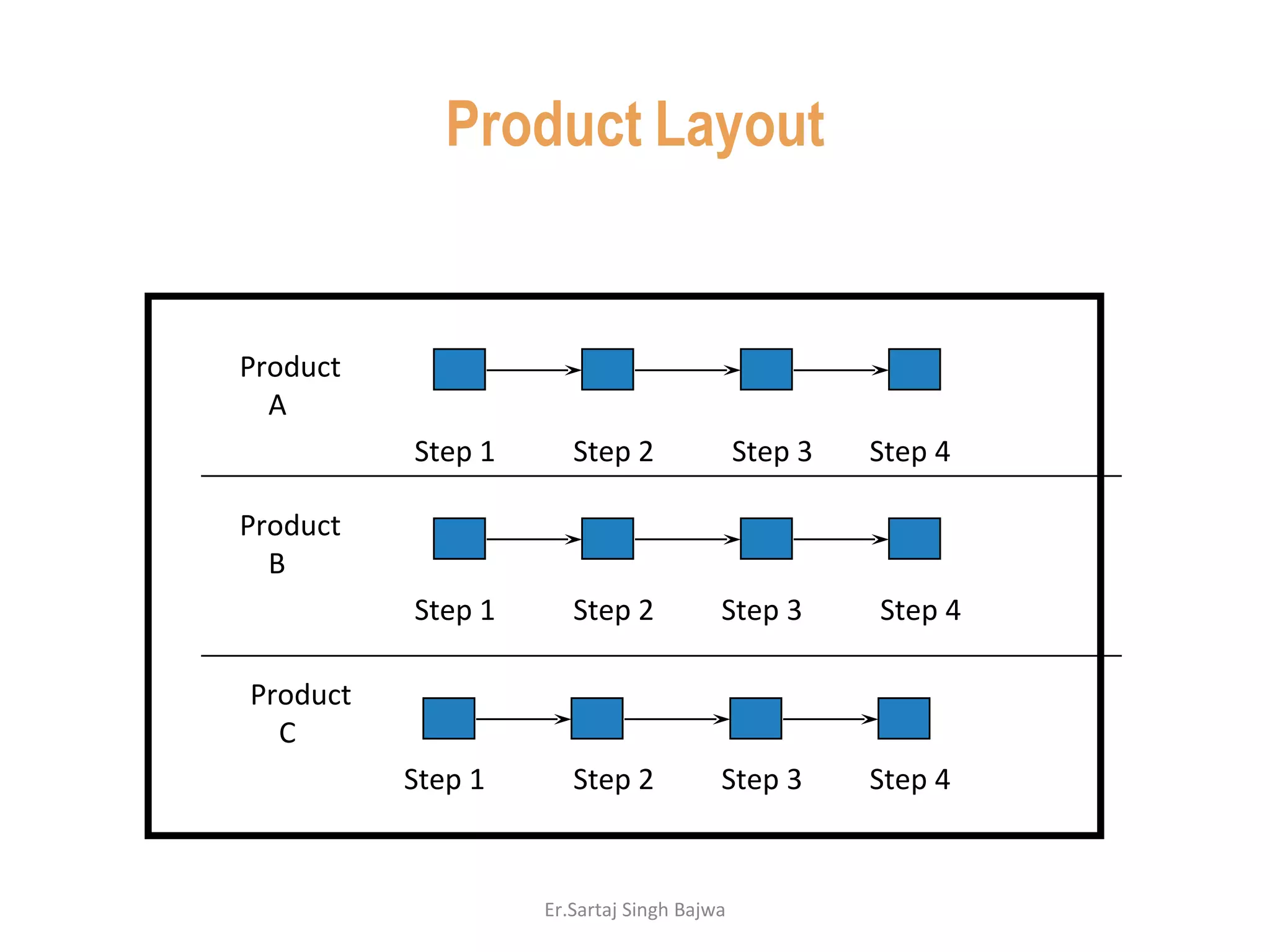
1) Product layouts group machines by product and are used for high-volume production of a narrow variety of products.
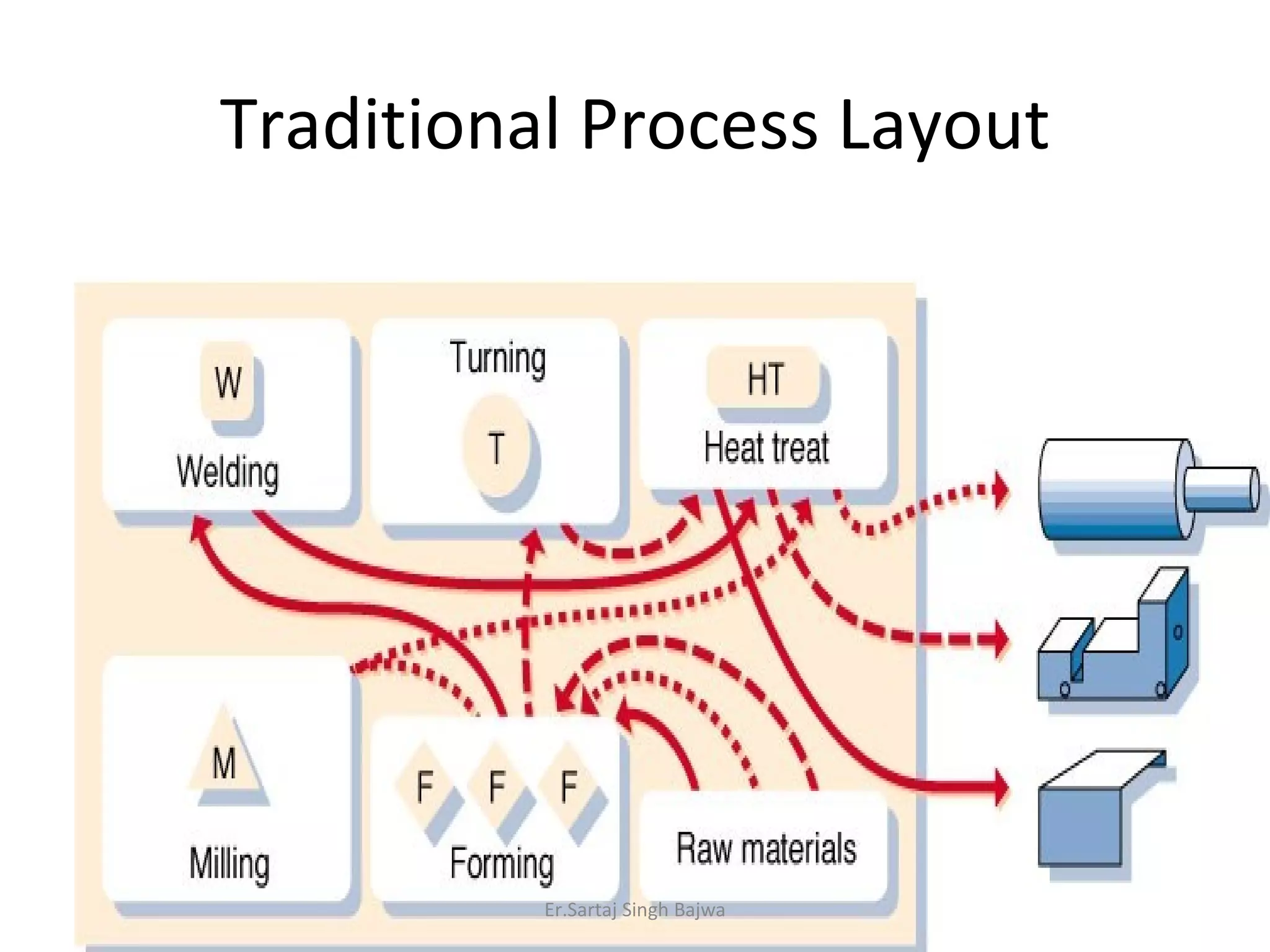
2) Process layouts group similar processes together and are used for small volumes of a wide variety of products.
3) Combination layouts like cellular manufacturing take a hybrid approach for moderate volumes and product varieties.
In this document
Powered by AI
Discusses basic layout types including Product, Process, Fixed-Position, features, characteristics, and applications.
Describes process layouts, their flexibility, characteristics including equipment use, and challenges in production time.
Explains cellular manufacturing layouts, their benefits over product and process layouts, and improved efficiency.
Outlines fixed-position layouts for large products and just-in-time layouts focused on efficiency and inventory reduction.
Basic Layout TypesProduct Layouts Process Layouts Fixed-Position Combination Layouts Just In Time Layout Er.Sartaj Singh Bajwa
2.
Basic Layout TypesProduct Layout Layout that uses standardized processing operations to achieve smooth, rapid, high-volume flow Process Layout Layout that can handle varied processing requirements Fixed Position Layout Layout in which the product or project remains stationary, and workers, materials, and equipment are moved as needed Er.Sartaj Singh Bajwa
3.
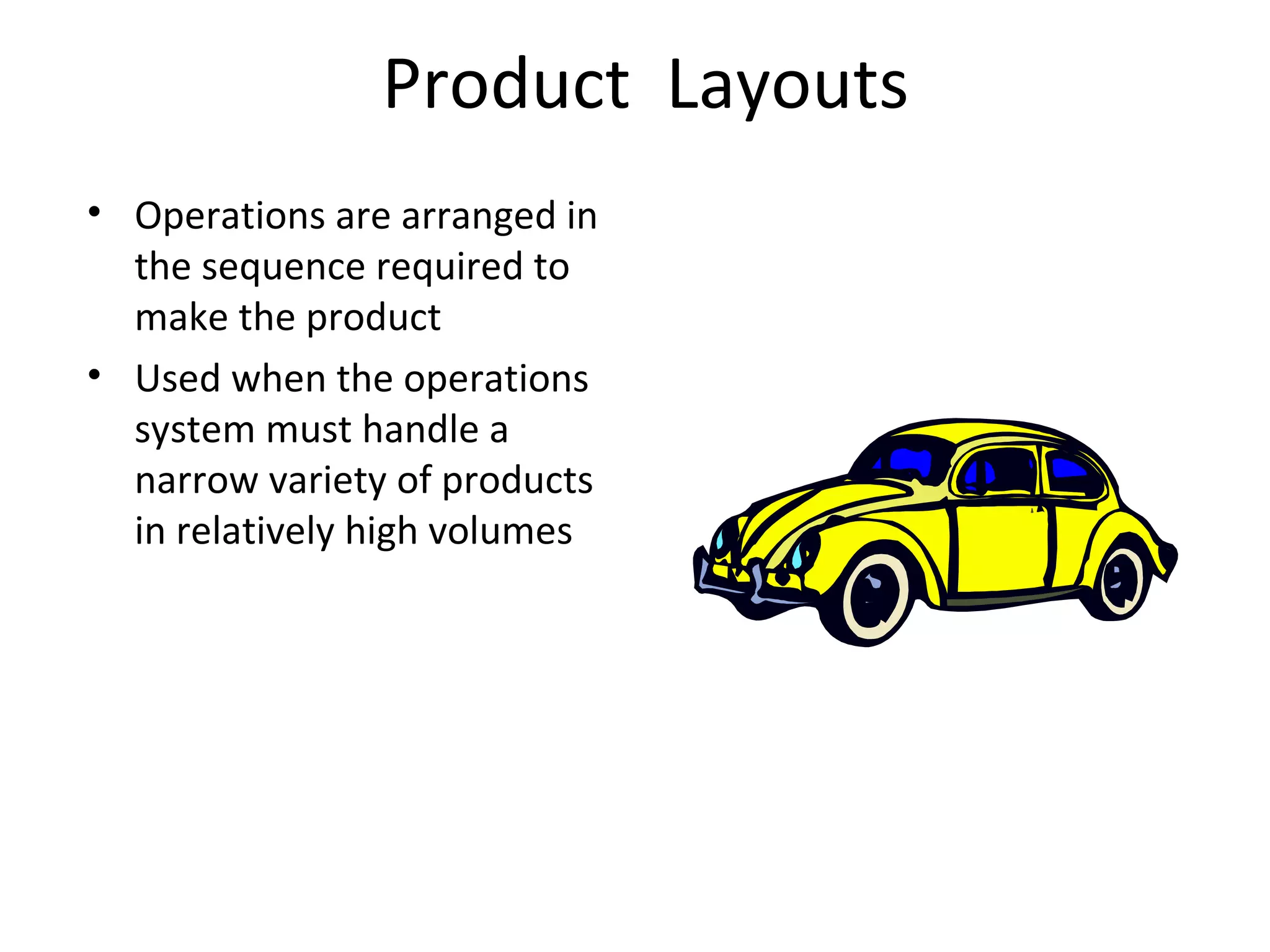
Product LayoutsOperations are arranged in the sequence required to make the product Used when the operations system must handle a narrow variety of products in relatively high volumes
Characteristics of ProductLayouts Special-purpose equipment are used Changeover is expensive and lengthy Material flow approaches continuous Material handling equipment is fixed Er.Sartaj Singh Bajwa
6.
Characteristics of ProductLayouts Little direct supervision is required Planning, scheduling and controlling functions are relatively straight-forward Production time for a unit is relatively short In-process inventory is relatively low Er.Sartaj Singh Bajwa
7.
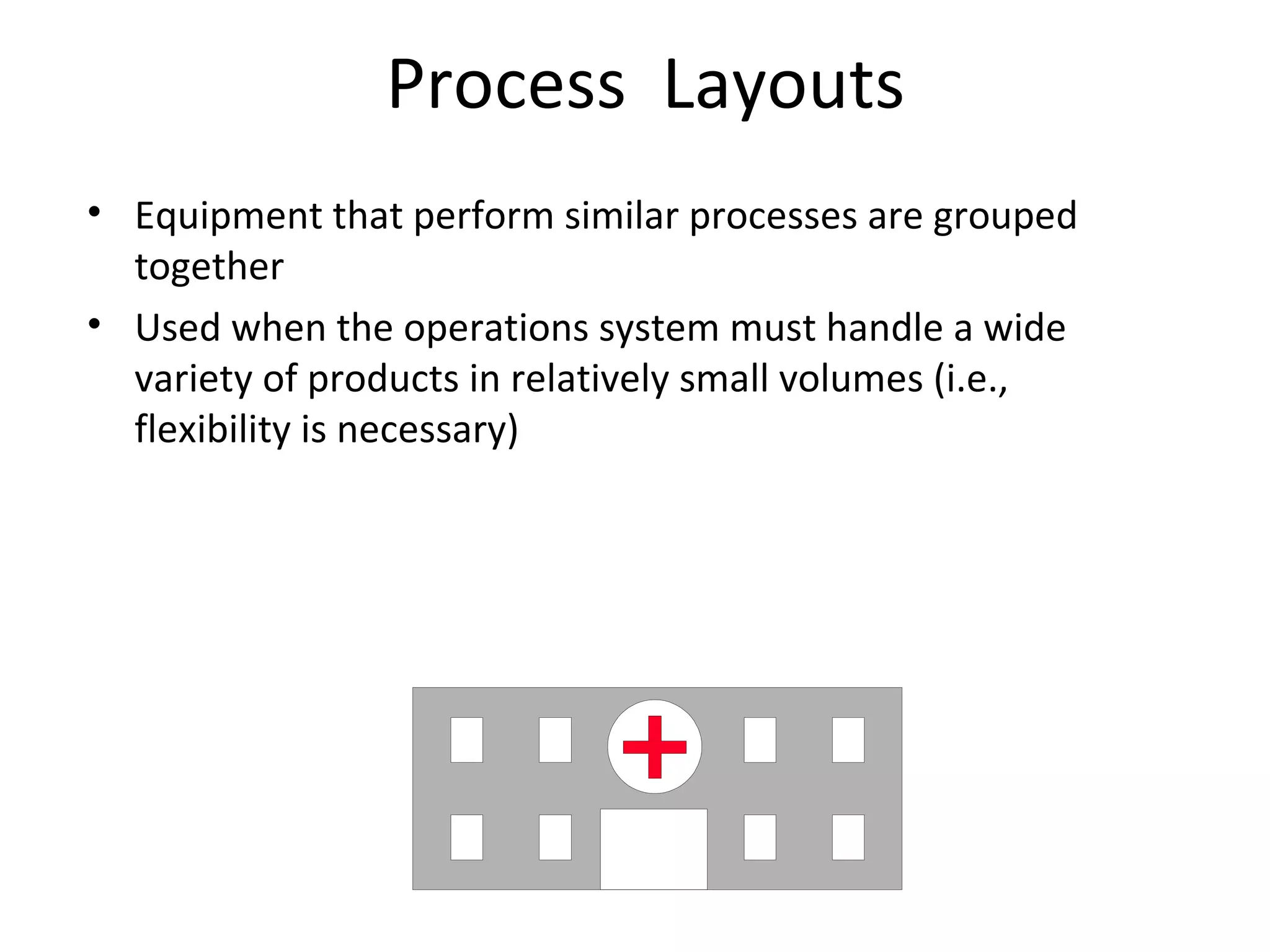
Process LayoutsEquipment that perform similar processes are grouped together Used when the operations system must handle a wide variety of products in relatively small volumes (i.e., flexibility is necessary)
Characteristics of ProcessLayouts General-purpose equipment is used Changeover is rapid Material handling equipment is flexible Operators are highly skilled Er.Sartaj Singh Bajwa
10.
Characteristics of ProcessLayouts Technical supervision is required Planning, scheduling and controlling functions are challenging Production time is relatively long In-process inventory is relatively high Er.Sartaj Singh Bajwa
11.
Cellular Manufacturing (CM)Layouts Operations required to produce a particular family (group) of parts are arranged in the sequence required to make that family Intermediate between product & process layout Used when the operations system must handle a moderate variety of products in moderate volumes Er.Sartaj Singh Bajwa
12.
Characteristics of CMRelative to Process Layouts Equipment can be less general-purpose Material handling costs are reduced Training periods for operators are shortened In-process inventory is lower Parts can be made faster and shipped more quickly Er.Sartaj Singh Bajwa
13.
Characteristics of CMRelative to a Product Layout Equipment can be less special-purpose Changeovers are simplified Production is easier to automate Er.Sartaj Singh Bajwa
14.
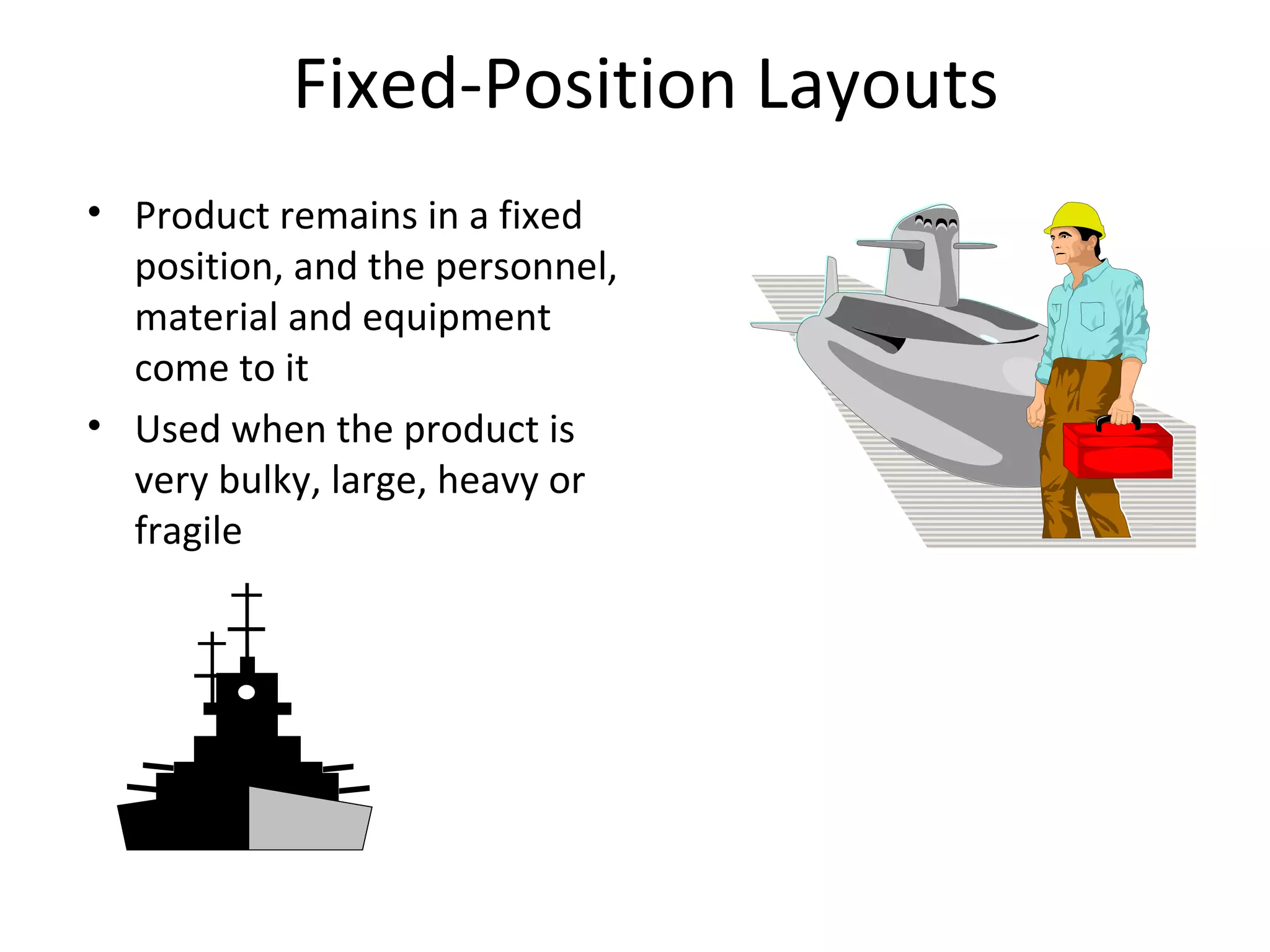
Fixed-Position Layouts Productremains in a fixed position, and the personnel, material and equipment come to it Used when the product is very bulky, large, heavy or fragile
15.
JUST IN TIMELAYOUT Producing & delivering the right items at the right time Technique to reduce inventory Use of resources appropriately Flow line is in sequence Er.Sartaj Singh Bajwa