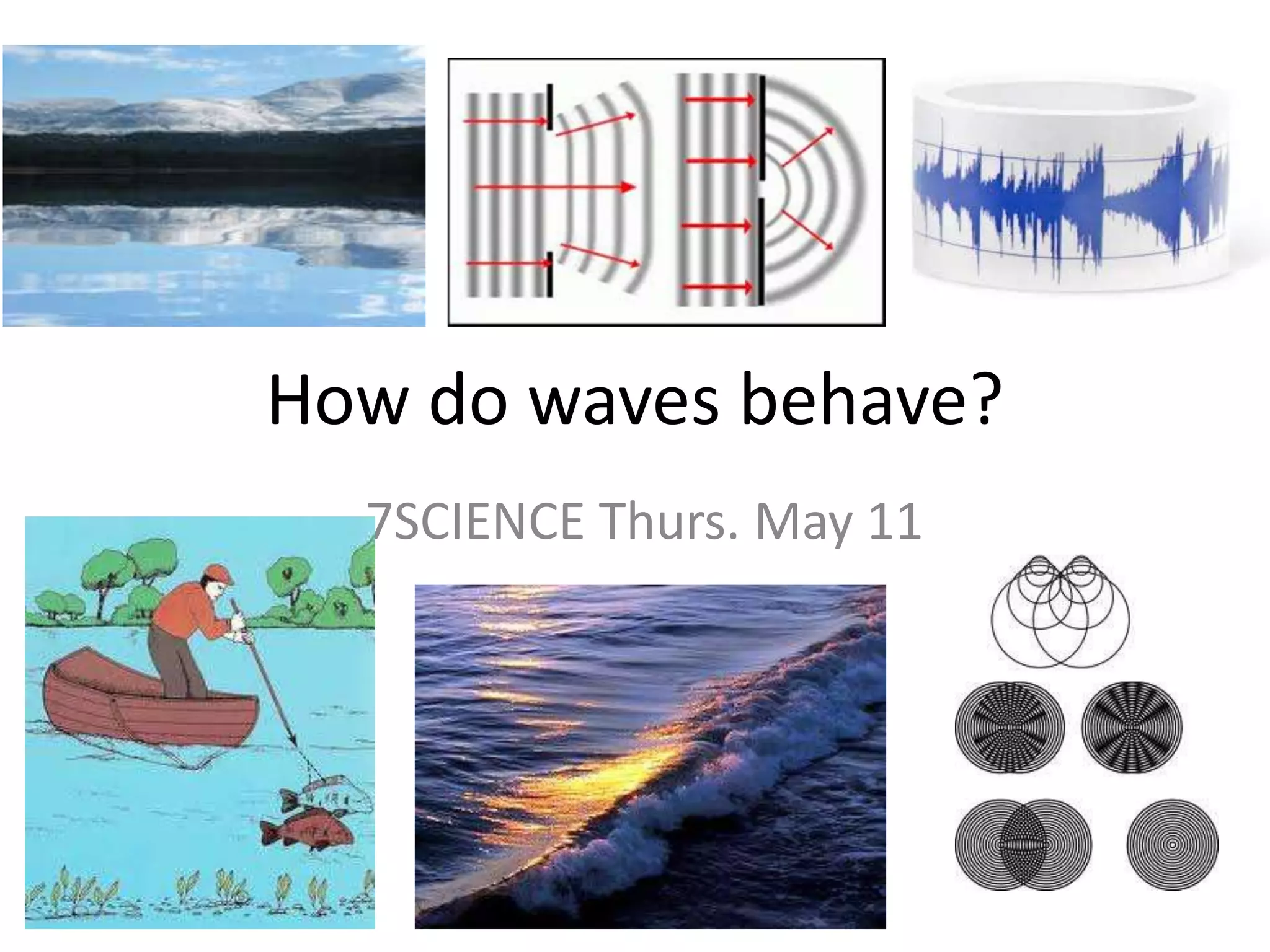
How do waves behave?7SCIENCE Thurs. May 11
ReviewWhere can you find the amplitude on a wave?Distance halfway between the crest and troughWhat does a high/low amplitude mean?High amplitude = wave has more energy Low amplitude = wave has less energyHow do you measure a wavelength?From trough to trough or crest to crestHow does wavelength relate to frequency?If a wave has a long wavelength, it will have a low frequency
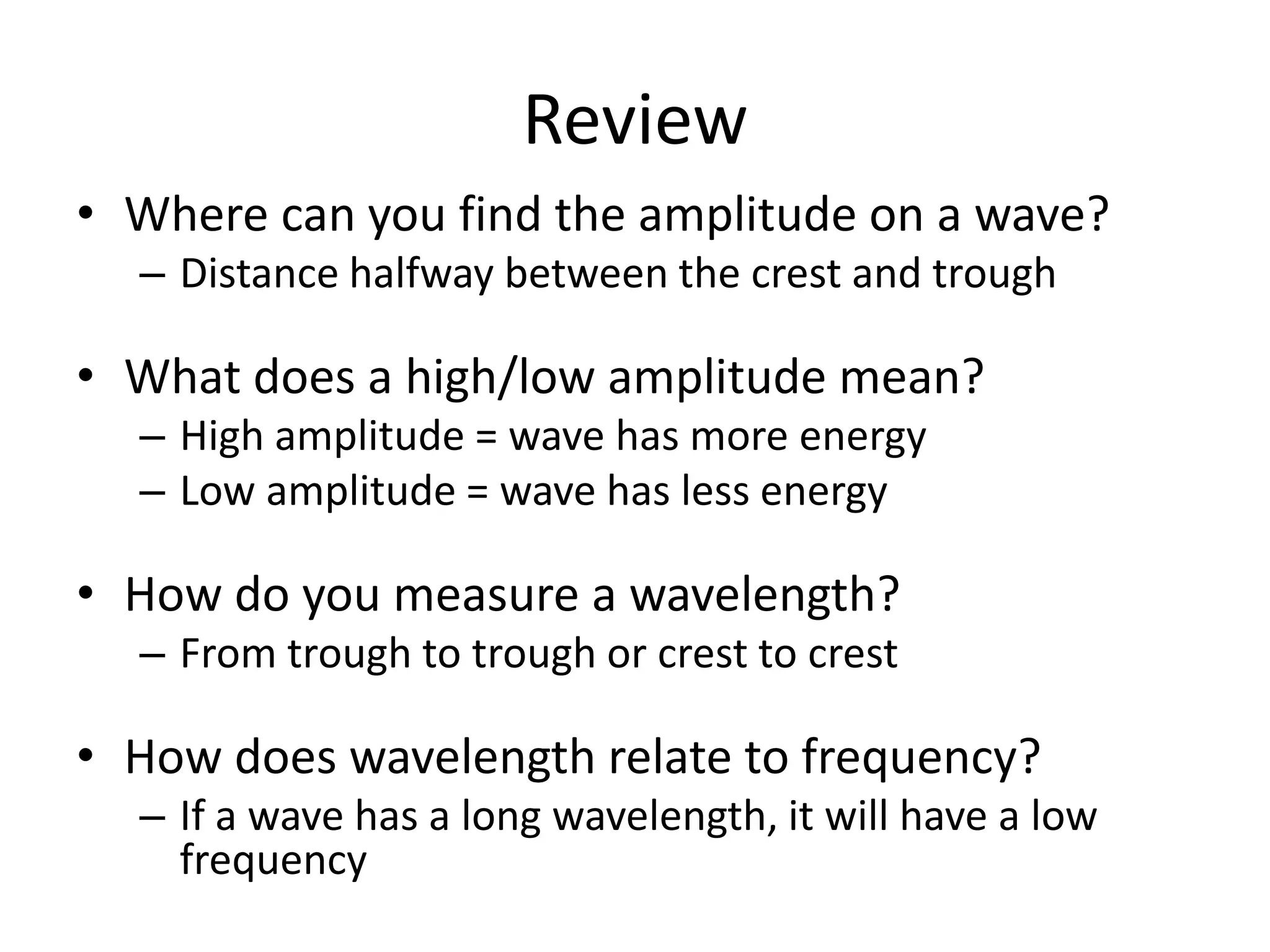
Wave behaviorWaves act in many different ways (ex. sound waves and light waves), and may produce a:ReflectionRefraction  DiffractionInterference
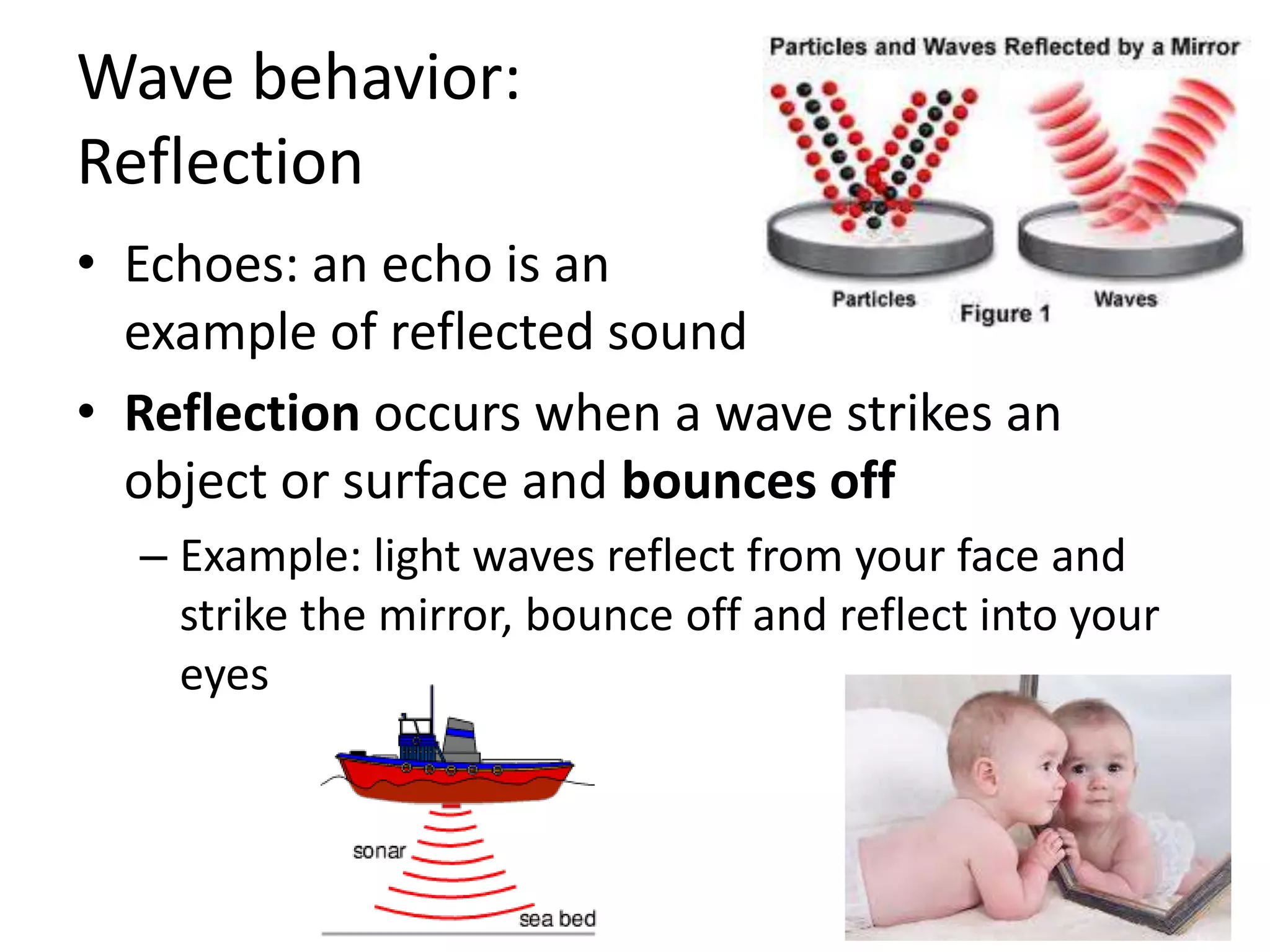
Wave behavior:ReflectionEchoes: an echo is an example of reflected soundReflection occurs when a wave strikes an object or surface and bounces offExample: light waves reflect from your face and strike the mirror, bounce off and reflect into your eyes
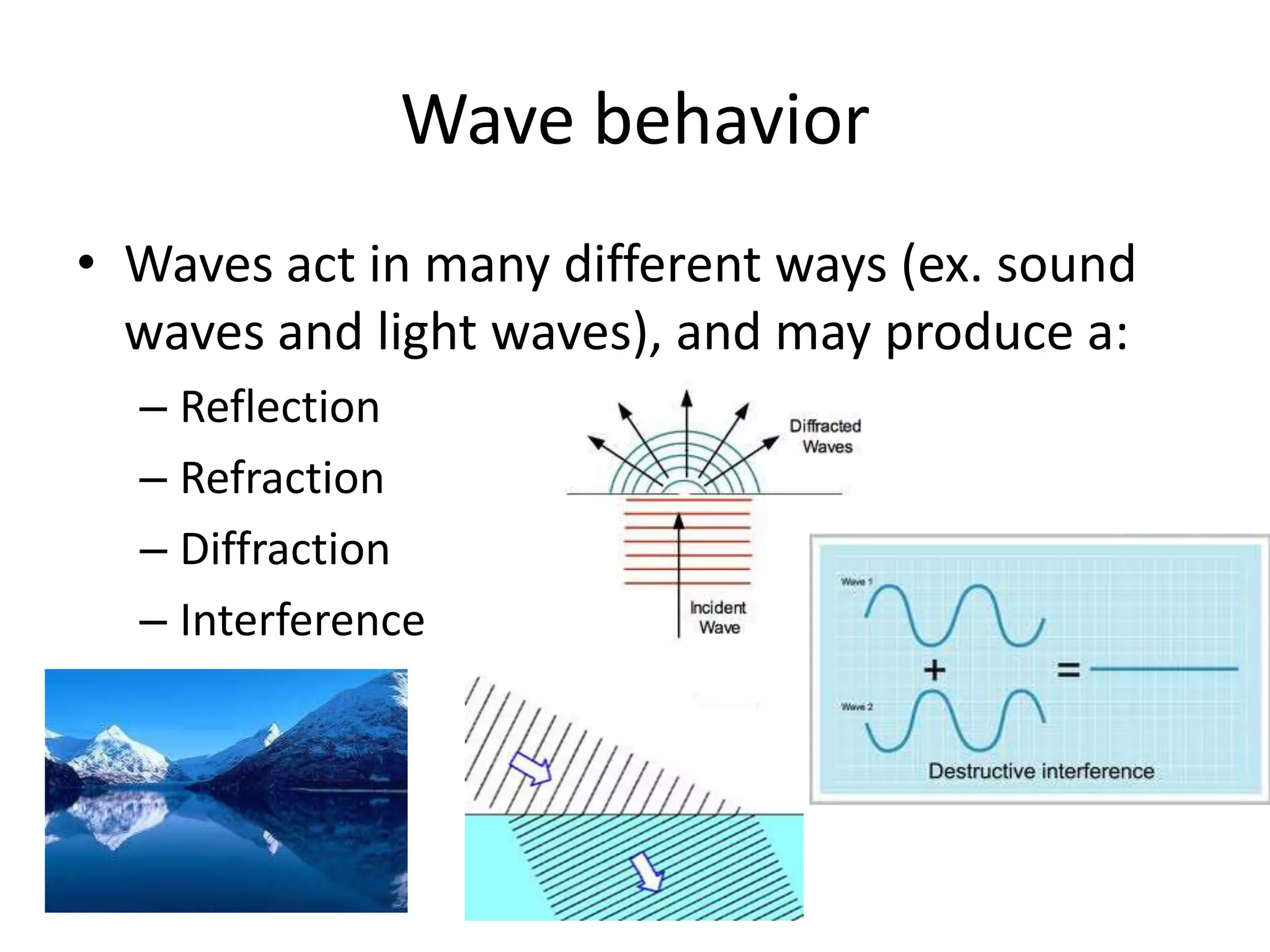
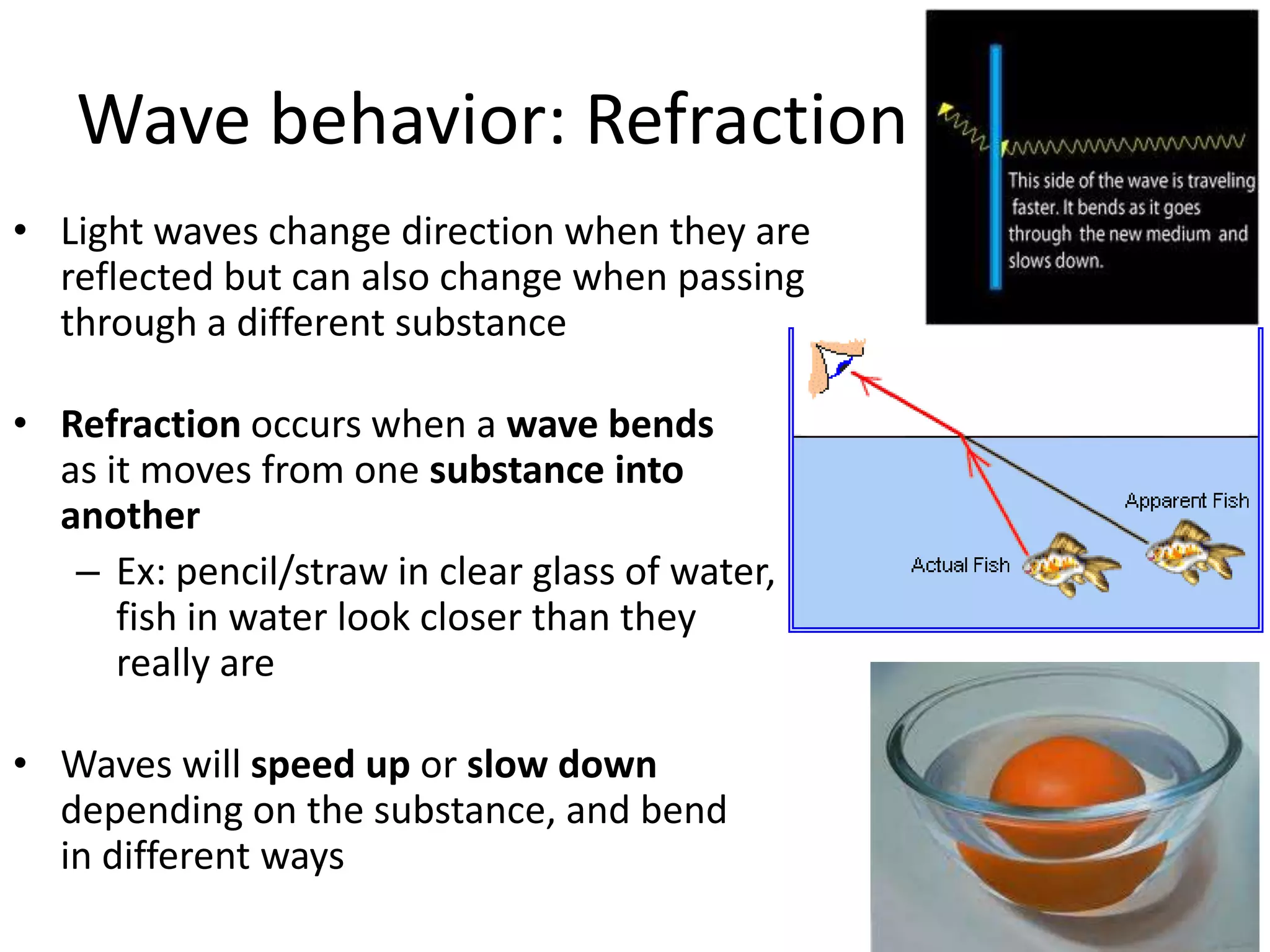
Wave behavior: RefractionLight waves change direction when they are reflected but can also change when passing through a different substanceRefraction occurs when a wave bends as it moves from one substance into anotherEx: pencil/straw in clear glass of water, fish in water look closer than they really areWaves will speed up or slow down depending on the substance, and bend in different ways
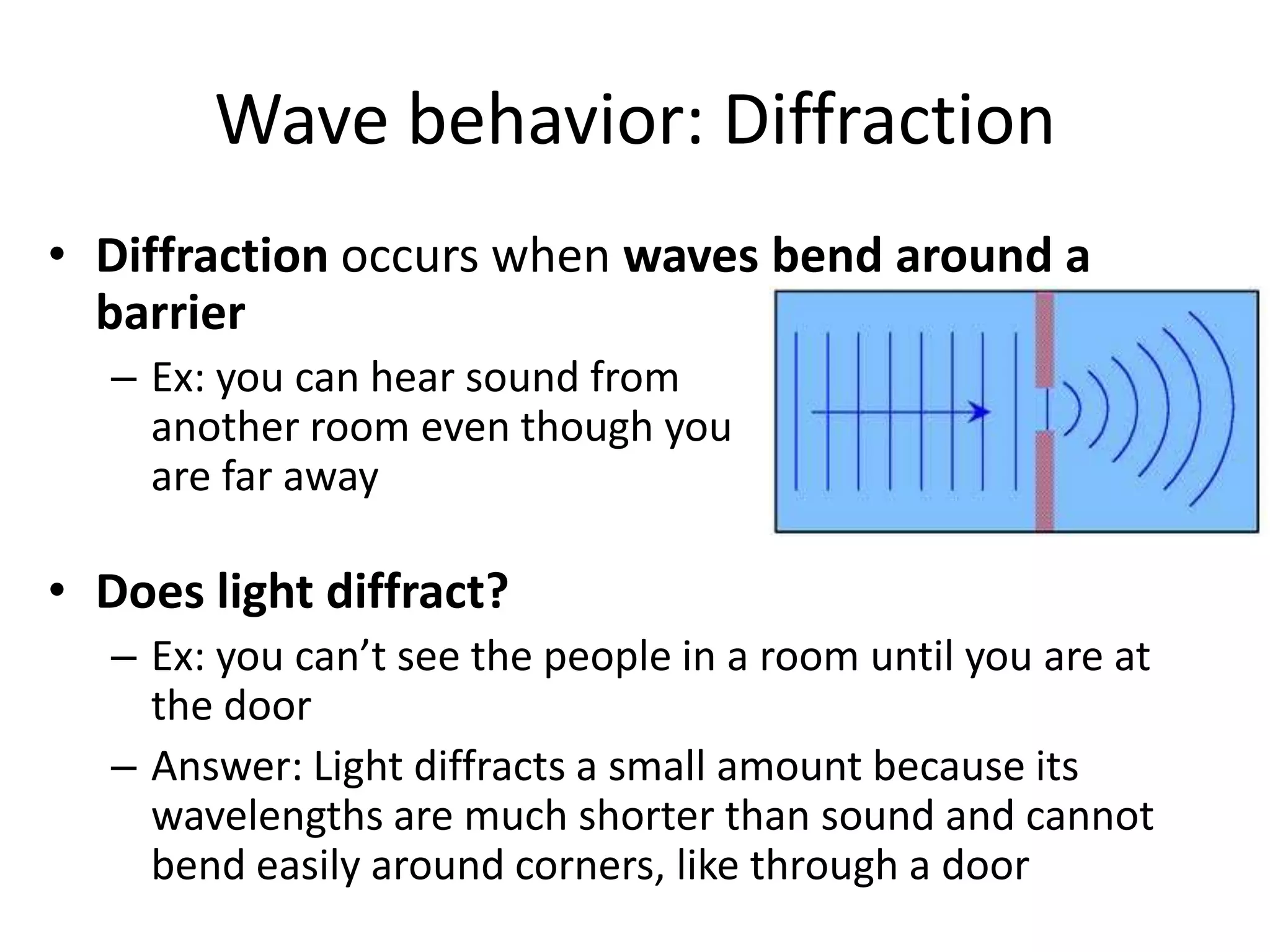
Wave behavior: DiffractionDiffraction occurs when waves bend around a barrierEx: you can hear sound from another room even though you are far awayDoes light diffract? Ex: you can’t see the people in a room until you are at the doorAnswer: Light diffracts a small amount because its wavelengths are much shorter than sound and cannot bend easily around corners, like through a door
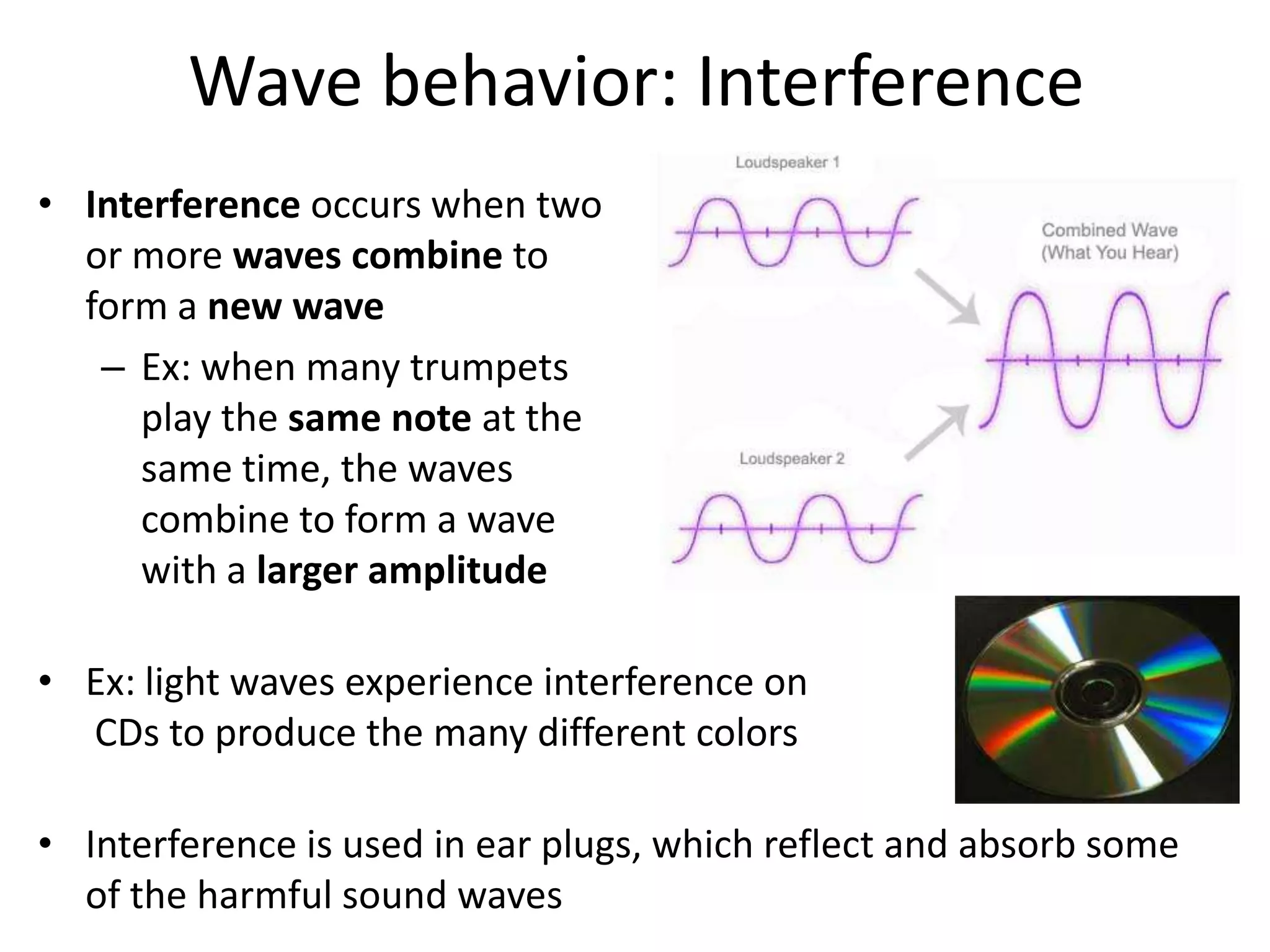
Wave behavior: InterferenceInterference occurs when two or more waves combine to form a new wave Ex: when many trumpets play the same note at the same time, the waves combine to form a wave with a larger amplitudeEx: light waves experience interference on CDs to produce the many different colors Interference is used in ear plugs, which reflect and absorb some of the harmful sound waves

How do waves behave

  • 1.
    How do wavesbehave?7SCIENCE Thurs. May 11
  • 2.
    ReviewWhere can youfind the amplitude on a wave?Distance halfway between the crest and troughWhat does a high/low amplitude mean?High amplitude = wave has more energy Low amplitude = wave has less energyHow do you measure a wavelength?From trough to trough or crest to crestHow does wavelength relate to frequency?If a wave has a long wavelength, it will have a low frequency
  • 3.
    Wave behaviorWaves actin many different ways (ex. sound waves and light waves), and may produce a:ReflectionRefraction DiffractionInterference
  • 4.
    Wave behavior:ReflectionEchoes: anecho is an example of reflected soundReflection occurs when a wave strikes an object or surface and bounces offExample: light waves reflect from your face and strike the mirror, bounce off and reflect into your eyes
  • 5.
    Wave behavior: RefractionLightwaves change direction when they are reflected but can also change when passing through a different substanceRefraction occurs when a wave bends as it moves from one substance into anotherEx: pencil/straw in clear glass of water, fish in water look closer than they really areWaves will speed up or slow down depending on the substance, and bend in different ways
  • 6.
    Wave behavior: DiffractionDiffractionoccurs when waves bend around a barrierEx: you can hear sound from another room even though you are far awayDoes light diffract? Ex: you can’t see the people in a room until you are at the doorAnswer: Light diffracts a small amount because its wavelengths are much shorter than sound and cannot bend easily around corners, like through a door
  • 7.
    Wave behavior: InterferenceInterferenceoccurs when two or more waves combine to form a new wave Ex: when many trumpets play the same note at the same time, the waves combine to form a wave with a larger amplitudeEx: light waves experience interference on CDs to produce the many different colors Interference is used in ear plugs, which reflect and absorb some of the harmful sound waves

Editor's Notes

  • #7 Why can you hear noises from down the hall or from another room? Sound waves must be able to bend around the door and reach your ears