Defect Prevention
          Reducing Costs and Enhancing Quality

          Vamsi Krishna P Y
Agenda

- Concepts

- Why Defect Prevention?

- Phase Cost Ratio

- Methods of Defect Preventions

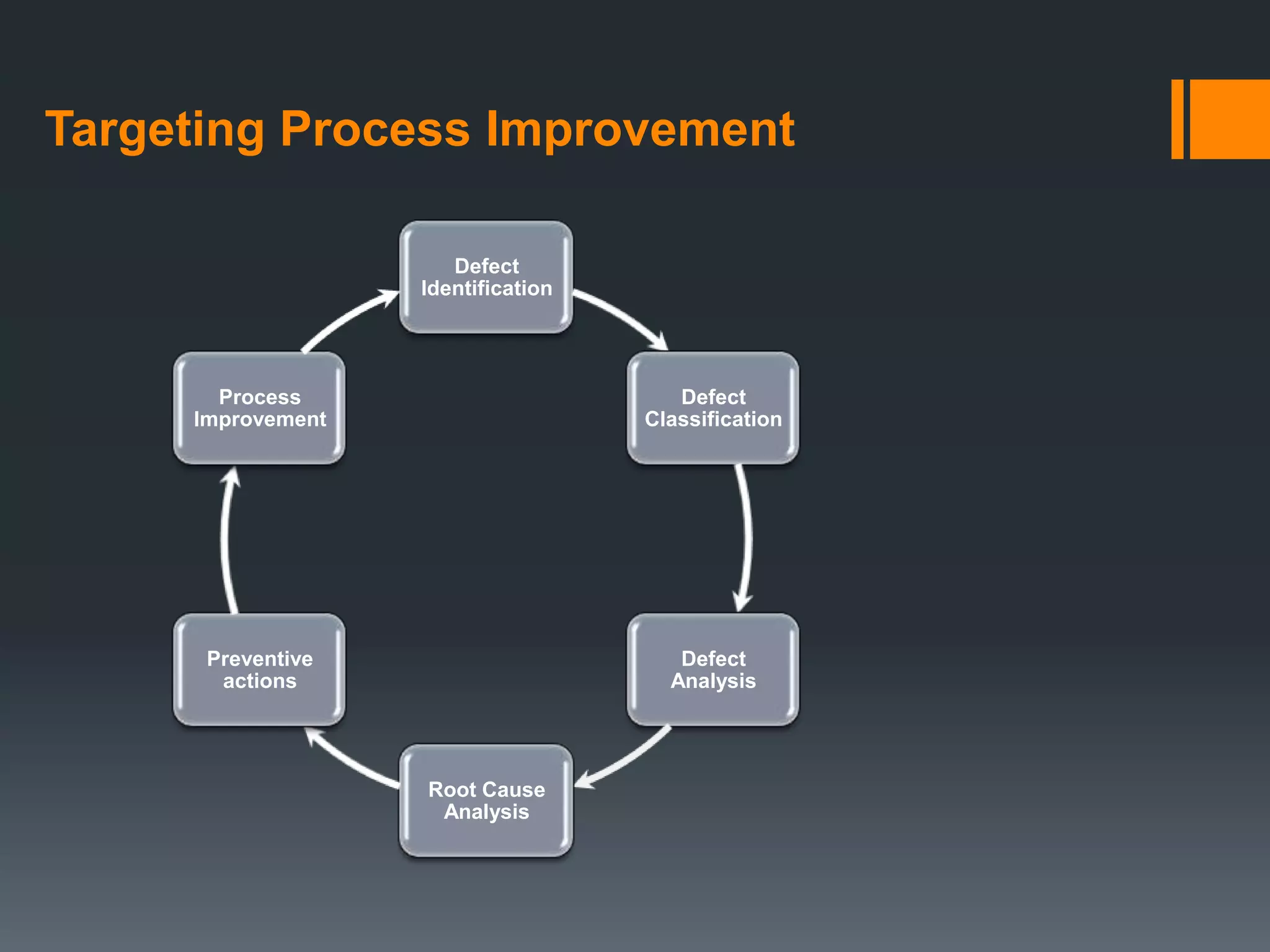
- Process Improvement Workflow
Concepts

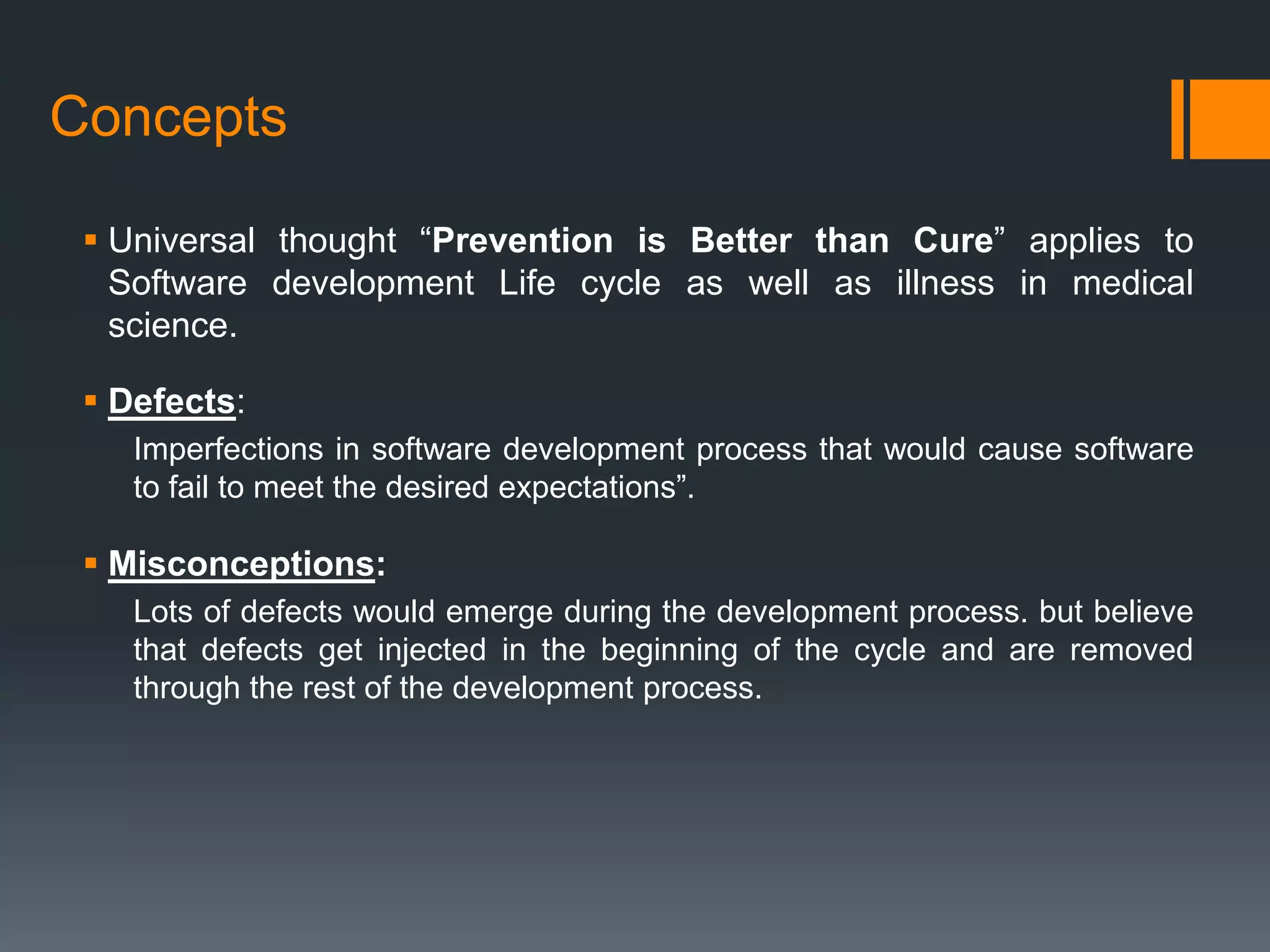
  Universal thought “Prevention is Better than Cure” applies to
   Software development Life cycle as well as illness in medical
   science.

  Defects:
    Imperfections in software development process that would cause software
    to fail to meet the desired expectations”.

  Misconceptions:
    Lots of defects would emerge during the development process. but believe
    that defects get injected in the beginning of the cycle and are removed
    through the rest of the development process.
Defect Prevention

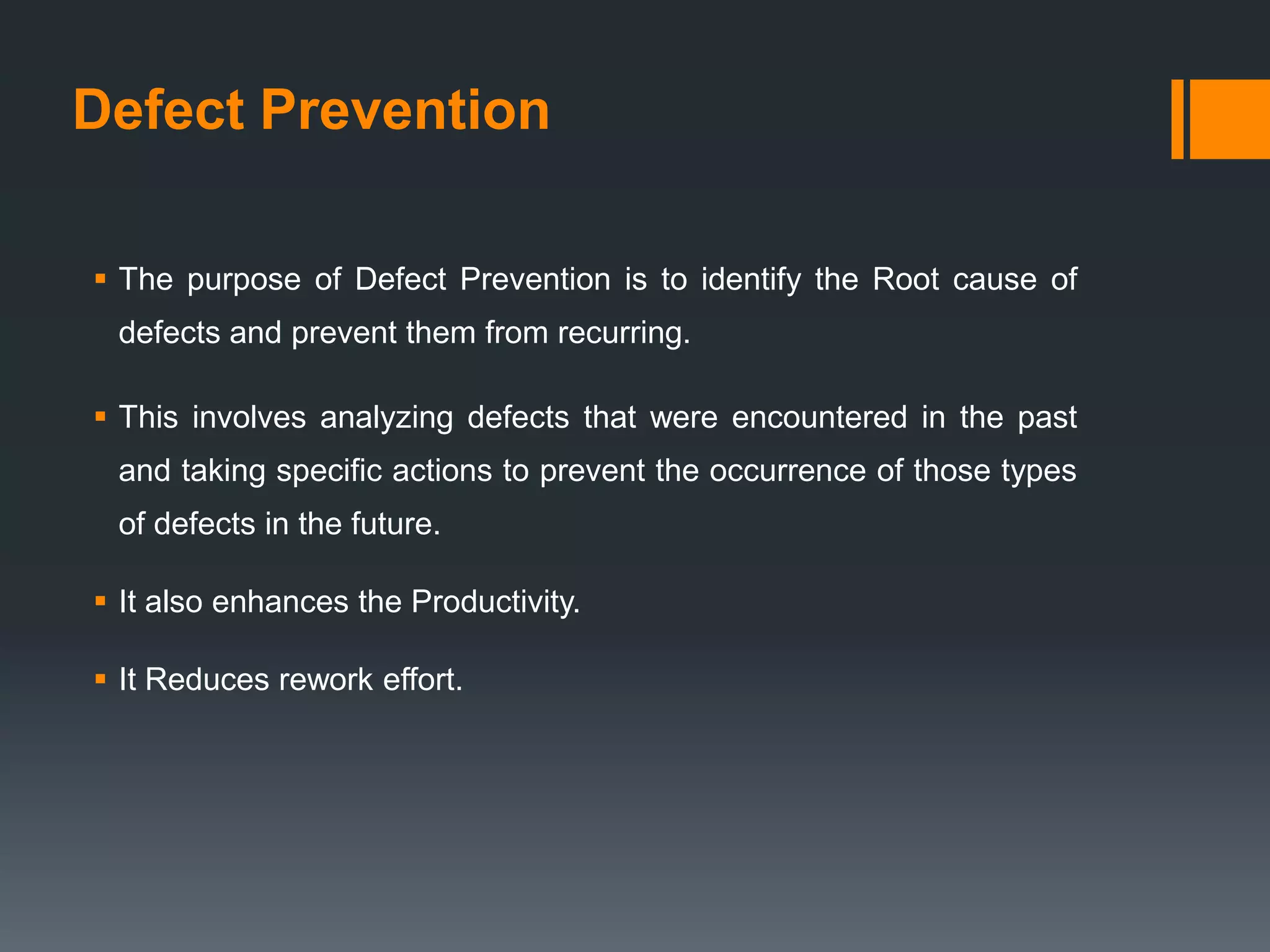
 The purpose of Defect Prevention is to identify the Root cause of
 defects and prevent them from recurring.

 This involves analyzing defects that were encountered in the past
 and taking specific actions to prevent the occurrence of those types
 of defects in the future.

 It also enhances the Productivity.

 It Reduces rework effort.
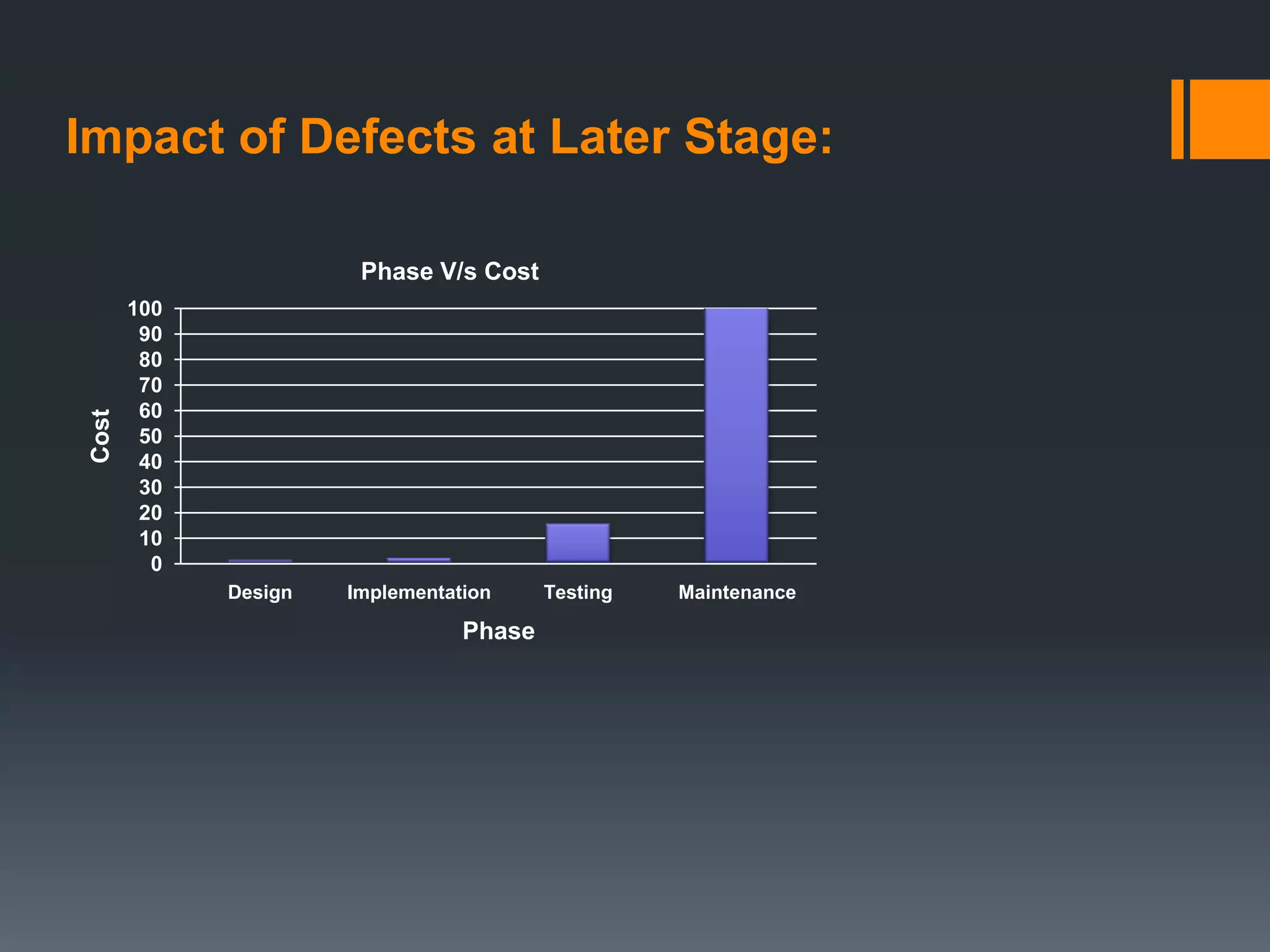
Impact of Defects at Later Stage:

                        Phase V/s Cost
        100
         90
         80
         70
         60
 Cost


         50
         40
         30
         20
         10
          0
              Design   Implementation     Testing   Maintenance

                                  Phase
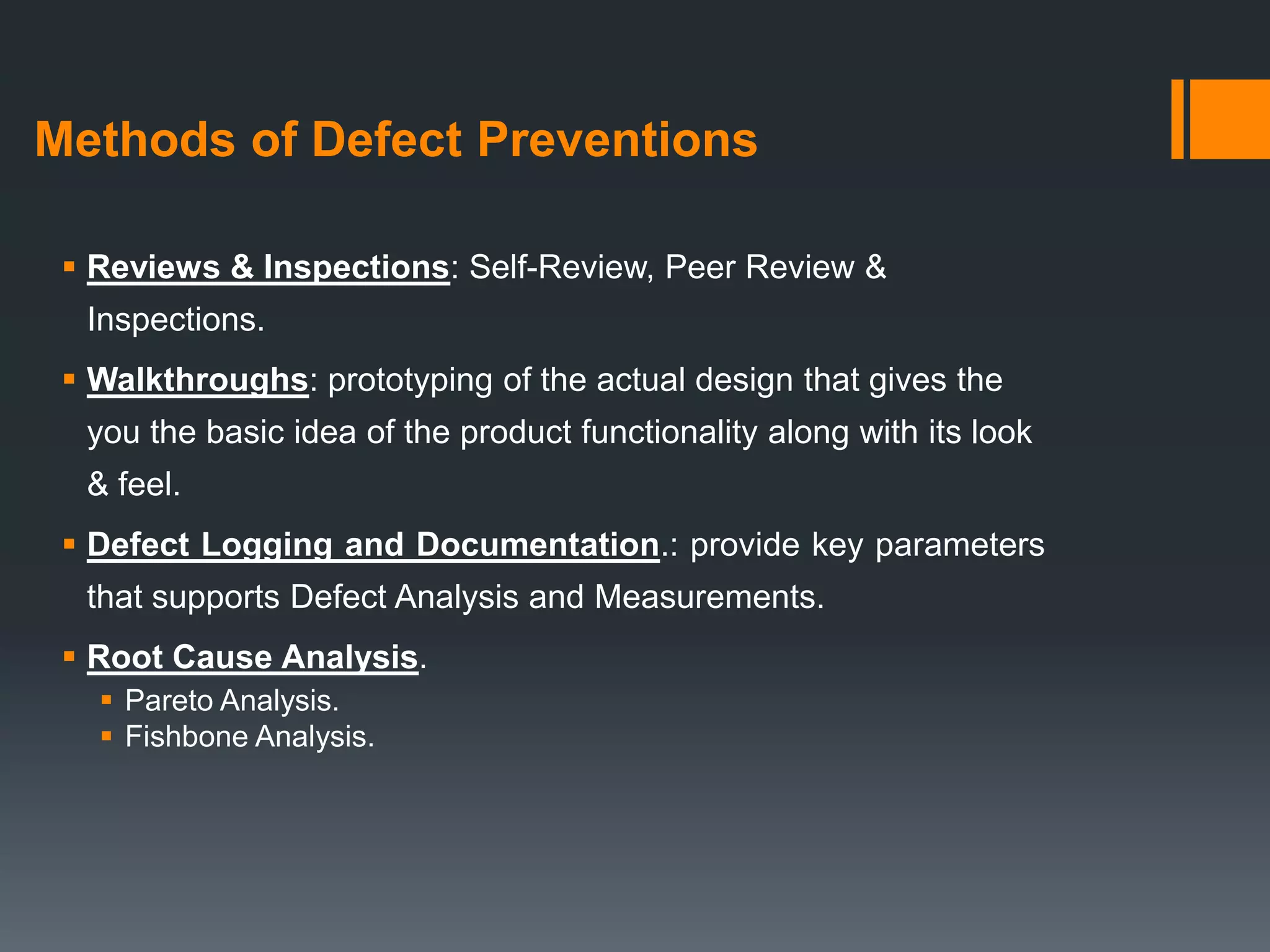
Methods of Defect Preventions

  Reviews & Inspections: Self-Review, Peer Review &
  Inspections.
  Walkthroughs: prototyping of the actual design that gives the
  you the basic idea of the product functionality along with its look
  & feel.
  Defect Logging and Documentation.: provide key parameters
  that supports Defect Analysis and Measurements.
  Root Cause Analysis.
    Pareto Analysis.
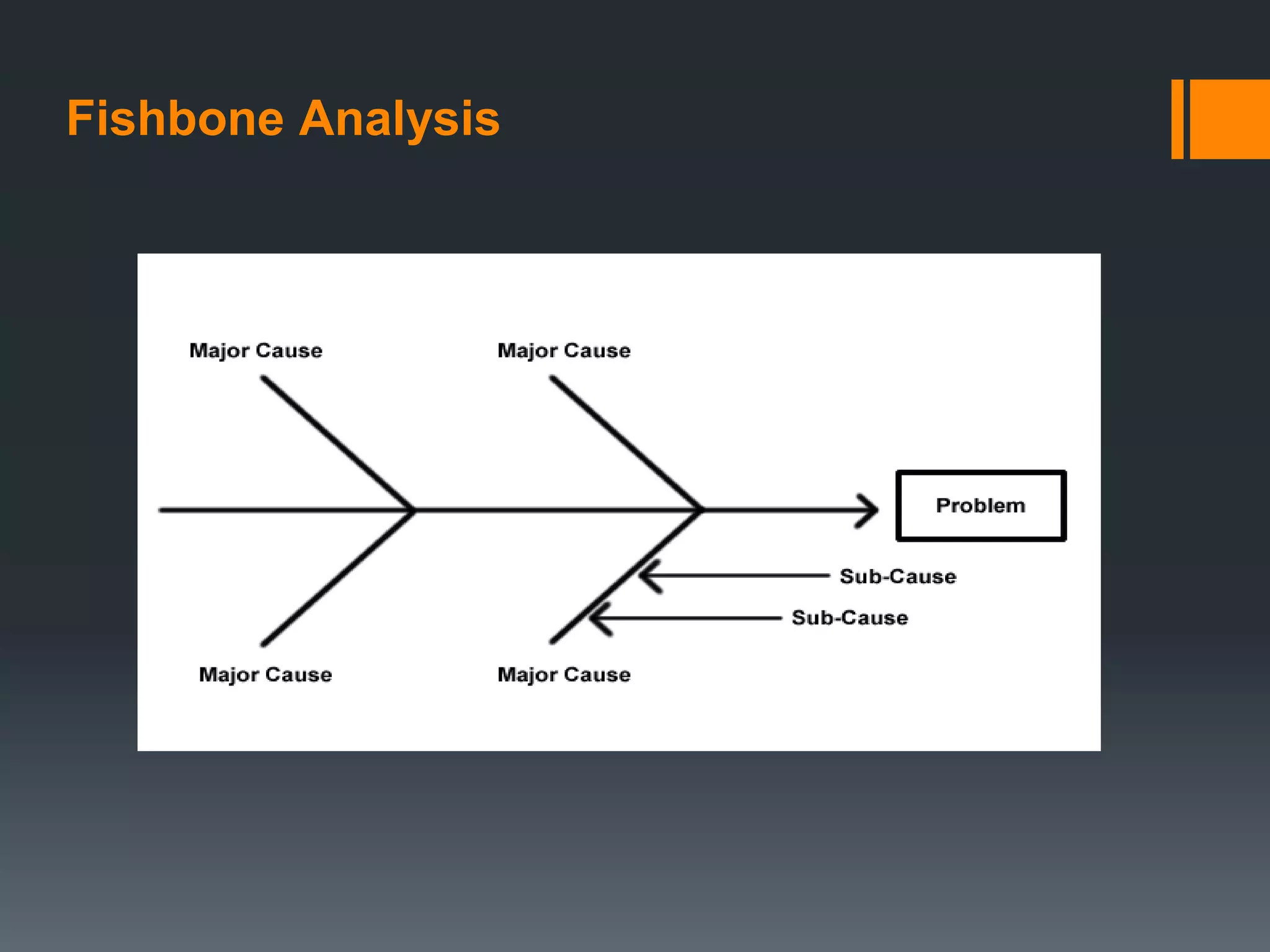
    Fishbone Analysis.
Targeting Process Improvement

                      Defect
                   Identification


       Process                         Defect
     Improvement                    Classification


      Preventive                       Defect
       actions                        Analysis


                   Root Cause
                    Analysis
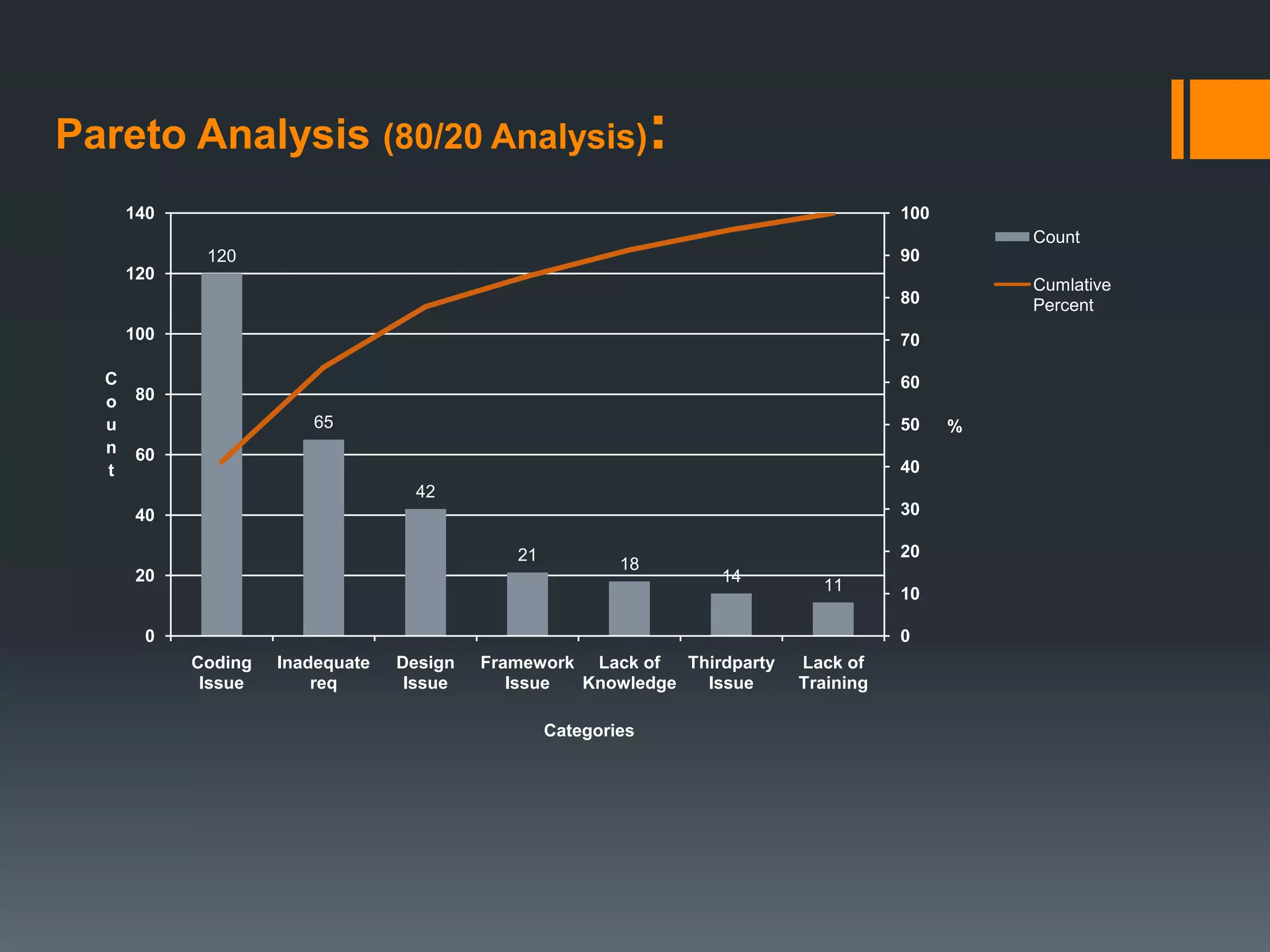
Pareto Analysis (80/20 Analysis):
      140                                                                             100
                                                                                                Count
             120                                                                      90
      120
                                                                                                Cumlative
                                                                                      80        Percent
      100                                                                             70

  C                                                                                   60
  o    80
  u                     65                                                            50    %
  n    60
  t                                                                                   40
                                    42
       40                                                                             30

                                              21                                      20
                                                           18
       20                                                         14
                                                                             11       10

        0                                                                             0
            Coding   Inadequate   Design   Framework Lack of  Thirdparty   Lack of
             Issue       req       Issue      Issue Knowledge   Issue      Training

                                                   Categories
Fishbone Analysis
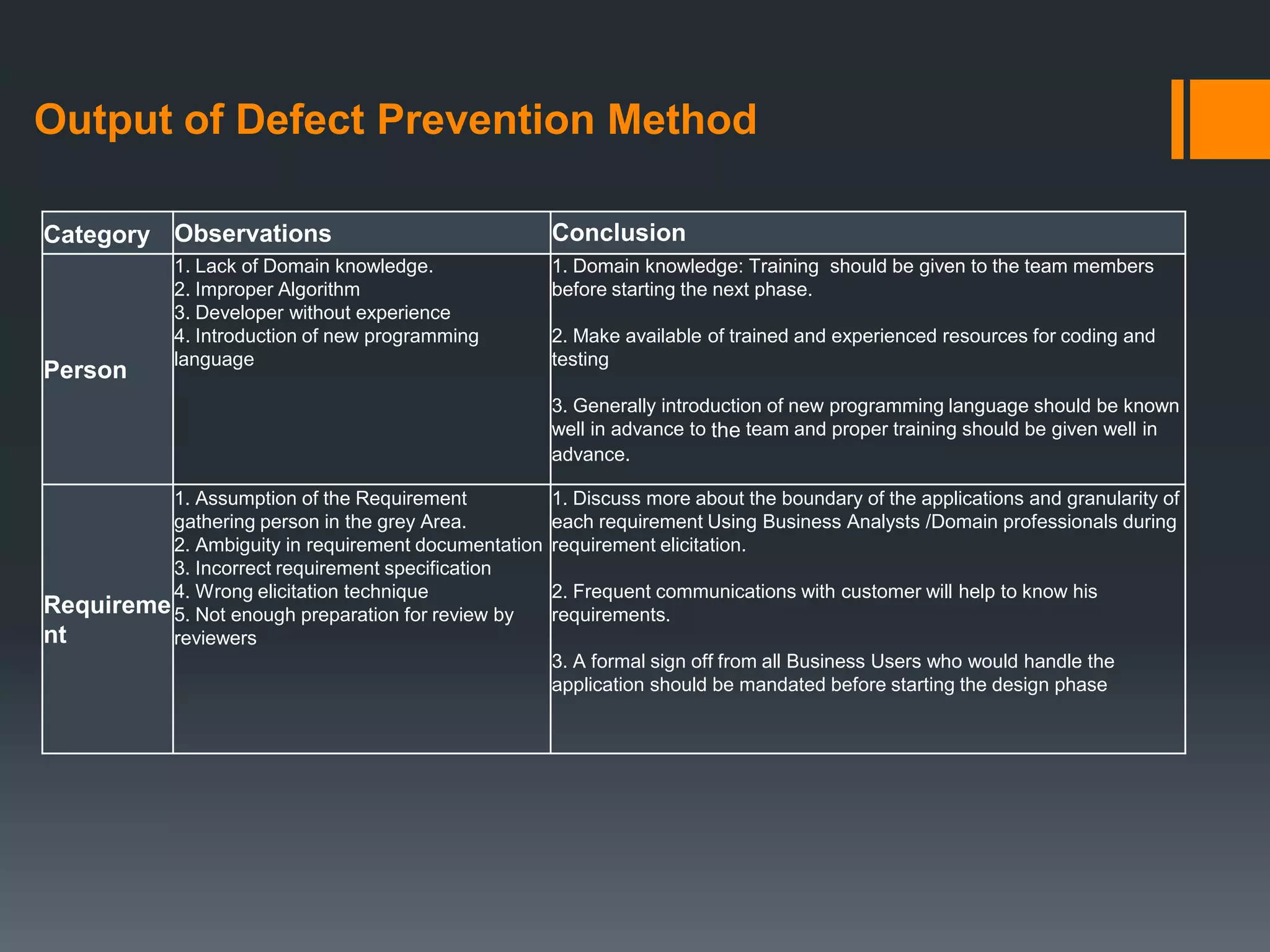
Output of Defect Prevention Method

Category Observations                                 Conclusion
             1. Lack of Domain knowledge.             1. Domain knowledge: Training should be given to the team members
             2. Improper Algorithm                    before starting the next phase.
             3. Developer without experience
             4. Introduction of new programming       2. Make available of trained and experienced resources for coding and
             language                                 testing
Person
                                                      3. Generally introduction of new programming language should be known
                                                      well in advance to the team and proper training should be given well in
                                                      advance.

          1. Assumption of the Requirement            1. Discuss more about the boundary of the applications and granularity of
          gathering person in the grey Area.          each requirement Using Business Analysts /Domain professionals during
          2. Ambiguity in requirement documentation   requirement elicitation.
          3. Incorrect requirement specification
          4. Wrong elicitation technique              2. Frequent communications with customer will help to know his
Requireme 5. Not enough preparation for review by     requirements.
nt        reviewers
                                                      3. A formal sign off from all Business Users who would handle the
                                                      application should be mandated before starting the design phase
Questions ?
Thank You

Defect prevention

  • 1.
    Defect Prevention Reducing Costs and Enhancing Quality Vamsi Krishna P Y
  • 2.
    Agenda - Concepts - WhyDefect Prevention? - Phase Cost Ratio - Methods of Defect Preventions - Process Improvement Workflow
  • 3.
    Concepts  Universalthought “Prevention is Better than Cure” applies to Software development Life cycle as well as illness in medical science.  Defects: Imperfections in software development process that would cause software to fail to meet the desired expectations”.  Misconceptions: Lots of defects would emerge during the development process. but believe that defects get injected in the beginning of the cycle and are removed through the rest of the development process.
  • 4.
    Defect Prevention  Thepurpose of Defect Prevention is to identify the Root cause of defects and prevent them from recurring.  This involves analyzing defects that were encountered in the past and taking specific actions to prevent the occurrence of those types of defects in the future.  It also enhances the Productivity.  It Reduces rework effort.
  • 5.
    Impact of Defectsat Later Stage: Phase V/s Cost 100 90 80 70 60 Cost 50 40 30 20 10 0 Design Implementation Testing Maintenance Phase
  • 6.
    Methods of DefectPreventions  Reviews & Inspections: Self-Review, Peer Review & Inspections.  Walkthroughs: prototyping of the actual design that gives the you the basic idea of the product functionality along with its look & feel.  Defect Logging and Documentation.: provide key parameters that supports Defect Analysis and Measurements.  Root Cause Analysis.  Pareto Analysis.  Fishbone Analysis.
  • 7.
    Targeting Process Improvement Defect Identification Process Defect Improvement Classification Preventive Defect actions Analysis Root Cause Analysis
  • 8.
    Pareto Analysis (80/20Analysis): 140 100 Count 120 90 120 Cumlative 80 Percent 100 70 C 60 o 80 u 65 50 % n 60 t 40 42 40 30 21 20 18 20 14 11 10 0 0 Coding Inadequate Design Framework Lack of Thirdparty Lack of Issue req Issue Issue Knowledge Issue Training Categories
  • 9.
  • 10.
    Output of DefectPrevention Method Category Observations Conclusion 1. Lack of Domain knowledge. 1. Domain knowledge: Training should be given to the team members 2. Improper Algorithm before starting the next phase. 3. Developer without experience 4. Introduction of new programming 2. Make available of trained and experienced resources for coding and language testing Person 3. Generally introduction of new programming language should be known well in advance to the team and proper training should be given well in advance. 1. Assumption of the Requirement 1. Discuss more about the boundary of the applications and granularity of gathering person in the grey Area. each requirement Using Business Analysts /Domain professionals during 2. Ambiguity in requirement documentation requirement elicitation. 3. Incorrect requirement specification 4. Wrong elicitation technique 2. Frequent communications with customer will help to know his Requireme 5. Not enough preparation for review by requirements. nt reviewers 3. A formal sign off from all Business Users who would handle the application should be mandated before starting the design phase
  • 11.
  • 12.