An operating system manages a computer's hardware resources and provides services for application software. It is found on devices like computers, game consoles, mobile phones, and cars. The main functions of an operating system include managing the processor, memory, storage, devices, and providing a user interface. It ensures each process receives processor time and uses processor cycles efficiently. Memory management involves allocating memory portions to programs and freeing it when unused. Device drivers act as translators between hardware and software. Storage is managed by allocating memory space to processes without overlap and using different memory types effectively.
Introduction to operating systems, their definition, prevalence in devices, and everyday applications.
Operating systems manage hardware through five main functions: processor, memory, device, storage management, and user interface. Focuses on how the OS manages processor tasks, ensuring efficient task execution and process switching. Explains device management through drivers, acting as translators between OS and hardware, enhancing interoperability.
Introduction to buffers for data handling in memory and the file allocation table for file management on disks.
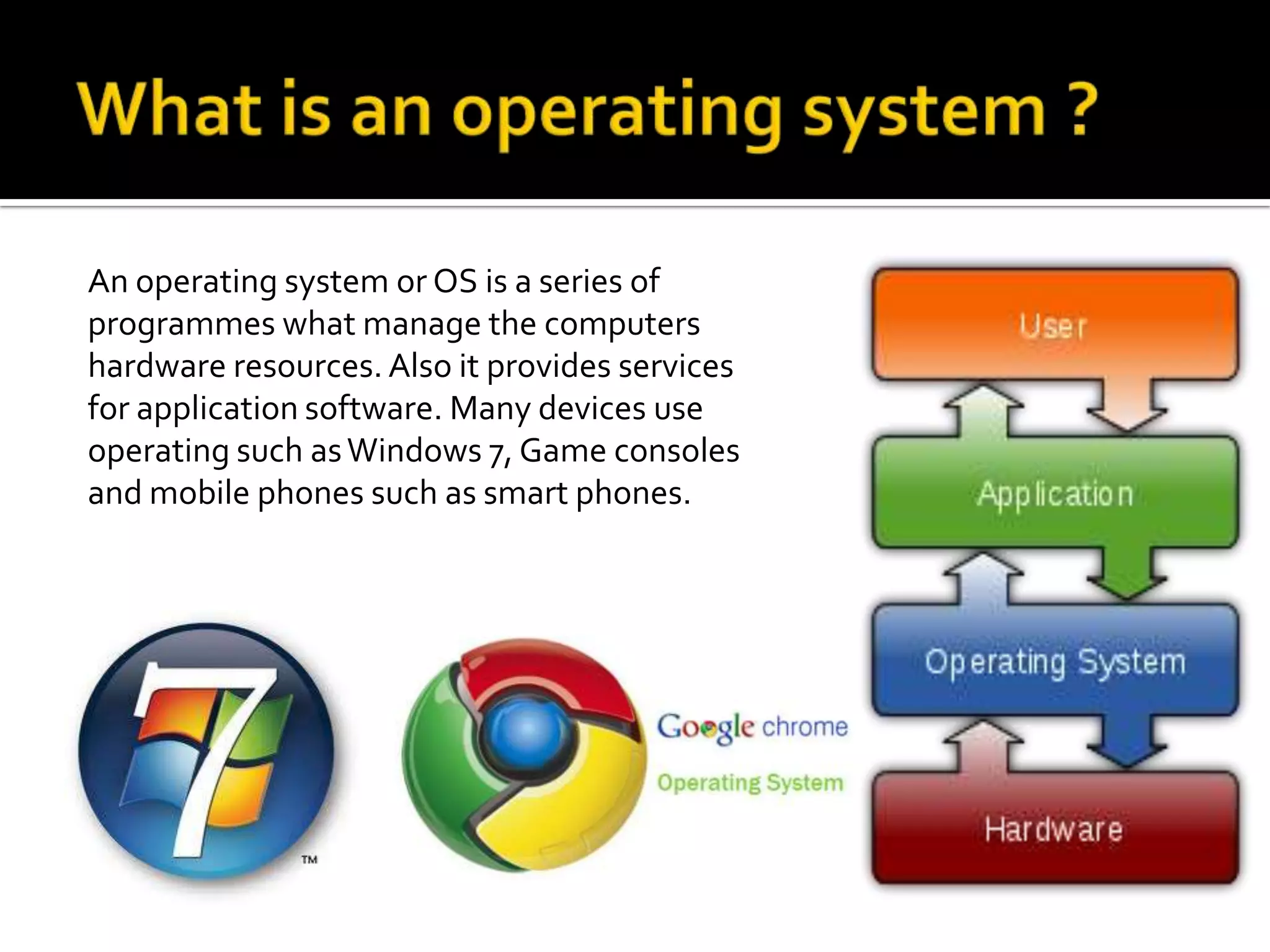
What is anoperating system ?An operating system or OS is a series of programmes what manage the computers hardware resources. Also it provides services for application software. Many devices use operating such as Windows 7, Game consoles and mobile phones such as smart phones.
3.
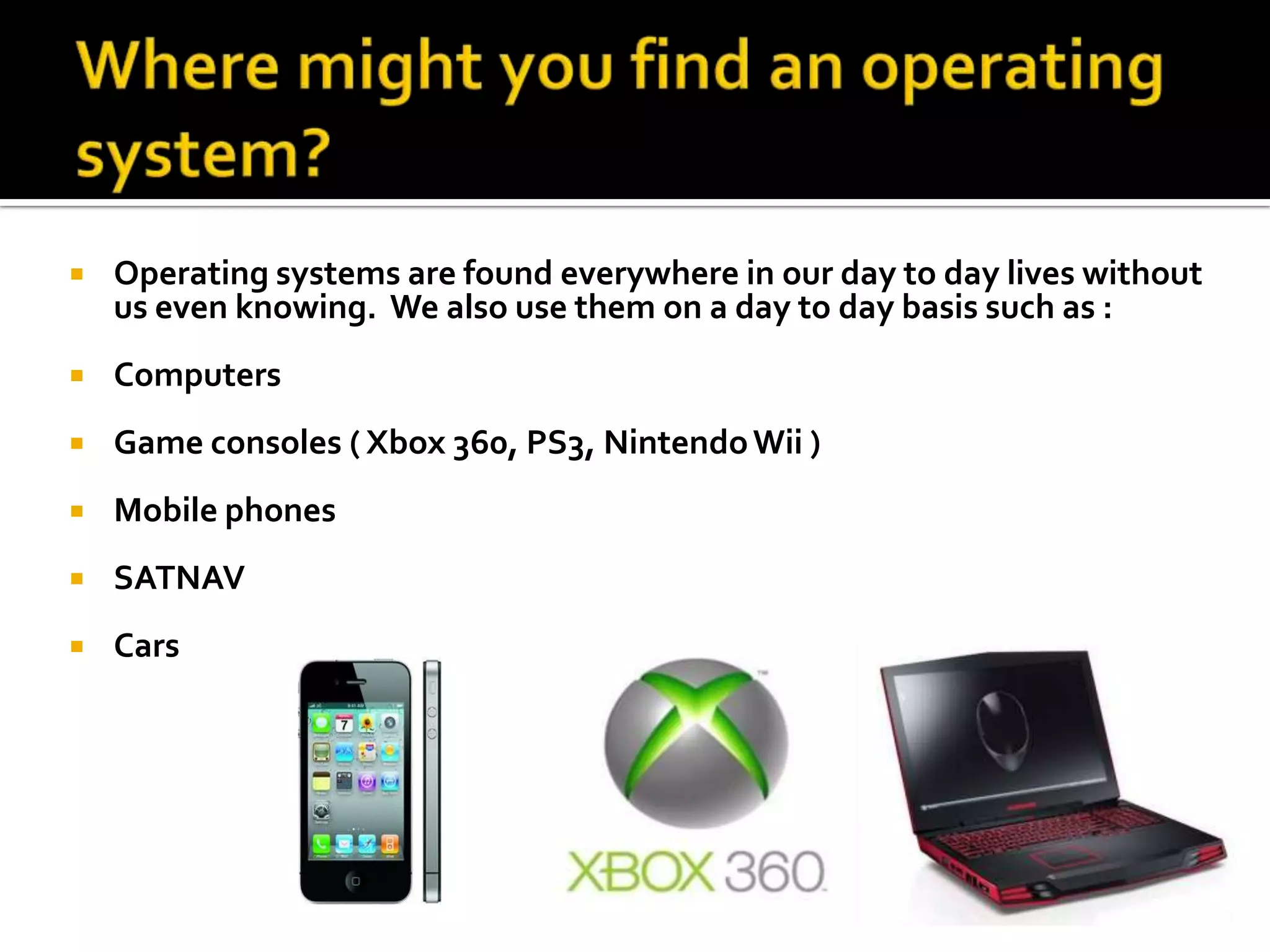
Where might youfind an operating system?Operating systems are found everywhere in our day to day lives without us even knowing. We also use them on a day to day basis such as :ComputersGame consoles ( Xbox 360, PS3, Nintendo Wii ) Mobile phones SATNAV Cars
4.
What are themain functions of an operating system? The main functions of an operating system are to control the main hardware elements in the computer.The five main features of an operating system:Processor managementMemory managementDevice managementStorage management User interface
5.
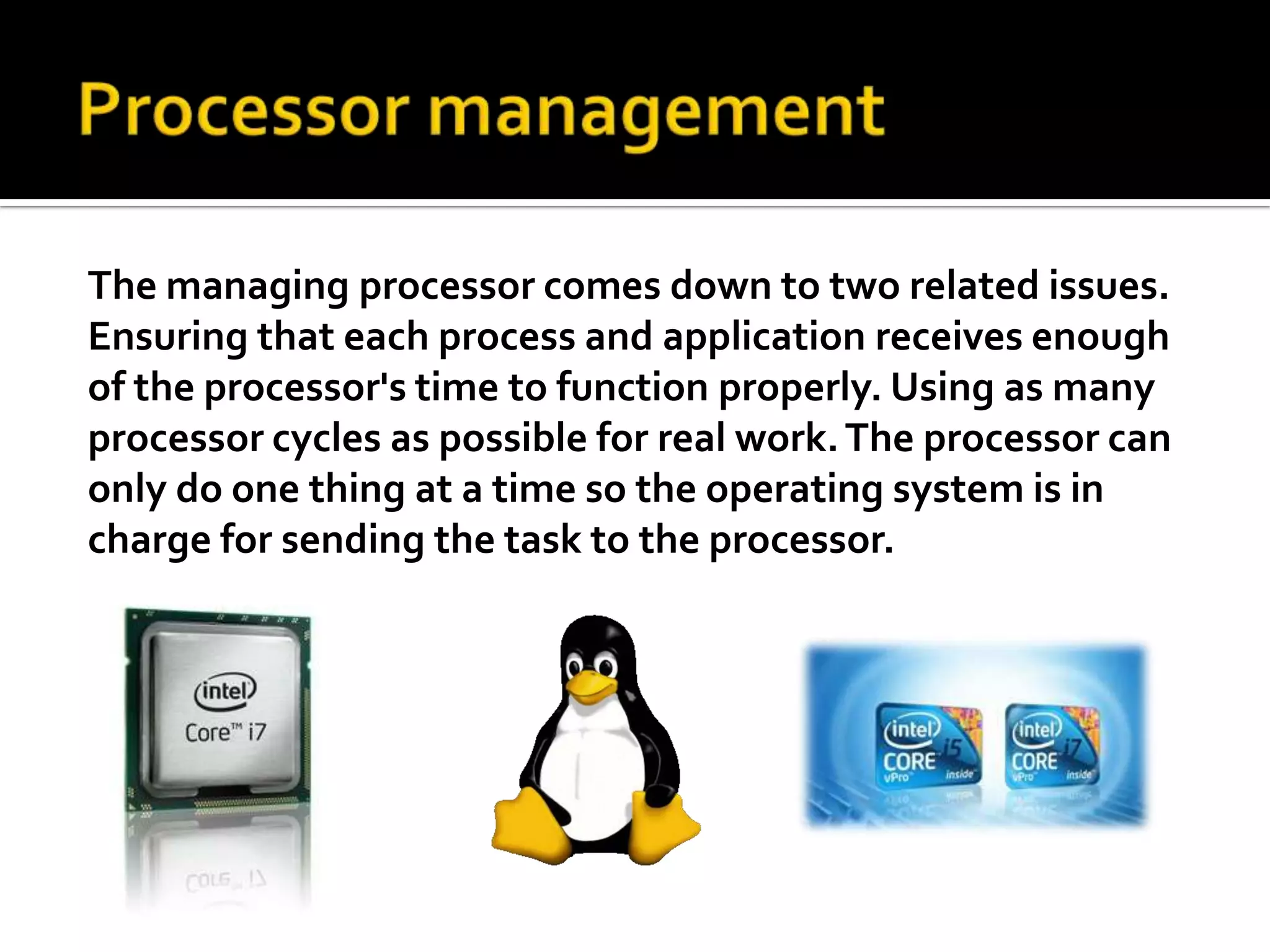
Processor managementThe managingprocessor comes down to two related issues. Ensuring that each process and application receives enough of the processor's time to function properly. Using as many processor cycles as possible for real work. The processor can only do one thing at a time so the operating system is in charge for sending the task to the processor.
6.
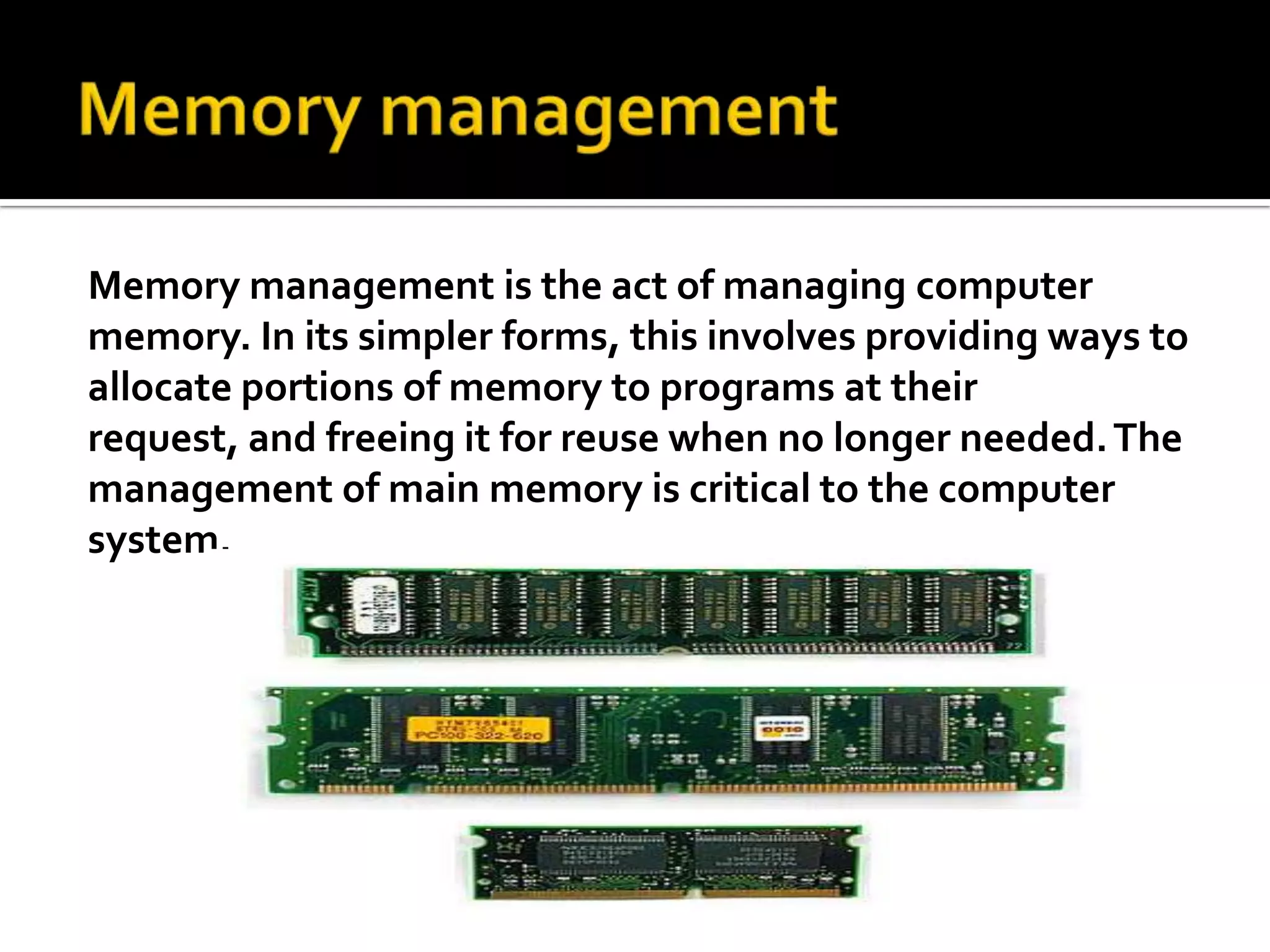
Memory management Memorymanagement is the act of managing computer memory. In its simpler forms, this involves providing ways to allocate portions of memory to programs at their request, and freeing it for reuse when no longer needed. The management of main memory is critical to the computer system.
7.
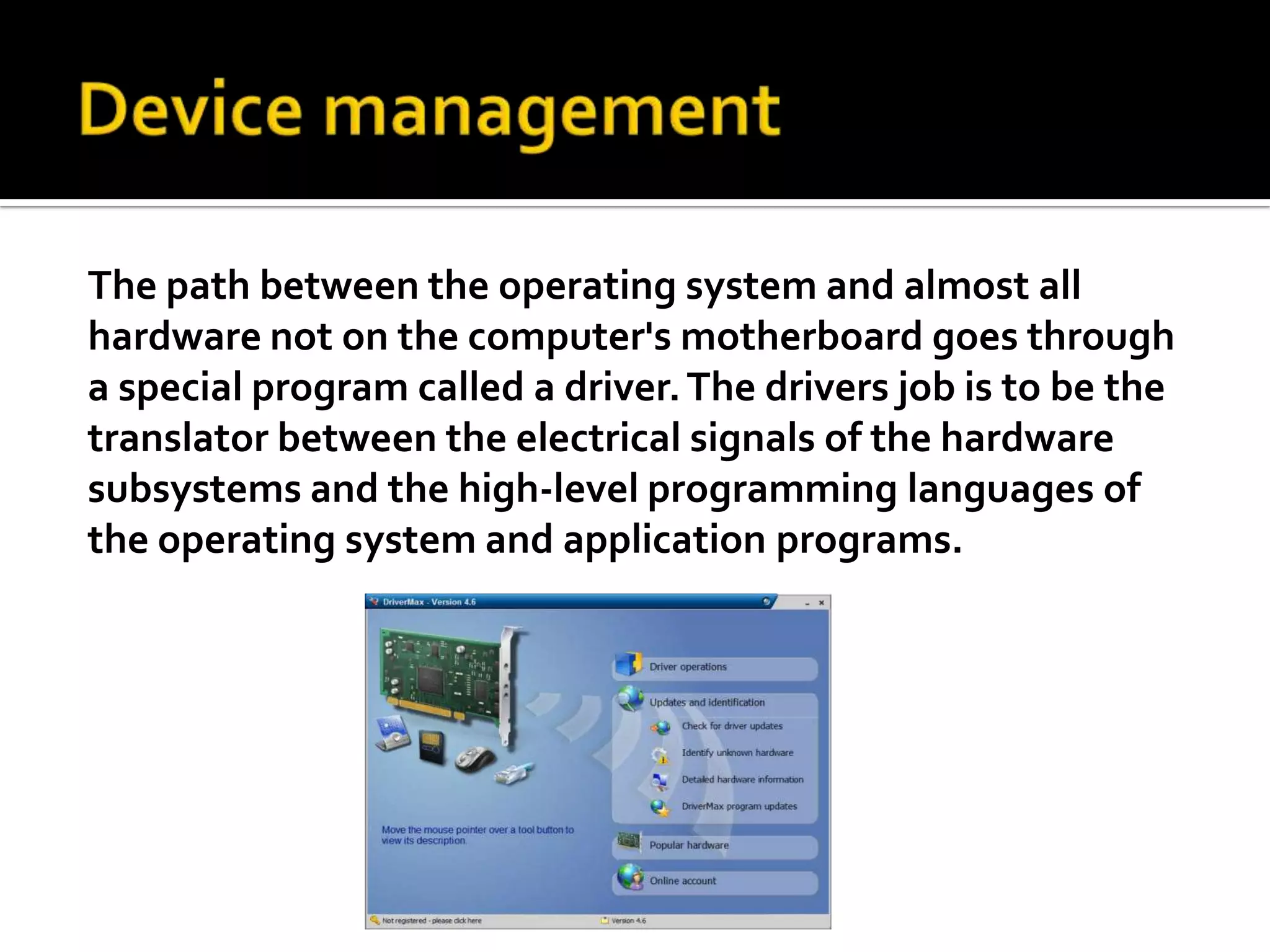
Device managementThe pathbetween the operating system and almost all hardware not on the computer's motherboard goes through a special program called a driver. The drivers job is to be the translator between the electrical signals of the hardware subsystems and the high-level programming languages of the operating system and application programs.
8.
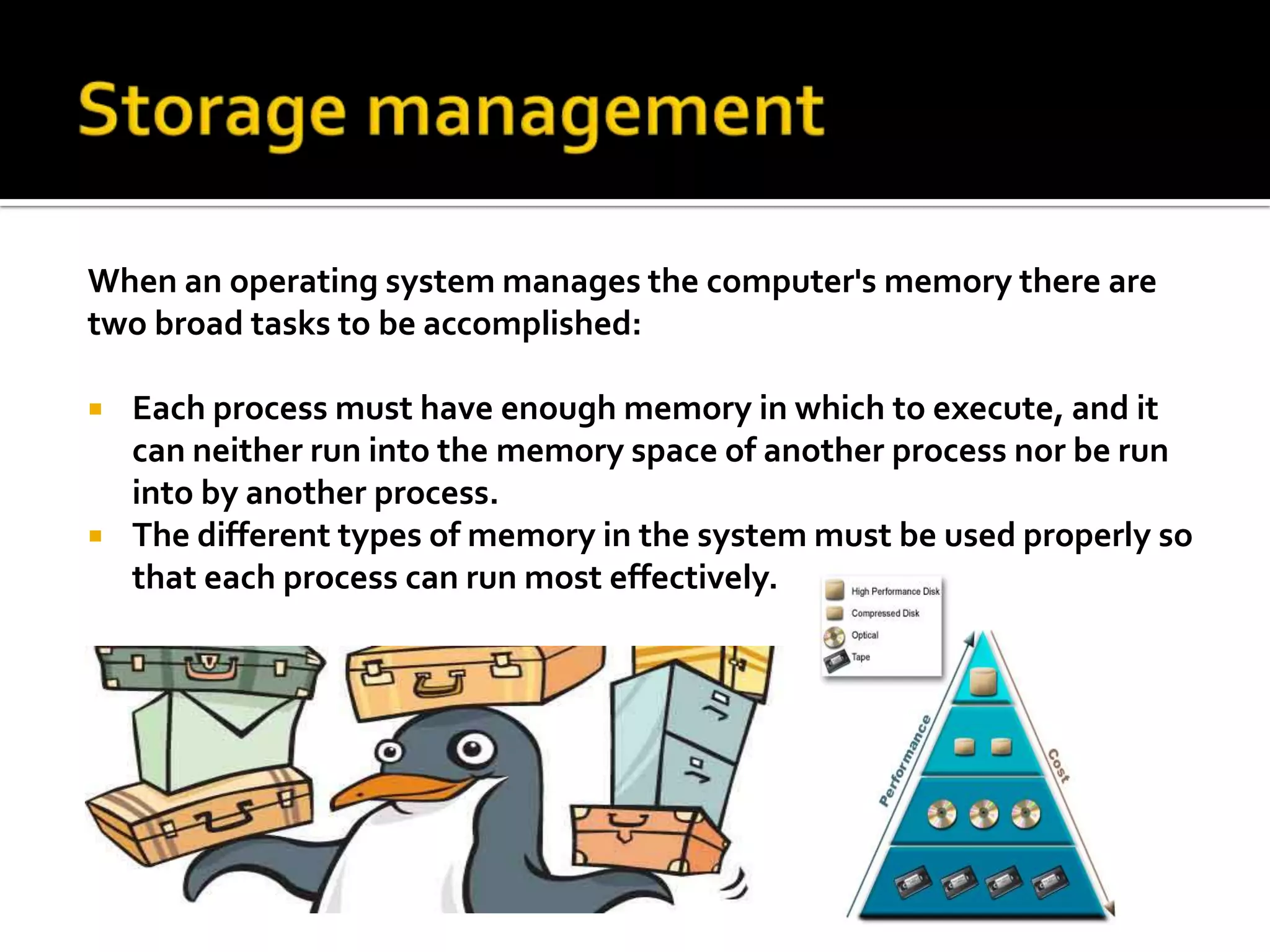
Storage management Whenan operating system manages the computer's memory there are two broad tasks to be accomplished:Each process must have enough memory in which to execute, and it can neither run into the memory space of another process nor be run into by another process. The different types of memory in the system must be used properly so that each process can run most effectively.
9.
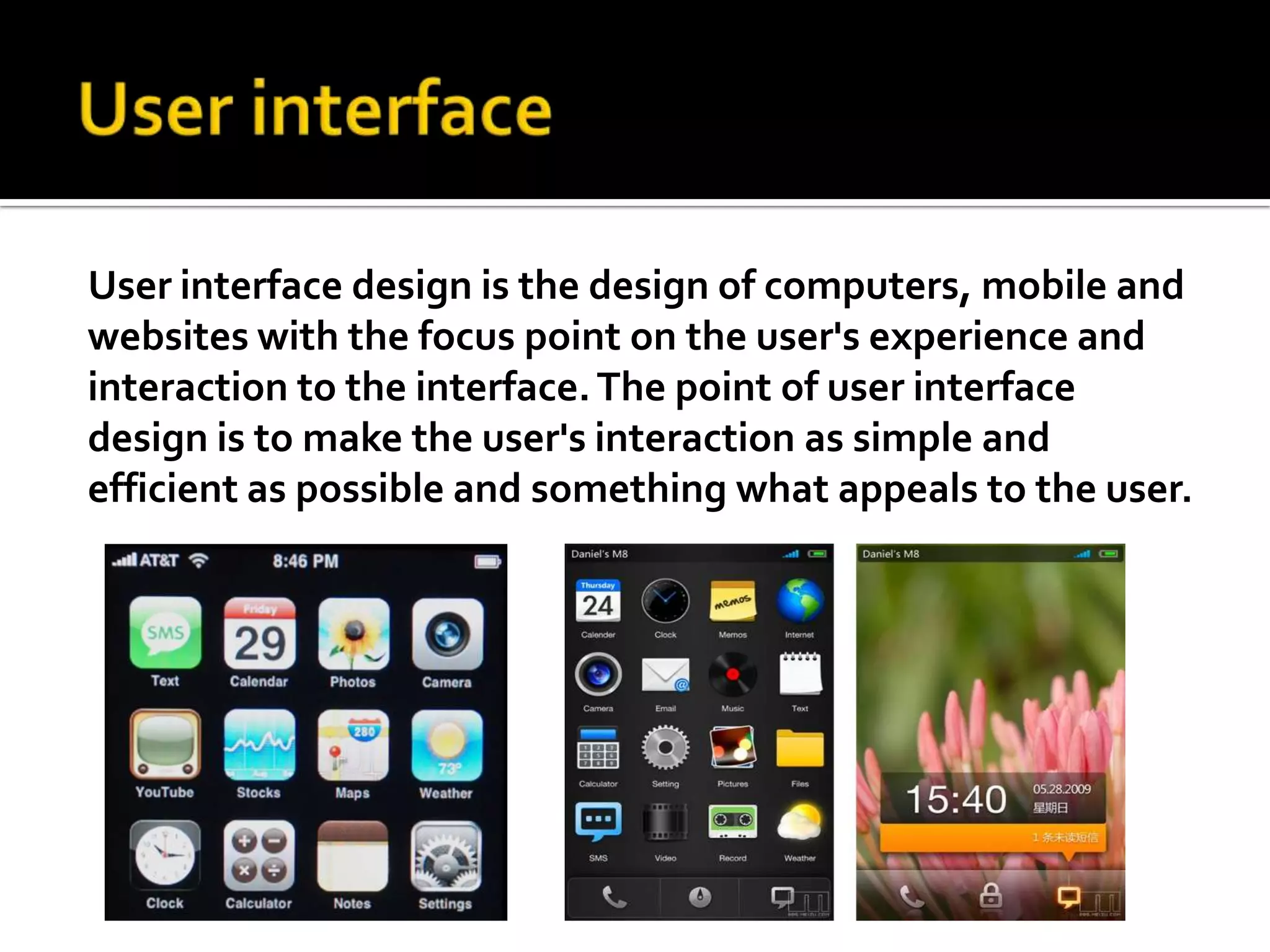
User interfaceUser interfacedesign is the design of computers, mobile and websites with the focus point on the user's experience and interaction to the interface. The point of user interface design is to make the user's interaction as simple and efficient as possible and something what appeals to the user.
10.
What role doesthe OS play in managing the processor?The OS manage the execution of processes so that you believe lots of things are happening. In order to give the appearance of lots 0f the things happening at the same time the OS has to switch between different processes.
11.
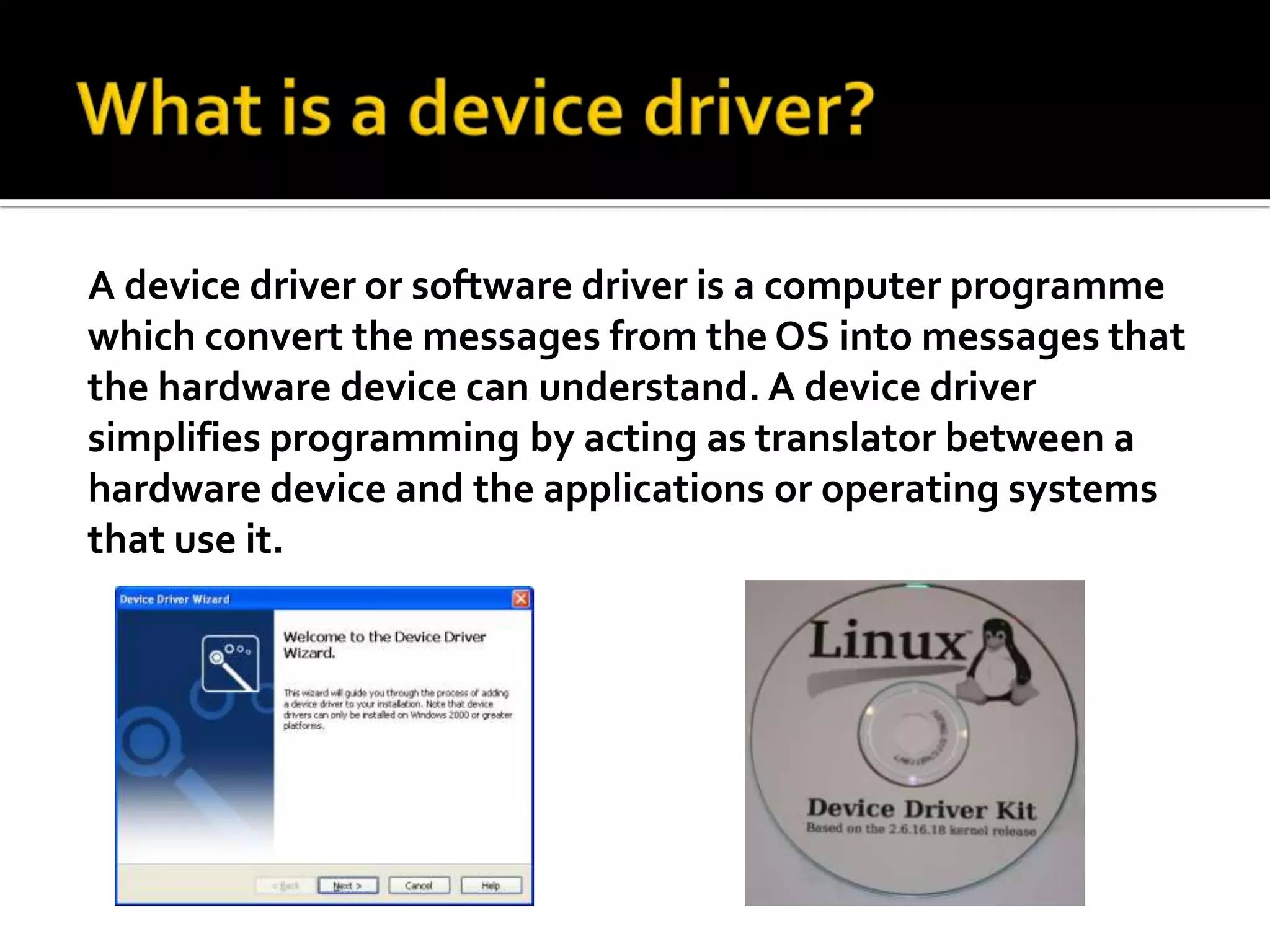
What is adevice driver?A device driver or software driver is a computer programme which convert the messages from the OS into messages that the hardware device can understand. A device driver simplifies programming by acting as translator between a hardware device and the applications or operating systems that use it.
12.
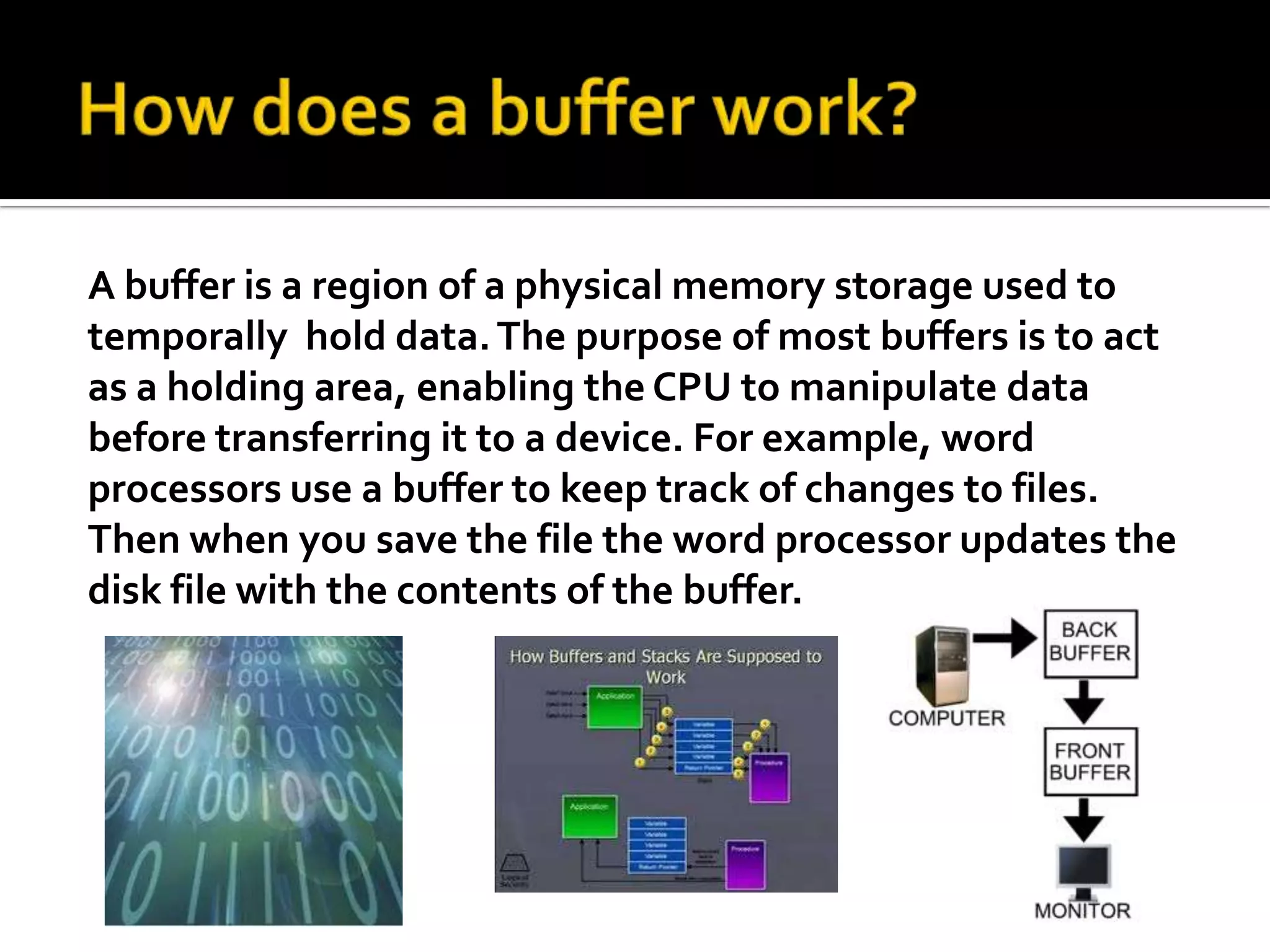
How does abuffer work?A buffer is a region of a physical memory storage used to temporally hold data. The purpose of most buffers is to act as a holding area, enabling the CPU to manipulate data before transferring it to a device. For example, word processors use a buffer to keep track of changes to files. Then when you save the file the word processor updates the disk file with the contents of the buffer.
13.
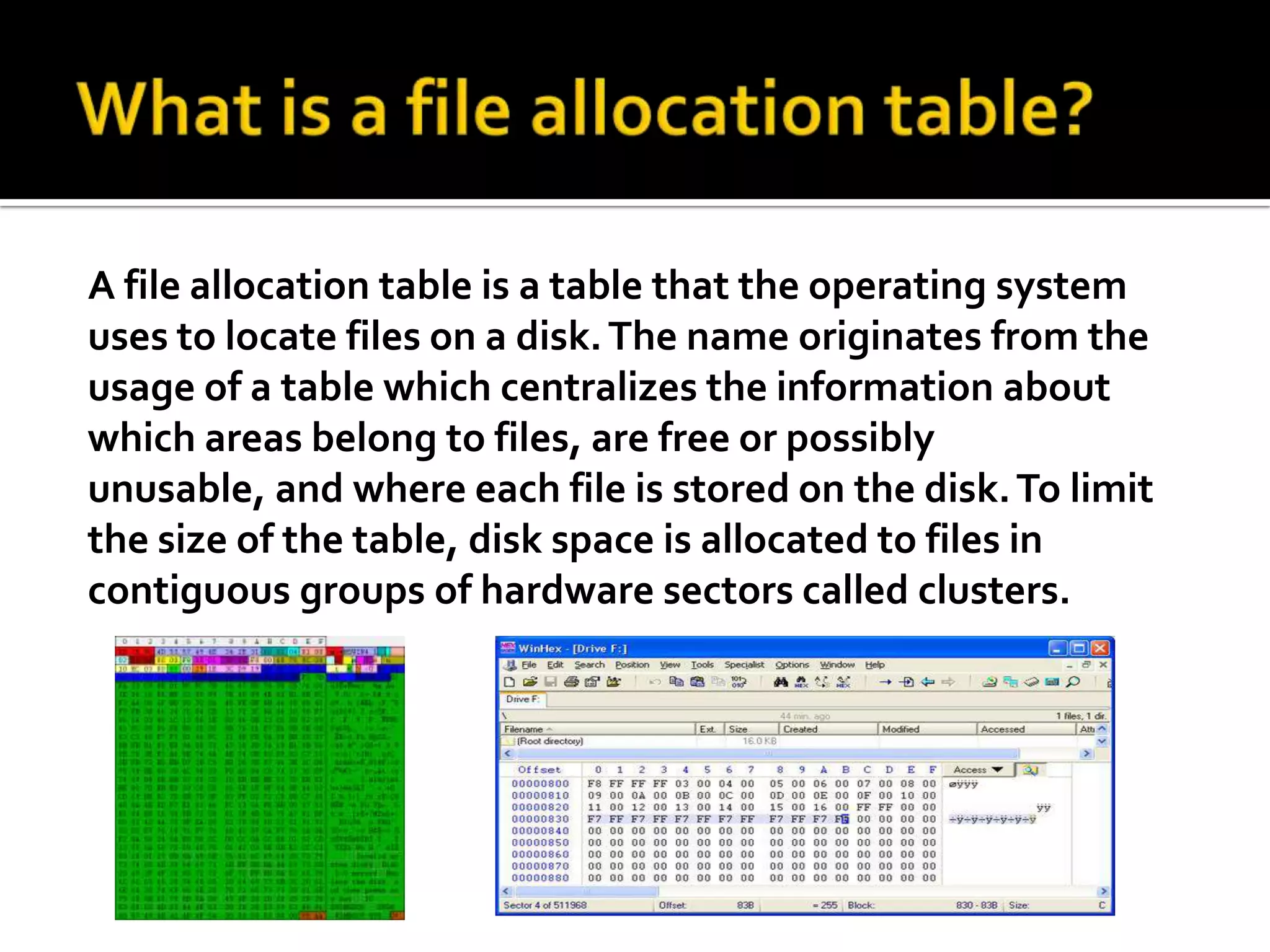
What is afile allocation table?A file allocation table is a table that the operating system uses to locate files on a disk. The name originates from the usage of a table which centralizes the information about which areas belong to files, are free or possibly unusable, and where each file is stored on the disk. To limit the size of the table, disk space is allocated to files in contiguous groups of hardware sectors called clusters.